EP0230920A2 - Fluide pour transmissions par entraînement par traction - Google Patents
Fluide pour transmissions par entraînement par traction Download PDFInfo
- Publication number
- EP0230920A2 EP0230920A2 EP87100498A EP87100498A EP0230920A2 EP 0230920 A2 EP0230920 A2 EP 0230920A2 EP 87100498 A EP87100498 A EP 87100498A EP 87100498 A EP87100498 A EP 87100498A EP 0230920 A2 EP0230920 A2 EP 0230920A2
- Authority
- EP
- European Patent Office
- Prior art keywords
- fluid
- represent
- component
- molecule
- fraction
- Prior art date
- Legal status (The legal status is an assumption and is not a legal conclusion. Google has not performed a legal analysis and makes no representation as to the accuracy of the status listed.)
- Granted
Links
- 0 *C1(CCCCC1)C1CCCCC1 Chemical compound *C1(CCCCC1)C1CCCCC1 0.000 description 3
Images



Classifications
-
- C—CHEMISTRY; METALLURGY
- C10—PETROLEUM, GAS OR COKE INDUSTRIES; TECHNICAL GASES CONTAINING CARBON MONOXIDE; FUELS; LUBRICANTS; PEAT
- C10M—LUBRICATING COMPOSITIONS; USE OF CHEMICAL SUBSTANCES EITHER ALONE OR AS LUBRICATING INGREDIENTS IN A LUBRICATING COMPOSITION
- C10M105/00—Lubricating compositions characterised by the base-material being a non-macromolecular organic compound
- C10M105/02—Well-defined hydrocarbons
-
- C—CHEMISTRY; METALLURGY
- C10—PETROLEUM, GAS OR COKE INDUSTRIES; TECHNICAL GASES CONTAINING CARBON MONOXIDE; FUELS; LUBRICANTS; PEAT
- C10M—LUBRICATING COMPOSITIONS; USE OF CHEMICAL SUBSTANCES EITHER ALONE OR AS LUBRICATING INGREDIENTS IN A LUBRICATING COMPOSITION
- C10M7/00—Solid or semi-solid compositions essentially based on lubricating components other than mineral lubricating oils or fatty oils and their use as lubricants; Use as lubricants of single solid or semi-solid substances
-
- C—CHEMISTRY; METALLURGY
- C10—PETROLEUM, GAS OR COKE INDUSTRIES; TECHNICAL GASES CONTAINING CARBON MONOXIDE; FUELS; LUBRICANTS; PEAT
- C10M—LUBRICATING COMPOSITIONS; USE OF CHEMICAL SUBSTANCES EITHER ALONE OR AS LUBRICATING INGREDIENTS IN A LUBRICATING COMPOSITION
- C10M1/00—Liquid compositions essentially based on mineral lubricating oils or fatty oils; Their use as lubricants
-
- C—CHEMISTRY; METALLURGY
- C10—PETROLEUM, GAS OR COKE INDUSTRIES; TECHNICAL GASES CONTAINING CARBON MONOXIDE; FUELS; LUBRICANTS; PEAT
- C10M—LUBRICATING COMPOSITIONS; USE OF CHEMICAL SUBSTANCES EITHER ALONE OR AS LUBRICATING INGREDIENTS IN A LUBRICATING COMPOSITION
- C10M2203/00—Organic non-macromolecular hydrocarbon compounds and hydrocarbon fractions as ingredients in lubricant compositions
- C10M2203/02—Well-defined aliphatic compounds
-
- C—CHEMISTRY; METALLURGY
- C10—PETROLEUM, GAS OR COKE INDUSTRIES; TECHNICAL GASES CONTAINING CARBON MONOXIDE; FUELS; LUBRICANTS; PEAT
- C10M—LUBRICATING COMPOSITIONS; USE OF CHEMICAL SUBSTANCES EITHER ALONE OR AS LUBRICATING INGREDIENTS IN A LUBRICATING COMPOSITION
- C10M2203/00—Organic non-macromolecular hydrocarbon compounds and hydrocarbon fractions as ingredients in lubricant compositions
- C10M2203/02—Well-defined aliphatic compounds
- C10M2203/0206—Well-defined aliphatic compounds used as base material
-
- C—CHEMISTRY; METALLURGY
- C10—PETROLEUM, GAS OR COKE INDUSTRIES; TECHNICAL GASES CONTAINING CARBON MONOXIDE; FUELS; LUBRICANTS; PEAT
- C10M—LUBRICATING COMPOSITIONS; USE OF CHEMICAL SUBSTANCES EITHER ALONE OR AS LUBRICATING INGREDIENTS IN A LUBRICATING COMPOSITION
- C10M2203/00—Organic non-macromolecular hydrocarbon compounds and hydrocarbon fractions as ingredients in lubricant compositions
- C10M2203/02—Well-defined aliphatic compounds
- C10M2203/022—Well-defined aliphatic compounds saturated
-
- C—CHEMISTRY; METALLURGY
- C10—PETROLEUM, GAS OR COKE INDUSTRIES; TECHNICAL GASES CONTAINING CARBON MONOXIDE; FUELS; LUBRICANTS; PEAT
- C10M—LUBRICATING COMPOSITIONS; USE OF CHEMICAL SUBSTANCES EITHER ALONE OR AS LUBRICATING INGREDIENTS IN A LUBRICATING COMPOSITION
- C10M2203/00—Organic non-macromolecular hydrocarbon compounds and hydrocarbon fractions as ingredients in lubricant compositions
- C10M2203/02—Well-defined aliphatic compounds
- C10M2203/024—Well-defined aliphatic compounds unsaturated
-
- C—CHEMISTRY; METALLURGY
- C10—PETROLEUM, GAS OR COKE INDUSTRIES; TECHNICAL GASES CONTAINING CARBON MONOXIDE; FUELS; LUBRICANTS; PEAT
- C10M—LUBRICATING COMPOSITIONS; USE OF CHEMICAL SUBSTANCES EITHER ALONE OR AS LUBRICATING INGREDIENTS IN A LUBRICATING COMPOSITION
- C10M2203/00—Organic non-macromolecular hydrocarbon compounds and hydrocarbon fractions as ingredients in lubricant compositions
- C10M2203/04—Well-defined cycloaliphatic compounds
-
- C—CHEMISTRY; METALLURGY
- C10—PETROLEUM, GAS OR COKE INDUSTRIES; TECHNICAL GASES CONTAINING CARBON MONOXIDE; FUELS; LUBRICANTS; PEAT
- C10N—INDEXING SCHEME ASSOCIATED WITH SUBCLASS C10M RELATING TO LUBRICATING COMPOSITIONS
- C10N2040/00—Specified use or application for which the lubricating composition is intended
- C10N2040/04—Oil-bath; Gear-boxes; Automatic transmissions; Traction drives
-
- C—CHEMISTRY; METALLURGY
- C10—PETROLEUM, GAS OR COKE INDUSTRIES; TECHNICAL GASES CONTAINING CARBON MONOXIDE; FUELS; LUBRICANTS; PEAT
- C10N—INDEXING SCHEME ASSOCIATED WITH SUBCLASS C10M RELATING TO LUBRICATING COMPOSITIONS
- C10N2040/00—Specified use or application for which the lubricating composition is intended
- C10N2040/04—Oil-bath; Gear-boxes; Automatic transmissions; Traction drives
- C10N2040/042—Oil-bath; Gear-boxes; Automatic transmissions; Traction drives for automatic transmissions
-
- C—CHEMISTRY; METALLURGY
- C10—PETROLEUM, GAS OR COKE INDUSTRIES; TECHNICAL GASES CONTAINING CARBON MONOXIDE; FUELS; LUBRICANTS; PEAT
- C10N—INDEXING SCHEME ASSOCIATED WITH SUBCLASS C10M RELATING TO LUBRICATING COMPOSITIONS
- C10N2040/00—Specified use or application for which the lubricating composition is intended
- C10N2040/04—Oil-bath; Gear-boxes; Automatic transmissions; Traction drives
- C10N2040/044—Oil-bath; Gear-boxes; Automatic transmissions; Traction drives for manual transmissions
-
- C—CHEMISTRY; METALLURGY
- C10—PETROLEUM, GAS OR COKE INDUSTRIES; TECHNICAL GASES CONTAINING CARBON MONOXIDE; FUELS; LUBRICANTS; PEAT
- C10N—INDEXING SCHEME ASSOCIATED WITH SUBCLASS C10M RELATING TO LUBRICATING COMPOSITIONS
- C10N2040/00—Specified use or application for which the lubricating composition is intended
- C10N2040/04—Oil-bath; Gear-boxes; Automatic transmissions; Traction drives
- C10N2040/046—Oil-bath; Gear-boxes; Automatic transmissions; Traction drives for traction drives
-
- C—CHEMISTRY; METALLURGY
- C10—PETROLEUM, GAS OR COKE INDUSTRIES; TECHNICAL GASES CONTAINING CARBON MONOXIDE; FUELS; LUBRICANTS; PEAT
- C10N—INDEXING SCHEME ASSOCIATED WITH SUBCLASS C10M RELATING TO LUBRICATING COMPOSITIONS
- C10N2040/00—Specified use or application for which the lubricating composition is intended
- C10N2040/08—Hydraulic fluids, e.g. brake-fluids
Definitions
- the present invention relates to a fluid for traction drive and more particularly to a fluid for traction drive which contains specified two kinds of compounds as main components and is excellent in traction performance.
- a fluid for traction drive is a fluid for use in traction drive devices (devices driven by friction due to rolling contact), such as continuously variable transmissions for automobiles and industrial machines, hydraulic machines arid the like. These fluids for traction drive are required to have a high traction coefficient and high stability against heat and oxidation, and further to be inexpensive.
- the present invention is intended to overcome the problems of the prior art and an object of the present invention is to provide a fluid for traction drive which is capable of exhibiting excellent characteristics over a wide temperature range.
- the above object can be attained by using a specified compound group having a high traction coefficient at high temperatures in combination with a specified compound group having a low viscosity. That is, if the above two kinds of compounds are used in combination, there can be obtained a fluid for traction drive which is excellent in characteristics as described above and which has a greatly increased traction coefficient by the synergistic effect resulting from the use of the above two kinds of compounds in combination.
- the present invention relates to a fluid for traction drive containing:
- the fluid for traction drive of the present invention contains Components (A) and (B) as described above as main components.
- Component (A) various compounds can be used. Usually, however, compounds selected from the following three types of Compounds are preferably used. Compounds represented by the general formula (I) (wherein R1 and R 2 each represent hydrogen or a methyl group, and p and q each represent 1, 2 or 3). These compounds are hereinafter referred to as "Type Al Compounds”. Compounds represented by the general formula (II): (wherein R 1 , R 2 , p and q are the same as defined above, R 3 represents hydrogen or a methyl group, and r represents 1, 2 or 3). These compounds are hereinafter referred to as "Type A2 Compounds”. Compounds represented by the general formula (III): (wherein R 1 , R 2 , R 3 , p, q, and r are the same as defined above). These compounds are hereinafter referred to as "Type A3 Compounds”.
- Type Al Compounds represented by the general formula (I) are shown below.
- Representative examples of Type A2 Compounds represented by the general formula (II) are shown below.
- Component (A) can be used alone or in combination with each other as Component (A).
- Component (B) to be used in combination with Component (A) two types of compounds are used; one of the type is an alkane derivative having a main chain of two or three carbon atoms, to which at least two methyl groups are bonded, and having two cyclohexane rings in a molecule each bonded to one of the terminal carbon atoms of the alkane, and the other is a cyclopentane derivative having two cyclohexane rings in a molecule.
- Type Bl Compounds Alkane derivatives belonging to the former type are hereinafter called “Type Bl Compounds”, and compounds belonging to the latter type are hereinafter called “Type B2 Compounds”. All of these Type Bl and B2 Compounds have two cyclohexane rings in which one or more methyl groups may be introduced.
- alkane derivatives represented by the general formula (IV) are shown below. 1,2-Di(methylcyclohexyl)-2-methylpropane having the following formula: 2,3-Di(methylcyclohexyl)-butane having the following formula:
- alkane derivatives represented by the general formula (V) are shown below.
- 1,3-Dicyclohexyl-3-methylbutane having the following formula:
- 2,4-Dicyclohexylpentane having the formula:
- 2,4-Dicyclohexyl-2-methylpentane having the formula:
- Type B2 Compounds are usually compounds represented by the general formula (VI): (wherein R 7 , R 8 , m and n are the same as defined above, R 15 represents hydrogen or a methyl group, and l represents 1, 2 or 3).
- the fluid for traction drive of the present invention contains, as the principal ingredients thereof, Component (A) (Type Al Compound, Type A2 Compound or Type A3 Compound) and Component (B) (Type Bl Compound or Type B2 Compound) and has a kinematic viscosity of at least 3 centistokes (cSt) at 100°C.
- Component (A) Type Al Compound, Type A2 Compound or Type A3 Compound
- Component (B) Type Bl Compound or Type B2 Compound
- cSt centistokes
- Component (A) has a high traction coefficient at high temperatures, but has a relatively high viscosity. Because of this relatively high viscosity, the stirring loss is large and furthermore Component (A) is not satisfactory in respect of the flowability at low temperatures.
- Component (B) has an advantage of having a low viscosity, but has problems that the traction coefficinet seriously drops at high temperatures and furthermore the viscosity excessively drops, thereby causing discontinuity in the oil films.
- the fluid for traction drive of the present invention is based on new findings that the traction coefficient can be greatly improved by mixing Compnents (A) and (B); that is, there can be obtained a synergistic effect of Components (A) and (B).
- the mixing ratio of Components (A) and (B) is not critical. It suffices that Components (A) and (B) are mixed in such a ratio that the kinematic viscosity at 100°C is at least 3.0 cSt and preferably 3.6 to 10.0 cSt. More specifically, Component (B) is usually added in an amount of 10 to 900 parts by weight, preferably 50 to 600 parts by weight per 100 parts by weight of Component (A), although the mixing ratio cannot be determined unconditionally because it varies depending on the type of each component and so forth.
- the fluid for traction drive has a kinematic viscosity at 100°C of less than 3 cSt, the rolling-element fatigue life of a traction drive device cannot be maintained at more than the rated value and long time driving becomes impossible, even though the fluid for traction drive contains, as the principal ingredients thereof, Components (A) and (B).
- the rolling-element fatigue life of a rolling surface is greatly dependent on a relation between the roughness of the rolling contact surfaces and the thickness of an oil film formed between two rolling contact surfaces; this relation is well known as an oil film parameter A.
- a rolling contact fatigue life of at least the rated value or design value can be obtained when the fluid for traction drive has a viscosity of at least 3.0 cSt or, preferably, at least 3.6 cSt at the temperature.
- the fluid should be formulated in such a weight proportion of the components that the fluid may have a viscosity of at least 3.0 cSt or, preferably, at least 3.6 cSt at 100°C. It is also desirable for a fluid used in automobiles that the pour point thereof is -30°C or lower in order to ensure smooth starting at low temperatures.
- the fluid for traction drive of the present invention which is, as described above, contains as the principal ingredients thereof, Components (A) and (B), may further contain various additives if necessary.
- the fluid for traction drive of the present invention exhibits a high and stable traction coefficient over a wide temperature range from low temperature to high temperature and is excellent in various required properties. Therefore the fluid for traction drive of the present invention can be widely used in a wide variety of machines including continuously variable transmissions for automobiles and industrial machines, hydraulic machines and the like.
- the traction coefficient of the fluid was determined according to the procedure described below using a two roller machine.
- Each of the rollers had a diameter of 52 mm and a thickness of 6 mm and one of them for driving had a flat form without crowning while the other driven by the driving roller had a barrel-shaped form with a crown radius of 10 mm.
- One of the rollers was rotated at a constant velocity of 1500 rpm while the other was continuously rotated at a velocity of 1500 to 1750 rpm under a contacting pressure of 7 kg by means of a spring to determine the tangential force, i.e. traction force, generated between the rollers from which the traction coefficient was calculated.
- the rollers were made of a steel for rolling bearing SUJ-2 and the surface was polished as smooth as a mirror.
- the maximum Hertzian contact pressure thereof was 112 kgf/mm 2 .
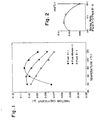
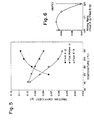
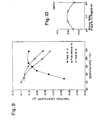
- the determination of the relation between the traction coefficient and the oil temperature was performed by controlling the oil temperature in the range from 30°C to 120°C with the oil reservoir heated with a heater and the results were shown in a graph by plotting the relation between the traction coefficient at a slip ratio of 5 % and the oil temperature.
- the resulting mixture was washed three times with each of 2 liters (Q) of a 5N aqueous solution of hydrochloric acid and 2 l of saturated aqueous solution of sodium chloride, and dried over anhydrous sodium sulfate.
- Fraction f-l a fraction having a boiling point of 160 - 170°C at 0.3 mmHg
- Fraction f-2 550 g of a fraction having a boiling point of 210 - 220°C at 0.3 mmHg
- Fraction f-1 was a compound resulting from addition of one styrene molecule to phenylcyclohexane, i.e., l-phenyl-l-(2-phenylethyl)cyclohexane
- Fraction f-2 was a compound resulting from addition of two styrene molecules to phenylcyclohexane, i.e., 1-phenyl-1-(2,4-diphenylbutyl)cyclohexane.
- Fraction f-1 i.e., alkylated compound (500 milliliters (ml)) was placed in a 1-liter autoclave and 50 g of a nickel catalyst for hydrogenation (Catalyst N-112 manufactured by Nikki Kagaku Co., Ltd.) was added, and the Fraction f-1 was hydrogenated at a hydrogen presure of 50 kilograms per square centimeter (kg/cm 2 ) and a reaction temperature of 200°C. After cooling, the reaction mixture was filtered to remove the catalyst. An NMR analysis showed that a degree of hydrogenation was not less than 99.9 %. The filtrate was stripped to remove the light fraction and then analyzed. This analysis showed that the light fraction was l-cyclohexyl-l-(2-cyclohexylethyl)cyclohexane.
- fraction f-2 was also hydrogenated in the same manner as above and stripped to obtain 1-cyclohexyl-1-(2,4-dicyclohexylbutyl)cyclohexane.
- the unreacted toluene was distilled away, and the residue was distilled under reduced pressure to obtain 500 g of a fraction having a boiling point range of 106 - 113°C (0.16 mmHg).
- the main component of the fraction was 2-methyl-1,2-di(p-tolyl)propane.
- a fluid containing 90 % by weight of 1-cyclohexyl- l-(2-cyclohexylehtyl)cyclohexane and 10 % by weight of l-cyclohexyl-l-(2,4-dicyclohexylbutyl)cyclohexane (hereinafter referred to "Fluid A-1") as prepared in Preparation Example 1 and 2-methyl-1,2-di(4-methylcyclohexyl)propane (hereinafter referred to as "Fluid B-1) as prepared in Preparation Example 2 were mixed in such a manner that the weight ratio of Fluid A-1 to Fluid B-1 was 2:3 to prepare a fluid (hereinafter referred to as "Mixed Fluid-1"). Properties of Mixed Fluid-1 are shown in Table 1.
- FIG. 1 A relation between the traction coefficient of Mixed Fluid-1 and temperature is shown in Fig. 1.
- changes at 60°C in the traction coefficient of mixed fluids as obtained by changing the ratio of Fluid A-1 and Fluid B-1 are shown in Fig. 2.
- Fraction g-1 was a compound resulting from addition of one styrene molecule to cumene, i.e., l,3-diphenyl-3-methylbutane
- Fraction g-2 was a compound resulting from addition of two styrene molecules to cumene, i.e., 1,3,5-triphenyl-5-methylhexane.
- Fraction g-1 was hydrogenated and was subjected to post-treatment in the same manner as in Preparation Example 1 to obtain 1,3-dicyclohexyl-3-methylbutane.
- Fraction g-2 was also hydrogenated in the same manner as above and stripped to obtain 1,3,5-tricyclohexyl-5-methylhexane.
- Fluid A-2 A fluid composed mainly of 1,3,5-tricyclohexyl-5-methylhexane as obtained in Preparation Example 3
- Fluid B-2 a fluid composed mainly of l,3-dicyclohexyl-3-methylbutane as obtained in Preparation Example 3
- Fluid B-2 a fluid composed mainly of l,3-dicyclohexyl-3-methylbutane as obtained in Preparation Example 3
- Fluid B-2 a fluid composed mainly of l,3-dicyclohexyl-3-methylbutane as obtained in Preparation Example 3
- Mated Fluid-2 Properties of Mixed Fluid-2 are shown in Table 2.
- a relation between the traction coefficient of Mixed Fluid-2 and temperature is shown in Fig. 3.
- changes in the traction coefficient at 80°C of mixed fluids as obtained by changing the ratio of Fluid A-2 to Fluid B-2 are shown in Fig. 4.
- a mixture of 2,700 g of ethylbenzene, 58 g of metallic sodium and 17 g of isopropyl alcohol was placed in a 5-liter glass flask and heated to 120°C, and then a mixture of 1,100 g of a-methylstyrene and 300 g of ethylbenzene was gradually added over 5 hours with stirring. The resulting mixture was stirred for 1 hour to complete the reaction.
- the reaction mixture was cooled, and an oil layer was isolated. To this oil layer was added 200 g of methyl alcohol, and the resulting mixture was washed three times with 2,000 mt of a 5N aqueous hydrochloric acid solution and then three times with 2,000 ml of saturated aqueous solution of sodium chloride. Then the mixture was dried over anhydrous sodium sulfate, and the unreacted ethylbenzene was distilled away by the use of a rotary evaporator. The residue was distilled under reduced pressure to obtain 1,500 g of a fraction having a boiling point range of 104 - 110°C at 0.06 mmHg. An analysis showed that the fraction was 2,4-diphenyl-pentane.
- Fluid A-2 as obtained in Preparation Example 3 and a fluid composed mainly of 2,4-dicyclohexylpentane as obtained in Preparation Example 4 (hereinafter referred to as "Fluid B-3") were mixed in such a manner that the weight ratio of Fluid A-2 to Fluid B-3 was 3 : 7
- a mixture of 1,000 g of a-methylstyrene, 50 g of acid clay and 50 g of ethylene glycol was placed in a 3-liter flask and reacted at l40°C for 2 hours with stirring.
- the catalyst was removed from the reaction mixture by filtration.
- the unreacted a-methylstyrene and ethylene glycol were distilled away to obtain 900 g of a fraction having a boiling point of 125 - 130°C/0.2 mmHg.
- NMR and gas chromatographic analyses showed that the fraction was a mixture of 95 % of a linear dimer of a-methylstyrene and 5 % of a cyclinc dimer of a-methylstyrene.
- Fluid A-2 as obtained in Preparation Example 3 and a fluid composed mainly of 2,4-dicyclohexyl-2-methylpentane as obtained in Preparation Example 5 (hereinafter referred to as "Fluid B-4") were mixed in such a manner that the weight ratio of Fluid A-2 to Fluid B-4 was 1 : 3 to prepare a fluid (hereinafter referred to as "Mixed Fluid-4"). to prepare a fluid (hereinafter referred to as "Mixed Fluid-3").
- Properties of Mixed Fluid-3 are shown in Table 3.
- a relation between the traction coefficient of Mixed Fluid-3 and temperature is shown in Fig. 5.
- Changes in the traction coefficient of mixed fluids as obtained by changing the ratio of Fluid A-2 to Fluid B-3 are shown in Fig. 6.
- a 1-liter four-necked glass flask equipped with a stirrer, a dropping funnel, a reflux condenser provided with a drier tube of a calcium chloride and a bufurcated tube provided with a thermometer and a gas introduction tube was charged with 200 m1 of decahydronaphthalene, 9.2 g (0.40 mol) of metallic sodium and 11.2 g (0.20 mol) of potassium hydroxide. Then argon gas was introduced in the flask through the gas introduction tube at a rate of 100 ml per minute for 10 minutes, and then the mixture was stirred while introducing argon gas at a decreased rate of 10 ml per minute.
- the contents of the flask was heated to 135°C on an oil bath, and 473 g (4.0 mol) of a-methylstyrene was dropped over 1 hour. After completion of the addition, the mixture was further stirred for 30 minutes while heating. The mixture was cooled to room temperature, and 100 mt of methanol was dropped with stirring to decompose the unreacted metallic sodium. Introduction of argon gas was stopped, and the reaction mixture was washed three time each with 200 ml of water.
- a oil layer was dried over anhydrous sodium sulfate and distilled under reduced pressure (139 - 141°C/ 0.2 mmHg) to obtain a fraction composed mainly of 250.7 g (2.12 mol) of 1-methyl-1,3-diphenylcyclopentane.
- Fluid A-3 as obtained in Preparation Example 1 and a fluid composed mainly of 1,3-dicyclohexyl-l-methylcyclopentane (hereinafter referred to as "Fluid B-5") were mixed in such a manner that the weight ratio of Fluid A-3 to Fluid B-5 was 1 : 3 to prepare a fluid (hereinafter referred to as "Mixed Fluid-6").
- Properties of Mixed Fluid-6 are shown in Table 6.
- a relation between the traction coefficient of Mixed Fluid-6 and temperature is shwon in Fig. 11.
- changes in the traction coefficient at 70°C of mixed fluids as obtained by changing the ratio of Fluid A-3 to Fluid B-5 are shown in Fig. 12.
Landscapes
- Chemical & Material Sciences (AREA)
- Oil, Petroleum & Natural Gas (AREA)
- Chemical Kinetics & Catalysis (AREA)
- General Chemical & Material Sciences (AREA)
- Organic Chemistry (AREA)
- Engineering & Computer Science (AREA)
- Lubricants (AREA)
Applications Claiming Priority (2)
| Application Number | Priority Date | Filing Date | Title |
|---|---|---|---|
| JP11170/86 | 1986-01-23 | ||
| JP61011170A JPH066711B2 (ja) | 1986-01-23 | 1986-01-23 | トラクシヨンドライブ用流体 |
Publications (3)
| Publication Number | Publication Date |
|---|---|
| EP0230920A2 true EP0230920A2 (fr) | 1987-08-05 |
| EP0230920A3 EP0230920A3 (en) | 1988-03-16 |
| EP0230920B1 EP0230920B1 (fr) | 1992-01-08 |
Family
ID=11770574
Family Applications (1)
| Application Number | Title | Priority Date | Filing Date |
|---|---|---|---|
| EP87100498A Expired - Lifetime EP0230920B1 (fr) | 1986-01-23 | 1987-01-16 | Fluide pour transmissions par entraînement par traction |
Country Status (6)
| Country | Link |
|---|---|
| US (1) | US4704490A (fr) |
| EP (1) | EP0230920B1 (fr) |
| JP (1) | JPH066711B2 (fr) |
| KR (1) | KR900004512B1 (fr) |
| CA (1) | CA1269974A (fr) |
| DE (1) | DE3775782D1 (fr) |
Cited By (1)
| Publication number | Priority date | Publication date | Assignee | Title |
|---|---|---|---|---|
| EP0305807A3 (en) * | 1987-09-04 | 1989-08-23 | Idemitsu Kosan Company Limited | Traction drive fluid |
Families Citing this family (9)
| Publication number | Priority date | Publication date | Assignee | Title |
|---|---|---|---|---|
| JPH0813979B2 (ja) * | 1987-03-18 | 1996-02-14 | 東燃株式会社 | トラクシヨンドライブ用流体 |
| EP0949319A3 (fr) * | 1998-04-08 | 2001-03-21 | Nippon Mitsubishi Oil Corporation | Fluide de traction |
| EP1118654A4 (fr) * | 1999-04-16 | 2007-03-07 | Nippon Mitsubishi Oil Corp | Fluides pour entrainement par traction |
| AU2001281146B2 (en) * | 2000-10-23 | 2006-06-15 | The Lubrizol Corporation | Method for lubricating a continuously variable transmission |
| US20050121360A1 (en) * | 2003-12-08 | 2005-06-09 | The Lubrizol Corporation | Traction fluids by coupling of cyclic hydrocarbon monomers with olefins |
| WO2006091371A1 (fr) * | 2005-02-18 | 2006-08-31 | The Lubrizol Corporation | Formulation additive lubrifiante contenant un agent dispersant multifonctionnel |
| WO2006091387A2 (fr) * | 2005-02-18 | 2006-08-31 | The Lubrizol Corporation | Agents dispersants polyvalents |
| EP1752516A1 (fr) | 2005-08-01 | 2007-02-14 | The Lubrizol Corporation | Dispersants |
| EP3924453B1 (fr) | 2019-03-13 | 2022-06-29 | Valvoline Licensing and Intellectual Property LLC | Fluide de traction presentant des propriétés améliorées à basse température |
Family Cites Families (16)
| Publication number | Priority date | Publication date | Assignee | Title |
|---|---|---|---|---|
| FR2085901B1 (fr) * | 1970-04-07 | 1974-03-08 | Monsanto Co | |
| IT939021B (it) * | 1970-09-23 | 1973-02-10 | Monsanto Co | Fluidi sintetici per uso in tra smissioni di potenza |
| US3925217A (en) * | 1974-03-28 | 1975-12-09 | Monsanto Co | Lubricants for rolling contact bearings |
| GB2031944B (en) * | 1978-09-19 | 1983-01-06 | Nippon Oil Co Ltd | Traction fluids for traction drive transmissions |
| JPS5560596A (en) * | 1978-10-31 | 1980-05-07 | Nippon Petrochem Co Ltd | Power transmission fluid |
| DE3127970A1 (de) * | 1980-07-18 | 1982-05-06 | Mitsubishi Oil Co., Ltd., Tokyo | Kraftuebertragungsmaterial und verfahren zum betrieb von traktions-getrieben |
| US4387256A (en) * | 1980-09-02 | 1983-06-07 | Imperial Oil Limited | Traction fluid lubricants derived from coal tar |
| US4533778A (en) * | 1981-01-21 | 1985-08-06 | Imperial Oil Limited | Traction fluid lubricants derived from mineral oil |
| JPS6019951B2 (ja) * | 1982-05-28 | 1985-05-18 | 出光興産株式会社 | トラクシヨンドライブ用流体 |
| JPS6019951A (ja) * | 1983-07-14 | 1985-02-01 | Nissan Motor Co Ltd | ロケツトモ−タの点火装置 |
| US4556503A (en) * | 1983-09-09 | 1985-12-03 | Idemitsu Kosan Company Limited | Traction drive fluids |
| JPS6058495A (ja) * | 1983-09-09 | 1985-04-04 | Idemitsu Kosan Co Ltd | トラクシヨンドライブ用流体 |
| JPS60228599A (ja) * | 1984-04-27 | 1985-11-13 | Idemitsu Kosan Co Ltd | トラクシヨンドライブ用流体 |
| JPS6086197A (ja) * | 1983-10-17 | 1985-05-15 | Nippon Petrochem Co Ltd | トラクシヨンドライブ用流体 |
| JPS61100533A (ja) * | 1984-10-23 | 1986-05-19 | Idemitsu Kosan Co Ltd | 1,3‐ジシクロヘキシル‐1‐メチルシクロペンタン |
| EP0208541B1 (fr) * | 1985-07-08 | 1991-12-04 | Nippon Oil Co. Ltd. | Compositions lubrifiantes |
-
1986
- 1986-01-23 JP JP61011170A patent/JPH066711B2/ja not_active Expired - Lifetime
-
1987
- 1987-01-06 CA CA000526764A patent/CA1269974A/fr not_active Expired - Lifetime
- 1987-01-06 US US07/000,594 patent/US4704490A/en not_active Expired - Fee Related
- 1987-01-16 DE DE8787100498T patent/DE3775782D1/de not_active Expired - Lifetime
- 1987-01-16 EP EP87100498A patent/EP0230920B1/fr not_active Expired - Lifetime
- 1987-01-23 KR KR1019870000539A patent/KR900004512B1/ko not_active Expired
Cited By (2)
| Publication number | Priority date | Publication date | Assignee | Title |
|---|---|---|---|---|
| EP0305807A3 (en) * | 1987-09-04 | 1989-08-23 | Idemitsu Kosan Company Limited | Traction drive fluid |
| US4975215A (en) * | 1987-09-04 | 1990-12-04 | Idemitsu Kosan Co., Ltd. | Process for improving the coefficient of traction and traction drive fluid composition |
Also Published As
| Publication number | Publication date |
|---|---|
| KR900004512B1 (ko) | 1990-06-28 |
| EP0230920A3 (en) | 1988-03-16 |
| JPH066711B2 (ja) | 1994-01-26 |
| CA1269974A (fr) | 1990-06-05 |
| EP0230920B1 (fr) | 1992-01-08 |
| US4704490A (en) | 1987-11-03 |
| KR870007267A (ko) | 1987-08-18 |
| JPS62169897A (ja) | 1987-07-27 |
| DE3775782D1 (de) | 1992-02-20 |
Similar Documents
| Publication | Publication Date | Title |
|---|---|---|
| EP0230920B1 (fr) | Fluide pour transmissions par entraînement par traction | |
| US4556503A (en) | Traction drive fluids | |
| US4609481A (en) | Process for improving traction coefficient of traction drive fluid at high temperatures | |
| EP1002855B1 (fr) | Composition d'huile de lubrification de base et son procédé de préparation | |
| CA1276138C (fr) | Fluide actif pour mecanisme moteur de traction | |
| US4684754A (en) | Working fluid for traction drive | |
| US4604492A (en) | Dicyclohexylcyclopentane compounds | |
| JPH0323593B2 (fr) | ||
| JPH0252958B2 (fr) | ||
| JPS62153395A (ja) | トラクシヨン用流体 | |
| JPH0721151B2 (ja) | トラクションドライブ用流体 | |
| JPH041795B2 (fr) | ||
| JPH041794B2 (fr) | ||
| JPH0531915B2 (fr) | ||
| JPS6363789A (ja) | トラクシヨンドライブ用流体 | |
| US5171481A (en) | Synthetic traction fluid | |
| CA1287617C (fr) | Fluide de traction | |
| JP2577399B2 (ja) | トラクションドライブ用流体の製造方法 | |
| JP3977635B2 (ja) | エステル化合物を含有するトラクションドライブ用流体組成物 | |
| JPH068425B2 (ja) | トラクションドライブ用流体 | |
| JP2002294265A (ja) | 潤滑用流体 | |
| JPH0380191B2 (fr) | ||
| JP3741172B2 (ja) | トラクションドライブ用流体 | |
| CA1289548C (fr) | Fluide lubrifiant synthetique | |
| JP2003292978A (ja) | トラクションドライブ用流体 |
Legal Events
| Date | Code | Title | Description |
|---|---|---|---|
| PUAI | Public reference made under article 153(3) epc to a published international application that has entered the european phase |
Free format text: ORIGINAL CODE: 0009012 |
|
| AK | Designated contracting states |
Kind code of ref document: A2 Designated state(s): BE CH DE FR GB IT LI NL SE |
|
| PUAL | Search report despatched |
Free format text: ORIGINAL CODE: 0009013 |
|
| AK | Designated contracting states |
Kind code of ref document: A3 Designated state(s): BE CH DE FR GB IT LI NL SE |
|
| 17P | Request for examination filed |
Effective date: 19880907 |
|
| 17Q | First examination report despatched |
Effective date: 19900905 |
|
| GRAA | (expected) grant |
Free format text: ORIGINAL CODE: 0009210 |
|
| AK | Designated contracting states |
Kind code of ref document: B1 Designated state(s): BE CH DE FR GB IT LI NL SE |
|
| PG25 | Lapsed in a contracting state [announced via postgrant information from national office to epo] |
Ref country code: SE Effective date: 19920108 Ref country code: NL Effective date: 19920108 Ref country code: LI Effective date: 19920108 Ref country code: CH Effective date: 19920108 Ref country code: BE Effective date: 19920108 |
|
| ITTA | It: last paid annual fee | ||
| REF | Corresponds to: |
Ref document number: 3775782 Country of ref document: DE Date of ref document: 19920220 |
|
| ITF | It: translation for a ep patent filed | ||
| REG | Reference to a national code |
Ref country code: CH Ref legal event code: PL |
|
| ET | Fr: translation filed | ||
| NLV1 | Nl: lapsed or annulled due to failure to fulfill the requirements of art. 29p and 29m of the patents act | ||
| PLBE | No opposition filed within time limit |
Free format text: ORIGINAL CODE: 0009261 |
|
| STAA | Information on the status of an ep patent application or granted ep patent |
Free format text: STATUS: NO OPPOSITION FILED WITHIN TIME LIMIT |
|
| PGFP | Annual fee paid to national office [announced via postgrant information from national office to epo] |
Ref country code: FR Payment date: 19921221 Year of fee payment: 7 |
|
| 26N | No opposition filed | ||
| PGFP | Annual fee paid to national office [announced via postgrant information from national office to epo] |
Ref country code: GB Payment date: 19930104 Year of fee payment: 7 |
|
| PGFP | Annual fee paid to national office [announced via postgrant information from national office to epo] |
Ref country code: DE Payment date: 19930313 Year of fee payment: 7 |
|
| PG25 | Lapsed in a contracting state [announced via postgrant information from national office to epo] |
Ref country code: GB Effective date: 19940116 |
|
| GBPC | Gb: european patent ceased through non-payment of renewal fee |
Effective date: 19940116 |
|
| PG25 | Lapsed in a contracting state [announced via postgrant information from national office to epo] |
Ref country code: FR Effective date: 19940930 |
|
| PG25 | Lapsed in a contracting state [announced via postgrant information from national office to epo] |
Ref country code: DE Effective date: 19941001 |
|
| REG | Reference to a national code |
Ref country code: FR Ref legal event code: ST |
|
| PG25 | Lapsed in a contracting state [announced via postgrant information from national office to epo] |
Ref country code: IT Free format text: LAPSE BECAUSE OF NON-PAYMENT OF DUE FEES Effective date: 20050116 |