EP0240723A2 - Composition de stabilisant contre le rayonnement UV comprenant un composé époxy cyclo-aliphatique, un filtre de rayons UV et des composés de polyalkyldipipéridines - Google Patents
Composition de stabilisant contre le rayonnement UV comprenant un composé époxy cyclo-aliphatique, un filtre de rayons UV et des composés de polyalkyldipipéridines Download PDFInfo
- Publication number
- EP0240723A2 EP0240723A2 EP87103103A EP87103103A EP0240723A2 EP 0240723 A2 EP0240723 A2 EP 0240723A2 EP 87103103 A EP87103103 A EP 87103103A EP 87103103 A EP87103103 A EP 87103103A EP 0240723 A2 EP0240723 A2 EP 0240723A2
- Authority
- EP
- European Patent Office
- Prior art keywords
- composition according
- carbon atoms
- component
- stabilizer
- hydrogen
- Prior art date
- Legal status (The legal status is an assumption and is not a legal conclusion. Google has not performed a legal analysis and makes no representation as to the accuracy of the status listed.)
- Granted
Links
- 0 CC(CC1)OCC1N*O[N+](C1CC2OC2CC1)[I-] Chemical compound CC(CC1)OCC1N*O[N+](C1CC2OC2CC1)[I-] 0.000 description 2
Images

Classifications
-
- C—CHEMISTRY; METALLURGY
- C08—ORGANIC MACROMOLECULAR COMPOUNDS; THEIR PREPARATION OR CHEMICAL WORKING-UP; COMPOSITIONS BASED THEREON
- C08K—Use of inorganic or non-macromolecular organic substances as compounding ingredients
- C08K5/00—Use of organic ingredients
- C08K5/16—Nitrogen-containing compounds
- C08K5/34—Heterocyclic compounds having nitrogen in the ring
- C08K5/3412—Heterocyclic compounds having nitrogen in the ring having one nitrogen atom in the ring
- C08K5/3432—Six-membered rings
- C08K5/3435—Piperidines
-
- C—CHEMISTRY; METALLURGY
- C08—ORGANIC MACROMOLECULAR COMPOUNDS; THEIR PREPARATION OR CHEMICAL WORKING-UP; COMPOSITIONS BASED THEREON
- C08K—Use of inorganic or non-macromolecular organic substances as compounding ingredients
- C08K5/00—Use of organic ingredients
- C08K5/04—Oxygen-containing compounds
- C08K5/15—Heterocyclic compounds having oxygen in the ring
- C08K5/151—Heterocyclic compounds having oxygen in the ring having one oxygen atom in the ring
- C08K5/1515—Three-membered rings
-
- C—CHEMISTRY; METALLURGY
- C09—DYES; PAINTS; POLISHES; NATURAL RESINS; ADHESIVES; COMPOSITIONS NOT OTHERWISE PROVIDED FOR; APPLICATIONS OF MATERIALS NOT OTHERWISE PROVIDED FOR
- C09D—COATING COMPOSITIONS, e.g. PAINTS, VARNISHES OR LACQUERS; FILLING PASTES; CHEMICAL PAINT OR INK REMOVERS; INKS; CORRECTING FLUIDS; WOODSTAINS; PASTES OR SOLIDS FOR COLOURING OR PRINTING; USE OF MATERIALS THEREFOR
- C09D7/00—Features of coating compositions, not provided for in group C09D5/00; Processes for incorporating ingredients in coating compositions
- C09D7/40—Additives
- C09D7/48—Stabilisers against degradation by oxygen, light or heat
-
- C—CHEMISTRY; METALLURGY
- C08—ORGANIC MACROMOLECULAR COMPOUNDS; THEIR PREPARATION OR CHEMICAL WORKING-UP; COMPOSITIONS BASED THEREON
- C08K—Use of inorganic or non-macromolecular organic substances as compounding ingredients
- C08K5/00—Use of organic ingredients
- C08K5/04—Oxygen-containing compounds
- C08K5/07—Aldehydes; Ketones
Definitions
- This invention relates to thermoplastic compositions of a polyphenylene ether resin that have been stabilized against ultraviolet light radiation by the inclusion of a combination of a hindered amine light stabilizing (HALS) compound, a hydroxy-substituted benzophenone ultraviolet light absorbing (uv screener) compound, and a cyclic aliphatic epoxy synergist.
- HALS hindered amine light stabilizing
- uv screener hydroxy-substituted benzophenone ultraviolet light absorbing
- the surface of the plastic article tends to become more yellow or yellowish, and this is especially apparent if the object is original severelyly colorless or pigmented with a lighter color. This yellowing, or discoloration, is undesirable, chiefly for esthetic reasons.
- U.S. Patent 4,288,631 (Ching) describes derivatives of 3-alkylhydroxybenzophenones, such as 2,4-dihydroxy-3-methylbenzophenone, as superior UV stabilizers for a variety of organic thermoplastic substrates, including poly(2,6-dimethyl-1,4-phenylene oxide). Only small amounts, from about 0.1 to 1 percent by weight, need be used. The photostability of 2,4-dihydroxy-3-methylbenzophenone versus 2,4-dihydroxybenzophenone is studied in one of the examples and found to be visibly superior by showing no yellowing after over a 20-minute photolysis.
- a cyclic aliphatic epoxide (Ciba-Geigy's ARALDITE CY179) in conjunction with 2,2,6,6-tetramethyl dipiperidinyl sebacate (Ciba-Geigy's TINUVIN 770, a hindered amine light stabilizer) has previously been investigated as a UV light stabilizer in blends of polyphenylene ether resin and a high impact polystyrene resin. The combination was found to provide substantial improvement in UV performance as determined by several UV tests, including window exposures, xenon arc under glass, and low intensity fluorescent exposures.
- thermoplastic polyphenylene ether resin molding composition which incorporates the above mentioned ultraviolet light stabilizer within it.
- thermoplastic polyphenylene ether resin compositions prepared from thermoplastic polyphenylene ether resin compositions, the surfaces of which have been made more resistant to the photo-deteriorative effects of ultraviolet and other forms of light, such as bright indoor light, by the presence of the described ultraviolet light stabilizer.
- cyclic aliphatic epoxide is an especially strong synergist when used together with a 2-hydroxy benzophenone UV absorber and a polyalkylsubstituted dipiperidine light stabilizer, which forms the basis of the present invention.
- the present invention contemplates the combination of a ⁇ -hydroxy-substituted benzophenone compound (that is, 2-hydroxybenzophenone compound), a polyalkyl-substituted dipiperidine compound and a cyclic aliphatic epoxy compound as an ultraviolet light stabilizer, for use in its various possible forms.
- the present stabilizer which is essentially a mixture of these compounds, can be dissolved in a solvent and impregnated into or coated on the surface of an article that has been molded or otherwise shaped from a polyphenylene ether resin composition.
- the above mentioned components of the stabilizer can be physically incorporated into a polyphenylene ether resin blend, before the latter is processed into the finished article.
- the individual stabilizer components are described more fully later on in this text.
- any suitable liquid organic medium can be used as a vehicle, or carrier, for the stabilizer compounds of the invention, if they are to be employed in the form of a coating or impregnation composition.
- the vehicle can be an organic solvent or mixture of two or more solvents in which the stabilizer compounds are dissolved.
- the vehicle can comprise a mixture of one or more solvents and one or more non-solvents for the compounds.
- Suitable solvents include halogenated aliphatic hydrocarbons, such as methylene chloride, carbon tetrachloride and chloroform, and aromatic hydrocarbons, such as toluene and xylene.
- Suitable non-solvents include freons (fluorinated hydrocarbons) and lower alkyl alcohols such as methanol, ethanol and isopropanol.
- non-solvent be present in amounts of 50 percent by volume or more, and especially 50 to 90 percent by volume, with the balance being comprised of the solvent.
- polyphenylene ethers also known as polyphenylene oxides
- the polyphenylene ethers useful in the practice of the present invention are a well known class of polymers which have become well known commercially as a result of the discovery by Allan S. Hay of an efficient and economical method of production (See, for example, U.S. Patents 3,306,874 and 3,306,875, which are incorporated herein by reference). Numerous modifications and variations have since been developed but, in general, they are characterized as a class by the presence of arylenoxy structural units. The present invention includes all such variations and modifications, including but not limited to those described hereinafter.
- each Q1 is hydrogen, halogen, primary or secondary lower alkyl (i.e., alkyl containing up to 7 carbon atoms), phenyl, haloalkyl or aminoalkyl wherein at least two carbon atoms separate the halogen or nitrogen atom from the benzene ring, hydrocarbonoxy, or halohydrocarbonoxy wherein at least two carbon atoms separate the halogen and oxygen atoms; and each Q2 is independently hydrogen, halogen, primary or secondary lower alkyl, phenyl, haloalkyl, hydrocarbonoxy or halohydrocarbonoxy as defined for Q1.
- Suitable primary lower alkyl groups are methyl, ethyl, n-propyl, n-butyl, isobutyl, n-amyl, isoamyl, 2-methylbutyl, n-hexyl, 2,3-dimethylbutyl, 2-,3-, or 4-methylpentyl and the corresponding heptyl groups.
- secondary lower alkyl groups are isopropyl, sec-butyl and 3-pentyl.
- any alkyl radicals are straight chain rather than branched.
- each Q1 is alkyl or phenyl, especially C 1-4 alkyl, and each Q2 is hydrogen.
- Suitable homopolymers are those containing, for example, 2,6-dimethyl-1,4-phenylene ether units.
- Suitable copolymers include random copolymers containing such units in combination with, for example, 2,3,6-trimethyl-1,4- phenylene ether units.
- Many suitable random copolymers, as well as homopolymers, are disclosed in the patent literature, including various Hay patents.
- graft copolymers including those prepared by grafting onto the polyphenylene ether chain such vinyl monomers as acrylonitrile and vinyl aromatic compounds (for example, styrene), and such polymers as polystyrenes and elastomers.
- polyphenylene ethers are the coupled polyphenylene ethers in which the coupling agent is reacted with the hydroxy groups of the two polyphenylene ether chains to increase the molecular weight of the polymer.
- the coupling agents are low molecular weight polycarbonates, quinones, heterocycles and formals.
- the polyphenylene ether generally has a molecular weight (number average, as determined by gel permeation chromatography, whenever used herein) within the range of about 5,000 to 40,000.
- the intrinsic viscosity of the polymer is usually in the range of about 0.4 to 0.5 deciliters per gram (dl./g.), as measured in solution in chloroform at 25°C.
- the polyphenylene ethers may be prepared by known methods, and typically by the oxidative coupling of at least one corresponding monohydroxyaromatic (e.g., phenolic) compound.
- a particularly useful and readily available monohydroxyaromatic compound is 2,6-xylenol (in which for the above formula each Q1 is methyl and each Q2 is hydrogen), the corresponding polymer of which may be characterized as a poly(2,6-dimethyl-1,4-phenylene ether).
- Any of the various catalyst systems known in the art to be useful for the preparation of polyphenylene ethers can be used in preparing those employed in this invention. For the most part, they contain at least one heavy metal compound, such as a copper, manganese or cobalt compound, usually in combination with various other materials.
- Such catalysts are those containing copper.
- Such catalysts are disclosed, for example, in the aforementioned U.S. Patents 3,306,874 and 3,306,875, and elsewhere. They are usually combinations of cuprous or cupric ions, halide ions (i.e., chloride, bromide or iodide), and at least one amine.
- catalyst systems containing manganese are generally alkaline systems containing divalent manganese and such anions as halide, alkoxide or phenoxide. Most often, the manganese is present as a complex with one or more complexing and/or chelating agents such as dialkylamines, alkanolamines, alkylenediamines, o-hydroxyaromatic aldehydes, o-hydroxyazo compounds, ⁇ -hydroxyoximes (both monomeric and polymeric), o-hydroxyaryl oximes, and ⁇ -diketones. Also useful are cobalt-containing catalyst systems. Those skilled in the art will be familiar with patents disclosing manganese and cobalt-containing catalyst systems for polyphenylene ether preparation.
- Especially useful polyphenylene ethers for the purposes of this invention are those which comprise molecules having at least one of the end groups of formulas II and III, below, in which Q1 and Q2 are as previously defined, each R1 is independently hydrogen or alkyl, providing that the total number of carbon atoms in both R1 radicals is 6 or less, and each R2 is independently hydrogen or a C 1-6 primary alkyl radical.
- each R1 is hydrogen and each R2 is alkyl, especially methyl or n-butyl.
- Polymers containing the aminoalkyl-substituted end groups of formula II may be obtained by incorporating an appropriate primary or secondary monoamine as one of the constituents of the oxidative coupling reaction mixture, especially when a copper- or manganese-containing catalyst is used.
- Such amines, especially the dialkylamines and preferably di-n-butylamine and dimethylamine frequently become chemically bound to the polyphenylene ether, most often by replacing one of the ⁇ -hydrogen atoms on one or more Q1 radical adjacent to the hydroxy group on the terminal unit of the polymer chain.
- the aminoalkyl-substituted end groups may undergo various reactions, probably involving a quinone methide-type intermediate of formula IV, below (R1 is defined as above), with beneficial effects often including an increase in impact strength and compatibilization with other blend components.
- Polymers with biphenol end groups of formula III are typically obtained from reaction mixtures in which a by-product diphenoquinone of formula V, below, is present, especially in a copper-halide-secondary or tertiary amine system.
- a by-product diphenoquinone of formula V below
- the disclosures of the U.S. Patents 4,234,706, 4,477,649 and 4,482,697 are particularly pertinent, and are incorporated herein by references.
- the diphenoquinone is ultimately incorporated into the polymer in substantial amounts, chiefly as an end group.
- the polyphenylene ether resin may be used, if desired, in conjunction with an alkenyl aromatic resin, and especially a polymer derived from styrene or a homolog or analog thereof.
- alkenyl aromatic resins are those derived at least in part from compounds having the formula wherein R1 and R2 are selected from the group consisting of lower, alkyl or alkenyl groups having from 1 to 6 carbon atoms, and hydrogen; each R3 is selected independently from the group consisting of chloro, bromo, and lower alkyl having from 1 to 6 carbon atoms; and n represents the total number of R3 substituents, which may be the same or different, and is an integer from 1 to the total number of replaceable hydrogen atoms (5) on the ring.
- Compounds within the above formula include, in addition to styrene, alpha-methyl styrene, para-methyl styrene, 2,4-dimethyl styrene, chlorostyrenes (mono-, di-, tri-, etc.), bromostyrenes (mono-, di-, tri-, etc.), para-tert-butyl styrene, para-ethyl styrene and the like.
- rubber modified poly(alkenyl aromatic) resins are also included as suitable for practice with the present invention.
- these rubber modified resins are often referred to in the art as high impact polystyrenes, or HIPS.
- HIPS high impact polystyrenes
- they are prepared by adding rubber, for example, polybutadiene, during or after the polymerization of the styrene monomer.
- they may constitute physical admixtures of rubber and polystyrene, or interpolymers of rubber and polystyrene, or a combination of both.
- Suitable rubber modifiers include, in addition to polybutadiene, polyisoprene, polychloroprene, ethylene-propylene-diene (EPDM) rubber, styrene-butadiene copolymers (SBR), ethylene-propylene rubber copolymers (EPR), polyurethanes, and polyorganosiloxane (silicone) rubbers.
- the rubber content will typically range from about 5 to about 50 percent by weight, based on 100 percent by weight of the rubber modifier and alkenyl aromatic resin combined.
- the present invention can be used with any of the suitable materials within this general class, including the more recently developed ones where further improvements in impact strength and other properties have been attained through controlling such factors as the rubber particle size, gel content and rubber volume percent.
- alkenyl aromatic resin and “poly(alkenyl aromatic) resin” are used throughout this disclosure in their broadest sense to encompass all of the above mentioned materials.
- hydroxybenzophenones useful in the compositions of the present invention are generally those containing one or more hydroxyl groups substituted on the aromatic ring or rings, and which function as UV “screeners” to absorb ultraviolet light radiation and convert it to harmless energy.
- benzophenone compounds containing a hydroxy group in the ortho (2) position also known as ⁇ -hydroxy substituted
- an alkoxy or alkyl ether group elsewhere on the same ring particularly in the "4", or para, position.
- such compounds will be those of the formula in which R1 is hydrogen, or a monovalent or divalent radical of a straight or branched alkane having from 1 to 25 carbon atoms, substituted or unsubstituted with a hydroxyl group or groups; R2 has the same definition as R1 except it is always a monovalent radical, with R1 and R2 being the same or different in the same compound; R3 and R4 are independently hydroxy, straight or branched alkyl groups having from 1 to about 10 carbon atoms, or alkoxy groups having from 1 to about 10 carbon atoms; n is zero or 1, but is always zero when R1 represents a hydrogen atom; r is zero or an integer of from 1 to 5; and p is zero or an integer of from 1 to 3.
- polyalkyldipiperidine compounds useful in the compositions of the present invention may be considered, and are generally understood to be, within the class of materials known as hindered amine light stabilizers (HALS).
- HALS hindered amine light stabilizers
- polyalkyldipiperidine refers to the presence of three or more alkyl groups present as substituents on the piperidinyl rings (hence the prefix “polyalkyl-").
- R1 is hydrogen or alkyl having from 1 to 18 carbon atoms
- R2 represents a bivalent aliphatic, cycloaliphatic or aromatic radical, but especially a bivalent aliphatic radical
- R3, R4, R5 and R6 are independently alkyl having from 1 to 6 carbon atoms, preferably alkyl, especially methyl.
- polyalkyldipiperidinyl compounds having the formula where R7 is a divalent aliphatic radical having from 1 to 18 carbon atoms, and R1 is as defined above.
- cyclic aliphatic epoxies, or cycloaliphatic epoxies as they may also be termed, which are useful in the stabilizer and stabilized compositions of this invention include vinylcyclohexene dioxide, 3,4-epoxycyclohexylmethyl-3,4-epoxy cyclohexane carboxylate, 2-(3,4-epoxycyclohexyl)-5,5-spiro(3,4-epoxy)cyclohexane-m-dioxane, bis(3,4-epoxy-6-methylcyclohexylmethyl)adipate, bis(2,3-epoxy cyclopentyl)ether, dicyclopentadiene dioxide, 1,2-epoxy-6-(2,3-epoxy propoxy)hexahydro-4,7-methanoindane, bis-3,4-epoxy-2,5-endomethylene cyclohexyl succinate, and bisepoxy dicycl
- 3,4-epoxycyclohexylmethyl-3,4-epoxy cyclohexane carboxylate having the structure.
- a commercial material having this structure is manufactured by Ciba-Geigy Corporation under the trade designation ARALDITE CY179.
- Amounts for these components, when incorporated into a polyphenylene ether composition, may be varied considerably to accommodate individual needs, but usually the proportions will be selected to fall within certain preferred ranges which are as follows: polyphenylene ether resin 10 to 90 parts by weight Alkenyl aromatic resin 90 to 10 parts by weight TOTAL 100 parts by weight Hydroxybenzophenone 0.5 to 5 parts by weight Polyalkyldipiperidine 0.1 to 5 parts by weight Cyclic aliphatic epoxy 0.1 to 5 parts by weight with the amounts of the hydroxybenzophenone, polyalkyldiperidine and cyclic aliphatic epoxide being relative to each 100 parts by weight of the polyphenylene ether resin and alkenyl aromatic resin combined.
- the relative proportions of the three can be varied and the concentration will depend on the amount it is desired to deposit on or in the surface of the substrate (plastic article). Determination of such amounts is within the ordinary skill of those in the art.
- a preferred such composition will contain from about 1 to about 20 percent by weight of the stabilizers combined, based on 100 percent by weight of the total composition.
- compositions of this invention can also be formulated to include other ingredients, in addition to the essential components already described.
- additional ingredients may be selected from among conventional additives and supplementary materials, both polymeric and non-polymeric, often employed with polyphenylene ether resins and blends to modify the chemical, physical or electrical properties.
- the present compositions will often include an effective amount of one or more plasticizers, for their conventional function.
- plasticizers serve to lower the glass transition temperature of the plastic and to soften it.
- whatever material is used as the plasticizer will be heat stable, nonflammable, odorless and non-toxic, and it also will exhibit good compatibility with the thermoplastic resin. Selection of the particular plasticizer often turns out to be a compromise among these properties, however.
- plasticizers for polyphenylene ether resin
- phosphates and especially aromatic phosphates
- triphenyl phosphate and its derivatives such as isopropylated triphenyl phosphate.
- plasticizing materials including those selected from among phthalates, esters (for example, adipate, azelate and sebacate esters), epoxides, and polymeric plasticizers such as those derived from the aforementioned esters.
- compositions are intended for use in food packaging, for instance, selection of the plasticizer will most likely be governed by FDA requirements, and plasticizers sanctioned for food-contact applications include those derived from vegetable oils, such as soybean and linseed oil epoxies, and various adipates, azelates and sebacates. Other considerations may come into play for other kinds of commercial applications, and the choice of the particular plasticizer will be guided accordingly, as those skilled in the art will understand.
- compositions will often also contain one or more other types of additives, which are selected in general from among antioxidants, heat stabilizers, colorants (for example, dyes or pigments), fillers (for example, mineral fillers such as clay, mica or talc), reinforcing agents (for example, glass fibers, flakes or spheres, or titanate whiskers), titanium dioxide (which can function to whiten, as well as to add bulk), mold release agents, lubricants, melt viscosity reducers (to facilitate processing), flame retardant agents, synergists for enhancing the effect of flame retardant agents, and so forth.
- additives which are selected in general from among antioxidants, heat stabilizers, colorants (for example, dyes or pigments), fillers (for example, mineral fillers such as clay, mica or talc), reinforcing agents (for example, glass fibers, flakes or spheres, or titanate whiskers), titanium dioxide (which can function to whiten, as well as to add bulk), mold release agents,
- the amounts of these various ingredients can and often do vary widely in the composition, depending on such factors as the type of additive and the desired degree of effect. Proportions will range from the minimum effective amount necessary to achieve its intended function up to, but not exceeding, the maximum level beyond which no further appreciable benefit is obtained. Typically, such amounts will range from about 0.25 to about 50 percent by weight, based on 100 percent by weight of the total composition (all of the ingredients, including additive, combined). In certain instances, amounts outside this range may be found useful or necessary. With some inert fillers, for instance, large concentrations can be used without diminishing the physical properties below tolerable levels. This may also be true of other additives. Based on the general knowledge of these substances, the most suitable proportions for a given application can be determined by the practitioner with only a small amount of work.
- compositions of this invention are intended for use as such, it should be understood that the polyphenylene ether resin and, if also employed, the alkenyl aromatic polymer may be supplemented with one or more additional thermoplastic resins.
- thermoplastics are known to be compatible to various extents with these resins. Examples include polycarbonates, polyesters, polyamides, polyolefins, polyacrylates, polyurethanes, polyimides, polyacetals, polysulphones, and polyvinyl chlorides.
- the compositions can be modified to include such polymers, which may lead to further property benefits.
- compositions can be prepared readily by physically admixing the various ingredients to form a blend, which can be accomplished in the dry state, or by solution or melt blending techniques.
- a mixture of the ingredients is passed one or more times through an extruder, and the extrudate is cooled and cut or chopped into relatively small pellets, which can be processed subsequently at elevated temperatures into a finished article.
- compositions once prepared, are useful for any of the commercial applications for which polyphenylene ether resin blends are known.
- the compositions themselves can be manufactured into various grades, such as high performance, flame retardant, general purpose, reinforced, platable, extrudable and foamable grades. Depending on the grade, they can be made into a broad spectrum of engineering plastic articles and parts for the automotive, appliance, business machine, electrical construction, liquid handling and telecommunications industries.
- Specific products include injection molded automotive wheelcovers, front end grilles and headlamp bezels, instrument panels, rear window shelves and speaker and defogger grilles, and lamp housings and electrical connectors; major household appliance parts, such as laundry and dishwasher consoles and lids; small household appliances, such as coffee makers, irons, food processors, curling irons, hairsetters and shower massagers, and business machine housings, just to name some.
- the processing of the present compositions into these finished products can be accomplished using any of the conventional techniques, including injection or compression molding, extrusion, calendering, blow molding, blown film extrusion, and so forth.
- injection molding procedures are employed, with the thermoplastic composition being softened and melted in an extruder and injected under pressure into a mold where it conforms to shape.
- composition contained 42 parts by weight of poly(2,6-dimethyl-1,4-phenylene ether) resin (PPO®, General Electric Co., intrinsic viscosity 0.46 dl./g. in chloroform at 25°C.), 58 parts by weight of a rubber modified, high impact polystyrene resin (FG 834, Foster-Grant Div. of American Hoechst Co.), 8 parts by weight of isopropylated triphenyl phosphate (Kronitex 50, FMC Corp.), 1.5 parts by weight of polyethylene, 0.5 part by weight of tridecyl phosphite, 0.15 part by weight of zinc sulfide, 0.15 part by weight of zinc oxide and 5.0 parts by weight of titanium dioxide.
- PPO® Poly(2,6-dimethyl-1,4-phenylene ether) resin
- FG 834 Foster-Grant Div. of American Hoechst Co.
- isopropylated triphenyl phosphate Kronitex 50,
- compositions were prepared into a test sample under identical processing conditions by mixing the ingredients to form a preblend, extruding the preblend through a twin-screw 28 mm Werner-Pfleiderer extruder at 275°C., cooling the extrudate, cutting it into molding pellets, and injection molding the pellets into standard test pieces using a 3 oz. Newbury injection molding machine and a melt temperature of 260°C., mold temperature 55°C.
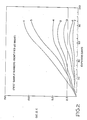
- the molded test samples were evaluated for ultraviolet light resistance using two different test procedures: an accelerated HPUV test and an accelerated fluorescent light test, respectively.
- the accelerated HPUV test was conducted using an Atlas HPUV Tester, following the procedure described in the operation manual.
- the accelerated fluorescent light test used an ultraviolet light irradiance that was approximately 10 times more intense than a representative office exposure. Measurements were by a spectral radiometer, with the temperature of the test samples being maintained at 60°C. The exposure was continous.
- Figure 2 is considered to be the more meaningful of the two tests in that it more closely simulates real life business office conditions.
- the rubber modified polystyrene resin can be replaced in whole or in part by "crystal" polystyrene (that is, non-rubber modified).
Landscapes
- Chemical & Material Sciences (AREA)
- Organic Chemistry (AREA)
- Health & Medical Sciences (AREA)
- Chemical Kinetics & Catalysis (AREA)
- Medicinal Chemistry (AREA)
- Polymers & Plastics (AREA)
- Life Sciences & Earth Sciences (AREA)
- Engineering & Computer Science (AREA)
- Materials Engineering (AREA)
- Wood Science & Technology (AREA)
- Compositions Of Macromolecular Compounds (AREA)
- Coating Of Shaped Articles Made Of Macromolecular Substances (AREA)
- Paints Or Removers (AREA)
Applications Claiming Priority (2)
| Application Number | Priority Date | Filing Date | Title |
|---|---|---|---|
| US06/840,391 US4843116A (en) | 1986-03-17 | 1986-03-17 | UV light stabilizer composition comprising cyclic aliphatic epoxy, UV screener, and polyalkyldipiperidine (HALS) compounds |
| US840391 | 1986-03-17 |
Publications (3)
| Publication Number | Publication Date |
|---|---|
| EP0240723A2 true EP0240723A2 (fr) | 1987-10-14 |
| EP0240723A3 EP0240723A3 (en) | 1989-03-08 |
| EP0240723B1 EP0240723B1 (fr) | 1993-06-23 |
Family
ID=25282247
Family Applications (1)
| Application Number | Title | Priority Date | Filing Date |
|---|---|---|---|
| EP87103103A Expired - Lifetime EP0240723B1 (fr) | 1986-03-17 | 1987-03-05 | Composition de stabilisant contre le rayonnement UV comprenant un composé époxy cyclo-aliphatique, un filtre de rayons UV et des composés de polyalkyldipipéridines |
Country Status (4)
| Country | Link |
|---|---|
| US (1) | US4843116A (fr) |
| EP (1) | EP0240723B1 (fr) |
| JP (1) | JP2561266B2 (fr) |
| DE (1) | DE3786287T2 (fr) |
Cited By (4)
| Publication number | Priority date | Publication date | Assignee | Title |
|---|---|---|---|---|
| US5478873A (en) * | 1993-09-01 | 1995-12-26 | Sumitomo Chemical Company, Limited | Thermoplastic resin composition |
| WO1997039069A1 (fr) * | 1991-01-07 | 1997-10-23 | Clariant Finance (Bvi) Limited | Stabilisation de peintures |
| EP0837064A3 (fr) * | 1996-10-16 | 1998-04-29 | Ciba SC Holding AG | Produits d'addition d'amines et d'époxy-HALS et leur utilisation comme stabiliseurs |
| WO2005001477A3 (fr) * | 2003-05-30 | 2005-03-31 | Agilent Technologies Inc | Procedes de traitement de reseaux de ligands comprenant une etape de depot de fluides a faible tension de surface et compositions permettant cette mise en oeuvre |
Families Citing this family (15)
| Publication number | Priority date | Publication date | Assignee | Title |
|---|---|---|---|---|
| US5026751A (en) * | 1986-03-17 | 1991-06-25 | General Electric Company | UV light stabilizer composition comprising cyclic aliphatic epoxy UV screener, and polyalkyldipiperidine (HALS) compounds |
| US5210119A (en) * | 1987-10-16 | 1993-05-11 | General Electric Company | Polymer mixture comprising polyphenylene ether, sterically hindered amine and epoxy compound and articles manufactured therefrom |
| JP2744508B2 (ja) * | 1989-04-07 | 1998-04-28 | キヤノン株式会社 | 液体噴射記録装置の対記録液用壁材料、該材料を用いた液体噴射記録ヘッド、及び該記録ヘッドを有する液体 |
| JPH07179748A (ja) * | 1993-12-22 | 1995-07-18 | Nippon G Ii Plast Kk | 耐光性ポリフェニレンエーテル系樹脂組成物 |
| KR100727524B1 (ko) * | 2000-02-22 | 2007-06-14 | 시바 스폐셜티 케미칼스 홀딩 인코포레이티드 | 폴리올레핀용 안정화제 혼합물 |
| US20040241880A1 (en) * | 2003-05-30 | 2004-12-02 | Leproust Eric M. | Ligand array assays having reduced fluorescent dye degradation and compositions for practicing the same |
| US7205342B2 (en) * | 2003-10-10 | 2007-04-17 | General Electric Company | Poly(arylene ether) composition and method of molding |
| EP1794220A1 (fr) * | 2004-09-30 | 2007-06-13 | Ciba Specialty Chemicals Holding Inc. | Procede de remplissage ou d'introduction de photostabilisants |
| US20060068317A1 (en) * | 2004-09-30 | 2006-03-30 | Klei Steven R | Poly(arylene ether) composition |
| US20060247338A1 (en) * | 2005-05-02 | 2006-11-02 | General Electric Company | Poly(arylene ether) compositions with improved ultraviolet light stability, and related articles |
| US7544728B2 (en) * | 2006-04-19 | 2009-06-09 | Asahi Kasei Chemicals Corporation | Production process of polyphenylene ether composition |
| US7585906B2 (en) * | 2007-02-28 | 2009-09-08 | Sabic Innovative Plastics Ip B.V. | Poly(arylene ether) composition, method, and article |
| US7576150B2 (en) * | 2007-02-28 | 2009-08-18 | Sabic Innovative Plastics Ip B.V. | Poly(arylene ether) composition, method, and article |
| US20120065307A1 (en) * | 2009-06-18 | 2012-03-15 | Cogen Jeffrey M | Color-Stable, Halogen-Free Flame Retardant Compositions |
| BR112012003075B1 (pt) * | 2009-08-10 | 2019-11-19 | Union Carbide Chem Plastic | fio revestido e método para fazer um fio revestido |
Family Cites Families (8)
| Publication number | Priority date | Publication date | Assignee | Title |
|---|---|---|---|---|
| GB801701A (en) * | 1955-10-20 | 1958-09-17 | Union Carbide Corp | Plasticized and heat and light stabilized polymeric compositions |
| US3640928A (en) * | 1968-06-12 | 1972-02-08 | Sankyo Co | Stabilization of synthetic polymers |
| DE2661090C2 (fr) * | 1975-11-07 | 1990-02-08 | Ciba-Geigy Ag, Basel, Ch | |
| US4315848A (en) * | 1979-05-10 | 1982-02-16 | Ciba-Geigy Corporation | 2-[2-Hydroxy-3,5-di-(α,α-dimethylbenzyl)-phenyl]-2H-benzotriazole and stabilized compositions |
| US4288631A (en) * | 1979-09-05 | 1981-09-08 | General Electric Company | UV Stabilizers, coating compositions and composite structures obtained therefrom |
| EP0052579B1 (fr) * | 1980-11-17 | 1984-11-14 | Ciba-Geigy Ag | Stabilisants contre la lumière |
| US4555538A (en) * | 1983-12-22 | 1985-11-26 | General Electric Company | Compositions of polyphenylene ether resin and high impact polystyrene resin having improved ultraviolet light resistance |
| DE3566897D1 (en) * | 1984-01-13 | 1989-01-26 | Gen Electric | Compositions of polyphenylene ether resin and high impact polystyrene resin having improved ultraviolet light resistance |
-
1986
- 1986-03-17 US US06/840,391 patent/US4843116A/en not_active Expired - Fee Related
-
1987
- 1987-03-05 DE DE87103103T patent/DE3786287T2/de not_active Expired - Fee Related
- 1987-03-05 EP EP87103103A patent/EP0240723B1/fr not_active Expired - Lifetime
- 1987-03-17 JP JP62060259A patent/JP2561266B2/ja not_active Expired - Fee Related
Cited By (5)
| Publication number | Priority date | Publication date | Assignee | Title |
|---|---|---|---|---|
| WO1997039069A1 (fr) * | 1991-01-07 | 1997-10-23 | Clariant Finance (Bvi) Limited | Stabilisation de peintures |
| AU728028B2 (en) * | 1991-01-07 | 2001-01-04 | Clariant Finance (Bvi) Limited | Paint stabiliser |
| US5478873A (en) * | 1993-09-01 | 1995-12-26 | Sumitomo Chemical Company, Limited | Thermoplastic resin composition |
| EP0837064A3 (fr) * | 1996-10-16 | 1998-04-29 | Ciba SC Holding AG | Produits d'addition d'amines et d'époxy-HALS et leur utilisation comme stabiliseurs |
| WO2005001477A3 (fr) * | 2003-05-30 | 2005-03-31 | Agilent Technologies Inc | Procedes de traitement de reseaux de ligands comprenant une etape de depot de fluides a faible tension de surface et compositions permettant cette mise en oeuvre |
Also Published As
| Publication number | Publication date |
|---|---|
| JP2561266B2 (ja) | 1996-12-04 |
| EP0240723B1 (fr) | 1993-06-23 |
| DE3786287D1 (de) | 1993-07-29 |
| EP0240723A3 (en) | 1989-03-08 |
| US4843116A (en) | 1989-06-27 |
| JPS62283183A (ja) | 1987-12-09 |
| DE3786287T2 (de) | 1993-12-02 |
Similar Documents
| Publication | Publication Date | Title |
|---|---|---|
| US4843116A (en) | UV light stabilizer composition comprising cyclic aliphatic epoxy, UV screener, and polyalkyldipiperidine (HALS) compounds | |
| US6069206A (en) | Aromatic polycarbonate-styrene polymer resin composition | |
| US5156920A (en) | Polyphenylene ether resin compositions having improved adhesion for decorative and protective coatings | |
| JP5427335B2 (ja) | 水と長期間接触する熱可塑性ポリマー用の相乗効果安定剤組成物 | |
| US5026751A (en) | UV light stabilizer composition comprising cyclic aliphatic epoxy UV screener, and polyalkyldipiperidine (HALS) compounds | |
| KR20070100303A (ko) | 개선된 자외선 안정성을 갖는 폴리(아릴렌 에테르) 조성물및 관련 제품 | |
| US4835201A (en) | Compositions of polyphenylene ether resin and high impact polystyrene resin having improved ultraviolet light resistance | |
| US4456720A (en) | Flame resistant non-discolored polyphenylene ether resin compositions | |
| EP0946632A1 (fr) | Homopolymeres et copolymeres de styrene ininflammables stables a la lumiere | |
| CA1266147A (fr) | Compositions de resine de poly(oxyphenylene) et de resine de polystyrene de resilience elevee, offrant une meilleure stabilite a la lumiere ultra-violette | |
| US4785076A (en) | Polyphenylene ether resin blends having improved ultraviolet light stability | |
| EP0229363B1 (fr) | Résines d'oxyde de polyphénylène stabilisées contre le rayonnement ultra-violet | |
| US20060068317A1 (en) | Poly(arylene ether) composition | |
| GB1561140A (en) | Polyphenylene ether resins | |
| EP0149454B1 (fr) | Compositions de résines de poly(éther de phénylène) et de résines de polystyrène à haute résistance au choc ayant une stabilité contre la lumière ultraviolette améliorée | |
| JP2000226369A (ja) | 立体障害性アミン化合物 | |
| EP0085834B1 (fr) | Agent d'ignifugation inhibitant la décoloration comprenant un stable composé organique halogéné et un composé de bore | |
| CA1269787A (fr) | Melanges de resine de poly(oxyphenylene) offrant une meilleure stabilite a la lumiere ultra-violette | |
| JPS58152053A (ja) | 安定化された合成樹脂組成物 | |
| JPH0576502B2 (fr) | ||
| GB1558524A (en) | Foamable thermoplastic resin composition | |
| EP0111811A2 (fr) | Système stabilisant et compositions de poly(éther de phénylène) stabilisées à l'aide de ce système | |
| JPH04227753A (ja) | 帯電防止仕上剤含有光安定性ポリフェニレンエーテル 成形材料 | |
| JPS6020412B2 (ja) | 芳香族ポリエステル共重合体組成物 | |
| JPS60238358A (ja) | ポリフエニレンエ−テル系樹脂組成物 |
Legal Events
| Date | Code | Title | Description |
|---|---|---|---|
| PUAI | Public reference made under article 153(3) epc to a published international application that has entered the european phase |
Free format text: ORIGINAL CODE: 0009012 |
|
| AK | Designated contracting states |
Kind code of ref document: A2 Designated state(s): DE FR GB IT NL |
|
| PUAL | Search report despatched |
Free format text: ORIGINAL CODE: 0009013 |
|
| AK | Designated contracting states |
Kind code of ref document: A3 Designated state(s): DE FR GB IT NL |
|
| 17P | Request for examination filed |
Effective date: 19890823 |
|
| 17Q | First examination report despatched |
Effective date: 19910819 |
|
| GRAA | (expected) grant |
Free format text: ORIGINAL CODE: 0009210 |
|
| AK | Designated contracting states |
Kind code of ref document: B1 Designated state(s): DE FR GB IT NL |
|
| PG25 | Lapsed in a contracting state [announced via postgrant information from national office to epo] |
Ref country code: NL Effective date: 19930623 |
|
| ET | Fr: translation filed | ||
| ITF | It: translation for a ep patent filed | ||
| REF | Corresponds to: |
Ref document number: 3786287 Country of ref document: DE Date of ref document: 19930729 |
|
| NLV1 | Nl: lapsed or annulled due to failure to fulfill the requirements of art. 29p and 29m of the patents act | ||
| PLBE | No opposition filed within time limit |
Free format text: ORIGINAL CODE: 0009261 |
|
| STAA | Information on the status of an ep patent application or granted ep patent |
Free format text: STATUS: NO OPPOSITION FILED WITHIN TIME LIMIT |
|
| 26N | No opposition filed | ||
| PGFP | Annual fee paid to national office [announced via postgrant information from national office to epo] |
Ref country code: FR Payment date: 19950210 Year of fee payment: 9 |
|
| PGFP | Annual fee paid to national office [announced via postgrant information from national office to epo] |
Ref country code: GB Payment date: 19950228 Year of fee payment: 9 |
|
| PG25 | Lapsed in a contracting state [announced via postgrant information from national office to epo] |
Ref country code: GB Effective date: 19960305 |
|
| GBPC | Gb: european patent ceased through non-payment of renewal fee |
Effective date: 19960305 |
|
| PG25 | Lapsed in a contracting state [announced via postgrant information from national office to epo] |
Ref country code: FR Effective date: 19961129 |
|
| REG | Reference to a national code |
Ref country code: FR Ref legal event code: ST |
|
| PGFP | Annual fee paid to national office [announced via postgrant information from national office to epo] |
Ref country code: DE Payment date: 19980223 Year of fee payment: 12 |
|
| PG25 | Lapsed in a contracting state [announced via postgrant information from national office to epo] |
Ref country code: DE Free format text: LAPSE BECAUSE OF NON-PAYMENT OF DUE FEES Effective date: 20000101 |
|
| PG25 | Lapsed in a contracting state [announced via postgrant information from national office to epo] |
Ref country code: IT Free format text: LAPSE BECAUSE OF NON-PAYMENT OF DUE FEES Effective date: 20050305 |