EP0245018B1 - Composition de résine époxyde - Google Patents
Composition de résine époxyde Download PDFInfo
- Publication number
- EP0245018B1 EP0245018B1 EP87303813A EP87303813A EP0245018B1 EP 0245018 B1 EP0245018 B1 EP 0245018B1 EP 87303813 A EP87303813 A EP 87303813A EP 87303813 A EP87303813 A EP 87303813A EP 0245018 B1 EP0245018 B1 EP 0245018B1
- Authority
- EP
- European Patent Office
- Prior art keywords
- composition
- polyol
- phenyl
- imidazole
- carbon atoms
- Prior art date
- Legal status (The legal status is an assumption and is not a legal conclusion. Google has not performed a legal analysis and makes no representation as to the accuracy of the status listed.)
- Expired - Lifetime
Links
- 239000000203 mixture Substances 0.000 title claims description 83
- 239000003822 epoxy resin Substances 0.000 title claims description 25
- 229920000647 polyepoxide Polymers 0.000 title claims description 25
- RAXXELZNTBOGNW-UHFFFAOYSA-N imidazole Natural products C1=CNC=N1 RAXXELZNTBOGNW-UHFFFAOYSA-N 0.000 claims description 66
- 229920005862 polyol Polymers 0.000 claims description 39
- 150000003077 polyols Chemical class 0.000 claims description 35
- -1 aromatic cyclic polyol Chemical class 0.000 claims description 28
- 150000001875 compounds Chemical class 0.000 claims description 23
- 125000001997 phenyl group Chemical group [H]C1=C([H])C([H])=C(*)C([H])=C1[H] 0.000 claims description 23
- 150000002118 epoxides Chemical class 0.000 claims description 21
- 125000004432 carbon atom Chemical group C* 0.000 claims description 18
- GYZLOYUZLJXAJU-UHFFFAOYSA-N diglycidyl ether Chemical compound C1OC1COCC1CO1 GYZLOYUZLJXAJU-UHFFFAOYSA-N 0.000 claims description 18
- IISBACLAFKSPIT-UHFFFAOYSA-N bisphenol A Chemical compound C=1C=C(O)C=CC=1C(C)(C)C1=CC=C(O)C=C1 IISBACLAFKSPIT-UHFFFAOYSA-N 0.000 claims description 17
- 125000000217 alkyl group Chemical group 0.000 claims description 16
- 239000012745 toughening agent Substances 0.000 claims description 13
- 125000002887 hydroxy group Chemical group [H]O* 0.000 claims description 11
- 125000002496 methyl group Chemical group [H]C([H])([H])* 0.000 claims description 11
- 125000004435 hydrogen atom Chemical class [H]* 0.000 claims description 9
- 125000001624 naphthyl group Chemical group 0.000 claims description 9
- ZFSLODLOARCGLH-UHFFFAOYSA-N isocyanuric acid Chemical compound OC1=NC(O)=NC(O)=N1 ZFSLODLOARCGLH-UHFFFAOYSA-N 0.000 claims description 8
- 229920000642 polymer Polymers 0.000 claims description 8
- NTXGQCSETZTARF-UHFFFAOYSA-N buta-1,3-diene;prop-2-enenitrile Chemical compound C=CC=C.C=CC#N NTXGQCSETZTARF-UHFFFAOYSA-N 0.000 claims description 7
- 239000011258 core-shell material Substances 0.000 claims description 6
- 125000001495 ethyl group Chemical group [H]C([H])([H])C([H])([H])* 0.000 claims description 6
- 229920000578 graft copolymer Polymers 0.000 claims description 6
- 238000010438 heat treatment Methods 0.000 claims description 6
- 125000001424 substituent group Chemical group 0.000 claims description 6
- 229920000459 Nitrile rubber Polymers 0.000 claims description 5
- 239000002253 acid Substances 0.000 claims description 5
- 230000009257 reactivity Effects 0.000 claims description 5
- 125000003118 aryl group Chemical group 0.000 claims description 4
- 229910052739 hydrogen Inorganic materials 0.000 claims description 4
- 239000001257 hydrogen Substances 0.000 claims description 4
- 125000001931 aliphatic group Chemical group 0.000 claims description 3
- 150000001450 anions Chemical class 0.000 claims description 3
- 230000003197 catalytic effect Effects 0.000 claims description 3
- 125000004966 cyanoalkyl group Chemical group 0.000 claims description 3
- 239000000945 filler Substances 0.000 claims description 3
- 150000007522 mineralic acids Chemical class 0.000 claims description 3
- 125000000449 nitro group Chemical group [O-][N+](*)=O 0.000 claims description 3
- NIXOWILDQLNWCW-UHFFFAOYSA-N acrylic acid group Chemical group C(C=C)(=O)O NIXOWILDQLNWCW-UHFFFAOYSA-N 0.000 claims description 2
- 125000003368 amide group Chemical group 0.000 claims description 2
- 150000001732 carboxylic acid derivatives Chemical class 0.000 claims description 2
- 239000007795 chemical reaction product Substances 0.000 claims description 2
- 238000000576 coating method Methods 0.000 claims description 2
- 239000012948 isocyanate Substances 0.000 claims description 2
- 150000002513 isocyanates Chemical class 0.000 claims description 2
- 238000000034 method Methods 0.000 claims description 2
- 239000005056 polyisocyanate Substances 0.000 claims description 2
- 239000000758 substrate Substances 0.000 claims 7
- 150000001735 carboxylic acids Chemical class 0.000 claims 1
- 239000011248 coating agent Substances 0.000 claims 1
- 125000001475 halogen functional group Chemical group 0.000 claims 1
- 229920001228 polyisocyanate Polymers 0.000 claims 1
- 239000000853 adhesive Substances 0.000 description 17
- 230000001070 adhesive effect Effects 0.000 description 17
- 239000000463 material Substances 0.000 description 14
- XAGFODPZIPBFFR-UHFFFAOYSA-N aluminium Chemical compound [Al] XAGFODPZIPBFFR-UHFFFAOYSA-N 0.000 description 12
- 239000003085 diluting agent Substances 0.000 description 10
- 150000002460 imidazoles Chemical class 0.000 description 10
- XLYOFNOQVPJJNP-UHFFFAOYSA-N water Substances O XLYOFNOQVPJJNP-UHFFFAOYSA-N 0.000 description 9
- 239000004593 Epoxy Substances 0.000 description 8
- 239000003795 chemical substances by application Substances 0.000 description 8
- 238000012360 testing method Methods 0.000 description 8
- 229910052751 metal Inorganic materials 0.000 description 7
- 239000002184 metal Substances 0.000 description 7
- 229920001169 thermoplastic Polymers 0.000 description 7
- RTZKZFJDLAIYFH-UHFFFAOYSA-N Diethyl ether Chemical compound CCOCC RTZKZFJDLAIYFH-UHFFFAOYSA-N 0.000 description 6
- ZJCCRDAZUWHFQH-UHFFFAOYSA-N Trimethylolpropane Chemical compound CCC(CO)(CO)CO ZJCCRDAZUWHFQH-UHFFFAOYSA-N 0.000 description 6
- 238000009835 boiling Methods 0.000 description 6
- LNEPOXFFQSENCJ-UHFFFAOYSA-N haloperidol Chemical compound C1CC(O)(C=2C=CC(Cl)=CC=2)CCN1CCCC(=O)C1=CC=C(F)C=C1 LNEPOXFFQSENCJ-UHFFFAOYSA-N 0.000 description 6
- 238000007654 immersion Methods 0.000 description 6
- 239000004416 thermosoftening plastic Substances 0.000 description 6
- FPTQOQLMYGSLAW-UHFFFAOYSA-L 1h-imidazole;nickel(2+);phthalate Chemical compound [Ni+2].C1=CNC=N1.C1=CNC=N1.C1=CNC=N1.C1=CNC=N1.C1=CNC=N1.C1=CNC=N1.[O-]C(=O)C1=CC=CC=C1C([O-])=O FPTQOQLMYGSLAW-UHFFFAOYSA-L 0.000 description 5
- 229910001335 Galvanized steel Inorganic materials 0.000 description 5
- 229910000831 Steel Inorganic materials 0.000 description 5
- 239000011324 bead Substances 0.000 description 5
- 238000009472 formulation Methods 0.000 description 5
- 239000008397 galvanized steel Substances 0.000 description 5
- 239000010959 steel Substances 0.000 description 5
- QXJQHYBHAIHNGG-UHFFFAOYSA-N trimethylolethane Chemical compound OCC(C)(CO)CO QXJQHYBHAIHNGG-UHFFFAOYSA-N 0.000 description 5
- VTYYLEPIZMXCLO-UHFFFAOYSA-L Calcium carbonate Chemical compound [Ca+2].[O-]C([O-])=O VTYYLEPIZMXCLO-UHFFFAOYSA-L 0.000 description 4
- 229920013646 Hycar Polymers 0.000 description 4
- VYPSYNLAJGMNEJ-UHFFFAOYSA-N Silicium dioxide Chemical compound O=[Si]=O VYPSYNLAJGMNEJ-UHFFFAOYSA-N 0.000 description 4
- PXKLMJQFEQBVLD-UHFFFAOYSA-N bisphenol F Chemical compound C1=CC(O)=CC=C1CC1=CC=C(O)C=C1 PXKLMJQFEQBVLD-UHFFFAOYSA-N 0.000 description 4
- WERYXYBDKMZEQL-UHFFFAOYSA-N butane-1,4-diol Chemical compound OCCCCO WERYXYBDKMZEQL-UHFFFAOYSA-N 0.000 description 4
- 229910052799 carbon Inorganic materials 0.000 description 4
- 239000007788 liquid Substances 0.000 description 4
- 239000000178 monomer Substances 0.000 description 4
- LYCAIKOWRPUZTN-UHFFFAOYSA-N Ethylene glycol Chemical compound OCCO LYCAIKOWRPUZTN-UHFFFAOYSA-N 0.000 description 3
- MUBZPKHOEPUJKR-UHFFFAOYSA-N Oxalic acid Chemical compound OC(=O)C(O)=O MUBZPKHOEPUJKR-UHFFFAOYSA-N 0.000 description 3
- 229910021485 fumed silica Inorganic materials 0.000 description 3
- 230000001939 inductive effect Effects 0.000 description 3
- 239000003921 oil Substances 0.000 description 3
- 235000019198 oils Nutrition 0.000 description 3
- PUPZLCDOIYMWBV-UHFFFAOYSA-N (+/-)-1,3-Butanediol Chemical compound CC(O)CCO PUPZLCDOIYMWBV-UHFFFAOYSA-N 0.000 description 2
- QUJHTBJZWODEBZ-UHFFFAOYSA-N 1h-imidazole;nickel Chemical compound [Ni].C1=CNC=N1.C1=CNC=N1.C1=CNC=N1.C1=CNC=N1.C1=CNC=N1.C1=CNC=N1 QUJHTBJZWODEBZ-UHFFFAOYSA-N 0.000 description 2
- 0 C*C(*1*)=*C(C)C1C=* Chemical compound C*C(*1*)=*C(C)C1C=* 0.000 description 2
- OKTJSMMVPCPJKN-UHFFFAOYSA-N Carbon Chemical compound [C] OKTJSMMVPCPJKN-UHFFFAOYSA-N 0.000 description 2
- OFOBLEOULBTSOW-UHFFFAOYSA-N Malonic acid Chemical compound OC(=O)CC(O)=O OFOBLEOULBTSOW-UHFFFAOYSA-N 0.000 description 2
- ATUOYWHBWRKTHZ-UHFFFAOYSA-N Propane Chemical compound CCC ATUOYWHBWRKTHZ-UHFFFAOYSA-N 0.000 description 2
- QAOWNCQODCNURD-UHFFFAOYSA-N Sulfuric acid Chemical compound OS(O)(=O)=O QAOWNCQODCNURD-UHFFFAOYSA-N 0.000 description 2
- GWEVSGVZZGPLCZ-UHFFFAOYSA-N Titan oxide Chemical compound O=[Ti]=O GWEVSGVZZGPLCZ-UHFFFAOYSA-N 0.000 description 2
- 239000000654 additive Substances 0.000 description 2
- 238000007605 air drying Methods 0.000 description 2
- 229910052782 aluminium Inorganic materials 0.000 description 2
- TZCXTZWJZNENPQ-UHFFFAOYSA-L barium sulfate Chemical compound [Ba+2].[O-]S([O-])(=O)=O TZCXTZWJZNENPQ-UHFFFAOYSA-L 0.000 description 2
- MTAZNLWOLGHBHU-UHFFFAOYSA-N butadiene-styrene rubber Chemical compound C=CC=C.C=CC1=CC=CC=C1 MTAZNLWOLGHBHU-UHFFFAOYSA-N 0.000 description 2
- 229910000019 calcium carbonate Inorganic materials 0.000 description 2
- 239000003054 catalyst Substances 0.000 description 2
- 230000000052 comparative effect Effects 0.000 description 2
- 238000001816 cooling Methods 0.000 description 2
- 150000002170 ethers Chemical class 0.000 description 2
- 239000000835 fiber Substances 0.000 description 2
- 230000009477 glass transition Effects 0.000 description 2
- 229910052736 halogen Inorganic materials 0.000 description 2
- 125000005843 halogen group Chemical group 0.000 description 2
- 150000002367 halogens Chemical class 0.000 description 2
- 238000002156 mixing Methods 0.000 description 2
- 229920003986 novolac Polymers 0.000 description 2
- 125000000466 oxiranyl group Chemical group 0.000 description 2
- 239000003973 paint Substances 0.000 description 2
- 229920000058 polyacrylate Polymers 0.000 description 2
- 239000000047 product Substances 0.000 description 2
- GHMLBKRAJCXXBS-UHFFFAOYSA-N resorcinol Chemical compound OC1=CC=CC(O)=C1 GHMLBKRAJCXXBS-UHFFFAOYSA-N 0.000 description 2
- 229920006395 saturated elastomer Polymers 0.000 description 2
- RUEBPOOTFCZRBC-UHFFFAOYSA-N (5-methyl-2-phenyl-1h-imidazol-4-yl)methanol Chemical compound OCC1=C(C)NC(C=2C=CC=CC=2)=N1 RUEBPOOTFCZRBC-UHFFFAOYSA-N 0.000 description 1
- ORTVZLZNOYNASJ-UPHRSURJSA-N (z)-but-2-ene-1,4-diol Chemical compound OC\C=C/CO ORTVZLZNOYNASJ-UPHRSURJSA-N 0.000 description 1
- KGVLEQAEEBYJOQ-UHFFFAOYSA-K 1H-imidazole nickel(3+) phosphate Chemical compound P(=O)([O-])([O-])[O-].[Ni+3].N1C=NC=C1.N1C=NC=C1.N1C=NC=C1.N1C=NC=C1.N1C=NC=C1.N1C=NC=C1 KGVLEQAEEBYJOQ-UHFFFAOYSA-K 0.000 description 1
- WPNKPIHUMZHKMQ-UHFFFAOYSA-L 1h-imidazole;nickel(2+);phthalate Chemical compound [Ni+2].C1=CNC=N1.[O-]C(=O)C1=CC=CC=C1C([O-])=O WPNKPIHUMZHKMQ-UHFFFAOYSA-L 0.000 description 1
- RNFJDJUURJAICM-UHFFFAOYSA-N 2,2,4,4,6,6-hexaphenoxy-1,3,5-triaza-2$l^{5},4$l^{5},6$l^{5}-triphosphacyclohexa-1,3,5-triene Chemical compound N=1P(OC=2C=CC=CC=2)(OC=2C=CC=CC=2)=NP(OC=2C=CC=CC=2)(OC=2C=CC=CC=2)=NP=1(OC=1C=CC=CC=1)OC1=CC=CC=C1 RNFJDJUURJAICM-UHFFFAOYSA-N 0.000 description 1
- PAPPEKHULAQSEJ-UHFFFAOYSA-N 2-(1h-imidazol-2-yl)propanenitrile Chemical compound N#CC(C)C1=NC=CN1 PAPPEKHULAQSEJ-UHFFFAOYSA-N 0.000 description 1
- QHQZEEGNGSZBOL-UHFFFAOYSA-N 2-(aminomethyl)-2-(hydroxymethyl)propane-1,3-diol Chemical compound NCC(CO)(CO)CO QHQZEEGNGSZBOL-UHFFFAOYSA-N 0.000 description 1
- CUFXMPWHOWYNSO-UHFFFAOYSA-N 2-[(4-methylphenoxy)methyl]oxirane Chemical compound C1=CC(C)=CC=C1OCC1OC1 CUFXMPWHOWYNSO-UHFFFAOYSA-N 0.000 description 1
- HHRACYLRBOUBKM-UHFFFAOYSA-N 2-[(4-tert-butylphenoxy)methyl]oxirane Chemical compound C1=CC(C(C)(C)C)=CC=C1OCC1OC1 HHRACYLRBOUBKM-UHFFFAOYSA-N 0.000 description 1
- SHKUUQIDMUMQQK-UHFFFAOYSA-N 2-[4-(oxiran-2-ylmethoxy)butoxymethyl]oxirane Chemical class C1OC1COCCCCOCC1CO1 SHKUUQIDMUMQQK-UHFFFAOYSA-N 0.000 description 1
- TXBCBTDQIULDIA-UHFFFAOYSA-N 2-[[3-hydroxy-2,2-bis(hydroxymethyl)propoxy]methyl]-2-(hydroxymethyl)propane-1,3-diol Chemical compound OCC(CO)(CO)COCC(CO)(CO)CO TXBCBTDQIULDIA-UHFFFAOYSA-N 0.000 description 1
- PTJWCLYPVFJWMP-UHFFFAOYSA-N 2-[[3-hydroxy-2-[[3-hydroxy-2,2-bis(hydroxymethyl)propoxy]methyl]-2-(hydroxymethyl)propoxy]methyl]-2-(hydroxymethyl)propane-1,3-diol Chemical compound OCC(CO)(CO)COCC(CO)(CO)COCC(CO)(CO)CO PTJWCLYPVFJWMP-UHFFFAOYSA-N 0.000 description 1
- MUZDXNQOSGWMJJ-UHFFFAOYSA-N 2-methylprop-2-enoic acid;prop-2-enoic acid Chemical compound OC(=O)C=C.CC(=C)C(O)=O MUZDXNQOSGWMJJ-UHFFFAOYSA-N 0.000 description 1
- ZCUJYXPAKHMBAZ-UHFFFAOYSA-N 2-phenyl-1h-imidazole Chemical compound C1=CNC(C=2C=CC=CC=2)=N1 ZCUJYXPAKHMBAZ-UHFFFAOYSA-N 0.000 description 1
- VYZKQGGPNIFCLD-UHFFFAOYSA-N 3,3-dimethylhexane-2,2-diol Chemical compound CCCC(C)(C)C(C)(O)O VYZKQGGPNIFCLD-UHFFFAOYSA-N 0.000 description 1
- CXXSQMDHHYTRKY-UHFFFAOYSA-N 4-amino-2,3,5-tris(oxiran-2-ylmethyl)phenol Chemical compound C1=C(O)C(CC2OC2)=C(CC2OC2)C(N)=C1CC1CO1 CXXSQMDHHYTRKY-UHFFFAOYSA-N 0.000 description 1
- NIXOWILDQLNWCW-UHFFFAOYSA-M Acrylate Chemical compound [O-]C(=O)C=C NIXOWILDQLNWCW-UHFFFAOYSA-M 0.000 description 1
- NLHHRLWOUZZQLW-UHFFFAOYSA-N Acrylonitrile Chemical compound C=CC#N NLHHRLWOUZZQLW-UHFFFAOYSA-N 0.000 description 1
- 241001598984 Bromius obscurus Species 0.000 description 1
- MOPFFHMPJXVSKE-UHFFFAOYSA-L C(C(=O)[O-])(=O)[O-].[Ni+2].N1C=NC=C1.N1C=NC=C1 Chemical compound C(C(=O)[O-])(=O)[O-].[Ni+2].N1C=NC=C1.N1C=NC=C1 MOPFFHMPJXVSKE-UHFFFAOYSA-L 0.000 description 1
- XBJBEQDEIWTMTG-UHFFFAOYSA-L C(CC(=O)[O-])(=O)[O-].[Ni+2].N1C=NC=C1.N1C=NC=C1.N1C=NC=C1.N1C=NC=C1 Chemical compound C(CC(=O)[O-])(=O)[O-].[Ni+2].N1C=NC=C1.N1C=NC=C1.N1C=NC=C1.N1C=NC=C1 XBJBEQDEIWTMTG-UHFFFAOYSA-L 0.000 description 1
- ZAPPUNULTKFETP-UHFFFAOYSA-J C=1(C(=C(C(=CC1)C(=O)[O-])C(=O)[O-])C(=O)[O-])C(=O)[O-].[Ni+4].N1C=NC=C1.N1C=NC=C1.N1C=NC=C1.N1C=NC=C1.N1C=NC=C1.N1C=NC=C1 Chemical compound C=1(C(=C(C(=CC1)C(=O)[O-])C(=O)[O-])C(=O)[O-])C(=O)[O-].[Ni+4].N1C=NC=C1.N1C=NC=C1.N1C=NC=C1.N1C=NC=C1.N1C=NC=C1.N1C=NC=C1 ZAPPUNULTKFETP-UHFFFAOYSA-J 0.000 description 1
- HKPUPQJRYIBNKL-NJXYFUOMSA-N C[C@@H]1N=C(N)N(C)C(NC)N1 Chemical compound C[C@@H]1N=C(N)N(C)C(NC)N1 HKPUPQJRYIBNKL-NJXYFUOMSA-N 0.000 description 1
- 229920013683 Celanese Polymers 0.000 description 1
- RYGMFSIKBFXOCR-UHFFFAOYSA-N Copper Chemical compound [Cu] RYGMFSIKBFXOCR-UHFFFAOYSA-N 0.000 description 1
- 229920000742 Cotton Polymers 0.000 description 1
- WPYCRFCQABTEKC-UHFFFAOYSA-N Diglycidyl resorcinol ether Chemical class C1OC1COC(C=1)=CC=CC=1OCC1CO1 WPYCRFCQABTEKC-UHFFFAOYSA-N 0.000 description 1
- BRLQWZUYTZBJKN-UHFFFAOYSA-N Epichlorohydrin Chemical compound ClCC1CO1 BRLQWZUYTZBJKN-UHFFFAOYSA-N 0.000 description 1
- CTKINSOISVBQLD-UHFFFAOYSA-N Glycidol Chemical compound OCC1CO1 CTKINSOISVBQLD-UHFFFAOYSA-N 0.000 description 1
- DGAQECJNVWCQMB-PUAWFVPOSA-M Ilexoside XXIX Chemical compound C[C@@H]1CC[C@@]2(CC[C@@]3(C(=CC[C@H]4[C@]3(CC[C@@H]5[C@@]4(CC[C@@H](C5(C)C)OS(=O)(=O)[O-])C)C)[C@@H]2[C@]1(C)O)C)C(=O)O[C@H]6[C@@H]([C@H]([C@@H]([C@H](O6)CO)O)O)O.[Na+] DGAQECJNVWCQMB-PUAWFVPOSA-M 0.000 description 1
- CERQOIWHTDAKMF-UHFFFAOYSA-M Methacrylate Chemical compound CC(=C)C([O-])=O CERQOIWHTDAKMF-UHFFFAOYSA-M 0.000 description 1
- KWYHDKDOAIKMQN-UHFFFAOYSA-N N,N,N',N'-tetramethylethylenediamine Chemical compound CN(C)CCN(C)C KWYHDKDOAIKMQN-UHFFFAOYSA-N 0.000 description 1
- SEPOZIQOFBAHJF-UHFFFAOYSA-L P(=O)(O)(O)[O-].[Ni+2].N1C=NC=C1.N1C=NC=C1.N1C=NC=C1.N1C=NC=C1.N1C=NC=C1.N1C=NC=C1.P(=O)(O)(O)[O-] Chemical compound P(=O)(O)(O)[O-].[Ni+2].N1C=NC=C1.N1C=NC=C1.N1C=NC=C1.N1C=NC=C1.N1C=NC=C1.N1C=NC=C1.P(=O)(O)(O)[O-] SEPOZIQOFBAHJF-UHFFFAOYSA-L 0.000 description 1
- JBZAWALNOZOMHB-UHFFFAOYSA-L P(=O)(O)([O-])[O-].[Ni+2].N1C=NC=C1.N1C=NC=C1.N1C=NC=C1.N1C=NC=C1.N1C=NC=C1.N1C=NC=C1 Chemical compound P(=O)(O)([O-])[O-].[Ni+2].N1C=NC=C1.N1C=NC=C1.N1C=NC=C1.N1C=NC=C1.N1C=NC=C1.N1C=NC=C1 JBZAWALNOZOMHB-UHFFFAOYSA-L 0.000 description 1
- ISWSIDIOOBJBQZ-UHFFFAOYSA-N Phenol Chemical compound OC1=CC=CC=C1 ISWSIDIOOBJBQZ-UHFFFAOYSA-N 0.000 description 1
- 239000004952 Polyamide Substances 0.000 description 1
- FDLQZKYLHJJBHD-UHFFFAOYSA-N [3-(aminomethyl)phenyl]methanamine Chemical compound NCC1=CC=CC(CN)=C1 FDLQZKYLHJJBHD-UHFFFAOYSA-N 0.000 description 1
- UUQQGGWZVKUCBD-UHFFFAOYSA-N [4-(hydroxymethyl)-2-phenyl-1h-imidazol-5-yl]methanol Chemical compound N1C(CO)=C(CO)N=C1C1=CC=CC=C1 UUQQGGWZVKUCBD-UHFFFAOYSA-N 0.000 description 1
- 150000007513 acids Chemical class 0.000 description 1
- 125000002947 alkylene group Chemical group 0.000 description 1
- 150000001412 amines Chemical class 0.000 description 1
- 150000008064 anhydrides Chemical class 0.000 description 1
- 239000011230 binding agent Substances 0.000 description 1
- 235000019437 butane-1,3-diol Nutrition 0.000 description 1
- 150000001721 carbon Chemical group 0.000 description 1
- 239000006229 carbon black Substances 0.000 description 1
- 125000003178 carboxy group Chemical group [H]OC(*)=O 0.000 description 1
- 150000007942 carboxylates Chemical class 0.000 description 1
- 238000006243 chemical reaction Methods 0.000 description 1
- XENVCRGQTABGKY-ZHACJKMWSA-N chlorohydrin Chemical compound CC#CC#CC#CC#C\C=C\C(Cl)CO XENVCRGQTABGKY-ZHACJKMWSA-N 0.000 description 1
- KRVSOGSZCMJSLX-UHFFFAOYSA-L chromic acid Substances O[Cr](O)(=O)=O KRVSOGSZCMJSLX-UHFFFAOYSA-L 0.000 description 1
- 239000004927 clay Substances 0.000 description 1
- 229910052570 clay Inorganic materials 0.000 description 1
- MPMSMUBQXQALQI-UHFFFAOYSA-N cobalt phthalocyanine Chemical compound [Co+2].C12=CC=CC=C2C(N=C2[N-]C(C3=CC=CC=C32)=N2)=NC1=NC([C]1C=CC=CC1=1)=NC=1N=C1[C]3C=CC=CC3=C2[N-]1 MPMSMUBQXQALQI-UHFFFAOYSA-N 0.000 description 1
- 229910052802 copper Inorganic materials 0.000 description 1
- 239000010949 copper Substances 0.000 description 1
- 238000005336 cracking Methods 0.000 description 1
- 125000004122 cyclic group Chemical group 0.000 description 1
- VEIOBOXBGYWJIT-UHFFFAOYSA-N cyclohexane;methanol Chemical compound OC.OC.C1CCCCC1 VEIOBOXBGYWJIT-UHFFFAOYSA-N 0.000 description 1
- KOOCBPAYMMMFET-UHFFFAOYSA-N disilver copper(1+) 2-ethyl-4-methylimidazol-1-ide imidazol-3-ide 2-phenylimidazol-3-ide Chemical compound C1(=CC=CC=C1)C=1[N-]C=CN1.[Cu+].C(C)C=1[N-]C=C(N1)C.[Ag+].[N-]1C=NC=C1.[Ag+] KOOCBPAYMMMFET-UHFFFAOYSA-N 0.000 description 1
- 239000006185 dispersion Substances 0.000 description 1
- 238000001035 drying Methods 0.000 description 1
- 230000000694 effects Effects 0.000 description 1
- 239000000374 eutectic mixture Substances 0.000 description 1
- HOXINJBQVZWYGZ-UHFFFAOYSA-N fenbutatin oxide Chemical compound C=1C=CC=CC=1C(C)(C)C[Sn](O[Sn](CC(C)(C)C=1C=CC=CC=1)(CC(C)(C)C=1C=CC=CC=1)CC(C)(C)C=1C=CC=CC=1)(CC(C)(C)C=1C=CC=CC=1)CC(C)(C)C1=CC=CC=C1 HOXINJBQVZWYGZ-UHFFFAOYSA-N 0.000 description 1
- 239000003063 flame retardant Substances 0.000 description 1
- SLGWESQGEUXWJQ-UHFFFAOYSA-N formaldehyde;phenol Chemical compound O=C.OC1=CC=CC=C1 SLGWESQGEUXWJQ-UHFFFAOYSA-N 0.000 description 1
- AWJWCTOOIBYHON-UHFFFAOYSA-N furo[3,4-b]pyrazine-5,7-dione Chemical compound C1=CN=C2C(=O)OC(=O)C2=N1 AWJWCTOOIBYHON-UHFFFAOYSA-N 0.000 description 1
- 239000011521 glass Substances 0.000 description 1
- 229920006158 high molecular weight polymer Polymers 0.000 description 1
- 125000001183 hydrocarbyl group Chemical group 0.000 description 1
- VGDJMUKGNSOHFY-UHFFFAOYSA-N imidazol-3-ide nickel(2+) Chemical compound [Ni++].c1c[n-]cn1.c1c[n-]cn1 VGDJMUKGNSOHFY-UHFFFAOYSA-N 0.000 description 1
- JBFYUZGYRGXSFL-UHFFFAOYSA-N imidazolide Chemical compound C1=C[N-]C=N1 JBFYUZGYRGXSFL-UHFFFAOYSA-N 0.000 description 1
- 150000002462 imidazolines Chemical class 0.000 description 1
- 230000003116 impacting effect Effects 0.000 description 1
- 230000000977 initiatory effect Effects 0.000 description 1
- 239000004761 kevlar Substances 0.000 description 1
- 239000003446 ligand Substances 0.000 description 1
- 150000002690 malonic acid derivatives Chemical class 0.000 description 1
- 239000010445 mica Substances 0.000 description 1
- 229910052618 mica group Inorganic materials 0.000 description 1
- SLCVBVWXLSEKPL-UHFFFAOYSA-N neopentyl glycol Chemical compound OCC(C)(C)CO SLCVBVWXLSEKPL-UHFFFAOYSA-N 0.000 description 1
- PXHVJJICTQNCMI-UHFFFAOYSA-N nickel Substances [Ni] PXHVJJICTQNCMI-UHFFFAOYSA-N 0.000 description 1
- QJGQUHMNIGDVPM-UHFFFAOYSA-N nitrogen group Chemical group [N] QJGQUHMNIGDVPM-UHFFFAOYSA-N 0.000 description 1
- 150000002894 organic compounds Chemical class 0.000 description 1
- 150000003891 oxalate salts Chemical class 0.000 description 1
- 235000006408 oxalic acid Nutrition 0.000 description 1
- NFHFRUOZVGFOOS-UHFFFAOYSA-N palladium;triphenylphosphane Chemical compound [Pd].C1=CC=CC=C1P(C=1C=CC=CC=1)C1=CC=CC=C1.C1=CC=CC=C1P(C=1C=CC=CC=1)C1=CC=CC=C1.C1=CC=CC=C1P(C=1C=CC=CC=1)C1=CC=CC=C1.C1=CC=CC=C1P(C=1C=CC=CC=1)C1=CC=CC=C1 NFHFRUOZVGFOOS-UHFFFAOYSA-N 0.000 description 1
- WXZMFSXDPGVJKK-UHFFFAOYSA-N pentaerythritol Chemical compound OCC(CO)(CO)CO WXZMFSXDPGVJKK-UHFFFAOYSA-N 0.000 description 1
- JRKICGRDRMAZLK-UHFFFAOYSA-L peroxydisulfate Chemical compound [O-]S(=O)(=O)OOS([O-])(=O)=O JRKICGRDRMAZLK-UHFFFAOYSA-L 0.000 description 1
- 229920001568 phenolic resin Polymers 0.000 description 1
- 150000002989 phenols Chemical class 0.000 description 1
- 125000005498 phthalate group Chemical class 0.000 description 1
- 150000003021 phthalic acid derivatives Chemical class 0.000 description 1
- 239000004014 plasticizer Substances 0.000 description 1
- 229920001485 poly(butyl acrylate) polymer Polymers 0.000 description 1
- 229920003229 poly(methyl methacrylate) Polymers 0.000 description 1
- 229920002647 polyamide Polymers 0.000 description 1
- 239000004848 polyfunctional curative Substances 0.000 description 1
- 239000004926 polymethyl methacrylate Substances 0.000 description 1
- XAEFZNCEHLXOMS-UHFFFAOYSA-M potassium benzoate Chemical compound [K+].[O-]C(=O)C1=CC=CC=C1 XAEFZNCEHLXOMS-UHFFFAOYSA-M 0.000 description 1
- 239000002244 precipitate Substances 0.000 description 1
- 239000001294 propane Substances 0.000 description 1
- DSNYFFJTZPIKFZ-UHFFFAOYSA-N propoxybenzene Chemical group CCCOC1=CC=CC=C1 DSNYFFJTZPIKFZ-UHFFFAOYSA-N 0.000 description 1
- 239000000376 reactant Substances 0.000 description 1
- 229920005989 resin Polymers 0.000 description 1
- 239000011347 resin Substances 0.000 description 1
- 238000007142 ring opening reaction Methods 0.000 description 1
- 238000010106 rotational casting Methods 0.000 description 1
- 150000003839 salts Chemical class 0.000 description 1
- 150000004760 silicates Chemical class 0.000 description 1
- 229920002050 silicone resin Polymers 0.000 description 1
- 125000005373 siloxane group Chemical group [SiH2](O*)* 0.000 description 1
- 229910052708 sodium Inorganic materials 0.000 description 1
- 239000011734 sodium Substances 0.000 description 1
- 239000000126 substance Substances 0.000 description 1
- 239000000454 talc Substances 0.000 description 1
- 229910052623 talc Inorganic materials 0.000 description 1
- 238000010998 test method Methods 0.000 description 1
- 239000002562 thickening agent Substances 0.000 description 1
- 239000004408 titanium dioxide Substances 0.000 description 1
- 125000003944 tolyl group Chemical group 0.000 description 1
- 235000015112 vegetable and seed oil Nutrition 0.000 description 1
- 239000008158 vegetable oil Substances 0.000 description 1
Classifications
-
- C—CHEMISTRY; METALLURGY
- C08—ORGANIC MACROMOLECULAR COMPOUNDS; THEIR PREPARATION OR CHEMICAL WORKING-UP; COMPOSITIONS BASED THEREON
- C08G—MACROMOLECULAR COMPOUNDS OBTAINED OTHERWISE THAN BY REACTIONS ONLY INVOLVING UNSATURATED CARBON-TO-CARBON BONDS
- C08G59/00—Polycondensates containing more than one epoxy group per molecule; Macromolecules obtained by polymerising compounds containing more than one epoxy group per molecule using curing agents or catalysts which react with the epoxy groups
- C08G59/18—Macromolecules obtained by polymerising compounds containing more than one epoxy group per molecule using curing agents or catalysts which react with the epoxy groups ; e.g. general methods of curing
- C08G59/68—Macromolecules obtained by polymerising compounds containing more than one epoxy group per molecule using curing agents or catalysts which react with the epoxy groups ; e.g. general methods of curing characterised by the catalysts used
- C08G59/686—Macromolecules obtained by polymerising compounds containing more than one epoxy group per molecule using curing agents or catalysts which react with the epoxy groups ; e.g. general methods of curing characterised by the catalysts used containing nitrogen
-
- C—CHEMISTRY; METALLURGY
- C08—ORGANIC MACROMOLECULAR COMPOUNDS; THEIR PREPARATION OR CHEMICAL WORKING-UP; COMPOSITIONS BASED THEREON
- C08G—MACROMOLECULAR COMPOUNDS OBTAINED OTHERWISE THAN BY REACTIONS ONLY INVOLVING UNSATURATED CARBON-TO-CARBON BONDS
- C08G59/00—Polycondensates containing more than one epoxy group per molecule; Macromolecules obtained by polymerising compounds containing more than one epoxy group per molecule using curing agents or catalysts which react with the epoxy groups
- C08G59/18—Macromolecules obtained by polymerising compounds containing more than one epoxy group per molecule using curing agents or catalysts which react with the epoxy groups ; e.g. general methods of curing
- C08G59/40—Macromolecules obtained by polymerising compounds containing more than one epoxy group per molecule using curing agents or catalysts which react with the epoxy groups ; e.g. general methods of curing characterised by the curing agents used
- C08G59/62—Alcohols or phenols
-
- C—CHEMISTRY; METALLURGY
- C08—ORGANIC MACROMOLECULAR COMPOUNDS; THEIR PREPARATION OR CHEMICAL WORKING-UP; COMPOSITIONS BASED THEREON
- C08G—MACROMOLECULAR COMPOUNDS OBTAINED OTHERWISE THAN BY REACTIONS ONLY INVOLVING UNSATURATED CARBON-TO-CARBON BONDS
- C08G59/00—Polycondensates containing more than one epoxy group per molecule; Macromolecules obtained by polymerising compounds containing more than one epoxy group per molecule using curing agents or catalysts which react with the epoxy groups
- C08G59/18—Macromolecules obtained by polymerising compounds containing more than one epoxy group per molecule using curing agents or catalysts which react with the epoxy groups ; e.g. general methods of curing
- C08G59/68—Macromolecules obtained by polymerising compounds containing more than one epoxy group per molecule using curing agents or catalysts which react with the epoxy groups ; e.g. general methods of curing characterised by the catalysts used
-
- C—CHEMISTRY; METALLURGY
- C08—ORGANIC MACROMOLECULAR COMPOUNDS; THEIR PREPARATION OR CHEMICAL WORKING-UP; COMPOSITIONS BASED THEREON
- C08L—COMPOSITIONS OF MACROMOLECULAR COMPOUNDS
- C08L63/00—Compositions of epoxy resins; Compositions of derivatives of epoxy resins
Definitions
- Epoxy resins i.e., organic compounds having one or more terminal or pendant oxirane groups
- Various curatives, accelerators, and additives have been used with the epoxy resins to modify the curing properties and adhesive characteristics.
- epoxide group-containing materials which are useful in the practice of this invention include glycidyl ether monomers of the formula where R1 is alkyl or aryl and m is an integer of to 6.
- examples are the glycidyl ethers of polyhydric phenols obtained by reacting a polyhydric phenol with an excess of chlorohydrin such as epichlorohydrin (e.g., the diglycidyl ether of bisphenol A, i.e., 2,2-bis (4,4'-epoxy propoxyphenyl)propane).
- epoxide group-containing materials which can be used in this invention.
- epoxides which are readily available include glycidol, diglycidyl ethers of bisphenol A (e.g., those available under the trade designations Epon TM 828 available from Shell Chemical Co., and DERTM-332, and DERTM-334 available from Dow Chemical Co.), diglycidyl ethers of bisphenol F (e.g., EpiclonTM 830 from Dainippon Ink & Chemicals, Inc.) silicone resins containing diglycidyl epoxy functionality, flame retardant epoxy resins (e.g., DER TM -580, a brominated bisphenol-type epoxy resin available from Dow Chemical Co.), 1,4-butanediol diglycidyl ethers (e.g., Araldite TM RD-2 available from Ciba-Geigy), polyglycidyl ethers of phenol formaldehy
- bisphenol A e.g
- polyol also includes derivatives of the above-described polyols such as the reaction product of the polyol with di- or poly-isocyanate, or di- or poly-carboxylic acid, the molar ratio of polyol to -NCO, or -COOH being 1 to 1.
- the polyol is preferably insoluble in the epoxide resin to increase storage stability.
- imidazoles or imidazole containing compounds are present in the composition in catalytic amounts, i.e., amounts sufficient to catalyze the reaction between the epoxide resin and the polyol on heating of the composition.
- the amount of the imidazole used is 1 to 10 weight percent, more preferably 3 to 7 weight percent based on the weight of the epoxide and polyol present.
- the imidazole is insoluble in the epoxide resin to provide increased storage stability.
- Suitable imidazoles include hexakis (imidazole) nickel phthalate, hexakis (imidazole) nickel benzene tetracarboxylate, bis(imidazole) nickel oxalate, tetrakis (imidazole) nickel malonate, hexakis (imidazole) nickel hexafluorotitanate, hexakis (imidazole) cobaltous hexafluorotitanate, tetrakis (imidazole) cupric hexafluorotitanate, hexakis (imidazole) nickel phosphate, hexakis (imidazole) nickel monohydrogen phosphate, hexakis (imidazole) nickel dihydrogen phosphate, 2-phenyl-4-methyl-5-hydroxymethyl imidazole, 2-phenyl-4,5-dihydroxymethyl imidazole, 1-cyanoethyl-2-undecylimi
- the rubbery backbone preferably can be prepared so as to constitute from 95 percent to 40 percent by weight of the total graft polymer, and the thermoplastic monomer or group of monomers which are polymerized in the presence of the rubbery backbone constitute from 5 percent to 60 percent by weight of the graft polymer.
- polymeric toughening agents which have both a rubbery phase and a thermoplastic phase are acrylic core-shell polymers wherein the core is an acrylic polymer having a glass transition temperature below 0°C, such as polybutyl acrylate or polyosooctyl acrylate, and the shell is an acrylic polymer having a glass transition temperature above 25°C, such as polymethylmethacrylate.
- acrylic core-shell polymers include AcryloidTM KM 323, AcryloidTM KM 330, and ParaloidTM BTA 731, all available from Rohm and Haas Co.
- the epoxy resin compositions when used as adhesives with electrocoated galvanized steel, are capable of providing initial room temperature (22°C) impact strength of at least 11400 J/m and impact strengths at -30°C of at least 2200 J/m preferably at least 4400 J/m, more preferably at least 11,400 J/m and an overlap shear strength of at least 7 MPa, preferably at least 10.5 MPa, more preferably at least 13.5 MPa, when cured at a temperature of 165°C for 30 minutes.
- Example 3 and 4 samples were prepared as in Examples 1 and 2, respectively, except that the adhesive composition was cured in a forced air oven for 30 minutes at 165°C. The samples were tested for initial lap shear strength at room temperature, and after 24-hour immersion in boiling water and for initial lap shear strength at room temperature and after 24-hour immersion in boiling water. Each composition was tested for press-flow value. the results are shown in Table 2.
- Table 2 Lap shear strength (MPa) Impact strength (J/mx10) at 22°C Ex. value (sec)
- Initial 24-hour boil Initial 24-hour boil 3 85 14.9 9.8 ⁇ 114 55 4 50 15.0 10.8 ⁇ 114 ⁇ 114
- Example 10 compositions were prepared, as described in Examples 10-34, using the following formulation with various imidazole catalysts as set forth in Table 5. Parts by Weight DERTM 332 67.2 ParaloidTM BTA-731 16.0 DERTM 332/HycarTM 1300x8 adduct 28.0 Trimethylol propane 15.6 Cab-O-SilTM TS 720 5.2 Aluminum powder 32.6 Imidazole (various) 5.0
Landscapes
- Chemical & Material Sciences (AREA)
- Health & Medical Sciences (AREA)
- Chemical Kinetics & Catalysis (AREA)
- Medicinal Chemistry (AREA)
- Polymers & Plastics (AREA)
- Organic Chemistry (AREA)
- Epoxy Resins (AREA)
- Adhesives Or Adhesive Processes (AREA)
- Compositions Of Macromolecular Compounds (AREA)
Claims (9)
- Composition de résine époxy d'une seule pièce, stable pendant le stockage et à durcissement thermique, comprenant une résine d'époxyde durcissable, un polyol cyclique aliphatique ou non aromatique ayant de 2 à 18 atomes de carbone, au moins un groupe hydroxy dudit polyol étant un groupe primaire, et au moins deux groupes hydroxy dudit polyol étant des groupes primaires ou secondaires, et ledit polyol ne contenant pas de groupes d'acides forts, de groupes amides et de substituants retirant des électrons en position a par rapport aux atomes de carbone fixés sur les groupes méthylol du polyol ; avec la condition que lesdits polyols comprennent aussi des dérivés de ceux-ci, qui sont le produit de réaction desdits polyols avec des diisocyanates ou des polyisocyanates ou des acides dicarboxyliques ou polycarboxyliques, le rapport molaire dudit polyol audit isocyanate ou audit acide carboxylique étant de 1:1 ; ladite résine d'époxyde et ledit polyol étant présents en des quantités telles que le rapport du groupe hydroxyle à l'époxyde soit de 0,5:1 a 1:1, et une quantité catalytique d'un composé imidazole choisi parmi :(a) des composés représentés par la formule
M¹(L¹)a(X¹)b
où M¹ est Ni⁺⁺, Cu⁺⁺ ou Co⁺⁺,L¹ est où R est un groupe alkyle ayant de 1 à 18 atomes de carbone, un groupe cyanoalkyle ayant de 1 à 4 atomes de carbone, le groupe phényle ou phényle substitué, et R³ est un groupe alkyle ayant de 1 à 18 atomes de carbone, le groupe phényle ou phényle substitué,x¹ est -R⁴(COO⁻) où R⁴ est le groupe phényle, naphtyle ou CmH2m, où m vaut 1 ou 2, oux¹ est -R⁵(COO⁻)e, où R⁵ est le groupe phényle ou naphtyle, et e vaut 3 ou 4, oux¹ est un anion d'un acide minéral fort ayant une valeur de pKa de moins de 2,a vaut 2, 4 ou 6, etb vaut 0,5, 0,67, 1 ou 2 selon la valence de x¹;(b) des composés représentés par la formule LXoù L est
 où R⁶ est -H, -CnH2n+1 ou
 n étant un nombre de 1 à 16,R⁷ est -H, -CH₃, -C₂H₅, -C₂H₄CN, ou
 R⁸ est -H, -CH₃, -C₂H₅, -CH₂OH, ou
 R⁹ est -H,X est -R⁴(COOH)₂ où R⁴ est le groupe phényle naphtyle ou CmH2m, où m vaut 1 ou 2, ouX est -R⁵(COOH)e, où R⁵ est le groupe phényle ou napthyle, et e vaut 3, 4 ou 5, ouX est l'acide isocyanurique, et(c) des composés représentés par la formule M³(L³)e, où M³ est Ni⁺⁺, CU⁺⁺ ou Co⁺⁺, Zn⁺⁺, CU⁺ ou Ag⁺,L³ est
 où R¹ est -H,
 et chaque R est -CH₃,
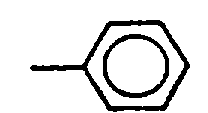 (d) des composés représentés par la formule L⁴où L⁴ est
 où R⁶, R⁷, R⁸ et R⁹ sont tels que définis pour le composé (b) ; et(e) des composés représentés par la formule
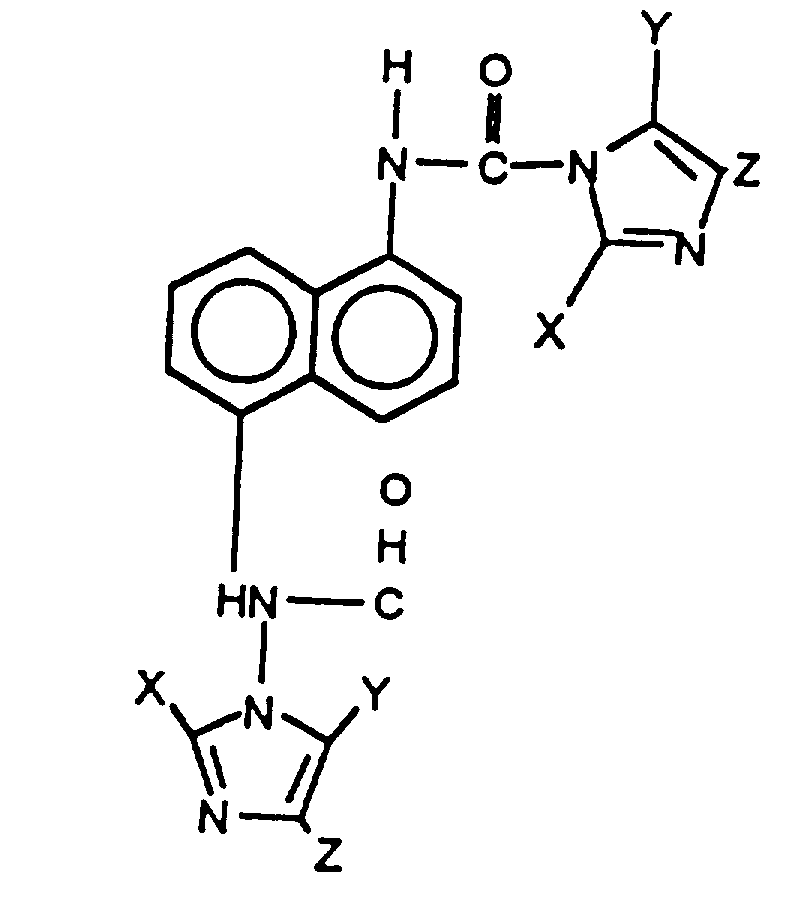
ladite composition ayant un temps limite d'utilisation d'au moins trois jours à 22°C, ledit temps limite d'utilisation étant la durée pendant laquelle la viscosité de ladite composition double de valeur, et ladite composition a une réactivité telle que le laps de temps pendant lequel un exotherme atteint un pic est inférieur à 10 minutes quand on la teste en utilisant un calorimètre différentiel à balayage maintenu à la température de 137°C. - Composition selon la revendication 1, dans laquelle ledit polyol est insoluble dans ledit époxyde.
- Composition selon la revendication 1 ou la revendication 2, dans laquelle ledit imidazole représente de 1 à 10 % en poids de la composition.
- Composition selon l'une quelconque des revendications précédentes, dans laquelle ledit imidazole est insoluble dans ledit époxyde.
- Composition selon l'une quelconque des revendications précédentes, comprenant, en outre, au moins un agent de durcissement.
- Composition selon la revendication 5, dans laquelle ledit agent de durcissement représente de 8 à 34 % en poids de la composition.
- Composition selon la revendication 5 ou la revendication 6, comprenant un agent de durcissement du type butadiène-acrylonitrile à terminaison carboxyle et un agent de durcissement polymère du type noyau-enveloppe.
- Composition selon la revendication 1, ladite composition comprenant :30 à 50 parties en poids d'éther diglycidylique de bisphénol A ;10 à 20 parties en poids d'un produit d'addition d'un butadiène-acrylonitrile à terminaison carboxyle et d'éther diglycidylique de bisphénol A ;3 à 10 parties en poids d'un copolymère acrylique greffé du type noyau-enveloppe ;une quantité suffisante dudit polyol de manière à fournir un rapport hydroxy:époxyde de 0,5:1 à 1:1 ;2 à 5 parties en poids dudit imidazole ; et10 à 50 parties en poids d'une charge.
- Procédé de collage d'un premier substrat sur un deuxième substrat, comprenant les étapes consistant à revêtir le premier substrat d'une composition telle que revendiquée dans l'une quelconque des revendications précédentes, amener le deuxième substrat au contact dudit premier substrat revêtu et chauffer lesdits substrats à une température comprise entre 100 et 200°C pour durcir ladite composition et coller ensemble lesdits substrats.
Applications Claiming Priority (2)
| Application Number | Priority Date | Filing Date | Title |
|---|---|---|---|
| US86051186A | 1986-05-07 | 1986-05-07 | |
| US860511 | 1986-05-07 |
Publications (3)
| Publication Number | Publication Date |
|---|---|
| EP0245018A2 EP0245018A2 (fr) | 1987-11-11 |
| EP0245018A3 EP0245018A3 (en) | 1989-03-15 |
| EP0245018B1 true EP0245018B1 (fr) | 1996-02-28 |
Family
ID=25333379
Family Applications (1)
| Application Number | Title | Priority Date | Filing Date |
|---|---|---|---|
| EP87303813A Expired - Lifetime EP0245018B1 (fr) | 1986-05-07 | 1987-04-29 | Composition de résine époxyde |
Country Status (9)
| Country | Link |
|---|---|
| EP (1) | EP0245018B1 (fr) |
| JP (1) | JP2619871B2 (fr) |
| KR (1) | KR960002474B1 (fr) |
| AU (1) | AU595593B2 (fr) |
| BR (1) | BR8702311A (fr) |
| CA (1) | CA1328142C (fr) |
| DE (1) | DE3751717T2 (fr) |
| ES (1) | ES2083951T3 (fr) |
| MX (1) | MX171637B (fr) |
Cited By (1)
| Publication number | Priority date | Publication date | Assignee | Title |
|---|---|---|---|---|
| EP3760686A1 (fr) | 2019-07-03 | 2021-01-06 | tesa SE | Adhésif à durcissement thermique et bande adhésive fabriquée à partir de celui-ci |
Families Citing this family (12)
| Publication number | Priority date | Publication date | Assignee | Title |
|---|---|---|---|---|
| KR100193147B1 (ko) * | 1990-03-30 | 1999-06-15 | 월터클라웨인, 한느-피터 위트린 | 개질된 에폭시 수지 |
| US5789482A (en) * | 1990-03-30 | 1998-08-04 | Ciba Specialty Chemicals Corporation | Epoxy resin with anhydride, toughener and active hydrogen-containing compound |
| DE19629082A1 (de) * | 1996-07-18 | 1998-01-22 | Siemens Ag | Thermisch härtbares einkomponentiges Low viskosity Adhesive-Klebstoffsystem für Verklebungen im Mikrobereich |
| DE19629750A1 (de) | 1996-07-23 | 1998-01-29 | Siemens Ag | Thermisch härtbares einkomponentiges Low Viskosity Adhesive-Klebstoffsystem mit verbesserten Lagerungseigenschaften |
| US20030198824A1 (en) | 2002-04-19 | 2003-10-23 | Fong John W. | Photocurable compositions containing reactive polysiloxane particles |
| JP4961903B2 (ja) * | 2006-04-27 | 2012-06-27 | 日立化成工業株式会社 | エポキシ樹脂組成物、エポキシ樹脂プリプレグ、金属張積層板および印刷配線板 |
| US10266641B2 (en) * | 2014-09-02 | 2019-04-23 | Toray Industries, Inc. | Epoxy resin composition for fiber-reinforced composite material, prepreg and fiber-reinforced composite material |
| JP6547478B2 (ja) * | 2014-09-02 | 2019-07-24 | 東レ株式会社 | エポキシ樹脂組成物、プリプレグおよび繊維強化複合材料 |
| CN110205068B (zh) * | 2018-02-28 | 2021-12-31 | 旭化成株式会社 | 热固化性粘接剂 |
| JP7547031B2 (ja) * | 2019-03-19 | 2024-09-09 | 株式会社カネカ | エポキシ樹脂組成物及び接着剤 |
| CN116041719B (zh) * | 2022-12-23 | 2024-04-30 | 北京航天新立科技有限公司 | 一种无卤阻燃剂、阻燃改性环氧树脂及它们的制备方法 |
| WO2025263483A1 (fr) * | 2024-06-19 | 2025-12-26 | 株式会社Adeka | Résine époxy, procédé de production de résine époxy, composition époxy, composition durcissable, produit durci, procédé de production de produit durci et composé |
Family Cites Families (10)
| Publication number | Priority date | Publication date | Assignee | Title |
|---|---|---|---|---|
| FR1391527A (fr) * | 1963-05-02 | 1965-03-05 | Shell Int Research | Procédé de durcissement de polyépoxydes et produits résultants |
| US3746686A (en) * | 1971-07-12 | 1973-07-17 | Shell Oil Co | Process for curing polyepoxides with polycarboxylic acid salts of an imidazole compound and compositions thereof |
| US3677978A (en) * | 1971-08-23 | 1972-07-18 | Ppg Industries Inc | Metal salt complexes of imidazoles as curing agents for one-part epoxy resins |
| US3792016A (en) * | 1972-01-06 | 1974-02-12 | Minnesota Mining & Mfg | Metal imidazolate-catalyzed systems |
| US4119592A (en) * | 1977-02-25 | 1978-10-10 | The B. F. Goodrich Company | Rubbery bladders from epoxy compositions |
| JPS53116391A (en) * | 1977-03-18 | 1978-10-11 | Shikoku Kasei Kougiyou Kk | Novel imidazoleisocyanuric adduct synthesizing method thereof polyepoxy hardening method containing same as main component polyepoxy hardening method using same as hardening improver and method of pur |
| US4417010A (en) * | 1982-02-08 | 1983-11-22 | Celanese Corporation | Polyol/imidazole curing agents for epoxy resins |
| CA1206687A (fr) * | 1982-02-08 | 1986-06-24 | Celanese Corporation | Agents de reticulation a base de polyol/imidazole pour resines epoxydes |
| CA1243148A (fr) * | 1983-03-03 | 1988-10-11 | Roland R. Mcclain | Agent de reticulation a base d'imidazole modifie pour resines epoxydes |
| US4533715A (en) * | 1983-09-07 | 1985-08-06 | Hexcel Corporation | Single package epoxy resin system |
-
1987
- 1987-04-01 AU AU70949/87A patent/AU595593B2/en not_active Expired
- 1987-04-03 CA CA000533858A patent/CA1328142C/fr not_active Expired - Fee Related
- 1987-04-27 MX MX006246A patent/MX171637B/es unknown
- 1987-04-29 EP EP87303813A patent/EP0245018B1/fr not_active Expired - Lifetime
- 1987-04-29 ES ES87303813T patent/ES2083951T3/es not_active Expired - Lifetime
- 1987-04-29 DE DE3751717T patent/DE3751717T2/de not_active Expired - Lifetime
- 1987-05-06 KR KR1019870004387A patent/KR960002474B1/ko not_active Expired - Fee Related
- 1987-05-06 BR BR8702311A patent/BR8702311A/pt not_active IP Right Cessation
- 1987-05-06 JP JP62110430A patent/JP2619871B2/ja not_active Expired - Lifetime
Non-Patent Citations (2)
| Title |
|---|
| R. T. Morrison et al " Organic Chemistry" , fourth edition, Allyn and Bacon Inc. , 1983, pages 216, 221-223 * |
| T.W.G. Solomons " Organic Chemistry" , third edition, J.Wiley and Sons, 1984, page 211 * |
Cited By (1)
| Publication number | Priority date | Publication date | Assignee | Title |
|---|---|---|---|---|
| EP3760686A1 (fr) | 2019-07-03 | 2021-01-06 | tesa SE | Adhésif à durcissement thermique et bande adhésive fabriquée à partir de celui-ci |
Also Published As
| Publication number | Publication date |
|---|---|
| EP0245018A3 (en) | 1989-03-15 |
| MX171637B (es) | 1993-11-10 |
| JPS62267320A (ja) | 1987-11-20 |
| AU595593B2 (en) | 1990-04-05 |
| AU7094987A (en) | 1987-11-12 |
| EP0245018A2 (fr) | 1987-11-11 |
| KR870011198A (ko) | 1987-12-21 |
| BR8702311A (pt) | 1988-02-17 |
| JP2619871B2 (ja) | 1997-06-11 |
| DE3751717D1 (de) | 1996-04-04 |
| DE3751717T2 (de) | 1996-10-10 |
| CA1328142C (fr) | 1994-03-29 |
| ES2083951T3 (es) | 1996-05-01 |
| KR960002474B1 (ko) | 1996-02-17 |
Similar Documents
| Publication | Publication Date | Title |
|---|---|---|
| US4948449A (en) | Epoxy resin composition | |
| US4668736A (en) | Fast curing epoxy resin compositions | |
| EP0103968B1 (fr) | Agent fortifiant pour des résines époxydes, son procédé de préparation et compositions époxydes fortifiées le contenant | |
| US6329473B1 (en) | Amine-modified epoxy resin composition | |
| EP0169066B1 (fr) | Compositions de résines époxydes à durcissement rapide | |
| EP0162567B1 (fr) | Composition de revêtement durcissable et adduct de résine époxyde qui y est applicable | |
| US4704331A (en) | Method for adhering surfaces using fast curing epoxy resin compositions | |
| EP0336732A2 (fr) | Colle d'époxyde résistant au choc et durcissable par un acide | |
| EP0658584B1 (fr) | Système résine époxide-durcisseur ayant des propriétés élastiques | |
| US4310646A (en) | Self-crosslinking cationic binders and their preparation | |
| EP0782601B1 (fr) | Composition epoxyde adhesive | |
| US4772645A (en) | Epoxy resin composition | |
| DE4410786A1 (de) | Elastisches Epoxidharz-Härter-System | |
| AU595593B2 (en) | Epoxy resin composition | |
| JP3277256B2 (ja) | エポキシド付加物の製造方法 | |
| US4683282A (en) | Novel boron trifluoride-poly (alkylene oxide) amine catalysts for curing epoxy resins | |
| US4459398A (en) | High strength one-part epoxy adhesive composition | |
| US4020030A (en) | Reaction products of epoxy resins, organic sulfides and protic acids | |
| US3893974A (en) | Epoxy resin compositions containing aminimide compound | |
| US4728737A (en) | High performance two-component epoxy structural adhesive with chemical thixotropy | |
| JP5398541B2 (ja) | ヒドロキシエステルで予備鎖延長したエポキシ末端増粘剤およびその製造方法 | |
| US5569733A (en) | Tertiary aminourea compositions and their use as catalysts in curable compositions | |
| US3888827A (en) | 1,2-epoxy resin compositions containing aminimide compounds | |
| JPS5812898B2 (ja) | エポキシ樹脂組成物 | |
| US3784525A (en) | Long-chain diglycidyl esters |
Legal Events
| Date | Code | Title | Description |
|---|---|---|---|
| PUAI | Public reference made under article 153(3) epc to a published international application that has entered the european phase |
Free format text: ORIGINAL CODE: 0009012 |
|
| AK | Designated contracting states |
Kind code of ref document: A2 Designated state(s): DE ES FR GB IT SE |
|
| PUAL | Search report despatched |
Free format text: ORIGINAL CODE: 0009013 |
|
| AK | Designated contracting states |
Kind code of ref document: A3 Designated state(s): DE ES FR GB IT SE |
|
| 17P | Request for examination filed |
Effective date: 19890530 |
|
| 17Q | First examination report despatched |
Effective date: 19911021 |
|
| GRAH | Despatch of communication of intention to grant a patent |
Free format text: ORIGINAL CODE: EPIDOS IGRA |
|
| GRAA | (expected) grant |
Free format text: ORIGINAL CODE: 0009210 |
|
| ITF | It: translation for a ep patent filed | ||
| AK | Designated contracting states |
Kind code of ref document: B1 Designated state(s): DE ES FR GB IT SE |
|
| REF | Corresponds to: |
Ref document number: 3751717 Country of ref document: DE Date of ref document: 19960404 |
|
| ET | Fr: translation filed | ||
| REG | Reference to a national code |
Ref country code: ES Ref legal event code: FG2A Ref document number: 2083951 Country of ref document: ES Kind code of ref document: T3 |
|
| PLBE | No opposition filed within time limit |
Free format text: ORIGINAL CODE: 0009261 |
|
| STAA | Information on the status of an ep patent application or granted ep patent |
Free format text: STATUS: NO OPPOSITION FILED WITHIN TIME LIMIT |
|
| 26N | No opposition filed | ||
| PGFP | Annual fee paid to national office [announced via postgrant information from national office to epo] |
Ref country code: ES Payment date: 20010511 Year of fee payment: 15 |
|
| REG | Reference to a national code |
Ref country code: GB Ref legal event code: IF02 |
|
| PG25 | Lapsed in a contracting state [announced via postgrant information from national office to epo] |
Ref country code: ES Free format text: LAPSE BECAUSE OF NON-PAYMENT OF DUE FEES Effective date: 20020430 |
|
| REG | Reference to a national code |
Ref country code: ES Ref legal event code: FD2A Effective date: 20030514 |
|
| PGFP | Annual fee paid to national office [announced via postgrant information from national office to epo] |
Ref country code: FR Payment date: 20060417 Year of fee payment: 20 |
|
| PGFP | Annual fee paid to national office [announced via postgrant information from national office to epo] |
Ref country code: GB Payment date: 20060424 Year of fee payment: 20 |
|
| PGFP | Annual fee paid to national office [announced via postgrant information from national office to epo] |
Ref country code: SE Payment date: 20060426 Year of fee payment: 20 |
|
| PGFP | Annual fee paid to national office [announced via postgrant information from national office to epo] |
Ref country code: IT Payment date: 20060430 Year of fee payment: 20 |
|
| PGFP | Annual fee paid to national office [announced via postgrant information from national office to epo] |
Ref country code: DE Payment date: 20060531 Year of fee payment: 20 |
|
| REG | Reference to a national code |
Ref country code: GB Ref legal event code: PE20 |
|
| EUG | Se: european patent has lapsed | ||
| PG25 | Lapsed in a contracting state [announced via postgrant information from national office to epo] |
Ref country code: GB Free format text: LAPSE BECAUSE OF EXPIRATION OF PROTECTION Effective date: 20070428 |