EP0247764B1 - 4(5)-Substituierte Imidazol-Derivate und Zwischenverbindungen und Verfahren zu ihrer Herstellung - Google Patents
4(5)-Substituierte Imidazol-Derivate und Zwischenverbindungen und Verfahren zu ihrer Herstellung Download PDFInfo
- Publication number
- EP0247764B1 EP0247764B1 EP87304304A EP87304304A EP0247764B1 EP 0247764 B1 EP0247764 B1 EP 0247764B1 EP 87304304 A EP87304304 A EP 87304304A EP 87304304 A EP87304304 A EP 87304304A EP 0247764 B1 EP0247764 B1 EP 0247764B1
- Authority
- EP
- European Patent Office
- Prior art keywords
- alkyl
- compound
- formula
- carbon atoms
- give
- Prior art date
- Legal status (The legal status is an assumption and is not a legal conclusion. Google has not performed a legal analysis and makes no representation as to the accuracy of the status listed.)
- Expired - Lifetime
Links
- 0 CC(CC1)(CC2C3)C(CC4)C4C1(C)CC2N[*@@]3C(C=CC)=C* Chemical compound CC(CC1)(CC2C3)C(CC4)C4C1(C)CC2N[*@@]3C(C=CC)=C* 0.000 description 14
Classifications
-
- C—CHEMISTRY; METALLURGY
- C07—ORGANIC CHEMISTRY
- C07D—HETEROCYCLIC COMPOUNDS
- C07D233/00—Heterocyclic compounds containing 1,3-diazole or hydrogenated 1,3-diazole rings, not condensed with other rings
- C07D233/54—Heterocyclic compounds containing 1,3-diazole or hydrogenated 1,3-diazole rings, not condensed with other rings having two double bonds between ring members or between ring members and non-ring members
- C07D233/56—Heterocyclic compounds containing 1,3-diazole or hydrogenated 1,3-diazole rings, not condensed with other rings having two double bonds between ring members or between ring members and non-ring members with only hydrogen atoms or radicals containing only hydrogen and carbon atoms, attached to ring carbon atoms
- C07D233/58—Heterocyclic compounds containing 1,3-diazole or hydrogenated 1,3-diazole rings, not condensed with other rings having two double bonds between ring members or between ring members and non-ring members with only hydrogen atoms or radicals containing only hydrogen and carbon atoms, attached to ring carbon atoms with only hydrogen atoms or radicals containing only hydrogen and carbon atoms, attached to ring nitrogen atoms
-
- C—CHEMISTRY; METALLURGY
- C07—ORGANIC CHEMISTRY
- C07D—HETEROCYCLIC COMPOUNDS
- C07D233/00—Heterocyclic compounds containing 1,3-diazole or hydrogenated 1,3-diazole rings, not condensed with other rings
- C07D233/54—Heterocyclic compounds containing 1,3-diazole or hydrogenated 1,3-diazole rings, not condensed with other rings having two double bonds between ring members or between ring members and non-ring members
- C07D233/56—Heterocyclic compounds containing 1,3-diazole or hydrogenated 1,3-diazole rings, not condensed with other rings having two double bonds between ring members or between ring members and non-ring members with only hydrogen atoms or radicals containing only hydrogen and carbon atoms, attached to ring carbon atoms
-
- A—HUMAN NECESSITIES
- A61—MEDICAL OR VETERINARY SCIENCE; HYGIENE
- A61P—SPECIFIC THERAPEUTIC ACTIVITY OF CHEMICAL COMPOUNDS OR MEDICINAL PREPARATIONS
- A61P25/00—Drugs for disorders of the nervous system
- A61P25/02—Drugs for disorders of the nervous system for peripheral neuropathies
-
- C—CHEMISTRY; METALLURGY
- C07—ORGANIC CHEMISTRY
- C07D—HETEROCYCLIC COMPOUNDS
- C07D233/00—Heterocyclic compounds containing 1,3-diazole or hydrogenated 1,3-diazole rings, not condensed with other rings
- C07D233/54—Heterocyclic compounds containing 1,3-diazole or hydrogenated 1,3-diazole rings, not condensed with other rings having two double bonds between ring members or between ring members and non-ring members
- C07D233/64—Heterocyclic compounds containing 1,3-diazole or hydrogenated 1,3-diazole rings, not condensed with other rings having two double bonds between ring members or between ring members and non-ring members with substituted hydrocarbon radicals attached to ring carbon atoms, e.g. histidine
Definitions
- This invention relates to 4(5)-substituted imidazole derivatives, methods for their preparation, and intermediates for use therein.
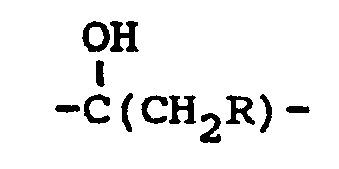
- the imidazole derivatives of this invention may be represented by the general formula and its acid addition salts, in which either X is -CH 2 - and R 1 is -CN, -COOH, COO alkyl of up to 5 carbon atoms, -CHO, -CO alkyl, of up to 5 carbon atoms alkyl of 5 carbon atoms, or (hydroxy alkyl of up to 5 carbon atoms) or X is or -C( :CH-R)-, where R is hydrogen or alkyl of up to 5 carbon atoms or X is -CH(CH 2 R)- where R is alkyl of up to 5 carbon atoms, but not CH 3 , and R 1 is alkyl of up to 5 carbon atoms and R 3 and R 4 are each hydrogen, methyl, ethyl, methoxy, or halogen or X is -CH 2 - and R 1 is isopropyl, vinyl or isopropenyl and R 3 and R 4 are both hydrogen.
- R 1 is C 6 alkyl, OH-substituted lower alkyl, or isopropyl, isopropenyl or vinyl and R 2 is H, or R 1 is alkyl of up to 5 carbon atoms and R 2 is C 4-6 alkyl, lower alkenyl or lower alkenylidene, R 3 is H, CH 3 , CH 2 CH 3 , OCH 3 or Hal, and R 4 is H, CH 3 , CH 2 CH 3 , OCH 3 or Hal, and Hal is halogen.
- the salts of the compounds of the invention and especially the non-toxic pharmaceutically acceptable acid salts of the compounds of formula 1, are within the scope of the invention.
- the compounds of the invention form acid addition salts with both organic and inorganic acids. They can thus form many pharmaceutically usable acid addition salts, as, for instance, chlorides, bromides, sulfates, nitrates, phosphates, sulphonates, formates, tartrates, maleates, citrates, benzoates, salicylates, ascorbates and the like.
- compositions comprising at least one of the compounds of formula (I) or a non-toxic, pharmaceutically acceptable salt thereof, and a compatible pharmaceutically acceptable carrier therefor.
- Adrenergic receptors are physiologically active binding sites which are specific to noradrenaline and adrenaline and are located on the surface of the cell membrane.
- the adrenoceptors of the sympathetic nervous system have been classified into two different subtypes, alpha- (a) and beta- ( ⁇ ) receptors, which can both be further divided into two subgroups, i.e. ⁇ 1 and ⁇ 2 and ⁇ 1 and ⁇ 2 .
- ⁇ 1 , ⁇ 2 and ⁇ 1 are mainly located postsynaptically on the surface of, e.g., smooth muscle and thus mediate, e.g., smooth muscle contraction or relaxation, whereas a 2 receptors are mainly located presynaptically on the terminals of noradrenergic nerves. If a 2 receptors are stimulated by noradrenaline under physiological conditions, noradrenaline release is blocked, i.e. there is a negative feedback phenomenon.
- this negative feed-back phenomenon may be induced by certain synthetic a z -agonists, e.g. detomidine and some of its near analogues.
- detomidine e.g. sedation
- a selective a 2 -antagonist may therefore be predicted to be of use in, e.g., diseases which are believed to be connected with deficiency of noradrenalin available in the postsynaptic adrenoceptors of the central and/or peripheral nervous system. These diseases include e.g. endogenous depression and asthma.
- Glucose and lipid metabolism are regulated by an inhibitory mechanism involving a 2 -receptors.
- a 2 - antagonists may also be useful in the treatment of metabolic diseases like diabetes and obesity.
- Presynaptic a 2 -receptors also take part in platelet aggregation. It has been shown that ⁇ 2 -agonists activate, and ⁇ 2 -antagonists inhibit, human platelet aggregation (Grant & Schutter, Nature 1979, 277, 659). Thus a 2 - antagonists may be useful clinically in pathogenic states involving increased platelet aggregation, e.g. migraine.
- the acute effects of ergotamine, a classical therapeutic agent against migraine are regarded as being due to its ⁇ 1 -agonist effect.
- compounds with both antagonist effects on ⁇ 2 -receptors and agonist effects on postsynaptic ⁇ 1 -receptors may have great advantages in the acute and preventive treatment of migraine.
- This process may be operated in a variety of ways depending on the starting materials and desired end products. Preferred methods are as follows.
- a 2-(imidazol-4(5)-yl)-2-alkyl-1-indanone as described in European patent application publ. No. 183492, and of the formula : wherein R 1 is lower alkyl and R 3 and R 4 are as defined above, is reacted with an alkylmagnesiumhalide of formula R 2 MgHal to give a 4(5)-(1,2-dialkyl-2,3-dihydro-1-hydroxy-1H-inden-2-yl)imidazole of the formula where R 2 is a lower alkyl group.
- Suitable solvents for the reaction are ethers such as diethylether, dibutylether or tetrahydrofuran. The reaction can easily be performed at room temperature.
- a starting material for this method is made by reacting an alkali metal salt, e.g. the sodium salt, of acetoacetic acid ethyl ester, which has the formula with a, a'-dibromo-ortho-xylene of the formula to give 2-acetyl-2,3-dihydro-1 H-indene-2-carboxylic acid ethyl ester, which has the formula
- alkyl esters e.g. the methyl ester, of acetoacetic acid can be used.
- the compound of formula (VII) is then brominated, e.g. with bromine in a solvent which, for example, can be methylene chloride or methanol.
- a solvent which, for example, can be methylene chloride or methanol.
- the reaction temperature can vary from room temperature to +60°C.
- the brominated intermediate, which has the formula is then reacted with formamide in excess at 170-180°C to give 4(5)-(2,3-dihydro-2-ethyloxy-carbonyl-1 H-inden-2-yl)-imidazole, which has the formula :
- Compounds of the invention (I) can be prepared from the compounds of formula (IX) in various ways.
- the compound can, for example, be hydrolysed to the corresponding acid of the formula : which is then reduced to the aldehyde of formula:
- the starting materials for this method can be obtained by reaction of acetoacetonitrile of formula and an a, a'-dibromo-o-xylene of formula (VI).
- This reaction gives a 2-acetyl-2,3-dihydro-1 H-indene-2-carbonitrile of the formula : which is then brominated, e.g. with bromine in methanol, to give a 2-bromoacetyl-2,3-dihydro-1 H-indene-2-carbonitrile of the formula: which is then condensed with formamide preferably at 160-180°C to give an imidazole derivative of formula :
- This nitrile may be converted into a compound of formula (I) by reacting it with an alkyl magnesium bromide of formula R 6 MgHal in tetrahydrofuran to give a 2-acyl derivative of formula :
- an alkali metal salt e.g. sodium salt, of a 1-alkenyl-2-propanone of the formula where R' is hydrogen or alkyl
- R' is hydrogen or alkyl
- an a,a'-dibromo-orthoxylene of the formula to give a 1-[2,3-dihydro-2-(1-alkenyl)-1H-inden-2-yl]-ethanone of the formula where R 3 and R 4 are as above.
- the compound of formula (XXII) is then brominated, e.g. with bromine in a solvent which may be, for example, methylene chloride.
- a solvent which may be, for example, methylene chloride.
- the reaction temperature may be, for example, room temperature.
- This ester can then be hydrolysed to the corresponding acid which may be converted into the acyl chloride, e.g. with thionyl chloride.
- ⁇ 2 -antagonism of these compounds was determined in vitro using the isolated, electrically stimulated mouse vas deferens preparation (Marshall et al., Br. J. Pharmac. 62, 147, 151, 1978).
- an ⁇ 2- agonist (detomidine) blocks electrically stimulated muscular contractions and the effect of the ⁇ 2 -antagonist is seen by administering it prior to the agonist and by determining its pA 2 value.
- the central ⁇ 2 -blocking effect of the compounds of the invention in vivo was studied. It is known that in the rat a z -agonists induce dilatation of the pupil (mydriasis) and that this effect is transmitted via a 2 -receptors of the central nervous system.
- a standard dose of detomidine was administered intravenously. Thereafter increasing doses of the antagonist under test were injected intravenously and the reversal of detomidine-induced mydriasis was observed.
- the ED50 value of the antagonist i.e. the dose producing a 50 per cent reversal, was determined. This test gave the following results :
- the clinical dosage range for the compounds of the invention may be 0.1-10 mg/kg per day for oral or intravenous administration.
- the product from the previous step (2.0 g) was dissolved in 10 ml of ethanol containing 2 ml of 2N hydrochloric acid. To the solution 10% Pd/C was added as catalyst, and the solution was then stirred in a hydrogen atmosphere at room temperature until hydrogen absorption ceased. The reaction mixture was filtered, and made alkaline with sodium hydroxide, and the product was extracted with ethyl acetate. It can then be converted into the hydrochloride in a mixture of isopropanol and ethyl acetate. The product so obtained is a mixture of the cis and trans isomers and melts in the range 175-196°C.
- Tetrabutylammonium bromide (3.1 g) and 48% NaOH (90 ml) were placed in a flask.
- aa'-dibromo-o-xylene (50 g) in toluene (250 ml) was added to the flask, followed by ethyl acetoacetate (24.6 g) in toluene (50 ml) added dropwise.
- the temperature of the reaction mixture rose to 40°C.
- stirring was continued for 2.5 hours. Water was added and the product was extracted into toluene.
- the toluene extracts were washed with water and evaporated in a rotary evaporator. 49.2 g of the product were obtained.
- Ethyl 2-acetyl-2,3-dihydro-1H-indene-2-carboxylate 43.0 g was dissolved in methylene chloride (750 ml) and 29.8 g of bromine in methylene chloride (320 ml) was then added dropwise to the solution.
- a Grignard reagent was prepared from magnesium turnings (0.47 g) and methyl bromide in dry tetrahydrofuran.
- Ethyl 2,3-dihydro-2-[imidazol-4(5)-yl]-1H-indene-2-carboxylate(1.0 g) was dissolved in dry tetrahydrofuran, and the Grignard reagent was added dropwise at 50-60°C to this solution. After the addition the mixture was refluxed for 2 hours.
- the reaction mixture was poured into acidic icewater and the tetrahydrofuran was evaporated.
- the aqueous solution was made alkaline with concentrated ammonia and the product was extracted in ethyl acetate.
- the evaporation residue was 0.32 g.
- the product was converted into its HC1 salt in a mixture of isopropanol and ethyl acetate. 0.20 g of the product, m.p. 203-207°C, was obtained.
- the HCI salt was prepared in a mixture of isopropanol and ethyl acetate, m.p. 181-184°C.
- Tetrabutylammonium bromide (1.9 g) and 55 ml of a 48% NaOH solution were placed in a flask and a,a'- dibromo-o-xylene (30.0 g) in toluene (185 ml) was added.
- 4-penten-2-one (9.8 g) dissolved in toluene (20 ml) was added dropwise to the mixture.
- the reaction mixture was stirred at 100°C until a gas chromatogram indicated that the starting material had disappeared.
- Tetrabutylammonium bromide (0.31 g) and 48% NaOH solution (9 ml) were added to a flask.
- ⁇ , ⁇ '-dibromo- o-xylene (5.0 g) in toluene (15 ml) was then added to the flask.
- the mixture was stirred and ethyl 3-butenoate (2.16 g) in toluene (15 ml) was added dropwise at room temperature. After the addition the temperature was slowly raised to +60 ° C. The mixture was stirred at this temperature for 3.5 hours and then cooled.
- the toluene layer was separated, washed with water and evaporated at reduced pressure to give the desired product
- 1-(2,3-Dihydro-2-vinyl-1H-inden-2-yl)-ethanone was prepared by treating 2,3-dihydro-2-vinyl-1H-indene-2-carboxylic acid chloride with ethoxy magnesium malonic acid ethyl ester in dibutylether and after that with sulfuric acid according to the method of Reynolds, G.A. and Hauser, C.B., Org. Synth. 30 (1957) 70.
Landscapes
- Chemical & Material Sciences (AREA)
- Organic Chemistry (AREA)
- Health & Medical Sciences (AREA)
- Pharmacology & Pharmacy (AREA)
- Animal Behavior & Ethology (AREA)
- Neurosurgery (AREA)
- Biomedical Technology (AREA)
- Chemical Kinetics & Catalysis (AREA)
- General Chemical & Material Sciences (AREA)
- Medicinal Chemistry (AREA)
- Nuclear Medicine, Radiotherapy & Molecular Imaging (AREA)
- Bioinformatics & Cheminformatics (AREA)
- Engineering & Computer Science (AREA)
- Life Sciences & Earth Sciences (AREA)
- Neurology (AREA)
- General Health & Medical Sciences (AREA)
- Public Health (AREA)
- Veterinary Medicine (AREA)
- Pharmaceuticals Containing Other Organic And Inorganic Compounds (AREA)
- Plural Heterocyclic Compounds (AREA)
- Nitrogen Condensed Heterocyclic Rings (AREA)
- Nitrogen And Oxygen Or Sulfur-Condensed Heterocyclic Ring Systems (AREA)
- Diaphragms For Electromechanical Transducers (AREA)
- Dental Preparations (AREA)
- Golf Clubs (AREA)
- Epoxy Resins (AREA)
Claims (21)






Priority Applications (1)
| Application Number | Priority Date | Filing Date | Title |
|---|---|---|---|
| AT87304304T ATE66211T1 (de) | 1986-05-15 | 1987-05-14 | 4(5)-substituierte imidazol-derivate und zwischenverbindungen und verfahren zu ihrer herstellung. |
Applications Claiming Priority (4)
| Application Number | Priority Date | Filing Date | Title |
|---|---|---|---|
| FI862039 | 1986-05-15 | ||
| FI862039A FI862039A0 (fi) | 1986-05-15 | 1986-05-15 | Nytt foerfarande foer framstaellning av 4(5)-substituerade imidazolderivat. |
| FI870462 | 1987-02-04 | ||
| FI870462A FI870462A0 (fi) | 1987-02-04 | 1987-02-04 | Foerfarande foer framstaellning av 4(5)-substituerade imidazolderivat. |
Publications (2)
| Publication Number | Publication Date |
|---|---|
| EP0247764A1 EP0247764A1 (de) | 1987-12-02 |
| EP0247764B1 true EP0247764B1 (de) | 1991-08-14 |
Family
ID=26157963
Family Applications (1)
| Application Number | Title | Priority Date | Filing Date |
|---|---|---|---|
| EP87304304A Expired - Lifetime EP0247764B1 (de) | 1986-05-15 | 1987-05-14 | 4(5)-Substituierte Imidazol-Derivate und Zwischenverbindungen und Verfahren zu ihrer Herstellung |
Country Status (18)
| Country | Link |
|---|---|
| US (2) | US4933359A (de) |
| EP (1) | EP0247764B1 (de) |
| JP (1) | JP2561272B2 (de) |
| KR (1) | KR950002158B1 (de) |
| AT (1) | ATE66211T1 (de) |
| AU (1) | AU600725B2 (de) |
| CA (1) | CA1299186C (de) |
| DE (1) | DE3772104D1 (de) |
| DK (1) | DK172422B1 (de) |
| ES (1) | ES2037712T3 (de) |
| FI (1) | FI81092C (de) |
| GR (1) | GR3002928T3 (de) |
| HU (1) | HU197314B (de) |
| IE (1) | IE59609B1 (de) |
| IL (1) | IL82541A (de) |
| NO (1) | NO166940C (de) |
| NZ (1) | NZ220306A (de) |
| PT (1) | PT84881B (de) |
Families Citing this family (16)
| Publication number | Priority date | Publication date | Assignee | Title |
|---|---|---|---|---|
| GB2225782A (en) * | 1988-12-09 | 1990-06-13 | Farmos Group Limited | Imidazole derivatives useful for treatment of diabetes |
| CA1321751C (en) * | 1989-02-21 | 1993-08-31 | Eugene C. Crichlow | Mechanism mediating ruminal stasis in ruminal lactic acidosis |
| GB2244431A (en) * | 1990-05-31 | 1991-12-04 | Farmos Oy | Treatment of age related memory impairment and other cognitive disorders |
| FR2669030B1 (fr) * | 1990-11-14 | 1992-12-31 | Adir | Nouveaux derives d'imidazole, leur procede de preparation et les compositions pharmaceutiques qui les contiennent. |
| GB9127050D0 (en) * | 1991-12-20 | 1992-02-19 | Orion Yhtymae Oy | Substituted imidazole derivatives and their preparation and use |
| GB9312669D0 (en) | 1993-06-18 | 1993-08-04 | Orion Yhtymae Oy | New opticla isomers |
| FR2735776B1 (fr) * | 1995-06-22 | 1997-07-18 | Synthelabo | Derives de 2,3-dihydro-1h-indole, leur preparation et leur application en therapeutique |
| GB9520150D0 (en) * | 1995-10-03 | 1995-12-06 | Orion Yhtymae Oy | New imidazole derivatives |
| JP2002534511A (ja) * | 1999-01-18 | 2002-10-15 | ノボ ノルディスク アクティーゼルスカブ | 置換型イミダゾール、それらの調製及び使用 |
| US6388090B2 (en) * | 2000-01-14 | 2002-05-14 | Orion Corporation | Imidazole derivatives |
| JP2003532712A (ja) | 2000-05-08 | 2003-11-05 | オリオン コーポレーション | α2アドレナリン作用活性を有する新規な多環式インダニルイミダゾール |
| US8188126B2 (en) | 2002-05-16 | 2012-05-29 | Pierre Fabre Medicament | Imidazolic compounds and use thereof as alpha-2 adrenergic receptors |
| FR2839719B1 (fr) * | 2002-05-16 | 2004-08-06 | Pf Medicament | Nouveaux composes imidazoliques, leur procede de preparation et leur utilisation a titre de medicaments |
| CA2627158A1 (en) * | 2005-08-30 | 2007-03-08 | Queen's University At Kingston | Potentiation of the therapeutic action of an opioid receptor agonist and/or inhibition or reversal of tolerance to an opioid receptoi agonists using an ultralow dose of an alpha-2receptor antagonist |
| CL2008003553A1 (es) * | 2007-12-05 | 2009-11-27 | Grindeks Jsc | Proceso para preparar atipamezol o clorhidrato de 5-(2-etil-2,3-dihidro-1h-inden-2-il)-1h-imidazol: y loa compuestos intermediarios considerados en el proceso |
| EP2456749B1 (de) * | 2009-07-24 | 2016-03-30 | DSM Pharma Chemicals Regensburg GmbH | Indanderivate zur verwendung als zwischenprodukte |
Family Cites Families (5)
| Publication number | Priority date | Publication date | Assignee | Title |
|---|---|---|---|---|
| NL7908922A (nl) * | 1979-12-12 | 1981-07-16 | Akzo Nv | Carboximidamide derivaten. |
| US4480118A (en) * | 1981-01-13 | 1984-10-30 | Sumitomo Chemical Company, Limited | Carboxylic acid ester and an insecticidal and/or acaricidal composition containing the same |
| DE3271003D1 (en) * | 1981-09-15 | 1986-06-12 | Ici Plc | Amino-substituted tetralins and related homocyclic compounds |
| US4661522A (en) * | 1984-05-24 | 1987-04-28 | Akzo N.V. | Cycloalkane-indene-carboximidamide derivatives |
| GB2167408B (en) * | 1984-11-23 | 1988-05-25 | Farmos Oy | Substituted imidazole derivatives and their preparation and use |
-
1987
- 1987-04-15 FI FI871655A patent/FI81092C/fi not_active IP Right Cessation
- 1987-04-24 DK DK198702082A patent/DK172422B1/da not_active IP Right Cessation
- 1987-05-14 KR KR1019870004746A patent/KR950002158B1/ko not_active Expired - Lifetime
- 1987-05-14 NZ NZ220306A patent/NZ220306A/xx unknown
- 1987-05-14 US US07/049,882 patent/US4933359A/en not_active Expired - Lifetime
- 1987-05-14 ES ES198787304304T patent/ES2037712T3/es not_active Expired - Lifetime
- 1987-05-14 IE IE125887A patent/IE59609B1/en not_active IP Right Cessation
- 1987-05-14 HU HU872181A patent/HU197314B/hu unknown
- 1987-05-14 EP EP87304304A patent/EP0247764B1/de not_active Expired - Lifetime
- 1987-05-14 NO NO872004A patent/NO166940C/no unknown
- 1987-05-14 DE DE8787304304T patent/DE3772104D1/de not_active Expired - Lifetime
- 1987-05-14 AT AT87304304T patent/ATE66211T1/de not_active IP Right Cessation
- 1987-05-14 JP JP62118077A patent/JP2561272B2/ja not_active Expired - Lifetime
- 1987-05-15 PT PT84881A patent/PT84881B/pt unknown
- 1987-05-15 AU AU73102/87A patent/AU600725B2/en not_active Ceased
- 1987-05-15 IL IL82541A patent/IL82541A/xx not_active IP Right Cessation
- 1987-05-15 CA CA000537323A patent/CA1299186C/en not_active Expired - Lifetime
-
1989
- 1989-11-06 US US07/431,959 patent/US5026868A/en not_active Expired - Lifetime
-
1991
- 1991-10-17 GR GR91401554T patent/GR3002928T3/el unknown
Also Published As
| Publication number | Publication date |
|---|---|
| DK208287A (da) | 1987-11-16 |
| NO872004D0 (no) | 1987-05-14 |
| HUT45234A (en) | 1988-06-28 |
| KR880009941A (ko) | 1988-10-06 |
| KR950002158B1 (ko) | 1995-03-14 |
| US4933359A (en) | 1990-06-12 |
| IE871258L (en) | 1987-11-15 |
| DK208287D0 (da) | 1987-04-24 |
| AU600725B2 (en) | 1990-08-23 |
| FI871655A0 (fi) | 1987-04-15 |
| IL82541A (en) | 1992-06-21 |
| DE3772104D1 (de) | 1991-09-19 |
| FI81092B (fi) | 1990-05-31 |
| PT84881B (pt) | 1990-02-08 |
| AU7310287A (en) | 1987-11-19 |
| NO166940B (no) | 1991-06-10 |
| DK172422B1 (da) | 1998-06-08 |
| NO166940C (no) | 1991-09-25 |
| HU197314B (en) | 1989-03-28 |
| JP2561272B2 (ja) | 1996-12-04 |
| NZ220306A (en) | 1990-02-26 |
| FI81092C (fi) | 1990-09-10 |
| NO872004L (no) | 1987-11-16 |
| GR3002928T3 (en) | 1993-01-25 |
| CA1299186C (en) | 1992-04-21 |
| JPS62289566A (ja) | 1987-12-16 |
| IE59609B1 (en) | 1994-03-09 |
| EP0247764A1 (de) | 1987-12-02 |
| IL82541A0 (en) | 1987-11-30 |
| US5026868A (en) | 1991-06-25 |
| PT84881A (en) | 1987-06-01 |
| ES2037712T3 (es) | 1993-07-01 |
| ATE66211T1 (de) | 1991-08-15 |
| FI871655A7 (fi) | 1987-11-16 |
Similar Documents
| Publication | Publication Date | Title |
|---|---|---|
| US5026868A (en) | Indenyl imidazoles | |
| EP0183492B1 (de) | Substituierte Imidazolderivate, Verfahren zu ihrer Herstellung und ihre Verwendung | |
| JPS63313753A (ja) | プロペニルアミン類、その製造法、これを含む薬剤組成物および医薬としてのその用途 | |
| US4282251A (en) | Trans-n-cinnamyl-n-methyl-(1-naphthylmethyl)amine | |
| JPH0249308B2 (de) | ||
| US5292887A (en) | Substituted imidazole derivatives and their preparation and use | |
| KR20020069215A (ko) | 신규한 치환기를 갖는 3환성 화합물 | |
| JP3526800B2 (ja) | 新規イミダゾリン化合物、その製造方法、及びそれらを含有する医薬組成物 | |
| WO1989006645A1 (en) | 1-aminomethyl-1,2,3,4-tetrahydronaphthalenes | |
| US5173502A (en) | Substituted trifluoropropan-1-yl-imidazole alpha 2-receptor anagonists | |
| WO1991009006A1 (en) | New bicyclic amino-substituted compounds | |
| JPH0316944B2 (de) | ||
| AU634556B2 (en) | 4(5)-substituted imidazole derivatives, and intermediates and processes for their preparation | |
| FI83417C (fi) | Foerfarande foer framstaellning av farmakologiskt vaerdefulla fenylaettiksyraderivat. | |
| JP2003532712A (ja) | α2アドレナリン作用活性を有する新規な多環式インダニルイミダゾール | |
| AU6619898A (en) | 5-hydroxymethyl-2-aminotetralins as cardiovascular agents | |
| AU2001258469A1 (en) | New polycyclic indanylimidazoles with alpha2 adrenergic activity | |
| DeBernardis et al. | Conformationally defined adrenergic agents. 3. Modifications to the carbocyclic ring of 5, 6-dihydroxy-1-(2-imidazolinyl) tetralin: improved separation of. alpha. 1 and. alpha. 2 adrenergic activities | |
| NO167735B (no) | Analogifremgangsmaate for fremstilling av terapeutisk aktive 4(5)-substituerte imidazol-derivater. | |
| CA1268770A (en) | Preparation of imidazole derivatives | |
| CH435286A (fr) | Procédé de préparation de dérivés de la pyrrolidine |
Legal Events
| Date | Code | Title | Description |
|---|---|---|---|
| PUAI | Public reference made under article 153(3) epc to a published international application that has entered the european phase |
Free format text: ORIGINAL CODE: 0009012 |
|
| AK | Designated contracting states |
Kind code of ref document: A1 Designated state(s): AT BE CH DE ES FR GB GR IT LI LU NL SE |
|
| 17P | Request for examination filed |
Effective date: 19880503 |
|
| 17Q | First examination report despatched |
Effective date: 19891110 |
|
| RAP1 | Party data changed (applicant data changed or rights of an application transferred) |
Owner name: ORION-YHTYMAE OY |
|
| GRAA | (expected) grant |
Free format text: ORIGINAL CODE: 0009210 |
|
| AK | Designated contracting states |
Kind code of ref document: B1 Designated state(s): AT BE CH DE ES FR GB GR IT LI LU NL SE |
|
| REF | Corresponds to: |
Ref document number: 66211 Country of ref document: AT Date of ref document: 19910815 Kind code of ref document: T |
|
| REF | Corresponds to: |
Ref document number: 3772104 Country of ref document: DE Date of ref document: 19910919 |
|
| ET | Fr: translation filed | ||
| ITF | It: translation for a ep patent filed | ||
| PLBE | No opposition filed within time limit |
Free format text: ORIGINAL CODE: 0009261 |
|
| STAA | Information on the status of an ep patent application or granted ep patent |
Free format text: STATUS: NO OPPOSITION FILED WITHIN TIME LIMIT |
|
| 26N | No opposition filed | ||
| REG | Reference to a national code |
Ref country code: GR Ref legal event code: FG4A Free format text: 3002928 |
|
| REG | Reference to a national code |
Ref country code: ES Ref legal event code: FG2A Ref document number: 2037712 Country of ref document: ES Kind code of ref document: T3 |
|
| EPTA | Lu: last paid annual fee | ||
| EAL | Se: european patent in force in sweden |
Ref document number: 87304304.6 |
|
| REG | Reference to a national code |
Ref country code: GB Ref legal event code: IF02 |
|
| PGFP | Annual fee paid to national office [announced via postgrant information from national office to epo] |
Ref country code: AT Payment date: 20060406 Year of fee payment: 20 |
|
| PGFP | Annual fee paid to national office [announced via postgrant information from national office to epo] |
Ref country code: FR Payment date: 20060411 Year of fee payment: 20 |
|
| PGFP | Annual fee paid to national office [announced via postgrant information from national office to epo] |
Ref country code: GB Payment date: 20060412 Year of fee payment: 20 |
|
| PGFP | Annual fee paid to national office [announced via postgrant information from national office to epo] |
Ref country code: NL Payment date: 20060413 Year of fee payment: 20 Ref country code: CH Payment date: 20060413 Year of fee payment: 20 |
|
| PGFP | Annual fee paid to national office [announced via postgrant information from national office to epo] |
Ref country code: DE Payment date: 20060419 Year of fee payment: 20 |
|
| PGFP | Annual fee paid to national office [announced via postgrant information from national office to epo] |
Ref country code: SE Payment date: 20060421 Year of fee payment: 20 |
|
| PGFP | Annual fee paid to national office [announced via postgrant information from national office to epo] |
Ref country code: GR Payment date: 20060428 Year of fee payment: 20 |
|
| PGFP | Annual fee paid to national office [announced via postgrant information from national office to epo] |
Ref country code: LU Payment date: 20060503 Year of fee payment: 20 |
|
| PGFP | Annual fee paid to national office [announced via postgrant information from national office to epo] |
Ref country code: ES Payment date: 20060505 Year of fee payment: 20 |
|
| PGFP | Annual fee paid to national office [announced via postgrant information from national office to epo] |
Ref country code: BE Payment date: 20060516 Year of fee payment: 20 |
|
| PGFP | Annual fee paid to national office [announced via postgrant information from national office to epo] |
Ref country code: IT Payment date: 20060531 Year of fee payment: 20 |
|
| REG | Reference to a national code |
Ref country code: FR Ref legal event code: CD |
|
| REG | Reference to a national code |
Ref country code: ES Ref legal event code: PC2A |
|
| REG | Reference to a national code |
Ref country code: FR Ref legal event code: TP |
|
| PG25 | Lapsed in a contracting state [announced via postgrant information from national office to epo] |
Ref country code: NL Free format text: LAPSE BECAUSE OF EXPIRATION OF PROTECTION Effective date: 20070514 |
|
| PG25 | Lapsed in a contracting state [announced via postgrant information from national office to epo] |
Ref country code: ES Free format text: LAPSE BECAUSE OF EXPIRATION OF PROTECTION Effective date: 20070516 |
|
| REG | Reference to a national code |
Ref country code: GB Ref legal event code: PE20 |
|
| REG | Reference to a national code |
Ref country code: CH Ref legal event code: PL |
|
| NLV7 | Nl: ceased due to reaching the maximum lifetime of a patent |
Effective date: 20070514 |
|
| EUG | Se: european patent has lapsed | ||
| REG | Reference to a national code |
Ref country code: ES Ref legal event code: FD2A Effective date: 20070516 |
|
| PG25 | Lapsed in a contracting state [announced via postgrant information from national office to epo] |
Ref country code: GB Free format text: LAPSE BECAUSE OF EXPIRATION OF PROTECTION Effective date: 20070513 |
|
| BE20 | Be: patent expired |
Owner name: *ORION-YHTYMA OY Effective date: 20070514 |