EP0250967A2 - Procédé pour la fabrication d'oligoesters portant des groupes hydroxyles et leur utilisation - Google Patents
Procédé pour la fabrication d'oligoesters portant des groupes hydroxyles et leur utilisation Download PDFInfo
- Publication number
- EP0250967A2 EP0250967A2 EP87108443A EP87108443A EP0250967A2 EP 0250967 A2 EP0250967 A2 EP 0250967A2 EP 87108443 A EP87108443 A EP 87108443A EP 87108443 A EP87108443 A EP 87108443A EP 0250967 A2 EP0250967 A2 EP 0250967A2
- Authority
- EP
- European Patent Office
- Prior art keywords
- molecular weight
- catalysts
- groups
- oligoesters
- products
- Prior art date
- Legal status (The legal status is an assumption and is not a legal conclusion. Google has not performed a legal analysis and makes no representation as to the accuracy of the status listed.)
- Granted
Links
Images
Classifications
-
- C—CHEMISTRY; METALLURGY
- C07—ORGANIC CHEMISTRY
- C07C—ACYCLIC OR CARBOCYCLIC COMPOUNDS
- C07C69/00—Esters of carboxylic acids; Esters of carbonic or haloformic acids
- C07C69/34—Esters of acyclic saturated polycarboxylic acids having an esterified carboxyl group bound to an acyclic carbon atom
- C07C69/42—Glutaric acid esters
-
- C—CHEMISTRY; METALLURGY
- C07—ORGANIC CHEMISTRY
- C07C—ACYCLIC OR CARBOCYCLIC COMPOUNDS
- C07C67/00—Preparation of carboxylic acid esters
- C07C67/08—Preparation of carboxylic acid esters by reacting carboxylic acids or symmetrical anhydrides with the hydroxy or O-metal group of organic compounds
-
- C—CHEMISTRY; METALLURGY
- C07—ORGANIC CHEMISTRY
- C07C—ACYCLIC OR CARBOCYCLIC COMPOUNDS
- C07C69/00—Esters of carboxylic acids; Esters of carbonic or haloformic acids
- C07C69/62—Halogen-containing esters
- C07C69/65—Halogen-containing esters of unsaturated acids
- C07C69/657—Maleic acid esters; Fumaric acid esters; Halomaleic acid esters; Halofumaric acid esters
Definitions
- a process for the preparation of hydroxyl group-containing oligoesters, which have a particularly favorable molecular weight distribution, is described, in which reaction products of cyclic dicarboxylic acid anhydrides with polyhydric alcohols or dialkanolamines in a molar ratio of 1: 0.5 to 1.5 then with ethylene oxide and / or propylene oxide Equivalent ratios of acid groups to alkylene oxides of 1: 0.8 to 1.7 at 80 to 150 ° C, according to the invention in the presence of special catalysts, oxalkylated.
- the catalysts used according to the invention are reaction products of alkoxides with at least 3 C atoms with ammonia, piperidine, piperazine, C2-C6-aliphatic polyamines, preferably diamines, in which all NH functions are alkoxylated.
- the relatively low-viscosity oligoesters according to the invention are used for the production of plastics based on polyisocyanate, in particular for the production of (flame-retardant) foams.
- Polyesters which are produced in the OH number range mentioned by condensation of dicarboxylic acids with diols have a relatively high viscosity which is undesirable for processability due to the natural broad oligomer distribution (Flory distribution).
- the content of unesterified, free diol is quite high.
- a polyester of phthalic anhydride and diethylene glycol of OH number 300 approx. 13% by weight of free diethylene glycol. This leads to processing difficulties, both due to the viscosity as well as incompatibilities with the polyisocyanates used and the fluorocarbons used as blowing agents.
- alkali metal carbonates or hydroxides remain as carboxylates in the polyester and influence the reactivity of corresponding polyurethane formulations.
- Our own experiments have also shown that, under the necessary reaction conditions, there is a high degree of transesterification, which leads to increased viscosities, so that the end products hardly differ from those produced by condensation (see Comparative Example 2a).
- alkali metal carbonates or hydroxides to a large extent lead to the undesirable formation of ether by oxalkylation of the OH groups, so that large excesses of alkylene oxide are required to achieve low acid numbers.
- DE-A 1 248 660 and DE-A 3 201 203 describe the reaction of dicarboxylic acids or their half-esters with alkylene oxides in the presence of thiodialkylene glycols such as thiodiglycol or thiodipropylene glycol. Although the reaction proceeds largely without side reactions, the use of these catalysts leads to considerable odor problems in both the manufacture and further processing of these products, which are not accepted by the foam manufacturers.
- the production of polyesters by reacting carboxylic anhydrides with alkylene oxides in the absence of water and in the presence of glycols and catalysts is described in US-A 3,374,208.
- Metal compounds are mentioned as catalysts, their cations from a zinc, tin, manganese, lead, nickel, cobalt or cadmium ion and anions from oxygen, chlorine, acetate, butyrate, phosphate, nitrate -, stearate, oleate and naphthenate ion exist.
- oligoesters are obtained by reacting dicarboxylic acid half-esters with alkylene oxides, if catalysts are reaction products of alkoxides having at least 3 C atoms with ammonia, piperidine, piperazine, C2-C6 aliphatic polyamines, preferably diamines in which all NH functions are alkoxylated.
- catalysts are reaction products of alkoxides having at least 3 C atoms with ammonia, piperidine, piperazine, C2-C6 aliphatic polyamines, preferably diamines in which all NH functions are alkoxylated.
- the catalysts can remain undamaged in the product since, in the applications in question, the formulations often contain the same or similar products anyway. Hence, such is tert. Products containing nitrogen groups of the nitrogen groups are sterically shielded on the one hand so that it still catalyzes the reaction of carboxyl groups with alkylene oxides sufficiently, but is no longer suitable for quaternization reactions and as a catalyst for esterifications, transesterifications or oxalkylations of the OH groups.
- the present invention thus relates to a process for the preparation of hydroxyl-containing oligoesters in the OH number range from 200 to 600 mg KOH / g by reacting dicarboxylic acid anhydrides with polyhydric alcohols and / or dialkanolamines in a molar ratio of 1: 0.5 to 1.5, preferably 1: 0.7 to 1.2 to the corresponding dicarboxylic acid half-esters and / or - semi-amides at temperatures from 50 to 150 ° C., preferably 90 to 130 ° C., and subsequent oxalkylation with ethylene oxide and / or propylene oxide using an equivalent ratio of acid groups Alkylene oxides from 1: 0.8 to 1.7, at temperatures from 80-150 ° C, preferably 90 to 130 ° C, characterized in that the reaction with acid / alkylene oxide using reaction products of alkoxides with at least 3 carbon atoms Ammonia, piperidine, piperazine, C2-C6 aliphatic polyamines,
- Another object of the invention is a process for the production of polyurethane plastics, preferably PU foams including polyisocyanurate foams, which in particular have flame-retardant properties, characterized in that the oligoesters according to the invention, optionally with the addition of other polyester or polyether polyols and installable or non-installable flame retardant, used in the usual production of PU foams by the polyisocyanate polyaddition process.
- oligoesters can be used as starting products for the oligoesters according to the invention:
- cyclic aliphatic and aromatic dicarboxylic anhydrides maleic anhydride, itaconic anhydride, citraconic anhydride, succinic anhydride, glutaric anhydride, phthalic anhydride and tetrahydrophthalic anhydride, maleic anhydride and / or phthalic anhydride and / or are preferably used.
- the following polyhydric alcohols can be used for the ring-opening esterification with the anhydrides: Diols such as ethylene glycol, 1,3- and 1,2-propanediol, diethylene glycol, dipropylene glycol, tripropylene glycol, 1,3-pentanediol, 1,6-hexanediol, 1,4-3,6-dianhydrohexite and higher alcohols such as glycerol, Trimethylolethane, trimethylolpropane, hexane-1,2,6-triol, ⁇ -methylglycoside, pentaerythritol and sorbitol.
- Diols such as ethylene glycol, 1,3- and 1,2-propanediol, diethylene glycol, dipropylene glycol, tripropylene glycol, 1,3-pentanediol, 1,6-hexanediol, 1,4-3,6-dianhydrohexit
- ethylene glycol, diethylene glycol, propylene glycol, trimethylolpropane, glycerin and sorbitol are preferably used.
- the polyhydric alcohols with functionalities> 2 can be used alone or in a mixture with the diols.
- alkanolamines used alone or in a mixture with polyhydric alcohols for the ring-opening esterification with the anhydrides N-methyl-, ethyl- and butylethanolamine and dialkanolamines such as diethanolamine, dipropanolamine and dibutanolamine.
- catalysts for the oxyalkylation of the carboxyl groups e.g. Propoxylation products of amines used, which must be practically free of NH groups, such as commercially available triisopropanolamine or propoxylation products of ethylene, propylene or hexamethylenediamine with 4 to 12, preferably 5 to 7, moles of propylene oxide per mole of diamine.
- alkylene oxides for the oxyalkylation of the carboxyl groups ethylene oxide or propylene oxide or a mixture of the two epoxides are used.
- the dicarboxylic acid half-ester is first of all made from the polyhydric alcohol and / or dialkanolamine and a cyclic dicarboxylic acid anhydride at temperatures of 50 to 150 ° C., preferably 90 to 130 ° C., and reaction times of 1 to 10 hours, preferably 2 to 4 hours and / or the dicarboxylic acid halamide is produced.
- the cyclic dicarboxylic acid anhydrides are reacted with the polyhydric alcohols and / or dialkanolamines in a molar ratio of 1: 0.5 to 1.5, preferably 1: 0.7 to 1.2.
- the dicarboxylic acid half-esters and / or half-amides obtained are then in the presence of 0.5 to 5 parts by weight of one of the catalysts of the invention with ethylene oxide and / or propylene oxide using an equivalent ratio of acid groups to alkylene oxides of 1: 0.8 to 1.7 , preferably 1: 1.0 to 1.6 at temperatures of 80 to 150 ° C, preferably 90 to 130 ° C, wherein acid numbers of less than 10 are aimed for.
- the amount of alkylene oxide used is chosen so that after application of the reaction conditions described, no or only very little free alkylene oxide is present. Traces of free alkylene oxide still present are distilled off under reduced pressure.
- the catalysts required for oxalkylation and to be used according to the invention are preferably used as early as the ring opening, since they enable faster half-ester formation at low temperatures.
- the process products are more or less viscous, light liquids.
- the process according to the invention makes it possible, under mild conditions and with little ethylene oxide excess, to achieve acid numbers below 1.
- acid numbers up to 10 are permissible for use as a polyol component in polyurethane and / or polyisocyanurate foams.
- the products according to the invention are characterized by low viscosities. This is due to the fact that the oligoesters are not in statistical equilibrium as in the case of the polycondensates, but rather have a narrow molecular weight distribution.
- the products according to the invention in spite of the catalysts contained in them, show no tendency to equilibrate with increasing viscosity to the statistical equilibrium at temperatures up to 130 ° C. over longer periods of time, as would usually occur when using known catalysts not according to the invention.
- the oligoesters are outstandingly suitable as starting materials for polyurethane plastics, in which polyhydroxyl compounds with high OH numbers are usually used, for example coatings, bonds, thermosets, sandwich materials, etc.
- the main areas of use are (preferably flame-retardant) rigid polyurethane foams with different polyisocyanurate contents.
- polyurethanes preferably rigid polyurethane foams:
- the technically easily accessible polyisocyanates for example 2,4- and / or 2,6-tolylene diisocyanate and any mixtures of these isomers (“TDI”), diphenylmethane diisocyanates (4,4- and / or 2.4 ⁇ .
- TDI 2,4- and / or 2,6-tolylene diisocyanate and any mixtures of these isomers
- diphenylmethane diisocyanates 4,4- and / or 2.4 ⁇ .
- polyphenyl-polymethylene polyisocyanates such as those produced by aniline-formaldehyde condensation and subsequent phosgenation (“crude MDI”) and “modified polyisocyanates”, which, for example, carbodiimide groups, urethane groups, allophanate groups, isocyanurate groups , Have urea groups and / or biuret groups; in particular those modified polyisocyanates which are derived from 2,4- and / or 2,6-tolylene diisocyanate and preferably from 4,4'- and / or 2,4'-diphenylmethane diisocyanate.
- modified polyisocyanates with a functionality of more than 2.0 are preferably used or tri- and / or higher-functional polyisocyanates are used.
- chain extenders or crosslinking agents ie compounds having at least 2 isocyanate-reactive hydrogen atoms and a molecular weight of 18 to 399, are optionally also used as starting materials for the production of polyurethane.
- this is preferably taken to mean hydroxyl groups and / or amino groups and / or thiol groups and / or carboxyl groups and / or hydrazide groups, preferably compounds having hydroxyl groups and / or amino groups, which serve as chain extenders or crosslinking agents.
- These compounds generally have 2 to 8, preferably 2 to 4, hydrogen atoms which are reactive toward isocyanates. At Games for this are described in DE-A 2 832 253, pages 19-20. Worth mentioning are water, hydrazine, ethylene glycol, 1,4-butanediol, trimethylolpropane, formite mixtures or adipic acid dihydrazide.
- compounds having at least two isocyanate-reactive hydrogen atoms with a molecular weight of generally from 400 to 10,000 can be used as the higher molecular weight copolyol component.
- thio groups or compounds containing carboxyl groups this is understood to mean compounds having hydroxyl groups, in particular compounds having 2 to 8 hydroxyl groups, especially those having a molecular weight of 600 to 6000, preferably 1500 to 4000, but preferably 2 to 4 hydroxyl groups, polyesters, polyethers, polythioethers, Polyacetals, polycarbonates and polyester amides, as are known per se for the production of homogeneous and cellular polyurethanes and as described, for example, in DE-A 2 832 253, pages 11 to 18.
- polyethers which are obtained by adding one or more alkylene oxides (ethylene oxide and especially propylene oxide) to divalent or polyvalent "starters” (propylene glycol, glycerol, sorbitol, formose, sucrose, triethanolamine, trimethylolpropane), and polyethers which are polyadducts from diisocyanates and hydrazine and / or diamines and / or glycols or polymers and / or graft polymers, preferably from styrene and acrylonitrile dispersed or dissolved.
- the preferred polyethers have an average functionality above 2.0.
- auxiliaries and additives such as volatile inorganic but preferably organic substances as blowing agents, catalysts of the type known per se, such as tert. Amines, tin (II) and tin (IV) compounds, surface-active additives such as emulsifiers and foam stabilizers, reaction retarders, e.g. acidic substances such as hydrochloric acid or organic acid halides, cell regulators of the type known per se, such as paraffins, fatty alcohols or dimethylpolysiloxanes, and pigments or dyes of the type known per se, and stabilizers against aging, light and weather influences, plasticizers and fungistatic and bacteriostatic substances , as well as fillers added.
- catalysts of the type known per se such as tert. Amines, tin (II) and tin (IV) compounds, surface-active additives such as emulsifiers and foam stabilizers, reaction retarders, e.g. acidic substances such as hydrochloric acid
- auxiliary substances and additives which may also be used, are described in detail, for example, in DE-A 2 732 292, pages 21 to 24. Further examples of the auxiliary substances and additives are described in the Plastics Handbook, Volume VII, published by Vieweg and Höchtlen, Carl-Hanser- Verlag, Kunststoff 1966, on pages 103 to 113, and in the Plastics Handbook, Volume VII, edited by Becker and Braun, Carl-Hanser-Verlag, Kunststoff 1983, on pages 92 to 111.
- Reaction products of alkoxides with at least 3 carbon atoms with ammonia, or lower aliphatic or cycloaliphatic diamines, especially those, are used as catalysts according to the invention with 2 to 6 carbon atoms, in which all NH functions are completely propoxylated, preferably (fully) propoxylated products of ammonia, ethylenediamine, 1,2-propylenediamine or 1,6-hexamethylenediamine.
- propoxylated products instead of propoxylated products, other e.g. Products derived from butylene oxide or styrene oxide can be used.
- Suitable compounds are, for example, triisopropanolamine, tetraisopropanol-ethylenediamine, -propylenediamine, -butylenediamine, -hexamethylenediamine, -methylpentanediamine, -dimethylbutanediamine, and higher homologs of ethylenediamine, such as di-ethylenediamine, triethylenetetramine, tetraethylenediamine propylendiamine and higher homologs.
- 2-hydroxypropyl-piperidine or better bis- (2-hydroxypropyl) -piperazine or bis- (2-hydroxypropyl) -2,5-dimethylpiperazine can also be used.
- Rigid foams produced with the oligoesters according to the invention are used as insulation boards, as sandwich elements with different cover layers, as local foams such as spray foams or foams produced by the overlaying process, as solar panel fillings, as pipe insulation, as filling and assembly foams and block foams.
- the polyhydric alcohol and / or the dialkanolamine or a mixture of polyhydric alcohols and, as a rule are introduced at room temperature or, if the alcohols are not liquid, at elevated temperature with stirring in a nitrogen atmosphere , the cyclic dicarboxylic acid anhydride - liquid or solid - and quickly heated to 90 to 130 ° C (depending on the viscosity of the resulting half-ester) and reacted at this temperature for 2 hours as a rule. If the catalyst has not already been added in the first stage, the alkylene oxide is then metered in at 90 to 130 ° C. under a nitrogen pressure of 1 to 3 bar.
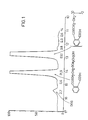
- gel chromatogram 1 of the half ester for Example 2 (see FIG. 1) essentially shows only the reaction products of 1 mol of phthalic anhydride and 1 mol of diethylene glycol and the reaction product of 2 mol of phthalic anhydride and 1 mol of diethylene glycol.
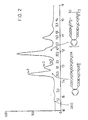
- Gel chromatogram 2 of the oligoester example 2 (see FIG. 2) essentially shows the original narrow molecular weight distribution.
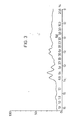
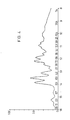
- the gel chromatograms 3 and 4 of comparative examples 2a and 2b show, with otherwise the same recipe as example 2, a molecular weight distribution which is very widespread as a result of transesterification, esterification and etherification and which leads to the increased viscosity determined.
- Exemplary recipes are listed in Tables 2 and 3, Table 2 describing the production of polyurethane or polyurethane / urea / rigid foams and Table 3 describing the use of the polyols according to the invention for producing rigid foams containing polyisocyanurate structures.
- oligoesters and polyether types specified in the tables were manually foamed, the raw materials initially being intimately mixed with one another and, after addition of the stated amount of isocyanate, stirred for a further 10 to 15 seconds and then poured into an open mold.
- the result was free foams measuring 30 cm x 30 cm x 30 cm, the curing of which was determined by a manual process, which is why the results can only be evaluated relative to one another.
- the fire behavior was tested according to DIN 4102.
- polyphenyl polymethylene polyisocyanates obtained by phosgenation of aniline-formaldehyde condensates and having NCO contents of 31% by weight were used as isocyanates (Desmodur 44V20 and Desmodur 44V70 / Bayer AG)
- Diphenyl-cresyl-phosphate Disflamoll® DPK from Bayer AG
- trimerization catalyst based on potassium acetate trimerization catalyst based on potassium acetate.
Landscapes
- Chemical & Material Sciences (AREA)
- Organic Chemistry (AREA)
- Polyurethanes Or Polyureas (AREA)
- Organic Low-Molecular-Weight Compounds And Preparation Thereof (AREA)
- Polyesters Or Polycarbonates (AREA)
- Fats And Perfumes (AREA)
- Lubricants (AREA)
- Polyethers (AREA)
- Macromolecular Compounds Obtained By Forming Nitrogen-Containing Linkages In General (AREA)
Priority Applications (1)
| Application Number | Priority Date | Filing Date | Title |
|---|---|---|---|
| AT87108443T ATE65077T1 (de) | 1986-06-24 | 1987-06-11 | Verfahren zur herstellung von hydroxylgruppen aufweisenden oligoestern und deren verwendung. |
Applications Claiming Priority (2)
| Application Number | Priority Date | Filing Date | Title |
|---|---|---|---|
| DE19863621039 DE3621039A1 (de) | 1986-06-24 | 1986-06-24 | Verfahren zur herstellung von hydroxylgruppen aufweisenden oligoestern und deren verwendung |
| DE3621039 | 1986-06-24 |
Publications (3)
| Publication Number | Publication Date |
|---|---|
| EP0250967A2 true EP0250967A2 (fr) | 1988-01-07 |
| EP0250967A3 EP0250967A3 (en) | 1988-12-21 |
| EP0250967B1 EP0250967B1 (fr) | 1991-07-10 |
Family
ID=6303537
Family Applications (1)
| Application Number | Title | Priority Date | Filing Date |
|---|---|---|---|
| EP87108443A Expired - Lifetime EP0250967B1 (fr) | 1986-06-24 | 1987-06-11 | Procédé pour la fabrication d'oligoesters portant des groupes hydroxyles et leur utilisation |
Country Status (14)
| Country | Link |
|---|---|
| US (1) | US4757097A (fr) |
| EP (1) | EP0250967B1 (fr) |
| JP (1) | JP2553354B2 (fr) |
| AT (1) | ATE65077T1 (fr) |
| AU (1) | AU592649B2 (fr) |
| BR (1) | BR8703176A (fr) |
| CA (1) | CA1281734C (fr) |
| DE (2) | DE3621039A1 (fr) |
| DK (1) | DK167972B1 (fr) |
| ES (1) | ES2023145B3 (fr) |
| FI (1) | FI86170C (fr) |
| MX (1) | MX169100B (fr) |
| NO (1) | NO164834C (fr) |
| ZA (1) | ZA874518B (fr) |
Cited By (3)
| Publication number | Priority date | Publication date | Assignee | Title |
|---|---|---|---|---|
| US5939455A (en) * | 1997-03-11 | 1999-08-17 | Beacon Laboratories, Inc. | Therapeutic augmentation of oxyalkylene diesters and butyric acid derivatives |
| US6110955A (en) * | 1997-03-11 | 2000-08-29 | Beacon Laboratories, Inc. | Metabolically stabilized oxyalkylene esters and uses thereof |
| WO2012110585A1 (fr) * | 2011-02-17 | 2012-08-23 | Basf Se | Procédé de production de polyesterétherols |
Families Citing this family (19)
| Publication number | Priority date | Publication date | Assignee | Title |
|---|---|---|---|---|
| DE3819738A1 (de) * | 1988-06-10 | 1989-12-14 | Stockhausen Chem Fab Gmbh | Drei funktionelle estergruppen enthaltende verbindungen, zwischenprodukte zu ihrer herstellung, ihre herstellung und verwendung |
| DE3903336A1 (de) * | 1989-02-04 | 1990-08-09 | Bayer Ag | Verwendung von c(pfeil abwaerts)3(pfeil abwaerts)- bis c(pfeil abwaerts)5(pfeil abwaerts)-polyfluoralkanen als treibgase |
| US5321098A (en) * | 1991-10-04 | 1994-06-14 | The Lubrizol Corporation | Composition and polymer fabrics treated with the same |
| GB9221869D0 (en) * | 1992-10-19 | 1992-12-02 | Ici Plc | Novel polyols |
| US5998499A (en) | 1994-03-25 | 1999-12-07 | Dentsply G.M.B.H. | Liquid crystalline (meth)acrylate compounds, composition and method |
| US6369164B1 (en) | 1993-05-26 | 2002-04-09 | Dentsply G.M.B.H. | Polymerizable compounds and compositions |
| US6353061B1 (en) | 1993-05-26 | 2002-03-05 | Dentsply Gmbh | α, ω-methacrylate terminated macromonomer compounds |
| CA2146816A1 (fr) | 1994-04-22 | 1995-10-23 | Joachim E. Klee | Methode et composition pour la preparation d'un produit polymerique dentaire |
| DE19610262A1 (de) * | 1996-03-15 | 1997-09-18 | Bayer Ag | Verfahren zur Herstellung Kohlenwasserstoff-getriebener Polyurethan-Hartschaumstoffe |
| DE19905989A1 (de) * | 1999-02-13 | 2000-08-17 | Bayer Ag | Feinzellige, wassergetriebene Polyurethanhartschaumstoffe |
| TW499449B (en) * | 1999-03-24 | 2002-08-21 | Dsm Nv | Condensation polymer containing esteralkylamide-acid groups |
| US7081511B2 (en) * | 2004-04-05 | 2006-07-25 | Az Electronic Materials Usa Corp. | Process for making polyesters |
| WO2006011784A1 (fr) * | 2004-07-29 | 2006-02-02 | Dsm Ip Assets B.V. | Composition ignifuge |
| DE102004039102A1 (de) * | 2004-08-11 | 2006-02-23 | Basf Ag | Verfahren zur Herstellung von hochverzweigten Polyesteramiden |
| CN102414239B (zh) * | 2009-05-06 | 2014-01-29 | 拜尔材料科学股份公司 | 制备具有仲oh端基的聚酯多元醇的方法 |
| JPWO2014103994A1 (ja) * | 2012-12-26 | 2017-01-12 | Dic株式会社 | ポリエステル樹脂組成物、接着剤、及びフィルム |
| EP3380540A1 (fr) | 2015-11-26 | 2018-10-03 | Covestro Deutschland AG | Mousses dures de pur/pir à partir d'oligoesters de polyaddition |
| EP3875510A1 (fr) | 2020-03-03 | 2021-09-08 | Covestro Deutschland AG | Procédé de fabrication d'un étherestérol |
| EP3885390A1 (fr) * | 2020-03-25 | 2021-09-29 | Covestro Deutschland AG | Procédé de fabrication d'un étherestérol |
Family Cites Families (18)
| Publication number | Priority date | Publication date | Assignee | Title |
|---|---|---|---|---|
| GB623669A (en) * | 1947-05-09 | 1949-05-20 | Ici Ltd | Manufacture of glycol esters of terephthalic acid |
| US2932622A (en) * | 1953-12-11 | 1960-04-12 | Universal Oil Prod Co | Vulcanizable composition containing sulfur, rubber, and an alkenylthiophenol |
| US2779783A (en) * | 1954-09-29 | 1957-01-29 | Firestone Tire & Rubber Co | Production of linear polyesters of alkylene dicarboxylic acids |
| US2863855A (en) * | 1955-07-25 | 1958-12-09 | Hudson Foam Plastics Corp | Method of making polyester composition |
| US3374208A (en) * | 1962-10-19 | 1968-03-19 | Pittsburgh Plate Glass Co | Preparation of polyesters from alkylene oxides and dicarboxylic acid anhydrides |
| US3360544A (en) * | 1963-07-19 | 1967-12-26 | Monsanto Co | Processes for preparing alkyl hydroxyalkyl fumarates |
| US3459788A (en) * | 1964-02-25 | 1969-08-05 | Nippon Soda Co | Process for preparation of bis-(beta-hydroxyethyl)-benzene dicarboxylate |
| GB1029669A (en) * | 1964-05-15 | 1966-05-18 | Mitsui Petrochemical Ind | A process for the manufacture of bis-(ª-hydroxyethyl) terephthalate |
| US3459733A (en) * | 1964-10-15 | 1969-08-05 | Mobil Oil Corp | Monomeric polyesters of polyhydroxy compounds and process for preparing same |
| US3455886A (en) * | 1965-02-18 | 1969-07-15 | Columbian Carbon | Thermoplastic polyols containing polyester-ether blocks |
| DE1248660B (de) * | 1965-05-29 | 1967-08-31 | Badische Anilin d. Soda Fabrik Aktiengesellschaft, Ludwigshafen/Rhem | Verfahren zur Herstellung von Glykolmonoestern von Carbonsauren |
| US3414635A (en) * | 1965-10-18 | 1968-12-03 | Jefferson Chem Co Inc | Hydroxyalkyl esters in surface coatings |
| FR1517867A (fr) * | 1966-01-26 | 1968-03-22 | Aerojet General Co | Procédé pour catalyser la réaction d'un acide et d'un composé oxyranique et résine en résultant |
| ES353898A1 (es) * | 1967-05-15 | 1970-03-01 | Aerojet General Co | Un procedimiento para la preparacion de ester de 2-hidroxi-alcohilo de un acido policarboxolico aromatico. |
| US3576841A (en) * | 1970-01-19 | 1971-04-27 | Donald R Larkin | Preparation of bis-hydroxyalkyl phthalate esters using sterically hindered amine catalysts |
| US4144395A (en) * | 1977-12-05 | 1979-03-13 | Basf Wyandotte Corporation | Process for the preparation of polyether-ester polyols |
| DE3201203A1 (de) * | 1982-01-16 | 1983-07-28 | Basf Ag, 6700 Ludwigshafen | Verfahren zur herstellung von polyester- und/oder polyester-polyether-polyolen |
| DE3315381A1 (de) * | 1983-04-28 | 1984-10-31 | Basf Ag, 6700 Ludwigshafen | Verfahren zur herstellung von polyester- oder polyether-polyester-polyolen |
-
1986
- 1986-06-24 DE DE19863621039 patent/DE3621039A1/de not_active Withdrawn
-
1987
- 1987-06-09 MX MX006842A patent/MX169100B/es unknown
- 1987-06-09 CA CA000539249A patent/CA1281734C/fr not_active Expired - Lifetime
- 1987-06-10 NO NO872422A patent/NO164834C/no unknown
- 1987-06-11 DE DE8787108443T patent/DE3771279D1/de not_active Expired - Lifetime
- 1987-06-11 EP EP87108443A patent/EP0250967B1/fr not_active Expired - Lifetime
- 1987-06-11 AT AT87108443T patent/ATE65077T1/de not_active IP Right Cessation
- 1987-06-11 ES ES87108443T patent/ES2023145B3/es not_active Expired - Lifetime
- 1987-06-17 AU AU74447/87A patent/AU592649B2/en not_active Ceased
- 1987-06-22 JP JP62153605A patent/JP2553354B2/ja not_active Expired - Lifetime
- 1987-06-22 FI FI872758A patent/FI86170C/fi not_active IP Right Cessation
- 1987-06-23 US US07/065,486 patent/US4757097A/en not_active Expired - Lifetime
- 1987-06-23 BR BR8703176A patent/BR8703176A/pt not_active IP Right Cessation
- 1987-06-23 ZA ZA874518A patent/ZA874518B/xx unknown
- 1987-06-23 DK DK319887A patent/DK167972B1/da not_active IP Right Cessation
Cited By (3)
| Publication number | Priority date | Publication date | Assignee | Title |
|---|---|---|---|---|
| US5939455A (en) * | 1997-03-11 | 1999-08-17 | Beacon Laboratories, Inc. | Therapeutic augmentation of oxyalkylene diesters and butyric acid derivatives |
| US6110955A (en) * | 1997-03-11 | 2000-08-29 | Beacon Laboratories, Inc. | Metabolically stabilized oxyalkylene esters and uses thereof |
| WO2012110585A1 (fr) * | 2011-02-17 | 2012-08-23 | Basf Se | Procédé de production de polyesterétherols |
Also Published As
| Publication number | Publication date |
|---|---|
| NO164834B (no) | 1990-08-13 |
| DK319887D0 (da) | 1987-06-23 |
| FI86170C (fi) | 1992-07-27 |
| AU592649B2 (en) | 1990-01-18 |
| NO164834C (no) | 1990-11-21 |
| ZA874518B (en) | 1988-02-24 |
| US4757097A (en) | 1988-07-12 |
| NO872422L (no) | 1987-12-28 |
| BR8703176A (pt) | 1988-03-08 |
| DE3621039A1 (de) | 1988-01-07 |
| EP0250967B1 (fr) | 1991-07-10 |
| DK319887A (da) | 1987-12-25 |
| AU7444787A (en) | 1988-01-07 |
| EP0250967A3 (en) | 1988-12-21 |
| DK167972B1 (da) | 1994-01-10 |
| JPS636013A (ja) | 1988-01-12 |
| FI86170B (fi) | 1992-04-15 |
| ATE65077T1 (de) | 1991-07-15 |
| NO872422D0 (no) | 1987-06-10 |
| FI872758A0 (fi) | 1987-06-22 |
| FI872758L (fi) | 1987-12-25 |
| JP2553354B2 (ja) | 1996-11-13 |
| CA1281734C (fr) | 1991-03-19 |
| MX169100B (es) | 1993-06-22 |
| DE3771279D1 (de) | 1991-08-14 |
| ES2023145B3 (es) | 1992-01-01 |
Similar Documents
| Publication | Publication Date | Title |
|---|---|---|
| EP0250967B1 (fr) | Procédé pour la fabrication d'oligoesters portant des groupes hydroxyles et leur utilisation | |
| EP0318784B1 (fr) | Procédé de préparation de polyétherpolyol à base de l'o-toluylènediamine, et application dans le domaine des polyuréthanes et polyisocyanurates | |
| EP1161474B1 (fr) | Mousses rigides de polyurethane a petits alveoles, entrainables par l'eau | |
| DE3241450C2 (fr) | ||
| EP2828309B1 (fr) | Procédé de production de mousses dures de polyuréthane et mousses dures de polyuréthane | |
| EP0139895B2 (fr) | Utilisation de sels d'ammonium comme catalyseurs latents pour la réaction de polyaddition d'isocyanate | |
| EP0356814B1 (fr) | Procédé pour la préparation des polyéther-polyols fondés sur des di- et/ou polyamines aromatiques et leur utilisation pour des materiaux synthétiques en polyuréthane et polyisocyanate | |
| EP2678367B1 (fr) | Polyesterpolyoles à base d'acides de dicarbone aromatiques et mousses de polyuréthane ainsi obtenues | |
| EP0672697A1 (fr) | Procédé de préparation de mousses rigides contenant des groupes uréthanes, urées et biurets et leur utilisation | |
| EP0565931A1 (fr) | Polyisocyanates modifiés et leur utilisation dans la préparation de mousses contenant des groupes d'un éthane | |
| DE1157773B (de) | Verfahren zur Herstellung von Kunststoffen, einschliesslich Schaumstoffen, nach dem Isocyanat-Polyadditionsverfahren | |
| WO2023144056A1 (fr) | Production de mousses de polyuréthane souples aliphatiques dans un procédé de prépolymère à base de polyisocyanates oligomères aliphatiques et de composés à fonction monohydroxy | |
| EP0213475B1 (fr) | Esterpolyols, procédé pour leur fabrication et leur utilisation dans le procédé de polyaddition avec isocyanate | |
| EP0124071B1 (fr) | Procédé de fabrication de polyuréthanes élastiques compacts ou cellulaires | |
| DE1924302A1 (de) | Verfahren zur Herstellung von Urethangruppen und Biuretgruppen aufweisenden Kunststoffen | |
| EP0445411A2 (fr) | Procédé de préparation de mousses dures à cellules essentiellement fermées ayant des groupes uréthanne, uré et/ou biuret et leur utilisation | |
| EP0017947A1 (fr) | Procédé de préparation de polyisocyanurates alvéolaires contenant des groupes uréthane | |
| EP0152861A2 (fr) | Procédé pour la préparation de polyisocyanates à modification uréthane et leur application pour la préparation de polyuréthanes ou polyisocyanurates | |
| DE1645666A1 (de) | Verfahren zur Herstellung von Elastomeren | |
| DE3621264A1 (de) | Geschlossenzellige, flammwidrige urethan- und isocyanuratgruppen enthaltende hartschaumstoffe, verfahren zu deren herstellung und deren verwendung | |
| DE3609361A1 (de) | Neue polyesterpolyole, verfahren zu ihrer herstellung und ihre verwendung im isocyanat-polyadditionsverfahren | |
| EP0082397A1 (fr) | Procédé de production de mousses de polyuréthanne-polyisocyanurate | |
| EP0017948B1 (fr) | Procédé de préparation de polyuréthanes alvéolaires | |
| DE19638257A1 (de) | Verfahren zur Herstellung neuer Polyetherole sowie deren Verwendung | |
| EP0000468A1 (fr) | Polyols contenant du chlore et des groupements esters à base d'acide tétrachlorophtalique, leur préparation et utilisation pour la fabrication de mousses de polyuréthane ou de polyisocyanurate ignifuges |
Legal Events
| Date | Code | Title | Description |
|---|---|---|---|
| PUAI | Public reference made under article 153(3) epc to a published international application that has entered the european phase |
Free format text: ORIGINAL CODE: 0009012 |
|
| 17P | Request for examination filed |
Effective date: 19870611 |
|
| AK | Designated contracting states |
Kind code of ref document: A2 Designated state(s): AT BE CH DE ES FR GB IT LI NL SE |
|
| PUAL | Search report despatched |
Free format text: ORIGINAL CODE: 0009013 |
|
| AK | Designated contracting states |
Kind code of ref document: A3 Designated state(s): AT BE CH DE ES FR GB IT LI NL SE |
|
| 17Q | First examination report despatched |
Effective date: 19901114 |
|
| GRAA | (expected) grant |
Free format text: ORIGINAL CODE: 0009210 |
|
| AK | Designated contracting states |
Kind code of ref document: B1 Designated state(s): AT BE CH DE ES FR GB IT LI NL SE |
|
| REF | Corresponds to: |
Ref document number: 65077 Country of ref document: AT Date of ref document: 19910715 Kind code of ref document: T |
|
| REF | Corresponds to: |
Ref document number: 3771279 Country of ref document: DE Date of ref document: 19910814 |
|
| GBT | Gb: translation of ep patent filed (gb section 77(6)(a)/1977) | ||
| ITF | It: translation for a ep patent filed | ||
| ET | Fr: translation filed | ||
| REG | Reference to a national code |
Ref country code: ES Ref legal event code: FG2A Ref document number: 2023145 Country of ref document: ES Kind code of ref document: B3 |
|
| PLBE | No opposition filed within time limit |
Free format text: ORIGINAL CODE: 0009261 |
|
| STAA | Information on the status of an ep patent application or granted ep patent |
Free format text: STATUS: NO OPPOSITION FILED WITHIN TIME LIMIT |
|
| 26N | No opposition filed | ||
| EAL | Se: european patent in force in sweden |
Ref document number: 87108443.0 |
|
| REG | Reference to a national code |
Ref country code: GB Ref legal event code: IF02 |
|
| PGFP | Annual fee paid to national office [announced via postgrant information from national office to epo] |
Ref country code: SE Payment date: 20040601 Year of fee payment: 18 |
|
| PG25 | Lapsed in a contracting state [announced via postgrant information from national office to epo] |
Ref country code: SE Free format text: LAPSE BECAUSE OF NON-PAYMENT OF DUE FEES Effective date: 20050612 |
|
| EUG | Se: european patent has lapsed | ||
| PGFP | Annual fee paid to national office [announced via postgrant information from national office to epo] |
Ref country code: DE Payment date: 20060520 Year of fee payment: 20 |
|
| PGFP | Annual fee paid to national office [announced via postgrant information from national office to epo] |
Ref country code: ES Payment date: 20060602 Year of fee payment: 20 |
|
| PGFP | Annual fee paid to national office [announced via postgrant information from national office to epo] |
Ref country code: GB Payment date: 20060607 Year of fee payment: 20 Ref country code: FR Payment date: 20060607 Year of fee payment: 20 Ref country code: AT Payment date: 20060607 Year of fee payment: 20 |
|
| PGFP | Annual fee paid to national office [announced via postgrant information from national office to epo] |
Ref country code: CH Payment date: 20060621 Year of fee payment: 20 |
|
| PGFP | Annual fee paid to national office [announced via postgrant information from national office to epo] |
Ref country code: BE Payment date: 20060628 Year of fee payment: 20 |
|
| PGFP | Annual fee paid to national office [announced via postgrant information from national office to epo] |
Ref country code: NL Payment date: 20060630 Year of fee payment: 20 Ref country code: IT Payment date: 20060630 Year of fee payment: 20 |
|
| PG25 | Lapsed in a contracting state [announced via postgrant information from national office to epo] |
Ref country code: NL Free format text: LAPSE BECAUSE OF EXPIRATION OF PROTECTION Effective date: 20070611 |
|
| PG25 | Lapsed in a contracting state [announced via postgrant information from national office to epo] |
Ref country code: ES Free format text: LAPSE BECAUSE OF EXPIRATION OF PROTECTION Effective date: 20070612 |
|
| REG | Reference to a national code |
Ref country code: GB Ref legal event code: PE20 |
|
| REG | Reference to a national code |
Ref country code: CH Ref legal event code: PL |
|
| NLV7 | Nl: ceased due to reaching the maximum lifetime of a patent |
Effective date: 20070611 |
|
| REG | Reference to a national code |
Ref country code: ES Ref legal event code: FD2A Effective date: 20070612 |
|
| PG25 | Lapsed in a contracting state [announced via postgrant information from national office to epo] |
Ref country code: GB Free format text: LAPSE BECAUSE OF EXPIRATION OF PROTECTION Effective date: 20070610 |
|
| BE20 | Be: patent expired |
Owner name: *BAYER A.G. Effective date: 20070611 |