EP0251510A1 - Gène désigné tlrB, procurant une résistance au tylosine et son emploi dans des streptomyces et d'autres organismes - Google Patents
Gène désigné tlrB, procurant une résistance au tylosine et son emploi dans des streptomyces et d'autres organismes Download PDFInfo
- Publication number
- EP0251510A1 EP0251510A1 EP87304956A EP87304956A EP0251510A1 EP 0251510 A1 EP0251510 A1 EP 0251510A1 EP 87304956 A EP87304956 A EP 87304956A EP 87304956 A EP87304956 A EP 87304956A EP 0251510 A1 EP0251510 A1 EP 0251510A1
- Authority
- EP
- European Patent Office
- Prior art keywords
- plasmid
- streptomyces
- dna
- restriction fragment
- ligating
- Prior art date
- Legal status (The legal status is an assumption and is not a legal conclusion. Google has not performed a legal analysis and makes no representation as to the accuracy of the status listed.)
- Ceased
Links
- 239000004182 Tylosin Substances 0.000 title claims abstract description 72
- 229930194936 Tylosin Natural products 0.000 title claims abstract description 72
- 229960004059 tylosin Drugs 0.000 title claims abstract description 72
- WBPYTXDJUQJLPQ-VMXQISHHSA-N tylosin Chemical compound O([C@@H]1[C@@H](C)O[C@H]([C@@H]([C@H]1N(C)C)O)O[C@@H]1[C@@H](C)[C@H](O)CC(=O)O[C@@H]([C@H](/C=C(\C)/C=C/C(=O)[C@H](C)C[C@@H]1CC=O)CO[C@H]1[C@@H]([C@H](OC)[C@H](O)[C@@H](C)O1)OC)CC)[C@H]1C[C@@](C)(O)[C@@H](O)[C@H](C)O1 WBPYTXDJUQJLPQ-VMXQISHHSA-N 0.000 title claims abstract description 72
- 235000019375 tylosin Nutrition 0.000 title claims abstract description 72
- 101100416214 Streptomyces fradiae rlmAII gene Proteins 0.000 title claims abstract description 51
- 241000187747 Streptomyces Species 0.000 title claims abstract description 46
- 108090000623 proteins and genes Proteins 0.000 title abstract description 32
- 239000013612 plasmid Substances 0.000 claims abstract description 278
- 239000013598 vector Substances 0.000 claims abstract description 49
- 241000187398 Streptomyces lividans Species 0.000 claims abstract description 32
- 241000187438 Streptomyces fradiae Species 0.000 claims abstract description 18
- 239000013599 cloning vector Substances 0.000 claims abstract description 8
- 108020004414 DNA Proteins 0.000 claims description 123
- 239000012634 fragment Substances 0.000 claims description 75
- 210000004027 cell Anatomy 0.000 claims description 55
- 238000000034 method Methods 0.000 claims description 54
- 230000008569 process Effects 0.000 claims description 24
- 241001646716 Escherichia coli K-12 Species 0.000 claims description 23
- 239000002609 medium Substances 0.000 claims description 19
- 210000001938 protoplast Anatomy 0.000 claims description 17
- 238000005119 centrifugation Methods 0.000 claims description 15
- 108091028043 Nucleic acid sequence Proteins 0.000 claims description 11
- 108020004511 Recombinant DNA Proteins 0.000 claims description 10
- 239000000725 suspension Substances 0.000 claims description 9
- 241000588724 Escherichia coli Species 0.000 claims description 8
- 101100501723 Streptomyces fradiae ermSF gene Proteins 0.000 claims description 5
- 239000001963 growth medium Substances 0.000 claims description 3
- 235000015097 nutrients Nutrition 0.000 claims description 3
- 230000001172 regenerating effect Effects 0.000 claims description 3
- 230000008929 regeneration Effects 0.000 claims description 3
- 238000011069 regeneration method Methods 0.000 claims description 3
- 238000007747 plating Methods 0.000 claims description 2
- 238000004519 manufacturing process Methods 0.000 claims 2
- 230000001413 cellular effect Effects 0.000 claims 1
- 230000002934 lysing effect Effects 0.000 claims 1
- 238000010367 cloning Methods 0.000 abstract description 12
- LFQSCWFLJHTTHZ-UHFFFAOYSA-N Ethanol Chemical compound CCO LFQSCWFLJHTTHZ-UHFFFAOYSA-N 0.000 description 50
- 239000000243 solution Substances 0.000 description 48
- FAPWRFPIFSIZLT-UHFFFAOYSA-M Sodium chloride Chemical compound [Na+].[Cl-] FAPWRFPIFSIZLT-UHFFFAOYSA-M 0.000 description 42
- 230000006870 function Effects 0.000 description 38
- 108091008146 restriction endonucleases Proteins 0.000 description 38
- TWRXJAOTZQYOKJ-UHFFFAOYSA-L Magnesium chloride Chemical compound [Mg+2].[Cl-].[Cl-] TWRXJAOTZQYOKJ-UHFFFAOYSA-L 0.000 description 32
- 239000000872 buffer Substances 0.000 description 31
- 238000006243 chemical reaction Methods 0.000 description 29
- 239000007984 Tris EDTA buffer Substances 0.000 description 25
- 238000010276 construction Methods 0.000 description 24
- 229910001868 water Inorganic materials 0.000 description 24
- 239000011780 sodium chloride Substances 0.000 description 21
- 239000008188 pellet Substances 0.000 description 19
- 239000011541 reaction mixture Substances 0.000 description 17
- 229910001629 magnesium chloride Inorganic materials 0.000 description 16
- 239000000203 mixture Substances 0.000 description 16
- XLYOFNOQVPJJNP-UHFFFAOYSA-N water Chemical compound O XLYOFNOQVPJJNP-UHFFFAOYSA-N 0.000 description 13
- 108091003079 Bovine Serum Albumin Proteins 0.000 description 12
- 229940098773 bovine serum albumin Drugs 0.000 description 12
- 230000029087 digestion Effects 0.000 description 12
- QKNYBSVHEMOAJP-UHFFFAOYSA-N 2-amino-2-(hydroxymethyl)propane-1,3-diol;hydron;chloride Chemical compound Cl.OCC(N)(CO)CO QKNYBSVHEMOAJP-UHFFFAOYSA-N 0.000 description 10
- AIYUHDOJVYHVIT-UHFFFAOYSA-M caesium chloride Chemical compound [Cl-].[Cs+] AIYUHDOJVYHVIT-UHFFFAOYSA-M 0.000 description 10
- 239000000047 product Substances 0.000 description 10
- ULGZDMOVFRHVEP-RWJQBGPGSA-N Erythromycin Chemical compound O([C@@H]1[C@@H](C)C(=O)O[C@@H]([C@@]([C@H](O)[C@@H](C)C(=O)[C@H](C)C[C@@](C)(O)[C@H](O[C@H]2[C@@H]([C@H](C[C@@H](C)O2)N(C)C)O)[C@H]1C)(C)O)CC)[C@H]1C[C@@](C)(OC)[C@@H](O)[C@H](C)O1 ULGZDMOVFRHVEP-RWJQBGPGSA-N 0.000 description 9
- VMHLLURERBWHNL-UHFFFAOYSA-M Sodium acetate Chemical compound [Na+].CC([O-])=O VMHLLURERBWHNL-UHFFFAOYSA-M 0.000 description 9
- HEMHJVSKTPXQMS-UHFFFAOYSA-M Sodium hydroxide Chemical compound [OH-].[Na+] HEMHJVSKTPXQMS-UHFFFAOYSA-M 0.000 description 9
- 229930006000 Sucrose Natural products 0.000 description 9
- CZMRCDWAGMRECN-UGDNZRGBSA-N Sucrose Chemical compound O[C@H]1[C@H](O)[C@@H](CO)O[C@@]1(CO)O[C@@H]1[C@H](O)[C@@H](O)[C@H](O)[C@@H](CO)O1 CZMRCDWAGMRECN-UGDNZRGBSA-N 0.000 description 9
- 239000003242 anti bacterial agent Substances 0.000 description 9
- 229940088710 antibiotic agent Drugs 0.000 description 9
- 230000003115 biocidal effect Effects 0.000 description 9
- 239000005720 sucrose Substances 0.000 description 9
- KFZMGEQAYNKOFK-UHFFFAOYSA-N Isopropanol Chemical compound CC(C)O KFZMGEQAYNKOFK-UHFFFAOYSA-N 0.000 description 8
- ISWSIDIOOBJBQZ-UHFFFAOYSA-N Phenol Chemical compound OC1=CC=CC=C1 ISWSIDIOOBJBQZ-UHFFFAOYSA-N 0.000 description 8
- NSFFHOGKXHRQEW-UHFFFAOYSA-N Thiostrepton B Natural products N1C(=O)C(C)NC(=O)C(=C)NC(=O)C(C)NC(=O)C(C(C)CC)NC(C(C2=N3)O)C=CC2=C(C(C)O)C=C3C(=O)OC(C)C(C=2SC=C(N=2)C2N=3)NC(=O)C(N=4)=CSC=4C(C(C)(O)C(C)O)NC(=O)C(N=4)CSC=4C(=CC)NC(=O)C(C(C)O)NC(=O)C(N=4)=CSC=4C21CCC=3C1=NC(C(=O)NC(=C)C(=O)NC(=C)C(N)=O)=CS1 NSFFHOGKXHRQEW-UHFFFAOYSA-N 0.000 description 8
- 229960000723 ampicillin Drugs 0.000 description 8
- AVKUERGKIZMTKX-NJBDSQKTSA-N ampicillin Chemical compound C1([C@@H](N)C(=O)N[C@H]2[C@H]3SC([C@@H](N3C2=O)C(O)=O)(C)C)=CC=CC=C1 AVKUERGKIZMTKX-NJBDSQKTSA-N 0.000 description 8
- 229930188070 thiostrepton Natural products 0.000 description 8
- NSFFHOGKXHRQEW-AIHSUZKVSA-N thiostrepton Chemical compound C([C@]12C=3SC=C(N=3)C(=O)N[C@H](C(=O)NC(/C=3SC[C@@H](N=3)C(=O)N[C@H](C=3SC=C(N=3)C(=O)N[C@H](C=3SC=C(N=3)[C@H]1N=1)[C@@H](C)OC(=O)C3=CC(=C4C=C[C@H]([C@@H](C4=N3)O)N[C@H](C(N[C@@H](C)C(=O)NC(=C)C(=O)N[C@@H](C)C(=O)N2)=O)[C@@H](C)CC)[C@H](C)O)[C@](C)(O)[C@@H](C)O)=C\C)[C@@H](C)O)CC=1C1=NC(C(=O)NC(=C)C(=O)NC(=C)C(N)=O)=CS1 NSFFHOGKXHRQEW-AIHSUZKVSA-N 0.000 description 8
- 229940063214 thiostrepton Drugs 0.000 description 8
- NSFFHOGKXHRQEW-OFMUQYBVSA-N thiostrepton A Natural products CC[C@H](C)[C@@H]1N[C@@H]2C=Cc3c(cc(nc3[C@H]2O)C(=O)O[C@H](C)[C@@H]4NC(=O)c5csc(n5)[C@@H](NC(=O)[C@H]6CSC(=N6)C(=CC)NC(=O)[C@@H](NC(=O)c7csc(n7)[C@]8(CCC(=N[C@@H]8c9csc4n9)c%10nc(cs%10)C(=O)NC(=C)C(=O)NC(=C)C(=O)N)NC(=O)[C@H](C)NC(=O)C(=C)NC(=O)[C@H](C)NC1=O)[C@@H](C)O)[C@](C)(O)[C@@H](C)O)[C@H](C)O NSFFHOGKXHRQEW-OFMUQYBVSA-N 0.000 description 8
- DGVVWUTYPXICAM-UHFFFAOYSA-N β‐Mercaptoethanol Chemical compound OCCS DGVVWUTYPXICAM-UHFFFAOYSA-N 0.000 description 8
- 102000012410 DNA Ligases Human genes 0.000 description 7
- 108010061982 DNA Ligases Proteins 0.000 description 7
- 102000003960 Ligases Human genes 0.000 description 7
- 108090000364 Ligases Proteins 0.000 description 7
- -1 cyclic lactone Chemical class 0.000 description 7
- 230000009466 transformation Effects 0.000 description 7
- OPIFSICVWOWJMJ-AEOCFKNESA-N 5-bromo-4-chloro-3-indolyl beta-D-galactoside Chemical compound O[C@@H]1[C@@H](O)[C@@H](O)[C@@H](CO)O[C@H]1OC1=CNC2=CC=C(Br)C(Cl)=C12 OPIFSICVWOWJMJ-AEOCFKNESA-N 0.000 description 6
- 229920001817 Agar Polymers 0.000 description 6
- HEDRZPFGACZZDS-UHFFFAOYSA-N Chloroform Chemical compound ClC(Cl)Cl HEDRZPFGACZZDS-UHFFFAOYSA-N 0.000 description 6
- PEDCQBHIVMGVHV-UHFFFAOYSA-N Glycerine Chemical compound OCC(O)CO PEDCQBHIVMGVHV-UHFFFAOYSA-N 0.000 description 6
- 239000008272 agar Substances 0.000 description 6
- ZMMJGEGLRURXTF-UHFFFAOYSA-N ethidium bromide Chemical compound [Br-].C12=CC(N)=CC=C2C2=CC=C(N)C=C2[N+](CC)=C1C1=CC=CC=C1 ZMMJGEGLRURXTF-UHFFFAOYSA-N 0.000 description 6
- 229960005542 ethidium bromide Drugs 0.000 description 6
- 230000014509 gene expression Effects 0.000 description 6
- 239000012528 membrane Substances 0.000 description 6
- SCVFZCLFOSHCOH-UHFFFAOYSA-M potassium acetate Chemical compound [K+].CC([O-])=O SCVFZCLFOSHCOH-UHFFFAOYSA-M 0.000 description 6
- 239000006228 supernatant Substances 0.000 description 6
- 102000002260 Alkaline Phosphatase Human genes 0.000 description 5
- 108020004774 Alkaline Phosphatase Proteins 0.000 description 5
- KCXVZYZYPLLWCC-UHFFFAOYSA-N EDTA Chemical compound OC(=O)CN(CC(O)=O)CCN(CC(O)=O)CC(O)=O KCXVZYZYPLLWCC-UHFFFAOYSA-N 0.000 description 5
- 102000016943 Muramidase Human genes 0.000 description 5
- 108010014251 Muramidase Proteins 0.000 description 5
- 108010062010 N-Acetylmuramoyl-L-alanine Amidase Proteins 0.000 description 5
- 238000009585 enzyme analysis Methods 0.000 description 5
- 239000000499 gel Substances 0.000 description 5
- 238000011534 incubation Methods 0.000 description 5
- 101150066555 lacZ gene Proteins 0.000 description 5
- 239000004325 lysozyme Substances 0.000 description 5
- 229960000274 lysozyme Drugs 0.000 description 5
- 235000010335 lysozyme Nutrition 0.000 description 5
- 239000001974 tryptic soy broth Substances 0.000 description 5
- BFSVOASYOCHEOV-UHFFFAOYSA-N 2-diethylaminoethanol Chemical compound CCN(CC)CCO BFSVOASYOCHEOV-UHFFFAOYSA-N 0.000 description 4
- 108091026890 Coding region Proteins 0.000 description 4
- OUYCCCASQSFEME-QMMMGPOBSA-N L-tyrosine Chemical compound OC(=O)[C@@H](N)CC1=CC=C(O)C=C1 OUYCCCASQSFEME-QMMMGPOBSA-N 0.000 description 4
- 108060008724 Tyrosinase Proteins 0.000 description 4
- 238000000246 agarose gel electrophoresis Methods 0.000 description 4
- VHJLVAABSRFDPM-QWWZWVQMSA-N dithiothreitol Chemical compound SC[C@@H](O)[C@H](O)CS VHJLVAABSRFDPM-QWWZWVQMSA-N 0.000 description 4
- 238000001962 electrophoresis Methods 0.000 description 4
- 229960003276 erythromycin Drugs 0.000 description 4
- 238000000605 extraction Methods 0.000 description 4
- 238000002955 isolation Methods 0.000 description 4
- BPHPUYQFMNQIOC-NXRLNHOXSA-N isopropyl beta-D-thiogalactopyranoside Chemical compound CC(C)S[C@@H]1O[C@H](CO)[C@H](O)[C@H](O)[C@H]1O BPHPUYQFMNQIOC-NXRLNHOXSA-N 0.000 description 4
- 230000010076 replication Effects 0.000 description 4
- 108020004418 ribosomal RNA Proteins 0.000 description 4
- 150000003839 salts Chemical class 0.000 description 4
- UCSJYZPVAKXKNQ-HZYVHMACSA-N streptomycin Chemical compound CN[C@H]1[C@H](O)[C@@H](O)[C@H](CO)O[C@H]1O[C@@H]1[C@](C=O)(O)[C@H](C)O[C@H]1O[C@@H]1[C@@H](NC(N)=N)[C@H](O)[C@@H](NC(N)=N)[C@H](O)[C@H]1O UCSJYZPVAKXKNQ-HZYVHMACSA-N 0.000 description 4
- OUYCCCASQSFEME-UHFFFAOYSA-N tyrosine Natural products OC(=O)C(N)CC1=CC=C(O)C=C1 OUYCCCASQSFEME-UHFFFAOYSA-N 0.000 description 4
- UXVMQQNJUSDDNG-UHFFFAOYSA-L Calcium chloride Chemical compound [Cl-].[Cl-].[Ca+2] UXVMQQNJUSDDNG-UHFFFAOYSA-L 0.000 description 3
- 102000004190 Enzymes Human genes 0.000 description 3
- 108090000790 Enzymes Proteins 0.000 description 3
- 230000005526 G1 to G0 transition Effects 0.000 description 3
- 238000005273 aeration Methods 0.000 description 3
- 239000011543 agarose gel Substances 0.000 description 3
- 238000004458 analytical method Methods 0.000 description 3
- 108010005774 beta-Galactosidase Proteins 0.000 description 3
- 239000001110 calcium chloride Substances 0.000 description 3
- 229910001628 calcium chloride Inorganic materials 0.000 description 3
- 229940041514 candida albicans extract Drugs 0.000 description 3
- 238000011161 development Methods 0.000 description 3
- 230000018109 developmental process Effects 0.000 description 3
- 229940088598 enzyme Drugs 0.000 description 3
- 238000011990 functional testing Methods 0.000 description 3
- 238000003780 insertion Methods 0.000 description 3
- 230000037431 insertion Effects 0.000 description 3
- 239000007788 liquid Substances 0.000 description 3
- 239000003120 macrolide antibiotic agent Substances 0.000 description 3
- 229910052943 magnesium sulfate Inorganic materials 0.000 description 3
- 239000002773 nucleotide Substances 0.000 description 3
- 125000003729 nucleotide group Chemical group 0.000 description 3
- 239000012071 phase Substances 0.000 description 3
- 235000011056 potassium acetate Nutrition 0.000 description 3
- 238000001556 precipitation Methods 0.000 description 3
- 239000007858 starting material Substances 0.000 description 3
- 235000013619 trace mineral Nutrition 0.000 description 3
- 239000011573 trace mineral Substances 0.000 description 3
- 239000012138 yeast extract Substances 0.000 description 3
- QTBSBXVTEAMEQO-UHFFFAOYSA-N Acetic acid Chemical compound CC(O)=O QTBSBXVTEAMEQO-UHFFFAOYSA-N 0.000 description 2
- IJGRMHOSHXDMSA-UHFFFAOYSA-N Atomic nitrogen Chemical compound N#N IJGRMHOSHXDMSA-UHFFFAOYSA-N 0.000 description 2
- 102100026189 Beta-galactosidase Human genes 0.000 description 2
- 229930186147 Cephalosporin Natural products 0.000 description 2
- 102000053602 DNA Human genes 0.000 description 2
- WQZGKKKJIJFFOK-GASJEMHNSA-N Glucose Natural products OC[C@H]1OC(O)[C@H](O)[C@@H](O)[C@@H]1O WQZGKKKJIJFFOK-GASJEMHNSA-N 0.000 description 2
- DHMQDGOQFOQNFH-UHFFFAOYSA-N Glycine Chemical compound NCC(O)=O DHMQDGOQFOQNFH-UHFFFAOYSA-N 0.000 description 2
- CSNNHWWHGAXBCP-UHFFFAOYSA-L Magnesium sulfate Chemical compound [Mg+2].[O-][S+2]([O-])([O-])[O-] CSNNHWWHGAXBCP-UHFFFAOYSA-L 0.000 description 2
- 229930191564 Monensin Natural products 0.000 description 2
- GAOZTHIDHYLHMS-UHFFFAOYSA-N Monensin A Natural products O1C(CC)(C2C(CC(O2)C2C(CC(C)C(O)(CO)O2)C)C)CCC1C(O1)(C)CCC21CC(O)C(C)C(C(C)C(OC)C(C)C(O)=O)O2 GAOZTHIDHYLHMS-UHFFFAOYSA-N 0.000 description 2
- VHKXXVVRRDYCIK-UHFFFAOYSA-N Narasin Natural products CC1CC(C)C(C(CC)C(O)=O)OC1C(C)C(O)C(C)C(=O)C(CC)C1C(C)CC(C)C2(C=CC(O)C3(OC(C)(CC3)C3OC(C)C(O)(CC)CC3)O2)O1 VHKXXVVRRDYCIK-UHFFFAOYSA-N 0.000 description 2
- VHKXXVVRRDYCIK-CWCPJSEDSA-N Narasin Chemical compound C[C@H]1C[C@H](C)[C@H]([C@@H](CC)C(O)=O)O[C@H]1[C@@H](C)[C@H](O)[C@H](C)C(=O)[C@H](CC)[C@@H]1[C@@H](C)C[C@@H](C)[C@@]2(C=C[C@@H](O)[C@@]3(O[C@@](C)(CC3)[C@@H]3O[C@@H](C)[C@@](O)(CC)CC3)O2)O1 VHKXXVVRRDYCIK-CWCPJSEDSA-N 0.000 description 2
- ZLMJMSJWJFRBEC-UHFFFAOYSA-N Potassium Chemical compound [K] ZLMJMSJWJFRBEC-UHFFFAOYSA-N 0.000 description 2
- 229950002379 actaplanin Drugs 0.000 description 2
- BDNDRNLSLGGULA-UHFFFAOYSA-N actaplanin Chemical compound C=1C2=CC=C(O)C=1C1=C(OC3C(C(O)C(O)C(CO)O3)O)C=C(O)C=C1C(C(=O)OC)NC(=O)C1NC(=O)C2NC(=O)C2NC(=O)C(C=3C=C(C(=C(O)C=3)C)OC=3C(O)=CC=C(C=3)C(N)C(=O)N3)NC(=O)C3CC(C=C3)=CC=C3OC(C=3OC4C(C(O)C(O)C(CO)O4)O)=CC2=CC=3OC(C(=C2)Cl)=CC=C2C1OC1CC(N)C(O)C(C)O1 BDNDRNLSLGGULA-UHFFFAOYSA-N 0.000 description 2
- 108010020588 actaplanin Proteins 0.000 description 2
- GFFGJBXGBJISGV-UHFFFAOYSA-N adenyl group Chemical group N1=CN=C2N=CNC2=C1N GFFGJBXGBJISGV-UHFFFAOYSA-N 0.000 description 2
- 230000001851 biosynthetic effect Effects 0.000 description 2
- 230000015572 biosynthetic process Effects 0.000 description 2
- 229940124587 cephalosporin Drugs 0.000 description 2
- 150000001780 cephalosporins Chemical class 0.000 description 2
- 150000001875 compounds Chemical class 0.000 description 2
- 238000010790 dilution Methods 0.000 description 2
- 239000012895 dilution Substances 0.000 description 2
- 238000005516 engineering process Methods 0.000 description 2
- 230000002068 genetic effect Effects 0.000 description 2
- 239000008103 glucose Substances 0.000 description 2
- 239000012145 high-salt buffer Substances 0.000 description 2
- 230000010354 integration Effects 0.000 description 2
- 238000012423 maintenance Methods 0.000 description 2
- 230000007246 mechanism Effects 0.000 description 2
- 244000005700 microbiome Species 0.000 description 2
- 238000002156 mixing Methods 0.000 description 2
- 229960005358 monensin Drugs 0.000 description 2
- GAOZTHIDHYLHMS-KEOBGNEYSA-N monensin A Chemical compound C([C@@](O1)(C)[C@H]2CC[C@@](O2)(CC)[C@H]2[C@H](C[C@@H](O2)[C@@H]2[C@H](C[C@@H](C)[C@](O)(CO)O2)C)C)C[C@@]21C[C@H](O)[C@@H](C)[C@@H]([C@@H](C)[C@@H](OC)[C@H](C)C(O)=O)O2 GAOZTHIDHYLHMS-KEOBGNEYSA-N 0.000 description 2
- 229960001851 narasin Drugs 0.000 description 2
- 239000011591 potassium Substances 0.000 description 2
- 229910052700 potassium Inorganic materials 0.000 description 2
- 238000002360 preparation method Methods 0.000 description 2
- 238000011160 research Methods 0.000 description 2
- 239000001632 sodium acetate Substances 0.000 description 2
- 235000017281 sodium acetate Nutrition 0.000 description 2
- 229960005322 streptomycin Drugs 0.000 description 2
- 231100000331 toxic Toxicity 0.000 description 2
- 230000002588 toxic effect Effects 0.000 description 2
- 238000013518 transcription Methods 0.000 description 2
- 230000035897 transcription Effects 0.000 description 2
- 230000001131 transforming effect Effects 0.000 description 2
- 230000014616 translation Effects 0.000 description 2
- 108020005097 23S Ribosomal RNA Proteins 0.000 description 1
- CKOMXBHMKXXTNW-UHFFFAOYSA-N 6-methyladenine Chemical compound CNC1=NC=NC2=C1N=CN2 CKOMXBHMKXXTNW-UHFFFAOYSA-N 0.000 description 1
- 239000005725 8-Hydroxyquinoline Substances 0.000 description 1
- QTBSBXVTEAMEQO-UHFFFAOYSA-M Acetate Chemical compound CC([O-])=O QTBSBXVTEAMEQO-UHFFFAOYSA-M 0.000 description 1
- QGZKDVFQNNGYKY-UHFFFAOYSA-O Ammonium Chemical compound [NH4+] QGZKDVFQNNGYKY-UHFFFAOYSA-O 0.000 description 1
- 241000193830 Bacillus <bacterium> Species 0.000 description 1
- 101000583086 Bunodosoma granuliferum Delta-actitoxin-Bgr2b Proteins 0.000 description 1
- OYPRJOBELJOOCE-UHFFFAOYSA-N Calcium Chemical compound [Ca] OYPRJOBELJOOCE-UHFFFAOYSA-N 0.000 description 1
- VEXZGXHMUGYJMC-UHFFFAOYSA-M Chloride anion Chemical compound [Cl-] VEXZGXHMUGYJMC-UHFFFAOYSA-M 0.000 description 1
- 229920000742 Cotton Polymers 0.000 description 1
- 230000008836 DNA modification Effects 0.000 description 1
- 238000001712 DNA sequencing Methods 0.000 description 1
- 239000004375 Dextrin Substances 0.000 description 1
- 229920001353 Dextrin Polymers 0.000 description 1
- ZGTMUACCHSMWAC-UHFFFAOYSA-L EDTA disodium salt (anhydrous) Chemical compound [Na+].[Na+].OC(=O)CN(CC([O-])=O)CCN(CC(O)=O)CC([O-])=O ZGTMUACCHSMWAC-UHFFFAOYSA-L 0.000 description 1
- 241000192125 Firmicutes Species 0.000 description 1
- 102000051325 Glucagon Human genes 0.000 description 1
- 108060003199 Glucagon Proteins 0.000 description 1
- 239000004471 Glycine Substances 0.000 description 1
- 101000976075 Homo sapiens Insulin Proteins 0.000 description 1
- DGAQECJNVWCQMB-PUAWFVPOSA-M Ilexoside XXIX Chemical compound C[C@@H]1CC[C@@]2(CC[C@@]3(C(=CC[C@H]4[C@]3(CC[C@@H]5[C@@]4(CC[C@@H](C5(C)C)OS(=O)(=O)[O-])C)C)[C@@H]2[C@]1(C)O)C)C(=O)O[C@H]6[C@@H]([C@H]([C@@H]([C@H](O6)CO)O)O)O.[Na+] DGAQECJNVWCQMB-PUAWFVPOSA-M 0.000 description 1
- 102000014150 Interferons Human genes 0.000 description 1
- 108010050904 Interferons Proteins 0.000 description 1
- 241001465754 Metazoa Species 0.000 description 1
- 101500006448 Mycobacterium bovis (strain ATCC BAA-935 / AF2122/97) Endonuclease PI-MboI Proteins 0.000 description 1
- 229910019142 PO4 Inorganic materials 0.000 description 1
- 239000005662 Paraffin oil Substances 0.000 description 1
- 241000364057 Peoria Species 0.000 description 1
- 239000001888 Peptone Substances 0.000 description 1
- 108010080698 Peptones Proteins 0.000 description 1
- 102000004160 Phosphoric Monoester Hydrolases Human genes 0.000 description 1
- 108090000608 Phosphoric Monoester Hydrolases Proteins 0.000 description 1
- 239000002202 Polyethylene glycol Substances 0.000 description 1
- 239000004743 Polypropylene Substances 0.000 description 1
- 108010076181 Proinsulin Proteins 0.000 description 1
- 108700005075 Regulator Genes Proteins 0.000 description 1
- 241000191940 Staphylococcus Species 0.000 description 1
- 241000191967 Staphylococcus aureus Species 0.000 description 1
- 241000194017 Streptococcus Species 0.000 description 1
- 241001312733 Streptomyces griseofuscus Species 0.000 description 1
- QAOWNCQODCNURD-UHFFFAOYSA-L Sulfate Chemical compound [O-]S([O-])(=O)=O QAOWNCQODCNURD-UHFFFAOYSA-L 0.000 description 1
- 239000004098 Tetracycline Substances 0.000 description 1
- 238000002835 absorbance Methods 0.000 description 1
- 229960000583 acetic acid Drugs 0.000 description 1
- 230000009471 action Effects 0.000 description 1
- 150000001413 amino acids Chemical class 0.000 description 1
- 230000003321 amplification Effects 0.000 description 1
- 239000008346 aqueous phase Substances 0.000 description 1
- 239000011575 calcium Substances 0.000 description 1
- 229910052791 calcium Inorganic materials 0.000 description 1
- 150000001720 carbohydrates Chemical class 0.000 description 1
- 230000008859 change Effects 0.000 description 1
- 239000007795 chemical reaction product Substances 0.000 description 1
- 239000003153 chemical reaction reagent Substances 0.000 description 1
- 239000003795 chemical substances by application Substances 0.000 description 1
- 230000000295 complement effect Effects 0.000 description 1
- 239000000470 constituent Substances 0.000 description 1
- 238000005520 cutting process Methods 0.000 description 1
- 235000019425 dextrin Nutrition 0.000 description 1
- 238000000502 dialysis Methods 0.000 description 1
- 238000009792 diffusion process Methods 0.000 description 1
- AIUDWMLXCFRVDR-UHFFFAOYSA-N dimethyl 2-(3-ethyl-3-methylpentyl)propanedioate Chemical class CCC(C)(CC)CCC(C(=O)OC)C(=O)OC AIUDWMLXCFRVDR-UHFFFAOYSA-N 0.000 description 1
- 239000003814 drug Substances 0.000 description 1
- 230000000694 effects Effects 0.000 description 1
- 230000009088 enzymatic function Effects 0.000 description 1
- 238000012869 ethanol precipitation Methods 0.000 description 1
- 238000002474 experimental method Methods 0.000 description 1
- 239000000284 extract Substances 0.000 description 1
- 235000013312 flour Nutrition 0.000 description 1
- 239000012362 glacial acetic acid Substances 0.000 description 1
- MASNOZXLGMXCHN-ZLPAWPGGSA-N glucagon Chemical compound C([C@@H](C(=O)N[C@H](C(=O)N[C@@H](CCC(N)=O)C(=O)N[C@@H](CC=1C2=CC=CC=C2NC=1)C(=O)N[C@@H](CC(C)C)C(=O)N[C@@H](CCSC)C(=O)N[C@@H](CC(N)=O)C(=O)N[C@@H]([C@@H](C)O)C(O)=O)C(C)C)NC(=O)[C@H](CC(O)=O)NC(=O)[C@H](CCC(N)=O)NC(=O)[C@H](C)NC(=O)[C@H](CCCNC(N)=N)NC(=O)[C@H](CCCNC(N)=N)NC(=O)[C@H](CO)NC(=O)[C@H](CC(O)=O)NC(=O)[C@H](CC(C)C)NC(=O)[C@H](CC=1C=CC(O)=CC=1)NC(=O)[C@H](CCCCN)NC(=O)[C@H](CO)NC(=O)[C@H](CC=1C=CC(O)=CC=1)NC(=O)[C@H](CC(O)=O)NC(=O)[C@H](CO)NC(=O)[C@@H](NC(=O)[C@H](CC=1C=CC=CC=1)NC(=O)[C@@H](NC(=O)CNC(=O)[C@H](CCC(N)=O)NC(=O)[C@H](CO)NC(=O)[C@@H](N)CC=1NC=NC=1)[C@@H](C)O)[C@@H](C)O)C1=CC=CC=C1 MASNOZXLGMXCHN-ZLPAWPGGSA-N 0.000 description 1
- 229960004666 glucagon Drugs 0.000 description 1
- 235000001727 glucose Nutrition 0.000 description 1
- 235000011187 glycerol Nutrition 0.000 description 1
- 239000005457 ice water Substances 0.000 description 1
- 238000007654 immersion Methods 0.000 description 1
- 239000012535 impurity Substances 0.000 description 1
- 239000000411 inducer Substances 0.000 description 1
- 230000001939 inductive effect Effects 0.000 description 1
- 239000004615 ingredient Substances 0.000 description 1
- 230000005764 inhibitory process Effects 0.000 description 1
- PBGKTOXHQIOBKM-FHFVDXKLSA-N insulin (human) Chemical compound C([C@@H](C(=O)N[C@@H](CC(C)C)C(=O)N[C@H]1CSSC[C@H]2C(=O)N[C@H](C(=O)N[C@@H](CO)C(=O)N[C@H](C(=O)N[C@H](C(N[C@@H](CO)C(=O)N[C@@H](CC(C)C)C(=O)N[C@@H](CC=3C=CC(O)=CC=3)C(=O)N[C@@H](CCC(N)=O)C(=O)N[C@@H](CC(C)C)C(=O)N[C@@H](CCC(O)=O)C(=O)N[C@@H](CC(N)=O)C(=O)N[C@@H](CC=3C=CC(O)=CC=3)C(=O)N[C@@H](CSSC[C@H](NC(=O)[C@H](C(C)C)NC(=O)[C@H](CC(C)C)NC(=O)[C@H](CC=3C=CC(O)=CC=3)NC(=O)[C@H](CC(C)C)NC(=O)[C@H](C)NC(=O)[C@H](CCC(O)=O)NC(=O)[C@H](C(C)C)NC(=O)[C@H](CC(C)C)NC(=O)[C@H](CC=3NC=NC=3)NC(=O)[C@H](CO)NC(=O)CNC1=O)C(=O)NCC(=O)N[C@@H](CCC(O)=O)C(=O)N[C@@H](CCCNC(N)=N)C(=O)NCC(=O)N[C@@H](CC=1C=CC=CC=1)C(=O)N[C@@H](CC=1C=CC=CC=1)C(=O)N[C@@H](CC=1C=CC(O)=CC=1)C(=O)N[C@@H]([C@@H](C)O)C(=O)N1[C@@H](CCC1)C(=O)N[C@@H](CCCCN)C(=O)N[C@@H]([C@@H](C)O)C(O)=O)C(=O)N[C@@H](CC(N)=O)C(O)=O)=O)CSSC[C@@H](C(N2)=O)NC(=O)[C@H](CCC(N)=O)NC(=O)[C@H](CCC(O)=O)NC(=O)[C@H](C(C)C)NC(=O)[C@@H](NC(=O)CN)[C@@H](C)CC)[C@@H](C)CC)[C@@H](C)O)NC(=O)[C@H](CCC(N)=O)NC(=O)[C@H](CC(N)=O)NC(=O)[C@@H](NC(=O)[C@@H](N)CC=1C=CC=CC=1)C(C)C)C1=CN=CN1 PBGKTOXHQIOBKM-FHFVDXKLSA-N 0.000 description 1
- 229940079322 interferon Drugs 0.000 description 1
- 150000002500 ions Chemical class 0.000 description 1
- 229940041033 macrolides Drugs 0.000 description 1
- 239000003550 marker Substances 0.000 description 1
- 230000001404 mediated effect Effects 0.000 description 1
- 230000008099 melanin synthesis Effects 0.000 description 1
- 108020004999 messenger RNA Proteins 0.000 description 1
- 230000037353 metabolic pathway Effects 0.000 description 1
- 230000011987 methylation Effects 0.000 description 1
- 238000007069 methylation reaction Methods 0.000 description 1
- 230000004048 modification Effects 0.000 description 1
- 238000012986 modification Methods 0.000 description 1
- 235000013379 molasses Nutrition 0.000 description 1
- 238000010369 molecular cloning Methods 0.000 description 1
- 230000035772 mutation Effects 0.000 description 1
- 229910052757 nitrogen Inorganic materials 0.000 description 1
- 238000003199 nucleic acid amplification method Methods 0.000 description 1
- 239000006916 nutrient agar Substances 0.000 description 1
- 229960003540 oxyquinoline Drugs 0.000 description 1
- 235000019319 peptone Nutrition 0.000 description 1
- 229940066779 peptones Drugs 0.000 description 1
- NBIIXXVUZAFLBC-UHFFFAOYSA-K phosphate Chemical compound [O-]P([O-])([O-])=O NBIIXXVUZAFLBC-UHFFFAOYSA-K 0.000 description 1
- 239000010452 phosphate Substances 0.000 description 1
- 229920001223 polyethylene glycol Polymers 0.000 description 1
- 229920001155 polypropylene Polymers 0.000 description 1
- 239000002244 precipitate Substances 0.000 description 1
- 230000000644 propagated effect Effects 0.000 description 1
- 238000001243 protein synthesis Methods 0.000 description 1
- 102000004169 proteins and genes Human genes 0.000 description 1
- MCJGNVYPOGVAJF-UHFFFAOYSA-N quinolin-8-ol Chemical compound C1=CN=C2C(O)=CC=CC2=C1 MCJGNVYPOGVAJF-UHFFFAOYSA-N 0.000 description 1
- 230000001105 regulatory effect Effects 0.000 description 1
- 230000003362 replicative effect Effects 0.000 description 1
- 229920006395 saturated elastomer Polymers 0.000 description 1
- 238000012216 screening Methods 0.000 description 1
- 230000035945 sensitivity Effects 0.000 description 1
- 239000011734 sodium Substances 0.000 description 1
- 229910052708 sodium Inorganic materials 0.000 description 1
- 241000894007 species Species 0.000 description 1
- 238000010186 staining Methods 0.000 description 1
- 238000003860 storage Methods 0.000 description 1
- 238000003786 synthesis reaction Methods 0.000 description 1
- 229960002180 tetracycline Drugs 0.000 description 1
- 229930101283 tetracycline Natural products 0.000 description 1
- 235000019364 tetracycline Nutrition 0.000 description 1
- 150000003522 tetracyclines Chemical class 0.000 description 1
- 229960000707 tobramycin Drugs 0.000 description 1
- NLVFBUXFDBBNBW-PBSUHMDJSA-N tobramycin Chemical compound N[C@@H]1C[C@H](O)[C@@H](CN)O[C@@H]1O[C@H]1[C@H](O)[C@@H](O[C@@H]2[C@@H]([C@@H](N)[C@H](O)[C@@H](CO)O2)O)[C@H](N)C[C@@H]1N NLVFBUXFDBBNBW-PBSUHMDJSA-N 0.000 description 1
- 238000013519 translation Methods 0.000 description 1
- 108010050327 trypticase-soy broth Proteins 0.000 description 1
- 239000012137 tryptone Substances 0.000 description 1
- 238000005199 ultracentrifugation Methods 0.000 description 1
- 238000012800 visualization Methods 0.000 description 1
Images





Classifications
-
- C—CHEMISTRY; METALLURGY
- C12—BIOCHEMISTRY; BEER; SPIRITS; WINE; VINEGAR; MICROBIOLOGY; ENZYMOLOGY; MUTATION OR GENETIC ENGINEERING
- C12N—MICROORGANISMS OR ENZYMES; COMPOSITIONS THEREOF; PROPAGATING, PRESERVING, OR MAINTAINING MICROORGANISMS; MUTATION OR GENETIC ENGINEERING; CULTURE MEDIA
- C12N15/00—Mutation or genetic engineering; DNA or RNA concerning genetic engineering, vectors, e.g. plasmids, or their isolation, preparation or purification; Use of hosts therefor
- C12N15/09—Recombinant DNA-technology
- C12N15/11—DNA or RNA fragments; Modified forms thereof; Non-coding nucleic acids having a biological activity
- C12N15/52—Genes encoding for enzymes or proenzymes
-
- C—CHEMISTRY; METALLURGY
- C12—BIOCHEMISTRY; BEER; SPIRITS; WINE; VINEGAR; MICROBIOLOGY; ENZYMOLOGY; MUTATION OR GENETIC ENGINEERING
- C12N—MICROORGANISMS OR ENZYMES; COMPOSITIONS THEREOF; PROPAGATING, PRESERVING, OR MAINTAINING MICROORGANISMS; MUTATION OR GENETIC ENGINEERING; CULTURE MEDIA
- C12N15/00—Mutation or genetic engineering; DNA or RNA concerning genetic engineering, vectors, e.g. plasmids, or their isolation, preparation or purification; Use of hosts therefor
- C12N15/09—Recombinant DNA-technology
- C12N15/63—Introduction of foreign genetic material using vectors; Vectors; Use of hosts therefor; Regulation of expression
- C12N15/74—Vectors or expression systems specially adapted for prokaryotic hosts other than E. coli, e.g. Lactobacillus, Micromonospora
- C12N15/76—Vectors or expression systems specially adapted for prokaryotic hosts other than E. coli, e.g. Lactobacillus, Micromonospora for Actinomyces; for Streptomyces
Definitions
- the present invention relates to a tylosin resistance-conferring gene, designated tlrB, recombinant DNA cloning vectors that comprise the gene, and transformants containing the tylosin resistance-conferring vectors.
- streptomyces fradiae produces tylosin, used in veterinary medicine as an animal growth promotant and antibiotic.
- Tylosin is a macrolide antibiotic consisting of a 16-member cyclic lactone and three sugar residues.
- the antibiotic activity of tylosin like other macrolides, is due to inhibition of protein synthesis by a mechanism that involves the bind- . ing of tylosin to the ribosome..
- Tylosin resistance-conferring cloning vectors are useful in Streptomyces and other host cells.
- the development and exploitation of recombinant DNA technology in Streptomyces depends upon the availability of selectable genetic markers on suitable cloning vectors. This development has been somewhat retarded by the low number of selectable markers presently available for use in Streptomyces.
- the present invention is useful and especially important in that it expands the number of selectable markers suitable for such use.
- the vectors of the present method are particularly useful, because the vectors are small, versatile, and can be transformed and selected in a variety of tylosin-sensitive Streptomyces cells. Streptomyces provides over half of the clinically important antibiotics and thus is a commercially significant group.
- the present invention provides new and useful cloning systems and vectors for this. industrially important group and allows for the cloning of genes both for increasing the yields of known antibiotics and also for producing new antibiotics and antibiotic derivatives.
- the present invention further provides vectors that enable selection of Streptomyces transformants from a background of untransformed cells.
- the modified vector can be transformed into Streptomyces and transformants selected by their tylosin-resistant phenotype. Because transformation is a relatively low frequency event, such a functional test is a practical necessity for determining which cell(s), of among the millions of cells, has acquired the transforming DNA.
- Phasmid--a recombinant DNA vector that may act as a phage or as a plasmid.
- Recombinant DNA Cloning Vector--any autonomously replicating or integrating agent, including, but not limited to, plasmids, comprising a DNA molecule to which one or more additional DNA segments can be or have been added.
- Restriction Fragment--any linear DNA molecule generated by the action of one or more restriction enzymes generated by the action of one or more restriction enzymes.
- Sensitive Host Cell--a host cell that cannot grow in the presence of a given antibiotic without a DNA segment that provides resistance thereto.
- TcR - the tetracycline-resistant phenotype or gene conferring same.
- the tylosin resistance-conferring gene tlrB is useful as a selectable marker in many organisms.
- the tlrB gene can be isolated from plasmid pSVB9 on an ⁇ 3.35 kb BglII-SacI restriction fragment; plasmid pSVB9 can be isolated from Streptomyces lividans TK23/pSVB9, a strain deposited and made part of the permanent culture collection of the Agricultural Research Service, Northern Regional Research Center (NRRL), Peoria, IL 61604, under the accession number NRRL 18073.
- a restriction site and function map of plasmid pSVB9 is presented in Figure 1 of the accompanying drawings.
- Plasmid pSVB9 can be isolated from S. lividans TK23/pSVB9 in substantial accordance with the procedure described in Example 1.
- the tlrB gene can also be isolated from plasmid pHJL315, a plasmid available from the NRRL under the accession number NRRL B-18047.
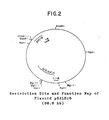
- a restriction site and function map of plasmid pHJL315 is presented in Figure 2 of the accompanying drawings.
- Plasmids pSVB9 and pHJL315 serve as useful starting material for the construction of other vectors that confer tlrB-mediated tylosin resistance.
- the ⁇ 3.35 kb BglII-SacI, tylosin resistance-conferring restriction fragment of plasmid pSVB9 was isolated and inserted into the large BglII-SacI restriction fragment of plasmid pIJ702 (ATCC 39155) to yield plasmid pSVB25.
- Plasmid pSVB25 comprises the tlrB gene and confers tylosin resistance to a variety of organisms, as more fully described below.
- the construction protocol for plasmid pSVB25 is given in Example 2; a restriction site and function map of plasmid pSVB25 is presented in Figure 3 of the accompanying drawings.
- Plasmid pHJL315 serves as useful starting material for a variety of vectors of the present invention that contain the tlrB gene. Plasmid pHJL315 was digested with restriction enzyme BgIII, and the resulting ⁇ 5.0 kb BglII restriction fragment that comprises the tlrB gene was inserted into BamHI-digested plasmid pHJL401 to yield plasmids pSFH62 and pSFH63. Plasmid pHJL401 is disclosed in EP-A-213 779 and Escherichia coli K12 JM109 was transformed with plasmid pHJL401 and the transformed strain deposited on 7 May 1987 as NRRL B-18217.
- Plasmids pSFH62 and p S FH63 differ only with respect to the orientation of the ⁇ 5.0 kb BglII restriction fragment; a restriction site and function map of plasmid pSFH62 is presented in Figure 4 of the accompanying drawings.
- an ⁇ 0.2 kb BglII restriction fragment adjacent to the ⁇ 5.0 kb, tlrB-containing Bgl II restriction fragment on plasmid pHJL315 was inserted along with the ⁇ 5..0 kb fragment, yielding a total insert size of ⁇ 5.2 kb, into BamHI-digested plasmid pHJL401 to yield plasmid pSKC13.
- a restriction site and function map of plasmid pSKC13 is presented in Figure 5 of the accompanying drawings.
- the construction protocol for plasmids pSFH62, pSFH63, and pSKC13 is presented in Example 3.
- Plasmid pSKC13 was digested with restriction enzyme KpnI, and the ⁇ 3.8 kb, tlrB-containing KpnI restriction fragment was isolated and inserted into KpnI-digested plasmid pUC19 (ATCC 37254) to yield plasmids pSFH60 and pSFH60.1.
- the two plasmids differ only with respect to the orientation of the ⁇ 3.8 kb KpnI fragment; a restriction site and function map of plasmid pSFH60 is presented in Figure 6 of the accompanying drawings.
- the u3.8 kb, tlr8-containing EcoRI-HindIII restriction fragment of plasmid pSFH60 was.
- Plasmid pSFH61 A restriction site and function map of plasmid pSFH61 is presented in Figure 7 of the accompanying drawings.
- the construction protocol for plasmids pSFH60, pSFH60.1, and pSFH61 is described in Example 4.
- the plasmids of the present invention can be readily modified by the addition of other DNA to make even more useful vectors.
- the tlrA gene of Streptomyces fradiae which confers tylosin resistance and is described in EP-A-176 319, has been added to plasmid pSVB25 to yield plasmids pSVB36 and pSVB37.
- Plasmids pSVB36 and pSVB37 were constructed by inserting the ⁇ 2.86 kb, tlrA gene-containing BamHI-BglII restriction fragment of plasmid p S VB2 (deposited in Streptomyces lividans TK23 under accession number NRRL 15880) into BglII-digested plasmid pSVB25.
- the two plasmids differ only with respect to the orientation of the ⁇ 2.86 kb restriction fragment, and a restriction site and function map of plasmid pSVB36 is presented in Figure 8 of the accompanying drawings.
- the construction protocol for plasmids pSVB36 and pSVB37 is presented in Example 5.
- the tlrB gene has also been used to construct vectors that have a low copy number in Streptomyces.
- the ⁇ 3.35 kb, tlrB-containing SstI-BglII restriction fragment of plasmid pSVB25 was inserted into SstI-BamHI-digested plasmid pUCl9 to yield plasmid pSVB40.
- Plasmid pSVB40 was then digested with restriction enzymes EcoRI and HindIII, and the -3.8 kb, tlrB-containing EcoRI-HindIII restriction fragment.was isolated, purified, and ligated to EcoRI-HindIII-digested plasmid pIJ903 to yield plasmid pSVB47.
- Plasmid pIJ903 was disclosed in Lydiate et al., 1985, Gene 35:223-235, and can be obtained from the John Innes streptomyces Culture Collection, John Innes Institute, Colney Lane, Norwich, Eng - land NR4-7UH, under the accession number 3417.
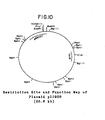
- Plasmid pIJ903 has a copy number of about 1 in Streptomyces; plasmid pSVB47 has a similar copy number. Restriction site and function maps of plasmids pSVB40 and pSVB47 are respectively presented in Figures 11 and 12. The construction protocol for plasmid pSVB47 is presented in
- Restriction fragments used to construct vectors illustrative of the present invention can be conventionally modified to facilitate ligation.
- molecular linkers can be provided to a particular tylosin resistance gene-containing restriction fragment or to DNA comprising vector replication or integration functions.
- specific sites for subsequent ligation can be conveniently constructed.
- the various tylosin resistance gene-containing restriction fragments, origin of replication, or integration sequences of a given vector can be modified by adding, eliminating, or substituting certain nucleotides to alter characteristics and to provide a variety of restriction sites for ligation of DNA.
- nucleotide chemistry and the genetic code and thus which nucleotides are interchangeable and which DNA modifications are desirable for a specific purpose.
- tylosin resistance gene-containing restriction fragment is not limited to a particular position on a cloning vector, as long as critical, vector-controlled functions are not disrupted.
- Those skilled in the art understand or can readily determine which sites on a vector are advantageous for the ligation or insertion of a particular tylosin resistance gene-containing restriction fragment.
- the tlrB gene was isolated from a tylosin- producing strain of Streptomyces fradiae.
- genomic DNA of S. fradiae was partially digested with restriction enzyme SauIIIAl, and the resulting DNA was inserted into BglII-digested plasmid pIJ702 to yield a number of tlrB-containing plasmids, including plasmid pSVB9.
- fradiae was partially digested with restriction enzyme MboI, and the resulting MboI-digested DNA was cloned into the BamHI site of plasmid pKC462A, a plasmid available from the NRRL under the accession number NRRL B-15973.
- the insert was excised on an EcoRI restriction fragment and cloned into plasmid pHJL401 to yield plasmid pHJL315. Because the tlrB gene was isolated from S. fradiae, the tlrB gene functions in S. fradiae, but the unmodified gene also functions in other organisms.
- the vectors of the present invention have also been used to transform Streptomyces lividans to tylosin resistance, as described in Example 6.
- the tlrB . gene can be used to transform a variety of Streptomyces strains to tylosin resistance.
- the tlrB gene does not confer high-level tylosin resistance to S. griseofuscus, thus indicating that the promoter of the tlrB gene may not efficiently function in all host cells.
- plasmids pSVB9 and pHJL315 contain the complete tlrB gene: (1) a promoter that directs transcription of the protein-coding sequence; (2) a sequence that, when transcribed into mRNA, directs translation of the transcript; (3) a protein-coding sequence; and (4) a transcription terminator.
- Each of these elements is independently useful and can, through the techniques of recombinant DNA technology, be used to form recombinant genes of great variety.
- DNA sequencing of the ⁇ 3.35 kb BglII-SstI restriction fragment of plasmid pSVB9 will reveal the precise location of the tlrB coding sequence and thus allow one to position other promoters in reading phase with the tlrB coding sequence.
- the promoter of the tlrB gene is useful in its own right.
- the promoter and other regulatory elements of the tlrB gene can be linked. to the coding sequence of a non-tylosin antibiotic biosynthetic gene to prepare a hybrid gene that might function in Streptomyces fradiae to yield a hybrid antibiotic.
- the individual elements of the gene on the plasmids described herein comprise important components of the present invention.
- vectors comprise the streptomyces replicon derived either from plasmid pIJ702, pIJ903, or pHJL401
- Streptomyces replicons can be used to construct equally useful vectors with different host ranges.
- Table 1 is an illustrative, but not comprehensive, listing of Streptomyces plasmids from which streptomyces replicons can be obtained.
- Those skilled in the art recognize that, so long as the replicon function is not disrupted, all or part of the plasmids may be used to construct vectors that contain the tlrB gene of the present invention.
- the plasmid-containing host and depository accession number are also listed in Table 1.
- Phage ⁇ C31 is a well-known Streptomyces phage that is an excellent source of starting material for constructing integrative tylosin resistance-conferring vectors that further exemplify the present invention.
- a derivative of phage ⁇ C31, phasmid pKC331, is especially preferred for constructing such integrating vectors and can be obtained from E. coli K12 BE447/pKC331 (NRRL B-15828).
- ⁇ C31-type phages are integrative vectors and can be readily modified to incorporate the tlrB gene and thus confer tylosin resistance to Streptomyces.
- the vectors of the present invention comprise a Streptomyces replicon and a tylosin resistance-conferring restriction fragment. Because amplification and manipulation of plasmids is done faster and more efficiently in E. coli than in Streptomyces, it is convenient to add DNA sequences that also allow for replication in E. coli. Thus, the addition of functional replicon- containing and antibiotic resistance-conferring restriction fragments from E. coli plasmids such as, for example, pBR322, pACYC184, pBR325, pBR328, and the like is highly advantageous and adds to the general utility of the present illustrative vectors.
- the vectors used in the present method confer tylosin resistance to tylosin-sensitive Streptomyces or related host cells. Although 10 ⁇ g/ml of tylosin is generally toxic to tylosin-sensitive Streptomyces, vectors of the present invention confer resistance to levels approaching 10 mg/ml of tylosin.
- the preferred tylosin concentration for purposes of selection is about 500 ⁇ g/ml for Streptomyces lividans.
- the preferred tylosin concentration for purposes of selection for other tylosin-sensitive microorganisms is readily determined by procedures well-known in the art and depends upon the promoter used to drive expression of the tlrB gene and the organism's sensitivity to tylosin.
- the tlrB gene confers resistance to tylosin and may confer resistance to other antibiotics.
- Inducible resistance to macrolide antibiotics such as tylosin and erythromycin in Gram-positive bacteria (such as Staphylococcus, Streptomyces, Streptococcus, and Bacillus) is associated with co-resistance to lincosamide and streptogramin-type B antibiotics; this multi-drug- resistant phenotype is called the MLS-resistant phenotype (Fujisawa and Weisblum, 1981, J. Bacteriol. 146:621-631).
- the MLS-resistant phenotype arises upon specific methylation of an adenine residue in 23S ribosomal RNA (rRNA) resulting in the formation of N 6- dimethyladenine.
- rRNA ribosomal RNA
- the rRNA from these species contains N 6- monomethyladenine, N6-dimethyladenine, or both.
- MLS-resistance in Streptomyces erythreus, an erythromycin producer arises upon N 6- dimethylation of a single adenine residue in 23S rRNA. Thompson et al. cloned a S.
- erythreus gene that conferred. erythromycin resistance in S. lividans via a mechanism that generated N 6- dimethyladenine in 23S rRNA. It is highly likely and expected that the tlrB gene confers the MLS-resistant phenotype.
- TK23 Stregtomyces lividans TK23 is sensitive to tylosin at the concentrations ( ⁇ 500 ⁇ g/ml) used for selection of transformants containing the tlrB gene.
- the TK23 strain does seem to possess an endogenous MLS-resistance-conferring capability, however.
- TK23 was sensitive to low levels ( ⁇ 25 pg/ml) of tylosin, but pre-exposure to 1 ⁇ g/ml of tylosin induced resistance to tylosin at concentrations up to 100 ⁇ g/ml.
- the endogenous MLS system however, is apparently incapable of conferring resistance to tylosin at levels used to select the cloned tlrB gene.
- the recombinant DNA cloning vectors of the present invention have broad utility and help fill the need for suitable cloning vehicles for use in Streptomyces and related organisms. Moreover, the ability of the present vectors to confer tylosin resistance provides a functional means for selecting transformants. This is important because of the practical necessity for determining and selecting the particular cells that have acquired vector DNA in a transformation procedure.
- Additional DNA segments that lack functional tests for their presence, can also be inserted into the present vectors, and transformants containing the non-selectable DNA can be isolated by selection for tylosin resistance.
- Such non-selectable DNA segments can be inserted at any site, except within regions necessary for plasmid function and replication or within the tlrB gene, and include, but are not limited to, genes that specify antibiotic modification enzymes and regulatory genes of all types.
- a non-selectable DNA segment that comprises a gene is inserted into a plasmid such as, for example, plasmid pSVB9 at the central Clal restriction site of the thiostrepton resistance gene.
- a plasmid such as, for example, plasmid pSVB9 at the central Clal restriction site of the thiostrepton resistance gene.
- Such an insertion inactivates the thiostrepton resistance gene and thus allows for the easy identification of transformants containing the recombinant plasmid. This is done by first selecting for tylosin resistance and, secondarily, identifying those tylosin-resistant transformants that are not resistant to thiostrepton. Therefore, the ability to select for tylosin resistance in Streptomyces and related cells allows for the efficient isolation of the extremely rare cells that contain the particular non-selectable DNA of interest.
- the functional test for tylosin resistance is also used to locate DNA segments that act as control elements and direct expression of an individual antibiotic resistance gene.
- Such segments including, but not limited to, promoters, attenuators, repressors, inducers, ribosome-binding sites, and the like, are used to control the expression of other genes in Streptomyces and related organisms.
- the tylosin resistance-conferring vectors of the present invention are also useful for ensuring that linked DNA segments are stably maintained in host cells over many generations. These genes or DNA fragments, covalently linked to the tylosin resistance-conferring DNA and propagated in streptomyces, are maintained by exposing the transformants to levels of tylosin toxic to non-transformed cells. Therefore, transformants that lose the vector, and consequently lose any covalently linked DNA, cannot grow and are eliminated from the culture. Thus, the vectors of the present invention can stabilize and maintain any DNA sequence of interest.
- the cloning vectors and transformants of the present invention provide for the cloning of genes to improve yields of various products that are currently produced in streptomyces and related cells. Examples of such products include, but are not limited to, Streptomycin, Tyl-osin, Cephalosporins, Actaplanin, Narasin, Monensin, Tobramycin, Erythromycin, and the like.
- the present invention also provides selectable vectors that are useful for cloning, characterizing, and reconstructing DNA sequences that code for: commercially important proteins such as, for example, human insulin, human proinsulin, glucagon, interferon and the like; enzymatic functions in metabolic pathways leading to commercially important processes and compounds; or control elements that improve gene expression.
- DNA sequences also include, but are not limited to, DNA that codes for enzymes that catalyze synthesis of derivatized antibiotics such as, for example, Streptomycin, Cephalosporin, Tylosin, Actaplanin, Narasin, Monensin and Erythromycin derivatives, or for enzymes that mediate and increase bioproduction of antibiotics or other products.
- the capability for isolating and using such DNA segments allows for increasing the yield and availability of antibiotics that are produced by Streptomyces and related organisms.
- Streptomyces can be cultured in a number of ways using any of several different media.
- Preferred carbohydrate sources in a culture medium include, for example, molasses, glucose, dextrin, and glycerol.
- Nitrogen sources include, for example, soy flour, amino acid mixtures, and peptones.
- Nutrient inorganic salts are also incorporated and include the customary salts capable of yielding sodium, potassium, ammonium, calcium, phosphate, chloride, sulfate, and like ions.
- essential trace elements are. also added.. Such trace elements are commonly supplied as impurities incidental to the addition of other constituents of the medium.
- Streptomyces is grown under aerobic culture conditions over a relatively wide pH range of about 5 to 9 at temperatures ranging from about 15° to 40°C.
- a culture medium For plasmid stability and maintenance, it is desirable to start with a culture medium at a pH of about 7.2 and maintain a culture temperature of about 30°C.
- the cells were collected and washed once with a 10.3% sucrose solution.
- the solution was mixed and then incubated at 30°C for 30-60 minutes, and then, about 18 ml of a solution that was 0.3 M NaOH, 1% SDS, and prewarmed to 50°C were added, mixed and the resulting mixture incubated at 80°C for 10 minutes.
- the mixture was then cooled to room temperature, and 12 ml of a solution made by mixing 500 g phenol, 500 g CHC1 3 , and 0.5 g 8-hydroxyquinoline in 200 ml H 2 0 were added and mixed well with the cell- extract.
- the phases were separated by centrifugation at 6000-8000 rpm for 10 minutes; approximately 45 ml of the resulting upper phase were transferred to a clean bottle.
- the fraction containing the plasmid band was extracted 3-5 times with isopropanol saturated with TE buffer and CsCl to remove the ethidium bromide. After the extractions, the sample was diluted with four volumes of TE buffer, and then, two-and-one-half volumes of ethanol were added. The resulting solution was mixed and incubated overnight at -20°C.
- the precipitate resulting from the overnight incubation at -20°C was collected by centrifugation (10,000 rpm for 30 minutes), dried, and reprecipitated twice.
- the precipitations were done by suspending the pellet in TE buffer, adding NaOAc to 0.3 M, adding 2.5 volumes ethanol, chilling at -70°C for 10-15 minutes, and then centrifuging the solution as above.
- the procedure yields about 100 ⁇ g of plasmid pSVB9 DNA, which was suspended in TE buffer at a concentration of 1 ⁇ g/ ⁇ l and stored at 4°C.
- Streptomyces lividans/pIJ702 (ATCC 39155) was cultured and plasmid pIJ702 isolated in substantial. accordance with the teaching of Example 1. Thiostrepton selection (10 ⁇ g/ml) was used to ensure plasmid pIJ702 maintenance. The ⁇ 100 ⁇ g of plasmid pIJ702 DNA obtained were suspended in 1 ml of TE and stored at 4°C.
- 12 ⁇ l of H 2 0, and 1.5 ⁇ l ( ⁇ 15 units; unit definition
- the resulting reaction was incubated at 37°C for one hour, when about 3 ⁇ l of the reaction mixture were removed and subjected to agarose gel electrophoresis to -determine completeness of digestion.
- plasmid pSVB9 DNA in 25 ⁇ l of TE buffer were added to 6 ⁇ l of 10X SacI buffer, 26 ⁇ l of H 2 0, and 2 ⁇ l ( ⁇ 20 units) of restriction enzyme SacI, and the resulting reaction was incubated at 37°C for one hour.
- About 3 ⁇ l of 1 M NaCl and 2 ⁇ l of restriction enzyme ClaI were then added to the reaction mixture, which was incubated at 37°C for another hour. The ClaI-digestion lowers the frequency of undesired ligation products during the ligation to construct plasmid pSVB25.
- reaction mixture About 8 ⁇ l of the reaction mixture were subjected to agarose gel electrophoresis to check completeness of the digestions, and 1 ⁇ l of 1 M NaCl and 1 ⁇ l ( ⁇ 8 units) of restriction enzyme BglII were added to the remaining solution of ClaI-SacI-digested DNA; the reaction mixture was incubated for another hour at 37°C. About 8 ⁇ l of the reaction mixture were removed to check the completeness of the BglII digestion.
- a restriction site and function map of plasmid pSVB25 is presented in Figure 3 of the accompanying drawings.
- the ligated DNA was used to transform streptomyces lividans TK23 as described in Example 6, below.
- S. lividans TK23/pIJ702 transformants were distinguished from S. lividans TK23/pSVB25 transformants by the color of the colonies on the transformation plates.
- Plasmid pIJ702 carries an intact tyrosinase gene; thus S. lividans TK23/pIJ702 transformants are black on tyrosine-containing plates.
- the tyrosinase gene is inactivated during the construction of plasmid p S VB25; consequently, S. lividans TK23/pSVB25 transformants are not black on tyrosine-containing plates.
- Plasmid DNA was obtained from E. coli K12 HB101/pHJL315 to use in the construction of plasmids pSFH62, pSFH63, and pSKC13 in accordance with the following procedure, which is adapted from Maniatis et al., 1982, Molecular Cloning (Cold Spring Harbor Laboratory). This same procedure was used, but on a smaller scale and with the ultracentrifugation steps replaced with phenol followed by chloroform extractions, to prepare the plasmid DNA used to identify the various E. coli transformants of the present invention.
- the lysed cell mixture is centrifuged in a Beckman SW27 rotor (or its equivalent) at 20,000 rpm for 20 minutes at 4°C.
- the cell DNA and debris forms a pellet on the bottom of the tube.
- About 36 ml of supernatant are recovered, and 0.6 volumes of isopropanol are added, mixed, and the resulting solution left at room temperature for 15 minutes.
- the plasmid DNA is collected by centrifugation at 12,000Xg for 30 minutes at room temperature.
- the supernatant is discarded, and the DNA pellet is washed with 70% ethanol at room. temperature.
- the ethanol wash is decanted, and the pellet is dried in a vacuum desiccator.
- the pellet is then resuspended in 8 ml of TE buffer.
- CsCl Eight grams are added to the DNA solution. About 0.8 ml of a 10 mg/ml solution of ethidium bromide in water are added for each 10 ml of CsCl-DNA solution. The final density of the solution is about 1.55 g/ml, and the ethidium bromide concentration is about 600 pg/ml.
- the solution is transferred to a Beckman Type 50 centrifuge tube, filled to the top with paraffin oil, sealed, and centrifuged at 45,000 rpm for 24 hours at 20°C. After centrifugation, two bands of DNA are visible in ordinary light. The cap is removed from the tube, and the lower DNA band is recovered using a syringe with a #21 hypodermic needle inserted through the side of the centrifuge tube.
- the ethidium bromide is removed from the solution of plasmid DNA by several extractions with water- saturated 1-butanol, and the CsCl is removed by dialysis against TE buffer. After extractions with buffered phenol and then chloroform, the DNA is precipitated, washed with 70% ethanol, and dried. About 1 mg of plasmid pHJL315 DNA was obtained and dissolved in 10 ml of TE buffer.
- the BglII-digested plasmid pHJL315 DNA was then electrophoresed on a 1% agarose gel until the desired ⁇ 5.0 kb BglII restriction fragment was clearly separated from the other digestion products. Visualization of the electrophoresed DNA was accomplished by staining the gel in a dilute solution (0.5 pg/ml) of ethidium bromide and exposing the stained gel to long- wave UV light. After the desired fragment was located, a small slit was made in the gel in front of the fragment, and a small piece of Schleicher and Schuell (Keene, NH 03431) NA-45 DEAE membrane was placed in the slit.
- the ⁇ 5.0 kb BglII restriction fragment was non-covalently bound to the DEAE membrane.
- The-volume of the high salt-DNA solution was adjusted so that the NaCl concentration-was 0.25 M, and then three volumes of cold, absolute ethanol were added.
- the resulting solution was mixed and placed at -70°C for 10-20 minutes.
- the solution was chilled and centrifuged at 15,000 rpm for 15 minutes. After another precipitation to remove residual salt, the DNA pellet was rinsed with ethanol, dried, resuspended in 20 ⁇ l of TE buffer, and constituted ⁇ 1.0 ⁇ g of the desired ⁇ 5.0 kb BglII restriction fragment of plasmid pHJL315.
- the purified fragment was dissolved in 2 ⁇ l of TE buffer and stored at -20°C.
- Plasmid pHJL401 is a Streptomyces cloning vector disclosed and claimed in U.S. Patent Application S.N. 841,920, attorney docket No. X-6786A, filed March 20, 1986, incorporated herein by reference.
- the ligation reaction was incubated at 4°C overnight ( ⁇ 16 hours) and constituted the desired plasmids pSFH62 and pSFH63.
- a restriction site and function map of plasmid pSFH62 is presented in Figure 4 of the accompanying drawings, and plasmid pSFH63 differs from plasmid pSFH62 only with respect to the orientation of the ⁇ 5.0 kb BglII restriction fragment.
- the ligated DNA was used to transform E. coli K12 JM109 in substantial accordance with the procedure described below.
- E. coli K12 JM109 cells that are competent for transformation
- the lyophils of E. coli K12 JM109 obtained from the ATCC under the accession number ATCC 53323 are reconstituted to isolate single colonies.
- One single-colony isolate of JM109 is inoculated into 5 ml of L broth (10 g of Bacto-tryptone, 10 g of NaCl, and 5 g of Bacto-Yeast Extract per liter) that contains 10 mM MgS0 4 and 10 mM MgCl 2 , and the culture is incubated at 37°C overnight with aeration.
- Fifty ⁇ l of the overnight culture were used to inoculate 5 ml of L broth that contained 10 mM MgS0 4 and 10 mM MgCl 2 .
- the culture was incubated at 37°C overnight with aeration.
- the culture was diluted to 200 ml with L broth that contained 10 mM MgSO 4 and 10 mM MgCl 2 .
- the diluted culture was incubated at 37°C with aeration until the absorbance at 550 nm (A 550 ) was about 0.5, which indicated a cell density.of about 1 x 10 8 cells/ml.
- the culture was cooled for ten minutes in an ice-water bath, and the cells were then collected by centrifugation at 4000Xg for 10 minutes at 4°C.
- the cell pellet was resuspended in 100 ml of cold 10 mM NaCl and then immediately repelleted by centrifugation.
- the cell pellet was resuspended in 100 ml of 30 mM CaCl 2 and incubated on ice for 20 minutes.
- the cells were again collected by centrifugation and resuspended in 10 ml of 30 mM CaCl 2 . A one-half ml aliquot of the cells was added to the ligated DNA prepared above; the DNA had been made 30 mM in CaCl 2 .
- the cell - DNA mixture was incubated on ice for one hour, heat-shocked at 42°C for 90 seconds, and then chilled on ice for about two minutes.
- the cell-DNA mixture was diluted into 10 ml of L broth in a 125 ml flask and incubated at 37°C for one hour.
- the BamHI site on plasmid pHJL401 resides within a polylinker that itself forms part of the DNA sequence encoding the lacZ a-fragment. Expression of the lacZ a-fragment in an E. coli AM15, or similar type, mutant, such as JM109, restores the mutant's ability to produce a functional ⁇ -galactosidase enzyme. Thus, plasmid pHJL401 can restore ⁇ -galactosidase activity to an E. coli ⁇ M15 mutant.
- ⁇ -galactosidase can hydrolyze X-Gal, which is 5-bromo-4-chloro-3-indolyl- ⁇ -D-galactopyranoside, a colorless compound, to an indigo-colored product and thus allows for a convenient screening method for discriminating between transformants containing starting plasmid pHJL401 or modified plasmid, such as pSKC13, pSFH62, and pSFH63.
- L-agar L-broth with 15 grams per liter agar
- IPTG serves to induce the lac promoter present on plasmid pHJL401.
- the plates were incubated at 37°C overnight. Colonies that contain a plasmid with an insert, such as E. coli K12 JM109/pSFH62, are white. Several ampicillin-resistant, white colonies were selected and then screened by restriction analysis of their plasmid DNA for the presence of the ⁇ 5.0 kb BglII restriction fragment containing tlrB. In this manner, the desired E. coli K12 JM109/pSFH62 and E. coli K12 JM109/pSFH63 transformants were identified and isolated.
- Plasmid pSKC13 was constructed by a procedure similar to that used for plasmids pSFH62 and pSFH63. However, in the construction of plasmid pSKCl3, the BglII digestion to isolate the ⁇ 5.0 kb tylB-containing restriction fragment did not go to completion. Instead, the ⁇ 0. 2 kb BglII restriction fragment adjacent to the ⁇ 5.0 kb B g lII restriction fragment on plasmid pHJL315 was inserted along with the ⁇ 5.0 kb fragment into BamHI-digested plasmid pHJL401 to yield plasmid pSKC13. The ligated DNA was used to transform E.
- Plasmid pUC19 like plasmid pHJL401, encodes the lacZ a-fragment, and the single KpnI site on plasmid pUC19 is located within the lacZ a-fragment- encoding DNA. Consequently, the transformed cells were plated on L agar containing ampicillin, X-Gal, and IPTG.
- the plasmid DNA of the colorless ("white"), ampicillin-resistant transformants was subjected to restriction enzyme analysis to identify the desired E. coli K12 JM109/pSFH60 and E. coli K12 JM109/pSFH60.1 transformants.
- Plasmid pSFH60 DNA was prepared from the E. coli K12 JM109/pSFH60 transformants for use in the construction of plasmid pSFH61 in substantial accordance with the procedure described in Example 3.
- the HindIII-digested plasmid pSFH60 DNA was then precipitated with ethanol and NaCl and resuspended in 17 ⁇ l of H 2 0.
- About 2 ⁇ l of 10X EcoRI buffer (1 M Tris-HC1, pH 7 .
- plasmid pHJL401 was digested with restriction enzymes EcoRI and HindIII as described above. The digestions were terminated by incubating the reaction mixture at 70°C. About 0.1 ⁇ g of the EcoRI-HindIII-digested plasmid pHJL401 DNA was mixed with about 0.5 ⁇ g of the ⁇ 3.8 kb EcoRI-HindIII restriction fragment of plasmid pSFH60, and then, the DNA was precipitated with ethanol and NaCl. The DNA was resuspended in 10 ⁇ l of 1X ligase buffer containing 6 units of T4 DNA ligase (Boehringer-Mannheim), and the resulting reaction was incubated at 4°C overnight ( ⁇ 16 hours).
- the ligated DNA constituted the desired plasmid pSFH61 and was used to transform E. coli K12 JM109 in substantial accordance with the procedure of Example 3.
- the ampicillin-resistant transformants that failed to hydrolyze X-Gal were subjected to restriction enzyme analysis of their plasmid DNA to identify the desired E. coli K12 JM109/pSFH61 transformants.
- a restriction site and function map of plasmid pSFH61 is presented in Figure 7 of the accompanying drawings.
- Streptomyces lividans TK23/pSVB2 (NRRL 15880) was cultured and treated in substantial accordance with the procedure of Example 1 to isolate plasmid pSVB2 DNA.
- a restriction site and function map of plasmid pSVB2 is presented in Figure 9 of the accompanying drawings.
- plasmid pSVB25 DNA prepared from Streptomyces lividans TK23/pSVB25 calls in substantial accordance with the procedure described in Example 1, above.
- 5 ⁇ l of TE buffer were added to 11 pl of H 2 O, 2 ⁇ l of 10X BglII buffer, and 2 ⁇ l ( ⁇ 16 units) of restriction enzyme BglII, and the resulting reaction was incubated at 37°C for one hour.
- the ligated DNA constituted the desired plasmids pSVB36 and pSVB37.
- a restriction site and function map of plasmid pSVB36 is presented in Figure 8 of the accompanying drawings.
- About 5 ⁇ l of the ligated DNA were used to transform Streptomyces lividans TK23, as described in Example 6.
- the desired S. lividans TK23/pSVB36 and S. lividans TK23/pSVB37 transformants were identified by their tylosin-resistant phenotype and by restriction enzyme analysis of their plasmid DNA.
- the liquid components were sterilized before use.
- the liquid components were mixed and then added to the appropriate amount of molten polyethylene glycol.
- the first four ingredients may be pre-mixed and stored at room temperature for at least one month.
- Plasmids pSVB9, pSVB25, pSVB36, pSVB37, pSFH61, pSVB47, pSFH62, pSFH63, and pSKC13 were each separately and independently used as the transforming DNA.
- Streptomyces lividans TK23 (NRRL 15826) were grown for 40-48 hours at 30°C in YEME + 34% sucrose, 5 mM MgCl 2 , and 0.5% glycine.
- the mycelium was recovered by centrifugation (800Xg for 10 minutes in a bench top centrifuge) and washed twice in 10.3% sucrose.
- the mycelium from 25-50 ml of culture was suspended in 3-4 ml of L medium and incubated for 1 hour at 32°C. During this interval the suspension was pipetted up and down once or twice to disperse clumps. Five ml of P medium were added, and the suspension was then filtered through a plug of cotton wool.
- the protoplasts were recovered by centrifugation (800Xg for 10 minutes) and washed twice with 5 ml of P medium. The protoplasts were then suspended in 4 ml of P medium and the number of protoplasts determined microscopically using a hemacytometer slide. If the protoplasts are not to be used immediately, the suspension can be divided into aliquots (about 1 ml) containing 5 x 10 - 10 10 protoplasts in sterile polypropylene screw-cap tubes. The suspensions were frozen slowly by placing the tubes in a container of ice, which was in turn placed at -70°C. The protoplasts were stored at this temperature until needed. The frozen suspension was thawed rapidly by immersion in a 37°C water bath prior to use.
- Tylosin-resistant transformants were selected by replica-plating regenerated protoplasts to R2YE medium containing 500 pg/ml of tylosin.
- tylosin-resistant transformants can be selected by overlaying the regenerating protoplasts with soft nutrient broth agar containing tylosin. The regeneration plates are incubated for 16-22 hours at 30°C before the application of 2.5 ml per plate of SNA (at a temperature of 45-50° C ) containing enough tylosin to give a final concentration of 500 ⁇ g/ml after diffusion.
- the transformants are cultured on R2YE agar supplemented with tylosin (500 ⁇ g/ml) to obtain single colonies. These single colonies are used to inoculate 10 ml TSB cultures also containing thiostrepton (20 ⁇ g/ml). The cultures are homogenized and then grown overnight at 30°C in a rotary shaker.
- Plasmid isolation for analysis is done by a small-scale version of the protocol of Example 1; the CsCl gradients of Example 1 are replaced by ethanol precipitations.
- the mycelium is collected by centrifugation, washed twice with 10.3% sucrose and then suspended in 1 - 2 ml of 10.3% sucrose.
- Four hundred ⁇ l of the cell mixture are transferred to a small tube, and 100 ⁇ l of 5X Lysozyme solution (Example 1) are added.
- the suspension is incubated at 30°C for 30-60 minutes, followed by the addition and mixing of 300 ⁇ l of 0.3 M NaOH containing 1% SDS.
- the latter solution is kept at 50°C before its addition to the cell mix.
- the cell mixture is placed at 80°C for 10 minutes, cooled to room temperature, and then extracted with 200 ⁇ l of phenol:CHCl 3 (50:50).
- the aqueous phase is transferred to a clean tube, made 0.3 M in NaOAc, and then one volume of isopropanol is added.
- the DNA is incubated at room temperature for five minutes and then pelleted by centrifugation.
- the pellet is dissolved in 400 ⁇ l of TE buffer and made 0.3 M in NaOAc. About 2.5 volumes of ethanol are added, and the mixture is incubated at -70° C for 30 minutes. After centrifugation and another precipitation, the plasmid DNA is suspended in 50 ⁇ l of TE buffer. Restriction enzyme cutting and electrophoretic analysis of the reaction products are used to determine plasmid structure.
- the ligated DNA was used to transform E. coli K12 JM109 in substantial accordance with the procedure of Example 3.
- the transformed cells were plated on L agar containing 40 ⁇ g/ml IPTG, 40 ⁇ g/ml X-Gal, and 100 ⁇ g/ml ampicillin. Non- indigo-colored colonies were screened by restriction enzyme analysis to identify the desired E. coli K12 JM109/pSVB40 transformants.
- Plasmid DNA was obtained from the E. coli K12 JM109/pSVB40 transformants for use in the construction of plasmid pSVB47 in substantial accordance with the procedure described in Example 3.
- plasmid pSVB40 DNA in 10 ⁇ l of TE buffer was added to 2 ⁇ l of 10X HindIII buffer, 1 ⁇ l ( ⁇ 10 units) of restriction enzyme HindIII, and 7 ⁇ l of H 2 0, and the resulting reaction was incubated at 37°C for 1 hour.
- About 6 ⁇ l of 10X EcoRI buffer, 2 ⁇ l ( ⁇ 20 units) of restriction enzyme EcoRI, and 32 ⁇ l of H 2 0 were added to the solution of HindIII-digested plasmid pSVB40 DNA, and the resulting reaction was incubated at 37°C for 1 hour.
Landscapes
- Genetics & Genomics (AREA)
- Health & Medical Sciences (AREA)
- Life Sciences & Earth Sciences (AREA)
- Engineering & Computer Science (AREA)
- Biomedical Technology (AREA)
- Wood Science & Technology (AREA)
- Organic Chemistry (AREA)
- Chemical & Material Sciences (AREA)
- Biotechnology (AREA)
- General Engineering & Computer Science (AREA)
- Zoology (AREA)
- Bioinformatics & Cheminformatics (AREA)
- Molecular Biology (AREA)
- Microbiology (AREA)
- Plant Pathology (AREA)
- Biophysics (AREA)
- Biochemistry (AREA)
- General Health & Medical Sciences (AREA)
- Physics & Mathematics (AREA)
- Micro-Organisms Or Cultivation Processes Thereof (AREA)
- Preparation Of Compounds By Using Micro-Organisms (AREA)
Applications Claiming Priority (2)
| Application Number | Priority Date | Filing Date | Title |
|---|---|---|---|
| US06/871,051 US4879241A (en) | 1986-06-05 | 1986-06-05 | Tylosin resistance-conferring gene, designated tlrB, for use in streptomyces and other organisms |
| US871051 | 1986-06-05 |
Publications (1)
| Publication Number | Publication Date |
|---|---|
| EP0251510A1 true EP0251510A1 (fr) | 1988-01-07 |
Family
ID=25356619
Family Applications (1)
| Application Number | Title | Priority Date | Filing Date |
|---|---|---|---|
| EP87304956A Ceased EP0251510A1 (fr) | 1986-06-05 | 1987-06-04 | Gène désigné tlrB, procurant une résistance au tylosine et son emploi dans des streptomyces et d'autres organismes |
Country Status (9)
| Country | Link |
|---|---|
| US (1) | US4879241A (fr) |
| EP (1) | EP0251510A1 (fr) |
| JP (1) | JPS62294087A (fr) |
| AU (1) | AU600729B2 (fr) |
| CA (1) | CA1280703C (fr) |
| DK (1) | DK283587A (fr) |
| HU (1) | HU204090B (fr) |
| IE (1) | IE871483L (fr) |
| IL (1) | IL82727A0 (fr) |
Cited By (4)
| Publication number | Priority date | Publication date | Assignee | Title |
|---|---|---|---|---|
| EP0254576A3 (fr) * | 1986-07-25 | 1988-11-09 | Eli Lilly And Company | Gène conférant la résistance contre le tylosine, désigné tr1C, pour utilisation dans Streptomyces fradiae |
| US5149638A (en) * | 1988-09-29 | 1992-09-22 | Eli Lilly And Company | Tylosin biosynthetic genes tylA, tylB and tylI |
| USRE34875E (en) * | 1984-09-25 | 1995-03-14 | Eli Lilly And Company | Method of selecting recombinant DNA-containing streptomyces |
| CN110066755A (zh) * | 2019-05-20 | 2019-07-30 | 江苏师范大学 | 一株牛蒡内生链霉菌、含有该内生菌的微生物菌剂及应用 |
Families Citing this family (2)
| Publication number | Priority date | Publication date | Assignee | Title |
|---|---|---|---|---|
| US5288696A (en) * | 1990-09-07 | 1994-02-22 | New England Biolabs, Inc. | Method for producing and cloning SacII restriction endonuclease and methylase |
| US20220364069A1 (en) * | 2019-07-25 | 2022-11-17 | Nemysis Limited | Method for the production of an enzymatic composition comprising a recombinant endopeptidase |
Citations (2)
| Publication number | Priority date | Publication date | Assignee | Title |
|---|---|---|---|---|
| EP0176340A1 (fr) * | 1984-09-25 | 1986-04-02 | Eli Lilly And Company | Méthode de clonage d'ADN de streptomyces modifié |
| EP0176319A1 (fr) * | 1984-09-25 | 1986-04-02 | Eli Lilly And Company | Méthode de sélection de streptomyces contenant de l'ADN recombinant |
-
1986
- 1986-06-05 US US06/871,051 patent/US4879241A/en not_active Expired - Lifetime
-
1987
- 1987-06-01 CA CA000538495A patent/CA1280703C/fr not_active Expired - Lifetime
- 1987-06-01 IL IL82727A patent/IL82727A0/xx not_active IP Right Cessation
- 1987-06-03 DK DK283587A patent/DK283587A/da not_active Application Discontinuation
- 1987-06-04 HU HU872563A patent/HU204090B/hu not_active IP Right Cessation
- 1987-06-04 AU AU73821/87A patent/AU600729B2/en not_active Ceased
- 1987-06-04 IE IE871483A patent/IE871483L/xx unknown
- 1987-06-04 EP EP87304956A patent/EP0251510A1/fr not_active Ceased
- 1987-06-05 JP JP62142123A patent/JPS62294087A/ja active Pending
Patent Citations (2)
| Publication number | Priority date | Publication date | Assignee | Title |
|---|---|---|---|---|
| EP0176340A1 (fr) * | 1984-09-25 | 1986-04-02 | Eli Lilly And Company | Méthode de clonage d'ADN de streptomyces modifié |
| EP0176319A1 (fr) * | 1984-09-25 | 1986-04-02 | Eli Lilly And Company | Méthode de sélection de streptomyces contenant de l'ADN recombinant |
Non-Patent Citations (3)
| Title |
|---|
| BIOLOGICAL ABSTRACTS, vol. 71, no. 7, 1981, abstract no. 45006, Biosciences Information Service, Philadelphia, PA, US; F, BARANY et al.: "Genetic transformation of streptococcus pneumoniae by heterologous plasmid DNA" * |
| CHEMICAL ABSTRACTS, vol. 106, no. 23, 8th June 1987, page 167, abstract no. 189956n, Columbus, Ohio, US; K.L. COX et al.: "The use of recombinant DNA techniques to study tylosin biosynthesis and resistance in Streptomyces fradiae" * |
| GENE, vol. 20, 1982, pages 51-62, Elsevier Biomedical Press, Amsterdam, NL; C.J. THOMPSON et al.: "Physical analysis of antibiotic-resistanc e genes from Streptomyces and their use in vector construction" * |
Cited By (5)
| Publication number | Priority date | Publication date | Assignee | Title |
|---|---|---|---|---|
| USRE34875E (en) * | 1984-09-25 | 1995-03-14 | Eli Lilly And Company | Method of selecting recombinant DNA-containing streptomyces |
| EP0254576A3 (fr) * | 1986-07-25 | 1988-11-09 | Eli Lilly And Company | Gène conférant la résistance contre le tylosine, désigné tr1C, pour utilisation dans Streptomyces fradiae |
| US5149638A (en) * | 1988-09-29 | 1992-09-22 | Eli Lilly And Company | Tylosin biosynthetic genes tylA, tylB and tylI |
| CN110066755A (zh) * | 2019-05-20 | 2019-07-30 | 江苏师范大学 | 一株牛蒡内生链霉菌、含有该内生菌的微生物菌剂及应用 |
| CN110066755B (zh) * | 2019-05-20 | 2020-10-27 | 江苏师范大学 | 一株牛蒡内生链霉菌、含有该内生菌的微生物菌剂及应用 |
Also Published As
| Publication number | Publication date |
|---|---|
| HUT44076A (en) | 1988-01-28 |
| AU600729B2 (en) | 1990-08-23 |
| IL82727A0 (en) | 1987-12-20 |
| DK283587A (da) | 1987-12-06 |
| DK283587D0 (da) | 1987-06-03 |
| AU7382187A (en) | 1988-01-07 |
| JPS62294087A (ja) | 1987-12-21 |
| CA1280703C (fr) | 1991-02-26 |
| IE871483L (en) | 1987-12-05 |
| HU204090B (en) | 1991-11-28 |
| US4879241A (en) | 1989-11-07 |
Similar Documents
| Publication | Publication Date | Title |
|---|---|---|
| EP0077649A2 (fr) | Vecteurs de clonage applicable aux Streptomyces | |
| EP0077650A2 (fr) | Vecteurs de clonage | |
| CA1216249A (fr) | Vecteurs de clonage fonctionnant independamment utilise avec streptomyces | |
| US4468462A (en) | Vectors for cloning in streptomyces | |
| EP0092388B2 (fr) | Vecteurs de clonage | |
| EP0176319B1 (fr) | Méthode de sélection de streptomyces contenant de l'ADN recombinant | |
| US4879241A (en) | Tylosin resistance-conferring gene, designated tlrB, for use in streptomyces and other organisms | |
| EP0176321B1 (fr) | Shuttle-vecteurs de cosmide d'ADN recombinant | |
| CA1207685A (fr) | Vecteurs de clonage chimeriques utilisables dans les streptomyces et e. coli | |
| EP0281356A1 (fr) | Segment d'ADN conférant transduction à haute fréquence de vecteurs d'ADN recombinants | |
| US4889809A (en) | Tylosin resistance-conferring gene, designated tlrC, for use in streptomyces fradiae | |
| US4921801A (en) | Novel recombinant DNA cosmid shuttle vectors | |
| US4752574A (en) | Chimeric cloning vectors for use in streptomyces and E. Coli | |
| CA1228311A (fr) | Vecteurs de clonage contenant des marqueurs genetiques selectifs utilises dans les streptomyces et d'autres organismes apparentes | |
| US4753880A (en) | Method of selection for spiramycin resistance in streptomyces | |
| US4843002A (en) | Method of selecting recombinant DNA-containing streptomyces | |
| US5057425A (en) | Picromycin resistance-conferring gene, designated pica, for use in streptomyces and other organisms | |
| EP0288200A1 (fr) | Vecteurs de clonage conférant une résistance à la spiramycine | |
| EP0238324B1 (fr) | Shuttle-vecteurs de plasmide conférant une résistance contre la spiramycine dans des streptomyces | |
| GB2107717A (en) | Cloning vectors | |
| US4643975A (en) | Novel cloning vectors for use in streptomyces, escherichia coli and related organisms | |
| USRE34875E (en) | Method of selecting recombinant DNA-containing streptomyces | |
| US4904591A (en) | Carbomycin resistance-conferring gene, designated cara, for use in streptomyces and other organisms | |
| EP0258046A2 (fr) | Procédé de tri pour streptomyces contenant l'ADN recombinante et pour d'autres cellules-hôtes | |
| US4683206A (en) | Recombinant DNA cloning vectors containing selectable genetic markers for use in Streptomyces and related organisms |
Legal Events
| Date | Code | Title | Description |
|---|---|---|---|
| PUAI | Public reference made under article 153(3) epc to a published international application that has entered the european phase |
Free format text: ORIGINAL CODE: 0009012 |
|
| 17P | Request for examination filed |
Effective date: 19870610 |
|
| AK | Designated contracting states |
Kind code of ref document: A1 Designated state(s): AT BE CH DE ES FR GB GR IT LI NL SE |
|
| 17Q | First examination report despatched |
Effective date: 19920331 |
|
| STAA | Information on the status of an ep patent application or granted ep patent |
Free format text: STATUS: THE APPLICATION HAS BEEN REFUSED |
|
| 18R | Application refused |
Effective date: 19940408 |
|
| RIN1 | Information on inventor provided before grant (corrected) |
Inventor name: SENO, EUGENE THOMAS Inventor name: BIRMINGHAM, VIRGINIA ANN |