EP0252408A2 - Verfahren zur Herstellung von Carbonsäurehalogeniden - Google Patents
Verfahren zur Herstellung von Carbonsäurehalogeniden Download PDFInfo
- Publication number
- EP0252408A2 EP0252408A2 EP87109364A EP87109364A EP0252408A2 EP 0252408 A2 EP0252408 A2 EP 0252408A2 EP 87109364 A EP87109364 A EP 87109364A EP 87109364 A EP87109364 A EP 87109364A EP 0252408 A2 EP0252408 A2 EP 0252408A2
- Authority
- EP
- European Patent Office
- Prior art keywords
- alkyl
- carboxylic acid
- hal
- catalyst
- optionally
- Prior art date
- Legal status (The legal status is an assumption and is not a legal conclusion. Google has not performed a legal analysis and makes no representation as to the accuracy of the status listed.)
- Granted
Links
- -1 carboxylic acid halides Chemical class 0.000 title claims abstract description 24
- 238000000034 method Methods 0.000 title claims description 15
- 239000003054 catalyst Substances 0.000 claims abstract description 18
- 239000002904 solvent Substances 0.000 claims abstract description 16
- 238000006243 chemical reaction Methods 0.000 claims abstract description 12
- PUGUQINMNYINPK-UHFFFAOYSA-N tert-butyl 4-(2-chloroacetyl)piperazine-1-carboxylate Chemical compound CC(C)(C)OC(=O)N1CCN(C(=O)CCl)CC1 PUGUQINMNYINPK-UHFFFAOYSA-N 0.000 claims abstract description 11
- 229910052736 halogen Inorganic materials 0.000 claims abstract description 9
- 150000002367 halogens Chemical class 0.000 claims abstract description 9
- 150000001350 alkyl halides Chemical class 0.000 claims abstract description 8
- 229910052739 hydrogen Inorganic materials 0.000 claims abstract description 8
- 239000001257 hydrogen Substances 0.000 claims abstract description 8
- UGFAIRIUMAVXCW-UHFFFAOYSA-N Carbon monoxide Chemical compound [O+]#[C-] UGFAIRIUMAVXCW-UHFFFAOYSA-N 0.000 claims abstract description 7
- 229910002091 carbon monoxide Inorganic materials 0.000 claims abstract description 7
- 125000004435 hydrogen atom Chemical group [H]* 0.000 claims abstract description 7
- 125000000217 alkyl group Chemical group 0.000 claims abstract description 6
- 150000008282 halocarbons Chemical class 0.000 claims abstract description 5
- 150000003857 carboxamides Chemical class 0.000 claims abstract description 4
- 230000003197 catalytic effect Effects 0.000 claims abstract description 4
- ZMXDDKWLCZADIW-UHFFFAOYSA-N N,N-Dimethylformamide Chemical compound CN(C)C=O ZMXDDKWLCZADIW-UHFFFAOYSA-N 0.000 claims description 9
- 239000002841 Lewis acid Substances 0.000 claims description 4
- 150000007517 lewis acids Chemical class 0.000 claims description 4
- VEXZGXHMUGYJMC-UHFFFAOYSA-M Chloride anion Chemical compound [Cl-] VEXZGXHMUGYJMC-UHFFFAOYSA-M 0.000 claims description 3
- 150000001335 aliphatic alkanes Chemical class 0.000 claims description 3
- 150000001348 alkyl chlorides Chemical class 0.000 claims description 3
- 229910052782 aluminium Inorganic materials 0.000 claims description 3
- 238000002360 preparation method Methods 0.000 claims description 3
- 125000002777 acetyl group Chemical group [H]C([H])([H])C(*)=O 0.000 claims description 2
- RZWZRACFZGVKFM-UHFFFAOYSA-N propanoyl chloride Chemical compound CCC(Cl)=O RZWZRACFZGVKFM-UHFFFAOYSA-N 0.000 claims description 2
- 150000001649 bromium compounds Chemical class 0.000 claims 1
- 150000008280 chlorinated hydrocarbons Chemical class 0.000 claims 1
- VSCWAEJMTAWNJL-UHFFFAOYSA-K aluminium trichloride Chemical compound Cl[Al](Cl)Cl VSCWAEJMTAWNJL-UHFFFAOYSA-K 0.000 abstract description 15
- CPELXLSAUQHCOX-UHFFFAOYSA-M Bromide Chemical compound [Br-] CPELXLSAUQHCOX-UHFFFAOYSA-M 0.000 abstract description 3
- PQLAYKMGZDUDLQ-UHFFFAOYSA-K aluminium bromide Chemical compound Br[Al](Br)Br PQLAYKMGZDUDLQ-UHFFFAOYSA-K 0.000 abstract description 3
- UFHFLCQGNIYNRP-UHFFFAOYSA-N Hydrogen Chemical compound [H][H] UFHFLCQGNIYNRP-UHFFFAOYSA-N 0.000 abstract description 2
- 230000006378 damage Effects 0.000 abstract 1
- YMWUJEATGCHHMB-UHFFFAOYSA-N Dichloromethane Chemical compound ClCCl YMWUJEATGCHHMB-UHFFFAOYSA-N 0.000 description 9
- 239000002253 acid Substances 0.000 description 5
- 150000004820 halides Chemical class 0.000 description 5
- 239000011541 reaction mixture Substances 0.000 description 5
- HEDRZPFGACZZDS-UHFFFAOYSA-N Chloroform Chemical compound ClC(Cl)Cl HEDRZPFGACZZDS-UHFFFAOYSA-N 0.000 description 4
- 229910052801 chlorine Inorganic materials 0.000 description 4
- 239000000460 chlorine Substances 0.000 description 4
- 239000007858 starting material Substances 0.000 description 4
- QTBSBXVTEAMEQO-UHFFFAOYSA-N Acetic acid Chemical compound CC(O)=O QTBSBXVTEAMEQO-UHFFFAOYSA-N 0.000 description 3
- UHOVQNZJYSORNB-UHFFFAOYSA-N Benzene Chemical class C1=CC=CC=C1 UHOVQNZJYSORNB-UHFFFAOYSA-N 0.000 description 3
- WKBOTKDWSSQWDR-UHFFFAOYSA-N Bromine atom Chemical compound [Br] WKBOTKDWSSQWDR-UHFFFAOYSA-N 0.000 description 3
- CYTYCFOTNPOANT-UHFFFAOYSA-N Perchloroethylene Chemical group ClC(Cl)=C(Cl)Cl CYTYCFOTNPOANT-UHFFFAOYSA-N 0.000 description 3
- 150000001408 amides Chemical class 0.000 description 3
- 230000000694 effects Effects 0.000 description 3
- 229910052731 fluorine Inorganic materials 0.000 description 3
- 239000011737 fluorine Substances 0.000 description 3
- 125000005843 halogen group Chemical group 0.000 description 3
- 229950011008 tetrachloroethylene Drugs 0.000 description 3
- QPFMBZIOSGYJDE-UHFFFAOYSA-N 1,1,2,2-tetrachloroethane Chemical compound ClC(Cl)C(Cl)Cl QPFMBZIOSGYJDE-UHFFFAOYSA-N 0.000 description 2
- RELMFMZEBKVZJC-UHFFFAOYSA-N 1,2,3-trichlorobenzene Chemical compound ClC1=CC=CC(Cl)=C1Cl RELMFMZEBKVZJC-UHFFFAOYSA-N 0.000 description 2
- FERIUCNNQQJTOY-UHFFFAOYSA-N Butyric acid Chemical compound CCCC(O)=O FERIUCNNQQJTOY-UHFFFAOYSA-N 0.000 description 2
- KZBUYRJDOAKODT-UHFFFAOYSA-N Chlorine Chemical compound ClCl KZBUYRJDOAKODT-UHFFFAOYSA-N 0.000 description 2
- ZAMOUSCENKQFHK-UHFFFAOYSA-N Chlorine atom Chemical compound [Cl] ZAMOUSCENKQFHK-UHFFFAOYSA-N 0.000 description 2
- PXGOKWXKJXAPGV-UHFFFAOYSA-N Fluorine Chemical compound FF PXGOKWXKJXAPGV-UHFFFAOYSA-N 0.000 description 2
- RWNKSTSCBHKHTB-UHFFFAOYSA-N Hexachloro-1,3-butadiene Chemical compound ClC(Cl)=C(Cl)C(Cl)=C(Cl)Cl RWNKSTSCBHKHTB-UHFFFAOYSA-N 0.000 description 2
- 150000001336 alkenes Chemical class 0.000 description 2
- 125000000484 butyl group Chemical group [H]C([*])([H])C([H])([H])C([H])([H])C([H])([H])[H] 0.000 description 2
- 229910052799 carbon Inorganic materials 0.000 description 2
- 125000004432 carbon atom Chemical group C* 0.000 description 2
- 150000001735 carboxylic acids Chemical class 0.000 description 2
- 125000000113 cyclohexyl group Chemical group [H]C1([H])C([H])([H])C([H])([H])C([H])(*)C([H])([H])C1([H])[H] 0.000 description 2
- 125000001511 cyclopentyl group Chemical group [H]C1([H])C([H])([H])C([H])([H])C([H])(*)C1([H])[H] 0.000 description 2
- XBDQKXXYIPTUBI-UHFFFAOYSA-N dimethylselenoniopropionate Natural products CCC(O)=O XBDQKXXYIPTUBI-UHFFFAOYSA-N 0.000 description 2
- 125000003438 dodecyl group Chemical group [H]C([H])([H])C([H])([H])C([H])([H])C([H])([H])C([H])([H])C([H])([H])C([H])([H])C([H])([H])C([H])([H])C([H])([H])C([H])([H])C([H])([H])* 0.000 description 2
- 125000001495 ethyl group Chemical group [H]C([H])([H])C([H])([H])* 0.000 description 2
- 125000004051 hexyl group Chemical group [H]C([H])([H])C([H])([H])C([H])([H])C([H])([H])C([H])([H])C([H])([H])* 0.000 description 2
- BDAGIHXWWSANSR-UHFFFAOYSA-N methanoic acid Natural products OC=O BDAGIHXWWSANSR-UHFFFAOYSA-N 0.000 description 2
- 125000000740 n-pentyl group Chemical group [H]C([H])([H])C([H])([H])C([H])([H])C([H])([H])C([H])([H])* 0.000 description 2
- LQNUZADURLCDLV-UHFFFAOYSA-N nitrobenzene Chemical compound [O-][N+](=O)C1=CC=CC=C1 LQNUZADURLCDLV-UHFFFAOYSA-N 0.000 description 2
- 125000002347 octyl group Chemical group [H]C([*])([H])C([H])([H])C([H])([H])C([H])([H])C([H])([H])C([H])([H])C([H])([H])C([H])([H])[H] 0.000 description 2
- 125000001436 propyl group Chemical group [H]C([*])([H])C([H])([H])C([H])([H])[H] 0.000 description 2
- 150000005376 secondary alkyl halides Chemical class 0.000 description 2
- 150000005377 tertiary alkyl halides Chemical class 0.000 description 2
- NQPDZGIKBAWPEJ-UHFFFAOYSA-N valeric acid Chemical compound CCCCC(O)=O NQPDZGIKBAWPEJ-UHFFFAOYSA-N 0.000 description 2
- UOCLXMDMGBRAIB-UHFFFAOYSA-N 1,1,1-trichloroethane Chemical compound CC(Cl)(Cl)Cl UOCLXMDMGBRAIB-UHFFFAOYSA-N 0.000 description 1
- OQPNDCHKFIHPBY-UHFFFAOYSA-N 1,2-dichloro-2-methylpropane Chemical compound CC(C)(Cl)CCl OQPNDCHKFIHPBY-UHFFFAOYSA-N 0.000 description 1
- OGYBTPYJHQSBBR-UHFFFAOYSA-N 1-chloro-1-methylcyclohexane Chemical compound CC1(Cl)CCCCC1 OGYBTPYJHQSBBR-UHFFFAOYSA-N 0.000 description 1
- FVGJIAVGOPDNHY-UHFFFAOYSA-N 2-bromo-2-methylhexane Chemical compound CCCCC(C)(C)Br FVGJIAVGOPDNHY-UHFFFAOYSA-N 0.000 description 1
- KBOBQLJBYKKAPN-UHFFFAOYSA-N 2-chloro-2-methylhexane Chemical compound CCCCC(C)(C)Cl KBOBQLJBYKKAPN-UHFFFAOYSA-N 0.000 description 1
- OSWFIVFLDKOXQC-UHFFFAOYSA-N 4-(3-methoxyphenyl)aniline Chemical compound COC1=CC=CC(C=2C=CC(N)=CC=2)=C1 OSWFIVFLDKOXQC-UHFFFAOYSA-N 0.000 description 1
- IBGQMFDJANKDLZ-UHFFFAOYSA-N 4-bromobicyclo[2.2.1]heptane Chemical compound C1CC2CCC1(Br)C2 IBGQMFDJANKDLZ-UHFFFAOYSA-N 0.000 description 1
- UFUKXCKHTRKNJD-UHFFFAOYSA-N 4-chloro-4-methyloctane Chemical compound CCCCC(C)(Cl)CCC UFUKXCKHTRKNJD-UHFFFAOYSA-N 0.000 description 1
- LKMFWORXBTXJNB-UHFFFAOYSA-N 4-chlorobicyclo[2.2.1]heptane Chemical compound C1CC2CCC1(Cl)C2 LKMFWORXBTXJNB-UHFFFAOYSA-N 0.000 description 1
- 239000007848 Bronsted acid Substances 0.000 description 1
- OKTJSMMVPCPJKN-UHFFFAOYSA-N Carbon Chemical compound [C] OKTJSMMVPCPJKN-UHFFFAOYSA-N 0.000 description 1
- YCKRFDGAMUMZLT-UHFFFAOYSA-N Fluorine atom Chemical compound [F] YCKRFDGAMUMZLT-UHFFFAOYSA-N 0.000 description 1
- 238000005727 Friedel-Crafts reaction Methods 0.000 description 1
- 235000011054 acetic acid Nutrition 0.000 description 1
- 150000001347 alkyl bromides Chemical class 0.000 description 1
- GDTBXPJZTBHREO-UHFFFAOYSA-N bromine Substances BrBr GDTBXPJZTBHREO-UHFFFAOYSA-N 0.000 description 1
- 229910052794 bromium Inorganic materials 0.000 description 1
- 125000001246 bromo group Chemical group Br* 0.000 description 1
- 125000005997 bromomethyl group Chemical group 0.000 description 1
- 150000001721 carbon Chemical group 0.000 description 1
- 150000001732 carboxylic acid derivatives Chemical class 0.000 description 1
- 125000004218 chloromethyl group Chemical group [H]C([H])(Cl)* 0.000 description 1
- 238000004587 chromatography analysis Methods 0.000 description 1
- 125000004122 cyclic group Chemical group 0.000 description 1
- 150000001924 cycloalkanes Chemical class 0.000 description 1
- 125000000753 cycloalkyl group Chemical group 0.000 description 1
- 125000001995 cyclobutyl group Chemical group [H]C1([H])C([H])([H])C([H])(*)C1([H])[H] 0.000 description 1
- 125000000582 cycloheptyl group Chemical group [H]C1([H])C([H])([H])C([H])([H])C([H])([H])C([H])(*)C([H])([H])C1([H])[H] 0.000 description 1
- 230000006324 decarbonylation Effects 0.000 description 1
- 238000006606 decarbonylation reaction Methods 0.000 description 1
- 238000000354 decomposition reaction Methods 0.000 description 1
- 230000006837 decompression Effects 0.000 description 1
- 125000002704 decyl group Chemical group [H]C([H])([H])C([H])([H])C([H])([H])C([H])([H])C([H])([H])C([H])([H])C([H])([H])C([H])([H])C([H])([H])C([H])([H])* 0.000 description 1
- 238000004821 distillation Methods 0.000 description 1
- 125000004216 fluoromethyl group Chemical group [H]C([H])(F)* 0.000 description 1
- 238000005755 formation reaction Methods 0.000 description 1
- 235000019253 formic acid Nutrition 0.000 description 1
- 239000007789 gas Substances 0.000 description 1
- 125000003187 heptyl group Chemical group [H]C([*])([H])C([H])([H])C([H])([H])C([H])([H])C([H])([H])C([H])([H])C([H])([H])[H] 0.000 description 1
- 229930195733 hydrocarbon Natural products 0.000 description 1
- 150000002430 hydrocarbons Chemical class 0.000 description 1
- 150000002431 hydrogen Chemical class 0.000 description 1
- FBAFATDZDUQKNH-UHFFFAOYSA-M iron chloride Chemical compound [Cl-].[Fe] FBAFATDZDUQKNH-UHFFFAOYSA-M 0.000 description 1
- 125000000959 isobutyl group Chemical group [H]C([H])([H])C([H])(C([H])([H])[H])C([H])([H])* 0.000 description 1
- 125000001972 isopentyl group Chemical group [H]C([H])([H])C([H])(C([H])([H])[H])C([H])([H])C([H])([H])* 0.000 description 1
- 125000001449 isopropyl group Chemical group [H]C([H])([H])C([H])(*)C([H])([H])[H] 0.000 description 1
- 239000011968 lewis acid catalyst Substances 0.000 description 1
- 239000007788 liquid Substances 0.000 description 1
- 125000002496 methyl group Chemical group [H]C([H])([H])* 0.000 description 1
- 235000019260 propionic acid Nutrition 0.000 description 1
- IUVKMZGDUIUOCP-BTNSXGMBSA-N quinbolone Chemical compound O([C@H]1CC[C@H]2[C@H]3[C@@H]([C@]4(C=CC(=O)C=C4CC3)C)CC[C@@]21C)C1=CCCC1 IUVKMZGDUIUOCP-BTNSXGMBSA-N 0.000 description 1
- 239000007787 solid Substances 0.000 description 1
- 230000003381 solubilizing effect Effects 0.000 description 1
- HXJUTPCZVOIRIF-UHFFFAOYSA-N sulfolane Chemical compound O=S1(=O)CCCC1 HXJUTPCZVOIRIF-UHFFFAOYSA-N 0.000 description 1
- 238000003786 synthesis reaction Methods 0.000 description 1
- CRNIHJHMEQZAAS-UHFFFAOYSA-N tert-amyl chloride Chemical compound CCC(C)(C)Cl CRNIHJHMEQZAAS-UHFFFAOYSA-N 0.000 description 1
- NBRKLOOSMBRFMH-UHFFFAOYSA-N tert-butyl chloride Chemical compound CC(C)(C)Cl NBRKLOOSMBRFMH-UHFFFAOYSA-N 0.000 description 1
- 229940005605 valeric acid Drugs 0.000 description 1
- 238000010626 work up procedure Methods 0.000 description 1
Classifications
-
- C—CHEMISTRY; METALLURGY
- C07—ORGANIC CHEMISTRY
- C07C—ACYCLIC OR CARBOCYCLIC COMPOUNDS
- C07C51/00—Preparation of carboxylic acids or their salts, halides or anhydrides
- C07C51/58—Preparation of carboxylic acid halides
Definitions
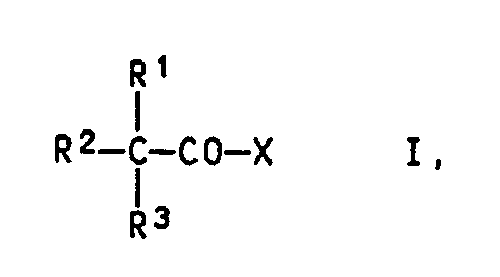
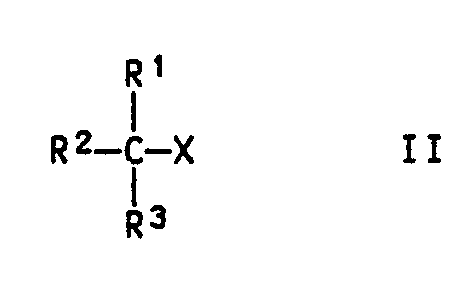
- the present invention relates to an improved process for the preparation of carboxylic acid halides by reacting secondary or tertiary alkyl halides with carbon monoxide at elevated pressure in the presence of catalytic amounts of a Lewis acid and optionally in the presence of a solvent.
- DE-OS 3 128 445 shows that secondary or tertiary alkyl halides can be reacted with carbon monoxide in the presence of aluminum chloride or iron chloride as a catalyst to give the corresponding acid halides without the need for more equimolar amounts of the catalyst.
- Good yields and selectivities are obtained in particular in the presence of aluminum chloride, so that the use of this catalyst, at least if no further Bronsted or Lewis acids are added, appears essential for the good success of this process.
- the use of aluminum chloride is disadvantageous in that its solubility is low in many solvents preferred for Friedel-Crafts syntheses, such as methylene chloride, chloroform, tetrachlorethylene or trichlorobenzene. Solvents in which aluminum chloride is readily soluble, such as nitrobenzene or sulfolane, have a deactivating effect on the catalyst.
- the aluminum bromide which is advantageously used in concentrations of 0.005 to 0.05 mol per mole of alkyl halide II, is readily soluble in solvents which are particularly suitable for the reaction, such as halogenated hydrocarbons.
- Halogenated hydrocarbons are, for example, brominated, preferably chlorinated, hydrocarbons, in particular chlorinated alkanes, alkenes, cycloalkanes or benzene.
- chlorinated alkanes e.g. Methylene chloride, chloroform, tri- and tetrachloroethane, tetrachlorethylene, hexachlorobutadiene and mono-, di- and trichlorobenzene.
- Chlorinated alkanes or alkenes in particular those having 1 to 4 carbon atoms, preferably methylene chloride and tetrachlorethylene, are particularly preferably used.
- the reaction can also be carried out without a solvent if the alkyl halide II is liquid at the chosen reaction temperature.
- the amount of acid halides can be about 0.1 to 2 moles per mole of aluminum halide. Preferably 0.1 to 1.5, in particular 0.3 to 1.3, mol of acid halide can be used per mole of aluminum bromide and 0.5 to 1.8, in particular 0.8 to 1.5, mol of acid halide per mole of aluminum chloride.
- Suitable starting materials II are alkyl halides in which the halogen atom X represents, for example, a fluorine, chlorine or bromine atom.
- Alkyl bromides are advantageously reacted, particularly alkyl chlorides.
- the radical R1 is hydrogen and branched or preferably unbranched alkyl radicals which are optionally substituted by one or more halogen atoms, such as fluorine, in particular chlorine or bromine atoms.
- the carbon number of the alkyl radicals can be, for example, 1 to 20, preferably 1 to 10, in particular 1 to 5.
- radicals R 1 may be mentioned by way of example: the methyl, ethyl, propyl, isopropyl, butyl, isobutyl, amyl, isoamyl, hexyl, octyl or dodecyl group and, as halogen-substituted alkyl radicals, the chloromethyl, bromomethyl, Fluoromethyl or an ethyl, propyl, butyl, amyl, hexyl, heptyl, octyl, decyl or dodecyl group substituted by a fluorine, chlorine or bromine atom.
- R 1 can be a cycloalkyl group optionally substituted by one or more of the above-mentioned halogen atoms, preferably having 5 or 6 carbon atoms.
- halogen atoms preferably having 5 or 6 carbon atoms. Examples include the cyclobutyl, cyclopentyl, cyclohexyl, methylcyclohexyl, chlorocyclopentyl, chlorocyclohexyl, bromocyclopentyl or bromocyclohexyl group.
- the radicals R2 and R3 have, apart from hydrogen, the meaning given for R1. Furthermore, together with the carbon atom to which they are attached, they can also form a ring system which can also be bridged. In general, they are linked together to form a 5- to 7-membered ring. Examples include the cyclopentyl, cyclohexyl, cycloheptyl, bicyclo [2.2.1] heptyl, bicyclo [2.2.2] octyl or bicyclo [3.2.1] octyl systems.
- the cycloalkyl radicals mentioned can also be substituted by C1 to C4 alkyl radicals.
- the following starting materials can be used for the reaction: tert-butyl chloride and bromide, tert-amyl chloride and bromide, 1,2-dichloro-2-methylpropane, 2-chloro-2-methylhexane, 2-bromo-2 - methylhexane, 2-chloro-2-propylhexane, 1-chloro-1-methylcyclohexane, norbornyl chloride or norbornyl bromide.
- the reaction is carried out batchwise or preferably continuously at a carbon monoxide pressure of about 10 to 500, preferably 50 to 400, in particular 150 to 300 bar and a temperature of -20 to +80, preferably 0 to 40, in particular 0 to 10, in a manner known per se ° C, the optimal reaction temperature strongly depending on the starting material II and solvent used.
- the amount of solvent can e.g. 10 to 500, in particular 20 to 100, advantageously 20 to 50% by volume, based on the volume of the alkyl halide used.
- the pressure can be released to atmospheric pressure, as in conventional processes, in order to separate the product I formed, unreacted starting material II and any solvent present from the catalyst.
- carboxylic acid halide will decompose in the reverse of its formation reaction. This decomposition can be largely avoided if a carboxylic acid amide is added to the reaction mixture before the pressure is released in order to destroy the Lewis acid catalyst.
- acid amides of low molecular weight carboxylic acids which can be easily separated from the reaction mixture, e.g. from C1 to C5 carboxylic acids such as formic acid, acetic acid, propionic acid, butyric acid or valeric acid.
- a particularly preferred acid amide is dimethylformamide.
- equimolar amounts of the acid amide will be added to the aluminum halide. Smaller and larger quantities are possible, but have no advantages.
- reaction mixture is worked up by distillation in a known manner, so that explanations are unnecessary.
- the aluminum bromide was optionally placed together with the solvent or solubilizer in a stirred autoclave at + 5 ° C. Then carbon monoxide was injected to a pressure of 200 bar, the alkyl chloride was pumped in over 30 to 80 minutes and the CO pressure was increased to 300 bar. The reaction mixture was then left to react at the indicated temperature for 10 to 12 h, the CO pressure being kept constant at 300.degree.
- the work-up was carried out by adding the amount of dimethylformamide equimolar to the aluminum bromide in the reaction mixture before decompression and distilling off the reactor effluent from the catalyst in vacuo.
- the yields determined by gas chromatographic analysis of the distillate and details of the implementation can be found in the table below.
Landscapes
- Chemical & Material Sciences (AREA)
- Organic Chemistry (AREA)
- Engineering & Computer Science (AREA)
- Oil, Petroleum & Natural Gas (AREA)
- Organic Low-Molecular-Weight Compounds And Preparation Thereof (AREA)
- Catalysts (AREA)
- Low-Molecular Organic Synthesis Reactions Using Catalysts (AREA)
Abstract
R², R³ = gegebenenfalls halogenierter Alkyl- oder Cycloalkylrest, wobei R² und R³ miteinander zu einem 5- bis 7-gliedrigen Ring verbunden sein können und
X = Halogen,
durch Umsetzung von Alkylhalogeniden II
- a) Aluminiumbromid und gegebenfalls in Gegenwart eines Lösungsmittels
- b) Aluminiumchlorid oder -bromid sowie in Gegenwart von Halogenkohlenwasserstoffen und Carbonsäurehalogeniden der Formel III
R⁴-CH₂-CO-Hal III,
in der R⁴ Wasserstoff oder einen C₁-C₄-Alkylrest bedeutet und Hal für Halogen steht,
Description
- Die vorliegende Erfindung betrifft ein verbessertes Verfahren zur Herstellung von Carbonsäurehalogeniden durch Umsetzung von sekundären oder tertiären Alkylhalogeniden mit Kohlenmonoxid bei erhöhtem Druck in Gegenwart katalytischer Mengen einer Lewis-Säure und gegebenenfalls in Gegenwart eines Lösungsmittels.
- Aus der DE-OS 3 128 445 geht hervor, daß sich sekundäre oder tertiäre Alkylhalogenide mit Kohlenmonoxid in Gegenwart von Aluminiumchlorid oder Eisenchlorid als Katalysator zu den entsprechenden Säurehalogeniden umsetzen lassen, ohne daß äquimolere Mengen des Katalysators benötigt werden. Gute Ausbeuten und Selektivitäten werden insbesondere in Gegenwart von Aluminiumchlorid erhalten, so daß die Verwendung dieses Katalysators, jedenfalls wenn keine weiteren Brönsted- oder Lewis-Säuren zugesetzt werden, für das gute Gelingen dieses Verfahrens essentiell erscheint. Die Verwendung von Aluminiumchlorid ist insofern nachteilig, als dessen Löslichkeit in vielen für Friedel-Crafts-Synthesen bevorzugten Lösungsmitteln wie Methylenchlorid, Chloroform, Tetrachlorethylen oder Trichlorbenzol nur gering ist. Lösungsmittel, in denen Aluminiumchlorid gut löslich ist, wie Nitrobenzol oder Sulfolan, wirken hingegen desaktivierend auf den Katalysator.
- Für eine in der Technik bevorzugte kontinuierliche Reaktionsführung ist es wichtig, daß ein Katalysator nicht in fester Form, sondern gelöst in den Druckreaktor eingespeist werden kann, wobei seine Aktivität natürlich nicht herabgesetzt werden sollte. Der Erfindung lag daher die Aufgabe zugrunde, einen Katalysator zu finden, bei dem die geschilderten Nachteile nicht auftreten.
- Demgemäß wurde ein Verfahren zur Herstellung von Carbonsäurehalogeniden der Formel I


- a) Aluminiumbromid als Katalysator oder
- b) Aluminiumbromid oder -chlorid als Katalysator sowie in Gegenwart von Halogenkohlenwasserstoffen und Carbonsäurehalogeniden der Formel III
R⁴-CH₂-CO-Hal III
in der R⁴ Wasserstoff oder einen C₁-C₄-Alkylrest bedeutet und Hal für Halogen steht, - Das Aluminiumbromid, das vorteilhaft in Konzentrationen von 0,005 bis 0,05 mol pro Mol Alkylhalogenid II eingesetzt wird, ist in den für die Umsetzung besonders geeigneten Lösungsmitteln wie halogenierten Kohlenwasserstoffen gut löslich. Halogenierte Kohlenwasserstoffe sind beispielsweise bromierte, vorzugsweise chlorierte Kohlenwasserstoffe, insbesondere chlorierte Alkane, Alkene, Cycloalkane oder Benzol. Hier seien z.B. Methylenchlorid, Chloroform, Tri- und Tetrachlorethan, Tetrachlorethylen, Hexachlorbutadien sowie Mono-, Di- und Trichlorbenzol genannt. Besonders bevorzugt werden chlorierte Alkane bzw. Alkene, insbesondere solche mit 1 bis 4 Kohlenstoffatomen, vorzugsweise Methylenchlorid und Tetrachlorethylen verwendet. Die Umsetzung kann aber auch ohne Lösungsmittel durchgeführt werden, wenn das Alkylhalogenid II bei der gewählten Reaktionstemperatur flüssig ist.
- Die ohnehin gute Löslichkeit des Aluminiumbromids in den genannten Lösungsmitteln läßt sich noch weiter steigern, wenn man Carbonsäurehalogenide der Formel R⁴-CH₂-CO-Hal, worin R⁴ Wasserstoff oder einen C₁-C₄-Alkylrest und Hal Halogen, insbesondere Chlor oder Brom bedeuten, als lösungsvermittelnde Komponente zusetzt. Besonders geeignet sind C₂- und C₃-Säurehalogenide, z.B. Acetyl- und Propionylchlorid. Durch den Zusatz dieser Lösungsvermittler ist es möglich, auch Aluminiumchlorid als Katalysator zu verwenden, ohne daß Löslichkeitsprobleme auftreten.
- Die Menge der Säurehalogenide kann etwa 0,1 bis 2 mol pro Mol Aluminiumhalogenid betragen. Vorzugsweise können pro Mol Aluminiumbromid 0,1 bis 1,5, insbesondere 0,3 bis 1,3 mol Säurehalogenid und pro Mol Aluminiumchlorid 0,5 bis 1,8, insbesondere 0,8 bis 1,5 mol Säurehalogenid verwendet werden.
- Durch den Säurehalogenidzusatz kommt es zu keiner signifikanten Abnahme der Katalysatoraktivität und es tritt keine Decarbonylierung auf, wie es z.B. der Fall sein kann, wenn man die bei der Umsetzung gebildeten Produkte als Lösungsvermittler verwendet.
- Als Ausgangsstoff II kommen Alkylhalogenide in Betracht, in denen das Halogenatom X beispielsweise ein Fluor-, Chlor- oder Bromatom darstellt. Vorteilhaft werden Alkylbromide, besonders vorteilhaft Alkylchloride umgesetzt. Der Rest R¹ steht für Wasserstoff sowie verzweigte oder bevorzugt unverzweigte Alkylreste, die gegebenenfalls durch ein oder mehrere Halogenatome, wie Fluor-, insbesondere Chlor- oder Bromatome, substituiert sind. Die Kohlenstoffzahl der Alkylreste kann beispielsweise 1 bis 20, vorzugsweise 1 bis 10, insbesondere 1 bis 5, betragen. Folgende Reste R¹ seien beispielhaft genannt: die Methyl-, Ethyl-, Propyl-, Isopropyl-, Butyl-, Isobutyl-, Amyl-, Isoamyl-, Hexyl-, Octyl- oder Dodecylgruppe sowie als halogensubstituierte Alkylreste die Chlormethyl-, Brommethyl-, Fluormethyl- oder eine durch ein Fluor-, Chlor- oder Bromatom substituierte Ethyl-, Propyl-, Butyl-, Amyl-, Hexyl-, Heptyl-, Octyl-, Decyl-oder Dodecylgruppe.
- Weiterhin kann R¹ eine gegebenenfalls durch ein oder mehrere der oben genannten Halogenatome substituierte Cycloalkylgruppe, vorzugsweise mit 5 oder 6 Kohlenstoffatomen, bedeuten. Beispielhaft seien die Cyclobutyl-, Cyclopentyl-, Cyclohexyl-, Methylcyclohexyl-, Chlorcyclopentyl-, Chlorcyclohexyl-, Bromcyclopentyl- oder Bromcyclohexylgruppe genannt.
- Die Reste R² und R³ haben, abgesehen von Wasserstoff, die für R¹ genannte Bedeutung. Weiterhin können sie auch miteinander zusammen mit dem C-Atom, an das sie gebunden sind, ein Ringsystem bilden, das auch überbrückt sein kann. Im allgemeinen sind sie miteinander zu einem 5- bis 7-gliedrigen Ring verknüpft. Beispielsweise seien das Cyclopentyl-, Cyclohexyl-, Cycloheptyl-, Bicyclo[2,2,1]heptyl-, Bicyclo[2,2,2]octyl- oder Bicyclo[3,2,1]octylsystem genannt. Die genannten Cycloalkylreste können noch durch C₁-bis C₄-Alkylreste substituiert sein.
- Für die Umsetzung können beispielsweise die folgenden Ausgangsstoffe verwendet werden: tert.-Butylchlorid und -bromid, tert.-Amylchlorid und -bromid, 1,2-Dichlor-2-methylpropan, 2-Chlor-2-methylhexan, 2-Brom-2- methylhexan, 2-Chlor-2-propylhexan, 1-Chlor-1-methylcyclohexan, Norbornylchlorid oder Norbornylbromid.
- Die Umsetzung erfolgt in an sich bekannter Weise diskontinuierlich oder bevorzugt kontinuierlich bei einem Kohlenmonoxiddruck von etwa 10 bis 500, vorzugsweise 50 bis 400, insbesondere 150 bis 300 bar und einer Temperatur von -20 bis +80, vorzugsweise 0 bis 40, insbesondere 0 bis 10°C, wobei die optimale Reaktionstemperatur stark vom eingesetzten Ausgangsstoff II und Lösungsmittel abhängt. Die Menge des Lösungsmittels kann z.B. 10 bis 500, insbesondere 20 bis 100, vorteilhaft 20 bis 50 Vol.%, bezogen auf das Volumen des eingesetzten Alkylhalogenids betragen.
- Nach beendeter Umsetzung kann wie bei herkömmlichen Verfahren auf Normaldruck entspannt werden, um das gebildete Produkt I, nicht umgesetzten Ausgangsstoff II und gegebenenfalls vorhandenes Lösungsmittel vom Katalysator abzutrennen. Dabei besteht aber die Gefahr, daß sich ein Teil des Carbonsäurehalogenids in Umkehrung seiner Bildungsreaktion zersetzt. Diese Zersetzung läßt sich weitgehend vermeiden, wenn man dem Reaktionsgemisch vor dem Entspannen ein Carbonsäureamid zusetzt, um den Lewis-Säure-Katalysator zu zerstören. Vorzugsweise wird man Säureamide von niedermolekularen Carbonsäuren verwenden, die sich leicht aus dem Reaktionsgemisch abtrennen lassen, z.B. von C₁- bis C₅-Carbonsäuren, wie Ameisensäure, Essigsäure, Propionsäure, Buttersäure oder Valeriansäure. Besonders bevorzugtes Säureamid ist Dimethylformamid. Zur völligen Zerstörung des Katalysators wird man dem Aluminiumhalogenid äquimolare Mengen des Säureamids zusetzen. Kleinere und größere Mengen sind möglich, bringen aber keine Vorteile.
- Die destillative Aufarbeitung des Reaktionsgemisches erfolgt in bekannter Weise, so daß sich Ausführungen hierzu erübrigen.
- Das Aluminiumbromid wurde ggf. zusammen mit dem Lösungsmittel bzw. Lösungsvermittler im Rührautoklaven bei +5°C vorgelegt. Dann wurde Kohlenmonoxid bis zu einem Druck von 200 bar aufgepreßt, das Alkylchlorid innerhalb von 30 bis 80 Minuten zugepumpt und der CO-Druck auf 300 bar erhöht. Anschließend ließ man die Reaktionsmischung 10 bis 12 h bei der angegebenen Temperatur ausreagieren, wobei der CO-Druck konstant bei 300°C gehalten wurde.
- Die Aufarbeitung erfolgte in der Weise, daß man dem Reaktionsgemisch vor dem Entspannen die dem Aluminiumbromid äquimolare Menge Dimethylformamid zusetzte und den Reaktoraustrag im Vakuum vom Katalysator abdestillierte. Die durch gaschromatographische Analyse des Destillats ermittelten Ausbeuten sind ebenso wie Einzelheiten zur Umsetzung der nachfolgenden Tabelle zu entnehmen.

Claims (10)


R⁴-CH₂-CO-Hal III,
in der R⁴ Wasserstoff oder einen C₁-C₄-Alkylrest bedeutet und Hal für Halogen steht,
Applications Claiming Priority (2)
| Application Number | Priority Date | Filing Date | Title |
|---|---|---|---|
| DE3623422 | 1986-07-11 | ||
| DE19863623422 DE3623422A1 (de) | 1986-07-11 | 1986-07-11 | Verfahren zur herstellung von carbonsaeurehalogeniden |
Publications (3)
| Publication Number | Publication Date |
|---|---|
| EP0252408A2 true EP0252408A2 (de) | 1988-01-13 |
| EP0252408A3 EP0252408A3 (en) | 1988-11-30 |
| EP0252408B1 EP0252408B1 (de) | 1991-01-09 |
Family
ID=6304969
Family Applications (1)
| Application Number | Title | Priority Date | Filing Date |
|---|---|---|---|
| EP87109364A Expired - Lifetime EP0252408B1 (de) | 1986-07-11 | 1987-06-30 | Verfahren zur Herstellung von Carbonsäurehalogeniden |
Country Status (5)
| Country | Link |
|---|---|
| US (1) | US5041649A (de) |
| EP (1) | EP0252408B1 (de) |
| JP (1) | JPS6323833A (de) |
| DE (2) | DE3623422A1 (de) |
| ES (1) | ES2019339B3 (de) |
Cited By (1)
| Publication number | Priority date | Publication date | Assignee | Title |
|---|---|---|---|---|
| EP0296404A3 (en) * | 1987-06-12 | 1990-01-31 | Basf Aktiengesellschaft | Method for the production of carboxylic acid halides with more than 7 carbon atoms |
Families Citing this family (1)
| Publication number | Priority date | Publication date | Assignee | Title |
|---|---|---|---|---|
| JP2894445B2 (ja) | 1997-02-12 | 1999-05-24 | 日本たばこ産業株式会社 | Cetp活性阻害剤として有効な化合物 |
Family Cites Families (4)
| Publication number | Priority date | Publication date | Assignee | Title |
|---|---|---|---|---|
| US2378048A (en) * | 1944-04-07 | 1945-06-12 | Du Pont | Method of making haloacetyl halides |
| US2411982A (en) * | 1944-11-28 | 1946-12-03 | Du Pont | Process for making polyhalogenated straight-chain aliphatic carboxylic acid halides |
| US3471557A (en) * | 1966-06-22 | 1969-10-07 | Ethyl Corp | Preparation of beta-chloroisobutyryl chloride |
| DE3128445A1 (de) * | 1981-07-18 | 1983-02-03 | Bayer Ag, 5090 Leverkusen | Verfahren zur herstellung von saeurehalogeniden |
-
1986
- 1986-07-11 DE DE19863623422 patent/DE3623422A1/de not_active Withdrawn
-
1987
- 1987-06-29 US US07/068,013 patent/US5041649A/en not_active Expired - Lifetime
- 1987-06-30 DE DE8787109364T patent/DE3767234D1/de not_active Expired - Lifetime
- 1987-06-30 ES ES87109364T patent/ES2019339B3/es not_active Expired - Lifetime
- 1987-06-30 EP EP87109364A patent/EP0252408B1/de not_active Expired - Lifetime
- 1987-07-06 JP JP62167144A patent/JPS6323833A/ja active Pending
Cited By (1)
| Publication number | Priority date | Publication date | Assignee | Title |
|---|---|---|---|---|
| EP0296404A3 (en) * | 1987-06-12 | 1990-01-31 | Basf Aktiengesellschaft | Method for the production of carboxylic acid halides with more than 7 carbon atoms |
Also Published As
| Publication number | Publication date |
|---|---|
| EP0252408A3 (en) | 1988-11-30 |
| US5041649A (en) | 1991-08-20 |
| ES2019339B3 (es) | 1991-06-16 |
| DE3767234D1 (de) | 1991-02-14 |
| EP0252408B1 (de) | 1991-01-09 |
| DE3623422A1 (de) | 1988-01-14 |
| JPS6323833A (ja) | 1988-02-01 |
Similar Documents
| Publication | Publication Date | Title |
|---|---|---|
| DE2706583B2 (de) | Verfahren zur Herstellung von Methacrylsäure | |
| EP0252408B1 (de) | Verfahren zur Herstellung von Carbonsäurehalogeniden | |
| EP0068372B1 (de) | Verfahren zur Herstellung von 2-Alkyl-4,4-diacyloxy-2-butenalen | |
| DE2708190A1 (de) | M-brom-benzotrifluoride | |
| EP0001089B1 (de) | Verfahren zur Herstellung von halogenvinylsubstituierten Tetrahydrofuran-2-onen, bestimmte halogenvinylsubstituierte Tetrahydrofuran-2-one | |
| EP0037015B1 (de) | Verfahren zur Herstellung von 2-Chloracetessigsäureestern | |
| EP1223158B1 (de) | Verfahren zur Herstellung trifluormethyl-substituierter Biphenylcarbonsäuren und neue trichlormethyl- und trifluormethyl-substituierte Biphenylcarbonitrile | |
| EP0735016A1 (de) | Verfahren zur Herstellung von Alpha-Chloralkylarylketonen | |
| EP0301446B1 (de) | Verfahren zur Herstellung von Carbonsäurehalogeniden | |
| DE2533181C2 (de) | Verfahren zur Herstellung von Dichloracetylchlorid | |
| EP0128453A2 (de) | Verfahren zur Herstellung von Fluorphthalsäureimiden | |
| DE3437634A1 (de) | Verfahren zur herstellung von gegebenenfalls substituierter zimtsaeure in gegenwart eines katalysators | |
| DE2120364A1 (en) | Polyfluoroalkane carboxylic acids prepn, polymn emulsifiers | |
| DE3243545A1 (de) | Verfahren zur herstellung von 1,3-diacetoxy-2-methylenpropan | |
| EP0676388B1 (de) | Verfahren zur Herstellung von substituierten Phenylessigsäurederivaten und neue Zwischenprodukte | |
| EP0718272B1 (de) | Verfahren zur Herstellung von Trialkylester-Derivaten | |
| EP0089576B1 (de) | 1,1-Diacyloxy-3-alkyl-4-hydroxy-2-butene, ihre Herstellung und Verwendung | |
| EP0035186B1 (de) | Verfahren zur Herstellung von 3-Brom-4-fluortoluol | |
| EP0030701A1 (de) | Verfahren zur Herstellung von 1-(Aralkyl)-2-naphtholen | |
| EP0087097B1 (de) | 2-Alkyl-1,3-diacyloxy-4-hydroxy-1-butene, ihre Herstellung und Verwendung | |
| DE3316227A1 (de) | Verfahren zur herstellung von hexafluoroisobuten und/oder hexafluorobuten | |
| DE2660213C2 (de) | Verfahren zur Herstellung von Acylcyaniden | |
| EP0045430A1 (de) | Verfahren zur alpha-Bromierung von gegebenenfalls substituierten Fluortoluolen und Gemische von in alpha-Stellung verschieden hoch bromierten, gegebenenfalls substituierten Fluortoluolen | |
| DE2402457C3 (de) | Verfahren zur Herstellung von m-Phenoxybenzylalkohol | |
| EP0009159A1 (de) | Verfahren zur Herstellung von Carbonsäureestern des Beta-Formyl-Crotylalkohols mittels einer Allylumlagerung |
Legal Events
| Date | Code | Title | Description |
|---|---|---|---|
| PUAI | Public reference made under article 153(3) epc to a published international application that has entered the european phase |
Free format text: ORIGINAL CODE: 0009012 |
|
| AK | Designated contracting states |
Kind code of ref document: A2 Designated state(s): CH DE ES FR GB IT LI NL |
|
| PUAL | Search report despatched |
Free format text: ORIGINAL CODE: 0009013 |
|
| AK | Designated contracting states |
Kind code of ref document: A3 Designated state(s): CH DE ES FR GB IT LI NL |
|
| 17P | Request for examination filed |
Effective date: 19881013 |
|
| 17Q | First examination report despatched |
Effective date: 19900521 |
|
| GRAA | (expected) grant |
Free format text: ORIGINAL CODE: 0009210 |
|
| AK | Designated contracting states |
Kind code of ref document: B1 Designated state(s): CH DE ES FR GB IT LI NL |
|
| ITF | It: translation for a ep patent filed | ||
| REF | Corresponds to: |
Ref document number: 3767234 Country of ref document: DE Date of ref document: 19910214 |
|
| GBT | Gb: translation of ep patent filed (gb section 77(6)(a)/1977) | ||
| ET | Fr: translation filed | ||
| PLBI | Opposition filed |
Free format text: ORIGINAL CODE: 0009260 |
|
| 26 | Opposition filed |
Opponent name: BAYER AG, LEVERKUSEN KONZERNVERWALTUNG RP PATENTE Effective date: 19910924 |
|
| NLR1 | Nl: opposition has been filed with the epo |
Opponent name: BAYER AG |
|
| APAC | Appeal dossier modified |
Free format text: ORIGINAL CODE: EPIDOS NOAPO |
|
| PLBN | Opposition rejected |
Free format text: ORIGINAL CODE: 0009273 |
|
| STAA | Information on the status of an ep patent application or granted ep patent |
Free format text: STATUS: OPPOSITION REJECTED |
|
| 27O | Opposition rejected |
Effective date: 19921003 |
|
| NLR2 | Nl: decision of opposition | ||
| REG | Reference to a national code |
Ref country code: GB Ref legal event code: IF02 |
|
| PGFP | Annual fee paid to national office [announced via postgrant information from national office to epo] |
Ref country code: NL Payment date: 20050605 Year of fee payment: 19 |
|
| PGFP | Annual fee paid to national office [announced via postgrant information from national office to epo] |
Ref country code: FR Payment date: 20050608 Year of fee payment: 19 |
|
| PGFP | Annual fee paid to national office [announced via postgrant information from national office to epo] |
Ref country code: DE Payment date: 20050623 Year of fee payment: 19 |
|
| PGFP | Annual fee paid to national office [announced via postgrant information from national office to epo] |
Ref country code: CH Payment date: 20050629 Year of fee payment: 19 Ref country code: GB Payment date: 20050629 Year of fee payment: 19 |
|
| PGFP | Annual fee paid to national office [announced via postgrant information from national office to epo] |
Ref country code: ES Payment date: 20050728 Year of fee payment: 19 |
|
| APAH | Appeal reference modified |
Free format text: ORIGINAL CODE: EPIDOSCREFNO |
|
| PG25 | Lapsed in a contracting state [announced via postgrant information from national office to epo] |
Ref country code: CH Free format text: LAPSE BECAUSE OF NON-PAYMENT OF DUE FEES Effective date: 20060630 Ref country code: LI Free format text: LAPSE BECAUSE OF NON-PAYMENT OF DUE FEES Effective date: 20060630 Ref country code: GB Free format text: LAPSE BECAUSE OF NON-PAYMENT OF DUE FEES Effective date: 20060630 |
|
| PGFP | Annual fee paid to national office [announced via postgrant information from national office to epo] |
Ref country code: IT Payment date: 20060630 Year of fee payment: 20 |
|
| PG25 | Lapsed in a contracting state [announced via postgrant information from national office to epo] |
Ref country code: ES Free format text: LAPSE BECAUSE OF NON-PAYMENT OF DUE FEES Effective date: 20060701 |
|
| PG25 | Lapsed in a contracting state [announced via postgrant information from national office to epo] |
Ref country code: NL Free format text: LAPSE BECAUSE OF NON-PAYMENT OF DUE FEES Effective date: 20070101 |
|
| PG25 | Lapsed in a contracting state [announced via postgrant information from national office to epo] |
Ref country code: DE Free format text: LAPSE BECAUSE OF NON-PAYMENT OF DUE FEES Effective date: 20070103 |
|
| REG | Reference to a national code |
Ref country code: CH Ref legal event code: PL |
|
| GBPC | Gb: european patent ceased through non-payment of renewal fee |
Effective date: 20060630 |
|
| NLV4 | Nl: lapsed or anulled due to non-payment of the annual fee |
Effective date: 20070101 |
|
| REG | Reference to a national code |
Ref country code: FR Ref legal event code: ST Effective date: 20070228 |
|
| REG | Reference to a national code |
Ref country code: ES Ref legal event code: FD2A Effective date: 20060701 |
|
| PG25 | Lapsed in a contracting state [announced via postgrant information from national office to epo] |
Ref country code: FR Free format text: LAPSE BECAUSE OF NON-PAYMENT OF DUE FEES Effective date: 20060630 |