EP0253340B1 - Alkylsubstituiertes Benzoxazinorifamycinderivat, Verfahren zu seiner Herstellung und dieses enthaltendes antibakterielles Mittel - Google Patents
Alkylsubstituiertes Benzoxazinorifamycinderivat, Verfahren zu seiner Herstellung und dieses enthaltendes antibakterielles Mittel Download PDFInfo
- Publication number
- EP0253340B1 EP0253340B1 EP87110048A EP87110048A EP0253340B1 EP 0253340 B1 EP0253340 B1 EP 0253340B1 EP 87110048 A EP87110048 A EP 87110048A EP 87110048 A EP87110048 A EP 87110048A EP 0253340 B1 EP0253340 B1 EP 0253340B1
- Authority
- EP
- European Patent Office
- Prior art keywords
- formula
- group
- derivative
- salts
- rifamycin derivative
- Prior art date
- Legal status (The legal status is an assumption and is not a legal conclusion. Google has not performed a legal analysis and makes no representation as to the accuracy of the status listed.)
- Expired - Lifetime
Links
- 0 C1CC*CC1 Chemical compound C1CC*CC1 0.000 description 2
Classifications
-
- C—CHEMISTRY; METALLURGY
- C07—ORGANIC CHEMISTRY
- C07D—HETEROCYCLIC COMPOUNDS
- C07D498/00—Heterocyclic compounds containing in the condensed system at least one hetero ring having nitrogen and oxygen atoms as the only ring hetero atoms
- C07D498/12—Heterocyclic compounds containing in the condensed system at least one hetero ring having nitrogen and oxygen atoms as the only ring hetero atoms in which the condensed system contains three hetero rings
- C07D498/18—Bridged systems
-
- A—HUMAN NECESSITIES
- A61—MEDICAL OR VETERINARY SCIENCE; HYGIENE
- A61P—SPECIFIC THERAPEUTIC ACTIVITY OF CHEMICAL COMPOUNDS OR MEDICINAL PREPARATIONS
- A61P31/00—Antiinfectives, i.e. antibiotics, antiseptics, chemotherapeutics
- A61P31/04—Antibacterial agents
-
- C—CHEMISTRY; METALLURGY
- C07—ORGANIC CHEMISTRY
- C07D—HETEROCYCLIC COMPOUNDS
- C07D519/00—Heterocyclic compounds containing more than one system of two or more relevant hetero rings condensed among themselves or condensed with a common carbocyclic ring system not provided for in groups C07D453/00 or C07D455/00
Definitions
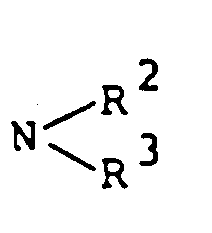
- the present invention relates to a novel rifamycin derivative or salts thereof, a process for preparing the same and antibacterial agents containing the same as an effective ingredient More particularly, the present invention relates to a novel rifamycin derivative having the formula (I): wherein X 1 is an alkyl group with 1 to 3 carbon atoms; X 2 is a hydrogen atom or an alkyl group with 1 to 3 carbon atoms; R 1 is hydrogen atom or acetyl group; A is a group represented by the formula:
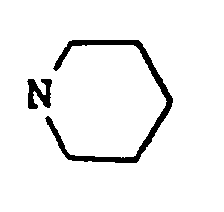
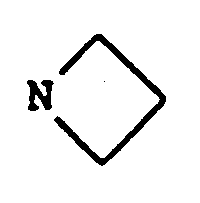
- a 3 to 8 membered cylic amino group with 2 to 7 carbon atoms represented by the formula: means a group represented by the formula:
- the rifamycin derivative of the present invention is a novel compound which has not yet been reported in the literature.
- GB-A-1 081 757 discloses benzoxazinorifamycin derivatives and other derivatives of rifamycin O and S.
- EP-A-0 190 709 refers to alkyl-substituted benzoxazinorifamycin derivatives and anti-bacterial agents containing them.
- a novel rifamycin derivative having the formula (I): wherein X 1 is an alkyl group with 1 to 3 carbon atoms; X 2 is a hydrogen atom or an alkyl group with 1 to 3 carbon atoms; R 1 is hydrogen atom or acetyl group; A is a group represented by the formula: wherein R 2 is an alkyl group with 1 to 3 carbon atoms or an alkoxyalkyl group with 2 to 6 carbon atoms and R 3 is an alkyl group with 1 to 6 carbon atoms or an alkoxyalkyl group with 2 to 6 carbon atoms, or a 3 to 8 membered cyclic amino group with 2 to 7 carbon atoms represented by the formula: or salts thereof, a process for preparing the same and antibacterial agents containing the same as an effective ingredient.
- a rifamycin derivative having the formula (I): wherein X 1 , X 2 , R 1 and A are as defined above could be prepared by reacting a rifamycin derivative having the formula (II): wherein X 1 , X 2 and R 1 are as defined above, with an amine having the formula: AH, wherein A is as defined above and the obtained rifamycin derivative having the formula (I) shows a strong antibucterial activity.
- the rifamycin derivative having the formula (I) is soluble in various kinds of organic solvents, e.g. halogenated hydrocarbons such as chloroform, alcohols such as ethanol, esters such as ethyl acetate, aromatic hydrocarbons such as benzene and ethers such as tetrahydrofuran.
- organic solvents e.g. halogenated hydrocarbons such as chloroform, alcohols such as ethanol, esters such as ethyl acetate, aromatic hydrocarbons such as benzene and ethers such as tetrahydrofuran.
- An example of an alkyl group with 1 to 3 carbon atoms for X 1 is methyl group, ethyl group, propyl group or isopropyl group.
- An example of an alkyl group with 1 to 3 carbon atoms for X 2 is methyl group, ethyl group, propyl group or isopropyl group.
- the rifamycin derivative of the present invention having the formula (I) can form a salt with either a base or an acid. Any base or acid which can form a salt with the rifamycin derivative having the formula (I) can be employed.
- the salt with base are (1) a metallic salt, especially an alkali metal salt or an alkaline earth metal salt, (2) an ammonium salt and (3) an amine salt, especially a salt with methylamine, ethylamine, diethylamine, triethylamine, pyrrolidine, morpholine or hexamethyleneimine.
- Examples of the salt with an acid are (1) a salt with mineral acid such as sulfuric acid or hydrochloric acid and (2) a salt with an organic acid such as p-toluenesulfonic acid, trifluoroacetic acid or acetic acid.
- the rifamycin derivative of the present invention having the formula (I) can be prepared by means of the following process.
- the rifamycin derivative having the formula (II), which is a starting material, can be prepared by rifamycin S with a compound represented by the formula: wherein X 1 and X 2 are as defined above, in accordance with the method disclosed by W. Kump et al [Helv. Chim. Acta, 56, 2348 (1978)].
- reaction solvent employed in the above process are, for instance, methanol, ethanol, isopropyl alcohol, tetrahydrofuran, pyridine, acetone, ethyl acetate, chloroform, N,N-dimethylformamide or dimethylsulfoxide.
- pyridine, N,N-dimethylformamide or dimethylsulfoxide is preferably employed in the above process with an excellent result.
- the reaction is carried out at a temperature ranging from -20 °C to a boiling point of the solvent, preferably from -50 to 50 ° C.
- reaction may be carried out for a duration of around 1 hour to around 1 month, the optimum reaction time should be determined depending on the proceeding of the reaction, the proceeding can be shown by thin layer chromatography since it varies depending on the kind and amount of the amine employed in the above process, the presence or absence of an oxidizing agent, the kind and amount thereof when present, or the reaction temperature.
- the reaction is carried out in the presence of the oxidizing agent, air, oxygen, manganese dioxide, lead dioxide, silver oxide, potassium ferricyanide or hydrogen peroxide are employed as the oxidizing agent.
- air, oxygen, manganese dioxide, lead dioxide, silver oxide, potassium ferricyanide or hydrogen peroxide are employed as the oxidizing agent.
- manganese dioxide, silver oxides or potassium ferricyanide is preferably employed in the above process with an excellent result.
- the rifamycin derivative having the formula (III), which is a starting material, can be prepared by reacting rifamycin S with a compound represented by the formula : wherein X 1 , X 2 and X 3 are as defined above, in accordance with the method disclosed by W. Kump et al [Helv. Chim. Acta, 56, 2348 (1978)].
- the hydrolysis reaction is carried out at room temperature employing an alkali metal hydroxide such as sodium hydroxide or potassium hydroxide and employing a solvent such as water-containing methanol or water-containing pyridine.
- an alkali metal hydroxide such as sodium hydroxide or potassium hydroxide
- a solvent such as water-containing methanol or water-containing pyridine.
- the rifamycin derivative of the present invention having the formula (I), which is a dark purple solid, can be separated and purified from the reaction products in a relatively easy manner. That is, an excess amount of the amine having the formula: AH, wherein A is as defined above and the reaction solvent are removed from the reaction system to give a crude product, which is then purified by crystallization or column-chromatography.
- the rifamycin derivative of the present invention having the formula (I) can be also converted into the rifamycin derivative having the formula (IV): wherein X 1 , X 2 , R 1 and A are as defined above, by reducing the rifamycin derivative having the formula (I) with a reducing agent such as ascorbic acid or sodium hydrosulfite.
- a reducing agent such as ascorbic acid or sodium hydrosulfite.
- the rifamycin derivative having the formula (IV) is also a novel compound and shows a strong antibacterial activity.
- Typical examples of the rifamycin derivative of the present invention are shown in Table 1.
- infrared absorption spectrum was measured according to the potassium bromide tablet method. Thin layer chromatography was carried out using silica gel 60 F 254 plate for thin layer chromatography (20 cm x 20 cm, made by E. Merck Co.). Nuclear magnetic resonance spectrum was measured using tetramethylsilane as an internal standard and deuterated chloroform solution.
- the rifamycin derivative of the present invention shows a strong antibacterial activity against the Gram-positive bacteria and the acid-fast bacteria.
- the antibacterial activity of the rifamycin derivative of the present invention was tested by the method according to the standard method of Japan Society of Chemotherapy [Chemotherapy (Tokyo), 29, 76 (1981)].
- the results obtained from the typical compounds are shown in Table 2.
- Table 2 it is clear that the rifamycin derivative of the present invention shows a strong antibacterial activity against the Gram-positive bacteria and the acid-fast bacteria.
- test compound No. corresponds to derivative No. in Table 1.
- the rifamycin derivative of the present invention had a low toxicity since toxicity was never exhibited by oral administration of 1000 mg/kg weight of the rifamycin derivative of the present invention shown in Table 1 to mice.
- the rifamycin derivative of the present invention having the formula (I) is absorbed by oral administration to show a high blood level.
- Typical compounds were tested employing Wister Strain male rats (10 to 15 weeks) and the results obtained are shown in Table 3.
- the derivative No. in Table 3 corresponds to the derivative No. in Table 1. Blood levels were measured, according to the usual method, by means of bioassay employing Micrococcus luteus IFO 12708 as an assay bacteria.
- Antibacterial agents containing the rifamycin derivative of the present invention as an effective ingredient can be in any dosage form for an oral, rectal, topical or parenteral administration.
- the dosage form are, for instance, tablets, capsules, granules, syrups, suppositories or ointments.
- Carriers usually used in the dosage form of the antibacterial agents of the present invention are an inactive pharmaceutical carriers of organic or inorganic solid or liquid suitable for oral, rectal, or other parenteral administration.
- An example of the carrier is crystalline cellulose, gelatin, lactose, starch, magnesium sterate, talc, vegetable or animal fat or oil, gum or polyalkylene glycol.
- the ratio of the antibacterial agent of the present invention to the carrier in the dosage form can vary from 0.2 to 100 % by weight.
- the antibacterial agent of the present invention can contain another pharmaceutical ingredient such as another antibacterial agent compatible with the antibacterial agent of the present invention. In this case, the antibacterial agent of the present invention is not necessarily the main ingredient of the dosage form.
- the antibacterial agent of the present invention is administered with such a dose that the desired activity is achieved without any side-effect.
- the actual dose should be determined according to the judgment of the doctor, around 10 mg to around 10 g, preferably around 20 mg to around 5 g per day of the antibacterial agent of the present invention may be usually administered for adults.
- the antibacterial agent of the present invention can be administered in a pharmaceutical dosage unit containing 1 mg to 5 g, preferably 3 mg to 1 g of an effective ingredient.
- infrared adsorption spectrum was measured according to the potassium bromide tablet method.
- Nuclear magnetic resonance spectrum was measured using tetramethylsilane as an internal standard and deuterated chloroform solution.
- the residue was purified by subjecting to silica-gel column-chromatography by employing Wakogel@ C-200 twice [eluent: ethyl acetate] and the obtained residue was dissolved in ethyl acetate-n-hexane to crystallize 0.09 g of the desired derivative No. 1.
- Example 3 The procedure of Example 3 was repeated except that 0.4 g of bis(2-ethoxyethyl)amine was used instead of N-methylisobutylamine and that the reaction was carried out for 9 days instead of 8 hours to give 0.15 g of the desired derivative No. 3.
- Example 3 The procedure of Example 3 was repeated except that 0.21 mî of pyrrolidine was used instead of N-methylisobutylamine and that the reaction was carried out for 5 hours instead of 8 hours to give 0.20 g of the desired derivative No. 4.
- Example 3 The procedure of Example 3 was repeated except that 0.25 mî of piperidine was used instead of N-methylisobutylamine and that the reaction was carried out for 5 hours instead of 8 hours to give 0.54 g of the desired derivative No. 5.
- Example 7 The procedure of Example 7 was repeated except that 0.22 mî of methylethylamine was used instead of dimethylamine hydrochloride and triethylamine and that the reaction was carried out for 5 hours instead of 8 hours to give 0.53 g of the desired derivative No. 7.
- Example 7 The procedure of Example 7 was repeated except that 0.26 ml of diethylamine was used instead of dimethylamine hydrochloride and triethylamine and that the reaction was carried out for a day instead of 8 hours to give 0.38 g of the desired derivative No. 8.
- Example 7 The procedure of Example 7 was repeated except that 0.30 ml of N-methylisobutylamine was used instead of dimethylamine hydrochloride and triethylamine and that the reaction was carried out for 3 hours instead of 8 hours to give 0.48 g of the desired derivative No. 9.
- Example 7 The procedure of Example 7 was repeated except that 0.40 g of bis(2-ethoxyethyl)amine was used except that dimethylamine hydrochloride and triethylamine and that the reaction was carried out for 2 days instead of 8 hours to give 0.30 g of the desired derivative No. 10.
- Example 7 The procedure of Example 7 was repeated except that 0.18 m of propylene imine was used instead of dimethylamine hydrochloride and triethylamine and that the reaction was carried out for 2 days instead of 8 hours to give 0.15 g of the desired derivative No. 11.
- Example 7 The procedure of Example 7 was repeated except that 0.17 ml of azetidine was used instead of dimethylamine hydrochloride and triethylamine and that the reaction was carried out for 2 hours instead of 8 hours to give 0.43 g of the desired derivative No. 12.
- Example 7 The procedure of Example 7 was repeated except that 0.20 ml of pyrrolidine was used instead of dimethylamine hydrochloride and triethylamine and that the reaction was carried out for 1 hour instead of 8 hours to give 0.61 g of the desired derivative No. 13.
- Example 7 The procedure of Example 7 was repeated except that 0.24 ml of piperidine was used instead of dimethylamine hydrochloride and triethylamine and that the reaction was carried out for 4 hours instead of 8 hours to give 0.50 g of the desired derivative No. 14.
- Example 7 The procedure of Example 7 was repeated except that 0.28 ml of hexamethyleneimine was used instead of dimethylamine hydrochloride and triethylamine and that the reaction was carried out for 5 hours instead of 8 hours to give 0.73 g of the desired derivative No. 15.
- Example 17 The procedure of Example 17 was repeated except that 0.21 ml of pyrrolidine was used instead of azetidine and that the reaction was carried out for 4 hours instead of 31 hours to give 0.54 g of the desired derivative No. 17.
- Example 20 The procedure of Example 20 was repeated except that 0.21 ml of pyrrolidine was used instead of azetidine and that the reaction was carried out for 3 hours instead of 7 hours to give 0.48 g of the desired derivative No. 19.
- Example 20 The prcedure of Example 20 was repeated except that 0.24 ml of piperidine was used instead of azetidine and that the reaction was carried out for 5 hours instead of 7 hours to give 0.36 g of the desired derivative No. 20.
- Example 24 The procedure of Example 24 was repeated except that 0.21 ml of pyrrolidine was used instead of azetidine and that the reaction was carried out for 2 days instead of a day to give 0.40 g of the desired derivative No. 22.
- Example 27 The procedure of Example 27 was repeated except that 0.20 ml of pyrrolidine was used instead of azetidine and that the reaction was carried out for 2.5 hours instead of 4 hours to give 0.51 g of the desired derivative No. 24.
- Example 30 The procedure of Example 30 was repeated except that 0.4 mî of pyrrolidine was used instead of azetidine and that the reaction was carried out for 4 hours instead of 8.5 hours to give 0.75 g of the derivative No. 26.
- Example 33 The procedure of Example 33 was repeated except that 0.20 mî of pyrrolidine was used instead of azetidine and that the reaction was carried out for 3 days instead of for 19 hours to give 0.39 g of the desired derivative No. 28.
- Example 33 The procedure of Example 33 was repeated except that 0.24 mî of piperidine was used instead of azetidine and that the reaction was carried out for a day instead of for 3 days to give 0.45 g of the desired derivative No. 29.
- Example 41 The procedure of Example 41 was repeated except that 0.2 mî of pyrrolidine was used instead of azetidine and that the reaction was carried out for 4 hours instead of for 2 hours to give 0.62 g of the desired derivative No. 33.
- Example 41 The procedure of Example 41 was repeated except that 0.24 mî of piperidine was used instead of azetidine and that the reaction was carried out for 7 hours instead of for 2 hours to give 0.86 g of the desired derivative No. 34.
- Example 45 The procedure of Example 45 was repeated except that 0.20 mî of pyrrolidine was used instead of azetidine and that the reaction was carried out for 3.5 hours instead of a day to give 0.17 g of the desired derivative No. 36.
- Example 48 The procedure of Example 48 was repeated except that 0.52 ml of pyrrolidine was used instead of azetidine and that the reaction was carried out for 2 days instead of 4 days to give 0.22 g of the desired derivative No. 38.
- Example 51 The procedure of Example 51 was repeated except that 0.21 ml of pyrrolidine was used instead of azetidine to give 0.30 g of the desired derivative No. 40.
- Example 51 The procedure of Example 51 was repeated except that 0.60 ml of piperidine was used instead of azetidine and that the reaction was carried out for 24 hours instead of for 3 days to give 0.57 g of the desired derivative No. 41.
- Example 54 The procedure of Example 54 was repeated except that 0.85 g of derivative No. 18 was used instead of the derivative No. 13 to give 0.31 g of the derivative No. 43.
- Example 54 The procedure of Example 54 was repeated except that 1.0 g of the derivative No. 19 was used instead of the derivative No. 13 to give 0.19 g of the desired derivative No. 44.
- Example 54 The procedure of Example 54 was repeated except that 1.73 g of the derivative No. 22 was used instead of the derivative No. 13 to give 1.02 g of the desired derivative No. 45.
- Example 54 The procedure of Example 54 was repeated except that 0.75 g of the derivative No. 28 was used instead of the derivative No. 13 to give 0.17 g of the desired derivative No. 46.
Landscapes
- Chemical & Material Sciences (AREA)
- Organic Chemistry (AREA)
- Health & Medical Sciences (AREA)
- Chemical Kinetics & Catalysis (AREA)
- Life Sciences & Earth Sciences (AREA)
- General Chemical & Material Sciences (AREA)
- Medicinal Chemistry (AREA)
- Nuclear Medicine, Radiotherapy & Molecular Imaging (AREA)
- Communicable Diseases (AREA)
- Pharmacology & Pharmacy (AREA)
- Oncology (AREA)
- Animal Behavior & Ethology (AREA)
- General Health & Medical Sciences (AREA)
- Public Health (AREA)
- Veterinary Medicine (AREA)
- Nitrogen And Oxygen Or Sulfur-Condensed Heterocyclic Ring Systems (AREA)
- Pharmaceuticals Containing Other Organic And Inorganic Compounds (AREA)
Claims (26)








Applications Claiming Priority (8)
| Application Number | Priority Date | Filing Date | Title |
|---|---|---|---|
| JP16512186 | 1986-07-14 | ||
| JP165121/86 | 1986-07-14 | ||
| JP24337686 | 1986-10-14 | ||
| JP243376/86 | 1986-10-14 | ||
| JP2943687 | 1987-02-10 | ||
| JP29436/87 | 1987-02-10 | ||
| JP62213/87 | 1987-03-17 | ||
| JP62062213A JP2544375B2 (ja) | 1986-07-14 | 1987-03-17 | アルキル置換ベンゾキサジノリフアマイシン誘導体 |
Publications (2)
| Publication Number | Publication Date |
|---|---|
| EP0253340A1 EP0253340A1 (de) | 1988-01-20 |
| EP0253340B1 true EP0253340B1 (de) | 1993-09-29 |
Family
ID=27459068
Family Applications (1)
| Application Number | Title | Priority Date | Filing Date |
|---|---|---|---|
| EP87110048A Expired - Lifetime EP0253340B1 (de) | 1986-07-14 | 1987-07-11 | Alkylsubstituiertes Benzoxazinorifamycinderivat, Verfahren zu seiner Herstellung und dieses enthaltendes antibakterielles Mittel |
Country Status (6)
| Country | Link |
|---|---|
| US (1) | US4859661A (de) |
| EP (1) | EP0253340B1 (de) |
| JP (1) | JP2544375B2 (de) |
| CN (1) | CN1018833B (de) |
| CA (1) | CA1282780C (de) |
| DE (1) | DE3787586T2 (de) |
Families Citing this family (21)
| Publication number | Priority date | Publication date | Assignee | Title |
|---|---|---|---|---|
| CA1293503C (en) * | 1988-03-18 | 1991-12-24 | Fumihiko Kanoo | Substituted benzoxazinorifamycin derivative, process for preparing the same and antibacterial agent containing the same |
| CA1304363C (en) * | 1988-11-01 | 1992-06-30 | Takehiko Yamane | 3'-hydroxybenzoxazinorifamycin derivative, process for preparing the same and antibacterial agent containing the same |
| ES2237809T3 (es) * | 1997-02-28 | 2005-08-01 | Kaneka Corporation | Medicina curativa para la enfermedad causada por infeccion de helicobacter. |
| US6900204B2 (en) * | 2001-09-06 | 2005-05-31 | Activbiotics, Inc. | Antimicrobial agents and uses thereof |
| US7122525B2 (en) * | 2001-11-21 | 2006-10-17 | Activbiotics, Inc. | Targeted therapeutics and uses thereof |
| US7078399B2 (en) * | 2001-12-13 | 2006-07-18 | Activbiotics, Inc. | Sulfhydryl rifamycins and uses thereof |
| AU2003265241A1 (en) * | 2002-05-23 | 2003-12-12 | Activbiotics, Inc. | Methods of treating bacterial infections and diseases associated therewith |
| US20090149453A1 (en) * | 2002-05-23 | 2009-06-11 | Activbiotics Pharma Llc | Methods and compositions for treating bacterial infections and diseases associated therewith |
| US20040077533A1 (en) * | 2002-05-23 | 2004-04-22 | Sayada Chalom B. | Methods and compositions for treating bacterial infections and diseases associated therewith |
| US20040176404A1 (en) * | 2002-12-12 | 2004-09-09 | Sayada Chalom B. | Methods and reagents for treating or preventing atherosclerosis and diseases associated therewith |
| US20040126414A1 (en) * | 2002-12-12 | 2004-07-01 | Michaelis Arthur F. | Methods and compositions for treating and preventing ear infections |
| MXPA06002088A (es) * | 2003-08-22 | 2006-08-11 | Activbiotics Inc | Analogos de rifamicina y usos de los mismos. |
| US7820652B2 (en) * | 2003-09-24 | 2010-10-26 | Activbiotics Pharma, Llc | Regimen for the administration of rifamycin-class antibiotics |
| AU2004298983A1 (en) * | 2003-12-10 | 2005-06-30 | Activbiotics, Inc. | Rifamycin analogs and uses thereof |
| CN1918172B (zh) * | 2003-12-23 | 2011-09-14 | 活跃生物工艺学公司 | 利福霉素类似物及其用途 |
| US7202246B2 (en) * | 2004-06-09 | 2007-04-10 | Cumbre Pharmaceuticals Inc. | Spiro-rifamycin derivatives targeting RNA polymerase |
| US9803002B2 (en) | 2013-05-31 | 2017-10-31 | Genentench, Inc. | Anti-wall teichoic antibodies and conjugates |
| MX369758B (es) | 2013-05-31 | 2019-11-20 | Genentech Inc | Anticuerpos anti-acido teicoico de pared y conjugados. |
| PE20160715A1 (es) | 2013-05-31 | 2016-08-01 | Genentech Inc | Anticuerpos frente a acidos teicoicos de pared y conjugados |
| MX2017007231A (es) | 2014-12-03 | 2017-11-08 | Genentech Inc | Conjugados de rifamicina y anticuerpos contra el staphylococcuss aureus y usos de estos. |
| KR20170086536A (ko) | 2014-12-03 | 2017-07-26 | 제넨테크, 인크. | 항-스타필로코커스 아우레우스 항체 리파마이신 접합체 및 이의 용도 |
Family Cites Families (3)
| Publication number | Priority date | Publication date | Assignee | Title |
|---|---|---|---|---|
| NL130099C (de) * | 1963-10-11 | |||
| US4690919A (en) * | 1984-01-04 | 1987-09-01 | Kanegafuchi Kagaku Kogyo Kabushiki Kaisha | Benzoxazinorifamycin derivative, process for preparing the same and antibacterial agent containing the same |
| JPS63183587A (ja) * | 1985-02-05 | 1988-07-28 | Kanegafuchi Chem Ind Co Ltd | ベンゾキサジノリフアマイシン誘導体 |
-
1987
- 1987-03-17 JP JP62062213A patent/JP2544375B2/ja not_active Expired - Lifetime
- 1987-07-11 EP EP87110048A patent/EP0253340B1/de not_active Expired - Lifetime
- 1987-07-11 DE DE87110048T patent/DE3787586T2/de not_active Expired - Fee Related
- 1987-07-13 CA CA000542104A patent/CA1282780C/en not_active Expired - Lifetime
- 1987-07-13 US US07/075,021 patent/US4859661A/en not_active Expired - Lifetime
- 1987-07-14 CN CN87104870A patent/CN1018833B/zh not_active Expired
Also Published As
| Publication number | Publication date |
|---|---|
| CA1282780C (en) | 1991-04-09 |
| CN87104870A (zh) | 1988-02-17 |
| EP0253340A1 (de) | 1988-01-20 |
| DE3787586D1 (de) | 1993-11-04 |
| US4859661A (en) | 1989-08-22 |
| JPS646279A (en) | 1989-01-10 |
| JP2544375B2 (ja) | 1996-10-16 |
| CN1018833B (zh) | 1992-10-28 |
| DE3787586T2 (de) | 1994-01-27 |
Similar Documents
| Publication | Publication Date | Title |
|---|---|---|
| EP0366914A2 (de) | 3'-Hydroxysubstituiertes Benzoxazinorifamycinderivat, Verfahren zu seiner Herstellung und dieses enthaltendes antibakterielles Mittel | |
| EP0253340A1 (de) | Alkylsubstituiertes Benzoxazinorifamycinderivat, Verfahren zu seiner Herstellung und dieses enthaltendes antibakterielles Mittel | |
| FI72980C (fi) | Foerfarande foer framstaellning av 4ç-epi-9-deoxo-9a-metyl-9a-aza-9a-homoerytromycin a och dess farmaceutiskt godtagbara salter samt mellanprodukterna anvaenda i foerfarandet. | |
| US4474768A (en) | N-Methyl 11-aza-10-deoxo-10-dihydro-erytromycin A, intermediates therefor | |
| Hochstein et al. | Magnamycin B, a second antibiotic from Streptomyces halstedii | |
| EP0190709B1 (de) | Benzoxazinorifamycinderivat, Verfahren zu seiner Herstellung und diese enthaltende baktericide Mittel | |
| EP0333176B1 (de) | Substituiertes Benzoxazinorifamycinderivat, Verfahren zur Herstellung und dieses Derivat enthaltende Bakterizidmittel | |
| IE841665L (en) | Homoerythromycin a derivatives. sterile surgical needle having dark non-reflective surface. | |
| Hoeksema et al. | Structure of rubradirin | |
| AU597194B2 (en) | Antibacterial 9-deoxo-9a-allyl and propargyl-9a-aza-9a-homoerythromycin a derivatives | |
| UHR et al. | The Structure of Acetomycin Spectroscopic Characterization and X-Ray Analysis of a Bromo Derivative | |
| EP0133887B1 (de) | Wasserlösliche Rifampicinderivate | |
| US4188321A (en) | 25-Desacetyl rifamycins | |
| EP0119571B1 (de) | Rifamycinderivate, Herstellung und diese enthaltende pharmazeutische Zubereitungen | |
| CA2038984C (en) | Hydroxymethyl-indolizidines and quinolizidines | |
| KR940009795B1 (ko) | 신규 2'-치환-4-데옥시-티아졸로[5,4-c]리파마이신 SV유도체의 제조방법 | |
| US4895854A (en) | Antitumor alkaloids | |
| US5096905A (en) | Basic cleavage products of elaiophylin and elaiophylin derivatives and use thereof | |
| US4374764A (en) | Macrolide antibiotic | |
| US4064173A (en) | 9,10-Seco-steroids | |
| JPH03101681A (ja) | 5’―(4―プロピルまたは4―イソプロピルピペラジニル)ベンゾキサジノリファマイシン誘導体 | |
| Bellomo et al. | Synthesis and antibacterial activity of some derivatives of tolypomycinone. Relation between structure and activity in ansamycins | |
| US4064143A (en) | Oleandomycin derivatives | |
| EP0005140B1 (de) | 4-Deoxy-thiazolo-(5,4-c)rifamycin-Derivate und Verfahren zu deren Herstellung | |
| CA1250284A (en) | Antibacterial epimeric azahomoerythromycin a derivative and production thereof |
Legal Events
| Date | Code | Title | Description |
|---|---|---|---|
| PUAI | Public reference made under article 153(3) epc to a published international application that has entered the european phase |
Free format text: ORIGINAL CODE: 0009012 |
|
| AK | Designated contracting states |
Kind code of ref document: A1 Designated state(s): BE CH DE FR GB IT LI NL SE |
|
| 17P | Request for examination filed |
Effective date: 19880308 |
|
| 17Q | First examination report despatched |
Effective date: 19890802 |
|
| GRAA | (expected) grant |
Free format text: ORIGINAL CODE: 0009210 |
|
| AK | Designated contracting states |
Kind code of ref document: B1 Designated state(s): BE CH DE FR GB IT LI NL SE |
|
| REF | Corresponds to: |
Ref document number: 3787586 Country of ref document: DE Date of ref document: 19931104 |
|
| ET | Fr: translation filed | ||
| ITF | It: translation for a ep patent filed | ||
| PLBE | No opposition filed within time limit |
Free format text: ORIGINAL CODE: 0009261 |
|
| STAA | Information on the status of an ep patent application or granted ep patent |
Free format text: STATUS: NO OPPOSITION FILED WITHIN TIME LIMIT |
|
| 26N | No opposition filed | ||
| EAL | Se: european patent in force in sweden |
Ref document number: 87110048.3 |
|
| PGFP | Annual fee paid to national office [announced via postgrant information from national office to epo] |
Ref country code: GB Payment date: 19980702 Year of fee payment: 12 |
|
| PGFP | Annual fee paid to national office [announced via postgrant information from national office to epo] |
Ref country code: SE Payment date: 19980707 Year of fee payment: 12 |
|
| PGFP | Annual fee paid to national office [announced via postgrant information from national office to epo] |
Ref country code: FR Payment date: 19980709 Year of fee payment: 12 |
|
| PGFP | Annual fee paid to national office [announced via postgrant information from national office to epo] |
Ref country code: DE Payment date: 19980720 Year of fee payment: 12 |
|
| PGFP | Annual fee paid to national office [announced via postgrant information from national office to epo] |
Ref country code: CH Payment date: 19980722 Year of fee payment: 12 |
|
| PGFP | Annual fee paid to national office [announced via postgrant information from national office to epo] |
Ref country code: NL Payment date: 19980728 Year of fee payment: 12 |
|
| PGFP | Annual fee paid to national office [announced via postgrant information from national office to epo] |
Ref country code: BE Payment date: 19980914 Year of fee payment: 12 |
|
| PG25 | Lapsed in a contracting state [announced via postgrant information from national office to epo] |
Ref country code: GB Free format text: LAPSE BECAUSE OF NON-PAYMENT OF DUE FEES Effective date: 19990711 |
|
| PG25 | Lapsed in a contracting state [announced via postgrant information from national office to epo] |
Ref country code: SE Free format text: THE PATENT HAS BEEN ANNULLED BY A DECISION OF A NATIONAL AUTHORITY Effective date: 19990712 |
|
| PG25 | Lapsed in a contracting state [announced via postgrant information from national office to epo] |
Ref country code: LI Free format text: LAPSE BECAUSE OF NON-PAYMENT OF DUE FEES Effective date: 19990731 Ref country code: FR Free format text: THE PATENT HAS BEEN ANNULLED BY A DECISION OF A NATIONAL AUTHORITY Effective date: 19990731 Ref country code: CH Free format text: LAPSE BECAUSE OF NON-PAYMENT OF DUE FEES Effective date: 19990731 Ref country code: BE Free format text: LAPSE BECAUSE OF NON-PAYMENT OF DUE FEES Effective date: 19990731 |
|
| BERE | Be: lapsed |
Owner name: KANEGAFUCHI KAGAKU KOGYO K.K. Effective date: 19990731 |
|
| PG25 | Lapsed in a contracting state [announced via postgrant information from national office to epo] |
Ref country code: NL Free format text: LAPSE BECAUSE OF NON-PAYMENT OF DUE FEES Effective date: 20000201 |
|
| GBPC | Gb: european patent ceased through non-payment of renewal fee |
Effective date: 19990711 |
|
| REG | Reference to a national code |
Ref country code: CH Ref legal event code: PL |
|
| EUG | Se: european patent has lapsed |
Ref document number: 87110048.3 |
|
| NLV4 | Nl: lapsed or anulled due to non-payment of the annual fee |
Effective date: 20000201 |
|
| PG25 | Lapsed in a contracting state [announced via postgrant information from national office to epo] |
Ref country code: DE Free format text: LAPSE BECAUSE OF NON-PAYMENT OF DUE FEES Effective date: 20000503 |
|
| REG | Reference to a national code |
Ref country code: FR Ref legal event code: ST |
|
| PG25 | Lapsed in a contracting state [announced via postgrant information from national office to epo] |
Ref country code: IT Free format text: LAPSE BECAUSE OF NON-PAYMENT OF DUE FEES;WARNING: LAPSES OF ITALIAN PATENTS WITH EFFECTIVE DATE BEFORE 2007 MAY HAVE OCCURRED AT ANY TIME BEFORE 2007. THE CORRECT EFFECTIVE DATE MAY BE DIFFERENT FROM THE ONE RECORDED. Effective date: 20050711 |