EP0254268A2 - Fluorierte Nucleoside, ihre Herstellung und ihre pharmazeutische Verwendung gegen AIDS - Google Patents
Fluorierte Nucleoside, ihre Herstellung und ihre pharmazeutische Verwendung gegen AIDS Download PDFInfo
- Publication number
- EP0254268A2 EP0254268A2 EP87110542A EP87110542A EP0254268A2 EP 0254268 A2 EP0254268 A2 EP 0254268A2 EP 87110542 A EP87110542 A EP 87110542A EP 87110542 A EP87110542 A EP 87110542A EP 0254268 A2 EP0254268 A2 EP 0254268A2
- Authority
- EP
- European Patent Office
- Prior art keywords
- dideoxy
- substituted
- fluoro
- ftdr
- preparation
- Prior art date
- Legal status (The legal status is an assumption and is not a legal conclusion. Google has not performed a legal analysis and makes no representation as to the accuracy of the status listed.)
- Granted
Links
Images
Classifications
-
- C—CHEMISTRY; METALLURGY
- C07—ORGANIC CHEMISTRY
- C07H—SUGARS; DERIVATIVES THEREOF; NUCLEOSIDES; NUCLEOTIDES; NUCLEIC ACIDS
- C07H19/00—Compounds containing a hetero ring sharing one ring hetero atom with a saccharide radical; Nucleosides; Mononucleotides; Anhydro-derivatives thereof
- C07H19/02—Compounds containing a hetero ring sharing one ring hetero atom with a saccharide radical; Nucleosides; Mononucleotides; Anhydro-derivatives thereof sharing nitrogen
- C07H19/04—Heterocyclic radicals containing only nitrogen atoms as ring hetero atom
- C07H19/06—Pyrimidine radicals
-
- A—HUMAN NECESSITIES
- A61—MEDICAL OR VETERINARY SCIENCE; HYGIENE
- A61P—SPECIFIC THERAPEUTIC ACTIVITY OF CHEMICAL COMPOUNDS OR MEDICINAL PREPARATIONS
- A61P31/00—Antiinfectives, i.e. antibiotics, antiseptics, chemotherapeutics
- A61P31/12—Antivirals
-
- A—HUMAN NECESSITIES
- A61—MEDICAL OR VETERINARY SCIENCE; HYGIENE
- A61P—SPECIFIC THERAPEUTIC ACTIVITY OF CHEMICAL COMPOUNDS OR MEDICINAL PREPARATIONS
- A61P31/00—Antiinfectives, i.e. antibiotics, antiseptics, chemotherapeutics
- A61P31/12—Antivirals
- A61P31/14—Antivirals for RNA viruses
- A61P31/18—Antivirals for RNA viruses for HIV
-
- C—CHEMISTRY; METALLURGY
- C07—ORGANIC CHEMISTRY
- C07H—SUGARS; DERIVATIVES THEREOF; NUCLEOSIDES; NUCLEOTIDES; NUCLEIC ACIDS
- C07H19/00—Compounds containing a hetero ring sharing one ring hetero atom with a saccharide radical; Nucleosides; Mononucleotides; Anhydro-derivatives thereof
- C07H19/02—Compounds containing a hetero ring sharing one ring hetero atom with a saccharide radical; Nucleosides; Mononucleotides; Anhydro-derivatives thereof sharing nitrogen
- C07H19/04—Heterocyclic radicals containing only nitrogen atoms as ring hetero atom
- C07H19/16—Purine radicals
Definitions
- the invention relates to fluorinated nucleosides which are effective against HIV infections in humans (AIDS), their preparation and their use in the form of corresponding pharmaceutical agents.
- AIDS has only been known for a few years and is an infectious disease caused by HIV (HTLV III / LAV; Human T-Lymphotropic Virus Type III / Lymphadenopathy-Associated Virus).
- HIV HIV
- the cause of the destruction of the T helper cells by the AIDS virus must be considered.
- Kaposi's sarcoma and AIDS encephalopathy occur.
- An effective and tolerable antiviral therapy has so far been lacking.
- the point of attack for this can be the virus-coded reverse transcriptase, an enzyme whose inhibition could prevent further intracellular virus multiplication and thus stop its spread in the body.
- the first clinically proven inhibitors of HIV revertase such as Suramin (Germanin®) and HPA 23 have not yet achieved the necessary tolerability and the hoped-for efficacy.
- 3 ⁇ -azidothymidine N2TdR
- DE-A-26 08 606 has AIDS patients with Pneumocystis carinii pneumonia clearly life-prolonging effects, which are accompanied by improvements in clinical and neurological findings as well as the temporary restoration of certain immunological functions (Mitsuya et al., Nature 325 (1987) 773).
- toxic side effects of 3 ⁇ -azidothymidine on the bone marrow require blood transfusions in about 50% of the treated patients, which proves the need for more selective and at the same time more effective inhibitors of HIV reverse transcriptase.
- the invention is based on the object of specifying novel active substances and corresponding pharmaceutical compositions and their production and use which can be used in human medicine for the prophylactic and therapeutic treatment of AIDS or HIV infections and which have lower toxicity or side effects than the prior art .
- the 3 ⁇ -fluorinated pyrimidine or purine nucleosides according to the invention have the general formula I, in which mean: R1 is an N-1-glycosidically bound radical which is derived from thymine, uracil, a 5-substituted uracil, cytosine or a 5-substituted cytosine derivative, or an N-9-glycosidically bound residue which is derived from 2-fluoradenine, 2,6-diaminopurine, 2-aminopurine, 6-thioguanine or 7-deazaadenine, R2 H or OH and R3 OH, O-acetyl, O-palmitoyl, triphosphate as free acid or in the form of corresponding alkali, ammonium or alkylammonium salts or a precursor group for the hydroxy group.
- R1 is an N-1-glycosidically bound radical which is derived from thymine, urac
- These compounds of the formula I are active substances against HIV infections and can be used advantageously as such and in the form of pharmaceutical agents together with pharmaceutically suitable auxiliaries and / or carriers for the prophylaxis and therapy of AIDS in human medicine.
- inventive processes for the preparation of the 3 ⁇ -fluorinated pyrimidine nucleosides of the formula I are characterized in that - for the preparation of optionally 5-substituted 2 ⁇ , 3 ⁇ -dideoxy-3 ⁇ -fluorouridines, if appropriate 5-substituted 2 ⁇ , 3 ⁇ -anhydro-2 ⁇ -deoxyuridines are reacted with HF: - For the production of 5-substituted 2 ⁇ , 3 ⁇ -dideoxy-3 ⁇ -fluorouridines or 2 ⁇ , 3 ⁇ -dideoxy-3 ⁇ -fluorothymidine (3 ⁇ -FTdR) radical-brominated and the resulting 5-bromomethyl-2 ⁇ , 3 ⁇ -dideoxy-3 ⁇ -fluorouridine substituted nucleophilically; - For the preparation of optionally 5-substituted 2 ⁇ , 3 ⁇ -dideoxy-3 ⁇ -fluorocytidines, corresponding, optionally 5-substituted uracil derivatives or uridines are converted into the triazoly
- Compounds of the formula I according to the invention with particularly favorable properties are 2 ⁇ , 3 ⁇ -dideoxy-3 ⁇ -fluoro-5-bromuridine, 2 ⁇ , 3 ⁇ -dideoxy-3 ⁇ -fluoro-5-ethyluridine, 2 ⁇ , 3 ⁇ -dideoxy-3 ⁇ -fluoro-2- fluoradenosine, 2 ⁇ , 3 ⁇ -dideoxy-3 ⁇ -fluoro-6-thioguanosine, 2 ⁇ , 3 ⁇ -dideoxy-3 ⁇ -fluoro-2,6-diaminopurine riboside and 2 ⁇ , 3 ⁇ -dideoxy-3 ⁇ -fluoro-2-aminopurine riboside.
- compositions according to the invention which are particularly suitable for the prophylaxis and therapy of AIDS in human medicine, accordingly contain at least one 3 ⁇ -fluorinated pyrimidine or purine nucleoside of the formula I and / or at least one of 2 ⁇ , 3 ⁇ -dideoxy-3 ⁇ -fluorothymidine ( 3 ⁇ -FTdR), 2 ⁇ , 3 ⁇ -dideoxy-3 ⁇ -fluorocytidine, 3 ⁇ -deoxy-3 ⁇ -fluoroarabinosylcytosine and 3 ⁇ -deoxy-3 ⁇ -fluoroarabinosyladenine selected compound as active ingredients in addition to pharmaceutically suitable excipients and / or carriers.
- 3 ⁇ -fluorinated pyrimidine or purine nucleoside of the formula I and / or at least one of 2 ⁇ , 3 ⁇ -dideoxy-3 ⁇ -fluorothymidine ( 3 ⁇ -FTdR), 2 ⁇ , 3 ⁇ -dideoxy-3 ⁇ -fluorocytidine, 3 ⁇ -deoxy-3 ⁇ -fluoroara
- Active substances which are particularly suitable according to the invention are 2 ⁇ , 3 ⁇ -dideoxy-3 ⁇ -fluorothymidine (3 ⁇ -FTdR), 2 ⁇ , 3 ⁇ -dideoxy-3 ⁇ -fluoro-5-bromuridine, 2 ⁇ , 3 ⁇ -dideoxy-3 ⁇ -fluorocytidine, 2 ⁇ , 3 ⁇ -dideoxy- 3 ⁇ -fluoro-5-ethyluridine, 2 ⁇ , 3 ⁇ -dideoxy-3 ⁇ -fluoro-2-fluoradenosine, 2 ⁇ , 3 ⁇ -dideoxy-3 ⁇ -fluoro-6-thioguanosine, 2 ⁇ , 3 ⁇ -dideoxy-3 ⁇ -fluoro-2,6- diaminopurine riboside, 2 ⁇ , 3 ⁇ -dideoxy-3 ⁇ -fluoro-2-aminopurine riboside, 3 ⁇ -deoxy-3 ⁇ -fluoro-2-aminopurine riboside, 3 ⁇ -deoxy-3 ⁇ -fluoroarabinosylcytosine and 3 ⁇ -deoxy
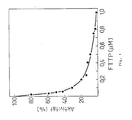
- the triphosphate (3 ⁇ -FdTTP) of the 3 ⁇ -FTdR was examined for its ability to inhibit the polymerization of a polyA-oligodT template by HIV-associated reverse transcriptase. It was found (FIG. 1) that the concentration required for 50% inhibition of this viral enzyme (ID50) is 0.05 ⁇ M ( ⁇ mol / l) and that practically complete inhibition is 0 , 9 to 1.0 ⁇ M is reached. This makes 3 F-FdTTP one of the strongest inhibitors of HIV reverse transcriptase found so far.
- 3d-FdTTP as a competitive inhibitor occupies the binding site of the substrate, while its incorporation into the primer and a chain termination associated therewith, if at all, only play a minor role in inhibition.
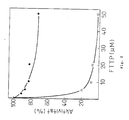
- the ID50 is approximately 2.2 ⁇ M; For a 50% inhibition of this enzyme, a concentration 44 times higher than that of HIV is required.
- 3 ⁇ -FTdR Crucial for the effectiveness of 3 ⁇ -FTdR is the ability of the infected cells to phosphorylate substances used as nucleosides to the corresponding triphosphates.
- Species-dependent phosphorylation of 3 ⁇ -modified deoxynucleosides can, as in the case of 2 ⁇ , 3 ⁇ -dideoxythymidine, greatly reduce the effectiveness of a compound that is still effective in the HIV revertase test.
- the phosphorylation of 3 ⁇ -FTdR was therefore investigated on cells of different species. As the Table 1 below shows that 1 ⁇ M FTdR is converted into triphosphate by the cells examined during a 4-hour incubation with very different effectiveness (FTMP, FTDP and FTTP corresponding mono-, di- and triphosphate).
- the MT- for the human cell lines are 4 and REH found triphosphate amounts of 1 to 2 pmol / 106 cells as completely sufficient. Even for non-infected or HTLV-III B- infected H9 cells and LAV-II-infected CEM cells, the 3 ⁇ -dFTTP concentrations found are in this range, so that an AIDS virus infection of T cells reduces the phosphorylability of 3 ⁇ -FtdR apparently not changed.
- 3 ⁇ -FTdR lacks this serious effect on the thymidylate kinase (cf. Table 1), so that the strong cellular pool changes are not to be expected, although 3,-FTdR is clearly better phosphorylated compared to N3TdR.
- thymidine antimetabolites such as iodine deoxyuridine, bromodeoxyuridine or bromovinyl deoxyuridine
- 3 ⁇ -FTdR was therefore examined for its cleavage by the thymidine phosphorylase from the human spleen. It was found that a 1 mM 3 ⁇ -FTdR solution is only split to about 3 to 5% within 3 h and thus 3 ⁇ -FTdR can be regarded as almost resistant to this enzyme in comparison to thymidine (90% cleavage in 2 h) is.
- 3d-FTdR can reverse the cytopathic effect of HIV.
- approx. 40,000 MT-4 cells (Harada et al., Science 229 (1985) 563) in 200 ⁇ l RPMI medium and 10% calf fetal serum were infected with HIV (titer: 0.013 mol) and after 5 days incubation using the Trypan blue stainability differentiated and counted the living from the dead cells.
- concentration required for a 50% inhibition of the cell-killing effect of the virus (ED50) is 3.8 nM for 3 ⁇ -FTdR and 6.4 nM in direct comparison for N3-TdR.
- 3 ⁇ -FTdR was originally developed as a cytostatic (P. Langen et al., Acta biol. Med. Germ. 23 (1969) 759) and has therefore been tested in extensive studies for cytostatic effects. Investigations within the scope of the present invention and tests in the NCI program in the USA (against 9 different animal tumors), however, showed only weak cytostatic effects for 3 ⁇ -FTdR.
- An exception is Ehrlich mouse ascites tumor cells (EMAC cells), which may be related to their high phosphorylation capacity for 3 ⁇ -FTdR (10 times higher than that of human cells).
- EMAC cells Ehrlich mouse ascites tumor cells
- Table 2 shows based on the ID50 values that the influence of both 3 ⁇ -FTdR and N3-TdR on the cell proliferation of different cell lines is very different.
- a treatment or prophylaxis of AIDS in human medicine according to the invention consists in the administration of an effective amount of one or more compounds of the formula I as such or in the form of suitable galenical formulations.
- compositions according to the invention contain one or more active ingredients of the general formula I together with one or more compatible auxiliaries and / or carriers therefor and optionally with other therapeutic agents or active ingredients.
- the agents are produced in the form of dosage units or multiples thereof.
- the auxiliaries and carriers used must be compatible, compatible with the other components of the agent and harmless to the patient.
- compositions according to the invention include those which are suitable for oral, rectal, nasal, topical, vaginal or parenteral (including subcutaneous, intramuscular, intravenous and intradermal) administration.
- One or more active substances are brought into contact with the carrier, which can be composed of several accompanying components, and, if necessary, converted into a corresponding galenic form.
- compositions according to the invention for oral administration are produced in the form of dragees, tablets, capsules, as powders or granules, which each contain a certain amount of the active ingredient. They can also be formulated as solutions or as suspensions. If necessary, flavoring agents and / or other customary additives are added.
- Means for rectal administration are made as suppositories with a suitable base.
- Medicines for vaginal administration are e.g. B. formulated as pessaries, tampons, creams, gels, pastes, foams or spray products.
- the agents for parenteral administration can contain one dosage unit of the active ingredient or a multiple thereof and can be stored, for example, in ampoules, vials or in a freeze-dried state.
- Injection solutions and suspensions prepared immediately before use can be obtained from sterile powders, granules and tablets, e.g. by dissolving the substance in physiological saline, glucose or other media suitable for i.v. injection or infusion.
- the required amount of a 0.3% solution is prepared from 3 ⁇ -FTdR and physiological saline, which is sterilized and intravenously infused into the patient within one hour. The infusion is repeated every 4 to 8 hours for at least 8 to 10 days.
- the bromination product obtained from 2.88 g (10 mmol) of 5 ⁇ -O-actyl-3 ⁇ -fluorothymidine in stage a) was dissolved in 50 ml of 1,4-dioxane, mixed with 30 ml of saturated sodium bicarbonate solution and stirred at room temperature for 1 h. The reaction solution was then extracted with 5 ⁇ 30 ml of chloroform. The combined chloroform extracts were dried over sodium sulfate, filtered and concentrated in vacuo until a syrupy oil was formed.
- the ⁇ / ( ⁇ mixture obtained was deacetylated in a conventional manner using ammonia-methanol and subjected to column chromatography. Chloroform (1% methanol) was used as the eluent. 0.51 g of the ⁇ -anomer, the title compound, was isolated Product remained in a mixture with the ⁇ -anomer.
- the required amount of a 0.3% solution is prepared from 3 ⁇ -FTdR and physiological saline.
- Powdered 3 ⁇ -FTdR is processed with one or more conventional carriers, such as starch, talc, magnesium stearate, potassium stearate, stearic acid, paraffin, cetyl alcohol, pectin, sucrose, gum arabic or dextrin, to form tablets or dragees.
- conventional carriers such as starch, talc, magnesium stearate, potassium stearate, stearic acid, paraffin, cetyl alcohol, pectin, sucrose, gum arabic or dextrin, to form tablets or dragees.
Landscapes
- Chemical & Material Sciences (AREA)
- Health & Medical Sciences (AREA)
- Organic Chemistry (AREA)
- Life Sciences & Earth Sciences (AREA)
- General Health & Medical Sciences (AREA)
- Molecular Biology (AREA)
- Engineering & Computer Science (AREA)
- Biochemistry (AREA)
- Biotechnology (AREA)
- Genetics & Genomics (AREA)
- Virology (AREA)
- Medicinal Chemistry (AREA)
- Public Health (AREA)
- Communicable Diseases (AREA)
- Oncology (AREA)
- Chemical Kinetics & Catalysis (AREA)
- General Chemical & Material Sciences (AREA)
- Pharmacology & Pharmacy (AREA)
- Nuclear Medicine, Radiotherapy & Molecular Imaging (AREA)
- Veterinary Medicine (AREA)
- Animal Behavior & Ethology (AREA)
- Tropical Medicine & Parasitology (AREA)
- AIDS & HIV (AREA)
- Pharmaceuticals Containing Other Organic And Inorganic Compounds (AREA)
- Saccharide Compounds (AREA)
Abstract

R¹ einen N-1-glykosidisch gebundenen Rest, der von Thymin, Uracil, einem 5-substituierten Uracil, Cytosin oder einem 5-substituierten Cytosinderivate abgeleitet ist,
oder einen N-9-glykosidisch gebundenen Rest, der von 2-Fluoradenin, 2,6-Diamonpurin, 2-Aminopurin 6-Thioguanin oder 7-Deazaadenin abgeleitet ist,
R² H oder OH
und
R³ OH, O-Acetyl, O-Palmitoyl, Triphosphat als freie Säure oder in Form entsprechender Alkali-, Ammonium- bzw. Alkylammoniumsalze oder eine Prekursor-Gruppe für die Hydroxygruppe,
entsprechende pharmazeutische Mittel und deren Herstellung und Verwendung.
Description
- Die Erfindung betrifft fluorierte Nucleoside, die gegen HIV-Infektionen beim Menschen (AIDS) wirksam sind, ihre Herstellung und ihre Verwendung in Form entsprechender pharmazeutischer Mittel.
- AIDS ist eine erst seit wenigen Jahren bekannte, durch das HIV (HTLV III/LAV; Human T-Lymphotropic Virus Type III/Lymphadenopathy-Associated Virus) verursachte und zum Tode führende Infektionskrankheit. Als ursächlich muß die Zerstörung der T-Helfer-Zellen durch das AIDS-Virus angesehen werden. Als Folge der daraus resultierenden Abwehrschwäche treten schwere opportunistische Infektionen, das Kaposi-Sarkom und eine sog. AIDS-Encephalopathie auf. Eine wirksame und verträgliche antivirale Therapie fehlt bisher. Angriffspunkt dafür kann u.a. die viruscodierte Reverse Transcriptase sein, ein Enzym, dessen Hemmung die weitere intracelluläre Virusvermehrung verhindern und damit seine Ausbreitung im Körper stoppen könnte. Die ersten klinisch erprobten Hemmstoffe der HIV-Revertase, wie z.B. Suramin (Germanin®) und HPA 23, haben die notwendige Verträglichkeit und die erhoffte Wirksamkeit noch nicht erreicht, lediglich das 3ʹ-Azidothymidin (N₂TdR) (DE-A-26 08 606) besitzt bei AIDS-Patienten mit einer Pneumocystis-carinii-Pneumonie eindeutig lebensverlängernde Wirkungen, die von Verbesserungen klinischer und neurologischer Befunde sowie der zeitweisen Wiederherstellung bestimmter immunologischer Funktionen begleitet sind (Mitsuya et al., Nature 325 (1987) 773). Demgegenüber machen toxische Nebenwirkungen des 3ʹ-Azidothymidins auf das Knochenmark bei etwa 50 % der behandelten Patienten Bluttransfusionen erforderlich, was besonders das Bedürfnis nach selektiveren und zugleich wirksameren Hemmstoffen der HIV-Reverse Transcriptase erweist.
- Der Erfindung liegt die Aufgabe zugrunde, neuartige Wirkstoffe und entsprechende pharmazeutische Mittel und deren Herstellung und Verwendung anzugeben, die in der Humanmedizin zur prophylaktischen sowie therapeutischen Behandlung von AIDS bzw. HIV-Infektionen verwendbar sind und gegenüber dem Stand der Technik geringere Toxizität bzw. Nebenwirkungen aufweisen.
- Die Aufgabe wird gemäß den Ansprüchen 1, 8, 9, 13 und 14 gelöst. Vorteilhafte Weiterbildungen sind Gegenstand der abhängigen Ansprüche.
- Die erfindungsgemäßen 3ʹ-fluorierten Pyrimidin- bzw. Purinnucleoside besitzen die allgemeine Formel I,

R¹ einen N-1-glykosidisch gebundenden Rest, der von Thymin, Uracil, einem 5-substituierten Uracil, Cytosin oder einem 5-substituierten Cytosinderivat abgeleitet ist,
oder einen N-9-glykosidisch gebundenen Rest, der von 2-Fluoradenin, 2,6-Diaminopurin, 2-Aminopurin, 6-Thioguanin oder 7-Deazaadenin abgeleitet ist,
R² H oder OH
und
R³ OH, O-Acetyl, O-Palmitoyl, Triphosphat als freie Säure oder in Form entsprechender Alkali-, Ammonium- bzw. Alkylammoniumsalze oder eine Prekursor-Gruppe für die Hydroxygruppe. - Diese Verbindungen der Formel I stellen Wirkstoffe gegen HIV-Infektionen dar und können als solche sowie in Form pharmazeutischer Mittel zusammen mit pharmazeutisch geeigneten Hilfs- und/oder Trägerstoffen zur Prophylaxe und Therapie von AIDS in der Humanmedizin vorteilhaft eingesetzt werden.
- Einige Purin- und Pyrimidinderivate sind bereits per se bekannt, ohne daß allerdings ihre Verwendbarkeit zur AIDS-Bekämpfung erkannt worden war, nämlich 2ʹ,3ʹ-Didesoxy-3ʹ-fluorthymidin (3ʹ-FTdR) (G. Etzold, R. Hintsche, G. Kowollik und P. Langen, Tetrahedron (London) 27 (1971) 2463), 2ʹ,3ʹ-Didesoxy-3ʹ-fluorcytidin (G. Kowollik, G. Etzold, M. v. Janta-Lipinski, K. Gärtner und P. Langen, J. prakt. Chemie 315 (1973) 895), 3ʹ-Desoxy-3ʹ-fluor arabinosylcytosin (G. Kowollik, Habilitationsschrift, Berlin 1976) und 3ʹ-Desoxy-3ʹ-fluorarabinosyladenin (K. Miyai, R.K. Robbins und R.L. Tolman, J. med. Chemistry 15 (1972) 1692).
- Die erfindungsgemäßen Verfahren zur Herstellung der 3ʹ-fluorierten Pyrimidinnucleoside der Formel I sind dadurch gekennzeichnt, daß man
- zur Herstellung von ggfs. 5-substituierten 2ʹ,3ʹ-Didesoxy-3ʹ-fluoruridinen entsprechende, ggfs. 5-substituierte 2ʹ,3ʹ-Anhydro-2ʹ-desoxyuridine mit HF umsetzt:
- zur Herstellung von 5-substituierten 2ʹ,3ʹ-Didesoxy-3ʹ-fluoruridinen
oder
2ʹ,3ʹ-Didesoxy-3ʹ-fluorthymidin (3ʹ-FTdR) radikalisch bromiert und das erhaltene 5-Brommethyl-2ʹ,3ʹ-didesoxy-3ʹ-fluoruridin entsprechend nucleophil substituiert;
- zur Herstellung von ggfs. 5-substituierten 2ʹ,3ʹ-Didesoxy-3ʹ-fluorcytidinen entsprechende, ggfs. 5-substituierte Uracilderivate bzw. Uridine in die Triazolylderivate überführt und daraus die Zielverbindungen herstellt;
- zur Herstellung von ggfs. 5-substituierten 3ʹ-Desoxy-3ʹ-fluorarabinosylcytosinen die entsprechenden, ggfs. 5-substituierten Cytosinderivate in die Triazolylderivate überführt und daraus die Zielverbindungen herstellt
und
- zur Herstellung von 2- bzw. 2,6-substituierten 2ʹ,3ʹ-Didesoxy-3ʹ-fluorpurinribosiden die entsprechenden Xyloribofuranosylderivate, die in 5ʹ-Position acyliert sind mit Dialkylaminoschwefeltrifluorid umsetzt
oder
den fluorierten Zuckerrest aus 2ʹ,3ʹ-Didesoxy-3ʹ-fluorthymidin (3ʹ-FTdR) durch Transglykosidierung auf das entsprechend modifizierte Purinderivat überträgt. - Erfindungsgemäße Verbindungen der Formel I mit besonders günstigen Eigenschaften sind 2ʹ,3ʹ-Didesoxy-3ʹ-fluor-5-bromuridin, 2ʹ,3ʹ-Didesoxy-3ʹ-fluor-5-ethyluridin, 2ʹ,3ʹ-Didesoxy-3ʹ-fluor-2-fluoradenosin, 2ʹ,3ʹ-Didesoxy-3ʹ-fluor-6-thioguanosin, 2ʹ,3ʹ-Didesoxy-3ʹ-fluor-2,6-diaminopurinribosid und 2ʹ,3ʹ-Didesoxy-3ʹ-fluor-2-aminopurinribosid.
- Die erfindungsgemäßen pharmazeutischen Mittel, die insbesondere zur Prophylaxe und Therapie von AIDS in der Humanmedizin geeignet sind, enthalten entsprechend mindestens ein 3ʹ-fluoriertes Pyrimidin- bzw. Purinnucleosid der Formel I und/oder mindestens eine unter 2ʹ,3ʹ-Didesoxy-3ʹ-fluorthymidin (3ʹ-FTdR), 2ʹ,3ʹ-Didesoxy-3ʹ-fluorcytidin, 3ʹ-Desoxy-3ʹ-fluorarabinosylcytosin und 3ʹ-Desoxy-3ʹ-fluorarabinosyladenin ausgewählte Verbindung als Wirkstoffe neben pharmazeutisch geeigneten Hilfs- und/oder Trägerstoffen.
- Erfindungsgemäß besonders geeignete Wirkstoffe sind 2ʹ,3ʹ-Didesoxy-3ʹ-fluorthymidin (3ʹ-FTdR), 2ʹ,3ʹ-Didesoxy-3ʹ-fluor-5-bromuridin, 2ʹ,3ʹ-Didesoxy-3ʹ-fluorcytidin, 2ʹ,3ʹ-Didesoxy-3ʹ-fluor-5-ethyluridin, 2ʹ,3ʹ-Didesoxy-3ʹ-fluor-2-fluoradenosin, 2ʹ,3ʹ-Didesoxy-3ʹ-fluor-6-thioguanosin, 2ʹ,3ʹ-Didesoxy-3ʹ-fluor-2,6-diaminopurinribosid, 2ʹ,3ʹ-Didesoxy-3ʹ-fluor-2-aminopurinribosid, 3ʹ-Desoxy-3ʹ-fluorarabinosylcytosin und 3ʹ-Desoxy-3ʹ-fluorarabinosyladenin.
- Als besonders aktiv erwies sich davon das 2ʹ,3ʹ-Didesoxy-3ʹ-fluorthymidin (3ʹ-FTdR). Seine Wirksamkeit wird wie folgt belegt:
- Zunächst wurde das Triphosphat (3ʹ-FdTTP) des 3ʹ-FTdR auf seine Fähigkeit untersucht, die Polymerisation eines PolyA-oligodT-Templats durch die HIV-assoziierte Reverse Transcriptase zu hemmen. Dabei wurde gefunden (Fig. 1), daß die Konzentration, die für eine 50-%ige Hemmung dieses viralen Enzyms erforderlich ist (ID₅₀), bei 0,05 µM (µmol/l) liegt, und daß eine praktisch vollständige Hemmung bei 0,9 bis 1,0 µM erreicht wird. Damit gehört 3ʹ-FdTTP zu den stärksten bisher gefundenen Hemmstoffen der HIV-Reverse-Transcriptase.
- Untersuchungen zum Wirkungsmechanismus zeigten, daß 3ʹ-FdTTP als kompetitiver Hemmstoff die Bindungsstelle des Substrats besetzt, während sein Einbau in den Primer und ein damit verbundener Kettenabbruch, wenn überhaupt, bei der Hemmung nur eine untergeordnete Rolle spielt.
- Im Gegensatz zu 3ʹ-FdTTP erwies sich 2ʹ,3ʹ-Didesoxy-3ʹ-chlorthymidintriphosphat gegenüber der HIV-assoziierten Reverse Transcriptase im gleichen Konzentrationsbereich als völlig unwirksam, was darauf hinweist, daß der 3ʹ-Substituent dieser Nucleotidanaloga sehr spezifische Funktionen am Enzym zu erfüllen hat und nicht beliebig austauschbar ist, wenn eine hohe Wirksamkeit erhalten bleiben soll.
- Zugleich wird daraus ersichtlich, daß für die Wirksamkeit der erfindungsgemäßen Verbindungen der Formel I keine Er wartungshaltung bestand, zumal über die Bedeutung der Art des 3ʹ-Substituenten keinerlei Informationen vorlagen.
- Die starke Hemmung von 3ʹ-FdTTP gegenüber der HIV-Reverse-Transcriptase läßt sich therapeutisch nur ausnutzen, wenn die cellulären DNA-Polymerasen, insbesondere die für die Replikation der cellulären DNA zuständige DNA-Polymerase-α, weitgehend unbeeinflußt bleiben. Die Untersuchungen zeigen, daß dies für die DNA-Polymerase-α ebenfalls zutrifft (Fig. 2). Eine 50-%ige Hemmung dieses cellulären Enzyms wird auch bei 200 µm 3ʹ-FdTTP noch nicht erreicht, was bedeutet, daß die DNA-Polymerase-α mehr als 4000-mal weniger empfindlich ist als die HIV-Reverse-Transcriptase.
- Für die DNA-Polymerase-β, für die celluläre DNA-Reparatur verantwortlich gemacht wird, beträgt die ID₅₀ etwa 2,2 µM; für eine 50-%ige Hemmung dieses Enzyms ist also eine 44-mal höhere Konzentration erforderlich als bei HIV.
- Entscheidend für die Wirksamkeit von 3ʹ-FTdR ist die Fähigkeit der infizierten Zellen, als Nucleoside angewendete Substanzen zu den entsprechenden Triphosphaten zu phosphorylieren. Eine speciesabhängige Phosphorylierung von 3ʹ-modifizierten Desoxynucleosiden kann daher durchaus, wie im Falle des 2ʹ,3ʹ-Didesoxythymidins, die Wirksamkeit einer im HIV-Revertase-Test noch effektiven Verbindung stark herabsetzen. Die Phosphorylierung von 3ʹ-FTdR wurde daher an Zellen verschiedener Species untersucht. Wie die nachstehende Tabelle 1 zeigt, wird 1 µM FTdR von den untersuchten Zellen während einer 4-stündigen Inkubation mit sehr unterschiedlicher Effektivität zum Triphosphat umgesetzt (FTMP, FTDP und FTTP entsprechendes Mono-, Di- bzw. Triphosphat).

- Obwohl für einen quantitativen Vergleich auch unterschiedliche Zellzykluszeiten zu berücksichtigen sind und nur der während der 4-stündigen Inkubation in der G₁- bzw. S-Phase des Zellzyklus befindliche Anteil der Zellen zur Phosphorylierung in der Lage ist, sind die für die menschlichen Zellinien MT-4 und REH gefundenen Triphosphat-Mengen von 1 bis 2 pmol/10⁶ Zellen als völlig ausreichend anzusehen. Auch für nichtinfizierte bzw. HTLV-IIIB-infizierte H9-Zellen und LAV-II-infizierte CEM-Zellen liegen die ermittelten 3ʹ-dFTTP-Konzentrationen in diesem Bereich, so daß eine AIDS-Virus-Infektion von T-Zellen die Phosphorylierbarkeit von 3ʹ-FtdR offenbar nicht verändert. Im Vergleich dazu wird die Phosphorylierung einer 50 µM N₃-TdR-Lösung zum Triphosphat durch HTLV-IIIB-infizierte H9-Zellen während einer 24-stündigen Inkubation mit nur 0,9 pmol/10⁶ Zellen angegeben (Furman et al., Proc. Natl. Acad. Sci. USA 83 (1986) 8333). Gleichzeitig kommt es zu einem erheblichen Anstau von N₃-TdR-monophosphat (460 pmol/10⁶ Zellen), was auf eine starke Hemmung der Thymidylat-Kinase hinweist und erhebliche, die celluläre DNA-Synthese beeinträchtigende Veränderungen des Desoxynucleosidtriphosphat-Substratpools nach sich zieht (Furman et al., loc. cit.). 3ʹ-FTdR fehlt dieser gravierende Effekt auf die Thymidylat-Kinase (vgl. Tab. 1), so daß die starken cellulären Pool-Veränderungen nicht zu erwarten sind, obwohl 3ʹ-FTdR gegenüber N₃TdR eindeutig besser phosphoryliert wird.
- Einige Thymidin-Antimetabolite, wie Joddesoxyuridin, Bromdesoxyuridin oder Bromvinyldesoxyuridin, werden von der menschlichen Thymidin-Phosphorylase in großem Umfang zu unwirksamen Pyrimidinbasen und Zuckerphosphaten gespalten, so daß ihre systemische Anwendung problematisch werden kann. 3ʹ-FTdR wurde daher auf seine Spaltbarkeit durch die Thymidin-Phosphorylase aus der menschlichen Milz untersucht. Dabei ergab sich, daß eine 1 mM 3ʹ-FTdR-Lösung innerhalb von 3 h nur zu etwa 3 bis 5 % gespalten wird und damit 3ʹ-FTdR im Vergleich zu Thymidin (90 % Spaltung in 2 h) als gegenüber diesem Enzym nahezu beständig anzusehen ist.
- Um die tatsächliche celluläre Wirksamkeit von 3ʹ-FTdR zu ermitteln, wurde untersucht, inwieweit 3ʹ-FTdR den cytopathischen Effekt von HIV aufheben kann. Dazu wurden ca. 40000 MT-4-Zellen (Harada et al., Science 229 (1985) 563) in 200 µl RPMI-Medium und 10 % Kälberfetalserum mit HIV infiziert (Titer: 0,013 mol) und nach 5-tägiger Inkubation anhand der Trypanblaufärbbarkeit die lebenden von den toten Zellen unterschieden und gezählt. Die Konzentration, die für eine 50-%ige Hemmung des zelltötenden Effekts des Virus erforderlich ist (ED₅₀), beträgt 3,8 nM für 3ʹ-FTdR und im direkten Vergleich 6,4 nM für N₃-TdR. Für 2ʹ,3ʹ-Didehydro-2ʹ,3ʹ-didesoxythymidin ist eine ED₅₀ von 10 nM und für 2ʹ,3ʹ-Didesoxycytidin eine ED₅₀ von 60 nM angegeben worden (M. Baba et al., Biochem. Biophys. Res. Commun. 142 (1987) 128). Damit ist 3ʹ-FTdR bei den genannten MT-4-Zellen als derzeit wirksamste Verbindung anzusehen.
- 3ʹ-FTdR wurde ursprünglich als Cytostatikum entwickelt (P. Langen et al., Acta biol. med. germ. 23 (1969) 759) und ist daher in umfangreichen Studien auf cytostatische Wirkungen hin geprüft worden. Untersuchungen im Rahmen der vorliegenden Erfindung sowie Tests im NCI-Programm der USA (gegen 9 verschiedene Tiertumoren) haben für 3ʹ-FTdR jedoch nur schwache cytostatische Wirkungen ergeben. Eine Ausnahme liegt bei Ehrlich-Mäuse-Ascites-Tumorzellen (EMAC-Zellen) vor, was möglicherweise mit ihrem hohen Phosphorylierungsvermögen für 3ʹ-FTdR zusammenhängt (10-fach höher als bei menschlichen Zellen). Dabei ist die schnelle Reversibilität der cytostatischen Wirkungen an EMAC-Zellen als Besonderheit dieser Verbindung registriert worden (P. Langen et al., Europ. J. Cancer 14 (1978) 349).
- Unter dem Aspekt einer möglichen Anwendung dieser Verbindung am Menschen wurden die antiproliferativen Wirkungen von 3ʹ-FTdR und im Vergleich dazu von N₃-TdR an menschlichen Zellinien getestet.
- Tabelle 2 zeigt anhand der ID₅₀-Werte, daß der Einfluß sowohl von 3ʹ-FTdR als auch von N₃-TdR auf die Zellproliferation verschiedener Zellinien sehr unterschiedlich ist.

- Vergleicht man 3ʹ-FTdR mit N₃-TdR, so sind die Effekte sehr ähnlich, jedoch für N₃-TdR in jedem Fall etwas geringer als bei FTdR. Die Vorteile von 3ʹ-FTdR lassen sich wie folgt zusammenfassen:
- 1. Doppelte Wirksamkeit gegenüber N₃-TdR im cellulären Test.
- 2. Bessere Phosphorylierung durch menschliche T-Zellinien als bei N₃-TdR.
- 3. Beständigkeit gegenüber TdR-Phosphorylase.
- 4. Geringere Effekte auf TMP-Kinase und damit auf die dNTP-Substratpools als N₃TdR.
- 5. Vertretbare und insbesondere reversible celluläre Toxizität.
- Eine Behandlung oder Prophylaxe von AIDS in der Humanmedizin besteht gemäß der Erfindung in der Verabreichung einer wirksamen Menge einer oder mehrerer Verbindungen der Formel I als solche oder in Form geeigneter galenischer Formulierungen.
- Die erfindungsgemäßen pharmazeutischen Mittel enthalten einen oder mehrere Wirkstoffe der allgemeinen Formel I zusammen mit einem oder mehreren verträglichen Hilfs- und/oder Trägerstoffen dafür und gegebenenfalls mit anderen therapeutischen Mitteln oder Wirkstoffen. Die Mittel werden in Form von Dosiereinheiten oder Vielfachen davon hergestellt. Die eingesetzten Hilfs- und Trägerstoffe müssen verträglich, mit den anderen Bestandteilen der Mittel kompatibel und für den Patienten unschädlich sein.
- Zu den erfindungsgemäßen galenischen Formulierungen bzw. Applikationsformen der pharmazeutischen Mittel gehören solche, die für die orale, rektale, nasale, topische, vaginale oder parenterale (einschließlich subkutaner, intramuskulärer, intravenöser und intradermaler) Verabreichung geeignet sind. Ein bzw. mehrere Wirkstoffe werden mit dem Träger, der aus mehreren Begleitbestandteilen zusammengesetzt sein kann, in Kontakt gebracht und, falls erforderlich, in eine entsprechende galenische Form übergeführt.
- Die erfindungsgemäßen pharmazeutischen Mittel für orale Verabreichung werden in Form von Dragées, Tabletten, Kapseln, als Pulver oder Granulate hergestellt, die jeweils eine bestimmte Menge des Wirkstoffs enthalten. Ebenso können sie als Lösungen oder als Suspensionen formuliert sein. Gegebenenfalls werden Geschmacksmittel und/oder andere übliche Additive zugesetzt.
- Mittel für die rektale Verabreichung werden als Zäpfchen mit einer geeigneten Grundlage hergestellt. Arzneimittel für eine vaginale Verabreichung werden z. B. als Pessare, Tampons, Cremen, Gele, Pasten, Schäume oder Spray-Produkte formuliert.
- Die Mittel für die parenterale Verabreichung können eine Dosiereinheit des Wirkstoffs oder Mehrfache davon enthalten und beispielsweise in Ampullen, Phiolen oder in einem gefriergetrockneten Zustand lagerfähig gemacht sein. Unmittelbar vor Gebrauch hergestellte Injektionslösungen und Suspensionen können aus sterilen Pulvern, Granulaten und Tabletten erhalten werden, z.B. durch Lösen der Substanz in physiologischer Kochsalzlösung, Glucose oder anderen für die i.v.-Injektion bzw. Infusion geeigneten Medien.
- Zur Behandlung von AIDS-Patienten wird beispielsweise aus 3ʹ-FTdR und physiologischer Kochsalzlösung die erforderliche Menge einer 0,3-%igen Lösung hergestellt, die sterilisiert und dem Patienten innerhalb einer Stunde intravenös infundiert wird. Die Infusion wird über mindestens 8 bis 10 Tage alle 4 bis 8 Stunden wiederholt.
- Die Erfindung wird im folgenden anhand von Beispielen näher erläutert.
- Ein Gemisch von 2,38 g (10 mmol) 2ʹ,3ʹ-Anhydro-1-(2-desoxy-5-O-acetyl-β-D-xylofuranosyl)-5-ethyluracil, 2,5 g Aluminiumtrifluorid und 300 ml 1,4-Dioxan, das 0,5 % Fluorwasserstoff enthielt, wurde in einem Stahlgefäß 1,5 h auf 110 °C erhitzt. Nach dem Abkühlen wurden 100 ml Wasser und 20 g CaCO₃ zur Reaktionslösung gegeben.
- Die filtrierte Lösung wurde zu einem Sirup eingeengt. Dieser Sirup wurde in 50 ml Methanol, das bei 0 °C mit Ammoniak gesättigt worden war, gelöst und 24 h bei Raumtemperatur belassen. Nach dem Verdampfen des Lösungsmittels im Vakuum wurde das erhaltene Öl einer Säulenchromatographie an Kieselgel unterzogen, wobei mit Chloroform/Methanol (Volumverhältnis 9:1) eluiert wurde. Nach dem Verdampfen des Lösungsmittels konnte die Titelverbindung aus den entsprechenden Fraktionen als Feststoff erhalten werden. F. 183 - 184 °C; Massenspektrum: m/z 258 (M⁺).
- 5ʹ-O-Acetyl-3ʹ-fluorthymidin (2,88 g, 10 mmol) wurde in 250 ml 1,2-Dichlorethan bis zum vollständigen Auflösen unter Rückfluß erhitzt. Danach wurden mit einem Stickstoffstrom 12 mmol elementares Brom in die Lösung geleitet, die mit einer Photolampe (500 W), bestrahlt wurde. Nach 2 - 3 h war die Reaktion beendet. Das Lösungsmittel wurde im Vakuum abgedampft, wobei ein viskoses Öl erhalten wurde. Dieses Öl enthielt die Titelverbindung in der für die folgenden Reaktionen ausreichender Reinheit.
- Das aus 2,88 g (10 mmol) 5ʹ-O-Actyl-3ʹ-fluorthymidin in Stufe a) erhaltene Bromierungsprodukt wurde in 50 ml 1,4-Dioxan gelöst, mit 30 ml gesättigter Natriumhydrogencarbonatlösung versetzt und 1 h bei Raumtemperatur gerührt. Anschließend wurde die Reaktionslösung mit 5 x 30 ml Chloroform extrahiert. Die vereinigten Chloroformextrakte wurden über Natriumsulfat getrocknet, filtriert und im Vakuum bis zur Bildung eines sirupösen Öls eingeengt. Dieses Produkt lieferte nach dem üblichen Behandeln mit 50 ml Methanol/Ammoniak (bei 0 °C gesättigt) die Titelverbindung, die aus Ethanol kristallin erhalten wurde.
- 10 mmol 9-(5-O-Acyl-2-desoxy-β-D-xylofuranosyl)-2-fluoradenosin wurden in 10 ml Chloroform gelöst und zu einer auf -78°C gekühlten Lösung von 11 mmol Diethylaminoschwefeltrifluorid in 30 ml Chloroform gegeben. Das Reaktionsgemisch wurde langsam auf Raumtemperatur erwärmt und in 100 ml Eiswasser gegeben. Die organische Phase wurde abgetrennt, mit Natriumhydrogencarbonatlösung und Wasser gewaschen und über Natriumsulfat getrocknet. Nach dem Vertreiben des Chloroforms im Vakuum wurde ein Produkt erhalten, dessen O-Acylgruppe in bekannter Weise abgespalten wurde. Eine säulenchromatographische Trennung an Kieselgel mit Chloroform (5 % Methanol) als Elutionsmittel lieferte die Titelverbindung als Feststoff.
- Ein Gemisch von 2,88 g (10 mmol) 1-(5-O-Acetyl-2,3-didesoxy-3-fluor-β-D-ribofuranosyl)-thymin, 4,6 g (30 mmol) 2-Fluoradenin, 7,4 ml Bis(trimethylsilyl)-acetamid und 250 ml Acetonitril wurden 25 min am Rückfluß erhitzt. Anschließend wurden 6,5 ml (33 mmol) Trifluormethansulfonsäure-trimethylsilyester hinzugefügt, und die Reaktionslösung wurde weitere 8 h lang am Rückfluß erwärmt. Nach dem Entfernen des Lösungsmittels im Vakuum wurde der Rückstand in 100 ml Chloroform suspendiert und mit NaHCO₃-Lösung neutralisiert. Die organische Phase wurde über Natriumsulfat getrocknet und filtriert; das Chloroform wurde im Vakuum entfernt. Der Rückstand wurde an Kieselgel säulenchromatographisch getrennt, wobei mit Chloroform (5 % n-Hexan, 1 l; 2,5 % n-Hexan, 1,5 l; 1 % n-Hexan, 1 l) eluiert wurde.
- Das erhaltene α/(β-Gemisch wurde in üblicher Weise mittels Ammoniak-Methanol entacetyliert und einer säulenchromatographischen Trennung unterzogen. Als Elutionsmittel wurde Chloroform (1 % Methanol) verwendet. Vom β-Anomer, der Titelverbindung, wurden 0,51 g isoliert. Weiteres Produkt verblieb im Gemisch mit dem α-Anomer.
- 1,5 g (5,2 mmol) 5ʹ-O-Acetyl-3ʹ-fluor-thymidin wurden in 25 ml Pyridin gelöst und mit 760 mg (11 mmol) Triazol und 1,96 g (8 mmol) β-Chlorphenoxyphosphorsäuredichlorid versetzt. Das Reaktionsgemisch wurde 5 d bei Raumtemperatur belassen. Anschließend wurden 30 ml Dioxan/konz. Ammoniak (Volumverhältnis 3 : 1) hinzugefügt.
- Die Lösung wurde dann im Vakuum eingeengt; der resultierende Rückstand in Wasser gelöst und auf eine 70-ml-Säule eines Ionenaustauscherharzes in der H⁺-Form (DOWEX 50 W x 8, DOW Chemical Laboratories) gegeben. Die Säule wurde zunächst mit 800 ml Wasser und anschließend mit 600 ml 5-%iger Ammoniaklösung eluiert. Aus den entsprechenden Fraktionen, die UV-absorbierendes Produkt enthielten, konnten nach dem Vertreiben des Lösungsmittels und Kristallisation aus Methanol (mit HCl auf pH 2 eingestellt) 0,8 g 2ʹ,3ʹ-Didesoxy-3ʹ-fluor-5-methylcytosin als Hydrochlorid gewonnen werden. F. 177 °C (Zers.).
- Ein Gemisch von 2,46 g (10 mmol) 3ʹ-Desoxy-3ʹ-fluorarabinosyluracil, 1,52 g (22 mmol) Triazol und 4,0 g (16 mmol) p-Chlorphenoxyphosphorsäuredichlorid in 50 ml Pyridin wurde wie in Beispiel 5 behandelt.
- Nach der Trennung des Reaktionsgemisches an einem Ionenaustauscher in der H⁺-Form (DOWEX 50 W x 8) wurden aus Methanol/HCl (pH 2) 1,53 g der Titelverbindung als Hydrochlorid erhalten.
- Aus 3ʹ-FTdR und physiologischer Kochsalzlösung wird die erforderliche Menge einer 0,3-%iger Lösung hergestellt.
- Pulverisiertes 3ʹ-FTdR wird mit einem oder mehreren üblichen Trägerstoffen, wie Stärke, Talk, Magensiumstearat, Kaliumstearat, Stearinsäure, Paraffin, Cetylalkohol, Pectin, Saccharose, Gummi arabicum oder Dextrin, zu Tabletten oder Dragees verarbeitet.
Claims (14)

R¹ einen N-1-glykosidisch gebundenen Rest, der von Thymin, Uracil, einem 5-substituierten Uracil, Cytosin oder einem 5-substituierten Cytosinderivat abgeleitet ist, oder einen N-9-glykosidisch gebundenen Rest, der von 2-Fluoradenin, 2,6-Diaminopurin, 2-Aminopurin, 6-Thioguanin oder 7-Deazaadenin abgeleitet ist,
R² H oder OH
und
R³ OH, O-Acetyl, O-Palmitoyl, Triphosphat als freie, Säure oder in Form entsprechender Alkali-, Ammonium- bzw. Alkylammoniumsalze oder eine Prekursor-Gruppe für die Hydroxygruppe.
dadurch gekennzeichnet, daß man
- zur Herstellung von ggfs. 5-substituierten 2ʹ,3ʹ-Didesoxy-3ʹ-fluoruridinen entsprechende, ggfs. 5-substituierte 2ʹ,3ʹ-Anhydro-2ʹ-desoxyuridine mit HF umsetzt;
- zur Herstellung von 5-substituierten 2ʹ,3ʹ-Didesoxy-3ʹ-fluoruridinen
oder
2ʹ,3ʹ-Didesoxy-3ʹ-fluorthymidin (3ʹ-FTdR) radikalisch bromiert unddas erhaltene 5-Brommethyl-2ʹ,3ʹ-didesoxy-3ʹ-fluoruridin entsprechend nucleophil substituiert;
- zur Herstellung von ggf. 5-substituierten 2ʹ,3ʹ-Didesoxy-3ʹ-fluorcytidinen entsprechende, ggfs. 5-substitiuerte Uracilderivate bzw. Uridine in die Triazolylderivate überführt und daraus die Zielverbindungen hergestellt;
- zur Herstellung von ggfs. 5-substituierten 3ʹ-Desoxy-3ʹ-fluorarabinosylcytosinen die entsprechenden, ggfs. 5-substituierten Cytosinderivate in die Triazolylderivate überführt und daraus die Zielverbindungen herstellt
und
- zur Herstellung von 2- bzw. 2,6-substituierten 2ʹ,3ʹ-Didesoxy-3ʹ-fluorpurinribosiden die entsprechenden Xyloribofuranosylderivat, die in 5ʹ-Position acyliert sind, mit Dialkylaminoschwefeltrifluorid umsetzt
oder
den fluorierten Zuckerrest aus 2ʹ,3ʹ-Didesoxy-3ʹ-fluorthymidin (3ʹ-FTdR) durch Transglykosidierung auf das entsprechend modifizierte Purinderivat überträgt.
Applications Claiming Priority (7)
| Application Number | Priority Date | Filing Date | Title |
|---|---|---|---|
| DD292826 | 1986-07-24 | ||
| DD86292826A DD279407A1 (de) | 1986-07-24 | 1986-07-24 | Verfahren zur herstellung eines mittels gegen aids |
| DD302573 | 1987-05-08 | ||
| DD30257387 | 1987-05-08 | ||
| DD87303489A DD281346A5 (de) | 1986-07-24 | 1987-06-03 | Verfahren zur herstellung eines mittels gegen hiv-infektionen beim menschen |
| DD303489 | 1987-06-03 | ||
| CA000571404A CA1333390C (en) | 1986-07-24 | 1988-07-07 | Fluorinated nucleosides and process for treating retrovirus infections therewith |
Publications (4)
| Publication Number | Publication Date |
|---|---|
| EP0254268A2 true EP0254268A2 (de) | 1988-01-27 |
| EP0254268A3 EP0254268A3 (en) | 1988-07-13 |
| EP0254268B1 EP0254268B1 (de) | 1990-09-19 |
| EP0254268B2 EP0254268B2 (de) | 1994-01-12 |
Family
ID=27426554
Family Applications (1)
| Application Number | Title | Priority Date | Filing Date |
|---|---|---|---|
| EP87110542A Expired - Lifetime EP0254268B2 (de) | 1986-07-24 | 1987-07-21 | Fluorierte Nucleoside, ihre Herstellung und ihre pharmazeutische Verwendung gegen AIDS |
Country Status (11)
| Country | Link |
|---|---|
| US (1) | US4963662A (de) |
| EP (1) | EP0254268B2 (de) |
| JP (1) | JP2525418B2 (de) |
| AU (1) | AU615431B2 (de) |
| CA (2) | CA1333390C (de) |
| DD (2) | DD279407A1 (de) |
| DE (1) | DE3765045D1 (de) |
| DK (1) | DK378687A (de) |
| ES (1) | ES2036196T5 (de) |
| GR (1) | GR3001214T3 (de) |
| NZ (1) | NZ223836A (de) |
Cited By (25)
| Publication number | Priority date | Publication date | Assignee | Title |
|---|---|---|---|---|
| EP0322384A1 (de) * | 1987-11-03 | 1989-06-28 | Medivir Aktiebolag | Nucleoside zur Verwendung für die Therapie |
| EP0305117A3 (en) * | 1987-08-22 | 1989-12-27 | The Wellcome Foundation Limited | 2',3'-dideoxy-3'-fluorothymidine and related compounds for the treatment of adenovirus infections |
| EP0355135A4 (de) * | 1987-11-18 | 1990-04-09 | Scripps Clinic Res | Adenosin-deaminase-stabile anti-retroviral-nukleoside. |
| EP0311107A3 (de) * | 1987-10-08 | 1990-04-18 | Stichting REGA V.Z.W. | Anti-HIV-aktive 3'-Fluoro-purin-2',3'-dideoxyriboside |
| WO1990003978A1 (en) * | 1988-10-03 | 1990-04-19 | Stichting Rega Vzw | 5-halogeno-3'-fluoro-2',3'-dideoxyuridine compounds and their therapeutic application |
| EP0350287A3 (de) * | 1988-07-07 | 1990-08-01 | NeXstar Pharmaceuticals, Inc. | Lipid-Derivate von antiviralen Nukleosiden, liposomale Inkorporation und Verwendungsverfahren |
| EP0316592A3 (de) * | 1987-11-13 | 1990-09-19 | Stichting REGA V.Z.W. | 3'-Fluor-2',3'-dideoxyuridin und seine therapeutische Verwendung |
| WO1991006554A1 (en) * | 1989-11-06 | 1991-05-16 | Nycomed As | Nucleoside derivatives |
| EP0317128A3 (de) * | 1987-11-07 | 1991-10-02 | The Wellcome Foundation Limited | Anti-HIV Pyrimidin Nucleoside |
| EP0442757A3 (en) * | 1990-02-16 | 1991-11-06 | The Wellcome Foundation Limited | Therapeutic nucleosides |
| EP0409227A3 (en) * | 1989-07-20 | 1991-12-04 | Akademie Der Wissenschaften Der Ddr | Pyrimidine and purine nucleosides, their preparation and use as medicaments |
| FR2668153A1 (fr) * | 1990-10-22 | 1992-04-24 | Pasteur Merieux Serums Vacc | Nouveaux composes ribonucleosides, leur procede de preparation et les medicaments les contenant. |
| WO1992008727A1 (en) * | 1990-11-13 | 1992-05-29 | Consiglio Nazionale Delle Ricerche | L-2'-desoxyuridines and pharmaceutical compositions containing them |
| EP0493722A1 (de) * | 1990-12-20 | 1992-07-08 | Nippon Kayaku Kabushiki Kaisha | 2-Halogene-oxetanocin A und phosphoric Ester davon |
| US5157114A (en) * | 1988-08-19 | 1992-10-20 | Burroughs Wellcome Co. | 2',3'-dideoxy-3'-fluoro-5-ethyngluridine |
| US5180824A (en) * | 1990-11-29 | 1993-01-19 | Berlex Biosciences Inc. | 6-azido-2-fluoropurine, useful in the synthesis of nucleosides |
| WO1993014103A1 (en) * | 1992-01-06 | 1993-07-22 | The Wellcome Foundation Limited | Therapeutic nucleosides |
| US5506215A (en) * | 1987-11-03 | 1996-04-09 | Medivir Ab | 1-(3'-fluoro-2',3'-dideoxy-β-D-ribofuranosyl)-5-substituted pyrimidine nucleosides |
| WO1996011204A1 (de) * | 1994-10-07 | 1996-04-18 | Max-Delbrück-Centrum für Molekulare Medizin | NEUE β-L-NUCLEOSIDE UND IHRE VERWENDUNG |
| US5817638A (en) * | 1988-07-07 | 1998-10-06 | Nexstar Pharmaceuticals, Inc. | Antiviral liponucleosides: treatment of hepatitis B |
| US6252060B1 (en) | 1988-07-07 | 2001-06-26 | Nexstar Pharmaceuticals, Inc. | Antiviral liponucleosides: treatment of hepatitis B |
| US6448392B1 (en) | 1985-03-06 | 2002-09-10 | Chimerix, Inc. | Lipid derivatives of antiviral nucleosides: liposomal incorporation and method of use |
| US6599887B2 (en) | 1988-07-07 | 2003-07-29 | Chimerix, Inc. | Methods of treating viral infections using antiviral liponucleotides |
| EP1425022A4 (de) * | 2001-08-24 | 2009-04-29 | Koronis Pharmaceuticals Inc | Mutagene nucleosid-analoga zur behandlung von viruserkrankungen |
| EP2402356A2 (de) | 2010-06-30 | 2012-01-04 | Instytut Biochemii I Biofizyki Pan | Modifizierte 2',3'-Didesoxynukleoside zur Behandlung von Infektionen, die von gegen mehrere Arzneimittel resistenten Stämmen des humanen Immundefizienzvirus (HIV) verursacht werden, Verfahren zu deren Synthese und Pharmazeutikum, das diese Nukleoside enthält |
Families Citing this family (20)
| Publication number | Priority date | Publication date | Assignee | Title |
|---|---|---|---|---|
| US6458772B1 (en) * | 1909-10-07 | 2002-10-01 | Medivir Ab | Prodrugs |
| US5446029A (en) * | 1986-07-04 | 1995-08-29 | Medivir Ab | Anti-retroviral activity of 2',3'-dideoxy-3'-fluoronucleosides |
| US5153180A (en) * | 1986-07-24 | 1992-10-06 | Eckart Matthes | Fluorinated nucleosides and process for treating retrovirus infections therewith |
| JPH02500364A (ja) * | 1986-11-21 | 1990-02-08 | マツクス‐プランク‐ゲゼルシヤフト ツール フエルデルング デル ヴイツセンシヤフテン エー フアウ | ヒトにおけるウイルス感染の治療法およびそのための組成物 |
| US5459256A (en) * | 1987-04-17 | 1995-10-17 | The Government Of The United States Of America As Represented By The Department Of Health And Human Services | Lipophilic, aminohydrolase-activated prodrugs |
| US5495010A (en) * | 1987-04-17 | 1996-02-27 | The United States Of America As Represented By The Department Of Health And Human Services | Acid stable purine dideoxynucleosides |
| JPS6468395A (en) * | 1987-09-08 | 1989-03-14 | Yamasa Shoyu Kk | 3'-deoxyarbinofuranosylpyrimidine nucleoside derivative |
| EP0355031A3 (de) * | 1988-08-17 | 1990-12-27 | MATTHES, Eckart, Dr. | Substituierte Pyrimidinnucleoside, Verfahren zu ihrer Herstellung und sie enthaltende pharmazeutische Mittel |
| CA2072083A1 (en) * | 1990-10-23 | 1992-04-24 | Steven S. Smith | Mechanism based inhibitors of dna methyltransferase |
| US6391859B1 (en) | 1995-01-27 | 2002-05-21 | Emory University | [5-Carboxamido or 5-fluoro]-[2′,3′-unsaturated or 3′-modified]-pyrimidine nucleosides |
| US5703058A (en) | 1995-01-27 | 1997-12-30 | Emory University | Compositions containing 5-fluoro-2',3'-didehydro-2',3'-dideoxycytidine or a mono-, di-, or triphosphate thereof and a second antiviral agent |
| US5728560A (en) * | 1996-06-14 | 1998-03-17 | Enzon, Inc. | Method of treating CD4+ T cell lymphopenia in immuno-compromised patients |
| US6013790A (en) * | 1996-09-25 | 2000-01-11 | Board Of Regents University Of Nebraska-Lincoln | Heavily fluorinated sugar analogs |
| DE19720151A1 (de) * | 1997-05-02 | 1998-11-05 | Max Delbrueck Centrum | Chimäre Oligonucleotide und ihre Verwendung |
| US20020128301A1 (en) * | 1998-02-13 | 2002-09-12 | Medivir AB | Non-nucleoside reverse transcriptase inhibitors |
| US7635690B2 (en) | 1999-01-22 | 2009-12-22 | Emory University | HIV-1 mutations selected for by β-2′,3′-didehydro-2′,3′-dideoxy-5-fluorocytidine |
| US7115584B2 (en) * | 1999-01-22 | 2006-10-03 | Emory University | HIV-1 mutations selected for by β-2′,3′-didehydro-2′,3′-dideoxy-5-fluorocytidine |
| SK11922002A3 (sk) * | 2000-02-18 | 2003-06-03 | Shire Biochem Inc. | Použitie analógov nukleozidov na liečenie alebo prevenciu infekcií spôsobených flavivírusom |
| WO2003000200A2 (en) * | 2001-06-22 | 2003-01-03 | Pharmasset Ltd. | β-2'-OR 3'-HALONUCLEOSIDES |
| KR102987126B1 (ko) | 2020-03-20 | 2026-07-07 | 길리애드 사이언시즈, 인코포레이티드 | 4'-c-치환된-2-할로-2'-데옥시아데노신 뉴클레오시드의 프로드러그 및 이의 제조 및 사용 방법 |
Family Cites Families (6)
| Publication number | Priority date | Publication date | Assignee | Title |
|---|---|---|---|---|
| DE158902C (de) * | ||||
| GB1189973A (en) * | 1969-02-14 | 1970-04-29 | Akad Wissenschaften Ddr | Cytostatically-Active 2',3'-Didesoxy-3'-Fluoropyrimidine-Nucleosides |
| US3775397A (en) * | 1969-11-12 | 1973-11-27 | Akad Wissenschaften Ddr | Novel cytostatic 2',3'-dideoxy-3'-fluoropyrimidine-nucleosides |
| DD158903A1 (de) * | 1981-05-18 | 1983-02-09 | Gotthard Kowollik | Verfahren zur herstellung von 3'-fluor-2',3'-didesoxyadenosin |
| DD209197A1 (de) * | 1981-07-21 | 1984-04-25 | Akad Wissenschaften Ddr | Verfahren zur herstellung von 3'-fluor-2',3'-didesoxyguanosin |
| JPH02240622A (ja) * | 1989-03-14 | 1990-09-25 | Canon Inc | 防振光学系 |
-
1986
- 1986-07-24 DD DD86292826A patent/DD279407A1/de unknown
-
1987
- 1987-06-03 DD DD87303489A patent/DD281346A5/de unknown
- 1987-07-21 DK DK378687A patent/DK378687A/da not_active Application Discontinuation
- 1987-07-21 EP EP87110542A patent/EP0254268B2/de not_active Expired - Lifetime
- 1987-07-21 DE DE8787110542T patent/DE3765045D1/de not_active Expired - Lifetime
- 1987-07-21 ES ES87110542T patent/ES2036196T5/es not_active Expired - Lifetime
- 1987-07-23 JP JP62182423A patent/JP2525418B2/ja not_active Expired - Lifetime
-
1988
- 1988-03-03 AU AU12592/88A patent/AU615431B2/en not_active Expired
- 1988-03-10 NZ NZ223836A patent/NZ223836A/en unknown
- 1988-07-07 CA CA000571404A patent/CA1333390C/en not_active Expired - Lifetime
- 1988-07-15 US US07/223,677 patent/US4963662A/en not_active Expired - Fee Related
-
1990
- 1990-12-19 GR GR90401088T patent/GR3001214T3/el unknown
-
1994
- 1994-05-31 CA CA000616868A patent/CA1336820C/en not_active Expired - Lifetime
Cited By (34)
| Publication number | Priority date | Publication date | Assignee | Title |
|---|---|---|---|---|
| US6448392B1 (en) | 1985-03-06 | 2002-09-10 | Chimerix, Inc. | Lipid derivatives of antiviral nucleosides: liposomal incorporation and method of use |
| US5070078A (en) * | 1987-08-22 | 1991-12-03 | Burroughs Wellcome Co. | Antiviral compounds |
| EP0305117A3 (en) * | 1987-08-22 | 1989-12-27 | The Wellcome Foundation Limited | 2',3'-dideoxy-3'-fluorothymidine and related compounds for the treatment of adenovirus infections |
| US5376644A (en) * | 1987-08-22 | 1994-12-27 | Burroughs Wellcome Co. | Treatment of adenovical infections with 3'-fluoro-5-halo uracil compounds |
| EP0479336A1 (de) * | 1987-08-22 | 1992-04-08 | The Wellcome Foundation Limited | Antiviraleverbindungen |
| EP0311107A3 (de) * | 1987-10-08 | 1990-04-18 | Stichting REGA V.Z.W. | Anti-HIV-aktive 3'-Fluoro-purin-2',3'-dideoxyriboside |
| US5506215A (en) * | 1987-11-03 | 1996-04-09 | Medivir Ab | 1-(3'-fluoro-2',3'-dideoxy-β-D-ribofuranosyl)-5-substituted pyrimidine nucleosides |
| EP0322384A1 (de) * | 1987-11-03 | 1989-06-28 | Medivir Aktiebolag | Nucleoside zur Verwendung für die Therapie |
| EP0670328A1 (de) * | 1987-11-07 | 1995-09-06 | The Wellcome Foundation Limited | Therapeutische Nukleoside |
| EP0317128A3 (de) * | 1987-11-07 | 1991-10-02 | The Wellcome Foundation Limited | Anti-HIV Pyrimidin Nucleoside |
| EP0669341A1 (de) * | 1987-11-07 | 1995-08-30 | The Wellcome Foundation Limited | Therapeutische Nukleoside |
| EP0316592A3 (de) * | 1987-11-13 | 1990-09-19 | Stichting REGA V.Z.W. | 3'-Fluor-2',3'-dideoxyuridin und seine therapeutische Verwendung |
| EP0355135A4 (de) * | 1987-11-18 | 1990-04-09 | Scripps Clinic Res | Adenosin-deaminase-stabile anti-retroviral-nukleoside. |
| EP0350287A3 (de) * | 1988-07-07 | 1990-08-01 | NeXstar Pharmaceuticals, Inc. | Lipid-Derivate von antiviralen Nukleosiden, liposomale Inkorporation und Verwendungsverfahren |
| US6252060B1 (en) | 1988-07-07 | 2001-06-26 | Nexstar Pharmaceuticals, Inc. | Antiviral liponucleosides: treatment of hepatitis B |
| US6599887B2 (en) | 1988-07-07 | 2003-07-29 | Chimerix, Inc. | Methods of treating viral infections using antiviral liponucleotides |
| US5223263A (en) * | 1988-07-07 | 1993-06-29 | Vical, Inc. | Liponucleotide-containing liposomes |
| US5817638A (en) * | 1988-07-07 | 1998-10-06 | Nexstar Pharmaceuticals, Inc. | Antiviral liponucleosides: treatment of hepatitis B |
| US5157114A (en) * | 1988-08-19 | 1992-10-20 | Burroughs Wellcome Co. | 2',3'-dideoxy-3'-fluoro-5-ethyngluridine |
| WO1990003978A1 (en) * | 1988-10-03 | 1990-04-19 | Stichting Rega Vzw | 5-halogeno-3'-fluoro-2',3'-dideoxyuridine compounds and their therapeutic application |
| EP0409227A3 (en) * | 1989-07-20 | 1991-12-04 | Akademie Der Wissenschaften Der Ddr | Pyrimidine and purine nucleosides, their preparation and use as medicaments |
| WO1991006554A1 (en) * | 1989-11-06 | 1991-05-16 | Nycomed As | Nucleoside derivatives |
| EP0442757A3 (en) * | 1990-02-16 | 1991-11-06 | The Wellcome Foundation Limited | Therapeutic nucleosides |
| WO1992006993A1 (fr) * | 1990-10-22 | 1992-04-30 | Pasteur Merieux Serums Et Vaccins | Nouveaux composes ribonucleosides, leur procede de preparation et les medicaments comprenant ces composes |
| FR2668153A1 (fr) * | 1990-10-22 | 1992-04-24 | Pasteur Merieux Serums Vacc | Nouveaux composes ribonucleosides, leur procede de preparation et les medicaments les contenant. |
| WO1992008727A1 (en) * | 1990-11-13 | 1992-05-29 | Consiglio Nazionale Delle Ricerche | L-2'-desoxyuridines and pharmaceutical compositions containing them |
| US5180824A (en) * | 1990-11-29 | 1993-01-19 | Berlex Biosciences Inc. | 6-azido-2-fluoropurine, useful in the synthesis of nucleosides |
| US5283331A (en) * | 1990-12-20 | 1994-02-01 | Nippon Kayaku Kabushiki Kaisha | 2-halogeno-oxetanocin A and phosphoric ester thereof |
| EP0493722A1 (de) * | 1990-12-20 | 1992-07-08 | Nippon Kayaku Kabushiki Kaisha | 2-Halogene-oxetanocin A und phosphoric Ester davon |
| US5663154A (en) * | 1992-01-06 | 1997-09-02 | Glaxo Wellcome Inc. | 2',3'-dideoxy-3'-fluoro-purine ribonucleosides |
| WO1993014103A1 (en) * | 1992-01-06 | 1993-07-22 | The Wellcome Foundation Limited | Therapeutic nucleosides |
| WO1996011204A1 (de) * | 1994-10-07 | 1996-04-18 | Max-Delbrück-Centrum für Molekulare Medizin | NEUE β-L-NUCLEOSIDE UND IHRE VERWENDUNG |
| EP1425022A4 (de) * | 2001-08-24 | 2009-04-29 | Koronis Pharmaceuticals Inc | Mutagene nucleosid-analoga zur behandlung von viruserkrankungen |
| EP2402356A2 (de) | 2010-06-30 | 2012-01-04 | Instytut Biochemii I Biofizyki Pan | Modifizierte 2',3'-Didesoxynukleoside zur Behandlung von Infektionen, die von gegen mehrere Arzneimittel resistenten Stämmen des humanen Immundefizienzvirus (HIV) verursacht werden, Verfahren zu deren Synthese und Pharmazeutikum, das diese Nukleoside enthält |
Also Published As
| Publication number | Publication date |
|---|---|
| DD281346A5 (de) | 1990-08-08 |
| DK378687A (da) | 1988-01-25 |
| EP0254268B2 (de) | 1994-01-12 |
| JPS63107936A (ja) | 1988-05-12 |
| JP2525418B2 (ja) | 1996-08-21 |
| AU615431B2 (en) | 1991-10-03 |
| NZ223836A (en) | 1990-12-21 |
| AU1259288A (en) | 1988-11-10 |
| DK378687D0 (da) | 1987-07-21 |
| ES2036196T3 (es) | 1993-05-16 |
| GR3001214T3 (en) | 1992-07-30 |
| EP0254268B1 (de) | 1990-09-19 |
| CA1333390C (en) | 1994-12-06 |
| DD279407A1 (de) | 1990-06-06 |
| CA1336820C (en) | 1995-08-29 |
| DE3765045D1 (de) | 1990-10-25 |
| US4963662A (en) | 1990-10-16 |
| EP0254268A3 (en) | 1988-07-13 |
| ES2036196T5 (es) | 1995-08-16 |
Similar Documents
| Publication | Publication Date | Title |
|---|---|---|
| EP0254268B1 (de) | Fluorierte Nucleoside, ihre Herstellung und ihre pharmazeutische Verwendung gegen AIDS | |
| DE69111232T2 (de) | 5-benzyl barbitursäurederivate. | |
| DE69721339T2 (de) | Monozyklische l-nukleoside, analoga und ihre anwendungen | |
| DE69806919T2 (de) | Antivirale pyrimidin-nukleosid-analogen | |
| DE60208794T2 (de) | 4'-substituierte nukleoside zur behandlung von hepatitis-c-virus-vermittelten erkrankungen | |
| DE69929060T2 (de) | Beta-l-2'-deoxynukleoside für die behandlung von hepatitis b virus | |
| DE69729887T2 (de) | Purin-L-Nukleoside, Analoga und deren Verwendung | |
| DE69425574T2 (de) | L-2',3'-dideoxy-nukleosidanaloga als anti-hepatitis b-(hbv) und anti-hiv-wirkstoffe | |
| DE3882985T2 (de) | Adenosin-deaminase-stabile anti-retroviral-nukleoside. | |
| DE69822482T2 (de) | Salze von di(uridine 5'-tetraphosphate), verfahren zur herstellung und verwendungen davon | |
| DE4207363A1 (de) | Antivirale nucleosidanaloga, ihre herstellung und ihre pharmazeutische verwendung | |
| EP2137203B1 (de) | Ethinylierte heterodinucleosidphosphatanaloga, verfahren zu deren herstellung und deren verwendung | |
| WO1993016091A1 (de) | Neue liponucleotide, deren herstellung sowie deren verwendung als antivirale arzneimittel | |
| EP0355031A2 (de) | Substituierte Pyrimidinnucleoside, Verfahren zu ihrer Herstellung und sie enthaltende pharmazeutische Mittel | |
| EP0409227A2 (de) | Pyrimidinnucleoside, ihre Herstellung und pharmazeutische Mittel | |
| DE69031340T2 (de) | 3'-azido-2',3'-dideoxy-5-methylcytidin enthaltende antivirale zusammensetzungen | |
| DE69431304T2 (de) | Nukleoside und nukleotide mit vergrösserten ringen | |
| DE69717568T2 (de) | S-(+)-Adenosylmethionine und 3'-Azido-2',3'-Dideoxy-Nukleosid-Komplexe als potente Inhibitoren von HIV-Replikation | |
| DE69128626T2 (de) | Enzyminaktivatoren | |
| DE68927055T2 (de) | 2',5'-oligoadenylat-derivate zur verwendung als heilmittel | |
| WO1996025421A1 (de) | Spezifische lipidkonjugate von nucleosid-diphosphaten und deren verwendung als arzneimittel | |
| EP0015584A2 (de) | Neue Nukleotide, Verfahren zu ihrer Herstellung und Arzneimittel | |
| WO1996011204A1 (de) | NEUE β-L-NUCLEOSIDE UND IHRE VERWENDUNG | |
| DE69007775T2 (de) | 5'-alkylphosphonylnukleoside als antivirale verbindungen. | |
| DE68928127T2 (de) | 2'-Methylidenpyrimidinnukleosidverbindungen, ihre Verwendung und Verfahren zu ihrer Herstellung |
Legal Events
| Date | Code | Title | Description |
|---|---|---|---|
| PUAI | Public reference made under article 153(3) epc to a published international application that has entered the european phase |
Free format text: ORIGINAL CODE: 0009012 |
|
| AK | Designated contracting states |
Kind code of ref document: A2 Designated state(s): BE CH DE ES FR GB GR IT LI LU NL SE |
|
| PUAL | Search report despatched |
Free format text: ORIGINAL CODE: 0009013 |
|
| AK | Designated contracting states |
Kind code of ref document: A3 Designated state(s): BE CH DE ES FR GB GR IT LI LU NL SE |
|
| 17P | Request for examination filed |
Effective date: 19881018 |
|
| 17Q | First examination report despatched |
Effective date: 19890719 |
|
| GRAA | (expected) grant |
Free format text: ORIGINAL CODE: 0009210 |
|
| AK | Designated contracting states |
Kind code of ref document: B1 Designated state(s): BE CH DE ES FR GB GR IT LI LU NL SE |
|
| REF | Corresponds to: |
Ref document number: 3765045 Country of ref document: DE Date of ref document: 19901025 |
|
| ET | Fr: translation filed | ||
| ITF | It: translation for a ep patent filed | ||
| GBT | Gb: translation of ep patent filed (gb section 77(6)(a)/1977) | ||
| PLBI | Opposition filed |
Free format text: ORIGINAL CODE: 0009260 |
|
| ITTA | It: last paid annual fee | ||
| RAP2 | Party data changed (patent owner data changed or rights of a patent transferred) |
Owner name: THE WELLCOME FOUNDATION LIMITED |
|
| 26 | Opposition filed |
Opponent name: MEDIVIR AB Effective date: 19910618 |
|
| NLS | Nl: assignments of ep-patents |
Owner name: THE WELLCOME FOUNDATION LIMITED TE LONDEN, GROOT-B |
|
| REG | Reference to a national code |
Ref country code: CH Ref legal event code: PUE Owner name: THE WELLCOME FOUNDATION LIMITED |
|
| NLR1 | Nl: opposition has been filed with the epo |
Opponent name: MEDIVIR AB |
|
| REG | Reference to a national code |
Ref country code: GR Ref legal event code: FG4A Free format text: 3001214 |
|
| REG | Reference to a national code |
Ref country code: FR Ref legal event code: TP |
|
| REG | Reference to a national code |
Ref country code: GB Ref legal event code: 732 |
|
| ITF | It: translation for a ep patent filed | ||
| PUAH | Patent maintained in amended form |
Free format text: ORIGINAL CODE: 0009272 |
|
| STAA | Information on the status of an ep patent application or granted ep patent |
Free format text: STATUS: PATENT MAINTAINED AS AMENDED |
|
| 27A | Patent maintained in amended form |
Effective date: 19940112 |
|
| AK | Designated contracting states |
Kind code of ref document: B2 Designated state(s): BE CH DE ES FR GB GR IT LI LU NL SE |
|
| REG | Reference to a national code |
Ref country code: CH Ref legal event code: AEN |
|
| GBTA | Gb: translation of amended ep patent filed (gb section 77(6)(b)/1977) | ||
| NLR2 | Nl: decision of opposition | ||
| PG25 | Lapsed in a contracting state [announced via postgrant information from national office to epo] |
Ref country code: GR Free format text: THE PATENT HAS BEEN ANNULLED BY A DECISION OF A NATIONAL AUTHORITY Effective date: 19940308 |
|
| ET3 | Fr: translation filed ** decision concerning opposition | ||
| REG | Reference to a national code |
Ref country code: GR Ref legal event code: FG4A Free format text: 3010989 |
|
| NLR3 | Nl: receipt of modified translations in the netherlands language after an opposition procedure | ||
| EPTA | Lu: last paid annual fee | ||
| EAL | Se: european patent in force in sweden |
Ref document number: 87110542.5 |
|
| REG | Reference to a national code |
Ref country code: ES Ref legal event code: DC2A Kind code of ref document: T5 Effective date: 19950816 |
|
| REG | Reference to a national code |
Ref country code: GB Ref legal event code: IF02 |
|
| PGFP | Annual fee paid to national office [announced via postgrant information from national office to epo] |
Ref country code: ES Payment date: 20050715 Year of fee payment: 19 |
|
| PGFP | Annual fee paid to national office [announced via postgrant information from national office to epo] |
Ref country code: GB Payment date: 20060614 Year of fee payment: 20 |
|
| PGFP | Annual fee paid to national office [announced via postgrant information from national office to epo] |
Ref country code: NL Payment date: 20060616 Year of fee payment: 20 |
|
| PGFP | Annual fee paid to national office [announced via postgrant information from national office to epo] |
Ref country code: LU Payment date: 20060628 Year of fee payment: 20 |
|
| PGFP | Annual fee paid to national office [announced via postgrant information from national office to epo] |
Ref country code: GR Payment date: 20060704 Year of fee payment: 20 |
|
| PGFP | Annual fee paid to national office [announced via postgrant information from national office to epo] |
Ref country code: FR Payment date: 20060705 Year of fee payment: 20 |
|
| PGFP | Annual fee paid to national office [announced via postgrant information from national office to epo] |
Ref country code: CH Payment date: 20060707 Year of fee payment: 20 |
|
| PGFP | Annual fee paid to national office [announced via postgrant information from national office to epo] |
Ref country code: BE Payment date: 20060726 Year of fee payment: 20 |
|
| PGFP | Annual fee paid to national office [announced via postgrant information from national office to epo] |
Ref country code: IT Payment date: 20060731 Year of fee payment: 20 Ref country code: DE Payment date: 20060731 Year of fee payment: 20 |
|
| REG | Reference to a national code |
Ref country code: CH Ref legal event code: PFA Owner name: THE WELLCOME FOUNDATION LIMITED Free format text: THE WELLCOME FOUNDATION LIMITED#EUSTON ROAD 183-193 P.O. BOX 129#LONDON NW1 2BP (GB) -TRANSFER TO- THE WELLCOME FOUNDATION LIMITED#EUSTON ROAD 183-193 P.O. BOX 129#LONDON NW1 2BP (GB) |
|
| PG25 | Lapsed in a contracting state [announced via postgrant information from national office to epo] |
Ref country code: NL Free format text: LAPSE BECAUSE OF EXPIRATION OF PROTECTION Effective date: 20070721 |
|
| REG | Reference to a national code |
Ref country code: GB Ref legal event code: PE20 Ref country code: CH Ref legal event code: PL |
|
| NLV7 | Nl: ceased due to reaching the maximum lifetime of a patent |
Effective date: 20070721 |
|
| EUG | Se: european patent has lapsed | ||
| REG | Reference to a national code |
Ref country code: ES Ref legal event code: FD2A Effective date: 20070723 |
|
| PG25 | Lapsed in a contracting state [announced via postgrant information from national office to epo] |
Ref country code: GB Free format text: LAPSE BECAUSE OF EXPIRATION OF PROTECTION Effective date: 20070720 |
|
| BE20 | Be: patent expired |
Owner name: THE *WELLCOME FOUNDATION LTD Effective date: 20070721 |
|
| PG25 | Lapsed in a contracting state [announced via postgrant information from national office to epo] |
Ref country code: ES Free format text: LAPSE BECAUSE OF EXPIRATION OF PROTECTION Effective date: 20070723 |
|
| PGFP | Annual fee paid to national office [announced via postgrant information from national office to epo] |
Ref country code: SE Payment date: 20060706 Year of fee payment: 20 |
|
| PLAB | Opposition data, opponent's data or that of the opponent's representative modified |
Free format text: ORIGINAL CODE: 0009299OPPO |