EP0255320A2 - Herstellung von Proteinen in Myelomazellen - Google Patents
Herstellung von Proteinen in Myelomazellen Download PDFInfo
- Publication number
- EP0255320A2 EP0255320A2 EP87306608A EP87306608A EP0255320A2 EP 0255320 A2 EP0255320 A2 EP 0255320A2 EP 87306608 A EP87306608 A EP 87306608A EP 87306608 A EP87306608 A EP 87306608A EP 0255320 A2 EP0255320 A2 EP 0255320A2
- Authority
- EP
- European Patent Office
- Prior art keywords
- promoter
- gene
- sequence
- vector
- enhancer
- Prior art date
- Legal status (The legal status is an assumption and is not a legal conclusion. Google has not performed a legal analysis and makes no representation as to the accuracy of the status listed.)
- Withdrawn
Links
Images





Classifications
-
- C—CHEMISTRY; METALLURGY
- C12—BIOCHEMISTRY; BEER; SPIRITS; WINE; VINEGAR; MICROBIOLOGY; ENZYMOLOGY; MUTATION OR GENETIC ENGINEERING
- C12N—MICROORGANISMS OR ENZYMES; COMPOSITIONS THEREOF; PROPAGATING, PRESERVING, OR MAINTAINING MICROORGANISMS; MUTATION OR GENETIC ENGINEERING; CULTURE MEDIA
- C12N9/00—Enzymes; Proenzymes; Compositions thereof; Processes for preparing, activating, inhibiting, separating or purifying enzymes
- C12N9/14—Hydrolases (3)
- C12N9/48—Hydrolases (3) acting on peptide bonds (3.4)
- C12N9/50—Proteinases, e.g. Endopeptidases (3.4.21-3.4.25)
- C12N9/64—Proteinases, e.g. Endopeptidases (3.4.21-3.4.25) derived from animal tissue
- C12N9/6421—Proteinases, e.g. Endopeptidases (3.4.21-3.4.25) derived from animal tissue from mammals
- C12N9/6424—Serine endopeptidases (3.4.21)
- C12N9/6456—Plasminogen activators
- C12N9/6459—Plasminogen activators t-plasminogen activator (3.4.21.68), i.e. tPA
-
- C—CHEMISTRY; METALLURGY
- C07—ORGANIC CHEMISTRY
- C07K—PEPTIDES
- C07K16/00—Immunoglobulins [IG], e.g. monoclonal or polyclonal antibodies
-
- C—CHEMISTRY; METALLURGY
- C12—BIOCHEMISTRY; BEER; SPIRITS; WINE; VINEGAR; MICROBIOLOGY; ENZYMOLOGY; MUTATION OR GENETIC ENGINEERING
- C12N—MICROORGANISMS OR ENZYMES; COMPOSITIONS THEREOF; PROPAGATING, PRESERVING, OR MAINTAINING MICROORGANISMS; MUTATION OR GENETIC ENGINEERING; CULTURE MEDIA
- C12N15/00—Mutation or genetic engineering; DNA or RNA concerning genetic engineering, vectors, e.g. plasmids, or their isolation, preparation or purification; Use of hosts therefor
- C12N15/09—Recombinant DNA-technology
- C12N15/63—Introduction of foreign genetic material using vectors; Vectors; Use of hosts therefor; Regulation of expression
- C12N15/79—Vectors or expression systems specially adapted for eukaryotic hosts
- C12N15/85—Vectors or expression systems specially adapted for eukaryotic hosts for animal cells
-
- C—CHEMISTRY; METALLURGY
- C12—BIOCHEMISTRY; BEER; SPIRITS; WINE; VINEGAR; MICROBIOLOGY; ENZYMOLOGY; MUTATION OR GENETIC ENGINEERING
- C12Y—ENZYMES
- C12Y304/00—Hydrolases acting on peptide bonds, i.e. peptidases (3.4)
- C12Y304/21—Serine endopeptidases (3.4.21)
- C12Y304/21069—Protein C activated (3.4.21.69)
Definitions
- This invention relates to systems for the expression of proteins in mammalian cells.
- Immunoglobulin (Ig) genes can be expressed at high levels when introduced into myeloma cells. Expression of an Ig gene in myeloma cells is facilitated by the presence of the Ig gene enhancer and promoter regions. For example, Kudo et al. (EP-A-0146743, Teijin Limited) describe the transformation of mouse myeloma cells with a vector containing a human IgG gene, along with its enhancer and promoter sequences, and the expression of this Ig gene in the cell.
- the invention features mammalian (e.g., human) myeloma cells transformed with vectors capable of expressing desired non-Ig proteins in the myeloma cells.
- Preferred vectors of the invention include a gene encoding the desired protein, a promoter sequence chosen from an Ig promoter, a metallothionein promoter, or a cytomegalovirus (CMV) promoter, and an enhancer sequence derived from an Ig gene or a CMV gene.
- the enhancer sequence stimulates transcription initiation from the promoter, thereby increasing production of the desired protein.
- the vector also contains Ig gene untranslated regions ("splice DNA” or “introns”) and a transcription termination signal, such as the polyadenylation (Poly A) signal derived from SV40 or Ig DNA.
- splice DNA or "introns”
- a transcription termination signal such as the polyadenylation (Poly A) signal derived from SV40 or Ig DNA.
- the enhancer is positioned in the vector upstream from the Ig promoter or within the splice DNA.
- the desired protein to be expressed can be, for example, t-PA, hepatitis B surface antigen, or a fertility hormone.
- Enhancers are DNA sequences that stimulate the level of transcription from a particular promoter sequence. Enhancers of the invention can be derived from an Ig gene or a cytomegalovirus, as described by Weber et al. (1984, Cell 36 :983), and Boshart et al. (1985, Cell 41 :521). The enhancer may be positioned at any part of the vector of the invention provided it is not located within the structural DNA encoding the desired protein. An enhancer sequence is usually positioned within approximately 10kb of the promoter, preferably 30-400 bp upstream of the promoter sequence which it is to stimulate.
- enhancer sequences examples include those derived from pLT31 (Stafford et al., 1983, Nature 306 :77) and pV H C K (Sharon et al., 1984 Nature 309 :364). Such enhancers are capable of stimulating heterologous promoters, i.e., promoters not naturally associated with the enhancer.
- Enhancers are thought to act as entry sites for RNA polymerase or to act synergistically with promoters to enhance transcription. Enhancers cause more RNA polymerase II molecules to initiate transcription, thus increasing the density of polymerase along the DNA and consequently the rate of transcription of the gene.
- Promoters are DNA sequences which control the level of transcription of a gene.
- the promoter must be positioned in the vector proximally upstream from the structural gene in order to control transcription of that gene.
- Promoters useful in the invention can be derived from any Ig gene, a cytomegalovirus, or a mammalian metallothionein (MT) gene.
- MT mammalian metallothionein
- the mouse metallothionein gene promoter is inducible by cadmium and zinc and is relatively strong, thus allowing for selective induction.
- Any gene which encodes a desired protein may be used.
- the gene may or may not contain untranslated regions (introns) and preferably contains DNA encoding the natural leader sequence of the protein. Examples include t-PA, fertility hormones and hepatitis B antigens, as described in copending applications U.S.S.Nos. 656,770, 548,228, and 570,940, assigned to the same assignee as this application, hereby incorporated by reference.
- a poly A signal specifies cleavage of precursor mRNA within 30 bases of the poly A site and the addition of the poly A tail, which stabilizes the mRNA transcript. Almost all eukaryotic genes have such signals; thus, poly A signal sequences for the vectors of the invention can be obtained from almost any eukaryotic gene.
- a poly A signal has a core sequence of AAATAA, as exemplified by the poly A signal of SV40.
- myeloma cell which can be cultured to produce antibodies and transfected by plasmid vectors
- Examples are cell lines such as the commercially available (American Type Culture Collection) Sp 2.0 cells (Shulman et al., 1978, Nature 276 :269) and MPC-11 cells (Laskov et al., 1970, J. Exp. Med. 131 :515), or J558L cells (Oi et al., 1983, Proc. Nat. Acad. Sci. USA 80 , 825). J558L cells are particularly suitable for plasmids having the MT promoter sequence.
- pLT31 (obtained from Cary Queen, N.I.H., Bethesda, MD) includes a 7kb genomic fragment from mouse myeloma MOPC41 (thickened line) containing the Ig Kappa light chain gene including two introns (shown by the region containing three solid blocks), and DNA sequences encoding an Ig promoter (between the Pvu II and Dde I site).
- pLT31 also includes SV40 promoter and poly A sequences (shaded blocks), the neo gene, and a pBR322 origin and selectable marker (amp R ). The arrows represent the direction of transcription from the Ig and SV40 promoters.
- a Xho I site was substituted for a Dde I site in pLT31 to give pLT31X.
- pLT31 was restricted with Pvu II and Kpn I, and the resulting 310 bp fragment was ligated into similarly-cut pBR322 to give pBRIg310.
- This plasmid was then cut partially with Dde I, linear molecules were isolated and treated with Klenow, and Xho I were linkers attached. After transformation into E . coli , some of the resulting colonies contained pBRIg310X, having a Xho I site in place of the Dde I site.
- Selectable plasmids are used according to this invention to facilitate the isolation of transformants containing the non-selectable expression plasmids of the invention. Transfections are performed using the selectable plasmid together with a large molar excess of an expression plasmid containing the gene for the desired protein; transfected cells are selected as those exhibiting the selectable marker trait. The two types of plasmids are simultaneously incorporated into transfected cells 50-70% of the time.
- Selectable plasmids contain a selectable marker gene, such as neo (resistance to the antibiotics neomycin and G418) or gpt (resistance to mycophenolic acid), which is expressed in myeloma cell lines.
- a selectable marker gene such as neo (resistance to the antibiotics neomycin and G418) or gpt (resistance to mycophenolic acid), which is expressed in myeloma cell lines.
- Examples of such plasmids are pSV2 neo and pSV2 gpt (American Type Culture Collection accession numbers 37,149 and 37,145, respectively; Southern et al., 1982, J. Mol. & Applied Gen., 1 :327; Mulligan et al., 1980, Science 209 : 1422).
- Other selectable plasmids which are suitable are constructed, for example, from pLT31X and pV H C K
- the Ig promoter sequences are removed from these plasmids so that expression of the Ig gene is prevented; the enhancer sequences remain on the plasmids. These enhancer sequences improve the frequency of cell transformation to drug resistance.
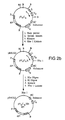
- selectable plasmid pLT31XR-neo having the neo marker, is derived from pLT31X by digestion with Eco Rl and Xho I, Klenow treatment, addition of Xho I linkers, and ligation, thus removing the Ig promoter.
- Fig. 2a selectable plasmid pLT31XR-neo, having the neo marker
- a gpt selectable plasmid pV H C K XR-gpt is derived from PV H C K by partial Bam HI digestion, isolation of linear molecules, Klenow treatment, and ligation of Xho I linkers. After transformation of this ligation mixture into E . coli , some of the resulting colonies contained pV H C K X having an Xho I site in the 2nd Ig intron. The Ig promoter region was removed from pV H C K X by digestion with Xho I and Eco Rl, treatment with Klenow, and ligation of Xho I linkers, yielding pV H C K XR-gpt.
- a vector of the invention which contains no Ig structural gene or splice DNA, was constructed from pLT31X by digestion with Xho I and Bam H1, followed by ligation of Xho I linkers, as shown in Fig. 3a.
- the resulting plasmid A was then restricted with Eco R1, Xba I linkers were attached, and the Xba I heavy chain enhancer fragment from pV H C K was inserted, yielding plasmid B.
- DNA encoding a desired protein can be readily inserted into plasmid B by cutting with Xho I and ligating the DNA's together. This places the inserted gene under the control of the Ig promoter and the pV H C K enhancer.
- the Ig promoter can be replaced in plasmid B with the 0.76kb human cytomegalovirus enhancer/promoter fragment.
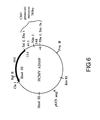
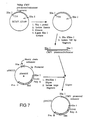
- plasmid HCMV AD169 (obtained from Deborah Spector, University of California, San Diego) includes a 760 bp Xba I fragment containing the human CMV enhancer and promoter.
- Fig. 7 the Xba I site at the position labelled +6 in HCMV AD169 was converted to an Xho I site by attaching Xho I linkers.
- HCMV AD169 was partially digested with Xba I; linear molecules were isolated and Klenow treated; Xho I linkers were ligated onto these treated molecules; and the ligation mixture was transformed into E . coli .
- Some of the resulting colonies contained plasmids with a Xho I site in the desired location. These plasmids were digested with Xba I and Xho I, and the 760 bp Xba I/ Xho I ended fragment was then isolated and ligated into the solated large Xba I/ Xho I fragment of plasmid B, thus replacing the Ig enhancer/promoter region with the CMV enhancer/promoter.
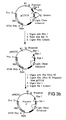
- Another vector of the invention with the cloning site for the foreign gene downstream of the first Ig gene intron, was constructed as follows. Referring to Fig. 3b, pLT31X was digested with Xho I and then treated with Bal 31 until enough DNA had been digested to remove the initiator ATG of the Ig gene. This Bal 3l treatment was performed as follows. Aliquots were taken from the Bal 3l/pTL3lX treatment mixture, and the Bal 3l enzyme was immediately killed. Samples from the aliquots were cut with Kpn I, and the length of the Kpn I/ Xho I fragment in each sample was determined.
- Xho I linkers were then ligated to the end of the Bal 31-treated pLT31X aliquot in which the Kpn I/ Xho I fragment had been reduced from 180bp to approximately 150 bp.
- the sequences originally upstream of the Xho I site were replaced by ligating the Xho I- Eco R1 fragment of untreated pLT31X into the Bal 31-treated vector.
- the resulting vector was then digested with Kpn I, and Sal I linkers were ligated into this site, yielding plasmid C (Fig. 3b).
- a Sal I DNA fragment encoding the desired protein then can be inserted into this vector.
- the inserted foreign DNA is under the control of the Ig promoter and 3 ⁇ enhancer sequences.
- the Ig promoter in plasmid C can be replaced with the 1.9 kb metallothionein promoter fragment (Searle et al., (1984), Mol. and Cellular Biol. 4 , 1221).
- the MT-1 promoter fragment is isolated by Eco R1- Bgl II digestion of plasmid pCL28 (described, as pJYmmT(E), in Hamer et al., (1983) J. Mol. Applied Gen. 1 , 273).
- Xho I linkers are then attached to the Bgl II end of the MT-1 fragment, and ligated to the large Eco R1/ Xho I fragment of plasmid C.
- a vector having 5 ⁇ splice DNA upstream of the inserted foreign DNA (Fig. 4d) but lacking Ig gene coding sequences downstream of the cloning site was constructed as follows. Referring to Fig. 3c, plasmid C described above was digested with Sal I and Bam H1 to remove the downstream Sal I/ Bam I Ig fragment, Sal I linkers were added, and the Sal I ends were ligated together. In this manner, the SV40 Poly A sequence is positioned just downstream from the cloning site. The Eco R1 site in the vector was then changed to an Xba I site by attaching Xba I linkers.
- plasmid B can be used to accept a desired foreign gene.
- the Sal I t-PA fragment (described in copending application U.S.S.N. 656,770, id .), containing a gene encoding the protein t-PA, was isolated and ligated into Xho I treated plasmid B.
- the resulting plasmid C is able to express large amounts of t-PA in myeloma cells (Fig. 4a).
- Plasmid pLT31X itself (Fig. 1) can be used directly to efficiently express desired genes in myeloma cells, if the inserted gene is less than 400 base pairs in length.
- the vector is cut with Xho I, and the DNA encoding the desired protein is ligated directly into Ig gene 5 ⁇ non-coding sequences (Fig. 4b).
- the Ig poly A termination signal serves as a termination signal for the inserted gene, and the 3 ⁇ enhancer region increases transcription from the Ig promoter.
- the MT promoter can be used in place of the Ig promoter.
- DNA encoding a desired protein is preferably inserted into the Sal I site at the 5 ⁇ end of the Ig gene of plasmid C, just downstream of the first Ig untranslated region.
- This vector also contains no interfering ATG codons upstream from the inserted gene of interest, and the vector expresses the desired protein at a higher rate than if the gene is inserted upstream from the first intron. The efficiency of splicing of the Ig 5 ⁇ intron is unperturbed by these procedures.
- the MT promoter may be used in lieu of the Ig promoter, and the Ig poly A terminator sequence can be used as a terminator sequence for inserted genes.
- a foreign gene can be inserted in the Sal I cloning site of plasmid D, and the inserted gene is then under the control of the Ig promoter and upstream pV H C K enhancer (Fig. 4d).
- the SV40 poly A termination sequence serves as terminator signal for inserted genes.
- This vector and plasmid E, its counterpart containing the Ig poly A signal, have proved to be the most efficient expression vectors of the ones described, as the heavy chain enhancer gives particularly strong stimulation of the Ig promoter.
- promoter and enhancer sequences may be replaced by those from the E1 gene of human cytomegalovirus. Such a substitution would allow full expression of multiple gene copies in myeloma cell lines where tissue-specific transcriptional factors might be limiting.
- plasmids B and D the neo gene is removed by digestion with Nco I and Nde I, addition of Nco I linkers, and religation.
- plasmid C the neo sequences are removed by digestion with Bam H1 and Nde I, addition of Bam H1 linkers, and religation.
- plasmid E the neo sequences are removed by digestion with Hpa I and Nde I, addition of Hind III linkers, and religation.
- the vectors of the invention are transfected into myeloma cells by conventional techniques, e.g., electroporation (Potter et al., 1984, Proc. Nat. Acad. Sci. U.S.A. 81 :7161).
- the transfection by electroporation preferably utilizes a two step process involving the introduction, by non-ligated co-transfer, of the desired plasmid in conjunction with two different selectable plasmids.
- the desired expression vector containing the foreign gene to be expressed, is introduced into the myeloma cell with pLT31XR-neo as the selectable plasmid;
- the second step involves similar co-transfer, using pV H C K XR-gpt as the selectable plasmid.
- a high-producing cell line derived from neo selection is used as the host cell.
- all plasmids are linearized by restriction at a non-essential site. A 1:100 a ratio of selectable plasmid to expression vector at each step yields transfectants with multiple copies of the desired gene.
- the transfected myeloma cells can be grown in commercially available hollow fiber or encapsulation culture systems to yield cell densities of greater than 107 cells/cm3, preferably more than 108 cells/cm3. Desired protein is isolated and purified by standard procedures.
- E . coli cells containing plasmid D were deposited on July 24, 1986 with the American Type Culture Collection, Rockville, Maryland, and assigned ATCC accession number 67162.
Landscapes
- Health & Medical Sciences (AREA)
- Chemical & Material Sciences (AREA)
- Organic Chemistry (AREA)
- Life Sciences & Earth Sciences (AREA)
- Genetics & Genomics (AREA)
- Engineering & Computer Science (AREA)
- Bioinformatics & Cheminformatics (AREA)
- Zoology (AREA)
- Wood Science & Technology (AREA)
- Biomedical Technology (AREA)
- General Engineering & Computer Science (AREA)
- Biochemistry (AREA)
- General Health & Medical Sciences (AREA)
- Biotechnology (AREA)
- Molecular Biology (AREA)
- Microbiology (AREA)
- Medicinal Chemistry (AREA)
- Biophysics (AREA)
- Physics & Mathematics (AREA)
- Plant Pathology (AREA)
- Immunology (AREA)
- Proteomics, Peptides & Aminoacids (AREA)
- Micro-Organisms Or Cultivation Processes Thereof (AREA)
- Preparation Of Compounds By Using Micro-Organisms (AREA)
Applications Claiming Priority (2)
| Application Number | Priority Date | Filing Date | Title |
|---|---|---|---|
| US89125986A | 1986-07-28 | 1986-07-28 | |
| US891259 | 1986-07-28 |
Publications (2)
| Publication Number | Publication Date |
|---|---|
| EP0255320A2 true EP0255320A2 (de) | 1988-02-03 |
| EP0255320A3 EP0255320A3 (de) | 1989-09-06 |
Family
ID=25397865
Family Applications (1)
| Application Number | Title | Priority Date | Filing Date |
|---|---|---|---|
| EP87306608A Withdrawn EP0255320A3 (de) | 1986-07-28 | 1987-07-27 | Herstellung von Proteinen in Myelomazellen |
Country Status (2)
| Country | Link |
|---|---|
| EP (1) | EP0255320A3 (de) |
| JP (1) | JPS63126483A (de) |
Cited By (10)
| Publication number | Priority date | Publication date | Assignee | Title |
|---|---|---|---|---|
| EP0338841A1 (de) * | 1988-04-18 | 1989-10-25 | Celltech Limited | Rekombinante DNS-Verfahren, Verktoren und Wirtszellen |
| WO1991007497A1 (en) * | 1989-11-17 | 1991-05-30 | Kabigen Ab | Expression of heterologous proteins using eucaryotic cells |
| WO1992013079A1 (en) * | 1991-01-29 | 1992-08-06 | Teijin Limited | Human protein c expression vector |
| US5879936A (en) * | 1988-04-18 | 1999-03-09 | Aluguisse Holding A.G. | Recombinant DNA methods, vectors and host cells |
| US5891693A (en) * | 1990-01-25 | 1999-04-06 | Alusuisse Holdings A.G. | Recombinant DNA methods vectors and host cells |
| US5981216A (en) * | 1985-04-01 | 1999-11-09 | Alusuisse Holdings A.G. | Transformed myeloma cell-line and a process for the expression of a gene coding for a eukaryotic polypeptide employing same |
| EP0793508A4 (de) * | 1994-11-09 | 2000-02-23 | Univ California | Neuartiges, das prostata spezifische antigen (psa) und promotor enthaltendes nukleinsäuremolekül und seine anwendungen |
| EP1147205A4 (de) * | 1998-12-31 | 2003-01-08 | Viromed Ltd | Hocheffiziente säugetier expressionsvektoren die einen exogenen promotor und eine vollständige 5'nicht-translatierte region oberhalb des startcodons enthalten als transkriptionsregulationsstätte für inhärente gene |
| US7279568B2 (en) | 1998-12-31 | 2007-10-09 | Viromed Limited | Highly efficient eukaryotic expression vector comprising an exogenous transcription regulatory element |
| US10639351B2 (en) | 2013-10-22 | 2020-05-05 | Helixmith Co., Ltd. | Method for treating amyotrophic lateral sclerosis with a polynucleotide encoding two or more isoforms of hepatocyte growth factor |
Family Cites Families (4)
| Publication number | Priority date | Publication date | Assignee | Title |
|---|---|---|---|---|
| US4663281A (en) * | 1984-03-22 | 1987-05-05 | Mass Institute Of Technology | Enhanced production of proteinaceous materials in eucaryotic cells |
| CA1302320C (en) * | 1984-06-11 | 1992-06-02 | Hideo Niwa | Expression of human cromosomal interferon-_ in animal cells |
| GB2183662B (en) * | 1985-04-01 | 1989-01-25 | Celltech Ltd | Transformed myeloma cell-line and a process for the expression of a gene coding for a eukaryotic polypeptide employing same |
| AU582288B2 (en) * | 1986-03-07 | 1989-03-16 | Damon Biotech Inc. | Vector and method for achieving high level expression in eukaryotic cells |
-
1987
- 1987-07-27 EP EP87306608A patent/EP0255320A3/de not_active Withdrawn
- 1987-07-28 JP JP62188701A patent/JPS63126483A/ja active Pending
Cited By (11)
| Publication number | Priority date | Publication date | Assignee | Title |
|---|---|---|---|---|
| US5981216A (en) * | 1985-04-01 | 1999-11-09 | Alusuisse Holdings A.G. | Transformed myeloma cell-line and a process for the expression of a gene coding for a eukaryotic polypeptide employing same |
| EP0338841A1 (de) * | 1988-04-18 | 1989-10-25 | Celltech Limited | Rekombinante DNS-Verfahren, Verktoren und Wirtszellen |
| WO1989010404A1 (en) * | 1988-04-18 | 1989-11-02 | Celltech Limited | Recombinant dna methods, vectors and host cells |
| US5879936A (en) * | 1988-04-18 | 1999-03-09 | Aluguisse Holding A.G. | Recombinant DNA methods, vectors and host cells |
| WO1991007497A1 (en) * | 1989-11-17 | 1991-05-30 | Kabigen Ab | Expression of heterologous proteins using eucaryotic cells |
| US5891693A (en) * | 1990-01-25 | 1999-04-06 | Alusuisse Holdings A.G. | Recombinant DNA methods vectors and host cells |
| WO1992013079A1 (en) * | 1991-01-29 | 1992-08-06 | Teijin Limited | Human protein c expression vector |
| EP0793508A4 (de) * | 1994-11-09 | 2000-02-23 | Univ California | Neuartiges, das prostata spezifische antigen (psa) und promotor enthaltendes nukleinsäuremolekül und seine anwendungen |
| EP1147205A4 (de) * | 1998-12-31 | 2003-01-08 | Viromed Ltd | Hocheffiziente säugetier expressionsvektoren die einen exogenen promotor und eine vollständige 5'nicht-translatierte region oberhalb des startcodons enthalten als transkriptionsregulationsstätte für inhärente gene |
| US7279568B2 (en) | 1998-12-31 | 2007-10-09 | Viromed Limited | Highly efficient eukaryotic expression vector comprising an exogenous transcription regulatory element |
| US10639351B2 (en) | 2013-10-22 | 2020-05-05 | Helixmith Co., Ltd. | Method for treating amyotrophic lateral sclerosis with a polynucleotide encoding two or more isoforms of hepatocyte growth factor |
Also Published As
| Publication number | Publication date |
|---|---|
| JPS63126483A (ja) | 1988-05-30 |
| EP0255320A3 (de) | 1989-09-06 |
Similar Documents
| Publication | Publication Date | Title |
|---|---|---|
| US4663281A (en) | Enhanced production of proteinaceous materials in eucaryotic cells | |
| EP0323997B1 (de) | Rekombinante dns-expressionsvektoren | |
| DE3280422T2 (de) | Verfahren und produkte zur leichten mikrobiologischen expression von dns-sequenzen. | |
| Becerra et al. | Synthesis of adeno-associated virus structural proteins requires both alternative mRNA splicing and alternative initiations from a single transcript | |
| AU611088B2 (en) | Human erythropoietin gene: high level expression in stably transfected mammalian cells | |
| US5879936A (en) | Recombinant DNA methods, vectors and host cells | |
| DE69634819T2 (de) | Reguliertes autokrines wachstum von säugerzellen | |
| GB2073245A (en) | Production of Bovine Growth Hormone by Microorganisms | |
| DD212982A5 (de) | Verfahren zur herstellung von rinder-wachstumshormon-aehnlichen polypeptiden | |
| WO1989010404A1 (en) | Recombinant dna methods, vectors and host cells | |
| US5811260A (en) | Exogenous gene expression vector containing chick β-actin gene promoter | |
| US4503142A (en) | Open reading frame vectors | |
| US4599308A (en) | Protein from SV40 recombinants | |
| EP0250513B1 (de) | Verfahren zur verbesserung der expression von eukaryontenprotein | |
| EP0111389A2 (de) | Wesentlich sauberes Schweinewachstumshormon, DNS-Sequenzen dafür und Expressionsvektoren und transfektierte Mikroorganismen zur Herstellung von Schweinewachstumshormon | |
| EP0445939B1 (de) | Modifizierte Transkriptionskontrolleinheit und ihre Verwendung | |
| Plumbridge et al. | Genes for the two subunits of phenylalanyl-tRNA synthetase of Escherichia coli are transcribed from the same promoter | |
| EP0426744A1 (de) | Hocheffiziente übersetzung von polycistronischen meldungen in eukaryotischen zellen | |
| AU2007345312A1 (en) | Use of chick beta actin gene intron-1 | |
| US5156957A (en) | Follicle stimulating hormone | |
| JPS63126483A (ja) | ミエロ−マ細胞中での所望蛋白質の製造 | |
| EP0217529B1 (de) | Expressionsvektoren zur Verwendung in E. coli | |
| Kern et al. | Common regulatory elements control gene expression from polyoma early and late promoters in cells transformed by chimeric plasmids | |
| CA1224168A (en) | Human growth hormone produced by recombinant dna in mouse cells | |
| EP0469523A2 (de) | Klonierung und Überexpression von Glucose-6-Phosphat-Dehydrogenase aus Leuconostoc dextranicus |
Legal Events
| Date | Code | Title | Description |
|---|---|---|---|
| PUAI | Public reference made under article 153(3) epc to a published international application that has entered the european phase |
Free format text: ORIGINAL CODE: 0009012 |
|
| AK | Designated contracting states |
Kind code of ref document: A2 Designated state(s): AT BE CH DE ES FR GB GR IT LI LU NL SE |
|
| PUAL | Search report despatched |
Free format text: ORIGINAL CODE: 0009013 |
|
| AK | Designated contracting states |
Kind code of ref document: A3 Designated state(s): AT BE CH DE ES FR GB GR IT LI LU NL SE |
|
| 17P | Request for examination filed |
Effective date: 19900305 |
|
| RAP1 | Party data changed (applicant data changed or rights of an application transferred) |
Owner name: GENZYME CORPORATION |
|
| 17Q | First examination report despatched |
Effective date: 19920213 |
|
| STAA | Information on the status of an ep patent application or granted ep patent |
Free format text: STATUS: THE APPLICATION IS DEEMED TO BE WITHDRAWN |
|
| 18D | Application deemed to be withdrawn |
Effective date: 19930205 |
|
| RIN1 | Information on inventor provided before grant (corrected) |
Inventor name: HENDRICKS, MARVIN B. Inventor name: BANKER, MICHAEL J. |