EP0255402B1 - Für schnelle Behandlungen anwendbares lichtempfindliches photographisches Silberhalogenidmaterial - Google Patents
Für schnelle Behandlungen anwendbares lichtempfindliches photographisches Silberhalogenidmaterial Download PDFInfo
- Publication number
- EP0255402B1 EP0255402B1 EP87306815A EP87306815A EP0255402B1 EP 0255402 B1 EP0255402 B1 EP 0255402B1 EP 87306815 A EP87306815 A EP 87306815A EP 87306815 A EP87306815 A EP 87306815A EP 0255402 B1 EP0255402 B1 EP 0255402B1
- Authority
- EP
- European Patent Office
- Prior art keywords
- silver halide
- alkyl
- hydrogen
- aryl
- independently
- Prior art date
- Legal status (The legal status is an assumption and is not a legal conclusion. Google has not performed a legal analysis and makes no representation as to the accuracy of the status listed.)
- Expired - Lifetime
Links
- -1 Silver halide Chemical class 0.000 title claims description 197
- 229910052709 silver Inorganic materials 0.000 title claims description 151
- 239000004332 silver Substances 0.000 title claims description 151
- 239000000463 material Substances 0.000 title claims description 73
- 238000000034 method Methods 0.000 title description 50
- 230000008569 process Effects 0.000 title description 36
- 239000000839 emulsion Substances 0.000 claims description 89
- 150000001875 compounds Chemical class 0.000 claims description 83
- 125000000217 alkyl group Chemical group 0.000 claims description 52
- 239000003795 chemical substances by application Substances 0.000 claims description 49
- 229910052739 hydrogen Inorganic materials 0.000 claims description 44
- 239000001257 hydrogen Substances 0.000 claims description 44
- 125000003118 aryl group Chemical group 0.000 claims description 39
- 150000002431 hydrogen Chemical class 0.000 claims description 32
- 125000000753 cycloalkyl group Chemical group 0.000 claims description 19
- 125000003342 alkenyl group Chemical group 0.000 claims description 18
- 125000003545 alkoxy group Chemical group 0.000 claims description 18
- 125000001424 substituent group Chemical group 0.000 claims description 18
- 125000000623 heterocyclic group Chemical group 0.000 claims description 17
- 229910021607 Silver chloride Inorganic materials 0.000 claims description 14
- NINIDFKCEFEMDL-UHFFFAOYSA-N Sulfur Chemical compound [S] NINIDFKCEFEMDL-UHFFFAOYSA-N 0.000 claims description 14
- 150000002344 gold compounds Chemical class 0.000 claims description 14
- 229910052736 halogen Inorganic materials 0.000 claims description 14
- 150000002367 halogens Chemical class 0.000 claims description 14
- HKZLPVFGJNLROG-UHFFFAOYSA-M silver monochloride Chemical compound [Cl-].[Ag+] HKZLPVFGJNLROG-UHFFFAOYSA-M 0.000 claims description 14
- 229910052717 sulfur Inorganic materials 0.000 claims description 14
- 239000011593 sulfur Substances 0.000 claims description 14
- 125000001997 phenyl group Chemical group [H]C1=C([H])C([H])=C(*)C([H])=C1[H] 0.000 claims description 10
- 229910052783 alkali metal Inorganic materials 0.000 claims description 9
- 125000004453 alkoxycarbonyl group Chemical group 0.000 claims description 9
- 125000004414 alkyl thio group Chemical group 0.000 claims description 9
- 125000004104 aryloxy group Chemical group 0.000 claims description 9
- 125000004432 carbon atom Chemical group C* 0.000 claims description 9
- 238000006243 chemical reaction Methods 0.000 claims description 9
- QGZKDVFQNNGYKY-UHFFFAOYSA-O Ammonium Chemical compound [NH4+] QGZKDVFQNNGYKY-UHFFFAOYSA-O 0.000 claims description 8
- ZAMOUSCENKQFHK-UHFFFAOYSA-N Chlorine atom Chemical compound [Cl] ZAMOUSCENKQFHK-UHFFFAOYSA-N 0.000 claims description 8
- 150000001340 alkali metals Chemical class 0.000 claims description 8
- 239000000460 chlorine Substances 0.000 claims description 8
- 229910052801 chlorine Inorganic materials 0.000 claims description 8
- 125000004093 cyano group Chemical group *C#N 0.000 claims description 8
- 125000004435 hydrogen atom Chemical group [H]* 0.000 claims description 8
- 125000002252 acyl group Chemical group 0.000 claims description 7
- QVGXLLKOCUKJST-UHFFFAOYSA-N atomic oxygen Chemical compound [O] QVGXLLKOCUKJST-UHFFFAOYSA-N 0.000 claims description 7
- 229910052799 carbon Inorganic materials 0.000 claims description 7
- 229910052751 metal Inorganic materials 0.000 claims description 7
- 239000002184 metal Substances 0.000 claims description 7
- 229910052760 oxygen Inorganic materials 0.000 claims description 7
- 239000001301 oxygen Substances 0.000 claims description 7
- ADZWSOLPGZMUMY-UHFFFAOYSA-M silver bromide Chemical compound [Ag]Br ADZWSOLPGZMUMY-UHFFFAOYSA-M 0.000 claims description 7
- IJGRMHOSHXDMSA-UHFFFAOYSA-N Atomic nitrogen Chemical compound N#N IJGRMHOSHXDMSA-UHFFFAOYSA-N 0.000 claims description 6
- ZLMJMSJWJFRBEC-UHFFFAOYSA-N Potassium Chemical compound [K] ZLMJMSJWJFRBEC-UHFFFAOYSA-N 0.000 claims description 6
- 125000005153 alkyl sulfamoyl group Chemical group 0.000 claims description 6
- 125000005161 aryl oxy carbonyl group Chemical group 0.000 claims description 6
- 125000005421 aryl sulfonamido group Chemical group 0.000 claims description 6
- 125000005110 aryl thio group Chemical group 0.000 claims description 6
- 229910052700 potassium Inorganic materials 0.000 claims description 6
- 239000011591 potassium Substances 0.000 claims description 6
- OKTJSMMVPCPJKN-UHFFFAOYSA-N Carbon Chemical compound [C] OKTJSMMVPCPJKN-UHFFFAOYSA-N 0.000 claims description 5
- 125000004442 acylamino group Chemical group 0.000 claims description 5
- 229910052757 nitrogen Inorganic materials 0.000 claims description 5
- 125000005115 alkyl carbamoyl group Chemical group 0.000 claims description 4
- 125000005422 alkyl sulfonamido group Chemical group 0.000 claims description 4
- 125000004390 alkyl sulfonyl group Chemical group 0.000 claims description 4
- 125000004391 aryl sulfonyl group Chemical group 0.000 claims description 4
- 125000004433 nitrogen atom Chemical group N* 0.000 claims description 4
- 125000000472 sulfonyl group Chemical group *S(*)(=O)=O 0.000 claims description 4
- FKASFBLJDCHBNZ-UHFFFAOYSA-N 1,3,4-oxadiazole Chemical group C1=NN=CO1 FKASFBLJDCHBNZ-UHFFFAOYSA-N 0.000 claims description 3
- MBIZXFATKUQOOA-UHFFFAOYSA-N 1,3,4-thiadiazole Chemical group C1=NN=CS1 MBIZXFATKUQOOA-UHFFFAOYSA-N 0.000 claims description 3
- 125000003363 1,3,5-triazinyl group Chemical group N1=C(N=CN=C1)* 0.000 claims description 3
- UFHFLCQGNIYNRP-UHFFFAOYSA-N Hydrogen Chemical compound [H][H] UFHFLCQGNIYNRP-UHFFFAOYSA-N 0.000 claims description 3
- 125000004423 acyloxy group Chemical group 0.000 claims description 3
- 125000004397 aminosulfonyl group Chemical group NS(=O)(=O)* 0.000 claims description 3
- 125000005116 aryl carbamoyl group Chemical group 0.000 claims description 3
- 238000005859 coupling reaction Methods 0.000 claims description 3
- 150000002430 hydrocarbons Chemical group 0.000 claims description 3
- 125000000449 nitro group Chemical group [O-][N+](*)=O 0.000 claims description 3
- 125000005420 sulfonamido group Chemical group S(=O)(=O)(N*)* 0.000 claims description 3
- HCXJFMDOHDNDCC-UHFFFAOYSA-N 5-$l^{1}-oxidanyl-3,4-dihydropyrrol-2-one Chemical group O=C1CCC(=O)[N]1 HCXJFMDOHDNDCC-UHFFFAOYSA-N 0.000 claims description 2
- ZMZDMBWJUHKJPS-UHFFFAOYSA-M Thiocyanate anion Chemical compound [S-]C#N ZMZDMBWJUHKJPS-UHFFFAOYSA-M 0.000 claims description 2
- 125000004466 alkoxycarbonylamino group Chemical group 0.000 claims description 2
- 125000005281 alkyl ureido group Chemical group 0.000 claims description 2
- 125000002947 alkylene group Chemical group 0.000 claims description 2
- 125000000304 alkynyl group Chemical group 0.000 claims description 2
- 125000005162 aryl oxy carbonyl amino group Chemical group 0.000 claims description 2
- 125000000732 arylene group Chemical group 0.000 claims description 2
- 125000003917 carbamoyl group Chemical group [H]N([H])C(*)=O 0.000 claims description 2
- 150000001721 carbon Chemical group 0.000 claims description 2
- MGNCLNQXLYJVJD-UHFFFAOYSA-N cyanuric chloride Chemical compound ClC1=NC(Cl)=NC(Cl)=N1 MGNCLNQXLYJVJD-UHFFFAOYSA-N 0.000 claims description 2
- 125000000392 cycloalkenyl group Chemical group 0.000 claims description 2
- RJHLTVSLYWWTEF-UHFFFAOYSA-K gold trichloride Chemical compound Cl[Au](Cl)Cl RJHLTVSLYWWTEF-UHFFFAOYSA-K 0.000 claims description 2
- ZMZDMBWJUHKJPS-UHFFFAOYSA-N hydrogen thiocyanate Natural products SC#N ZMZDMBWJUHKJPS-UHFFFAOYSA-N 0.000 claims description 2
- 125000005647 linker group Chemical group 0.000 claims description 2
- QJGQUHMNIGDVPM-UHFFFAOYSA-N nitrogen group Chemical group [N] QJGQUHMNIGDVPM-UHFFFAOYSA-N 0.000 claims description 2
- ZHHGTDYVCLDHHV-UHFFFAOYSA-J potassium;gold(3+);tetraiodide Chemical compound [K+].[I-].[I-].[I-].[I-].[Au+3] ZHHGTDYVCLDHHV-UHFFFAOYSA-J 0.000 claims description 2
- JEXVQSWXXUJEMA-UHFFFAOYSA-N pyrazol-3-one Chemical class O=C1C=CN=N1 JEXVQSWXXUJEMA-UHFFFAOYSA-N 0.000 claims description 2
- 150000003346 selenoethers Chemical class 0.000 claims description 2
- 125000004469 siloxy group Chemical group [SiH3]O* 0.000 claims description 2
- 150000003413 spiro compounds Chemical group 0.000 claims description 2
- 125000000475 sulfinyl group Chemical group [*:2]S([*:1])=O 0.000 claims description 2
- 125000002887 hydroxy group Chemical group [H]O* 0.000 claims 2
- UCKMPCXJQFINFW-UHFFFAOYSA-N Sulphide Chemical compound [S-2] UCKMPCXJQFINFW-UHFFFAOYSA-N 0.000 claims 1
- 239000010410 layer Substances 0.000 description 82
- 238000012545 processing Methods 0.000 description 31
- 108010010803 Gelatin Proteins 0.000 description 17
- 229920000159 gelatin Polymers 0.000 description 17
- 235000019322 gelatine Nutrition 0.000 description 17
- 235000011852 gelatine desserts Nutrition 0.000 description 17
- 239000000243 solution Substances 0.000 description 16
- 238000011109 contamination Methods 0.000 description 15
- 206010070834 Sensitisation Diseases 0.000 description 14
- 239000008273 gelatin Substances 0.000 description 14
- 239000000126 substance Substances 0.000 description 14
- 239000000203 mixture Substances 0.000 description 13
- 230000008313 sensitization Effects 0.000 description 13
- 230000000052 comparative effect Effects 0.000 description 12
- 238000011161 development Methods 0.000 description 12
- 230000000694 effects Effects 0.000 description 12
- 239000007788 liquid Substances 0.000 description 12
- 239000002243 precursor Substances 0.000 description 12
- 229940125904 compound 1 Drugs 0.000 description 10
- OKKJLVBELUTLKV-UHFFFAOYSA-N Methanol Chemical compound OC OKKJLVBELUTLKV-UHFFFAOYSA-N 0.000 description 9
- 125000002496 methyl group Chemical group [H]C([H])([H])* 0.000 description 9
- 230000003595 spectral effect Effects 0.000 description 9
- 238000000576 coating method Methods 0.000 description 8
- DOIRQSBPFJWKBE-UHFFFAOYSA-N dibutyl phthalate Chemical compound CCCCOC(=O)C1=CC=CC=C1C(=O)OCCCC DOIRQSBPFJWKBE-UHFFFAOYSA-N 0.000 description 8
- 239000003960 organic solvent Substances 0.000 description 8
- XLYOFNOQVPJJNP-UHFFFAOYSA-N water Substances O XLYOFNOQVPJJNP-UHFFFAOYSA-N 0.000 description 8
- SJOOOZPMQAWAOP-UHFFFAOYSA-N [Ag].BrCl Chemical compound [Ag].BrCl SJOOOZPMQAWAOP-UHFFFAOYSA-N 0.000 description 7
- 238000009835 boiling Methods 0.000 description 7
- 239000006185 dispersion Substances 0.000 description 7
- 239000000975 dye Substances 0.000 description 7
- 125000000687 hydroquinonyl group Chemical class C1(O)=C(C=C(O)C=C1)* 0.000 description 7
- 230000005070 ripening Effects 0.000 description 7
- 150000003839 salts Chemical class 0.000 description 7
- BQCADISMDOOEFD-UHFFFAOYSA-N Silver Chemical compound [Ag] BQCADISMDOOEFD-UHFFFAOYSA-N 0.000 description 6
- 239000011248 coating agent Substances 0.000 description 6
- BWHMMNNQKKPAPP-UHFFFAOYSA-L potassium carbonate Chemical compound [K+].[K+].[O-]C([O-])=O BWHMMNNQKKPAPP-UHFFFAOYSA-L 0.000 description 6
- BUGBHKTXTAQXES-UHFFFAOYSA-N Selenium Chemical compound [Se] BUGBHKTXTAQXES-UHFFFAOYSA-N 0.000 description 5
- 125000000113 cyclohexyl group Chemical group [H]C1([H])C([H])([H])C([H])([H])C([H])(*)C([H])([H])C1([H])[H] 0.000 description 5
- 125000001495 ethyl group Chemical group [H]C([H])([H])C([H])([H])* 0.000 description 5
- 239000011229 interlayer Substances 0.000 description 5
- 229910052711 selenium Inorganic materials 0.000 description 5
- 239000011669 selenium Substances 0.000 description 5
- 239000003381 stabilizer Substances 0.000 description 5
- CDAWCLOXVUBKRW-UHFFFAOYSA-N 2-aminophenol Chemical compound NC1=CC=CC=C1O CDAWCLOXVUBKRW-UHFFFAOYSA-N 0.000 description 4
- LFQSCWFLJHTTHZ-UHFFFAOYSA-N Ethanol Chemical compound CCO LFQSCWFLJHTTHZ-UHFFFAOYSA-N 0.000 description 4
- FAPWRFPIFSIZLT-UHFFFAOYSA-M Sodium chloride Chemical compound [Na+].[Cl-] FAPWRFPIFSIZLT-UHFFFAOYSA-M 0.000 description 4
- 239000006096 absorbing agent Substances 0.000 description 4
- 239000002253 acid Substances 0.000 description 4
- 230000015572 biosynthetic process Effects 0.000 description 4
- 239000007844 bleaching agent Substances 0.000 description 4
- 238000009826 distribution Methods 0.000 description 4
- 238000011156 evaluation Methods 0.000 description 4
- 150000002736 metal compounds Chemical class 0.000 description 4
- 238000011160 research Methods 0.000 description 4
- SQGYOTSLMSWVJD-UHFFFAOYSA-N silver(1+) nitrate Chemical compound [Ag+].[O-]N(=O)=O SQGYOTSLMSWVJD-UHFFFAOYSA-N 0.000 description 4
- AKHNMLFCWUSKQB-UHFFFAOYSA-L sodium thiosulfate Chemical compound [Na+].[Na+].[O-]S([O-])(=O)=S AKHNMLFCWUSKQB-UHFFFAOYSA-L 0.000 description 4
- 235000019345 sodium thiosulphate Nutrition 0.000 description 4
- 230000000087 stabilizing effect Effects 0.000 description 4
- 238000005406 washing Methods 0.000 description 4
- VEXZGXHMUGYJMC-UHFFFAOYSA-M Chloride anion Chemical compound [Cl-] VEXZGXHMUGYJMC-UHFFFAOYSA-M 0.000 description 3
- XEKOWRVHYACXOJ-UHFFFAOYSA-N Ethyl acetate Chemical compound CCOC(C)=O XEKOWRVHYACXOJ-UHFFFAOYSA-N 0.000 description 3
- LYCAIKOWRPUZTN-UHFFFAOYSA-N Ethylene glycol Chemical compound OCCO LYCAIKOWRPUZTN-UHFFFAOYSA-N 0.000 description 3
- KWYUFKZDYYNOTN-UHFFFAOYSA-M Potassium hydroxide Chemical compound [OH-].[K+] KWYUFKZDYYNOTN-UHFFFAOYSA-M 0.000 description 3
- HEMHJVSKTPXQMS-UHFFFAOYSA-M Sodium hydroxide Chemical compound [OH-].[Na+] HEMHJVSKTPXQMS-UHFFFAOYSA-M 0.000 description 3
- 239000002216 antistatic agent Substances 0.000 description 3
- 239000011230 binding agent Substances 0.000 description 3
- 239000000084 colloidal system Substances 0.000 description 3
- 230000006872 improvement Effects 0.000 description 3
- 238000004519 manufacturing process Methods 0.000 description 3
- 238000005259 measurement Methods 0.000 description 3
- 238000002156 mixing Methods 0.000 description 3
- 229910000510 noble metal Inorganic materials 0.000 description 3
- 230000003287 optical effect Effects 0.000 description 3
- 125000001147 pentyl group Chemical group C(CCCC)* 0.000 description 3
- 229910000027 potassium carbonate Inorganic materials 0.000 description 3
- 238000001556 precipitation Methods 0.000 description 3
- 125000004368 propenyl group Chemical group C(=CC)* 0.000 description 3
- 125000001436 propyl group Chemical group [H]C([*])([H])C([H])([H])C([H])([H])[H] 0.000 description 3
- 239000011241 protective layer Substances 0.000 description 3
- 230000009467 reduction Effects 0.000 description 3
- 230000001235 sensitizing effect Effects 0.000 description 3
- 239000002904 solvent Substances 0.000 description 3
- 238000012360 testing method Methods 0.000 description 3
- IANQTJSKSUMEQM-UHFFFAOYSA-N 1-benzofuran Chemical compound C1=CC=C2OC=CC2=C1 IANQTJSKSUMEQM-UHFFFAOYSA-N 0.000 description 2
- PLIKAWJENQZMHA-UHFFFAOYSA-N 4-aminophenol Chemical compound NC1=CC=C(O)C=C1 PLIKAWJENQZMHA-UHFFFAOYSA-N 0.000 description 2
- QTBSBXVTEAMEQO-UHFFFAOYSA-N Acetic acid Chemical compound CC(O)=O QTBSBXVTEAMEQO-UHFFFAOYSA-N 0.000 description 2
- CSCPPACGZOOCGX-UHFFFAOYSA-N Acetone Chemical compound CC(C)=O CSCPPACGZOOCGX-UHFFFAOYSA-N 0.000 description 2
- QGZKDVFQNNGYKY-UHFFFAOYSA-N Ammonia Chemical compound N QGZKDVFQNNGYKY-UHFFFAOYSA-N 0.000 description 2
- WKBOTKDWSSQWDR-UHFFFAOYSA-N Bromine atom Chemical compound [Br] WKBOTKDWSSQWDR-UHFFFAOYSA-N 0.000 description 2
- SNRUBQQJIBEYMU-UHFFFAOYSA-N Dodecane Natural products CCCCCCCCCCCC SNRUBQQJIBEYMU-UHFFFAOYSA-N 0.000 description 2
- KCXVZYZYPLLWCC-UHFFFAOYSA-N EDTA Chemical compound OC(=O)CN(CC(O)=O)CCN(CC(O)=O)CC(O)=O KCXVZYZYPLLWCC-UHFFFAOYSA-N 0.000 description 2
- PXGOKWXKJXAPGV-UHFFFAOYSA-N Fluorine Chemical compound FF PXGOKWXKJXAPGV-UHFFFAOYSA-N 0.000 description 2
- OAKJQQAXSVQMHS-UHFFFAOYSA-N Hydrazine Chemical compound NN OAKJQQAXSVQMHS-UHFFFAOYSA-N 0.000 description 2
- DGAQECJNVWCQMB-PUAWFVPOSA-M Ilexoside XXIX Chemical compound C[C@@H]1CC[C@@]2(CC[C@@]3(C(=CC[C@H]4[C@]3(CC[C@@H]5[C@@]4(CC[C@@H](C5(C)C)OS(=O)(=O)[O-])C)C)[C@@H]2[C@]1(C)O)C)C(=O)O[C@H]6[C@@H]([C@H]([C@@H]([C@H](O6)CO)O)O)O.[Na+] DGAQECJNVWCQMB-PUAWFVPOSA-M 0.000 description 2
- XEEYBQQBJWHFJM-UHFFFAOYSA-N Iron Chemical compound [Fe] XEEYBQQBJWHFJM-UHFFFAOYSA-N 0.000 description 2
- OFOBLEOULBTSOW-UHFFFAOYSA-N Malonic acid Chemical compound OC(=O)CC(O)=O OFOBLEOULBTSOW-UHFFFAOYSA-N 0.000 description 2
- WCUXLLCKKVVCTQ-UHFFFAOYSA-M Potassium chloride Chemical compound [Cl-].[K+] WCUXLLCKKVVCTQ-UHFFFAOYSA-M 0.000 description 2
- CDBYLPFSWZWCQE-UHFFFAOYSA-L Sodium Carbonate Chemical compound [Na+].[Na+].[O-]C([O-])=O CDBYLPFSWZWCQE-UHFFFAOYSA-L 0.000 description 2
- QAOWNCQODCNURD-UHFFFAOYSA-L Sulfate Chemical compound [O-]S([O-])(=O)=O QAOWNCQODCNURD-UHFFFAOYSA-L 0.000 description 2
- QAOWNCQODCNURD-UHFFFAOYSA-N Sulfuric acid Chemical compound OS(O)(=O)=O QAOWNCQODCNURD-UHFFFAOYSA-N 0.000 description 2
- XYXNTHIYBIDHGM-UHFFFAOYSA-N ammonium thiosulfate Chemical compound [NH4+].[NH4+].[O-]S([O-])(=O)=S XYXNTHIYBIDHGM-UHFFFAOYSA-N 0.000 description 2
- 230000008901 benefit Effects 0.000 description 2
- GDTBXPJZTBHREO-UHFFFAOYSA-N bromine Substances BrBr GDTBXPJZTBHREO-UHFFFAOYSA-N 0.000 description 2
- 229910052794 bromium Inorganic materials 0.000 description 2
- 125000000484 butyl group Chemical group [H]C([*])([H])C([H])([H])C([H])([H])C([H])([H])[H] 0.000 description 2
- 229910052798 chalcogen Inorganic materials 0.000 description 2
- 150000001787 chalcogens Chemical class 0.000 description 2
- 239000008139 complexing agent Substances 0.000 description 2
- 239000013078 crystal Substances 0.000 description 2
- 238000011033 desalting Methods 0.000 description 2
- 230000006866 deterioration Effects 0.000 description 2
- 125000003438 dodecyl group Chemical group [H]C([H])([H])C([H])([H])C([H])([H])C([H])([H])C([H])([H])C([H])([H])C([H])([H])C([H])([H])C([H])([H])C([H])([H])C([H])([H])C([H])([H])* 0.000 description 2
- 150000002148 esters Chemical class 0.000 description 2
- 239000011737 fluorine Substances 0.000 description 2
- 229910052731 fluorine Inorganic materials 0.000 description 2
- 230000006870 function Effects 0.000 description 2
- PCHJSUWPFVWCPO-UHFFFAOYSA-N gold Chemical compound [Au] PCHJSUWPFVWCPO-UHFFFAOYSA-N 0.000 description 2
- 229910052737 gold Inorganic materials 0.000 description 2
- 239000010931 gold Substances 0.000 description 2
- 150000004820 halides Chemical class 0.000 description 2
- 125000004356 hydroxy functional group Chemical group O* 0.000 description 2
- 230000002401 inhibitory effect Effects 0.000 description 2
- 239000004816 latex Substances 0.000 description 2
- 229920000126 latex Polymers 0.000 description 2
- 229920002521 macromolecule Polymers 0.000 description 2
- 229910021645 metal ion Inorganic materials 0.000 description 2
- 125000001624 naphthyl group Chemical group 0.000 description 2
- 150000007524 organic acids Chemical class 0.000 description 2
- 238000007254 oxidation reaction Methods 0.000 description 2
- XNGIFLGASWRNHJ-UHFFFAOYSA-L phthalate(2-) Chemical compound [O-]C(=O)C1=CC=CC=C1C([O-])=O XNGIFLGASWRNHJ-UHFFFAOYSA-L 0.000 description 2
- 229920013716 polyethylene resin Polymers 0.000 description 2
- IOLCXVTUBQKXJR-UHFFFAOYSA-M potassium bromide Chemical compound [K+].[Br-] IOLCXVTUBQKXJR-UHFFFAOYSA-M 0.000 description 2
- 238000002360 preparation method Methods 0.000 description 2
- 230000001681 protective effect Effects 0.000 description 2
- 229910001961 silver nitrate Inorganic materials 0.000 description 2
- 229910052708 sodium Inorganic materials 0.000 description 2
- 239000011734 sodium Substances 0.000 description 2
- 239000011780 sodium chloride Substances 0.000 description 2
- 230000003068 static effect Effects 0.000 description 2
- 238000003756 stirring Methods 0.000 description 2
- 239000004094 surface-active agent Substances 0.000 description 2
- 229920001059 synthetic polymer Polymers 0.000 description 2
- 239000002562 thickening agent Substances 0.000 description 2
- 150000003568 thioethers Chemical class 0.000 description 2
- UMGDCJDMYOKAJW-UHFFFAOYSA-N thiourea Chemical compound NC(N)=S UMGDCJDMYOKAJW-UHFFFAOYSA-N 0.000 description 2
- 229910052724 xenon Inorganic materials 0.000 description 2
- FHNFHKCVQCLJFQ-UHFFFAOYSA-N xenon atom Chemical compound [Xe] FHNFHKCVQCLJFQ-UHFFFAOYSA-N 0.000 description 2
- TXUICONDJPYNPY-UHFFFAOYSA-N (1,10,13-trimethyl-3-oxo-4,5,6,7,8,9,11,12,14,15,16,17-dodecahydrocyclopenta[a]phenanthren-17-yl) heptanoate Chemical compound C1CC2CC(=O)C=C(C)C2(C)C2C1C1CCC(OC(=O)CCCCCC)C1(C)CC2 TXUICONDJPYNPY-UHFFFAOYSA-N 0.000 description 1
- BJEPYKJPYRNKOW-REOHCLBHSA-N (S)-malic acid Chemical compound OC(=O)[C@@H](O)CC(O)=O BJEPYKJPYRNKOW-REOHCLBHSA-N 0.000 description 1
- OMAWWKIPXLIPDE-UHFFFAOYSA-N (ethyldiselanyl)ethane Chemical compound CC[Se][Se]CC OMAWWKIPXLIPDE-UHFFFAOYSA-N 0.000 description 1
- ZRHUHDUEXWHZMA-UHFFFAOYSA-N 1,4-dihydropyrazol-5-one Chemical compound O=C1CC=NN1 ZRHUHDUEXWHZMA-UHFFFAOYSA-N 0.000 description 1
- CBCKQZAAMUWICA-UHFFFAOYSA-N 1,4-phenylenediamine Chemical compound NC1=CC=C(N)C=C1 CBCKQZAAMUWICA-UHFFFAOYSA-N 0.000 description 1
- CJAOGUFAAWZWNI-UHFFFAOYSA-N 1-n,1-n,4-n,4-n-tetramethylbenzene-1,4-diamine Chemical compound CN(C)C1=CC=C(N(C)C)C=C1 CJAOGUFAAWZWNI-UHFFFAOYSA-N 0.000 description 1
- HRBLHUVHOWWBEN-UHFFFAOYSA-N 1-n,4-n-diethylbenzene-1,4-diamine;hydrochloride Chemical compound Cl.CCNC1=CC=C(NCC)C=C1 HRBLHUVHOWWBEN-UHFFFAOYSA-N 0.000 description 1
- NEPWWHQLHRGVQL-UHFFFAOYSA-N 1-n,4-n-dimethylbenzene-1,4-diamine;hydron;chloride Chemical compound Cl.CNC1=CC=C(NC)C=C1 NEPWWHQLHRGVQL-UHFFFAOYSA-N 0.000 description 1
- KJCVRFUGPWSIIH-UHFFFAOYSA-N 1-naphthol Chemical compound C1=CC=C2C(O)=CC=CC2=C1 KJCVRFUGPWSIIH-UHFFFAOYSA-N 0.000 description 1
- ALQQNXBDAKRPOQ-UHFFFAOYSA-N 2-(2-ethyl-2-phenylhydrazinyl)ethanol Chemical compound OCCNN(CC)C1=CC=CC=C1 ALQQNXBDAKRPOQ-UHFFFAOYSA-N 0.000 description 1
- DLLMHEDYJQACRM-UHFFFAOYSA-N 2-(carboxymethyldisulfanyl)acetic acid Chemical compound OC(=O)CSSCC(O)=O DLLMHEDYJQACRM-UHFFFAOYSA-N 0.000 description 1
- JKFYKCYQEWQPTM-UHFFFAOYSA-N 2-azaniumyl-2-(4-fluorophenyl)acetate Chemical compound OC(=O)C(N)C1=CC=C(F)C=C1 JKFYKCYQEWQPTM-UHFFFAOYSA-N 0.000 description 1
- JWAZRIHNYRIHIV-UHFFFAOYSA-N 2-naphthol Chemical compound C1=CC=CC2=CC(O)=CC=C21 JWAZRIHNYRIHIV-UHFFFAOYSA-N 0.000 description 1
- 125000003903 2-propenyl group Chemical group [H]C([*])([H])C([H])=C([H])[H] 0.000 description 1
- ZJOJXRSMJNWWRN-UHFFFAOYSA-N 3-amino-6-[2-(4-aminophenyl)ethenyl]benzene-1,2-disulfonic acid Chemical class C1=CC(N)=CC=C1C=CC1=CC=C(N)C(S(O)(=O)=O)=C1S(O)(=O)=O ZJOJXRSMJNWWRN-UHFFFAOYSA-N 0.000 description 1
- XRZDIHADHZSFBB-UHFFFAOYSA-N 3-oxo-n,3-diphenylpropanamide Chemical compound C=1C=CC=CC=1NC(=O)CC(=O)C1=CC=CC=C1 XRZDIHADHZSFBB-UHFFFAOYSA-N 0.000 description 1
- RYYXDZDBXNUPOG-UHFFFAOYSA-N 4,5,6,7-tetrahydro-1,3-benzothiazole-2,6-diamine;dihydrochloride Chemical compound Cl.Cl.C1C(N)CCC2=C1SC(N)=N2 RYYXDZDBXNUPOG-UHFFFAOYSA-N 0.000 description 1
- RTNUTCOTGVKVBR-UHFFFAOYSA-N 4-chlorotriazine Chemical class ClC1=CC=NN=N1 RTNUTCOTGVKVBR-UHFFFAOYSA-N 0.000 description 1
- ZFIQGRISGKSVAG-UHFFFAOYSA-N 4-methylaminophenol Chemical compound CNC1=CC=C(O)C=C1 ZFIQGRISGKSVAG-UHFFFAOYSA-N 0.000 description 1
- MTOCKMVNXPZCJW-UHFFFAOYSA-N 4-n-dodecyl-4-n-ethyl-2-methylbenzene-1,4-diamine Chemical compound CCCCCCCCCCCCN(CC)C1=CC=C(N)C(C)=C1 MTOCKMVNXPZCJW-UHFFFAOYSA-N 0.000 description 1
- QJNVAFZHBQNXJT-UHFFFAOYSA-N 4-n-ethyl-4-n-(2-methoxyethyl)-2-methylbenzene-1,4-diamine;4-methylbenzenesulfonic acid Chemical compound CC1=CC=C(S(O)(=O)=O)C=C1.COCCN(CC)C1=CC=C(N)C(C)=C1 QJNVAFZHBQNXJT-UHFFFAOYSA-N 0.000 description 1
- IJJSFSXLZYFTKV-UHFFFAOYSA-N 4-n-methylbenzene-1,4-diamine;hydrochloride Chemical compound Cl.CNC1=CC=C(N)C=C1 IJJSFSXLZYFTKV-UHFFFAOYSA-N 0.000 description 1
- 125000002373 5 membered heterocyclic group Chemical group 0.000 description 1
- 125000004070 6 membered heterocyclic group Chemical group 0.000 description 1
- CPELXLSAUQHCOX-UHFFFAOYSA-M Bromide Chemical compound [Br-] CPELXLSAUQHCOX-UHFFFAOYSA-M 0.000 description 1
- JPVYNHNXODAKFH-UHFFFAOYSA-N Cu2+ Chemical compound [Cu+2] JPVYNHNXODAKFH-UHFFFAOYSA-N 0.000 description 1
- FEWJPZIEWOKRBE-JCYAYHJZSA-N Dextrotartaric acid Chemical compound OC(=O)[C@H](O)[C@@H](O)C(O)=O FEWJPZIEWOKRBE-JCYAYHJZSA-N 0.000 description 1
- MQIUGAXCHLFZKX-UHFFFAOYSA-N Di-n-octyl phthalate Natural products CCCCCCCCOC(=O)C1=CC=CC=C1C(=O)OCCCCCCCC MQIUGAXCHLFZKX-UHFFFAOYSA-N 0.000 description 1
- PQUCIEFHOVEZAU-UHFFFAOYSA-N Diammonium sulfite Chemical compound [NH4+].[NH4+].[O-]S([O-])=O PQUCIEFHOVEZAU-UHFFFAOYSA-N 0.000 description 1
- 229920001174 Diethylhydroxylamine Polymers 0.000 description 1
- QEVGZEDELICMKH-UHFFFAOYSA-N Diglycolic acid Chemical compound OC(=O)COCC(O)=O QEVGZEDELICMKH-UHFFFAOYSA-N 0.000 description 1
- 101100117236 Drosophila melanogaster speck gene Proteins 0.000 description 1
- JOYRKODLDBILNP-UHFFFAOYSA-N Ethyl urethane Chemical compound CCOC(N)=O JOYRKODLDBILNP-UHFFFAOYSA-N 0.000 description 1
- DBVJJBKOTRCVKF-UHFFFAOYSA-N Etidronic acid Chemical compound OP(=O)(O)C(O)(C)P(O)(O)=O DBVJJBKOTRCVKF-UHFFFAOYSA-N 0.000 description 1
- 239000000020 Nitrocellulose Substances 0.000 description 1
- 229910019142 PO4 Inorganic materials 0.000 description 1
- ISWSIDIOOBJBQZ-UHFFFAOYSA-N Phenol Chemical compound OC1=CC=CC=C1 ISWSIDIOOBJBQZ-UHFFFAOYSA-N 0.000 description 1
- OAICVXFJPJFONN-UHFFFAOYSA-N Phosphorus Chemical compound [P] OAICVXFJPJFONN-UHFFFAOYSA-N 0.000 description 1
- 239000004952 Polyamide Substances 0.000 description 1
- 239000004793 Polystyrene Substances 0.000 description 1
- 239000002262 Schiff base Substances 0.000 description 1
- 150000004753 Schiff bases Chemical class 0.000 description 1
- 229910021612 Silver iodide Inorganic materials 0.000 description 1
- 239000004902 Softening Agent Substances 0.000 description 1
- FEWJPZIEWOKRBE-UHFFFAOYSA-N Tartaric acid Natural products [H+].[H+].[O-]C(=O)C(O)C(O)C([O-])=O FEWJPZIEWOKRBE-UHFFFAOYSA-N 0.000 description 1
- 229910021626 Tin(II) chloride Inorganic materials 0.000 description 1
- 229910052770 Uranium Inorganic materials 0.000 description 1
- XSQUKJJJFZCRTK-UHFFFAOYSA-N Urea Natural products NC(N)=O XSQUKJJJFZCRTK-UHFFFAOYSA-N 0.000 description 1
- FJWGYAHXMCUOOM-QHOUIDNNSA-N [(2s,3r,4s,5r,6r)-2-[(2r,3r,4s,5r,6s)-4,5-dinitrooxy-2-(nitrooxymethyl)-6-[(2r,3r,4s,5r,6s)-4,5,6-trinitrooxy-2-(nitrooxymethyl)oxan-3-yl]oxyoxan-3-yl]oxy-3,5-dinitrooxy-6-(nitrooxymethyl)oxan-4-yl] nitrate Chemical compound O([C@@H]1O[C@@H]([C@H]([C@H](O[N+]([O-])=O)[C@H]1O[N+]([O-])=O)O[C@H]1[C@@H]([C@@H](O[N+]([O-])=O)[C@H](O[N+]([O-])=O)[C@@H](CO[N+]([O-])=O)O1)O[N+]([O-])=O)CO[N+](=O)[O-])[C@@H]1[C@@H](CO[N+]([O-])=O)O[C@@H](O[N+]([O-])=O)[C@H](O[N+]([O-])=O)[C@H]1O[N+]([O-])=O FJWGYAHXMCUOOM-QHOUIDNNSA-N 0.000 description 1
- XEIPQVVAVOUIOP-UHFFFAOYSA-N [Au]=S Chemical compound [Au]=S XEIPQVVAVOUIOP-UHFFFAOYSA-N 0.000 description 1
- KWEGYAQDWBZXMX-UHFFFAOYSA-N [Au]=[Se] Chemical compound [Au]=[Se] KWEGYAQDWBZXMX-UHFFFAOYSA-N 0.000 description 1
- 238000010521 absorption reaction Methods 0.000 description 1
- 230000001133 acceleration Effects 0.000 description 1
- 125000000738 acetamido group Chemical group [H]C([H])([H])C(=O)N([H])[*] 0.000 description 1
- 229960000583 acetic acid Drugs 0.000 description 1
- DCBAJBHQQSHTES-UHFFFAOYSA-N acetic acid;2-(2-aminoethylamino)ethanol Chemical compound CC(O)=O.CC(O)=O.NCCNCCO DCBAJBHQQSHTES-UHFFFAOYSA-N 0.000 description 1
- 125000003668 acetyloxy group Chemical group [H]C([H])([H])C(=O)O[*] 0.000 description 1
- 150000007513 acids Chemical class 0.000 description 1
- 230000004913 activation Effects 0.000 description 1
- 239000000654 additive Substances 0.000 description 1
- 230000000996 additive effect Effects 0.000 description 1
- 230000001070 adhesive effect Effects 0.000 description 1
- 230000002411 adverse Effects 0.000 description 1
- 229910001508 alkali metal halide Inorganic materials 0.000 description 1
- 150000008045 alkali metal halides Chemical class 0.000 description 1
- 235000016720 allyl isothiocyanate Nutrition 0.000 description 1
- 230000005260 alpha ray Effects 0.000 description 1
- BJEPYKJPYRNKOW-UHFFFAOYSA-N alpha-hydroxysuccinic acid Natural products OC(=O)C(O)CC(O)=O BJEPYKJPYRNKOW-UHFFFAOYSA-N 0.000 description 1
- 150000001412 amines Chemical class 0.000 description 1
- 229910021529 ammonia Inorganic materials 0.000 description 1
- 239000007864 aqueous solution Substances 0.000 description 1
- 150000003934 aromatic aldehydes Chemical class 0.000 description 1
- 239000012298 atmosphere Substances 0.000 description 1
- 125000004429 atom Chemical group 0.000 description 1
- DKFFVMCMYIVCMK-UHFFFAOYSA-N azane 2-[2-[bis(carboxymethyl)amino]ethyl-(carboxymethyl)amino]acetic acid dihydrate Chemical compound O.[OH-].[NH4+].C(CN(CC(=O)O)CC(=O)O)N(CC(=O)O)CC(=O)O DKFFVMCMYIVCMK-UHFFFAOYSA-N 0.000 description 1
- 150000001540 azides Chemical class 0.000 description 1
- QVQLCTNNEUAWMS-UHFFFAOYSA-N barium oxide Chemical compound [Ba]=O QVQLCTNNEUAWMS-UHFFFAOYSA-N 0.000 description 1
- 229910001864 baryta Inorganic materials 0.000 description 1
- 125000000043 benzamido group Chemical group [H]N([*])C(=O)C1=C([H])C([H])=C([H])C([H])=C1[H] 0.000 description 1
- 125000001231 benzoyloxy group Chemical group C(C1=CC=CC=C1)(=O)O* 0.000 description 1
- 235000019445 benzyl alcohol Nutrition 0.000 description 1
- 150000003938 benzyl alcohols Chemical class 0.000 description 1
- 125000001797 benzyl group Chemical group [H]C1=C([H])C([H])=C(C([H])=C1[H])C([H])([H])* 0.000 description 1
- BJQHLKABXJIVAM-UHFFFAOYSA-N bis(2-ethylhexyl) phthalate Chemical compound CCCCC(CC)COC(=O)C1=CC=CC=C1C(=O)OCC(CC)CCCC BJQHLKABXJIVAM-UHFFFAOYSA-N 0.000 description 1
- 238000004061 bleaching Methods 0.000 description 1
- 238000005282 brightening Methods 0.000 description 1
- 125000004369 butenyl group Chemical group C(=CCC)* 0.000 description 1
- 150000001661 cadmium Chemical class 0.000 description 1
- 150000001768 cations Chemical class 0.000 description 1
- 239000001913 cellulose Substances 0.000 description 1
- 229920002678 cellulose Polymers 0.000 description 1
- 229920002301 cellulose acetate Polymers 0.000 description 1
- 239000002738 chelating agent Substances 0.000 description 1
- ZUIVNYGZFPOXFW-UHFFFAOYSA-N chembl1717603 Chemical compound N1=C(C)C=C(O)N2N=CN=C21 ZUIVNYGZFPOXFW-UHFFFAOYSA-N 0.000 description 1
- 239000003638 chemical reducing agent Substances 0.000 description 1
- DHNRXBZYEKSXIM-UHFFFAOYSA-N chloromethylisothiazolinone Chemical compound CN1SC(Cl)=CC1=O DHNRXBZYEKSXIM-UHFFFAOYSA-N 0.000 description 1
- JAWGVVJVYSANRY-UHFFFAOYSA-N cobalt(3+) Chemical compound [Co+3] JAWGVVJVYSANRY-UHFFFAOYSA-N 0.000 description 1
- 239000003086 colorant Substances 0.000 description 1
- 229940125782 compound 2 Drugs 0.000 description 1
- 238000007796 conventional method Methods 0.000 description 1
- QUQFTIVBFKLPCL-UHFFFAOYSA-L copper;2-amino-3-[(2-amino-2-carboxylatoethyl)disulfanyl]propanoate Chemical compound [Cu+2].[O-]C(=O)C(N)CSSCC(N)C([O-])=O QUQFTIVBFKLPCL-UHFFFAOYSA-L 0.000 description 1
- 230000008878 coupling Effects 0.000 description 1
- 238000010168 coupling process Methods 0.000 description 1
- 238000007766 curtain coating Methods 0.000 description 1
- 125000001511 cyclopentyl group Chemical group [H]C1([H])C([H])([H])C([H])([H])C([H])(*)C1([H])[H] 0.000 description 1
- LEVWYRKDKASIDU-IMJSIDKUSA-N cystine group Chemical group C([C@@H](C(=O)O)N)SSC[C@@H](C(=O)O)N LEVWYRKDKASIDU-IMJSIDKUSA-N 0.000 description 1
- 238000001739 density measurement Methods 0.000 description 1
- 230000002542 deteriorative effect Effects 0.000 description 1
- FVCOIAYSJZGECG-UHFFFAOYSA-N diethylhydroxylamine Chemical compound CCN(O)CC FVCOIAYSJZGECG-UHFFFAOYSA-N 0.000 description 1
- 238000009792 diffusion process Methods 0.000 description 1
- MCWXGJITAZMZEV-UHFFFAOYSA-N dimethoate Chemical class CNC(=O)CSP(=S)(OC)OC MCWXGJITAZMZEV-UHFFFAOYSA-N 0.000 description 1
- 239000004815 dispersion polymer Substances 0.000 description 1
- GVGUFUZHNYFZLC-UHFFFAOYSA-N dodecyl benzenesulfonate;sodium Chemical compound [Na].CCCCCCCCCCCCOS(=O)(=O)C1=CC=CC=C1 GVGUFUZHNYFZLC-UHFFFAOYSA-N 0.000 description 1
- 238000001035 drying Methods 0.000 description 1
- 238000004945 emulsification Methods 0.000 description 1
- 238000005516 engineering process Methods 0.000 description 1
- ALCDAWARCQFJBA-UHFFFAOYSA-N ethylselanylethane Chemical compound CC[Se]CC ALCDAWARCQFJBA-UHFFFAOYSA-N 0.000 description 1
- 238000001704 evaporation Methods 0.000 description 1
- 230000008020 evaporation Effects 0.000 description 1
- 238000007765 extrusion coating Methods 0.000 description 1
- 125000002541 furyl group Chemical group 0.000 description 1
- 230000005251 gamma ray Effects 0.000 description 1
- 239000012362 glacial acetic acid Substances 0.000 description 1
- 239000011521 glass Substances 0.000 description 1
- 229920000578 graft copolymer Polymers 0.000 description 1
- 125000004051 hexyl group Chemical group [H]C([H])([H])C([H])([H])C([H])([H])C([H])([H])C([H])([H])C([H])([H])* 0.000 description 1
- SSBBQNOCGGHKJQ-UHFFFAOYSA-N hydroxy-(4-methylphenyl)-oxo-sulfanylidene-$l^{6}-sulfane Chemical class CC1=CC=C(S(S)(=O)=O)C=C1 SSBBQNOCGGHKJQ-UHFFFAOYSA-N 0.000 description 1
- 150000002503 iridium Chemical class 0.000 description 1
- 150000002505 iron Chemical class 0.000 description 1
- 229910052742 iron Inorganic materials 0.000 description 1
- 125000001449 isopropyl group Chemical group [H]C([H])([H])C([H])(*)C([H])([H])[H] 0.000 description 1
- 150000002576 ketones Chemical class 0.000 description 1
- 125000000400 lauroyl group Chemical group O=C([*])C([H])([H])C([H])([H])C([H])([H])C([H])([H])C([H])([H])C([H])([H])C([H])([H])C([H])([H])C([H])([H])C([H])([H])C([H])([H])[H] 0.000 description 1
- 239000000314 lubricant Substances 0.000 description 1
- 239000001630 malic acid Substances 0.000 description 1
- 235000011090 malic acid Nutrition 0.000 description 1
- 239000006224 matting agent Substances 0.000 description 1
- QSHDDOUJBYECFT-UHFFFAOYSA-N mercury Chemical compound [Hg] QSHDDOUJBYECFT-UHFFFAOYSA-N 0.000 description 1
- 229910052753 mercury Inorganic materials 0.000 description 1
- 125000000956 methoxy group Chemical group [H]C([H])([H])O* 0.000 description 1
- 125000004170 methylsulfonyl group Chemical group [H]C([H])([H])S(*)(=O)=O 0.000 description 1
- 238000000386 microscopy Methods 0.000 description 1
- 230000005012 migration Effects 0.000 description 1
- 238000013508 migration Methods 0.000 description 1
- CLJDCQWROXMJAZ-UHFFFAOYSA-N n-[2-(4-amino-n-ethyl-3-methylanilino)ethyl]methanesulfonamide;sulfuric acid Chemical compound OS(O)(=O)=O.CS(=O)(=O)NCCN(CC)C1=CC=C(N)C(C)=C1 CLJDCQWROXMJAZ-UHFFFAOYSA-N 0.000 description 1
- 125000004108 n-butyl group Chemical group [H]C([H])([H])C([H])([H])C([H])([H])C([H])([H])* 0.000 description 1
- 125000004123 n-propyl group Chemical group [H]C([H])([H])C([H])([H])C([H])([H])* 0.000 description 1
- 230000007935 neutral effect Effects 0.000 description 1
- MGFYIUFZLHCRTH-UHFFFAOYSA-N nitrilotriacetic acid Chemical compound OC(=O)CN(CC(O)=O)CC(O)=O MGFYIUFZLHCRTH-UHFFFAOYSA-N 0.000 description 1
- 229920001220 nitrocellulos Polymers 0.000 description 1
- 125000001400 nonyl group Chemical group [H]C([*])([H])C([H])([H])C([H])([H])C([H])([H])C([H])([H])C([H])([H])C([H])([H])C([H])([H])C([H])([H])[H] 0.000 description 1
- 125000004365 octenyl group Chemical group C(=CCCCCCC)* 0.000 description 1
- 125000002347 octyl group Chemical group [H]C([*])([H])C([H])([H])C([H])([H])C([H])([H])C([H])([H])C([H])([H])C([H])([H])C([H])([H])[H] 0.000 description 1
- 125000001117 oleyl group Chemical group [H]C([*])([H])C([H])([H])C([H])([H])C([H])([H])C([H])([H])C([H])([H])C([H])([H])C([H])([H])/C([H])=C([H])\C([H])([H])C([H])([H])C([H])([H])C([H])([H])C([H])([H])C([H])([H])C([H])([H])C([H])([H])[H] 0.000 description 1
- 230000001151 other effect Effects 0.000 description 1
- 230000003647 oxidation Effects 0.000 description 1
- 230000001590 oxidative effect Effects 0.000 description 1
- 239000003002 pH adjusting agent Substances 0.000 description 1
- 150000002941 palladium compounds Chemical class 0.000 description 1
- CMCWWLVWPDLCRM-UHFFFAOYSA-N phenidone Chemical compound N1C(=O)CCN1C1=CC=CC=C1 CMCWWLVWPDLCRM-UHFFFAOYSA-N 0.000 description 1
- 125000000951 phenoxy group Chemical group [H]C1=C([H])C([H])=C(O*)C([H])=C1[H] 0.000 description 1
- 125000003356 phenylsulfanyl group Chemical group [*]SC1=C([H])C([H])=C([H])C([H])=C1[H] 0.000 description 1
- 125000003170 phenylsulfonyl group Chemical group C1(=CC=CC=C1)S(=O)(=O)* 0.000 description 1
- NBIIXXVUZAFLBC-UHFFFAOYSA-K phosphate Chemical compound [O-]P([O-])([O-])=O NBIIXXVUZAFLBC-UHFFFAOYSA-K 0.000 description 1
- 239000010452 phosphate Substances 0.000 description 1
- XKJCHHZQLQNZHY-UHFFFAOYSA-N phthalimide Chemical class C1=CC=C2C(=O)NC(=O)C2=C1 XKJCHHZQLQNZHY-UHFFFAOYSA-N 0.000 description 1
- 239000004014 plasticizer Substances 0.000 description 1
- 229920002647 polyamide Polymers 0.000 description 1
- 229920000768 polyamine Polymers 0.000 description 1
- 239000004417 polycarbonate Substances 0.000 description 1
- 229920000515 polycarbonate Polymers 0.000 description 1
- 229920000139 polyethylene terephthalate Polymers 0.000 description 1
- 239000005020 polyethylene terephthalate Substances 0.000 description 1
- 239000004848 polyfunctional curative Substances 0.000 description 1
- 229920000642 polymer Polymers 0.000 description 1
- 229920002223 polystyrene Polymers 0.000 description 1
- 229920000915 polyvinyl chloride Polymers 0.000 description 1
- 239000004800 polyvinyl chloride Substances 0.000 description 1
- 239000001103 potassium chloride Substances 0.000 description 1
- 235000011164 potassium chloride Nutrition 0.000 description 1
- ZNNZYHKDIALBAK-UHFFFAOYSA-M potassium thiocyanate Chemical compound [K+].[S-]C#N ZNNZYHKDIALBAK-UHFFFAOYSA-M 0.000 description 1
- 229940116357 potassium thiocyanate Drugs 0.000 description 1
- 230000002265 prevention Effects 0.000 description 1
- 108090000623 proteins and genes Proteins 0.000 description 1
- 102000004169 proteins and genes Human genes 0.000 description 1
- 125000004076 pyridyl group Chemical group 0.000 description 1
- GZTPJDLYPMPRDF-UHFFFAOYSA-N pyrrolo[3,2-c]pyrazole Chemical compound N1=NC2=CC=NC2=C1 GZTPJDLYPMPRDF-UHFFFAOYSA-N 0.000 description 1
- 239000000376 reactant Substances 0.000 description 1
- 230000002829 reductive effect Effects 0.000 description 1
- 230000003014 reinforcing effect Effects 0.000 description 1
- 230000002441 reversible effect Effects 0.000 description 1
- 150000003283 rhodium Chemical class 0.000 description 1
- 229940065287 selenium compound Drugs 0.000 description 1
- 150000003343 selenium compounds Chemical class 0.000 description 1
- 230000035945 sensitivity Effects 0.000 description 1
- 229940045105 silver iodide Drugs 0.000 description 1
- 125000004436 sodium atom Chemical group 0.000 description 1
- 229910000029 sodium carbonate Inorganic materials 0.000 description 1
- 229940080264 sodium dodecylbenzenesulfonate Drugs 0.000 description 1
- GGCZERPQGJTIQP-UHFFFAOYSA-N sodium;9,10-dioxoanthracene-2-sulfonic acid Chemical compound [Na+].C1=CC=C2C(=O)C3=CC(S(=O)(=O)O)=CC=C3C(=O)C2=C1 GGCZERPQGJTIQP-UHFFFAOYSA-N 0.000 description 1
- 239000007787 solid Substances 0.000 description 1
- 239000011877 solvent mixture Substances 0.000 description 1
- 230000007480 spreading Effects 0.000 description 1
- 238000003892 spreading Methods 0.000 description 1
- 239000001119 stannous chloride Substances 0.000 description 1
- 235000011150 stannous chloride Nutrition 0.000 description 1
- LSNNMFCWUKXFEE-UHFFFAOYSA-L sulfite Chemical compound [O-]S([O-])=O LSNNMFCWUKXFEE-UHFFFAOYSA-L 0.000 description 1
- 238000003786 synthesis reaction Methods 0.000 description 1
- 239000011975 tartaric acid Substances 0.000 description 1
- 235000002906 tartaric acid Nutrition 0.000 description 1
- 229910052714 tellurium Inorganic materials 0.000 description 1
- PORWMNRCUJJQNO-UHFFFAOYSA-N tellurium atom Chemical compound [Te] PORWMNRCUJJQNO-UHFFFAOYSA-N 0.000 description 1
- 125000000999 tert-butyl group Chemical group [H]C([H])([H])C(*)(C([H])([H])[H])C([H])([H])[H] 0.000 description 1
- 150000004764 thiosulfuric acid derivatives Chemical class 0.000 description 1
- 150000003585 thioureas Chemical class 0.000 description 1
- WFKWXMTUELFFGS-UHFFFAOYSA-N tungsten Chemical compound [W] WFKWXMTUELFFGS-UHFFFAOYSA-N 0.000 description 1
- 229910052721 tungsten Inorganic materials 0.000 description 1
- 239000010937 tungsten Substances 0.000 description 1
- 239000001043 yellow dye Substances 0.000 description 1
- 150000003751 zinc Chemical class 0.000 description 1
Classifications
-
- G—PHYSICS
- G03—PHOTOGRAPHY; CINEMATOGRAPHY; ANALOGOUS TECHNIQUES USING WAVES OTHER THAN OPTICAL WAVES; ELECTROGRAPHY; HOLOGRAPHY
- G03C—PHOTOSENSITIVE MATERIALS FOR PHOTOGRAPHIC PURPOSES; PHOTOGRAPHIC PROCESSES, e.g. CINE, X-RAY, COLOUR, STEREO-PHOTOGRAPHIC PROCESSES; AUXILIARY PROCESSES IN PHOTOGRAPHY
- G03C7/00—Multicolour photographic processes or agents therefor; Regeneration of such processing agents; Photosensitive materials for multicolour processes
- G03C7/30—Colour processes using colour-coupling substances; Materials therefor; Preparing or processing such materials
- G03C7/392—Additives
- G03C7/39296—Combination of additives
-
- G—PHYSICS
- G03—PHOTOGRAPHY; CINEMATOGRAPHY; ANALOGOUS TECHNIQUES USING WAVES OTHER THAN OPTICAL WAVES; ELECTROGRAPHY; HOLOGRAPHY
- G03C—PHOTOSENSITIVE MATERIALS FOR PHOTOGRAPHIC PURPOSES; PHOTOGRAPHIC PROCESSES, e.g. CINE, X-RAY, COLOUR, STEREO-PHOTOGRAPHIC PROCESSES; AUXILIARY PROCESSES IN PHOTOGRAPHY
- G03C1/00—Photosensitive materials
- G03C1/005—Silver halide emulsions; Preparation thereof; Physical treatment thereof; Incorporation of additives therein
- G03C1/035—Silver halide emulsions; Preparation thereof; Physical treatment thereof; Incorporation of additives therein characterised by the crystal form or composition, e.g. mixed grain
- G03C2001/03517—Chloride content
-
- G—PHYSICS
- G03—PHOTOGRAPHY; CINEMATOGRAPHY; ANALOGOUS TECHNIQUES USING WAVES OTHER THAN OPTICAL WAVES; ELECTROGRAPHY; HOLOGRAPHY
- G03C—PHOTOSENSITIVE MATERIALS FOR PHOTOGRAPHIC PURPOSES; PHOTOGRAPHIC PROCESSES, e.g. CINE, X-RAY, COLOUR, STEREO-PHOTOGRAPHIC PROCESSES; AUXILIARY PROCESSES IN PHOTOGRAPHY
- G03C2200/00—Details
- G03C2200/33—Heterocyclic
-
- G—PHYSICS
- G03—PHOTOGRAPHY; CINEMATOGRAPHY; ANALOGOUS TECHNIQUES USING WAVES OTHER THAN OPTICAL WAVES; ELECTROGRAPHY; HOLOGRAPHY
- G03C—PHOTOSENSITIVE MATERIALS FOR PHOTOGRAPHIC PURPOSES; PHOTOGRAPHIC PROCESSES, e.g. CINE, X-RAY, COLOUR, STEREO-PHOTOGRAPHIC PROCESSES; AUXILIARY PROCESSES IN PHOTOGRAPHY
- G03C2200/00—Details
- G03C2200/40—Mercapto compound
-
- G—PHYSICS
- G03—PHOTOGRAPHY; CINEMATOGRAPHY; ANALOGOUS TECHNIQUES USING WAVES OTHER THAN OPTICAL WAVES; ELECTROGRAPHY; HOLOGRAPHY
- G03C—PHOTOSENSITIVE MATERIALS FOR PHOTOGRAPHIC PURPOSES; PHOTOGRAPHIC PROCESSES, e.g. CINE, X-RAY, COLOUR, STEREO-PHOTOGRAPHIC PROCESSES; AUXILIARY PROCESSES IN PHOTOGRAPHY
- G03C7/00—Multicolour photographic processes or agents therefor; Regeneration of such processing agents; Photosensitive materials for multicolour processes
- G03C7/30—Colour processes using colour-coupling substances; Materials therefor; Preparing or processing such materials
- G03C7/392—Additives
- G03C7/39208—Organic compounds
- G03C7/39212—Carbocyclic
- G03C7/39216—Carbocyclic with OH groups
-
- G—PHYSICS
- G03—PHOTOGRAPHY; CINEMATOGRAPHY; ANALOGOUS TECHNIQUES USING WAVES OTHER THAN OPTICAL WAVES; ELECTROGRAPHY; HOLOGRAPHY
- G03C—PHOTOSENSITIVE MATERIALS FOR PHOTOGRAPHIC PURPOSES; PHOTOGRAPHIC PROCESSES, e.g. CINE, X-RAY, COLOUR, STEREO-PHOTOGRAPHIC PROCESSES; AUXILIARY PROCESSES IN PHOTOGRAPHY
- G03C7/00—Multicolour photographic processes or agents therefor; Regeneration of such processing agents; Photosensitive materials for multicolour processes
- G03C7/30—Colour processes using colour-coupling substances; Materials therefor; Preparing or processing such materials
- G03C7/392—Additives
- G03C7/39208—Organic compounds
- G03C7/39228—Organic compounds with a sulfur-containing function
-
- G—PHYSICS
- G03—PHOTOGRAPHY; CINEMATOGRAPHY; ANALOGOUS TECHNIQUES USING WAVES OTHER THAN OPTICAL WAVES; ELECTROGRAPHY; HOLOGRAPHY
- G03C—PHOTOSENSITIVE MATERIALS FOR PHOTOGRAPHIC PURPOSES; PHOTOGRAPHIC PROCESSES, e.g. CINE, X-RAY, COLOUR, STEREO-PHOTOGRAPHIC PROCESSES; AUXILIARY PROCESSES IN PHOTOGRAPHY
- G03C7/00—Multicolour photographic processes or agents therefor; Regeneration of such processing agents; Photosensitive materials for multicolour processes
- G03C7/30—Colour processes using colour-coupling substances; Materials therefor; Preparing or processing such materials
- G03C7/392—Additives
- G03C7/39208—Organic compounds
- G03C7/3924—Heterocyclic
Definitions
- This invention relates to a silver halide photographic light-sensitive material and, more particularly, to a silver halide photographic light-sensitive material which is not only endowed with a proper gradation of dye-images formed but also capable of being rapidly processed.
- silver halide photographic light-sensitive materials are usually processed successively with automatic processors installed in every photofinisher.
- photofinishers are required to process and return their customers light-sensitive materials the same day that the order is received.
- photofinishers are being required to finish and return the processed materials within several hours of receipt.
- demands for rapid processing services are increasing.
- innovations are demanded to rapid processing in order to shorten processing time so that production efficiency is improved and photofinishing costs are reduced.
- development accelerators include, for example. 1-phenyl-3-pyrazolidone described in British Patent No. 811,185, N-methyl-p-aminophenol described in U.S. Patent No. 2,417,514, N,N,N',N'-tetramethyl-p-phenylenediamine described in Japanese Patent O.P.I. Publication No. 15554/1975.
- satisfactory rapid process may not occur and, in addition, there may often be instances where a deterioration in photographic characteristics occurs, such as an increase in fog.
- the configuration, size and composition of the silver halide grains in the silver halide emulsions used in light-sensitive materials greatly influence development time.
- the influence of silver halide grain composition is relatively greater and a remarkably high rate of development may be achieved with a silver halide containing a high concentration of chloride.
- a dye-image may be formed after the light-sensitive material is exposed to light and is then treated in a color development and so forth.
- a silver halide color photographic light-sensitive material which uses the above-mentioned high chloride-containing silver halide suitable for rapid processing and containing couplers, the rate of production of the oxidized products of a color developing agent may in some instances become faster than the reaction rate of forming a dye upon coupling of the above-mentioned oxidized products to the couplers.
- a surplus of the oxidized products of the color developing agent causes a color turbidity because of the interlayer migration in the light-sensitive material, or causes a so-called latent-image bleach made by oxidizing a latent image nucleus formed by an exposure to light. Therefore, a compound is added which is capable of making the surplus oxidized products of the color developing agent harmless upon reacting together, in order to prevent the above-mentioned color turbidity and latent-image bleach.
- a large quantity of this compound is required as an alternative to not using high-chloride-containing silver halides.
- the most effective compounds for the purposes outlined above include, for example, hydroquinone derivatives.
- Silver halide photographic light-sensitive materials are usually processed in succession, replenishing the respective solutions, in a variety of processing laboratories such as photofinishers. It is almost impossible to keep the compositions of each processing liquid constant during a processing. Accordingly, there is a problem that photographic characteristics may vary with the changes in composition of processing liquids used. This problem is getting more serious as low-volume replenishments of processing liquids has recently become popular.
- the variations in photographic characteristics including, mostly, fog increase and variations in contrasts, are caused by contamination of color developer by bleach-fixer or by varying the pH values of color developer.
- GB-A-2032923 discloses a light-sensitive silver halide photographic material comprising a support and provided thereon a silver chlorobromide emulsion layer (silver chloride content unspecified) containing 4-hydroxy-6-methyl-1,3,3a,7-tetrazaindene and a dye forming coupler dispersed using a high boiling organic solvent having a dielectric constant of 6.4.
- the emulsion layer may be sensitised with a gold compound.
- the invention seeks to provide a silver halide photographic light-sensitive material which is capable of rapid processing, has excellent contrast characteristics of dye-images formed thereon, BF contamination resistance and pH variation resistance.
- the present invention provides a silver halide photographic light-sensitive material comprising a support bearing at least one silver halide emulsion layer containing a dye-forming coupler and a compound of Formula [I], wherein at least one of the silver halide emulsion layers contains silver halide grains having a silver chloride content of not less than 90 mol% and a compound of Formula [S].
- R21, R22, R23 and R24 are, independently, hydrogen, halogen, alkyl, alkenyl, aryl, cycloalkyl, alkoxy, aryloxy, alkylthio, arylthio, acyl, alkylacylamino, arylacylamino, alkylcarbamoyl, arylcarbamoyl, alkylsulfonamido, arylsulfonamido, alkylsulfamoyl, arylsulfamoyl, alkylsulfonyl, arylsulfonyl, nitro, cyano, alkyloxycarbonyl, aryloxycarbonyl, alkylacyloxy or arylacyloxy, provided, however, that at least one of R21 and R23 has at least three carbon atoms: wherein Q1 is a group which, together with the carbon and nitrogen atom to which it is attached, completes a
- EP-A-0255783 filed on the same day, discloses a light-sensitive silver halide photographic material comprising a support and, provided thereon, at least one light-sensitive silver halide emulsion layer characterised in that it comprises: silver halide grains containing a gold compound and having a silver chloride content of at least 90 mole %, a dye-forming coupler dispersed therein using a high boiling-point organic solvent having a dielectric constant, measured at 30°C, of not more than 6.0, and a compound of formula [S]; wherein Q is a group which, together with the carbon and nitrogen to which it is attached, completes a 5- or 6-membered heterocyclic ring or a 5- or 6-membered ring fused with a benzene ring and M is hydrogen, an alkali metal or ammonium.
- EP-A-0255784 filed on the same day, discloses a method of forming a dye image comprising imagewise exposing a light-sensitive silver halide photographic material which comprises a support and, provided thereon, at least one silver halide emulsion layer comprising silver halide grains containing 90 mole % or more of silver chloride, a dye-forming coupler and a compound of formula [S] defined above; the silver halide emulsion layer having been hardened by a hardener of formula [HDA] or [HDB] described below and processing the imagewise exposed photographic material with a colour developing solution which comprises from 2 x 10 ⁇ 4 to 1 x 10 ⁇ 2 mole/liter sulfite ions and no
- At least one silver halide emulsion layer thereof contains a compound represented by Formula [S].
- the 1,3,4-oxadiazole ring, 1,3,4-thiadiazole ring and 1,3,5-triazine ring each represented by Q include those having any substituents.
- substituent groups include, for example, alkyl, aryl, alkenyl, cycloalkyl, mercapto, amino, acylamino, sulfonamido and heterocyclic groups.
- the alkali metal atoms each represented by M1 include, for example, sodium and potassium.
- preferable compounds include, for example, those of Formula [SA]: wherein Z is oxygen or sulfur; R A is hydrogen, alkyl, aryl, alkenyl, cycloalkyl, a -SR A1 , -NHCOR A3 , -NHSO2R A4 or a heterocyclic group, in which R A1 and R A2 are, independently, hydrogen, alkyl or aryl and R A3 and R A4 are, independently, alkyl or aryl, and M2 is hydrogen, alkali metal or ammonium.
- SA wherein Z is oxygen or sulfur
- R A is hydrogen, alkyl, aryl, alkenyl, cycloalkyl, a -SR A1 , -NHCOR A3 , -NHSO2R A4 or a heterocyclic group, in which R A1 and R A2 are, independently, hydrogen, alkyl or aryl and R A3 and R A4 are, independently, alkyl or aryl, and M
- the alkyl groups represented by R A , R A1 , R A2 , R A3 and R A4 include, for example, methyl, ethyl or propyl, and the aryl groups include, for example, phenyl, benzyl or naphthyl.
- the alkenyl groups represented by R A include, for example, propenyl.
- An example of a cycloalkyl group is cyclohexyl.
- the heterocyclic groups represented include, for example, furyl and pyridinyl.
- alkyl groups and aryl groups each represented by R A , R A1 , R A2 , R A3 and R A4 and the alkenyl groups, cycloalkyl groups and heterocyclic groups each represented by R A include those having a further substituent.
- the alkali metal atoms represented by M2 include, for example, potassium and sodium atoms.
- the compounds represented by Formula [S] include, for example, the compounds described in 'Chemical and Pharmaceutical Bulletin', Tokyo, Vol. 26, No. 314, 1978; Japanese Patent O.P.I. Publication No. 79436/1980; 'Berichte der Deutschen Chemischen Gesellsdraft', Vol. 82, No. 121, 1948; U.S. Patent Nos. 2,843,491 and 3,017,270; British Patent No. 940,169; Japanese Patent O.P.I. Publication No. 102639/1976; and 'Journal of Americal Chemical Society', No. 44, pp. 1502-1510.
- the syntheses thereof may be carried out in accordance with the processes described in these references.
- Silver halide emulsion layers relating to the invention containing compounds of Formula [S] can be prepared by dissolving a compound [S] in water or an organic solvent which is freely capable of being mixed with water including, for example, methanol or ethanol, and the resulting solution is added to the emulsion layer.
- a compound [S] may be used independently or in combination with other compounds of Formula [S] or other stabilizers and antifogging agents not within the scope of Formula [S].
- the compound of formula [S] may be added at any point in time, for instance, before the formation of the silver halide grains, in the course of forming the silver halide grains, between completing the silver halide grain formation and commencing chemical ripening, during chemical ripening, at completion of chemical ripening or between completion of chemical ripening and coating.
- Compound [S] may be added all at once or at separate intervals.
- Compound [S] may be added either directly to a silver halide emulsion or a silver halide emulsion coating liquid, or to a coating liquid for coating a non-light-sensitive hydrophilic colloidal layer adjacent to the silver halide emulsion layer and therefrom to the silver halide emulsion layer through diffusion in a multicoating process.
- the amount of compound [S] to be added is not particularly limitative, but may ordinarily be within the range of from 1x10 ⁇ 6 mol to 1x10 ⁇ 1 mol and, more preferably, from 1x10 ⁇ 5 mol to 1x10 ⁇ 2 mol per mol of the silver halide used.
- Some of the compounds [S] are well-known to those skilled in the art as stabilizers or antifogging agents. They are described in, for example, British Patent No. 1,273,030, Japanese Patent Examined Publication Nos. 9936/1983 and 27010/1985, and Japanese Patent O.P.I. Publication Nos. 102639/1976, 22416/1978, 59463/1980, 79436/1980 and 232342/1984. Descriptions of fog inhibiting and emulsion stabilizing techniques are provided in the above-mentioned literature.
- the present silver halide light-sensitive materials also display other effects which are quite beyond expectation. Namely, the so-called BF contamination resistance and pH variation resistance are so improved that a very stable and excellent reproducibility can be displayed against both the contamination of bleach-fixer into the color developer and the variations of photographic characteristics caused by the pH variations of the color developer, including, for example, contrast variation. More precisely, the compounds represented by Formula [SA] display a relatively greater effect on BF contamination resistance and the compounds represented by Formula [SB] display a relatively greater effect on pH variation resistance. Of compounds of Formula [SA], compounds in which Z represents oxygen may be able to display more preferable effects than those in which Z represents sulfur.
- the silver halide emulsion layers having a compound [S] contain silver halide grains having a silver chloride content of not less than 90 mol%.
- the silver halide grains used in the invention have a silver chloride content of not less than 90 mol%, and preferably have a silver bromide content of not more than 10 mol% and a silver iodide content of not more than 0.5 mol% and, more preferably, the silver halide grains contain silver chlorobromide having a silver bromide content of from 0.05 to 5 mol%, respectively.
- the silver halide grains used in the invention may be used either independently or in combination with the other silver halide grains having a different composition.
- Silver halide grains as described above may be mixed together with silver halide grains having a silver chloride content of less than 10 mol%.
- the proportion of silver halide grains having a silver chloride content of not less than 90 mol% to the total silver halide grains contained in each of the above-mentioned emulsion layers is typically not less than 60% by weight and, more preferably, not less than 80% by weight.
- composition of the silver halide grains may be either uniform throughout or the composition of the inside of the grain may differ from that of the outside.
- composition of the grain differs between the inside and the outside of the grains, the composition may be varied either continuously or intermittently.
- the grain sizes of the silver halide grains used in the invention are preferably to be within the range of from 0.2 to 1.6 ⁇ m and, more preferably, from 0.25 to 1.2 ⁇ m.
- the above-mentioned grain sizes may be measured by a variety of conventional methods. Typical methods include those described in, for example, R.P. Loveland, 'Particle-Size Measurement', ASTM Symp. on Light Microscopy, 1955, pp. 94-122; or C.E.K. Mees and T.H. James. 'The Theory of the Photographic Process', 3rd Ed., The Macmillan Co., 1966, Chap. 2.
- the above-mentioned grain sizes may be measured in terms of a projective area of a grain or an approximate diameter thereof.
- the accurate grain size distribution thereof may be expressed in terms of a diameter or projective area of the grains.
- the grain size distribution of the silver halide grains used in the invention may be either polydisperse or monodisperse.
- the silver halide grains are monodisperse, having a variation coefficient of the grain size distribution of not more than 0.22 and, more preferably, of not more than 0.15.
- the above-mentioned variation coefficient means a coefficient expressing a spreading area of grain size distribution which can be defined by the following equations: wherein ri represents the grain sizes of individual grains and ni represents the number of the individual grains.
- grain size mentioned herein means the diameter of a grain in the case of globular-shaped silver halide grains, and the diameter of a circular image obtained by converting the projected image of the grain into a circular image having the same area as the area of the projected image in the case of a cubic or other shaped grain.
- the silver halide grains may typically be prepared in an acid process, a neutral process or an ammonia process.
- the grains may be grown either directly or after preparing seed grains.
- the respective processes of preparing and growing such seed grains may be the same as or different from each other.
- the processes of reacting a soluble silver salt with a soluble halide may be freely selected from normal, reverse and double-jet precipitation processes and combinations thereof.
- the double-jet precipitation process is preferred.
- a version of the double-jet precipitation process such as the pAg-controlled double-jet process described in, for example, Japanese Patent O.P.I. Publication No. 48521/1979 may be additionally applied.
- a silver halide solvent such as thioether may also be used, if required.
- Any configurations of the silver halide grains may be used.
- a preferable example of a configuration is cubic having a (100) plane as the crystal face thereof.
- Grains each having, for example, an octahedral, tetradecahedral, dodecahedral configuration may be used, for example, as prepared in the processes as described in, U.S. Patent Nos. 4,183,756 and 4,225,666; Japanese Patent O.P.I. Publication No. 26589/1980; Japanese Patent Examined Publication No. 42737/1980 and 'The Journal of Photographic Science', 21 , 39, 1973. Further, a grain having a twin-crystal face may be used.
- Silver halide grains having a uniform configuration or mixed with grains having a variety of configurations may be used.
- the grains can contain metal ions (either inside the grains or on the surfaces thereof) such as a cadmium salt, a zinc salt, a thalium salt, an iridium salt or complexes thereof, a rhodium salt or complexes thereof or an iron salt or complexes thereof.
- metal ions either inside the grains or on the surfaces thereof
- a reduction-sensitization speck may be provided inside and/or on the surface of the grains by placing the grains in a suitable reduction atmosphere.
- Unnecessary soluble salts may be removed from emulsions containing silver halide grains used in the invention (hereinafter called emulsions used in the invention) after completing the growth of the silver halide grains or the emulsion may be left as they are. Removal of such unnecessary salts may be carried out in accordance with the method described in, for example, 'Research Disclosure', No. 17643.
- Silver halide grains which are to be used in emulsions used in the invention may be of the type which forms a latent image mainly either on the insides or the surfaces of the grains.
- the preferable grains are of the latter type.
- the emulsions used in the invention may be chemically sensitized in an ordinary process.
- sensitization processes may be used independently or in combination, including, for example, a sulfur sensitization process in which a compound or an active gelatin contains sulfur and is capable of reacting with silver ions; a selenium sensitization process in which a selenium compound is used; a reduction sensitization process in which a reducible substance is used; or a noble metal sensitization process in which a gold or another noble metal compound is used.
- Chemical sensitizers such as a chalcogen sensitizer may be used.
- 'Chalcogen sensitizer' is a general term for sulfur sensitizers, selenium sensitizers and tellurium sensitizers. Sulfur or selenium sensitizers are preferable for photographic use. Suitable sulfur sensitizers include, for example, thiosulfates, allylthiocarbazides, thio ureas, allylisothiocyanates, cystines, p-toluenethiosulfonates and rhodanines. Sulfur sensitizer such as those described in, for example. U.S. Patent Nos.
- the amount of sulfur sensitizer to be added varies extensively over a considerablly wide range, depending upon the various conditions such as the size of the silver halide grains.
- the amount added is preferably from 10 ⁇ 7 mol to 10 ⁇ 1 mol per mol of the silver halide used.
- a selenium sensitizer may also be used instead of the above-mentioned sulfur sensitizers.
- Selenium sensitizers include, for example, aliphatic isoselenocyanates such as an allylisoselenocyanate; selenoureas; selenoketones; selenamides; selenocarboxylates and esters thereof; selenophosphates; and selenides such as a diethyl selenide or a diethyl diselenide. Typical examples are given in U.S. Patent Nos. 1,574,944, 1,602,592 and 1,623,499.
- a reduction sensitizer may be used.
- reducing agents include, for example, a stannous chloride, a thiourea dioxide, a hydrazine and a polyamine.
- Noble metal compounds other than gold compounds, such as palladium compounds, may also be used in combination.
- the silver halide grains used in the invention preferably contain a gold compound.
- the gold compounds are preferably those having a gold oxidation number of either one or three, and a variety of gold compounds may be used.
- Typical examples of a suitable gold compound include a potassium chloroaurate, an auric trichloride, a potassium auric thiocyanate, a potassium iodoaurate, a tetracyanauric azide, an ammonium aurocyanate, a pyridyltrichlorogold, a gold sulfid and a gold selenide.
- the gold compounds may be used either to sensitize the silver halide grains or so as not to contribute substantially to any sensitization.
- the amount of gold compound to be added depends upon a variety of conditions applied, but typically is from 10 ⁇ 8 mol to 10 ⁇ 1 mol and, preferably, from 10 ⁇ 7 mol to 10 ⁇ 2 mol per mol of the silver halide used.
- the above-mentioned compounds may be added at any time during formation of the silver halide grains, physical ripening, chemical ripening or after completion of chemical ripening.
- the emulsions used in the invention may be spectrally sensitized to any desired wavelength region by a spectral sensitizer which is well-known in the photographic industry.
- the spectral sensitizers may be used independently or in combination.
- the emulsions used in the invention may also contain not only the above-mentioned spectral sensitizers but also a dye not having any spectral sensitizing function or a super-sensitizer which is a compound substantially incapable of absorbing any visible rays of light but is capable of reinforcing the sensitizing function of the spectral sensitizer used.
- R21, R22, R23 and R24 are, independently, hydrogen, halogen, alkyl, alkenyl, aryl, cycloalkyl, alkoxy, aryloxy, alkylthio, arylthio, acyl, alkylacylamino, arylacylamino, alkylcarbamoyl, alkylsulfonamido, arylsulfonamido, alkylsulfamoyl, arylsulfamoyl, alkylsulfonyl, arylsulfonyl, nitro, cyano, alkyloxycarbonyl, aryloxycarbonyl, alkylacyloxy or arylacyloxy.
- halogen includes, for example, fluorine, chlorine and bromine
- alkyl includes, for example, methyl, ethyl, n-propyl, i-propyl, n-butyl, t-butyl, n-amyl, i-amyl, n-octyl, n-dodecyl and n-octadecyl, and particularly preferable alkyl groups are those each having 1 to 32 carbon atoms.
- alkenyl groups include, for example, allyl, octenyl and oleyl, and particularly preferable alkenyl groups are those each having 2 to 32 carbon atoms.
- the aryl groups include, for example, phenyl and naphthyl.
- the acyl groups include, for example, acetyl octanoyl and lauroyl.
- the cycloalkyl groups include, for example, cyclohexyl and cyclopentyl.
- the alkoxy groups include, for example, methoxy, ethoxy and dodecyloxy; the aryloxy groups include, for example, phenoxy; the alkylthio groups include, for example, methylthio, n-butylthio and n-dodecylthio groups; the arylthio groups include, for example, phenylthio; the alkylacylamino groups include, for example, acetylamino; the arylacylamino groups include, for example, benzoylamino; the alkylcarbamoyl groups include, for example, methylcarbamoyl; the arylcarbamoyl groups include, for example, phenylcarbamoyl; the alkylsulfonamido groups include, for example, methylsulfonamido; the arylsulfonamido groups include, for example, phenylsulfonamido; the alkyl
- the above-mentioned groups include those each having a substituent.
- substituents include, for example, alkyl, aryl, aryloxy, alkylthio, cyano, acyloxy, alkoxycarbonyl, acyl, sulfamoyl, hydroxy, nitro, amino and heterocyclic groups.
- At least one group out of the groups represented by R21 and R23 is to have not less than 3 carbon atoms in total including the carbon atoms of the substituent thereof given above.
- R1 and R2 are, independently, alkyl such as butyl, pentyl or octyl, aryl such as phenyl, alkenyl such as propenyl butenyl, cycloalkyl such as cyclohexyl, or a heterocyclic group such as cumarone.
- the above-mentioned groups include those each having a substituent.
- substituents include, for example, alkyl or aryl groups.
- R3 and R4 are, independently alkyl having 1 to 5 carbon atoms, such as methyl, propyl or pentyl;
- R5 is alkyl such as methyl, pentyl or dodecyl, aryl such as phenyl, alkenyl such as propenyl or butenyl, cycloalkyl such as cyclohexyl, a heterocyclic group such as cumarone, or wherein n is an integer of from 1 to 20;
- k is 1 or 2:and
- Q2 and Q3 are, independently, -COXR6 in which X is oxygen or R6 represents hydrogen, alkyl such as methyl, hexyl or dodecyl, alkenyl such as propenyl, cycloalkyl such as cyclohexyl or aryl such as phenyl;
- R7 represents hydrogen, alkyl such as methyl, or aryl such as phenyl; and each of the above-
- the hydroquinone derivatives of Formula [I] may be efficiently added in any amount within the range of from 1x10 ⁇ 3 mol to 1 mol per mol of the couplers used and, more preferably, in an amount within the range of from 5x10 ⁇ 3 mol to 0.5 mol.
- the hydroquinone derivatives are generally added into a silver halide emulsion layer containing couplers. However, they may also be added into the layers adjacent to the emulsion layer without difficulty.
- hydroquinone derivatives have so far been known as antistaining agents and are described in, for example, Research Disclosure, No. 176, 1978, Article 17643, VII-I and Japanese Patent O.P.I. Publication Nos. 24141/1983, 180557/1984, 189342/1984 and EP-A- 0122125.
- a dye-forming coupler may be applied to the silver halide emulsion layers of the silver halide photographic light-sensitive materials of the invention.
- dye-forming couplers contain a group having not less than 8 carbon atoms capable so that it is a ballast group which is not dispersive.
- Acylacetanilide type couplers may preferably be used as yellow dye-forming couplers. Of these couplers, benzoylacetanilide or pivaloylacetanilide type compounds are preferable.
- the preferable compounds are represented by the following Formula [Y]: wherein R 1Y is halogen or alkoxy; R 2Y is hydrogen, halogen or alkoxy; R 3Y is acylamino, alkoxycarbonyl, alkylsulfamoyl, arylsulfamoyl, arylsulfonamido, alkylureido, arylureido, succinimido, alkoxy or aryloxy; and Z 1Y is a group capable of splitting off in a coupling reaction with an oxidized product of a color developing agent.
- yellow couplers which may be used are those described in British Patent No. 1,077,874; Japanese Patent Examined Publication No. 40757/1970; Japanese Patent O.P.I. Publication Nos. 1031/1972, 26133/1972, 94432/1973, 87650/1975, 3631/1976, 115219/1977, 99433/1979, 133329/1979 and 30127/1981; and U.S. Patent Nos.
- 5-Pyrazolone type couplers and pyrazoloazole type couplers may preferably be used as magenta dye-forming couplers. More preferable couplers are represented by the following formula [P] or [a]: wherein Ar is aryl; R p1 is hydrogen or a substituent; R p2 is a substituent; Y is hydrogen or a group capable of splitting off in a reaction with the oxidized product of a color developing agent; W is -NH-, -NHCO- in which the N atom is able to couple to a carbon atom of a pyrazolone nucleus, or -NHCONH-; and m is 1 or 2.
- Za is a group which, together with the carbon and nitrogen atoms to which it is attached, completes a nitrogen-containing heterocyclic ring, which may have a substituent;
- X is hydrogen or a group capable of splitting off in a reaction with the oxidized product of a color developing agent; and
- Ra is hydrogen or a substituent.
- the substituents represented by Ra include, for example, halogen, alkyl, cycloalkyl, alkenyl, cycloalkenyl, alkynyl, aryl, a heterocyclic group, acyl, sulfonyl, sulfinyl, sulfonyl, carbamoyl, sulfamoyl, cyano, a spiro-compound residue, an organic hydrocarbon compound residue, alkoxy, aryloxy, a heterocyclicoxy, siloxy, acyloxy, carbamoyloxy, amino, acylamino, sulfonamido, imido, ureido, sulfamoylamino, alkoxycarbonylamino, aryloxycarbonylamino, alkoxycarbonyl, aryloxycarbonyl, alkylthio, arylthio or heterocyclic thio.
- Phenol type or naphthol type cyan dye-forming couplers may be used as cyan dye-forming couplers.
- the couplers of formula [E] or [F] may preferably be used.
- R 1E is aryl, a cycloalkyl or a heterocyclic group
- R 2E is alkyl or phenyl
- R 3E is hydrogen, halogen, alkyl or alkoxy
- Z 1E is hydrogen or a group capable of splitting off in a reaction with the oxidized product of an aromatic primary amine type color developing agent.
- R 4F is alkyl such as methyl, ethyl, propyl, butyl or nonyl
- R 5F is alkyl such as methyl or ethyl
- R 6F is hydrogen, halogen such as fluorine, chlorine or bromine, or alkyl such as methyl or ethyl
- R2F is hydrogen or a group capable of splitting off in a reaction with the oxidized product of an aromatic primary amine type color developing agent.
- the dye-forming couplers may generally be used in an amount within the range of from 1x10 ⁇ 3 mol to 1 mol and, more preferably, from 1x10 ⁇ 2 mol to 8x10 ⁇ 1 mol per mol of the silver halide used.
- the above-mentioned dye-forming couplers may be added to a hydrophilic colloidal layer by dissolving them in a high boiling organic solvent having a boiling point of about not lower than 150°C and, if required, in combination with a low boiling and/or water-soluble organic solvent and the resulting solution is dispersed in a hydrophilic binder such as an aqueous gelatin solution so as to be emulsified using a surface active agent and the resulting emulsion may be added to the objective hydrophilic colloidal layer.
- the low boiling organic solvent may be removed after or during the dispersion step.
- the high boiling organic solvents which may be used in the invention include, for example, esters such as a phthalate or a phosphate, organic acid amides, ketone and hydrocarbon compounds.
- the silver halide photographic light-sensitive materials of the invention may be used as, for example color negative film, color positive film or color print paper.
- the effects of the invention can be more easily appreciated when the material is used as a color print paper for a photograph.
- the silver halide photographic light-sensitive materials typically including the above-mentioned color print papers may be either monochromic or multicolor.
- multicolor silver halide photographic light-sensitive materials usually have a structure such that the support thereof is laminated thereon in a suitable layer arrangement with both non-light-sensitive layers and silver halide emulsion layers respectively containing magenta, yellow and cyan couplers as photographic couplers. Layer numbers and arrangements may be changed to meet the purposes of the light-sensitive materials.
- the particularly preferable layer arrangement of a multicolor silver halide photographic light-sensitive material is that a yellow-dye-image forming layer, an interlayer, a magenta-dye-forming layer, an interlayer, a cyan-dye-image forming layer, an interlayer and a protective layer are arranged respectively over to and in order from the support of the light-sensitive material.
- Gelatins may advantageously be used as binders or protective colloids for use in the silver halide light-sensitive materials of the invention.
- Gelatin derivatives, graft polymers of gelatins and other macromolecular substances, proteins, sugar derivatives, cellulose derivatives, and hydrophilic colloids including, for example, a monomeric or polymeric synthetic hydrophilic macromolecular substance may also be used in addition to, or instead of, gelatins.
- the photographic emulsion layers and other hydrophilic colloidal layers of the silver halide photographic light-sensitive materials of the invention may be hardened by making use, independently or in combination, of a hardening agent which cross-links binders or protective colloids to each other and reinforces the layer strength.
- a hardening agent is desirably added so as not to add any excess hardening agent into a processing liquid but to satisfactrily harden the layers. It is, however, possible to add a hardening agent into processing liquids.
- chlorotriazine type hardening agents of formula [HDA] or [HDB]: wherein R d1 is chlorine, hydroxy, alkyl, alkoxy, alkylthio, -OM4 in which M4 is a monovalent metal, -NR'R'' in which R' and R'', independently, represent hydrogen, alkyl or aryl, or -NHCOR''' in which R''' is hydrogen, alkyl or aryl; and R d2 is, independently, a group as defined for R d1 , with the exception of chlorine.
- R d3 and R d4 are, independently, chlorine, hydroxy, alkyl, alkoxy or -OM5 in which M5 is a monovalent metal; Q4 and Q4' are, independently a bonding group indicating -O-, -S- or -NH-; L is alkylene or arylene; an l and m are, independently, 0 or 1.
- Typical examples of preferable hardening agents represented by formulae [HDA] and [HDB] are shown below: Compound No. R d1 R d2 HD-1 -OH -ONa HD-2 -Cl -ONa HD-3 -OCH3 -ONa HD-4 -Cl -OC2H5 HD-5 -Cl -OK HD-6 -OH -OK HD-7 -Cl -NH2 HD-8 -Cl -NHCOCH3 HD-9 -OH -NHC2H5
- the hardening agents represented by the formula [HDA] or [HDB] may be added into silver halide emulsion layers and other component layers in such a manner that the hardening agent is dissolved in water or a water-miscible solvent such as methanol or ethanol and the resulting solution is added into the coating liquids of the above-mentioned component layers.
- Either a batch adding method or an in-line adding method are suitable examples of methods of adding such hardening agents.
- There is no special limitation in the time at which hardening agents may be added but it is, however, preferable to add them immediately before coating.
- hardening agents are typically added in an amount of from 0.5 to 100 mg and, more preferably, from 2.0 to 50 mg per g of gelatin to be coated.
- a plasticizer may also be added to the silver halide photographic light-sensitive materials of the invention in order to increase the softness of the silver halide emulsion layers and/or other hydrophilic colloidal layers.
- the photographic emulsion layers and other hydrophilic colloidal layers thereof may contain a water-insoluble or sparingly soluble synthetic polymer dispersion, i.e., a latex, in order to improve, for example, the dimensional stability.
- a water-insoluble or sparingly soluble synthetic polymer dispersion i.e., a latex
- An image stabilizer may be used in the silver halide photographic light-sensitive materials of the invention in order to prevent a dye image from deteriorating.
- the hydrophilic colloidal layers may contain a UV absorbing agent, in order to prevent fog being produced, for example, by a discharge of frictional charge and also preventing image deterioration caused by UV rays.
- the silver halide photographic light-sensitive materials of the invention may be provided with auxiliary layers such as a filter layer, an antihalation layer or an antiirradiation layer. These layers and/or emulsion layers can also contain a dye such as is extravasated from a color light-sensitive material or is bleached, in the course of a development process.
- the silver halide emulsion layers and/or other hydrophilic colloidal layers may contain a matting agent, in order to reduce the gloss of the light-sensitive material, increase the retouchability, prevent adhesion to another light-sensitive material.
- a lubricating agent may be added to the silver halide photographic light-sensitive materials of the invention in order to reduce sliding friction.
- An antistatic agent may be added to the silver halide photographic light-sensitive materials of the invention in order to prevent static.
- an antistatic agent is used in an antistatic layer provided to the side of a support where no emulsion is coated, or other cases where such an antistatic agent is used in a protective layer other than the emulsion layers provided to the side of the emulsion layers and/or to the side of the support where the emulsion layers are coated.
- the photographic emulsion layers and/or other hydrophilic colloidal layers thereof may contain a variety of surface active agents, in order to improve coatability, prevent static, improve slidability, improve emulsification and dispersion, prevents adhesion, and improve photographic characteristics such as development acceleration, hardening and sensitization.
- the photographic emulsion layers and other layers thereof may be coated over flexible reflection type supports such as a baryta paper, an ⁇ -olefin-polymer-laminated paper, a synthetic paper; film supports comprising such a semisynthetic or synthetic polymer as a cellulose acetate, a cellulose nitrate, a polystyrene, a polyvinyl chloride, a polyethylene terephthalate, a polycarbonate or a polyamide; or solid supports such as a glass, metal or earthware.
- flexible reflection type supports such as a baryta paper, an ⁇ -olefin-polymer-laminated paper, a synthetic paper
- film supports comprising such a semisynthetic or synthetic polymer as a cellulose acetate, a cellulose nitrate, a polystyrene, a polyvinyl chloride, a polyethylene terephthalate, a polycarbonate or a polyamide
- the surfaces of the support may be treated, if required, by, for example, a corona discharge, UV rays irradiation or flame and may then be coated directly or through one or two subbing layers which are present to improve the adhesive property, antistatic property, dimensional stability, antiabrasive property, hardness, antihalation property, frictional property and/or other properties of the surfaces of the support.
- a thickening agent may be used in order to improve the coatability. It is particularly advantageous to apply an extrusion coating process or a curtain coating process as the coating process, because these processes are capable of applying emulsions to not less than two layers at the same time.
- the light-sensitive materials of the invention can be exposed to light using electromagnetic waves in the same spectral regions to which the emulsion layers forming the light-sensitive material of the invention are sensitive.
- the light sources any one of the well-known light-sources may be used, such as natural light, i.e., daylight, a tungsten lamp, a fluorescent lamp, a mercury lamp, a xenon-arc lamp, a carbon-arc lamp, a xenon flash lamp, a CRT flying spot, a variety of laser beams, an LED or a light emitted from a phosphor excited by an electron, X-ray, ⁇ -ray or ⁇ -ray beam.
- An exposure may be made not only for one millisecond or less, for example from 100 microseconds to one millisecond using a CRT or xenon flash lamp, but also for 10 seconds or longer, as well as from one millisecond to 10 seconds using an ordinary type printer. Such an exposure may be made continuously or intermittently.
- An image can be reproduced from the silver halide photographic light-sensitive materials of the invention, using any conventional color developing process.
- the color developing agents which may be used in the color developer include well-known agents which are widely used in a variety of color photographic processes.
- These developing agents include, for example, aminophenol type and p-phenylenediamine type derivatives. These are generally used in the form of a salt such as a chloride or sulfate because these compounds are more stable in salt form compared to their free state. These compounds are generally used in a concentration of from 0.1 g to 30 g and, more preferably, from 1 g to 15 g per liter of the color developer to be used.
- the aminophenol type developing agents include, for example, o-aminophenol, p-aminophenol, 5-amino-2-oxytoluene, 2-amino-3-oxytoluene and 2-oxy-3-amino-1,4-dimethylbenzene.
- the particularly useful aromatic primary amine type color developing agents include, for example, an N,N'-dialkyl-p- phenylenediamine type compound in which the alkyl and phenyl groups may be substituted with any substituent, respectively.
- the more useful compounds among them include, for example, N,N'-diethyl-p-phenylenediamine hydrochloride, N-methyl-p-phenylenediamine hydrochloride, N,N'-dimethyl-p-phenylenediamine hydrochloride, 2-amino-5-(N-ethyl-N-dodecylamino)toluene, N-ethyl-N- ⁇ -methanesulfonamidethyl-3-methyl-4-aminoaniline sulfate, N-ethyl-N- ⁇ -hydroxyethylaminoaniline, 4-amino-3-methyl-N,N'-diethylaniline, and 4-amino-N-(
- Suitable color developers may contain, besides the above-mentioned aromatic primary amine type color developing agents, any compounds which are well known as component compounds of developers.
- alkalis such as sodium hydroxide, sodium carbonate and potassium carbonate, alkali-metal sulfites, alkali-metal hydrogensulfites, alkali-metal thiocyanates, alkali-metal halides, benzyl alcohols, water-softening agents, or thickening agent may be added.
- the pH value of color developers is, normally, not lower than 7 and, preferably, from about 10 to about 13.
- the color developing temperature is, normally, not lower than 15°C and, preferably, from 20°C to 50°C. It is preferable to carry out rapid development at a temperature of not lower than 30°C. It is also preferable for the normal color developing time to be from 20 seconds to 60 seconds and, more preferably, from 30 seconds to 50 seconds.
- the silver halide photographic light-sensitive materials relating to the invention may be processed in an alkaline-activated bath, provided that the hydrophilic colloidal layers thereof contain the above-mentioned color developing agent to serve as such or as a precursor.
- Color developing agent precursors are compounds capable of producing a color developing agent under alkaline conditions and such precursors include, for example, a Schiff base type precursor with an aromatic aldehyde derivative, a polyvalent metal ion complex precursor, a phthalimide derivative precursor, a phosphamide derivative precursor, a sugar amine reactant precursor and a urethane type precursor.
- the above-mentioned precursors of aromatic primary amine type color developing agents are described in, for example, U.S. Patent Nos.
- the aromatic primary amine type color developing agents or the precursors thereof are added in an amount capable of satisfactorily developing a color upon activation.
- the amount to be added depends considerably upon the kinds of the light-sensitive materials used, and they are generally used in an amount from 0.1 mol to 5 mol and, more preferably, from 0.5 mol to 3 mol, per mol of the silver halide to be used therein.
- the above-mentioned color developing agents and precursors thereof may be used independently or in combinations thereof.
- They may be contained in the light-sensitive material after being dissolved in a suitable solvent such as water, methanol or acetone, or they may be added in the form of an emulsified dispersion prepared by dissolving them in a high boiling organic solvent such as dibutyl phthalate, dioctyl phthalate or tricresyl phthalate. Further, they may be added after being impregnated into a latex polymer, as described in Research Disclosure No. 14850.
- the silver halide photographic light-sensitive material is color-developed and is then bleached and fixed.
- the bleaching step may be carried out at the same time as the fixing step.
- a variety of compounds may be used as bleaching agents.
- polyvalent metal compounds such as iron (III), cobalt (III) or copper (II) and, particularly, complex salts of the polyvalent metal cation of the above-mentioned polyvalent metal compounds and an organic acid, including, for example, aminopolycarboxylic acids such as ethylenediamine tetraacetic acid, nitrilotriacetic acid, and N-hydroxyethylethylenediamine diacetic acid;, metal complex salts such as ferricyanates and dichromates, for example, of malonic acid, tartaric acid, malic acid, diglycolic acid or dithioglycolic acid. These may be used singly or in a suitable combination.
- Suitable fixing agents may be prepared using a soluble complexing agent capable of forming a complex salt with a soluble silver halide.
- Soluble complexing agents include, for example, sodium thiosulfate, ammonium thiosulfate, potassium thiocyanate, thiourea and thioether.
- Washing is normally carried out after fixing.
- a stabilizing step may be carried out instead of, a washing step, or both steps may be carried out.
- Stabilizing agents which may be used in the stabilizing step, may contain, for example, a pH adjusting agent, a chelating agent and an antimold. Typical conditions may be referred to in, for example, Japanese Patent O.P.I. Publication No. 134636/1983.
- the silver halide photographic light-sensitive materials of the invention having the constitution described above are capable of rapid processing, displaying proper contrast characteristics without affecting any other photographic characteristics of the dye-image formed and are further endowed with an improved BF contamination resistance and pH variation resistance.
- EM-1 was a monodisperse type emulsion which comprised cubic silver chloride grains having an average grain size of 0.5 ⁇ m.
- EM-2 was a monodisperse type emulsion which comprised cubic silver chloride grains having an average grain size of 0.5 ⁇ m.
- the emulsion EM-2 was a monodisperse type emulsion which comprised cubic silver bromochloride grains having an average grain size of 0.5 ⁇ m and a silver bromide content of 0.15 mol% in the silver halide composition.
- EM-3 was a monodisperse type emulsion which comprised cubic silver bromochloride grains having an average grain size of 0.5 ⁇ m and a silver bromide content of 0.15 mol% in the silver halide composition.
- An emulsion EM-3 was prepared in the same manner as EM-2 and the resulting EM-3 was a monodisperse type emulsion which comprised tetradecahedral silver chlorobromide grains having an average grain size of 0.5 ⁇ m and a silver bromide content of 90 mol% in the silver halide composition.
- each of the emulsions, EM-1 to EM-3 was chemically sensitized by applying a sulfur sensitiza- tion by way of adding sodium thiosulfate in an amount of 2 mg per mol of the silver halide emulsions at 60°C and a compound represented by the formula [S] given in Table-1 was then added when the sulfur sensitization was completed.
- Em-a to Em-m and Em-1 to Em-15 were prepared from Em-1 to Em-3.
- the chemically sensitized silver halide emulsions were added to the coupler dispersions shown in Table-1, respectively.
- the emulsions were coated over to polyethylene resin-coated paper so that the amount of silver coated was 0.3 g/m2 (0.4 g/m2 when MC-1 was used) in terms of metal silver contents and the gelatin coated was 2.0 g/m2.
- the following compound [H-1] was used as a hardening agent.
- Each of the coupler dispersions was prepared in such a manner that 40 g of the coupler and the hydroquinone derivative shown in Table-1 were dissolved in a solvent mixture of 10 ml of dibutyl phthalate and ethyl acetate and the resulting solution was added into an aqueous solution containing sodium dodecylbenzenesulfonate and a dispersion was made using a super-sonic homogenizer.
- each of the samples prepared was exposed to light through a wedge using a sensitometer, Model KS-7 manufactured by Konishiroku Photo Industry Co., Ltd., and were then processed in accordance with the color developing steps shown below.
- the sensitometry of each sample was measured with an optical densitometer, Model PDA-65 manufactured by Konishiroku Photo Industry Co., Ltd.
- ⁇ a means a value of the product of each difference between the logarithms of the exposures necessary for obtaining the densities 0.25 and 0.75 and the difference between the above-mentioned densities 0.25 and 0.75, i.e., 0.5. This value expresses toe-contrast and a higher value indicates a higher contrast.
- Developing time is expressed as the time necessary for completing development, i.e., the time at which the development of each sample reaches a plateau.
- Ferric ammonium ethylenediaminetetraacetic acid dihydrate 60 g ethylenediaminetetraacetic acid 3 g Ammonium thiosulfate (a 70% solution) 100 ml Ammonium sulfite (a 40% solution) 27.5 ml pH adjusted with potassium carbonate or glacial acetic acid to pH 7.1 Water added to make a total of 1 liter
- Samples 1 and 2 are not suitable for rapid processing, because they use an emulsion having a 90 mol% silver bromide content. Comparing Sample 1 with Sample 2, the effect of the compound [S] is not so remarkably displayed. Samples 3 through 35 each using an emulsion having a 90 mol% or higher silver chloride content may basically be able to undergo rapid processing satisfactorily, however, comparative samples 3 to 5, 7, 9 and 11 may not be put into practical use, because the ⁇ a value is increased, i.e., toe-contrast is seriously hardened, by the compound of Formula [I].
- Em-2 prepared in Example-1 was added to chloroauric acid in an amount of 5x10 ⁇ 5 mol per mol of the silver halide used and, one minute later, sodium thiosulfate was then added thereto in an amount of 2 mg per mol of the silver halide so as to apply a chemical sensitization and, after completion of the chemical sensitization, a compound of Formula [S] shown in Table-2 was added so as to prepare the objective emulsions.
- Each of the prepared emulsions was coated over in the same manner as in Example-1 to prepare the respective samples and each of the compounds shown in Table-2 was also added thereto in the course of the coating process so as to serve as a hardening agent.
- a color developer [B] was prepared in such a manner that the bleach-fixer [A] used in Example-1 was added to the color developer [A] used also in Example-1 in a proportion of 1.0 ml of the former to 1 liter of the latter.
- ⁇ b is the value of a contrast variation range obtained when processing the samples with a color developer [B] into which a bleach-fixer was contaminated and such contrast variation values are expressed in accordance with the value of contrast ( ⁇ b) as the standard value obtained in the case of processing samples with color developer [A] without contamination by a bleach-fixer.
- a value of ⁇ b expressed herein means a value expressed by the product of the reciprocal of the logarithmic difference of each exposure necessary to obtain the densities of 0.8 and 1.8 and the above-mentioned density difference. The greater this value is, the harder the contrast.
- a color developer [C] was prepared so as to have the same composition as the above-mentioned color developer [A] and adjusted to have a pH value of 10.6.
- the samples were processed with the color developer [C] in accordance with the color processing steps described in Example-1 and sensitometric measurements of the processed samples were taken.
- ⁇ b is the value of a contrast variation range obtained in the case of processing the samples with color developer [C] having a pH value of 10.6 and such contrast variation values are expressed in accordance with the value of a contrast ( ⁇ ) as the standard value in the case of processing them with color developer [A] having a pH value of 10.2.
- the sample emulsions shown in Table-3 were prepared, respectively, in such a manner that the emulsion, EM-2, was added to a chloroauric acid in an amount of 5x10 ⁇ 5 mol per mol of the silver halide used therein at 60°C and, one minute later, sodium thiosulfate was added in an amount of 2 mg per mol of the silver halide and the resulting emulsions were chemically sensitized.
- the spectral sensitizers (sensitizing dyes) shown in Table-3 were added and, after completion of chemical sensitization, the compounds of Formula [S] shown in Table-3 were added.
- the resulting emulsions are shown in Table-3 below.
- sample No. 47 having the same constitution as that of Sample No. 46 was prepared in the same manner as Sample No. 46, except that HQ-4 was added into the 1st, 3rd and 5th layers in an amount of 0.1 mol per mol of the couplers used, respectively.
- Sample No. 48 was prepared in the same manner as Sample No. 47, except that the blue-sensitive emulsion used in the 1st layer of Sample No. 47 was replaced by Em-u, the green-sensitive emulsion of the 3rd layer thereof was replaced by Em-v and the red-sensitive emulsion in the 5th layer thereof was replaced by Em-w, respectively.
- Sample No. 49 was prepared in the same manner as Sample No. 48, except that the blue-sensitive emulsion of the 1st layer of Sample No. 48 was replaced by Em-x, the green-sensitive emulsion of the 3rd layer thereof was replaced by Em-y and the red-sensitive emulsion of the 5th layer thereof was replaced by Em-z, respectively.
- exemplified compound [HD-2] was added in an amount of 10 mg per g of gelatin used.
- UV absorbing agent UV-1
Landscapes
- Physics & Mathematics (AREA)
- General Physics & Mathematics (AREA)
- Silver Salt Photography Or Processing Solution Therefor (AREA)
Claims (11)
- Lichtempfindliches photographisches Silberhalogenid-Aufzeichnungsmaterial mit einem Schichtträger mit mindestens einer darauf befindlichen Silberhalogenidemulsionsschicht mit einem farbstoffbildenden Kuppler und einer Verbindung der Formel [I], wobei mindestens eine der Silberhalogenidemulsionsschichten Silberhalogenidkörnchen eines Silberchloridgehalts von mindestens 90 Mol-% sowie eine Verbindung der Formel [S] enthält:
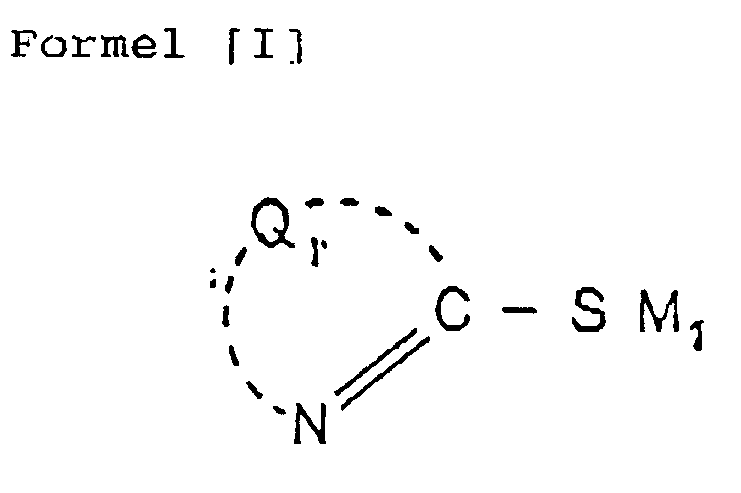

Q₁ eine Gruppe, die zusammen mit dem Kohlenstoff und dem Stickstoff, an denen sie hängt, einen 1,3,4-Oxadiazolring, einen 1,3,4-Thiadiazolring oder einen 1,3,5-Triazinring vervollständigt; und
M₁ ein Wasserstoff, ein Alkalimetall oder Ammonium. - Lichtempfindliches photographisches Silberhalogenid-Aufzeichnungsmaterial nach Anspruch 1, wobei die Verbindung der Formel [S] aus einer solchen der Formel [SA]
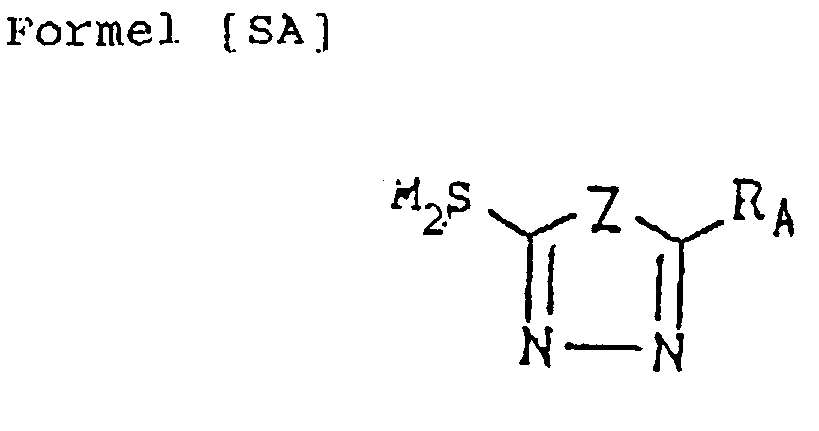
Z Sauerstoff oder Schwefel;
RA Wasserstoff, Alkyl, Aryl, Alkenyl, Cycloalkyl, -SRA1,
M₂ Wasserstoff, ein Alkalimetall oder Ammonium;
oder einer solchen der Formel [SB]
RA Wasserstoff, Alkyl, Aryl, Alkenyl, Cycloalkyl, -SRA1,
M₃ Wasserstoff, ein Alkalimetall oder Ammonium und RB1 und RB2 unabhängig voneinander Wasserstoff, Alkyl oder Aryl,
besteht. - Lichtempfindliches photographisches Silberhalogenid-Aufzeichnungsmaterial nach Anspruch 2, worin Z für Sauerstoff steht.
- Lichtempfindliches photographisches Silberhalogenid-Aufzeichnungsmaterial nach einem der Ansprüche 1 bis 3, wobei die Silberhalogenidkörnchen Silberbromid in einer Menge von 0,05 - 5 Mol-% enthalten.
- Lichtempfindliches photographisches Silberhalogenid-Aufzeichnungsmaterial nach einem der Ansprüche 1 bis 4, wobei die Silberhalogenidkörnchen eine Goldverbindung enthalten.
- Lichtempfindliches photographisches Silberhalogenid-Aufzeichnungsmaterial nach Anspruch 5, wobei die Goldverbindung in einer Menge von 10⁻⁸ Mol bis 10⁻¹ Mol pro Mol Silberhalogenid vorhanden ist.
- Lichtempfindliches photographisches silberhalogenid-Aufzeichnungsmaterial nach Anspruch 6, wobei die Goldverbindung in einer Menge von 10⁻⁷ Mol bis 10⁻² Mol pro Mol Silberhalogenid vorhanden ist.
- Lichtempfindliches photographisches Silberhalogenid-Aufzeichnungsmaterial nach nach einem der Ansprüche 5 bis 7, wobei die Goldverbindung aus Kaliumchloraurat Gold(III)-chlorid, Kaliumaurithiocyanat, Kaliumjodaurat, Tetracyangoldsäureazid, Ammoniumaurocyanat, Pyridyltrichloraurat, Aurisulfid oder Auriselenid besteht.
- Lichtempfindliches photographisches Silberhalogenid-Aufzeichnungsmaterial nach einem der Ansprüche 1 bis 8, wobei die Verbindung der Formel [I] aus einer solchen der Formel [II] oder [III] besteht:

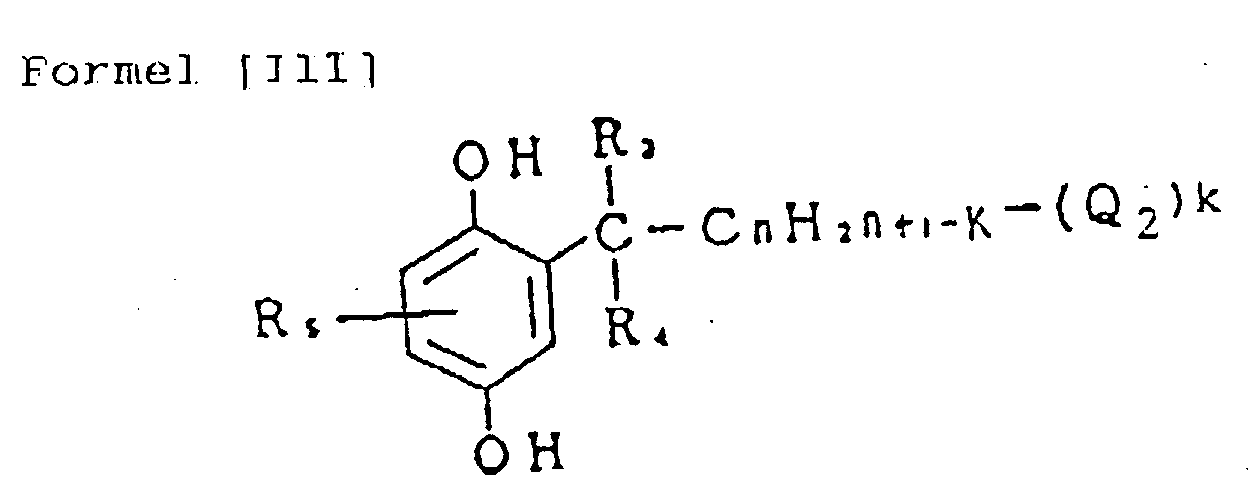
R₃ und R₄ unabhängig voneinander Alkyl mit 1 bis 5 Kohlenstoffatom(en);
R₅ Alkyl, Aryl, Alkenyl, Cycloalkyl, eine heterocyclische Gruppe oder
k = 1 oder 2 und
Q₂ und Q₃ unahhängig voneinander -COXR₆ mit X gleich Sauerstoff oder

-P(O)(OR₆)([O]lR₉) mit R₉ unabhängig gleich der Definition für R₆ und l = 0 oder 1;
oder eine Cyanogruppe. - Lichtempfindliches photographisches Silberhalogenid-Aufzeichnungsmaterial nach einem der Ansprüche 1 bis 9, wobei es sich bei dem farbstoffbildenden Kuppler um einen einen gelben Farbstoff bildenden Kuppler der Formel [Y]

R1Y ein Halogen oder Alkoxy;
R2Y Wasserstoff, ein Halogen oder Alkoxy;
R3Y Acylamino, Alkoxycarbonyl, Alkylsulfamoyl, Arylsulfamoyl, Arylsulfonamido, Alkylureido, Arylureido, Succinimido, Alkoxy oder Aryloxy und
Z1Y eine bei der Kupplungsreaktion mit einem Oxidationsprodukt einer Farbentwicklerverbindung abspaltbare Gruppe oder
einen einen purpurroten Farbstoff bildenden Kuppler der Formel [P] oder [a]:
Ar Aryl;
RP1 Wasserstoff oder einen Substituenten;
RP2 einen Substituenten;
Y Wasserstoff oder eine bei der Reaktion mit dem Oxidationsprodukt einer Farbentwicklerverbindung abspaltbare Gruppe;
W -NH-, -NHCO-, worin das N-Atom zur Kupplung an ein Kohlenstoffatom eines Pyrazolonkerns fähig ist, oder -NHCONH- und
m = 1 oder 2;
Za eine Gruppe, die zusammen mit dem Kohlenstoff und Stickstoff, an denen sie hängt, einen stickstoffhaltigen heterocyclischen Ring, der einen Substituenten aufweisen kann, vervollständigt;
X Wasserstoff oder eine bei der Reaktion mit dem Oxidationsprodukt einer Farbentwicklerverbindung abspaltbare Gruppe und
Ra Wasserstoff, ein Halogen, Alkyl, Cycloalkyl, Alkenyl, Cycloalkenyl, Alkinyl, Aryl, eine heterocyclische Gruppe, Acyl, Sulfonyl, Sulfinyl, Sulfonyl, Carbamoyl, Sulfamoyl, Cyano, einen Rest einer Spiroverbindung, einen Rest einer organischen Kohlenwasserstoffverbindung, Alkoxy, Aryloxy, heterocyclisches Oxy, Siloxy, Acyloxy, Carbamoyloxy, Amino, Acylamino, Sulfonamido, Imido, Ureido, Sulfamoylamino, Alkoxycarbonylamino, Aryloxycarbonylamino, Alkoxycarbonyl, Aryloxycarbonyl, Alkylthio, Arylthio oder heterocyclisches Thio, oder
einen einen blaugrünen Farbstoff bildenden Kuppler der Formel [E] oder [F]
R1E Aryl, Cycloalkyl oder eine heterocyclische Gruppe;
R2E Alkyl oder Phenyl;
R3E Wasserstoff, ein Halogen, Alkyl oder Alkoxy und
Z1E Wasserstoff oder eine bei der Reaktion mit dem Oxidationsprodukt einer primären aromatischen Aminfarbentwicklerverbindung abspaltbare Gruppe;
R4F Alkyl;
R5F Alkyl;
R6F Wasserstoff, ein Halogen oder Alkyl und
R2F einen Wasserstoff oder eine bei der Reaktion mit einem Oxidationsprodukt einer primären aromatischen Aminfarbentwicklerverbindung abspaltbare Gruppe, handelt. - Lichtempfindliches photographisches Silberhalogenid-Aufzeichnungsmaterial nach einem der Ansprüche 1 bis 10, wobei die Silberhalogenidemulsionsschicht unter Verwendung eines Chlortriazinhärtungsmittels der Formeln [HDA] oder [HDB] gehärtet ist:

Rd1 Chlor, Hydroxy, Alkyl, Alkoxy, Alkylthio, -OM₄ mit M₄ gleich einem einwertigen Metall, -NR'R'', worin R' und R'' unabhängig voneinander für Wasserstoff, Alkyl oder Aryl stehen, oder -NHCOR''' mit R''' gleich Wasserstoff, Alkyl oder Aryl, und Rd2 unabhängig eine Gruppe entsprechend der Definition Rdl mit Ausnahme von Chlor;
Rd3 und Rd4 unabhängig voneinander Chlor, Hydroxy, Alkyl, Alkoxy oder -OM₅ mit M₅ gleich einem einwertigen Metall;
Q₄ und Q₄' unabhängig voneinander eine bindende Gruppe entsprechend -O-, -S- oder -NH-;
L Alkylen oder Arylen und
l und m unabhängig voneinander 0 oder 1.
Applications Claiming Priority (2)
| Application Number | Priority Date | Filing Date | Title |
|---|---|---|---|
| JP61180972A JPH0687149B2 (ja) | 1986-07-31 | 1986-07-31 | 迅速処理に適したハロゲン化銀写真感光材料 |
| JP180972/86 | 1986-07-31 |
Publications (3)
| Publication Number | Publication Date |
|---|---|
| EP0255402A2 EP0255402A2 (de) | 1988-02-03 |
| EP0255402A3 EP0255402A3 (en) | 1988-11-17 |
| EP0255402B1 true EP0255402B1 (de) | 1993-04-28 |
Family
ID=16092497
Family Applications (1)
| Application Number | Title | Priority Date | Filing Date |
|---|---|---|---|
| EP87306815A Expired - Lifetime EP0255402B1 (de) | 1986-07-31 | 1987-07-31 | Für schnelle Behandlungen anwendbares lichtempfindliches photographisches Silberhalogenidmaterial |
Country Status (4)
| Country | Link |
|---|---|
| US (1) | US4963466A (de) |
| EP (1) | EP0255402B1 (de) |
| JP (1) | JPH0687149B2 (de) |
| DE (1) | DE3785620D1 (de) |
Families Citing this family (9)
| Publication number | Priority date | Publication date | Assignee | Title |
|---|---|---|---|---|
| JP2520644B2 (ja) * | 1987-06-19 | 1996-07-31 | 富士写真フイルム株式会社 | 画像形成法 |
| JPH01196035A (ja) * | 1988-01-30 | 1989-08-07 | Konica Corp | ハロゲン化銀写真感光材料 |
| JPH07111565B2 (ja) * | 1988-11-16 | 1995-11-29 | 富士写真フイルム株式会社 | ハロゲン化銀カラー写真感光材料 |
| JP2811084B2 (ja) * | 1989-05-19 | 1998-10-15 | コニカ株式会社 | ハロゲン化銀写真乳剤 |
| DE4200322A1 (de) * | 1992-01-09 | 1993-07-15 | Agfa Gevaert Ag | Fotografisches aufzeichnungmaterial |
| JP2824179B2 (ja) * | 1992-11-25 | 1998-11-11 | 富士写真フイルム株式会社 | ハロゲン化銀カラー写真感光材料 |
| JP4896737B2 (ja) * | 2003-12-29 | 2012-03-14 | アボット・メディカル・オプティクス・インコーポレイテッド | 可視光選択的透過領域を有する眼内レンズ |
| WO2014079545A1 (en) | 2012-11-20 | 2014-05-30 | Ktb Tumorforschungsgesellschaft Mbh | Thioether derivatives as protein kinase inhibitors |
| EP2733146A1 (de) | 2012-11-20 | 2014-05-21 | KTB Tumorforschungsgesellschaft mbH | Thioetherderivate als Proteinkinase-Inhibitoren |
Citations (1)
| Publication number | Priority date | Publication date | Assignee | Title |
|---|---|---|---|---|
| GB2032923A (en) * | 1978-10-30 | 1980-05-14 | Konishiroku Photo Ind | Substituted 3-amino-5-mercapto-1,4,4-triazoles and their use as antifogging agents in colour photography |
Family Cites Families (15)
| Publication number | Priority date | Publication date | Assignee | Title |
|---|---|---|---|---|
| BE557661A (de) * | 1956-05-23 | |||
| US3700453A (en) * | 1970-03-06 | 1972-10-24 | Eastman Kodak Co | Antistain agents comprising mixtures of secondary-alkylhydroquinones |
| JPS539528A (en) * | 1976-07-14 | 1978-01-28 | Fuji Photo Film Co Ltd | Color photographic light sensitive material |
| JPS53134430A (en) * | 1977-04-27 | 1978-11-24 | Mitsubishi Paper Mills Ltd | Silver halide photosensitive materials for multiilayer color photograph |
| JPS5482386A (en) * | 1977-12-15 | 1979-06-30 | Fuji Photo Film Co Ltd | Stabilizing method for organic basic substance to light |
| JPS5828569B2 (ja) * | 1978-12-12 | 1983-06-16 | コニカ株式会社 | ハロゲン化銀写真感光材料 |
| US4269927A (en) * | 1979-04-05 | 1981-05-26 | Eastman Kodak Company | Internally doped surface sensitized high chloride silver halide emulsions and photograhic elements and processes for their preparation |
| JPS58108533A (ja) * | 1981-12-02 | 1983-06-28 | Konishiroku Photo Ind Co Ltd | ハロゲン化銀カラ−写真感光材料 |
| DE3360926D1 (en) * | 1982-06-16 | 1985-11-07 | Ciba Geigy Ag | Hydroquinone ethers and a process for preparing them |
| JPS59180557A (ja) * | 1983-03-31 | 1984-10-13 | Fuji Photo Film Co Ltd | ハロゲン化銀カラ−写真感光材料 |
| JPS59185329A (ja) * | 1983-04-06 | 1984-10-20 | Konishiroku Photo Ind Co Ltd | ハロゲン化銀乳剤 |
| US4618570A (en) * | 1984-03-27 | 1986-10-21 | Konishiroku Photo Industry Co., Ltd. | Silver halide photographic materials |
| US4623616A (en) * | 1984-03-30 | 1986-11-18 | Konishiroku Photo Industry Co., Ltd. | Silver halide photographic light-sensitive material |
| JPS60225143A (ja) * | 1984-04-20 | 1985-11-09 | Konishiroku Photo Ind Co Ltd | ハロゲン化銀写真感光材料 |
| JPS61282841A (ja) * | 1985-06-07 | 1986-12-13 | Fuji Photo Film Co Ltd | ハロゲン化銀カラ−感光材料の処理方法 |
-
1986
- 1986-07-31 JP JP61180972A patent/JPH0687149B2/ja not_active Expired - Lifetime
-
1987
- 1987-07-31 EP EP87306815A patent/EP0255402B1/de not_active Expired - Lifetime
- 1987-07-31 DE DE8787306815T patent/DE3785620D1/de not_active Expired - Lifetime
-
1990
- 1990-01-24 US US07/469,709 patent/US4963466A/en not_active Expired - Fee Related
Patent Citations (1)
| Publication number | Priority date | Publication date | Assignee | Title |
|---|---|---|---|---|
| GB2032923A (en) * | 1978-10-30 | 1980-05-14 | Konishiroku Photo Ind | Substituted 3-amino-5-mercapto-1,4,4-triazoles and their use as antifogging agents in colour photography |
Also Published As
| Publication number | Publication date |
|---|---|
| US4963466A (en) | 1990-10-16 |
| JPH0687149B2 (ja) | 1994-11-02 |
| EP0255402A2 (de) | 1988-02-03 |
| JPS6336243A (ja) | 1988-02-16 |
| EP0255402A3 (en) | 1988-11-17 |
| DE3785620D1 (de) | 1993-06-03 |
Similar Documents
| Publication | Publication Date | Title |
|---|---|---|
| EP0244184B1 (de) | Lichtempfindliches photographisches Silberhalogenidmaterial | |
| EP0255784B1 (de) | Verfahren zur Bildung eines Farbbildes mit einer hohen Leistung für schnelle Behandlung | |
| EP0255783B1 (de) | Für schnelle Behandlung verwendbares lichtempfindliches photographisches Silberhalogenid material | |
| EP0294149A2 (de) | Photographisches lichtempfindliches Silberhalogenidmaterial und Verfahren zu dessen Behandlung | |
| EP0297804B1 (de) | Photographisches lichtempfindliches Silberhalogenidmaterial | |
| JP2538268B2 (ja) | 処理安定性に優れたハロゲン化銀写真感光材料 | |
| EP0255402B1 (de) | Für schnelle Behandlungen anwendbares lichtempfindliches photographisches Silberhalogenidmaterial | |
| EP0243199B1 (de) | Lichtempfindliches photographisches Silberhalogenidmaterial | |
| EP0243202B1 (de) | Lichtempfindliches photographisches Silberhalogenidmaterial | |
| EP0512496B1 (de) | Photographisches Silberhalogenidmaterial | |
| US4868100A (en) | Silver halide photographic light-sensitive material | |
| EP0327273B1 (de) | Verfahren zur Herstellung eines Farbbildes | |
| JPS6336237A (ja) | 処理安定性の良好なハロゲン化銀写真感光材料 | |
| JPS6336236A (ja) | 処理安定性に優れたハロゲン化銀写真感光材料 | |
| JP2517300B2 (ja) | 高感度かつ生保存性の改良されたハロゲン化銀写真感光材料 | |
| JPH073564B2 (ja) | ハロゲン化銀写真感光材料 | |
| JPS6337343A (ja) | 処理安定性の良好なハロゲン化銀写真感光材料 | |
| JPH01196050A (ja) | ハロゲン化銀写真感光材料 | |
| JPS6275445A (ja) | ハロゲン化銀写真感光材料 | |
| JPH0466338B2 (de) | ||
| JPS6337345A (ja) | 迅速処理に適したハロゲン化銀写真感光材料 | |
| JPH0466339B2 (de) | ||
| JPS6275446A (ja) | ハロゲン化銀写真感光材料 | |
| JPS62178955A (ja) | ハロゲン化銀写真感光材料の処理方法 | |
| JPS62178957A (ja) | ハロゲン化銀写真感光材料の処理方法 |
Legal Events
| Date | Code | Title | Description |
|---|---|---|---|
| PUAI | Public reference made under article 153(3) epc to a published international application that has entered the european phase |
Free format text: ORIGINAL CODE: 0009012 |
|
| AK | Designated contracting states |
Kind code of ref document: A2 Designated state(s): DE FR GB IT NL |
|
| PUAL | Search report despatched |
Free format text: ORIGINAL CODE: 0009013 |
|
| AK | Designated contracting states |
Kind code of ref document: A3 Designated state(s): DE FR GB IT NL |
|
| 17P | Request for examination filed |
Effective date: 19890426 |
|
| RAP3 | Party data changed (applicant data changed or rights of an application transferred) |
Owner name: KONICA CORPORATION |
|
| 17Q | First examination report despatched |
Effective date: 19900831 |
|
| GRAA | (expected) grant |
Free format text: ORIGINAL CODE: 0009210 |
|
| AK | Designated contracting states |
Kind code of ref document: B1 Designated state(s): DE FR GB IT NL |
|
| PG25 | Lapsed in a contracting state [announced via postgrant information from national office to epo] |
Ref country code: IT Free format text: LAPSE BECAUSE OF FAILURE TO SUBMIT A TRANSLATION OF THE DESCRIPTION OR TO PAY THE FEE WITHIN THE PRESCRIBED TIME-LIMIT;WARNING: LAPSES OF ITALIAN PATENTS WITH EFFECTIVE DATE BEFORE 2007 MAY HAVE OCCURRED AT ANY TIME BEFORE 2007. THE CORRECT EFFECTIVE DATE MAY BE DIFFERENT FROM THE ONE RECORDED. Effective date: 19930428 Ref country code: NL Effective date: 19930428 Ref country code: DE Effective date: 19930428 Ref country code: FR Effective date: 19930428 |
|
| REF | Corresponds to: |
Ref document number: 3785620 Country of ref document: DE Date of ref document: 19930603 |
|
| EN | Fr: translation not filed | ||
| NLV1 | Nl: lapsed or annulled due to failure to fulfill the requirements of art. 29p and 29m of the patents act | ||
| PLBE | No opposition filed within time limit |
Free format text: ORIGINAL CODE: 0009261 |
|
| STAA | Information on the status of an ep patent application or granted ep patent |
Free format text: STATUS: NO OPPOSITION FILED WITHIN TIME LIMIT |
|
| 26N | No opposition filed | ||
| PGFP | Annual fee paid to national office [announced via postgrant information from national office to epo] |
Ref country code: GB Payment date: 19950720 Year of fee payment: 9 |
|
| PG25 | Lapsed in a contracting state [announced via postgrant information from national office to epo] |
Ref country code: GB Effective date: 19960731 |
|
| GBPC | Gb: european patent ceased through non-payment of renewal fee |
Effective date: 19960731 |