EP0255424B1 - Immunotoxine, Verfahren zu deren Herstellung und diese enthaltende pharmazeutische Zusammensetzungen - Google Patents
Immunotoxine, Verfahren zu deren Herstellung und diese enthaltende pharmazeutische Zusammensetzungen Download PDFInfo
- Publication number
- EP0255424B1 EP0255424B1 EP87401657A EP87401657A EP0255424B1 EP 0255424 B1 EP0255424 B1 EP 0255424B1 EP 87401657 A EP87401657 A EP 87401657A EP 87401657 A EP87401657 A EP 87401657A EP 0255424 B1 EP0255424 B1 EP 0255424B1
- Authority
- EP
- European Patent Office
- Prior art keywords
- protein
- group
- trichokirin
- radical
- antibody
- Prior art date
- Legal status (The legal status is an assumption and is not a legal conclusion. Google has not performed a legal analysis and makes no representation as to the accuracy of the status listed.)
- Expired - Lifetime
Links
- 0 CC1OC1C(CC(*NN)O)N Chemical compound CC1OC1C(CC(*NN)O)N 0.000 description 11
- PNGCILFYNNMDJM-UHFFFAOYSA-N C[N](C)(C=C(CC1)OC)C1=O Chemical compound C[N](C)(C=C(CC1)OC)C1=O PNGCILFYNNMDJM-UHFFFAOYSA-N 0.000 description 1
Classifications
-
- A—HUMAN NECESSITIES
- A61—MEDICAL OR VETERINARY SCIENCE; HYGIENE
- A61K—PREPARATIONS FOR MEDICAL, DENTAL OR TOILETRY PURPOSES
- A61K39/00—Medicinal preparations containing antigens or antibodies
- A61K39/395—Antibodies; Immunoglobulins; Immune serum, e.g. antilymphocytic serum
- A61K39/44—Antibodies bound to carriers
-
- A—HUMAN NECESSITIES
- A61—MEDICAL OR VETERINARY SCIENCE; HYGIENE
- A61K—PREPARATIONS FOR MEDICAL, DENTAL OR TOILETRY PURPOSES
- A61K47/00—Medicinal preparations characterised by the non-active ingredients used, e.g. carriers or inert additives; Targeting or modifying agents chemically bound to the active ingredient
- A61K47/50—Medicinal preparations characterised by the non-active ingredients used, e.g. carriers or inert additives; Targeting or modifying agents chemically bound to the active ingredient the non-active ingredient being chemically bound to the active ingredient, e.g. polymer-drug conjugates
- A61K47/51—Medicinal preparations characterised by the non-active ingredients used, e.g. carriers or inert additives; Targeting or modifying agents chemically bound to the active ingredient the non-active ingredient being chemically bound to the active ingredient, e.g. polymer-drug conjugates the non-active ingredient being a modifying agent
- A61K47/68—Medicinal preparations characterised by the non-active ingredients used, e.g. carriers or inert additives; Targeting or modifying agents chemically bound to the active ingredient the non-active ingredient being chemically bound to the active ingredient, e.g. polymer-drug conjugates the non-active ingredient being a modifying agent the modifying agent being an antibody, an immunoglobulin or a fragment thereof, e.g. an Fc-fragment
- A61K47/6801—Drug-antibody or immunoglobulin conjugates defined by the pharmacologically or therapeutically active agent
- A61K47/6803—Drugs conjugated to an antibody or immunoglobulin, e.g. cisplatin-antibody conjugates
- A61K47/6811—Drugs conjugated to an antibody or immunoglobulin, e.g. cisplatin-antibody conjugates the drug being a protein or peptide, e.g. transferrin or bleomycin
- A61K47/6817—Toxins
- A61K47/6819—Plant toxins
- A61K47/6821—Plant heterodimeric toxins, e.g. abrin or modeccin
- A61K47/6823—Double chain ricin
-
- A—HUMAN NECESSITIES
- A61—MEDICAL OR VETERINARY SCIENCE; HYGIENE
- A61K—PREPARATIONS FOR MEDICAL, DENTAL OR TOILETRY PURPOSES
- A61K47/00—Medicinal preparations characterised by the non-active ingredients used, e.g. carriers or inert additives; Targeting or modifying agents chemically bound to the active ingredient
- A61K47/50—Medicinal preparations characterised by the non-active ingredients used, e.g. carriers or inert additives; Targeting or modifying agents chemically bound to the active ingredient the non-active ingredient being chemically bound to the active ingredient, e.g. polymer-drug conjugates
- A61K47/51—Medicinal preparations characterised by the non-active ingredients used, e.g. carriers or inert additives; Targeting or modifying agents chemically bound to the active ingredient the non-active ingredient being chemically bound to the active ingredient, e.g. polymer-drug conjugates the non-active ingredient being a modifying agent
- A61K47/68—Medicinal preparations characterised by the non-active ingredients used, e.g. carriers or inert additives; Targeting or modifying agents chemically bound to the active ingredient the non-active ingredient being chemically bound to the active ingredient, e.g. polymer-drug conjugates the non-active ingredient being a modifying agent the modifying agent being an antibody, an immunoglobulin or a fragment thereof, e.g. an Fc-fragment
- A61K47/6889—Conjugates wherein the antibody being the modifying agent and wherein the linker, binder or spacer confers particular properties to the conjugates, e.g. peptidic enzyme-labile linkers or acid-labile linkers, providing for an acid-labile immuno conjugate wherein the drug may be released from its antibody conjugated part in an acidic, e.g. tumoural or environment
-
- A—HUMAN NECESSITIES
- A61—MEDICAL OR VETERINARY SCIENCE; HYGIENE
- A61P—SPECIFIC THERAPEUTIC ACTIVITY OF CHEMICAL COMPOUNDS OR MEDICINAL PREPARATIONS
- A61P35/00—Antineoplastic agents
Definitions
- the present invention relates to products, belonging to the class of immunotoxins, obtained by covalent coupling between, on the one hand the trichokirin as such or suitably modified (hereinafter designated by the symbol A) and, on the other hand a antibody or antibody fragment, used in its natural form or correctly modified (hereinafter designated by the symbol P), having the capacity to selectively recognize an antigen carried by the targeted cells to be destroyed.
- the coupling between the 2 proteins can be carried out either via a disulfide bond, or via a thioether bond.
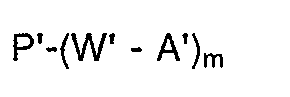
- the subject of the present invention is, according to one of its aspects, an immunotoxin formed by coupling of an antibody P with trichokirin, protein extracted from the plant Trichosanthes kirilowii, having the following statistical formula: in which P ′ represents the radical of a protein which is an antibody or an antibody fragment as such or chemically suitably modified, deprived of at least one of its own functions and in which the other functional groups are optionally blocked .
- a ′ represents the radical of a protein which is trichokirin as such or chemically suitably modified, deprived of at least one of its own functions and in which the other functional groups are optionally blocked and W represents a bivalent covalent structure containing at least a thioether group or a disulfide group in which one of the sulfide atoms is either chosen from those of the cysteines of P or A, or linked to the proper functions of P and / or of A by spacer structures carrying a functional group linked to said proper functions of P and / or A.
- thioether bond between two proteins is meant a bond of the type: in which Z, Y and E are as defined below.
- the present invention relates to an immunotoxin of statistical formula: in which
- the immunotoxins of the present invention are represented by the formulas (I) and (II) above in simplified form, but it is understood that there may be several structures W or W ′ linked to the same molecule of P and / or of A, and therefore several A linked to a single P and vice versa; the number of bridges depending on the coupling process and the number of eigenfunctions of P and A.
- the statistical formulas and Il also represent these products and their mixtures, which correspond to the formula P '(W'-A') m, in which m is a whole or fractional number, less than or greater than 1.
- an immunotoxin is formed by coupling of trichokirin with the antibody P (for example the antibody T101) via a bivalent covalent structure having a disulfide group of which a sulfur is that of a cysteine of trichokirine and the other is linked to the phenolic oxygen of the tyrosines of the antibody P by an oxopropyl group, it will have the statistical formula: in which
- t represents the number of tyrosines of the antibody (for example of the T101 antibody) involved in the coupling.
- immunotoxins formed by one or more structures containing trichosanthin or trichokirin and an antibody P, represented by the statistical formula: in which
- m represents the number of proper functions of the protein P involved in the coupling.
- the number m varies from 0.3 to 12, preferably from 0.5 to 10.
- m varies from 0.3 to 12, preferably from 0.5 to 10
- m is statistical because in the population of antibody molecules, the coupling does not occur in a way homogeneous.
- the number m may therefore not be an integer.
- m depends in particular on the antibodies used, more particularly on their molecular weight.
- the value of m may vary between 0.3 and approximately 2; if an F (ab ') 2 fragment is used, m may vary between 0.5 and approximately 4; for an IgG type antibody, the value of m will be between 0.5 and 6; finally, for an IgM antibody, the value of m may vary between 1 and 12.
- the degree of substitution on the antibody P is such that it leads to a value of m not less than 0.5 and not more than 10.
- P 'and m are as defined above and TK' is the radical of trichokirine as such, deprived of amine functions, and the immunotoxins of statistical formula
- P 'and m are as defined above and TK "is the radical of trichokirine as such, deprived of phenolic hydroxyl functions,
- the present invention relates to a process for the preparation of an immunotoxin having the structure (I) above, characterized in that a protein P1 is reacted in aqueous solution and at room temperature, which is either the optionally modified trichokirin, or an antibody or antibody fragment, carrying at least one free thiol group attached to said protein P1 directly or via a spacer structure, with a protein P2 , different from P1, which is either the optionally modified trichokirin, or an antibody or antibody fragment, carrying a group capable of coupling with the free thiol of the protein P1, so as to form a thioether or disulfide bond.
- a protein P1 is reacted in aqueous solution and at room temperature, which is either the optionally modified trichokirin, or an antibody or antibody fragment, carrying at least one free thiol group attached to said protein P1 directly or via a spacer structure, with a protein P2 , different from P1, which is either the optionally modified trichokirin, or an
- the present invention relates to a process for the preparation of an immunotoxin having the structure (II), in which P ', W' and A 'are as defined above, characterized in that react in aqueous solution and at room temperature a protein of formula: with a protein of statistical formula: where P1 ′ and P2 ′ represent the radicals of the proteins P1 and P2 linked to the proper functions of said proteins or the radicals of one of the proteins P1 or P2 originating from the opening of the carbohydrate structures of the antibodies or antibody fragments or the case appropriate of protein A by the action of periodic acid, Z, Z ', Y, Y', E and E 'are as defined above and G represents a group: or a group -SSX, where X is an activating group.
- said thiol functions and functional groups are those of native P or A proteins, or else they are introduced therein artificially.
- the symbol P represents a protein chosen from any antibody or fragment of antibody or any immunoglobulin or fragment of immunoglobulin or any molecule deriving from the preceding ones by artificial modification of any one of their functional groups, including the carbohydrate structures which they carry, provided that the protein thus chosen remains capable of selectively recognizing a given antigen on the surface of cells carrying this antigen and in particular cancer cells.
- the symbol A represents a protein which is trichokirin as it can be directly obtained from Trichosanthes kirilowii or any molecule derived from this protein by artificial modification of any functional group carried by this same protein provided that the protein thus chosen presents still the property of inhibiting the ribosomal protein synthesis of eukaryotic cells, as can be demonstrated in a model of acellular study.
- the symbol P represents a radical derived from the above protein P, as it is or chemically modified, deprived of one or more proper functions and of which other functional groups are optionally blocked.
- the symbol A represents a radical derived from protein A above, as it is or chemically modified, deprived of one or more proper functions and from which other functional groups are optionally blocked.
- P1 represents one of the proteins A and P as defined above which carries free thiol functions, attached to said protein directly or via a spacer structure.
- P2 different from P1, represents one of the proteins A and P as defined above, which carries one or more functional groups capable of reacting with the free thiols.
- P1 ′ represents the radical of the protein P1 which carries the proper functions of the protein P1 in particular the functions SH (of cysteine), NH 2 (terminal of the protein or in the epsilon position of the lysines), OH (of the tyrosines ), COOH (aspartic and glutamic acids) or the protein P1 radical, originating from the opening of carbohydrate structures by the action of periodic acid when P1 designates an antibody or antibody fragment, or where appropriate the protein AT.
- SH of cysteine
- NH 2 terminal of the protein or in the epsilon position of the lysines
- OH of the tyrosines
- COOH aspartic and glutamic acids
- the symbol P2 represents the radical of the protein P2 which carries the characteristic functional groups NH 2 (terminal of the protein or in the epsilon position of the lysines), OH (of the tyrosines), COOH (of the aspartic and glutamic acids).
- P1'-SH represents the protein P1 (which can be indifferently the antibody or fragment of antibody P or trichokirine) in which the SH groups of the cysteines are free and the others functional groups are possibly blocked.
- P1'-CO- represents the protein P1, in which its terminal carboxylic group or the carboxylic groups of its glutamic and aspartic acids are coupled with a group which provides an artificially introduced SH group.
- P2'-NH- represents the protein P2 (which can either be the antibody or fragment of antibody P or trichokirine) in which its terminal amino group or the amino groups of its lysines are attached to a group capable of coupling with the thiol of the protein P1.
- inert spacer structure as used herein for E and E 'denotes a bivalent organic radical inert with respect to the reagents used in the process, such as a straight or branched chain alkylene group containing 1 to 15 carbon atoms, which may contain one or more double bonds or which may be interrupted by oxygen atoms or which may be substituted by one or more inert functional groups, such as methoxy groups, free carboxyl groups or esterified, dialkylamino groups, carbamate groups.
- inert functional groups such as methoxy groups, free carboxyl groups or esterified, dialkylamino groups, carbamate groups.
- the same term also denotes an arylene group containing from 6 to 15 carbon atoms which may be substituted by one or more inert functional groups as indicated above for the alkylene group.
- -CO- groups are suitable functional groups capable of binding to free amines, thiols and phenolic hydroxyls of proteins.
- group -NH- is a suitable functional group capable of binding to the free carboxylic groups of proteins.
- N- is a suitable functional group capable of binding to the two carbon atoms of the carbohydrate structures of the proteins P1 and P2 after oxidation with the periodate ions when P1 or P2 represents an antibody or fragment of an antibody or, where appropriate where appropriate, protein A.
- proliferative function of proteins denotes the radicals originating from the characteristic groups of the amino acids forming the proteins P1 and P2, such as the oxygen atom originating from the hydroxyls of the amino acids tyrosine and optionally serine, the carbonyl group coming from the terminal carboxyl or free carboxyls from aspartic and glutamic acids, the group -NH- coming from the terminal amine of proteins or lysines, the sulfur atom coming from thiol from cysteine.
- the same expression also designates the group originating from the dialdehyde structure obtained after oxidation of one of the carbohydrate structures of the proteins P1 or P2 by treatment with periodate ions when P1 or P2 represents an antibody or antibody fragment, or if necessary the protein A.
- activating radical denotes a group linked to an -S-S-bridge capable of reacting with a free thiol to form a disulfide with release of X-SH.
- Suitable activating radicals are the pyridyl-2 and pyridyl-4 groups, unsubstituted or substituted by one or more halogens or alkyl, carboxyl, alkoxycarbonyl radicals; the phenyl group, unsubstituted or, preferably, substituted with one or more halogens or nitro, alkoxy, carboxyl or alkoxycarbonyl groups; or an alkoxycarbonyl group such as methoxycarbonyl.
- alkyl and “alkoxy” refer to groups containing up to 5 carbon atoms.
- the amino acid composition is determined by heating at 105 ° C for 24 hours under nitrogen in the presence of 6N hydrochloric acid, 1% phenol and 1% 2-mercaptoethanol.
- the amino acids are derived by phenylisothiocyanate (PITC) in an alkaline medium.
- PITC phenylisothiocyanate
- PTH phenylthiohydanto'lhes
- amino-terminal sequence is determined with a microsequencer marketed by Applied Biosynthesis, from 5 nmoles of protein dissolved in a 10% acetic acid solution.
- the amino acid PTHs are analyzed by reverse phase HPLC.
- Trichokirin is obtained by a process characterized in that crushed seeds of Trichosanthes kirilowii are extracted with water in the presence of a buffer at pH 6.5-7.5, the insoluble material is eliminated, and fractionated the crude extract by chromatography on a weakly acidic ion exchange resin, eluting with a buffer solution containing sodium chloride at a pH of 7.2-7.7 and the fraction containing the inhibitory protein is isolated and purified .
- the seeds of T. kirilowii are ground and extracted with water containing an electrolyte, for example sodium chloride, and a buffer, for example a phosphate buffer, at a pH close to the neutrality.
- an electrolyte for example sodium chloride
- a buffer for example a phosphate buffer
- Insoluble matter is removed for example by centrifugation and low molecular weight substances are removed from the solution by dialysis for example against phosphate buffer.
- the dialyzed extract is then subjected to fractionation, for example by chromatography on a weakly acidic ion exchange resin such as carboxymethylcellulose. Elution can be carried out using a linear concentration gradient, for example an aqueous solution of 0 to 0.3 M sodium chloride. Normally, 4 main peaks are eluted and the IV peak eluted by a sodium chloride concentration of 0.03 to 0.11 M contains most of the trichokirin.
- the purification of the trichokirin can be carried out by gel filtration, for example on a column of Sephadex (registered trademark).
- Trichokirin can be coupled to antibodies or antibody fragments via an appropriate coupling agent according to the method described above.
- Trichokirin inhibits protein synthesis in a reticulocyte lysate with a Dlso of 1.5-4 nano.g / ml. On intact cells, the effect is far lower, with a Dlso which can vary from 7 to more than 100 micro.g / mI, depending on the cell examined.
- Table 1 shows the effect of trichokirin on various cells, including the LDso (micro.g / ml and M.10- 7) inhibition of protein synthesis; this was determined by applying the method described in J. Biol. Chem. 259, 9359-9354 (1984).
- the spacing structure E can be replaced by the preferential structures R to R8 which are given only by way of example.
- the protein P1 naturally carries one or more thiol radicals which can be used to allow coupling to the protein P2; this is particularly the case if the P1 protein is the antibody fragment known by the name of F (ab '), as it is conventionally obtained by limited proteolysis of the antibody in the presence of pepsin, followed by a reduction of the disulfide bridge (s) between heavy chains.
- F thiol radical
- the protein P1 is trichokirin or a derivative of this toxin where at least one of the thiol groups carried by the cysteine residues of the native toxin is free and accessible to coupling chemical.
- the P1 protein carrying its natural thiol group (s) can be used in this state for the coupling step.
- the first type of reaction is the action of S-acetylmercaptosuccinic anhydride which is capable of acylating amino functions of the protein. We can then release the thiol functions by elimination of the protective acetyl radical, by the action of hydroxylamine, as has been described (Archives of Biochemistry and Biophysics, 119, 41-49, (1967)).
- a particularly advantageous modified P1 protein is an S-acetylmercaptosuccinoyl-trichokirin obtained by treatment of trichokirin with the S-acetylmercaptosuccinic anhydride, as well as the corresponding mercaptosuccinoyl derivative prepared by the action of hydroxylamine on the S-acetyl derivative.
- This modified trichokirin can be represented by the formula: in which TK ° represents the radical of trichokirine, Q represents hydrogen or the acetyl group and p can vary between 0.2 and 3, preferably between 0.4 and 1.
- the second type of reaction consists in reacting the protein by its carboxylic groups with a symmetrical diamined molecule having a disulfide bridge, of formula: in which R 1 is an aliphatic group having 2 to 5 carbon atoms.
- a coupling agent such as a carbodiimide and in particular a water-soluble derivative such as ethyl-1 (3-dimethylamino propyl) -3 carbodiimide
- R i is an aliphatic group having from 2 to 5 carbon atoms.
- the adducts formed are then reduced to secondary or tertiary amines by the action of a suitable metal hydride, in particular sodium borohydride.
- a suitable metal hydride in particular sodium borohydride.
- reaction medium can then be treated exactly as indicated above for the products characterized by the structures la or Ib, where P1 'represents an antibody or antibody fragment.
- the P1 protein used does not have free SH groups.
- This protein is in all cases that which carries one or more functional groups capable of reacting with the thiols of the protein P1 to form a bond either disulfide or thioether.
- These functional groups always artificially introduced into the protein P2, differ depending on whether one seeks to obtain a coupling by disulfide bond or by thioether bond and are chosen as indicated below.
- LY ′ may in particular represent an imidazolyl-1 carbonyl group, reacting with the phenol groups of the protein according to the reaction: where 1-imidazolyl is L, the group CO is Y 'and R 4 is the group -RSSX.
- the radical -S-S-X denotes an activated mixed disulfide capable of reacting with a free thiol radical.
- X may denote a pyridyl-2 or pyridyl-4 group, optionally substituted by one or more alkyl, halogen or carboxylic radicals.
- X can also denote a phenyl group preferably substituted by one or more nitro or carboxylic groups.
- X can also represent an alkoxycarbonyl group, such as the methoxycarbonyl group.
- the reaction of the compound L-Y'-R-S-S-X with the protein P2 is carried out in a homogeneous liquid phase most often in water or a buffer solution.
- an organic solvent miscible with water at a final concentration of up to 20% by volume when it is a tertiary alcohol, such as tertiary butanol or 10% by volume in the case of dimethylformamide or tetrahydrofuran.
- the reaction is carried out at room temperature for a time varying from a few minutes to a few hours. After which, dialysis or gel filtration makes it possible to remove the products of low molecular mass and, in particular, the excess of reagents. This process makes it possible to introduce a number of substituent groups per mole of protein usually between 1 and 15.
- the coupling with the protein P1 is carried out by bringing the two proteins into contact with an aqueous solution of pH between 6 and 8, at a temperature not exceeding 30 ° C., for a time varying from 1 hour to 24 hours.
- the aqueous solution obtained is optionally dialyzed to remove the products of low molecular mass, then the conjugate can be purified by various known methods.
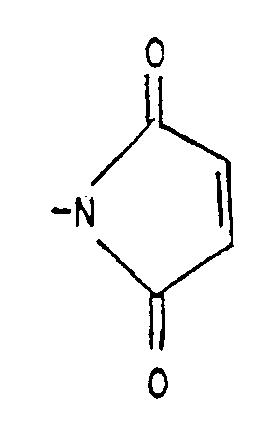
- the preparation of the conjugate then consists in reacting P1 '- (ZYE) n -SH with the protein P2 onto which one or more maleimide radicals have previously been introduced.
- the P2 protein substituted by the maleimide group (s) is obtained from the P2 protein itself or from the correctly protected P2 protein, by substitution of suitable functions of the protein using a reagent itself carrying the maleimide grouping.
- the products of formula (VI) are prepared by reacting a product of formula: P2 "-OH, in which P2" is as defined above and the hydroxyl group is the phenolic hydroxyl missing in the tyrosines of the radical P2 " , with a compound of formula (VII) below: at a temperature of 10 to 40 ° C. in an aqueous solvent optionally containing an organic solvent miscible with water, such as for example an ethereal solvent such as dioxane or tetrahydrofuran.
- the monoclonal antibody AT15E is directed against the Thy 1.2 antigen of murine lymphocytes. This antibody is that described in Journal of Immunology 122, 2491-8, (1979) and was obtained from the hybridoma described in Hybridoma 1 (1), 13-17 (1981).
- trichokirin is designated by the abbreviation TK.
- Trichosanthes kirilowii seeds (1.2 kg) are ground in an Ultraturrax apparatus with 8 volumes of 0.14 M sodium chloride solution containing 5 mM phosphate buffer, pH 7.5. The extraction is continued overnight at 4 ° C. with magnetic stirring.
- centrifugation is carried out at 10,000 g at 0 ° C for 45 minutes.
- the supernatant is decanted cold to remove solidified fats and then the proteins are precipitated by adding ammonium sulfate until saturation.
- the precipitated product is resuspended in 1 liter of 0.14 M aqueous solution of sodium chloride containing 5 mM phosphate buffer, pH 7.5. The undissolved product is removed by centrifugation under the same conditions as above.
- the supernatant is passed through a column of Sephadex G 25 coarse (95 cm ⁇ 10 cm) equilibrated with 5 mM phosphate buffer, pH 7.0 at room temperature and eluted at the speed of 3 l / hour.
- the first peak is collected.
- the combined extracts of 2 operations (originally originating from 2.4 kg of seeds) are added with sodium chloride to a final concentration of 30 mM and passed through a column (17.5 cm x 5 cm) of CM-Sepharose Fast Flow balanced with 30 mM phosphate buffer, pH 7.0.
- the unbound product is eluted with the same buffer.
- the bound protein is eluted by a gradient containing 30 to 110 mM of sodium chloride in the same phosphate buffer (volume 20 liters). 400 ml fractions are collected at the rate of 1.2 liters per hour.
- the absorbance at 280 nm and the conductivity of the eluate are controlled.
- the fractions showing an inhibitory activity of protein synthesis are combined (3.6 I) and acidified to pH 5.8 with acetic acid.
- the solution is passed through an S-Sepharose Fast Flow column (6.6 cm x 5 cm) equilibrated with the 10 mM sodium acetate buffer, pH 4.5. After washing with the same buffer, the fixed protein is eluted with 20 mM phosphate buffer, pH 7.5 containing 0.5 M sodium chloride.
- the trichokirin obtained above is dissolved in 50 ml of 0.14 M sodium chloride solution. An insoluble material is removed by centrifugation at 20,000 g for 30 minutes. The supernatant is passed through a column of Sephadex G 50 coarse (95 cm ⁇ 5 cm) equilibrated with the 5 mM phosphate buffer, pH 7.0 at 4 ° C. Elution is carried out at the speed of 60 ml / hour. The solution corresponding to the peak containing the protein is collected, dialyzed and lyophilized as indicated above.
- the AT15E antibody is a monoclonal antibody directed against the Thy 1.2 antigen of murine lymphocytes. This antibody is that described in Journal of Immunology 122, 2491-8 (1979) and was obtained from the hybridoma described in Hybridoma 1 (1); 13-17 (1981).
- the average coupling rate in this preparation is 1.5 TK per mode of antibody.
- the conjugate thus obtained has the formula (IIIa) above, in which P 'is the radical of the antibody AT15E deprived of amine functions, and m is 1.5.
- the in vitro protocol uses adequately complemented subcellular rat liver fractions and capable of incorporating 14C-phenylalanine in the presence of an artificial messenger RNA, polyuridylic acid.
- the procedure used to prepare the subcellular fractions and to measure the incorporation of 14C-phenylalanine is an adaptation of the method described in Biochimica and Biophysica Acta 312, 608-615 (1973), using both a microsomal fraction and a cytosol fraction from rat hepatocytes.
- the sample containing trichokirin is introduced in the form of a solution suitably diluted in a 50 mM tris-HCl buffer, pH 7.6 containing 0.2% mercapto-ethanol and 0.2 microgram bovine serum albumin. / ml. From the counting data, the percentage of inhibition of the incorporation of 14C-phenylalanine for each reaction medium is calculated relative to a control medium without inhibitor.
- the set of values obtained makes it possible to determine the concentration of trichokirin (or Clso) which inhibits 50% of the incorporation of 14C-phenylalanine under the conditions of the test.
- the ClSO equals 7.10- 11 M
- that of the modified trichokirin is 8 to 10.10- 11 mol / liter.
- the modification therefore does not cause a significant loss of activity of trichokirin.
- the biological activity of trichokirin is to inhibit cellular protein synthesis of eukaryotic systems.
- the technique used uses a cellular model in which the effect of the substances studied on the incorporation of 14C-leucine in cancer cells in culture is measured.
- the cells used belong to the T2 cell line, derived from mouse T leukemia which expresses the Thy 1.2 surface antigen.
- the cells are incubated in the presence of the substance to be studied at different concentrations and then, at the end of the incubation, the rate of incorporation of 14C-leucine is measured by the cells thus treated.
- IT with trichokirin has a very strong cytotoxic activity which is 10,000 times greater than that of uncoupled trichokirin.
- TK TK in 5 ml of 125 mM phosphate buffer, pH 7 (i.e. 0.185 micromoles)
- pH 7 i.e. 0.185 micromoles
- the mixture is left to incubate for 15 minutes at 25 ° C. then the reaction medium is purified of the excess reagent by dialysis against 125 mM phosphate buffer, pH 7. After centrifugation (15 min 15,000 RPM), 4.4 ml are obtained of a modified TK solution at 0.94 mg / ml.
- TK solution i.e. 0.063 micromoles
- the reaction medium is purified by passage through an ACA44 column, sold by IBF-Rhône-Poulenc, and the elution is monitored by measuring the optical density of the effluent at 280 nm. Elution is carried out using PBS buffer (saline phosphate). 6.6 ml of a 0.146 mg / ml immunotoxin solution (ie 0.966 mg) are obtained. This solution contains 0.022 mg / ml of modified TK. The average coupling rate of this preparation is one TK per mole of antibody.
- the conjugate thus obtained has the formula (IIIb) above in which P ′ is the radical of the antibody AT15E deprived of amine function, and m is 1.
- the measurement of the cytotoxic activity of the immunotoxin is carried out according to the same procedure as that described in Example 3.
- Table 3 represents the values of Clso obtained in the same experiment with the immunotoxin with trichokirin conjugated by the tyrosines on the one hand, the uncoupled trichokirine on the other hand.
- the IT prepared by the conjugation of the anti-Thy 1.2 antibody to trichokirin by its tyrosine residues has a very high cytotoxic activity which is 10,000 times greater than that of uncoupled trichokirin.
- EXAMPLE 5 CONJUGATE OBTAINED BY REACTION BETWEEN THE ANTI-THY 1.2 ANTIBODY AT15E SUBSTITUTED BY AN ACTIVE DISULFIDE GROUPING AND THE TK ON WHICH THIOL IS INTRODUCED
- TK dissolved in 8.5 ml of 125 mM phosphate buffer, pH 7 (ie 0.853 mg / ml) are added 168 microliters of an aqueous solution of dimethyl-3,3-dithiobispropionimidate (DTBP).
- DTBP dimethyl-3,3-dithiobispropionimidate
- the incubation lasts 1 hour at 28 ° C., then the reaction medium is purified of the excess reagent by dialysis against 125 mM phosphate buffer, pH 7.
- the disulfide bridge of the DTBP attached to the protein is then reduced by mercapto- 2 ethanol (at a final concentration of 1 percent for 1 hour at 30 ° C).
- Dialysis is continued against 125 mM phosphate buffer, pH 7 as before. After centrifugation, 7 ml of a TK solution modified to 0.794 mg / ml are obtained. On this product, the Ellman method makes it possible to assay 0.6 free SH group per mole of protein.
- the grouping of the fractions containing both the antibody and the TK leads to 14 ml of an immunotoxin solution at 0.09 mg / ml.
- the average coupling rate of this preparation is 1.5 moles of TK per mole of antibody.
- IT can be seen that IT has a very strong cytotoxic activity which is 30,000 times greater than that of uncoupled trichokirin.
- This new class of immunotoxins can be used for the treatment of cancerous or non-cancerous conditions for which the target cells to be destroyed would be recognized by the antibody or the antibody fragment used for the preparation of the immunotoxin.
- the optimal methods of administration as well as the duration of treatment should be determined in each case depending on the subject and the nature of the condition to be treated.
- physiologically active products of the invention can be formulated for administration by any suitable route. Most often, the active ingredient will be administered by injection and it will be formulated in a sterile pyrogen-free liquid, preferably water which may contain physiologically acceptable salts such as buffers or sodium chloride so as to obtain an isotonic solution. .
- the daily dose of trichokirin as a conjugate is preferably between 1 and 100 mg, advantageously from 5 to 50 mg and for example from 10 mg approximately.
- Dosage units containing trichokirin in conjugate form for example ampoules for injection, will therefore usually contain from 1 to 100 mg of trichokirin conjugate.
Landscapes
- Health & Medical Sciences (AREA)
- Life Sciences & Earth Sciences (AREA)
- Bioinformatics & Cheminformatics (AREA)
- Engineering & Computer Science (AREA)
- Chemical & Material Sciences (AREA)
- Medicinal Chemistry (AREA)
- Toxicology (AREA)
- Pharmacology & Pharmacy (AREA)
- Animal Behavior & Ethology (AREA)
- General Health & Medical Sciences (AREA)
- Public Health (AREA)
- Veterinary Medicine (AREA)
- Immunology (AREA)
- Epidemiology (AREA)
- Botany (AREA)
- Molecular Biology (AREA)
- General Chemical & Material Sciences (AREA)
- Nuclear Medicine, Radiotherapy & Molecular Imaging (AREA)
- Organic Chemistry (AREA)
- Chemical Kinetics & Catalysis (AREA)
- Microbiology (AREA)
- Mycology (AREA)
- Medicines Containing Antibodies Or Antigens For Use As Internal Diagnostic Agents (AREA)
- Medicines That Contain Protein Lipid Enzymes And Other Medicines (AREA)
- Peptides Or Proteins (AREA)
- Medicines Containing Material From Animals Or Micro-Organisms (AREA)
- Medicinal Preparation (AREA)
Claims (14)




darstellt, wobei der Rest das Protein ist, dem eine oder mehrere phenolische Hydroxylgruppen der Tyrosine entzogen sind;





Priority Applications (1)
| Application Number | Priority Date | Filing Date | Title |
|---|---|---|---|
| AT87401657T ATE67507T1 (de) | 1986-07-15 | 1987-07-15 | Immunotoxine, verfahren zu deren herstellung und diese enthaltende pharmazeutische zusammensetzungen. |
Applications Claiming Priority (2)
| Application Number | Priority Date | Filing Date | Title |
|---|---|---|---|
| FR8610297A FR2601679B1 (fr) | 1986-07-15 | 1986-07-15 | Immunotoxines, procede de preparation et compositions pharmaceutiques en contenant |
| FR8610297 | 1986-07-15 |
Publications (2)
| Publication Number | Publication Date |
|---|---|
| EP0255424A1 EP0255424A1 (de) | 1988-02-03 |
| EP0255424B1 true EP0255424B1 (de) | 1991-09-18 |
Family
ID=9337440
Family Applications (1)
| Application Number | Title | Priority Date | Filing Date |
|---|---|---|---|
| EP87401657A Expired - Lifetime EP0255424B1 (de) | 1986-07-15 | 1987-07-15 | Immunotoxine, Verfahren zu deren Herstellung und diese enthaltende pharmazeutische Zusammensetzungen |
Country Status (15)
| Country | Link |
|---|---|
| US (1) | US4981953A (de) |
| EP (1) | EP0255424B1 (de) |
| JP (1) | JPS63146831A (de) |
| KR (1) | KR880001299A (de) |
| AT (1) | ATE67507T1 (de) |
| AU (1) | AU614263B2 (de) |
| DE (1) | DE3773077D1 (de) |
| DK (1) | DK369287A (de) |
| ES (1) | ES2040269T3 (de) |
| FR (1) | FR2601679B1 (de) |
| GR (1) | GR3003097T3 (de) |
| IL (1) | IL83183A (de) |
| NZ (1) | NZ221065A (de) |
| PT (1) | PT85317B (de) |
| ZA (1) | ZA875176B (de) |
Families Citing this family (13)
| Publication number | Priority date | Publication date | Assignee | Title |
|---|---|---|---|---|
| US5248606A (en) * | 1990-06-11 | 1993-09-28 | Dowelanco | Dna encoding inactive precursor and active forms of maize ribosome inactivating protein |
| US5635384A (en) * | 1990-06-11 | 1997-06-03 | Dowelanco | Ribosome-inactivating proteins, inactive precursor forms thereof, a process for making and a method of using |
| US5191066A (en) * | 1990-12-07 | 1993-03-02 | Abbott Laboratories | Site-specific conjugation of immunoglobulins and detectable labels |
| US6749853B1 (en) * | 1992-03-05 | 2004-06-15 | Board Of Regents, The University Of Texas System | Combined methods and compositions for coagulation and tumor treatment |
| US5965132A (en) * | 1992-03-05 | 1999-10-12 | Board Of Regents, The University Of Texas System | Methods and compositions for targeting the vasculature of solid tumors |
| DE4310142A1 (de) * | 1993-03-29 | 1994-10-06 | Boehringer Mannheim Gmbh | Immunologisch aktive Konjugate und ein Verfahren zu ihrer Herstellung |
| US6818213B1 (en) | 1998-07-13 | 2004-11-16 | Board Of Regents, The University Of Texas System | Cancer treatment compositions comprising therapeutic conjugates that bind to aminophospholipids |
| AU750414B2 (en) | 1998-07-13 | 2002-07-18 | Board Of Regents, The University Of Texas System | Cancer treatment methods using therapeutic conjugates that bind to aminophospholipids |
| IL145941A (en) | 1999-04-28 | 2007-08-19 | Univ Texas | Compositions and methods for cancer treatment by selectively inhibiting vegf |
| US6703020B1 (en) | 1999-04-28 | 2004-03-09 | Board Of Regents, The University Of Texas System | Antibody conjugate methods for selectively inhibiting VEGF |
| PT1188446E (pt) * | 2000-09-15 | 2009-11-10 | Pasteur Institut | Vectores proteinácios para a distribuição da molécula a células que expressam cd11b |
| KR100512870B1 (ko) * | 2002-10-15 | 2005-09-07 | 주식회사 엔지켐 | 7α-메톡시세팔로스포린 유도체 나트륨염 7수화물의제조방법 |
| EP3020129B1 (de) | 2013-07-09 | 2021-12-08 | Skyworks Solutions, Inc. | Leistungsverstärker mit eingangsleistungsschutzschaltungen |
Family Cites Families (5)
| Publication number | Priority date | Publication date | Assignee | Title |
|---|---|---|---|---|
| IL47372A (en) * | 1975-05-27 | 1979-10-31 | Yeda Res & Dev | Fab'dimers bound to daunomycin or adriamycin,their preparation and pharmaceutical compositions containing same |
| JPS5843926A (ja) * | 1981-09-08 | 1983-03-14 | Suntory Ltd | 選択性制癌剤 |
| FR2566271B1 (fr) * | 1984-06-20 | 1986-11-07 | Sanofi Sa | Nouveaux conjugues cytotoxiques utilisables en therapeutique et procede d'obtention |
| PT80662B (en) * | 1984-06-20 | 1986-12-09 | Sanofi Sa | Process to obtain anti-tumoral glycoprotein modified on its glycidic portions |
| US4744981A (en) * | 1985-10-17 | 1988-05-17 | Neorx Corporation | Trichothecene antibody conjugates |
-
1986
- 1986-07-15 FR FR8610297A patent/FR2601679B1/fr not_active Expired - Fee Related
-
1987
- 1987-07-13 AU AU75564/87A patent/AU614263B2/en not_active Ceased
- 1987-07-13 PT PT85317A patent/PT85317B/pt not_active IP Right Cessation
- 1987-07-14 IL IL83183A patent/IL83183A/xx unknown
- 1987-07-14 US US07/073,263 patent/US4981953A/en not_active Expired - Fee Related
- 1987-07-14 NZ NZ221065A patent/NZ221065A/xx unknown
- 1987-07-15 DK DK369287A patent/DK369287A/da not_active Application Discontinuation
- 1987-07-15 AT AT87401657T patent/ATE67507T1/de not_active IP Right Cessation
- 1987-07-15 ZA ZA875176A patent/ZA875176B/xx unknown
- 1987-07-15 DE DE8787401657T patent/DE3773077D1/de not_active Expired - Fee Related
- 1987-07-15 KR KR1019870007663A patent/KR880001299A/ko not_active Ceased
- 1987-07-15 JP JP62176954A patent/JPS63146831A/ja active Pending
- 1987-07-15 ES ES198787401657T patent/ES2040269T3/es not_active Expired - Lifetime
- 1987-07-15 EP EP87401657A patent/EP0255424B1/de not_active Expired - Lifetime
-
1991
- 1991-11-07 GR GR91401714T patent/GR3003097T3/el unknown
Also Published As
| Publication number | Publication date |
|---|---|
| NZ221065A (en) | 1990-06-26 |
| AU7556487A (en) | 1988-01-21 |
| EP0255424A1 (de) | 1988-02-03 |
| PT85317B (pt) | 1990-04-30 |
| IL83183A (en) | 1992-05-25 |
| ZA875176B (en) | 1988-03-30 |
| GR3003097T3 (en) | 1993-02-17 |
| IL83183A0 (en) | 1987-12-31 |
| DK369287D0 (da) | 1987-07-15 |
| DK369287A (da) | 1988-01-16 |
| ATE67507T1 (de) | 1991-10-15 |
| JPS63146831A (ja) | 1988-06-18 |
| PT85317A (fr) | 1987-08-01 |
| FR2601679B1 (fr) | 1990-05-25 |
| AU614263B2 (en) | 1991-08-29 |
| KR880001299A (ko) | 1988-04-22 |
| FR2601679A1 (fr) | 1988-01-22 |
| US4981953A (en) | 1991-01-01 |
| DE3773077D1 (de) | 1991-10-24 |
| ES2040269T3 (es) | 1993-10-16 |
Similar Documents
| Publication | Publication Date | Title |
|---|---|---|
| EP0169111B1 (de) | Therapeutisch verwendbare zytotoxische Konjugate und Verfahren zu deren Herstellung | |
| EP0080401B1 (de) | Krebshemmende Heilmittel für die Behandlung von T-Leukämien, bestehend aus der A-Kette des Rizinus und einem spezifischen monoklonalen Antikörper | |
| EP0063988B1 (de) | Mit einem Antimelanoma-Antikörper verbundene Ricin-A-Kette enthaltende Antikrebs-Heilmittel und Verfahren zu ihrer Herstellung | |
| EP0255424A1 (de) | Immunotoxine, Verfahren zu deren Herstellung und diese enthaltende pharmazeutische Zusammensetzungen | |
| EP0234151B1 (de) | Die Ribosome inhibierende, mittels Oxidation und Bildung von Schiffbasen modifizierte Glukoproteine, Verfahren zur Herstellung derselben und ein solches Glukoprotein enthaltende Immunotoxine | |
| EP0192002B1 (de) | Langwirkende Immunotoxine, die eine ribosominaktivierende, an ihren Polysaccharidstellen modifizierte Glycopeptidsubstanz umfassen | |
| EP0169112B1 (de) | Imidazolide, Verfahren zu deren Herstellung und deren Anwendung als Zwischenprodukte in der Synthese von cytotoxischen Nebenprodukten | |
| EP0172045B1 (de) | Antitumorglycoproteine welche an ihren Kohlenhydratteilen modifiziert sind und Verfahren zu deren Herstellung | |
| EP0229564B1 (de) | Mittels Oxidierung und anschliessender Reduzierung modifizierte, Ribosome inhibierende Glykoproteine, Verfahren zur Herstellung derselben und ein solches Glykoprotein enthaltende Immunotoxine | |
| EP0162781B1 (de) | Conjugierte Derivate, assoziiert durch covalente Bindungen mit einem monovalenten Carbonylionophor, ihre Verwendung als Potentialisatoren von Immunotoxinen und activierte ionophore Zwischenverbindungen | |
| EP0256907B1 (de) | Proteinsyntheseinhibitor, Verfahren zu seiner Herstellung, Verwendung und diesen enthaltende pharmazeutische Zusammensetzungen | |
| US4582703A (en) | Cytotoxic medicament formed from the association of at least one immunotoxin and chloroquin | |
| FR2566403A1 (fr) | Imidazolides, procede d'obtention et application a titre d'intermediaires de synthese de conjugues cytotoxiques | |
| FR2602683A1 (fr) | Immunotoxines a longue duree d'action in vivo comportant une glycoproteine inhibant les ribosomes, modifiee par oxydation des motifs osidiques puis reduction | |
| EP0283329A1 (de) | Verbindungen von Vinca-Alkaloidhydrazid mit Immunoglobulin | |
| FR2602682A1 (fr) | Immunotoxines a longue duree d'action in vivo comportant une glycoproteine inhibant les ribosomes, modifiee par oxydation des motifs osidiques et formation d'une base de schiff | |
| FR2575160A1 (fr) | Composes ionophores carboxyliques monovalents | |
| FR2564839A1 (fr) | Conjugues associant par liaison covalente un ionophore carboxylique monovalent et une macromolecule et leur utilisation comme agents potentialisateurs des immunotoxines | |
| FR2567521A1 (fr) | Nouveaux ionophores actives |
Legal Events
| Date | Code | Title | Description |
|---|---|---|---|
| PUAI | Public reference made under article 153(3) epc to a published international application that has entered the european phase |
Free format text: ORIGINAL CODE: 0009012 |
|
| AK | Designated contracting states |
Kind code of ref document: A1 Designated state(s): AT BE CH DE ES FR GB GR IT LI LU NL SE |
|
| 17P | Request for examination filed |
Effective date: 19880623 |
|
| 17Q | First examination report despatched |
Effective date: 19900119 |
|
| GRAA | (expected) grant |
Free format text: ORIGINAL CODE: 0009210 |
|
| AK | Designated contracting states |
Kind code of ref document: B1 Designated state(s): AT BE CH DE ES FR GB GR IT LI LU NL SE |
|
| REF | Corresponds to: |
Ref document number: 67507 Country of ref document: AT Date of ref document: 19911015 Kind code of ref document: T |
|
| REF | Corresponds to: |
Ref document number: 3773077 Country of ref document: DE Date of ref document: 19911024 |
|
| ITF | It: translation for a ep patent filed | ||
| REG | Reference to a national code |
Ref country code: CH Ref legal event code: PUE Owner name: SANOFI |
|
| RAP2 | Party data changed (patent owner data changed or rights of a patent transferred) |
Owner name: SANOFI |
|
| BECN | Be: change of holder's name |
Effective date: 19910918 |
|
| GBT | Gb: translation of ep patent filed (gb section 77(6)(a)/1977) | ||
| NLXE | Nl: other communications concerning ep-patents (part 3 heading xe) |
Free format text: IN PAT.BUL.04/92,PAGES 551 AND 571:CORR.:SANOFI |
|
| PGFP | Annual fee paid to national office [announced via postgrant information from national office to epo] |
Ref country code: AT Payment date: 19920624 Year of fee payment: 6 |
|
| PGFP | Annual fee paid to national office [announced via postgrant information from national office to epo] |
Ref country code: GB Payment date: 19920707 Year of fee payment: 6 |
|
| PGFP | Annual fee paid to national office [announced via postgrant information from national office to epo] |
Ref country code: CH Payment date: 19920708 Year of fee payment: 6 |
|
| PGFP | Annual fee paid to national office [announced via postgrant information from national office to epo] |
Ref country code: ES Payment date: 19920715 Year of fee payment: 6 |
|
| PGFP | Annual fee paid to national office [announced via postgrant information from national office to epo] |
Ref country code: LU Payment date: 19920722 Year of fee payment: 6 Ref country code: DE Payment date: 19920722 Year of fee payment: 6 |
|
| PLBE | No opposition filed within time limit |
Free format text: ORIGINAL CODE: 0009261 |
|
| STAA | Information on the status of an ep patent application or granted ep patent |
Free format text: STATUS: NO OPPOSITION FILED WITHIN TIME LIMIT |
|
| PGFP | Annual fee paid to national office [announced via postgrant information from national office to epo] |
Ref country code: SE Payment date: 19920724 Year of fee payment: 6 |
|
| PGFP | Annual fee paid to national office [announced via postgrant information from national office to epo] |
Ref country code: FR Payment date: 19920730 Year of fee payment: 6 |
|
| PGFP | Annual fee paid to national office [announced via postgrant information from national office to epo] |
Ref country code: NL Payment date: 19920731 Year of fee payment: 6 Ref country code: GR Payment date: 19920731 Year of fee payment: 6 |
|
| PGFP | Annual fee paid to national office [announced via postgrant information from national office to epo] |
Ref country code: BE Payment date: 19920812 Year of fee payment: 6 |
|
| 26N | No opposition filed | ||
| REG | Reference to a national code |
Ref country code: GR Ref legal event code: FG4A Free format text: 3003097 |
|
| EPTA | Lu: last paid annual fee | ||
| PG25 | Lapsed in a contracting state [announced via postgrant information from national office to epo] |
Ref country code: LU Free format text: LAPSE BECAUSE OF NON-PAYMENT OF DUE FEES Effective date: 19930715 Ref country code: GB Effective date: 19930715 Ref country code: AT Effective date: 19930715 |
|
| PG25 | Lapsed in a contracting state [announced via postgrant information from national office to epo] |
Ref country code: SE Effective date: 19930716 Ref country code: ES Free format text: LAPSE BECAUSE OF THE APPLICANT RENOUNCES Effective date: 19930716 |
|
| PG25 | Lapsed in a contracting state [announced via postgrant information from national office to epo] |
Ref country code: LI Effective date: 19930731 Ref country code: CH Effective date: 19930731 Ref country code: BE Effective date: 19930731 |
|
| REG | Reference to a national code |
Ref country code: ES Ref legal event code: FG2A Ref document number: 2040269 Country of ref document: ES Kind code of ref document: T3 |
|
| BERE | Be: lapsed |
Owner name: SANOFI Effective date: 19930731 |
|
| PG25 | Lapsed in a contracting state [announced via postgrant information from national office to epo] |
Ref country code: GR Free format text: THE PATENT HAS BEEN ANNULLED BY A DECISION OF A NATIONAL AUTHORITY Effective date: 19940131 |
|
| PG25 | Lapsed in a contracting state [announced via postgrant information from national office to epo] |
Ref country code: NL Effective date: 19940201 |
|
| GBPC | Gb: european patent ceased through non-payment of renewal fee |
Effective date: 19930715 |
|
| NLV4 | Nl: lapsed or anulled due to non-payment of the annual fee | ||
| PG25 | Lapsed in a contracting state [announced via postgrant information from national office to epo] |
Ref country code: FR Effective date: 19940331 |
|
| REG | Reference to a national code |
Ref country code: CH Ref legal event code: PL |
|
| PG25 | Lapsed in a contracting state [announced via postgrant information from national office to epo] |
Ref country code: DE Effective date: 19940401 |
|
| REG | Reference to a national code |
Ref country code: FR Ref legal event code: ST |
|
| REG | Reference to a national code |
Ref country code: GR Ref legal event code: MM2A Free format text: 3003097 |
|
| EUG | Se: european patent has lapsed |
Ref document number: 87401657.9 Effective date: 19940210 |
|
| REG | Reference to a national code |
Ref country code: ES Ref legal event code: FD2A Effective date: 19991007 |
|
| PG25 | Lapsed in a contracting state [announced via postgrant information from national office to epo] |
Ref country code: IT Free format text: LAPSE BECAUSE OF NON-PAYMENT OF DUE FEES Effective date: 20050715 |