EP0256889B1 - Rhizobactéries augmentant la croissance des plantes pour les récoltes sans racines - Google Patents
Rhizobactéries augmentant la croissance des plantes pour les récoltes sans racines Download PDFInfo
- Publication number
- EP0256889B1 EP0256889B1 EP87307317A EP87307317A EP0256889B1 EP 0256889 B1 EP0256889 B1 EP 0256889B1 EP 87307317 A EP87307317 A EP 87307317A EP 87307317 A EP87307317 A EP 87307317A EP 0256889 B1 EP0256889 B1 EP 0256889B1
- Authority
- EP
- European Patent Office
- Prior art keywords
- strain
- seed
- testing
- strains
- plants
- Prior art date
- Legal status (The legal status is an assumption and is not a legal conclusion. Google has not performed a legal analysis and makes no representation as to the accuracy of the status listed.)
- Expired - Lifetime
Links
Images



Classifications
-
- A—HUMAN NECESSITIES
- A01—AGRICULTURE; FORESTRY; ANIMAL HUSBANDRY; HUNTING; TRAPPING; FISHING
- A01N—PRESERVATION OF BODIES OF HUMANS OR ANIMALS OR PLANTS OR PARTS THEREOF; BIOCIDES, e.g. AS DISINFECTANTS, AS PESTICIDES OR AS HERBICIDES; PEST REPELLANTS OR ATTRACTANTS; PLANT GROWTH REGULATORS
- A01N63/00—Biocides, pest repellants or attractants, or plant growth regulators containing microorganisms, viruses, microbial fungi, animals or substances produced by, or obtained from, microorganisms, viruses, microbial fungi or animals, e.g. enzymes or fermentates
- A01N63/20—Bacteria; Substances produced thereby or obtained therefrom
- A01N63/27—Pseudomonas
-
- C—CHEMISTRY; METALLURGY
- C12—BIOCHEMISTRY; BEER; SPIRITS; WINE; VINEGAR; MICROBIOLOGY; ENZYMOLOGY; MUTATION OR GENETIC ENGINEERING
- C12N—MICROORGANISMS OR ENZYMES; COMPOSITIONS THEREOF; PROPAGATING, PRESERVING, OR MAINTAINING MICROORGANISMS; MUTATION OR GENETIC ENGINEERING; CULTURE MEDIA
- C12N1/00—Microorganisms; Compositions thereof; Processes of propagating, maintaining or preserving microorganisms or compositions thereof; Processes of preparing or isolating a composition containing a microorganism; Culture media therefor
- C12N1/20—Bacteria; Culture media therefor
- C12N1/205—Bacterial isolates
-
- A—HUMAN NECESSITIES
- A01—AGRICULTURE; FORESTRY; ANIMAL HUSBANDRY; HUNTING; TRAPPING; FISHING
- A01N—PRESERVATION OF BODIES OF HUMANS OR ANIMALS OR PLANTS OR PARTS THEREOF; BIOCIDES, e.g. AS DISINFECTANTS, AS PESTICIDES OR AS HERBICIDES; PEST REPELLANTS OR ATTRACTANTS; PLANT GROWTH REGULATORS
- A01N63/00—Biocides, pest repellants or attractants, or plant growth regulators containing microorganisms, viruses, microbial fungi, animals or substances produced by, or obtained from, microorganisms, viruses, microbial fungi or animals, e.g. enzymes or fermentates
- A01N63/20—Bacteria; Substances produced thereby or obtained therefrom
-
- C—CHEMISTRY; METALLURGY
- C12—BIOCHEMISTRY; BEER; SPIRITS; WINE; VINEGAR; MICROBIOLOGY; ENZYMOLOGY; MUTATION OR GENETIC ENGINEERING
- C12R—INDEXING SCHEME ASSOCIATED WITH SUBCLASSES C12C - C12Q, RELATING TO MICROORGANISMS
- C12R2001/00—Microorganisms ; Processes using microorganisms
- C12R2001/01—Bacteria or Actinomycetales ; using bacteria or Actinomycetales
- C12R2001/06—Arthrobacter
-
- C—CHEMISTRY; METALLURGY
- C12—BIOCHEMISTRY; BEER; SPIRITS; WINE; VINEGAR; MICROBIOLOGY; ENZYMOLOGY; MUTATION OR GENETIC ENGINEERING
- C12R—INDEXING SCHEME ASSOCIATED WITH SUBCLASSES C12C - C12Q, RELATING TO MICROORGANISMS
- C12R2001/00—Microorganisms ; Processes using microorganisms
- C12R2001/01—Bacteria or Actinomycetales ; using bacteria or Actinomycetales
- C12R2001/20—Flavobacterium
-
- C—CHEMISTRY; METALLURGY
- C12—BIOCHEMISTRY; BEER; SPIRITS; WINE; VINEGAR; MICROBIOLOGY; ENZYMOLOGY; MUTATION OR GENETIC ENGINEERING
- C12R—INDEXING SCHEME ASSOCIATED WITH SUBCLASSES C12C - C12Q, RELATING TO MICROORGANISMS
- C12R2001/00—Microorganisms ; Processes using microorganisms
- C12R2001/01—Bacteria or Actinomycetales ; using bacteria or Actinomycetales
- C12R2001/38—Pseudomonas
-
- C—CHEMISTRY; METALLURGY
- C12—BIOCHEMISTRY; BEER; SPIRITS; WINE; VINEGAR; MICROBIOLOGY; ENZYMOLOGY; MUTATION OR GENETIC ENGINEERING
- C12R—INDEXING SCHEME ASSOCIATED WITH SUBCLASSES C12C - C12Q, RELATING TO MICROORGANISMS
- C12R2001/00—Microorganisms ; Processes using microorganisms
- C12R2001/01—Bacteria or Actinomycetales ; using bacteria or Actinomycetales
- C12R2001/425—Serratia
-
- Y—GENERAL TAGGING OF NEW TECHNOLOGICAL DEVELOPMENTS; GENERAL TAGGING OF CROSS-SECTIONAL TECHNOLOGIES SPANNING OVER SEVERAL SECTIONS OF THE IPC; TECHNICAL SUBJECTS COVERED BY FORMER USPC CROSS-REFERENCE ART COLLECTIONS [XRACs] AND DIGESTS
- Y10—TECHNICAL SUBJECTS COVERED BY FORMER USPC
- Y10S—TECHNICAL SUBJECTS COVERED BY FORMER USPC CROSS-REFERENCE ART COLLECTIONS [XRACs] AND DIGESTS
- Y10S435/00—Chemistry: molecular biology and microbiology
- Y10S435/8215—Microorganisms
- Y10S435/822—Microorganisms using bacteria or actinomycetales
- Y10S435/85—Flavobacterium
-
- Y—GENERAL TAGGING OF NEW TECHNOLOGICAL DEVELOPMENTS; GENERAL TAGGING OF CROSS-SECTIONAL TECHNOLOGIES SPANNING OVER SEVERAL SECTIONS OF THE IPC; TECHNICAL SUBJECTS COVERED BY FORMER USPC CROSS-REFERENCE ART COLLECTIONS [XRACs] AND DIGESTS
- Y10—TECHNICAL SUBJECTS COVERED BY FORMER USPC
- Y10S—TECHNICAL SUBJECTS COVERED BY FORMER USPC CROSS-REFERENCE ART COLLECTIONS [XRACs] AND DIGESTS
- Y10S435/00—Chemistry: molecular biology and microbiology
- Y10S435/8215—Microorganisms
- Y10S435/822—Microorganisms using bacteria or actinomycetales
- Y10S435/874—Pseudomonas
- Y10S435/876—Pseudomonas fluorescens
-
- Y—GENERAL TAGGING OF NEW TECHNOLOGICAL DEVELOPMENTS; GENERAL TAGGING OF CROSS-SECTIONAL TECHNOLOGIES SPANNING OVER SEVERAL SECTIONS OF THE IPC; TECHNICAL SUBJECTS COVERED BY FORMER USPC CROSS-REFERENCE ART COLLECTIONS [XRACs] AND DIGESTS
- Y10—TECHNICAL SUBJECTS COVERED BY FORMER USPC
- Y10S—TECHNICAL SUBJECTS COVERED BY FORMER USPC CROSS-REFERENCE ART COLLECTIONS [XRACs] AND DIGESTS
- Y10S435/00—Chemistry: molecular biology and microbiology
- Y10S435/8215—Microorganisms
- Y10S435/822—Microorganisms using bacteria or actinomycetales
- Y10S435/874—Pseudomonas
- Y10S435/877—Pseudomonas putida
-
- Y—GENERAL TAGGING OF NEW TECHNOLOGICAL DEVELOPMENTS; GENERAL TAGGING OF CROSS-SECTIONAL TECHNOLOGIES SPANNING OVER SEVERAL SECTIONS OF THE IPC; TECHNICAL SUBJECTS COVERED BY FORMER USPC CROSS-REFERENCE ART COLLECTIONS [XRACs] AND DIGESTS
- Y10—TECHNICAL SUBJECTS COVERED BY FORMER USPC
- Y10S—TECHNICAL SUBJECTS COVERED BY FORMER USPC CROSS-REFERENCE ART COLLECTIONS [XRACs] AND DIGESTS
- Y10S435/00—Chemistry: molecular biology and microbiology
- Y10S435/8215—Microorganisms
- Y10S435/822—Microorganisms using bacteria or actinomycetales
- Y10S435/88—Serratia
Definitions
- rhizosphere An influence on plant growth by various strains of bacteria derived from the root zones of plants (the "rhizosphere") has been documented in several crops, including radish, potato and sugar beet. Both positive and negative growth effects mediated by rhizobacteria have been observed. Of particular interest are the plant growth-promoting rhizobacteria (PGPR), which are known to enhance plant growth in the aforementioned tuber plants, as well as in apple rootstocks, under field conditions.
- PGPR plant growth-promoting rhizobacteria
- 1,172,585 discloses the use of particular strains of naturally-occurring pseudomonads to benefit plant growth in root crops by reducing the population of other indigenous root-zone microflora that adversely influence plant growth. Another hypothesis is that the PGPR elaborate substances that directly stimulate plant growth, such as nitrogen, hormones and compounds promoting the mineralization of phosphates.
- a bacterial culture consisting essentially of at least one rhizobacterial strain that increases yield in cereal, oilseed or maize plants.
- the culture of the present invention consists essentially of a rhizobacterial strain that also increases vigor and/or emergence rate in such plants.
- the said strain preferably increases the average yield of the said plants, in particular soybean or rapeseed plants, by at least 10% relative to plants not treated with the rhizobacterium.
- a composition of matter comprises (i) at least one of the above-mentioned bacterial strains and (ii) an agriculturally compatible carrier, such as water or a water-based solution.
- the yield-promoting rhizobacterial strain(s) used in the composition are from at least one species of the group consisting of Pseudomonas putida , Pseudomonas fluorescens , Arthrobacter citreus , Serratia liquefaciens and Flavobacterium sp.
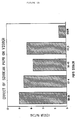
- Figures 1A, B and C are graphs showing the effects of PGPR strains of the present invention on emergence (A), vigor (B) and yield (C) of soybean.
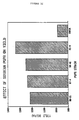
- Figures 2A, B and C graphically depict the corresponding PGPR-mediated effects in rapeseed ("canola").
- rhizosphere in a wide variety of habitats can be tapped, via known selection techniques, as the source for a class of PGPR that, surprisingly, enhance yield (as measured by seed production) in agronomic, nonroot crops.
- rhizosphere is used interchangeably with "root zone” to denote that segment of the soil that surrounds and is influenced by the roots of a plant.
- Naturally-occurring strains for use in the present invention starts with the collection of root-associated soil and/or root segments, from which sample dilutions are derived, as described below, for plating and incubation on a suitable nutrient medium.
- the initially isolated strains are individually screened for both chemotactic and root-colonization capacities and, optionally, for Gram-stain reaction.
- Other, more specialized characteristics such as the ability to grow under specific conditions of temperature, soil-moisture content, pH and the like, can also be taken into consideration in screening the isolated strains.
- bacterial strains selected from the rhizosphere for use according to the present invention can also be screened for growth at 4° to 14°C, making them potentially effective in stimulating yield in early-spring cultivars of rapeseed and/or soybean.
- the root-colonization capacity of an isolated strain can be gauged, for example, via a closed test tube assay which is based on the capacity of a bacterial strain to colonize the surface of roots when applied as a seed inoculum, as described by Scher et al, "A Method for Assessing the Root-Colonizing Capacity of Bacteria on Maize,” Can. J. Microbiol. 30: 151-57 (1984), the contents of which are hereby incorporated by reference.
- the relative root-colonization capacity of an isolated strain is also correlated with measured relative chemotactic capacity.
- Chemotactic capacity can be assayed by incubating the test strain on a soft agar medium containing an amino acid typically present in root exudates, such as asparagine or serine. Cultures grown in the presence of such an amino acid are examined to detect the presence of chemotactic zones, which are identified as areas of the agar medium that have become clouded by bacterial cells which have moved out from the inoculation zone. Thus, a soil or root sample containing putative PGPR is laid on the soft agar medium, and chemotactic zones resulting from bacteria migrating from the sample out toward the amino-acid attractant are then removed and plated separately.
- PGPR PGPR are generally Gram-negative.
- yield-enhancing rhizobacterial strains suitable for the present invention are typically Gram-negative; but it has also been discovered that selected strains testing positive for the ability to stimulate yield in soybean or rapeseed, as described below, can be Gram-positive or even "Gram-variable,” in the sense that the same strain may test out Gram-positive at one time and Gram-negative another time.
- Those isolated strains that display both chemotactic and root-colonizing capabilities and, preferably, Gram-negativity can be tested under greenhouse conditions for growth-promoting activity. Such activity is reflected, for example, in increases in root area or in leaf area. In this context, the index of increased root area has proved suitable for soybean.
- Leaf area is typically an appropriate indicium of growth-promotion in rape because assaying root area can be difficult in rapeseed plants, which commonly develop very fine, extended root systems. It is generally suitable, however, to measure shoot and root dry weight in order to assess growth-promoting activity under greenhouse conditions for the above-mentioned crops.
- Selected strains testing positive in a greenhouse assay can then be tested for growth promotion (and, more particularly, for yield enhancement) under field conditions in one or more of the above-mentioned nonroot crops.
- the intermediate stage of testing under greenhouse conditions can be omitted.
- the tested seed is preferably exposed to the putative PGPR strain(s) by dipping the seed into a liquid bacterial suspension, preferably water-based, and then is hand-planted. It has been found that this approach introduces the least amount of variability into the testing paradigm, making it easier to determine the repeatability of the growth-promotion response, particularly in field tests.
- field testing can employ mechanically-planted seed, and other seed inoculant systems can be used, such as fine-ground peat containing a selected strain.
- Empirical evidence indicates, however, that peat-treated trials are often skewed by a negative effect of the peat itself on yield in controls (no bacterial exposure), particularly in rapeseed, a factor militating against the use of a peat inoculant for testing purposes.
- cultures of rhizobacterial strains within the present invention are initially isolated from soil or root samples by a conventional serial-dilutions technique which yields a "biologically pure" culture, i.e., one in which virtually all the bacterial cells present are of the selected strain.
- a biologically pure culture thus defined, is a preferred embodiment of the present invention.
- Such a culture can be stored at -80 ⁇ C in glycerol, transferred to a bacteriological growing medium, incubated 1-2 days, centrifuged and mixed with water or buffer solution to create a PGPR suspension for seed treatments.
- a biologically pure culture of the present invention can also be lyophilized and stored until a bacterial suspension of the selected strain is reconstituted by the addition of a suitable liquid carrier, such as oil, to the lyophilized culture.
- a culture of a rhizobacterial strain within the present invention can contain microorganisms that do not interfere with the yield-promoting action of the cultured strain.
- liquid bacterial suspensions of the sort described above are preferably employed.
- an agricultural composition comprising one or more rhizobacterial strains that increase yield in cereal, oilseed or maize plants are preferably dispersed in a liquid carrier, which is preferably an aqueous solution or water.
- a liquid carrier which is preferably an aqueous solution or water.
- an aqueous solution of MgSO4 (usually around 0.1M) can be used as a carrier to enhance bacterial viability over time.
- a buffer solution can be used as the liquid carrier.
- An aqueous bacterial suspension of the present invention can also contain alginate or a similar polysaccharide-containing material in sufficient amounts (typically about 1% by weight) to convert the aqueous suspension into a slurry.
- an agriculturally-compatible oil (as defined below) can be added to the slurry to create an emulsion in which rhizobacterial cells of the selected yield-enhancing strain(s) are dispersed.
- Bacteria-containing compositions within the present invention can also be based on an agriculturally-compatible oil medium in which a selected strain is dispersed.
- an agriculturally-compatible oil medium in which a selected strain is dispersed.
- the phrase "agriculturally-compatible” denotes a substance that can be used routinely under field conditions without adversely influencing crop development or the desired ecological balance in a cultivated area.
- Commercially available oils of this sort include mineral oil and vegetable oils, for example, soya oil, canola (rapeseed) oil and corn oil.
- An oil-based carrier can be mixed with a xanthan gum or similar, agriculturally-compatible gum to produce a bacterial emulsion.
- the resulting rhizobacteria-containing composition can be mixed with rape or soybean seed or sprayed directly onto a field previously prepared for planting.
- a liquid bacterial suspension of the present invention can be absorbed into a granular carrier, such as pelleted peat or perlite granules, which is planted with the seed.
- Another alternative is to airdry a liquid bacterial suspension of the present invention, at a temperature (typical range: 10°-30°C) that is sufficiently low as not adversely to affect viability of the bacterial cells, to form a powder.
- the bacteria-containing powder can then be mixed with oil or another suitable liquid carrier, or with a dry carrier like peat, talc or diatomaceous earth.
- PAF Pseudomonas Agar F
- the roots that had been collected were cut into segments, each 2 to 5 cm in length, which were shaken vigorously is sterile 0.1 M aqueous MgSO4 solution; the root segments were then placed on asparagine soft agar (ASA), which contained 1g L-asparagine, 2g Bacto Agar (product of Difco Labs, Detroit MI) and 1000 ml of distilled water.
- ASA asparagine soft agar
- the ASA plates bearing the root segments were incubated at 14°C and 28°C, and were examined daily for the presence of chemotactic zones. Agar at the edge of the chemotactic zones was mixed with 0.1M MgSO4 and plated onto PAF. The resulting colonies were purified and stored at -80°C in 50% glycerol.
- the rhizobacterial strains thus isolated were tested for Gram-stain reaction, and those initially identified as Gram-negative were tested for rapid growth at 4°, 10° and 14°C. Strains that grew to an observable lawn within 24 hours at 14°C, 48 hours at 10°C, and 4-5 days at 4°C, respectively, were then tested for growth on exudate agar at 20°C.
- Exudate agar was prepared by mixing 10% soybean or 20% rapeseed exudates with 2% purified agar (Difco Labs) which had been washed three times with distilled water and dried. Seed exudates were prepared, as described by Scher et al (1985), using cv 'Maple Arrow' for soybean and cv 'Tobin' for rapeseed.
- the bacterial strains pretested in this manner were stored at -80°C in 50% glycerol before being tested in greenhouse assays described below. Strains that showed promise as PGPR in early tests, i.e., by growth-promotion activity in the greenhouse, were rechecked for purity on PAF, and 10 copies of each strain were returned to -80°C storage. A new vial of bacteria was used for each subsequent greenhouse or field test described below.
- Example 2 Greenhouse Assays Using Selected Rhizobacterial Strains.
- Both the rapeseed and the soybean PGPR assays were conducted in a 1:1 mix of perlite and field soil.
- Field soil was collected near Caledon, Ontario, and was a clay loam [2% organic matter, pH 7.0, total exchange capacity (M.E.) 14] with the following nutrient levels in ppm: nitrate nitrogen 4; phosphorous 1; potassium 2; calcium 70; magnesium 16; sodium 05; boron 0.4; iron 550; manganese 130; copper 2; and zinc 7.
- Test bacteria were grown on PAF plates at 10°C for 3 days (rapeseed assay) or at 28°C for 48 hours (soybean assay), and then were scraped off the plates and mixed in 0.1M MgSO4. Seeds were agitated in the bacterial suspensions for 2 hours at 10°C (rapeseed) or for 1 hour at 20°C (soybean). Control seeds were soaked in 0.1M MgSO4 which had been poured over an uninoculated PAF plate. For both soybean and rapeseed, two seeds were planted per replication - a 7.5 cm square plastic pot for rapeseed and a 10 cm pot for soybean - and 6 replications were used per treatment.
- Rapeseed pots were placed at 10°C for one week before being placed in a greenhouse with day/night temperatures of 22°/15°C. Soybean pots were immediately placed in a greenhouse with day/night temperatures of 30°/25°C. Seedlings of both plant types were thinned to one per pot after emergence.
- Bacterial strains that induced increased plant growth in either the rapeseed or the soybean assays at a level of 2 or 3 in the first test were retested at least twice. Most strains that induced a rating of 2 in two of three repeating tests were subsequently retested two more times (Tables 2 and 3). The emphasis in the greenhouse assays, which were continually conducted over a two-year period, was on repeatability of the growth promotion response.
Landscapes
- Life Sciences & Earth Sciences (AREA)
- Engineering & Computer Science (AREA)
- Health & Medical Sciences (AREA)
- Zoology (AREA)
- General Health & Medical Sciences (AREA)
- Biotechnology (AREA)
- Wood Science & Technology (AREA)
- Microbiology (AREA)
- Chemical & Material Sciences (AREA)
- Virology (AREA)
- Agronomy & Crop Science (AREA)
- Plant Pathology (AREA)
- Environmental Sciences (AREA)
- Bioinformatics & Cheminformatics (AREA)
- Dentistry (AREA)
- Genetics & Genomics (AREA)
- Pest Control & Pesticides (AREA)
- Organic Chemistry (AREA)
- Medicinal Chemistry (AREA)
- Tropical Medicine & Parasitology (AREA)
- General Engineering & Computer Science (AREA)
- Biochemistry (AREA)
- Biomedical Technology (AREA)
- Agricultural Chemicals And Associated Chemicals (AREA)
- Micro-Organisms Or Cultivation Processes Thereof (AREA)
Claims (17)
- Utilisation d'une culture bactérienne pour accroître la production de semences de plantes céréalières, d'oléagineux, de légumes et/ou de maïs, ladite culture étant une culture essentiellement biologiquement pure d'au moins une souche rhizobactérienne d'une espèce choisie parmi Pseudomonas putida, Pseudomonas fluorescens, Arthrobacter citreus, Serratia liquefaciens et Flavobacterium sp., qui augmente la production de semences de plantes céréalières, d'oléagineux, de légumes ou de maïs sains.
- Utilisation selon la revendication 1, pour accroître la production de semences de plantes de soja, de lin ou de colza.
- Utilisation selon la revendication 1 ou 2, dans laquelle ladite souche augmente le rendement moyen des semences chez les plantes de soja ou de colza, provenant de semences exposées à ladite souche, d'au moins environ 10 %, par rapport auxdites plantes provenant de semences n'ayant pas été exposées à ladite souche.
- Utilisation selon l'une quelconque des revendications 1 à 3, dans laquelle ladite souche est une souche rhizobactérienne vivant librement dans le sol.
- Utilisation selon l'une quelconque des revendications 1 à 4, dans laquelle ladite culture est biologiquement pure.
- Utilisation selon la revendication 1 ou 2, dans laquelle ladite souche est choisie parmi Pseudomona putida ATCC 53530 et des mutants de celui-ci, qui conservent la capacité d'augmenter la production de semences de plantes céréalières, d'oléagineux, de légumes ou de maïs sains.
- Pseudomona putida ATCC 53530, et des mutants de celui-ci, qui conservent la capacité d'augmenter la production de semences de plantes céréalières, d'oléagineux, de légumes ou de maïs sains.
- Semence dont la surface porte une culture essentiellement biologiquement pure d'au moins une souche rhizobactérienne, comme défini dans l'une quelconque des revendications 1, 3, 4, 5 ou 7, ce qui augmente la production de semences d'une plante provenant de ladite semence.
- Semence selon la revendication 8, dans laquelle ladite souche augmente le rendement moyen des semences chez les plantes de soja ou de colza, provenant de ladite semence comportant ladite souche, d'au moins environ 10 % par rapport auxdites plantes provenant de semences ne comportant pas ladite souche.
- Procédé d'obtention d'une souche rhizobactérienne qui augmente la production de semences de plantes céréalières, d'oléagineux, de légumes ou de maïs sains, comprenant les étapes consistant à :
tester la capacité de la souche bactérienne à coloniser des racines ; et
tester la capacité de ladite souche à accroître la production de semences de plantes céréalières, d'oléagineux, de légumes ou de maïs sains. - Procédé selon la revendication 10, comprenant en outre les étapes consistant à :
prélever un échantillon de sol contenant des bactéries ; et
isoler, à partir du sol, une souche unique de bactéries afin de tester son aptitude à coloniser les racines et son aptitude à augmenter la production de semences. - Procédé selon la revendication 10 ou 11, comprenant en outre l'étape consistant à tester l'aptitude de ladite souche à favoriser la croissance.
- Procédé selon l'une quelconque des revendications 10 à 12, dans lequel ladite étape, consistant à tester la capacité de ladite souche à accroître la production de semences, est réalisée en plein champ.
- Procédé selon la revendication 12, comprenant en outre l'étape consistant à tester la capacité de ladite souche à favoriser la croissance à une température de 4°C à 14°C.
- Procédé selon la revendication 12, comprenant en outre l'étape consistant à tester ladite souche afin de déterminer un profil de pH permettant à ladite souche de favoriser la croissance.
- Procédé selon la revendication 12, comprenant en outre l'étape consistant à tester ladite souche pour déterminer un profil d'humidité du sol permettant à ladite souche de favoriser la croissance.
- Procédé selon l'une quelconque des revendications 10 à 16, comprenant en outre l'étape consistant à tester le chimiotactisme de ladite souche.
Applications Claiming Priority (2)
| Application Number | Priority Date | Filing Date | Title |
|---|---|---|---|
| US89804286A | 1986-08-19 | 1986-08-19 | |
| US898042 | 1992-06-12 |
Publications (2)
| Publication Number | Publication Date |
|---|---|
| EP0256889A1 EP0256889A1 (fr) | 1988-02-24 |
| EP0256889B1 true EP0256889B1 (fr) | 1994-01-05 |
Family
ID=25408839
Family Applications (1)
| Application Number | Title | Priority Date | Filing Date |
|---|---|---|---|
| EP87307317A Expired - Lifetime EP0256889B1 (fr) | 1986-08-19 | 1987-08-19 | Rhizobactéries augmentant la croissance des plantes pour les récoltes sans racines |
Country Status (4)
| Country | Link |
|---|---|
| US (1) | US5503651A (fr) |
| EP (1) | EP0256889B1 (fr) |
| CA (1) | CA1335366C (fr) |
| DE (1) | DE3788689T2 (fr) |
Cited By (2)
| Publication number | Priority date | Publication date | Assignee | Title |
|---|---|---|---|---|
| US11479516B2 (en) | 2015-10-05 | 2022-10-25 | Massachusetts Institute Of Technology | Nitrogen fixation using refactored NIF clusters |
| US12281299B2 (en) | 2019-03-19 | 2025-04-22 | Massachusetts Institute Of Technology | Control of nitrogen fixation in rhizobia that associate with cereals |
Families Citing this family (29)
| Publication number | Priority date | Publication date | Assignee | Title |
|---|---|---|---|---|
| EP0227336B1 (fr) * | 1985-12-02 | 1993-04-28 | Imperial Oil Limited | Bactéries promouvant la nodulation et leur utilisation |
| KR100393736B1 (ko) * | 2000-07-07 | 2003-08-06 | 이윤수 | 신규의 슈도모나스 플루오르센스 (Pseudomonas fluorescens) Soil-4 균주 KFCC-11162 및 배추의 생장촉진에 유용한 슈도모나스 플루오르센스 (Pseudomonas fluorescens) Soil-4 균주 |
| WO2002015702A1 (fr) * | 2000-08-22 | 2002-02-28 | Agresearch Limited | Matrice biologique thermostable |
| ES2192131B1 (es) * | 2001-06-13 | 2005-02-16 | Universidad San Pablo - Ceu | Crhiscobacterium balustinum estimulante del crecimiento vegetal y protector frente a organismos fitopatogenos. |
| US20030045428A1 (en) * | 2001-07-05 | 2003-03-06 | Microbes, Inc. | Bacillus laterosporus strain CM-3 for promoting grain crop yields |
| HU230555B1 (hu) * | 2001-08-13 | 2016-12-28 | Biofil Kft. | Környezetbarát mikroorganizmus-készítmény és annak előállítása |
| ATE478938T1 (de) * | 2002-01-07 | 2010-09-15 | Brettyoung Seeds Ltd | Schwefel-oxidierende bakterien zur unterstützung des pflanzenwachstums |
| US9102893B2 (en) * | 2005-09-08 | 2015-08-11 | Advanced Biological Marketing | Equipment lubricating microbial compositions |
| EP1928995A4 (fr) * | 2005-09-08 | 2009-11-25 | Cornell Res Foundation Inc | Preparations a base de micro-organismes viables et leurs methodes de production et d'utilisation |
| US8796179B2 (en) | 2009-12-22 | 2014-08-05 | Lantmannen Bioagri Ab | Fluorescent pseudomonad of the species pseudomonas azotoformans for enhancement of plant emergence and growth |
| AR090316A1 (es) * | 2012-03-13 | 2014-11-05 | Marrone Bio Innovations Inc | Cepa de flavobacterium plaguicida y composiciones bioactivas, metabolitos y usos |
| BR112016002766A8 (pt) | 2013-08-12 | 2020-02-04 | Bio Cat Microbials Llc | composições compreendendo cepas de bacillus e métodos para a preparação das referidas composições e para suprimir as atividades e o crescimento de fungos patogênicos de plantas |
| EP3200590B1 (fr) | 2014-09-30 | 2020-09-02 | Auburn University | Utilisation de pectine ou de saccharides semblables à la pectine pour augmenter l'efficacité de rhizobactéries promotrices de la croissance des plantes, afin d'améliorer la croissance et la santé des plantes |
| KR102197507B1 (ko) | 2015-07-13 | 2020-12-31 | 피벗 바이오, 인크. | 식물 형질 개선을 위한 방법 및 조성물 |
| FR3052021B1 (fr) | 2016-06-02 | 2020-04-17 | Danstar Ferment Ag | Composition et methode pour ameliorer le developpement des plantes |
| UA129256C2 (uk) | 2017-01-12 | 2025-03-05 | Півот Байо, Інк. | Спосіб ідентифікації штаму мікроорганізму, який продукує азот, небобова рослина, колонізована таким штамом, спосіб збільшення фіксації азоту у небобових рослин та композиція для збільшення фіксації азоту у небобових рослин |
| US10165743B2 (en) | 2017-03-28 | 2019-01-01 | Martin FILION | Rhizobacterial strain and uses for enhancing total lipid yields in an oilseed crop |
| MX384181B (es) * | 2017-07-04 | 2025-03-14 | Newpek S A De C V | Una formulación inoculante bacteriano a base de un consorcio de microorganismos del género calothrix sp. para incrementar el rendimiento y calidad de cultivos vegetales, el método para la fabricación de la formulación, y usos. |
| JP7420712B2 (ja) | 2017-10-25 | 2024-01-23 | ピボット バイオ, インコーポレイテッド | 窒素を固定する操作された微生物を改良するための方法および組成物 |
| US12151988B2 (en) | 2017-10-25 | 2024-11-26 | Pivot Bio, Inc. | Gene targets for nitrogen fixation targeting for improving plant traits |
| EP3813511A4 (fr) | 2018-06-27 | 2022-08-03 | Pivot Bio, Inc. | Remodelage microbien guidé, plate-forme pour l'amélioration rationnelle d'espèces microbiennes pour l'agriculture |
| US20220017911A1 (en) * | 2018-12-21 | 2022-01-20 | Pivot Bio, Inc. | Methods, compositions, and media for improving plant traits |
| GB201902612D0 (en) | 2019-02-27 | 2019-04-10 | Vib Vzw | Novel plant growth promoting microbial composition |
| US11247944B2 (en) | 2019-04-12 | 2022-02-15 | Jeffrey Hanson Robbins | Potassium citrate mixture formed from a dry fertilizer and methods thereof |
| US11254619B2 (en) | 2019-04-12 | 2022-02-22 | Jeffrey Hanson Robbins | Dry composition including effervescent agents, biostimulant, and plant nutrient |
| CN114008221A (zh) | 2019-04-25 | 2022-02-01 | 皮沃特生物股份有限公司 | 用于分离和表征由化学诱变产生的泌铵突变体库的高通量方法 |
| AU2020445067A1 (en) | 2020-05-01 | 2022-12-01 | Pivot Bio, Inc. | Measurement of nitrogen fixation and incorporation |
| CA3232711A1 (fr) | 2021-09-21 | 2023-03-30 | Fikrettin Sahin | Souches bacteriennes halotolerantes utilisees en tant que bio-fertilisant ayant des avantages de favorisation de la croissance et de soulagement du stress abiotique pour des plantes et leur applicatio |
| CN116083334B (zh) * | 2023-02-16 | 2025-06-06 | 河南农业大学 | 一种提高pgpr根际趋化定殖能力的方法及工程菌 |
Citations (1)
| Publication number | Priority date | Publication date | Assignee | Title |
|---|---|---|---|---|
| EP0192342A2 (fr) * | 1985-02-14 | 1986-08-27 | Imperial Chemical Industries Plc | Traitement de semences |
Family Cites Families (8)
| Publication number | Priority date | Publication date | Assignee | Title |
|---|---|---|---|---|
| CA671662A (en) * | 1963-10-01 | R. Bumgarner Harley | Inoculation of legumes | |
| CA1172585A (fr) * | 1978-08-11 | 1984-08-14 | Milton N. Schroth | Agent favorisant la croissance des racines des plantes |
| US4425150A (en) * | 1981-05-04 | 1984-01-10 | Research And Development Institute, Inc. At Montana State University | Compositions containing and methods of use of an infectivity-cured Hr plasmid-bearing microorganism |
| US4479936A (en) * | 1982-09-27 | 1984-10-30 | Microlife Technics, Inc. | Method for protecting the growth of plants employing mutant siderophore producing strains of Pseudomonas Putida |
| US4584274A (en) * | 1983-02-09 | 1986-04-22 | The Regents Of The University Of California | Bacteriophage-resistant plant growth promoting rhizobacteria |
| US4465017A (en) * | 1983-03-09 | 1984-08-14 | Simmons John J | Seed coating machine |
| JPS6027672A (ja) * | 1983-07-25 | 1985-02-12 | 日本ライフ株式会社 | 微生物の培養物を利用して、堆肥の腐熟促進、土壌の改良、肥効の増進、残留農薬の無害化、病害微生物を抑制する資料を製造する方法 |
| EP0227336B1 (fr) * | 1985-12-02 | 1993-04-28 | Imperial Oil Limited | Bactéries promouvant la nodulation et leur utilisation |
-
1987
- 1987-08-11 CA CA000544240A patent/CA1335366C/fr not_active Expired - Fee Related
- 1987-08-19 EP EP87307317A patent/EP0256889B1/fr not_active Expired - Lifetime
- 1987-08-19 DE DE3788689T patent/DE3788689T2/de not_active Expired - Fee Related
-
1995
- 1995-01-31 US US08/438,739 patent/US5503651A/en not_active Expired - Fee Related
Patent Citations (1)
| Publication number | Priority date | Publication date | Assignee | Title |
|---|---|---|---|---|
| EP0192342A2 (fr) * | 1985-02-14 | 1986-08-27 | Imperial Chemical Industries Plc | Traitement de semences |
Non-Patent Citations (1)
| Title |
|---|
| S.S. Dudeja, A.L. Khurana and B.S. Kundu, Current Science 50 (II), 503-5 (1981) * |
Cited By (2)
| Publication number | Priority date | Publication date | Assignee | Title |
|---|---|---|---|---|
| US11479516B2 (en) | 2015-10-05 | 2022-10-25 | Massachusetts Institute Of Technology | Nitrogen fixation using refactored NIF clusters |
| US12281299B2 (en) | 2019-03-19 | 2025-04-22 | Massachusetts Institute Of Technology | Control of nitrogen fixation in rhizobia that associate with cereals |
Also Published As
| Publication number | Publication date |
|---|---|
| US5503651A (en) | 1996-04-02 |
| DE3788689T2 (de) | 1994-05-26 |
| CA1335366C (fr) | 1995-04-25 |
| DE3788689D1 (de) | 1994-02-17 |
| EP0256889A1 (fr) | 1988-02-24 |
Similar Documents
| Publication | Publication Date | Title |
|---|---|---|
| CA1335366C (fr) | Rhizobacteries qui favorisent la croissance d'especes cultivees autres que des plantes-racines | |
| Kloepper et al. | Plant growth-promoting rhizobacteria on canola (rapeseed) | |
| Lambert et al. | Rhizobacteria of maize and their antifungal activities | |
| US5229114A (en) | Approaches useful for the control of root nodulation of leguminous plants | |
| Sreevidya et al. | Exploring plant growth-promotion actinomycetes from vermicompost and rhizosphere soil for yield enhancement in chickpea | |
| US4798723A (en) | Agricultural products from Pseudomonas cepacia strains and methods of preparation | |
| CN113621532B (zh) | 含耐盐碱副地衣芽孢杆菌的复合微生物菌剂及其制备方法 | |
| Hebbar et al. | Rhizobacteria of maize antagonistic to Fusarium moniliforme, a soil-borne fungal pathogen: isolation and identification | |
| Baya et al. | Vitamin production in relation to phosphate solubilization by soil bacteria | |
| Hebbar et al. | Rhizobacteria of maize antagonistic to Fusarium moniliforme, a soil-borne fungal pathogen: colonization of rhizosphere and roots | |
| EP0272086B1 (fr) | Bactéries du sol utiles à l'action directe | |
| WO2015114552A1 (fr) | Souches rhizobactériennes stimulant la croissance de plantes et leurs utilisations | |
| US20060018883A1 (en) | Microbial preparation & method for preventing and curing the bacterial wilt the plant and its use | |
| CN114875016B (zh) | 一种适合荧光假单胞菌的制剂化载体及其菌剂 | |
| Vida et al. | Characterization of biocontrol bacterial strains isolated from a suppressiveness-induced soil after amendment with composted almond shells | |
| Omomowo et al. | Bacteriological screening and pathogenic potential of soil receiving cassava mill effluents | |
| Hatzinger et al. | Relationship between the number of bacteria added to soil or seeds and their abundance and distribution in the rhizosphere of alfalfa | |
| EP0228457B1 (fr) | Rhizobacteries de promotion de l'emersion | |
| Sands et al. | Ecology and physiology of fluorescent pectolytic pseudomonads | |
| Kannan et al. | Control of Fusarium wilt disease in cowpea plant (Vigna Unguiculata L.). using secondary metabolites produced in Bradyrhizobium japonicum | |
| Detraksa | Evaluation of plant growth− promoting streptomyces sp. SR13− 2 immobilized with sugarcane bagasse and filter cake for promoting rice growth | |
| Sharma et al. | Bioinoculation of mustard (Brassica juncea L.) with beneficial rhizobacteria: a sustainable alternative to improve crop growth | |
| Vaidya et al. | Diverse novel bacterial endosymbionts and their plant growth promoting traits in association with banana plant | |
| Chakravarty | Preparation of plant growth enhancing bioformulation from agricultural wastes by solid state fermentation | |
| Khan et al. | Molecular and biochemical characterization of soil isolates of Aspergillus niger aggregate and an assessment of their antagonism against Rhizoctonia solani |
Legal Events
| Date | Code | Title | Description |
|---|---|---|---|
| PUAI | Public reference made under article 153(3) epc to a published international application that has entered the european phase |
Free format text: ORIGINAL CODE: 0009012 |
|
| AK | Designated contracting states |
Kind code of ref document: A1 Designated state(s): DE FR GB SE |
|
| 17P | Request for examination filed |
Effective date: 19880517 |
|
| 17Q | First examination report despatched |
Effective date: 19890821 |
|
| RAP1 | Party data changed (applicant data changed or rights of an application transferred) |
Owner name: ALLELIX, INC |
|
| RAP1 | Party data changed (applicant data changed or rights of an application transferred) |
Owner name: ESSO CHEMICAL CANADA |
|
| GRAA | (expected) grant |
Free format text: ORIGINAL CODE: 0009210 |
|
| AK | Designated contracting states |
Kind code of ref document: B1 Designated state(s): DE FR GB SE |
|
| REF | Corresponds to: |
Ref document number: 3788689 Country of ref document: DE Date of ref document: 19940217 |
|
| ET | Fr: translation filed | ||
| PLBE | No opposition filed within time limit |
Free format text: ORIGINAL CODE: 0009261 |
|
| STAA | Information on the status of an ep patent application or granted ep patent |
Free format text: STATUS: NO OPPOSITION FILED WITHIN TIME LIMIT |
|
| 26N | No opposition filed | ||
| EAL | Se: european patent in force in sweden |
Ref document number: 87307317.5 |
|
| PGFP | Annual fee paid to national office [announced via postgrant information from national office to epo] |
Ref country code: GB Payment date: 19990818 Year of fee payment: 13 |
|
| PGFP | Annual fee paid to national office [announced via postgrant information from national office to epo] |
Ref country code: FR Payment date: 19990824 Year of fee payment: 13 |
|
| PGFP | Annual fee paid to national office [announced via postgrant information from national office to epo] |
Ref country code: SE Payment date: 19990826 Year of fee payment: 13 |
|
| PG25 | Lapsed in a contracting state [announced via postgrant information from national office to epo] |
Ref country code: GB Free format text: LAPSE BECAUSE OF NON-PAYMENT OF DUE FEES Effective date: 20000819 |
|
| PG25 | Lapsed in a contracting state [announced via postgrant information from national office to epo] |
Ref country code: SE Free format text: LAPSE BECAUSE OF NON-PAYMENT OF DUE FEES Effective date: 20000820 |
|
| GBPC | Gb: european patent ceased through non-payment of renewal fee |
Effective date: 20000819 |
|
| EUG | Se: european patent has lapsed |
Ref document number: 87307317.5 |
|
| PG25 | Lapsed in a contracting state [announced via postgrant information from national office to epo] |
Ref country code: FR Free format text: LAPSE BECAUSE OF NON-PAYMENT OF DUE FEES Effective date: 20010430 |
|
| PGFP | Annual fee paid to national office [announced via postgrant information from national office to epo] |
Ref country code: DE Payment date: 20010430 Year of fee payment: 14 |
|
| REG | Reference to a national code |
Ref country code: FR Ref legal event code: ST |
|
| PG25 | Lapsed in a contracting state [announced via postgrant information from national office to epo] |
Ref country code: DE Free format text: LAPSE BECAUSE OF NON-PAYMENT OF DUE FEES Effective date: 20020501 |