EP0260003A2 - Procédé pour séparer la maltose à partir de mélanges de maltose et de glucose ou d'autres saccharides - Google Patents
Procédé pour séparer la maltose à partir de mélanges de maltose et de glucose ou d'autres saccharides Download PDFInfo
- Publication number
- EP0260003A2 EP0260003A2 EP87307412A EP87307412A EP0260003A2 EP 0260003 A2 EP0260003 A2 EP 0260003A2 EP 87307412 A EP87307412 A EP 87307412A EP 87307412 A EP87307412 A EP 87307412A EP 0260003 A2 EP0260003 A2 EP 0260003A2
- Authority
- EP
- European Patent Office
- Prior art keywords
- maltose
- adsorbent
- desorbent
- zone
- extract
- Prior art date
- Legal status (The legal status is an assumption and is not a legal conclusion. Google has not performed a legal analysis and makes no representation as to the accuracy of the status listed.)
- Granted
Links
- GUBGYTABKSRVRQ-PICCSMPSSA-N Maltose Natural products O[C@@H]1[C@@H](O)[C@H](O)[C@@H](CO)O[C@@H]1O[C@@H]1[C@@H](CO)OC(O)[C@H](O)[C@H]1O GUBGYTABKSRVRQ-PICCSMPSSA-N 0.000 title claims abstract description 62
- OWEGMIWEEQEYGQ-UHFFFAOYSA-N 100676-05-9 Natural products OC1C(O)C(O)C(CO)OC1OCC1C(O)C(O)C(O)C(OC2C(OC(O)C(O)C2O)CO)O1 OWEGMIWEEQEYGQ-UHFFFAOYSA-N 0.000 title claims abstract description 60
- 239000000203 mixture Substances 0.000 title claims abstract description 37
- WQZGKKKJIJFFOK-GASJEMHNSA-N Glucose Natural products OC[C@H]1OC(O)[C@H](O)[C@@H](O)[C@@H]1O WQZGKKKJIJFFOK-GASJEMHNSA-N 0.000 title claims abstract description 31
- 239000008103 glucose Substances 0.000 title claims abstract description 31
- 238000000034 method Methods 0.000 title claims description 42
- 150000001720 carbohydrates Chemical class 0.000 title description 6
- 239000003463 adsorbent Substances 0.000 claims abstract description 85
- 238000001179 sorption measurement Methods 0.000 claims abstract description 16
- 239000010457 zeolite Substances 0.000 claims abstract description 16
- 150000004676 glycans Chemical class 0.000 claims abstract description 14
- 229920001282 polysaccharide Polymers 0.000 claims abstract description 14
- 239000005017 polysaccharide Substances 0.000 claims abstract description 14
- 229910021536 Zeolite Inorganic materials 0.000 claims abstract description 10
- HNPSIPDUKPIQMN-UHFFFAOYSA-N dioxosilane;oxo(oxoalumanyloxy)alumane Chemical compound O=[Si]=O.O=[Al]O[Al]=O HNPSIPDUKPIQMN-UHFFFAOYSA-N 0.000 claims abstract description 10
- XLYOFNOQVPJJNP-UHFFFAOYSA-N water Substances O XLYOFNOQVPJJNP-UHFFFAOYSA-N 0.000 claims abstract description 5
- 238000003795 desorption Methods 0.000 claims description 16
- AZDRQVAHHNSJOQ-UHFFFAOYSA-N alumane Chemical group [AlH3] AZDRQVAHHNSJOQ-UHFFFAOYSA-N 0.000 claims description 12
- WQZGKKKJIJFFOK-VFUOTHLCSA-N beta-D-glucose Chemical compound OC[C@H]1O[C@@H](O)[C@H](O)[C@@H](O)[C@@H]1O WQZGKKKJIJFFOK-VFUOTHLCSA-N 0.000 claims description 11
- 229920002472 Starch Polymers 0.000 claims description 9
- 235000019698 starch Nutrition 0.000 claims description 9
- 239000008107 starch Substances 0.000 claims description 9
- DBTMGCOVALSLOR-UHFFFAOYSA-N 32-alpha-galactosyl-3-alpha-galactosyl-galactose Natural products OC1C(O)C(O)C(CO)OC1OC1C(O)C(OC2C(C(CO)OC(O)C2O)O)OC(CO)C1O DBTMGCOVALSLOR-UHFFFAOYSA-N 0.000 claims description 6
- RXVWSYJTUUKTEA-UHFFFAOYSA-N D-maltotriose Natural products OC1C(O)C(OC(C(O)CO)C(O)C(O)C=O)OC(CO)C1OC1C(O)C(O)C(O)C(CO)O1 RXVWSYJTUUKTEA-UHFFFAOYSA-N 0.000 claims description 6
- GUBGYTABKSRVRQ-QUYVBRFLSA-N beta-maltose Chemical compound OC[C@H]1O[C@H](O[C@H]2[C@H](O)[C@@H](O)[C@H](O)O[C@@H]2CO)[C@H](O)[C@@H](O)[C@@H]1O GUBGYTABKSRVRQ-QUYVBRFLSA-N 0.000 claims description 6
- FYGDTMLNYKFZSV-UHFFFAOYSA-N mannotriose Natural products OC1C(O)C(O)C(CO)OC1OC1C(CO)OC(OC2C(OC(O)C(O)C2O)CO)C(O)C1O FYGDTMLNYKFZSV-UHFFFAOYSA-N 0.000 claims description 6
- FYGDTMLNYKFZSV-BYLHFPJWSA-N β-1,4-galactotrioside Chemical group O[C@@H]1[C@@H](O)[C@H](O)[C@@H](CO)O[C@H]1O[C@@H]1[C@H](CO)O[C@@H](O[C@@H]2[C@@H](O[C@@H](O)[C@H](O)[C@H]2O)CO)[C@H](O)[C@H]1O FYGDTMLNYKFZSV-BYLHFPJWSA-N 0.000 claims description 6
- 238000006116 polymerization reaction Methods 0.000 claims description 4
- 108010065511 Amylases Proteins 0.000 claims description 3
- 102000013142 Amylases Human genes 0.000 claims description 3
- 108010019077 beta-Amylase Proteins 0.000 claims description 3
- 229940111205 diastase Drugs 0.000 claims description 3
- 230000002255 enzymatic effect Effects 0.000 claims description 2
- XAGFODPZIPBFFR-UHFFFAOYSA-N aluminium Chemical compound [Al] XAGFODPZIPBFFR-UHFFFAOYSA-N 0.000 abstract description 8
- 229910052782 aluminium Inorganic materials 0.000 abstract description 8
- 239000004411 aluminium Substances 0.000 abstract description 8
- 239000000463 material Substances 0.000 description 61
- 238000000926 separation method Methods 0.000 description 31
- 239000000047 product Substances 0.000 description 12
- 235000000346 sugar Nutrition 0.000 description 11
- 238000012360 testing method Methods 0.000 description 11
- 230000000694 effects Effects 0.000 description 8
- 230000014759 maintenance of location Effects 0.000 description 8
- 239000012071 phase Substances 0.000 description 8
- 239000007787 solid Substances 0.000 description 7
- 239000012013 faujasite Substances 0.000 description 6
- 239000012530 fluid Substances 0.000 description 6
- 239000007788 liquid Substances 0.000 description 6
- 229920001542 oligosaccharide Polymers 0.000 description 6
- 150000002482 oligosaccharides Chemical class 0.000 description 6
- 150000008163 sugars Chemical class 0.000 description 6
- 230000000274 adsorptive effect Effects 0.000 description 5
- 150000001875 compounds Chemical class 0.000 description 5
- 239000007791 liquid phase Substances 0.000 description 5
- 238000000746 purification Methods 0.000 description 5
- 239000000700 radioactive tracer Substances 0.000 description 4
- 238000011144 upstream manufacturing Methods 0.000 description 4
- 239000000413 hydrolysate Substances 0.000 description 3
- 239000011148 porous material Substances 0.000 description 3
- 230000003068 static effect Effects 0.000 description 3
- 239000011800 void material Substances 0.000 description 3
- IJGRMHOSHXDMSA-UHFFFAOYSA-N Atomic nitrogen Chemical compound N#N IJGRMHOSHXDMSA-UHFFFAOYSA-N 0.000 description 2
- VYPSYNLAJGMNEJ-UHFFFAOYSA-N Silicium dioxide Chemical compound O=[Si]=O VYPSYNLAJGMNEJ-UHFFFAOYSA-N 0.000 description 2
- 238000013459 approach Methods 0.000 description 2
- 238000006243 chemical reaction Methods 0.000 description 2
- 230000000875 corresponding effect Effects 0.000 description 2
- 238000002425 crystallisation Methods 0.000 description 2
- 230000008025 crystallization Effects 0.000 description 2
- 238000006073 displacement reaction Methods 0.000 description 2
- 238000004821 distillation Methods 0.000 description 2
- 238000001704 evaporation Methods 0.000 description 2
- 230000008020 evaporation Effects 0.000 description 2
- -1 fructose or glucose Chemical class 0.000 description 2
- VNWKTOKETHGBQD-UHFFFAOYSA-N methane Chemical compound C VNWKTOKETHGBQD-UHFFFAOYSA-N 0.000 description 2
- 238000010926 purge Methods 0.000 description 2
- 238000012546 transfer Methods 0.000 description 2
- OTMSDBZUPAUEDD-UHFFFAOYSA-N Ethane Chemical compound CC OTMSDBZUPAUEDD-UHFFFAOYSA-N 0.000 description 1
- 229930091371 Fructose Natural products 0.000 description 1
- RFSUNEUAIZKAJO-ARQDHWQXSA-N Fructose Chemical compound OC[C@H]1O[C@](O)(CO)[C@@H](O)[C@@H]1O RFSUNEUAIZKAJO-ARQDHWQXSA-N 0.000 description 1
- 239000005715 Fructose Substances 0.000 description 1
- 238000002441 X-ray diffraction Methods 0.000 description 1
- 125000004429 atom Chemical group 0.000 description 1
- 235000014633 carbohydrates Nutrition 0.000 description 1
- 230000003197 catalytic effect Effects 0.000 description 1
- 150000001768 cations Chemical class 0.000 description 1
- 239000004927 clay Substances 0.000 description 1
- 238000005094 computer simulation Methods 0.000 description 1
- 238000010924 continuous production Methods 0.000 description 1
- 230000002596 correlated effect Effects 0.000 description 1
- 125000004122 cyclic group Chemical group 0.000 description 1
- 238000013461 design Methods 0.000 description 1
- GUJOJGAPFQRJSV-UHFFFAOYSA-N dialuminum;dioxosilane;oxygen(2-);hydrate Chemical compound O.[O-2].[O-2].[O-2].[Al+3].[Al+3].O=[Si]=O.O=[Si]=O.O=[Si]=O.O=[Si]=O GUJOJGAPFQRJSV-UHFFFAOYSA-N 0.000 description 1
- 230000008034 disappearance Effects 0.000 description 1
- 239000012153 distilled water Substances 0.000 description 1
- 230000007515 enzymatic degradation Effects 0.000 description 1
- 238000002474 experimental method Methods 0.000 description 1
- 235000013305 food Nutrition 0.000 description 1
- 235000003599 food sweetener Nutrition 0.000 description 1
- 239000007789 gas Substances 0.000 description 1
- 239000001963 growth medium Substances 0.000 description 1
- 229930195733 hydrocarbon Natural products 0.000 description 1
- 150000002430 hydrocarbons Chemical class 0.000 description 1
- 239000001257 hydrogen Substances 0.000 description 1
- 229910052739 hydrogen Inorganic materials 0.000 description 1
- 125000004435 hydrogen atom Chemical class [H]* 0.000 description 1
- 238000010335 hydrothermal treatment Methods 0.000 description 1
- 238000012423 maintenance Methods 0.000 description 1
- 238000005259 measurement Methods 0.000 description 1
- 150000002772 monosaccharides Chemical class 0.000 description 1
- 229910052757 nitrogen Inorganic materials 0.000 description 1
- 231100000252 nontoxic Toxicity 0.000 description 1
- 230000003000 nontoxic effect Effects 0.000 description 1
- 235000015097 nutrients Nutrition 0.000 description 1
- 239000002245 particle Substances 0.000 description 1
- 229920001021 polysulfide Polymers 0.000 description 1
- 238000011027 product recovery Methods 0.000 description 1
- 230000000750 progressive effect Effects 0.000 description 1
- 238000001223 reverse osmosis Methods 0.000 description 1
- 239000000377 silicon dioxide Substances 0.000 description 1
- 238000004088 simulation Methods 0.000 description 1
- 238000002336 sorption--desorption measurement Methods 0.000 description 1
- 239000003381 stabilizer Substances 0.000 description 1
- 239000000126 substance Substances 0.000 description 1
- 239000003765 sweetening agent Substances 0.000 description 1
Images

Classifications
-
- C—CHEMISTRY; METALLURGY
- C13—SUGAR INDUSTRY
- C13K—SACCHARIDES OBTAINED FROM NATURAL SOURCES OR BY HYDROLYSIS OF NATURALLY OCCURRING DISACCHARIDES, OLIGOSACCHARIDES OR POLYSACCHARIDES
- C13K7/00—Maltose
Definitions
- Maltose is a reducing sugar widely used as a nutrient or sweetener in the food industry. It is also used as a culture medium and stabilizer for polysulphides. It is primarily obtained by the enzymatic action of diastase or beta-amylase on starch.
- Starch hydrolysate may contain approximately 72% of maltose, 1% of glucose and 27% of higher polysaccharides.
- DP degree of polymerization
- GB-A-1585369 discloses a process for separating a monosaccharide, such as fructose or glucose, from an oligosaccharide, such as maltose, using X zeolites exchanged with Ba or K cations, or Y zeolites exchanged with Ba, Sr, Ca, Cs, Na or NH4. This process, however, is not capable of separating maltose from glucose and a polysaccharide.
- This invention relates to a process for separating maltose from a sugar source containing a mixture of maltose and at least one other sugar.
- the invention is concerned with a process for separating the recovering high purity maltose from a sugar source which contains glucose and/or polysaccharides having a DP of 3, 4 and higher, including starch or other high DP polysaccharides.
- the invention concerns the use of a faujasite adsorbent having a very low aluminium content and particularly, up to 15 atoms of aluminium per unit cell. The faujasites are useful because they have a pore size large enough to admit the sugar molecules being adsorbed.
- Silicalite and ZSM-5 on the other hand, have pore sizes too small to admit the saccharide molecules and, hence, are not effective for this separation.
- the preferred faujasite adsorbents contain up to 9 aluminium atoms per unit cell and more preferably, from 5 to 9 aluminium atoms per unit cell.
- the present invention is concerned with a process for separating maltose from an aqueous mixture containing maltose and at least one other saccharide.
- the process is effected by passing a feed mixture containing one or more components over an adsorbent of the type hereinafter described in greater detail.
- the passage of the feed stream over the adsorbent will result in the adsorption of maltose, while permitting the other components of the feed stream to pass through the treatment zone in an unchanged condition.
- the maltose will be desorbed from the adsorbent by treating the adsorbent with a desorbent material, preferably water.
- Preferred adsorption and desorption conditions include a temperature of from 20 to 200°C and a pressure of from atmospheric to 500 psig (100 to 3550 kPa), more preferably atmospheric to 250 psig (100 to 1825 kPa) to ensure a liquid phase.
- the most particularly preferred conditions are 65°C and about 50 psig (445 kPa).
- feed mixture is a mixture containing one or more extract components and one or more raffinate components to be separated by the process.
- feed stream indicates a stream of a feed mixture which passes to the adsorbent used in the process.
- extract component is a compound or type of compound that is more selectively adsorbed, while a “raffinate component” is a compound or type of compound that is less selectively adsorbed.
- desorbent material means generally a material capable of desorbing an extract component.
- desorbent stream or “desorbent input stream” means a stream in which desorbent material passes to the adsorbent.
- raffinate stream or “raffinate output stream” means a stream in which a raffinate component is removed from the adsorbent.
- the composition of the raffinate stream can vary from essentially 100% desorbent material to essentially 100% raffinate components.
- extract stream or "extract output stream” means a stream in which an extract material which has been desorbed by a desorbent material is removed from the adsorbent.
- the composition of the extract stream likewise, can vary from essentially 100% desorbent material to essentially 100% extract components.
- At least a portion of the extract stream and preferably, at least a portion of the raffinate stream from the adsorption - desorption process are passed to separation means, typically fractionators, where at least a portion of desorbent material is separated to produce an extract product and a raffinate product.
- separation means typically fractionators, where at least a portion of desorbent material is separated to produce an extract product and a raffinate product.
- extract product and raffinate product mean products produced by the process containing, respectively, an extract component and a raffinate component in higher concentrations than those found in the extract stream and the raffinate stream.
- the feed mixtures which are separated by the process of the present invention are mixtures containing maltose; a specfic mixture, which is preferably treated according to the present invention, comprising starch hydrolysate.
- starch hydrolysate will contain about 72% of maltose, as well as other sugars and polysaccharides such as glucose, maltotriose, as well as other sugars and polysaccharides such as glucose, maltotriose (DP3), DP4 and higher (hereinafter DP4+) and starch, said other sugars and polysaccharides being present in varying amounts.
- the adsorbents used according to the present invention have been found to adsorb maltose selectively, while allowing the other components in the mixture to pass unchanged through the system. It has also been found that the initial capability of the adsorbent selectively to adsorb maltose is maintained during the actual use in the separation process over an economically desirable life.
- the adsorbent possesses the ability to separate components of the feed, that is, the adsorbent possesses adsorptive selectivity for one component over other components.
- the adsorbents used in the separation process of this invention are the so-called dealuminated Y-type zeolites e.g.
- zeolites of this type which are not dealuminated, and have 38 aluminium atoms per unit cell, will not effect the desired separation between maltose and either glucose or polysaccharides, which appears to indicate an upper limit to the amount of aluminium in the zeolitic structure. Furthermore, it appears that the lower the aluminium content, the greater the separation between maltose and glucose.
- the zeolites may be made by one or more of the processes described by Julius Scherzer, Catalytic Materials, Amer. Chem. Soc ., 1984, pp.
- the number of aluminium atoms per unit cell of each sample used was determined by x-ray diffractometry measurement of the cell dimension, and comparing the dimension with previously recorded cell dimensions correlated with aluminium content.
- Relative selectivity can be expressed not only for one feed compound over another, by can also be expressed between any feed mixture component and the desorbent material.
- the selectivity, (B) is defined as the ratio of the two components of the adsorbed phase divided by the ratio of the same two components in the unadsorbed phase at equilibrium conditions, as shown in Equation 1, below: where C and D are two components of the feed represented in weight percent, and the subscripts A and U represent the adsorbed and unadsorbed phases respectively.
- the equilibrium conditions are determined when the feed passing over a bed of adsorbent does not change composition after contacting the bed of adsorbent. In other words, there is no net transfer of material between the unadsorbed and adsorbed phases.
- selectivity of the adsorbent for two components approaches 1.0, there is no preferential adsorption by the adsorbent of one component over the other; they are both adsorbed (or non-adsorbed) to about the same degree.
- value of (B) becomes less than or greater than 1.0, there is a preferential adsorption by the adsorbent of one component over the other.
- a (B) value larger than 1.0 indicates preferential adsorption of component C within the adsorbent.
- desorbent materials should have a selectivity of 1 or slightly less than 1 with respect to all extract components, so that all of the extract components can be desorbed as a class with reasonable flow rates of desorbent material and so that extract components can displace desorbent material in a subsequent adsorption step. While separation of an extract component from a raffinate component is theoretically possible when the selectivity of the adsorbent for the extract component with respect to the raffinate component is just slightly greater than 1.0, it is preferred that such selectivity should approach a value of 2.0. Like relative volatility, the higher the selectivity, the easier the separation is to perform. Higher selectivities permit a smaller amount of adsorbent to be used.
- the third important characteristic is the rate of exchange of the extract component of the feed mixture material, or, in other words, the relative rate of desorption of the extract component.
- This characteristic relates directly to the amount of desorbent material that must be employed to recover the extract component from the adsorbent; faster rates of exchange reduce the amount of desorbent material needed to remove the extract component and therefore permit a reduction in operating costs. With faster rates of exchange, less desorbent material has to be pumped through the process, and separated from the extract stream for reuse in the process.
- Desorbent materials used in various prior art adsorptive separation processes vary depending upon such factors as the type of operation employed.
- desorbent selection is not as critical, and desorbent material comprising gaseous hydrocarbons such as methane, ethane, etc., or other types of gases, such as nitrogen or hydrogen, may be used at elevated temperatures or reduced pressures, or both, to purge effectively the adsorbed feed component from the adsorbent.
- desorbent material must be judiciously selected to satisfy many criteria.
- the desorbent material should displace an extract component from the adsorbent with reasonable mass flow rates without itself being so strongly adsorbed as unduly to prevent an extract component from displacing the desorbent material in a subsequent adsorption cycle.
- the selectivity it is preferred that the adsorbent be more selective for all of the extract components over a raffinate component, than it is for the desorbent material over a raffinate component.
- desorbent materials must be compatible with the particular adsorbent and the particular feed mixture. More specifically, they must not reduce or destroy the critical selectivity of the adsorbent for an extract component over a raffinate component.
- desorbent materials should not chemically react with, or cause a chemical reaction of, either an extract component or a raffinate component. Both the extract stream and the raffinate stream are typically removed from the adsorbent in admixture with desorbent material, and any chemical reaction involving a desorbent material and an extract component, or a raffinate component, or both, would complicate or prevent product recovery. Since both the raffinate stream and the extract stream typically contain desorbent materials, such desorbent materials should additionally be substances which are easily separable from the feed mixture that is passed into the process.
- the concentration of an extract component in the extract product, and the concentration of a raffinate component in the raffinate product would not be very high, nor would the desorbent material be available for further use in the process. It is contemplated that at least a portion of the desorbent material will be separated from the extract and the raffinate streams by distillation or evaporation, but other separation methods, such as reverse osmosis, may also be employed, alone or in combination with distillation or evaporation. Since the raffinate and extract products of the present invention foodstuffs intended for human consumption, desorbent materials should also be non-toxic. Finally, desorbent materials should also be materials which are readily available and, therefore, reasonable in cost.
- a dynamic testing apparatus is employed to test various adsorbents with a particular feed mixture and desorbent material, to measure the adsorbent characteristics of adsorptive capacity, selectivity and exchange rate.
- the apparatus comprises an adsorbent chamber of approximately 70 cc volume, having inlet and outlet portions at opposite ends of the chamber.
- the chamber is contained within a temperature control means and, in addition, pressure control equipment is used to operate the chamber at a constant predetermined pressure.
- Quantitative and qualitative analytical equipment such as refractometers, polarimeters and chromatographs, can be attached to the outlet line of the chamber, and used to detect quantitatively or determine qualitatively, one or more components in the effluent stream leaving the adsorbent chamber.
- a pulse test performed using this apparatus and the following general procedure, is used to determine selectivities and other data for various adsorbent systems.
- the adsorbent is filled to equilibrium with a particular desorbent material by passing the desorbent material through the adsorbent chamber.
- a pulse of feed containing known concentrations of maltose, glucose and other oligosaccharides, all diluted in desorbent, is injected for a duration of several minutes. Desorbent flow is resumed, and the maltose, glucose and other oligosaccharides are eluted as in a liquid-solid chromatographic operation.
- the effluent can be analyzed on-stream or, alternatively, effluent samples can be collected periodically and later analyzed separately by analytical equipment and traces of the envelopes of corresponding component peaks developed.
- adsorbent performance can be rated in terms of void volume, retention volume for an extract or a raffinate component, selectivity for one component over the other, and the rate of desorption of an extract component by the desorbent.
- the retention volume of an extract or a raffinate component may be characterized by the distance between the centre of the peak envelope of an extract or a raffinate component and the peak envelope of the tracer component, or some other known reference point. It is expressed in terms of the volume in cubic centimeters of desorbent pumped during this time interval, represented by the distance between the peak envelopes.
- Selectivity, (B) for an extract component over a raffinate component may be characterized by the ratio of the distance between the centre of the extract component peak envelope and the tracer peak envelope (or other reference point) to the corresponding distance between the centre of the raffinate component peak envelope and the tracer peak envelope.
- the rate of exchange of an extract component with the desorbent can generally be characterized by the width of the peak envelopes at half intensity. The narrower the peak width, the faster the desorption rate.
- the desorption rate can also be characterized by the distance between the centre of the tracer peak envelope and the disappearance of an extract component which has just been desorbed. This distance is again the volume of desorbent pumped during this time interval.
- the adsorbent may be employed in the form of a dense compact fixed bed, which is alternately contacted with the feed mixture and desorbent materials.
- the adsorbent is employed in the form of a single static bed, in which case the process is only semi-continuous.
- a set of two or more static beds may be employed in fixed-bed contact with appropriate valving, so that the feed mixture is passed through one or more adsorbent beds while the desorbent materials can be passed through one or more of the other beds in the set.
- the flow of feed mixture and desorbent materials may be either upwards or downwards through the desorbent. Any conventional apparatus employed in static bed fluid-solid contacting may be used.
- Countercurrent moving bed or simulated moving bed countercurrent flow systems have a much greater separation efficiency than fixed adsorbent bed systems and are, therefore, preferred.
- the adsorption and desorption operations are continuously taking place, which allows both continuous production of an extract and a raffinate stream and the continual use of feed and desorbent streams.
- One preferred embodiment of this process utilizes what is known in the art as the simulated moving bed countercurrent flow system.
- the operating principles and sequence of such a flow system are described in US-A-2985589. In such a system, it is the progressive movement of multiple liquid access points down an adsorbent chamber that simulates the upward movement of adsorbent contained in the chamber.
- the active liquid access points effectively divide the adsorbent chamber into separate zones, each of which has a different function. In this embodiment of the present process, it is generally necessary that three separate operational zones are present in order for the process to take place, although, in some instances, and optional fourth zone may be used.
- zone 1 is defined as that portion of the adsorbent located between the feed inlet stream and the raffinate outlet stream.
- zone 1 the feedstock contacts the adsorbent, an extract component is adsorbed, and a raffinate stream is withdrawn. Since the general flow through zone 1 is from the feed stream which passes out of the zone, the flow in this zone is considered to be in a downstream direction when proceeding from the feed inlet to the raffinate outlet streams.
- zone 2 Immediately upstream with respect to fluid flow in zone 1 is the purification zone, zone 2.
- the purification zone is defined as that portion of the adsorbent between the extract outlet stream and the feed inlet stream.
- the basic operations taking place in zone 2 are the displacement, from the non-selective void volume of the adsorbent, of any raffinate material carried into zone 2 by the shifting of adsorbent into this zone, and the desorption of any raffinate material adsorbent within the selective pore volume of the adsorbent or adsorbed on the surfaces of the adsorbent particles.
- Purification is achieved by passing a portion of extract stream material leaving zone 3 into zone 2 at the upstream boundary of zone 2 (the extract outlet stream), to effect the displacement of raffinate matieral.
- the flow of material in zone 2 is in a downstream direction from the extract outlet stream to the feed inlet stream.
- zone 3 Immediately upstream of zone 2 with respect to the fluid flowing in zone 2, is the desorption zone, or zone 3.
- the desorption zone is defined as that portion of the adsorbent between the desorbent inlet and the extract outlet streams.
- the function of the desorption zone is to allow a desorbent material which passes into this zone to displace the adsorbed material produced by contact with feed in zone 1 in a previous cycle of operation.
- the flow of fluid in zone 3 is essentially in the same direction as that of zones 1 and 2.
- zone 4 an optional buffer zone, zone 4, may be utilized.
- This zone defined as that portion of the adsorbent between the raffinate outlet stream and the desorbent inlet stream, if used, is located immediately upstream with respect to the fluid flow to zone 3.
- Zone 4 would be utilized to conserve the amount of desorbent utilized in the desorption step, since a portion of the raffinate stream which is removed from zone 1 can be passed into zone 4 to displace desorbent material from that zone into the desorption zone.
- Zone 4 will contain enough adsorbent so that raffinate material present in the raffinate stream passing out of zone 1 and into zone 4 can be prevented from passing into zone 3, thereby contaminating the extract stream removed from zone 3.
- the raffinate stream passing from zone 1 to zone 3 must be carefully monitored in order that the flow directly from zone 1 to zone 3 can be stopped when there is an appreciable quantity of raffinate material present in the raffinate stream passing from zone 1 into zone 3 so that the extract outlet stream is not contaminated.
- a cyclic advancement of the input and output streams through the fixed bed of adsorbent can be accomplished by utilizing a manifold system, in which the valves in the manifold are operated in a sequential manner to effect the shifting of the input and output streams, thereby allowing a flow of fluid with respect to solid adsorbent in a countercurrent manner.
- Another mode of operation which can effect the countercurrent flow of solid adsorbent with respect to fluid involves the use of a rotating disc valve in which the input and output streams are connected to the valve and the lines, through which pass the feed input, extract output, desorbent input and raffinate output streams, are advanced in the same direction through the adsorbent bed.
- Both the manifold arrangement and disc valve are known in the art. Specifically, rotary disc valves which can be utilized in this operation are described in US-A-3040777 and 3422848.
- one operational zone will contain a much larger quantity of adsorbent than some other operational zone.
- the buffer zone can contain a minor amount of adsorbent as compared to the adsorbent required for the adsorption and purification zones.
- a desorbent which can easily desorb extract material from the adsorbent
- a relatively small amount of adsorbent will be needed in a desorption zone as compared to the amount needed in the buffer zone or adsorption zone or purification zone or all of them. Since it is not required that the adsorbent be located in a single column, the use of multiple chambers or a series of columns is within the scope of the invention.
- the apparatus which can be utilized to effect the process of this invention can also contain a series of individual beds connected by connecting conduits upon which are placed input or output taps to which the various input or output stream can be attached and alternatively and periodically shifted to effect continuous operation.
- the connecting conduits can be connected to transfer taps which, during normal operation, do not function as a conduit through which material passes into or outof the process.
- At least a portion of the extract output stream will pass into a separation means wherein at least a portion of the desorbent material can be separated to produce an extract product containing a reduced concentration of desorbent material.
- at least a portion of the raffinate output stream will also be passed to a separation means wherein at least a portion of the desorbent material can be separated to produce a desorbent stream which can be reused in the process and a raffinate product containing a reduced concentration of desorbent material. Separation will typically be by crystallization. The design and operation of crystallization apparatus is well known in the separation art.
- liquid-phase operation is preferred for this process because of the lower temperature requirements and because of the higher yields of extract product that can be obtained with liquid-phase operation compared with those obtained with vapour-phase operation.
- Adsorption conditions will include a temperature from 20 to 200°C, with 20 to 100°C being more preferred, and a pressure from atmospheric (100 kPa) to 500 psig (3550 kPa), with from atmospheric (100 kPa) to 250 psig (1825 kPa) being more preferred to ensure maintenance of liquid phase.
- Desorption conditions will include the same range of temperatures and pressures as used for adsorption conditions.
- the size of the units which can utilize the process of this invention can vary anywhere from those of pilot plant scale (see for example US-A-3706812) to those of commercial scale, and can range in flow rates from as little as a few ml's an hour up to many thousands of litres per hour.
- a simulated moving bed flow system suitable for use in the process of the present invention is the cocurrent high efficiency simulated moving bed process disclosed in US-A-4402832 and 4478721. This process may be preferred, because of its energy efficiency and lower capital intensity, when products of slightly lower purity are acceptable.
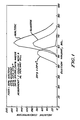
- a test was run using a dealuminated Y-type zeolite having 9 aluminium atoms per unit cell, to determine the separation of maltose from a mixture representative of that expected from an enzymatic degradation of starch by beta-amylase or diastase.
- the dealuminated Y-type zeolite of this example was bound in Bentolite clay and had an average bulk density of 0.536 g/ml.
- the adsorbent was packed in an 8.4 mm diameter column having a total volume of 70 ml.
- the feed mixture consisted of 10 g of the carbohydrate mixture given in Table 1 diluted with 10 g of distilled water, resulting in a solution containing 50% of solids.
- Maltrin 150 is a commercially available mixture containing 88% of saccharides having a degree of polymerization of 4 or more (DP4+), 8.1% of maltotriose, having a DP of 3, about 3% of maltose and less than 2% of glucose.
- FIG. 3 shows the separation of maltose from DP3 and DP4+, but glucose is eluted at the same time as the maltose with no separation.
- the difference between the retention volume peaks of maltose and DP3 and DP4+ is 8.5, and good separation can be achieved thereby.
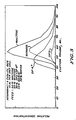
- Example 2 was repeated, except that the faujasite had 38 aluminium atoms per unit cell.
- the glucose is eluted with the maltose.
- Maltotriose has less than 1 ml difference in retention volume, indicating that no separation of maltose from either glucose or DP3 saccharides is practically realized.
Landscapes
- Chemical & Material Sciences (AREA)
- Life Sciences & Earth Sciences (AREA)
- Biochemistry (AREA)
- Organic Chemistry (AREA)
- Treatment Of Liquids With Adsorbents In General (AREA)
- Saccharide Compounds (AREA)
Applications Claiming Priority (2)
| Application Number | Priority Date | Filing Date | Title |
|---|---|---|---|
| US06/902,739 US4707190A (en) | 1986-09-02 | 1986-09-02 | Process for separating maltose from mixtures of maltose, glucose and other saccharides |
| US902739 | 1986-09-02 |
Publications (3)
| Publication Number | Publication Date |
|---|---|
| EP0260003A2 true EP0260003A2 (fr) | 1988-03-16 |
| EP0260003A3 EP0260003A3 (en) | 1989-01-18 |
| EP0260003B1 EP0260003B1 (fr) | 1991-10-23 |
Family
ID=25416337
Family Applications (1)
| Application Number | Title | Priority Date | Filing Date |
|---|---|---|---|
| EP87307412A Expired EP0260003B1 (fr) | 1986-09-02 | 1987-08-21 | Procédé pour séparer la maltose à partir de mélanges de maltose et de glucose ou d'autres saccharides |
Country Status (5)
| Country | Link |
|---|---|
| US (1) | US4707190A (fr) |
| EP (1) | EP0260003B1 (fr) |
| JP (1) | JPS63146893A (fr) |
| CA (1) | CA1290330C (fr) |
| DE (1) | DE3774049D1 (fr) |
Families Citing this family (3)
| Publication number | Priority date | Publication date | Assignee | Title |
|---|---|---|---|---|
| US5000794A (en) * | 1989-08-17 | 1991-03-19 | Uop | Process for separating glucose and mannose with dealuminated Y zeolites |
| US20030021866A1 (en) * | 2001-07-24 | 2003-01-30 | Grain Processing Corporation | Method for making wine |
| CN103409484B (zh) * | 2013-08-23 | 2015-03-11 | 山东福田药业有限公司 | 一种超高麦芽糖浆的制备方法 |
Family Cites Families (16)
| Publication number | Priority date | Publication date | Assignee | Title |
|---|---|---|---|---|
| US2985589A (en) * | 1957-05-22 | 1961-05-23 | Universal Oil Prod Co | Continuous sorption process employing fixed bed of sorbent and moving inlets and outlets |
| US3040777A (en) * | 1959-04-10 | 1962-06-26 | Universal Oil Prod Co | Rotary valve |
| US3293192A (en) * | 1965-08-23 | 1966-12-20 | Grace W R & Co | Zeolite z-14us and method of preparation thereof |
| US3422848A (en) * | 1966-06-09 | 1969-01-21 | Universal Oil Prod Co | Multiport rotary disc valve with liner protection means |
| US3706812A (en) * | 1970-12-07 | 1972-12-19 | Universal Oil Prod Co | Fluid-solid contacting apparatus |
| JPS51110048A (en) * | 1975-02-21 | 1976-09-29 | Toray Industries | Toruino bunrihoho |
| ZA774573B (en) * | 1976-08-02 | 1978-06-28 | Uop Inc | Process for separating a monosaccharide from an oligosaccharide by selective adsorption |
| JPS53130754A (en) * | 1977-04-21 | 1978-11-15 | Hokkaido Sugar Co | Purification process of maltose solution |
| JPS6055162B2 (ja) * | 1977-05-26 | 1985-12-04 | 参松工業株式会社 | カラムクロマト分離法 |
| JPS5577896A (en) * | 1978-12-07 | 1980-06-12 | Meiji Seika Kaisha Ltd | Preparation of high-purity maltose |
| US4226639A (en) * | 1979-05-25 | 1980-10-07 | Uop Inc. | Silica guard bed for adsorbent used in an aqueous system |
| US4453029A (en) * | 1979-12-19 | 1984-06-05 | Mobil Oil Corporation | Selective sorption by zeolites |
| US4405377A (en) * | 1982-02-10 | 1983-09-20 | Uop Inc. | Process for the separation of monosaccharides |
| US4402832A (en) * | 1982-08-12 | 1983-09-06 | Uop Inc. | High efficiency continuous separation process |
| US4478721A (en) * | 1982-08-12 | 1984-10-23 | Uop Inc. | High efficiency continuous separation process |
| US4471114A (en) * | 1982-12-30 | 1984-09-11 | Union Carbide Corporation | Separation of mannose by selective adsorption on zeolitic molecular sieves |
-
1986
- 1986-09-02 US US06/902,739 patent/US4707190A/en not_active Expired - Lifetime
-
1987
- 1987-08-21 EP EP87307412A patent/EP0260003B1/fr not_active Expired
- 1987-08-21 DE DE8787307412T patent/DE3774049D1/de not_active Expired - Fee Related
- 1987-09-01 CA CA000545882A patent/CA1290330C/fr not_active Expired - Fee Related
- 1987-09-02 JP JP62220070A patent/JPS63146893A/ja active Pending
Also Published As
| Publication number | Publication date |
|---|---|
| EP0260003A3 (en) | 1989-01-18 |
| JPS63146893A (ja) | 1988-06-18 |
| DE3774049D1 (de) | 1991-11-28 |
| EP0260003B1 (fr) | 1991-10-23 |
| CA1290330C (fr) | 1991-10-08 |
| US4707190A (en) | 1987-11-17 |
Similar Documents
| Publication | Publication Date | Title |
|---|---|---|
| US4293346A (en) | Simulated countercurrent sorption process employing ion exchange resins with backflushing | |
| US4367364A (en) | Process for separating normal paraffins using silicalite adsorbent | |
| US4248737A (en) | Technique to reduce the zeolite molecular sieve solubility in an aqueous system | |
| US4319929A (en) | Simulated countercurrent sorption process employing ion exchange resins with periodic backflushing | |
| US4837315A (en) | Process for separating glucose and mannose with CA/NH4 - exchanged ion exchange resins | |
| US4238243A (en) | Technique to reduce the zeolite molecular sieve solubility in an aqueous system | |
| EP0302970A1 (fr) | Procédé pour séparer le psicose d'un autre cétose | |
| US4486618A (en) | Process for separating C6 olefin hydrocarbons | |
| US4295994A (en) | Cellulose acetate butyrate bound zeolite adsorbents | |
| US4372876A (en) | Zeolite molecular sieve adsorbent for an aqueous system | |
| US4373025A (en) | Process for the isomerization of glucose | |
| US4226977A (en) | Process for separating a ketose from an aldose by selective adsorption | |
| US4461649A (en) | Desorption technique | |
| US4382001A (en) | Use of activated carbon for separation of ethanol from water | |
| US4316819A (en) | Technique to reduce the zeolite molecular sieve solubility in an aqueous system | |
| US4358322A (en) | Process for separating a ketose from an aldose by selective adsorption | |
| US5000794A (en) | Process for separating glucose and mannose with dealuminated Y zeolites | |
| US4431456A (en) | Technique to reduce the zeolite molecular sieve solubility in an aqueous system | |
| US4298501A (en) | Technique to reduce the zeolite molecular sieve solubility in an aqueous system | |
| EP0260003B1 (fr) | Procédé pour séparer la maltose à partir de mélanges de maltose et de glucose ou d'autres saccharides | |
| US4345946A (en) | Process for use of a zeolite molecular sieve adsorbent in an aqueous system | |
| US4343623A (en) | Use of esterified silica for separation of ethanol from water | |
| US4226639A (en) | Silica guard bed for adsorbent used in an aqueous system | |
| US4442285A (en) | Process for separating glucose from fructose by selective adsorption | |
| US4287001A (en) | Esterified aluminosilicate adsorbent as for resolution of sugar components |
Legal Events
| Date | Code | Title | Description |
|---|---|---|---|
| PUAI | Public reference made under article 153(3) epc to a published international application that has entered the european phase |
Free format text: ORIGINAL CODE: 0009012 |
|
| AK | Designated contracting states |
Kind code of ref document: A2 Designated state(s): DE FR GB IT NL |
|
| PUAL | Search report despatched |
Free format text: ORIGINAL CODE: 0009013 |
|
| AK | Designated contracting states |
Kind code of ref document: A3 Designated state(s): DE FR GB IT NL |
|
| 17P | Request for examination filed |
Effective date: 19890626 |
|
| 17Q | First examination report despatched |
Effective date: 19901206 |
|
| RAP1 | Party data changed (applicant data changed or rights of an application transferred) |
Owner name: UOP (A NEW YORK GENERAL PARTNERSHIP) |
|
| GRAA | (expected) grant |
Free format text: ORIGINAL CODE: 0009210 |
|
| AK | Designated contracting states |
Kind code of ref document: B1 Designated state(s): DE FR GB IT NL |
|
| PG25 | Lapsed in a contracting state [announced via postgrant information from national office to epo] |
Ref country code: NL Effective date: 19911023 Ref country code: FR Effective date: 19911023 |
|
| REF | Corresponds to: |
Ref document number: 3774049 Country of ref document: DE Date of ref document: 19911128 |
|
| ITF | It: translation for a ep patent filed | ||
| EN | Fr: translation not filed | ||
| NLV1 | Nl: lapsed or annulled due to failure to fulfill the requirements of art. 29p and 29m of the patents act | ||
| PLBE | No opposition filed within time limit |
Free format text: ORIGINAL CODE: 0009261 |
|
| STAA | Information on the status of an ep patent application or granted ep patent |
Free format text: STATUS: NO OPPOSITION FILED WITHIN TIME LIMIT |
|
| 26N | No opposition filed | ||
| PGFP | Annual fee paid to national office [announced via postgrant information from national office to epo] |
Ref country code: GB Payment date: 19930730 Year of fee payment: 7 |
|
| PGFP | Annual fee paid to national office [announced via postgrant information from national office to epo] |
Ref country code: DE Payment date: 19930823 Year of fee payment: 7 |
|
| PG25 | Lapsed in a contracting state [announced via postgrant information from national office to epo] |
Ref country code: GB Effective date: 19940821 |
|
| GBPC | Gb: european patent ceased through non-payment of renewal fee |
Effective date: 19940821 |
|
| PG25 | Lapsed in a contracting state [announced via postgrant information from national office to epo] |
Ref country code: DE Effective date: 19950503 |
|
| PG25 | Lapsed in a contracting state [announced via postgrant information from national office to epo] |
Ref country code: IT Free format text: LAPSE BECAUSE OF NON-PAYMENT OF DUE FEES;WARNING: LAPSES OF ITALIAN PATENTS WITH EFFECTIVE DATE BEFORE 2007 MAY HAVE OCCURRED AT ANY TIME BEFORE 2007. THE CORRECT EFFECTIVE DATE MAY BE DIFFERENT FROM THE ONE RECORDED. Effective date: 20050821 |