EP0262082A2 - Glimmerband, reich an Harz - Google Patents
Glimmerband, reich an Harz Download PDFInfo
- Publication number
- EP0262082A2 EP0262082A2 EP87630198A EP87630198A EP0262082A2 EP 0262082 A2 EP0262082 A2 EP 0262082A2 EP 87630198 A EP87630198 A EP 87630198A EP 87630198 A EP87630198 A EP 87630198A EP 0262082 A2 EP0262082 A2 EP 0262082A2
- Authority
- EP
- European Patent Office
- Prior art keywords
- resin
- tape
- percent
- mica
- epoxy
- Prior art date
- Legal status (The legal status is an assumption and is not a legal conclusion. Google has not performed a legal analysis and makes no representation as to the accuracy of the status listed.)
- Withdrawn
Links
Images
Classifications
-
- B—PERFORMING OPERATIONS; TRANSPORTING
- B32—LAYERED PRODUCTS
- B32B—LAYERED PRODUCTS, i.e. PRODUCTS BUILT-UP OF STRATA OF FLAT OR NON-FLAT, e.g. CELLULAR OR HONEYCOMB, FORM
- B32B19/00—Layered products comprising a layer of natural mineral fibres or particles, e.g. asbestos, mica
- B32B19/02—Layered products comprising a layer of natural mineral fibres or particles, e.g. asbestos, mica the layer of fibres or particles being impregnated or embedded in a plastic substance
-
- B—PERFORMING OPERATIONS; TRANSPORTING
- B32—LAYERED PRODUCTS
- B32B—LAYERED PRODUCTS, i.e. PRODUCTS BUILT-UP OF STRATA OF FLAT OR NON-FLAT, e.g. CELLULAR OR HONEYCOMB, FORM
- B32B19/00—Layered products comprising a layer of natural mineral fibres or particles, e.g. asbestos, mica
- B32B19/06—Layered products comprising a layer of natural mineral fibres or particles, e.g. asbestos, mica next to a fibrous or filamentary layer
-
- H—ELECTRICITY
- H01—ELECTRIC ELEMENTS
- H01B—CABLES; CONDUCTORS; INSULATORS; SELECTION OF MATERIALS FOR THEIR CONDUCTIVE, INSULATING OR DIELECTRIC PROPERTIES
- H01B3/00—Insulators or insulating bodies characterised by the insulating materials; Selection of materials for their insulating or dielectric properties
- H01B3/02—Insulators or insulating bodies characterised by the insulating materials; Selection of materials for their insulating or dielectric properties mainly consisting of inorganic substances
- H01B3/04—Insulators or insulating bodies characterised by the insulating materials; Selection of materials for their insulating or dielectric properties mainly consisting of inorganic substances mica
-
- B—PERFORMING OPERATIONS; TRANSPORTING
- B32—LAYERED PRODUCTS
- B32B—LAYERED PRODUCTS, i.e. PRODUCTS BUILT-UP OF STRATA OF FLAT OR NON-FLAT, e.g. CELLULAR OR HONEYCOMB, FORM
- B32B2260/00—Layered product comprising an impregnated, embedded, or bonded layer wherein the layer comprises an impregnation, embedding, or binder material
- B32B2260/02—Composition of the impregnated, bonded or embedded layer
- B32B2260/021—Fibrous or filamentary layer
-
- B—PERFORMING OPERATIONS; TRANSPORTING
- B32—LAYERED PRODUCTS
- B32B—LAYERED PRODUCTS, i.e. PRODUCTS BUILT-UP OF STRATA OF FLAT OR NON-FLAT, e.g. CELLULAR OR HONEYCOMB, FORM
- B32B2260/00—Layered product comprising an impregnated, embedded, or bonded layer wherein the layer comprises an impregnation, embedding, or binder material
- B32B2260/04—Impregnation, embedding, or binder material
- B32B2260/046—Synthetic resin
-
- B—PERFORMING OPERATIONS; TRANSPORTING
- B32—LAYERED PRODUCTS
- B32B—LAYERED PRODUCTS, i.e. PRODUCTS BUILT-UP OF STRATA OF FLAT OR NON-FLAT, e.g. CELLULAR OR HONEYCOMB, FORM
- B32B2305/00—Condition, form or state of the layers or laminate
- B32B2305/07—Parts immersed or impregnated in a matrix
-
- B—PERFORMING OPERATIONS; TRANSPORTING
- B32—LAYERED PRODUCTS
- B32B—LAYERED PRODUCTS, i.e. PRODUCTS BUILT-UP OF STRATA OF FLAT OR NON-FLAT, e.g. CELLULAR OR HONEYCOMB, FORM
- B32B2307/00—Properties of the layers or laminate
- B32B2307/20—Properties of the layers or laminate having particular electrical or magnetic properties, e.g. piezoelectric
- B32B2307/204—Di-electric
-
- B—PERFORMING OPERATIONS; TRANSPORTING
- B32—LAYERED PRODUCTS
- B32B—LAYERED PRODUCTS, i.e. PRODUCTS BUILT-UP OF STRATA OF FLAT OR NON-FLAT, e.g. CELLULAR OR HONEYCOMB, FORM
- B32B2307/00—Properties of the layers or laminate
- B32B2307/20—Properties of the layers or laminate having particular electrical or magnetic properties, e.g. piezoelectric
- B32B2307/206—Insulating
-
- B—PERFORMING OPERATIONS; TRANSPORTING
- B32—LAYERED PRODUCTS
- B32B—LAYERED PRODUCTS, i.e. PRODUCTS BUILT-UP OF STRATA OF FLAT OR NON-FLAT, e.g. CELLULAR OR HONEYCOMB, FORM
- B32B2307/00—Properties of the layers or laminate
- B32B2307/50—Properties of the layers or laminate having particular mechanical properties
- B32B2307/546—Flexural strength; Flexion stiffness
-
- B—PERFORMING OPERATIONS; TRANSPORTING
- B32—LAYERED PRODUCTS
- B32B—LAYERED PRODUCTS, i.e. PRODUCTS BUILT-UP OF STRATA OF FLAT OR NON-FLAT, e.g. CELLULAR OR HONEYCOMB, FORM
- B32B2307/00—Properties of the layers or laminate
- B32B2307/70—Other properties
- B32B2307/726—Permeability to liquids, absorption
-
- B—PERFORMING OPERATIONS; TRANSPORTING
- B32—LAYERED PRODUCTS
- B32B—LAYERED PRODUCTS, i.e. PRODUCTS BUILT-UP OF STRATA OF FLAT OR NON-FLAT, e.g. CELLULAR OR HONEYCOMB, FORM
- B32B2363/00—Epoxy resins
-
- B—PERFORMING OPERATIONS; TRANSPORTING
- B32—LAYERED PRODUCTS
- B32B—LAYERED PRODUCTS, i.e. PRODUCTS BUILT-UP OF STRATA OF FLAT OR NON-FLAT, e.g. CELLULAR OR HONEYCOMB, FORM
- B32B2457/00—Electrical equipment
-
- Y—GENERAL TAGGING OF NEW TECHNOLOGICAL DEVELOPMENTS; GENERAL TAGGING OF CROSS-SECTIONAL TECHNOLOGIES SPANNING OVER SEVERAL SECTIONS OF THE IPC; TECHNICAL SUBJECTS COVERED BY FORMER USPC CROSS-REFERENCE ART COLLECTIONS [XRACs] AND DIGESTS
- Y10—TECHNICAL SUBJECTS COVERED BY FORMER USPC
- Y10T—TECHNICAL SUBJECTS COVERED BY FORMER US CLASSIFICATION
- Y10T428/00—Stock material or miscellaneous articles
- Y10T428/25—Web or sheet containing structurally defined element or component and including a second component containing structurally defined particles
- Y10T428/251—Mica
-
- Y—GENERAL TAGGING OF NEW TECHNOLOGICAL DEVELOPMENTS; GENERAL TAGGING OF CROSS-SECTIONAL TECHNOLOGIES SPANNING OVER SEVERAL SECTIONS OF THE IPC; TECHNICAL SUBJECTS COVERED BY FORMER USPC CROSS-REFERENCE ART COLLECTIONS [XRACs] AND DIGESTS
- Y10—TECHNICAL SUBJECTS COVERED BY FORMER USPC
- Y10T—TECHNICAL SUBJECTS COVERED BY FORMER US CLASSIFICATION
- Y10T442/00—Fabric [woven, knitted, or nonwoven textile or cloth, etc.]
- Y10T442/10—Scrim [e.g., open net or mesh, gauze, loose or open weave or knit, etc.]
- Y10T442/102—Woven scrim
- Y10T442/133—Inorganic fiber-containing scrim
- Y10T442/147—Including a mica layer
-
- Y—GENERAL TAGGING OF NEW TECHNOLOGICAL DEVELOPMENTS; GENERAL TAGGING OF CROSS-SECTIONAL TECHNOLOGIES SPANNING OVER SEVERAL SECTIONS OF THE IPC; TECHNICAL SUBJECTS COVERED BY FORMER USPC CROSS-REFERENCE ART COLLECTIONS [XRACs] AND DIGESTS
- Y10—TECHNICAL SUBJECTS COVERED BY FORMER USPC
- Y10T—TECHNICAL SUBJECTS COVERED BY FORMER US CLASSIFICATION
- Y10T442/00—Fabric [woven, knitted, or nonwoven textile or cloth, etc.]
- Y10T442/20—Coated or impregnated woven, knit, or nonwoven fabric which is not [a] associated with another preformed layer or fiber layer or, [b] with respect to woven and knit, characterized, respectively, by a particular or differential weave or knit, wherein the coating or impregnation is neither a foamed material nor a free metal or alloy layer
- Y10T442/2475—Coating or impregnation is electrical insulation-providing, -improving, or -increasing, or conductivity-reducing
Definitions
- the technical field to which this invention pertains is composite insulation with structurally defined elements, in particular, insulation having a composition containing mica.
- B-staged, resin rich, electrically insulating tapes have been known for many years. These tapes find one of their greatest uses in large rotating electrical machines or high voltage motors. Typically, these tapes comprise an epoxy resin impregnated mica in the form of flakes, splittings or paper, supported on an electrically insulating scrim. The impregnating resin is then B-staged or partially cross-linked during the manufacturing process. Then, since the material in the B-staged state is manufactured in large sheets, these sheets are slit into desired widths to form the tapes, which may later be used to wrap about an electrical conductor to be insulated and placed in an oven where, under heat or heat and pressure, the resin is cured.
- the physical properties of the cured insulation are important, such as high flexural strength and low dissipation factors which are necessary to meet the electrical and physical properties required in the industry.
- the present invention teaches a B-staged, epoxy-phenolic novolac, resin rich, mica insulting tape comprising a layer of mica supported by at least one layer of an electrically insulating or nonconductive scrim, said mica paper impregnated with an epoxy-phenolic novolac resin wherein the improvement comprises the addition to the epoxy-phenolic novolac resin of about 0.1 percent to about 0.5 percent by weight (based on the weight of mica) of an alkoxy titanate, said tape will have excellent shelf life in the B-staged condition and improved water resistance, low dissipation factor and high flexural strength when cured as well as possessing a rapid cure cycle.
- Another aspect of the invention is a cured electrically insulating epoxy-phenolic novolac, impregnated, mica tape which has excellent dielectric strength, dissipation factor, improved moisture resistance and high flexural strength.
- Another aspect of the invention is a method of making the resin rich tape of the present invention.
- Also taught in this invention is a method of using the resin rich tape of the present invention.
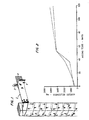
- Figure 1 depicts the resin rich mica tape 2 of the present invention wrapped about an electrically conductive substrate 3.
- the typical tape 2 of the present invention will comprise an epoxy-phenolic novolac resin impregnated mica layer 6 having disposed on either side electrically insulating scrims or supports 4 and 8. These scrims may be made of the same material or different insulating materials.
- the scrims or sheet backing supports 4 and 8 should be made of an electrically insulating or nonconductive material such as glass cloth, cellulose polyester, polyester terephthalate or the like and may be in the form of felted fibers, woven or braided cloth or such similar construction. Such materials are conventional and well known. These scrims are typically very thin ranging in thickness from about 0.5 mils to about 10 mils with about 0.8 mils to 3 mils preferred.
- a layer of mica which may be in the form of water disintegrated-integrated mica paper, calcined mica paper, mica flakes, flake paper or splittings.
- the mica is commonly available in industrial varieties which are based on muscovite or phlogopite mica.
- the phlogopite has the higher thermal properties and coefficient of thermal expansion.
- the thickness of the mica layer on the tape of the present invention should be about 2 mils to about 10 mils with about 3 mils to about 6 mils being preferred.
- the epoxy-phenolic novolac resin is impregnated into the mica. Again, this is done using conventional techniques such as brushing, dripping, spraying, coating etc.
- the resin should have a viscosity in the range of about 10 cps to about 50 cps at 25°C to enhance its ability to fully impregnate the mica. However, higher viscosity resins may be used when means other than gravity or vacuum are used to aid the impregnation process, such as heating.
- the resin which is introduced into the mica will result in amounts ranging from about 20 percent by weight to about 50 percent by weight of the total composite. These figures vary depending on the type of mica used and the final processing properties desired. However, too much resin will create problems of oozing or flowing of the resin out of the tape during the final processing and too little resin will create voids in the final insulation leading to reduced dielectric properties.
- epoxy-phenolic novolac resin used will be determined, again, by the particular system desired. However, any conventional epoxy-phenolic novolac resin may be used. Typically, such a resin system is comprised of an epoxy resin to which is added a phenolic accelerator. Each of these components are conventional in nature and selected to react and cure at the desired temperatures to a stable set.
- the epoxy thermosetting resin may be any epoxy resin having 1, 2 epoxy groups, additionally, the resin should contain more than one epoxy group per molecule.
- the epoxy resin may be a cycloaliphatic epoxy resin, such as bis(3,4-epoxy-6-methyl-cyclohexyl methyl) adipate, vinyl cyclohexane dioxide, or glycidyl ethers of poly phenols epoxy resin such as bisphenol A diglycidyl ether epoxy resin, phenol formaldehyde novolac polyglycidyl ether epoxy resin, epoxy cresol novolacs or mixtures thereof. This list should not be considered exhaustive as any 1, 2 epoxy would work depending on the particular combination of phenolic accelerator and titanate selected.
- the preferred epoxy resins are the cycloaliphatic epoxy resins such as 3, 4-epoxy cyclohexyl methyl-(3,4-epoxy) cyclohexane carboxylate such as ERL 4221 sold by Union Carbide Plastics Company or Cy 179 sold by Ciba Geigy.
- the phenolic novolac accelerator which is added to the epoxy resin to aid in cross-linking of the epoxy resins are those commonly known, i.e. bis phenol A, pyrogallol, catechol, hydroquinone, etc. to react with these epoxies and would be known to those skilled in the art and need not be listed here.
- the preferred phenolic novolac resin is available as EA 606 by Reichhold Corporation.
- the phenolic accelerator may be mixed with the epoxy resin in quantities ranging from stoichiometric down to less than 1 percent by weight of the epoxy resin depending on the epoxy system chosen.
- the accelerator selected, the epoxy resin and the titanate chosen should result in the entire resin system designed to achieve the cure rate and physical properties desired for the particular application.
- the phenolic accelerator is present in amounts ranging from about 0.5 percent by weight to about 15 percent by weight of the epoxy resin.
- resin constituents are often mixed in conventional solvents to lower their viscosity and aid in producing a homogenous impregnant.
- the solvents used are conventional acetone, xylene, toluene, methyl ethyl ketone, etc. and the resin concentration will typically be about 20 percent to about 50 percent solids.
- the important feature of the present invention is the introduction into the resin mixture (the epoxy resin and the phenolic novolac accelerator) of an alkoxy titanate.
- a list of typical monoalkoxy and neoalkoxy titanates is shown in the Table below:
- Neoalkoxy triisostearoyl titanate Neoalkoxy, dodecylbenzenesulfonyl titanate Neoalkoxy, tri(dioctylphosphato) titante Neoalkoxy, tri(dioctylpyrophosphato) titanate Isopropyl, tri(dioctylpyrophosphato) titanate Isopropyl, triisostearoyl titanate Isopropyl, trimethacryl titanate Isopropyl, triacryl titanate Isopropyl, tri(tetraethylene triamino) titanate Isopropyl, tri(dioctylphosphato) titanate Tri(butyloctylpyrohosphato) isopropyl titanate
- alkoxy titanates are available from Kenrich Petrochemicals, Bayonne, New Jersey. Once again the disclosure herein should not be limited to these particular alkoxy titanates. Any number of other similar alkoxy titanates may be used to practice this invention.
- the preferred alkoxy titanate is the monoalkoxy tri(dioctylpyrophosphato) titanate sold by Kenrich as KR38s. These titanates are added to the resin system in quantities ranging from about 0.1 percent by weight to about 0.5 percent by weight as a percentage of the mica in the tape. The amount will vary again depending on the resin system and the cure profile desired of the final tape.
- the impregnated tape is then passed through a drying oven to remove any solvent which may be present in the resin and partially cure the resin, or B-stage it, by heating it to a temperture which is high enough to start the cross-linking process between the epoxy resin and the penolic accelerator. Once the required extent of cross-linking has been accomplished, the tape is cooled to room temperature (below about 100°F) and placed on a take-up roll.
- the temperatures and length of time the resin is exposed to temperature as well as the amount of cross-linking of the resin to reach an acceptable B-staging is specific to each resin system and would be a matter of simple experimentation to determine. However, typically the impregnated tape is heated to temperatures ranging from about 120°C to about 160°C and exposed to these temperatures for periods of time ranging from about 1 to about 10 minutes.
- the tape is B-staged when the epoxy is in a solid state but not cured, dry to the touch and nontacky containing less than about 5 percent by weight of any solvent and the resin is capable of fusion or further cross-linking when heated.
- the B-staged tapes are then ready for application to the substrate and final cure.
- the application consists of conventionally wrapping the substrate in such a manner so as to completely cover the substrate.
- the wrapped substrate is then placed in position within the unit in which it will be used and the unit is exposed to heat and pressure sufficient enough to cure the resin.
- Conventional curing ovens at temperatures of about 275°F (135°C) to about 356°F (180°C) will be sufficient to cure the typical resins described herein.
- One the primary advantages of this particular resin system is that the curing times of these resin systems is considerably shorter than that of the prior art resin systems as demonstrated in the test data below.
- a base laminate 12 inches by 12 inches was made using a 2.0 mil glass scrim available from Burlington Corporation as 1297. Deposited on this scrim was a layer of muscovite mica paper 4 mils thick and atop this mica layer was placed a polyester mat 0.8 mils thick available from Kendall Corporation as Webril SM 275-1.
- a basic resin mixture was then prepared which would act as the control resin having no titanates present.
- the composition consisted of 418 grams of acetone, 149 grams of EA606 resin and 222 grams of CY179 resin.
- a second mixture of the titanate which was to be added to the control mixture was prepared by mixing 10 grams of KR38s (isopropyl tri(dioctyle pyrophosphato) titanate) with 90 grams of acetone. Thereafter, two 100 gram samples of the control resin were mixed with 2.2. grams of the titanate and 1.1 grams of the titanate mixture respectively resulting in mixtures "A" and "B” containing 0.47 percent and 0.23 percent by weight of solids of the resin in the mixtures respectively.
- the samples were also subjected to testing to determine the rate of cure required to form a stable insulating layer about the intended substrate.
- the test entailed pressing two layers of each sample together for one hour at 50 psi and 300°F (148.9°C).
- the samples were then cooled under pressure and measured for thickness.
- the samples were then post-cured overnight (16 hours) at 300°F (148.9°C) at atmospheric pressure and measured again and tested for dissipation factor and flexural strength.
- Table 2 represents the results of the two measurements to determine form stability of the cured resin.
- the test specimens were measured after the initial one hour cure and the same position on the specimen was again measured after the sixteen hour post-cure cycle.
- the control samples increased in thickness considerably while the titanate samples showed virtually no dimensional change.
- This data illustrates that form stability (virtually 100 percent resin cure) can be achieved after one hour exposure to 300°F (150°C) with this resin system.
- Table 3 shows the dissipation factor of the three test specimens at different voltages. As may seen, all three samples have acceptable dissipation factors.
- the laminates prepared using the titanate exhibited the same dissipation factor regardless of the process cycle. That is, 8 hours press cure at 300°F (150°C) plus 50 psi versus one hour press cure at 300°F (150°C) plus 50 psi with an overnight post cure at 300°F (150°C).
- the control laminates having no titanates do exhibit a substantial difference.
- One explanation for this may be that the additional eight hours for the overnight post cure contributes to additional crosslinking of the epoxy.
Landscapes
- Chemical & Material Sciences (AREA)
- Inorganic Chemistry (AREA)
- Insulating Bodies (AREA)
- Reinforced Plastic Materials (AREA)
- Laminated Bodies (AREA)
Applications Claiming Priority (2)
| Application Number | Priority Date | Filing Date | Title |
|---|---|---|---|
| US06/910,052 US4704322A (en) | 1986-09-22 | 1986-09-22 | Resin rich mica tape |
| US910052 | 1986-09-22 |
Publications (2)
| Publication Number | Publication Date |
|---|---|
| EP0262082A2 true EP0262082A2 (de) | 1988-03-30 |
| EP0262082A3 EP0262082A3 (de) | 1989-03-15 |
Family
ID=25428237
Family Applications (1)
| Application Number | Title | Priority Date | Filing Date |
|---|---|---|---|
| EP19870630198 Withdrawn EP0262082A3 (de) | 1986-09-22 | 1987-09-21 | Glimmerband, reich an Harz |
Country Status (3)
| Country | Link |
|---|---|
| US (1) | US4704322A (de) |
| EP (1) | EP0262082A3 (de) |
| JP (1) | JPS63146308A (de) |
Families Citing this family (33)
| Publication number | Priority date | Publication date | Assignee | Title |
|---|---|---|---|---|
| US4818909A (en) * | 1988-01-15 | 1989-04-04 | General Electric Company | Insulated coil assembly |
| US5667893A (en) * | 1992-10-09 | 1997-09-16 | Minnesota Mining And Manufacturing Company | Substrate coated or impregnated with flexible epoxy composition |
| US5618891A (en) * | 1995-03-29 | 1997-04-08 | General Electric Co. | Solventless resin composition having minimal reactivity at room temperature |
| DE19612211C2 (de) * | 1996-03-27 | 2000-05-25 | Isola Ag | Sandwichstruktur |
| US6361632B1 (en) | 1999-11-24 | 2002-03-26 | Siemens Westinghouse Power Corporation | Method to increase compressive creep capabilities of high voltage coil insulation |
| CA2344564C (en) * | 2000-09-14 | 2008-07-22 | General Electric Canada Inc. | Graded electric field insulation system for dynamoelectric machine |
| US7781063B2 (en) | 2003-07-11 | 2010-08-24 | Siemens Energy, Inc. | High thermal conductivity materials with grafted surface functional groups |
| US7033670B2 (en) | 2003-07-11 | 2006-04-25 | Siemens Power Generation, Inc. | LCT-epoxy polymers with HTC-oligomers and method for making the same |
| US20070089899A1 (en) * | 2004-02-25 | 2007-04-26 | Roberts Jonathan W | Mica tape having maximized mica content |
| US7592045B2 (en) * | 2004-06-15 | 2009-09-22 | Siemens Energy, Inc. | Seeding of HTC fillers to form dendritic structures |
| US7776392B2 (en) * | 2005-04-15 | 2010-08-17 | Siemens Energy, Inc. | Composite insulation tape with loaded HTC materials |
| US20080050580A1 (en) * | 2004-06-15 | 2008-02-28 | Stevens Gary C | High Thermal Conductivity Mica Paper Tape |
| US8216672B2 (en) * | 2004-06-15 | 2012-07-10 | Siemens Energy, Inc. | Structured resin systems with high thermal conductivity fillers |
| US7553781B2 (en) * | 2004-06-15 | 2009-06-30 | Siemens Energy, Inc. | Fabrics with high thermal conductivity coatings |
| US20050274774A1 (en) * | 2004-06-15 | 2005-12-15 | Smith James D | Insulation paper with high thermal conductivity materials |
| US20050277721A1 (en) | 2004-06-15 | 2005-12-15 | Siemens Westinghouse Power Corporation | High thermal conductivity materials aligned within resins |
| US7553438B2 (en) * | 2004-06-15 | 2009-06-30 | Siemens Energy, Inc. | Compression of resin impregnated insulating tapes |
| US7651963B2 (en) * | 2005-04-15 | 2010-01-26 | Siemens Energy, Inc. | Patterning on surface with high thermal conductivity materials |
| US7846853B2 (en) * | 2005-04-15 | 2010-12-07 | Siemens Energy, Inc. | Multi-layered platelet structure |
| US7955661B2 (en) * | 2005-06-14 | 2011-06-07 | Siemens Energy, Inc. | Treatment of micropores in mica materials |
| US7781057B2 (en) | 2005-06-14 | 2010-08-24 | Siemens Energy, Inc. | Seeding resins for enhancing the crystallinity of polymeric substructures |
| US7655295B2 (en) | 2005-06-14 | 2010-02-02 | Siemens Energy, Inc. | Mix of grafted and non-grafted particles in a resin |
| US7851059B2 (en) * | 2005-06-14 | 2010-12-14 | Siemens Energy, Inc. | Nano and meso shell-core control of physical properties and performance of electrically insulating composites |
| US8357433B2 (en) * | 2005-06-14 | 2013-01-22 | Siemens Energy, Inc. | Polymer brushes |
| US20070026221A1 (en) * | 2005-06-14 | 2007-02-01 | Siemens Power Generation, Inc. | Morphological forms of fillers for electrical insulation |
| US7547847B2 (en) * | 2006-09-19 | 2009-06-16 | Siemens Energy, Inc. | High thermal conductivity dielectric tape |
| EP2637864B1 (de) | 2010-11-10 | 2017-01-04 | Cogebi S.A. | Band auf basis von glimmer |
| DE102011079489A1 (de) * | 2011-07-20 | 2013-01-24 | Siemens Aktiengesellschaft | Verfahren zum Herstellen eines Bandes für ein elektrisches Isolationssystem |
| CN107710337B (zh) | 2015-06-12 | 2019-11-26 | 纳幕尔杜邦公司 | 用于将云母纸裹绕在电导体上的方法以及适用于该方法的云母纸带 |
| US10848027B2 (en) | 2016-11-17 | 2020-11-24 | General Electric Company | Electrical insulation systems and insulated components for electrical machine |
| DE102016014267A1 (de) * | 2016-11-30 | 2018-05-30 | Hexion GmbH | Zusammensetzung für ein Isolierband |
| DE102017008925A1 (de) | 2017-09-25 | 2019-03-28 | Hexion GmbH | Imprägnierharzmischung |
| CN109454970B (zh) * | 2018-11-08 | 2020-11-03 | 哈尔滨电机厂有限责任公司 | 一种高导热多胶环氧玻璃丝粉云母带的制造方法 |
Family Cites Families (10)
| Publication number | Priority date | Publication date | Assignee | Title |
|---|---|---|---|---|
| US3776978A (en) * | 1972-01-07 | 1973-12-04 | M Markovitz | Epoxy resins containing phenolic accel-erators and organic titanates |
| JPS5074200A (de) * | 1973-11-07 | 1975-06-18 | ||
| JPS5611964B2 (de) * | 1974-03-25 | 1981-03-18 | ||
| JPS51114500A (en) * | 1975-04-02 | 1976-10-08 | Hitachi Ltd | Thermosetting resin compositions |
| US3998983A (en) * | 1975-06-27 | 1976-12-21 | Westinghouse Electric Corporation | Resin rich epoxide-mica flexible high voltage insulation |
| JPS5361100A (en) * | 1976-11-12 | 1978-06-01 | Hitachi Ltd | Method of manufacturing epoxy resin prepreg insulated tape |
| JPS5361099A (en) * | 1976-11-12 | 1978-06-01 | Hitachi Ltd | Method of manufacturing epoxy prepreg mica tape |
| US4512928A (en) * | 1979-08-29 | 1985-04-23 | Kenrich Petrochemicals, Inc. | Pyrophosphato titanate adducts |
| JPS57119416A (en) * | 1981-01-19 | 1982-07-24 | Hitachi Ltd | Electrically insulating prepreg |
| US4374892A (en) * | 1981-06-03 | 1983-02-22 | Essex Group, Inc. | Moisture resistant insulating mica tape comprising a monoalkoxy titanate |
-
1986
- 1986-09-22 US US06/910,052 patent/US4704322A/en not_active Expired - Lifetime
-
1987
- 1987-09-21 EP EP19870630198 patent/EP0262082A3/de not_active Withdrawn
- 1987-09-22 JP JP62238593A patent/JPS63146308A/ja active Pending
Also Published As
| Publication number | Publication date |
|---|---|
| EP0262082A3 (de) | 1989-03-15 |
| JPS63146308A (ja) | 1988-06-18 |
| US4704322A (en) | 1987-11-03 |
Similar Documents
| Publication | Publication Date | Title |
|---|---|---|
| US4704322A (en) | Resin rich mica tape | |
| US3960803A (en) | Flexible nontacky prepreg for bonding coils in high voltage devices and method of making said prepreg | |
| US7547847B2 (en) | High thermal conductivity dielectric tape | |
| EP0036429B1 (de) | Elektrisch isolierendes glimmerband | |
| US3759734A (en) | Binding tape and method of making same | |
| US4606785A (en) | Simplified method of making high strength resin bonded mica tape | |
| US2320866A (en) | Flexible insulating material | |
| US3934332A (en) | Method of making electrical coils having improved strength and oil permeability | |
| US3991232A (en) | Method of manufacturing an electrically insulated coil | |
| US3878316A (en) | Laminate comprising non-woven fibrous backing | |
| US2995688A (en) | Electrical device and dielectric material therefor | |
| KR100610321B1 (ko) | 운모 함유 절연 테이프의 제조방법 | |
| US4058444A (en) | Process for preparing an insulated product | |
| US4661397A (en) | Polybutadiene bonded extremely flexible porous mica tape | |
| KR0143787B1 (ko) | 전기 시스템의 복합 코일 성형체 | |
| US3930915A (en) | Method of making an electrical article | |
| US3592711A (en) | High voltage flexible winding insulation tape | |
| JP4298174B2 (ja) | 促進剤を混合した含浸可能な微細雲母テープの製造法 | |
| US4683162A (en) | Mica product | |
| US4783365A (en) | Mica product | |
| US4601931A (en) | High density, moisture resistant mica cylinders | |
| EP0175635A2 (de) | Hochfeste feuchtbeständige Glimmerzylinder | |
| KR20030026205A (ko) | 콤포지트 적층판의 제조방법 | |
| US3591433A (en) | Method of impregnating a tape with a thermosetting ethoxylin resin mixture | |
| JP2019217668A (ja) | ドライマイカテープ、絶縁物、回転電機用コイル及び回転電機用コイルの製造方法 |
Legal Events
| Date | Code | Title | Description |
|---|---|---|---|
| PUAI | Public reference made under article 153(3) epc to a published international application that has entered the european phase |
Free format text: ORIGINAL CODE: 0009012 |
|
| AK | Designated contracting states |
Kind code of ref document: A2 Designated state(s): AT BE CH DE FR GB IT LI LU NL SE |
|
| PUAL | Search report despatched |
Free format text: ORIGINAL CODE: 0009013 |
|
| AK | Designated contracting states |
Kind code of ref document: A3 Designated state(s): AT BE CH DE FR GB IT LI LU NL SE |
|
| STAA | Information on the status of an ep patent application or granted ep patent |
Free format text: STATUS: THE APPLICATION IS DEEMED TO BE WITHDRAWN |
|
| 18D | Application deemed to be withdrawn |
Effective date: 19890916 |
|
| RIN1 | Information on inventor provided before grant (corrected) |
Inventor name: ROBERTS, JONATHAN |