EP0263521A2 - Analoga von Gonadoliberin mit verbesserter Löslichkeit, Verfahren zu deren Herstellung, diese enthaltende Mittel und und ihre Verwendung - Google Patents
Analoga von Gonadoliberin mit verbesserter Löslichkeit, Verfahren zu deren Herstellung, diese enthaltende Mittel und und ihre Verwendung Download PDFInfo
- Publication number
- EP0263521A2 EP0263521A2 EP87114702A EP87114702A EP0263521A2 EP 0263521 A2 EP0263521 A2 EP 0263521A2 EP 87114702 A EP87114702 A EP 87114702A EP 87114702 A EP87114702 A EP 87114702A EP 0263521 A2 EP0263521 A2 EP 0263521A2
- Authority
- EP
- European Patent Office
- Prior art keywords
- ser
- trp
- pro
- arg
- tyr
- Prior art date
- Legal status (The legal status is an assumption and is not a legal conclusion. Google has not performed a legal analysis and makes no representation as to the accuracy of the status listed.)
- Granted
Links
- 238000000034 method Methods 0.000 title claims abstract description 18
- 238000002360 preparation method Methods 0.000 title claims description 6
- -1 Aza-Gly-NH2 Chemical compound 0.000 claims abstract description 26
- COLNVLDHVKWLRT-MRVPVSSYSA-N D-phenylalanine Chemical compound OC(=O)[C@H](N)CC1=CC=CC=C1 COLNVLDHVKWLRT-MRVPVSSYSA-N 0.000 claims abstract description 23
- 108090000765 processed proteins & peptides Proteins 0.000 claims abstract description 23
- QIVBCDIJIAJPQS-SECBINFHSA-N D-tryptophane Chemical compound C1=CC=C2C(C[C@@H](N)C(O)=O)=CNC2=C1 QIVBCDIJIAJPQS-SECBINFHSA-N 0.000 claims abstract description 17
- MTCFGRXMJLQNBG-UWTATZPHSA-N D-Serine Chemical compound OC[C@@H](N)C(O)=O MTCFGRXMJLQNBG-UWTATZPHSA-N 0.000 claims abstract description 14
- 125000002252 acyl group Chemical group 0.000 claims abstract description 13
- 229910052739 hydrogen Inorganic materials 0.000 claims abstract description 9
- 239000001257 hydrogen Substances 0.000 claims abstract description 9
- UFHFLCQGNIYNRP-UHFFFAOYSA-N Hydrogen Chemical compound [H][H] UFHFLCQGNIYNRP-UHFFFAOYSA-N 0.000 claims abstract description 7
- 125000003118 aryl group Chemical group 0.000 claims abstract description 5
- 125000004435 hydrogen atom Chemical group [H]* 0.000 claims abstract description 5
- 125000006239 protecting group Chemical group 0.000 claims description 14
- 150000003839 salts Chemical class 0.000 claims description 12
- WKBOTKDWSSQWDR-UHFFFAOYSA-N Bromine atom Chemical compound [Br] WKBOTKDWSSQWDR-UHFFFAOYSA-N 0.000 claims description 9
- 125000000956 methoxy group Chemical group [H]C([H])([H])O* 0.000 claims description 9
- ZAMOUSCENKQFHK-UHFFFAOYSA-N Chlorine atom Chemical compound [Cl] ZAMOUSCENKQFHK-UHFFFAOYSA-N 0.000 claims description 8
- 150000008574 D-amino acids Chemical class 0.000 claims description 8
- PXGOKWXKJXAPGV-UHFFFAOYSA-N Fluorine Chemical compound FF PXGOKWXKJXAPGV-UHFFFAOYSA-N 0.000 claims description 8
- 239000000460 chlorine Substances 0.000 claims description 8
- 229910052801 chlorine Inorganic materials 0.000 claims description 8
- 239000011737 fluorine Substances 0.000 claims description 8
- 229910052731 fluorine Inorganic materials 0.000 claims description 8
- 125000002887 hydroxy group Chemical group [H]O* 0.000 claims description 6
- 125000000229 (C1-C4)alkoxy group Chemical group 0.000 claims description 5
- GDTBXPJZTBHREO-UHFFFAOYSA-N bromine Substances BrBr GDTBXPJZTBHREO-UHFFFAOYSA-N 0.000 claims description 5
- 229910052794 bromium Inorganic materials 0.000 claims description 5
- 125000003178 carboxy group Chemical group [H]OC(*)=O 0.000 claims description 5
- 125000004178 (C1-C4) alkyl group Chemical group 0.000 claims description 4
- 125000003277 amino group Chemical group 0.000 claims description 4
- 210000004899 c-terminal region Anatomy 0.000 claims description 4
- 239000012634 fragment Substances 0.000 claims description 4
- 125000001997 phenyl group Chemical group [H]C1=C([H])C([H])=C(*)C([H])=C1[H] 0.000 claims description 4
- 125000001041 indolyl group Chemical group 0.000 claims description 3
- 125000002496 methyl group Chemical group [H]C([H])([H])* 0.000 claims description 3
- 125000001624 naphthyl group Chemical group 0.000 claims description 3
- 125000002698 D-tryptophano group Chemical group C(=O)(O)[C@@H](CC1=CNC2=CC=CC=C12)N* 0.000 claims description 2
- 239000000654 additive Substances 0.000 claims description 2
- 125000000524 functional group Chemical group 0.000 claims description 2
- 239000002552 dosage form Substances 0.000 claims 1
- 239000008194 pharmaceutical composition Substances 0.000 claims 1
- 239000003755 preservative agent Substances 0.000 claims 1
- 102000004196 processed proteins & peptides Human genes 0.000 abstract description 12
- 125000003147 glycosyl group Chemical group 0.000 abstract description 8
- BEBCJVAWIBVWNZ-UHFFFAOYSA-N glycinamide Chemical compound NCC(N)=O BEBCJVAWIBVWNZ-UHFFFAOYSA-N 0.000 abstract description 5
- HQMLIDZJXVVKCW-UWTATZPHSA-N (2r)-2-aminopropanamide Chemical compound C[C@@H](N)C(N)=O HQMLIDZJXVVKCW-UWTATZPHSA-N 0.000 abstract description 4
- 125000001072 heteroaryl group Chemical group 0.000 abstract 2
- 239000003795 chemical substances by application Substances 0.000 abstract 1
- 150000002431 hydrogen Chemical class 0.000 abstract 1
- OKKJLVBELUTLKV-UHFFFAOYSA-N Methanol Chemical compound OC OKKJLVBELUTLKV-UHFFFAOYSA-N 0.000 description 282
- JOXIMZWYDAKGHI-UHFFFAOYSA-N toluene-4-sulfonic acid Chemical compound CC1=CC=C(S(O)(=O)=O)C=C1 JOXIMZWYDAKGHI-UHFFFAOYSA-N 0.000 description 145
- XEKOWRVHYACXOJ-UHFFFAOYSA-N Ethyl acetate Chemical compound CCOC(C)=O XEKOWRVHYACXOJ-UHFFFAOYSA-N 0.000 description 117
- XLYOFNOQVPJJNP-UHFFFAOYSA-N water Substances O XLYOFNOQVPJJNP-UHFFFAOYSA-N 0.000 description 103
- RTZKZFJDLAIYFH-UHFFFAOYSA-N Diethyl ether Chemical compound CCOCC RTZKZFJDLAIYFH-UHFFFAOYSA-N 0.000 description 68
- ZMXDDKWLCZADIW-UHFFFAOYSA-N N,N-Dimethylformamide Chemical compound CN(C)C=O ZMXDDKWLCZADIW-UHFFFAOYSA-N 0.000 description 63
- QTBSBXVTEAMEQO-UHFFFAOYSA-M Acetate Chemical compound CC([O-])=O QTBSBXVTEAMEQO-UHFFFAOYSA-M 0.000 description 62
- HEDRZPFGACZZDS-UHFFFAOYSA-N Chloroform Chemical compound ClC(Cl)Cl HEDRZPFGACZZDS-UHFFFAOYSA-N 0.000 description 42
- 238000000354 decomposition reaction Methods 0.000 description 39
- 239000000243 solution Substances 0.000 description 37
- MTCFGRXMJLQNBG-REOHCLBHSA-N (2S)-2-Amino-3-hydroxypropansäure Chemical compound OC[C@H](N)C(O)=O MTCFGRXMJLQNBG-REOHCLBHSA-N 0.000 description 33
- 239000000126 substance Substances 0.000 description 31
- 239000000203 mixture Substances 0.000 description 27
- 239000000579 Gonadotropin-Releasing Hormone Substances 0.000 description 24
- XLXSAKCOAKORKW-AQJXLSMYSA-N gonadorelin Chemical compound C([C@@H](C(=O)NCC(=O)N[C@@H](CC(C)C)C(=O)N[C@@H](CCCNC(N)=N)C(=O)N1[C@@H](CCC1)C(=O)NCC(N)=O)NC(=O)[C@H](CO)NC(=O)[C@H](CC=1C2=CC=CC=C2NC=1)NC(=O)[C@H](CC=1N=CNC=1)NC(=O)[C@H]1NC(=O)CC1)C1=CC=C(O)C=C1 XLXSAKCOAKORKW-AQJXLSMYSA-N 0.000 description 21
- 239000002244 precipitate Substances 0.000 description 21
- QTBSBXVTEAMEQO-UHFFFAOYSA-N Acetic acid Chemical compound CC(O)=O QTBSBXVTEAMEQO-UHFFFAOYSA-N 0.000 description 20
- SHZGCJCMOBCMKK-UHFFFAOYSA-N D-mannomethylose Natural products CC1OC(O)C(O)C(O)C1O SHZGCJCMOBCMKK-UHFFFAOYSA-N 0.000 description 20
- AMQJEAYHLZJPGS-UHFFFAOYSA-N N-Pentanol Chemical compound CCCCCO AMQJEAYHLZJPGS-UHFFFAOYSA-N 0.000 description 20
- PNNNRSAQSRJVSB-UHFFFAOYSA-N L-rhamnose Natural products CC(O)C(O)C(O)C(O)C=O PNNNRSAQSRJVSB-UHFFFAOYSA-N 0.000 description 19
- 238000011097 chromatography purification Methods 0.000 description 19
- YMWUJEATGCHHMB-UHFFFAOYSA-N Dichloromethane Chemical compound ClCCl YMWUJEATGCHHMB-UHFFFAOYSA-N 0.000 description 18
- 108700012941 GNRH1 Proteins 0.000 description 18
- 239000000706 filtrate Substances 0.000 description 17
- QOSSAOTZNIDXMA-UHFFFAOYSA-N Dicylcohexylcarbodiimide Chemical compound C1CCCCC1N=C=NC1CCCCC1 QOSSAOTZNIDXMA-UHFFFAOYSA-N 0.000 description 15
- 102000003982 Parathyroid hormone Human genes 0.000 description 15
- 108090000445 Parathyroid hormone Proteins 0.000 description 15
- SHZGCJCMOBCMKK-HGVZOGFYSA-N alpha-L-rhamnopyranose Chemical compound C[C@@H]1O[C@@H](O)[C@H](O)[C@H](O)[C@H]1O SHZGCJCMOBCMKK-HGVZOGFYSA-N 0.000 description 15
- 239000000199 parathyroid hormone Substances 0.000 description 15
- 229960001319 parathyroid hormone Drugs 0.000 description 15
- SRBFZHDQGSBBOR-UHFFFAOYSA-N beta-D-Pyranose-Lyxose Natural products OC1COC(O)C(O)C1O SRBFZHDQGSBBOR-UHFFFAOYSA-N 0.000 description 14
- MGHMWKZOLAAOTD-XMMPIXPASA-N (2r)-2-(9h-fluoren-9-ylmethoxycarbonylamino)-3-(1h-indol-3-yl)propanoic acid Chemical compound C12=CC=CC=C2C2=CC=CC=C2C1COC(=O)N[C@@H](C(=O)O)CC1=CNC2=CC=CC=C12 MGHMWKZOLAAOTD-XMMPIXPASA-N 0.000 description 12
- 239000000556 agonist Substances 0.000 description 12
- WQZGKKKJIJFFOK-VFUOTHLCSA-N beta-D-glucose Chemical compound OC[C@H]1O[C@@H](O)[C@H](O)[C@@H](O)[C@@H]1O WQZGKKKJIJFFOK-VFUOTHLCSA-N 0.000 description 12
- 238000004140 cleaning Methods 0.000 description 12
- PYMYPHUHKUWMLA-UHFFFAOYSA-N arabinose Natural products OCC(O)C(O)C(O)C=O PYMYPHUHKUWMLA-UHFFFAOYSA-N 0.000 description 11
- GXJVEJVEJKIXCH-QHCPKHFHSA-N benzyl (2s)-2-(9h-fluoren-9-ylmethoxycarbonylamino)-3-hydroxypropanoate Chemical compound O=C([C@@H](NC(=O)OCC1C2=CC=CC=C2C2=CC=CC=C21)CO)OCC1=CC=CC=C1 GXJVEJVEJKIXCH-QHCPKHFHSA-N 0.000 description 10
- 150000001875 compounds Chemical class 0.000 description 10
- 102000006771 Gonadotropins Human genes 0.000 description 9
- 108010086677 Gonadotropins Proteins 0.000 description 9
- YXFVVABEGXRONW-UHFFFAOYSA-N Toluene Chemical compound CC1=CC=CC=C1 YXFVVABEGXRONW-UHFFFAOYSA-N 0.000 description 9
- 239000002622 gonadotropin Substances 0.000 description 9
- 238000003756 stirring Methods 0.000 description 9
- HJBLUNHMOKFZQX-UHFFFAOYSA-N 3-hydroxy-1,2,3-benzotriazin-4-one Chemical compound C1=CC=C2C(=O)N(O)N=NC2=C1 HJBLUNHMOKFZQX-UHFFFAOYSA-N 0.000 description 8
- MUMGGOZAMZWBJJ-DYKIIFRCSA-N Testostosterone Chemical compound O=C1CC[C@]2(C)[C@H]3CC[C@](C)([C@H](CC4)O)[C@@H]4[C@@H]3CCC2=C1 MUMGGOZAMZWBJJ-DYKIIFRCSA-N 0.000 description 8
- 230000015572 biosynthetic process Effects 0.000 description 8
- 239000002904 solvent Substances 0.000 description 8
- WQZGKKKJIJFFOK-GASJEMHNSA-N Glucose Natural products OC[C@H]1OC(O)[C@H](O)[C@@H](O)[C@@H]1O WQZGKKKJIJFFOK-GASJEMHNSA-N 0.000 description 7
- 239000005557 antagonist Substances 0.000 description 7
- SHZGCJCMOBCMKK-KGJVWPDLSA-N beta-L-fucose Chemical compound C[C@@H]1O[C@H](O)[C@@H](O)[C@H](O)[C@@H]1O SHZGCJCMOBCMKK-KGJVWPDLSA-N 0.000 description 7
- 239000003054 catalyst Substances 0.000 description 7
- HPNMFZURTQLUMO-UHFFFAOYSA-N diethylamine Chemical compound CCNCC HPNMFZURTQLUMO-UHFFFAOYSA-N 0.000 description 7
- NPZTUJOABDZTLV-UHFFFAOYSA-N hydroxybenzotriazole Substances O=C1C=CC=C2NNN=C12 NPZTUJOABDZTLV-UHFFFAOYSA-N 0.000 description 7
- 239000012071 phase Substances 0.000 description 7
- 229920006395 saturated elastomer Polymers 0.000 description 7
- HVCNXQOWACZAFN-UHFFFAOYSA-N 4-ethylmorpholine Chemical compound CCN1CCOCC1 HVCNXQOWACZAFN-UHFFFAOYSA-N 0.000 description 6
- LFQSCWFLJHTTHZ-UHFFFAOYSA-N Ethanol Chemical compound CCO LFQSCWFLJHTTHZ-UHFFFAOYSA-N 0.000 description 6
- 108010015899 Glycopeptides Proteins 0.000 description 6
- 102000002068 Glycopeptides Human genes 0.000 description 6
- 241000282414 Homo sapiens Species 0.000 description 6
- SRBFZHDQGSBBOR-KKQCNMDGSA-N beta-D-xylose Chemical group O[C@@H]1CO[C@@H](O)[C@H](O)[C@H]1O SRBFZHDQGSBBOR-KKQCNMDGSA-N 0.000 description 6
- 238000006243 chemical reaction Methods 0.000 description 6
- KRKNYBCHXYNGOX-UHFFFAOYSA-N citric acid Chemical compound OC(=O)CC(O)(C(O)=O)CC(O)=O KRKNYBCHXYNGOX-UHFFFAOYSA-N 0.000 description 6
- 239000008103 glucose Substances 0.000 description 6
- 229940094892 gonadotropins Drugs 0.000 description 6
- 239000003208 petroleum Substances 0.000 description 6
- 238000003786 synthesis reaction Methods 0.000 description 6
- 125000003088 (fluoren-9-ylmethoxy)carbonyl group Chemical group 0.000 description 5
- SRBFZHDQGSBBOR-SOOFDHNKSA-N D-ribopyranose Chemical compound O[C@@H]1COC(O)[C@H](O)[C@@H]1O SRBFZHDQGSBBOR-SOOFDHNKSA-N 0.000 description 5
- SRBFZHDQGSBBOR-HWQSCIPKSA-N L-arabinopyranose Chemical compound O[C@H]1COC(O)[C@H](O)[C@H]1O SRBFZHDQGSBBOR-HWQSCIPKSA-N 0.000 description 5
- KDLHZDBZIXYQEI-UHFFFAOYSA-N Palladium Chemical compound [Pd] KDLHZDBZIXYQEI-UHFFFAOYSA-N 0.000 description 5
- PYMYPHUHKUWMLA-LMVFSUKVSA-N Ribose Natural products OC[C@@H](O)[C@@H](O)[C@@H](O)C=O PYMYPHUHKUWMLA-LMVFSUKVSA-N 0.000 description 5
- VYPSYNLAJGMNEJ-UHFFFAOYSA-N Silicium dioxide Chemical compound O=[Si]=O VYPSYNLAJGMNEJ-UHFFFAOYSA-N 0.000 description 5
- 125000002777 acetyl group Chemical group [H]C([H])([H])C(*)=O 0.000 description 5
- 239000008280 blood Substances 0.000 description 5
- 210000004369 blood Anatomy 0.000 description 5
- 238000009903 catalytic hydrogenation reaction Methods 0.000 description 5
- 238000009833 condensation Methods 0.000 description 5
- 230000005494 condensation Effects 0.000 description 5
- 239000007943 implant Substances 0.000 description 5
- 239000003921 oil Substances 0.000 description 5
- 235000019198 oils Nutrition 0.000 description 5
- 239000000741 silica gel Substances 0.000 description 5
- 229910002027 silica gel Inorganic materials 0.000 description 5
- WQZGKKKJIJFFOK-QTVWNMPRSA-N D-mannopyranose Chemical compound OC[C@H]1OC(O)[C@@H](O)[C@@H](O)[C@@H]1O WQZGKKKJIJFFOK-QTVWNMPRSA-N 0.000 description 4
- OAKJQQAXSVQMHS-UHFFFAOYSA-N Hydrazine Chemical compound NN OAKJQQAXSVQMHS-UHFFFAOYSA-N 0.000 description 4
- 201000002980 Hyperparathyroidism Diseases 0.000 description 4
- FXHOOIRPVKKKFG-UHFFFAOYSA-N N,N-Dimethylacetamide Chemical compound CN(C)C(C)=O FXHOOIRPVKKKFG-UHFFFAOYSA-N 0.000 description 4
- 125000001797 benzyl group Chemical group [H]C1=C([H])C([H])=C(C([H])=C1[H])C([H])([H])* 0.000 description 4
- 230000004071 biological effect Effects 0.000 description 4
- 150000001720 carbohydrates Chemical class 0.000 description 4
- 235000014633 carbohydrates Nutrition 0.000 description 4
- 230000000694 effects Effects 0.000 description 4
- 229940011871 estrogen Drugs 0.000 description 4
- 239000000262 estrogen Substances 0.000 description 4
- 239000006260 foam Substances 0.000 description 4
- 239000012074 organic phase Substances 0.000 description 4
- 239000011541 reaction mixture Substances 0.000 description 4
- 229960003604 testosterone Drugs 0.000 description 4
- NWZSZGALRFJKBT-KNIFDHDWSA-N (2s)-2,6-diaminohexanoic acid;(2s)-2-hydroxybutanedioic acid Chemical compound OC(=O)[C@@H](O)CC(O)=O.NCCCC[C@H](N)C(O)=O NWZSZGALRFJKBT-KNIFDHDWSA-N 0.000 description 3
- ASOKPJOREAFHNY-UHFFFAOYSA-N 1-Hydroxybenzotriazole Chemical compound C1=CC=C2N(O)N=NC2=C1 ASOKPJOREAFHNY-UHFFFAOYSA-N 0.000 description 3
- QUOGESRFPZDMMT-UHFFFAOYSA-N 2-amino-6-(diaminomethylideneamino)hexanoic acid Chemical compound OC(=O)C(N)CCCCNC(N)=N QUOGESRFPZDMMT-UHFFFAOYSA-N 0.000 description 3
- CSCPPACGZOOCGX-UHFFFAOYSA-N Acetone Chemical compound CC(C)=O CSCPPACGZOOCGX-UHFFFAOYSA-N 0.000 description 3
- 206010011498 Cryptorchism Diseases 0.000 description 3
- SRBFZHDQGSBBOR-IOVATXLUSA-N D-xylopyranose Chemical compound O[C@@H]1COC(O)[C@H](O)[C@H]1O SRBFZHDQGSBBOR-IOVATXLUSA-N 0.000 description 3
- PEDCQBHIVMGVHV-UHFFFAOYSA-N Glycerine Chemical compound OCC(O)CO PEDCQBHIVMGVHV-UHFFFAOYSA-N 0.000 description 3
- 241000282412 Homo Species 0.000 description 3
- 241001465754 Metazoa Species 0.000 description 3
- FAPWRFPIFSIZLT-UHFFFAOYSA-M Sodium chloride Chemical compound [Na+].[Cl-] FAPWRFPIFSIZLT-UHFFFAOYSA-M 0.000 description 3
- ZMANZCXQSJIPKH-UHFFFAOYSA-N Triethylamine Chemical compound CCN(CC)CC ZMANZCXQSJIPKH-UHFFFAOYSA-N 0.000 description 3
- WQZGKKKJIJFFOK-PQMKYFCFSA-N alpha-D-mannose Chemical compound OC[C@H]1O[C@H](O)[C@@H](O)[C@@H](O)[C@@H]1O WQZGKKKJIJFFOK-PQMKYFCFSA-N 0.000 description 3
- 235000001014 amino acid Nutrition 0.000 description 3
- 150000001413 amino acids Chemical class 0.000 description 3
- 230000036772 blood pressure Effects 0.000 description 3
- 201000000160 cryptorchidism Diseases 0.000 description 3
- 238000005858 glycosidation reaction Methods 0.000 description 3
- IKDUDTNKRLTJSI-UHFFFAOYSA-N hydrazine monohydrate Substances O.NN IKDUDTNKRLTJSI-UHFFFAOYSA-N 0.000 description 3
- NLKNQRATVPKPDG-UHFFFAOYSA-M potassium iodide Chemical compound [K+].[I-] NLKNQRATVPKPDG-UHFFFAOYSA-M 0.000 description 3
- 150000003335 secondary amines Chemical class 0.000 description 3
- 229940063296 testosterone and estrogen Drugs 0.000 description 3
- 125000004454 (C1-C6) alkoxycarbonyl group Chemical group 0.000 description 2
- HIXDQWDOVZUNNA-UHFFFAOYSA-N 2-(3,4-dimethoxyphenyl)-5-hydroxy-7-methoxychromen-4-one Chemical compound C=1C(OC)=CC(O)=C(C(C=2)=O)C=1OC=2C1=CC=C(OC)C(OC)=C1 HIXDQWDOVZUNNA-UHFFFAOYSA-N 0.000 description 2
- WHBMMWSBFZVSSR-UHFFFAOYSA-N 3-hydroxybutyric acid Chemical compound CC(O)CC(O)=O WHBMMWSBFZVSSR-UHFFFAOYSA-N 0.000 description 2
- 241000283690 Bos taurus Species 0.000 description 2
- CPELXLSAUQHCOX-UHFFFAOYSA-M Bromide Chemical compound [Br-] CPELXLSAUQHCOX-UHFFFAOYSA-M 0.000 description 2
- 108010037003 Buserelin Proteins 0.000 description 2
- WQZGKKKJIJFFOK-CBPJZXOFSA-N D-Gulose Chemical compound OC[C@H]1OC(O)[C@H](O)[C@H](O)[C@H]1O WQZGKKKJIJFFOK-CBPJZXOFSA-N 0.000 description 2
- FDWRIIDFYSUTDP-DUVQVXGLSA-N D-olivose Chemical compound C[C@H]1OC(O)C[C@@H](O)[C@@H]1O FDWRIIDFYSUTDP-DUVQVXGLSA-N 0.000 description 2
- FEWJPZIEWOKRBE-JCYAYHJZSA-N Dextrotartaric acid Chemical compound OC(=O)[C@H](O)[C@@H](O)C(O)=O FEWJPZIEWOKRBE-JCYAYHJZSA-N 0.000 description 2
- IAZDPXIOMUYVGZ-UHFFFAOYSA-N Dimethylsulphoxide Chemical compound CS(C)=O IAZDPXIOMUYVGZ-UHFFFAOYSA-N 0.000 description 2
- QUSNBJAOOMFDIB-UHFFFAOYSA-N Ethylamine Chemical compound CCN QUSNBJAOOMFDIB-UHFFFAOYSA-N 0.000 description 2
- 102000012673 Follicle Stimulating Hormone Human genes 0.000 description 2
- 108010079345 Follicle Stimulating Hormone Proteins 0.000 description 2
- VZCYOOQTPOCHFL-OWOJBTEDSA-N Fumaric acid Chemical compound OC(=O)\C=C\C(O)=O VZCYOOQTPOCHFL-OWOJBTEDSA-N 0.000 description 2
- AEMRFAOFKBGASW-UHFFFAOYSA-N Glycolic acid Chemical compound OCC(O)=O AEMRFAOFKBGASW-UHFFFAOYSA-N 0.000 description 2
- NTYJJOPFIAHURM-UHFFFAOYSA-N Histamine Chemical compound NCCC1=CN=CN1 NTYJJOPFIAHURM-UHFFFAOYSA-N 0.000 description 2
- 206010020772 Hypertension Diseases 0.000 description 2
- KFZMGEQAYNKOFK-UHFFFAOYSA-N Isopropanol Chemical compound CC(C)O KFZMGEQAYNKOFK-UHFFFAOYSA-N 0.000 description 2
- LKDRXBCSQODPBY-AMVSKUEXSA-N L-(-)-Sorbose Chemical compound OCC1(O)OC[C@H](O)[C@@H](O)[C@@H]1O LKDRXBCSQODPBY-AMVSKUEXSA-N 0.000 description 2
- WQZGKKKJIJFFOK-VSOAQEOCSA-N L-altropyranose Chemical compound OC[C@@H]1OC(O)[C@H](O)[C@@H](O)[C@H]1O WQZGKKKJIJFFOK-VSOAQEOCSA-N 0.000 description 2
- SHZGCJCMOBCMKK-DHVFOXMCSA-N L-fucopyranose Chemical compound C[C@@H]1OC(O)[C@@H](O)[C@H](O)[C@@H]1O SHZGCJCMOBCMKK-DHVFOXMCSA-N 0.000 description 2
- SHZGCJCMOBCMKK-JFNONXLTSA-N L-rhamnopyranose Chemical compound C[C@@H]1OC(O)[C@H](O)[C@H](O)[C@H]1O SHZGCJCMOBCMKK-JFNONXLTSA-N 0.000 description 2
- 102000009151 Luteinizing Hormone Human genes 0.000 description 2
- 108010073521 Luteinizing Hormone Proteins 0.000 description 2
- BZLVMXJERCGZMT-UHFFFAOYSA-N Methyl tert-butyl ether Chemical compound COC(C)(C)C BZLVMXJERCGZMT-UHFFFAOYSA-N 0.000 description 2
- KFEUJDWYNGMDBV-LODBTCKLSA-N N-acetyllactosamine Chemical compound O[C@@H]1[C@@H](NC(=O)C)[C@H](O)O[C@H](CO)[C@H]1O[C@H]1[C@H](O)[C@@H](O)[C@@H](O)[C@@H](CO)O1 KFEUJDWYNGMDBV-LODBTCKLSA-N 0.000 description 2
- HESSGHHCXGBPAJ-UHFFFAOYSA-N N-acetyllactosamine Natural products CC(=O)NC(C=O)C(O)C(C(O)CO)OC1OC(CO)C(O)C(O)C1O HESSGHHCXGBPAJ-UHFFFAOYSA-N 0.000 description 2
- 208000001132 Osteoporosis Diseases 0.000 description 2
- 241001494479 Pecora Species 0.000 description 2
- MTCFGRXMJLQNBG-UHFFFAOYSA-N Serine Natural products OCC(N)C(O)=O MTCFGRXMJLQNBG-UHFFFAOYSA-N 0.000 description 2
- UIIMBOGNXHQVGW-UHFFFAOYSA-M Sodium bicarbonate Chemical compound [Na+].OC([O-])=O UIIMBOGNXHQVGW-UHFFFAOYSA-M 0.000 description 2
- QAOWNCQODCNURD-UHFFFAOYSA-N Sulfuric acid Chemical compound OS(O)(=O)=O QAOWNCQODCNURD-UHFFFAOYSA-N 0.000 description 2
- FEWJPZIEWOKRBE-UHFFFAOYSA-N Tartaric acid Natural products [H+].[H+].[O-]C(=O)C(O)C(O)C([O-])=O FEWJPZIEWOKRBE-UHFFFAOYSA-N 0.000 description 2
- DTQVDTLACAAQTR-UHFFFAOYSA-N Trifluoroacetic acid Chemical compound OC(=O)C(F)(F)F DTQVDTLACAAQTR-UHFFFAOYSA-N 0.000 description 2
- CYAYKKUWALRRPA-DGTMBMJNSA-N [(2r,3r,4s,5s,6r)-3,4,5-triacetyloxy-6-bromooxan-2-yl]methyl acetate Chemical compound CC(=O)OC[C@H]1O[C@H](Br)[C@@H](OC(C)=O)[C@@H](OC(C)=O)[C@@H]1OC(C)=O CYAYKKUWALRRPA-DGTMBMJNSA-N 0.000 description 2
- AVNRQUICFRHQDY-QHPFDFDXSA-N [(3r,4r,5r)-4,5-diacetyloxy-6-bromooxan-3-yl] acetate Chemical compound CC(=O)O[C@@H]1COC(Br)[C@H](OC(C)=O)[C@@H]1OC(C)=O AVNRQUICFRHQDY-QHPFDFDXSA-N 0.000 description 2
- VJMAITQRABEEKP-UHFFFAOYSA-N [6-(phenylmethoxymethyl)-1,4-dioxan-2-yl]methyl acetate Chemical compound O1C(COC(=O)C)COCC1COCC1=CC=CC=C1 VJMAITQRABEEKP-UHFFFAOYSA-N 0.000 description 2
- 239000004480 active ingredient Substances 0.000 description 2
- 235000004279 alanine Nutrition 0.000 description 2
- 230000001476 alcoholic effect Effects 0.000 description 2
- 125000004453 alkoxycarbonyl group Chemical group 0.000 description 2
- 125000000217 alkyl group Chemical group 0.000 description 2
- 150000008064 anhydrides Chemical class 0.000 description 2
- 239000008346 aqueous phase Substances 0.000 description 2
- 125000003236 benzoyl group Chemical group [H]C1=C([H])C([H])=C(C([H])=C1[H])C(*)=O 0.000 description 2
- CUWODFFVMXJOKD-UVLQAERKSA-N buserelin Chemical compound CCNC(=O)[C@@H]1CCCN1C(=O)[C@H](CCCN=C(N)N)NC(=O)[C@H](CC(C)C)NC(=O)[C@@H](COC(C)(C)C)NC(=O)[C@@H](NC(=O)[C@H](CO)NC(=O)[C@H](CC=1C2=CC=CC=C2NC=1)NC(=O)[C@H](CC=1NC=NC=1)NC(=O)[C@H]1NC(=O)CC1)CC1=CC=C(O)C=C1 CUWODFFVMXJOKD-UVLQAERKSA-N 0.000 description 2
- 229960002719 buserelin Drugs 0.000 description 2
- 230000003197 catalytic effect Effects 0.000 description 2
- 238000004440 column chromatography Methods 0.000 description 2
- 238000001816 cooling Methods 0.000 description 2
- 230000001419 dependent effect Effects 0.000 description 2
- 201000010099 disease Diseases 0.000 description 2
- 208000037265 diseases, disorders, signs and symptoms Diseases 0.000 description 2
- 239000003480 eluent Substances 0.000 description 2
- 238000001914 filtration Methods 0.000 description 2
- 238000007429 general method Methods 0.000 description 2
- 210000002149 gonad Anatomy 0.000 description 2
- 230000002209 hydrophobic effect Effects 0.000 description 2
- 230000001631 hypertensive effect Effects 0.000 description 2
- 239000005457 ice water Substances 0.000 description 2
- 230000002401 inhibitory effect Effects 0.000 description 2
- 150000002500 ions Chemical class 0.000 description 2
- JVTAAEKCZFNVCJ-UHFFFAOYSA-N lactic acid Chemical compound CC(O)C(O)=O JVTAAEKCZFNVCJ-UHFFFAOYSA-N 0.000 description 2
- 229950006780 n-acetylglucosamine Drugs 0.000 description 2
- LYGJENNIWJXYER-UHFFFAOYSA-N nitromethane Chemical compound C[N+]([O-])=O LYGJENNIWJXYER-UHFFFAOYSA-N 0.000 description 2
- 229920001542 oligosaccharide Polymers 0.000 description 2
- 150000002482 oligosaccharides Chemical class 0.000 description 2
- 125000002924 primary amino group Chemical group [H]N([H])* 0.000 description 2
- 239000000047 product Substances 0.000 description 2
- 239000011734 sodium Substances 0.000 description 2
- 150000003431 steroids Chemical class 0.000 description 2
- 238000006467 substitution reaction Methods 0.000 description 2
- 239000000725 suspension Substances 0.000 description 2
- 239000006188 syrup Substances 0.000 description 2
- 235000020357 syrup Nutrition 0.000 description 2
- 239000011975 tartaric acid Substances 0.000 description 2
- 235000002906 tartaric acid Nutrition 0.000 description 2
- VZCYOOQTPOCHFL-UHFFFAOYSA-N trans-butenedioic acid Natural products OC(=O)C=CC(O)=O VZCYOOQTPOCHFL-UHFFFAOYSA-N 0.000 description 2
- WMSUFWLPZLCIHP-UHFFFAOYSA-N (2,5-dioxopyrrolidin-1-yl) 9h-fluoren-9-ylmethyl carbonate Chemical compound C12=CC=CC=C2C2=CC=CC=C2C1COC(=O)ON1C(=O)CCC1=O WMSUFWLPZLCIHP-UHFFFAOYSA-N 0.000 description 1
- JXGVXCZADZNAMJ-NSHDSACASA-N (2s)-1-phenylmethoxycarbonylpyrrolidine-2-carboxylic acid Chemical compound OC(=O)[C@@H]1CCCN1C(=O)OCC1=CC=CC=C1 JXGVXCZADZNAMJ-NSHDSACASA-N 0.000 description 1
- SWZCTMTWRHEBIN-QFIPXVFZSA-N (2s)-2-(9h-fluoren-9-ylmethoxycarbonylamino)-3-(4-hydroxyphenyl)propanoic acid Chemical compound C([C@@H](C(=O)O)NC(=O)OCC1C2=CC=CC=C2C2=CC=CC=C21)C1=CC=C(O)C=C1 SWZCTMTWRHEBIN-QFIPXVFZSA-N 0.000 description 1
- RWLSBXBFZHDHHX-VIFPVBQESA-N (2s)-2-(naphthalen-2-ylamino)propanoic acid Chemical compound C1=CC=CC2=CC(N[C@@H](C)C(O)=O)=CC=C21 RWLSBXBFZHDHHX-VIFPVBQESA-N 0.000 description 1
- SHAPQBYCPZRQIP-YFKPBYRVSA-N (2s)-2-(thiophen-2-ylamino)propanoic acid Chemical compound OC(=O)[C@H](C)NC1=CC=CS1 SHAPQBYCPZRQIP-YFKPBYRVSA-N 0.000 description 1
- PDRJLZDUOULRHE-ZETCQYMHSA-N (2s)-2-amino-3-pyridin-2-ylpropanoic acid Chemical compound OC(=O)[C@@H](N)CC1=CC=CC=N1 PDRJLZDUOULRHE-ZETCQYMHSA-N 0.000 description 1
- SADTWOVRWZDGHL-QHCPKHFHSA-N (2s)-3-[1-(2,4-dinitrophenyl)imidazol-4-yl]-2-(9h-fluoren-9-ylmethoxycarbonylamino)propanoic acid Chemical compound C([C@@H](C(=O)O)NC(=O)OCC1C2=CC=CC=C2C2=CC=CC=C21)C(N=C1)=CN1C1=CC=C([N+]([O-])=O)C=C1[N+]([O-])=O SADTWOVRWZDGHL-QHCPKHFHSA-N 0.000 description 1
- DVBUCBXGDWWXNY-SFHVURJKSA-N (2s)-5-(diaminomethylideneamino)-2-(9h-fluoren-9-ylmethoxycarbonylamino)pentanoic acid Chemical compound C1=CC=C2C(COC(=O)N[C@@H](CCCN=C(N)N)C(O)=O)C3=CC=CC=C3C2=C1 DVBUCBXGDWWXNY-SFHVURJKSA-N 0.000 description 1
- JWFRNGYBHLBCMB-PBXRRBTRSA-N (3r,4s,5r)-3,4,5-trihydroxyhexanal Chemical compound C[C@@H](O)[C@H](O)[C@H](O)CC=O JWFRNGYBHLBCMB-PBXRRBTRSA-N 0.000 description 1
- AVNRQUICFRHQDY-UHFFFAOYSA-N (4,5-diacetyloxy-6-bromooxan-3-yl) acetate Chemical compound CC(=O)OC1COC(Br)C(OC(C)=O)C1OC(C)=O AVNRQUICFRHQDY-UHFFFAOYSA-N 0.000 description 1
- 125000005862 (C1-C6)alkanoyl group Chemical group 0.000 description 1
- KFEUJDWYNGMDBV-UHFFFAOYSA-N (N-Acetyl)-glucosamin-4-beta-galaktosid Natural products OC1C(NC(=O)C)C(O)OC(CO)C1OC1C(O)C(O)C(O)C(CO)O1 KFEUJDWYNGMDBV-UHFFFAOYSA-N 0.000 description 1
- VYMPLPIFKRHAAC-UHFFFAOYSA-N 1,2-ethanedithiol Chemical compound SCCS VYMPLPIFKRHAAC-UHFFFAOYSA-N 0.000 description 1
- RYHBNJHYFVUHQT-UHFFFAOYSA-N 1,4-Dioxane Chemical compound C1COCCO1 RYHBNJHYFVUHQT-UHFFFAOYSA-N 0.000 description 1
- QOLWEGBYUYVZJE-PXHIPBRKSA-N 1-[(3s,4r,5r)-3,5-diacetyl-6-bromo-3,4,5-trihydroxyoxan-2-yl]ethanone Chemical compound CC(=O)C1OC(Br)[C@](O)(C(C)=O)[C@H](O)[C@@]1(O)C(C)=O QOLWEGBYUYVZJE-PXHIPBRKSA-N 0.000 description 1
- AZUYLZMQTIKGSC-UHFFFAOYSA-N 1-[6-[4-(5-chloro-6-methyl-1H-indazol-4-yl)-5-methyl-3-(1-methylindazol-5-yl)pyrazol-1-yl]-2-azaspiro[3.3]heptan-2-yl]prop-2-en-1-one Chemical compound ClC=1C(=C2C=NNC2=CC=1C)C=1C(=NN(C=1C)C1CC2(CN(C2)C(C=C)=O)C1)C=1C=C2C=NN(C2=CC=1)C AZUYLZMQTIKGSC-UHFFFAOYSA-N 0.000 description 1
- DFPYXQYWILNVAU-UHFFFAOYSA-N 1-hydroxybenzotriazole Chemical compound C1=CC=C2N(O)N=NC2=C1.C1=CC=C2N(O)N=NC2=C1 DFPYXQYWILNVAU-UHFFFAOYSA-N 0.000 description 1
- OWEGMIWEEQEYGQ-UHFFFAOYSA-N 100676-05-9 Natural products OC1C(O)C(O)C(CO)OC1OCC1C(O)C(O)C(O)C(OC2C(OC(O)C(O)C2O)CO)O1 OWEGMIWEEQEYGQ-UHFFFAOYSA-N 0.000 description 1
- 125000001917 2,4-dinitrophenyl group Chemical group [H]C1=C([H])C(=C([H])C(=C1*)[N+]([O-])=O)[N+]([O-])=O 0.000 description 1
- GOJUJUVQIVIZAV-UHFFFAOYSA-N 2-amino-4,6-dichloropyrimidine-5-carbaldehyde Chemical group NC1=NC(Cl)=C(C=O)C(Cl)=N1 GOJUJUVQIVIZAV-UHFFFAOYSA-N 0.000 description 1
- WTOFYLAWDLQMBZ-UHFFFAOYSA-N 2-azaniumyl-3-thiophen-2-ylpropanoate Chemical compound OC(=O)C(N)CC1=CC=CS1 WTOFYLAWDLQMBZ-UHFFFAOYSA-N 0.000 description 1
- 125000001622 2-naphthyl group Chemical group [H]C1=C([H])C([H])=C2C([H])=C(*)C([H])=C([H])C2=C1[H] 0.000 description 1
- NIGWMJHCCYYCSF-QMMMGPOBSA-N 4-chloro-L-phenylalanine Chemical compound OC(=O)[C@@H](N)CC1=CC=C(Cl)C=C1 NIGWMJHCCYYCSF-QMMMGPOBSA-N 0.000 description 1
- ODHCTXKNWHHXJC-VKHMYHEASA-N 5-oxo-L-proline Chemical compound OC(=O)[C@@H]1CCC(=O)N1 ODHCTXKNWHHXJC-VKHMYHEASA-N 0.000 description 1
- UJTTUOLQLCQZEA-UHFFFAOYSA-N 9h-fluoren-9-ylmethyl n-(4-hydroxybutyl)carbamate Chemical compound C1=CC=C2C(COC(=O)NCCCCO)C3=CC=CC=C3C2=C1 UJTTUOLQLCQZEA-UHFFFAOYSA-N 0.000 description 1
- 201000000736 Amenorrhea Diseases 0.000 description 1
- 206010001928 Amenorrhoea Diseases 0.000 description 1
- 241000972773 Aulopiformes Species 0.000 description 1
- 206010006002 Bone pain Diseases 0.000 description 1
- 206010006187 Breast cancer Diseases 0.000 description 1
- 208000026310 Breast neoplasm Diseases 0.000 description 1
- OYPRJOBELJOOCE-UHFFFAOYSA-N Calcium Chemical compound [Ca] OYPRJOBELJOOCE-UHFFFAOYSA-N 0.000 description 1
- OKTJSMMVPCPJKN-UHFFFAOYSA-N Carbon Chemical compound [C] OKTJSMMVPCPJKN-UHFFFAOYSA-N 0.000 description 1
- JWFRNGYBHLBCMB-UHFFFAOYSA-N D-Canaytose Natural products CC(O)C(O)C(O)CC=O JWFRNGYBHLBCMB-UHFFFAOYSA-N 0.000 description 1
- GUBGYTABKSRVRQ-CUHNMECISA-N D-Cellobiose Chemical compound O[C@@H]1[C@@H](O)[C@H](O)[C@@H](CO)O[C@H]1O[C@@H]1[C@@H](CO)OC(O)[C@H](O)[C@H]1O GUBGYTABKSRVRQ-CUHNMECISA-N 0.000 description 1
- YTBSYETUWUMLBZ-UHFFFAOYSA-N D-Erythrose Natural products OCC(O)C(O)C=O YTBSYETUWUMLBZ-UHFFFAOYSA-N 0.000 description 1
- FBPFZTCFMRRESA-KVTDHHQDSA-N D-Mannitol Chemical compound OC[C@@H](O)[C@@H](O)[C@H](O)[C@H](O)CO FBPFZTCFMRRESA-KVTDHHQDSA-N 0.000 description 1
- 229930195711 D-Serine Natural products 0.000 description 1
- WQZGKKKJIJFFOK-WHZQZERISA-N D-aldose Chemical compound OC[C@H]1OC(O)[C@@H](O)[C@@H](O)[C@H]1O WQZGKKKJIJFFOK-WHZQZERISA-N 0.000 description 1
- WQZGKKKJIJFFOK-IVMDWMLBSA-N D-allopyranose Chemical compound OC[C@H]1OC(O)[C@H](O)[C@H](O)[C@@H]1O WQZGKKKJIJFFOK-IVMDWMLBSA-N 0.000 description 1
- LKDRXBCSQODPBY-JDJSBBGDSA-N D-allulose Chemical compound OCC1(O)OC[C@@H](O)[C@@H](O)[C@H]1O LKDRXBCSQODPBY-JDJSBBGDSA-N 0.000 description 1
- ODKSFYDXXFIFQN-SCSAIBSYSA-N D-arginine Chemical compound OC(=O)[C@H](N)CCCNC(N)=N ODKSFYDXXFIFQN-SCSAIBSYSA-N 0.000 description 1
- YTBSYETUWUMLBZ-IUYQGCFVSA-N D-erythrose Chemical compound OC[C@@H](O)[C@@H](O)C=O YTBSYETUWUMLBZ-IUYQGCFVSA-N 0.000 description 1
- KDXKERNSBIXSRK-RXMQYKEDSA-N D-lysine Chemical compound NCCCC[C@@H](N)C(O)=O KDXKERNSBIXSRK-RXMQYKEDSA-N 0.000 description 1
- SRBFZHDQGSBBOR-AGQMPKSLSA-N D-lyxopyranose Chemical compound O[C@@H]1COC(O)[C@@H](O)[C@H]1O SRBFZHDQGSBBOR-AGQMPKSLSA-N 0.000 description 1
- 125000000734 D-serino group Chemical class [H]N([H])[C@@]([H])(C(=O)[*])C(O[H])([H])[H] 0.000 description 1
- YTBSYETUWUMLBZ-QWWZWVQMSA-N D-threose Chemical compound OC[C@@H](O)[C@H](O)C=O YTBSYETUWUMLBZ-QWWZWVQMSA-N 0.000 description 1
- ZAQJHHRNXZUBTE-WUJLRWPWSA-N D-xylulose Chemical compound OC[C@@H](O)[C@H](O)C(=O)CO ZAQJHHRNXZUBTE-WUJLRWPWSA-N 0.000 description 1
- 206010011953 Decreased activity Diseases 0.000 description 1
- RWSOTUBLDIXVET-UHFFFAOYSA-N Dihydrogen sulfide Chemical class S RWSOTUBLDIXVET-UHFFFAOYSA-N 0.000 description 1
- KCXVZYZYPLLWCC-UHFFFAOYSA-N EDTA Chemical compound OC(=O)CN(CC(O)=O)CCN(CC(O)=O)CC(O)=O KCXVZYZYPLLWCC-UHFFFAOYSA-N 0.000 description 1
- 241000196324 Embryophyta Species 0.000 description 1
- 201000009273 Endometriosis Diseases 0.000 description 1
- 206010056474 Erythrosis Diseases 0.000 description 1
- NIGWMJHCCYYCSF-UHFFFAOYSA-N Fenclonine Chemical compound OC(=O)C(N)CC1=CC=C(Cl)C=C1 NIGWMJHCCYYCSF-UHFFFAOYSA-N 0.000 description 1
- 229930091371 Fructose Natural products 0.000 description 1
- RFSUNEUAIZKAJO-ARQDHWQXSA-N Fructose Chemical compound OC[C@H]1O[C@](O)(CO)[C@@H](O)[C@@H]1O RFSUNEUAIZKAJO-ARQDHWQXSA-N 0.000 description 1
- 239000005715 Fructose Substances 0.000 description 1
- PNNNRSAQSRJVSB-SLPGGIOYSA-N Fucose Natural products C[C@H](O)[C@@H](O)[C@H](O)[C@H](O)C=O PNNNRSAQSRJVSB-SLPGGIOYSA-N 0.000 description 1
- 102400000321 Glucagon Human genes 0.000 description 1
- 108060003199 Glucagon Proteins 0.000 description 1
- DHMQDGOQFOQNFH-UHFFFAOYSA-N Glycine Natural products NCC(O)=O DHMQDGOQFOQNFH-UHFFFAOYSA-N 0.000 description 1
- 239000004471 Glycine Substances 0.000 description 1
- CPELXLSAUQHCOX-UHFFFAOYSA-N Hydrogen bromide Chemical compound Br CPELXLSAUQHCOX-UHFFFAOYSA-N 0.000 description 1
- 208000037147 Hypercalcaemia Diseases 0.000 description 1
- 241000235789 Hyperoartia Species 0.000 description 1
- 206010062767 Hypophysitis Diseases 0.000 description 1
- 206010022489 Insulin Resistance Diseases 0.000 description 1
- QUOGESRFPZDMMT-YFKPBYRVSA-N L-homoarginine Chemical compound OC(=O)[C@@H](N)CCCCNC(N)=N QUOGESRFPZDMMT-YFKPBYRVSA-N 0.000 description 1
- GUBGYTABKSRVRQ-QKKXKWKRSA-N Lactose Natural products OC[C@H]1O[C@@H](O[C@H]2[C@H](O)[C@@H](O)C(O)O[C@@H]2CO)[C@H](O)[C@@H](O)[C@H]1O GUBGYTABKSRVRQ-QKKXKWKRSA-N 0.000 description 1
- GUBGYTABKSRVRQ-PICCSMPSSA-N Maltose Natural products O[C@@H]1[C@@H](O)[C@H](O)[C@@H](CO)O[C@@H]1O[C@@H]1[C@@H](CO)OC(O)[C@H](O)[C@H]1O GUBGYTABKSRVRQ-PICCSMPSSA-N 0.000 description 1
- 241000124008 Mammalia Species 0.000 description 1
- 229930195725 Mannitol Natural products 0.000 description 1
- YQLFLCVNXSPEKQ-UHFFFAOYSA-N Mycarose Natural products CC1OC(O)CC(C)(O)C1O YQLFLCVNXSPEKQ-UHFFFAOYSA-N 0.000 description 1
- OVRNDRQMDRJTHS-CBQIKETKSA-N N-Acetyl-D-Galactosamine Chemical compound CC(=O)N[C@H]1[C@@H](O)O[C@H](CO)[C@H](O)[C@@H]1O OVRNDRQMDRJTHS-CBQIKETKSA-N 0.000 description 1
- NQTADLQHYWFPDB-UHFFFAOYSA-N N-Hydroxysuccinimide Chemical compound ON1C(=O)CCC1=O NQTADLQHYWFPDB-UHFFFAOYSA-N 0.000 description 1
- SECXISVLQFMRJM-UHFFFAOYSA-N N-Methylpyrrolidone Chemical compound CN1CCCC1=O SECXISVLQFMRJM-UHFFFAOYSA-N 0.000 description 1
- OVRNDRQMDRJTHS-UHFFFAOYSA-N N-acelyl-D-glucosamine Natural products CC(=O)NC1C(O)OC(CO)C(O)C1O OVRNDRQMDRJTHS-UHFFFAOYSA-N 0.000 description 1
- MBLBDJOUHNCFQT-UHFFFAOYSA-N N-acetyl-D-galactosamine Natural products CC(=O)NC(C=O)C(O)C(O)C(O)CO MBLBDJOUHNCFQT-UHFFFAOYSA-N 0.000 description 1
- OVRNDRQMDRJTHS-ZTVVOAFPSA-N N-acetyl-D-mannosamine Chemical compound CC(=O)N[C@@H]1C(O)O[C@H](CO)[C@@H](O)[C@@H]1O OVRNDRQMDRJTHS-ZTVVOAFPSA-N 0.000 description 1
- OVRNDRQMDRJTHS-FMDGEEDCSA-N N-acetyl-beta-D-glucosamine Chemical compound CC(=O)N[C@H]1[C@H](O)O[C@H](CO)[C@@H](O)[C@@H]1O OVRNDRQMDRJTHS-FMDGEEDCSA-N 0.000 description 1
- OVRNDRQMDRJTHS-OZRXBMAMSA-N N-acetyl-beta-D-mannosamine Chemical compound CC(=O)N[C@@H]1[C@H](O)O[C@H](CO)[C@@H](O)[C@@H]1O OVRNDRQMDRJTHS-OZRXBMAMSA-N 0.000 description 1
- MBLBDJOUHNCFQT-LXGUWJNJSA-N N-acetylglucosamine Natural products CC(=O)N[C@@H](C=O)[C@@H](O)[C@H](O)[C@H](O)CO MBLBDJOUHNCFQT-LXGUWJNJSA-N 0.000 description 1
- USPFMEKVPDBMCG-LBPRGKRZSA-N N-benzyloxycarbonyl-L-leucine Chemical compound CC(C)C[C@@H](C(O)=O)NC(=O)OCC1=CC=CC=C1 USPFMEKVPDBMCG-LBPRGKRZSA-N 0.000 description 1
- AYRXSINWFIIFAE-UHFFFAOYSA-N O6-alpha-D-Galactopyranosyl-D-galactose Natural products OCC1OC(OCC(O)C(O)C(O)C(O)C=O)C(O)C(O)C1O AYRXSINWFIIFAE-UHFFFAOYSA-N 0.000 description 1
- 241000283973 Oryctolagus cuniculus Species 0.000 description 1
- OFOBLEOULBTSOW-UHFFFAOYSA-N Propanedioic acid Natural products OC(=O)CC(O)=O OFOBLEOULBTSOW-UHFFFAOYSA-N 0.000 description 1
- 206010060862 Prostate cancer Diseases 0.000 description 1
- 208000000236 Prostatic Neoplasms Diseases 0.000 description 1
- ODHCTXKNWHHXJC-GSVOUGTGSA-N Pyroglutamic acid Natural products OC(=O)[C@H]1CCC(=O)N1 ODHCTXKNWHHXJC-GSVOUGTGSA-N 0.000 description 1
- 241000700159 Rattus Species 0.000 description 1
- 241000277289 Salmo salar Species 0.000 description 1
- 229920005654 Sephadex Polymers 0.000 description 1
- PMZURENOXWZQFD-UHFFFAOYSA-L Sodium Sulfate Chemical compound [Na+].[Na+].[O-]S([O-])(=O)=O PMZURENOXWZQFD-UHFFFAOYSA-L 0.000 description 1
- 235000019486 Sunflower oil Nutrition 0.000 description 1
- 206010042573 Superovulation Diseases 0.000 description 1
- 102400000336 Thyrotropin-releasing hormone Human genes 0.000 description 1
- 101800004623 Thyrotropin-releasing hormone Proteins 0.000 description 1
- AVNRQUICFRHQDY-YTWAJWBKSA-N [(3r,4s,5r,6r)-4,5-diacetyloxy-6-bromooxan-3-yl] acetate Chemical compound CC(=O)O[C@@H]1CO[C@H](Br)[C@H](OC(C)=O)[C@H]1OC(C)=O AVNRQUICFRHQDY-YTWAJWBKSA-N 0.000 description 1
- 238000010521 absorption reaction Methods 0.000 description 1
- 239000002253 acid Substances 0.000 description 1
- ODHCTXKNWHHXJC-UHFFFAOYSA-N acide pyroglutamique Natural products OC(=O)C1CCC(=O)N1 ODHCTXKNWHHXJC-UHFFFAOYSA-N 0.000 description 1
- 230000002378 acidificating effect Effects 0.000 description 1
- 150000007513 acids Chemical class 0.000 description 1
- 125000002015 acyclic group Chemical group 0.000 description 1
- 150000001298 alcohols Chemical class 0.000 description 1
- 150000001312 aldohexoses Chemical class 0.000 description 1
- 150000001320 aldopentoses Chemical class 0.000 description 1
- 150000001330 aldotetroses Chemical class 0.000 description 1
- HMFHBZSHGGEWLO-UHFFFAOYSA-N alpha-D-Furanose-Ribose Natural products OCC1OC(O)C(O)C1O HMFHBZSHGGEWLO-UHFFFAOYSA-N 0.000 description 1
- SRBFZHDQGSBBOR-STGXQOJASA-N alpha-D-lyxopyranose Chemical compound O[C@@H]1CO[C@H](O)[C@@H](O)[C@H]1O SRBFZHDQGSBBOR-STGXQOJASA-N 0.000 description 1
- 231100000540 amenorrhea Toxicity 0.000 description 1
- 239000010775 animal oil Substances 0.000 description 1
- 239000007864 aqueous solution Substances 0.000 description 1
- PYMYPHUHKUWMLA-WDCZJNDASA-N arabinose Chemical compound OC[C@@H](O)[C@@H](O)[C@H](O)C=O PYMYPHUHKUWMLA-WDCZJNDASA-N 0.000 description 1
- 150000001540 azides Chemical class 0.000 description 1
- 206010003883 azoospermia Diseases 0.000 description 1
- 125000001584 benzyloxycarbonyl group Chemical group C(=O)(OCC1=CC=CC=C1)* 0.000 description 1
- HMQPEDMEOBLSQB-UITYFYQISA-N beta-D-Galp-(1->3)-D-GalpNAc Chemical compound CC(=O)N[C@H]1C(O)O[C@H](CO)[C@H](O)[C@@H]1O[C@H]1[C@H](O)[C@@H](O)[C@@H](O)[C@@H](CO)O1 HMQPEDMEOBLSQB-UITYFYQISA-N 0.000 description 1
- WQZGKKKJIJFFOK-FPRJBGLDSA-N beta-D-galactose Chemical compound OC[C@H]1O[C@@H](O)[C@H](O)[C@@H](O)[C@H]1O WQZGKKKJIJFFOK-FPRJBGLDSA-N 0.000 description 1
- QLTSDROPCWIKKY-PMCTYKHCSA-N beta-D-glucosaminyl-(1->4)-beta-D-glucosamine Chemical compound O[C@@H]1[C@@H](N)[C@H](O)O[C@H](CO)[C@H]1O[C@H]1[C@H](N)[C@@H](O)[C@H](O)[C@@H](CO)O1 QLTSDROPCWIKKY-PMCTYKHCSA-N 0.000 description 1
- 230000000903 blocking effect Effects 0.000 description 1
- 230000037396 body weight Effects 0.000 description 1
- 238000009835 boiling Methods 0.000 description 1
- 125000001246 bromo group Chemical group Br* 0.000 description 1
- 239000000872 buffer Substances 0.000 description 1
- 239000007853 buffer solution Substances 0.000 description 1
- 239000011575 calcium Substances 0.000 description 1
- 229910052791 calcium Inorganic materials 0.000 description 1
- 125000001589 carboacyl group Chemical group 0.000 description 1
- 150000001718 carbodiimides Chemical class 0.000 description 1
- 229910052799 carbon Inorganic materials 0.000 description 1
- 239000000969 carrier Substances 0.000 description 1
- 239000012876 carrier material Substances 0.000 description 1
- 239000002738 chelating agent Substances 0.000 description 1
- 239000003026 cod liver oil Substances 0.000 description 1
- 235000012716 cod liver oil Nutrition 0.000 description 1
- 239000003433 contraceptive agent Substances 0.000 description 1
- 230000002254 contraceptive effect Effects 0.000 description 1
- 229920001577 copolymer Polymers 0.000 description 1
- 210000004246 corpus luteum Anatomy 0.000 description 1
- 230000008878 coupling Effects 0.000 description 1
- 238000010168 coupling process Methods 0.000 description 1
- 238000005859 coupling reaction Methods 0.000 description 1
- 238000001514 detection method Methods 0.000 description 1
- IJKVHSBPTUYDLN-UHFFFAOYSA-N dihydroxy(oxo)silane Chemical compound O[Si](O)=O IJKVHSBPTUYDLN-UHFFFAOYSA-N 0.000 description 1
- 150000002016 disaccharides Chemical class 0.000 description 1
- 239000003814 drug Substances 0.000 description 1
- 239000003995 emulsifying agent Substances 0.000 description 1
- 239000000839 emulsion Substances 0.000 description 1
- 230000002124 endocrine Effects 0.000 description 1
- 150000002148 esters Chemical class 0.000 description 1
- 230000002349 favourable effect Effects 0.000 description 1
- 239000001530 fumaric acid Substances 0.000 description 1
- 229930182830 galactose Natural products 0.000 description 1
- 210000001035 gastrointestinal tract Anatomy 0.000 description 1
- DLRVVLDZNNYCBX-CQUJWQHSSA-N gentiobiose Chemical compound O[C@@H]1[C@@H](O)[C@H](O)[C@@H](CO)O[C@H]1OC[C@@H]1[C@@H](O)[C@H](O)[C@@H](O)C(O)O1 DLRVVLDZNNYCBX-CQUJWQHSSA-N 0.000 description 1
- MASNOZXLGMXCHN-ZLPAWPGGSA-N glucagon Chemical compound C([C@@H](C(=O)N[C@H](C(=O)N[C@@H](CCC(N)=O)C(=O)N[C@@H](CC=1C2=CC=CC=C2NC=1)C(=O)N[C@@H](CC(C)C)C(=O)N[C@@H](CCSC)C(=O)N[C@@H](CC(N)=O)C(=O)N[C@@H]([C@@H](C)O)C(O)=O)C(C)C)NC(=O)[C@H](CC(O)=O)NC(=O)[C@H](CCC(N)=O)NC(=O)[C@H](C)NC(=O)[C@H](CCCNC(N)=N)NC(=O)[C@H](CCCNC(N)=N)NC(=O)[C@H](CO)NC(=O)[C@H](CC(O)=O)NC(=O)[C@H](CC(C)C)NC(=O)[C@H](CC=1C=CC(O)=CC=1)NC(=O)[C@H](CCCCN)NC(=O)[C@H](CO)NC(=O)[C@H](CC=1C=CC(O)=CC=1)NC(=O)[C@H](CC(O)=O)NC(=O)[C@H](CO)NC(=O)[C@@H](NC(=O)[C@H](CC=1C=CC=CC=1)NC(=O)[C@@H](NC(=O)CNC(=O)[C@H](CCC(N)=O)NC(=O)[C@H](CO)NC(=O)[C@@H](N)CC=1NC=NC=1)[C@@H](C)O)[C@@H](C)O)C1=CC=CC=C1 MASNOZXLGMXCHN-ZLPAWPGGSA-N 0.000 description 1
- 229960004666 glucagon Drugs 0.000 description 1
- 125000005640 glucopyranosyl group Chemical group 0.000 description 1
- 230000004153 glucose metabolism Effects 0.000 description 1
- 125000003630 glycyl group Chemical group [H]N([H])C([H])([H])C(*)=O 0.000 description 1
- 230000002710 gonadal effect Effects 0.000 description 1
- 238000010438 heat treatment Methods 0.000 description 1
- GNOIPBMMFNIUFM-UHFFFAOYSA-N hexamethylphosphoric triamide Chemical compound CN(C)P(=O)(N(C)C)N(C)C GNOIPBMMFNIUFM-UHFFFAOYSA-N 0.000 description 1
- 229960001340 histamine Drugs 0.000 description 1
- HNDVDQJCIGZPNO-UHFFFAOYSA-N histidine Natural products OC(=O)C(N)CC1=CN=CN1 HNDVDQJCIGZPNO-UHFFFAOYSA-N 0.000 description 1
- 238000005984 hydrogenation reaction Methods 0.000 description 1
- 230000000148 hypercalcaemia Effects 0.000 description 1
- 208000030915 hypercalcemia disease Diseases 0.000 description 1
- 230000001077 hypotensive effect Effects 0.000 description 1
- 210000003016 hypothalamus Anatomy 0.000 description 1
- 150000002454 idoses Chemical class 0.000 description 1
- 125000002883 imidazolyl group Chemical group 0.000 description 1
- 239000003701 inert diluent Substances 0.000 description 1
- 230000005764 inhibitory process Effects 0.000 description 1
- 238000001990 intravenous administration Methods 0.000 description 1
- 125000002346 iodo group Chemical group I* 0.000 description 1
- BJHIKXHVCXFQLS-PQLUHFTBSA-N keto-D-tagatose Chemical compound OC[C@@H](O)[C@H](O)[C@H](O)C(=O)CO BJHIKXHVCXFQLS-PQLUHFTBSA-N 0.000 description 1
- 150000002574 ketohexoses Chemical class 0.000 description 1
- 150000002581 ketopentoses Chemical class 0.000 description 1
- 239000004310 lactic acid Substances 0.000 description 1
- 235000014655 lactic acid Nutrition 0.000 description 1
- 239000008101 lactose Substances 0.000 description 1
- 208000019423 liver disease Diseases 0.000 description 1
- 230000007774 longterm Effects 0.000 description 1
- VZCYOOQTPOCHFL-UPHRSURJSA-N maleic acid Chemical compound OC(=O)\C=C/C(O)=O VZCYOOQTPOCHFL-UPHRSURJSA-N 0.000 description 1
- 239000011976 maleic acid Substances 0.000 description 1
- 239000000594 mannitol Substances 0.000 description 1
- 235000010355 mannitol Nutrition 0.000 description 1
- 230000009245 menopause Effects 0.000 description 1
- 244000005700 microbiome Species 0.000 description 1
- 150000007522 mineralic acids Chemical class 0.000 description 1
- JYAQWANEOPJVEY-LYFYHCNISA-N mycarose Chemical compound C[C@H](O)[C@H](O)[C@](C)(O)CC=O JYAQWANEOPJVEY-LYFYHCNISA-N 0.000 description 1
- ZUSSTQCWRDLYJA-UHFFFAOYSA-N n-hydroxy-5-norbornene-2,3-dicarboximide Chemical compound C1=CC2CC1C1C2C(=O)N(O)C1=O ZUSSTQCWRDLYJA-UHFFFAOYSA-N 0.000 description 1
- 229940100656 nasal solution Drugs 0.000 description 1
- 230000007935 neutral effect Effects 0.000 description 1
- 208000008634 oligospermia Diseases 0.000 description 1
- 230000036616 oligospermia Effects 0.000 description 1
- 231100000528 oligospermia Toxicity 0.000 description 1
- 150000007524 organic acids Chemical class 0.000 description 1
- 235000005985 organic acids Nutrition 0.000 description 1
- 230000011164 ossification Effects 0.000 description 1
- 230000016087 ovulation Effects 0.000 description 1
- 238000007911 parenteral administration Methods 0.000 description 1
- JLKXXDAJGKKSNK-UHFFFAOYSA-N perchloric acid;pyridine Chemical compound OCl(=O)(=O)=O.C1=CC=NC=C1 JLKXXDAJGKKSNK-UHFFFAOYSA-N 0.000 description 1
- 239000000825 pharmaceutical preparation Substances 0.000 description 1
- UYWQUFXKFGHYNT-UHFFFAOYSA-N phenylmethyl ester of formic acid Natural products O=COCC1=CC=CC=C1 UYWQUFXKFGHYNT-UHFFFAOYSA-N 0.000 description 1
- NMHMNPHRMNGLLB-UHFFFAOYSA-N phloretic acid Chemical compound OC(=O)CCC1=CC=C(O)C=C1 NMHMNPHRMNGLLB-UHFFFAOYSA-N 0.000 description 1
- 239000002504 physiological saline solution Substances 0.000 description 1
- 210000003635 pituitary gland Anatomy 0.000 description 1
- 230000002028 premature Effects 0.000 description 1
- ULWHHBHJGPPBCO-UHFFFAOYSA-N propane-1,1-diol Chemical compound CCC(O)O ULWHHBHJGPPBCO-UHFFFAOYSA-N 0.000 description 1
- 210000002307 prostate Anatomy 0.000 description 1
- 108090000623 proteins and genes Proteins 0.000 description 1
- XNSAINXGIQZQOO-SRVKXCTJSA-N protirelin Chemical compound NC(=O)[C@@H]1CCCN1C(=O)[C@@H](NC(=O)[C@H]1NC(=O)CC1)CC1=CN=CN1 XNSAINXGIQZQOO-SRVKXCTJSA-N 0.000 description 1
- 230000006340 racemization Effects 0.000 description 1
- 230000035484 reaction time Effects 0.000 description 1
- 238000012552 review Methods 0.000 description 1
- 235000019515 salmon Nutrition 0.000 description 1
- 238000009938 salting Methods 0.000 description 1
- 125000003607 serino group Chemical group [H]N([H])[C@]([H])(C(=O)[*])C(O[H])([H])[H] 0.000 description 1
- 235000017557 sodium bicarbonate Nutrition 0.000 description 1
- 229910000030 sodium bicarbonate Inorganic materials 0.000 description 1
- 239000011780 sodium chloride Substances 0.000 description 1
- 229910052938 sodium sulfate Inorganic materials 0.000 description 1
- 235000011152 sodium sulphate Nutrition 0.000 description 1
- 241000894007 species Species 0.000 description 1
- 239000007921 spray Substances 0.000 description 1
- 239000003381 stabilizer Substances 0.000 description 1
- 239000003270 steroid hormone Substances 0.000 description 1
- 230000000638 stimulation Effects 0.000 description 1
- 238000007920 subcutaneous administration Methods 0.000 description 1
- 239000002600 sunflower oil Substances 0.000 description 1
- 230000001629 suppression Effects 0.000 description 1
- 125000001412 tetrahydropyranyl group Chemical group 0.000 description 1
- 238000004809 thin layer chromatography Methods 0.000 description 1
- 229940034199 thyrotropin-releasing hormone Drugs 0.000 description 1
- 150000004043 trisaccharides Chemical class 0.000 description 1
- 125000002221 trityl group Chemical group [H]C1=C([H])C([H])=C([H])C([H])=C1C([*])(C1=C(C(=C(C(=C1[H])[H])[H])[H])[H])C1=C([H])C([H])=C([H])C([H])=C1[H] 0.000 description 1
- 239000008158 vegetable oil Substances 0.000 description 1
- 235000013311 vegetables Nutrition 0.000 description 1
- 238000005406 washing Methods 0.000 description 1
Classifications
-
- C—CHEMISTRY; METALLURGY
- C07—ORGANIC CHEMISTRY
- C07K—PEPTIDES
- C07K14/00—Peptides having more than 20 amino acids; Gastrins; Somatostatins; Melanotropins; Derivatives thereof
- C07K14/435—Peptides having more than 20 amino acids; Gastrins; Somatostatins; Melanotropins; Derivatives thereof from animals; from humans
- C07K14/575—Hormones
- C07K14/59—Follicle-stimulating hormone [FSH]; Chorionic gonadotropins, e.g.hCG [human chorionic gonadotropin]; Luteinising hormone [LH]; Thyroid-stimulating hormone [TSH]
-
- C—CHEMISTRY; METALLURGY
- C07—ORGANIC CHEMISTRY
- C07K—PEPTIDES
- C07K7/00—Peptides having 5 to 20 amino acids in a fully defined sequence; Derivatives thereof
- C07K7/04—Linear peptides containing only normal peptide links
- C07K7/23—Luteinising hormone-releasing hormone [LHRH]; Related peptides
-
- A—HUMAN NECESSITIES
- A61—MEDICAL OR VETERINARY SCIENCE; HYGIENE
- A61P—SPECIFIC THERAPEUTIC ACTIVITY OF CHEMICAL COMPOUNDS OR MEDICINAL PREPARATIONS
- A61P5/00—Drugs for disorders of the endocrine system
-
- A—HUMAN NECESSITIES
- A61—MEDICAL OR VETERINARY SCIENCE; HYGIENE
- A61P—SPECIFIC THERAPEUTIC ACTIVITY OF CHEMICAL COMPOUNDS OR MEDICINAL PREPARATIONS
- A61P9/00—Drugs for disorders of the cardiovascular system
- A61P9/12—Antihypertensives
-
- A—HUMAN NECESSITIES
- A61—MEDICAL OR VETERINARY SCIENCE; HYGIENE
- A61K—PREPARATIONS FOR MEDICAL, DENTAL OR TOILETRY PURPOSES
- A61K38/00—Medicinal preparations containing peptides
Definitions
- Gn-RH is mainly formed in the hypothalamus of mammals and causes lutropin (LH) and follitropin (FSH) to be released in the pituitary gland.
- Gn-RH agonists are obtained when glycine in position 6 is replaced by hydrophobic D-amino acids and / or glycine amide in position 10 by ethylamine. [MJ cards u. JE Rivier, Endocrine Reviews 7 (1986) 44-66]. These substitutions make the Gn-RH agonists less soluble in aqueous solutions. With the Gn-RH antagonists, in which the hydrophilic positions 1, 2 and 10 are also exchanged for hydrophobic amino acids, the solubility in water drops even more. Good water solubility is particularly desirable for parenteral and intranasal use: the active ingredient can be applied in a smaller volume.
- R 1 is preferably a glycosyl radical which is partially protected or unprotected with protective groups customary in carbohydrate chemistry and which is derived from a glycopyranose, glycofuranose or an oligosaccharide. At least one hydroxyl group should be unprotected.
- glycosyl residues can be linked to the serine residue both by a- and ⁇ -glycosidic.
- R 1 can be, for example, a glucofuranosyl or glucopyranosyl residue which is derived from naturally occurring aldotetroses, aldopentoses, aldohexoses, ketopentoses, ketohexoses, deoxyaldoses, aminoaldoses and oligosaccharides, such as di- and trisaccharides, and their stereoisomers.
- glycosyl residues R ' are derived in particular from natural D- or L-monosaccharides found in microorganisms, plants, animals or humans, such as ribose (rib), arabinose (ara), xylose (xyl), lyxose (lyx), allose (all) , Altrose (Alt), Glucose (Glc), Mannose (Man), Gulose (Gul), Idose (Ido), Galactose (Gal), Talose (Tal), Erythrose (Ery), Threose (Thr), Psicose (Psi) , Fructose (Fru), Sorbose (Sor), Tagatose (Tag), Xylulose (Xyu), Fucose (Fuc), Rhamnose (Rha), Olivose (Oli), Oliose (Olo), Mycarose (Myc), Rhodosamine (RN) , N-
- the protective groups customary in carbohydrate chemistry are understood to mean, for example, the (C 1 -C 10 ) -acyl protective groups such as (C 1 -C 6 ) -alkanoyl (for example acetyl-, trichloroacetyl-, trifluoroacetyl-), benzoyl- or p-nitrobenzoyl- and optionally modified methyl, methyloxymethyl, benzyl, tetrahydropyranyl, benzylidene, isopropylidene or trityl groups, the acyl protective groups, in particular the acetyl (Ac) group, being preferred here.
- the acyl protective groups in particular the acetyl (Ac) group, being preferred here.
- Physiologically acceptable salts are understood to mean, in particular, those with inorganic acids, such as HCl, HBr, H 2 SO 4 , H 3 PO 4 , or organic acids, such as acetic acid, maleic acid, fumaric acid, tartaric acid, citric acid.
- inorganic acids such as HCl, HBr, H 2 SO 4 , H 3 PO 4
- organic acids such as acetic acid, maleic acid, fumaric acid, tartaric acid, citric acid.
- the invention also relates to a process for the preparation of peptides of the general formula I, which is characterized in that a fragment having an N-terminal free amino group is condensed with a fragment having a C-terminal free carboxyl group, one or more, if appropriate temporarily, to protect functional groups introduced protective groups cleaved and the peptide thus obtained optionally converted into its physiologically acceptable salt.
- the choice of protective groups and the synthesis strategy is determined by the type and configuration of the amino acids and the type of coupling conditions.
- the condensation according to the method according to the invention is carried out according to the general methods of peptide chemistry, preferably according to the mixed anhydride method, via active esters, azides or according to the carbodiimide method, in particular with the addition of reaction-accelerating and racemization-preventing substances such as e.g.
- 1-hydroxy-benzotriazole N-hydroxysuccinimide, 3-hydroxy-4-oxo-3,4-dihydro-1,2,3-benzotriazine, N-hydroxy-5-norbornene-2,3-dicarboximide, further using activated Derivatives of 1-hydroxybenzotriazole or anhydrides of phosphorophosphonic and phosphinic acids at a reaction temperature between -10 ° C and the boiling point of the reaction mixture, preferably between -5 ° C and 40 ° C.
- Suitable solvents for this are dimethylformamide, dimethylacetamide, hexamethylphosphoric triamide, N-methylpyrrolidone or dimethyl sulfoxide. If the solubility of the components permits, solvents such as methylene chloride or chloroform can also be used. The methods mentioned are e.g. in Meienhofer-Gross: "The Peptides", Academic Press, Vol. I, (1979).
- the amino group and the carboxyl group must be suitably protected beforehand.
- Protecting groups which can be split off by catalytic hydrogenation or by secondary amines have proven particularly favorable. In the former case, these are protective groups of the benzyl type, such as, for example, the benzyloxycarbonyl (Z-) or p-nitro-benzyloxycarbonyl radical as an amino protective group and the benzyl - (- OBzl) or p-nitrobenzyl ester for the carboxyl group.
- the 9-fluorenyl-methyloxycarbonyl (Fmoc) residue can be split off with secondary amines. The use of Fmoc-L or.
- Fmoc-D-Ser-OBzi since after glycosidation the benzyl esters of the corresponding Fmoc-L or. Fmoc-D-Ser (R 1 ) -OBzl could be split off selectively by catalytic hydrogenation to obtain the Fmoc group. This is particularly surprising since it has been repeatedly reported recently that the Fmoc residue is cleaved off by catalytic hydrogenation [for example by R. Geiger and W. Koenig in E. Gross and J. Meienhofer (Eds): The Peptides, Vol 3, p. 24, Academic Press, 1981].
- the peptides according to the invention can be prepared using the general methods of peptide chemistry (Houben-Weyl, Methods of Organic Chemistry, Volume 15 / 1,2), for example stepwise from the C-terminal end or by segment condensation.
- the segmental condensation according to the scheme is particularly preferred for the Gn-RH agonists
- DCC dicyclohexylcarbodiimide
- HEObt 3-hydroxy-4-oxo-3,4-dihydro-1,2,3-benzotriazine
- the amino protective groups used are preferably the Z radical which can be split off by catalytic hydrogenation or the Fmoc radical which can be split off by secondary amines.
- the imidazole ring of histidine is preferably protected by the 2,4-dinitrophenyl (Dnp) residue, which can be split off by mercaptans or hydrazine.
- the antagonists according to the invention can also be prepared in stages from the C-terminal end. But segment condensations are more economical here too, e.g. (1-4) + (5-10) - (1-10).
- hydrazine can also be used to isolate peptide derivatives in addition to completely unprotected peptides, in which the Dnp residue is completely split off, but 1-2 acyl groups are still obtained in the glycosidic residue are.
- Table 1 shows the solubility of the synthesized peptides and glycopeptides in a well-tolerated neutral buffer as used for the nasal application of protirelin [Horm. Metab. Res. 15 (1983) 52] and the biological effect in superovulation in rats.
- the Gn-RH agonists according to the invention have a fertility-increasing effect even in low doses by releasing the gonadotropins and inhibit the release of the gonadotropins in repeated daily high doses and are therefore contraceptive. Indications are e.g. in women with low doses the primary, but mainly secondary amenorrhea, corpus luteum insufficiency and in men the oligospermia. The puberty of both sexes and cryptorchidism in children can also be treated. In high doses, the compounds have an inhibitory effect on the formation of gonadotropins as well as testosterone and estrogen and can therefore be used in steroid-dependent diseases such as e.g. in prostate or breast cancer, in endometriosis or in the event of premature maturity.
- glycopeptides according to the invention could thus be used, for example in hyperparathyroidism, to lower plasma PTH and blood glucose. Increased plasma PTH is also found in patients with liver diseases [Clin. Endocr. 19 (1983) 21-28; Acta Endocrinologica 111 (1986) 62-68] and osteoporosis [Horm. metab. Res. 17 (1985) 370-373]. Since these compounds already stimulate the gonads to produce steroid hormones in doses below the threshold dose for gonadotropin release [Biochem. J. 232 (1985) 55-59], they can also be used in very low doses in the case of underactive estrogen or testosterone.
- the glycopeptides according to the invention can be used to stimulate testosterone and estrogen synthesis. Both estrogen and testosterone are of great importance for bone formation [Clin. Endocrinol. Metab. 9 (1980) 177-205; Acta Endocrinologica 107 (1984) 428-432]. Therefore, in addition to pre- and post-menopausal complaints, bone pains and osteoporosis, which are based on insufficient estrogen or testosterone levels, are also to be treated with the peptides according to the invention. Since PTH itself has the effect of lowering blood pressure [Hypertension 5 (1983) Suppl.
- the substances according to the invention can also be used to raise or lower blood pressure by lowering or increasing the PTH level.
- blood pressure is increased in about 40% of cases [Adv. Exp. Med. Biol. 151 (1982) 619]. This is due to the high calcium level, because PTH potentiates the hypertensive effect of hypercalcemia [Am. J. Physiol. 250 (1986) F924-F926].
- the glycopeptides according to the invention also have a hypotensive effect in hypertensive hyperparathyroidism.
- the Gn-RH antagonists according to the invention have an inhibitory effect on the formation of lutropin and follitropin and thus also on the synthesis of testosterone and estrogen (see Table 2). Like high-dose Gn-RH agonists, they can be used for gonadotropin and steroid-dependent diseases.
- the compounds according to the invention can be administered intranasally or parenterally in a corresponding pharmaceutical preparation.
- the compounds are mixed with the additives customary for this purpose, such as stabilizers or inert diluents, and brought into suitable administration forms, such as aqueous, alcoholic or oily suspensions or aqueous, alcoholic or oily solutions, by customary methods.
- Chelating agents, ethylenediamine-N, N, N ', N'-tetraacetic acid, citric acid, tartaric acid or salts thereof can be added to aqueous intranasal preparations.
- Vegetable or animal oils such as sunflower oil or cod liver oil, are suitable as oily carriers or solvents.
- the active compounds or their physiologically tolerable salts are, if desired, brought into solution, suspension or emulsion with the customary substances such as solubilizers, emulsifiers or other auxiliaries.
- solvents for the new active compounds and the corresponding physiologically tolerable salts are in question: water, physiological saline solutions or alcohols, e.g. Ethanol, propanediol or glycerol, in addition also sugar solutions such as glucose or mannitol solutions, or also a mixture of the various solvents mentioned.
- physiological saline solutions or alcohols e.g. Ethanol, propanediol or glycerol
- sugar solutions such as glucose or mannitol solutions, or also a mixture of the various solvents mentioned.
- the Gn-RH agonists generally use a nasal daily dose of 25-100 ⁇ g / patient to stimulate the gonadotropins once. With cryptorchidism, about 5-25 ⁇ g / day and patient (administered as a nasal solution) is sufficient. Because of the long-term effects of the Gn-RH agonists, they can be applied at longer intervals (1-3 days) to stimulate the gonadotropins.
- Gn-RH agonists For the inhibition of the gonadotropins and the estrogen and testosterone synthesis thus set, higher doses of Gn-RH agonists have to be administered daily.
- the doses can be reduced by about a power of ten compared to the intranasal dose.
- the single dose in implants for steriod suppression in humans is 3-8 mg of a Gn-RH agonist for a period of 4-8 weeks each (dose interval).
- Copolymers of lactic acid and glycolic acid, and also poly (3-hydroxybutyric acid) are preferably used as the implant carrier material.
- the above and following human dosages relate to cryptorchidism. to a normal weight adult of about 75 kg body weight.
- the Gn-RH agonists according to the invention are preferably used parenterally.
- the Gn-RH agonists can be used to treat acyclic animals and to induce and synchronize ovulation.
- the dose varies depending on the animal species. We recommend e.g. a dose of 10-20 ug in cattle, 20-40 ug in mare and 0.5-1 ug in rabbit. With implants with a single dose of 3-300 ⁇ g for a period of 2-4 weeks, gonadal function can be stimulated in cattle.
- the antagonists according to the invention are administered intranasally in adults in doses of 1-10 mg.
- the single dose in implants is approximately 5-50 mg for a period of 4-8 weeks each. Applied parenterally, 0.1 mg is sufficient.
- the precipitate is suctioned off.
- the filtrate is allowed to drip in about 100 ml of ethyl acetate.
- the precipitate is filtered off and reprecipitated from methanol / ethyl acetate.
- the precipitate is filtered off and washed with ethyl acetate.
- the compound is dissolved in water and stirred in the acetate form with a weakly basic ion exchanger. The exchanger is suctioned off and the filtrate is freeze-dried.
- the alkylated dextran gel is cleaned.
- HD-Ser (Ac 4 - ⁇ -D-Man) -Leu-Arg-Pro-N HC 2 H 5 ⁇ 2HCl
- the mixture is stirred at 0 ° C. for one hour and then brought to room temperature. After about 24 hours, the precipitate is filtered off and the filtrate is concentrated. The residue is triturated with ethyl acetate, suction filtered and reprecipitated from methanol / ether.
- Example 1e catalytic s ch are tosylate 4.6 g of Z-Trp-Ser-Tyr-D-Ser (Ac 3 - ⁇ -L-Fuc) -Leu-Arg-Pro-NH-C 2 H 5 hydrogenated analogously.
- the substance is distributed between ethyl acetate and water.
- the aqueous phase is freeze-dried.
- HD-Ser (Ac 3 - ⁇ -L-Rha) -Leu-Arg-Pro-NH-C 2 H 5 tosylate
- the foamy residue is reacted and cleaned analogously to Examples 3d and 4e.
- the course of the glycosidation is monitored by thin layer chromatography (mobile phase: dichloromethane / ethyl acetate such as 6: 1; silica gel ready-to-use film Merck, GF 254 ; detection: ethanol / sulfuric acid such as 10: 1 (v / v) and subsequent Heat treatment).
- the reaction mixture cooled to 0 ° C. is washed twice with a 10% aqueous potassium iodide solution, once with saturated aqueous sodium hydrogen carbonate solution and once with ice water.
- the organic phase is concentrated in vacuo and the remaining syrup is codistilled twice with toluene.
- the resulting product (24 g) is purified by column chromatography on silica gel (silica gel 60 (70-230 mesh); eluent; chloroform / ethyl acetate such as 9: 1).
- Example 6d The resulting foam is reacted analogously to Example 6d.
- Example 6c The resulting foam is processed further as in Example 6c.
- Pgl-His (Dnp) -OH are prepared analogously to Example 1 g with 1.61 g of H-Trp-Ser-Tyr-D-Trp-Ser (Ac 3 - ⁇ -D-xyl) -Arg-Pro NH-C 2 H 5 -ditosylate implemented.
- Example 6c The resulting foam is processed further as in Example 6c.
- the foamy residue is reacted and cleaned analogously to Examples 3d and 4e.
- the substance is boiled with 400 ml of ethyl acetate and, after cooling, suction filtered.
- the foamy residue is reacted and cleaned analogously to Examples 3d and 4e.
- the foamy residue is reacted and cleaned analogously to Examples 3d and 4e.
- Example 6c The foamy residue is reacted analogously to Example 6c.
- Example 6c The foamy residue is reacted analogously to Example 6c.
- Example 6c The foamy residue is reacted analogously to Example 6c.
- Example 6c The foamy residue is reacted analogously to Example 6c.
- Example 6c The foamy residue is reacted analogously to Example 6c.
- the foamy residue is converted and cleaned analogously to Examples 3d and 4e.
- the foamy residue is converted and cleaned analogously to Examples 3d and 4e.
- Example 6c The foamy residue is reacted analogously to Example 6c.
- the substance is stirred with 1000 ml of water, suctioned off from the redissolved matter and freeze-dried the filtrate.
Landscapes
- Health & Medical Sciences (AREA)
- Chemical & Material Sciences (AREA)
- Organic Chemistry (AREA)
- Life Sciences & Earth Sciences (AREA)
- Medicinal Chemistry (AREA)
- Endocrinology (AREA)
- General Health & Medical Sciences (AREA)
- Proteomics, Peptides & Aminoacids (AREA)
- Genetics & Genomics (AREA)
- Molecular Biology (AREA)
- Biochemistry (AREA)
- Biophysics (AREA)
- Animal Behavior & Ethology (AREA)
- Public Health (AREA)
- Veterinary Medicine (AREA)
- Pharmacology & Pharmacy (AREA)
- Engineering & Computer Science (AREA)
- Bioinformatics & Cheminformatics (AREA)
- Nuclear Medicine, Radiotherapy & Molecular Imaging (AREA)
- Chemical Kinetics & Catalysis (AREA)
- General Chemical & Material Sciences (AREA)
- Diabetes (AREA)
- Zoology (AREA)
- Toxicology (AREA)
- Reproductive Health (AREA)
- Cardiology (AREA)
- Heart & Thoracic Surgery (AREA)
- Gastroenterology & Hepatology (AREA)
- Medicines That Contain Protein Lipid Enzymes And Other Medicines (AREA)
- Peptides Or Proteins (AREA)
- Compounds Of Unknown Constitution (AREA)
- Pharmaceuticals Containing Other Organic And Inorganic Compounds (AREA)
- Medicinal Preparation (AREA)
- Nitrogen Condensed Heterocyclic Rings (AREA)
- Medicines Containing Antibodies Or Antigens For Use As Internal Diagnostic Agents (AREA)
- Cosmetics (AREA)
Abstract

- A Pgl, dehydro-Pro, Pro, D-Thi oder D-Pgl bedeutet oder für ggf. substituiertes D-Nal(2), D-Phe oder D-Trp steht;
- B His oder ggf. substituiertes D-Phe; C Trp, D-Thi, D-Pal(3) oder ggf. substituiertes D-Trp; D Tyr, Arg oder His;
- E D-Ser(R1), ß-Asn, β-Asp-OMe, D-Thi oder -NH-CH(CH2R2)-CO-;
- F Ser(R1), Leu, Trp oder Phe; G Gly-NH2, Aza-Gly-NH2, D-Ala-NH2, oder NH-Alkyl; R' Glycosyl und R2 Wasserstoff, Acyl, Aryl oder Heteroaryl bedeuten.
Description
- Natürlich vorkommende Gonadoliberine (Gn-RH) verschiedener Spezies sind Decapeptide folgender Strukturen:
- h-,p-,o-Gn-RH Pgl-His-Trp-Ser-Tyr-Gly-Leu-Arg-Pro-Gly-NH2 F
- g-Gn-RH-1 Pgl-His-Trp-Ser-Tyr-Gly-Leu-Gln-Pro-Gly-NH2
- g-Gn-RH-II Pgl-His-Trp-Ser-His-Gly-Trp-Tyr-Pro-Gly-NH2
- sa-Gn-RH Pgl-His-Trp-Ser-Tyr-Gly Trp-Leu-Pro-Gly-NH2
- pe-Gn-RH Pgl-His-Tyr-Ser-Leu-Giu-Trp-Lys-Pro-Gly-NH2
- [h-(Mensch), p-(Schwein), o-(Schaf): Biochem. Biophys. Res. Commun. 43 (1971) 1334; g-(Huhn-I): South Africa J. Science 78 (1982) 124; g-(Huhn-II): Proc. Natl. Acad. Sci. USA 81 (1984) 3874; sa-(Lachs): Proc. Natl. Acad. Sci. USA 80 (1983) 2794; pe-(Neunauge): J. Biol. Chem. 261 (1986) 4812-4819.]
- Gn-RH wird bei Säugern hauptsächlich im Hypothalamus gebildet und bewirkt in der Hypophyse eine Ausschüttung von Lutropin (LH) und Follitropin (FSH).
- Hochwirksame Gn-RH-Agonisten erhält man, wenn Glycin in Position 6 durch hydrophobe D-Aminosäuren und/oder Glycinamid in Position 10 durch Ethylamin ersetzt wird. [M.J. Karten u. J.E. Rivier, Endocrine Reviews 7 (1986) 44-66]. Durch diese Substitutionen werden die Gn-RH-Agonisten schwerer löslich in wäßrigen Lösungen. Bei den Gn-RH-Antagonisten, in denen auch noch die hydrophilen Positionen 1, 2 und 10 gegen hydrophobe Aminosäuren ausgetauscht werden, sinkt die Löslichkeit in Wasser noch stärker. Vor allem für die parenterale und die intranasale Anwendung ist eine gute Wasserlöslichkeit wünschenswert: Der Wirkstoff kann in einem kleineren Volumen appliziert werden. Durch Einführung einer basischen D-Aminosäure (D-Arg, D-Lys, D-Har(Et)2) in Position 6 wurde bei den Gn-RH-Antagonisten die Löslichkeit gesteigert, doch sind diese Derivate nicht gut verträglich, da sie durch die Einführung einer zweiten positiven Ladung in das Molekül eine Histamin-Ausschüttung und Mediator-Freisetzung bewirken.
- Es wurde gefunden, daß durch Einführung von D-Serin-O-glycosiden in Position 6 und/oder L-Serin-O-glycosiden in Position 7 die Wasserlöslichkeit von Gn-RH-Analoga beträchtlich verbessert werden konnte, wobei deren biologische Aktivität überraschenderweise sehr gut erhalten blieb.
- Die Erfindung betrifft Peptide der allgemeinen Formel I,in welcher

- X Wasserstoff oder (C1-C7)-Acyl bedeutet oder, falls A für Pyroglutamyl steht, abwesend ist;
- A Pgl, dehydro-Pro, Pro, D-Thi, D-Pgl oder gegebenenfalls durch einen oder zwei gleiche oder verschiedene Reste aus der Reihe Brom, Chlor, Fluor, Nitro, Amino, Methyl und Methoxy im Aromaten substituiertes D-Nal(2), in dieser Weise substituiertes D-Phe oder in dieser Weise substituiertes D-Trp bedeutet;
- B His oder gegebenenfalls durch einen oder zwei gleiche oder verschiedene Reste aus der Reihe Brom,
- Chlor, Fluor, Nitro, Amino, Methyl und Methoxy im Phenylring substituiertes D-Phe bedeutet;
- C Trp, D-Thi, D-Pal(3) oder gegebenenfalls in Position 5 und/oder 6 durch einen oder zwei gleiche oder verschiedene Reste aus der Reihe Brom, Chlor, Fluor, Nitro, Amino, Methyl oder Methoxy substituiertes D-Trp bedeutet;
- D Tyr, Arg oder His bedeutet;
- E D-Ser(R1), β-Asn, ß-Asp-OMe, D-Thi oder den Rest einer D-Aminosäure der allgemeinen Formel II bedeutet;

- F Ser(R1), Leu, Trp oder Phe bedeutet;
- G Gly-NH2, Aza-Gly-NH2, D-Ala-NH2 oder NH-(Ci-C4)-alkyl, vorzugsweise NH-C2H5, bedeutet;
- R1 einen gegebenenfalls teilgeschützten Glycosylrest mit wenigstens einer freien Hydroxygruppe bedeutet und
- R2 Wasserstoff, (C1-C4)-Alkoxycarbonyl, (C1-C4)-Alkoxy-, (C1-C4)-Alkyl, das gegebenenfalls durch (C1-C4)-Alkoxycarbonyl oder (C1-C4)-Alkoxycarbonylamino monosubstituiert ist, Phenyl, das gegebenenfalls durch bis zu drei gleiche oder verschiedene Reste aus der Reihe Chlor, Fluor, Methyl und (C1-C4)-Alkoxy substituiert ist, Naphthyl, 4,5,6,7-Tetrahydrobenzimidazol-2-yl oder Indolyl bedeutet, und deren physiologisch verträglichen Salze, mit der Maßgabe, daß
- a) Falls E für einen Rest der Formel II, ß-Asn, β-Asp-OMe oder D-Thi steht, F ausschließlich die Bedeutung Ser(R1) zukommt und
- b) falls F für Leu, Phe oder Trp steht, E ausschließlich die Bedeutung D-Ser(R1) zukommt.
- X in der Bedeutung von (C1-C7)-Acyl steht vorzugsweise für (C1-C7)-Alkanoyl, insbesondere Acetyl, Benzoyl oder (C1-C6)-Alkoxycarbonyl.
- Alkylreste können geradkettig oder verzweigt vorliegen.
- Falls nicht anders angegeben, werden in Formel I und im folgenden die Dreibuchstabensymbole (vgl. z.B. Pure Appl. Chem. 56 [1984] 595-624, und Eur. J. Biochem. 138 [1984] 9-37) für die Reste der Aminosäuren verwendet. Diesen Symbolen wird das Symbol "D" vorangestellt, wenn es sich um den Rest einer D-Aminosäure handelt; Reste ohne Konfigurationssymbol sind L-konfiguriert.
- Schutzgruppen werden in der Literatur üblichen Weise abgekürzt (vgl. z.B. Wünsch et al., Synthese von Peptiden (Houben-Weyl 15/1.2), Stuttgart, Thieme 1974).
- Bevorzugt sind Gn-RH-Agonisten der allgemeinen Formel I, in welcher
- X abwesend ist;
- A Pgl;
- B His;
- C Trp;
- D Tyr oder His;
- E D-Ser(R1), ß-Asn, β-Asp-OMe oder den Rest einer D-Aminosäure der Formel II;
- F Ser(R1), Trp oder Leu und
- G Gly-NH2, Aza-Gly-NH2 oder NH-(Ci-C4)-Alkyl, vorzugsweise -NH-C2H5,
- bedeuten und
- R1 und R2 wie oben definiert sind, sowie Gn-RH-Antagonisten der allgemeinen Formel 1, in welcher
- X Wasserstoff oder (C1-C7)-Acyl bedeutet oder abwesend ist;
- A dehydro-Pro, Pro, D-Thi, D-Pgl, gegebenenfalls substituiertes D-Nal(2), gegebenenfalls substituiertes D-Phe oder gegebenenfalls substituiertes D-Trp;
- B gegebenenfalls substituiertes D-Phe;
- C gegebenenfalls substituiertes D-Trp, D-Thi oder D-Pal(3);
- D Tyr, Arg oder His;
- E D-Ser(R1), D-Thi oder den Rest einer D-Aminosäure der Formel II;
- F Ser(R1), Leu, Phe oder Trp und
- G Gly-NH2, D-Ala-NH2, Aza-Gly-NH2 oder NH-(Ci-C4)-Alkyl, vorzugsweise NH-C2H5, bedeuten, und
- R1 und R2 wie oben definiert sind.
- Besonders bevorzugte Antagonisten sind solche, worin
- X (C1-C7)-Acyl, vorzugsweise Acetyl;
- A D-Nal(2);
- B D-Phe(CI);
- C D-Trp;
- D Tyr, His oder Arg;
- E D-Ser(R1);
- F Ser(R1), Leu, Phe oder Trp und
- G D-Ala-NH2 oder Aza-Gly-NH2 bedeuten.
- R1 ist vorzugsweise ein mit in der Kohlenhydratchemie üblichen Schutzgruppen teilgeschützter oder ungeschützter Glycosylrest, der sich von einer Glycopyranose, Glycofuranose oder einem Oligosaccharid ableitet. Es soll zumindest eine Hydroxygruppe ungeschützt sein.
- Besonders bevorzugt sind Gn-RH-Analoga mit ungeschützten Glycosylresten. Die Glycosylreste können sowohl a-als auch β-glycosidisch mit dem Serin-Rest verknüpft sein.
- R1 kann beispielsweise ein Glucofuranosyl-oder Glucopyranosyl-Rest sein, der sich von natürlich vorkommenden Aldotetrosen, Aldopentosen, Aldohexosen, Ketopentosen, Ketohexosen, Desoxyaldosen, Aminoaldosen und Oligosacchariden, wie Di-und Trisacchariden, sowie deren Stereoisomeren ableiten.
- Diese Glycosylreste R' leiten sich insbesondere von natürlichen, im Mikroorganismen, Pflanzen, Tieren oder Menschen vorkommenden D-oder L-Monosacchariden wie Ribose (Rib), Arabinose (Ara), Xylose (Xyl), Lyxose (Lyx), Allose (All), Altrose (Alt), Glucose (Glc), Mannose (Man), Gulose (Gul), Idose (Ido), Galactose (Gal), Talose (Tal), Erythrose (Ery), Threose (Thr), Psicose (Psi), Fructose (Fru), Sorbose (Sor), Tagatose (Tag), Xylulose (Xyu), Fucose (Fuc), Rhamnose (Rha), Olivose (Oli), Oliose (Olo), Mycarose (Myc), Rhodosamin (RN), N-Acetyl-glucosamin (GicNAc), N-Acetyl-galactosamin (GaINAc), N-Acetyl-mannosamin (ManNAc) oder Disacchariden, wie Maltose (Mal), Lactose (Lac), Cellobiose (Cel), Gentibiose (Gen), N-Acetyl-lactosamin (LacNAc), Chitobiose (Chit), β-Galactopyranosyl-(1-3)-N-acetylgalactosamin und ß-Galactopyranosyl-(1-3)-oder -(1-4)-N-acetyl-glucosamin, sowie deren synthetischen Derivaten, wie 2-Desoxy-, 2-Amino-, 2-Acetamido-oder 2-Halogeno-, bevorzugt Bromo-und Jodo-Zucker ab.
- Unter den in der Kohlenhydratchemie üblichen Schutzgruppen versteht man z.B. die (C1-C10)-Acylschutzgruppen wie (Ci-C6)-Alkanoyl (z.B. Acetyl-, Trichloracetyl-, Trifluoracetyl-), Benzoyl-oder p-Nitrobenzoyl-, sowie gegebenenfalls modifizierte Methyl-, Methyloxymethyl-, Benzyl-, Tetrahydropyranyl-, Benzyliden-, Isopropyliden-oder Trityl-Gruppen, wobei hier die Acylschutzgruppen, insbesondere die Acetyl-(Ac-)Gruppe, bevorzugt sind.
- Unter physiologisch verträglichen Salzen versteht man insbesondere solche mit anorganischen Säuren, wie HCI, HBr, H2S04, H3P04, oder organischen Säuren, wie Essigsäure, Maleinsäure, Fumarsäure, Weinsäure, Citronensäure.
- Die Erfindung betrifft auch ein Verfahren zur Herstellung von Peptiden der allgemeinen Formel I, das dadurch gekennzeichnet ist, daß man ein Fragment mit N-terminaler freier Aminogruppe kondensiert mit einem Fragment mit C-terminaler freier Carboxylgruppe, eine oder mehrere zum Schutz funktioneller Gruppen gegebenenfalls temporär eingeführte Schutzgruppen abspaltet und das so erhaltene Peptid gegebenenfalls in sein physiologisch verträgliches Salz überführt.
- Die Auswahl der Schutzgruppen und die Synthesestrategie wird von der Art und Konfiguration der Aminosäuren sowie der Art der Kupplungsbedingungen bestimmt.
- Die Kondensation nach dem erfindungsgemäßen Verfahren erfolgt nach den allgemeinen Methoden der Peptidchemie, bevorzugt nach der Methode der gemischten Anhydride, über Aktivester, Azide oder nach der Carbodiimid-Methode, insbesondere unter Zusatz reaktionsbeschleunigender und racemisierungsverhindernder Substanzen wie z.B. 1-Hydroxy-benzotriazol, N-Hydroxysuccinimid, 3-Hydroxy-4-oxo-3,4-dihydro-1,2,3-benzotriazin, N-Hydroxy-5-norbornen-2,3-dicarboximid, ferner unter Verwendung aktivierter Derivate des 1-Hydroxybenzotriazols oder Anhydriden von Phosphor-Phosphon-und Phosphinsäuren bei einer Reaktionstemperatur zwischen -10°C und dem Siedepunkt des Reaktionsgemisches, vorzugsweise zwischen -5°C und 40°C.
- Geeignete Lösungsmittel dafür sind Dimethylformamid, Dimethylacetamid, Hexamethylphosphorsäuretriamid, N-Methylpyrrolidon oder Dimethylsulfoxid. Sofern die Löslichkeit der Komponenten es erlaubt, können auch Lösungsmittel wie Methylenchlorid oder Chloroform eingesetzt werden. Die genannten Methoden sind z.B. in Meienhofer-Gross: "The Peptides", Academic Press, Vol. I, (1979) beschrieben.
- Um die Glycosylreste in L-oder D-Serin einzuführen, müssen vorher die Aminogruppe und die Carboxylgruppe geeignet geschützt sein. Als besonders günstig erwiesen sich hierbei Schutzgruppen, die durch katalytische Hydrierung oder durch sekundäre Amine abspaltbar sind. Im ersteren Fall sind dies Schutzgruppen von Benzyl-Typ, wie z.B. der Benzyloxycarbonyl-(Z-) oder p-Nitro-benzyloxycarbonyl-Rest als Aminoschutzgruppe und der Benzyl-(-OBzl) oder p-Nitrobenzylester für die Carboxylgruppe. Mit sekundären Aminen läßt sich der 9-Fluorenyl-methyloxycarbonyl-(Fmoc-)Rest abspalten. Besonders günstig erwies sich die Verwendung von Fmoc-L-bzw. Fmoc-D-Ser-OBzi, da nach Glycosidierung die Benzylester der entsprechenden Fmoc-L-bzw. Fmoc-D-Ser(R1)-OBzl durch katalytische Hydrierung unter Erhalt der Fmoc-Gruppe selektiv abgespalten werden konnten. Das ist besonders überraschend, da in letzter Zeit immer wieder berichtet wurde, daß der Fmoc-Rest durch katalytische Hydrierung abgespalten wird [z.B. von R. Geiger und W. König in E. Gross und J. Meienhofer (Eds): The Peptides, Vol. 3, p. 24, Academic Press, 1981].
- Bei der Synthese der O-Glycosyl-Serin-Bausteine sind zwei polyfunktionelle Reaktionspartner (Kohlenhydrat und Serin) zu verknüpfen. Beide müssen sich selektiv blockieren und deblockieren lassen. In der Glycosylkomponente muß das anomere Zentrum freisetzbar und funktionalisierbar sein und in der Serinkomponente darf nur die für die Verknüpfung notwendige Hydroxylgruppe deblockiert sein. Je nach dem Typ der angestrebten glycosidischen Bindung (1,2-cis-oder 1,2-trans-Glycoside) ist es notwendig, geeignete Schutzgruppen für die Blockierung der Hydroxy-oder Aminogruppen in die Glycosylkomponente einzuführen sowie Reaktionsbedingungen für den Verknüpfungsschritt auszuarbeiten, der stereoselektiv zu nur einem der beiden möglichen Anomeren führt.
- Für die Herstellung der erfindungsgemäßen Gn-RH-Analoga werden sowohl die in der Literatur bekannten. meist natürlichen Glycosylserin-Bausteine wie z.B. von K. Dill et al. [Carbohydr. Res. 123 (1983) 137-144]. H. Kunz [Nach. Chem. Tech. Lab. 32 (1984) 11 ] und H. Paulsen [Chem. Soc. Res. 13 (1) (1984) 25-45] beschrieben, als auch die artificiellen Glycosylserinderivate, die nach den in der Kohlenhydratchemie üblichen, z. B. von A.F. Bochkov und G.E. Zaikov [Chemistry of the O-glycosidic bond, Pergamon Press 157 (1979)], H. Paulsen [Angew. Chem. 94 (1982) 184-201] und R.R. Schmidt [Angew. Chem. 98 (1986) 213-236] beschriebenen oder modifizierten Glycosidierungsverfahren hergestellt werden, verwendet.
- Die erfindungsgemäßen Peptide können unter Benutzung der allgemeinen Methoden der Peptidchemie (Houben-Weyl, Methoden der Organischen Chemie, Band 15/1,2), beispielsweise stufenweise von C-terminalen Ende oder durch Segment-Kondensation hergestellt werden. Besonders bevorzugt wird bei den Gn-RH-Agonisten die Segmentkondensation nach dem Schema
-

- Um bei der Segmentkondensation die mögliche Racemisierung möglichst niedrig zu halten, wird hier bevorzugt mit Dicyclohexylcarbodiimid (DCC) unter Zusatz von 3-Hydroxy-4-oxo-3,4-dihydro-1,2,3-benzo- triazin (HOObt) gearbeitet. Als Amino-Schutzgruppen werden bevorzugt der durch katalytische Hydrierung abspaltbare Z-Rest oder der durch sekundäre Amine abspaltbare Fmoc-Rest herangezogen. Der Imidazol-Ring des Histidins wird vorzugsweise durch den 2,4-Dinitrophenyl-(Dnp-)Rest geschützt, der durch Mercaptane oder Hydrazin abgespalten werden kann.
- Die erfindungsgemäßen Antagonisten können ebenfalls stufenweise von C-terminalen Ende aus hergestellt werden. Ökonomischer sind aber auch hier Segmentkondensationen, wie z.B. (1-4) + (5-10) -- (1-10).
- Bei der Verwendung von Acylgruppen als Schutzgruppen für die Hydroxygruppen des glycosidischen Restes kann man unter Verwendung von Hydrazin bei der Schutzgruppenabspaltung neben völlig ungeschützten Peptiden auch Peptidderivate isolieren, bei denen der Dnp-Rest völlig abgespalten ist, 1-2 Acylgruppen im glycosidischen Rest jedoch noch erhalten sind.
- Die Tabelle 1 zeigt die Löslichkeit der synthetisierten Peptide und Glycopeptide in einem gut verträglichen neutralen Puffer, wie er für die nasale Applikation des Protirelins Verwendung findet [Horm. Metab. Res. 15 (1983) 52] und die biologische Wirkung in der Superovulation bei Ratten.
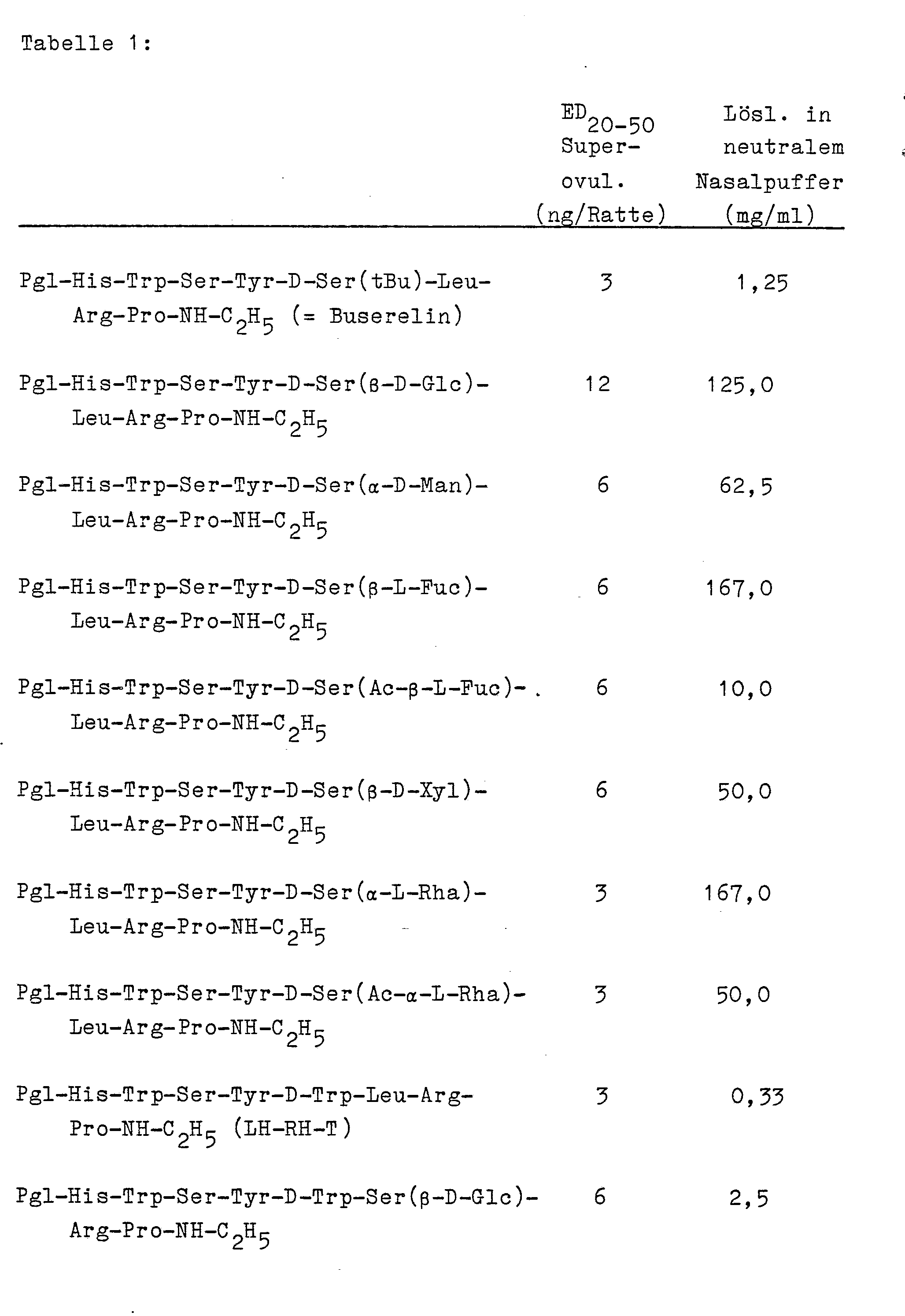


- Aus der Tabelle 1 geht hervor, daß alle Peptide, in denen D-Ser(R') oder Ser(R1) eingebaut sind, besser löslich sind als die entsprechenden Vergleichssubstanzen Buserelin oder LH-RH-T. Die biologische Wirkung bleibt bei den Substitutionen von D-Ser(R') in Position 6 sehr gut erhalten, so daß die Relation Löslichkeit zur biologischen Wirkung in allen erfindungsgemäßen Verbindungen größer ist als die des Buserelins. In Position 7 ist sie jedoch auch von der Art des Zuckers abhängig.
- Die erfindungsgemäßen Gn-RH-Agonisten wirken bereits in niedriger Dosierung durch Ausschüttung der Gonadotropine fertilitätssteigernd und in wiederholter täglicher hoher Dosierung hemmend auf die Ausschüttung der Gonadotropine und damit kontrazeptiv. Indikationen sind z.B. bei der Frau bei niedriger Dosierung die primäre, aber vorwiegend die sekundäre Amenorrhoe, die Corpus luteum Insuffizienz und beim Mann die Oligospermie. Behandelt werden kann ferner die Pubertas tarda beider Geschlechter und der Kryptorchismus bei Kinderen. In hoher Dosierung wirken die Verbindungen hemmend sowohl auf die Bildung der Gonadotropine als auch von Testosteron und Östrogen und können somit bei Steroid-abhängigen Erkrankungen, wie z.B. bei Prostata-oder Brustkrebs, bei Endometriose oder bei vorzeitigem Eintritt der Geschlechtsreife verwendet werden.
- Dosierungen der erfindungsgemäßen Verbindungen, die noch unterhalb der Schwellendosis für die Gonadotropin-Freisetzung liegen, regulieren den Plasma-Parathormon-(PTH-)Spiegel. D.h., daß hoher PTH-Spiegel reduziert und niedriger PTH-Spiegel erhöht wird. Vermutlich über diese PTH-regulierende Wirkung wird auch der Blutzucker beeinflußt, denn PTH stimuliert Glucagon, was wiederum Blutgiucose-erhöhend wirkt. Ist Plasma PTH erniedrigt (z.B. durch Glucose), so wirken die Glycopeptide Blutglucose-erhöhend. Bei erhöhtem Plasma-PTH-Spiegel sollten die erfindungsgemäßen Glycopeptide jedoch Blutzucker-erniedrigend wirken. So ist bekannt, daß bei Hyperparathyroidismus (erhöhter Plasma-PTH-Spiegel) der Glucose-Metabolismus und die Insulin-Sensitivität reduziert ist [J. Clin. Endocrinol. Metab. 60 (1985) 229]. Die erfindungsgemäßen Glycopeptide könnten also z.B. bei Hyperparathyroidismus zur Senkung von Plasma-PTH und Blutglucose herangezogen werden. Erhöhtes Plasma PTH findet man auch bei Patienten mit Lebererkrankungen [Clin. Endocr. 19 (1983) 21-28; Acta Endocrinologica 111 (1986) 62-68] und Osteoporose [Horm. metab. Res. 17 (1985) 370-373]. Da diese Verbindungen bereits in Dosen unter der Schwellendosis für die Gonadotropin-Ausschüttung die Gonaden zur Steroidhormon-Synthese anregen [Biochem. J. 232 (1985) 55-59], können sie auch sehr niedrig dosiert bei Östrogen-oder Testosteron-Unterfunktion angewendet werden. Während und nach der Pubertät, sowie vor und nach der Menopause können die erfindungsgemäßen Glycopeptide zur Stimulation der Testosteron-und Östrogen-Synthese herangezogen werden. Sowohl Östrogen als auch Testosteron sind für die Knochenbildung von großer Bedeutung [Clin. Endocrinol. Metab. 9 (1980) 177-205; Acta Endocrinologica 107 (1984) 428-432]. Deshalb sind neben pre-und post-Menopausen-Beschwerden auch Knochenschmerzen und Osteoporose, die auf zu geringe Östrogen-oder Testosteron-Spiegel beruhen, mit den erfindungsgemäßen Peptiden zu behandeln. Da PTH selbst blutdrucksenkend wirkt [Hypertension 5 (1983) Suppl. 1, 59-63], kann durch Senkung oder Erhöhung des PTH-Spiegels durch die erfindungsgemäßen Substanzen auch der Blutdruck erhöht oder gesenkt werden. Bei Hyperparathyroidismus ist merkwürdigerweise trotz erhöhtem PTH in etwa 40 % der Fälle der Blutdruck erhöht [Adv. Exp. Med. Biol. 151 (1982) 619]. Das liegt an dem hohen Calcium-Spiegel, denn PTH potenziert den hypertensiven Effekt einer Hypercalcämie [Am. J. Physiol. 250 (1986) F924-F926]. So wirken also die erfindungsgemäßen Glycopeptide bei hypertensivem Hyperparathyroidismus auch blutdrucksenkend.
- Die erfindungsgemäßen Gn-RH-Antagonisten wirken hemmend auf die Bildung des Lutropins und Follitropins und damit auch auf die Synthese von Testosteron und Östrogen (s. Tab. 2). Sie können wie hochdosierte Gn-RH-Agonisten bei Gonadotropin-und Steroid-abhängigen Erkrankungen eingesetzt werden.

- Die erfindungsgemäßen Verbindungen können intranasal oder parenteral in entsprechender pharmazeutischer Zubereitung verabreicht werden. Für eine intranasale Anwendungform werden die Verbindungen mit den dafür üblichen Zusatzstoffen wie Stabilisatoren oder inerten Verdünnungsmitteln vermischt und durch übliche Methoden in geeignete Darreichungsformen gebracht, wie wäßrige, alkoholische oder ölige Suspensionen oder wäßrige, alkoholische oder ölige Lösungen. Wäßrigen intranasalen Zubereitungen können Chelatbildner, Ethylendiamin-N,N,N',N'-tetraessigsäure, Citronensäure, Weinsäure oder deren Salze zugefügt werden. Als ölige Trägerstoffe oder Lösungsmittel kommen beispielsweise pflanzliche oder tierische Öle in Betracht, wie Sonnenblumenöl oder Lebertran.
- Zur subkutanen oder intravenösen Applikation werden die aktiven Verbindungen oder deren physiologisch verträglichen Salze, gewünschtenfalls mit den dafür üblichen Substanzen wie Lösungsvermittler, Emulgatoren oder weitere Hilfsstoffe in Lösung, Suspension oder Emulsion gebracht.
- Als Lösungsmittel für die neuen aktiven Verbindungen und die entsprechenden physiologisch verträglichen Salze kommen z.B. in Frage: Wasser, physiologische Kochsalzlösungen oder Alkohole, z.B. Ethanol, Propandiol oder Glycerin, daneben auch Zuckerlösungen wie Glucose-oder Mannitlösungen, oder auch eine Mischung aus den verschiedenen genannten Lösungsmitteln.
- Die bevorzugten Anwendungsformen beim Menschen sind die intranasale Applikation oder die Verwendung von Implantaten, da die Resorption aus dem Magen-Darm-Trakt nur gering ist und falls eine tägliche parenterale Anwendung für den Patienten unzweckmäßig erscheint.
- Mittels eines Dosierzerstäubers werden über eine Spraydüse etwa 0,02-0,2 ml einer Pufferlösung, in der die erforderliche Menge des Wirkstoffs gelöst ist, in die Nase gesprüht. Zur einmaligen Stimulierung der Gonadotropine bewegt man sich bei den Gn-RH-Agonisten im allgemeinen bei einer nasalen Tagesdosis von 25-100 ug/Patient. Beim Kryptorchismus genügen bereits etwa 5-25 ug/Tag und Patient (als Nasallösung verabreicht). Wegen der Langzeitwirkung der Gn-RH-Agonisten können sie zur Stimulierung der Gonadotropine in größeren Intervallen (1-3 Tage) appliziert werden. Für die Hemmung der Gonadotropine und der damit eingestellten Östrogen-und Testosteron-Synthese müssen täglich höhere Dosen an Gn-RH-Agonisten verabreicht werden. Man braucht pro Patient etwa 200-500 ug bei nasaler Anwendung mehrmals täglich. Zur Regulierung des Plasma-PTH-Spiegels und der direkten Stimulierung der Gonaden benötigt man etwa 2,5-10 µg/Tag und Patient. Bei einer parenteralen Applikation können die Dosierungen gegenüber der Intranasal-Dosis um etwa eine Zehnerpotenz gesenkt werden.
- Die Einzeldosis in Implantaten zur Steriod-Suppression beträgt beim Menschen 3-8 mg eines Gn-RH-Agonisten für einen Zeitraum von jeweils 4-8 Wochen (Dosisinterval). Als Implantat-Trägermaterial werden vorzugsweise Copolymere der Milchsäure und Glycolsäure, sowie Poiy-(3-hydroxybuttersäure) verwendet. Die vorstehenden und folgenden Dosierungen beim Menschen beziehen sich, Kryptorchismus ausgenommen. auf einen normalgewichtigen Erwachsenen von etwa 75 kg Körpergewicht.
- In der Veterinärmedizin werden die erfindungsgemäßen Gn-RH-Agonisten vorzugsweise parenteral angewendet. Die Gn-RH-Agonisten können zur Behandlung von acyclischen Tieren und zur Ovulationsinduktion und -synchronisation eingesetzt werden. Die Dosis schwant je nach Tierart. Empfohlen wird z.B. beim Rind eine Dosis von 10-20 ug, bei der Stute 20-40 ug und beim Kaninchen 0,5-1 ug. Bei Implantaten mit einer Einzel-Dosis von 3-300 ug für einen Zeitraum von 2-4 Wochen kann beim Rind eine Anregung der Gonadenfunktion erreicht werden.
- Die erfindungsgemäßen Antagonisten werden beim erwachsenen Menschen intranasal in Dosen von 1-10 mg appliziert. Die Einzeldosis in Implantaten beträgt etwa 5-50 mg für einen Zeitraum von jeweils 4-8 Wochen. Parenteral appliziert, genügen bereits 0,1-lmg.
- Weitere verwendete Abkürzungen:
- HOBt 1-Hydroxybenzotriazol
- Nal(2) 2-Naphthyl-alanin
- -ONSu N-Hydroxysuccinimidester
- Pal(3) 3-Pyridinyl-alanin
- Pgl Pyroglutaminsäure
- Phe(CI) p-Chlor-phenylalanin
- Thi 2-Thienylalanin
- Har Homo-Arginin
- Die nachstehenden Beispiele sollen die vorliegende Erfindung erläutern, ohne daß diese darauf beschränkt wäre.
- Beispiele:
- Pgl-His-Trp-Ser-Tyr-D-Ser(ß-D-Glc)-Leu-Arg-Pro-NH-C2H5
- 1 a. Z-D-Ser(Ac4-β-Glc)-OBz)
- 8,3 g Z-D-Ser-OBzl (24,17 mmol) werden in einer Mischung aus 80 ml Toluol und 80 ml Nitromethan gelöst. Nach Zugabe von 5,16 g (20,24 mmol) Hg(CN)2 wird der Reaktionsansatz auf 60°C erwärmt und anschließend portionsweise mit 13,0 g (31,42 mmol) 2,3,4,6-Tetra-0-acetyl-ct-D-glucopyranosylbromid versetzt. Nach 3 Stunden Reaktionszeit wird der Ansatz analog Beispiel 8a aufgearbeitet.
- Ausbeute 16,5 g (87 %)
- 9,31 g Z-D-Ser(Ac4-ß-D-Glc)-OBzl werden in einer Mischung aus 100 ml Essigsäureethylester und 100 ml Methanol gelöst und in Gegenwart von 9,3 g Palladium/Kohle (10%ig) unter gleichzeitiger Zugabe von methanolischer HCI-Lösung (1,125 g HCI) 3 Stunden hydriert. Nach dem Abfiltrieren des Katalysators und Nachwaschen mit Methanol wird die Lösung im Vakuum eingedampft. Der kristalline Rückstand wird aus Essigsäureethylester umkristallisiert.
- Ausbeute 6,18 g (87,1 %);

- Zu einer Lösung von 5,08 g (10 mmol) H-D-Ser(Ac4-β-D-Glc)-OH·HCl in einer Mischung aus 15 ml Dimethylformamid und 15 ml Wasser gibt man 2,6 ml N-Äthylmorpholin und 3 g Z-ONSu. Man läßt etwa 24 Stunden bei Raumtemperatur rühren. Anschließend wird mit 25 ml 1N HCI angesäuert und mit Wasser verdünnt. Der Niederschlag wird abgesaugt und aus Essigester/Petrolether umkristallisiert.
- Ausbeute 5,93 g (97,8 %); Schmp. 159-162°C,

- Zu einer Lösung von 1,82 g (3 mmol) Z-D-Ser(Ac4-ß-D-Glc)-OH, 2,27 g H-Leu-Arg-Pro-NH-C2H5- ditosylat und 0,4 g HOBt in 10 ml Dimethylformamid gibt man bei 0°C 0,4 ml N-Ethylmorpholin und 660 mg DCC. Man läßt eine Stunde bei 0°C rühren und anschließend bei Raumtemperatur stehen. Nach etwa 24 Stunden wird der Niederschlag abgesaugt und das Filtrat eingeengt. Der Rückstand wird in n-Pentanol gelöst und nacheinander zweimal mit NaCI-haltigem Wasser und dreimal mit gesättigter wäßriger NaHCO3-Lösung ausgeschüttelt. Die organische Phase wird eingeengt und der Rückstand warm in Essigester gelöst. Nun wird mit Diethylether die Substanz ausgefällt. Der Niederschlag wird abgesaugt und mit Ether gewaschen.
- Ausbeute 2,49 g (83 %), Schmp. 104-112°C (unter Zersetzung),

- 2,3 g (2,3 mmol) Z-D-Ser(Ac4-β-D-Glc)-Leu-Arg-Pro-NH-C2H5·tosylat werden in Methanol am Autotitrator (Zugabe von 1N methanolischer HCI) bei pH 4,5 unter Zusatz von Pd-Katalysator katalytisch mit Wasserstoff hydriert. Nach beendigter Reaktion wird vom Katalysator abgesaugt und das Filtrat eingeengt. Der Rückstand wird mit Essigester verrieben.
- Ausbeute 1.44 g (67 %).
- 1,4 g der oben gewonnenen Substanz (1,5 mmol H-D-Ser(Ac4-β-D-Glc)-Leu-Arg-Pro-NH-C2H5·2HCl) werden zusammen mit 0,88 g Z-Trp-Ser-Tyr-OH und 0,244 g HOObt in 6 ml Dimethylformamid gelöst. Dazu gibt man bei 0°C 0,2 ml N-Ethylmorpholin und 330 mg DCC. Man verfährt nun analog Beispiel 1d. Die Substanz ist in Essigester unlöslich und wird deshalb lediglich mit Essigester verrieben. Zur Reinigung löst man die Substanz in Methanol, gibt methanolische HCI bis zu schwach sauren Reaktion hinzu und fällt mit Essigester.
- Ausbeute 1,3 g, amorphe Substanz,

- 1,2 g Z-Trp-Ser-Tyr-D-Ser(Ac4-β-D-Glc)-Leu-Arg-Pro-NH-C2H5·HCl werden analog Beispiel 1e katalyti- sch hydriert.
- Ausbeute 1,06 g;

- Zu einer Lösung von 0,55 g (0,5 mmol) H-Trp-Ser-Tyr-D-Ser(Ac4-β-D-Glc)-Leu-Arg-Pro-NH-C2H5·2HCl, 0,22 g Pgl-His(Dnp)-OH und 81 mg HOObt in 3 ml Dimethylacetamid gibt man bei 0°C 0,065 ml N-Ethylmorpholin und 0,11 g DCC. Man rührt eine Stunde bei 0°C und läßt anschließend bei Raumtemperatur stehen. Nach etwa 20 Stunden gibt man 0,25 ml Hydrazinhydrat zu und läßt vier Stunden rühren. Der Niederschlag wird abgesaugt. Das Filtrat läßt man in etwa 100 ml Essigsäureethylester eintropfen. Der Niederschlag wird abgesaugt und aus Methanol/Essigester umgefällt. Der ausgefallene Niederschlag wird abgesaugt und mit Essigester gewaschen. Zur Umsalzung in das Acetat wird die Verbindung in Wasser gelöst und mit einem schwach basischen lonenaustauscher in der Acetat-Form verrührt. Der Austaucher wird abgesaugt und das Filtrat gefriergetrocknet.
- Ausbeute 500 mg.
- Gereinigt wird an alkylierten Dextrangelen.
- Ausbeute 210 mg;

- Pgl-His-Trp-Ser-Tyr-D-Ser(α-D-Man)-Leu-Arg-Pro-NH-C2H5
- Analog Beispiel 1a werden Z-D-Ser-OBzl mit 2,3,4,6-Tetra-O-acetyl-α-D-mannopyranosylbromid umgesetzt.
- Z-D-Ser(Ac4-α-D-Man)-OBzl werden analog Beispiel 1 b katalytisch hydriert.

- 4,97 g (9 mmol) H-D-Ser(AC4-α-D-Man)-OH·HCl werden analog Beispiel 1c mit 2,34 g N-Ethylmorpholin und 2,7 g Z-ONSu umgesetzt. Der Ansatz wird eingeengt und der Rückstand zwischen Wasser (mit KHSO4 auf pH 3 angesäuert) und Essigester verteilt. Die Essigesterphase wird über Na2SO4 getrocknet und eingeengt. Es bleiben 4,9 g (89 %) eines Öls zurück. Die Substanz kristallisierte nicht.
- 4,9 g (8 mmol) Z-D-Ser(Ac4-α-D-Man)-OH werden analog Beispiel 1 d mit 6,05 g H-Leu-Arg-Pro-NH-C2H5-ditosylat umgesetzt. Die Substanz wird aus Essigester/Ether gefällt.
- Ausbeute 5,55 g, Schmp. 96-102°C (unter Zersetzung),

- 5 g Z-D-Ser(Ac4-α-D-Man)-Leu-Arg-Pro-NH-C2H5 werden analog Beispiel 1e katalytisch hydriert.
- Ausbeute 3,45 g; Schmp. 55-66°C (unter Zersetzung),

- 2,81 g (3 mmol) H-D-Ser(AC4-α-D-Man)-Leu-Arg-Pro-NH-C2H5·2HCl werden analog Beispiel 1e mit 1,76 g Z-Trp-Ser-Tyr-OH umgesetzt.
- Ausbeute 3,45 g, amorph;

- 3 g Z-Trp-Ser-Tyr-D-Ser(Ac4-α-D-Man)-Leu-Arg-Pro-NH-C2H5 werden analog Beispiel 1e katalytisch hydriert.
- Ausbeute 2,4 g; Schmp. 160-162°C (unter Zersetzung);

- 1,1 g (1 mmol) H-Trp-Ser-Tyr-D-Ser(Ac4-α-D-Man)-Leu-Arg-Pro-NH-C2H5·2HCl werden analog Beispiel 1g mit 0,45 g Pgl-His(Dnp)-OH umgesetzt.
- Rohausbeute als Acetat: 870 mg.
- Ausbeute nach chromatographischer Reinigung: 535 mg, amorph;

- Pgl-His-Trp-Ser-Tyr-D-Ser(β-L-Fuc)-Leu-Arg-Pro-NH-C2H5 und
- Pgl-His-Trp-Ser-Tyr-D-Ser(Ac-β-L-Fuc)-Leu-Arg-Pro-NH-C2H5
- Analog Beispiel 8a werden Fmoc-D-Ser-OBzl mit 2,3,4-Tri-O-acetyl-α-L-fucopyranosylbromid miteinander umgesetzt.
- Fmoc-D-Ser(Ac3-β-L-Fuc)-OBzl werden analog Beispiel 8b katalytisch hydriert.

- 4,19 g (7 mmol) Fmoc-D-Ser-(Ac3-ß-L-Fuc)-OH wird analog Beispiel 1d mit 5,29 g H-Leu-Arg-Pro-NH-C2H5-ditosylat umgesetzt. Die Substanz wird aus Essigester/Ether gefällt.
- Ausbeute 6,87 g, amorphe Substanz;

- 5,9 g (ca. 5 mmol) Fmoc-D-Ser(Ac3-β-L-Fuc)-Leu-Arg-Pro-NH-C2H5-tosylat werden in 10 ml Dimethylformamid gelöst. Dazu gibt man 0,5 ml (50 mmol) Diethylamin und läßt 1,5 Stunden stehen, engt ein und verreibt mit Ether.
- Ausbeute 4,6 g, amorphe Substanz;
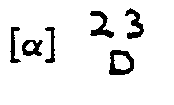
- Zu einer Lösung von 3,84 g (4 mmol) H-D-Ser(Ac3-β-L-Fuc)-Leu-Arg-Pro-NH-C2H5-tosylat, 2,35 g Z-Trp-Ser-Tyr-OH und 0,652 g HOObt in 20 ml Dimethylformamid gibt man bei 0°C 0,88 g DCC.
- Man läßt eine Stunde bei 0°C rühren und anschließend auf Raumtemperatur kommen. Nach etwa 24 Stunden wird der Niederschlag abgesaugt und das Filtrat eingeengt. Der Rückstand wird mit Essigester verrieben, abgesaugt und aus Methanol/Ether umgefällt.
- Ausbeute 5,58 g, amorph;

- 4,6 g Z-Trp-Ser-Tyr-D-Ser(Ac3-β-L-Fuc)-Leu-Arg-Pro-NH-C2H5-tosylat werden analog Beispiel 1e katalyti- sch hydriert.
- Ausbeute 3,94 g, amorph;

- 1,28 g H-Trp-Ser-Tyr-D-Ser(Ac3-β-L-Fuc)-Leu-Arg-Pro-NH-C2H5-tosylat·HCl und 0,45 g Pgl-His(Dnp)-OH (1 mmol) werden analog Beispiel 1 umgesetzt.
- Ausbeute an Rohsubstanz-acetat: 825 mg.
- Nach der chromatographischen Reinigung erhält man zwei Fraktionen und eine Mischfraktion:
- 1. Fraktion: 181 mg Pgl-His-Trp-Ser-Tyr-D-Ser(Ac-β-L-Fuc)-Leu-Arg-Pro-NH-C2H5-acetat,

- 2. Fraktion: 211 mg Pgl-His-Trp-Ser-Tyr-D-Ser-(ß-L-Fuc)-Leu-Arg-Pro-NH-C2H5-acetat; [α] 26 D = -36,8° (c=1, in Wasser); Mischfraktion der beiden Verbindungen: 277 mg.
- Pgl-His-Trp-Ser-Tyr-D-Ser(ß-D-Xyl)-Leu-Arg-Pro-NH-C2H5
- Analog Beispiel 8a werden Fmoc-D-Ser-OBzl mit 2,3,4-Tri-O-acetyl-a-D-xylopyranosylbromid umgesetzt.
- Fmoc-D-Ser(Ac3-β-D-Xyl)-OBzl werden analog Beispiel 8b katalytisch hydriert.

- 4,1 g (7 mmol) Fmoc-D-Ser(Acrß-D-Xyl)-OH werden analog Beispiel 1d mit 5,3 g H-Leu-Arg-Pro-NH-C2H5-ditosylat umgesetzt und der schaumige Rückstand analog Beispiel 3d in 20 ml Dimethylformamid mit 1,4 ml Diethylamin behandelt.
- Ausbeute 7 g.
- Zur Reinigung wird die Substanz zwischen Essigester und Wasser verteilt. Die wäßrige Phase wird gefriergetrocknet.
- Ausbeute 5,28 g, amorph;

- 2,8 g (3 mmol) H-D-Ser(Ac3-β-D-Xyl)-Leu-Arg-Pro-NH-C2H5-tosylat werden analog Beispiel 3e mit 1,78 g Z-Trp-Ser-Tyr-OH umgesetzt.
- Ausbeute 2,9 g, amorph;

- 2,0 g Z-Trp-Ser-Tyr-D-Ser(Ac3-β-D-Xyl)-Leu-Arg-Pro-NH-C2H5-tosylat werden in 35 ml Methanol (Zugabe von 1N methanolischer p-Toluolsulfonsäure) bei pH 4,5 unter Zugabe von Pd-Katalysator katalytisch mit Wasserstoff hydriert. Nach beendigter Reaktion wird der Katalysator abgesaugt, das Filtrat eingeengt und der Rückstand mit Essigester verrieben. Der Niederschlag wird abgesaugt und getrocknet.
- Ausbeute 1,64 g, amorph;
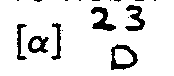
- 1,54 g (1 mmol) H-Trp-Ser-Tyr-D-Ser(Ac3-ß-D-Xyl)-Leu-Arg-Pro-NH-C2H5-ditosylat werden analog Beispiel 1g mit 0,45 g Pgl-His(Dnp)-OH umgesetzt.
- Ausbeute als Rohsubstanz-acetat: 1,03 g.
- Ausbeute nach chromatographischer Reinigung: 737,3 mg;

- Pgi-His-Trp-Ser-Tyr-D-Ser(α-L-Rha)-Leu-Arg-Pro-NH-C2H5 und
- Pg)-His-Trp-Ser-Tyr-D-Ser(Ac-α-L-Rha)-Leu-Arg-Pro-NH-C2H5
- Analog Beispiel 8a werden Fmoc-D-Ser-OBzl mit 2,3,4-Tri-O-acetyl-α-L-rhamnopyranosylbromid umgesetzt.
- Fmoc-D-Ser(Ac3-α-L-Rha)-OBzl werden analog Beispiel 8b katalytisch hydriert.
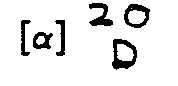
- 4,2 g (7mmol) Fmoc-D-Ser(Ac3-α-L-Rha)-OH werden analog Beispiel 1d mit 5,3 g H-Leu-Arg-Pro-NH-C2H5-ditosylat umgesetzt.
- Der schaumige Rückstand wird analog Beispiel 3d und 4e umgesetzt und gereinigt.
- Ausbeute 5,52 g, amorph;

- 3,8 g (4 mmol) H-D-Ser(Ac3-α-L-Rha)-Leu-Arg-Pro-NH-C2H5-tosylat werden analog Beispiel 3e mit 2,36 g Z-Trp-Tyr-OH umgesetzt.
- Ausbeute 5,2 g, amorph;
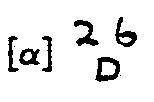
- 4,54 g (3 mmol) Z-Trp-Ser-Tyr-D-Ser(Ac3-α-L-Rha)-Leu-Arg-Pro-NH-C2H5-tosylat werden analog Beispiel 4e katalytisch hydriert.
- Ausbeute 4,2 g, amorph;

- 5f. Pgl-His-Trp-Ser-Tyr-D-Ser(α-L-Rha)-Leu-Arg-Pro-NH-C2H5-acetat und Pgl-His-Trp-Ser-Tyr-D-Ser(Ac-a-L-Rha)-Leu-Arg-Pro-NH-C2H5-acetat
- 1,55 g (1 mmol) H-Trp-Ser-Tyr-D-Ser(Ac3-α-L-Rha)-Leu-Arg-Pro-NH-C2H5-ditosylat werden analog Beispiel 1g mit 0,45 g Pgl-His(Dnp)-OH umgesetzt.
- Ausbeute an Rohsubstanz-acetat: 1,056 g.
- Nach chromatographischer Reinigung:
- 1. Fraktion: 378 mg Pgl-His-Trp-Ser-Tyr-D-Ser(Ac-a-L-Rha)-Leu-Arg-Pro-NH-C2H5-acetat; [a] =

- 2. Fraktion: 287 mg Pgl-His-Trp-Ser-Tyr-D-Ser(α-L-Rha)-Leu-Arg-Pro-NH-C2H5-acetat;

- Pgl-His-Trp-Ser-Tyr-D-Trp-Ser(β-D-Glc)-Arg-Pro-NH-C2H5 und
- Pgl-His-Trp-Ser-Tyr-D-Tyr-Ser(Ac-ß-D-Glc)-Arg-Pro-NH-C2H5
- Analog Beispiel 8a werden Fmoc-Ser-OBzl mit 2.3.4.6-Tetra-O-acetyt-α-D-glucopyranosylbromid umgesetzt.
- Fmoc-Ser(Ac4-β-D-Glc)-OBzl werden analog Beispiel 8b katalytisch hydriert.

- 4,6 g (7 mmol) Fmoc-Ser(Ac4-β-D-Glc)-OH werden analog Beispiel 1d mit 4,5 g H-Arg-Pro-NH-C2H5- ditosylat umgesetzt. Der schaumige Rückstand wird analog Beispiel 3d und 4c umgesetzt. Man muß hier jedoch länger reagieren lassen (3 Stunden).
- Ausbeute 3,25 g
- Zu einer Lösung von 1,5 g Fmoc-D-Trp-OH (3,5 mmol), 3,6 g H-Ser(AC4-ß-D-Glc)-Arg-Pro-NH-C2H5- tosylat und 0,47 g HOBt in 20 ml Dimethylformamid gibt man bei 0°C 770 mg DCC, läßt 1 Stunde bei 0°C rühren und dann auf Raumtemperatur kommen. Nach etwa 24 Stunden wird der Niederschlag abgesaugt und das Filtrat eingeengt. Der Rückstand wird zwischen n-Pentanol und Wasser verteilt. Die organische Phase wird anschließend nacheinander mit gesättigter wäßriger NaHCO3-Lösung und Wasser ausgeschüttelt und eingeengt. Der Rückstand wird mit Petroläther verrieben, abgesaugt und getrocknet.
- Ausbeute 4,38 g, amorph;

- 4 g Fmoc-D-Trp-Ser(Ac4-β-D-Glc)-Arg-Pro-NH-C2H5-tosylat werden analog Beispiel 3d und 4c umgesetzt.
Ausbeute 2,5 g;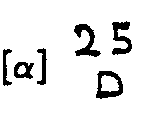
- 1,18 g (2 mmol) Z-Trp-Ser-Tyr-OH werden analog Beispiel 3e mit 1,8 g H-D-Trp-Ser(Ac4-β-D-Glc)-Arg· Pro-NH-C2H5-tosylat umgesetzt. Die Substanz wird nun aus n-Pentanol/Ether umgefällt.
- Ausbeute 2,35 g, amorph;

- 2,2 g Z-Trp-Ser-Tyr-D-Trp-Ser(Ac4-β-D-Glc)-Arg-Pro-NH-C2H5-tosylat werden analog Beispiel 1 e katalytisch hydriert.
- Ausbeute 1,78 g, amorph;

- 0,45 g (1 mmol) Pgl-His(Dnp)-OH werden analog Beispiel 1g mit 1,43 g H-Trp-Ser-Tyr-D-Trp-Ser(Ac4-ß-D-Glc)-Arg-Pro-NH-C2H5-tosylat·HCl umgesetzt.
- Ausbeute an Rohsubstanz-acetat: 939 mg.
- Nach chromatographischer Reinigung:
- 1. Fraktion: 332 mg Pgl-His-Trp-Ser-Tyr-D-Trp-Ser(β-D-Glc)-Arg-Pro-NH-C2H5-acetat;

- 2. Fraktion: 112 mg Pgl-His-Trp-Ser-Tyr-D-Trp-Ser(Ac-β-D-Glc)-Arg-Pro-NH-C2H5-acetat;

- Pgl-His-Trp-Ser-Tyr-D-Trp-Ser(β-L-Fuc)-Arg-Pro-NH-C2H5,
- Pgl-His-Trp-Ser-Tyr-D-Trp-Ser(Ac-β-L-Fuc)-Arg-Pro-NH-C2H5 und
- Pgl-His-Trp-Ser-Tyr-D-Trp-Ser(Ac2-ß-L-Fuc)-Arg-Pro-NH-C2H5
- Analog Beispiel 8a werden Fmoc-Ser-OBzl mit 2,3,4-Tri-O-acetyl-α-L-fucopyranosylbromid umgesetzt.
- Fmoc-Ser(Ac3-β-L-Fuc)-OBzl wird analog Beispiel 8b katalytisch hydriert.
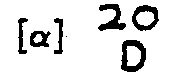
- 4,2 g (7 mmol) Fmoc-Ser(Ac3-β-L-Fuc)-OH werden analog Beispiel 1d mit 4,5 g H-Arg-Pro-NH-C2H5- ditosylat umgesetzt. Der resultierende Schaum wird analog Beispiel 6c in 20 ml Dimethylformamid mit 0,7 ml Diethylamin umgesetzt.
- Ausbeute 3,07 g;

- 1,5 g (3,5 mmol) Fmoc-D-Trp-OH werden analog Beispiel 6d mit 2,9 g H-Ser(Ac3-ß-L-Fuc)-Arg-Pro-NH-C2H5-tosylat umgesetzt.
- Ausbeute 3,65 g, amorph;

- 3,5 g (2,8 mmol) Fmoc-D-Trp-Ser(AC3-β-L-Fuc)-Arg-Pro-NH-C2H5-tosylat werden analog Beispiel 3d und 4c umgesetzt.
- Ausbeute 1,81 g, amorph;

- 0,89 g (1,5 mmol) Z-Trp-Ser-Tyr-OH werden analog Beispiel 3e mit 1,52 g H-D-Trp-Ser(Ac3-ß-L-Fuc)-Arg-Pro-NH-C2H5-tosylat umgesetzt.
- Ausbeute 2,1 g, amorph;

- 1,9 g (1,2 mmol) Z-Trp-Ser-Tyr-D-Trp-Ser(Ac3-β-L-Fuc)-Arg-Pro-NH-C2H5-tosylat werden analog Beispiel 4e katalytisch hydriert.
- Ausbeute 1,71 g, amorph;

- 0,45 g (1 mmol) Pgl-His(Dnp)-OH werden analog Beispiel 1g mit 1,62 g H-Trp-Ser-Tyr-D-Trp-Ser(Ac3-β-L-Fuc)-Arg-Pro-NH-C2H5-ditosylat umgesetzt.
- Ausbeute an Rohsubstanz-acetat: 1,23 g.
- Nach chromatographischer Reinigung:
- 1. Fraktion: 111,6 mg Pgl-His-Trp-Ser-Tyr-D-Trp-Ser(Ac2-β-L-Fuc)-Arg-Pro-NH-C2H5-acetat;

- 2. Fraktion: 239,7 mg Pgl-His-Trp-Ser-Tyr-D-Trp-Ser(Ac-ß-L-Fuc)-Arg-Pro-NH-C2H5-acetat;

- 3. Fraktion: 97,9 mg Pgl-His-Trp-Ser-Tyr-D-Trp-Ser(ß-L-Fuc)-Arg-Pro-NH-C2H5-acetat; [a] -43,7° (c = 1, in Wasser).
- Pgl-His-Trp-Ser-Tyr-D-Trp-Ser(a-D-Man)-Arg-Pro-NH-C2H5,
- Pgl-His-Trp-Ser-Tyr-D-Trp-Ser(Ac-α-D-ManrArg-Pro-NH-C2H5 und
- Pgl-His-Trp-Ser-Tyr-D-Trp-Ser(Ac2-α-D-Man)-Arg-Pro-NH-C2H5
- 10 g (24 mmol) Fmoc-Ser-OBzl werden in einer Mischung aus 80 ml Toluol und 80 ml Nitromethan gelöst. Nach der Zugabe von 9,8 g (24 mmol) 2,3,4,6-Tetra-O-acetyl-α-D-mannopyranosylbromid und 6,1 g (24 mmol) Hg(CN)2 wird der Reaktionsansatz 15 Stunden bei 40°C gerührt. Der Verlauf der Glycosidierung wird dünnschichtchromatographisch verfolgt (Laufmittel: Dichlormethan/Essigsäureethylester wie 6:1; Kieselgel-Fertigfolie-Merck, GF254; Detektion: Ethanol/Schwefelsäure wie 10:1 (v/v) und anschließender Wärmebehandlung). Der auf 0°C abgekühlte Reaktionsansatz wird zweimal mit einer 10%igen wäßrigen Kaliumjodid-Lösung, einmal mit gesättigter wäßrigen Natriumhydrogencarbonat-Lösung und einmal mit Eiswasser gewaschen. Die organische Phase wird im Vakuum eingeengt und der verbleibende Sirup wird zweimal mit Toluol codestilliert. Das resultierende Produkt (24 g) wird säulenchromatographisch an Kieselgel gereinigt (Kieselgel 60 (70-230 mesh); Elutionsmittel; Chloroform/Essigsäureethylester wie 9:1).
- Ausbeute 14,5 g (80,8 %).
- 14,5 g Fmoc-Ser(Ac4-α-D-Man)-OBzl werden in 100 ml trockenem Essigsäureethylester gelöst, mit 14,5 g Palladium/Kohle (10%ig) versetzt und bei Raumtemperatur 70 Minuten hydriert. Nach Abfiltrieren des Katalysators wird die organische Phase einmal mit Eiswasser gewaschen, anschließend über Natriumsulfat getrocknet und im Vakuum zum Sirup eingeengt. Das resultierende Produkt wird säulenchromatographisch an 130 g Kieselgel (Elutionsmittel: Dichlormethan/Aceton 4:1) gereinigt.
- Ausbeute 11,8 g (93 %);

- 13C-NMR (90 MHz, CDCl3): 5 = 172,97 (COOH); 170,67 (2 x CO, Ac); 170,25 (CO, Ac); 169,70 (CO, Ac); 156,15 (CO, Ureth); 143,75 + 141,15 + 127,66 + 127,61 + 125,06 + 119,91 (Aryl, Fmoc); 98,02 (C-1, Man); 69,41 (CH, Fmoc); 69,41 + 68,87 (2 x C) + 67,30 + 66,05 (C-2, C-3, C-4, C-5, C-6, Man); 62,26 (CHz. Ser); 54,40 (CH. Ser); 47,04 (CH2, Fmoc); 20,70 (2 x C) + 20,59 (2 x C) (CH3, Ac).
- 4,6 g (7 mmol) Fmoc-Ser(Ac4-α-D-Man)-OH werden analog Beispiel 1d mit 4,5 g H-Arg-Pro-NH-C2H5- ditosylat umgesetzt.
- Der resultierende Schaum wird analog Beispiel 6d umgesetzt.
- Ausbeute 6,24 g, amorph;

- 2,15 g (5 mmol) Fmoc-D-Trp-OH werden analog Beispiel 6d mit 4,44 g H-Ser(Ac4-α-D-Man)-Arg-Pro-NH-C2H5-tosytat umgesetzt.
- Ausbeute 5,75 g, amorph;
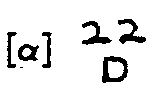
- 5,19 g (4 mmol) Fmoc-D-Trp-Ser(Ac4-α-D-Man)-Arg-Pro-NH-C2H5-tosylat werden analog Beispiel 3d und 4c umgesetzt.
- Ausbeute 3,05 g, amorph;
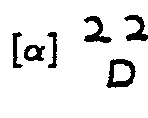
- 1,48 g (2,5 mmol) Z-Trp-Ser-Tyr-OH werden analog Beispiel 3e mit 2,68 g H-D-Trp-Ser(Ac4-α-D-Man)-Arg-Pro-NH-C2H5-tosylat umgesetzt.
- Ausbeute 3,55 g, amorph;

- 3,3 g (2 mmol) Z-Trp-Ser-Tyr-D-Trp-Ser(Ac4-a-D-Man)-Arg-Pro-NH-C2H5-tosylat werden analog Beispiel 4e katalytisch hydriert.
- Ausbeute 2,85 g, amorph;

- 0,45 g (1 mmol) Pgl-His(Dnp)-OH werden analog Beispiel 1 mit 1,68 g H-Trp-Ser-Tyr-D-Trp-Ser(Ac4-a-D-Man)-Arg-Pro-NH-C2H5-ditosylat umgesetzt.
- Ausbeute an Rohsubstanz-acetat: 1,43 g.
- Nach chromatographischer Reinigung:
- 1. Fraktion: 109,6 mg Pgl-His-Trp-Ser-Tyr-D-Trp-Ser(Ac2-α-D-Man)-Arg-Pro-NH-C2H5;

- 2. Fraktion: 346,6 mg Pgl-His-Trp-Ser-Tyr-D-Trp-Ser(Ac-a-D-Man)-Arg-Pro-NH-C2H5;

- 3. Fraktion: 76, 8 mg Pgl-His-Trp-Ser-Tyr-D-Trp-Ser(a-D-Man)-Arg-Pro-NH-C2Hs;

- Mischfraktion zwischen Fraktion 2 und 3: 76,2 mg.
- Pgl-His-Trp-Ser-Tyr-D-Trp-Ser(ß-D-Xyl)-Arg-Pro-NH-C2H5 und
- Pgl-His-Trp-Ser-Tyr-D-Trp-Ser(Ac-β-D-Xyl)-Arg-Pro-NH-C2H5
- Wird analog Beispiel 18a aus Fmoc-Ser-OBzl und 2,3,4-Tri-O-acetyl-α-D-xylopyranosylbromid hergestellt.
- Wird analog Beispiel 18b aus Fmoc-Ser(Ac3-β-D-Xyl)-OBzl durch katalytische Hydrierung hergestellt.

- 4,1 g (7 mmol) Fmoc-Ser(Ac3-β-D-Xyl)-OH werden analog Beispiel 1d mit 4,5 g H-Arg-Pro-NH-C2H5- ditosylat umgesetzt.
- Der resultierende Schaum wird analog Beispiel 6c weiterverarbeitet.
- Ausbeute 4,93 g, amorph;

- 2,15 g (5 mmol) Fmoc-D-Trp-OH werden analog Beispiel 6d mit 4,08 g H-Ser(Ac3-β-D-Xyl)-Arg-Pro-NH-C2H5-tosylat umgesetzt.
- Ausbeute 5,7 g, amorph;

- 4,9 g (4 mmol) Fmoc-D-Trp-Ser(Ac3-β-D-Xyl)-Arg-Pro-NH-C2H5-tosylat werden analog Beispiel 3d und 4c umgesetzt.
- Ausbeute 2,58 g, amorph;

- 1,48 g (2.5 mmol) Z-Trp-Ser-Tyr-OH werden analog Beispiel 3e mit 2,5 g H-D-Trp-Ser(Ac3-β-D-Xyl)-Arg-Pro-NH-C2H5-tosylat umgesetzt.
- Ausbeute 3,39 g, amorph;

- 2,78 g (2 mmol) Z-Trp-Ser-Tyr-D-Trp-Ser(Ac3-β-D-Xyl)-Arg-Pro-NH-C2H5-tosylat werden analog Beispiel 4e katalytisch hydriert.
- Ausbeute 2,5 g, amorph;

- 0,45 g Pgl-His(Dnp)-OH werden analog Beispiel 1 g mit 1,61 g H-Trp-Ser-Tyr-D-Trp-Ser(Ac3-β-D-Xyl)-Arg-Pro-NH-C2H5-ditosylat umgesetzt.
- Ausbeute an Rohsubstanz-acetat: 0,9344 g.
- Ausbeute nach chromatographischer Reinigung:
- 1. Fraktion: 407,3 mg Pgl-His-Trp-Ser-Tyr-D-Trp-Ser(β-D-Xyl)-Arg-Pro-NH-C2H5-acetat;

- 2. Fraktion: 90,3 mg Pgl-His-Trp-Ser-Tyr-D-Trp-Ser-Ac-β-D-Xyl)-Arg-Pro-NH-C2H5-acetat;

- Pgl-His-Trp-Ser-Tyr-D-Trp-Ser(α-L-Rha)-Arg-Pro-NH-C2H5 und
- Pgl-His-Trp-Ser-Tyr-D-Trp-Ser(Ac-α-L-Rha)-Arg-Pro-NH-C2H5
- Analog Beispiel 8a werden Fmoc-Ser-Obzl und 2,3,4-Tri-O-acetyl-a-L-rhamnopyranosylbromid umgesetzt.
- Fmoc-Ser(Ac3-α-L-Rha)-Obzl werden analog Beispiel 8b katalytisch hydriert.

- 4,2 g (7 mmol) Fmoc-D-Ser(Ac3-α-L-Rha)-OH werden analog Beispiel 1d mit 4,5 g H-Arg-Pro-NH-C2H5- ditosylat umgesetzt.
- Der resultierende Schaum wird analog Beispiel 6c weiterverarbeitet.
- Ausbeute 4,83 g, amorph;

- 2,14 g (5 mmol) Fmoc-D-Trp-OH werden analog Beispiel 6d mit 4,15 g H-Ser(Ac3-α-L-Rha)-Arg-Pro-NH-C2H5-tosylat umgesetzt.
- Ausbeute 5,85 g, amorph;

- 4,95 (4 mmol) Fmoc-D-Trp-Ser(Ac3-a-L-Rha)-Arg-Pro-NH-C2H5-tosylat werden analog Beispiel 3d und 4c umgesetzt.
- Ausbeute 2,72 g, amorph;

- 1,48 g (2,5 mmol) Z-Trp-Ser-Tyr-OH werden analog Beispiel 3e mit 2,54 g H-D-Trp-Ser(Ac3-a-L-Rha)-Arg-Pro-NH-C2H5-tosylat umgesetzt.
- Ausbeute 3,95 g, amorph;

- 3,2 g (2 mmol) Z-Trp-Ser-Tyr-D-Trp-Ser(AC3-α-L-Rha)-Arg-Pro-NH-C2H5-tosylat werden analog Beispiel 4e katalytisch hydriert.
- Ausbeute 2,87 g, amorph;

- 0,45 g (1 mmol) Pgl-His(Dnp)-OH werden analog Beispiel 1g mit 1,62 g H-Trp-Ser-Tyr-D-Trp-Ser(Ac3-α-L-Rha)-Arg-Pro-NH-C2H5-ditosylat umgesetzt.
- Ausbeute an Rohsubstanz-acetat: 893 mg.
- Ausbeute nach chromatographischer Reinigung:
- 1. Fraktion: 524,3 mg Pgl-His-Trp-Ser-Tyr-D-Trp-Ser(α-L-Rha)-Arg-Pro-NH-C2H5-acetat;
- 2. Fraktion: 95,6 mg Pgl-His-Trp-Ser-Tyr-D-Trp-Ser(Ac-α-L-Rha)-Arg-Pro-NH-C2H5-acetat und Mischfraktion: 87,1 mg.
- Pgl-His-Trp-Ser-Tyr-D-Ser(ß-B-Gal)-Leu-Arg-Pro-NH-C2H5
- Analog Beispiel 8a werden Fmoc-D-Ser-OBzl und 2,3,4,6-Tetra-0-acetyl-ß-D-galacto-pyranosylbromid umgesetzt.
-

- Fmoc-D-Ser(Ac4-β-D-Gal)-OBzl werden analog Beispiel 8b katalytisch hydriert.

- 4,6 g (7 mmol) Fmoc-D-Ser(Ac4-β-D-Gal)-OH werden analog Beispiel 1d mit 5,3 g H-Leu-Arg-Pro-NH-C2H5-ditosylat umgesetzt.
- Der schaumige Rückstand wird analog Beispiel 3d und 4e umgesetzt und gereinigt.
- Ausbeute 5,38 g, amorph;

- 23,55 g (40 mmol) Z-Trp-Ser-Tyr-OH werden in 700 ml 90 %iger wäßriger Essigsäure gelöst und mit Pd/Kohle katalytisch hydriert. Nach beendigter Hydrierung wird der Katalysator abgesaugt und das Filtrat eingeengt. Der Rückstand wird mit Ether verrieben, abgesaugt und getrocknet.
- Ausbeute 20,4 g; Schmp. 176-181 ° unter Zersetzung;

- Zu einer Mischung aus 50 ml Wasser und 50 ml Dioxan gibt man nacheinander 19,96 g (38,8 mmol) H-Trp-Ser-Tyr-OH-acetat, 6,52g (77,6 mmol) NaHCO3 und 14,2 g (42 mmol) Fmoc-ONSu. Man läßt 4 Stunden bei Raumtemperatur stehen. Unlösliches wird anderntags abgesaugt und verworfen. Das Filtrat wird eingeengt. Der Rückstand wird mit Petrolether verrieben abgesaugt und getrocknet.
- Ausbeute 27,1 g.
- Zur Reinigung wird die Substanz mit 400 ml Essigester aufgekocht und nach dem Abkühlen abgesaugt.
- Ausbeute 23,1 g (88 %); Schmp. 186-188°C;

- 3.0 g (3 mmol) H-D-Ser(Ac4-β-D-Gal)-Leu-Arg-Pro-NH-C2H5-tosylat werden analog Beispiel 3e mit 2,03 g Fmoc-Trp-Ser-Tyr-OH, 0,49 g HOOBt und 0,66 g DCC in 10 ml Dimethylformamid umgesetzt. Der Rückstand wird zwischen n-Pentanol und Wasser verteilt. Die n-Pentanol-Phase wird eingeengt und der Rückstand mit Methyl-tert.-butylether verrieben. Der Niederschlag wird abgesaugt und getrocknet.
- Ausbeute 4,69 g; Schmp. 108-110°C unter Zersetzung;

- Zu einer Lösung von 2,98 g (2 mmol) Fmoc-Trp-Ser-Tyr-D-Ser(Ac4-β-D-Gal)-Leu-Arg-Pro-NH-C2H5- tosylat in 15 ml Dimethylformamid gibt man bei Raumtemperatur 0,2 ml (2 mmol) Diethylamin. Man rührt 1 Stunde bei Raumtemperatur und engt ein. Der Rückstand wird mit Diethylether verrieben, abgesaugt und getrocknet.
- Ausbeute 2,65 g; Schmp. 104-105°C unter Zersetzung;

- Zu einer Lösung von 1,27 g (1 mmol) H-Trp-Ser-Tyr-D-Ser(Ac4-β-D-Gal)-Leu-Arg-Pro-NH-C2H5-tosylat, 163 mg HOOBt und 450 g Pgl-His(Dnp)-OH in 6 ml Dimethylacetamid gibt man 225 mg DCC und läßt 1 Stunde bei 0°C und 3 Stunden bei Raumtemperatur rühren, läßt über Nacht stehen und gibt anderntags 1 ml Hydrazinhydrat zu. Man läßt 4 Stunden bei Raumtemperatur rühren, saugt den Niederschlag ab und versetzt das Filtrat mit Essigester. Der Niederschlag wird abgesaugt und aus Methanol/Essigester umgefällt, abgesaugt mit Essigester gewaschen und getrocknet.
- Ausbeute 910 mg. Analog Beispiel 1g wird die Substanz in das Acetat überführt: Ausbeute 818 mg.
- Ausbeute nach chromatographischer Reinigung: 413 mg;

- Pgl-His-Trp-Ser-Tyr-D-Ser(L-Ara)-Leu-Arg-Pro-NH-C2H5
- Analog Beispiel 8a weden Fmoc-D-Ser-OBzl und 2,3,4-Tri-0-acetyl-L-arabinopyranosylbromid umgesetzt.
-
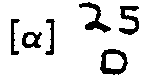
- Fmoc-D-Ser(Ac3-L-Ara)-OBzl werden analog Beispiel 8b katalytisch hydriert.

- 4,1 g (7 mmol) Fmoc-D-Ser(Ac3-L-Ara)-OH werden analog Beispiel 1d mit 5,3 g H-Leu-Arg-Pro-NH-C2H5- ditosylat umgesetzt.
- Der schaumige Rückstand wird analog Beispiel 3d und 4e umgesetzt und gereinigt.
- Ausbeute 5,1 g;

- 2,78 g (3 mmol) H-D-Ser(Ac3-L-Ara)-Leu-Arg-Pro-NH-C2H5-tosylat werden analog Beispiel 11f mit 2,03 g Fmoc-Trp-Ser-Tyr-OH umgesetzt. Der Niederschlag wird anderntags abgesaugt und das Filtrat mit 150 ml Wasser, 3 ml gesättigter NaHCO3-Lösung und einigen ml gesättigter NaCl-Lösung versetzt. Dabei fällt ein Niederschlag aus, der abgesaugt wird.
- Ausbeute 3,47 g; Schmp. 128-131 °C unter Zersetzung;

- 2,83 g (2 mmol) Fmoc-Trp-Ser-D-Ser(Ac3-L-Ara)-Leu-Arg-Pro-NH-C2H5-tosylat werden analog Beispiel 11 g umgesetzt.
- Ausbeute 2,55 g; Schmp. 106-108°C unter Zersetzung;

- 1,19 g (1 mmol) H-Trp-Ser-Tyr-D-Ser(Ac3-L-Ara)-Leu-Arg-Pro-NH-C2H5-tosylat werden analog Beispiel 11 h umgesetzt.
- Ausbeute an Roh-Acetat: 1,05 g.
- Ausbeute nach chromatographischer Reinigung 362 mg;

- Pgl-His-Trp-Ser-Tyr-D-Ser(ß-Lac)-Leu-Arg-Pro-NH-C2H5
- Analog Beispiel 8a werden Fmoc-D-Ser-OBzl und 2,3,6,2',3',4',6'-Hepta-0-Acetyl-ß-lactopyranosylbromid umgesetzt.

- Fmoc-D-Ser(Ac7-β-Lac) werden analog Beispiel 8b katalytisch hydriert.

- 4,5 g (4,75 mmol) Fmoc-D-Ser(Acrß-Lac)-OH werden analog Beispiel 1 mit 3,6 g (4,75 mmol) H-Leu-Arg-Pro-NH-C2H5-ditosylat umgesetzt.
- Der schaumige Rückstand wird analog Beispiel 3d und 4e umgesetzt und gereinigt.
- Ausbeute 4,32 g;

- 3,87 g (3 mmol) H-D-Ser(Acrß-Lac)-Leu-Arg-Pro-NH-C2H5-tosylat werden analog Beispiel 11f mit 2,03 g Fmoc-Trp-Ser-Tyr-OH umgesetzt.
- Ausbeute 5,56 g; Schmp. 124-127°C unter Zersetzung;

- 3,9 g (2 mmol) Fmoc-Trp-Ser-Tyr-D-Ser(Ac7-β-Lac)-Leu-Arg-Pro-NH-C2H5-tosylat werden analog Beispiel 11g umgesetzt.
- Ausbeute 3,36 g; Schmp. 84-90°C unter Zersetzung;

- 1,72 g (1 mmol) H-Trp-Ser-Tyr-D-Ser(Ac7-β-Lac)-Leu-Arg-Pro-NH-C2H5-tosylat werden analog Beispiel 11h umgesetzt.
- Ausbeute an Rohacetat: 1,25 g.
- Ausbeute nach chromatographischer Reinigung: 608 mg,

- Pgl-His-Trp-Ser-Tyr-D-Ser(β-L-Xyl)-Leu-Arg-Pro-Nd-C2H5
- Analog Beispiel 8a werden Fmoc-D-Ser-OBzl und 2,3,4-Tri-O-acetyl-ß-L-xylo-pyranosylbromid umgesetzt.
- Fmoc-D-Ser(ß-L-Xyl)-OBzl werden analog Beispiel 8b katalytisch hydriert.

- 4,1 g (7 mmol) Fmoc-D-Ser(Ac7-β-L-Xyl)-OH werden analog Beispiel 1d mit 5,3 g H-Leu-Arg-Pro-NH-C2H5-ditosylat umgestzt.
- Der schaumige Rückstand wird analog Beispiel 3d und 4e umgesetzt und gereinigt. Ausbeute 4,95 g;

- 2,8 g (3 mmol) H-D-Ser(Ac3-ß-L-Xyl)-Leu-Arg-Pro-NH-C2H5 werden analog Beispiel 11f mit 2,03 g Fmoc-Trp-Ser-Tyr umgesetzt.
- Ausbeute 4,65 g; Schmp. 109-114°C unter Zersetzung;

- 3,18 g Fmoc-Trp-Ser-Tyr-D-Ser(Ac3-ß-L-Xyl)-Leu-Arg-Pro-NH-C2H5-tosylat werden analog Beispiel 11g umgesetzt.
- Ausbeute 2.75 g; Schmp. 98-103°C unter Zersetzung;

- 1,36 g H-Trp-Ser-Tyr-D-Ser(Ac3-β-L-Xyl)-Leu-Arg-Pro-NH-C2H5-tosylat (1 mmol) werden analog Beispiel 11 h umgesetzt.
- Ausbeute an Rohacetat: 988 mg.
- Ausbeute nach chromatographischer Reinigung: 278 mg;

- Pgl-His-Trp-Ser-Tyr-D-Trp-Ser(L-Ara)-Arg-Pro-NH-C2H5
- Analog Beispiel 8a werden Fmoc-D-Ser-OBzl und 2,3.4-Tri-O-acetyl-L-arabinopyranosyibromid umgesetzt.

- Fmoc-Ser(Ac3-L-Ara)-OBzl werden analog Besipiel 8b katalytisch hydriert.

- 4,1 g (7 mmol) Fmoc-Ser(Ac3-L-Ara)-OH werden analog Beispiel 1d mit 4,5 H-Arg-Pro-NH-C2H5-ditosylat umgesetzt.
- Der schaumige Rückstand wird analog Beispiel 6c umgesetzt.
- Ausbeute 4,8 g;

- 4,08 g (5 mmol) H-Ser(Ac3-L-Ara)-Arg-Pro-NH-C2H5-tosylat werden analog Beispiel 6d mit 2,14 g Fmoc-D-Trp-OH umgesetzt.
- Ausbeute 5,7 g; Schmp. 95-97°C unter Zersetzung;

- 4,88 g (4 mmol) Fmoc-D-Trp-Ser(Ac3-L-Ara)-Arg-Pro-NH-C2H5 werden analog Beispiel 3d und 4c umgesetzt.
- Ausbeute 2,23 g;
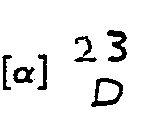
- 2,5 g (2,5 mmol) H-D-Trp-Ser(Ac3-L-Ara)-Arg-Pro-NH-C2H5-tosylat werden analog Beispiel 11f mit 1,7 g Fmoc-Trp-Ser-Tyr-OH umgesetzt.
- Ausbeute 3,65 g; Schmp. 147-149° unter Zersetzung;

- 3,3 g (2 mmol) Fmoc-Trp-Ser-Tyr-D-Trp-Ser(Ac3-L-Ara)-Arg-Pro-NH-C2H5 werden analog Beispiel 11g umgesetzt.
- Ausbeute 2,3 g; Schmp. 92-94°C unter Zersetzung;
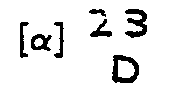
- 1,4 g (1 mmol) H-Trp-Ser-Tyr-D-Trp-Ser(Ac3-L-Ara)-Arg-Pro-NH-C2H5-tosylat werden analog Beispiel 11h mit 450 mg Pgl-His(Dnp)-OH umgesetzt.
- Ausbeute an Rohacetat: 795,2 mg. Ausbeute nach chromatographischer Reinigung: 405 mg;

- Pgl-His-Trp-Ser-Tyr-D-Trp-Ser(ß-L-Xyl)-Arg-Pro-NH-C2H5
- Analog Beispiel 8a werden Fmoc-Ser-OBzl und 2,3,4-Tri-O-acetyl-ß-L-xylopyranosyl-bromid umgesetzt.
- Fmoc-Ser(Ac3-β-L-Xyl)-OBzl werden analog Beispiel 8b katalytisch hydriert.

- 4,1 g (7 mmol) Fmoc-Ser(Ac3-ß-L-Xyl)-OH werden analog Beispiel 1d mit 4,5 g H-Arg-Pro-NH-C2H5- ditosylat umgesetzt.
- Der schaumige Rückstand wird analog Beispiel 6c umgesetzt.
- Ausbeute 5,1 g;

- 4,08 g (5 mmol) H-Ser(Ac3-β-L-Xyl)-Arg-Pro-NH-C2H5-tosylat werden analog Beispiel 6d mit 2,15 g Fmoc-D-Trp-OH umgesetzt.
- Ausbeute 5,7 g; Schmp. 81-83°C unter Zersetzung;

- 4,9 g (4 mmol) Fmoc-D-Trp-Ser(Ac3-β-L-Xyl)-Arg-Pro-NH-C2H5 werden analog Beispiel 3d und 4c umgesetzt. Zur Reinigung wird zwischen Essigester ausgeschüttelt und gefriergetrocknet.
- Ausbeute 2,6 g;

- 2,4 g (2,4 mmol) H-D-Ser(Ac3-ß-L-Xyl)-Arg-Pro-NH-C2H5-tosylat werden analog Beispiel 11f mit 1,63 g Fmoc-Trp-Ser-Tyr-OH umgesetzt.
- Ausbeute 3,95 g; Schmp. 132-137° unter Zersetzung;

- 3,3 g (2 mmol) Fmoc-Trp-Ser-Tyr-D-Trp-Ser(Ac3-β-L-Xyl)-Arg-Pro-NH-C2H5-tosylat werden analog Beispiel 11 g umgesetzt.
- Ausbeute 2,74 g; Schmp. 131-140°C unter Zersetzung;

- 1,44 g (1 mmol) H-Trp-Ser-Tyr-D-Trp-Ser(Ac3-β-L-Xyl)-Arg-Pro-NH-C2H5-tosylat werden analog Beispiel 11 h mit 450 mg Pgl-His(Dnp)-OH umgesetzt.
- Ausbeute an Rohacetat: 1,14 g. Ausbeute nach chromatographischer Reinigung: 533 mg;

- Pgl-His-Trp-Ser-Tyr-D-Trp-Ser(β-Lac)-Arg-Pro-NH-C2H5
- Analog Beispiel 8a werden Fmoc-Ser-OBzl und 2,3,6,2',3'4',6'-Hepta-0-acetyl-lactopyranosyl-bromid umgesetzt.
-

- Fmoc-Ser(Ac3-β-Lac) werden analog Beispiel 8b katalytisch hydriert.

- 4,49 g (4,75 mmol) Fmoc-Ser(Acrß-Lac)-OH werden analog Beispiel 1 d mit 3,05 g H-Arg-Pro-NH-C2H5- ditosylat umgesetzt.
- Der schaumige Rückstand wird analog Beispiel 6c umgesetzt.
- Ausbeute 4,57 g;

- 3,53 g (3 mmol) H-Ser(Acr7-β-Lac)-Arg-Pro-NH-C2H5-tosylat werden analog Beispiel 6d mit 1,28 g Fmoc-D-Trp-OH umgesetzt.
- Ausbeute 4,4 g; Schmp. 106-109°C unter Zersetzung;

- 3,96 g (2,5 mmol) Fmoc-D-Trp-Ser(Ac7-β-Lac)-Arg-Pro-NH-C2H5-tosylat werden analog Beispiel 3d und 4c umgesetzt.
- Ausbeute 2,37 g;

- 2,25 g (1,65 mmol) H-D-Tr-Ser(Ac7-β-Lac)-Arg-Pro-NH-C2H5-tosylat weden analog Beispiel 11f mit 1,12 g Fmoc-Trp-Ser-Tyr-OH umgesetzt.
- Ausbeute 2,65; Schmp. 109-111 ° unter Zersetzung;

- 2,43 g (1,2 mmol) Fmoc-Trp-Ser-Tyr-D-Trp-Ser(Ac7-β-Lac)-Arg-Pro-NH-C2H5-tosylat werden analog Beispiel 11 g umgestzt.
- Ausbeute 1,93 g; Schmp. 136-142°C unter Zersetzung;

- 1,8 g (1 mmol) H-Trp-Ser-Tyr-D-Trp-Ser(Ac7-β-Lac)-Arg-Pro-NH-C2H5-tosylat werden analog Beispiel 11h mit 450 mg Pgl-His(Dnp)-OH umgesetzt.
- Ausbeute an Rohacetat: 1,24 g. Ausbeute nach chromatographischer Reinigung: 579 mg;

- Pgl-His-Trp-Ser-Tyr-D-Trp-Ser(ß-D-Glc-NAc)-Arg-Pro-NH-C2H5
- Analog Beispiel 8a werden Fmoc-Ser-OBzl und 2-N-Acetyl-3,4,6-Tri-0-acetyl-glucosaminyl-bromid umgesetzt.
-

- Fmoc-Ser(Ac3-β-D-Glc-NAc)-OBzl werden analog Beispiel 8b katalytisch hydriert.

- 3,37 g (5 mmol) Fmoc-Ser(Ac3-β-D-Glc-NAc)-OH werden analog Beispiel 1d mit 3,21 g H-Arg-Pro-NH-C2H5-ditosylat umgesetzt.
- Der schaumige Rückstand wird analog Beispiel 6c umgesetzt.
- Ausbeute 4,21 g;

- 3,61 g (4 mmol) H-Ser(Ac3-β-D-Glc-NAc)-Arg-Pro-NH-C2H5-tosylat werden analog Beispiel 6d mit 1,71 g Fmoc-D-Trp-OH umgesetzt.
- Ausbeute 4,95 g; Schmp. 93-95°C unter Zersetzung;

- 4,49 g (3,5 mmol) Fmoc-D-Trp-Ser(Ac3-β-D-Glc-NAc)-Arg-Pro-NH-C2H5-tosylat werden analog Beispiel 3d und 4c umgesetzt.
- Ausbeute 3,68 g; Schmp. 105-107°C unter Zersetzung.
- 3,27 g (3 mmol) H-D-Trp-Ser(Ac3-β-D-Glc-NAc)-Arg-Pro-NH-C2H5-tosylat werden analog Beispiel 11f mit 2,03 g Fmoc-Trp-Ser-Tyr-OH umgesetzt.
- Ausbeute 4,24 g; Schmp. 145-146°C unter Zersetzung;

- 3,5 g (2 mmol) Fmoc-Trp-Ser-Tyr-D-Tro-Ser(Ac3-β-D-Glc-NAc)-Arg-Pro-NH-C2H5-tosylat werden analog Beispiel 11g umgesetzt.
- Ausbeute 3,05 g; Schmp. 104-107°C unter Zersetzung;

- 1,52 g (1 mmol) H-Trp-Ser-Tyr-D-Trp-Ser(Ac3-β-D-Glc-NAc)-Arg-Pro-NH-C2H5 werden analog Beispiel 11 h mit 450 g Pgl-His(Dnp)-OH umgesetzt.
- Ausbeute an Rohacetat: 1,178 g. Ausbeute nach chromatographischer Reinigung: 353 mg;

- Pgl-His-Trp-Ser-Tyr-D-Trp-Ser(D-Rib)-Arg-Pro-NH-C2H5
- Analog Beispiel 8a werden Fmoc-Ser-OBzl und 2,3,4-Tri-O-acetyl-D-ribopyranosylbromid umgesetzt.

- Fmoc-Ser(Ac3-D-Rib)-OBzl werden analog Beispiel 8b katalytisch hydriert.

- 4,1 g (7 mmol) Fmoc-Ser(Ac3-D-Rib)-OH werden analog Beispiel 1d mit 4,5 g H-Arg-Pro-NH-C2Hs- ditosylat umgestzt.
- Der schaumige Rückstand wird analog Beispiel 6c umgesetzt.
- Ausbeute 5,45 g;
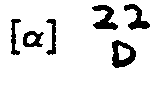
- 4,08 g (5 mmol) H-Ser(Ac3-D-Rib)-Arg-Pro-NH-C2H5-tosylat werden analog Beispiel 6d mit 2,15 g Fmoc-D-Trp-OH umgesetzt.
- Ausbeute 5,74 g; Schmp. 104-107°C unter Zersetzung;

- 4,21 g (4 mmol) Fmoc-D-Trp-Ser(Ac3-D-Rib)-Arg-Pro-NH-C2H5-tosylat werden analog Beispiel 3d und 4c umgesetzt.
- Ausbeute 3,22 g; Schmp. 98-101°C ;

- 3,01 g (3 mmol) H-D-Trp-Ser(Ac3-D-Rib)-Arg-Pro-NH-C2H5-tosylat werden analog Beispiel 11f mit 2,03 g Fmoc-Trp-Ser-Tyr-OH umgesetzt.
- Ausbeute 4,63; Schmp. 147-149°C unter Zersetzung;

- 4,15 g (2,5 mmol) Fmoc-Trp-Ser-Tyr-D-Trp-Ser(Ac3-D-Rib)-Arg-Pro-NH-C2H5-tosylat werden analog Beispiel 11 g umgesetzt.
- Ausbeute 3,75 g; Schmp. 99-102°C unter Zersetzung;

- 1,44 g (1 mmol) H-Trp-Ser-Tyr-D-Trp-Ser(Ac3-D-Rib)-Arg-Pro-NH-C2H5-tosylat werden analog Beispiel 11h mit 450 mg Pgl-His(Dnp)-OH umgesetzt.
- Ausbeute an Rohacetat: 975,8 mg; Ausbeute nach der Reinigung: 495 mg;

- Pgl-His-Trp-Ser-Tyr-D-Trp-Ser(D-Ara)-Arg-Pro-NH-C2H5
- Analog Beispiel 8a werden Fmoc-Ser-OBzl und 2,3,4-Tri-O-acetyl-D-arabinopyranosyl-bromid umgesetzt.
-

- Fmoc-Ser(Ac3-D-Ara)-OBzl werden analog Beispiel 8b katalytisch hydriert.

- 4,1 g (7 mmol) Fmoc-Ser(Ac3-D-Ara)-OH werden analog Beispiel 1d mit 4,5 g H-Arg-Pro-NH-C2H5- ditosylat umgesetzt.
- Der schaumige Rückstand wird analog Beispiel 6c umgesetzt. Ausbeute 2,95 g;
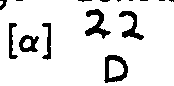
- 2,45 g (3 mmol) H-Ser(Ac3-D-Ara)-Arg-Pro-NH-C2H5-tosylat werden analog Beispiel 6d mit 1,28 g Fmoc-D-Trp-OH umgesetzt.
- Ausbeute 3,22 g; Schmp. 101-103°C unter Zersetzung;

- 2,63 g (2,5 mmol) Fmoc-D-Trp-Ser(Ac3-D-Ara)-Arg-Pro-NH-C2H5-tosylat werden analog Beispiel 3d und 4c umgesetzt.
- Ausbeute 2,19 g; Schmp. 102-105°C unter Zersetzung;

- 2,0 g (2 mmol) H-D-Trp-Ser(Ac3-D-Ara)-Arg-Pro-NH-C2H5-tosylat werden analog Beispiel 11f mit 1,35 g Fmoc-Trp-Ser-Tyr-OH umgesetzt.
- Ausbeute 2,77 g; Schmp. 150-151 °C unter Zersetzung;

- 2,45 g (1,5 mmol) Fmoc-Trp-Ser-Tyr-D-Trp-Ser(Ac3-D-Ara)-Arg-Pro-NH-C2H5-tosylat werden analog Beispiel 11 g umgesetzt.
- Ausbeute 2,1 g; Schmp. 109-110°C unter Zersetzung;

- 1,44 g (1 mmol) H-Trp-Ser-Tyr-D-Trp-Ser(Acr3-D-Ara)-Arg-Pro-NH-C2H5-tosylat werden analog Beispiel 11h mit 450 mg Pgl-His(Dnp)-OH umgesetzt.
- Ausbeute an Rohaceat: 1,033 g Ausbeute nach chromatographischer Reinigung: 336 mg;

- Pgl-His-Trp-Ser-Tyr-D-Ser(D-Rib)-Leu-Arg-Pro-NH-C2H5
- Analog Beispiel 8a werden Fmoc-D-Ser-OBzl und 2,3,4-Tri-O-acetyl-D-ribopyranosylbromid umgesetzt.

- Fmoc-D-Ser(Ac3-D-Rib)-OBzl werden analog Beispiel 8b katalytisch hydriert.

- 21c. H-D-Ser(Ac3-D-Rib)-Leu-Arg-Pro-NH-C2H5-tosylat
- 4,1 g (7 mmol) Fmco-D-Ser(Ac3-D-Rib)-OH werden analog Beispiel 1d mit 5,3 g H-Leu-Arg-Pro-NH-C2H5-ditosylat umgesetzt.
- Der schaumige Rückstand wird analog Beispiel 3d und 4e umgesetzt und gereinigt.
- Ausbeute 6,26 g;

- 21 d. Fmoc-Trp-Ser-Tyr-D-Ser(Ac3-D-Rib)-Leu-Arg-Pro-NH-C2H5-tosylat
- 2,79 g (3 mmol) H-D-Ser(Ac3-D-Rib)-Leu-Arg-Pro-NH-C2H5-tosylat werden analog Beispiel 11f mit 2,03 g Fmoc-Trp-Ser-Tyr-OH umgesetzt.
- Ausbeute 4,22 g; Schmp. 144-146°C unter Zersetzung;

- 3.18 g (2 mmol) Fmoc-Trp-Ser-Tyr-D-Ser(Ac3-D-Rib)-Leu-Arg-Pro-NH-C2H5-tosylat werden analog Beispiel 11g umgesetzt.
- Ausbeute 2,47 g; Schmp. 136-138°C unter Zersetzung;

- 1,19 g (1 mmol) H-Trp-Ser-Tyr-D-Ser(Ac3-D-Rib)-Leu-Arg-Pro-NH-C2H5-tosylat werden analog Beispiel 11 h mit 450 g Pgl-His(Dnp)-OH umgesetzt.
- Ausbeute an Rohacetat: 734,5 mg. Ausbeute nach chromatographischer Reinigung: 349 mg;

- Pgl-His-Trp-Ser-Tyr-D-Ser(D-Ara)-Leu-Arg-Pro-NH-C2H5
- Analog Beispiel 8a werden Fmoc-D-Ser-OBzl und 2,4,5-Triacetyl-arabinopyranosyl-bromid umgesetzt.
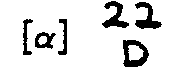
- Fmoc-D-Ser(Ac3-D-Ara)-OBzl werden analog Beispiel 8b katalytisch hydriert.

- 3,51 g (5 mmol) Fmoc-D-Ser(Ac3-D-Ara)-OH werden analog Beispiel 1d mit 4,54 g H-Leu-Arg-Pro-NH-C2H5-ditosylat umgesetzt.
- Der schaumige Rückstand wird analog Beispiel 3d und 4e umgesetzt und gereinigt.
- Ausbeute 5,47 g;

- 2,79 g (3 mmol) H-D-Ser(Ac3-D-Ara)-Leu-Arg-Pro-NH-C2H5-tosylat werden analog Beispiel 11f mit 2,03 g Fmoc-Trp-Ser-Tyr-OH umgesetzt.
- Ausbeute 4,18 g; Schmp. 152-154°C unter Zersetzung;

- 3,18 g (2 mmol) Fmoc-Trp-Ser-Tyr-D-Ser(Ac3-D-Ara)-Leu-Arg-Pro-NH-C2H5-tosylat werden analog Beispiel 11g umgesetzt.
- Ausbeute 2,62 g; Schmp. 101-104°C unter Zersetzung;

- 1,19 g H-Trp-Ser-Tyr-D-Ser(Ac3-D-Ara)-Leu-Arg-Pro-NH-C2H5-tosylat werden analog Beispiel 11h mit 450 mg Pgl-His(Dnp)-OH umgesetzt.
- Ausbeute an Rohacetat: 778,3 mg. Ausbeute nach chromatographischer Reinigung: 365 mg;

- Pgl-His-Trp-Ser-Tyr-D-Ser(β-D-Glc-NAc)-Leu-Arg-Pro-NH-C2H5
- Analog Beispiel 8a werden Fmoc-D-Ser-OBzf und N-Acetyl-3,4,6-Tri-O-acetyl-glucosamino-pyranosylbromid umgesetzt.
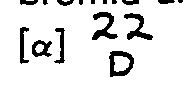
- Fmoc-D-Ser(Ac3-β-D-Glc-NAc)-OBzl werden analog Beispiel 8b katalytisch hydriert.

- 3,37 g (5 mmol) Fmoc-D-Ser(Ac3-β-D-Glc-NAc)-OH werden analog Beispiel 1d mit 3,75 g H-Leu-Arg-Pro-NH-C2H5-ditosylat umgesetzt.
- Der schaumige Rückstand wird analog Beispiel 6c umgesetzt.
- Ausbeute 3,96 g;

- 3,05 g (3 mmol) H-D-Ser(Ac3-β-Glc-NAc)-Leu-Arg-Pro-NH-C2H5-tosylat werden analog Beispiel 11f mit 2,03 g Fmoc-Trp-Ser-Tyr-OH umgesetzt.
- Ausbeute 4,34 g; Schmp. 139-144°C unter Zersetzung;

- 3,35 g (2 mmol) Fmoc-Tyr-Ser-Tyr-D-Ser(Ac3-β-D-Glc-NAc)-Leu-Arg-Pro-NH-C2H5-tosylat werden analog Beispiel 11g umgesetzt.
- Ausbeute 2,3 g; Schmp. 123-127°C unter Zersetzung;

- 1,45 g (1 mmol) H-Trp-Ser-Tyr-D-Ser(Ac3-β-Glc-NAc)-Leu-Arg-Pro-NH-C2H5-tosylat werden analog Beispiel 11 mit 450 mg Pgl-His(Dnp)-OH umgesetzt.
- Ausbeute an Rohacetat: 950 mg.
- Ausbeute nach chromatographischer Reinigung: 353 mg;

- Ac-D-Nal-p-Cl-D-Phe-D-Trp-Ser-Tyr-D-Ser(α-L-Rha)-Leu-Arg-Pro-Azagly-NH2
- Zu einer Lösung von 17,1 g (40 mmol) Fmoc-D-Trp-OH, 10,12 g H-Ser(tBu)-Ot8u·HCl und 5,4 g HOBt in 100 ml Dimethylformamid gibt man bei 0°C unter Rühren 5,2 ml N-Ethyl-morpholin und anschließend 8,8 g DCC. Man läßt 1 Stunde bei 0°C und 3 Stunden bei Raumtemperatur rühren. Danach wird der Niederschlag abgesaugt und das Filtrat im Vakuum eingeengt. Der Rückstand wird in Essigester gelöst und nacheinander mit Wasser, gesättigter NaHCO3-Lösung, KHSO4/K2SO4-Lösung, gesättigter NaHCO3-Lösung und Wasser gewaschen, über Na2S04 getrocknet und im Vakuum eingeengt. Die Lösung des resultierenden Öls in 70 ml Diethylether wird unter Rühren in 700 ml Petrolether getropft. Der Niederschlag wird abgesaugt und getrocknet.
- Ausbeute 17,6 g; Schmp. 87-91 °C;
-

- Zu einer Lösung von 16,5 g (26,3 mmol) Fmoc-D-Trp-Ser(tBu)-OtBu in 150 ml Dimethylformamid gibt man bei Raumtemperatur 27,5 ml Diethylamin und läßt 45 Minuten bei Raumtemperatur stehen. Danach wird das Lösungsmittel im Vakuum abdestilliert und der Rückstand an Kieselgel zunächst in Methylenchlorid und danach in einer Mischung aus Methylenchlorid/Methanol wie 9:1 chromatographiert.
- Ausbeute 7,95 g H-D-Trp-Ser(tBu)-OtBu.
- Zu einer Lösung des oben gewonnenen Öls (19,7 mmol), 8,2 g Fmoc-p-CI-D-Phe-OH und 2,6 g HOBt in 100 ml Dimethylformamid gibt man 4,3 DCC. Man arbeitet wie in Beispiel 24 a auf. Der Rückstand kristallisiert aus Diethylether.
- Ausbeute 10,2 g; Schmp. 184-186°;

- Zu einer Lösung von 10 g (12,38 mmol) Fmoc-p-CI-D-Phe-D-Tr-Ser(tBu)-OtBu in 100 ml Dimethylformamid gibt man 24,6 ml Diethylamin und läßt 20 Minuten bei Raumtemperatur stehen. Nach Abdestillieren des Lösungsmittels wird an Kieselgel in Methylenchlorid chromatographiert. Ausbeute 7,2 g Öl.
- Zu einer Lösung des oben gewonnenen Öls (12,3 mmol), 2,94 g Ac-D-Nal-OH, 2,04 g HOObt in 90 ml Dimethylformamid gibt man bei 0°C 2,7 g DCC. Man arbeitet wie bei Beispiel 24a auf. Der Rückstand wird mit Diethylether verrieben, abgesaugt, in 18 ml Methanol warm gelöst und mit 230 ml Diethylether gefällt. Der Niederschlag wird nach Kühlung abgesaugt und getrocknet.
- Ausbeute 6,4 g; Schmp. 204-207°C;

- Zu einer Lösung aus 60 ml 90 %iger wäßriger Trifluoressigsäure und 15 ml 1,2-Ethandithiol gibt man bei Raumtemperatur unter Rühren 6,2 g Ac-D-Nal-p-CI-D-Phe-D-Trp-Ser(tBu)-OtBu. Man läßt 75 Minuten bei Raumtemperatur rühren und engt im Vakuum ein. Der Rückstand wird mit Wasser verrieben, abgesaugt und über P2O5 getrocknet. Die Substanz wird aus Isopropanol/Petrolether umgefällt.
- Ausbeute 4,21 g; Schmp. 195-197°C;

- Zu einer Lösung vonn 125 g (500 mmol) Z-Pro-OH, 55 g Semicarbazid-hydrochlorid und 67,5 g HOBt in 1000 ml Dimethylformamid gibt man bei 0°C unter Rühren 75 ml Triethylamin und 105 g DCC. Man läßt etwa einen Tag bei 4°C reagieren und saugt den Niederschlag ab. Das Filtrat wird eingeengt und der Rückstand mit gesättigter NaHC03-Lösung verrieben. Der Niederschlag wird abgesaugt, gut mit Wasser gewaschen und über P205 im Vakuum getrocknet.
- Ausbeute 135,3 g; Schmp. 189°C.
- 131,6 g (430 mmol) Z-Pro-Azagly-NHz werden in 1000 ml einer Mischung von Methanol und Dimethylformamid (1:1) analog Beispiel 1 e katalytisch hydriert.
- Der Rückstand wird mit Wasser verrührt. Unlösliches wird abgesaugt und verworfen. Das Filtrat wird eingeengt.
- Ausbeute 85,2 g H-Pro-Azagly-NH2•HCl.
- Zu einer Lösung von 20,8 g (100 mmol) der oben gewonnenen Substanz, 57,6 g Z-Arg(Z2)-OH und 16,3 g HOObt in 400 ml Dimethylformamid gibt man unter Rühren bei 0°C 21 g DCC. Man arbeitet analog Beispiel 24a auf. Man verreibt den Rückstand mit Diethylether, dekantiert ab und verreibt erneut mit Petrolether.
- Ausbeute 73,4 g;

- 37,5 g Z-Arg(Z2)-Pro-Azagly-NH2 werden analog Beispiel 1e in 350 ml Methanol katalytisch hydriert. Der Rückstand wird mit Diethylether verrieben, abgesaugt und getrocknet.
- Ausbeute 21,95 g;
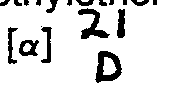
- 13,2 g (30 mmol) H-Arg-Pro-Azagly-NH2·2HCl werden analog Beispiel 1d mit 7,92 g Z-Leu-OH umgesetzt.
- Ausbeute 16,7 g Z-Leu-Arg-Pro-Azagly-NH2•HCl ;
-

- 14,5 g der oben gewonnenen Substanz werden analog Beispiel 1e in 150 ml Methanol katalytisch hydriert. Der Rückstand wird mit Diethylether verrieben.
- Ausbeute 12,35 g;

- 10,43 g (17,4 mmol) Fmoc-D-Ser(Ac3-α-L-Rha)-OH werden analog Beispiel 1d mit 8,95 g H-Leu-Arg-Pro-Azagly-NH2•2HCl umgesetzt.
- Ausbeute 15,07 g;

- Zu einer Lösung von 14,3 g (13,5 mmol) Fmoc-D-Ser(Ac3-α-L-Rha)-Leu-Arg-Pro-Azagly-NH2•HCl in 65 ml Dimethylformamid gibt man 14,3 ml (135 mmol) Diethylamin und rührt 10 Minuten bei Raumtemperatur. Danach engt man im Vakuum ein und verrührt den Rückstand mit Diethylether.
- Ausbeute 12,8 g.
- Zur Reinigung verrührt man die Substanz mit 1000 ml Wasser, saugt von Umgelöstem ab und gefriertrocknet das Filtrat.
- Ausbeute 10,75 g;

- 3,35 g (4 mmol) H-D-Ser(Ac3-α-L-Rha)-Leu-Arg-Pro-Azagly-NH2•HCl werden analog Beispiel 11f mit 1,62 g Fmoc-Tyr-OH umgesetzt. Die Pentanol-Phase wird noch mit NaHCO3-Lösung ausgeschüttelt, anschließend mit 1 N HCI auf pH 7 gestellt und eingeengt. Der Rückstand wird mit Diethylether verrieben.
- Ausbeute 4,2 g;

- 3,67 g (3 mmol) Fmoc-Tyr-D-Ser(Ac3-a-L-Rha)-Leu-Arg-Pro-Azagly-NH2 werden analog Beispiel 24k umgesetzt. Zur Reinigung verteilt man in 3 Stufen zwischen p-Pentanol und Wasser. Die wäßrigen Phasen und die n-Pentanolphasen 2 - 3 werden vereinigt, eingeengt und der Rückstand mit Diethylether verrieben.
- Ausbeute 2,3 g;
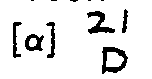
- 712 mg (1 mmol) Ac-D-Nal-p-CI-D-Phe-D-Trp-Ser-OH werden analog Beispiel 11 h mit 1 g H-Tyr-D-Ser-(Ac3-α-L-Rha)-Leu-Arg-Pro-Azagly-NH2•HCl umgestzt.
- Ausbeute an Rohacetat: 897 mg. Ausbeute nach chromatographischer Reinigung: 214 mg;

- Ac-D-Nal-p-Cl-D-Phe-D-Trp-Ser-His-D-Ser(a-L-Rha)-Leu-Arg-Pro-Azagly-NH2
- 3,35 g (4 mmol) H-D-Ser(Ac3-α-L-Rha)-Leu-Arg-Pro-Azagly-NH2•HCl werden analog Beispiel 241 mit 2,17 g Fmoc-His(Dnp)-OH umgesetzt.
- Ausbeute 4,9 g;
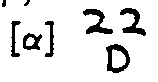
- Zu einer Lösung von 4,1 g Fmoc-His(Dnp)-D-Ser(Ac3-α-L-Rha)-Leu-Arg-Pro-Azagly-NH2•HCl in 15 ml Dimethylacetamid gibt man 3 ml 100 %iges Hydrazinhydrat und rührt 4 Stunden bei Raumtemperatur. Danach wird im Vakuum eingeengt und der Rückstand mit Diethylether verrührt und abgesaugt. Danach wird die Substanz in wenig Methanol gelöst, von Unlöslichem filtriert und mit Essigester gefällt.
- Ausbeute 2,25 g,
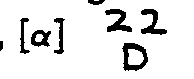
- 712 mg (1 mmol) Ac-D-Nal-p-CI-D-Phe-D-Trp-Ser-OH werden analog Beispiel 3e mit 850 mgl H-His-D-Ser(α-L-Rha)-Leu-Arg-Pro-Azagly-NH2•HCl umgesetzt. Der Rückstand wird mit Essigester verrieben und in ca. 100-150 ml 30 %iger Essigsäure gelöst. Von Unlöslichem wird filtriert und das Filtrat über einen - schwach basichen lonenaustauscher in Acetat-Form chromatographiert.
- Ausbeute an Rohacetat: 1,4 g.
- Ausbeute nach chromatographischer Reinigung: 538 mg;

- Ac-D-Nal-p-Cl-D-Phe-D-Trp-Ser-Arg-D-Ser(α-L-Rha)-Leu-Arg-Pro-Azagly-NH2
- Zu einer Lösung von 1,59 g (4 mmol) Fmoc-Arg-OH, 3,35 g H-D-Ser(Ac3-a-L-Rha)-Leu-Arg-Pro-Azagly-NH2•HCl, 540 mg HOBt und 720 mg Pyridiniumperchlorat in 20 ml Dimethylformamid gibt man unter Rühren bei 0°C 880 mg DCC. Man rührt 1 Stunde bei 0°C und 3 Stunden bei Raumtemperatur. Man läßt über Nacht stehen und saugt den Niederschlag ab. Das Filtrat wird im Vakuum eingeengt und der Rückstand zwischen n-Pentanol und NaHC03 verteilt. Die Pentanolphase wird nochmals mit NaHCO3-Lösung und Wasser extrahiert, mit 1 n HCI auf pH 7 eingestellt und eingeengt. Der Rückstand wird mit Diethylether verrieben und abgesaugt.
- Ausbeute 4,3 g;

- 3,77 g (3 mmol) Fmoc-Arg-D-Ser(Ac3-α-L-Rha)-Leu-Arg-Pro-Azagly-NH2•2HCl werden analog Beispiel 24k umgesetzt. Gereinigt wird durch eine 3-stufige Gegenstromverteilung zwischen n-Pentanol und Wasser. Die Wasserphasen 1 - 2 werden vereinigt und gefriergetrocknet.
- Ausbeute 2,4 g;

- 712 mg (1 mmol) Ac-D-Nal-p-CI-D-Phe-D-Trp-Ser-OH werden analog Beispiel 11h mit 1,03 H-Arg-D-Ser(Ac3-α-L-Rha)-Leu-Arg-Pro-Azagly-NH2•2HCl umgesetzt.
- Ausbeute an Rohacetat: 1,06 g.
- Ausbeute nach chromographischer Reinigung: 550 mg;
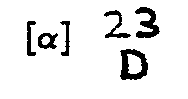
Claims (11)


Priority Applications (1)
| Application Number | Priority Date | Filing Date | Title |
|---|---|---|---|
| AT87114702T ATE70278T1 (de) | 1986-10-09 | 1987-10-08 | Analoga von gonadoliberin mit verbesserter loeslichkeit, verfahren zu deren herstellung, diese enthaltende mittel und und ihre verwendung. |
Applications Claiming Priority (2)
| Application Number | Priority Date | Filing Date | Title |
|---|---|---|---|
| DE19863634435 DE3634435A1 (de) | 1986-10-09 | 1986-10-09 | Analoga von gonadoliberin mit verbesserter loeslichkeit, verfahren zu deren herstellung, diese enthaltende mittel und ihre verwendung |
| DE3634435 | 1986-10-09 |
Publications (3)
| Publication Number | Publication Date |
|---|---|
| EP0263521A2 true EP0263521A2 (de) | 1988-04-13 |
| EP0263521A3 EP0263521A3 (en) | 1988-07-06 |
| EP0263521B1 EP0263521B1 (de) | 1991-12-11 |
Family
ID=6311399
Family Applications (1)
| Application Number | Title | Priority Date | Filing Date |
|---|---|---|---|
| EP87114702A Expired - Lifetime EP0263521B1 (de) | 1986-10-09 | 1987-10-08 | Analoga von Gonadoliberin mit verbesserter Löslichkeit, Verfahren zu deren Herstellung, diese enthaltende Mittel und und ihre Verwendung |
Country Status (20)
| Country | Link |
|---|---|
| US (1) | US5091367A (de) |
| EP (1) | EP0263521B1 (de) |
| JP (1) | JP2573625B2 (de) |
| KR (1) | KR960013387B1 (de) |
| AT (1) | ATE70278T1 (de) |
| AU (1) | AU595383B2 (de) |
| CA (1) | CA1314656C (de) |
| CZ (1) | CZ408491A3 (de) |
| DE (2) | DE3634435A1 (de) |
| DK (1) | DK171823B1 (de) |
| ES (1) | ES2055696T3 (de) |
| FI (1) | FI86863C (de) |
| GR (1) | GR3003927T3 (de) |
| IE (1) | IE60296B1 (de) |
| IL (1) | IL84121A (de) |
| NZ (1) | NZ222076A (de) |
| PH (1) | PH24731A (de) |
| PT (1) | PT85881B (de) |
| SK (1) | SK408491A3 (de) |
| ZA (1) | ZA877561B (de) |
Cited By (3)
| Publication number | Priority date | Publication date | Assignee | Title |
|---|---|---|---|---|
| EP0373545A3 (en) * | 1988-12-14 | 1990-10-17 | Hoechst Aktiengesellschaft | Competitive genadoliberin antagonists |
| EP0477499A1 (de) * | 1990-08-04 | 1992-04-01 | Hoechst Aktiengesellschaft | Gonadoliberin-Antagonisten |
| WO2001047999A1 (fr) * | 1999-12-27 | 2001-07-05 | Shanghai Biowindow Gene Development Inc. | Nouveau polypeptide, gonadoliberine humaine 11, et polynucleotide codant pour ce polypeptide |
Families Citing this family (6)
| Publication number | Priority date | Publication date | Assignee | Title |
|---|---|---|---|---|
| DK163689A (da) * | 1988-04-08 | 1989-10-30 | Sandoz Ag | Peptidderivater |
| US5760000A (en) * | 1994-05-13 | 1998-06-02 | University Technologies International,Inc. | Inhibition of liver cancer by the use of GnRH and GnRH analogs |
| GB2343182A (en) * | 1998-10-27 | 2000-05-03 | Ferring Bv | Use of GnRH-II and analogues thereof for the treatment of osteoporosis |
| GB2344287A (en) * | 1998-12-03 | 2000-06-07 | Ferring Bv | Controlled release pharmaceutical formulation |
| CN1315354A (zh) * | 2000-03-24 | 2001-10-03 | 上海博德基因开发有限公司 | 一种新的多肽——人促性腺释放激素12和编码这种多肽的多核苷酸 |
| EP1729790A4 (de) * | 2004-03-29 | 2009-09-30 | Robin Polt | Amphipathische glycopeptide |
Family Cites Families (5)
| Publication number | Priority date | Publication date | Assignee | Title |
|---|---|---|---|---|
| NZ188987A (en) * | 1977-11-30 | 1982-02-23 | Salk Inst For Biological Studi | Peptide analogues of luteinizing hormone releasing factor |
| FR2465486A1 (fr) * | 1979-09-21 | 1981-03-27 | Roussel Uclaf | Nouvelle application utilisant la lh-rh ou des agonistes |
| US4409208A (en) * | 1980-04-15 | 1983-10-11 | The Salk Institute For Biological Studies | GnRH antagonists |
| US4444759A (en) * | 1982-07-26 | 1984-04-24 | The Salk Institute For Biological Studies | GnRH Antagonists II |
| DE3467173D1 (en) * | 1983-08-16 | 1987-12-10 | Akzo Nv | Lh- rh antagonists |
-
1986
- 1986-10-09 DE DE19863634435 patent/DE3634435A1/de not_active Withdrawn
-
1987
- 1987-10-06 KR KR1019870011124A patent/KR960013387B1/ko not_active Expired - Fee Related
- 1987-10-07 PH PH35901A patent/PH24731A/en unknown
- 1987-10-07 FI FI874401A patent/FI86863C/fi not_active IP Right Cessation
- 1987-10-07 IL IL84121A patent/IL84121A/xx not_active IP Right Cessation
- 1987-10-07 NZ NZ222076A patent/NZ222076A/xx unknown
- 1987-10-08 IE IE269387A patent/IE60296B1/en not_active IP Right Cessation
- 1987-10-08 PT PT85881A patent/PT85881B/pt unknown
- 1987-10-08 EP EP87114702A patent/EP0263521B1/de not_active Expired - Lifetime
- 1987-10-08 CA CA000548918A patent/CA1314656C/en not_active Expired - Fee Related
- 1987-10-08 ZA ZA877561A patent/ZA877561B/xx unknown
- 1987-10-08 DK DK527187A patent/DK171823B1/da not_active IP Right Cessation
- 1987-10-08 JP JP62252637A patent/JP2573625B2/ja not_active Expired - Lifetime
- 1987-10-08 AU AU79459/87A patent/AU595383B2/en not_active Ceased
- 1987-10-08 ES ES87114702T patent/ES2055696T3/es not_active Expired - Lifetime
- 1987-10-08 DE DE8787114702T patent/DE3775156D1/de not_active Expired - Fee Related
- 1987-10-08 AT AT87114702T patent/ATE70278T1/de not_active IP Right Cessation
-
1991
- 1991-06-28 US US07/724,477 patent/US5091367A/en not_active Expired - Fee Related
- 1991-12-27 CZ CS914084A patent/CZ408491A3/cs unknown
- 1991-12-27 SK SK4084-91A patent/SK408491A3/sk unknown
-
1992
- 1992-02-28 GR GR910402214T patent/GR3003927T3/el unknown
Cited By (4)
| Publication number | Priority date | Publication date | Assignee | Title |
|---|---|---|---|---|
| EP0373545A3 (en) * | 1988-12-14 | 1990-10-17 | Hoechst Aktiengesellschaft | Competitive genadoliberin antagonists |
| EP0477499A1 (de) * | 1990-08-04 | 1992-04-01 | Hoechst Aktiengesellschaft | Gonadoliberin-Antagonisten |
| US5434138A (en) * | 1990-08-04 | 1995-07-18 | Hoechst Aktiengesellschaft | Gonadoliberin antagonists |
| WO2001047999A1 (fr) * | 1999-12-27 | 2001-07-05 | Shanghai Biowindow Gene Development Inc. | Nouveau polypeptide, gonadoliberine humaine 11, et polynucleotide codant pour ce polypeptide |
Also Published As
| Publication number | Publication date |
|---|---|
| JP2573625B2 (ja) | 1997-01-22 |
| DE3775156D1 (de) | 1992-01-23 |
| JPS6396198A (ja) | 1988-04-27 |
| IE60296B1 (en) | 1994-06-29 |
| NZ222076A (en) | 1989-09-27 |
| GR3003927T3 (de) | 1993-03-16 |
| EP0263521A3 (en) | 1988-07-06 |
| ES2055696T3 (es) | 1994-09-01 |
| KR880005149A (ko) | 1988-06-28 |
| ATE70278T1 (de) | 1991-12-15 |
| SK408491A3 (en) | 1995-07-11 |
| PT85881B (pt) | 1990-07-31 |
| DK171823B1 (da) | 1997-06-23 |
| FI874401L (fi) | 1988-04-10 |
| ZA877561B (en) | 1988-05-25 |
| IL84121A (en) | 1992-06-21 |
| FI874401A0 (fi) | 1987-10-07 |
| US5091367A (en) | 1992-02-25 |
| IE872693L (en) | 1988-04-09 |
| DK527187D0 (da) | 1987-10-08 |
| IL84121A0 (en) | 1988-03-31 |
| FI86863B (fi) | 1992-07-15 |
| EP0263521B1 (de) | 1991-12-11 |
| CA1314656C (en) | 1993-03-16 |
| PT85881A (de) | 1987-11-01 |
| DK527187A (da) | 1988-04-10 |
| FI86863C (fi) | 1992-10-26 |
| KR960013387B1 (ko) | 1996-10-04 |
| CZ408491A3 (en) | 1993-01-13 |
| DE3634435A1 (de) | 1988-04-14 |
| PH24731A (en) | 1990-10-01 |
| AU7945987A (en) | 1988-04-14 |
| AU595383B2 (en) | 1990-03-29 |
Similar Documents
| Publication | Publication Date | Title |
|---|---|---|
| EP0034259B1 (de) | Peptidester, Verfahren zur Herstellung derselben und diese enthaltende Arzneimittel beziehungsweise Diagnostica | |
| DE69833751T2 (de) | IN POSITION 5 UND 6 MODIFIZIERTE GONADOTROPIN FREISETZENDES HORMON (GnRH)-ANTAGONISTEN | |
| DE3850789T2 (de) | Nonapeptid- und Dekapeptid-Analoge von LHRH, die als LHRH-Antagonisten dienen. | |
| DE3854159T2 (de) | Effektive antagonisten für den das luteinisierende hormon freisetzenden faktor mit unbedeutender histaminfreisetzung. | |
| DE69801369T2 (de) | Peptidanaloge des lh-rh, ihre verwendungen und die sie enthaltenden pharmazeutischen zusammensetzungen | |
| DE69810283T2 (de) | GnRH ANTAGONISTEN | |
| DE2617646A1 (de) | Peptide mit gonadoliberin-wirkung und verfahren zu ihrer herstellung | |
| CH682152A5 (de) | ||
| DE2451841A1 (de) | Biologisch aktive amide, verfahren zu ihrer herstellung und ihre verwendung | |
| DE3021736A1 (de) | Neue peptide, verfahren zu deren herstellung und diese enthaltenden arzneimittel | |
| EP0263521B1 (de) | Analoga von Gonadoliberin mit verbesserter Löslichkeit, Verfahren zu deren Herstellung, diese enthaltende Mittel und und ihre Verwendung | |
| DE2616647A1 (de) | Peptidamidderivate und mittel, in denen sie enthalten sind | |
| DE2547721A1 (de) | Biologisch aktive amide | |
| US4083967A (en) | Nona- and decapeptides | |
| DE2003421A1 (de) | Verfahren zur Herstellung eines bisher unbekannten Polypeptids | |
| EP0041243B1 (de) | Nonapeptid, Verfahren zu seiner Herstellung, dieses enthaltendes Mittel und seine Verwendung | |
| DE60031133T2 (de) | Verfahren zur darstellung von lh-rh-derivaten | |
| DE3312399A1 (de) | Biologisch aktive peptide und arzneimittel, welche diese enthalten | |
| DE3842010A1 (de) | Kompetitive gonadoliberin-antagonisten | |
| AT349660B (de) | Verfahren zur herstellung von neuen nonapeptidamidderivaten | |
| DE2424287A1 (de) | Peptide mit lh-rh/fsh-rh-wirkung und verfahren zu ihrer herstellung | |
| DE1918836A1 (de) | Verfahren zur Herstellung bisher unbekannter Polypeptide | |
| DE2025791A1 (en) | Synthetic polypeptides - salmon calcitonin derivs. with pharmacodynamic properties | |
| CH532023A (de) | Verfahren zur Herstellung bisher unbekannter Polypeptidderivate | |
| CH509980A (de) | Verfahren zur Herstellung eines bisher unbekannten Polypeptidderivates |
Legal Events
| Date | Code | Title | Description |
|---|---|---|---|
| PUAI | Public reference made under article 153(3) epc to a published international application that has entered the european phase |
Free format text: ORIGINAL CODE: 0009012 |
|
| AK | Designated contracting states |
Kind code of ref document: A2 Designated state(s): AT BE CH DE ES FR GB GR IT LI LU NL SE |
|
| PUAL | Search report despatched |
Free format text: ORIGINAL CODE: 0009013 |
|
| AK | Designated contracting states |
Kind code of ref document: A3 Designated state(s): AT BE CH DE ES FR GB GR IT LI LU NL SE |
|
| 17P | Request for examination filed |
Effective date: 19880908 |
|
| 17Q | First examination report despatched |
Effective date: 19900806 |
|
| GRAA | (expected) grant |
Free format text: ORIGINAL CODE: 0009210 |
|
| AK | Designated contracting states |
Kind code of ref document: B1 Designated state(s): AT BE CH DE ES FR GB GR IT LI LU NL SE |
|
| REF | Corresponds to: |
Ref document number: 70278 Country of ref document: AT Date of ref document: 19911215 Kind code of ref document: T |
|
| REF | Corresponds to: |
Ref document number: 3775156 Country of ref document: DE Date of ref document: 19920123 |
|
| ITF | It: translation for a ep patent filed | ||
| ET | Fr: translation filed | ||
| GBT | Gb: translation of ep patent filed (gb section 77(6)(a)/1977) | ||
| PLBE | No opposition filed within time limit |
Free format text: ORIGINAL CODE: 0009261 |
|
| STAA | Information on the status of an ep patent application or granted ep patent |
Free format text: STATUS: NO OPPOSITION FILED WITHIN TIME LIMIT |
|
| REG | Reference to a national code |
Ref country code: GR Ref legal event code: FG4A Free format text: 3003927 |
|
| 26N | No opposition filed | ||
| EPTA | Lu: last paid annual fee | ||
| REG | Reference to a national code |
Ref country code: ES Ref legal event code: FG2A Ref document number: 2055696 Country of ref document: ES Kind code of ref document: T3 |
|
| EAL | Se: european patent in force in sweden |
Ref document number: 87114702.1 |
|
| PGFP | Annual fee paid to national office [announced via postgrant information from national office to epo] |
Ref country code: DE Payment date: 20010821 Year of fee payment: 15 |
|
| PGFP | Annual fee paid to national office [announced via postgrant information from national office to epo] |
Ref country code: NL Payment date: 20010823 Year of fee payment: 15 Ref country code: AT Payment date: 20010823 Year of fee payment: 15 |
|
| PGFP | Annual fee paid to national office [announced via postgrant information from national office to epo] |
Ref country code: GB Payment date: 20010824 Year of fee payment: 15 |
|
| PGFP | Annual fee paid to national office [announced via postgrant information from national office to epo] |
Ref country code: SE Payment date: 20010827 Year of fee payment: 15 Ref country code: FR Payment date: 20010827 Year of fee payment: 15 Ref country code: CH Payment date: 20010827 Year of fee payment: 15 |
|
| PGFP | Annual fee paid to national office [announced via postgrant information from national office to epo] |
Ref country code: LU Payment date: 20010911 Year of fee payment: 15 |
|
| PGFP | Annual fee paid to national office [announced via postgrant information from national office to epo] |
Ref country code: GR Payment date: 20010918 Year of fee payment: 15 |
|
| PGFP | Annual fee paid to national office [announced via postgrant information from national office to epo] |
Ref country code: ES Payment date: 20010928 Year of fee payment: 15 |
|
| PGFP | Annual fee paid to national office [announced via postgrant information from national office to epo] |
Ref country code: BE Payment date: 20011011 Year of fee payment: 15 |
|
| REG | Reference to a national code |
Ref country code: GB Ref legal event code: IF02 |
|
| PG25 | Lapsed in a contracting state [announced via postgrant information from national office to epo] |
Ref country code: AT Free format text: LAPSE BECAUSE OF NON-PAYMENT OF DUE FEES Effective date: 20021008 Ref country code: LU Free format text: LAPSE BECAUSE OF NON-PAYMENT OF DUE FEES Effective date: 20021008 Ref country code: GB Free format text: LAPSE BECAUSE OF NON-PAYMENT OF DUE FEES Effective date: 20021008 |
|
| PG25 | Lapsed in a contracting state [announced via postgrant information from national office to epo] |
Ref country code: SE Free format text: LAPSE BECAUSE OF NON-PAYMENT OF DUE FEES Effective date: 20021009 Ref country code: ES Free format text: LAPSE BECAUSE OF NON-PAYMENT OF DUE FEES Effective date: 20021009 |
|
| PG25 | Lapsed in a contracting state [announced via postgrant information from national office to epo] |
Ref country code: CH Free format text: LAPSE BECAUSE OF NON-PAYMENT OF DUE FEES Effective date: 20021031 Ref country code: BE Free format text: LAPSE BECAUSE OF NON-PAYMENT OF DUE FEES Effective date: 20021031 Ref country code: LI Free format text: LAPSE BECAUSE OF NON-PAYMENT OF DUE FEES Effective date: 20021031 |
|
| BERE | Be: lapsed |
Owner name: *HOECHST A.G. Effective date: 20021031 |
|
| PG25 | Lapsed in a contracting state [announced via postgrant information from national office to epo] |
Ref country code: NL Free format text: LAPSE BECAUSE OF NON-PAYMENT OF DUE FEES Effective date: 20030501 Ref country code: DE Free format text: LAPSE BECAUSE OF NON-PAYMENT OF DUE FEES Effective date: 20030501 |
|
| PG25 | Lapsed in a contracting state [announced via postgrant information from national office to epo] |
Ref country code: GR Free format text: LAPSE BECAUSE OF NON-PAYMENT OF DUE FEES Effective date: 20030506 |
|
| GBPC | Gb: european patent ceased through non-payment of renewal fee |
Effective date: 20021008 |
|
| EUG | Se: european patent has lapsed | ||
| REG | Reference to a national code |
Ref country code: CH Ref legal event code: PL |
|
| PG25 | Lapsed in a contracting state [announced via postgrant information from national office to epo] |
Ref country code: FR Free format text: LAPSE BECAUSE OF NON-PAYMENT OF DUE FEES Effective date: 20030630 |
|
| NLV4 | Nl: lapsed or anulled due to non-payment of the annual fee |
Effective date: 20030501 |
|
| REG | Reference to a national code |
Ref country code: FR Ref legal event code: ST |
|
| REG | Reference to a national code |
Ref country code: ES Ref legal event code: FD2A Effective date: 20031112 |
|
| PG25 | Lapsed in a contracting state [announced via postgrant information from national office to epo] |
Ref country code: IT Free format text: LAPSE BECAUSE OF NON-PAYMENT OF DUE FEES;WARNING: LAPSES OF ITALIAN PATENTS WITH EFFECTIVE DATE BEFORE 2007 MAY HAVE OCCURRED AT ANY TIME BEFORE 2007. THE CORRECT EFFECTIVE DATE MAY BE DIFFERENT FROM THE ONE RECORDED. Effective date: 20051008 |