EP0267795A2 - Muteine des Maus-Interleukin-2 - Google Patents
Muteine des Maus-Interleukin-2 Download PDFInfo
- Publication number
- EP0267795A2 EP0267795A2 EP87310005A EP87310005A EP0267795A2 EP 0267795 A2 EP0267795 A2 EP 0267795A2 EP 87310005 A EP87310005 A EP 87310005A EP 87310005 A EP87310005 A EP 87310005A EP 0267795 A2 EP0267795 A2 EP 0267795A2
- Authority
- EP
- European Patent Office
- Prior art keywords
- ile
- met
- leu
- phe
- gln
- Prior art date
- Legal status (The legal status is an assumption and is not a legal conclusion. Google has not performed a legal analysis and makes no representation as to the accuracy of the status listed.)
- Withdrawn
Links
Images

Classifications
-
- C—CHEMISTRY; METALLURGY
- C12—BIOCHEMISTRY; BEER; SPIRITS; WINE; VINEGAR; MICROBIOLOGY; ENZYMOLOGY; MUTATION OR GENETIC ENGINEERING
- C12N—MICROORGANISMS OR ENZYMES; COMPOSITIONS THEREOF; PROPAGATING, PRESERVING, OR MAINTAINING MICROORGANISMS; MUTATION OR GENETIC ENGINEERING; CULTURE MEDIA
- C12N15/00—Mutation or genetic engineering; DNA or RNA concerning genetic engineering, vectors, e.g. plasmids, or their isolation, preparation or purification; Use of hosts therefor
- C12N15/09—Recombinant DNA-technology
- C12N15/63—Introduction of foreign genetic material using vectors; Vectors; Use of hosts therefor; Regulation of expression
- C12N15/70—Vectors or expression systems specially adapted for E. coli
-
- C—CHEMISTRY; METALLURGY
- C07—ORGANIC CHEMISTRY
- C07K—PEPTIDES
- C07K14/00—Peptides having more than 20 amino acids; Gastrins; Somatostatins; Melanotropins; Derivatives thereof
- C07K14/435—Peptides having more than 20 amino acids; Gastrins; Somatostatins; Melanotropins; Derivatives thereof from animals; from humans
- C07K14/52—Cytokines; Lymphokines; Interferons
- C07K14/54—Interleukins [IL]
- C07K14/55—IL-2
Definitions
- This invention relates generally to proteins capable of maintaining in vitro cultures of certain immune system cells, and more particularly, to biologically active mutant proteins (muteins) of the murine lymphokine interleukin-2.
- IL-2 interleukin-2
- Robb Immunology Today , Vol. 5, pgs. 203-209 (1984); and Smith, Ann. Rev. Immunol. , Vol. 2, pgs. 319-333 (1984).
- Both human and murine forms of IL-2 have been biochemically characterized, cloned, and sequenced: e.g. Taniguchi et al., Nature , Vol. 302, pgs. 305-310 (1983); Yokota et al., Proc. Natl. Acad. Sci. , Vol. 82, pgs. 68-72 (1985); Robb et al., Proc.
- Murine IL-2 is a crucial laboratory reagent for maintaining long-term proliferation of T cells in culture.
- the availability of alternative sources of this reagent, and the availability of muteins with equivalent or enhanced growth-promoting properties would be highly advantageous to the scientific and industrial research communities.
- the present invention is directed to mouse IL-2 muteins defined by Formula I: wherein the term X(Xaa) represents the group of synonymous L-amino acids to the amino acid Xaa, at least one deletion, substitution or insertion as hereinafter defined has been made, and the cysteines at positions 72 and 120 are neither deleted nor substituted. Synonymous amino acids within a group have sufficiently similar physicochemical properties for substitution between members of the group to preserve the biological function of the molecule: Grantham, Science , Vol. 185, pgs. 862-864 (1974).
- the synonymous amino acid groups are those defined in Table I. More preferably, the synonymous amino acid groups are those before the second slash in each line in Table I; and most preferably the synonymous amino acid groups are those before the first slash in each line in Table I.
- the invention includes the polypeptides of Formula I with amino acid substitutions (of a synonymous amino acid for an amino acid of the native mouse IL-2) at a single position or at multiple positions.
- the term "N-fold substituted (J-K)" is used to describe a subset of polypeptides defined by Formula I wherein the native amino acids have been substituted at amino acids J through K, inclusive, by synonymous amino acids at 1 to N positions.
- the group of 1-fold substituted (1-10) polypeptides of Formula I consists of 36 polypeptides for the preferred groups of synonymous amino acids, 2 for the more preferred groups of synonymous amino acids, and none for the most preferred groups of synonymous amino acids. These numbers were obtained by taking the numbers of amino acids in the various synonymous groups, summing these, and subtracting 10 from the result to allow for those 10 amino acid residues present at positions 1-10.
- N-fold inserted (J-K) in reference to the polypeptides of Formula I is used to describe a set of polypeptides wherein from 1 to N amino acids have been inserted within the polypeptide segment between amino acids J and K.
- J can take the value 0.
- the inserted amino acids are selected from the preferred groups of synonymous amino acids of the amino acids flanking the insertion; more preferably they are selected from the more preferred groups of synonymous amino acids of the amino acids flanking the insertion, and most preferably they are selected from the most preferred groups of synonymous amino acids of the amino acids flanking the insertion. These groups are all indicated in Table I.
- one subgroup of the group of 1-fold inserted (1-11) peptides comprises a peptide of formula I having an amino acid inserted between the penultimate N-terminal X(Pro) and the adjacent X(Thr).
- the insertions defining the members of this subgroup are preferably selected from Pro, Ala, Gly, Thr, Ser, Gln, Glu, and His; more preferably they are selected from Ala, Pro, and Thr, and most preferably they are selected from Pro and Thr. Insertions can be made between any adjacent amino acids with the sequence of amino acids 1 through 11.
- N-fold deleted (J-K) in reference to the polypeptides of Formula I is used to describe a set of polypeptides having from 1 to N amino acids deleted from the sequence of amino acids at the positions J through K, inclusive.
- the set of 1-fold deleted (1-10) polypeptides of Formula I consists of 149 subgroups of polypeptides each 148 amino acids in length (148-mers). Each of the subgroups in turn consists of all the 148-mers defined by the preferred, more preferred, and most preferred synonymous amino acid groups.
- deletions are made first, substitutions are made second up to the lesser of the number of amino acids remaining after deletions are made and the multiplicity of the substitutions, and insertions are made last.
- muteins of the invention include 13-fold deleted (1-13), 12-fold deleted (14-25), 1-fold deleted (26-140), 5-fold deleted (141-149), 5-fold substituted (1-13), 12-fold substituted (14-25), 5-fold substituted (26-38), 5-fold substituted (39-140), 5-fold substituted (141-149), 5-fold inserted (0-13), 1-fold inserted (14-149) polypeptides of Formula I wherein the cysteines at positions 72 and 120 (Cys72 and Cys120, respectively) are neither substituted nor deleted.
- muteins of the invention include 12-fold deleted (14-25), 1-fold deleted (26-140), 5-fold deleted (141-149), 5-fold substituted (1-25), 3-fold substituted (26-38), 3-fold substituted (39-140), 5-fold substituted (141-149), 5-fold inserted (0-13), 1-fold inserted (14-149) polypeptides of Formula I wherein Cys72 and Cys120 are neither substituted nor deleted.
- muteins of the invention include 12-fold deleted (14-25), 5-fold deleted (141-149), 3-fold substituted (1-25), 2-fold substituted (26-38), 3-fold substituted (141-149) polypeptides of formula I wherein Cys72 and Cys120 are neither substituted nor deleted.
- mutants of the native mouse IL-2 are produced by site-specific oligonucleotide-directed mutagenesis: e.g. Zoller and Smith, Methods in Enzymology , Vol. 100, pgs. 468-500 (1983); Mark et al., U.S.
- Patent 4,518,584 entitled "Human Recombinant Interleukin-2 Muteins” or by so-called “cassette” mutagenesis described by Wells et al. in Gene , Vol. 34, pgs. 315-323 (1985), by Estell et al. in Science , Vol. 233, pgs. 659-663 (1986), and also essentially by Mullenbach et al., J. Biol. Chem. , Vol. 261, pgs. 719-722 (1986), and by Feretti et al., Proc. Natl. Acad. Sci. , Vol. 83, pgs. 597-603 (1986).
- mouse IL-2 mutein Leu82 indicates a polypeptide whose amino acid sequence is identical to that of the native protein except for position 82 with respect to the N-terminus. At that position Leu has been substituted for His. Where the mutein contains more than one substitution, e.g. Leu for His at position 82, and Asp for Leu at position 111, the mutein is referred to as mouse IL-2 mutein (Leu82, Asp111). Deletions are indicated by " ⁇ 's”.
- mouse IL-2 mutein ⁇ 71 a mutein lacking Gln at position 71 is referred to as mouse IL-2 mutein ⁇ 71. Insertions are indicated by "IN(Xaa)'s".
- a mutein with a Leu inserted after Gln at position 71 is referred to as mouse IL-2 mutein IN71(Leu).
- mouse IL-2 mutein (Ser13, ⁇ 71, IN94(Gly)) represents the native mouse IL-2 sequence which has been modified by replacing Glu by Ser at position 13, deleting Gln at position 71, and inserting Gly immediately after Leu at position 94.
- Insertion of multiple amino acids at the same site is indicated by IN i (Xaa1-Xaa2-Xaa3-...), where Xaa1-Xaa2-Xaa3... is the sequence inserted after position i.
- N-terminal additions are indicated by superscript "0", e.g. IS0(Xaa), and a sequence of deletions, for example of amino acids 6-10, is designated either as ⁇ 6 ⁇ 10 or as ( ⁇ 6, ⁇ 7, ⁇ 8, ⁇ 9, ⁇ 10).
- cassette mutagenesis is employed to generate mouse IL-2 muteins.
- a synthetic mouse IL-2 gene has been constructed with a sequence of restriction endonuclease sites that are unique when inserted in a appropriate vector and are spaced approximately uniformly along the gene. The unique restriction sites allow segments of the gene to be conveniently excised and replaced with synthetic oligonucleotides (ie. "cassettes”) which code for desired muteins.
- Determination of the number and distribution of unique restriction sites entails the consideration of several factors including (1) preexisting restriction sites in the vector to be employed in expression, (2) whether species-specific or genera-specific codon usage is desired, and (3) the convenience and reliability of synthesizing and/or sequencing the segments between the unique restriction sites.
- Cloning and expression are carried out in standard bacterial systems, for example E. coli K-12 strain JM101 described by Vieira and Messing, Gene , Vol. 19, pgs. 259-268 (1982), which is commercially available.
- Expression vectors were purchased commercially (e.g. pUC18 from Pharmacia) or were constructed from commercially available vectors.
- the alkaline method (Maniatis et al., cited above) was used for small scale plasmid preparations.
- a modification of the alkaline method was used in which an equal volume of isopropanol was used to precipitate nucleic acids from the cleared lysate.
- Precipitation with cold 2.5 M ammonium acetate was used to remove RNA prior to mixing with ethidium bromide and separation by equilibrium density centrifugation in cesium bromide.
- Filters were washed twice (15 min, room temperature) with 1xSSPE, 0.1% SDS. After autoradiography (Fuji RX film), positive colonies were located by aligning the regrown colonies with the blue-stained colonies on the filters.
- DNA was sequenced by either the chemical degradation method of Maxam and Gilbert, Methods in Enzymology , Vol. 65, pg. 499 (1980), or by the dideoxy method of Sanger et al., Proc. Natl. Acad. Sci. , Vol. 74, pg. 5463 (1977). Templates for the dideoxy reactions were either single stranded DNAs of relevant regions recloned into M13mp vectors, e.g. Messing et al., Nucleic Acids Res. , Vol.
- the TAC-RBS vector was constructed by filling-in with DNA polymerase the single Bam HI site of the tac P-bearing plasmid pDR540 (Pharmacia, PL). This was then ligated to unphosphorylated synthetic oligonucleotides (Pharmacia, PL) which form a double-stranded fragment encoding a consensus ribosome binding site (RBS, GTAAGGAGGTTTAAC). After ligation, the mixture was phosphorylated and religated with the Sst I linker ATGAGCTCAT.
- the TRPC11 vector was constructed by ligating the synthetic consensus RBS fragment to Cla I linkers (ATGCAT) and by cloning the resulting fragments into Cla I-restricted pMT11hc Cla I.
- This plasmid was constructed by restricting pMT11hc with Eco RI and Bam HI, filling in and ligating with Cla I linker (CATCGATG), thereby restoring the Eco RI and Bam HI sites and replacing the Sma I site with a Cla I site.
- One transformant from the TRPC11 construction had a tandem RBS sequence flanked by Cla I sites.
- the TCV vector was constructed by cloning the 330 bp Sau 3A- Bgl II trp LE1417-bearing fragment of pVVI (Nichols et al., cited above) into Bam HI- and Bgl II-restricted pMT11hc.
- a clone with an intact Bgl II site was restricted with Bgl II and ligated to a synthetic double-stranded DNA fragment having a protruding GATC end, a flush end, and a sequence of GATCCACAGGAGACTTTCTGATGAGCTC.
- mIL-2 murine IL-2
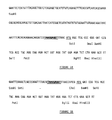
- TAC7 mIL-2 was constructed by ligating Sst 1-restricted, T4-DNA-polymerase-treated and Bam HI-restricted TAC-RBS vector DNA with the 756 bp Hinc II- Bam HI fragment from pMT-18 mIL-2 cDNA (Yokota, T., N. Arai, F. Lee, D. Rennick, T.R. Mosmann, and K. Arai: Use of a cDNA expression vector for isolation of mouse interleukin 2 cDNA clones: Expression of T-cell growth-factor activity after transfection of monkey cells; Prod. Natl. Acad. Sci. U.S.A. , 1985, 82:68). Note that the mIL-2 coding region in this construction has an additional two amino acids (Asn,Ser) derived from the leader sequence encoded by the mIL-2 cDNA.
- exTAC mIL-2 plasmid (ex denotes that the f-MET-initiated region of mIL-2 is exactly that of the mature processed protein) was constructed as above, except that the mIL-2 fragment used was a 750 Hin PI- Bam HI fragment in which the Hin PI site had been filled with T4 DNA polymerase and dCTP and then treated with mung bean nuclease.
- the exTCV mIL-2 plasmid was constructed as above, except that TCV DNA was used in place of TAC-RBS.
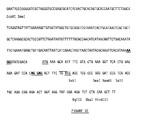
- the exTRP mIL-2 plasmid was constructed by first inserting the sequence ATCGATG between bsp 108 and 109 in the mIL-2 cDNA sequence of Yokota et al. (cited above). This insertion was performed using site-directed mutagenesis. The 756 bp Cla I- Bam HI mIL-2 fragment from the insertion mutant was then cloned into Cla I- and Bam HI-restricted TRPC11 DNA.
- the TRP5 mIL-2 plasmid was constructed as described for TAC7 mIL-2, except that the vector DNA was a derivative of the TCV vector in which the trp LE peptide is in phase with the ATG codon proximal to the Sst I site.
- the TRP mIL-2 Bal31 deletion plasmids were constructed by restricting exTRP mIL-2 DNA with Cla I, recessing with Bal 31, treating with DNA polymerase, ligating with kinased Cla I linker DNA (CATCGATG) and restricting with Bam HI.
- PAGE-purified Cla I- Bam HI DNA 750 bp-600 bp was ligated to Bam HI- and Cla I-restricted TRPC11 DNA.
- the TRP mIL-2 ⁇ GLN plasmids were constructed by ligating a synthetic Cla I- Sst I fragment to Cla I- and Sst -restricted exTRPC11 mIL-2 DNA.
- the synthetic DNA encoded the Cla I- Sst I region of exTRPC11 mIL-2 ( Sst I is at mIL-2 bp 196-201: Yokota et al. (cited above)), except that the poly-Gln-coding region (mIL-2 bp 150-186: Yokota et al. (cited above)) was absent.
- Plasmids failing to hybridize to kinased poly-CAG DNA were tested for their ability to direct the synthesis of a smaller form of mIL-2 protein as described below.
- the synthetic-derived part of plasmids passing that test was then sequenced using a synthetic mIL-2 primer corresponding to bps 273-254 (see Yokota et al., cited above).
- DNA was synthesized by phosphoramidite chemistry using Applied Biosystems 380A synthesizers. Synthesis, deprotection, cleavage and purification (7M urea PAGE, elution, DEAE-cellulose chromatography) were done as described in the 380A synthesizer manual. Complementary strands of synthetic DNAs to be cloned (400ng each) were mixed and phosphorylated with polynucleotide kinase in a reaction volume of 50 ⁇ l. This DNA was ligated with 1 ⁇ g of vector DNA digested with appropriate restriction enzymes, and ligations were in a volume of 50 ⁇ l at room temperature for 4 to 12 hours.
- Colonies were scored for lacZ + by plating on L agar supplemented with ampicillin, isopropyl-1-thio-beta-D-galactoside (IPTG) (0.4 mM) and 5-bromo-4-chloro-3-indolyl-beta-D-galactopyranoside (x-gal) (40 ⁇ g/ml).
- IPTG isopropyl-1-thio-beta-D-galactoside
- x-gal 5-bromo-4-chloro-3-indolyl-beta-D-galactopyranoside
- TCGF assays are based on the ability of a factor to promote the proliferation of peripheral T lymphocytes or IL-2 dependent T cell lines: e.g., Gillis et al., J. Immunol. , Vol.
- Proliferation can be determined by standard techniques, e.g. tritiated thymidine incorporation, or by colorimetric methods: Mosmann, J. Immunol. Meth. , Vol. 65, pgs. 55-63 (1983).
- IL-2 was assayed on the murine T cell line HT2, described by Watson in J. Exp. Med. , Vol. 150, pg. 1510 (1979), using the MTT colorimetric proliferation assay of Mosmann (cited above). Samples were assayed without filtration at a starting dilution of 1/40. The assay contained 50 ⁇ g/ml gentamycin (Sigma) to prevent growth of E. coli cells that survived the extraction procedure.
- One unit of IL-2 is defined as the amount of factor that, in 0.1 ml, results in a signal in the MTT assay equal to 50% of the maximum signal.
- the coding region corresponding to the mature mIL-2 protein was inserted immediately distal to the promoter-RBS-ATG regions of each of three expression plasmid vectors, TAC-RBS, TRPC11 and TCV.
- TAC-RBS three expression plasmid vectors
- TRPC11 three expression plasmid vectors
- TAC-RBS promoter-RBS-ATG regions of each of three expression plasmid vectors
- TAC-RBS promoter-RBS-ATG regions of each of three expression plasmid vectors
- TRPC11 three expression plasmid vectors
- TCV three expression plasmid vectors
- These vectors were designed as general vehicles for the expression of heterologous genes in E. coli . They have in common high copy number, strong promoters ( tac P and trp P), and sequences distal to the translational initiation site with unique sites for many restriction nucleases to facilitate insertion of cDNA sequences. They differ in the nature of their ribosome
- the TCV RBS is designed to be translationally coupled to trp LE peptide translation. Plasmids bearing mIL-2 coding sequences in these three expression vectors were tested for their abilities to direct the synthesis of the mIL-2 protein in the E. coli host JM101. Total E. coli proteins were analyzed by SDS-PAGE with subsequent Western blotting using anti-IL-2 monoclonal DMS-1 (Table II) (a monoclonal antibody specific for mouse IL-2 and available from Genzyme), or the like; e.g. the monoclonal disclosed by Gillis in U.S.
- the expected 16kd mIL-2 polypeptide was detected using all three vector systems.
- the TAC ex mIL-2 plasmid consistently produced the greatest amount of mIL-2 protein.
- the expressed mIL-2 protein partitioned with the membrane fraction after lysis of the cells, and analysis of 1% SDS-extracted proteins from this fraction by SDS-PAGE revealed that up to 20% of the protein was mIL-2.
- the SDS-extracted material was highly active in sustaining the proliferation of T-cells and has proved suitable for the long term maintenance of such cells.
- mIL-2 proteins with additional N-terminal amino acids are active .
- TAC7 mIL-2 encodes an mIL-2 protein with an additional N-terminal Asn-Ser.
- TRP5 mIL-2 encodes an mIL-2 protein with an additional 20 N-terminal amino acids derived from the E. coli trp LE peptide-coding region of the TCV vector.
- Table II shows that this procedure is consistent and reproducible. Table II also shows that an additional Asn-Ser at the N-terminus of mIL-2 did not significantly affect the specific activity of the protein. However, an additional 20 amino acids in the TRP5 mIL-2 protein resulted in a modest reduction in specific activity, although, given sufficient quantities, this mutant protein was fully active in sustaining the growth of T-cells.
- N-terminal mIL-2 deletions identify two functionally distinct regions .
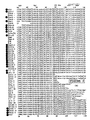
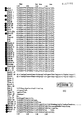
- FIG. 2 shows the extent of the various N-terminal deletions that were analyzed. Deletion of the N-terminal 11, 12 or 13 amino acids had no significant effect on specific activity of the expressed protein (Fig. 2). However, deletion proteins lacking the N-terminal 41 or 45 amino acids were completely inactive (Fig. 2). Deletion of the N-terminal 30 amino acids resulted in a drastic decrease in activity (Fig. 2), although this protein ( ⁇ PvuII) did have slight residual activity.
- a series of muteins were constructed which contained deletions of the entire poly-Gln region from positions 15 to 26, inclusive (the " ⁇ Gln” mutants). They were constructed by replacing native N-terminal coding regions with synthetic DNA (coding for the mutein) in the TRP ex mIL-2 plasmid.
Landscapes
- Health & Medical Sciences (AREA)
- Genetics & Genomics (AREA)
- Life Sciences & Earth Sciences (AREA)
- Chemical & Material Sciences (AREA)
- Organic Chemistry (AREA)
- Zoology (AREA)
- Engineering & Computer Science (AREA)
- Biophysics (AREA)
- Biochemistry (AREA)
- Molecular Biology (AREA)
- General Health & Medical Sciences (AREA)
- Bioinformatics & Cheminformatics (AREA)
- General Engineering & Computer Science (AREA)
- Wood Science & Technology (AREA)
- Biotechnology (AREA)
- Biomedical Technology (AREA)
- Microbiology (AREA)
- Plant Pathology (AREA)
- Physics & Mathematics (AREA)
- Toxicology (AREA)
- Gastroenterology & Hepatology (AREA)
- Medicinal Chemistry (AREA)
- Proteomics, Peptides & Aminoacids (AREA)
- Preparation Of Compounds By Using Micro-Organisms (AREA)
- Peptides Or Proteins (AREA)
- Medicines That Contain Protein Lipid Enzymes And Other Medicines (AREA)
Applications Claiming Priority (2)
| Application Number | Priority Date | Filing Date | Title |
|---|---|---|---|
| US93076886A | 1986-11-14 | 1986-11-14 | |
| US930768 | 1992-08-14 |
Publications (2)
| Publication Number | Publication Date |
|---|---|
| EP0267795A2 true EP0267795A2 (de) | 1988-05-18 |
| EP0267795A3 EP0267795A3 (de) | 1990-07-25 |
Family
ID=25459734
Family Applications (1)
| Application Number | Title | Priority Date | Filing Date |
|---|---|---|---|
| EP87310005A Withdrawn EP0267795A3 (de) | 1986-11-14 | 1987-11-12 | Muteine des Maus-Interleukin-2 |
Country Status (1)
| Country | Link |
|---|---|
| EP (1) | EP0267795A3 (de) |
Cited By (5)
| Publication number | Priority date | Publication date | Assignee | Title |
|---|---|---|---|---|
| EP0392413A3 (de) * | 1989-04-12 | 1991-04-03 | Gesellschaft für Biotechnologische Forschung mbH (GBF) | Verfahren zur Herstellung einer hIL-2-Mutante und hIL-Mutante |
| US5312911A (en) * | 1987-10-22 | 1994-05-17 | Merck & Co., Inc. | Cysteine-modified acidic fibroblast growth factor |
| US6955807B1 (en) | 1998-05-15 | 2005-10-18 | Bayer Pharmaceuticals Corporation | IL-2 selective agonists and antagonists |
| CN102101885A (zh) * | 2010-09-01 | 2011-06-22 | 宋波 | 低诱导抑制性t细胞的人白细胞介素ⅱ突变体及其用途 |
| US12091441B2 (en) | 2017-11-21 | 2024-09-17 | The Board Of Trustees Of The Leland Stanford Junior University | Partial agonists of interleukin-2 |
Family Cites Families (1)
| Publication number | Priority date | Publication date | Assignee | Title |
|---|---|---|---|---|
| EP0177357A1 (de) * | 1984-10-05 | 1986-04-09 | Schering Biotech Corporation | cDNA-Klone, die für Polypeptide kodieren, die Murin-Interleukin-2-Aktivität zeigen |
-
1987
- 1987-11-12 EP EP87310005A patent/EP0267795A3/de not_active Withdrawn
Cited By (8)
| Publication number | Priority date | Publication date | Assignee | Title |
|---|---|---|---|---|
| US5312911A (en) * | 1987-10-22 | 1994-05-17 | Merck & Co., Inc. | Cysteine-modified acidic fibroblast growth factor |
| US5409897A (en) * | 1987-10-22 | 1995-04-25 | Merck & Co., Inc. | Cysteine-modified acidic fibroblast growth factor and methods of use |
| EP0392413A3 (de) * | 1989-04-12 | 1991-04-03 | Gesellschaft für Biotechnologische Forschung mbH (GBF) | Verfahren zur Herstellung einer hIL-2-Mutante und hIL-Mutante |
| US6955807B1 (en) | 1998-05-15 | 2005-10-18 | Bayer Pharmaceuticals Corporation | IL-2 selective agonists and antagonists |
| US7105653B2 (en) | 1998-05-15 | 2006-09-12 | Shanafelt Armen B | IL-2 selective agonists and antagonists |
| CN102101885A (zh) * | 2010-09-01 | 2011-06-22 | 宋波 | 低诱导抑制性t细胞的人白细胞介素ⅱ突变体及其用途 |
| CN102101885B (zh) * | 2010-09-01 | 2013-06-05 | 南京发士达生物科技有限公司 | 低诱导抑制性t细胞的人白细胞介素ⅱ突变体及其用途 |
| US12091441B2 (en) | 2017-11-21 | 2024-09-17 | The Board Of Trustees Of The Leland Stanford Junior University | Partial agonists of interleukin-2 |
Also Published As
| Publication number | Publication date |
|---|---|
| EP0267795A3 (de) | 1990-07-25 |
Similar Documents
| Publication | Publication Date | Title |
|---|---|---|
| EP0118617B1 (de) | Interleukin-2-Polypeptide | |
| EP0259160A2 (de) | Synthetische menschliche alpha-Interleukin-1-Gene | |
| EP0152613B1 (de) | Promotor | |
| EP0200986B1 (de) | Rekombinantes Humaninterleukin-1 | |
| US6610830B1 (en) | Microbial production of mature human leukocyte interferons | |
| EP0751220A1 (de) | Hochgereinigte Protein, dessen Herstellung und Verwendung | |
| KR950014493B1 (ko) | 제조합 단백질의 개선된 활성화 방법 | |
| EP0138948B1 (de) | DNS- Sequenzen für Signal-Peptide | |
| IE54371B1 (en) | Human immune interferon and its production by recombinant dna technology | |
| KR940005585B1 (ko) | 과립구 대식세포 콜로니 촉진 인자(gm-csf)단백질의 제조방법 | |
| DK168048B1 (da) | Renset human interleukin-1, dets fremstilling og anvendelse i farmaceutiske praeparater | |
| NZ238095A (en) | Dna coding for signal peptide, vectors and preparation of desired proteins using the signal peptide | |
| EP0592566B1 (de) | Cysteinfreie il-6 mutanten | |
| EP0390252A2 (de) | Reinigung von rekombinantem, menschlichem Interleukin-3 | |
| JP2653061B2 (ja) | 新規ポリペプチドおよびその製造法 | |
| DK160945B (da) | Humant interferon-gamma-polypeptid og fremgangsmaade til fremstilling deraf, rekombinant plasmid omfattende et dna-fragment, som koder for peptidet, og mikroorganisme transformeret med plasmidet | |
| EP0146901B1 (de) | Promotor und dessen Verwendung | |
| Joseph-Liauzun et al. | Human recombinant interleukin-1β isolated from Escherichia coli by simple osmotic shock | |
| US7868148B2 (en) | Plasmids, their derivatives and fragments, their methods of manufacture and application | |
| Zurawski et al. | Expression in Escherichia coli of synthetic human interleukin-1α genes encoding the processed active protein, mutant proteins, and β-galactosidase fusion proteins | |
| JP2568383B2 (ja) | ポリペプチドをコード化するdna配列 | |
| EP0121569B1 (de) | Neuer vektor | |
| WO1993003156A1 (en) | Sequence for stabilizing proteins in bacteria protein stabilization sequence | |
| EP0542761B1 (de) | Beseitigung interner initiation des löslichen cd4-gens | |
| EP0327360B1 (de) | Polypeptide und dafür kodierende DNA |
Legal Events
| Date | Code | Title | Description |
|---|---|---|---|
| PUAI | Public reference made under article 153(3) epc to a published international application that has entered the european phase |
Free format text: ORIGINAL CODE: 0009012 |
|
| AK | Designated contracting states |
Kind code of ref document: A2 Designated state(s): AT BE CH DE ES FR GB GR IT LI LU NL SE |
|
| PUAL | Search report despatched |
Free format text: ORIGINAL CODE: 0009013 |
|
| AK | Designated contracting states |
Kind code of ref document: A3 Designated state(s): AT BE CH DE ES FR GB GR IT LI LU NL SE |
|
| STAA | Information on the status of an ep patent application or granted ep patent |
Free format text: STATUS: THE APPLICATION IS DEEMED TO BE WITHDRAWN |
|
| 18D | Application deemed to be withdrawn |
Effective date: 19910126 |
|
| RIN1 | Information on inventor provided before grant (corrected) |
Inventor name: ZURAWSKI, GERARD Inventor name: ZURAWSKI, SANDRA M. |