EP0273575A2 - Feste Katalysatoren verwendendes Verfahren zur Hydrierung von organischen Verbindungen - Google Patents
Feste Katalysatoren verwendendes Verfahren zur Hydrierung von organischen Verbindungen Download PDFInfo
- Publication number
- EP0273575A2 EP0273575A2 EP87310299A EP87310299A EP0273575A2 EP 0273575 A2 EP0273575 A2 EP 0273575A2 EP 87310299 A EP87310299 A EP 87310299A EP 87310299 A EP87310299 A EP 87310299A EP 0273575 A2 EP0273575 A2 EP 0273575A2
- Authority
- EP
- European Patent Office
- Prior art keywords
- process according
- formula
- hydrogenation
- hydrogen
- catalyst
- Prior art date
- Legal status (The legal status is an assumption and is not a legal conclusion. Google has not performed a legal analysis and makes no representation as to the accuracy of the status listed.)
- Granted
Links
Images



Classifications
-
- B—PERFORMING OPERATIONS; TRANSPORTING
- B01—PHYSICAL OR CHEMICAL PROCESSES OR APPARATUS IN GENERAL
- B01J—CHEMICAL OR PHYSICAL PROCESSES, e.g. CATALYSIS OR COLLOID CHEMISTRY; THEIR RELEVANT APPARATUS
- B01J23/00—Catalysts comprising metals or metal oxides or hydroxides, not provided for in group B01J21/00
- B01J23/70—Catalysts comprising metals or metal oxides or hydroxides, not provided for in group B01J21/00 of the iron group metals or copper
- B01J23/76—Catalysts comprising metals or metal oxides or hydroxides, not provided for in group B01J21/00 of the iron group metals or copper combined with metals, oxides or hydroxides provided for in groups B01J23/02 - B01J23/36
- B01J23/83—Catalysts comprising metals or metal oxides or hydroxides, not provided for in group B01J21/00 of the iron group metals or copper combined with metals, oxides or hydroxides provided for in groups B01J23/02 - B01J23/36 with rare earths or actinides
-
- B—PERFORMING OPERATIONS; TRANSPORTING
- B01—PHYSICAL OR CHEMICAL PROCESSES OR APPARATUS IN GENERAL
- B01J—CHEMICAL OR PHYSICAL PROCESSES, e.g. CATALYSIS OR COLLOID CHEMISTRY; THEIR RELEVANT APPARATUS
- B01J23/00—Catalysts comprising metals or metal oxides or hydroxides, not provided for in group B01J21/00
- B01J23/70—Catalysts comprising metals or metal oxides or hydroxides, not provided for in group B01J21/00 of the iron group metals or copper
- B01J23/76—Catalysts comprising metals or metal oxides or hydroxides, not provided for in group B01J21/00 of the iron group metals or copper combined with metals, oxides or hydroxides provided for in groups B01J23/02 - B01J23/36
- B01J23/84—Catalysts comprising metals or metal oxides or hydroxides, not provided for in group B01J21/00 of the iron group metals or copper combined with metals, oxides or hydroxides provided for in groups B01J23/02 - B01J23/36 with arsenic, antimony, bismuth, vanadium, niobium, tantalum, polonium, chromium, molybdenum, tungsten, manganese, technetium or rhenium
- B01J23/85—Chromium, molybdenum or tungsten
-
- B—PERFORMING OPERATIONS; TRANSPORTING
- B01—PHYSICAL OR CHEMICAL PROCESSES OR APPARATUS IN GENERAL
- B01J—CHEMICAL OR PHYSICAL PROCESSES, e.g. CATALYSIS OR COLLOID CHEMISTRY; THEIR RELEVANT APPARATUS
- B01J23/00—Catalysts comprising metals or metal oxides or hydroxides, not provided for in group B01J21/00
- B01J23/70—Catalysts comprising metals or metal oxides or hydroxides, not provided for in group B01J21/00 of the iron group metals or copper
- B01J23/76—Catalysts comprising metals or metal oxides or hydroxides, not provided for in group B01J21/00 of the iron group metals or copper combined with metals, oxides or hydroxides provided for in groups B01J23/02 - B01J23/36
- B01J23/84—Catalysts comprising metals or metal oxides or hydroxides, not provided for in group B01J21/00 of the iron group metals or copper combined with metals, oxides or hydroxides provided for in groups B01J23/02 - B01J23/36 with arsenic, antimony, bismuth, vanadium, niobium, tantalum, polonium, chromium, molybdenum, tungsten, manganese, technetium or rhenium
- B01J23/85—Chromium, molybdenum or tungsten
- B01J23/88—Molybdenum
- B01J23/887—Molybdenum containing in addition other metals, oxides or hydroxides provided for in groups B01J23/02 - B01J23/36
- B01J23/8871—Rare earth metals or actinides
-
- B—PERFORMING OPERATIONS; TRANSPORTING
- B01—PHYSICAL OR CHEMICAL PROCESSES OR APPARATUS IN GENERAL
- B01J—CHEMICAL OR PHYSICAL PROCESSES, e.g. CATALYSIS OR COLLOID CHEMISTRY; THEIR RELEVANT APPARATUS
- B01J23/00—Catalysts comprising metals or metal oxides or hydroxides, not provided for in group B01J21/00
- B01J23/70—Catalysts comprising metals or metal oxides or hydroxides, not provided for in group B01J21/00 of the iron group metals or copper
- B01J23/76—Catalysts comprising metals or metal oxides or hydroxides, not provided for in group B01J21/00 of the iron group metals or copper combined with metals, oxides or hydroxides provided for in groups B01J23/02 - B01J23/36
- B01J23/84—Catalysts comprising metals or metal oxides or hydroxides, not provided for in group B01J21/00 of the iron group metals or copper combined with metals, oxides or hydroxides provided for in groups B01J23/02 - B01J23/36 with arsenic, antimony, bismuth, vanadium, niobium, tantalum, polonium, chromium, molybdenum, tungsten, manganese, technetium or rhenium
- B01J23/889—Manganese, technetium or rhenium
- B01J23/8892—Manganese
-
- B—PERFORMING OPERATIONS; TRANSPORTING
- B01—PHYSICAL OR CHEMICAL PROCESSES OR APPARATUS IN GENERAL
- B01J—CHEMICAL OR PHYSICAL PROCESSES, e.g. CATALYSIS OR COLLOID CHEMISTRY; THEIR RELEVANT APPARATUS
- B01J23/00—Catalysts comprising metals or metal oxides or hydroxides, not provided for in group B01J21/00
- B01J23/70—Catalysts comprising metals or metal oxides or hydroxides, not provided for in group B01J21/00 of the iron group metals or copper
- B01J23/89—Catalysts comprising metals or metal oxides or hydroxides, not provided for in group B01J21/00 of the iron group metals or copper combined with noble metals
- B01J23/8933—Catalysts comprising metals or metal oxides or hydroxides, not provided for in group B01J21/00 of the iron group metals or copper combined with noble metals also combined with metals, or metal oxides or hydroxides provided for in groups B01J23/02 - B01J23/36
- B01J23/894—Catalysts comprising metals or metal oxides or hydroxides, not provided for in group B01J21/00 of the iron group metals or copper combined with noble metals also combined with metals, or metal oxides or hydroxides provided for in groups B01J23/02 - B01J23/36 with rare earths or actinides
-
- C—CHEMISTRY; METALLURGY
- C01—INORGANIC CHEMISTRY
- C01B—NON-METALLIC ELEMENTS; COMPOUNDS THEREOF; METALLOIDS OR COMPOUNDS THEREOF NOT COVERED BY SUBCLASS C01C
- C01B6/00—Hydrides of metals including fully or partially hydrided metals, alloys or intermetallic compounds ; Compounds containing at least one metal-hydrogen bond, e.g. (GeH3)2S, SiH GeH; Monoborane or diborane; Addition complexes thereof
- C01B6/02—Hydrides of transition elements; Addition complexes thereof
-
- C—CHEMISTRY; METALLURGY
- C01—INORGANIC CHEMISTRY
- C01B—NON-METALLIC ELEMENTS; COMPOUNDS THEREOF; METALLOIDS OR COMPOUNDS THEREOF NOT COVERED BY SUBCLASS C01C
- C01B6/00—Hydrides of metals including fully or partially hydrided metals, alloys or intermetallic compounds ; Compounds containing at least one metal-hydrogen bond, e.g. (GeH3)2S, SiH GeH; Monoborane or diborane; Addition complexes thereof
- C01B6/24—Hydrides containing at least two metals; Addition complexes thereof
- C01B6/246—Hydrides containing at least two metals; Addition complexes thereof also containing non-metals other than hydrogen
-
- C—CHEMISTRY; METALLURGY
- C07—ORGANIC CHEMISTRY
- C07C—ACYCLIC OR CARBOCYCLIC COMPOUNDS
- C07C5/00—Preparation of hydrocarbons from hydrocarbons containing the same number of carbon atoms
- C07C5/02—Preparation of hydrocarbons from hydrocarbons containing the same number of carbon atoms by hydrogenation
- C07C5/03—Preparation of hydrocarbons from hydrocarbons containing the same number of carbon atoms by hydrogenation of non-aromatic carbon-to-carbon double bonds
-
- C—CHEMISTRY; METALLURGY
- C07—ORGANIC CHEMISTRY
- C07C—ACYCLIC OR CARBOCYCLIC COMPOUNDS
- C07C5/00—Preparation of hydrocarbons from hydrocarbons containing the same number of carbon atoms
- C07C5/02—Preparation of hydrocarbons from hydrocarbons containing the same number of carbon atoms by hydrogenation
- C07C5/10—Preparation of hydrocarbons from hydrocarbons containing the same number of carbon atoms by hydrogenation of aromatic six-membered rings
-
- C—CHEMISTRY; METALLURGY
- C10—PETROLEUM, GAS OR COKE INDUSTRIES; TECHNICAL GASES CONTAINING CARBON MONOXIDE; FUELS; LUBRICANTS; PEAT
- C10G—CRACKING HYDROCARBON OILS; PRODUCTION OF LIQUID HYDROCARBON MIXTURES, e.g. BY DESTRUCTIVE HYDROGENATION, OLIGOMERISATION, POLYMERISATION; RECOVERY OF HYDROCARBON OILS FROM OIL-SHALE, OIL-SAND, OR GASES; REFINING MIXTURES MAINLY CONSISTING OF HYDROCARBONS; REFORMING OF NAPHTHA; MINERAL WAXES
- C10G49/00—Treatment of hydrocarbon oils, in the presence of hydrogen or hydrogen-generating compounds, not provided for in a single one of groups C10G45/02, C10G45/32, C10G45/44, C10G45/58 or C10G47/00
- C10G49/02—Treatment of hydrocarbon oils, in the presence of hydrogen or hydrogen-generating compounds, not provided for in a single one of groups C10G45/02, C10G45/32, C10G45/44, C10G45/58 or C10G47/00 characterised by the catalyst used
- C10G49/04—Treatment of hydrocarbon oils, in the presence of hydrogen or hydrogen-generating compounds, not provided for in a single one of groups C10G45/02, C10G45/32, C10G45/44, C10G45/58 or C10G47/00 characterised by the catalyst used containing nickel, cobalt, chromium, molybdenum, or tungsten metals, or compounds thereof
-
- C—CHEMISTRY; METALLURGY
- C10—PETROLEUM, GAS OR COKE INDUSTRIES; TECHNICAL GASES CONTAINING CARBON MONOXIDE; FUELS; LUBRICANTS; PEAT
- C10G—CRACKING HYDROCARBON OILS; PRODUCTION OF LIQUID HYDROCARBON MIXTURES, e.g. BY DESTRUCTIVE HYDROGENATION, OLIGOMERISATION, POLYMERISATION; RECOVERY OF HYDROCARBON OILS FROM OIL-SHALE, OIL-SAND, OR GASES; REFINING MIXTURES MAINLY CONSISTING OF HYDROCARBONS; REFORMING OF NAPHTHA; MINERAL WAXES
- C10G49/00—Treatment of hydrocarbon oils, in the presence of hydrogen or hydrogen-generating compounds, not provided for in a single one of groups C10G45/02, C10G45/32, C10G45/44, C10G45/58 or C10G47/00
- C10G49/02—Treatment of hydrocarbon oils, in the presence of hydrogen or hydrogen-generating compounds, not provided for in a single one of groups C10G45/02, C10G45/32, C10G45/44, C10G45/58 or C10G47/00 characterised by the catalyst used
- C10G49/06—Treatment of hydrocarbon oils, in the presence of hydrogen or hydrogen-generating compounds, not provided for in a single one of groups C10G45/02, C10G45/32, C10G45/44, C10G45/58 or C10G47/00 characterised by the catalyst used containing platinum group metals or compounds thereof
-
- C—CHEMISTRY; METALLURGY
- C07—ORGANIC CHEMISTRY
- C07C—ACYCLIC OR CARBOCYCLIC COMPOUNDS
- C07C2521/00—Catalysts comprising the elements, oxides or hydroxides of magnesium, boron, aluminium, carbon, silicon, titanium, zirconium or hafnium
- C07C2521/02—Boron or aluminium; Oxides or hydroxides thereof
-
- C—CHEMISTRY; METALLURGY
- C07—ORGANIC CHEMISTRY
- C07C—ACYCLIC OR CARBOCYCLIC COMPOUNDS
- C07C2521/00—Catalysts comprising the elements, oxides or hydroxides of magnesium, boron, aluminium, carbon, silicon, titanium, zirconium or hafnium
- C07C2521/06—Silicon, titanium, zirconium or hafnium; Oxides or hydroxides thereof
-
- C—CHEMISTRY; METALLURGY
- C07—ORGANIC CHEMISTRY
- C07C—ACYCLIC OR CARBOCYCLIC COMPOUNDS
- C07C2523/00—Catalysts comprising metals or metal oxides or hydroxides, not provided for in group C07C2521/00
- C07C2523/10—Catalysts comprising metals or metal oxides or hydroxides, not provided for in group C07C2521/00 of rare earths
-
- C—CHEMISTRY; METALLURGY
- C07—ORGANIC CHEMISTRY
- C07C—ACYCLIC OR CARBOCYCLIC COMPOUNDS
- C07C2523/00—Catalysts comprising metals or metal oxides or hydroxides, not provided for in group C07C2521/00
- C07C2523/12—Catalysts comprising metals or metal oxides or hydroxides, not provided for in group C07C2521/00 of actinides
-
- C—CHEMISTRY; METALLURGY
- C07—ORGANIC CHEMISTRY
- C07C—ACYCLIC OR CARBOCYCLIC COMPOUNDS
- C07C2523/00—Catalysts comprising metals or metal oxides or hydroxides, not provided for in group C07C2521/00
- C07C2523/16—Catalysts comprising metals or metal oxides or hydroxides, not provided for in group C07C2521/00 of arsenic, antimony, bismuth, vanadium, niobium, tantalum, polonium, chromium, molybdenum, tungsten, manganese, technetium or rhenium
- C07C2523/20—Vanadium, niobium or tantalum
- C07C2523/22—Vanadium
-
- C—CHEMISTRY; METALLURGY
- C07—ORGANIC CHEMISTRY
- C07C—ACYCLIC OR CARBOCYCLIC COMPOUNDS
- C07C2523/00—Catalysts comprising metals or metal oxides or hydroxides, not provided for in group C07C2521/00
- C07C2523/16—Catalysts comprising metals or metal oxides or hydroxides, not provided for in group C07C2521/00 of arsenic, antimony, bismuth, vanadium, niobium, tantalum, polonium, chromium, molybdenum, tungsten, manganese, technetium or rhenium
- C07C2523/24—Chromium, molybdenum or tungsten
- C07C2523/26—Chromium
-
- C—CHEMISTRY; METALLURGY
- C07—ORGANIC CHEMISTRY
- C07C—ACYCLIC OR CARBOCYCLIC COMPOUNDS
- C07C2523/00—Catalysts comprising metals or metal oxides or hydroxides, not provided for in group C07C2521/00
- C07C2523/16—Catalysts comprising metals or metal oxides or hydroxides, not provided for in group C07C2521/00 of arsenic, antimony, bismuth, vanadium, niobium, tantalum, polonium, chromium, molybdenum, tungsten, manganese, technetium or rhenium
- C07C2523/24—Chromium, molybdenum or tungsten
- C07C2523/28—Molybdenum
-
- C—CHEMISTRY; METALLURGY
- C07—ORGANIC CHEMISTRY
- C07C—ACYCLIC OR CARBOCYCLIC COMPOUNDS
- C07C2523/00—Catalysts comprising metals or metal oxides or hydroxides, not provided for in group C07C2521/00
- C07C2523/16—Catalysts comprising metals or metal oxides or hydroxides, not provided for in group C07C2521/00 of arsenic, antimony, bismuth, vanadium, niobium, tantalum, polonium, chromium, molybdenum, tungsten, manganese, technetium or rhenium
- C07C2523/24—Chromium, molybdenum or tungsten
- C07C2523/30—Tungsten
-
- C—CHEMISTRY; METALLURGY
- C07—ORGANIC CHEMISTRY
- C07C—ACYCLIC OR CARBOCYCLIC COMPOUNDS
- C07C2523/00—Catalysts comprising metals or metal oxides or hydroxides, not provided for in group C07C2521/00
- C07C2523/16—Catalysts comprising metals or metal oxides or hydroxides, not provided for in group C07C2521/00 of arsenic, antimony, bismuth, vanadium, niobium, tantalum, polonium, chromium, molybdenum, tungsten, manganese, technetium or rhenium
- C07C2523/32—Manganese, technetium or rhenium
- C07C2523/34—Manganese
-
- C—CHEMISTRY; METALLURGY
- C07—ORGANIC CHEMISTRY
- C07C—ACYCLIC OR CARBOCYCLIC COMPOUNDS
- C07C2523/00—Catalysts comprising metals or metal oxides or hydroxides, not provided for in group C07C2521/00
- C07C2523/16—Catalysts comprising metals or metal oxides or hydroxides, not provided for in group C07C2521/00 of arsenic, antimony, bismuth, vanadium, niobium, tantalum, polonium, chromium, molybdenum, tungsten, manganese, technetium or rhenium
- C07C2523/32—Manganese, technetium or rhenium
- C07C2523/36—Rhenium
-
- C—CHEMISTRY; METALLURGY
- C07—ORGANIC CHEMISTRY
- C07C—ACYCLIC OR CARBOCYCLIC COMPOUNDS
- C07C2523/00—Catalysts comprising metals or metal oxides or hydroxides, not provided for in group C07C2521/00
- C07C2523/38—Catalysts comprising metals or metal oxides or hydroxides, not provided for in group C07C2521/00 of noble metals
- C07C2523/40—Catalysts comprising metals or metal oxides or hydroxides, not provided for in group C07C2521/00 of noble metals of the platinum group metals
- C07C2523/42—Platinum
-
- C—CHEMISTRY; METALLURGY
- C07—ORGANIC CHEMISTRY
- C07C—ACYCLIC OR CARBOCYCLIC COMPOUNDS
- C07C2523/00—Catalysts comprising metals or metal oxides or hydroxides, not provided for in group C07C2521/00
- C07C2523/38—Catalysts comprising metals or metal oxides or hydroxides, not provided for in group C07C2521/00 of noble metals
- C07C2523/40—Catalysts comprising metals or metal oxides or hydroxides, not provided for in group C07C2521/00 of noble metals of the platinum group metals
- C07C2523/44—Palladium
-
- C—CHEMISTRY; METALLURGY
- C07—ORGANIC CHEMISTRY
- C07C—ACYCLIC OR CARBOCYCLIC COMPOUNDS
- C07C2523/00—Catalysts comprising metals or metal oxides or hydroxides, not provided for in group C07C2521/00
- C07C2523/38—Catalysts comprising metals or metal oxides or hydroxides, not provided for in group C07C2521/00 of noble metals
- C07C2523/40—Catalysts comprising metals or metal oxides or hydroxides, not provided for in group C07C2521/00 of noble metals of the platinum group metals
- C07C2523/46—Ruthenium, rhodium, osmium or iridium
-
- C—CHEMISTRY; METALLURGY
- C07—ORGANIC CHEMISTRY
- C07C—ACYCLIC OR CARBOCYCLIC COMPOUNDS
- C07C2523/00—Catalysts comprising metals or metal oxides or hydroxides, not provided for in group C07C2521/00
- C07C2523/70—Catalysts comprising metals or metal oxides or hydroxides, not provided for in group C07C2521/00 of the iron group metals or copper
- C07C2523/72—Copper
-
- C—CHEMISTRY; METALLURGY
- C07—ORGANIC CHEMISTRY
- C07C—ACYCLIC OR CARBOCYCLIC COMPOUNDS
- C07C2523/00—Catalysts comprising metals or metal oxides or hydroxides, not provided for in group C07C2521/00
- C07C2523/70—Catalysts comprising metals or metal oxides or hydroxides, not provided for in group C07C2521/00 of the iron group metals or copper
- C07C2523/74—Iron group metals
- C07C2523/745—Iron
-
- C—CHEMISTRY; METALLURGY
- C07—ORGANIC CHEMISTRY
- C07C—ACYCLIC OR CARBOCYCLIC COMPOUNDS
- C07C2523/00—Catalysts comprising metals or metal oxides or hydroxides, not provided for in group C07C2521/00
- C07C2523/70—Catalysts comprising metals or metal oxides or hydroxides, not provided for in group C07C2521/00 of the iron group metals or copper
- C07C2523/74—Iron group metals
- C07C2523/75—Cobalt
-
- C—CHEMISTRY; METALLURGY
- C07—ORGANIC CHEMISTRY
- C07C—ACYCLIC OR CARBOCYCLIC COMPOUNDS
- C07C2523/00—Catalysts comprising metals or metal oxides or hydroxides, not provided for in group C07C2521/00
- C07C2523/70—Catalysts comprising metals or metal oxides or hydroxides, not provided for in group C07C2521/00 of the iron group metals or copper
- C07C2523/74—Iron group metals
- C07C2523/755—Nickel
Definitions
- the present invention relates to a process for the hydrogenation of unsaturated organic compounds using solid hydrogenation catalysts.
- Solid catalysts for example nickel-containing catalysts, are known for the hydrogenation of unsaturated organic compounds.
- the present invention provides a process for the hydrogenation of an unsaturated organic compounds by contacting the unsaturated organic compound with a solid hydrogenation catalyst under hydrogenation conditions characterised in that as the solid hydrogenation catalyst there is used a rare earth oxyhydride having the formula: Tr 1-q G q Ni 5-p M p O y H x (I) wherein Tr is a rare earth element, G is either Th and/or Y, M is a metal selected from the group consisting of Cu, Mn, Al, Fe, Cr, Co, Rh, Ru, Re, Pt, Pd, Ir, Os, Mo, V, Ti, W and mixtures of two or more thereof, q is zero or a number less than or equal to 1, p is zero or a number less than or equal to 5, y is a whole number or decimal number in the range from 0.4 to 6.5, and x is zero or a whole number or decimal number equal to or less than 15.
- Tr is a rare earth element
- G is either Th and/or Y
- Rare earth oxyhydrides are sometimes referred to as intermetallic rare earth compound (IREC) oxyhydrides.
- IRC intermetallic rare earth compound
- rare earth element is meant elements ranging from lanthanum (atomic number 57) to lutetium (atomic number 71), as well as their mixtures.
- Mischmetal Mm
- a Mischmetal is commercially available in the following composition (% by weight): La 33%, Ce 48%, Pr 13%, Nd 4% and other rare earths 2%.
- a feature of the aforesaid composition is the high cerium (Ce) content.
- a suitable cerium-free Mischmetal has the following composition: La 63%, Pr 25%, Nd 8%, other rare earths 4%.
- a suitable Mischmetal-Nickel alloy has the following composition: Ni 68.6%, Fe 0.16%, O2 0.05%, Mm 31.3%.
- a suitable cerium-free Mischmetal-Nickel alloy (MmCe o Ni5) has the following composition:- Ni 68.2%, Fe 0.21%, O2 0.045%, Mm 31.4%.
- An advantageous composition of Mischmetal comprises the following constituents: Ce 47 - 50%, La 23 - 34%, Pr 5 - 14%, Nd 4 - 18%, other rare earths 2 - 4%.
- M is preferably a metal selected from the group consisting of Cu, Mn, Al, Fe, Cr, Co, Rh and Ru.
- y is preferably a whole number or decimal number in the range from 1 to 3.5 and x is preferably a whole number or decimal number in the range from 1 to 8.
- the preferred rare earth oxyhydrides include the oxyhydrides having the following formulae: MmNi5O y H x (II) CeNi5O y H x (III) LaNi5O y H x (IV) PrNi5O y H x (V)
- CeNi 5-k M k O y H x (VII) Ce 1-s Ni5G s O y H x (VIII) MmNi 5-k M k O y H x (IX) Mm 1-5 Ni5G s O y H x (X)
- Mm is Mischmetal
- x and y have the same meaning as in formula (I);
- k is 0 or a whole number or decimal less than 5;
- s is 0 or a number less than 1.
- the rare earth oxyhydrides may be supported on a suitable support.
- Suitable supports include alumina, silica-alumina, carbon, and the like.
- the rare earth oxyhydrides of formula (I) useful in the process of the present invention may be prepared from rare earth metals or rare earth metal alloys in a variety of different ways, generally by processes which involve a number of steps.
- a first process comprises the steps as follows: in a first step subjecting an IREC of the formula: Tr 1-g G g Ni 5-p M p (XI) in a closed reactor, preferably an autoclave, to a plurality of hydriding/dehydriding cycles thereby to form a hydride, the hydriding being performed under a hydrogen pressure of from 20 to 200, preferably from 50 to 100 bar, and at a temperature of from 20 to 450°C, preferably about 350°C, and the dehydriding being performed in the same closed reactor at a temperature in the range from 20 to 450°C, in a second step oxidising the hydrided product obtained in the first step, and in a third step chemically reducing the product obtained in the second step.
- the hydrogen pressure may be maintained by compensating for the quantity of hydrogen absorbed by the compound of formula (XI).
- the closed reactor may be placed under subatmospheric pressure and re-heated to the temperature at which hydriding was performed, i.e. a temperature in the range from 20 to 450°C.
- hydrogen fixing will generally be found to be easier and the pressure may thereafter be reduced.
- the hydriding/dehydriding may suitably be performed on the IREC in lump or block form, which forms subsequently disintegrate. The specific surface area of the powder thereby formed is observed to increase with the number of hydriding/dehydriding cycles to which it is subjected. Suitably from 4 to 20 cycles may be carried out.
- the hydride is obtained in the first step is oxidised, suitably by contact with an oxygen-containing gas or gaseous oxidant, for example air or oxygen, at a temperature in the range from 20 to below 450°C.
- an oxygen-containing gas or gaseous oxidant for example air or oxygen
- This may be achieved either by allowing the hydride obtained in the first step to cool in contact with the oxygen-containing gas or gaseous oxidant, the temperature of which is lower than that of the hydride, or by preheating the aforesaid gas to a temperature below that of the hydride before contact therewith.
- the oxidation may suitably be carried out by heating the hydride in a current of O2/N2 for about 15 hours at about 400°C.
- the amount of oxygen which can be fixed increases with an increase in the oxidation temperature.
- the product from the second step is chemically reduced in the third step to produce the rare earth oxyhydride.
- This may suitably be effected by contacting the product at elevated temperature, preferably at about 300°C, with hydrogen, either under batch or continuous flow conditions.
- a second process for the production of rare earth oxyhydrides comprises the steps as follows: in a first step forming a solution comprising soluble salts of nickel and the other metallic element(s) thermally decomposable to the oxides thereof in such proportions as to satisfy the stoichiometric relationship of formula (I), and thereafter precipitating a mixture of the thermally decomposable salts of nickel and the other element(s), in a second step partially or wholly thermally decomposing the mixture of heat decomposable salts obtained in the first step, and in a third step reducing the product obtained in the second step in the presence of hydrogen.
- the solution may suitably be formed by dissolving the salts of the metals thermally decomposable to their oxides in appropriate proportions in a suitable solvant, for example water.
- a preferred method of forming the solution comprises reacting the rare earth intermetallic compound with a suitable acid. In this manner the solution so-obtained has the stoichiometry dictated by the formula (I).
- a preferred salt thermally decomposable to the oxide is the nitrate, though other salts may be employed.
- Precipitation of a mixture of the thermally decomposable salts may be achieved in a variety of ways.
- a suitable method is to evaporate the solution until the salts precipitate out.
- precipitation may be effected by the addition of a suitable reagent.
- precipitation may be accomplished by the addition of a basic solution or other precipitant drop by drop to the solution of salts, preferably the nitrates.
- a basic solution there may suitably be used an amine, for example triethylamine, or a carbonate. It is preferred, thereafter, to dry the precipitate so-obtained.
- This step may suitably be effected in the presence of a support, for example alumina, silica-alumina, carbon, or the like. In this way it has been found possible to produce, for example, LaNi5O 1.7 H10 supported on alumina.
- Partial decomposition may suitably be achieved in the case of nitrate salts, for example, by calcination at a temperature in the range from 400 to 800°C for a period sufficient to achieve partial decomposition, e.g. 15 hours.
- Total decomposition may suitably be achieved by calcination at 800°C for a period sufficient to achieve total decomposition, e.g. 15 hours.
- a calcination temperature of 800°C there is no nitrate residue, but a reduction in the specific surface area is observed.
- Calcination is preferably carried out at a temperature above 450°C and below 800°C, more preferably from 500 to 600°C.
- the product obtained in the second step is reduced in the presence of hydrogen under appropriate conditions, for example at 300°C under atmospheric pressure.
- This stoichiometry was calculated by mass balance from thermogravimetric data.
- This oxyhydride is somewhat unique in that it has a specific surface area of approximately 20m2/g, whilst the oxyhydrides prepared by other methods generally have surface areas of less than 10m2/g.
- process (C) A preferred process for the production of rare earth oxyhydrides, denoted hereinafter as process (C) is a modification of process (B).
- the modification concerns the first step of process (B) wherein, instead of adding a basic solution to the solution of the salts in order to effect precipitation, the solution of salts is added portionwise to an excess of the base under conditions of efficient mixing, thereby to effect precipitation at constant pH.
- process (C) is identical to process (B).
- An advantage of process (C) is that the rare earth oxyhydrides so-produced have very high surface areas, for example 100 to 120 m2/g.
- the processes (A) to (C) enable a product to be obtained in the form of a powder in the first step, the oxidised product, hereinafter to be referred to as the precursor oxide, to be obtained in the second step and the oxyhydride to be obtained in the third step.
- the hydrogen incorporated in the oxyhydride of formula (XIV), may be used as a reductant when the latter is contacted with compounds capable of being hydrogenated, i.e. unsaturated organic compounds.
- the rare earth oxyhydride is able to donate its hydrogen to a reducible compound, replenish itself with hydrogen, again donate its hydrogen, again replenish itself and so on.
- the catalytic activity of the oxyhydride depends on a number of factors including the values of x and y in the formula (I) and its specific surface are.
- the specific surface area in turn depends upon the process used for its preparation.
- the precursor oxides possess a specific surface area of the order of 10 m2/g when prepared by process (A) and of the order of 20 m2/g when prepared by process (B), provided that the calcination temperature is below 600°C.
- the specific surface area increases considerably, and may attain a value of up to 50 m2/g.
- the unsaturated organic compound may suitably be an olefinically unsaturated compound or an acetylenically unsaturated compound, preferably an olefinically unsaturated compound.
- the olefinically unsaturated compound may be monoolefinically unsaturated, diolefinically unsaturated, polyolefinically unsaturated or aromatically unsaturated.
- the unsaturated compound may be an aliphatic, cycloaliphatic or aromtic compound, or a combination thereof.
- olefins for example alkenes, cycloalkenes and aralkenes
- monocyclic aromatic hydrocarbons for example benzene and alkylbenzenes
- polycyclic aromatic hydrocarbons for example naphthalene
- heterocyclic aromatic hydrocarbons containing nitrogen in the aromatic ring for example pyridine
- containing sulphur in the aromatic ring for example thiophene
- the hydrogen contained in the oxyhydrides is present either as surface hydrogen, which is immediately available for reaction, or incorporated in the body of the oxyhydride. On contact with unsaturated compounds the oxyhydride it is believed donates the surface hydrogen, which is then replaced by hydrogen from the body. On the other hand, in the presence of added gaseous hydrogen it is believed that everything occurs as though the hydrogen on the surface of the oxyhydride is replaced by the hydrogen deriving from the body of the oxyhydride, which is itself replaced by the external hydrogen. Whilst we do not in any way wish to be held to these beliefs, it is nevertheless possible to operate the process in the absence of added gaseous hydrogen, but the reduction reaction rate decreases with time. However, it is preferred to operate the process in the presence of additional hydrogen.
- rare earth oxyhydrides in the process of the invention that in comparison with many prior art hydrogenation catalysts, for example metals and metal oxides, they are appreciably more tolerant to sulphur, or expressed in another way they are appreciably more resistant to sulphur poisoning.
- feeds containing for example pyridine and/or naphthalene the hydrogenation activity relative to naphthalene and the hydrogenolysis activity relative to pyridine is largely independent of the hydrogen pressure.
- the hydride was produced from MmNi5.
- the hydrogenation was carried out in five cycles at 450°C, at a hydrogen pressure of 150 bars.
- This hydride was then oxidised with air (in a muffle furnace with an O2/N2 current) for 15 hours at 450°C, to give the compound with the formula MmNiO 6.67 .
- This precursor oxide was reduced in a current of H2, at atmospheric pressure and at 300°C.
- the solution was then evaporated at approximately 80°C until the nitrates precipitate.
- the precipitate was then dried.
- Example C In the course of Example C the precipitate was calcined at 800°C for 15 hours (which completely eliminated the nitrate but reduced the specific area of the intermediate precursor oxide and that of the oxhydride).
- Example B the oxhydride with the formula: MmNi5O 1.7-w (NO3) 2w H8 was obtained, where w denotes a value less than 0.1
- Example C the oxyhydride with the formula: MmNi5O 1.7 H8 was obtained.
- the oxyhydride was prepared by process (B) exhibits a specific area approximately twice that of the oxhydride prepared in Example A from the hydride, provided that too high a temperature (exceeding 700°C) is avoided during calcination.
- the specific area measured on the precursor oxides were approximately 20 m2/g for the oxide prepared in Example B, and calcined at 400°C, and approximately 5 m2/g for the oxide prepared in Example C and calcined at 800°C, both obtained from nitrates, and approximately 10 m2/g for the oxide in Example A obtained from the hydride.
- the method comprised five different steps:-
- nitrates solution was dripped continuously (2.5 ml/minute) into a large excess of continuously stirred TEA (4 litre of TEA minimum per litre of nitrates solution).
- the stirrer speed was set to give rapid agitation without causing a vortex.
- the washed powder from step (2) was first dried at 100°C for 15 hours and thereafter calcined in a quartz reactor at 430°C using an air flow of 40 ml/minute for 24 hours.
- Catalytic activity varies according to the hydrogen (x) and oxygen (y) content of the oxhydride.
- Table I also indicates the size of the specific area, which depends on the oxyhydride preparation process, and particularly on the calcination temperature. If the calcination temperature is too high (800°C for Example 7), less isopentane is produced than in Example 6 (calcination temperature 400°C).
- This Example illustrates the reduction of isopentene by means of an oxyhydride, at a temperature of 150°C, in the absence of hydrogen, using helium as a carrier.
- Figure 1 indicates, on the x-axis, the relative hydrogen concentration of the oxhydride, and on the y-axis the relative rate of hydrogenation.
- This curve may be divided into three zones, zone I corresponding to the surface hydrogen (+/- 15% of the total hydrogen content).
- zone I corresponding to this zone I.
- Total isopentane hydrogenation requires rapid diffusion of the hydrogen, which may be limited by the retrodiffusion of the mass hydrogen to the surface of the oxhydride.
- zone II only isopentene (mono-olefin) is obtained, which indicates limited retrodiffusion.
- zone III (after 1 hour), when the hydrogen content of the oxhydride is reduced to 25% of the initial content, the hydrogenation continues but it slows down considerably.
- the isoprene was hydrogenated under the same conditions as in Example 14, except that the intake of isoprene was stopped for approximately 20 minutes after the first hour of reaction.
- Rare earth oxhydrides and IREC oxyhydrides may be used advantageously as catalysts for the hydrogenation not only of olefins, but also of other unsaturated compounds, particularly monocyclic aromatic hydrocarbon compounds such as benzene, polycyclic aromatic compounds such as naphthalene, heterocyclic compounds containing nitrogen in their nucleus, such as pyridine, or sulphur in their nucleus, such as thiophene.
- Example 16 illustrates the hydrogenation of naphthalene, in a pilot installation, with hydrogen at a pressure of 160 bars, at a temperature of 100°C, the naphthalene being present in n-heptane at a concentration of 2% (% higher than present in practice).
- Comparative Example 17 illustrates the same hydrogenation as Example 16, the difference being that the oxyhydride used as a catalyst in Example 16 was replaced by a hydride obtained from MmNi5.
- Curve A corresponds to Example 16, using the oxyhydride as the catalyst
- curve B corresponds to Example 17, using the hydride of MmNi5 as the catalyst.
- the naphthalene (C10H8) may be partially reduced to tetralin or tetrahydronaphthalene (C10H12), total reduction leading to the formation of decalin or decahydronaphthalene (C10H18),
- Example 16 using the IREC oxyhydride as the catalyst, leads to the formation of a mixture of decalin and tetralin, with a higher quantity of decalin, whilst Example 17, using the IREC hydride as the catalyst, gives only tetralin (partial hydrogenation).
- Example 16 was reproduced, the difference here being that the reaction temperature was 350°C, and the initial materials also contained, more than 2% by weight of naphthalene, about 0.1% of dimethyl disulphide (DMDS) by total weight of the mixture.
- DMDS dimethyl disulphide
- the reduction of the naphthalene was carried out for 150 hours (six days).
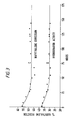
- the catalytic activity is expressed in terms of the percentage conversion of naphthalene (% of reduced naphthalene) on the one hand, and by the hydrogenation activity on the other.
- the upper curve C indicates the conversion of the naphthalene (% by weight of reduced naphthalene), the lower curve D expresses the hydrogenation activity, as indicated above.
- Example 19 illustrates the reduction of naphthalene (2% by weight in n-heptane) in the presence of 0.1% by weight of DMDS at 350°C, at different hydrogen pressures, using as catalyst the oxyhydride having the formula: MmNi5O 1.7 H8, prepared according to process A. The percentages are expressed in relation to the total weight of the mixture n-heptane + naphthalene + DMDS.
- Comparative Example 20 illustrates the reduction of the same product, replacing the oxhydride with a Nickel catalyst on an alumina support, and varying the hydrogen pressure.
- the percentage conversion of the naphthalene was determined, and the results shown in Figure 4, where the x-axis indicates the logarithm of the hydrogen pressure, and the y-axis the logarithm of the naphthalene conversion.
- the straight line E represents the percentage conversion of the naphthalene, using the oxyhydride as the catalyst, at hydrogen pressures varying from 80 to 150 bars
- straight line F represents the percentage conversion of the naphthalene using Ni/Al2O3 as a catalyst, at hydrogen pressures from 80 to over 200 bars.
- straight line E is horizontal, i.e. using oxyhydride as a catalyst the percentage conversion of the naphthalene is independent of the hydrogen pressure
- straight line F shows that when nickel on an alumina support is used as the catalyst, the conversion of the naphthalene is a function of the square of the hydrogen pressure.
- the two curves intersect at point P, which corresponds to a hydrogen pressure of 180 bar.
- an oxyhydride with the formula MmNi5O 1.7 H8 as a catalyst enables hydrogen to be used at reduced pressure, instead of working at a high hydrogen pressure with a Ni/Al2O3 catalyst.
- This oxyhydride prepared from MmNi5, dissolved in HNO3 and calcined at 400°C, had a specific area of 20.3 m2/g in the precursor oxide state.
- the conversion of the precursor oxide to oxyhydride was carried out, for convenience of handling, at a hydrogen pressure of 150 bar and at a temperature of 300°C.
- composition to be hydrogenated contained, in n-heptane, 2% naphthalene, p% pyridine and q% DMDS.
- the pyridine is completely reduced and converted to ammonia and pentane. No trace is found of piperidine, which constitutes the first stage of pyridine reduction.
- naphthalene is hydrogenated in almost the same way in the presence and absence of DMDS, there being no composition between the naphthalene and DMDS during hydrogenation.
- the hydrogenolysing activity of the catalyst relative to the pyridine is very good, but enters into competition with the hydrogenation activity relative to the naphthalene.
- Hydrogenolysing activity relative to pyridine is understood to means the conversion of pyridine to ammonia and pentane.
- the hydrogenating and hydrogenolysing action of the oxhydride catalyst hardly varys with hydrogen pressure. This is important because it indicates that it would be possible to hydrogenate naphthalene, pyridine, DMDS, thiophene and other aromatic products during different hydrotreatments of the mineral-oil charges, such as hydrocracking, hydrodesulphurisation, hydroisomerisation and hydrogenation, at low hydrogen pressures, whilst with the other catalysts currently being used it is necessary to work at high hydrogen pressures.
- This Example illustrates the reduction of naphthalene (2% by weight in n-heptane), in the presence of 0.1% by weight of DMDS, at 350°C, at different hydrogen pressures of between 80 and 150 bar, with a feed rate of 20 g/hour and a hydrogen flow rate of 3 litres/hour, the catalyst weight being 24 g.
- Example 19 differs essentially from Example 19 in the nature of the catalyst used.
- MmNi5O 1.7 H8, prepared by process A (from the corresponding hydride), used in Example 19 was replaced by CeNi5O2H 4.45 prepared from cerium and nickel nitrates in the proportions 1:5, by process (B), by evaporation and precipitation, followed by calcination at 450°C, then reduction and inclusion of hydrogen at 300°C.
- This example also shows that the catalyst used, which is here a synthetic oxyhydride, obtained by preparative process (B), from nitrates of Ce and Ni, and purchased commercially, give results similar to those obtained using as a catalyst an oxyhydride prepared by process (A) from the corresponding hydride.
- the catalyst used which is here a synthetic oxyhydride, obtained by preparative process (B), from nitrates of Ce and Ni, and purchased commercially, give results similar to those obtained using as a catalyst an oxyhydride prepared by process (A) from the corresponding hydride.
- This Example demonstrates the resistance to sulphur poisoning of the rare earth oxyhydrides, since the catalyst used in this Example is submitted to a very high concentration of H2S.
- CeNi5O y H x as produced by preparative process (B) was used as catalyst. Its surface area was 40 m2/g and its hydrogen content (x) was 4.4.
- This Example demonstrates the effect of hydrogen pressure on the hydrogenation activity of naphthalene, pyridine and quinoline.
- CeNi5O y H x produced by preparative procedure (C) was used as catalyst. Its surface area was 72 m2/g and its hydrogen content (x) was 8.0.
- This Example provides a comparison between a commercial catalyst (ex Procatalyse) and two different rare earth oxyhydride catalysts (one obtained by preparative process (B) and the second by preparative process(C)).
- the catalysts used were as follows:-
- This Example demonstrates the hydrotreatment of a vacuum distillate (D cut Arab medium) in a batch reactor.
- the catalyst used was CeNi5O y H x .
- a feed consisting of a D cut Arab medium vacuum distillate was hydrogenated in a batch reactor under the conditions shown in Table VI.
Landscapes
- Chemical & Material Sciences (AREA)
- Organic Chemistry (AREA)
- Engineering & Computer Science (AREA)
- Chemical Kinetics & Catalysis (AREA)
- Materials Engineering (AREA)
- Oil, Petroleum & Natural Gas (AREA)
- General Chemical & Material Sciences (AREA)
- Inorganic Chemistry (AREA)
- Organic Low-Molecular-Weight Compounds And Preparation Thereof (AREA)
- Catalysts (AREA)
Applications Claiming Priority (2)
| Application Number | Priority Date | Filing Date | Title |
|---|---|---|---|
| FR8616279 | 1986-11-21 | ||
| FR8616279A FR2607131B1 (fr) | 1986-11-21 | 1986-11-21 | Utilisation des oxhydrures de terres rares pour l'hydrogenation de composes insatures |
Publications (3)
| Publication Number | Publication Date |
|---|---|
| EP0273575A2 true EP0273575A2 (de) | 1988-07-06 |
| EP0273575A3 EP0273575A3 (en) | 1988-08-03 |
| EP0273575B1 EP0273575B1 (de) | 1992-04-15 |
Family
ID=9341089
Family Applications (1)
| Application Number | Title | Priority Date | Filing Date |
|---|---|---|---|
| EP87310299A Expired - Lifetime EP0273575B1 (de) | 1986-11-21 | 1987-11-20 | Feste Katalysatoren verwendendes Verfahren zur Hydrierung von organischen Verbindungen |
Country Status (3)
| Country | Link |
|---|---|
| EP (1) | EP0273575B1 (de) |
| DE (1) | DE3778330D1 (de) |
| FR (1) | FR2607131B1 (de) |
Cited By (11)
| Publication number | Priority date | Publication date | Assignee | Title |
|---|---|---|---|---|
| FR2679222A1 (fr) * | 1991-07-15 | 1993-01-22 | Bp France | Procede de preparation d'oxydes mixtes de terre rare et de nickel, nouveaux catalyseurs et utilisation pour l'hydrogenation des composes insatures. |
| FR2694015A1 (fr) * | 1992-07-27 | 1994-01-28 | Bp Elf Dunkerque Raffinerie | Procédé d'hydrogénation sélective d'une huile végétale avec rétention des doubles liaisons de configuration cis et utilisation des huiles obtenues par ce procédé. |
| LT3471B (en) | 1993-06-15 | 1995-10-25 | Richter Gedeon Vegyeszet | New tetrahydonaphtalene derivatives |
| FR2862630A1 (fr) * | 2003-11-25 | 2005-05-27 | Renault Sas | Procede de stockage et de destockage d'hydrogene pour l'alimentation de moteurs et piles a combustible |
| FR2876996A1 (fr) * | 2004-10-25 | 2006-04-28 | Centre Nat Rech Scient | Utilisation d'oxyhydrures mixtes de terre rare et de metal pour la conversion d'alcanes en co et h2 a basse temperature |
| CN105218451A (zh) * | 2015-10-20 | 2016-01-06 | 复旦大学 | 一种稀土催化环眯化反应合成咪唑啉衍生物的方法 |
| CN105237481A (zh) * | 2015-10-20 | 2016-01-13 | 复旦大学 | 一种稀土催化合成1,4,5,6-四氢嘧啶衍生物的方法 |
| WO2018126819A1 (zh) * | 2017-01-03 | 2018-07-12 | 清华大学 | 含氢过渡金属氧化物及其制备方法、固态燃料电池 |
| CN108325517A (zh) * | 2018-01-18 | 2018-07-27 | 中国石油大学(华东) | 一种用于萘选择性加氢生产四氢萘的催化剂及其制备方法 |
| CN111819154A (zh) * | 2018-03-14 | 2020-10-23 | 国立研究开发法人科学技术振兴机构 | 电子或负氢离子吸收释放材料、电子或负氢离子吸收释放性组合物、过渡金属负载物及催化剂、以及与它们相关的用途 |
| CN111841653A (zh) * | 2020-08-18 | 2020-10-30 | 连云港鹏辰特种新材料有限公司 | 一种基于蜂窝状负载型催化剂的裂解加氢芳烃溶剂制备低萘高沸点溶剂的方法 |
Family Cites Families (2)
| Publication number | Priority date | Publication date | Assignee | Title |
|---|---|---|---|---|
| US3883607A (en) * | 1972-07-11 | 1975-05-13 | Sun Ventures Inc | Olefin hydrogenation using H{HD n{b MoO{HD 3 |
| FR2582638B1 (fr) * | 1985-05-31 | 1990-07-20 | British Petroleum Co | Oxhydrures de terres rares et leur procede de preparation |
-
1986
- 1986-11-21 FR FR8616279A patent/FR2607131B1/fr not_active Expired - Fee Related
-
1987
- 1987-11-20 EP EP87310299A patent/EP0273575B1/de not_active Expired - Lifetime
- 1987-11-20 DE DE8787310299T patent/DE3778330D1/de not_active Expired - Fee Related
Cited By (20)
| Publication number | Priority date | Publication date | Assignee | Title |
|---|---|---|---|---|
| FR2679222A1 (fr) * | 1991-07-15 | 1993-01-22 | Bp France | Procede de preparation d'oxydes mixtes de terre rare et de nickel, nouveaux catalyseurs et utilisation pour l'hydrogenation des composes insatures. |
| FR2694015A1 (fr) * | 1992-07-27 | 1994-01-28 | Bp Elf Dunkerque Raffinerie | Procédé d'hydrogénation sélective d'une huile végétale avec rétention des doubles liaisons de configuration cis et utilisation des huiles obtenues par ce procédé. |
| LT3471B (en) | 1993-06-15 | 1995-10-25 | Richter Gedeon Vegyeszet | New tetrahydonaphtalene derivatives |
| FR2862630A1 (fr) * | 2003-11-25 | 2005-05-27 | Renault Sas | Procede de stockage et de destockage d'hydrogene pour l'alimentation de moteurs et piles a combustible |
| FR2876996A1 (fr) * | 2004-10-25 | 2006-04-28 | Centre Nat Rech Scient | Utilisation d'oxyhydrures mixtes de terre rare et de metal pour la conversion d'alcanes en co et h2 a basse temperature |
| WO2006045951A1 (fr) * | 2004-10-25 | 2006-05-04 | Centre National De La Recherche Scientifique (C.N.R.S.) | Utilisation d'oxyhydrures mixtes de terre rare et de metal pour la conversion d'alcanes en co et h2 a basse temperature |
| CN105218451A (zh) * | 2015-10-20 | 2016-01-06 | 复旦大学 | 一种稀土催化环眯化反应合成咪唑啉衍生物的方法 |
| CN105237481A (zh) * | 2015-10-20 | 2016-01-13 | 复旦大学 | 一种稀土催化合成1,4,5,6-四氢嘧啶衍生物的方法 |
| CN105237481B (zh) * | 2015-10-20 | 2018-07-13 | 复旦大学 | 一种稀土催化合成1,4,5,6-四氢嘧啶衍生物的方法 |
| CN108390086B (zh) * | 2017-01-03 | 2020-03-20 | 清华大学 | 含氢过渡金属氧化物及其制备方法、固态燃料电池 |
| WO2018126819A1 (zh) * | 2017-01-03 | 2018-07-12 | 清华大学 | 含氢过渡金属氧化物及其制备方法、固态燃料电池 |
| CN108390086A (zh) * | 2017-01-03 | 2018-08-10 | 清华大学 | 含氢过渡金属氧化物及其制备方法、固态燃料电池 |
| CN108325517A (zh) * | 2018-01-18 | 2018-07-27 | 中国石油大学(华东) | 一种用于萘选择性加氢生产四氢萘的催化剂及其制备方法 |
| CN108325517B (zh) * | 2018-01-18 | 2020-10-09 | 中国石油大学(华东) | 一种用于萘选择性加氢生产四氢萘的催化剂及其制备方法 |
| CN111819154A (zh) * | 2018-03-14 | 2020-10-23 | 国立研究开发法人科学技术振兴机构 | 电子或负氢离子吸收释放材料、电子或负氢离子吸收释放性组合物、过渡金属负载物及催化剂、以及与它们相关的用途 |
| JPWO2019176987A1 (ja) * | 2018-03-14 | 2021-02-25 | 国立研究開発法人科学技術振興機構 | 電子又はヒドリドイオン吸放出材料、電子又はヒドリドイオン吸放出性組成物、遷移金属担持物および触媒、ならびに、それらに関連する使用 |
| EP3766835A4 (de) * | 2018-03-14 | 2021-12-22 | Japan Science and Technology Agency | Elektronen- oder hydridionenabsorbierendes/-desorbierendes material, elektronen- oder hydridionenabsorbierende/-desorbierende zusammensetzung, übergangsmetallträger und katalysator und deren verwendung |
| US11795062B2 (en) | 2018-03-14 | 2023-10-24 | Japan Science And Technology Agency | Electron or hydride ion intake/release material, electron or hydride ion intake/release composition, transition metal-supported material and catalyst, and use in relation thereto |
| CN111841653A (zh) * | 2020-08-18 | 2020-10-30 | 连云港鹏辰特种新材料有限公司 | 一种基于蜂窝状负载型催化剂的裂解加氢芳烃溶剂制备低萘高沸点溶剂的方法 |
| CN111841653B (zh) * | 2020-08-18 | 2021-12-28 | 连云港鹏辰特种新材料有限公司 | 一种基于蜂窝状负载型催化剂的裂解加氢芳烃溶剂制备低萘高沸点溶剂的方法 |
Also Published As
| Publication number | Publication date |
|---|---|
| DE3778330D1 (de) | 1992-05-21 |
| FR2607131B1 (fr) | 1990-06-15 |
| EP0273575B1 (de) | 1992-04-15 |
| EP0273575A3 (en) | 1988-08-03 |
| FR2607131A1 (fr) | 1988-05-27 |
Similar Documents
| Publication | Publication Date | Title |
|---|---|---|
| US6368997B2 (en) | Fischer-Tropsch processes and catalysts using fluorided supports | |
| US4491639A (en) | Methods of making high activity transition metal catalysts | |
| JP2557959B2 (ja) | 炭化鉄ベース触媒を用いるh▲下2▼及びco▲下2▼からのアルコール及びオレフィンの製造法 | |
| US4544674A (en) | Cobalt-promoted fischer-tropsch catalysts | |
| Onda et al. | Preparation and catalytic properties of single-phase Ni–Sn intermetallic compound particles by CVD of Sn (CH3) 4 onto Ni/Silica | |
| US5140049A (en) | Method for producing olefins from H2 and CO2 using an iron carbide based catalyst | |
| US4786402A (en) | Preparation of medicinal white oils and medicinal paraffins | |
| EP0273575B1 (de) | Feste Katalysatoren verwendendes Verfahren zur Hydrierung von organischen Verbindungen | |
| US4273680A (en) | Supported non-ferrous group VIII aluminate coprecipitated hydrogenation catalysts and process for their preparation | |
| US4714692A (en) | Microemulsion impregnated catalyst composite and use thereof in a synthesis gas conversion process | |
| US5444173A (en) | Catalytic bimetallic oxynitrides and nitrides | |
| Nuzzo et al. | Derivatized, high surface area, supported nickel catalysts | |
| US4537867A (en) | Promoted iron-cobalt spinel catalyst for Fischer-Tropsch processes | |
| US4318829A (en) | Non-ferrous group VIII aluminum coprecipitated hydrogenation catalysts | |
| NO333079B1 (no) | Fremgangsmate for syntese av hydrokarboner fra en syntesegass i naervaer av en katalysator omfattende en baerer og partikler av minst ett metall fra gruppe VIII, samt fremgangsmate for fremstilling av katalysatoren. | |
| CA1157451A (en) | Steam reforming process and catalyst | |
| US4071473A (en) | Preparation and use of high surface area transition metal catalysts | |
| EP0029675B1 (de) | Hydrierkatalysatoren, hergestellt durch gemeinsame Fällung eines Elements der Gruppe VIII, ausgenommen Eisen mit Aluminium, Verfahren zur Herstellung dieser Katalysatoren und ihre Verwendung bei Hydrierverfahren | |
| US4273939A (en) | Process for hydrogenating organic compounds by use of non-ferrous group VIII aluminum coprecipitated catalysts | |
| JPH07171390A (ja) | 特にジルコニアを含む、高度に分散した金属酸化物に基づく触媒 | |
| US3639647A (en) | High surface area alloys of nickel with molybdenum and tungsten | |
| JPH02107333A (ja) | 石炭液化循環溶剤の水素化処理用触媒 | |
| CA1333004C (en) | Eta phase materials, methods of producing the same and use thereof as catalysts for alcohol synthesis hydrocarbon synthesis, hydrocarbon hydrogenation and hydrocarbon conversion reactions | |
| SU677658A3 (ru) | Способ получени гексаметиленимина | |
| US4914074A (en) | Catalyst composition |
Legal Events
| Date | Code | Title | Description |
|---|---|---|---|
| PUAI | Public reference made under article 153(3) epc to a published international application that has entered the european phase |
Free format text: ORIGINAL CODE: 0009012 |
|
| PUAL | Search report despatched |
Free format text: ORIGINAL CODE: 0009013 |
|
| AK | Designated contracting states |
Kind code of ref document: A2 Designated state(s): BE DE GB IT NL |
|
| AK | Designated contracting states |
Kind code of ref document: A3 Designated state(s): BE DE GB IT NL |
|
| 17P | Request for examination filed |
Effective date: 19881105 |
|
| 17Q | First examination report despatched |
Effective date: 19900712 |
|
| GRAA | (expected) grant |
Free format text: ORIGINAL CODE: 0009210 |
|
| AK | Designated contracting states |
Kind code of ref document: B1 Designated state(s): BE DE GB IT NL |
|
| ITF | It: translation for a ep patent filed | ||
| REF | Corresponds to: |
Ref document number: 3778330 Country of ref document: DE Date of ref document: 19920521 |
|
| PLBE | No opposition filed within time limit |
Free format text: ORIGINAL CODE: 0009261 |
|
| STAA | Information on the status of an ep patent application or granted ep patent |
Free format text: STATUS: NO OPPOSITION FILED WITHIN TIME LIMIT |
|
| 26N | No opposition filed | ||
| PGFP | Annual fee paid to national office [announced via postgrant information from national office to epo] |
Ref country code: DE Payment date: 19940919 Year of fee payment: 8 |
|
| PGFP | Annual fee paid to national office [announced via postgrant information from national office to epo] |
Ref country code: GB Payment date: 19941024 Year of fee payment: 8 |
|
| PGFP | Annual fee paid to national office [announced via postgrant information from national office to epo] |
Ref country code: BE Payment date: 19941128 Year of fee payment: 8 |
|
| PGFP | Annual fee paid to national office [announced via postgrant information from national office to epo] |
Ref country code: NL Payment date: 19941130 Year of fee payment: 8 |
|
| PG25 | Lapsed in a contracting state [announced via postgrant information from national office to epo] |
Ref country code: GB Effective date: 19951120 |
|
| PG25 | Lapsed in a contracting state [announced via postgrant information from national office to epo] |
Ref country code: BE Effective date: 19951130 |
|
| BERE | Be: lapsed |
Owner name: THE BRITISH PETROLEUM CY P.L.C. Effective date: 19951130 |
|
| PG25 | Lapsed in a contracting state [announced via postgrant information from national office to epo] |
Ref country code: NL Effective date: 19960601 |
|
| GBPC | Gb: european patent ceased through non-payment of renewal fee |
Effective date: 19951120 |
|
| NLV4 | Nl: lapsed or anulled due to non-payment of the annual fee |
Effective date: 19960601 |
|
| PG25 | Lapsed in a contracting state [announced via postgrant information from national office to epo] |
Ref country code: DE Effective date: 19960801 |
|
| PG25 | Lapsed in a contracting state [announced via postgrant information from national office to epo] |
Ref country code: IT Free format text: LAPSE BECAUSE OF NON-PAYMENT OF DUE FEES;WARNING: LAPSES OF ITALIAN PATENTS WITH EFFECTIVE DATE BEFORE 2007 MAY HAVE OCCURRED AT ANY TIME BEFORE 2007. THE CORRECT EFFECTIVE DATE MAY BE DIFFERENT FROM THE ONE RECORDED. Effective date: 20051120 |