EP0275202A2 - Mutéines thermostables de superoxyde dismutase Cu/Zn humaine - Google Patents
Mutéines thermostables de superoxyde dismutase Cu/Zn humaine Download PDFInfo
- Publication number
- EP0275202A2 EP0275202A2 EP88300294A EP88300294A EP0275202A2 EP 0275202 A2 EP0275202 A2 EP 0275202A2 EP 88300294 A EP88300294 A EP 88300294A EP 88300294 A EP88300294 A EP 88300294A EP 0275202 A2 EP0275202 A2 EP 0275202A2
- Authority
- EP
- European Patent Office
- Prior art keywords
- hsod
- mutein
- amino acid
- replaced
- lll
- Prior art date
- Legal status (The legal status is an assumption and is not a legal conclusion. Google has not performed a legal analysis and makes no representation as to the accuracy of the status listed.)
- Granted
Links
Images



Classifications
-
- C—CHEMISTRY; METALLURGY
- C12—BIOCHEMISTRY; BEER; SPIRITS; WINE; VINEGAR; MICROBIOLOGY; ENZYMOLOGY; MUTATION OR GENETIC ENGINEERING
- C12N—MICROORGANISMS OR ENZYMES; COMPOSITIONS THEREOF; PROPAGATING, PRESERVING, OR MAINTAINING MICROORGANISMS; MUTATION OR GENETIC ENGINEERING; CULTURE MEDIA
- C12N9/00—Enzymes; Proenzymes; Compositions thereof; Processes for preparing, activating, inhibiting, separating or purifying enzymes
- C12N9/0004—Oxidoreductases (1.)
- C12N9/0089—Oxidoreductases (1.) acting on superoxide as acceptor (1.15)
-
- A—HUMAN NECESSITIES
- A61—MEDICAL OR VETERINARY SCIENCE; HYGIENE
- A61P—SPECIFIC THERAPEUTIC ACTIVITY OF CHEMICAL COMPOUNDS OR MEDICINAL PREPARATIONS
- A61P29/00—Non-central analgesic, antipyretic or antiinflammatory agents, e.g. antirheumatic agents; Non-steroidal antiinflammatory drugs [NSAID]
-
- A—HUMAN NECESSITIES
- A61—MEDICAL OR VETERINARY SCIENCE; HYGIENE
- A61P—SPECIFIC THERAPEUTIC ACTIVITY OF CHEMICAL COMPOUNDS OR MEDICINAL PREPARATIONS
- A61P35/00—Antineoplastic agents
-
- A—HUMAN NECESSITIES
- A61—MEDICAL OR VETERINARY SCIENCE; HYGIENE
- A61P—SPECIFIC THERAPEUTIC ACTIVITY OF CHEMICAL COMPOUNDS OR MEDICINAL PREPARATIONS
- A61P9/00—Drugs for disorders of the cardiovascular system
-
- A—HUMAN NECESSITIES
- A61—MEDICAL OR VETERINARY SCIENCE; HYGIENE
- A61P—SPECIFIC THERAPEUTIC ACTIVITY OF CHEMICAL COMPOUNDS OR MEDICINAL PREPARATIONS
- A61P9/00—Drugs for disorders of the cardiovascular system
- A61P9/10—Drugs for disorders of the cardiovascular system for treating ischaemic or atherosclerotic diseases, e.g. antianginal drugs, coronary vasodilators, drugs for myocardial infarction, retinopathy, cerebrovascula insufficiency, renal arteriosclerosis
Definitions
- This invention is in the fields of protein chemistry and genetic engineering. More particularly it relates to muteins of human Cu/Zn superoxide dismutase in which either or both of the free cysteines at amino acid positions 6 and lll of the native protein have been replaced with a neutral amino acid.
- Superoxide dismutases are a family of enzymatic proteins that include associated metal ions. The members of the family differ in both amino acid sequence and in the type of associated metals. Their ability to catalyze the destruction of superoxide ions renders them useful as pharmaceuticals, in cosmetics, and in food preservation.
- the amino acid sequence of human Cu/Zn superoxide dismutase (hereinafter referred to as hSOD) is described in Jabusch et al, Biochemistry (l980) l9 :23l0-23l6.
- the cloning and sequencing of hSOD cDNA and the production of hSOD in bacteria and yeast are described in EPA 84lll4l6.8 (published 24 April l985 under number 0 l38 lll).
- hSOD hSOD
- yeast Cu/Zn SOD contains no free cysteines, but is less thermostable than bovine SOD or hSOD (Steinman, H. M. in Superoxide Dismutase Vol I, pp l8-l9, CRC Press, l982).
- the only reference relating to increasing the thermal stability of hSOD is Jabusch et al, supra. It reports that alkylation of Cys lll of native hSOD with iodoacetate yields a more stable molecule.
- hSOD with both of these cysteines replaced is significantly more thermostable than hSOD with only a single cysteine replaced. Hence, hSOD with both cysteines replaced is preferred.
- muteins of hSOD in which at least one of the cysteine residues at positions 6 and lll is replaced with an uncharged amino acid are one aspect of the invention.
- Another aspect of the invention is a method of enhancing the thermostability of hSOD comprising replacing at least one of the cysteine residues at positions 6 and lll of hSOD with an uncharged amino acid.
- compositions containing such muteins are yet another aspect of the invention.
- DNA, expression vectors and recombinant organisms that are used to make the above described muteins are also part of the invention.
- the hSOD muteins of the invention have at least one of the two free cysteine residues at positions 6 and lll (amino acid numbering herein refers to that of the native molecule shown in Figure l) replaced with an uncharged (nonpolar or uncharged polar), preferably acyclic (nonaromatic, nonheterocyclic) amino acid.
- Amino acids having hydrogen (i.e., glycine), an aliphatic, or a hydroxylic side chain are particularly preferred replacements. When both cysteines are replaced, the two replacement amino acids may be the same or different.
- amino acids that may be used to replace the cysteines are glycine, alanine, valine, leucine, isoleucine, serine, threonine, asparagine, glutamine, methionine, proline, tryptophan, and tyrosine. Serine and alanine are preferred replacement residues.
- Other amino acids of the native hSOD sequence may be replaced or deleted provided that such alterations neither affect adversely the dismutase activity of the mutein nor its thermostability. The number of such alterations will usually be less than about 5.
- muteins of the invention are hSOD Ala6, hSOD Gly6, hSOD Val6, hSOD Leu6, hSOD Ile6, hSOD Thr6, hSOD Ser6, hSOD Gln6, hSOD Asn6, hSOD Met6, hSOD Serlll, hSOD Alalll, hSOD Glylll, hSOD Vallll, hSOD Leulll, hSOD Ilelll, hSOD Thrlll, hSOD Glnlll, hSOD Asnlll, hSOD Metlll, hSOD Gly6 Glylll, hSOD Ala6 Alalll, hSOD Leu6 Leulll, hSOD Ile6 Ilelll, hSOD Ser6 Serlll, hSOD Thr6 Thrlll, hSOD Gln6 Glnlll, hSOD Asn6 Asnllll
- the N-terminus of the mutein may be acetylated (as in native hSOD) or lack acetylation depending upon the organism in which the mutein is produced. Bacterially produced mutein will lack such acetylation whereas mutein produced in yeast using the procedures described in EPA 84lll4l6.8 are so acetylated. Muteins having such acetylation are preferred. Similarly, the mutein may be glycosylated or unglycosylated depending upon the organism and signaling sequence with which it is produced.
- Genes encoding the muteins of the invention may be made via oligonucleotide synthesis and ligation, site directed mutagenesis of the DNA sequence shown in Figure l and/or by insertion of synthetic DNA fragments that encode the desired amino acid substitutions into a DNA sequence encoding native hSOD.
- Site directed mutagenesis techniques are well known in the art. See for instance, Smith and Gilliam in Genetic Engineering Principles and Methods , Plenum Press (l98l) 3:l-32; Zoller and Smith, Nucleic Acids Res (l982) l0 :6487-6500; and Brake et al, Proc Natl Acad Sci USA (l984) 8l :4642-4646.
- the mutant genes may be inserted into suitable prokaryotic or eukaryotic replicons (a genetic element such as a plasmid, a chromosome, or a virus that behaves as an autonomous unit of polynucleotide replication within a cell), the resulting expression vectors incorporated into suitable host organisms or cells, the recombinant organism or cell grown under conditions that result in expression of the mutant gene, and the resulting mutein isolated from the host or, if secreted, from the growth medium using the same techniques as are described in EPA 84llll4l6.8 to produce recombinant hSOD.
- suitable prokaryotic or eukaryotic replicons a genetic element such as a plasmid, a chromosome, or a virus that behaves as an autonomous unit of polynucleotide replication within a cell
- the mutant sequence is located in the vector with the appropriate control DNA sequences, which include a promoter, a ribosomal binding site, and transcriptional and translational stop codons.
- control DNA sequences which include a promoter, a ribosomal binding site, and transcriptional and translational stop codons.
- the positioning and orientation of the coding sequence with respect to the control sequences is such that the coding sequence is transcribed under the "control" of the control sequences: i.e., the promoter will control the transcription of the mRNA derived from the coding sequence, the ribosomes will bind at the ribosomal binding site to begin the translational process, and the stop codon used to terminate translation will be upstream from the transcriptional termination codon.
- the hSOD muteins of the invention may be used for the same purposes as hSOD. Because of their better thermostability, the muteins are more readily formulated with materials that require the use of elevated temperatures for blending or processing.
- the muteins may be used in human or veterinary medicine to treat (i.e. cure, alleviate or prevent) a variety of conditions. They are useful as antiinflammatory agents, chemopreventive agents to prevent oncogenesis and tumor promotion, protective agents to reduce cytotoxic and cardiotoxic effects of anticancer drugs or protect ischemic tissue.
- the muteins catalyze the reduction of superoxide radicals to hydroperoxide and molecular oxygen and may thus be used to reduce perfusion injury following ischemia, prolong the viability of excised isolated organ transplants, reduce injury on reperfusion following organ transplant or spinal cord ischemia, reduce cardiac infarct size, reduce spinal cord injury and treat bronchial pulmonary dysplasia.
- the mutein may be administered orally or parenterally to individuals in various dosage forms such as tablets, capsules, and injectables.
- the mutein When used to treat tissues in vitro the mutein will be added to the perfusion or culture medium.
- the mutein may be administered neat or admixed in effective amounts with pharmaceutically acceptable solid, semisolid or liquid vehicles such as albumins, globulins, dextran, Ficoll polymers, sugars, starches, and liposomes.
- the hSOD mutein is conveniently stored lyophilized with sugar, usually sucrose, usually in a ratio of l:2 w/w.
- the lyophilized enzyme is conveniently reconstituted in a suitable diluent for the particular application.
- the hSOD mutein may be reconstituted in physiologic saline in a volume convenient for intraarticular administration.
- hSOD mutein administered to an individual will depend upon the nature of the individual being treated, the mode of treatment and the condition being treated. In general the amount administered must be sufficient to provide an enzymatically effective amount of the mutein at the desired site of treatment. In this regard when the mutein is administered systemically, larger doses will typically be required than when the mutein is administered locally at the site that requires treatment.
- human patients having inflammatory joint disease are treated by a weekly intraarticular injection into a joint afflicted with the disease of a solution having hSOD mutein in a suitable diluent in an amount effective to reduce inflammation, usually l to l0 mg, more usually 2 to 6 mg.
- each afflicted joint should be treated with the required dosage.
- the human patient is administered l0 mg to l,000 mg, more usually 50 mg to 500 mg of hSOD mutein in a suitable diluent during the ischemic reaction.
- the solution is administered intraveneously or intraarterially as a bolus dosage or a continuous infusion.
- hSOD mutein may be administered in conjunction with fibrinolytic agents such as urokinase, streptokinase or tissue plasminogen activator (TPA).
- fibrinolytic agents such as urokinase, streptokinase or tissue plasminogen activator (TPA).
- TPA tissue plasminogen activator
- hSOD mutein is administered during surgery.
- This application finds particular use in organ transplant surgery where hSOD is preferably administered prior to reirrigation of the organ and is also useful in any other surgery where bloodflow to an organ is interrupted, such as open heart surgery.
- the hSOD muteins may also be used in cosmetic compositions for skin or hair care as a protective agent for keratinic substances or to prevent oxidative degradation of components of such compositions. For instance they may be added to such formulations to maintain or improve skin or hair qualities such as softness, flexibility or elasticity or prevent oxidation of oxidizable or self-oxidizable substances such as dyes used in cosmetic preparations.
- the form of the mutein-containing cosmetic formulation may be solid (e.g. cleansing bars), semisolid (e.g. creams, gels, ointments) or liquid (e.g. sprays, lotions, shampoos).
- the amount of hSOD mutein in such formulations will normally be in the range of about 0.0l% to 5% by weight, more usually 0.05% to l% by weight.
- the cosmetic preparation may contain: fatty carrier materials such as natural oils (e.g.
- fatty acid esters such as stearin, glyceryl monostearate, ethyl palmitate, cetyl myristate, isopropyl oleate and the like, alcohols such as cetyl alcohol or polyoxyethylenated fatty alcohols, waxes such as beeswax or synthetic waxes; dyes, perfumes, surfactants, preservatives, thickeners, or other additives conventionally included in cosmetics.
- fatty acid esters such as stearin, glyceryl monostearate, ethyl palmitate, cetyl myristate, isopropyl oleate and the like
- alcohols such as cetyl alcohol or polyoxyethylenated fatty alcohols
- waxes such as beeswax or synthetic waxes
- dyes, perfumes, surfactants, preservatives, thickeners, or other additives conventionally included in cosmetics such as beeswax or synthetic
- a DNA adaptor fragment (designated B in Figure 2) having the sequence shown below was synthesized.
- the fragment was phosphorylated on the coding (upper) strand only and was designed to encode the N-terminal sequence of hSOD with the codon for amino acid 6 altered to encode an alanine rather than a cysteine and have an Nco I site at its 5 ⁇ end and a Taq I site at its 3 ⁇ end.
- Plasmid pASIlr was linearized with Nco I and ligated to adaptor B.
- Plasmid pASIlr consists of the expression cassette of plasmid pASIl (the hSOD gene fused to the N-terminus of the human proinsulin gene with a methionine codon at the junction of the two genes under the regulation of a hybrid inducible S. cerevisae alcohol dehydrogenase 2-glyceraldehyde phosphate dehydrogenase (ADH2-GAP) promoter and the GAP terminator) in the S.R. 322 vector. Details of the composition and construction of plasmid pASIl are described in commonly owned European Patent Application Serial No.
- Plasmid pSIl/8 was cut with Sal I and Taq I and a 660 bp TaqI - SalI fragment consisting of a portion of the hSOD gene fused to the N-terminus of the human proinsulin gene was gel isolated from the digest. Plasmid pSIl/8 contains the hSOD gene fused to the N-terminus of the human proinsulin gene under the regulation of the GAP promoter and terminator. Details of its composition and construction are described in commonly owned European Patent Application Serial No. 86l04066.5, the disclosure of which, as it relates to pSIl/8, is incorporated herein by reference. (The plasmid is designated pYSIl in Serial No. 86l04066.5.)
- the 660 bp Taq I - Sal I fragment was ligated to the linear pASIlr - adaptor B construct to produce plasmid pSI6. That plasmid was cut with Nco I and Stu I and a l26 bp fragment gel isolated from the digest.
- the plasmid pGAPSOD was cut with Nco I and Stu I and vector DNA was gel purified.
- pGAPSOD is a yeast promoter vector containing the hSOD gene under the regulation of the GAP promoter and terminator. Details of its composition and construction are described in commonly owned European Patent Application Serial No. 84lll4l6.8, the disclosure of which, as it relates to this plasmid, is incorporated herein by reference. (The plasmid is designated pPGAPSOD in Serial No. 84lll4l6.8.)
- the l26 bp Nco I - Stu I fragment from pSI6 was ligated with the vector DNA to form plasmid pSODA.
- Plasmid pCl/l is a derivative of pJDB2l9 (Beggs, Nature (l978) 275 :l04) in which the region corresponding to bacterial plasmid pMB9 in pJDB2l9 is replaced by pBR322.
- the mutagenesis of the hSOD Cyslll codon to a ser-encoding triplet was accomplished using Ml3 site directed mutagenesis.
- the construction of the mutant Ml3 plasmid and related plasmids involved in the construction of pYSODS are depicted in Figures 3 and 4 and described below.
- Plasmid pSODX8 (described in Nucleic Acids Res (l985) l3 :20l7-2034) was cut with Stu I and Sal I. An approximately 400 bp fragment was gel isolated and partially digested with Sau 3A and a 327 bp hSOD fragment was recovered. Plasmid pSODXl6 (described in Nucl Acids Res (l985) l3 :20l7-2033) was cut with Stu I and Bam HI and the large vector fragment was gel isolated from the digest. This vector fragment was ligated to the 327 bp hSOD fragment to produce plasmid pSODCFl.
- Plasmid pSI8 an hSOD-proinsulin fusion expression plasmid derived from pYASIl (see above) and consisting of the expression cassette of pYASIl in the S.R. 322 vector was cut with Nco I and Stu I and a l24 bp fragment was gel isolated from the digest. That fragment was ligated with a 330 bp fragment isolated from pSODCFl digested with Stu I and Bam HI to yield a 454 bp Nco I - Bam HI fragment. That fragment was amplified by cloning in plasmid pHBS6 (described in European Patent Application Serial No. 85l05405.6, the disclosure of which, as it relates to pHBS6, is incorporated herein by reference).
- the phage vector Ml3rp8 was cut with Nco I and Bam HI and the resulting vector fragment ligated to the 454 bp hSOD fragment to produce the vector Ml3rp8SOD-l.
- Single-stranded DNA was prepared from this vector to serve as a template for site directed in vitro mutagenesis using the following synthetic oligonucleotide primer 5 ⁇ -GCCAATGATGGAATGGTCTCCTTGAGAGTGATATCACAGAATC-3 ⁇ . The mutagenesis was carried out according to the procedure of Brake et al, supra.
- the mutant RF Ml3 clone containing the hSOD Cyslll gene (designated Ml3rp8SODClllS) was identified by screening with a 32P-labeled probe having the sequence 5 ⁇ -TTGAGAGTGATATCACAGAATC-3 ⁇ .
- the mutant Ml3 clone Ml3rp8SODClllS was cut with Stu I and Bam HI and a 330 bp Stu I - Bam HI fragment isolated from the digest. That fragment was ligated to a vector fragment prepared by digesting pSODCFl with Stu I and Bam HI.
- the resulting plasmid, pSODXCS was digested with Bam HI and a synthetic adaptor (designated (C) in Figure 5) having the sequence given below was ligated to the vector
- the ligation product was then cut with Stu I and a 260 bp Stu I - Sal I fragment was gel isolated. This fragment was then ligated to vector DNA prepared by digesting pGAPSOD with Stu I and Sal I to produce the plasmid pSODS.
- pSODS was then cut with Bam HI and a fragment consisting of the hSOD Cyslll gene flanked by GAP promoter and terminator sequences was isolated from the digest. That fragment was ligated into the vector pCl/l that had been cut with Bam HI and phosphatased to produce the plasmid pYSODS.
- Plasmids pYSODA, pYSODS, and pYSODAS were transformed into yeast strain 2l50-2-3 as described in PNAS USA (l978) 75:l929-l933 to produce recombinant strains that produce hSOD Ala6, hSOD Serlll and hSOD Ala6 Serlll.
- Yeast pastes (l00-250 g wet weight) were lysed in 20 mM Tris-HCl, pH 8 (buffer), using a Dynomill Bead Disrupter. The lysate was centrifuged, and the pellet washed twice with buffer. The washes wre pooled with the original supernatant. After centrifugation, approximately l liter of extract was obtained, adjusted to pH 8 with NaOH, and stored at -20°C. The extract was thawed and heated for 2 hr at 65°C. After centrifugation to remove the precipitated protein and debris, 850 ml of clarified extract was obtained.
- Buffer was added to final volume of approximately 8.5 liters, resulting in a conductivity of l.2 mmho. This was loaded onto a 400 ml column of DEAE-Sepharose. The column was washed with the same buffer, and eluted with a gradient up to 0.l5 M NaCl in buffer. The peak was collected in 3 pools: A, which contains the bulk of the material from the center of the peak; B, containing the early side fractions; and C, containing the later side fractions. The pools were sterile filtered and aliquots stored at 4°C and at -20°C. Photographs of the gels of these fractions are shown in Figure 7.
- the procedure resulted in a 2.5-fold purification, yielding protein at least 95% pure (see figure 7). Due to the high expression level (approximately 40% of the total protein), 2.5-fold purification is all that is possible.
- the overall yield is ⁇ 60%; the heating step resulted in an 83% yield, and the column ⁇ 70%.
- the heating step is valuable in that it purifies the hSOD mutein, and also clarifies the extract which otherwise is turbid with debris that is difficult to remove.
- the DEAE-Sepharose column removes the remaining contaminating proteins and other nonproteinaceous contaminants such as lipid, carbohydrate, and nucleic acid.
- the purified hSOD mutein was compared to that present in the crude extract to ensure that not only was the activity present, but that the protein itself was unmodified. This is particularly important because of reactions that could occur during the heat step.
- native gel electrophoresis in agarose gels it is usually possible to separate 5 charged isomers to hSOD. These are called forms +2, +l, 0, -l and -2.
- the hSOD Ala6 Serlll is apparently unaltered after heating.
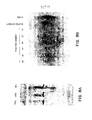
- Figure 8A when extract is heated for 2 hr at 65 or 70°C, the pattern of bands seen after agarose gel electrophoresis is only slightly changed. This is a loss of some minor, very rapidly migrating species, but otherwise there is no change.
- hSOD Ala6 Serlll (3400 U/mg) is approximately the same as wild type hSOD (3500 U/mg) as assayed by the pyrogallol method, Involvement of the superoxide anion radical in the autooxidation of pyrogallol and a convenient assay for superoxide dismutase, Eur J Biochem (l974) 47 :469-474).
- thermostability of the hSOD muteins made in yeast was performed by heating crude extracts at 80°C for l0 min and 25 min and comparing the superoxide dismutase activity of the heated SODs with that of the unheated control on an SOD activity gel as shown in Figure 9 (Beauchamp, C. and Fridovich, I., Analyt Biochem (l97l) 44 :276-287).
- the results depicted in Figure 9 indicate that hSOD Ala6 Serlll is detectably more thermostable that hSOD and hSOD Ala6 and hSOD Serlll.
- hSOD Ala6 and hSOD Serlll also appear to be more thermostable than wild type hSOD.
- Figure ll shows the rate of denaturation at 60°C.
- the differences after l hr are less than the previous experiment (69% vs. 62% vs. 56%), but the relative stabilities are consistent with the earlier result.
- the increased stability of the hSOD Ala6 Serlll is especially evident after heating at 70°C (data not shown).
- the hSOD Ala6 Serlll retained 29% of its activity vs. ⁇ l0% for the other SODs.
- the hSOD Ala6 Serlll still had 25% of its original activity while the others had less than l0% activity.
Landscapes
- Health & Medical Sciences (AREA)
- Chemical & Material Sciences (AREA)
- Life Sciences & Earth Sciences (AREA)
- Organic Chemistry (AREA)
- Medicinal Chemistry (AREA)
- Engineering & Computer Science (AREA)
- Bioinformatics & Cheminformatics (AREA)
- General Health & Medical Sciences (AREA)
- Veterinary Medicine (AREA)
- Public Health (AREA)
- General Chemical & Material Sciences (AREA)
- Pharmacology & Pharmacy (AREA)
- Chemical Kinetics & Catalysis (AREA)
- Animal Behavior & Ethology (AREA)
- Nuclear Medicine, Radiotherapy & Molecular Imaging (AREA)
- Zoology (AREA)
- Cardiology (AREA)
- Heart & Thoracic Surgery (AREA)
- Wood Science & Technology (AREA)
- Genetics & Genomics (AREA)
- Rheumatology (AREA)
- Urology & Nephrology (AREA)
- Biomedical Technology (AREA)
- Biotechnology (AREA)
- Pain & Pain Management (AREA)
- Microbiology (AREA)
- Vascular Medicine (AREA)
- Molecular Biology (AREA)
- Biochemistry (AREA)
- General Engineering & Computer Science (AREA)
- Enzymes And Modification Thereof (AREA)
- Lock And Its Accessories (AREA)
- Micro-Organisms Or Cultivation Processes Thereof (AREA)
- Medicines That Contain Protein Lipid Enzymes And Other Medicines (AREA)
- Pharmaceuticals Containing Other Organic And Inorganic Compounds (AREA)
Priority Applications (1)
| Application Number | Priority Date | Filing Date | Title |
|---|---|---|---|
| AT88300294T ATE88756T1 (de) | 1987-01-15 | 1988-01-14 | Thermostabile menschliche cu/zn-superoxiddismutase-muteine. |
Applications Claiming Priority (2)
| Application Number | Priority Date | Filing Date | Title |
|---|---|---|---|
| US357887A | 1987-01-15 | 1987-01-15 | |
| US3578 | 1987-01-15 |
Publications (3)
| Publication Number | Publication Date |
|---|---|
| EP0275202A2 true EP0275202A2 (fr) | 1988-07-20 |
| EP0275202A3 EP0275202A3 (en) | 1989-02-22 |
| EP0275202B1 EP0275202B1 (fr) | 1993-04-28 |
Family
ID=21706541
Family Applications (1)
| Application Number | Title | Priority Date | Filing Date |
|---|---|---|---|
| EP88300294A Expired - Lifetime EP0275202B1 (fr) | 1987-01-15 | 1988-01-14 | Mutéines thermostables de superoxyde dismutase Cu/Zn humaine |
Country Status (6)
| Country | Link |
|---|---|
| EP (1) | EP0275202B1 (fr) |
| JP (1) | JPS63273473A (fr) |
| AT (1) | ATE88756T1 (fr) |
| CA (1) | CA1289092C (fr) |
| DE (1) | DE3880511T2 (fr) |
| ES (1) | ES2054792T3 (fr) |
Cited By (5)
| Publication number | Priority date | Publication date | Assignee | Title |
|---|---|---|---|---|
| WO1990000605A1 (fr) * | 1988-07-15 | 1990-01-25 | Plant Genetic Systems N.V. | Procedes et moyens pour moduler la stabilite de proteines |
| WO1991004315A1 (fr) * | 1989-09-15 | 1991-04-04 | Symbicom Aktiebolag | Polypeptide |
| EP0524448A1 (fr) * | 1991-06-27 | 1993-01-27 | Kikkoman Corporation | Luciferase thermostable de la luciole, gène de luciferase thermostable de la luciole, ADN recombinant et procédé de préparation de la luciferase thermostable de la luciole |
| US5376536A (en) * | 1988-07-15 | 1994-12-27 | Gist-Brocades, N.V. | Glucose isomerase enzymes and their use |
| WO2001000797A1 (fr) * | 1999-06-29 | 2001-01-04 | National Institute Of Advances Industrial Science And Technology | Proteines enzymatiques exemptes d'atomes de soufre |
Families Citing this family (4)
| Publication number | Priority date | Publication date | Assignee | Title |
|---|---|---|---|---|
| JPH0780784B2 (ja) * | 1987-10-23 | 1995-08-30 | 宇部興産株式会社 | 微小循環障害に基づく心筋虚血傷害治療薬 |
| DE69027383T2 (de) * | 1989-03-06 | 1996-11-14 | Masayasu Inoue | Neue superoxyd-dismutase |
| US5804408A (en) * | 1991-03-13 | 1998-09-08 | Yoshihide Hagiwara | Expression of human SOD in blue green algae |
| WO2015070911A1 (fr) * | 2013-11-14 | 2015-05-21 | Lysando Ag | Séquence d'endolysine kz144 modifiée |
Family Cites Families (2)
| Publication number | Priority date | Publication date | Assignee | Title |
|---|---|---|---|---|
| US4818698A (en) * | 1985-08-23 | 1989-04-04 | Toyo Jozo Co., Ltd. | Polypeptides and preparation process thereof |
| JPS6279778A (ja) * | 1985-10-04 | 1987-04-13 | Suntory Ltd | 新規ス−パ−オキシドデイスムタ−ゼ及びその製造方法 |
-
1988
- 1988-01-12 CA CA000556344A patent/CA1289092C/fr not_active Expired - Lifetime
- 1988-01-14 ES ES88300294T patent/ES2054792T3/es not_active Expired - Lifetime
- 1988-01-14 EP EP88300294A patent/EP0275202B1/fr not_active Expired - Lifetime
- 1988-01-14 AT AT88300294T patent/ATE88756T1/de not_active IP Right Cessation
- 1988-01-14 JP JP63006748A patent/JPS63273473A/ja active Pending
- 1988-01-14 DE DE8888300294T patent/DE3880511T2/de not_active Expired - Fee Related
Cited By (8)
| Publication number | Priority date | Publication date | Assignee | Title |
|---|---|---|---|---|
| WO1990000605A1 (fr) * | 1988-07-15 | 1990-01-25 | Plant Genetic Systems N.V. | Procedes et moyens pour moduler la stabilite de proteines |
| EP0355039A3 (fr) * | 1988-07-15 | 1990-10-31 | Plant Genetic Systems, N.V. | Procédé et moyen pour contrôler la stabilité des protéines |
| US5376536A (en) * | 1988-07-15 | 1994-12-27 | Gist-Brocades, N.V. | Glucose isomerase enzymes and their use |
| WO1991004315A1 (fr) * | 1989-09-15 | 1991-04-04 | Symbicom Aktiebolag | Polypeptide |
| US5366729A (en) * | 1989-09-15 | 1994-11-22 | Symbicom Aktiebolag | Non-glycosylated variants of extracellular superoxide dismutase (EC-SOD) |
| EP0524448A1 (fr) * | 1991-06-27 | 1993-01-27 | Kikkoman Corporation | Luciferase thermostable de la luciole, gène de luciferase thermostable de la luciole, ADN recombinant et procédé de préparation de la luciferase thermostable de la luciole |
| US5229285A (en) * | 1991-06-27 | 1993-07-20 | Kikkoman Corporation | Thermostable luciferase of firefly, thermostable luciferase gene of firefly, novel recombinant dna, and process for the preparation of thermostable luciferase of firefly |
| WO2001000797A1 (fr) * | 1999-06-29 | 2001-01-04 | National Institute Of Advances Industrial Science And Technology | Proteines enzymatiques exemptes d'atomes de soufre |
Also Published As
| Publication number | Publication date |
|---|---|
| EP0275202A3 (en) | 1989-02-22 |
| ES2054792T3 (es) | 1994-08-16 |
| DE3880511D1 (de) | 1993-06-03 |
| DE3880511T2 (de) | 1993-08-12 |
| EP0275202B1 (fr) | 1993-04-28 |
| ATE88756T1 (de) | 1993-05-15 |
| CA1289092C (fr) | 1991-09-17 |
| JPS63273473A (ja) | 1988-11-10 |
Similar Documents
| Publication | Publication Date | Title |
|---|---|---|
| US5162217A (en) | Plasmids for expression of human superoxide dismutase (SOD) analogs containing lambda PL promoter with engineered restriction site for substituting ribosomal binding sites and methods of use thereof | |
| CA1339299C (fr) | Adn codant la superoxydase-dismutase de manganese humaine; son expression; methode pour la recuperer; analogues ou mutants de superoxydase-dismutase de manganese humaine; utilisations, compositions et methodes de traitement | |
| Beck et al. | Efficient production of active human manganese superoxide dismutase in Escherichia coli | |
| EP0275202B1 (fr) | Mutéines thermostables de superoxyde dismutase Cu/Zn humaine | |
| JP2967557B2 (ja) | ヒトマンガンスーパーオキシドジスムターゼcDNA、その細菌中での発現及び酵素活性ヒトマンガンスーパーオキシドジスムターゼの回収方法 | |
| EP0483113B1 (fr) | Méthode de production d'un analogue de Cu/Zn SOD humain enzymatiquement actif | |
| US5540911A (en) | Methods of use of human manganese superoxide dismutase | |
| US5246847A (en) | Polypeptide analogs of human manganese superoxide dismutase and compositions and complexes thereof | |
| EP0283244B1 (fr) | Polymères de superoxyde dismutase | |
| US5084390A (en) | Superoxide dismutase polymers | |
| DE68923613T2 (de) | Superoxid-dismutaseanaloge mit neuen bindeeigenschaften. | |
| US5270195A (en) | Plasmids for expression and method of producing a human manganese superoxide dimutase analog | |
| JP3004788B2 (ja) | アルギニンデイミナーゼ発現ベクター、形質転換微生物およびアルギニンデイミナーゼの製造法 | |
| JP3598322B2 (ja) | ヒト変異マンガンスーパーオキシドジスムターゼ | |
| WO1994014950A1 (fr) | Dismutase de superoxyde de manganese humaine de type variant | |
| EP0353516B1 (fr) | Méthode de préparation de la bêta-interleukine-1 humaine recombinante en forme homogène | |
| JPH04108379A (ja) | 新規スーパーオキサイドディスムターゼ | |
| Koike et al. | Molecular genetic aspects of human pyruvate dehydrogenase and its defect | |
| HU210529A9 (hu) | Zimogén vagy fibrinspecifikus tulajdonságokkal rendelkező szöveti plazminogén aktivátor Az átmeneti oltalom az 1-7. igénypontra vonatkozik. |
Legal Events
| Date | Code | Title | Description |
|---|---|---|---|
| PUAI | Public reference made under article 153(3) epc to a published international application that has entered the european phase |
Free format text: ORIGINAL CODE: 0009012 |
|
| AK | Designated contracting states |
Kind code of ref document: A2 Designated state(s): AT BE CH DE ES FR GB GR IT LI LU NL SE |
|
| PUAL | Search report despatched |
Free format text: ORIGINAL CODE: 0009013 |
|
| AK | Designated contracting states |
Kind code of ref document: A3 Designated state(s): AT BE CH DE ES FR GB GR IT LI LU NL SE |
|
| 17P | Request for examination filed |
Effective date: 19890615 |
|
| 17Q | First examination report despatched |
Effective date: 19911024 |
|
| GRAA | (expected) grant |
Free format text: ORIGINAL CODE: 0009210 |
|
| AK | Designated contracting states |
Kind code of ref document: B1 Designated state(s): AT BE CH DE ES FR GB GR IT LI LU NL SE |
|
| REF | Corresponds to: |
Ref document number: 88756 Country of ref document: AT Date of ref document: 19930515 Kind code of ref document: T |
|
| ITF | It: translation for a ep patent filed | ||
| REF | Corresponds to: |
Ref document number: 3880511 Country of ref document: DE Date of ref document: 19930603 |
|
| ET | Fr: translation filed | ||
| REG | Reference to a national code |
Ref country code: GR Ref legal event code: FG4A Free format text: 3008431 |
|
| EPTA | Lu: last paid annual fee | ||
| PLBE | No opposition filed within time limit |
Free format text: ORIGINAL CODE: 0009261 |
|
| STAA | Information on the status of an ep patent application or granted ep patent |
Free format text: STATUS: NO OPPOSITION FILED WITHIN TIME LIMIT |
|
| 26N | No opposition filed | ||
| REG | Reference to a national code |
Ref country code: ES Ref legal event code: FG2A Ref document number: 2054792 Country of ref document: ES Kind code of ref document: T3 |
|
| EAL | Se: european patent in force in sweden |
Ref document number: 88300294.1 |
|
| REG | Reference to a national code |
Ref country code: GB Ref legal event code: IF02 |
|
| PGFP | Annual fee paid to national office [announced via postgrant information from national office to epo] |
Ref country code: NL Payment date: 20041216 Year of fee payment: 18 |
|
| PGFP | Annual fee paid to national office [announced via postgrant information from national office to epo] |
Ref country code: AT Payment date: 20041221 Year of fee payment: 18 |
|
| PGFP | Annual fee paid to national office [announced via postgrant information from national office to epo] |
Ref country code: GB Payment date: 20050105 Year of fee payment: 18 |
|
| PGFP | Annual fee paid to national office [announced via postgrant information from national office to epo] |
Ref country code: FR Payment date: 20050117 Year of fee payment: 18 |
|
| PGFP | Annual fee paid to national office [announced via postgrant information from national office to epo] |
Ref country code: SE Payment date: 20050120 Year of fee payment: 18 |
|
| PGFP | Annual fee paid to national office [announced via postgrant information from national office to epo] |
Ref country code: CH Payment date: 20050124 Year of fee payment: 18 |
|
| PGFP | Annual fee paid to national office [announced via postgrant information from national office to epo] |
Ref country code: GR Payment date: 20050126 Year of fee payment: 18 |
|
| PGFP | Annual fee paid to national office [announced via postgrant information from national office to epo] |
Ref country code: LU Payment date: 20050204 Year of fee payment: 18 |
|
| PGFP | Annual fee paid to national office [announced via postgrant information from national office to epo] |
Ref country code: ES Payment date: 20050208 Year of fee payment: 18 |
|
| PGFP | Annual fee paid to national office [announced via postgrant information from national office to epo] |
Ref country code: DE Payment date: 20050228 Year of fee payment: 18 |
|
| PGFP | Annual fee paid to national office [announced via postgrant information from national office to epo] |
Ref country code: BE Payment date: 20050302 Year of fee payment: 18 |
|
| PG25 | Lapsed in a contracting state [announced via postgrant information from national office to epo] |
Ref country code: GB Free format text: LAPSE BECAUSE OF NON-PAYMENT OF DUE FEES Effective date: 20060114 Ref country code: AT Free format text: LAPSE BECAUSE OF NON-PAYMENT OF DUE FEES Effective date: 20060114 |
|
| PG25 | Lapsed in a contracting state [announced via postgrant information from national office to epo] |
Ref country code: SE Free format text: LAPSE BECAUSE OF NON-PAYMENT OF DUE FEES Effective date: 20060115 |
|
| PG25 | Lapsed in a contracting state [announced via postgrant information from national office to epo] |
Ref country code: ES Free format text: LAPSE BECAUSE OF NON-PAYMENT OF DUE FEES Effective date: 20060116 |
|
| PG25 | Lapsed in a contracting state [announced via postgrant information from national office to epo] |
Ref country code: BE Free format text: LAPSE BECAUSE OF NON-PAYMENT OF DUE FEES Effective date: 20060131 Ref country code: LI Free format text: LAPSE BECAUSE OF NON-PAYMENT OF DUE FEES Effective date: 20060131 Ref country code: LU Free format text: LAPSE BECAUSE OF NON-PAYMENT OF DUE FEES Effective date: 20060131 Ref country code: FR Free format text: LAPSE BECAUSE OF NON-PAYMENT OF DUE FEES Effective date: 20060131 Ref country code: CH Free format text: LAPSE BECAUSE OF NON-PAYMENT OF DUE FEES Effective date: 20060131 |
|
| PG25 | Lapsed in a contracting state [announced via postgrant information from national office to epo] |
Ref country code: NL Free format text: LAPSE BECAUSE OF NON-PAYMENT OF DUE FEES Effective date: 20060801 Ref country code: DE Free format text: LAPSE BECAUSE OF NON-PAYMENT OF DUE FEES Effective date: 20060801 |
|
| REG | Reference to a national code |
Ref country code: CH Ref legal event code: PL |
|
| EUG | Se: european patent has lapsed | ||
| GBPC | Gb: european patent ceased through non-payment of renewal fee |
Effective date: 20060114 |
|
| NLV4 | Nl: lapsed or anulled due to non-payment of the annual fee |
Effective date: 20060801 |
|
| REG | Reference to a national code |
Ref country code: FR Ref legal event code: ST Effective date: 20060929 |
|
| REG | Reference to a national code |
Ref country code: ES Ref legal event code: FD2A Effective date: 20060116 |
|
| BERE | Be: lapsed |
Owner name: *CHIRON CORP. Effective date: 20060131 |
|
| PGFP | Annual fee paid to national office [announced via postgrant information from national office to epo] |
Ref country code: IT Payment date: 20070522 Year of fee payment: 20 |
|
| PG25 | Lapsed in a contracting state [announced via postgrant information from national office to epo] |
Ref country code: GR Free format text: LAPSE BECAUSE OF NON-PAYMENT OF DUE FEES Effective date: 20060802 |