EP0275538A2 - Biologisches Abwasserreinigungsverfahren ohne Überschussbelebtschlammproduktion und Vorrichtung zu seiner Durchführung - Google Patents
Biologisches Abwasserreinigungsverfahren ohne Überschussbelebtschlammproduktion und Vorrichtung zu seiner Durchführung Download PDFInfo
- Publication number
- EP0275538A2 EP0275538A2 EP87119112A EP87119112A EP0275538A2 EP 0275538 A2 EP0275538 A2 EP 0275538A2 EP 87119112 A EP87119112 A EP 87119112A EP 87119112 A EP87119112 A EP 87119112A EP 0275538 A2 EP0275538 A2 EP 0275538A2
- Authority
- EP
- European Patent Office
- Prior art keywords
- wastewater
- biological
- basin
- effluent
- sludge
- Prior art date
- Legal status (The legal status is an assumption and is not a legal conclusion. Google has not performed a legal analysis and makes no representation as to the accuracy of the status listed.)
- Granted
Links
Images



Classifications
-
- C—CHEMISTRY; METALLURGY
- C02—TREATMENT OF WATER, WASTE WATER, SEWAGE, OR SLUDGE
- C02F—TREATMENT OF WATER, WASTE WATER, SEWAGE, OR SLUDGE
- C02F3/00—Biological treatment of water, waste water, or sewage
- C02F3/02—Aerobic processes
- C02F3/12—Activated sludge processes
- C02F3/14—Activated sludge processes using surface aeration
- C02F3/16—Activated sludge processes using surface aeration the aerator having a vertical axis
-
- C—CHEMISTRY; METALLURGY
- C02—TREATMENT OF WATER, WASTE WATER, SEWAGE, OR SLUDGE
- C02F—TREATMENT OF WATER, WASTE WATER, SEWAGE, OR SLUDGE
- C02F3/00—Biological treatment of water, waste water, or sewage
- C02F3/02—Aerobic processes
- C02F3/12—Activated sludge processes
-
- Y—GENERAL TAGGING OF NEW TECHNOLOGICAL DEVELOPMENTS; GENERAL TAGGING OF CROSS-SECTIONAL TECHNOLOGIES SPANNING OVER SEVERAL SECTIONS OF THE IPC; TECHNICAL SUBJECTS COVERED BY FORMER USPC CROSS-REFERENCE ART COLLECTIONS [XRACs] AND DIGESTS
- Y02—TECHNOLOGIES OR APPLICATIONS FOR MITIGATION OR ADAPTATION AGAINST CLIMATE CHANGE
- Y02W—CLIMATE CHANGE MITIGATION TECHNOLOGIES RELATED TO WASTEWATER TREATMENT OR WASTE MANAGEMENT
- Y02W10/00—Technologies for wastewater treatment
- Y02W10/10—Biological treatment of water, waste water, or sewage
-
- Y—GENERAL TAGGING OF NEW TECHNOLOGICAL DEVELOPMENTS; GENERAL TAGGING OF CROSS-SECTIONAL TECHNOLOGIES SPANNING OVER SEVERAL SECTIONS OF THE IPC; TECHNICAL SUBJECTS COVERED BY FORMER USPC CROSS-REFERENCE ART COLLECTIONS [XRACs] AND DIGESTS
- Y10—TECHNICAL SUBJECTS COVERED BY FORMER USPC
- Y10S—TECHNICAL SUBJECTS COVERED BY FORMER USPC CROSS-REFERENCE ART COLLECTIONS [XRACs] AND DIGESTS
- Y10S210/00—Liquid purification or separation
- Y10S210/902—Materials removed
- Y10S210/903—Nitrogenous
Definitions
- the present invention relates to a new method concerning the environment protection, specifically to a new method for the biological purification of wastewater from domestic sewage and industrial wastewater, e.g. from chemical or oil refining plants, with no excess activated sludge. It further relates to an apparatus for the performance of said new method.
- the basic principle of biological purification of wastewaters resides in the joint conversion of the dissolved organic and/or inorganic matter (substrates) into the form of sludge (activated sludge), which has to be eliminated from the system, depending upon the chosen technical solution.
- M/F 0 - 1 - short term aeration (highly loaded aeration)
- M/F 1 - 5 - conventional aeration with or without denitrification
- M/F 5 - 20 - extended aeration
- M/F 20 - 100 - lagoon
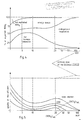
- Graph 1 there is represented the exploitation of the substrate in the above-defined types of biological treatment of wastewater and it can be concluded therefrom: -
- the short term aeration consumes the substrate predominantly for energy needs, whereas a substantial part of the substrate remains non-degraded.
- the conventional aeration with or without denitrification represents a very often applied principle of biological purification, wherein the part of the non-consumed substrate is very low ( ⁇ 5%), whereas the consumed substrate is substantially divided between the energy demand and the consumption for the synthesis of new biomass.
- the quantity of the formed sludge is essential in such a treatment because the endogenous respiration is less expressed.
- oxygen which is consumed in energy yielding reactions and in endogenous respiration reactions.
- the oxygen may be provided from air in molecular state (for energy needs and for endogenous respiration) or from the nitrate type compounds (for endogenous respiration).
- aerators function as suppliers of oxygen (aeration of wastewater) and as stirrers of the active sludge and wastewater to keep the complete system in a suspended state, which is very important as the activated sludge in the ratio of M/F - 1-20 exhibits settling properties.
- the adjustment of the activated sludge in the suspended state is superfluous because, owing to the dispersed state of the activated sludge, it is - by virtue of its basic properties - in a suspended state.
- the quantity of oxygen that has to be charged into the biological basin is divided between the air, needed for the energy demand and the air for the endogenous respiration.
- the quantity of air needed for the energy demand is proportional to the F value in the M/F ratio. Since the lower M/F ration also means an increased amount of sludge in the system as well as its improved settling properties, it is evident that in this case a part of the oxygen (air) is consumed for the stabilization of the susupension state in the whole system.
- Table 1 there is represented the demand for oxygen and the function of oxygen in any of the cited systems for the biological purification of wastewater.
- aerator for the aeration of biological basins the following types of aerators are used in practice: - diffusion type - surface turbine type - surface propeller type - submersed turbine type
- Table 2 there are presented the types of aerators depending on the type of the biological treatment of wastewater.
- the criteria in the selection of the aerator type are more of an empirical than of theoretical nature. Since the aeration of biological basins is an essential economic parameter in the biological treatment of wastewater, the design of said systems always takes into account that the amount of the charged oxygen should be equal to or in a slight excess over the theoretically needed one.
- the oxygen demand (kg O2/h) for each type of biological treatments can be calculated from the ratio of the endogenous and the energetic respiration.
- the selection of the type of the aerators and the number thereof can be assessed on the basis of the empirical parameter of the type "oxygen transfer efficiency" (EPK), which represents the ratio of the oxygen transferred from the aerator to the flocks of the activated sludge and the total supply of oxygen, expressed in a percentual ratio.
- EPK oxygen transfer efficiency
- the EPK value depends on:
- the ratio between the aerator power and the basin volume should at minimum fulfil the data of the following Table 4, otherwise the system is not in suspension at all.
- the temperature of the wastewater ought to influence the "EPK" value, taking into account that the solubility and distribution of oxygen are different at different temperatures. Since, however, the wastewater is always aerated in a minimum excess of 20 % over the value proportional to the loading and the supplied oxygen is immediately spent for the biodegradation of the substrate, the effect of the temperature is practically only important in low loaded wastewaters because aerators of lower power are used in such conditions.
- the "EPK” parameters do not differ if there are various amount of biomass in the biological basin; a different amount of biomass in the same biological basin, however, means an increased oxygen demand because a larger amount of biomass always means an intensified endogenous respiration. - If there are surfactants present in the wastewater (detergents), there occurs a sharp drop of the "EPK” value which can drop to the zero value, provided that an increased concentration of the surfactants and the use of surface aerators are involved.
- the aeration of wastewater in the biological treatment thereof represents an essential economical parameter of each such system, therefore in practice, the aeration is performed in such a manner that the minimum possible energy is consumed and, simultaneously, the criterion of keeping the active sludge suspended in water is fulfilled and the value of the "EPK" parameter is maintained as high as possible.
- the biological treatments of wastewater exploit the nutrients of the nitrogen (N) and phosphorus (P) types for the following: - the energy needs (N), - the endogenous respiration (N, P), - the generation of new biomass (N, P).
- the consumption of nitrogen and phosphorus also depends on the type of the biological treatment.
- the nutrients on the basis of nitrogen may be organic nitrogen compounds, ammonia, urea etc., and nitrates, the phosphorus compounds are preferably on the basis of orthophosphates.
- Fig. 3 indicates the principles of the conversion of nitrogen compounds depending upon the type of the biological treatment.
- MVSS mixed liquor volatile suspended solids
- the problem of excess sludge can be conventionally solved in one of the following manners: - direct disposal - disposal subsequently to solidification - aerobic digestion - anaerobic digestion - incineration
- the direct disposal is, in fact, not a form of excess sludge processing and is being abandoned because of the toxic components of the sludge.
- the aerobic digestion represents a form of excess sludge processing, wherein the organic part of the sludge is oxidized with oxygen into carbon dioxide; owing to the energy consumption required for the aeration, it involves additional costs for the wastewater treatment plants.
- the anaerobic digestion represents a form of excess sludge processing, wherein the organic part of the sludge is, in the absence of oxygen, reduced to methane, which can be exploited as an energy source in the wastewater treatment plants with the provision that there is a considerable amount of sludge. From the viewpoint of capital investment, the costs of anaerobic digestion exceed those of the aerobic digestion.
- Microorganisms involved in the biological wastewater treatment pertain to a heteropopulation comprising the following genera: Pseudomonas, Achromobacter, Micrococcus, Bacillus, Alcaligenes, Escherichia, Flavobacterium, Nocardia, Zoogloea, and Serratia.
- the present invention relates to a new method and an apparatus for biological purification of wastewater, wherein the resulting improvement resides in the absence of excess sludge and in the high quality of the effluent even at high loaded influents, e.g. in the conditions of high pH values, "phenol shocks" etc.
- the present invention relates to the biological purification of wastewater containing substantially no toxic and/or inhibiting substances for the microorganisms, which is charged into a purification basin, wherein the level of said wastewater is at least 5 m over the bottom of said basin, and said wastewater is under the conditions of totally endogeneous respiration aerated with a surface turbine type aerator of 5.10 ⁇ 2 to 12.10 ⁇ 2 kW/m3 of wastewater, at a microorganism to food ratio of 20 to 100.
- the present invention yields a high-grade effluent and the lowest possible amount of excess sludge at a low energy (oxygen) and nutrient (N, P) input, with the provision that the following requirements are fulfilled: - the M/F (microorganism to food) ratio is adjusted within the range of 20-100, characteristic of the sludge of dispersing properties; - the excess sludge generated in the biodegradation of the substrate is inhibited to leave the biological basin by the exclusive use of surface turbine type aerators of a power of 5.10 ⁇ 2 to 12.10 ⁇ 2 kW/m3 of the basin; - the level of the treated charge in the basin must be at least 5 m from the bottom of the basin; this feature is essential because the total mixing of the charge/activated sludge is impeded.
- M/F microorganism to food
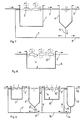
- the wastewater is - subsequently to a conventional mechanical and chemical pre-treatment - charged into a biological basin 1, equipped with one or more aerators (stirrers) 2, effecting a substantial mixing of the contents of the basin, whereupon it is supplied via a conduit 3 into a clarifier 4, wherefrom the effluent is discharged through a conduit 5 and the excess sludge through a conduit 6, which excess sludge is either recycled through a conduit 7 into the purification basin 1 or discharged through a conduit 8.
- aerators stirrers
- Fig. 8 represents a schematical elevation of the apparatus according to the invention, which comprises a biological basin 10, characterized by a minimum depth corresponding to a distance (H) from the bottom of the basin to the level of the treated wastewater of at least 5 m.
- Said basin 10 is equipped with one or more surface turbine type aerators 11 of a power of 5.10 ⁇ 2 - 12.10 ⁇ 2 kW/m3 of wastewater, which press the activated sludge towards the bottom of the basin 10 and inhibit its rising.
- the purified sludge-free effluent is discharged through a conduit 11. Since no excess sludge generates, there are not needed any incinerators and corresponding equipment.
- Fig. 9 represents a schematical elevation of an apparatus accoring to the invention, intended for the purification of highly loaded wastewater, resulting e.g. in coking or coal gasification plants.
- wastewater has to be pretreated in a conventional high rate purification system, whose elements correspond e.g. to the embodiment in Fig. 7.
- the effluent supplied through a conduit 5 ⁇ and the excess sludge from the recycling flow supplied through a conduit 8 ⁇ are charged into a reactor corresponding to the embodiment of Fig. 8, wherein the designations H ⁇ , 9 ⁇ , 10 and 11 ⁇ correspond to the designations H, 9, 10 and 11 of Fig. 8.
- the effluent 11 ⁇ is conducted into a biofilter 12 and the resulting filter residue and the excess sludge are recycled through conduits 14, 15 into the biofilter 12 and through the conduits 14, 16 into the biological basin 9 ⁇ , whereas the filtrate leaves the system through a conduit 13 and represents the final purified effluent product.
- the depth of the biological basin is an essential characteristic of the present invention, whereas its cross-section is optional, e.g. round, square, rectangular, elliptical etc.
- the design of the basin can be optimized at a minimum volume.
- wastewaters were subjected to biological purification.
- the loading of petrochemical plant wastewater depends on the type of processing but it may be generally divided in the hydroskimming refineries (low-loaded wastewater) and refineries with catalytic units (high-loaded wastewater). Both types of wastewater require a biological purification step after the mechanical and chemical treatment.
- a conventional system for the biological treatment of petrochemical wastewater is represented in Fig. 7 and comprises an aerated biological basin, a settling unit, a sludge recirculation unit and a system for the discharge of excess sludge, which is thickened and usually burnt in an incinerator.
- the present inventive method of biological purification with no excess sludge only requires an apparatus as represented in Fig. 8, comprising a biological basin of a minimum depth of 5 m and a specific type of aeration, achieved by one or more surface turbine type aerators of 5.10 ⁇ 2 to 12.10 ⁇ 2 kW/m3 of the basin and a M/F ratio of 20-100.
- the purification treatment was performed on the wastewater of the petrochemical refinery plant in Rijeka/YU in a biological basin of a depth of 6 m.
- the height of the level of the liquid charge was 6 m.
- the power of the surface turbine type aerators was 0.0675 kW/m3 of wastewater.
- the M/F ratio in the biological basin was 25-30.
- the capacity of the basin was 6000 m3.
- Coking and coal gasification wastewaters are characterized by a high loading of COD (BOD5 and TOC resp.) values and by high loads of nitrogen compounds.
- the high COD value results from the presence of phenols, thiocyanates and numerous other organic compounds.
- the present inventive method makes possible the purification of an influent defined in the following Table 11 in a purification system in accordance with the scheme in Fig. 9, yielding a high-grade effluent defined in Table 11. Owing to the high ammonia content all effluents resulting from the treatments of coal gasification and coking wastewaters in biological basins comprise high nitrate concentrations. Therefore also the present inventive method suggests an additional denitrification of the effluent delivered from the biological basin in Fig. 9 in the biofilter. The excess sludge from the biofilter is recirculated to the biological basin and is subjected to the conditions of total endogenous respiration.
- the purification treatment was performed on the wastewater of a coke plant effluent with a flow rate of 50 m3/h and a residual COD of 800 mg/l, in a biological basin of a depth of 7 m.
- the height of the liquid charge was 6 m.
- the power of the surface turbine aerator was 0.09 kW/m3 of wastewater.
- the M/F ratio in the biological basin was 40.
- the capacity of the basin was 11000 m3.
- the influent domestic sewage is predominantly loaded by two parameters, namely by an increased BOD5 value and by suspended matter.
- the conventional purification systems comprise pretreatments (mechanical treatments, flocculations, sedimentation, flotation) to remove the suspended matter and various modifications of biological treatments to eliminate the increased BOD5.
- pretreatments mechanical treatments, flocculations, sedimentation, flotation
- various modifications of biological treatments to eliminate the increased BOD5.
- This excess sludge is conventionally thickened and subjected to an aerobic (rarely) and/or anaerobic (often) treatment, yielding methane, which in turn can be used as an energy source and reduces the operating costs of the system.
- the digestion step yields the sludge, whose disposal is an ever growing environmental problem. Owing to its heavy metal contents it may often not be allowed to be deposited.
- inventive method and apparatus can be applied in the purification of all types of wastewaters, e.g. of metallurgic, tannery, food processing, and various chemical plants.
Landscapes
- Life Sciences & Earth Sciences (AREA)
- Biodiversity & Conservation Biology (AREA)
- Microbiology (AREA)
- Hydrology & Water Resources (AREA)
- Engineering & Computer Science (AREA)
- Environmental & Geological Engineering (AREA)
- Water Supply & Treatment (AREA)
- Chemical & Material Sciences (AREA)
- Organic Chemistry (AREA)
- Activated Sludge Processes (AREA)
- Biological Treatment Of Waste Water (AREA)
- Micro-Organisms Or Cultivation Processes Thereof (AREA)
Priority Applications (1)
| Application Number | Priority Date | Filing Date | Title |
|---|---|---|---|
| AT87119112T ATE92898T1 (de) | 1986-12-24 | 1987-12-23 | Biologisches abwasserreinigungsverfahren ohne ueberschussbelebtschlammproduktion und vorrichtung zu seiner durchfuehrung. |
Applications Claiming Priority (2)
| Application Number | Priority Date | Filing Date | Title |
|---|---|---|---|
| YU224086A YU224086A (en) | 1986-12-24 | 1986-12-24 | Device for biological purifying of waste waters without remainings of active sludge |
| YU2240/86 | 1986-12-24 |
Publications (3)
| Publication Number | Publication Date |
|---|---|
| EP0275538A2 true EP0275538A2 (de) | 1988-07-27 |
| EP0275538A3 EP0275538A3 (en) | 1988-08-31 |
| EP0275538B1 EP0275538B1 (de) | 1993-08-11 |
Family
ID=25557358
Family Applications (1)
| Application Number | Title | Priority Date | Filing Date |
|---|---|---|---|
| EP87119112A Expired - Lifetime EP0275538B1 (de) | 1986-12-24 | 1987-12-23 | Biologisches Abwasserreinigungsverfahren ohne Überschussbelebtschlammproduktion und Vorrichtung zu seiner Durchführung |
Country Status (7)
| Country | Link |
|---|---|
| US (1) | US5186837A (de) |
| EP (1) | EP0275538B1 (de) |
| AT (1) | ATE92898T1 (de) |
| DE (1) | DE3787006T2 (de) |
| ES (1) | ES2044911T3 (de) |
| SU (1) | SU1729289A3 (de) |
| YU (1) | YU224086A (de) |
Cited By (1)
| Publication number | Priority date | Publication date | Assignee | Title |
|---|---|---|---|---|
| WO2007029042A1 (en) * | 2005-09-10 | 2007-03-15 | Stuart Christian | Method and apparatus for the aerobic treatment of waste |
Families Citing this family (7)
| Publication number | Priority date | Publication date | Assignee | Title |
|---|---|---|---|---|
| US5958241A (en) * | 1995-08-22 | 1999-09-28 | The Louisiana Land & Exploration Co. | Waste treatment and minimization system |
| US6555002B2 (en) | 2000-10-06 | 2003-04-29 | Premier Wastwater International, Llc | Apparatus and method for wastewater treatment with enhanced solids reduction (ESR) |
| US6391203B1 (en) | 2000-11-22 | 2002-05-21 | Alexander G. Fassbender | Enhanced biogas production from nitrogen bearing feed stocks |
| US7005069B2 (en) * | 2004-04-27 | 2006-02-28 | Passaic Valley Sewerage Commissioners | Apparatus and method for aeration of wastewater |
| JP4672816B1 (ja) * | 2009-08-28 | 2011-04-20 | 関西熱化学株式会社 | 生物処理方法 |
| US10927014B1 (en) | 2018-06-06 | 2021-02-23 | Raymond C. Sherry | Waste water treatment to reduce BOD/COD |
| CN113104993A (zh) * | 2021-04-07 | 2021-07-13 | 沐联环境科技(重庆)股份有限公司 | 一种高浓度农药废水生化段的处理方法 |
Family Cites Families (4)
| Publication number | Priority date | Publication date | Assignee | Title |
|---|---|---|---|---|
| US3980556A (en) * | 1974-01-25 | 1976-09-14 | Ontario Research Foundation | Adsorption biooxidation treatment of waste waters to remove contaminants therefrom |
| CH572003A5 (de) * | 1974-11-18 | 1976-01-30 | Kaelin J R | |
| US4643830A (en) * | 1977-11-04 | 1987-02-17 | Reid John H | Process for operating a total barrier oxidation ditch |
| US4537682A (en) * | 1982-01-29 | 1985-08-27 | Environmental Research & Technology | Activated sludge wastewater treating process |
-
1986
- 1986-12-24 YU YU224086A patent/YU224086A/xx unknown
-
1987
- 1987-12-23 AT AT87119112T patent/ATE92898T1/de active
- 1987-12-23 ES ES87119112T patent/ES2044911T3/es not_active Expired - Lifetime
- 1987-12-23 US US07/137,125 patent/US5186837A/en not_active Expired - Fee Related
- 1987-12-23 EP EP87119112A patent/EP0275538B1/de not_active Expired - Lifetime
- 1987-12-23 DE DE87119112T patent/DE3787006T2/de not_active Expired - Fee Related
- 1987-12-24 SU SU874203948A patent/SU1729289A3/ru active
Cited By (1)
| Publication number | Priority date | Publication date | Assignee | Title |
|---|---|---|---|---|
| WO2007029042A1 (en) * | 2005-09-10 | 2007-03-15 | Stuart Christian | Method and apparatus for the aerobic treatment of waste |
Also Published As
| Publication number | Publication date |
|---|---|
| EP0275538B1 (de) | 1993-08-11 |
| ES2044911T3 (es) | 1994-01-16 |
| EP0275538A3 (en) | 1988-08-31 |
| ATE92898T1 (de) | 1993-08-15 |
| SU1729289A3 (ru) | 1992-04-23 |
| DE3787006D1 (de) | 1993-09-16 |
| DE3787006T2 (de) | 1993-12-16 |
| US5186837A (en) | 1993-02-16 |
| YU224086A (en) | 1989-06-30 |
Similar Documents
| Publication | Publication Date | Title |
|---|---|---|
| EP0543457B1 (de) | Verfahren für Abwasserbehandlung | |
| US5514278A (en) | Counterflow microbiological processes | |
| CA2332530C (en) | Multistage facultative wastewater treatment system | |
| EP0603316B1 (de) | Verfahren und system fuer biologische beseitigung von stickstoff aus abwaessern | |
| US4183808A (en) | Phosphate removal from wastewater | |
| EP1054840B1 (de) | Verfahren und anlage zur behandlung von abwasser mit einem anaeroben aufstromreaktor | |
| EP0275538B1 (de) | Biologisches Abwasserreinigungsverfahren ohne Überschussbelebtschlammproduktion und Vorrichtung zu seiner Durchführung | |
| KR100430382B1 (ko) | 고농도 유기물, 질소, 인 함유 축산폐수의 처리 방법 및 그에 사용되는 처리 시스템 | |
| KR100229237B1 (ko) | 분뇨의 고도 처리 방법 및 그 장치 | |
| KR20000072808A (ko) | 폐수처리장치 및 방법 | |
| Martienssen et al. | Capacities and limits of three different technologies for the biological treatment of leachate from solid waste landfill sites | |
| KR100341183B1 (ko) | 간헐폭기식 원형 산화구를 이용한 하수의 고도처리 방법및 장치 | |
| WO2002081386A1 (en) | Sludge and slurry destruction plant and process | |
| KR20010045253A (ko) | 하수 고도처리장치와 이 장치를 이용한 하수처리방법 | |
| KR100191195B1 (ko) | 고효율 분뇨 처리 방법 및 그 장치 | |
| KR0129831B1 (ko) | 탈인, 탈질을 위한 하수처리공정 | |
| Horan | Suspended growth processes | |
| Hafiz et al. | Extended aeration activated sludge process in treating ammonia-nitrogen by-products from petrochemical plant | |
| KR100216559B1 (ko) | 생물학적 탈질산화용 탄소원 조성물 및 이를 이용한 폐수 처리방법 | |
| KR200190709Y1 (ko) | 하수의 고도 처리장치 | |
| KR200217819Y1 (ko) | 폐수처리장치 | |
| KR200417756Y1 (ko) | 간헐포기 및 잉여 슬러지의 직접 탈수에 의한 산화구하·폐수 고도처리장치 | |
| KR100421114B1 (ko) | 고정상 메디아 및 호환조를 구비한 고도처리장치 및 이를이용한 고도처리방법 | |
| JPH05285491A (ja) | コークス炉安水の処理方法 | |
| CN113461278A (zh) | 一种高效处理废水总氮的生化方法 |
Legal Events
| Date | Code | Title | Description |
|---|---|---|---|
| PUAI | Public reference made under article 153(3) epc to a published international application that has entered the european phase |
Free format text: ORIGINAL CODE: 0009012 |
|
| PUAL | Search report despatched |
Free format text: ORIGINAL CODE: 0009013 |
|
| AK | Designated contracting states |
Kind code of ref document: A2 Designated state(s): AT BE CH DE ES FR GB GR IT LI LU NL SE |
|
| AK | Designated contracting states |
Kind code of ref document: A3 Designated state(s): AT BE CH DE ES FR GB GR IT LI LU NL SE |
|
| 17P | Request for examination filed |
Effective date: 19890110 |
|
| 17Q | First examination report despatched |
Effective date: 19891206 |
|
| GRAA | (expected) grant |
Free format text: ORIGINAL CODE: 0009210 |
|
| RAP1 | Party data changed (applicant data changed or rights of an application transferred) |
Owner name: INA-INDUSTRIJA NAFTE, S POTPUNUM ODGOVORNOSCU, ZAG |
|
| AK | Designated contracting states |
Kind code of ref document: B1 Designated state(s): AT BE CH DE ES FR GB GR IT LI LU NL SE |
|
| PG25 | Lapsed in a contracting state [announced via postgrant information from national office to epo] |
Ref country code: GR Free format text: LAPSE BECAUSE OF FAILURE TO SUBMIT A TRANSLATION OF THE DESCRIPTION OR TO PAY THE FEE WITHIN THE PRESCRIBED TIME-LIMIT Effective date: 19930811 |
|
| REF | Corresponds to: |
Ref document number: 92898 Country of ref document: AT Date of ref document: 19930815 Kind code of ref document: T |
|
| REF | Corresponds to: |
Ref document number: 3787006 Country of ref document: DE Date of ref document: 19930916 |
|
| ITF | It: translation for a ep patent filed | ||
| ET | Fr: translation filed | ||
| PG25 | Lapsed in a contracting state [announced via postgrant information from national office to epo] |
Ref country code: GB Effective date: 19931223 Ref country code: AT Effective date: 19931223 |
|
| PG25 | Lapsed in a contracting state [announced via postgrant information from national office to epo] |
Ref country code: SE Effective date: 19931224 Ref country code: ES Free format text: LAPSE BECAUSE OF THE APPLICANT RENOUNCES Effective date: 19931224 |
|
| PG25 | Lapsed in a contracting state [announced via postgrant information from national office to epo] |
Ref country code: LU Free format text: LAPSE BECAUSE OF NON-PAYMENT OF DUE FEES Effective date: 19931231 Ref country code: LI Effective date: 19931231 Ref country code: CH Effective date: 19931231 Ref country code: BE Effective date: 19931231 |
|
| REG | Reference to a national code |
Ref country code: ES Ref legal event code: FG2A Ref document number: 2044911 Country of ref document: ES Kind code of ref document: T3 |
|
| PGFP | Annual fee paid to national office [announced via postgrant information from national office to epo] |
Ref country code: DE Payment date: 19940120 Year of fee payment: 7 |
|
| PLBE | No opposition filed within time limit |
Free format text: ORIGINAL CODE: 0009261 |
|
| STAA | Information on the status of an ep patent application or granted ep patent |
Free format text: STATUS: NO OPPOSITION FILED WITHIN TIME LIMIT |
|
| BERE | Be: lapsed |
Owner name: INA-INDUSTRIJA NAFTE S POTPUNUM ODGOVORNOSCU ZAGR Effective date: 19931231 |
|
| PG25 | Lapsed in a contracting state [announced via postgrant information from national office to epo] |
Ref country code: NL Effective date: 19940701 |
|
| 26N | No opposition filed | ||
| NLV4 | Nl: lapsed or anulled due to non-payment of the annual fee | ||
| GBPC | Gb: european patent ceased through non-payment of renewal fee |
Effective date: 19931223 |
|
| PG25 | Lapsed in a contracting state [announced via postgrant information from national office to epo] |
Ref country code: FR Effective date: 19940831 |
|
| REG | Reference to a national code |
Ref country code: CH Ref legal event code: PL |
|
| REG | Reference to a national code |
Ref country code: FR Ref legal event code: ST |
|
| EUG | Se: european patent has lapsed |
Ref document number: 87119112.8 Effective date: 19940710 |
|
| PG25 | Lapsed in a contracting state [announced via postgrant information from national office to epo] |
Ref country code: DE Effective date: 19950901 |
|
| REG | Reference to a national code |
Ref country code: ES Ref legal event code: FD2A Effective date: 20010402 |
|
| PG25 | Lapsed in a contracting state [announced via postgrant information from national office to epo] |
Ref country code: IT Free format text: LAPSE BECAUSE OF NON-PAYMENT OF DUE FEES Effective date: 20051223 |