EP0278315A2 - Système et méthode pour accéder à des fichiers à distance dans un réseau distribué - Google Patents
Système et méthode pour accéder à des fichiers à distance dans un réseau distribué Download PDFInfo
- Publication number
- EP0278315A2 EP0278315A2 EP88101089A EP88101089A EP0278315A2 EP 0278315 A2 EP0278315 A2 EP 0278315A2 EP 88101089 A EP88101089 A EP 88101089A EP 88101089 A EP88101089 A EP 88101089A EP 0278315 A2 EP0278315 A2 EP 0278315A2
- Authority
- EP
- European Patent Office
- Prior art keywords
- file
- client
- server
- node
- mode
- Prior art date
- Legal status (The legal status is an assumption and is not a legal conclusion. Google has not performed a legal analysis and makes no representation as to the accuracy of the status listed.)
- Granted
Links
Images











Classifications
-
- G—PHYSICS
- G06—COMPUTING OR CALCULATING; COUNTING
- G06F—ELECTRIC DIGITAL DATA PROCESSING
- G06F12/00—Accessing, addressing or allocating within memory systems or architectures
- G06F12/02—Addressing or allocation; Relocation
- G06F12/08—Addressing or allocation; Relocation in hierarchically structured memory systems, e.g. virtual memory systems
- G06F12/0802—Addressing of a memory level in which the access to the desired data or data block requires associative addressing means, e.g. caches
- G06F12/0806—Multiuser, multiprocessor or multiprocessing cache systems
- G06F12/0813—Multiuser, multiprocessor or multiprocessing cache systems with a network or matrix configuration
-
- G—PHYSICS
- G06—COMPUTING OR CALCULATING; COUNTING
- G06F—ELECTRIC DIGITAL DATA PROCESSING
- G06F16/00—Information retrieval; Database structures therefor; File system structures therefor
- G06F16/10—File systems; File servers
- G06F16/17—Details of further file system functions
- G06F16/172—Caching, prefetching or hoarding of files
-
- G—PHYSICS
- G06—COMPUTING OR CALCULATING; COUNTING
- G06F—ELECTRIC DIGITAL DATA PROCESSING
- G06F16/00—Information retrieval; Database structures therefor; File system structures therefor
- G06F16/10—File systems; File servers
- G06F16/18—File system types
- G06F16/182—Distributed file systems
-
- Y—GENERAL TAGGING OF NEW TECHNOLOGICAL DEVELOPMENTS; GENERAL TAGGING OF CROSS-SECTIONAL TECHNOLOGIES SPANNING OVER SEVERAL SECTIONS OF THE IPC; TECHNICAL SUBJECTS COVERED BY FORMER USPC CROSS-REFERENCE ART COLLECTIONS [XRACs] AND DIGESTS
- Y10—TECHNICAL SUBJECTS COVERED BY FORMER USPC
- Y10S—TECHNICAL SUBJECTS COVERED BY FORMER USPC CROSS-REFERENCE ART COLLECTIONS [XRACs] AND DIGESTS
- Y10S707/00—Data processing: database and file management or data structures
- Y10S707/99931—Database or file accessing
- Y10S707/99938—Concurrency, e.g. lock management in shared database
Definitions
- This invention relates to processing systems connected through a network, and more particularly to the accessing of files between local and remote processing systems within the network.
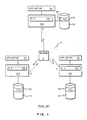
- a distributed networking environment 1 consists of two or more nodes A, B, C, connected through a communication link or a network 3.
- the network 3 can be either a local area network (LAN), or a wide area network (WAN).
- LAN local area network
- WAN wide area network
- TP switched or leased teleprocessing
- SNA systems network architecture
- processing system 10A, 10B, 10C such as a personal computer.
- Each of these processing systems 10A, 10B, 10C may be a single user system or a multi-user system with the ability to use the network 3 to access files located at a remote node.
- the processing system 10A at local node A is able to access the files 5B, 5C at the remote nodes B, C.
- a local buffer 12 in the operating system 11 is used to buffer the data transferred between the permanent storage 2, such as a hard file or a disk in a personal computer, and the user address space 14.
- the local buffer 12 in the operating system 11 is also referred to as a local cache or kernel buffer.
- the kernel buffer 12 is identified by blocks 15 which are designated as device number, and logical block number within the device.
- a read system call 16 is issued, it is issued with a file descriptor of the file 5, and a byte range within the file 5, as shown in step 101, Fig. 3.
- the operating system 11 takes this information and converts it to device number, and logical block numbers in the device, step 102, Fig. 3. Then the operating system 11 reads the cache 12 according to the device number and logical block numbers, step 103.
- Any data read from the disk 2 is kept in the cache block 15 until the cache block 15 is needed. Consequently, any successive read requests from an application 4 that is running on the processing system 10 for the same data previously read is accessed from the cache 12 and not the disk 2. Reading from the cache is less time consuming than going out to the fixed disk 2, accessing the correct disk sectors, and reading from the disk.
- data written from the application 4 is not saved immediately on the disk 2, but is written to the cache 12. This saves disk accesses if another write operation is issued to the same block. Modified data blocks in the cache 12 are saved on the disk 2 periodically.
- the processing system 10C in local node C could read the file 5A from node A.
- the processing system 10C could copy the whole file 5A, and then read it as if it were a local file 5C residing at node C. Reading a file in this way creates a problem if another processing system 10A at another node A modifies the file 5A after the file 5A has been copied at node C as file 5C.
- the processing system 10C would not have access to these latest modifications to the file 5A.
- Another way for processing system 10C to access a file 5A at node A is to read one block N1 at a time as the processing system at node C requires it.
- a problem with this method is that every read has to go across the network communication link 3 to the node A where the file resides. Sending the data for every successive read is time consuming.
- Accessing files across a network presents two competing problems as illustrated above.
- One problem involves the time required to transmit data across the network for successive reads and writes.
- the file integrity may be lost. For example, if one of the several nodes is also writing to the file, the other nodes accessing the file may not be accessing the latest updated file that has just been written. As such, the file integrity is lost since a node may be accessing incorrect and outdated files.
- 1AIX is a trademark of IBM Corporation.
- server will be used to indicate the processing system where the file is permanently stored, and the term “client” will be used to mean any other processing system having processes accessing the file. It is to be understood, however, that the term “server” does not mean a dedicated server as that term is used in some local area network systems.
- the distributed services system in which the invention is implemented is truly a distributed system supporting a wide variety of applications running at different nodes in the system which may access files located anywhere in the system.
- the invention to be described hereinafter was implemented in a version of the UNIX2 operating system but may be used in other operating systems having characteristics similar to the UNIX operating system.
- the UNIX operating system was developed by Bell Telephone Laboratories, Inc., for use on a Digital Equipment Corporation (DEC) minicomputer but has become a popular operating system for a wide range of minicomputers and, more recently, microcomputers.
- DEC Digital Equipment Corporation
- One reason for this popularity is that the UNIX operating system is written in the C programming language, also developed at Bell Telephone Laboratories, rather than in assembly language so that it is not processor specific.
- compilers written for various machines to give them C capability make it possible to transport the UNIX operating system from one machine to another.
- AT&T Bell Labs has licensed a number of parties to use the UNIX operating system, and there are now several versions available.
- the most current version from AT&T is version 5.2.
- Another version known as the Berkeley version of the UNIX operating system was developed by the University of California at Berkeley.
- Microsoft the publisher of the popular MS-DOS and PC-DOS operating systems for personal computers, has a version known under their trademark as XENIX.
- IBM RT PC3 RISC (reduced instruction set computer) Technology Personal Computer)
- IBM Corp. released a new operating system called AIX which is compatible at the application interface level with AT&T'S UNIX operating system, version 5.2, and includes extensions to the UNIX operating system, version 5.2.
- AIX Operating System Technical Reference published by IBM Corp., First Edition (Nov. 1985).
- 3RT and RT PC are trademarks of IBM Corporation.
- the invention is specifically concerned with distributed data processing systems characterized by a plurality of processors interconnected in a network. As actually implemented, the invention runs on a plurality of IBM RT PCs interconnected by IBM's Systems Network Architecture (SNA), and more specifically SNA LU 6.2 Advanced Program to Program Communication (APPC).
- SNA Systems Network Architecture
- a Introduction To Advanced Program-To-Program Communication (APPC) Technical Bulletin by IBM International Systems Centers, July 1983, number GG24-1584-0, and IBM RT PC SNA Access Method Guide and Reference , August 15, 1986, are two documents that further describe SNA LU 6.2.
- SNA uses as its link level Ethernet4 a local area network (LAN) developed by Xerox Corp., or SDLC (synchronous Data Link Control).
- LAN local area network
- SDLC synchronous Data Link Control
- a simplified description of local area networks including the Ethernet local area network may be found in a book by Larry E. Jordan and Bruce Churchill entitled Communications and Networking for the IBM PC , published by Robert J. Brady (a Prentice-Hall company) (1983).
- a more definitive description of communications systems for computers, particularly of SNA and SDLC, is to be found in a book by R. J. Cypser entitled Communications Architecture for Distributed Systems , published by Addison-Wesley (1978). It will, however, be understood that the invention may be implemented using other and different computers than the IBM RT PC interconnected by other networks than the Ethernet local area network or IBM'S SNA.
- 4Ethernet is a trademark of Xerox Corporation.
- each processor at a node in the network potentially may access all the files in the network no matter at which nodes the files may reside.
- the server in a distributed system may be designed to be stateless. This means that the server does not store any information about client nodes, including such information as which client nodes have a server file open, whether client processes have a file open in read_only or read_write modes, or whether a client has locks placed on byte ranges of the file.
- Such an implementation simplifies the design of the server because the server does not have to deal with error recovery situations which may arise when a client fails or goes off-line without properly informing the server that it is releasing its claim on server resources.
- the distributed services system may be characterized as a "statefull implementation".
- a "statefull” server such as that described here, does keep information about who is using its files and how the files are being used. This requires that the server have some way to detect the loss of contact with a client so that accumulated state information about that client can be discarded.
- the cache management strategies described here cannot be implemented unless the server keeps such state information.
- the management of the cache is affected, as described below, by the number of client nodes which have issued requests to open a server file and the read/write modes of those opens.
- the system and method of this invention takes into account three different situations when processing systems are reading and writing to files in a distributed networking environment.
- first situation all reading and writing to a file is performed at a single client node.
- second situation all nodes only read from a file.
- third situation more than one node is performing a read from a file, and at least one node is writing to the file.
- the third situation may also be brought about if the device is open for a write at the server.
- a local client cache exists in every node.
- the client processes executing at the client nodes access the server file via two step caching: the client cache and the server cache.
- Using the client cache efficiently to access a remote file can significantly improve the performance since it can save network traffic and overhead.
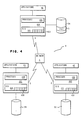
- a local cache 12A, 12B, 12C exists at every node A, B, C. If file 5 permanently resides at node A on disk 2A, node A is referred to as the server. At the server A, use of the cache 12A by local processes 13A executing at the server node A is as that in a stand-alone system as discussed above in the Background Art.
- remote processes 13B, 13C executing at nodes B, C access the file 5 through a two step caching scheme using a server cache and a client cache as shown more clearly in Fig. 5.
- the server node A gets blocks of file 5 from disk 2A and stores it in the server cache 12A.
- Client node B goes out over the network 3 and gets blocks of file 5 from the server cache 12A.
- Client node B stores the blocks of file 5 as it existed in the server cache 12A into the client cache 12B.
- the client cache 12B is accessed instead of going across the network 3 for each access.
- Using the client cache 12B to access a remote file 5 can significantly improve the performance since it can save network traffic and overhead.
- the system and method of this invention manages the use of the client cache 12B and server cache 12A in a distributed environment to achieve high performance while preserving the file access semantics at the application program level. This allows existing programs which run on a stand-alone system to run on a distributed system without any modification.
- the file access semantics preserves a file's integrity as it is being opened by different processes that issue read and write system calls to access and modify the file.
- the file access semantics require that only one I/O operation is allowed on any byte range at a time, and once an I/O operation starts, it cannot be pre-empted by any other I/O operation to the same byte range of the file.
- process 131 issues a write system call to a byte range N1-N2 in file 5
- the write system call can only be executed when the entire byte range N1-N2 is available for access by process 131, and no read operation involving the byte range N1-N2 is being executed.
- all other operations involving the byte range N1-N2 in file 5 are suspended until the write is completed.
- the write is not completed until the bytes are written to the local cache 12A.
- the written data in the cache 12A is visible to any subsequent read operation by any of the other processes 131-13N.
- file access semantics Another requirement of file access semantics is that when a file byte range such as N1-N2, which can be a record or a set of related records accessed by the same I/O operation, is visible to a reading process, the file byte range N1-N2 must always have a consistent set of data reflecting the last update to this range. This range is never available for access while a write operation is being executed. In this way the next read issued by a process will read the data just written and not the old outdated data.
- N1-N2 can be a record or a set of related records accessed by the same I/O operation
- a distributed networking environment of this invention as shown in Fig. 5, the execution of read and write system calls from different application programs 4A, 4B, and processes 131-13N, 231-23N are synchronized such that the file access semantics as discussed above are preserved.
- the system and method of this invention guarantees synchronization by utilizing various cache synchronization (sync) modes.
- the I/O calls are synchronized by either the client B or the server A depending on the location of the processes 131-13N, 231-231N which have the file 5 open for access, and the sync mode.
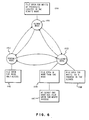
- the three synchronization modes are shown in Fig. 6, and are described with reference to Fig. 4.
- the first mode 141 is referred to as ASYNCH s_mode, or asynchronous mode.
- the file 5 operates in this mode 141 if the file 5 is open for read/write access by processes 13C executing at only one client remote node C, as shown in block 144, Fig. 6. In this mode 141, all of the control is in the client node C. Both the server cache 12A and client cache 12C are used for these read/write operations. A read or write operation requires access to the server cache 12A only if it cannot be satisfied from the client cache 12C. Modified blocks at the client 12C are written to the server 12A by the periodic sync operation, or when the file 5 is closed by all processes 13C in the client node C, or when a block must be written in order to make room for other data being brought into the cache. Additionally modified blocks are written to the server when the file changes from ASYNC s_mode to FULLSYNC s_mode.
- a second mode 142 is READONLY s_mode.
- the READONLY s_mode 142 is used for files 5 that are open for read only access from processes 13C in only one node C, or from processes 13B, 13C in more than one node B, C, as shown in block 145, Fig. 6.
- the server cache 12A and the client caches 12B and/or 12C are used.
- the read request is issued for a block or more at a time. Every other read request from the same client, either B or C, to the specific block does not go to the server 12. Instead, it is read from the respective client cache, either B or C.
- a read operation does not require access to the server 12A if it can be satisfied from the client cache 12C or 12B.
- the file 5 operates in mode 142 if the file 5 is open for read only access by any of the processes 13A, 13B, 13C, in any of the nodes A, B, C.
- a third mode 143 is FULLSYNCH s_mode.
- the FULLSYNC s_mode 143 is used for files 5 open in more than one node A, B, and at least one node has the file 5 open for write access.
- the client cache 12C or 12B is bypassed, and only the server cache 12A is used. All read and write operations are executed at the server 12A.
- the client cache is not used in the FULLSYNC s_mode.
- the client node B accesses the file 5 from the server A over the network 3 for each read and write.
- the read/write response time increases in this mode, the file access semantics are preserved since a client does not retain a file 5 in a local cache that has not been updated along with the corresponding file residing at the server.
- Utilizing the three modes to manage the use of the client cache optimizes overall system performance by combining both an overall average increase in read/write response speed with file integrity. Using a client cache in some situations decreases the read/write response time; while not using a client cache in other situations preserves the file system semantics.
- a file's sync mode is not only dependent on which nodes have the file open, and whether the file is open for read or write, but also on whether the device where the file resides is open in raw access mode.
- Raw access for a device means that a block of data LBN1, Fig. 5, within a device 2A is accessed. In this way, the reads and writes of the device 2A read and write to a block LBN1 of device 2A. It is not relevant to which file the block belongs to.
- the device 2A can be open for raw access from a process 131-13N at the server node A. It cannot be open for raw access from a remote node B, C.
- the server cache 12A is managed as blocks LBN1 of a device 2A, similar to a stand-alone system as described above with reference to Fig. 2.
- the server A looks at the server cache 12A as a logical block LBN1 within a device 2A.
- the client B has no knowledge of where the file 5 resides on the device 2A. All that client B knows is that it accesses a file 5 on block number N1 on device 2A.
- the client cache 12B handles the data as logical blocks N1 of files 5. In the server cache 12A, the data is handled as logical blocks LBN1 of devices 2A.
- the server can guarantee that if data is written to the device as a raw device, and if there is another read of a block of the file that happens to be the same block that was written to the device, then the read would see the newly written data. This preserves the file system semantics.
- the client operating system 11B does not convert the file descriptor and byte range within the file in the system call READ (file descriptor, N1) 16 to the device number and the logical block number in the device.
- the client does convert the file descriptor and byte range to a file handle, node identifier, and logical block number within the file.
- blocks 17 that are designated by file handle, node identifier, and logical block number within the file.
- step 104, Fig 9 When a read 16 is issued from a client application 4B, step 104, Fig 9, the request for the read goes to the operating system 11B with the file descriptor and the byte range within the file. The operating system then looks in the client cache 12B, step 105, Fig. 9. If the file handle, node identifier, and logical block number within the file is there, the cache 12B is read, step 106, Fig. 9. If it isn't there, step 107, Fig. 9, the read is sent to the server, step 108, Fig. 9. The server then takes the file handle and the logical block number within the file and converts it to a device number and logical block in the device, step 109, Fig. 9.
- server cache 12A is managed by device number and block number within the device as it is in a stand-alone system. After the read is sent to the server, it is handled the same as if the read was coming from its own application in a stand-alone system as described above with reference to Fig. 2.
- a closed file does not have a synchronization mode. However, once a file is first opened by a process, the file's sync mode is initialized according to the following as illustrated in Fig. 7.
- the sync mode for a file is initialized to ASYNCH 141 if the device (D) where the file resides is closed 161, i.e., it is not open as a special device, and the file is open for write access at one remote node 162.
- the sync mode for a file is READONLY 142 if the device where the file resides is closed, and the file is open for read only access in one or more nodes 163, or both the device and the file are open for read only access 164.
- the sync mode for a file is initialized to FULLSYNCH 143 if the device where the file resides is open as a block special device for read/write access 165, or the file is opened in more than one node and at least one of the opens is for writing.
- a block special device means that there is a raw access to the device.
- the sync mode changes to FULLSYNC 143 as shown via line 172, Fig. 6. Also, if there is an open of the block special device D where the file resides, 182, the sync mode will change from ASYNC 141 to FULLSYNC 143.
- a close operation for the file if the close operation is not the last close of the file, and the file is still open for write, there is no mode change. However, if the close operation is the last close of the file for write access such that all the remaining opens are for read access, 183, then the new mode becomes READONLY 142 as shown via line 174. If the close operation is the last close of the file, then there is no sync mode.
- the new sync mode is ASYNC 141 if all the opens are in one client node, 184 as shown via line 173. Otherwise, the sync mode is FULLSYNC. Furthermore, if the device where the file resides is open for read/write access, 187, the new sync mode for the file is FULLSYNC mode 143. For a close operation, if the close is the last close of the file, there is no sync mode for the file. If the file is still open at one or more nodes after a close operation, there is no change to the sync mode.
- the sync mode is changed from FULLSYNC 143 to READONLY 142 if the block special device where the file resides is not open, and the file is open for read only access at one or more nodes as shown by block 189 on line 175, or if the block special device where the file resides is open for read only access and the file is open for read only access as shown in block 190 on line 175.
- the server determines the sync mode of an open file when executing any operation that may change the mode.
- the server also performs the change of the synchronization modes. As the server gets new opens or closes for the file, a change in synchronization modes for the file may be triggered. If the required sync mode is not the current one, the server sends a "change sync mode" remote procedure call (rpc) to all the clients with the file open.
- rpc remote procedure call
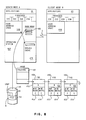
- the client that opened the file is informed of the mode of the file. If the mode is either ASYNC or READONLY, the client can start using the client cache for reads, and also for writes if the mode is ASYNC, as shown in Fig. 5. The client does not have to read or write over the communications link to the server. If the mode is FULLSYNC as shown in Fig. 8, the client cache is not used, and the client must send the read or write over the communications link 3 to the server.
- the server A always sets the mode 151 of the file 5.
- the mode of the file is the same at every node that has the file open.
- the server A also knows which nodes have the file open, and whether the opens are for reads, or writes.
- the server A doesn't have to know which processes 131-13N, 231-23N within a node have a file open.
- the server keeps all the above information in a file access structure list 150.
- Each element of the file access structure list 150 contains a node which has the file open 152, the number of opens for read 153 in the node, and the number of opens for write 154 in the node.
- a file is in ASYNC mode, then only one client node has the file open, and the cache at this client may contain blocks which have been modified but which have not been written to the server.
- the client cache may also contain blocks which have been read from the server but which have not been modified.
- the file is in READONLY sync mode, then many clients may have the file open, and the caches in each of these clients may contain blocks which have been read from the server. The client caches may not, however, contain any modified blocks.
- the server When a file changes sync mode from READONLY to FULLSYNC, the server notifies each client of the change. Each client then discards any of the file's blocks from its cache.
- the following disclosure describes solutions to problems which are encountered when creating a distributed file system in which the logic that manages a machine's files is altered to allow files that physically reside in several different machines to appear to be part of the local machine's file system.
- the implementation described is an extension of the file system of the AIXTM operating system. Reference should be made to the above-referenced Technical Reference for more information on this operating system. Specific knowledge of the following AIXTM file system concepts is assumed: tree structured file systems; directories; and file system organization, including inodes.
- file is used to indicate such a non-directory file.
- file may mean either a directory file or a simple file, and, of course, the term “directory” means a directory file.
- a directory may contain other directories, which, in turn, may contain other directories or simple files.
- a directory may be viewed as the root of a subtree which may include many levels of descendant directories, with the leaves of the tree being "simple files".
- the term "descendants” means all of the files which exist in the file tree below a particular directory, even those which can be reached only by going through other directories.
- the "immediate descendants" of a directory are only those files (simple files or directories) whose names appear in the directory.
- the file trees which reside on individual file systems are the building blocks from which a node's aggregate file tree is built.
- a particular device e.g., hard file partition
- the file tree which resides on another device can be added to the node's file tree by performing a mount operation.
- the two principal parameters to the mount operation are (1) the name of the device which holds the file tree to be mounted and (2) the path to the directory upon which the device's file tree is to be mounted.
- This directory must already be part of the node's file tree; i.e., it must be a directory in the root file system, or it must be a directory in a file system which has already been added (via a mount operation) to the node's file tree.
- a mount operation proceeds as follows:
- the path following in the node's aggregate file tree consists of (a) following the path in a device file tree until encountering an inode which has been mounted over (or, of course, the end of the path); (b) once a mount point is encountered, using the mount data structure to determine which device is next in the path; and (c) begin following the path at inode 2 (the root inode) in the device indicated in the mount structure.
- the mount data structures are volatile; they are not recorded on disk.
- the list of desired mounts must be re-issued each time the machine is powered up as part of the Initial Program Load (IPL).
- IPL Initial Program Load
- the preceding discussion describes how traditional UNIX operating systems use mounts of entire file systems to create file trees and how paths are followed in such a file tree. Such an implementation is restricted to mounting the entire file system which resides on a device.
- the virtual file system concept described herein and in the reference material allows (1) mounting a portion of the file system which resides on a device by allowing the mounting of files (directories or simple files) in addition to allowing mounting of devices, and (2) mounting either remote or local directories over directories which are already part of the file tree.
- the invention described herein is an enhancement to the virtual file system concept which further allows the mounting of simple files (remote or local) over simple files which are already part of the file tree.
- a node's virtual file system allows access to both local and remote files.
- the management of local files is a simpler problem than management of remote files. For this reason, the discussion of the virtual file system is broken into two parts. The first part describes only local operations. This part provides a base from which to discuss remote operations. The same data structures and operations are used for both remote and local operations. The discussion on local operations describes those aspects of the data and procedures which are relevant to stand-alone operations. The discussion on remote operations adds information pertinent to remote operations without, however, reiterating what was discussed in the local operations section.
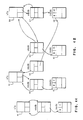
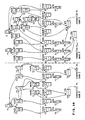
- Figure 10 shows the relationship that exists among the data structures of the virtual file system. Every mount operation creates a new virtual file system (vfs) data structure.
- the essential elements in this structure are (a) a pointer to the root vnode (virtual node) of this virtual file system (e.g., the arrow from block 2l to block 23), and (b) a pointer to the vnode which was mounted over when this virtual file system was created (e.g., the arrow from block 25 to block 24).
- the AIX operating system in common with other UNIX operating systems, keeps a memory resident table which contains information about each inode that is being used by the system. For instance, when a file is opened, its inode is read from the disk and a subset of this inode information, together with some additional information, is stored in the inode table.
- the essential elements of an inode table entry are (a) a pointer to the head of a file access structure list and (b) information from the disk inode, the details of which are not relevant here.
- the file access structure records information about which nodes have the file open, and about the modes (read only or read_write) of these opens. There is a separate file access structure for each node which has the file open. This state information enables the server to know how each client is using the server file.
- the file system supports a set of operations which may be performed on it.
- a process interacts with a file system by performing a file system operation as follows:
- vn_operations The operations which can be performed on a file system are referred to as "vn_operations” or “vn_ops”. There are several vn_ops, but the ones which are important to this discussion are described below:
- the essential iterative step in following a path in a file system is to locate the name of a path component in a directory and use the associated inode number to locate the next file in the chain.
- the pseudo code for the vn_ lookup operation on a local file is listed below:
- the lookuppn operation is the function which follows paths. Its input is a path (e.g., "/dir1/dir2/file"), and its return is a pointer to the vnode which represents the file. Lookuppn calls vn_lookup to read one directory, then it checks to see if the vnode returned by vn_ lookup has been mounted over. If the vnode is not mounted over, then lookuppn calls vn_lookup in the same file system. If the vnode has been mounted over, then lookuppn follows the pointer from the mounted over vnode (e.g., block 24 in Figure 10) to the vfs of the mounted file system (e.g., block 25 in Figure 10).
- vnode e.g., block 24 in Figure 10
- vfs From the vfs, it follows the pointer to the root vnode (e.g., block 26 in Figure 10) and, if the vnode is a directory and not a simple file, issues a new vn_lookup giving as input the vfs's root vnode and the name which constitutes the next element in the path.
- the pseudo code for the lookuppn function is listed below:
- the code which implements the system call calls lookuppn to follow the path.
- Lookuppn starts at the root vnode (block 23) of the root virtual file system (block 2l) and calls vn_lookup to look up the name "u" in the directory file represented by this vnode.
- Vn_lookup finds in the directory that the name "u” is associated with inode 15 in block 31.
- Vn_lookup must return a pointer to a vnode associated with inode 15. To do this it first brings inode 15 into the inode table.
- Vn_lookup finds the vnode (block 24) in the root vfs (block 21) and returns a pointer to the vnode. Lookuppn discovers that the returned vnode is mounted over in the parent vfs. It follows the "mounted over" pointer from the vnode (block 24) to the mounted vfs (block 25).
- Lookuppn follows the "root vnode” pointer to the root vnode block 26) of the new dfs (block 25). Lookuppn now calls vn_lookup again, this time inputting a pointer to the root vnode (block 26) and name "dept54". As before, vn_lookup reads the directory, finds the inode associated with the name, finds or creates a vnode for this inode in the parent vfs (block 25) and returns a pointer to this vnode. Lookuppn calls vn_lookup once more inputting the vnode for the just found directory and the name "status".
- Vn_lookup reads the directory, finds the inode associated with the name (block 34), finds or creates a vnode (block 28) for this inode in the parent vfs (block 25) and returns a pointer to this vnode.
- the code which implements the system call now performs the requested operation on the file.
- the code which implements the mount system call performs the following operations.
- Lookuppn is called to follow the path to the file which is to be mounted over -- "/etc/foo".
- the root vfs (block 41) contains a vnode for "/etc/foo" (block 44) which has a pointer to the root vfs (block 41) and pointer to an inode table entry (block 45) for inode 75.
- Lookuppn is called to follow a path to the file which is to be mounted -- "/etc/gorp".
- the root vfs (block 41) contains a vnode for "/etc/gorp" (block 49) which has a pointer to the root vfs (block 41) and a pointer to an inode table entry (block 48) for inode 92.
- the mount logic creates the new virtual file system by first creating a new vfs (block 46) and then creating a root vnode for this vfs (block 47) with a pointer back to its parent vfs (block 46) and a pointer to the root inode (inode 92, block 48) of the vfs.
- a "mounted over" pointer is installed in the covered vnode (block 44) in the root vfs (block 41), and a pointer to the vnode upon which it is mounted (block 44) is installed in the new vfs.
- FIG. 4 shows a distributed system similar to that shown in Figure 1 in which the operating system which supports the present invention has been implemented.
- server is used to indicate the node where a file is permanently stored
- client is used to mean any other node having processes accessing the file. It is to be understood, however, that the term “server” does not mean a dedicated server as that term is used in some local area network systems.
- the distributed services system in which the invention is implemented is a truly distributed system supporting a wide variety of applications running at different nodes in the system which may access files located anywhere in the system.
- a client node may have access to files which reside in a remote server node. Such a client gains access to a server's files by mounting one of the server's files.
- the data structures created by a remote mount operation compare to those created by mounting a local entity in the following ways: Just as in the local case, a remote mount creates a vfs in the client node (e.g., block 54).
- vnode structure in the client node (e.g., block 57).
- the vnode structure has a pointer to a inode table entry (e.g., block 63).
- the inode table entry does not contain the inode information from the remote file. Instead, the inode table entry contains a surrogate inode. This surrogate inode stands for, or represents, the remote inode.
- each server has a "dummy vfs" (e.g., block 71) to provide a vfs to hold files open by remote clients.
- the dummy vfs is not a part of the server's file tree.
- vnode e.g., block 74
- Each file which is open by a remote node has an inode table entry in the server's inode table (e.g., block 85).
- This inode table entry is the same as that which exists because a local process at the server has a file open.
- block 84 which is in the table because of a remote open, has the same structure as block 88, which is in the table because of an operation at the server.
- a client and server When a client and server communicate about a server file, they need a way to identify the file. This is done with a file handle.
- a client request causes the server to reply with a designation of a particular file (e.g., a remote lookup request)
- the file is identified by a file handle.
- a client request carries a designation of a particular file (e.g., a remote open request)
- the file is identified by a file handle.
- the file handle contains the following fields: device number, inode number, and inode generation number.
- the need for a file handle is illustrated by the following scenario.
- a client makes a request of a server and gets a file handle in reply.
- the client stores and remembers the file handle.
- Some activity at the server causes the file to be deleted and the inode slot reused for another file.
- the client makes a request of the server using the stored file handle.
- the server receives the file handle and performs the operation on the new file. This would be an unacceptable operation.
- the inode generation number is stored on disk as a field in the inode.
- the server deletes a file, it increments the inode generation number. If a request arrives at a server, the file handle is broken apart, the device number and inode number are used to locate the inode, and then the file handle inode generation number is compared to the inode's inode generation number. If they are different, then the request is rejected.
- Each node contains a node table.
- a node uses entries in its node table (e.g., block 70) to record information about existing connections to remote nodes.
- dfs_ops There are a limited number of operations that one node in the network can request another node to perform on its behalf. These operations are called dfs_ops.
- dfs_ops When a node makes a request of another node, the following operations occur: First, the requesting node sends a message which specifies which dfs_operation is being requested and carries the parameters appropriate to that request. Next, the receiving node receives the request and performs the specified operation. Finally, the receiving node sends a message which carries the reply parameters appropriate for the dfs_operation.
- vn_ops that are issued within a local node to a file system
- dfs_ops that are issued over the network.
- a typical operation on a remote file is as follows: First, a local kernel issues a vn_op, not knowing whether the file being operated on is remote or local. Second, since the file resides in a remote node, the file system implementation code sends the corresponding dfs_op to the node which holds the file. Note that if the file had been a local file, the operation would have been performed, the return parameters would have been returned, and the task would have been complete.
- the node which holds the file receives the dfs_operation request and requests its local file system to perform the corresponding vn_operation.
- the return parameters from this vn_op are used to construct the return parameters for the dfs_op.
- the requesting node receives the dfs_op reply from the server node and uses the dfs_op return parameters to construct the return parameters to the original vn_operation request.
- the code which implements the mount system calls lookuppn to follow the path to the file which is to be mounted over - "/etc/foo".
- the root vfs (block 51) contains a vnode for "/etc/foo" (block 53) which has a pointer to the root vfs (block 51) and a pointer to an inode table entry (block 61) for inode 75. Since the file being mounted resides in a remote node, a dfs_mount request is issued to the server node, passing the path "/u/gorp" as the path to the object to be mounted.
- the server node Upon receiving the dfs_mount request, the server node calls lookuppn to follow the path to the file which is to be mounted - "/u/gorp".
- the server's root vfs (block 71) contains a vnode for "/u/gorp" which has a pointer to the root vfs and pointer to an inode table entry for inode 92.
- the server uses the information in the inode (device 0, inode 92) to construct a file handle for the file "/u/gorp".
- the server returns this file handle in the reply to the dfs_mount request and then releases the vnode and inode.
- the client receives the file handle in the reply to the dfs_mount request and performs the operations necessary to create the new virtual file system as follows:
- a client process issues a system call to operate on the file "/etc/foo/file2".
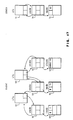
- the block numbers in the following scenario refer to Figure 17, which represents initial conditions, and Figure 18, which represents the system state after the open operation.
- the code which implements the system call calls lookuppn to follow the path. Lookuppn starts at the root vnode (block 52) of the root virtual file system (block 51) and calls vn_lookup to look up the name "u" in the directory file represented by this vnode. Vn_lookup finds in the directory that the name "u" is associated with inode 15.
- Vn_lookup constructs a vnode and inode in the root virtual file system for inode 15 and returns to lookuppn a pointer to this vnode.
- Lookuppn calls vn_lookup again, this time to look up the name "foo" in the directory identified by inode 15.
- Vn_lookup reads the indicated directory and discovers that the name "foo” is associated with inode 75 in block 61.
- vn_lookup returns a pointer to this vnode.
- Lookuppn discovers that the vnode is mounted over (the "mounted over” pointer in block 53 points to block 54). Lookuppn thus follows the “mounted over” pointer to the next vfs (block 54) and follows its root vnode pointer to the root vnode (block 55) of the virtual file system. Lookuppn now calls vn_lookup for the next element ("file2") of the path giving vn_lookup a pointer to block 55 and the name "file2".
- file2 next element
- the directory to be searched resides in a remote node and is identified by the file handle stored in the client surrogate inode (block 62).
- Vn_lookup issues a dfs_lookup to the server which holds the file, sending the file handle which identifies the directory and the name ("file2") which is to be looked up.
- the server uses the file handle to identify the directory to be read and issues a vn_lookup to search for the name "file2" in this directory.
- Vn_lookup reads the directory and discovers that the inode number associated with the name "file2" is 67.
- Vn_lookup constructs a vnode and inode in the dummy virtual file system for inode 67 and returns to lookuppn a pointer to this vnode.
- Dfs_lookup uses the information in data structures returned by vn_lookup to construct a file handle for the file identified by inode 67. It returns this file handle to the client, as the reply to the dfs_lookup request, and releases the vnode and inode.
- a vnode (block 55) and surrogate inode (block 63) are created for the found file. Since "file2" is the last piece of the path, lookuppn returns to its caller a pointer to the found vnode (block 55). The code which implements the system call now performs the requested operation on the file.
- This open may, or may not, change the file's cache sync mode.
- the flow of the open operation depends on what, if any, cache sync mode transition must be performed.
- the following scenarios trace the open operation for two interesting sync mode changes: 1) from ASYNC sync mode to FULLSYNC, and 2) from READONLY to FULLSYNC.
- the file access structure lock fas_lock is used to synchronize the use of the inodes and surrogate inodes (s_inode) for open files in a distributed file system (DFS).
- the synchronization is performed to avoid a deadlock situation which can occur if an inode and the s_inodes are locked.
- the file access structure lock is described in the following commonly assigned and co-pending patent application S.N. 06/ , filed by Johnson et al for Distributed File Access Structure Lock (IBM Docket AT9-86-075) which is hereby incorporated by reference.
- execution of system calls that require access to a file F are serialized by locking the inode for F during the entire execution time of any system call for that file.
- DFS if file F is open at a remote node C, a s_inode is created at node C to represent file F.
- two resources are involved: the inode for the specific file at the server node where the file resides, and the s_inode at the client node where the file is open.
- the s_inode for file F is locked during the execution time for each call. If an access to the server is required to read a block of data not available in the client cache, the inode for file F is also locked.
- Locking the inode for file F in the server and the s_inode for file F in the client for the entire execution time of each system call can lead to a deadlock situation if the order in which the two resources are acquired is not always carried out in the same order.
- the s_inode is locked first and then the server is accessed via a remote procedure call (RPC) and the inode is locked.
- RPC remote procedure call
- the server may lock the inode and then send a RPC to the client which requires the locking of the s_inode.
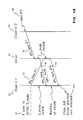
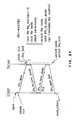
- a deadlock can occur in any one of the following situations in which two operations are currently executing O1 and O2, as shown in Fig. 20, where O1 is a read operation, and O2 is an open operation:
- file F at 10 is open in ASYNC mode by only one process in client node C-1 at 20. Two operations are in progress: a close operation from C-1 at 20 and an open operation at 60 for the same file F at label 10 from another client C-2 at label 40.
- the close operation from C-1 at label 20 will lock the s_inode (which has a use count of 1) and sends a "dfs_close” RPC at label 50 to the server at label 30.
- the open operation from C-2 at label 40 sends a "dfs_open” RPC at label 70 to the server at label 30.
- This RPC arrives at the server and executes before the "dfs_close” RPC at label 50 from C-1 at label 20.
- the s_mode for file F is ASYNC, so the server unlocks the inode and sends a "dfs_chng_sync_mode" RPC at label 80 to C-1 at label 20 requesting that file F at label 10 be changed to FULLSYNC s_mode.
- This RPC will arrive at C-1 at label 20 and wait for the s_node to be unlocked.
- the "dfs_close” RPC at label 50 arrives at the server. Since the inode for file F at label 10 is not locked at the server, the close operation executes at the server and a "dfs_close_ack" RPC at label 90 is sent to C-1 at label 20.
- the "dfs_close_ack” RPC at label 90 arrives at C-1 at label 20
- the use count on the s_inode is decremented and since the use count's value is zero, the s_inode is released at label 100. This leaves no s_inode for the sync mode change to be applied to in C-1 in label 20.
- a solution to this problem is to have the sync mode change procedure increment the use count of the s_inode before waiting on it.
- this approach raises more management headaches for the file management system, since at this time file F is not open at C-1 and its s_mode is not FULLSYNC.
- a better approach is to introduce a new lock, the file access structure lock (fas_lock) to serialize operations which accesses or changes the access list to a file.
- Use of the fas_lock will eliminate the inode from being a critical resource.
- the two critical resources will be the s_inode in the client node and the fas_lock at the server. To prevent a deadlock, any operation executing at a client node which requires holding the fas_lock should unlock the s_inode before a RPC is sent to the server.
- vn_ops execution is discussed below and shown in Fig. 21.
- the operation (an open) is executed at a client node and locks the s_inode as usual if any local processing is necessary. If one of the above listed RPCS (dfs_open) is sent to the server, then the s_inode is unlocked before the RPC is sent. In the server, the RPC request will lock the fas_lock or wait on it if it is busy, then it will lock the inode for a file F. If it is a local server operation, the executing process will acquire the fas_lock and then lock the inode.
- a DFS_CHNG_SYNC_MODE or a DFS_GET_ATTR RPC is sent from a server to a client, then the inode is unlocked before sending the RPC.
- the server can accept read and write operations after the RPC is sent.
- the server locks the inode to finish any remaining local processing. If the operation was initiated at a client node, an acknowledgement is sent to that client. The inode is then unlocked and the fas_lock is released.
- the fas_lock provides the means to synchronize the inode use and avoid deadlock operations.
- the fas_lock synchronizes the access to the file access structure list containing information about the nodes that have the file open.
- the fas_lock is locked when a process opens or closes a file, or when the file access structure list is being interrogated.
- the fas_lock is also locked during a write operation when the file is in FULLSYNC mode.
- the inode lock synchronizes access to the data in the file at the server.
- the inode lock is locked during a read or write operation to the file in the server.
- the inode lock is unlocked before the server sends a remote procedure call to the client, if the remote procedure call requires a lock on the s_inode lock.
- the s_inode lock synchronizes the file access within a client process.
- the s_inode is locked if an operation at the client is accessing the file.
- the s_inode is unlocked if the operation at the client locks the fas_lock.
- the s_inode is also unlocked before a remote procedure call is sent from the client to the server.
- the inode lock is unlocked before the server originates a remote procedure call to the client. This allows the fas_lock and s_inode lock to be locked. The locks are unlocked in the reverse sequence that they became locked.
Landscapes
- Engineering & Computer Science (AREA)
- Theoretical Computer Science (AREA)
- Physics & Mathematics (AREA)
- General Engineering & Computer Science (AREA)
- General Physics & Mathematics (AREA)
- Data Mining & Analysis (AREA)
- Databases & Information Systems (AREA)
- Mathematical Physics (AREA)
- Information Retrieval, Db Structures And Fs Structures Therefor (AREA)
- Memory System Of A Hierarchy Structure (AREA)
- Small-Scale Networks (AREA)
Applications Claiming Priority (2)
| Application Number | Priority Date | Filing Date | Title |
|---|---|---|---|
| US14897 | 1987-02-13 | ||
| US07/014,897 US4887204A (en) | 1987-02-13 | 1987-02-13 | System and method for accessing remote files in a distributed networking environment |
Publications (3)
| Publication Number | Publication Date |
|---|---|
| EP0278315A2 true EP0278315A2 (fr) | 1988-08-17 |
| EP0278315A3 EP0278315A3 (en) | 1990-09-19 |
| EP0278315B1 EP0278315B1 (fr) | 1996-05-08 |
Family
ID=21768435
Family Applications (1)
| Application Number | Title | Priority Date | Filing Date |
|---|---|---|---|
| EP88101089A Expired - Lifetime EP0278315B1 (fr) | 1987-02-13 | 1988-01-26 | Système et méthode pour accéder à des fichiers à distance dans un réseau distribué |
Country Status (5)
| Country | Link |
|---|---|
| US (1) | US4887204A (fr) |
| EP (1) | EP0278315B1 (fr) |
| JP (1) | JPS63200244A (fr) |
| BR (1) | BR8800632A (fr) |
| DE (1) | DE3855260T2 (fr) |
Cited By (13)
| Publication number | Priority date | Publication date | Assignee | Title |
|---|---|---|---|---|
| WO1991003024A1 (fr) * | 1989-08-14 | 1991-03-07 | Microsoft Corporation | Procede et systeme de verrouillage opportuniste dans un systeme informatique en reseau |
| WO1991003026A1 (fr) * | 1989-08-14 | 1991-03-07 | Microsoft Corporation | Procede et systeme de mise en antememoire de fichiers ouverts dans un systeme de reseau d'ordinateur |
| EP0398496A3 (fr) * | 1989-05-15 | 1991-11-06 | International Business Machines Corporation | Méthode et système pour la commande efficace de données de cache dans un système de traitement de données distribué |
| EP0533447A3 (en) * | 1991-09-20 | 1993-07-21 | Kendall Square Research Corporation | Digital data processor with improved paging |
| WO1996024102A1 (fr) * | 1995-02-03 | 1996-08-08 | Dex Information Systems | Procede et appareil concernant une architecture physique de memorisation en environnement de fichiers partages |
| WO1997038380A1 (fr) * | 1996-04-10 | 1997-10-16 | Enfish Technology, Inc. | Procede et dispositif pour architecture de stockage physique destinee a un environnement a dossiers partages |
| US5745888A (en) * | 1995-10-27 | 1998-04-28 | Ncr Corporation | Advanced file server apparatus and method |
| US5761413A (en) * | 1987-12-22 | 1998-06-02 | Sun Microsystems, Inc. | Fault containment system for multiprocessor with shared memory |
| WO2000025235A1 (fr) * | 1996-04-10 | 2000-05-04 | Enfish Technology | Procede et appareil pour une architecture de mise en memoire physique a systeme ameliore de mise en memoire et d'extraction des informations pour un environnement a fichiers communs |
| US6088758A (en) * | 1991-09-20 | 2000-07-11 | Sun Microsystems, Inc. | Method and apparatus for distributing data in a digital data processor with distributed memory |
| EP1282043A3 (fr) * | 2001-02-09 | 2004-06-23 | AT&T Corp. | Système de gestion de base de données comprenant un arrangement d'antémémoires à plusieurs nivaux |
| EP0901655A4 (fr) * | 1996-03-14 | 2012-07-04 | Nortel Networks Ltd | Systemes et procedes d'execution de programmes d'application a partir d'une memoire reliee a un serveur |
| US9753848B2 (en) | 2002-11-01 | 2017-09-05 | Hitachi Data Systems Engineering UK Limited | Apparatus for managing a plurality of root nodes for file systems |
Families Citing this family (262)
| Publication number | Priority date | Publication date | Assignee | Title |
|---|---|---|---|---|
| US5202971A (en) * | 1987-02-13 | 1993-04-13 | International Business Machines Corporation | System for file and record locking between nodes in a distributed data processing environment maintaining one copy of each file lock |
| JP3023425B2 (ja) * | 1987-10-09 | 2000-03-21 | 株式会社日立製作所 | データ処理装置 |
| JPH01108675A (ja) * | 1987-10-21 | 1989-04-25 | Hitachi Ltd | 電子伝票処理システム |
| JPH0776939B2 (ja) * | 1988-03-16 | 1995-08-16 | 富士ゼロックス株式会社 | 通信ネットワークシステム |
| US7072849B1 (en) * | 1988-07-15 | 2006-07-04 | International Business Machines Corporation | Method for presenting advertising in an interactive service |
| CA1337132C (fr) * | 1988-07-15 | 1995-09-26 | Robert Filepp | Systeme de reception pour reseau informatique interatif et sa methode de fonctionnement |
| JPH0293836A (ja) * | 1988-09-30 | 1990-04-04 | Toshiba Corp | 分散型データベース管理装置 |
| JP2595332B2 (ja) * | 1988-11-02 | 1997-04-02 | 三菱電機株式会社 | ネットワーク・システムのデータ転送方式 |
| JPH02165241A (ja) * | 1988-12-19 | 1990-06-26 | Toshiba Corp | ファイルアクセス方式 |
| CA1323448C (fr) * | 1989-02-24 | 1993-10-19 | Terrence C. Miller | Structure de fichiers transparente et methode et appareil correspondants |
| US5226159A (en) * | 1989-05-15 | 1993-07-06 | International Business Machines Corporation | File lock management in a distributed data processing system |
| KR920008461B1 (ko) * | 1989-05-15 | 1992-09-30 | 인터내셔널 비지네스 머신즈 코포레이션 | 프로세스 인터럽팅 시스템 및 그 방법 |
| US5305440A (en) * | 1989-05-15 | 1994-04-19 | International Business Machines Corporation | File extension by clients in a distributed data processing system |
| US5113519A (en) * | 1989-05-15 | 1992-05-12 | International Business Machines Corporation | Maintenance of file attributes in a distributed data processing system |
| US5206934A (en) * | 1989-08-15 | 1993-04-27 | Group Technologies, Inc. | Method and apparatus for interactive computer conferencing |
| WO1991004540A1 (fr) * | 1989-09-08 | 1991-04-04 | Auspex Systems, Inc. | Architecture d'un systeme d'exploitation comprenant plusieurs unites de traitement |
| US5163131A (en) * | 1989-09-08 | 1992-11-10 | Auspex Systems, Inc. | Parallel i/o network file server architecture |
| DE69031164T2 (de) * | 1989-09-14 | 1998-01-02 | Fujitsu Ltd | Zeitlich begrenztes zentrumsystem für dezentralisiertes datenbanksystem |
| JPH03163637A (ja) * | 1989-11-21 | 1991-07-15 | Nec Corp | ファイルシステムの仮想ノードへの位置付けによるアクセス方式 |
| US5218695A (en) * | 1990-02-05 | 1993-06-08 | Epoch Systems, Inc. | File server system having high-speed write execution |
| DE69130197T2 (de) * | 1990-03-05 | 1999-02-11 | Fujitsu Ltd., Kawasaki, Kanagawa | Datenverarbeitungssystem zur nachrichtenübertragung |
| US5218697A (en) * | 1990-04-18 | 1993-06-08 | Microsoft Corporation | Method and system for networking computers having varying file architectures |
| FR2662831B1 (fr) * | 1990-05-29 | 1992-08-07 | Cit Alcatel | Procede de gestion d'un reseau de bases de donnees. |
| JPH0448350A (ja) * | 1990-06-18 | 1992-02-18 | Toshiba Corp | データベース管理システム |
| CA2019327C (fr) * | 1990-06-19 | 2000-02-29 | Peter K.L. Shum | Fonction de consultation pour utilisateur de systeme de traitement de donnees |
| JPH0492943A (ja) * | 1990-08-06 | 1992-03-25 | Toshiba Corp | 高速lanのディスクサーバ |
| AU628753B2 (en) * | 1990-08-14 | 1992-09-17 | Digital Equipment Corporation | Method and apparatus for implementing server functions in a distributed heterogeneous environment |
| AU628264B2 (en) * | 1990-08-14 | 1992-09-10 | Oracle International Corporation | Methods and apparatus for providing a client interface to an object-oriented invocation of an application |
| AU639802B2 (en) * | 1990-08-14 | 1993-08-05 | Oracle International Corporation | Methods and apparatus for providing dynamic invocation of applications in a distributed heterogeneous environment |
| US5151990A (en) * | 1990-08-28 | 1992-09-29 | International Business Machines Corporation | Nonvolatile memory management in a data processing network |
| US5287453A (en) * | 1990-09-18 | 1994-02-15 | Bull Hn Information Systems, Inc. | Fast remote file access facility for distributing file access requests in a closely coupled computer system |
| US5673394A (en) * | 1990-10-31 | 1997-09-30 | Microsoft Corporation | Method of sharing memory between an operating system and an application program |
| US5301286A (en) * | 1991-01-02 | 1994-04-05 | At&T Bell Laboratories | Memory archiving indexing arrangement |
| US5247664A (en) * | 1991-03-28 | 1993-09-21 | Amoco Corporation | Fault-tolerant distributed database system and method for the management of correctable subtransaction faults by the global transaction source node |
| US5261094A (en) * | 1991-04-08 | 1993-11-09 | International Business Machines Corporation | Asynchronous replication of data changes by distributed update requests |
| DE69209364T2 (de) * | 1991-05-22 | 1996-10-10 | Philips Electronics Nv | Verteiltes Mehrknoten-Datenverarbeitungssystem zur Verwendung in einem Oberflächenfahrzeug |
| JP3116443B2 (ja) * | 1991-08-30 | 2000-12-11 | ソニー株式会社 | ソケット通信ログ蓄積装置 |
| US5371872A (en) * | 1991-10-28 | 1994-12-06 | International Business Machines Corporation | Method and apparatus for controlling operation of a cache memory during an interrupt |
| WO1993019423A1 (fr) * | 1992-03-18 | 1993-09-30 | Intersoft Systems, Inc. | Systeme d'interface de collecte de donnees |
| US5287507A (en) * | 1992-03-27 | 1994-02-15 | Sun Microsystems, Inc. | Method and apparatus for portable object handles that use local caches |
| US5341499A (en) * | 1992-04-02 | 1994-08-23 | International Business Machines Corporation | Method and apparatus for processing multiple file system server requests in a data processing network |
| US5528490A (en) * | 1992-04-10 | 1996-06-18 | Charles E. Hill & Associates, Inc. | Electronic catalog system and method |
| US6026452A (en) * | 1997-02-26 | 2000-02-15 | Pitts; William Michael | Network distributed site cache RAM claimed as up/down stream request/reply channel for storing anticipated data and meta data |
| US5805897A (en) * | 1992-07-31 | 1998-09-08 | International Business Machines Corporation | System and method for remote software configuration and distribution |
| US5519833A (en) * | 1992-08-13 | 1996-05-21 | Computervision Corporation | Distributed data processing system providing a distributed stream software environment to enable application on a first system to use driver on a second system |
| US5627996A (en) * | 1992-08-19 | 1997-05-06 | At&T | Method and apparatus for accessing the same computer file using different file name formats |
| US5307490A (en) * | 1992-08-28 | 1994-04-26 | Tandem Computers, Inc. | Method and system for implementing remote procedure calls in a distributed computer system |
| JP3503957B2 (ja) * | 1992-11-25 | 2004-03-08 | 富士通株式会社 | 遠隔データベースの制御方法及び装置 |
| US5544320A (en) * | 1993-01-08 | 1996-08-06 | Konrad; Allan M. | Remote information service access system based on a client-server-service model |
| DE69434311D1 (de) * | 1993-02-01 | 2005-04-28 | Sun Microsystems Inc | Archivierungsdateiensystem für datenanbieter in einer verteilten netzwerkumgebung |
| US5493728A (en) * | 1993-02-19 | 1996-02-20 | Borland International, Inc. | System and methods for optimized access in a multi-user environment |
| US5737536A (en) * | 1993-02-19 | 1998-04-07 | Borland International, Inc. | System and methods for optimized access in a multi-user environment |
| US5548724A (en) * | 1993-03-22 | 1996-08-20 | Hitachi, Ltd. | File server system and file access control method of the same |
| US7174352B2 (en) | 1993-06-03 | 2007-02-06 | Network Appliance, Inc. | File system image transfer |
| US6138126A (en) | 1995-05-31 | 2000-10-24 | Network Appliance, Inc. | Method for allocating files in a file system integrated with a raid disk sub-system |
| US6604118B2 (en) | 1998-07-31 | 2003-08-05 | Network Appliance, Inc. | File system image transfer |
| JP3751018B2 (ja) * | 1993-06-03 | 2006-03-01 | ネットワーク・アプライアンス・インコーポレイテッド | ライトエニウエアファイルシステムレイアウト |
| EP0701716B1 (fr) * | 1993-06-03 | 2002-08-14 | Network Appliance, Inc. | Procédé et système de fichiers pour l'attribution de blocs de fichier à un espace mémoire dans un système disques RAID |
| EP0701715A4 (fr) * | 1993-06-04 | 1999-11-17 | Network Appliance Corp | Procede permettant d'assurer la parite dans un sous-systeme raid au moyen d'une memoire remanente |
| US5699518A (en) * | 1993-11-29 | 1997-12-16 | Microsoft Corporation | System for selectively setting a server node, evaluating to determine server node for executing server code, and downloading server code prior to executing if necessary |
| US5701462A (en) * | 1993-12-29 | 1997-12-23 | Microsoft Corporation | Distributed file system providing a unified name space with efficient name resolution |
| US5588147A (en) * | 1994-01-14 | 1996-12-24 | Microsoft Corporation | Replication facility |
| US6119151A (en) * | 1994-03-07 | 2000-09-12 | International Business Machines Corp. | System and method for efficient cache management in a distributed file system |
| US6047356A (en) * | 1994-04-18 | 2000-04-04 | Sonic Solutions | Method of dynamically allocating network node memory's partitions for caching distributed files |
| US5537587A (en) * | 1994-05-11 | 1996-07-16 | International Business Machines Corporation | File record maintenance in a data processing system by synchronization of menus with corresponding data files |
| JP2507235B2 (ja) * | 1994-06-24 | 1996-06-12 | インターナショナル・ビジネス・マシーンズ・コーポレイション | クライアント・サ―バ・コンピュ―タ・システム、及びそのクライアント・コンピュ―タ、サ―バ・コンピュ―タ、並びにオブジェクト更新方法 |
| US5852825A (en) * | 1994-12-05 | 1998-12-22 | Trimble Navigation Limited | Form data message formatting method, program and system |
| US5644768A (en) * | 1994-12-09 | 1997-07-01 | Borland International, Inc. | Systems and methods for sharing resources in a multi-user environment |
| US5689705A (en) * | 1995-02-13 | 1997-11-18 | Pulte Home Corporation | System for facilitating home construction and sales |
| US5724512A (en) * | 1995-04-17 | 1998-03-03 | Lucent Technologies Inc. | Methods and apparatus for storage and retrieval of name space information in a distributed computing system |
| US5687366A (en) * | 1995-05-05 | 1997-11-11 | Apple Computer, Inc. | Crossing locale boundaries to provide services |
| US6701428B1 (en) * | 1995-05-05 | 2004-03-02 | Apple Computer, Inc. | Retrieval of services by attribute |
| US5628005A (en) * | 1995-06-07 | 1997-05-06 | Microsoft Corporation | System and method for providing opportunistic file access in a network environment |
| US6901433B2 (en) * | 1995-06-07 | 2005-05-31 | Microsoft Corporation | System for providing users with a filtered view of interactive network directory obtains from remote properties cache that provided by an on-line service |
| US5956712A (en) * | 1995-06-07 | 1999-09-21 | International Business Machines Corporation | Byte range locking in a distributed environment |
| US5802297A (en) * | 1995-07-03 | 1998-09-01 | Sun Microsystems, Inc. | Client-server computer system and method utilizing a local client disk drive as a data cache |
| US5758334A (en) * | 1995-07-05 | 1998-05-26 | International Business Machines Corporation | File system remount operation with selectable access modes that saves knowledge of the volume path and does not interrupt an executing process upon changing modes |
| US5805899A (en) * | 1995-07-06 | 1998-09-08 | Sun Microsystems, Inc. | Method and apparatus for internal versioning of objects using a mapfile |
| US5918224A (en) * | 1995-07-26 | 1999-06-29 | Borland International, Inc. | Client/server database system with methods for providing clients with server-based bi-directional scrolling at the server |
| DE69637146T2 (de) | 1995-08-03 | 2008-02-28 | Interval Research Corp., Palo Alto | Rechner-interaktorsystem und verfahren zu seiner bereitstellung |
| US5852747A (en) * | 1995-09-08 | 1998-12-22 | International Business Machines Corporation | System for awarding token to client for accessing first data block specified in client request without interference due to contention from other client |
| US6275867B1 (en) | 1995-09-12 | 2001-08-14 | International Business Machines Corporation | Operation-partitioned off-loading of operations in a distributed environment |
| US5668958A (en) * | 1995-09-12 | 1997-09-16 | International Business Machines Corporation | Heterogeneous filing system with common API and reconciled file management rules |
| JPH09231242A (ja) * | 1995-09-14 | 1997-09-05 | Sony Corp | ネットワーク上の端末装置及びその端末装置で読み取り可能な情報記録媒体 |
| US6049823A (en) * | 1995-10-04 | 2000-04-11 | Hwang; Ivan Chung-Shung | Multi server, interactive, video-on-demand television system utilizing a direct-access-on-demand workgroup |
| US5913060A (en) * | 1995-10-11 | 1999-06-15 | Citrix Systems, Inc. | Method for deadlock avoidance in a distributed process system using a synchronous procedure call |
| US6684259B1 (en) | 1995-10-11 | 2004-01-27 | Citrix Systems, Inc. | Method for providing user global object name space in a multi-user operating system |
| US5758345A (en) * | 1995-11-08 | 1998-05-26 | International Business Machines Corporation | Program and method for establishing a physical database layout on a distributed processor system |
| US6219045B1 (en) * | 1995-11-13 | 2001-04-17 | Worlds, Inc. | Scalable virtual world chat client-server system |
| US6088515A (en) | 1995-11-13 | 2000-07-11 | Citrix Systems Inc | Method and apparatus for making a hypermedium interactive |
| US6950991B2 (en) | 1995-11-13 | 2005-09-27 | Citrix Systems, Inc. | Interacting with software applications displayed in a web page |
| US7555529B2 (en) * | 1995-11-13 | 2009-06-30 | Citrix Systems, Inc. | Interacting with software applications displayed in a web page |
| US5860153A (en) * | 1995-11-22 | 1999-01-12 | Sun Microsystems, Inc. | Memory efficient directory coherency maintenance |
| US5918234A (en) * | 1995-11-22 | 1999-06-29 | F.M.E. Corporation | Method and apparatus for redundant postage accounting data files |
| US5822738A (en) | 1995-11-22 | 1998-10-13 | F.M.E. Corporation | Method and apparatus for a modular postage accounting system |
| US5742817A (en) * | 1995-12-08 | 1998-04-21 | Emc Corporation | Method and apparatus for file server addressing |
| US5781908A (en) * | 1995-12-18 | 1998-07-14 | J.D. Edwards World Source Company | File data synchronizer in a distributed data computer network |
| US5915112A (en) * | 1996-01-02 | 1999-06-22 | International Business Machines Corporation | Remote procedure interface with support for multiple versions |
| JPH09212397A (ja) * | 1996-01-31 | 1997-08-15 | Toshiba Corp | ファイル読み出し方法 |
| US5970471A (en) * | 1996-03-22 | 1999-10-19 | Charles E. Hill & Associates, Inc. | Virtual catalog and product presentation method and apparatus |
| US5862346A (en) * | 1996-06-28 | 1999-01-19 | Metadigm | Distributed group activity data network system and corresponding method |
| US8145701B2 (en) * | 1996-06-28 | 2012-03-27 | Jordaan Consulting Ltd. Iii, Llc | Methods and systems for providing storage of a data file over a computer network |
| US6920507B1 (en) * | 1996-06-28 | 2005-07-19 | Metadigm Llc | System and corresponding method for providing redundant storage of a data file over a computer network |
| US6412017B1 (en) * | 1996-07-01 | 2002-06-25 | Microsoft Corporation | Urgent replication facility |
| US6049809A (en) * | 1996-10-30 | 2000-04-11 | Microsoft Corporation | Replication optimization system and method |
| WO1998020426A1 (fr) * | 1996-11-05 | 1998-05-14 | Microage Computer Centers, Inc. | Antememoire exterieure destinee a des ressources en ligne |
| US20060195595A1 (en) * | 2003-12-19 | 2006-08-31 | Mendez Daniel J | System and method for globally and securely accessing unified information in a computer network |
| US6023721A (en) * | 1997-05-14 | 2000-02-08 | Citrix Systems, Inc. | Method and system for allowing a single-user application executing in a multi-user environment to create objects having both user-global and system global visibility |
| US6157944A (en) * | 1997-05-14 | 2000-12-05 | Citrix Systems, Inc. | System and method for replicating a client/server data exchange to additional client notes connecting to the server |
| US5961586A (en) * | 1997-05-14 | 1999-10-05 | Citrix Systems, Inc. | System and method for remotely executing an interpretive language application |
| US5941949A (en) * | 1997-05-14 | 1999-08-24 | Citrix Systems, Inc. | System and method for transmitting data from a server application to more than one client node |
| US6047332A (en) * | 1997-06-30 | 2000-04-04 | Sun Microsystems, Inc. | Global file system-based system and method for rendering devices on a cluster globally visible |
| US6163806A (en) * | 1997-06-30 | 2000-12-19 | Sun Microsystems, Inc. | System and method for transparent, global access to physical devices on a computer cluster |
| WO1999003047A1 (fr) * | 1997-07-11 | 1999-01-21 | Earle Machardy | Systeme d'environnement d'accueil de contenus et mecanisme cache |
| JPH1196102A (ja) * | 1997-09-25 | 1999-04-09 | Hitachi Ltd | サーバ分散管理方法 |
| AU1075999A (en) | 1997-10-09 | 1999-05-03 | Interval Research Corporation | Method and apparatus for sending presence messages |
| US6956497B1 (en) | 1997-10-09 | 2005-10-18 | Vulcan Patents Llc | Method and apparatus for sending presence messages |
| WO1999020010A1 (fr) | 1997-10-09 | 1999-04-22 | Interval Research Corporation | Systemes de communication a largeur de bande variable et procedes de communication |
| US6754546B1 (en) | 1997-10-09 | 2004-06-22 | Interval Research Corporation | Electronic audio connection system and methods for providing same |
| US6070254A (en) * | 1997-10-17 | 2000-05-30 | International Business Machines Corporation | Advanced method for checking the integrity of node-based file systems |
| US6249879B1 (en) * | 1997-11-11 | 2001-06-19 | Compaq Computer Corp. | Root filesystem failover in a single system image environment |
| US6247139B1 (en) | 1997-11-11 | 2001-06-12 | Compaq Computer Corp. | Filesystem failover in a single system image environment |
| US6516351B2 (en) * | 1997-12-05 | 2003-02-04 | Network Appliance, Inc. | Enforcing uniform file-locking for diverse file-locking protocols |
| US5953729A (en) * | 1997-12-23 | 1999-09-14 | Microsoft Corporation | Using sparse file technology to stage data that will then be stored in remote storage |
| US6023710A (en) * | 1997-12-23 | 2000-02-08 | Microsoft Corporation | System and method for long-term administration of archival storage |
| US6374336B1 (en) * | 1997-12-24 | 2002-04-16 | Avid Technology, Inc. | Computer system and process for transferring multiple high bandwidth streams of data between multiple storage units and multiple applications in a scalable and reliable manner |
| US6415373B1 (en) | 1997-12-24 | 2002-07-02 | Avid Technology, Inc. | Computer system and process for transferring multiple high bandwidth streams of data between multiple storage units and multiple applications in a scalable and reliable manner |
| US6260040B1 (en) | 1998-01-05 | 2001-07-10 | International Business Machines Corporation | Shared file system for digital content |
| JP3561139B2 (ja) | 1998-01-27 | 2004-09-02 | シャープ株式会社 | ファイルオブジェクト中継方法、ファイルオブジェクト中継方法のプログラムを記録したコンピュータで読取り可能な記録媒体、およびゲートウェイ計算機 |
| DE69937919T9 (de) * | 1998-02-25 | 2009-04-30 | Nec Corp. | Netz mit einem Netzverwaltungssystem, zur Verbindung mehrerer Vorrichtungen zur Speicherung und Wiedergabe von Fernsehprogrammen |
| US6457130B2 (en) | 1998-03-03 | 2002-09-24 | Network Appliance, Inc. | File access control in a multi-protocol file server |
| US6317844B1 (en) | 1998-03-10 | 2001-11-13 | Network Appliance, Inc. | File server storage arrangement |
| US6122629A (en) * | 1998-04-30 | 2000-09-19 | Compaq Computer Corporation | Filesystem data integrity in a single system image environment |
| US7392234B2 (en) | 1999-05-18 | 2008-06-24 | Kom, Inc. | Method and system for electronic file lifecycle management |
| US8234477B2 (en) | 1998-07-31 | 2012-07-31 | Kom Networks, Inc. | Method and system for providing restricted access to a storage medium |
| US9361243B2 (en) | 1998-07-31 | 2016-06-07 | Kom Networks Inc. | Method and system for providing restricted access to a storage medium |
| US6182245B1 (en) | 1998-08-31 | 2001-01-30 | Lsi Logic Corporation | Software test case client/server system and method |
| US6356863B1 (en) | 1998-09-08 | 2002-03-12 | Metaphorics Llc | Virtual network file server |
| US6226650B1 (en) * | 1998-09-17 | 2001-05-01 | Synchrologic, Inc. | Database synchronization and organization system and method |
| US6862635B1 (en) * | 1998-11-13 | 2005-03-01 | Cray Inc. | Synchronization techniques in a multithreaded environment |
| US6343984B1 (en) | 1998-11-30 | 2002-02-05 | Network Appliance, Inc. | Laminar flow duct cooling system |
| US6928469B1 (en) | 1998-12-29 | 2005-08-09 | Citrix Systems, Inc. | Apparatus and method for determining a program neighborhood for a client node in a client-server network using markup language techniques |
| US6986058B1 (en) * | 1999-10-01 | 2006-01-10 | Infraworks Corporation | Method and system for providing data security using file spoofing |
| US6578054B1 (en) * | 1999-10-04 | 2003-06-10 | Microsoft Corporation | Method and system for supporting off-line mode of operation and synchronization using resource state information |
| ATE390788T1 (de) | 1999-10-14 | 2008-04-15 | Bluearc Uk Ltd | Vorrichtung und verfahren zur hardware-ausführung oder hardware-beschleunigung von betriebssystemfunktionen |
| US6895591B1 (en) | 1999-10-18 | 2005-05-17 | Unisys Corporation | Virtual file system and method |
| US6516344B1 (en) * | 1999-11-08 | 2003-02-04 | Sun Microsystems, Inc. | Reducing network traffic for remote file system accesses by keeping track of unallocated regions in files |
| CN1264091C (zh) * | 1999-11-22 | 2006-07-12 | 阿茨达科姆公司 | 分布式高速缓存同步协议 |
| US6374248B1 (en) * | 1999-12-02 | 2002-04-16 | Sun Microsystems, Inc. | Method and apparatus for providing local path I/O in a distributed file system |
| US6405201B1 (en) * | 1999-12-02 | 2002-06-11 | Sun Microsystems, Inc. | Method and apparatus for reducing network traffic for remote file append operations |
| US6442654B1 (en) * | 1999-12-10 | 2002-08-27 | International Business Machines Corporation | Operating system support for in-server caching of documents |
| US6751726B1 (en) * | 1999-12-15 | 2004-06-15 | Microsoft Corporation | Method and system for loading fonts by caching font-loading information |
| US7194504B2 (en) * | 2000-02-18 | 2007-03-20 | Avamar Technologies, Inc. | System and method for representing and maintaining redundant data sets utilizing DNA transmission and transcription techniques |
| US7509420B2 (en) | 2000-02-18 | 2009-03-24 | Emc Corporation | System and method for intelligent, globally distributed network storage |
| US6826711B2 (en) | 2000-02-18 | 2004-11-30 | Avamar Technologies, Inc. | System and method for data protection with multidimensional parity |
| US7062648B2 (en) * | 2000-02-18 | 2006-06-13 | Avamar Technologies, Inc. | System and method for redundant array network storage |
| US6704730B2 (en) | 2000-02-18 | 2004-03-09 | Avamar Technologies, Inc. | Hash file system and method for use in a commonality factoring system |
| US6571276B1 (en) * | 2000-02-23 | 2003-05-27 | International Business Machines Corporation | System for managing asset access in a distributed storage system |
| US6725218B1 (en) | 2000-04-28 | 2004-04-20 | Cisco Technology, Inc. | Computerized database system and method |
| US6922724B1 (en) | 2000-05-08 | 2005-07-26 | Citrix Systems, Inc. | Method and apparatus for managing server load |
| US6785713B1 (en) | 2000-05-08 | 2004-08-31 | Citrix Systems, Inc. | Method and apparatus for communicating among a network of servers utilizing a transport mechanism |
| US6789112B1 (en) | 2000-05-08 | 2004-09-07 | Citrix Systems, Inc. | Method and apparatus for administering a server having a subsystem in communication with an event channel |
| US6785726B1 (en) | 2000-05-08 | 2004-08-31 | Citrix Systems, Inc. | Method and apparatus for delivering local and remote server events in a similar fashion |
| US7487152B1 (en) | 2000-05-31 | 2009-02-03 | International Business Machines Corporation | Method for efficiently locking resources of a global data repository |
| US6965892B1 (en) * | 2000-05-31 | 2005-11-15 | International Business Machines Corporation | Method, system and program products for concurrently accessing a global data repository by multithreaded clients |
| US7020773B1 (en) | 2000-07-17 | 2006-03-28 | Citrix Systems, Inc. | Strong mutual authentication of devices |
| US6742028B1 (en) | 2000-09-15 | 2004-05-25 | Frank Wang | Content management and sharing |
| US6986040B1 (en) | 2000-11-03 | 2006-01-10 | Citrix Systems, Inc. | System and method of exploiting the security of a secure communication channel to secure a non-secure communication channel |
| US6810398B2 (en) * | 2000-11-06 | 2004-10-26 | Avamar Technologies, Inc. | System and method for unorchestrated determination of data sequences using sticky byte factoring to determine breakpoints in digital sequences |
| US20020174295A1 (en) * | 2001-01-29 | 2002-11-21 | Ulrich Thomas R. | Enhanced file system failure tolerance |
| US7054927B2 (en) * | 2001-01-29 | 2006-05-30 | Adaptec, Inc. | File system metadata describing server directory information |
| US6862692B2 (en) | 2001-01-29 | 2005-03-01 | Adaptec, Inc. | Dynamic redistribution of parity groups |
| US6990667B2 (en) | 2001-01-29 | 2006-01-24 | Adaptec, Inc. | Server-independent object positioning for load balancing drives and servers |
| US6889228B1 (en) | 2001-03-29 | 2005-05-03 | Network Appliance, Inc. | Cascading support for mirrored volumes |
| US6668264B1 (en) | 2001-04-03 | 2003-12-23 | Network Appliance, Inc. | Resynchronization of a target volume with a source volume |
| JP3755415B2 (ja) * | 2001-04-04 | 2006-03-15 | 株式会社デンソー | 処理実行装置、当該処理実行装置に搭載される処理プログラム、及び記録媒体 |
| US20030093566A1 (en) * | 2001-11-09 | 2003-05-15 | Jardin Cary A. | System and method for network and application transparent database acceleration |
| US7921450B1 (en) | 2001-12-12 | 2011-04-05 | Klimenty Vainstein | Security system using indirect key generation from access rules and methods therefor |
| US8006280B1 (en) | 2001-12-12 | 2011-08-23 | Hildebrand Hal S | Security system for generating keys from access rules in a decentralized manner and methods therefor |
| US7930756B1 (en) | 2001-12-12 | 2011-04-19 | Crocker Steven Toye | Multi-level cryptographic transformations for securing digital assets |
| US10360545B2 (en) | 2001-12-12 | 2019-07-23 | Guardian Data Storage, Llc | Method and apparatus for accessing secured electronic data off-line |
| US8065713B1 (en) | 2001-12-12 | 2011-11-22 | Klimenty Vainstein | System and method for providing multi-location access management to secured items |
| US7921284B1 (en) | 2001-12-12 | 2011-04-05 | Gary Mark Kinghorn | Method and system for protecting electronic data in enterprise environment |
| US10033700B2 (en) | 2001-12-12 | 2018-07-24 | Intellectual Ventures I Llc | Dynamic evaluation of access rights |
| US7260555B2 (en) | 2001-12-12 | 2007-08-21 | Guardian Data Storage, Llc | Method and architecture for providing pervasive security to digital assets |
| US7380120B1 (en) | 2001-12-12 | 2008-05-27 | Guardian Data Storage, Llc | Secured data format for access control |
| US7529778B1 (en) | 2001-12-12 | 2009-05-05 | Microsoft Corporation | System and method for providing access to consistent point-in-time file versions |
| US7921288B1 (en) | 2001-12-12 | 2011-04-05 | Hildebrand Hal S | System and method for providing different levels of key security for controlling access to secured items |
| US7178033B1 (en) | 2001-12-12 | 2007-02-13 | Pss Systems, Inc. | Method and apparatus for securing digital assets |
| US7565683B1 (en) | 2001-12-12 | 2009-07-21 | Weiqing Huang | Method and system for implementing changes to security policies in a distributed security system |
| US7783765B2 (en) * | 2001-12-12 | 2010-08-24 | Hildebrand Hal S | System and method for providing distributed access control to secured documents |
| US7950066B1 (en) | 2001-12-21 | 2011-05-24 | Guardian Data Storage, Llc | Method and system for restricting use of a clipboard application |
| US7676389B2 (en) * | 2001-12-28 | 2010-03-09 | Atmos Energy Corporation | Compliance management system and method |
| US20030145199A1 (en) * | 2002-01-31 | 2003-07-31 | Miller Layne B. | Data pool with validity detection |
| US8176334B2 (en) | 2002-09-30 | 2012-05-08 | Guardian Data Storage, Llc | Document security system that permits external users to gain access to secured files |
| US7610329B2 (en) * | 2002-07-30 | 2009-10-27 | Storediq, Inc. | Method and apparatus for managing file systems and file-based data storage |
| US7801894B1 (en) | 2004-10-28 | 2010-09-21 | Stored IQ | Method and apparatus for harvesting file system metadata |
| US8417678B2 (en) * | 2002-07-30 | 2013-04-09 | Storediq, Inc. | System, method and apparatus for enterprise policy management |
| US8612404B2 (en) * | 2002-07-30 | 2013-12-17 | Stored Iq, Inc. | Harvesting file system metsdata |
| US8041735B1 (en) | 2002-11-01 | 2011-10-18 | Bluearc Uk Limited | Distributed file system and method |
| CN1711606A (zh) * | 2002-11-07 | 2005-12-21 | 皇家飞利浦电子股份有限公司 | 具有主文件系统区域和虚拟文件系统区域的记录载体 |
| US7260615B2 (en) * | 2002-12-05 | 2007-08-21 | International Business Machines Corporation | Apparatus and method for analyzing remote data |
| US7743022B2 (en) * | 2003-02-28 | 2010-06-22 | Microsoft Corporation | Method and system for synchronizing data shared among peer computing devices |
| US7640324B2 (en) * | 2003-04-15 | 2009-12-29 | Microsoft Corporation | Small-scale secured computer network group without centralized management |
| US8707034B1 (en) | 2003-05-30 | 2014-04-22 | Intellectual Ventures I Llc | Method and system for using remote headers to secure electronic files |
| CN1286018C (zh) * | 2003-09-29 | 2006-11-22 | 摩托罗拉公司 | 用于在逻辑文件系统中查找文件的方法 |
| US8127366B2 (en) | 2003-09-30 | 2012-02-28 | Guardian Data Storage, Llc | Method and apparatus for transitioning between states of security policies used to secure electronic documents |
| US7703140B2 (en) | 2003-09-30 | 2010-04-20 | Guardian Data Storage, Llc | Method and system for securing digital assets using process-driven security policies |
| US7617256B2 (en) * | 2004-07-19 | 2009-11-10 | Microsoft Corporation | Remote file updates through remote protocol |
| US7549089B1 (en) | 2004-09-27 | 2009-06-16 | Network Appliance, Inc. | Lost write detection in a storage redundancy layer of a storage server |
| US7584220B2 (en) * | 2004-10-01 | 2009-09-01 | Microsoft Corporation | System and method for determining target failback and target priority for a distributed file system |
| US8510331B1 (en) | 2004-10-28 | 2013-08-13 | Storediq, Inc. | System and method for a desktop agent for use in managing file systems |
| US7844582B1 (en) | 2004-10-28 | 2010-11-30 | Stored IQ | System and method for involving users in object management |
| US20060095480A1 (en) * | 2004-10-29 | 2006-05-04 | Microsoft Corporation | Method and subsystem for performing subset computation for replication topologies |
| US7933868B2 (en) * | 2004-11-04 | 2011-04-26 | Microsoft Corporation | Method and system for partition level cleanup of replication conflict metadata |
| US20060106895A1 (en) * | 2004-11-12 | 2006-05-18 | Microsoft Corporation | Method and subsystem for performing metadata cleanup for replication topologies |
| US7549151B2 (en) * | 2005-02-14 | 2009-06-16 | Qnx Software Systems | Fast and memory protected asynchronous message scheme in a multi-process and multi-thread environment |
| US8290901B2 (en) * | 2005-03-07 | 2012-10-16 | Novell, Inc. | Techniques for remote resource mounting |
| US8316129B2 (en) | 2005-05-25 | 2012-11-20 | Microsoft Corporation | Data communication coordination with sequence numbers |
| US8667184B2 (en) | 2005-06-03 | 2014-03-04 | Qnx Software Systems Limited | Distributed kernel operating system |
| US7840682B2 (en) | 2005-06-03 | 2010-11-23 | QNX Software Systems, GmbH & Co. KG | Distributed kernel operating system |
| US8255108B2 (en) * | 2005-08-31 | 2012-08-28 | Spx Corporation | Dynamic file system creation for scan tools |
| US7680096B2 (en) * | 2005-10-28 | 2010-03-16 | Qnx Software Systems Gmbh & Co. Kg | System for configuring switches in a network |
| JP4898219B2 (ja) * | 2005-12-28 | 2012-03-14 | パナソニック株式会社 | 電子機器の認証についての識別管理システム |
| US8560503B1 (en) * | 2006-01-26 | 2013-10-15 | Netapp, Inc. | Content addressable storage system |
| US20070226519A1 (en) * | 2006-03-22 | 2007-09-27 | Lower Level Software Llc | System, method, and computer-readable medium for controlling data flow in a network |
| US8769019B2 (en) * | 2006-05-04 | 2014-07-01 | Citrix Systems, Inc. | Methods and systems for managing shared state within a distributed system with varying consistency and consensus semantics |
| EP3336707A1 (fr) | 2006-05-05 | 2018-06-20 | Hybir Inc. | Système de sauvegarde de fichiers informatiques incrémentaux et complets axés sur le groupe, processus et appareil |
| US8738703B2 (en) | 2006-10-17 | 2014-05-27 | Citrix Systems, Inc. | Systems and methods for providing online collaborative support |
| US7680844B2 (en) * | 2007-05-18 | 2010-03-16 | International Business Machines Corporation | Method for preserving virtual filesystem information across high availability takeover |
| JP4907605B2 (ja) * | 2007-06-25 | 2012-04-04 | ヒューレット−パッカード デベロップメント カンパニー エル.ピー. | inodeの割り当て及び割り当て解除の方法及びコンピュータプログラム |
| JP5331555B2 (ja) | 2009-04-23 | 2013-10-30 | 株式会社日立製作所 | データ移行システムおよびデータ移行方法 |
| US20100306234A1 (en) * | 2009-05-28 | 2010-12-02 | Microsoft Corporation | Cache synchronization |
| US9575985B2 (en) * | 2009-12-07 | 2017-02-21 | Novell, Inc. | Distributed lock administration |
| GB2484086A (en) * | 2010-09-28 | 2012-04-04 | Metaswitch Networks Ltd | Reliability and performance modes in a distributed storage system |
| US8631277B2 (en) | 2010-12-10 | 2014-01-14 | Microsoft Corporation | Providing transparent failover in a file system |
| US9331955B2 (en) | 2011-06-29 | 2016-05-03 | Microsoft Technology Licensing, Llc | Transporting operations of arbitrary size over remote direct memory access |
| US8856582B2 (en) | 2011-06-30 | 2014-10-07 | Microsoft Corporation | Transparent failover |
| US20130067095A1 (en) | 2011-09-09 | 2013-03-14 | Microsoft Corporation | Smb2 scaleout |
| US8788579B2 (en) | 2011-09-09 | 2014-07-22 | Microsoft Corporation | Clustered client failover |
| US9576046B2 (en) | 2011-11-16 | 2017-02-21 | Ptc Inc. | Methods for integrating semantic search, query, and analysis across heterogeneous data types and devices thereof |
| US8909641B2 (en) | 2011-11-16 | 2014-12-09 | Ptc Inc. | Method for analyzing time series activity streams and devices thereof |
| US9098312B2 (en) | 2011-11-16 | 2015-08-04 | Ptc Inc. | Methods for dynamically generating an application interface for a modeled entity and devices thereof |
| US11461283B2 (en) * | 2013-10-14 | 2022-10-04 | Red Hat, Inc. | Migrating file locks in distributed file systems |
| US9350791B2 (en) | 2014-03-21 | 2016-05-24 | Ptc Inc. | System and method of injecting states into message routing in a distributed computing environment |
| US9462085B2 (en) | 2014-03-21 | 2016-10-04 | Ptc Inc. | Chunk-based communication of binary dynamic rest messages |
| US10025942B2 (en) | 2014-03-21 | 2018-07-17 | Ptc Inc. | System and method of establishing permission for multi-tenancy storage using organization matrices |
| US9350812B2 (en) | 2014-03-21 | 2016-05-24 | Ptc Inc. | System and method of message routing using name-based identifier in a distributed computing environment |
| US9467533B2 (en) | 2014-03-21 | 2016-10-11 | Ptc Inc. | System and method for developing real-time web-service objects |
| WO2015143416A1 (fr) | 2014-03-21 | 2015-09-24 | Ptc Inc. | Systèmes et procédés permettant de développer et d'utiliser des applications de données en temps réel |
| US9560170B2 (en) | 2014-03-21 | 2017-01-31 | Ptc Inc. | System and method of abstracting communication protocol using self-describing messages |
| US9762637B2 (en) | 2014-03-21 | 2017-09-12 | Ptc Inc. | System and method of using binary dynamic rest messages |
| US10313410B2 (en) | 2014-03-21 | 2019-06-04 | Ptc Inc. | Systems and methods using binary dynamic rest messages |
| US9961058B2 (en) | 2014-03-21 | 2018-05-01 | Ptc Inc. | System and method of message routing via connection servers in a distributed computing environment |
| US9898520B2 (en) | 2014-03-25 | 2018-02-20 | Open Text Sa Ulc | Systems and methods for seamless access to remotely managed documents using synchronization of locally stored documents |
| US9448789B2 (en) | 2014-04-04 | 2016-09-20 | Avid Technology, Inc. | Method of consolidating, synchronizing, and streaming production content for distributed editing of media compositions |
| CN106576078B (zh) * | 2014-08-26 | 2020-06-23 | Ctera网络有限责任公司 | 用于在云存储系统中路由数据流的方法和系统 |
| CN106469100B (zh) * | 2015-08-17 | 2019-04-05 | 华为技术有限公司 | 一种数据恢复的方法、存储的方法相应的装置及系统 |
| US11003632B2 (en) | 2016-11-28 | 2021-05-11 | Open Text Sa Ulc | System and method for content synchronization |
| US11301431B2 (en) | 2017-06-02 | 2022-04-12 | Open Text Sa Ulc | System and method for selective synchronization |
| US11429564B2 (en) | 2019-06-18 | 2022-08-30 | Bank Of America Corporation | File transferring using artificial intelligence |
| US11144517B2 (en) * | 2019-06-28 | 2021-10-12 | Paypal, Inc. | Data store transition using a data migration server |
Family Cites Families (4)
| Publication number | Priority date | Publication date | Assignee | Title |
|---|---|---|---|---|
| US4432057A (en) * | 1981-11-27 | 1984-02-14 | International Business Machines Corporation | Method for the dynamic replication of data under distributed system control to control utilization of resources in a multiprocessing, distributed data base system |
| US4484267A (en) * | 1981-12-30 | 1984-11-20 | International Business Machines Corporation | Cache sharing control in a multiprocessor |
| US4558413A (en) * | 1983-11-21 | 1985-12-10 | Xerox Corporation | Software version management system |
| US4714992A (en) * | 1985-11-26 | 1987-12-22 | International Business Machines Corporation | Communication for version management in a distributed information service |
-
1987
- 1987-02-13 US US07/014,897 patent/US4887204A/en not_active Expired - Lifetime
- 1987-11-20 JP JP62292266A patent/JPS63200244A/ja active Granted
-
1988
- 1988-01-26 EP EP88101089A patent/EP0278315B1/fr not_active Expired - Lifetime
- 1988-01-26 DE DE3855260T patent/DE3855260T2/de not_active Expired - Lifetime
- 1988-02-12 BR BR8800632A patent/BR8800632A/pt not_active IP Right Cessation
Non-Patent Citations (3)
| Title |
|---|
| COMMUNICATIONS OF THE ACM, vol. 29, no. 3, March 1986, pages 184-201, New York, US; J.H. MORRIS et al.: "ANDREW: A distributed personal computing environment" * |
| COMMUNICATIONS OF THE ASSOCIATION OF COMPUTING MACHINERY, vol. 25, no. 4, April 1982, pages 260-274, New York, US; A.D. BIRREIL et al.: "Grapevine: An exercise in distributed computing" * |
| OPERATING SYSTEMS REVIEW, vol. 21, no. 5, 8th-11th November 1987, pages 3-4, ACM, New York, US; M.N. NELSON et al.: "Caching in the sprite network file system" * |
Cited By (19)
| Publication number | Priority date | Publication date | Assignee | Title |
|---|---|---|---|---|
| US5761413A (en) * | 1987-12-22 | 1998-06-02 | Sun Microsystems, Inc. | Fault containment system for multiprocessor with shared memory |
| EP0398496A3 (fr) * | 1989-05-15 | 1991-11-06 | International Business Machines Corporation | Méthode et système pour la commande efficace de données de cache dans un système de traitement de données distribué |
| US5175851A (en) * | 1989-05-15 | 1992-12-29 | International Business Machines Corporation | System and method for controlling client machine access to a portion of a file with a variable length |
| WO1991003026A1 (fr) * | 1989-08-14 | 1991-03-07 | Microsoft Corporation | Procede et systeme de mise en antememoire de fichiers ouverts dans un systeme de reseau d'ordinateur |
| WO1991003024A1 (fr) * | 1989-08-14 | 1991-03-07 | Microsoft Corporation | Procede et systeme de verrouillage opportuniste dans un systeme informatique en reseau |
| US5261051A (en) * | 1989-08-14 | 1993-11-09 | Microsoft Corporation | Method and system for open file caching in a networked computer system |
| US6088758A (en) * | 1991-09-20 | 2000-07-11 | Sun Microsystems, Inc. | Method and apparatus for distributing data in a digital data processor with distributed memory |
| EP0533447A3 (en) * | 1991-09-20 | 1993-07-21 | Kendall Square Research Corporation | Digital data processor with improved paging |
| US6332185B1 (en) | 1991-09-20 | 2001-12-18 | Sun Microsystems, Inc. | Method and apparatus for paging data and attributes including an atomic attribute for digital data processor |
| WO1996024102A1 (fr) * | 1995-02-03 | 1996-08-08 | Dex Information Systems | Procede et appareil concernant une architecture physique de memorisation en environnement de fichiers partages |
| US5790848A (en) * | 1995-02-03 | 1998-08-04 | Dex Information Systems, Inc. | Method and apparatus for data access and update in a shared file environment |
| US5745888A (en) * | 1995-10-27 | 1998-04-28 | Ncr Corporation | Advanced file server apparatus and method |
| EP0901655A4 (fr) * | 1996-03-14 | 2012-07-04 | Nortel Networks Ltd | Systemes et procedes d'execution de programmes d'application a partir d'une memoire reliee a un serveur |
| EP2511828A3 (fr) * | 1996-03-14 | 2012-11-07 | Nortel Networks Limited | Système et procédé pour installer des programmes d'application à partir d'un dispositif de mémoire relié à un serveur |
| EP2506142A3 (fr) * | 1996-03-14 | 2012-11-07 | Nortel Networks Limited | Systèmes et procédés pour exécuter des programmes d'application à partir d'un dispositif de mémoire relié à un serveur |
| WO1997038380A1 (fr) * | 1996-04-10 | 1997-10-16 | Enfish Technology, Inc. | Procede et dispositif pour architecture de stockage physique destinee a un environnement a dossiers partages |
| WO2000025235A1 (fr) * | 1996-04-10 | 2000-05-04 | Enfish Technology | Procede et appareil pour une architecture de mise en memoire physique a systeme ameliore de mise en memoire et d'extraction des informations pour un environnement a fichiers communs |
| EP1282043A3 (fr) * | 2001-02-09 | 2004-06-23 | AT&T Corp. | Système de gestion de base de données comprenant un arrangement d'antémémoires à plusieurs nivaux |
| US9753848B2 (en) | 2002-11-01 | 2017-09-05 | Hitachi Data Systems Engineering UK Limited | Apparatus for managing a plurality of root nodes for file systems |
Also Published As
| Publication number | Publication date |
|---|---|
| US4887204A (en) | 1989-12-12 |
| DE3855260T2 (de) | 1996-12-12 |
| EP0278315A3 (en) | 1990-09-19 |
| EP0278315B1 (fr) | 1996-05-08 |
| JPH0463418B2 (fr) | 1992-10-09 |
| JPS63200244A (ja) | 1988-08-18 |
| DE3855260D1 (de) | 1996-06-13 |
| BR8800632A (pt) | 1988-09-27 |
Similar Documents
| Publication | Publication Date | Title |
|---|---|---|
| EP0278315B1 (fr) | Système et méthode pour accéder à des fichiers à distance dans un réseau distribué | |
| US5175852A (en) | Distributed file access structure lock | |
| US5202971A (en) | System for file and record locking between nodes in a distributed data processing environment maintaining one copy of each file lock | |
| EP0278312B1 (fr) | Bloquage de fichiers distribués et d'enregistrements | |
| EP0278317B1 (fr) | Systéme et méthode pour utiliser les données de la mémoire cache d'un noeud local après la réouverture d'un fichier d'un noeud éloigné dans un réseau distribué | |
| JP3968242B2 (ja) | 共有データにアクセスするための方法と装置 | |
| Pike et al. | Plan 9 from bell labs | |
| EP0278472B1 (fr) | Gestion de répertoire dans un réseau pour système de traitement de données distribué | |
| JP2779587B2 (ja) | コンピュータシステムに用いる名前スペースの一部分を別の名前スペースの一部分として利用可能にするための装置及びその方法 | |
| EP0720091B1 (fr) | Gestion de jetons à plusieurs niveaux pour des systèmes de fichiers distribués | |
| EP0398494B1 (fr) | Préservation d'attributs de fichiers dans un système de traitement de données distribué | |
| JP2724256B2 (ja) | コンピュータシステム | |
| CN109564529B (zh) | 基于符号链接的占位符 | |
| US5412808A (en) | System for parsing extended file names in an operating system | |
| US5689701A (en) | System and method for providing compatibility between distributed file system namespaces and operating system pathname syntax | |
| US20100174690A1 (en) | Method, Apparatus and Computer Program Product for Maintaining File System Client Directory Caches with Parallel Directory Writes | |
| EP0279232A2 (fr) | Système et méthode pour la négociation au niveau de version | |
| EP0278313B1 (fr) | Système de gestion pour fichier distribué | |
| CN112653730A (zh) | 一种用户态网络文件存储方法和系统 | |
| EP0278314B1 (fr) | Image unique du système | |
| Pliner et al. | A Distributed Data Management System for Real-Time Applications | |
| Bird et al. | Common Storage Resource Manager Operations | |
| JP2001142759A (ja) | ファイルシステムアクセス方法 |
Legal Events
| Date | Code | Title | Description |
|---|---|---|---|
| PUAI | Public reference made under article 153(3) epc to a published international application that has entered the european phase |
Free format text: ORIGINAL CODE: 0009012 |
|
| AK | Designated contracting states |
Kind code of ref document: A2 Designated state(s): DE FR GB |
|
| 17P | Request for examination filed |
Effective date: 19881130 |
|
| PUAL | Search report despatched |
Free format text: ORIGINAL CODE: 0009013 |
|
| AK | Designated contracting states |
Kind code of ref document: A3 Designated state(s): DE FR GB |
|
| 17Q | First examination report despatched |
Effective date: 19930524 |
|
| GRAA | (expected) grant |
Free format text: ORIGINAL CODE: 0009210 |
|
| AK | Designated contracting states |
Kind code of ref document: B1 Designated state(s): DE FR GB |
|
| REF | Corresponds to: |
Ref document number: 3855260 Country of ref document: DE Date of ref document: 19960613 |
|
| ET | Fr: translation filed | ||
| PLBE | No opposition filed within time limit |
Free format text: ORIGINAL CODE: 0009261 |
|
| STAA | Information on the status of an ep patent application or granted ep patent |
Free format text: STATUS: NO OPPOSITION FILED WITHIN TIME LIMIT |
|
| 26N | No opposition filed | ||
| REG | Reference to a national code |
Ref country code: GB Ref legal event code: IF02 |
|
| PGFP | Annual fee paid to national office [announced via postgrant information from national office to epo] |
Ref country code: DE Payment date: 20061220 Year of fee payment: 20 |
|
| PGFP | Annual fee paid to national office [announced via postgrant information from national office to epo] |
Ref country code: GB Payment date: 20070103 Year of fee payment: 20 |
|
| REG | Reference to a national code |
Ref country code: GB Ref legal event code: PE20 |
|
| PGFP | Annual fee paid to national office [announced via postgrant information from national office to epo] |
Ref country code: FR Payment date: 20070117 Year of fee payment: 20 |
|
| PG25 | Lapsed in a contracting state [announced via postgrant information from national office to epo] |
Ref country code: GB Free format text: LAPSE BECAUSE OF EXPIRATION OF PROTECTION Effective date: 20080125 |