EP0280405B1 - Nacheinander empfangene Meldungen auswertendes Verfahren und dieses Verfahren benutzender Personenrufempfänger - Google Patents
Nacheinander empfangene Meldungen auswertendes Verfahren und dieses Verfahren benutzender Personenrufempfänger Download PDFInfo
- Publication number
- EP0280405B1 EP0280405B1 EP88300662A EP88300662A EP0280405B1 EP 0280405 B1 EP0280405 B1 EP 0280405B1 EP 88300662 A EP88300662 A EP 88300662A EP 88300662 A EP88300662 A EP 88300662A EP 0280405 B1 EP0280405 B1 EP 0280405B1
- Authority
- EP
- European Patent Office
- Prior art keywords
- characters
- error
- message
- memory
- free
- Prior art date
- Legal status (The legal status is an assumption and is not a legal conclusion. Google has not performed a legal analysis and makes no representation as to the accuracy of the status listed.)
- Expired - Lifetime
Links
Images




Classifications
-
- H—ELECTRICITY
- H04—ELECTRIC COMMUNICATION TECHNIQUE
- H04L—TRANSMISSION OF DIGITAL INFORMATION, e.g. TELEGRAPHIC COMMUNICATION
- H04L1/00—Arrangements for detecting or preventing errors in the information received
- H04L1/08—Arrangements for detecting or preventing errors in the information received by repeating transmission, e.g. Verdan system
-
- G—PHYSICS
- G08—SIGNALLING
- G08B—SIGNALLING SYSTEMS, e.g. PERSONAL CALLING SYSTEMS; ORDER TELEGRAPHS; ALARM SYSTEMS
- G08B5/00—Visible signalling systems, e.g. visible personal calling systems or remote indication of seats occupied
- G08B5/22—Visible signalling systems, e.g. visible personal calling systems or remote indication of seats occupied using electric transmission; using electromagnetic transmission
- G08B5/222—Personal calling arrangements or devices, i.e. paging systems
- G08B5/223—Personal calling arrangements or devices, i.e. paging systems using wireless transmission
- G08B5/224—Paging receivers with visible signalling details
- G08B5/227—Paging receivers with visible signalling details with call or message storage means
-
- H—ELECTRICITY
- H04—ELECTRIC COMMUNICATION TECHNIQUE
- H04B—TRANSMISSION
- H04B7/00—Radio transmission systems, i.e. using radiation field
- H04B7/24—Radio transmission systems, i.e. using radiation field for communication between two or more posts
- H04B7/26—Radio transmission systems, i.e. using radiation field for communication between two or more posts at least one of which is mobile
Definitions
- the present invention relates to a method for distinguishing between successively arrived messages.
- the present invention is particularly suited for use with a selective calling radio display pager.
- the control circuit performs the character-by-character comparison even though such an apparently different message is received. Since the BCH code format employed in the paging system treats a group of successive characters as containing errors even if only one of them is in error. The prior art approach disregards such error-free characters, and hence two messages which are the same are likely to be interpreted as being distinct from each other.
- a method for distinguishing between successively arrived first and second messages each containing a series of characters.
- the method comprises receiving successively arrived messages and detecting an error in each character of each message to identify it as an error-containing character or error-free character.
- the first and second messages are stored into respective storage locations so that the characters of the first message positionally correspond with those of the second message.
- a first match is detected between the number of all characters contained in the first message and the number of all characters contained in the second message.
- a second match is detected between each of the error-free characters of the first message and each of positionally corresponding error-free characters of the second message.
- Comparison is then made between each of the error-free and error-containing characters of the first message and each of positionally corresponding characters of the second message and the result (match or mismatch) of each comparison is counted.
- comparisons are made between error-containing characters of the two messages.
- the count of the results reaches a predetermined percentage of the number of all characters in each message, the first and second messages are interpreted as containing the same information. In this way, successively arrived messages can be identified with a high degree of accuracy.
- the message distinguishing method is advantageously incorporated in a selective calling radio display pager.
- the pager comprises means for receiving the first and second messages and a memory for storing the messages into positionally corresponding storage locations.
- a controller detects a first match between the number of all characters contained in the first message and the number of those contained in the second message and proceeds to detect a second match between each of the error-free characters of the first message and each of positionally corresponding error-free characters of the second message and further proceeds to compare between each of the error-free and error-containing characters of the first message and each of positionally corresponding characters of the second message.
- the controller counts the result of comparison and determines if the count reaches the predetermined percentage, and if so, it interprets that the later one of the messages is a retransmission of the previous one.
- the controller includes error correction means which replaces error-containing characters of one of the messages with positionally corresponding error-free characters of the other and provides a display of the character-replaced message.
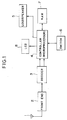
- a selective calling radio display pager is shown as comprising a front end 2 which amplifies and demodulates a paging signal detected by antenna 1 and shapes the waveform of the demodulated signal into a form sharply distinguishable by a decoder 3.
- Decoder 3 checks the identifiers contained in the paging signal with the pager's own address stored in a memory. If a match is detected, the decoder 3 applies a message signal that follows the identifier to a controller 4, which supplies a tone signal to a loudspeaker 5 to alert the pager's owner. The alarm is turned off when manually operated switch 6 is operated.
- the message signal is stored into a random access memory 7 for comparison with a subsequently received message signal.
- a liquid crystal display 8 is connected to the controller 4 to display the message stored in the memory 7.
- the paging signal is transmitted in the format devised by the British Post Office Code Standardization Advisory Group (POCSAG) and adopted by CCIR as Radiopaging Code No. 1.
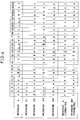
- a message signal is shown as a series of characters "ABCDE fghi" respectively stored in memory locations X1 through X10. Each of the characters is composed of 7 bits according to the ISO (International Standardization Organization) 646 code.
- the message signal is divided at 20-bit intervals into blocks each of which is combined with check bits and a parity bit to form a BCH (31, 21) code which is capable of correcting one error bit and of detecting a maximum of four bits in each code. If, for example, the character "A” is detected by decoder 3 as having two error bits, the first three characters "ABC" are treated as containing errors and the decoder 3 supplies an error flag to the controller 4 along with the characters.
- Random access memory 7 has at least two message storage areas A and B for storing the message of a later arrival and the same message of a previous arrival, respectively.
- controller 4 performs character-by-character comparison between the successively arrived messages to distinguish between them and replace error-containing characters of one of the messages with error-free characters of the other message if these messages are interpreted as being identical to each other, and displays the corrected message.
- control interprets that the later message is a different one and exits the program, and if the answer is negative, it advances to operations block 105 to compare between all characters of the two messages and detect mismatches N E .
- Control exits to decision block 106 which multiplies N A by a predetermined fraction ⁇ , say 0.1 and compares it with N E . If N E is equal to or smaller than N A . ⁇ , the later message is interpreted as being a retransmission of the previous message and if not, it is interpreted as being a different one. If the answer is affirmative in block 106, exit is to operations block 107, Fig.
- the later message A is interpreted as being different from the previous one. If the previous message has one error as shown at B4 and no mismatches exist between error-free characters, control proceeds to block 105 as in the example above, but detects two mismatches in the 7th and 13th characters. Since N E is smaller than 0.1N A , the message A is treated as being a retransmission of the previous message B4, and control proceeds to block 107 where the 6th, 7th, 8th, 13th, 14th, 15th, 20th, 21st and 22nd characters of message A are replaced with corresponding error-free characters of message B4 as shown at A' with the 13th character of message A being left unchanged since the 13th character of message B4 contains an error ("%"). Alternatively, the 11th and 12th characters of message B4 may be replaced with error-free characters of message A as shown at B4' with the 13th character of message B4 being left unchanged.
- Fig. 5 is an illustration of a computer program written by the C programming language for executing the flow diagrams of Figs. 3A and 3B.
- Part (A) of Fig. 5 shows a sequence in which it determines whether the later message is a retransmission of the earlier one or not, and part (B) shows a sequence in which error-containing characters are replaced.
- the following arguments are used:
Landscapes
- Engineering & Computer Science (AREA)
- Computer Networks & Wireless Communication (AREA)
- Physics & Mathematics (AREA)
- Signal Processing (AREA)
- Electromagnetism (AREA)
- General Physics & Mathematics (AREA)
- Mobile Radio Communication Systems (AREA)
- Detection And Prevention Of Errors In Transmission (AREA)
- Telephonic Communication Services (AREA)
Claims (2)
- Personenrufempfänger mit Anzeige für wahlweisen Funkruf mit einer Empfangseinrichtung (2) zum Empfangen eines codierten Signals eines Fehler korrigierenden Formats, das eine Adresse und eine entsprechende Nachricht mit einer Reihe von Zeichen aufweist, einer Decodiereinrichtung (3) zum Erkennen eines Fehlers in jedem Zeichen der empfangenen Nachricht, die eine Einrichtung zum Identifizieren einer Gruppe von aufeinanderfolgenden Zeichen als Fehler enthaltende Zeichen, selbst wenn nur ein Zeichen der Gruppe als fehlerhaft erkannt wird, und zum Erzeugen einer decodierten Nachricht mit fehlerfreien Zeichen und fehlerhaften Zeichen aufweist, einer Speichereinrichtung (7), die mit der Decodiereinrichtung (3) zum Speichern einer ersten decodierten Nachricht in einem ersten Speicher und einer zweiten decodierten Nachricht in einem zweiten Speicher verbunden ist, einer ersten Vergleicheinrichtung (4, 101, 102) zum Vergleichen der Zahl der Zeichen in dem ersten Speicher mit der Zahl der Zeichen in dem zweiten Speicher und zum Treffen einer ersten Entscheidung, wenn eine Übereinstimmung zwischen den Zahlen vorliegt, einer zweiten Vergleicheinrichtung (4, 103, 104) zum Vergleichen fehlerfreier Zeichen in dem ersten Speicher mit bezüglich der Position entsprechenden fehlerfreien Zeichen in dem zweiten Speicher und zum Treffen einer zweiten Entscheidung, wenn eine Übereinstimmung zwischen allen fehlerfreien Zeichen der beiden Speicher vorliegt, einer dritten Vergleicheinrichtung (105, 106) zum Vergleichen aller Zeichen in dem ersten Speicher mit bezüglich der Position entsprechenden Zeichen in dem zweiten Speicher zum Erkennen von Diskrepanzen und zum Treffen einer dritten Entscheidung, daß beide Nachrichten in dem ersten und dem zweiten Speicher miteinander identisch sind, wenn die Zahl (NE) der erkannten Diskrepanzen gleich oder kleiner ist als ein bestimmter prozentualer Wert (NAΘ) der Zahl der Zeichen in jedem der Speicher, und einer Austauscheinrichtung (4, 107) zum Ersetzen der Fehler enthaltenden Zeichen in dem ersten oder dem zweiten Speicher der Speichereinrichtung (7) mit entsprechenden Zeichen in dem anderen Speicher, wenn die erste, zweite und dritte Entscheidung durch die erste, zweite und dritte Vergleicheinrichtung (4, 101, 102) (4, 103, 104) (105, 106) getroffen ist.
- Personenrufempfänger mit Anzeige für wahlweisen Funkruf nach Anspruch 1, wobei das codierte Signal das Format des BCH (Bose-Chandhuri-Hocquenghem) Fehlerkorrekturcodes hat.
Applications Claiming Priority (2)
| Application Number | Priority Date | Filing Date | Title |
|---|---|---|---|
| JP62017390A JPS63187742A (ja) | 1987-01-29 | 1987-01-29 | 表示機能付選択呼出信号受信機における再受信メツセ−ジの検出・誤り訂正方法 |
| JP17390/87 | 1987-01-29 |
Publications (2)
| Publication Number | Publication Date |
|---|---|
| EP0280405A1 EP0280405A1 (de) | 1988-08-31 |
| EP0280405B1 true EP0280405B1 (de) | 1994-05-11 |
Family
ID=11942669
Family Applications (1)
| Application Number | Title | Priority Date | Filing Date |
|---|---|---|---|
| EP88300662A Expired - Lifetime EP0280405B1 (de) | 1987-01-29 | 1988-01-27 | Nacheinander empfangene Meldungen auswertendes Verfahren und dieses Verfahren benutzender Personenrufempfänger |
Country Status (6)
| Country | Link |
|---|---|
| EP (1) | EP0280405B1 (de) |
| JP (1) | JPS63187742A (de) |
| KR (1) | KR910007713B1 (de) |
| AU (1) | AU605826B2 (de) |
| CA (1) | CA1295422C (de) |
| HK (1) | HK130594A (de) |
Families Citing this family (4)
| Publication number | Priority date | Publication date | Assignee | Title |
|---|---|---|---|---|
| JP2861064B2 (ja) * | 1989-06-19 | 1999-02-24 | 日本電気株式会社 | 表示機能付無線選択呼出受信機 |
| JP2904144B2 (ja) * | 1996-09-02 | 1999-06-14 | 日本電気株式会社 | 受信機 |
| KR100531842B1 (ko) * | 2002-11-20 | 2005-12-02 | 엘지전자 주식회사 | 메시지 교정 방법 및 시스템 |
| EP1780910A1 (de) * | 2005-10-27 | 2007-05-02 | Motorola, Inc. | Verfahren zum Identifizieren der Wiederholung von Nachrichten, und entsprechende drahtlose Kommunikationsanordnung |
Family Cites Families (5)
| Publication number | Priority date | Publication date | Assignee | Title |
|---|---|---|---|---|
| US3855576A (en) * | 1973-05-29 | 1974-12-17 | Motorola Inc | Asynchronous internally clocked sequential digital word detector |
| SE445686B (sv) * | 1984-11-26 | 1986-07-07 | Ericsson Telefon Ab L M | Forfarande for mottagning av radiosenda meddelanden samt mottagare for endamalet |
| SE445786B (sv) * | 1984-11-26 | 1986-07-14 | Ericsson Telefon Ab L M | Forfarande for att vid radiomottagning undvika att lagra ett meddelande mer en en gang samt mottagare for endamalet |
| GB8501276D0 (en) * | 1985-01-18 | 1985-02-20 | Multitone Electronics Plc | Radio pager |
| JPS61198931A (ja) * | 1985-02-28 | 1986-09-03 | Nec Corp | 表示機能付無線選択呼出受信機 |
-
1987
- 1987-01-29 JP JP62017390A patent/JPS63187742A/ja active Pending
-
1988
- 1988-01-27 EP EP88300662A patent/EP0280405B1/de not_active Expired - Lifetime
- 1988-01-28 CA CA000557548A patent/CA1295422C/en not_active Expired - Lifetime
- 1988-01-28 AU AU10938/88A patent/AU605826B2/en not_active Ceased
- 1988-01-28 KR KR1019880000710A patent/KR910007713B1/ko not_active Expired
-
1994
- 1994-11-24 HK HK130594A patent/HK130594A/en not_active IP Right Cessation
Also Published As
| Publication number | Publication date |
|---|---|
| KR910007713B1 (ko) | 1991-09-30 |
| EP0280405A1 (de) | 1988-08-31 |
| AU605826B2 (en) | 1991-01-24 |
| KR880009492A (ko) | 1988-09-15 |
| CA1295422C (en) | 1992-02-04 |
| HK130594A (en) | 1994-12-02 |
| AU1093888A (en) | 1988-08-04 |
| JPS63187742A (ja) | 1988-08-03 |
Similar Documents
| Publication | Publication Date | Title |
|---|---|---|
| US4835777A (en) | Radio paging receiver including duplicate page detection and error correction capability | |
| EP0193188B1 (de) | Radio-Rufvorrichtung mit Schaltungen zum Zurückschreiben einer Durchsage mit fehlerfreien Buchstaben | |
| US5546077A (en) | Remotely programmable pager | |
| EP0344149B1 (de) | System für die über-funk-reprogrammierung von kommunikationsempfängern | |
| EP0203140B1 (de) | Verfahren und vorrichtung bei rundfunkempfang zur vermeidung doppelter speicherung eines berichtes | |
| CA1263708A (en) | Method and receiver for receiving messages sent by radio | |
| EP0135783B1 (de) | Funkkommunikationsgerät abgeschaltet nach Empfang einer bestimmten Nachricht | |
| PL178432B1 (pl) | Sposób i system do nadawania i odbioru wiadomości | |
| EP0210213B1 (de) | Personenrufempfänger mit fehlerauffindung | |
| US5374925A (en) | Selective call receiving apparatus with message sorting function | |
| EP0280405B1 (de) | Nacheinander empfangene Meldungen auswertendes Verfahren und dieses Verfahren benutzender Personenrufempfänger | |
| JPH0965396A (ja) | 無線選択呼出受信機 | |
| KR100293068B1 (ko) | 우선순위선정된메시지관리용제어기를갖는무선표시페이저 | |
| US5459456A (en) | Method and apparatus for selectively forwarding messages received by a radio receiver to an external device | |
| US5801640A (en) | Radio pager with a message processing function | |
| GB2253503A (en) | Radio pager with data display device | |
| EP0593455B1 (de) | Selektivrufempfänger mit diebstahlschutzeinrichtung | |
| US6072411A (en) | Method and apparatus for message correction | |
| US6433669B1 (en) | Radio paging receiver with an error indicating function in which error indication data to overwrite faulty message data can be altered | |
| US5438327A (en) | Multi-capcode communication receiving equipment | |
| US5841782A (en) | System and method for indicating errored messages | |
| JPH038607B2 (de) | ||
| JP3765259B2 (ja) | 呼出検出装置、および、情報登録方法 | |
| JPH09168178A (ja) | 無線選択呼出受信機 |
Legal Events
| Date | Code | Title | Description |
|---|---|---|---|
| PUAI | Public reference made under article 153(3) epc to a published international application that has entered the european phase |
Free format text: ORIGINAL CODE: 0009012 |
|
| 17P | Request for examination filed |
Effective date: 19880223 |
|
| AK | Designated contracting states |
Kind code of ref document: A1 Designated state(s): GB NL SE |
|
| 17Q | First examination report despatched |
Effective date: 19910531 |
|
| GRAA | (expected) grant |
Free format text: ORIGINAL CODE: 0009210 |
|
| AK | Designated contracting states |
Kind code of ref document: B1 Designated state(s): GB NL SE |
|
| PG25 | Lapsed in a contracting state [announced via postgrant information from national office to epo] |
Ref country code: SE Free format text: THE PATENT HAS BEEN ANNULLED BY A DECISION OF A NATIONAL AUTHORITY Effective date: 19940511 |
|
| PLBE | No opposition filed within time limit |
Free format text: ORIGINAL CODE: 0009261 |
|
| STAA | Information on the status of an ep patent application or granted ep patent |
Free format text: STATUS: NO OPPOSITION FILED WITHIN TIME LIMIT |
|
| 26N | No opposition filed | ||
| PGFP | Annual fee paid to national office [announced via postgrant information from national office to epo] |
Ref country code: GB Payment date: 20000126 Year of fee payment: 13 |
|
| PGFP | Annual fee paid to national office [announced via postgrant information from national office to epo] |
Ref country code: NL Payment date: 20000131 Year of fee payment: 13 |
|
| PG25 | Lapsed in a contracting state [announced via postgrant information from national office to epo] |
Ref country code: GB Free format text: LAPSE BECAUSE OF NON-PAYMENT OF DUE FEES Effective date: 20010127 |
|
| PG25 | Lapsed in a contracting state [announced via postgrant information from national office to epo] |
Ref country code: NL Free format text: LAPSE BECAUSE OF NON-PAYMENT OF DUE FEES Effective date: 20010801 |
|
| GBPC | Gb: european patent ceased through non-payment of renewal fee |
Effective date: 20010127 |
|
| NLV4 | Nl: lapsed or anulled due to non-payment of the annual fee |
Effective date: 20010801 |