EP0281066A2 - Traitement de fibres colorées en profondeur avec des résines - Google Patents
Traitement de fibres colorées en profondeur avec des résines Download PDFInfo
- Publication number
- EP0281066A2 EP0281066A2 EP88103063A EP88103063A EP0281066A2 EP 0281066 A2 EP0281066 A2 EP 0281066A2 EP 88103063 A EP88103063 A EP 88103063A EP 88103063 A EP88103063 A EP 88103063A EP 0281066 A2 EP0281066 A2 EP 0281066A2
- Authority
- EP
- European Patent Office
- Prior art keywords
- resin
- fiber
- film coating
- resins
- plasma
- Prior art date
- Legal status (The legal status is an assumption and is not a legal conclusion. Google has not performed a legal analysis and makes no representation as to the accuracy of the status listed.)
- Granted
Links
Images




Classifications
-
- D—TEXTILES; PAPER
- D06—TREATMENT OF TEXTILES OR THE LIKE; LAUNDERING; FLEXIBLE MATERIALS NOT OTHERWISE PROVIDED FOR
- D06M—TREATMENT, NOT PROVIDED FOR ELSEWHERE IN CLASS D06, OF FIBRES, THREADS, YARNS, FABRICS, FEATHERS OR FIBROUS GOODS MADE FROM SUCH MATERIALS
- D06M10/00—Physical treatment of fibres, threads, yarns, fabrics or fibrous goods made from such materials, e.g. by ultrasonic waves, corona discharge, irradiation, electric currents or magnetic fields; Physical treatment combined with treatment with chemical compounds or elements
-
- D—TEXTILES; PAPER
- D06—TREATMENT OF TEXTILES OR THE LIKE; LAUNDERING; FLEXIBLE MATERIALS NOT OTHERWISE PROVIDED FOR
- D06M—TREATMENT, NOT PROVIDED FOR ELSEWHERE IN CLASS D06, OF FIBRES, THREADS, YARNS, FABRICS, FEATHERS OR FIBROUS GOODS MADE FROM SUCH MATERIALS
- D06M15/00—Treating fibres, threads, yarns, fabrics, or fibrous goods made from such materials, with macromolecular compounds; Such treatment combined with mechanical treatment
- D06M15/19—Treating fibres, threads, yarns, fabrics, or fibrous goods made from such materials, with macromolecular compounds; Such treatment combined with mechanical treatment with synthetic macromolecular compounds
- D06M15/37—Macromolecular compounds obtained otherwise than by reactions only involving carbon-to-carbon unsaturated bonds
- D06M15/643—Macromolecular compounds obtained otherwise than by reactions only involving carbon-to-carbon unsaturated bonds containing silicon in the main chain
- D06M15/647—Macromolecular compounds obtained otherwise than by reactions only involving carbon-to-carbon unsaturated bonds containing silicon in the main chain containing polyether sequences
-
- D—TEXTILES; PAPER
- D06—TREATMENT OF TEXTILES OR THE LIKE; LAUNDERING; FLEXIBLE MATERIALS NOT OTHERWISE PROVIDED FOR
- D06M—TREATMENT, NOT PROVIDED FOR ELSEWHERE IN CLASS D06, OF FIBRES, THREADS, YARNS, FABRICS, FEATHERS OR FIBROUS GOODS MADE FROM SUCH MATERIALS
- D06M10/00—Physical treatment of fibres, threads, yarns, fabrics or fibrous goods made from such materials, e.g. by ultrasonic waves, corona discharge, irradiation, electric currents or magnetic fields; Physical treatment combined with treatment with chemical compounds or elements
- D06M10/04—Physical treatment combined with treatment with chemical compounds or elements
-
- D—TEXTILES; PAPER
- D06—TREATMENT OF TEXTILES OR THE LIKE; LAUNDERING; FLEXIBLE MATERIALS NOT OTHERWISE PROVIDED FOR
- D06M—TREATMENT, NOT PROVIDED FOR ELSEWHERE IN CLASS D06, OF FIBRES, THREADS, YARNS, FABRICS, FEATHERS OR FIBROUS GOODS MADE FROM SUCH MATERIALS
- D06M15/00—Treating fibres, threads, yarns, fabrics, or fibrous goods made from such materials, with macromolecular compounds; Such treatment combined with mechanical treatment
- D06M15/19—Treating fibres, threads, yarns, fabrics, or fibrous goods made from such materials, with macromolecular compounds; Such treatment combined with mechanical treatment with synthetic macromolecular compounds
- D06M15/37—Macromolecular compounds obtained otherwise than by reactions only involving carbon-to-carbon unsaturated bonds
- D06M15/643—Macromolecular compounds obtained otherwise than by reactions only involving carbon-to-carbon unsaturated bonds containing silicon in the main chain
-
- G—PHYSICS
- G02—OPTICS
- G02B—OPTICAL ELEMENTS, SYSTEMS OR APPARATUS
- G02B6/00—Light guides; Structural details of arrangements comprising light guides and other optical elements, e.g. couplings
- G02B6/02—Optical fibres with cladding with or without a coating
- G02B6/02033—Core or cladding made from organic material, e.g. polymeric material
-
- G—PHYSICS
- G02—OPTICS
- G02B—OPTICAL ELEMENTS, SYSTEMS OR APPARATUS
- G02B6/00—Light guides; Structural details of arrangements comprising light guides and other optical elements, e.g. couplings
- G02B6/24—Coupling light guides
- G02B6/245—Removing protective coverings of light guides before coupling
-
- G—PHYSICS
- G02—OPTICS
- G02B—OPTICAL ELEMENTS, SYSTEMS OR APPARATUS
- G02B6/00—Light guides; Structural details of arrangements comprising light guides and other optical elements, e.g. couplings
- G02B6/24—Coupling light guides
- G02B6/36—Mechanical coupling means
- G02B6/38—Mechanical coupling means having fibre to fibre mating means
- G02B6/3801—Permanent connections, i.e. wherein fibres are kept aligned by mechanical means
-
- Y—GENERAL TAGGING OF NEW TECHNOLOGICAL DEVELOPMENTS; GENERAL TAGGING OF CROSS-SECTIONAL TECHNOLOGIES SPANNING OVER SEVERAL SECTIONS OF THE IPC; TECHNICAL SUBJECTS COVERED BY FORMER USPC CROSS-REFERENCE ART COLLECTIONS [XRACs] AND DIGESTS
- Y10—TECHNICAL SUBJECTS COVERED BY FORMER USPC
- Y10T—TECHNICAL SUBJECTS COVERED BY FORMER US CLASSIFICATION
- Y10T428/00—Stock material or miscellaneous articles
- Y10T428/29—Coated or structually defined flake, particle, cell, strand, strand portion, rod, filament, macroscopic fiber or mass thereof
- Y10T428/2913—Rod, strand, filament or fiber
- Y10T428/2933—Coated or with bond, impregnation or core
-
- Y—GENERAL TAGGING OF NEW TECHNOLOGICAL DEVELOPMENTS; GENERAL TAGGING OF CROSS-SECTIONAL TECHNOLOGIES SPANNING OVER SEVERAL SECTIONS OF THE IPC; TECHNICAL SUBJECTS COVERED BY FORMER USPC CROSS-REFERENCE ART COLLECTIONS [XRACs] AND DIGESTS
- Y10—TECHNICAL SUBJECTS COVERED BY FORMER USPC
- Y10T—TECHNICAL SUBJECTS COVERED BY FORMER US CLASSIFICATION
- Y10T428/00—Stock material or miscellaneous articles
- Y10T428/29—Coated or structually defined flake, particle, cell, strand, strand portion, rod, filament, macroscopic fiber or mass thereof
- Y10T428/2913—Rod, strand, filament or fiber
- Y10T428/2933—Coated or with bond, impregnation or core
- Y10T428/294—Coated or with bond, impregnation or core including metal or compound thereof [excluding glass, ceramic and asbestos]
- Y10T428/2942—Plural coatings
-
- Y—GENERAL TAGGING OF NEW TECHNOLOGICAL DEVELOPMENTS; GENERAL TAGGING OF CROSS-SECTIONAL TECHNOLOGIES SPANNING OVER SEVERAL SECTIONS OF THE IPC; TECHNICAL SUBJECTS COVERED BY FORMER USPC CROSS-REFERENCE ART COLLECTIONS [XRACs] AND DIGESTS
- Y10—TECHNICAL SUBJECTS COVERED BY FORMER USPC
- Y10T—TECHNICAL SUBJECTS COVERED BY FORMER US CLASSIFICATION
- Y10T428/00—Stock material or miscellaneous articles
- Y10T428/29—Coated or structually defined flake, particle, cell, strand, strand portion, rod, filament, macroscopic fiber or mass thereof
- Y10T428/2913—Rod, strand, filament or fiber
- Y10T428/2933—Coated or with bond, impregnation or core
- Y10T428/294—Coated or with bond, impregnation or core including metal or compound thereof [excluding glass, ceramic and asbestos]
- Y10T428/2942—Plural coatings
- Y10T428/2947—Synthetic resin or polymer in plural coatings, each of different type
-
- Y—GENERAL TAGGING OF NEW TECHNOLOGICAL DEVELOPMENTS; GENERAL TAGGING OF CROSS-SECTIONAL TECHNOLOGIES SPANNING OVER SEVERAL SECTIONS OF THE IPC; TECHNICAL SUBJECTS COVERED BY FORMER USPC CROSS-REFERENCE ART COLLECTIONS [XRACs] AND DIGESTS
- Y10—TECHNICAL SUBJECTS COVERED BY FORMER USPC
- Y10T—TECHNICAL SUBJECTS COVERED BY FORMER US CLASSIFICATION
- Y10T428/00—Stock material or miscellaneous articles
- Y10T428/29—Coated or structually defined flake, particle, cell, strand, strand portion, rod, filament, macroscopic fiber or mass thereof
- Y10T428/2913—Rod, strand, filament or fiber
- Y10T428/2933—Coated or with bond, impregnation or core
- Y10T428/2962—Silane, silicone or siloxane in coating
Definitions
- the present invention relates to deep-colored fibers, particularly, those having an excellent deep-color durability and a process for manufacturing the same.
- color-deepening finishing processes have so far been carried out by treating with various finishing agents to form low refractive surface layers, such as fluoro-chemical finishes, silicone finishes, polyurethane finishes, or the like. Though these processes are, since simple, convenient and industrially feasible without requiring any special equipments, yet difficulties in uniform application to the fiber surfaces of the finishing agents, deterioration of the hand and color shade, lowering of color-fastness, etc. are unavoidable. Moreover, with respect to color-deepening performances, there are questions of deficiency as only the prevention of reflection is effected by low refractive indices of the finishing agents.
- Japanese Patent Application Laid-open No. 55-107,512 is directed to a process wherein polyester itself is admixed with alkali-soluble fine particles, e.g., fine grain silica, and after spinning into fibers, recesses are formed on the fiber surfaces by eluting these particles with an alkaline solution.
- alkali-soluble fine particles e.g., fine grain silica
- recesses are formed on the fiber surfaces by eluting these particles with an alkaline solution.
- U.S. Patent No. 4,400,424 has proposed good durable deep-colored fibers having smooth surfaces that are produced by filling up recesses on the surfaces of the fibers with a resin having a low refractive index.
- a resin having a low refractive index it is difficult to form specified recesses on the surfaces of the fibers, particularly, natural fibers. Even if the recesses could be formed, the development of deep color would be poor since the fiber surfaces had been smoothed by filling up the recesses with the resin. Namely, in this reference, a study was conducted in a region where an L-value of fabrics before a rubbing test was between 11 and 13 that could not be said "raven black".
- the recesses and projections are formed on the fiber itself through a plasma etching treatment, which are caused by a higher order structure such as crystals in the fiber, size and arrangement of amorphous regions and the like. Therefore, only recesses and projections very small in size and uniform in shape and arrangement are provided as disclosed by the above reference or Japanese Patent Application Publication No. 11,709/1984. From the above reasons, the color-deepening performances are not sufficient. As for fastness to crocking, what is liable to abrasion is resins adhered on the fibers rather than the fiber itself that has been drawn to orient and crystallize its molecules considerably. Therefore, it is necessary to employ selectively an abrasion resistant resin that is excellent in mechanical properties and affinity for the fiber.
- Japanese Patent Application Laid-open No. 60-17,190 has proposed a process wherein a resinous film having differentiated resistances for plasma etching is formed on fiber surfaces and many fine recesses and projections are formed on the surface of the resinous film by a plasma treatment.
- Preferable films comprise inorganic fine particles and a resin that is excellent in compatibility therewith and in uniform covering property, or a cationic polyurethane and/or a vinylpolymer-modified cationic polyurethane having a refractive index of not exceeding 1.5.
- the recesses and projections formed on the surfaces of the resinous film are small in size and large in number so that problems similar to the aforementioned still exist.
- U.S. Patent No. 4,522,873 has proposed a process for producing deep-colored fibers wherein fibers are subjected to a film-forming treatment with an agent comprising a silicone resin and inorganic fine particles admixed therewith, followed by a plasma treatment.
- This proposed process is also involved in problems such as a low etching rate, uneven etching caused by uneven distribution of the fine particles adhered on the fiber surfaces, change in performance caused by falling-off of the fine particles, or the like.
- the conventional color-deepened fibers have had drawbacks such as an insufficient depth of color, insufficient durability, low rate of color-deepening treatment, or the like.
- An object of the present invention is to provide industrially advantageously fibers having an excellent durability and a deep color level that heretofore has not been attainable.
- Another object of the present invention is to provide processes for manufacturing such fibers.
- the deep colored fibers of the first embodiment according to the present invention have a film coating of a resin mixture comprising at least two kinds of resins that are incompatible with each others and in phase-separated conditions in the film coating.
- said at least two resins are preferred to be different in affinity for the fibers.
- the refractive index n A of the resin phase that is lower in affinity for the fiber, the refractive index n B of the resin phase that is higher in affinity for the fiber and the refractive index n O of the fiber are in an interrelation satisfying the following inequalities: n A ⁇ n B and n A ⁇ n O .
- said at least two resins which are incompatible with each others are different in solvent-solubility and on at least a part of the surfaces of the film coating, pits and/or recesses and projections are formed by elution of at least one resin.
- said at least two resins which are incompatible with each others are different in plasma etching resistance and on at least a part of the surfaces of the film coating, pits and/or recesses and projections are formed by plasma etching of at least one resin.
- the surfaces of the film coating having said pits and/or recesses and projections are further covered by an abrasion resistant resinous film to improve color-fastness to rubbing or abrasion resistance.
- the fibers of which materials are not specifically limited may include natural fibers such as cotton, wool, silk and the like, all other synthetic and artificial fibers such as polyesters, nylons, acrylics, rayons, cellulose acetate and the like.
- This invention is very effectively applicable to an improvement of fibers having smooth surfaces, a high refractive index and a strong surface reflection, for example, polyester fibers.
- the form of the fiber is not specifically limited. It may be filaments, staple fibers, yarns, threads, strands, ropes, woven fabrics, knitted goods, nonwoven fabrics, flocked fabrics, pile fabrics, etc.
- the fibers exist as a component in a sheet-like fibrous structure such as woven fabrics, knitted goods, nonwoven fabrics and the like, the present invention can apply effectively.
- coloring is to be understood to mean coloring of the whole surface of the objective fibers or coloring of a patternized part of the surface of objective fibrous structure.
- the coloring may be performed before or after formation of the resinous film coating. Though it is usual to color before the formation of the film coating, a post-coloring can be conducted effectively, particularly in the case of the coloring in part such as printing or the like.
- the present invention it is necessary to provide surfaces of the fiber with a film coating of a resin mixture comprising at least two kinds of resins that are incompatible with each others.
- the number of the resins to be mixed may exceed two as long as not going contrary to the objects of the present invention.
- the resin mixture is accounted to comprise two resins A and B, hereinafter.
- the resins A and B are incompatible with each other and preferably have a good mutual miscibility. More preferably, the film coating comprising the resins A and B is excellent in transparency and uniformity and high in strength and durability.
- the refractive index n A of one resin A is preferred to be lower than the refractive index n O of the fiber and the refractive index n B of the other resin B.
- the refractive index n A is usually 1.35 ⁇ 1.50, preferably 1.37 ⁇ 1.48 and the refractive index n B is usually 1.40 ⁇ 1.60.
- the mutual miscibility and incompatibility of the resins A and B are accounted for by the phenomenon that when these resins are mixed together, a good mixture but a homogenous phase is formed, separating into the resin A phase and resin B phase. If the mutual miscibility is poor, gellation, viscosity increase or precipitation will occur, not forming a good resin mixture of the resins A and B, that is to say, a good film coating cannot be formed. It is not to mention that good deep-colored fibers are difficult to be manufactured with industrial advantages. Further, the mutual incompatibility of the resins A and B is accounted for when these resins mixed well together are not integrated into a single phase but remain phase-separated. This condition can be observed by an electron microscope or optical microscope.
- the resins A and B when the resins A and B are mixed together, with an extremely unbalanced mixing ratio, the resin of the larger amount forms a continuous phase (a sea-component) and the resin of the smaller amount forms a discontinuous phase (an island-component). If mutually compatible, the resins A and B become homogeneous in the molecular level, not only losing their own characteristics but also lacking in heat resistance and physical and chemical stabilities. Thus the color deepening effect cannot be so much expected.
- the affinity for the fibers of the resin A that is lower in refractive index is also lower than the affinity for the fibers of the resin B that is higher in refractive index.
- a typical example of such resin A is a silicone resin.
- Silicone resins are generally excellent in film-formability and transparency, having a low refractive index. Any silicone resins A having a basic skelton structure, may be employable without specific limitations. In view of feasibility in use, film-formability on the fibers, etc., those having a good dispersibility in water are preferred.
- modifying groups containing an amino group, hydroxyl group, epoxy group, alkoxyl group, silanol group, carboxyl group, etc. may be introduced to side chains or terminals of molecules of the resin A.
- the introduction of the modifying groups can control affinity for the fibers, i.e., adhesiveness to the fibers and further attain improvements in film-formability, film tenacity, etc., so that it is preferred.
- the epoxy equivalent the molecular weight of the silicone resin per one epoxy group
- the epoxy equivalent is at most 100,000, preferably at most 50,000, more preferably at most 10,000.
- the molecular weight of the resin A and the structure and molecular weight of side chains influence the dispersibility in water, adhesiveness, film tenacity, durability, etc.
- the molecular weight of the resin A is not specifically limited, it is usually at least 5,000, preferably at least 10,000, more preferably at least 30,000 in view of the dispersibility in water, adhesiveness to the fibers, tenacity and durability of the film, characteristics for plasma etching, etc. If the molecular weight is less than 5,000, the adhesiveness to the fibers and durability of the film will decrease as well as the incompatibility with the other resin will decrease, which may result in deteriorations of uniformity of the film and color-deepening effect.
- the size of side chains of the resin A affects the refractive index, transparency, film tenacity and plasma etching property. If the molecular weight of the side chains becomes too large, the refractive index also increases, so that it is not preferred. Accordingly, as the side chain of the resin A, lower alkyl groups of about C1 ⁇ C12 are preferred, more preferably of about C1 ⁇ C6. To improve heat resistance and film-formability, the side chains may contain benzene rings, unsaturated bonds, amino groups, epoxy groups, hydroxyl groups, alkoxyl groups, etc. In particular, those which can cross-link the silicone resins with the aid of catalysts, heat, light, etc. to improve the chemical stability and mechanical strength are preferred with respect of abrasion resistance and solvent resistance.
- polyorganosiloxane diol having hydroxyl groups and alkylhydrogen silicones having hydrogens as the side chains readily form cross-linkages by heating. Addition of a hardening agent to a reactive silicone also can achieve the cross-linking. Additionally, amino-modified silicones, epoxy-modified silicones, etc. and those containing vinyl groups or unsaturated bonds at molecular ends are preferred because of a high reactivity.
- Such resins include, for example, acrylic resins, modified acrylic resins such as partially fluorinated acrylics, polyethylene glycol modified acrylics, epoxy modified acrylics or the like, melamine resins, fluoro-resins, amido-resins, polyester resins, polyurethane resins, ethylene/vinyl acetate copolymers, polyether-ester resins, etc.
- a preferable combination of the mixed resins is a silicone resin as one resin A with a partially fluorinated acrylic resin, polyurethane resin or polyether-ester resin as the other resin B.
- the film coating comprising a mixture of the resins A and B is formed on the fiber in an amount of 0.2 ⁇ 15%, preferably 0.5 ⁇ 10%, more preferably 1 ⁇ 7% based on the weight of the fiber. If it exceeds 15% by weight, the film coating will not be formed uniformly and problems such as change of the hand, deteriorations of moisture or air permeability, dull color caused by a thick resinous layer, or the like, will occur. If it is less than 0.2% by weight, the film tenacity and color-deepening effect will be insufficient.
- the mixing ratio of the resins A and B in the resin mixture is preferably in the range between 90/10 and 10/90 more preferably between 80/20 and 20/80, particularly preferably between 70/80 and 80/70, by weight.
- the mixture of the resins A and B deepens color far more than the resin A or B alone.
- Fig. 1 its example is shown.
- the resin A is more than 90% by weight and the resin B is less than 10% by weight, the resin mixture does not completely solve the aforementioned problems inherent in silicone finishes nor provides sufficient durability.
- the resin A is less than 10% and the resin B is more than 90%, by weight, the development of the color-deepening effect is not sufficient.
- the mixed resins A and B form a mutually phase-separated structure on the fiber by virtue of their mutual incompatibility.
- the magnitude of the phase-separation namely, the figure and size of the domains of the resin A and B phases, as influenced by the properties and mixing ratio of the resins A and B; cannot be mentioned summarily.
- the resin of a larger amount in the mixture is apt to become a sea-component that is a continuous phase, while the resin of a smaller amount is apt to become an island-component that is a discontinuous phase.
- the ratio of the resin A to the resin B is in the range between about 90/10 and 80/20 by weight, the resin B is apt to become an island component and inversely, if the ratio of the resin B to the resin A is in the range between about 90/10 and 80/20 by weight, the resin A is apt to become an island component.
- the ratio, resin A/resin B ranges from 70/30 to 30/70 by weight, the resin of the less amount tends to become the island component and, however, there may be the case where those resins do not clearly form the sea or islands but a complicated configuration. In most cases, the color-deepening effect is prominently developed when those resins are relatively closer to the equal amount in the range of the mixing ratio from 70/30 to 30/70 by weight.
- the film coating of the resin mixture formed on the fibers has smooth surfaces.
- the resin mixture is in a complicated, phase-separated form and optical properties largely vary every phase to phase to change delicately reflection and refraction of incident light beams, whereby the color-deepening effect is considered to develop.
- respective resin phases in a phase-separated form, all different in optical properties are considered to derive a color-deepening effect as a surface having recesses and projections exhibits.
- the size and figure of the separated phases in the film coating of resin mixture can be determined by phase-contrast microscope observation, X-ray fluorescence analysis, etc. Additionally, in the case where the observation of the phase-separated conditions on the fibers is difficult, the resin mixture applied on a film can be observed by the above means.
- the phase-separation of the film coating of the resin mixture was in the condition that the separated resin phase forming the island component was at least 0.05 ⁇ m in size for the smallest, mostly at least 0.1 ⁇ m.
- the ratio of the resins, A/B was about 80/20, the island components, though some were 0.1 ⁇ m or less, mostly were about 0.5 ⁇ 1 ⁇ m in size.
- the ratio of the resins, A/B was 70/30, though some were yet about 0.1 ⁇ m, most part was at least 0.5 ⁇ m in size and partly the island components become to form relatively long continuous phases.
- the mixing ratio of the resins, A/B is in the range between 60/40 and 40/60, both the resins become either of the island-component and sea-component, forming a very complicated configuration. The color-deepening effect is most prominently developed in this range.
- the resin A phase in the film coating of the resin mixture exists in predominant domains defined, being distinct from the other resin B phase, by interfaces substantially perpendicular to or inclined so as to widen the domains towards the surface of the film coating.
- the refractive index n A of the resin A phase is lower than the refractive index n B of the resin B phase and the refractive index n A is lower than the refractive index n O of the fiber, it is conjectured that incident light beams are delicately reflected by and refracted at the finely separated phases and considerable part of the light is eventually absorbed to augment the color-deepening effect.
- an aqueous dispersion of a mixture of at least two resins having good mutual miscibility and mutual incompatibility is applied in an amount of 0.2 ⁇ 15% based on the weight of the fiber or fabric.
- any of conventional processes can be employed, such as a soaking and adsorbing process wherein the fabrics are impregnated with a resin dispersion, squeezed and then subjected to drying or drying followed by dry heating, wet heating or high temperature wet heating treatment; a coating process wherein a resin dispersion is applied with a gravure coater or the like, followed by the above heat treatment; and the like, and, inter alia, the soaking and adsorbing process is most preferred.
- the concentration of resin in the dispersion of the resin mixture is adjusted to be usually not exceeding 15%, preferably not exceeding 10%, more preferably not exceeding 7%, by weight.
- a surface active agent for example, a usually used cationic surfactant, nonionic surfactant or anionic surfactant, may be added in an amount of not exceeding 50%, more preferably not exceeding about 20%, based on the weight of the resin mixture.
- the amount of the resins to be deposited on the fibers can be adjusted by controlling concentration of the resins in the dispersion, the amount of the dispersion to be applied to the fibers, frequency of the application of the dispersion, etc.
- the resin mixture is deposited in an amount of 0.2 ⁇ 15%, preferably 0.5 ⁇ 10%, more preferably 1 ⁇ 7%, by weight.
- An amount of less than 0.2% by weight is not preferred for the objective color-deepening effect is hardly obtained.
- it exceeds 15% by weight not only the hand of the treated fabrics tends to become stiff but also the resins tend to hinder the fabrics from any further finishings.
- the finished fibers or fabrics After forming the film coating of the resin mixture, it is preferred to subject the finished fibers or fabrics to washing with water or hot water, or a brief soaping treatment to improve fastness to crocking, sublimation resistance, heat resistance, etc. Particularly, the washing with hot water after the formation of the film coating can appreciably lower the L-value.
- the second embodiment, of the present invention at least two resins different in solvent-solubility are employed to form the film coating on the surfaces of the fibers.
- one resin and the other resin are incompatible with each other but mutually well miscible. More preferably, these resins form a film that is good in transparency, uniformity, tenacity and durability.
- the resin that is lower in solvent-solubility and dissolving rate hereinafter referred to as "resin A ⁇ ”
- the resin that is higher in solvent-solubility and dissolving rate herein A ⁇
- refsin B ⁇ is also lower in refractive index than the other resin that is higher in solvent-solubility and dissolving rate
- Such resins A ⁇ include, for example, various kinds of fluoro-resin, partially fluorinated resins, and silicone resins, etc.
- silicone resins inter alia, those chemically stabilizable and physical strength improvable by cross-linking with the aid of catalysts, heat, light or the like are preferred in respects of withstandability for eluting treatment and abrasion resistance during using.
- organosilicones having an active hydrogen containing group, hydroxyl group, alkoxyl group, epoxy group, amino group, carboxyl group, alcoholic group, etc. in the polymer or silicone resins having a vinyl group, unsaturated bond, etc.
- modified silicone as a molecular terminal group
- modified silicones are readily cross-linked by heating to form chemically and physically stabilized silicone films.
- a combination use of modified silicones with a cross-linking agent such as aminoalkoxysilanes, vinylalkoxysilanes, epoxyalkoxysilanes and the like is preferred to form chemically and physically more stabilized films.
- soluble component resin B ⁇ to be removed
- employable materials are, for example, water-soluble macromolecular materials such as starch, dextrins, gelatins, peptides, proteins, polysaccharides, polyamino acids, polyethylene oxide, polyethylene glycol, polyacrylic acid, polyacrylamide, carboxymethyl cellulose, hydroxyethyl cellulose, methyl cellulose, hydroxypropylmethyl cellulose or the like, and organic solvent soluble synthetic polymers such as polymethyl acrylate, polyethyl acrylate, polyisopropyl acrylate, polyvinyl formate, polyvinyl acetate, trinitrocellulose, polystyrene, polyvinyl chloride, styrene/butadiene copolymers, acrylonitrile/butadiene copolymers or the like.
- the film coating of the mixture of the resins A ⁇ and B ⁇ is provided on the fibers in an amount of not exceeding 15%, preferably 0.2 ⁇ 10%, more preferably 0.3 ⁇ 7%, particularly preferably 0.5 ⁇ 5%, based on the weight of the fiber. If it exceeds 15% by weight, the film coating will not be formed uniformly and problems such as change of the hand, deteriorations of moisture or air permeability, dull color caused by a thick resinous layer, or the like will be apt to occur. Alternatively, if it is less than 0.2% by weight, the formed resinous film is so thin that the development of the color-deepening effect and the durability will lessen and so not preferable.
- the mixing ratio of the resins A ⁇ to B ⁇ in the resin mixture is preferably in the range between 95/5 and 10/90, more preferably between 90/10 and 25/75, particularly preferably between 80/20 and 50/50, by weight.
- the resin A ⁇ is more than 95% by weight and the resin B ⁇ is less than 5% by weight, the resin mixture does not completely solve the aforementioned problems inherent in silicone finishing agents nor provides sufficient durability, and so not preferable.
- the resin A ⁇ is less than 10% by weight and the resin B ⁇ is more than 90% by weight, the resin A ⁇ to remain will become hard to remain during or after elution of the resin B ⁇ . Further, even if it remained, the formed recesses and projections would comprise predominantly the projections so that the color-deepening and color durability would not be sufficient.
- the solubility of the mixture of the resins A ⁇ and B ⁇ it is important to specify the solubility of the mixture of the resins A ⁇ and B ⁇ , the difference in dissolving rate, the mixing ratio and the add-on amount for developing most efficiently the color-deepening effect.
- the reason for the above is accounted as follows.
- the mixed resins A ⁇ and B ⁇ form a mutually phase-separated structure on the fiber surfaces by virtue of their mutual incompatibility.
- the mixing ratio, A ⁇ /B ⁇ is in the range between 90/10 and 25/75
- the color-deepening effect is the most.
- the resin of the less amount tends to become the island component and, however, generally those resins do not clearly form the sea or islands but a complicated configuration.
- phase-separation or the figure of the recesses formed by removing one resin by dissolving in solvent is considered to be effective for the development of a deep color, as the recesses are not so small and in a relatively continuous and complicated configuration.
- the figure and size of the phase-domains are largely influenced by physical properties of the resins A ⁇ and B ⁇ .
- the film coating of the resin mixture on fiber surfaces has recesses and projections which are one of the factors for developing a deep color.
- the figures of the recesses and projections are rugged forms.
- a preferable form is materially pits that are formed by subsiding parts of the surface of the resinous film. More preferably, pits formed by preferential dissolution or elution of domains of a resin phase other than the resin A ⁇ in the phase-separated resinous film. By forming such pits, a resinous film coating that is excellent in color-deepening effect, abrasion resistance, washing withstandability and dry-cleaning withstandability can be provided.
- the figure, size and number of the pits are not specifically limited, though with respect to the size, the area occupied by the pits per unit surface area is usually not exceeding 50%, preferably 5 ⁇ 40%, more preferably 7 ⁇ 30%.
- the number is usually not exceeding 30 per 1 ⁇ m2, preferably not exceeding 25 per 1 ⁇ m2, more preferably 1 ⁇ 20 per 1 ⁇ m2. If the areal ratio of the pits exceeds 50%, it is not preferable because not only will the color-deepening effect not augment but also the abrasion resistance, luster, etc. will reduce. Further, with respect to the number, though it is affected by the areal ratio, size, etc.
- the size and number of the recesses and projections on the resinous film surfaces can be determined by an electron microscope observation.
- Formation of the recesses and projections on the film coating of the resin mixture can be effected by removing by dissolving of one resinous component, that is, elution of one component, in virtue of the difference in solvent-solubility between the resins A ⁇ and B ⁇ .
- the resin B ⁇ particularly preferred are those readily removable by dissolving in hot water, water, alkaline solutions, acidic solutions, alcohol, alcoholic aqueous solutions.
- water-soluble or solvent-soluble salts or low-molecular compounds admixed in a polymer are removed by elution after spinning. According to these processes, only wide-mouthed and gently sloped pits or recesses are obtainable.
- the film coating is composed of a mixture of at least two resins being incompatible with each others, wherein phase-separated domains of one resin have acute edges defined by domains of the other resin and these domains in a phase-separated state can separate easily from each others. Accordingly, in the present invention, the pits or recesses and projections formed after elution of one component have acute edges.
- the process for eluting at least one component (resin B ⁇ ) from the resin mixture is effected by making use of the difference in solubility and degree of dissolution between at least two components in the resin mixture.
- the eluting treatment is carried out preferably so as to remain the resin component that is lower in refractive index. To heat during dissolution or to impart ultrasonic vibrations or rumpling motion is preferred.
- one resin is a silicone resin and the other one is a water-soluble resin such as polyethylene glycol, polyvinyl alcohol, methoxycellulose, starch or the like
- an ordinary washing with water can elute the resin component but the silicone resin and provide the surfaces of the film coating with pits formed by elution of the water-soluble resin component.
- methanol can elute the other resin component to form pits.
- the solvents are preferred to be good solvents for one component and bad solvents or non-solvents, even having no swelling effect, for the other component.
- the ratio of solubility or dissolving rate of the resin A ⁇ to the resin B ⁇ is generally not more than 1/2, preferably not more than 1/10. Therefore, the dissolution of the resin B ⁇ component preferentially progresses from film coatings. More preferably, the dissolving treatment is carried out with a solvent that cannot dissolve the resin A ⁇ but the resin B ⁇ only. Namely, since the resins A ⁇ and B ⁇ are phase-separated and the resin A ⁇ is lower in solubility and dissolving rate, the resin B ⁇ is eluted in a short period of time to form fine recesses and projections, preferably fine pits. By thus forming recesses and projections, preferably pits, in the film coating, a deep color is effectively developed and fibers having a deep color excellent in durability can be obtained.
- the resin B ⁇ is so selected as to be higher than the resin A ⁇ in affinity for polyester synthetic fibers, for example, a silicone resin for A ⁇ and a polyether-ester resin for B ⁇
- the proportion of the resin B ⁇ existing in the film coating of the phase- separated resin mixture is high in the vicinity of the polyester fiber and decreases towards the surface of the resinous film.
- the proportion of the resin A ⁇ is high in the vicinity of the surfaces of the resinous film and decreases towards the surfaces of the fiber.
- Such a combination of resins therefore forms virtual pits to provide a very good color-deepening property.
- the third embodiment, of the present invention at last two resins incompatible with each others and different in plasma etching resistance are employed to form the film coating on the surfaces of the fibers.
- the fibers provided with such a film coating can be turned into deep-colored fibers having pits on at least a part of the surfaces of the fibers.
- the resin that is higher in plasma etching resistance (hereinafter referred to as "resin A ⁇ ”) is preferred to be lower in affinity for the fiber than the other resin that is lower in plasma etching resistance (hereinafter referred to as "resin B ⁇ ").
- difference in plasma-etching resistance is to be understood to mean the difference in plasma etching rate.
- the resin A ⁇ having a high plasma etching resistance mention may be made of, for example, saturated hydrocarbon resins, unsaturated hydrocarbon resins, polyamide resins, silicone resins, modified silicone resins, polyperfluoroethylene resins, and the like, and particularly amino modified silicones, epoxy modified silicones and silanol modified silicones are preferred.
- the resin B ⁇ having a low plasma etching resistance mention may be made of cellulosic resins and derivatives thereof, polyethylene glycol, polyether-ester resins, acrylic resins, fluorinated acrylic resins, derivatives thereof, polyurethane resins and the like.
- Silicone resins since they are excellent in film-formability and transparency, and low in affinity for the fiber and refractive index, are particularly preferred as the resin A ⁇ that is high in plasma etching resistance.
- the film coating of the resin mixture is provided on the fibers in an amount substantially same as that explained of the solvent-soluble resin mixture in the second embodiment of the ivention hereinbefore.
- the mixing ratio of the resins A ⁇ to B ⁇ in the resin mixture is preferably in the range between 97/3 and 10/90, more preferably between 95/5 and 20/80, particularly preferably between 90/10 and 30/70, by weight.
- the mixture of the resins A ⁇ and B ⁇ deepens color far more than the resin A ⁇ or B ⁇ alone.
- the resin A ⁇ is more than 97% by weight and the resin B ⁇ is less than 3% by weight, the resin mixture cannot completely solve the aforementioned problems inherent in silicone finishes nor provide sufficient durability, so that is not preferable.
- the form of the recesses and projections tends to become relatively simple, monotonous and fine though the number is large, or become gently sloped having little inclined surfaces and, therefore, the development of the color-deepening effect will be insufficient. Namely, by specifying the difference in plasma-etching resistance between the resins A ⁇ and B ⁇ , the mixing ratio and add-on amount, the color-deepening effect is most effectively developed. Though it has not been elucidated yet, the reason for the above is accounted as follows.
- the mixed resins A ⁇ and B ⁇ form a phase-separated structure on the fiber by virtue of their mutual incompatibility.
- the mixing ratio, A ⁇ /B ⁇ is in the range between 90/10 and 30/70, the color-deepening effect is the most.
- the above fact is considered to be attributed to the form of the phase-separation or the figure of the pits formed through etching, that is not so small and in a relatively continuous and complicated configuration, so that the figure of the pits is effective for the developement of a deep color.
- the pits on the fiber surfaces may exist in at least a part of the fiber surfaces, such as the surfaces of the fibers existing in the surface of a fibrous structure, for example, fabrics.
- the pits do not have to exist over the entire surface of the fiber.
- the formation of pits on the film coating of the resin mixture can be effected by using known plasma etching techniques, utilizing the difference of plasma etching resistance.
- the low-temperature plasma etching processes are preferred because fine pits having acute-angled edges can be formed. The acuter the angles made by the peripheral walls of the pits and the fiber surfaces, the more effectively develops the color-deepening effect.
- the resins A ⁇ and B ⁇ are different in plasma etching rate.
- the resin B ⁇ is easier to be etched than the resin A ⁇ by a factor of at least 1.2, preferably at least 1.5, more preferably at least 2, so that the resin B ⁇ phase is preferentially etched among the components composing the film coating.
- the resins A ⁇ and B ⁇ are phase-separated and the resin A ⁇ is lower in etching rate, the resin B ⁇ is removed by etching in a shorter period of time to form recesses, i.e. fine pits, defined by walls of the resin A ⁇ having a lower refractive index.
- recesses i.e. fine pits
- the resin B ⁇ is so selected as to be higher than the resin A ⁇ in affinity, for example, a silicone resin for A ⁇ and a polyether-ester resin for B ⁇ , in the film coatings of the mixture of the resins A ⁇ and B ⁇ provided on the polyester synthetic fibers, the proportion of the resin B ⁇ existing in the film coatings of the phase-separated resin mixture is high in the vicinity of the polyester fiber and decreases towards the surfaces of the resinous film.
- the resin A ⁇ is considered to have a density gradient such that the proportion of the resin A ⁇ is high in the vicinity of the surfaces of the resinous film and decreases towards the surfaces of the fiber.
- a resinous film coating improves the color-deepening properties after the formation of the pits. Because, in the most preferable cases, most of the pits preferentially formed by plasma etching have depths rather broader than the mouth as shown in Fig. 3. The formation of such pits has never been proposed before the present invention discloses. As shown in Fig.
- the pit forming method to be preferably employed in the process of the present invention is an etching method with the use of low-temperature gas plasma.
- the low-temperature gas plasma is meant by a non-equilibrium plasma wherein electrons have a temperature sufficiently higher than that of ions or other active atoms.
- any of known methods can be employed, such as described in "Techniques and Applications of Plasma Chemistry", edited by J.R. Hollahan and A.T. Bell, published by John Wiley & Sons, New York, 1974, and "Plasma Chemistry of polymers", edited by M. Shen, published by Dekker, New York, 1976.
- an ionizable gas is introduced into a vacuum chamber provided inside with parallel plate electrodes and a plasma can be produced by applying high frequency. Further, the ionized gas plasma also may be produced by an electric field formed by means of an outer inductive coil.
- the apparatus for plasma treatment is preferred to have inner parallel plate electrodes or a drum-like, cylindrical electrode from the standpoints of treating efficiency, stability of quality and productivity.
- inorganic non-polymerizable gases such as Ar, O2, N2, H2, air, H2O, CO2 and the like, and organic gases having good etching properties such as CF4, CF3Cl, CF2Cl2 and the like, are employable. These gases can be used alone or in combination.
- the gas pressure largely influences etching behavior, quality of etched articles, etc.
- O2 gas it is generally 0.2 ⁇ 5 torr, preferably 0.3 ⁇ 2 torr, more preferably 0.5 ⁇ 1 torr. If less than 0.2 torr, the etching rate will be too low to develop a sufficient color-deepening effect. If more than 5 torr, the oxidation reaction will become so active that ashing or melting of the fiber surfaces will occur.
- N2 gas it is generally not exceeding 1 torr, preferably not exceeding 0.8 torr, more preferably not exceeding 0.6 torr.
- Ar gas it is generally not exceeding 5 torr, preferably 0.2 ⁇ 3 torr, more preferably 0.5 ⁇ 2 torr.
- the pits and/or recesses and projections formed by plasma etching are provided on the part that plasma electrons or active gases contact with, so tend to concentrate on the front surface of fabrics such as woven or nonwoven fabrics, knitted goods or the like and hardly provided on the back surface or inner part thereof. Accordingly, the figure or treating surface of the fibers are adequately selected according to the object and use.
- any of direct current, alternating current and high frequency can be used.
- application of low frequency or high frequency is preferred, more preferably a high frequency of several MHz to several tens of MHz.
- the output of the high-frequency is usually 0.01 ⁇ 5 W/cm2, preferably 0.02 ⁇ 3 W/cm2, more preferably 0.04 ⁇ 2 W/cm2.
- the treating time is at least several seconds, preferably at least 10 seconds, particularly preferably at least 30 seconds. The more the output, the shorter the treating time and, however, the optimum conditions should be selected in connection with quality and cost.
- the coloring of the fibers may be conducted either before or after the plasma treating process or the resin finishing treatment. However, the before plasma treating is preferred for preservation of etched pits.
- a post treatment such as hydrophilic finish, water-repellent finish, crease-proof finish, antistatic finish and the like, can be conducted.
- Fig. 8 illustrating a typical apparatus to be used for the low-temperature plasma treatment according to the present invention
- a bell-jar type reactor 2 made of glass
- an antenna electrode 3 connected with a high-frequency generator 1 and a grounded electrode 5 parallel therewith are provided.
- the grounded electrode 5 is controlled at an appropriate temperature by a temperature controller device 6.
- the inside of the bell-jar 2 can be vacuumized by means of a vacuumizing system including an exhaust gas control valve 7, cooling trap 8 and vacuum pump 9. Gases are introduced by means of a gas introducing system including a control valve 10, flow-meter 11 and a gas cylinder 12.
- fibers 4 are placed within a plasma sheath formed in the vicinity of the antenna electrode 3, preferably within 5 mm from the antenna electrode, more preferably in contact with the antenna electrode.
- article to be treated since the article to be treated is arranged on the grounded electrode 5 or between the antenna electrode 3 and grounded electrode 5, spacing from the both electrodes, rate and effect of color-deepening treatment are low, so that a large scale treating apparatus has been required in order to increase the color-deepening effect to a certain extent. Further, in order to develop a distinct color-deepening effect, it has been necessary to increase the output of the high frequency or low frequency and treat for a long period of time.
- the high output and long time treatment have had influences such as changes in property of materials or dyestuffs, discoloration or the like, with generating heat or light, particularly ultraviolet ray, such as near or far ultraviolet ray.
- cooling or temperature controlling of the antenna electrode allows the treatment to be carried out for a long time.
- the heat control of the antenna electrode not only can prevent the article to be treated from deformation and change of properties with heat but also is effective for stabilizing the plasma. Particularly, it is extremely important when plasma treatment is practised for a long period of time as bringing the article to be treated into contact with the antenna electrode.
- the fibers having a resinous film coating having pits and/or recesses and projection on its surfaces obtained by means of solvent-elution or plasma-etching process according to the second or third embodiment of the present invention can be turned to excellent abrasion resistant deep-colored fibers by further depositing a resinous film coating (hereinafter referred to as "resinous film coating II") on the resinous film coating I, according to the fourth embodiment of the invention.
- the fibers having a resinous film coating having recesses and projections, preferably pits look color-deepened vividly by virtue of reduction of both the surface defused reflection and specular reflection due to the recesses, preferably pits.
- the size of the pits is considerably small, that is about 0.1 ⁇ 1 ⁇ m in diameter, the pits are readily worn away and, besides, conditions of the fiber surfaces are changed due to abrasion or heating of the fibers, so that partial discoloration and unevenness of color become noticeable.
- the resinous film coating II is preferred to be transparent and have a refractive index n ⁇ that is lower than the refractive index n O of the fiber. Needless to say, it is also preferred to exhibit a good film-formability on the resinous film I.
- employable resins include, for example, saturated hydrocarbon resins, unsaturated hydrocarbon resins, polyamide resins, silicone resins, modified silicone resins, polyperfluoroethylene resins and the like, particularly preferably, amino modified silicones, epoxy modified silicones and silanol modified silicones which are compatible with the resinous film coating I and can form transparent films having a low refractive index.
- the above resins may be incorporated with other resins or compounds such as silane compounds, modified silane compounds or the like to improve film-formability, tenacity, transparency, refractive index, abrasion resistance and the like of the resinous film coating II.
- the resinous film coating II should exist on at least the fiber surfaces that undergo rubbing, preferivelyably on the surface provided with recesses and projections or pits.
- the resinous film coating II is at most 0.5 ⁇ m thick, preferably 0.05 ⁇ 0.3 ⁇ m. If thicker than 0.5 ⁇ m, the color-deepening effect will decrease.
- the resinous film coating II is formed preferably enough thin and uniform, so as not to fill up but to preserve the recesses or pits provided on the resinous film coating I.
- the refractive index n ⁇ of the resinous film coating II is preferably lower than the refractive index n O of the fiber itself.
- the relation between the refractive indices n ⁇ and n ⁇ of the resinous film coatings I and II, respectively, is not specifically defined and, however, preferably n ⁇ is equal to or higher than n ⁇ .
- the refractive index of the resin that is lower in refractive index or solvent-solubility, or higher in plasma etching resistance is denoted as n ⁇ .
- the color-deepening property according to the fourth embodiment of the present invention is directed typically to black color, particularly extremely dark, so-called "raven black", for example, such as represented by an L-value of less than 10, preferably not more than 9.5.
- fabrics having an extremely high dyeability are liable to color-lightening or color-unevenness due to rubbing.
- the difference of L-value ( ⁇ L ) between before and after rubbing test is considerably small, preferably not exceeding 1.5, more preferably not exceeding 1, particularly preferably not exceeding 0.8. If ⁇ L is more than 1.5, color-lightening or color-unevenness will become so large during an ordinary use that product value will be much impaired and the use will be considerably limited.
- ⁇ L is between 1 and 1.5, the fibers barely can be put to practical use, and if less than 1, they are in a level of practical use in considerably diversified uses.
- Fig. 7 which is a schematic cross-sectional view of the fiber of the fourth embodiment of the invention, the surface of a material fiber 1 is covered by a resinous film coating I that is further coated with a resinous film coating II.
- the reason for the improvement of abrasion resistance in this embodiment of the invention has not been elucidated, it is conjectured to be attributed to strengthening of adhesiveness to the material fiber of the resinous film coating I by virtue of the resinous film coating II, fastness to rubbing, disperse of frictional force, and slippiness of the surfaces of the resinous film coating II, etc.
- the resinous film coating II may be provided on the resinous film coating I after pits or recesses and projections have been formed on the resinous film coating I, by a process similar to that for forming the resinous film coating I. Formation of the resinous film coating II right after plasma etching of the resinous film coating I, without subjecting to washing or any other treatment, is preferable in respects of uniform adhering, adhering strength and resistance to color- lightening with rubbing. After the formation of the resinous film coating II, if required, washing with water and drying, and if further required, hydrophilic finishes, water-repellent finishes, crease-proof finishes, antistatic finishes or the like, can be applied.
- the deep-colored fibers according to the present invention are much better in color-deepening properties as well as in washing withstandability and fastness such as abrasion resistance and the like, than hitherto proposed fibers. Additionally, consumption of dyes or pigments can be reduced as compared with conventional fibers, owing to remarkable color-deepening properties or effect and, moreover, fading and transferring of color do not occur, so that the fibers of the present invention are excellent from the standpoints of quality and cost.
- Such deep-colored fibers of the present invention is not only very useful for black formal wears and the like for which blackness is the life and soul but also applicable to diversified textile products such as color formal or printed fabrics and the like.
- the process of the present invention is industrially very useful because it can provide deep-colored fibers having an excellent durability, with a small add-on amount of the resin mixtures, and can effectively roughen the surfaces of the fibers.
- the treating rate and effect can be augmented extremely as compared with conventional processes, so that the process of the invention is very useful industrially, in view of prevention of the treating articles from change of qualities with ultraviolet rays or heat, cost-down, compaction of equipments, etc.
- ⁇ L is the difference between an L-value (L1) after formation of the resinous film coating and an L-value (L2) after eluting treatment.
- L1 an L-value
- L2 an L-value
- the color fastness was determined in conformity with JIS (washing fastness: JIS L-0860).
- a liquidized resin mixture was applied on a film or glass plate to form membrane.
- the membrane was observed by an optical microscope, phase-contrast microscope, electron microscope or X-ray fluorescence analysis.
- aqueous dispersion liquid of a resin is applied thin onto a biaxially oriented film, dried at 100°C for 20 minutes and cured at 120°C for 5 minutes to form a film coating sample. Subsequently, a resinous film to be compared is cut into a small swatch sample (2 ⁇ 3cm ⁇ 5 ⁇ 10cm). Those samples are subjected to a plasma treatment under same conditions. Etching rate difference is represented by the ratio of percent weight reduction of the plasma-treated samples.
- a georgette fabric composed of a 60d/48f polyester filament warp yarn having an S-twist of 250 T/M and two kinds of 75d/72f polyester filament weft yarns having S- and Z-twists of 3000 T/M, respectively, was crimpled in a washer according to a conventional process and then heat-set in dry at 180°C. The fabric was further scoured with 20% caustic soda aqueous solution at 90°C to reduce the weight of the fabric by 15%.
- the resulting fabric was dyed with 15% o.w.f. of Kayalon Polyester Black GSF (a trade name of a disperse dyestuff manufactured by Nippon Kayaku Co., Ltd.) and then subjected to a reduction washing to provide a black dyed georgette crepe fabric.
- Kayalon Polyester Black GSF a trade name of a disperse dyestuff manufactured by Nippon Kayaku Co., Ltd.
- the application of the resin mixture formation of a film coating was conducted by soaking the fabric in the aqueous dispersion liquid of the resin mixture first, squeezed with a mangle and then dried and cured with a pin-stenter-type hot-flue drying machine.
- a and B denote the silicone resin and polyether-ester resin, respectively, and a, b, c and d represent add-on amounts of 0.5%, 1%, 3% and 10%, o.w.f., respectively.
- Fig. 2 shows change of L-value of the treated fabric with the amount of the film coating of the resin mixture composed of the silicone resin and polyether-ester resin in an equal weight ratio.
- a plain fabric composed of No. 40 count cotton warp and weft yarns was soaked in a padding bath containing 10% by weight of Remazol Black B (a trade name of a reactive dyestuff manufactured by Farbwerke Hoechst A.G.) and 0.1% by weight of succinol, squeezed with a pick-up of 80% o.w.f. and dried.
- Remazol Black B a trade name of a reactive dyestuff manufactured by Farbwerke Hoechst A.G.
- succinol a trade name of a reactive dyestuff manufactured by Farbwerke Hoechst A.G.
- the resulting fabric was then soaked in sodium silicate solution, squeezed and subjected to a curing treatment, further followed by successive washings with hot water and with water to provide a black dyed cotton fabric.
- a plain silk fabric composed of No. 140 count two-plied warp and weft yarns was soaked in a dye-bath containing 5% by weight of Kayanol Milling Black TLB (a trade name of an acid dyestuff manufactured by Nippon Kayaku Co., Ltd.) and dyed at 98°C. After the dyeing, washings with hot water at 60°C and with water were carried out to obtain a black dyed silk fabric.
- Kayanol Milling Black TLB a trade name of an acid dyestuff manufactured by Nippon Kayaku Co., Ltd.
- a twilled fabric composed of No. 52 count worsted warp and weft yarns was soaked in a dye-bath containing 7% by weight of Mitsui Nylon Black SGL (a trade name of an acid dyestuff manufactured by Mitsui Toatsu Dyes, Ltd.) and dyed at 98°C. After the dyeing, washings with hot water at 60°C and with water to obtain a black dyed woollen fabric.
- Mitsui Nylon Black SGL a trade name of an acid dyestuff manufactured by Mitsui Toatsu Dyes, Ltd.
- a georgette fabric composed of a 60d/48f polyester filament warp yarn having an S-twist of 250 T/M and two kinds of 75d/72f polyester filament weft yarns having S- and Z-twists of 3000 T/M, respectively, was crimpled in a washer according to a conventional process and then heat-set in dry at 180°C. The fabric was further scoured with 20% caustic soda aqueous solution at 90°C to reduce the weight of the fabric by 20%.
- the resulting fabric was dyed with 15% o.w.f. of Kayalon Polyester Black GSF and then subjected to a reduction washing to provide a black dyed georgette crepe fabric.
- an aqueous dispersion liquid of amino modified polydimethyl siloxane resin (molecular weight: 10,000, amino equivalent: 3,400) and an aqueous dispersion liquid of polyvinyl alcohol (molecular weight: 500, saponification degree: 88%) were mixed together, with mixing ratios shown in Table 3, and applied onto the fabrics in an amount as resin of 3% o.w.f.
- the fabrics were dried and heat-treated to form a film coating of resin mixture thereon, then soaked in hot water at 50 ⁇ 60°C for 30 minutes, stirred and subsequently dehydrated, followed by drying. The result is shown in Table 3.
- phase-separated conditions are shown by the sign o that means a clear phase-separation was formed by respective domains of resins A ⁇ and B ⁇ , the sign ⁇ that means the phase-separation was formed in most part but mutual compatibility was shown in a very small part, the sign ⁇ that means interfaces of phase-separated resins A ⁇ and B ⁇ were so small that elution was hardly effected and by the sign x that means the phase-separation was not formed and elution treatment could not form dry pits and/or recesses and projections.
- An aqueous dispersion liquid of a resin mixture of the resin A ⁇ with resin B ⁇ in a mixing ratio of 70/30 by weight was applied onto the black dyed and washed georgette crepe fabrics prepared in the above Example 3, to form film coating in amounts of resin shown in Table 4.
- the fabrics were further subjected to an elution treatment with hot water at 80°C.
- the L-value of the fabric before the application of the resin was 12.5.
- Table 4 evaluation of resin adhering conditions are shown by the sign o that means a uniform film coating was formed on the fiber surfaces, the sign ⁇ that means unevenness was partly observed and the sign ⁇ that means unevenness and bridging between fibers with the film coating were observed.
- Aqueous dispersion liquids of resin mixtures of resins A ⁇ and B ⁇ were prepared with a resin mixing ratio of 50:50 by weight with the combinations shown in Table 5.
- the black dyed and washed georgette crepe fabrics prepared in Example 3 were soaked in the above liquids according to a conventional process, to adhere on the fabrics 1% o.w.f. of the resin mixture and after drying, heat-treated at 150°C to fix the resin mixture. Formation on fiber surfaces of good film coatings of resin mixture was clearly observed by a SEM.
- the fabrics were subjected to a low-temperature plasma etching treatment under the following conditions.
- a fabric sample was placed on a grounded electrode and a bell-jar type plasma treatment apparatus as shown in Fig. 8 was vacuumized to a pressure of 10 ⁇ 2 torr and then controlled at 0.3 torr by introducing O2 gas thereinto.
- the etching treatment was conducted for 10 minutes by applying a high frequency of 13.56 MHz with an output of 50 W.
- Sample No. 0-1 is a control fabric not finished with the resin mixture nor plasma-treated and Sample No. 0-2 is the plasma-treated fabric of Sample No. 0-1, without forming a film coating of resin mixture.
- the film-formability was determined by uniformity and tenacity of film coatings. It was good in all samples provided with the film coating. With respect to the transparency of the film coating, the sign o means a high transparency and the sign ⁇ means a slight opaqueness.
- the small recesses and projections mean existence of a big number of uniform recesses and projections having a small width of about 0.1 ⁇ m.
- the large recesses and projections mean existence of a relatively small number, e.g., less than 10 per 1 ⁇ m2, of large recesses having a width of about 0.1 ⁇ several ⁇ m, on a smooth surface.
- the liquid was applied onto the black dyed and washed georgette crepe fabric prepared in the foregoing Example 3 to form a film coating of 1.5% o.w.f. on the fiber surfaces.
- etching treatments with a low-temperature plasma were conducted in the same manner as Example 5, except that the plasma treating time was changed.
- R1 and R2 denote adipic acid residue/terephthalic acid residue/5-sulfo-isophthalic acid residue of 78/20/2, m/l is 85/5 and molecular weight is 16,000 (a number average molecular weight converted to polystyrene).
- an aqueous dispersion liquid of resin mixture was prepared with a resin mixing ratio, A ⁇ /B ⁇ , of 20/80 by weight.
- the liquid was applied onto the black dyed and washed georgette crepe fabric prepared in the foregoing Example 3 to form a film coating of 1.0% o.w.f. on the fiber surfaces.
- the pressure was controlled at 0.5 torr by introducing nitrogen gas and a low-temperature plasma was generated by applying a high frequency of 13.56 MHz with an output of 100 W to treat the fabric sample with the plasma.
- a plasma sheath was formed within a distance of 1 cm from the upper antenna electrode 3.
- Example 7 The aqueous dispersion liquid of resin mixture used in Example 7 was applied onto the black dyed woollen fabric prepared in Example 2 to form a film coating of 1.0% o.w.f. on the fiber surfaces. Then, the fabric was subjected to a plasma treatment under the same conditions as those of Example 7. The result is shown in Table 9.
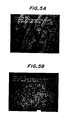
- FIGS. 6A and 6B SEM photomicrographs of the fabric of Test no. 9 and a comparative fabric that had no resinous film coating and was plasma-treated under the same conditions as Test no. 9 are shown in Figs. 6A and 6B, respectively.
- Fig. 6A formation of only relatively large pits having depths broader than the mouth is observed on the smooth resinous film coating.
- Fig. 6B formation of a great number of fine recesses and projections is observed that is characteristic of those formed on wool by plasma treatments.
- these fabrics were washed, heat-set at 180°C in dry and soaked in 20% caustic soda aqueous solution at 90°C to reduce the weight of the fabric by 20%.
- the resulting fabrics each having a weight of 180 g/m2 were dyed with 15% o.w.f. of Kayalon Polyester Black GSF and then subjected to a reduction washing to provide black dyed fabrics.
- the dried fabrics were cured through a heat-treatment at 150°C.
- the fabrics were subjected to a low-temperature plasma etching treatment under the following conditions.
- the back surface of the fabric was contacted with an antenna electrode and a plasma treatment apparatus was vacuumized to a pressure of 10 ⁇ 2 torr and then controlled at 0.3 torr by introducing O2 gas thereinto.
- a plasma treatment was conducted by applying a high frequency of 13.56 MHz with an output of 50 W to provide a fabric sample A.
- the formation of the abrasion resistant resin film coating II can restrain an increase after rubbing of L-value in less than 1.5 and lightening of color in rubbed portions becomes not appreciable.
- SEM photomicrographs ( ⁇ 10,000) of fiber surfaces before and after coating of the abrasion resistant film are shown in Figs. 9 and 10, respectively.
Landscapes
- Physics & Mathematics (AREA)
- Engineering & Computer Science (AREA)
- Textile Engineering (AREA)
- General Physics & Mathematics (AREA)
- Optics & Photonics (AREA)
- Chemical & Material Sciences (AREA)
- Chemical Kinetics & Catalysis (AREA)
- Treatments For Attaching Organic Compounds To Fibrous Goods (AREA)
- Compositions Of Macromolecular Compounds (AREA)
- Laminated Bodies (AREA)
- Chemical Or Physical Treatment Of Fibers (AREA)
Applications Claiming Priority (8)
| Application Number | Priority Date | Filing Date | Title |
|---|---|---|---|
| JP62049534A JPS63219678A (ja) | 1987-03-03 | 1987-03-03 | 深色化繊維の製造方法 |
| JP49534/87 | 1987-03-03 | ||
| JP90485/87 | 1987-04-13 | ||
| JP62090485A JP2566885B2 (ja) | 1987-04-13 | 1987-04-13 | 深色化繊維構造物及びその製造方法 |
| JP95766/87 | 1987-04-18 | ||
| JP62095766A JP2820150B2 (ja) | 1987-04-18 | 1987-04-18 | 深色化繊維構造物 |
| JP62263262A JP2599113B2 (ja) | 1987-10-19 | 1987-10-19 | 深色化繊維構造物の製造方法 |
| JP263262/87 | 1987-10-19 |
Publications (3)
| Publication Number | Publication Date |
|---|---|
| EP0281066A2 true EP0281066A2 (fr) | 1988-09-07 |
| EP0281066A3 EP0281066A3 (fr) | 1992-01-08 |
| EP0281066B1 EP0281066B1 (fr) | 1994-06-15 |
Family
ID=27462372
Family Applications (1)
| Application Number | Title | Priority Date | Filing Date |
|---|---|---|---|
| EP88103063A Expired - Lifetime EP0281066B1 (fr) | 1987-03-03 | 1988-03-01 | Traitement de fibres colorées en profondeur avec des résines |
Country Status (4)
| Country | Link |
|---|---|
| US (2) | US4900625A (fr) |
| EP (1) | EP0281066B1 (fr) |
| KR (1) | KR910003682B1 (fr) |
| DE (1) | DE3850144T2 (fr) |
Cited By (1)
| Publication number | Priority date | Publication date | Assignee | Title |
|---|---|---|---|---|
| EP2225966A1 (fr) * | 2009-03-04 | 2010-09-08 | Braun GmbH | Soie de brosse à dents et son procédé de fabrication |
Families Citing this family (11)
| Publication number | Priority date | Publication date | Assignee | Title |
|---|---|---|---|---|
| GB8828414D0 (en) * | 1988-12-06 | 1989-01-05 | Precision Proc Textiles Ltd | Method for treatment of cellulosic fibres |
| DE4128256C1 (fr) * | 1991-08-27 | 1993-04-15 | H. Krantz Gmbh & Co, 5100 Aachen, De | |
| US5224441A (en) * | 1991-09-27 | 1993-07-06 | The Boc Group, Inc. | Apparatus for rapid plasma treatments and method |
| DE59305297D1 (de) * | 1992-03-03 | 1997-03-13 | Ciba Geigy Ag | Verfahren zur Herstellung von Mehrfarben- oder Hell-Dunkel-Effekten |
| JP2693894B2 (ja) * | 1992-05-14 | 1997-12-24 | 豊田紡織株式会社 | シートベルト用ウェビング |
| US5397633A (en) * | 1993-06-18 | 1995-03-14 | Exxon Chemical Patents, Inc. | Process for sizing spun cotton yarns |
| KR970043549A (ko) * | 1995-12-02 | 1997-07-26 | 김준웅 | 고심색성 폴리에스터 직물의 제조방법 |
| US5894032A (en) * | 1997-05-20 | 1999-04-13 | Green; Richard | Process for the manufacture of printed orthopedic casting tape |
| US7887889B2 (en) * | 2001-12-14 | 2011-02-15 | 3M Innovative Properties Company | Plasma fluorination treatment of porous materials |
| WO2006057382A1 (fr) * | 2004-11-29 | 2006-06-01 | Toyo Boseki Kabushiki Kaisha | Film en resine thermoplastique stratifiee et rouleau de film en resine thermoplastique stratifiee |
| CN111575831B (zh) * | 2020-05-19 | 2022-12-16 | 浙江恒逸石化研究院有限公司 | 一种拒水抗污低熔点复合纤维的制备方法 |
Family Cites Families (21)
| Publication number | Priority date | Publication date | Assignee | Title |
|---|---|---|---|---|
| GB1199385A (en) * | 1967-08-02 | 1970-07-22 | Teijin Ltd | Synthetic Filaments having a Rough Texture on their Surfaces and process for the production thereof |
| JPS5911709B2 (ja) * | 1976-02-17 | 1984-03-17 | 株式会社クラレ | 繊維成形物およびその製造方法 |
| JPS53111192A (en) * | 1977-03-07 | 1978-09-28 | Toray Industries | Fiber structure with improved deep color |
| JPS5924233B2 (ja) * | 1979-02-05 | 1984-06-07 | 株式会社クラレ | ポリエステル系合成繊維 |
| DE3129562C2 (de) * | 1980-07-29 | 1994-10-06 | Kao Corp | Farbvertiefendes Mittel |
| JPS6037225B2 (ja) * | 1981-06-24 | 1985-08-24 | 東レ株式会社 | 被覆繊維 |
| DE3276379D1 (en) * | 1981-08-25 | 1987-06-25 | Teijin Ltd | Dyed polyester fiber composite structure |
| JPS5881610A (ja) * | 1981-11-09 | 1983-05-17 | Kuraray Co Ltd | 粗面化された合成繊維およびその製造方法 |
| JPS5915568A (ja) * | 1982-07-09 | 1984-01-26 | 株式会社クラレ | 発色性かつその耐久効果の優れた繊維構造物 |
| JPS5976983A (ja) * | 1982-10-26 | 1984-05-02 | 東レ株式会社 | 高発色繊維の製造方法 |
| EP0110416B1 (fr) * | 1982-12-02 | 1989-07-26 | Shin-Etsu Chemical Co., Ltd. | Méthode pour augmenter la densité de la couleur et pour améliorer la solidité de teinture de tissus teints |
| CA1217625A (fr) * | 1983-02-28 | 1987-02-10 | Takao Akagi | Structure fibreuse a surface rugueuse, et sa fabrication |
| JPS59213736A (ja) * | 1983-05-19 | 1984-12-03 | Kuraray Co Ltd | プラズマ加工方法 |
| JPS6017190A (ja) * | 1983-07-01 | 1985-01-29 | 東レ株式会社 | 高発色性繊維構造物の製造法 |
| JPS6075668A (ja) * | 1983-09-30 | 1985-04-30 | セ−レン株式会社 | ポリエステル繊維表面構造の改質法 |
| JPS60162864A (ja) * | 1984-02-03 | 1985-08-24 | ユニチカ株式会社 | ポリエステル系合成繊維の表面粗化方法 |
| JPS60224878A (ja) * | 1984-04-23 | 1985-11-09 | 東レ株式会社 | 高発色繊維の製造方法 |
| JPS6163791A (ja) * | 1984-09-06 | 1986-04-01 | 信越化学工業株式会社 | 染色繊維製品の濃色化方法 |
| JPS6183375A (ja) * | 1984-09-27 | 1986-04-26 | 東レ株式会社 | 繊維構造物の発色性改善方法 |
| JPS6197467A (ja) * | 1984-10-09 | 1986-05-15 | 株式会社クラレ | 添加物の移行防止効果にすぐれた繊維構造物及びその製造方法 |
| JPS6197490A (ja) * | 1984-10-18 | 1986-05-15 | 信越化学工業株式会社 | 染色繊維製品の濃色化方法 |
-
1988
- 1988-02-26 US US07/160,584 patent/US4900625A/en not_active Expired - Fee Related
- 1988-03-01 DE DE3850144T patent/DE3850144T2/de not_active Expired - Fee Related
- 1988-03-01 EP EP88103063A patent/EP0281066B1/fr not_active Expired - Lifetime
- 1988-03-03 KR KR8802221A patent/KR910003682B1/ko not_active Expired
-
1989
- 1989-11-13 US US07/435,941 patent/US4997519A/en not_active Expired - Fee Related
Cited By (3)
| Publication number | Priority date | Publication date | Assignee | Title |
|---|---|---|---|---|
| EP2225966A1 (fr) * | 2009-03-04 | 2010-09-08 | Braun GmbH | Soie de brosse à dents et son procédé de fabrication |
| WO2010100618A1 (fr) * | 2009-03-04 | 2010-09-10 | Braun Gmbh | Poil de brosse à dents et son procédé de fabrication |
| CN102341016A (zh) * | 2009-03-04 | 2012-02-01 | 博朗有限公司 | 牙刷刷毛和用于制造这样一种刷毛的方法 |
Also Published As
| Publication number | Publication date |
|---|---|
| KR910003682B1 (en) | 1991-06-08 |
| DE3850144D1 (de) | 1994-07-21 |
| US4900625A (en) | 1990-02-13 |
| KR880011405A (ko) | 1988-10-28 |
| EP0281066B1 (fr) | 1994-06-15 |
| US4997519A (en) | 1991-03-05 |
| DE3850144T2 (de) | 1994-11-10 |
| EP0281066A3 (fr) | 1992-01-08 |
Similar Documents
| Publication | Publication Date | Title |
|---|---|---|
| US4400424A (en) | Fabrics having an excellent color developing property and a process for producing the same involving plasma treatment and an aftercoat | |
| EP0281066B1 (fr) | Traitement de fibres colorées en profondeur avec des résines | |
| EP0080099B1 (fr) | Fibres synthétiques à surface irrégulière et procédé pour leur obtention | |
| US4522873A (en) | Fibrous structure having roughened surface | |
| CN109537330A (zh) | 一种基于生物基材料的锦涤t400织物的染整加工工艺 | |
| Wong et al. | Effect of plasma and subsequent enzymatic treatments on linen fabrics | |
| JP2703557B2 (ja) | 深色化繊維及びその製造方法 | |
| JP2954947B2 (ja) | 深色化繊維 | |
| JP2002138372A (ja) | 織・編物およびその製造方法 | |
| JPH05287671A (ja) | ポリエステル系繊維構造物の製造方法 | |
| JP2638586B2 (ja) | 濃染色された高強度、高弾性率ポリアミド系繊維の製造方法 | |
| JP2566885B2 (ja) | 深色化繊維構造物及びその製造方法 | |
| JP2820150B2 (ja) | 深色化繊維構造物 | |
| JP2638585B2 (ja) | 濃染色された高強度、高弾性率ポリエステル系繊維の製造方法 | |
| JPS6139438B2 (fr) | ||
| JP2553038B2 (ja) | 繊維構造物の発色性改善方法 | |
| JPS5915568A (ja) | 発色性かつその耐久効果の優れた繊維構造物 | |
| JPH10140489A (ja) | ポリエステル系繊維および繊維製品およびその染色方法 | |
| JPH0316418B2 (fr) | ||
| JPH01111070A (ja) | 深色化繊維構造物の製造方法 | |
| JPH0242938B2 (fr) | ||
| KR19980044973A (ko) | 수지 처리에 의한 심색성 폴리에스테르 직물의 제조방법 | |
| JPH0450386A (ja) | 濃色化立毛製品の製造法 | |
| JPS61194278A (ja) | 高発色繊維の製造方法 | |
| JPS6183375A (ja) | 繊維構造物の発色性改善方法 |
Legal Events
| Date | Code | Title | Description |
|---|---|---|---|
| PUAI | Public reference made under article 153(3) epc to a published international application that has entered the european phase |
Free format text: ORIGINAL CODE: 0009012 |
|
| AK | Designated contracting states |
Kind code of ref document: A2 Designated state(s): DE FR GB IT |
|
| PUAL | Search report despatched |
Free format text: ORIGINAL CODE: 0009013 |
|
| AK | Designated contracting states |
Kind code of ref document: A3 Designated state(s): DE FR GB IT |
|
| 17P | Request for examination filed |
Effective date: 19920421 |
|
| 17Q | First examination report despatched |
Effective date: 19920812 |
|
| GRAA | (expected) grant |
Free format text: ORIGINAL CODE: 0009210 |
|
| AK | Designated contracting states |
Kind code of ref document: B1 Designated state(s): DE FR GB IT |
|
| PG25 | Lapsed in a contracting state [announced via postgrant information from national office to epo] |
Ref country code: FR Free format text: THE PATENT HAS BEEN ANNULLED BY A DECISION OF A NATIONAL AUTHORITY Effective date: 19940615 |
|
| REF | Corresponds to: |
Ref document number: 3850144 Country of ref document: DE Date of ref document: 19940721 |
|
| ET | Fr: translation filed | ||
| ITF | It: translation for a ep patent filed | ||
| PG25 | Lapsed in a contracting state [announced via postgrant information from national office to epo] |
Ref country code: GB Effective date: 19950301 |
|
| PLBE | No opposition filed within time limit |
Free format text: ORIGINAL CODE: 0009261 |
|
| STAA | Information on the status of an ep patent application or granted ep patent |
Free format text: STATUS: NO OPPOSITION FILED WITHIN TIME LIMIT |
|
| 26N | No opposition filed | ||
| GBPC | Gb: european patent ceased through non-payment of renewal fee |
Effective date: 19950301 |
|
| REG | Reference to a national code |
Ref country code: FR Ref legal event code: ST |
|
| PGFP | Annual fee paid to national office [announced via postgrant information from national office to epo] |
Ref country code: DE Payment date: 19970411 Year of fee payment: 10 |
|
| PG25 | Lapsed in a contracting state [announced via postgrant information from national office to epo] |
Ref country code: DE Free format text: LAPSE BECAUSE OF NON-PAYMENT OF DUE FEES Effective date: 19981201 |
|
| PG25 | Lapsed in a contracting state [announced via postgrant information from national office to epo] |
Ref country code: IT Free format text: LAPSE BECAUSE OF NON-PAYMENT OF DUE FEES Effective date: 20050301 |