EP0281121A1 - 1-(1-Aryl-2-hydroxy-ethyl)-imidazole und deren Salze, Verfahren zu ihrer Herstellung, diese Verbindungen enthaltende Arzneimittel und ihre Verwendung - Google Patents
1-(1-Aryl-2-hydroxy-ethyl)-imidazole und deren Salze, Verfahren zu ihrer Herstellung, diese Verbindungen enthaltende Arzneimittel und ihre Verwendung Download PDFInfo
- Publication number
- EP0281121A1 EP0281121A1 EP88103225A EP88103225A EP0281121A1 EP 0281121 A1 EP0281121 A1 EP 0281121A1 EP 88103225 A EP88103225 A EP 88103225A EP 88103225 A EP88103225 A EP 88103225A EP 0281121 A1 EP0281121 A1 EP 0281121A1
- Authority
- EP
- European Patent Office
- Prior art keywords
- formula
- och
- alkyl
- compound
- cycloalkyl
- Prior art date
- Legal status (The legal status is an assumption and is not a legal conclusion. Google has not performed a legal analysis and makes no representation as to the accuracy of the status listed.)
- Granted
Links
- 239000003814 drug Substances 0.000 title claims abstract description 11
- 238000000034 method Methods 0.000 title claims description 37
- 150000003839 salts Chemical class 0.000 title claims description 22
- 238000002360 preparation method Methods 0.000 title claims description 11
- 229940079593 drug Drugs 0.000 title description 3
- 150000001875 compounds Chemical class 0.000 claims abstract description 81
- 230000001430 anti-depressive effect Effects 0.000 claims abstract description 9
- 239000000935 antidepressant agent Substances 0.000 claims abstract description 8
- 230000000843 anti-fungal effect Effects 0.000 claims abstract description 7
- 229940005513 antidepressants Drugs 0.000 claims abstract description 7
- 229940121375 antifungal agent Drugs 0.000 claims abstract description 4
- -1 2-propin-1-yl Chemical group 0.000 claims description 34
- 125000004178 (C1-C4) alkyl group Chemical group 0.000 claims description 22
- 125000004432 carbon atom Chemical group C* 0.000 claims description 22
- 239000002253 acid Substances 0.000 claims description 19
- 125000001424 substituent group Chemical group 0.000 claims description 16
- 229910052799 carbon Inorganic materials 0.000 claims description 15
- 239000002585 base Substances 0.000 claims description 13
- 125000000217 alkyl group Chemical group 0.000 claims description 10
- 229910052794 bromium Inorganic materials 0.000 claims description 10
- 229910052801 chlorine Inorganic materials 0.000 claims description 10
- 125000001997 phenyl group Chemical group [H]C1=C([H])C([H])=C(*)C([H])=C1[H] 0.000 claims description 10
- 125000006272 (C3-C7) cycloalkyl group Chemical group 0.000 claims description 9
- 238000006243 chemical reaction Methods 0.000 claims description 9
- 229910052731 fluorine Inorganic materials 0.000 claims description 9
- 229910052739 hydrogen Inorganic materials 0.000 claims description 9
- 125000000229 (C1-C4)alkoxy group Chemical group 0.000 claims description 8
- HBAQYPYDRFILMT-UHFFFAOYSA-N 8-[3-(1-cyclopropylpyrazol-4-yl)-1H-pyrazolo[4,3-d]pyrimidin-5-yl]-3-methyl-3,8-diazabicyclo[3.2.1]octan-2-one Chemical class C1(CC1)N1N=CC(=C1)C1=NNC2=C1N=C(N=C2)N1C2C(N(CC1CC2)C)=O HBAQYPYDRFILMT-UHFFFAOYSA-N 0.000 claims description 8
- 229910052727 yttrium Inorganic materials 0.000 claims description 8
- UFHFLCQGNIYNRP-UHFFFAOYSA-N Hydrogen Chemical compound [H][H] UFHFLCQGNIYNRP-UHFFFAOYSA-N 0.000 claims description 7
- RWRDLPDLKQPQOW-UHFFFAOYSA-N Pyrrolidine Chemical compound C1CCNC1 RWRDLPDLKQPQOW-UHFFFAOYSA-N 0.000 claims description 7
- 229910052784 alkaline earth metal Inorganic materials 0.000 claims description 7
- 125000003342 alkenyl group Chemical group 0.000 claims description 7
- 239000001257 hydrogen Substances 0.000 claims description 7
- 125000004849 alkoxymethyl group Chemical group 0.000 claims description 6
- KKKDZZRICRFGSD-UHFFFAOYSA-N 1-benzylimidazole Chemical compound C1=CN=CN1CC1=CC=CC=C1 KKKDZZRICRFGSD-UHFFFAOYSA-N 0.000 claims description 5
- 125000000753 cycloalkyl group Chemical group 0.000 claims description 5
- 125000006729 (C2-C5) alkenyl group Chemical group 0.000 claims description 4
- 125000006552 (C3-C8) cycloalkyl group Chemical group 0.000 claims description 4
- 125000006554 (C4-C8) cycloalkenyl group Chemical group 0.000 claims description 4
- NQRYJNQNLNOLGT-UHFFFAOYSA-N Piperidine Chemical compound C1CCNCC1 NQRYJNQNLNOLGT-UHFFFAOYSA-N 0.000 claims description 4
- 150000001342 alkaline earth metals Chemical class 0.000 claims description 4
- 239000000969 carrier Substances 0.000 claims description 4
- 125000000392 cycloalkenyl group Chemical group 0.000 claims description 4
- 150000007522 mineralic acids Chemical class 0.000 claims description 4
- 125000005913 (C3-C6) cycloalkyl group Chemical group 0.000 claims description 3
- 125000004135 2-norbornyl group Chemical group [H]C1([H])C([H])([H])C2([H])C([H])([H])C1([H])C([H])([H])C2([H])* 0.000 claims description 3
- IAYPIBMASNFSPL-UHFFFAOYSA-N Ethylene oxide Chemical compound C1CO1 IAYPIBMASNFSPL-UHFFFAOYSA-N 0.000 claims description 3
- 239000003513 alkali Substances 0.000 claims description 3
- 125000003545 alkoxy group Chemical group 0.000 claims description 3
- 125000004414 alkyl thio group Chemical group 0.000 claims description 3
- 125000001797 benzyl group Chemical group [H]C1=C([H])C([H])=C(C([H])=C1[H])C([H])([H])* 0.000 claims description 3
- 150000007524 organic acids Chemical class 0.000 claims description 3
- 235000005985 organic acids Nutrition 0.000 claims description 3
- 125000006730 (C2-C5) alkynyl group Chemical group 0.000 claims description 2
- GVNVAWHJIKLAGL-UHFFFAOYSA-N 2-(cyclohexen-1-yl)cyclohexan-1-one Chemical compound O=C1CCCCC1C1=CCCCC1 GVNVAWHJIKLAGL-UHFFFAOYSA-N 0.000 claims description 2
- 101150065749 Churc1 gene Proteins 0.000 claims description 2
- YNAVUWVOSKDBBP-UHFFFAOYSA-N Morpholine Natural products C1COCCN1 YNAVUWVOSKDBBP-UHFFFAOYSA-N 0.000 claims description 2
- 208000031888 Mycoses Diseases 0.000 claims description 2
- 102100038239 Protein Churchill Human genes 0.000 claims description 2
- 230000003001 depressive effect Effects 0.000 claims description 2
- 125000002485 formyl group Chemical class [H]C(*)=O 0.000 claims description 2
- 238000004519 manufacturing process Methods 0.000 claims description 2
- 229910052757 nitrogen Inorganic materials 0.000 claims description 2
- 125000004433 nitrogen atom Chemical group N* 0.000 claims description 2
- 239000003429 antifungal agent Substances 0.000 claims 1
- 230000000694 effects Effects 0.000 abstract description 4
- 150000002460 imidazoles Chemical class 0.000 abstract description 4
- WYURNTSHIVDZCO-UHFFFAOYSA-N Tetrahydrofuran Chemical compound C1CCOC1 WYURNTSHIVDZCO-UHFFFAOYSA-N 0.000 description 68
- VLKZOEOYAKHREP-UHFFFAOYSA-N n-Hexane Chemical compound CCCCCC VLKZOEOYAKHREP-UHFFFAOYSA-N 0.000 description 63
- 239000000243 solution Substances 0.000 description 59
- 239000000203 mixture Substances 0.000 description 38
- WEVYAHXRMPXWCK-UHFFFAOYSA-N Acetonitrile Chemical compound CC#N WEVYAHXRMPXWCK-UHFFFAOYSA-N 0.000 description 36
- MZRVEZGGRBJDDB-UHFFFAOYSA-N N-Butyllithium Chemical compound [Li]CCCC MZRVEZGGRBJDDB-UHFFFAOYSA-N 0.000 description 36
- RTZKZFJDLAIYFH-UHFFFAOYSA-N Diethyl ether Chemical compound CCOCC RTZKZFJDLAIYFH-UHFFFAOYSA-N 0.000 description 34
- YLQBMQCUIZJEEH-UHFFFAOYSA-N tetrahydrofuran Natural products C=1C=COC=1 YLQBMQCUIZJEEH-UHFFFAOYSA-N 0.000 description 34
- 239000000460 chlorine Substances 0.000 description 32
- 239000000047 product Substances 0.000 description 25
- XLYOFNOQVPJJNP-UHFFFAOYSA-N water Chemical compound O XLYOFNOQVPJJNP-UHFFFAOYSA-N 0.000 description 17
- VYPSYNLAJGMNEJ-UHFFFAOYSA-N Silicium dioxide Chemical compound O=[Si]=O VYPSYNLAJGMNEJ-UHFFFAOYSA-N 0.000 description 14
- 239000000126 substance Substances 0.000 description 13
- 238000010828 elution Methods 0.000 description 12
- 150000001299 aldehydes Chemical class 0.000 description 11
- 239000000741 silica gel Substances 0.000 description 11
- 229910002027 silica gel Inorganic materials 0.000 description 11
- OKTJSMMVPCPJKN-UHFFFAOYSA-N Carbon Chemical compound [C] OKTJSMMVPCPJKN-UHFFFAOYSA-N 0.000 description 10
- YXFVVABEGXRONW-UHFFFAOYSA-N Toluene Chemical compound CC1=CC=CC=C1 YXFVVABEGXRONW-UHFFFAOYSA-N 0.000 description 9
- 239000000284 extract Substances 0.000 description 9
- 125000002496 methyl group Chemical group [H]C([H])([H])* 0.000 description 9
- 239000000825 pharmaceutical preparation Substances 0.000 description 9
- 239000002904 solvent Substances 0.000 description 9
- MKJIEFSOBYUXJB-HOCLYGCPSA-N (3S,11bS)-9,10-dimethoxy-3-isobutyl-1,3,4,6,7,11b-hexahydro-2H-pyrido[2,1-a]isoquinolin-2-one Chemical compound C1CN2C[C@H](CC(C)C)C(=O)C[C@H]2C2=C1C=C(OC)C(OC)=C2 MKJIEFSOBYUXJB-HOCLYGCPSA-N 0.000 description 8
- 238000005160 1H NMR spectroscopy Methods 0.000 description 8
- ZAFNJMIOTHYJRJ-UHFFFAOYSA-N Diisopropyl ether Chemical compound CC(C)OC(C)C ZAFNJMIOTHYJRJ-UHFFFAOYSA-N 0.000 description 8
- 206010015995 Eyelid ptosis Diseases 0.000 description 8
- 229920001479 Hydroxyethyl methyl cellulose Polymers 0.000 description 8
- 239000004480 active ingredient Substances 0.000 description 8
- 238000001816 cooling Methods 0.000 description 8
- BASFCYQUMIYNBI-UHFFFAOYSA-N platinum Chemical compound [Pt] BASFCYQUMIYNBI-UHFFFAOYSA-N 0.000 description 8
- 201000003004 ptosis Diseases 0.000 description 8
- 229960005333 tetrabenazine Drugs 0.000 description 8
- 239000004305 biphenyl Substances 0.000 description 7
- 150000003254 radicals Chemical class 0.000 description 7
- XEKOWRVHYACXOJ-UHFFFAOYSA-N Ethyl acetate Chemical compound CCOC(C)=O XEKOWRVHYACXOJ-UHFFFAOYSA-N 0.000 description 6
- OKKJLVBELUTLKV-UHFFFAOYSA-N Methanol Chemical compound OC OKKJLVBELUTLKV-UHFFFAOYSA-N 0.000 description 6
- OFBQJSOFQDEBGM-UHFFFAOYSA-N Pentane Chemical compound CCCCC OFBQJSOFQDEBGM-UHFFFAOYSA-N 0.000 description 6
- 230000015572 biosynthetic process Effects 0.000 description 6
- ZCSHNCUQKCANBX-UHFFFAOYSA-N lithium diisopropylamide Chemical compound [Li+].CC(C)[N-]C(C)C ZCSHNCUQKCANBX-UHFFFAOYSA-N 0.000 description 6
- 125000000956 methoxy group Chemical group [H]C([H])([H])O* 0.000 description 6
- 239000012071 phase Substances 0.000 description 6
- LEHBURLTIWGHEM-UHFFFAOYSA-N pyridinium chlorochromate Chemical compound [O-][Cr](Cl)(=O)=O.C1=CC=[NH+]C=C1 LEHBURLTIWGHEM-UHFFFAOYSA-N 0.000 description 6
- DARGVYVMURXBSO-UHFFFAOYSA-N 1-[(3-chlorophenyl)methyl]imidazole Chemical class ClC1=CC=CC(CN2C=NC=C2)=C1 DARGVYVMURXBSO-UHFFFAOYSA-N 0.000 description 5
- KWYHDKDOAIKMQN-UHFFFAOYSA-N N,N,N',N'-tetramethylethylenediamine Chemical compound CN(C)CCN(C)C KWYHDKDOAIKMQN-UHFFFAOYSA-N 0.000 description 5
- 239000013543 active substance Substances 0.000 description 5
- 239000007864 aqueous solution Substances 0.000 description 5
- 125000004122 cyclic group Chemical group 0.000 description 5
- 238000002955 isolation Methods 0.000 description 5
- 238000003786 synthesis reaction Methods 0.000 description 5
- 238000012360 testing method Methods 0.000 description 5
- DXSDIWHOOOBQTJ-UHFFFAOYSA-N 2,2-dimethylpent-4-enal Chemical compound O=CC(C)(C)CC=C DXSDIWHOOOBQTJ-UHFFFAOYSA-N 0.000 description 4
- 125000004179 3-chlorophenyl group Chemical group [H]C1=C([H])C(*)=C([H])C(Cl)=C1[H] 0.000 description 4
- PCLIMKBDDGJMGD-UHFFFAOYSA-N N-bromosuccinimide Chemical compound BrN1C(=O)CCC1=O PCLIMKBDDGJMGD-UHFFFAOYSA-N 0.000 description 4
- KDLHZDBZIXYQEI-UHFFFAOYSA-N Palladium Chemical compound [Pd] KDLHZDBZIXYQEI-UHFFFAOYSA-N 0.000 description 4
- 150000007513 acids Chemical class 0.000 description 4
- 230000037396 body weight Effects 0.000 description 4
- 238000004587 chromatography analysis Methods 0.000 description 4
- 239000013078 crystal Substances 0.000 description 4
- 229910052697 platinum Inorganic materials 0.000 description 4
- 239000002798 polar solvent Substances 0.000 description 4
- 229920006395 saturated elastomer Polymers 0.000 description 4
- HEMHJVSKTPXQMS-UHFFFAOYSA-M sodium hydroxide Inorganic materials [OH-].[Na+] HEMHJVSKTPXQMS-UHFFFAOYSA-M 0.000 description 4
- 239000007858 starting material Substances 0.000 description 4
- 238000004809 thin layer chromatography Methods 0.000 description 4
- BJEPYKJPYRNKOW-REOHCLBHSA-N (S)-malic acid Chemical compound OC(=O)[C@@H](O)CC(O)=O BJEPYKJPYRNKOW-REOHCLBHSA-N 0.000 description 3
- ZWMSYBMVIAPJCL-UHFFFAOYSA-N 1-(3-chlorophenyl)-1-imidazol-1-yl-3,3-dimethylhex-5-en-2-ol Chemical compound C1=CN=CN1C(C(O)C(C)(CC=C)C)C1=CC=CC(Cl)=C1 ZWMSYBMVIAPJCL-UHFFFAOYSA-N 0.000 description 3
- GVGQLJSIZNZVGK-UHFFFAOYSA-N 1-(3-chlorophenyl)-3,3-dimethyl-1-(4-methylimidazol-1-yl)hex-5-en-2-ol Chemical compound C1=NC(C)=CN1C(C(O)C(C)(C)CC=C)C1=CC=CC(Cl)=C1 GVGQLJSIZNZVGK-UHFFFAOYSA-N 0.000 description 3
- 150000004963 1-benzylimidazoles Chemical class 0.000 description 3
- DUQGFIKXKISULR-UHFFFAOYSA-N 3-methyloxetane-3-carbaldehyde Chemical compound O=CC1(C)COC1 DUQGFIKXKISULR-UHFFFAOYSA-N 0.000 description 3
- UHOVQNZJYSORNB-UHFFFAOYSA-N Benzene Chemical compound C1=CC=CC=C1 UHOVQNZJYSORNB-UHFFFAOYSA-N 0.000 description 3
- YMWUJEATGCHHMB-UHFFFAOYSA-N Dichloromethane Chemical compound ClCCl YMWUJEATGCHHMB-UHFFFAOYSA-N 0.000 description 3
- LFQSCWFLJHTTHZ-UHFFFAOYSA-N Ethanol Chemical compound CCO LFQSCWFLJHTTHZ-UHFFFAOYSA-N 0.000 description 3
- 241000699666 Mus <mouse, genus> Species 0.000 description 3
- 241000699670 Mus sp. Species 0.000 description 3
- ZMXDDKWLCZADIW-UHFFFAOYSA-N N,N-Dimethylformamide Chemical compound CN(C)C=O ZMXDDKWLCZADIW-UHFFFAOYSA-N 0.000 description 3
- RKOTXQYWCBGZLP-UHFFFAOYSA-N N-[(2,4-difluorophenyl)methyl]-2-ethyl-9-hydroxy-3-methoxy-1,8-dioxospiro[3H-pyrido[1,2-a]pyrazine-4,3'-oxolane]-7-carboxamide Chemical compound CCN1C(OC)C2(CCOC2)N2C=C(C(=O)NCC3=C(F)C=C(F)C=C3)C(=O)C(O)=C2C1=O RKOTXQYWCBGZLP-UHFFFAOYSA-N 0.000 description 3
- KWYUFKZDYYNOTN-UHFFFAOYSA-M Potassium hydroxide Chemical compound [OH-].[K+] KWYUFKZDYYNOTN-UHFFFAOYSA-M 0.000 description 3
- FEWJPZIEWOKRBE-UHFFFAOYSA-N Tartaric acid Natural products [H+].[H+].[O-]C(=O)C(O)C(O)C([O-])=O FEWJPZIEWOKRBE-UHFFFAOYSA-N 0.000 description 3
- BJEPYKJPYRNKOW-UHFFFAOYSA-N alpha-hydroxysuccinic acid Natural products OC(=O)C(O)CC(O)=O BJEPYKJPYRNKOW-UHFFFAOYSA-N 0.000 description 3
- 150000001721 carbon Chemical group 0.000 description 3
- 239000003054 catalyst Substances 0.000 description 3
- 238000004440 column chromatography Methods 0.000 description 3
- 239000006071 cream Substances 0.000 description 3
- 238000002425 crystallisation Methods 0.000 description 3
- 230000008025 crystallization Effects 0.000 description 3
- UAOMVDZJSHZZME-UHFFFAOYSA-N diisopropylamine Chemical compound CC(C)NC(C)C UAOMVDZJSHZZME-UHFFFAOYSA-N 0.000 description 3
- 238000001914 filtration Methods 0.000 description 3
- 238000001640 fractional crystallisation Methods 0.000 description 3
- 238000005984 hydrogenation reaction Methods 0.000 description 3
- RAXXELZNTBOGNW-UHFFFAOYSA-N imidazole Natural products C1=CNC=N1 RAXXELZNTBOGNW-UHFFFAOYSA-N 0.000 description 3
- 125000002883 imidazolyl group Chemical group 0.000 description 3
- XLSZMDLNRCVEIJ-UHFFFAOYSA-N methylimidazole Natural products CC1=CNC=N1 XLSZMDLNRCVEIJ-UHFFFAOYSA-N 0.000 description 3
- 239000002674 ointment Substances 0.000 description 3
- 239000007787 solid Substances 0.000 description 3
- 238000001228 spectrum Methods 0.000 description 3
- 238000003756 stirring Methods 0.000 description 3
- 239000000725 suspension Substances 0.000 description 3
- IWYDHOAUDWTVEP-SSDOTTSWSA-N (R)-mandelic acid Chemical compound OC(=O)[C@H](O)C1=CC=CC=C1 IWYDHOAUDWTVEP-SSDOTTSWSA-N 0.000 description 2
- JSWNPMOFGKJEKX-UHFFFAOYSA-N 1-(3-bromophenyl)-1-imidazol-1-yl-3,3-dimethylhex-5-en-2-ol Chemical compound C1=CN=CN1C(C(O)C(C)(CC=C)C)C1=CC=CC(Br)=C1 JSWNPMOFGKJEKX-UHFFFAOYSA-N 0.000 description 2
- XBLXFDDCFSRPDF-UHFFFAOYSA-N 1-(3-chlorophenyl)-1-imidazol-1-yl-3,3-dimethylhexan-2-ol Chemical compound C1=CN=CN1C(C(O)C(C)(C)CCC)C1=CC=CC(Cl)=C1 XBLXFDDCFSRPDF-UHFFFAOYSA-N 0.000 description 2
- VAEFHMHVWCPZKP-UHFFFAOYSA-N 1-(3-chlorophenyl)-3,3-dimethyl-1-(4-methylimidazol-1-yl)hexan-2-ol Chemical compound C1=NC(C)=CN1C(C(O)C(C)(C)CCC)C1=CC=CC(Cl)=C1 VAEFHMHVWCPZKP-UHFFFAOYSA-N 0.000 description 2
- BRFISUVIVJIELR-UHFFFAOYSA-N 1-(3-chlorophenyl)-3,3-dimethyl-1-(5-methylimidazol-1-yl)hex-5-en-2-ol Chemical compound CC1=CN=CN1C(C(O)C(C)(C)CC=C)C1=CC=CC(Cl)=C1 BRFISUVIVJIELR-UHFFFAOYSA-N 0.000 description 2
- RZJGKPNCYQZFGR-UHFFFAOYSA-N 1-(bromomethyl)naphthalene Chemical compound C1=CC=C2C(CBr)=CC=CC2=C1 RZJGKPNCYQZFGR-UHFFFAOYSA-N 0.000 description 2
- XVSXZODPVWTBQS-UHFFFAOYSA-N 1-imidazol-1-yl-1-(3-methoxyphenyl)-3,3-dimethylhex-5-en-2-ol Chemical compound COC1=CC=CC(C(C(O)C(C)(C)CC=C)N2C=NC=C2)=C1 XVSXZODPVWTBQS-UHFFFAOYSA-N 0.000 description 2
- YCIDZVOUQHIXEW-UHFFFAOYSA-N 2-(3-chlorophenyl)-1-(6,6-dimethyl-4-bicyclo[3.1.1]heptanyl)-2-imidazol-1-ylethanol Chemical compound CC1(C)C(CC2)CC1C2C(O)C(N1C=NC=C1)C1=CC=CC(Cl)=C1 YCIDZVOUQHIXEW-UHFFFAOYSA-N 0.000 description 2
- LEEYAFQECWPVSR-UHFFFAOYSA-N 2-(3-chlorophenyl)-2-imidazol-1-yl-1-(3-methyloxetan-3-yl)ethanol Chemical compound C=1C=CC(Cl)=CC=1C(N1C=NC=C1)C(O)C1(C)COC1 LEEYAFQECWPVSR-UHFFFAOYSA-N 0.000 description 2
- 125000003852 3-chlorobenzyl group Chemical group [H]C1=C([H])C(=C([H])C(Cl)=C1[H])C([H])([H])* 0.000 description 2
- 125000004180 3-fluorophenyl group Chemical group [H]C1=C([H])C(*)=C([H])C(F)=C1[H] 0.000 description 2
- 125000004207 3-methoxyphenyl group Chemical group [H]C1=C([H])C(*)=C([H])C(OC([H])([H])[H])=C1[H] 0.000 description 2
- OOCLVMCVOWKECB-UHFFFAOYSA-N 6,6-dimethylbicyclo[3.1.1]heptane-4-carbaldehyde Chemical compound C1C2C(C)(C)C1CCC2C=O OOCLVMCVOWKECB-UHFFFAOYSA-N 0.000 description 2
- WDYVUKGVKRZQNM-UHFFFAOYSA-N 6-phosphonohexylphosphonic acid Chemical compound OP(O)(=O)CCCCCCP(O)(O)=O WDYVUKGVKRZQNM-UHFFFAOYSA-N 0.000 description 2
- VTYYLEPIZMXCLO-UHFFFAOYSA-L Calcium carbonate Chemical compound [Ca+2].[O-]C([O-])=O VTYYLEPIZMXCLO-UHFFFAOYSA-L 0.000 description 2
- XDTMQSROBMDMFD-UHFFFAOYSA-N Cyclohexane Chemical compound C1CCCCC1 XDTMQSROBMDMFD-UHFFFAOYSA-N 0.000 description 2
- 208000020401 Depressive disease Diseases 0.000 description 2
- IAZDPXIOMUYVGZ-UHFFFAOYSA-N Dimethylsulphoxide Chemical compound CS(C)=O IAZDPXIOMUYVGZ-UHFFFAOYSA-N 0.000 description 2
- 241000233866 Fungi Species 0.000 description 2
- DHMQDGOQFOQNFH-UHFFFAOYSA-N Glycine Chemical compound NCC(O)=O DHMQDGOQFOQNFH-UHFFFAOYSA-N 0.000 description 2
- JVTAAEKCZFNVCJ-REOHCLBHSA-N L-lactic acid Chemical compound C[C@H](O)C(O)=O JVTAAEKCZFNVCJ-REOHCLBHSA-N 0.000 description 2
- 241001465754 Metazoa Species 0.000 description 2
- KFSLWBXXFJQRDL-UHFFFAOYSA-N Peracetic acid Chemical compound CC(=O)OO KFSLWBXXFJQRDL-UHFFFAOYSA-N 0.000 description 2
- IWYDHOAUDWTVEP-UHFFFAOYSA-N R-2-phenyl-2-hydroxyacetic acid Natural products OC(=O)C(O)C1=CC=CC=C1 IWYDHOAUDWTVEP-UHFFFAOYSA-N 0.000 description 2
- 241000700159 Rattus Species 0.000 description 2
- DKGAVHZHDRPRBM-UHFFFAOYSA-N Tert-Butanol Chemical compound CC(C)(C)O DKGAVHZHDRPRBM-UHFFFAOYSA-N 0.000 description 2
- 241001045770 Trichophyton mentagrophytes Species 0.000 description 2
- 150000001336 alkenes Chemical class 0.000 description 2
- RDOXTESZEPMUJZ-UHFFFAOYSA-N anisole Chemical compound COC1=CC=CC=C1 RDOXTESZEPMUJZ-UHFFFAOYSA-N 0.000 description 2
- 239000008346 aqueous phase Substances 0.000 description 2
- 239000007900 aqueous suspension Substances 0.000 description 2
- TZCXTZWJZNENPQ-UHFFFAOYSA-L barium sulfate Chemical compound [Ba+2].[O-]S([O-])(=O)=O TZCXTZWJZNENPQ-UHFFFAOYSA-L 0.000 description 2
- 239000006227 byproduct Substances 0.000 description 2
- 239000002775 capsule Substances 0.000 description 2
- 150000001728 carbonyl compounds Chemical class 0.000 description 2
- 239000001768 carboxy methyl cellulose Substances 0.000 description 2
- MVPPADPHJFYWMZ-UHFFFAOYSA-N chlorobenzene Chemical compound ClC1=CC=CC=C1 MVPPADPHJFYWMZ-UHFFFAOYSA-N 0.000 description 2
- 239000003085 diluting agent Substances 0.000 description 2
- 201000010099 disease Diseases 0.000 description 2
- 208000037265 diseases, disorders, signs and symptoms Diseases 0.000 description 2
- 238000001035 drying Methods 0.000 description 2
- 239000000839 emulsion Substances 0.000 description 2
- 239000012259 ether extract Substances 0.000 description 2
- QUPDWYMUPZLYJZ-UHFFFAOYSA-N ethyl Chemical compound C[CH2] QUPDWYMUPZLYJZ-UHFFFAOYSA-N 0.000 description 2
- 238000001704 evaporation Methods 0.000 description 2
- 230000008020 evaporation Effects 0.000 description 2
- 125000002887 hydroxy group Chemical group [H]O* 0.000 description 2
- 125000004029 hydroxymethyl group Chemical group [H]OC([H])([H])* 0.000 description 2
- AUONNNVJUCSETH-UHFFFAOYSA-N icosanoyl icosanoate Chemical compound CCCCCCCCCCCCCCCCCCCC(=O)OC(=O)CCCCCCCCCCCCCCCCCCC AUONNNVJUCSETH-UHFFFAOYSA-N 0.000 description 2
- 235000015110 jellies Nutrition 0.000 description 2
- 229910052744 lithium Inorganic materials 0.000 description 2
- 239000012452 mother liquor Substances 0.000 description 2
- XXPANQJNYNUNES-UHFFFAOYSA-N nomifensine Chemical compound C12=CC=CC(N)=C2CN(C)CC1C1=CC=CC=C1 XXPANQJNYNUNES-UHFFFAOYSA-N 0.000 description 2
- 229960001073 nomifensine Drugs 0.000 description 2
- 231100000252 nontoxic Toxicity 0.000 description 2
- 230000003000 nontoxic effect Effects 0.000 description 2
- 238000013421 nuclear magnetic resonance imaging Methods 0.000 description 2
- 230000003287 optical effect Effects 0.000 description 2
- 238000010653 organometallic reaction Methods 0.000 description 2
- 150000002924 oxiranes Chemical class 0.000 description 2
- 229910052763 palladium Inorganic materials 0.000 description 2
- 239000000546 pharmaceutical excipient Substances 0.000 description 2
- 230000000144 pharmacologic effect Effects 0.000 description 2
- 239000003444 phase transfer catalyst Substances 0.000 description 2
- 229910052700 potassium Inorganic materials 0.000 description 2
- FGIUAXJPYTZDNR-UHFFFAOYSA-N potassium nitrate Chemical compound [K+].[O-][N+]([O-])=O FGIUAXJPYTZDNR-UHFFFAOYSA-N 0.000 description 2
- 238000000425 proton nuclear magnetic resonance spectrum Methods 0.000 description 2
- 239000011541 reaction mixture Substances 0.000 description 2
- 238000001953 recrystallisation Methods 0.000 description 2
- 238000000926 separation method Methods 0.000 description 2
- 239000011734 sodium Substances 0.000 description 2
- 239000011877 solvent mixture Substances 0.000 description 2
- 239000007921 spray Substances 0.000 description 2
- FYSNRJHAOHDILO-UHFFFAOYSA-N thionyl chloride Chemical compound ClS(Cl)=O FYSNRJHAOHDILO-UHFFFAOYSA-N 0.000 description 2
- 231100000419 toxicity Toxicity 0.000 description 2
- 230000001988 toxicity Effects 0.000 description 2
- QSLPNSWXUQHVLP-UHFFFAOYSA-N $l^{1}-sulfanylmethane Chemical compound [S]C QSLPNSWXUQHVLP-UHFFFAOYSA-N 0.000 description 1
- SFLSHLFXELFNJZ-QMMMGPOBSA-N (-)-norepinephrine Chemical compound NC[C@H](O)C1=CC=C(O)C(O)=C1 SFLSHLFXELFNJZ-QMMMGPOBSA-N 0.000 description 1
- QBYIENPQHBMVBV-HFEGYEGKSA-N (2R)-2-hydroxy-2-phenylacetic acid Chemical compound O[C@@H](C(O)=O)c1ccccc1.O[C@@H](C(O)=O)c1ccccc1 QBYIENPQHBMVBV-HFEGYEGKSA-N 0.000 description 1
- NLQMSBJFLQPLIJ-UHFFFAOYSA-N (3-methyloxetan-3-yl)methanol Chemical compound OCC1(C)COC1 NLQMSBJFLQPLIJ-UHFFFAOYSA-N 0.000 description 1
- 125000006273 (C1-C3) alkyl group Chemical group 0.000 description 1
- DSSYKIVIOFKYAU-XCBNKYQSSA-N (R)-camphor Chemical compound C1C[C@@]2(C)C(=O)C[C@@H]1C2(C)C DSSYKIVIOFKYAU-XCBNKYQSSA-N 0.000 description 1
- BJEPYKJPYRNKOW-UWTATZPHSA-N (R)-malic acid Chemical compound OC(=O)[C@H](O)CC(O)=O BJEPYKJPYRNKOW-UWTATZPHSA-N 0.000 description 1
- IWYDHOAUDWTVEP-ZETCQYMHSA-N (S)-mandelic acid Chemical compound OC(=O)[C@@H](O)C1=CC=CC=C1 IWYDHOAUDWTVEP-ZETCQYMHSA-N 0.000 description 1
- RYHBNJHYFVUHQT-UHFFFAOYSA-N 1,4-Dioxane Chemical compound C1COCCO1 RYHBNJHYFVUHQT-UHFFFAOYSA-N 0.000 description 1
- BGYZLOIBJCHCTI-UHFFFAOYSA-N 1-[(3-bromophenyl)methyl]imidazole Chemical compound BrC1=CC=CC(CN2C=NC=C2)=C1 BGYZLOIBJCHCTI-UHFFFAOYSA-N 0.000 description 1
- OLIXBQIGIJMNBA-UHFFFAOYSA-N 1-[(3-methoxyphenyl)methyl]imidazole Chemical compound COC1=CC=CC(CN2C=NC=C2)=C1 OLIXBQIGIJMNBA-UHFFFAOYSA-N 0.000 description 1
- QXQAPNSHUJORMC-UHFFFAOYSA-N 1-chloro-4-propylbenzene Chemical compound CCCC1=CC=C(Cl)C=C1 QXQAPNSHUJORMC-UHFFFAOYSA-N 0.000 description 1
- VSBIXVRILPGSTP-UHFFFAOYSA-N 1-imidazol-1-yl-3,3-dimethyl-1-phenylhex-5-en-2-ol Chemical compound C1=CN=CN1C(C(O)C(C)(CC=C)C)C1=CC=CC=C1 VSBIXVRILPGSTP-UHFFFAOYSA-N 0.000 description 1
- VBICKXHEKHSIBG-UHFFFAOYSA-N 1-monostearoylglycerol Chemical compound CCCCCCCCCCCCCCCCCC(=O)OCC(O)CO VBICKXHEKHSIBG-UHFFFAOYSA-N 0.000 description 1
- XQQZRZQVBFHBHL-UHFFFAOYSA-N 12-crown-4 Chemical compound C1COCCOCCOCCO1 XQQZRZQVBFHBHL-UHFFFAOYSA-N 0.000 description 1
- VFTFKUDGYRBSAL-UHFFFAOYSA-N 15-crown-5 Chemical compound C1COCCOCCOCCOCCO1 VFTFKUDGYRBSAL-UHFFFAOYSA-N 0.000 description 1
- XEZNGIUYQVAUSS-UHFFFAOYSA-N 18-crown-6 Chemical compound C1COCCOCCOCCOCCOCCO1 XEZNGIUYQVAUSS-UHFFFAOYSA-N 0.000 description 1
- KYUNECWPKRYPJM-UHFFFAOYSA-N 2,2-dimethyl-3-phenylpropanal Chemical compound O=CC(C)(C)CC1=CC=CC=C1 KYUNECWPKRYPJM-UHFFFAOYSA-N 0.000 description 1
- MPCHQYWZAVTABQ-UHFFFAOYSA-N 2-(chloromethyl)naphthalene Chemical group C1=CC=CC2=CC(CCl)=CC=C21 MPCHQYWZAVTABQ-UHFFFAOYSA-N 0.000 description 1
- OZDAOHVKBFBBMZ-UHFFFAOYSA-N 2-aminopentanedioic acid;hydrate Chemical compound O.OC(=O)C(N)CCC(O)=O OZDAOHVKBFBBMZ-UHFFFAOYSA-N 0.000 description 1
- SMNDYUVBFMFKNZ-UHFFFAOYSA-N 2-furoic acid Chemical compound OC(=O)C1=CC=CO1 SMNDYUVBFMFKNZ-UHFFFAOYSA-N 0.000 description 1
- DTCCTIQRPGSLPT-UHFFFAOYSA-N 2-pentenal Chemical compound CCC=CC=O DTCCTIQRPGSLPT-UHFFFAOYSA-N 0.000 description 1
- SLRMQYXOBQWXCR-UHFFFAOYSA-N 2154-56-5 Chemical compound [CH2]C1=CC=CC=C1 SLRMQYXOBQWXCR-UHFFFAOYSA-N 0.000 description 1
- NHQDETIJWKXCTC-UHFFFAOYSA-N 3-chloroperbenzoic acid Chemical compound OOC(=O)C1=CC=CC(Cl)=C1 NHQDETIJWKXCTC-UHFFFAOYSA-N 0.000 description 1
- 125000006284 3-fluorobenzyl group Chemical group [H]C1=C([H])C(=C([H])C(F)=C1[H])C([H])([H])* 0.000 description 1
- 125000006497 3-methoxybenzyl group Chemical group [H]C1=C([H])C(=C([H])C(OC([H])([H])[H])=C1[H])C([H])([H])* 0.000 description 1
- MKJIEFSOBYUXJB-UHFFFAOYSA-N 9,10-dimethoxy-3-isobutyl-1,3,4,6,7,11b-hexahydro-2H-pyrido[2,1-a]isoquinolin-2-one Chemical compound C1CN2CC(CC(C)C)C(=O)CC2C2=C1C=C(OC)C(OC)=C2 MKJIEFSOBYUXJB-UHFFFAOYSA-N 0.000 description 1
- GUBGYTABKSRVRQ-XLOQQCSPSA-N Alpha-Lactose Chemical compound O[C@@H]1[C@@H](O)[C@@H](O)[C@@H](CO)O[C@H]1O[C@@H]1[C@@H](CO)O[C@H](O)[C@H](O)[C@H]1O GUBGYTABKSRVRQ-XLOQQCSPSA-N 0.000 description 1
- 241000228245 Aspergillus niger Species 0.000 description 1
- 241000894006 Bacteria Species 0.000 description 1
- CPELXLSAUQHCOX-UHFFFAOYSA-M Bromide Chemical compound [Br-] CPELXLSAUQHCOX-UHFFFAOYSA-M 0.000 description 1
- WKBOTKDWSSQWDR-UHFFFAOYSA-N Bromine atom Chemical compound [Br] WKBOTKDWSSQWDR-UHFFFAOYSA-N 0.000 description 1
- OZERRLVFHXBXCR-UHFFFAOYSA-N CC(CNC(N)I)C(C)N Chemical compound CC(CNC(N)I)C(C)N OZERRLVFHXBXCR-UHFFFAOYSA-N 0.000 description 1
- KFWQQXVZJJIPMM-UHFFFAOYSA-N CC1(C=C(C)C=C=CC1)N Chemical compound CC1(C=C(C)C=C=CC1)N KFWQQXVZJJIPMM-UHFFFAOYSA-N 0.000 description 1
- 241000222178 Candida tropicalis Species 0.000 description 1
- 229920002134 Carboxymethyl cellulose Polymers 0.000 description 1
- 241000700198 Cavia Species 0.000 description 1
- 241001157813 Cercospora Species 0.000 description 1
- ZAMOUSCENKQFHK-UHFFFAOYSA-N Chlorine atom Chemical compound [Cl] ZAMOUSCENKQFHK-UHFFFAOYSA-N 0.000 description 1
- 241000223233 Cutaneotrichosporon cutaneum Species 0.000 description 1
- FBPFZTCFMRRESA-FSIIMWSLSA-N D-Glucitol Natural products OC[C@H](O)[C@H](O)[C@@H](O)[C@H](O)CO FBPFZTCFMRRESA-FSIIMWSLSA-N 0.000 description 1
- FBPFZTCFMRRESA-KVTDHHQDSA-N D-Mannitol Chemical compound OC[C@@H](O)[C@@H](O)[C@H](O)[C@H](O)CO FBPFZTCFMRRESA-KVTDHHQDSA-N 0.000 description 1
- FBPFZTCFMRRESA-JGWLITMVSA-N D-glucitol Chemical compound OC[C@H](O)[C@@H](O)[C@H](O)[C@H](O)CO FBPFZTCFMRRESA-JGWLITMVSA-N 0.000 description 1
- FEWJPZIEWOKRBE-JCYAYHJZSA-N Dextrotartaric acid Chemical compound OC(=O)[C@H](O)[C@@H](O)C(O)=O FEWJPZIEWOKRBE-JCYAYHJZSA-N 0.000 description 1
- XTHFKEDIFFGKHM-UHFFFAOYSA-N Dimethoxyethane Chemical compound COCCOC XTHFKEDIFFGKHM-UHFFFAOYSA-N 0.000 description 1
- 241000196324 Embryophyta Species 0.000 description 1
- 241001480036 Epidermophyton floccosum Species 0.000 description 1
- 239000004593 Epoxy Substances 0.000 description 1
- 241000221785 Erysiphales Species 0.000 description 1
- VZCYOOQTPOCHFL-OWOJBTEDSA-N Fumaric acid Chemical compound OC(=O)\C=C\C(O)=O VZCYOOQTPOCHFL-OWOJBTEDSA-N 0.000 description 1
- 108010010803 Gelatin Proteins 0.000 description 1
- 241000250507 Gigaspora candida Species 0.000 description 1
- WQZGKKKJIJFFOK-GASJEMHNSA-N Glucose Natural products OC[C@H]1OC(O)[C@H](O)[C@@H](O)[C@@H]1O WQZGKKKJIJFFOK-GASJEMHNSA-N 0.000 description 1
- DCXXMTOCNZCJGO-UHFFFAOYSA-N Glycerol trioctadecanoate Natural products CCCCCCCCCCCCCCCCCC(=O)OCC(OC(=O)CCCCCCCCCCCCCCCCC)COC(=O)CCCCCCCCCCCCCCCCC DCXXMTOCNZCJGO-UHFFFAOYSA-N 0.000 description 1
- 239000004471 Glycine Substances 0.000 description 1
- 241000282412 Homo Species 0.000 description 1
- DGAQECJNVWCQMB-PUAWFVPOSA-M Ilexoside XXIX Chemical compound C[C@@H]1CC[C@@]2(CC[C@@]3(C(=CC[C@H]4[C@]3(CC[C@@H]5[C@@]4(CC[C@@H](C5(C)C)OS(=O)(=O)[O-])C)C)[C@@H]2[C@]1(C)O)C)C(=O)O[C@H]6[C@@H]([C@H]([C@@H]([C@H](O6)CO)O)O)O.[Na+] DGAQECJNVWCQMB-PUAWFVPOSA-M 0.000 description 1
- FEWJPZIEWOKRBE-LWMBPPNESA-N L-(+)-Tartaric acid Natural products OC(=O)[C@@H](O)[C@H](O)C(O)=O FEWJPZIEWOKRBE-LWMBPPNESA-N 0.000 description 1
- GUBGYTABKSRVRQ-QKKXKWKRSA-N Lactose Natural products OC[C@H]1O[C@@H](O[C@H]2[C@H](O)[C@@H](O)C(O)O[C@@H]2CO)[C@H](O)[C@@H](O)[C@H]1O GUBGYTABKSRVRQ-QKKXKWKRSA-N 0.000 description 1
- FYYHWMGAXLPEAU-UHFFFAOYSA-N Magnesium Chemical compound [Mg] FYYHWMGAXLPEAU-UHFFFAOYSA-N 0.000 description 1
- 241000124008 Mammalia Species 0.000 description 1
- 229930195725 Mannitol Natural products 0.000 description 1
- 238000003820 Medium-pressure liquid chromatography Methods 0.000 description 1
- AFVFQIVMOAPDHO-UHFFFAOYSA-M Methanesulfonate Chemical compound CS([O-])(=O)=O AFVFQIVMOAPDHO-UHFFFAOYSA-M 0.000 description 1
- AFVFQIVMOAPDHO-UHFFFAOYSA-N Methanesulfonic acid Chemical compound CS(O)(=O)=O AFVFQIVMOAPDHO-UHFFFAOYSA-N 0.000 description 1
- 241000893980 Microsporum canis Species 0.000 description 1
- CTQNGGLPUBDAKN-UHFFFAOYSA-N O-Xylene Chemical compound CC1=CC=CC=C1C CTQNGGLPUBDAKN-UHFFFAOYSA-N 0.000 description 1
- OAICVXFJPJFONN-UHFFFAOYSA-N Phosphorus Chemical compound [P] OAICVXFJPJFONN-UHFFFAOYSA-N 0.000 description 1
- 239000002202 Polyethylene glycol Substances 0.000 description 1
- ZLMJMSJWJFRBEC-UHFFFAOYSA-N Potassium Chemical compound [K] ZLMJMSJWJFRBEC-UHFFFAOYSA-N 0.000 description 1
- 240000004808 Saccharomyces cerevisiae Species 0.000 description 1
- YGSDEFSMJLZEOE-UHFFFAOYSA-N Salicylic acid Natural products OC(=O)C1=CC=CC=C1O YGSDEFSMJLZEOE-UHFFFAOYSA-N 0.000 description 1
- KEAYESYHFKHZAL-UHFFFAOYSA-N Sodium Chemical compound [Na] KEAYESYHFKHZAL-UHFFFAOYSA-N 0.000 description 1
- VMHLLURERBWHNL-UHFFFAOYSA-M Sodium acetate Chemical compound [Na+].CC([O-])=O VMHLLURERBWHNL-UHFFFAOYSA-M 0.000 description 1
- 229920002472 Starch Polymers 0.000 description 1
- 235000021355 Stearic acid Nutrition 0.000 description 1
- CZMRCDWAGMRECN-UGDNZRGBSA-N Sucrose Chemical compound O[C@H]1[C@H](O)[C@@H](CO)O[C@@]1(CO)O[C@@H]1[C@H](O)[C@@H](O)[C@H](O)[C@@H](CO)O1 CZMRCDWAGMRECN-UGDNZRGBSA-N 0.000 description 1
- 229930006000 Sucrose Natural products 0.000 description 1
- NINIDFKCEFEMDL-UHFFFAOYSA-N Sulfur Chemical compound [S] NINIDFKCEFEMDL-UHFFFAOYSA-N 0.000 description 1
- QAOWNCQODCNURD-UHFFFAOYSA-N Sulfuric acid Chemical class OS(O)(=O)=O QAOWNCQODCNURD-UHFFFAOYSA-N 0.000 description 1
- 241001617088 Thanatephorus sasakii Species 0.000 description 1
- 241000224527 Trichomonas vaginalis Species 0.000 description 1
- BLGXFZZNTVWLAY-CCZXDCJGSA-N Yohimbine Natural products C1=CC=C2C(CCN3C[C@@H]4CC[C@@H](O)[C@H]([C@H]4C[C@H]33)C(=O)OC)=C3NC2=C1 BLGXFZZNTVWLAY-CCZXDCJGSA-N 0.000 description 1
- CIUQDSCDWFSTQR-UHFFFAOYSA-N [C]1=CC=CC=C1 Chemical compound [C]1=CC=CC=C1 CIUQDSCDWFSTQR-UHFFFAOYSA-N 0.000 description 1
- 241000222126 [Candida] glabrata Species 0.000 description 1
- DPXJVFZANSGRMM-UHFFFAOYSA-N acetic acid;2,3,4,5,6-pentahydroxyhexanal;sodium Chemical compound [Na].CC(O)=O.OCC(O)C(O)C(O)C(O)C=O DPXJVFZANSGRMM-UHFFFAOYSA-N 0.000 description 1
- 230000002378 acidificating effect Effects 0.000 description 1
- 239000000654 additive Substances 0.000 description 1
- 239000000443 aerosol Substances 0.000 description 1
- 150000001298 alcohols Chemical class 0.000 description 1
- 125000001931 aliphatic group Chemical group 0.000 description 1
- 229910052783 alkali metal Inorganic materials 0.000 description 1
- 229910000102 alkali metal hydride Inorganic materials 0.000 description 1
- 150000008046 alkali metal hydrides Chemical class 0.000 description 1
- 150000008044 alkali metal hydroxides Chemical class 0.000 description 1
- 230000029936 alkylation Effects 0.000 description 1
- 238000005804 alkylation reaction Methods 0.000 description 1
- 125000000304 alkynyl group Chemical group 0.000 description 1
- 238000005905 alkynylation reaction Methods 0.000 description 1
- PNEYBMLMFCGWSK-UHFFFAOYSA-N aluminium oxide Inorganic materials [O-2].[O-2].[O-2].[Al+3].[Al+3] PNEYBMLMFCGWSK-UHFFFAOYSA-N 0.000 description 1
- SNAAJJQQZSMGQD-UHFFFAOYSA-N aluminum magnesium Chemical compound [Mg].[Al] SNAAJJQQZSMGQD-UHFFFAOYSA-N 0.000 description 1
- 150000001412 amines Chemical class 0.000 description 1
- 229940040526 anhydrous sodium acetate Drugs 0.000 description 1
- 239000000010 aprotic solvent Substances 0.000 description 1
- 150000004945 aromatic hydrocarbons Chemical class 0.000 description 1
- 125000003118 aryl group Chemical group 0.000 description 1
- 125000005002 aryl methyl group Chemical group 0.000 description 1
- 239000012298 atmosphere Substances 0.000 description 1
- WQZGKKKJIJFFOK-VFUOTHLCSA-N beta-D-glucose Chemical compound OC[C@H]1O[C@@H](O)[C@H](O)[C@@H](O)[C@@H]1O WQZGKKKJIJFFOK-VFUOTHLCSA-N 0.000 description 1
- BLGXFZZNTVWLAY-UHFFFAOYSA-N beta-Yohimbin Natural products C1=CC=C2C(CCN3CC4CCC(O)C(C4CC33)C(=O)OC)=C3NC2=C1 BLGXFZZNTVWLAY-UHFFFAOYSA-N 0.000 description 1
- 239000011230 binding agent Substances 0.000 description 1
- 210000004556 brain Anatomy 0.000 description 1
- 230000031709 bromination Effects 0.000 description 1
- 238000005893 bromination reaction Methods 0.000 description 1
- GDTBXPJZTBHREO-UHFFFAOYSA-N bromine Substances BrBr GDTBXPJZTBHREO-UHFFFAOYSA-N 0.000 description 1
- HXDRSFFFXJISME-ZVGUSBNCSA-N butanedioic acid;(2r,3r)-2,3-dihydroxybutanedioic acid Chemical compound OC(=O)CCC(O)=O.OC(=O)[C@H](O)[C@@H](O)C(O)=O HXDRSFFFXJISME-ZVGUSBNCSA-N 0.000 description 1
- 229910000019 calcium carbonate Inorganic materials 0.000 description 1
- CJZGTCYPCWQAJB-UHFFFAOYSA-L calcium stearate Chemical compound [Ca+2].CCCCCCCCCCCCCCCCCC([O-])=O.CCCCCCCCCCCCCCCCCC([O-])=O CJZGTCYPCWQAJB-UHFFFAOYSA-L 0.000 description 1
- 239000008116 calcium stearate Substances 0.000 description 1
- 235000013539 calcium stearate Nutrition 0.000 description 1
- MIOPJNTWMNEORI-UHFFFAOYSA-N camphorsulfonic acid Chemical compound C1CC2(CS(O)(=O)=O)C(=O)CC1C2(C)C MIOPJNTWMNEORI-UHFFFAOYSA-N 0.000 description 1
- 229940095731 candida albicans Drugs 0.000 description 1
- 235000010948 carboxy methyl cellulose Nutrition 0.000 description 1
- 150000001735 carboxylic acids Chemical class 0.000 description 1
- 239000008112 carboxymethyl-cellulose Substances 0.000 description 1
- 230000003197 catalytic effect Effects 0.000 description 1
- 238000009903 catalytic hydrogenation reaction Methods 0.000 description 1
- 229920002678 cellulose Polymers 0.000 description 1
- 239000001913 cellulose Substances 0.000 description 1
- 235000010980 cellulose Nutrition 0.000 description 1
- 235000013339 cereals Nutrition 0.000 description 1
- 239000003153 chemical reaction reagent Substances 0.000 description 1
- 238000013375 chromatographic separation Methods 0.000 description 1
- 238000000576 coating method Methods 0.000 description 1
- 239000003086 colorant Substances 0.000 description 1
- 239000012230 colorless oil Substances 0.000 description 1
- 239000000470 constituent Substances 0.000 description 1
- 150000003983 crown ethers Chemical class 0.000 description 1
- 230000005595 deprotonation Effects 0.000 description 1
- 238000010537 deprotonation reaction Methods 0.000 description 1
- 239000008121 dextrose Substances 0.000 description 1
- YSSSPARMOAYJTE-UHFFFAOYSA-N dibenzo-18-crown-6 Chemical compound O1CCOCCOC2=CC=CC=C2OCCOCCOC2=CC=CC=C21 YSSSPARMOAYJTE-UHFFFAOYSA-N 0.000 description 1
- 229940043279 diisopropylamine Drugs 0.000 description 1
- 239000008298 dragée Substances 0.000 description 1
- 235000013399 edible fruits Nutrition 0.000 description 1
- 239000003995 emulsifying agent Substances 0.000 description 1
- 210000003754 fetus Anatomy 0.000 description 1
- 239000000945 filler Substances 0.000 description 1
- 239000000706 filtrate Substances 0.000 description 1
- 239000000796 flavoring agent Substances 0.000 description 1
- 235000019634 flavors Nutrition 0.000 description 1
- 235000003599 food sweetener Nutrition 0.000 description 1
- 238000009472 formulation Methods 0.000 description 1
- 239000008273 gelatin Substances 0.000 description 1
- 229920000159 gelatin Polymers 0.000 description 1
- 239000007903 gelatin capsule Substances 0.000 description 1
- 235000019322 gelatine Nutrition 0.000 description 1
- 235000011852 gelatine desserts Nutrition 0.000 description 1
- 125000003827 glycol group Chemical group 0.000 description 1
- 230000035876 healing Effects 0.000 description 1
- GNOIPBMMFNIUFM-UHFFFAOYSA-N hexamethylphosphoric triamide Chemical compound CN(C)P(=O)(N(C)C)N(C)C GNOIPBMMFNIUFM-UHFFFAOYSA-N 0.000 description 1
- MOTRZVVGCFFABN-UHFFFAOYSA-N hexane;2-propan-2-yloxypropane Chemical compound CCCCCC.CC(C)OC(C)C MOTRZVVGCFFABN-UHFFFAOYSA-N 0.000 description 1
- 238000004128 high performance liquid chromatography Methods 0.000 description 1
- 125000004435 hydrogen atom Chemical group [H]* 0.000 description 1
- XMBWDFGMSWQBCA-UHFFFAOYSA-N hydrogen iodide Chemical compound I XMBWDFGMSWQBCA-UHFFFAOYSA-N 0.000 description 1
- 229910000043 hydrogen iodide Inorganic materials 0.000 description 1
- 238000007327 hydrogenolysis reaction Methods 0.000 description 1
- PIPZGJSEDRMUAW-VJDCAHTMSA-N hydron;methyl (1s,15r,18s,19r,20s)-18-hydroxy-1,3,11,12,14,15,16,17,18,19,20,21-dodecahydroyohimban-19-carboxylate;chloride Chemical compound Cl.C1=CC=C2C(CCN3C[C@@H]4CC[C@H](O)[C@@H]([C@H]4C[C@H]33)C(=O)OC)=C3NC2=C1 PIPZGJSEDRMUAW-VJDCAHTMSA-N 0.000 description 1
- 150000004679 hydroxides Chemical class 0.000 description 1
- 238000000338 in vitro Methods 0.000 description 1
- 230000005764 inhibitory process Effects 0.000 description 1
- 238000007912 intraperitoneal administration Methods 0.000 description 1
- JEIPFZHSYJVQDO-UHFFFAOYSA-N iron(III) oxide Inorganic materials O=[Fe]O[Fe]=O JEIPFZHSYJVQDO-UHFFFAOYSA-N 0.000 description 1
- 150000002576 ketones Chemical class 0.000 description 1
- 239000008101 lactose Substances 0.000 description 1
- 238000012417 linear regression Methods 0.000 description 1
- 239000007788 liquid Substances 0.000 description 1
- UBJFKNSINUCEAL-UHFFFAOYSA-N lithium;2-methylpropane Chemical compound [Li+].C[C-](C)C UBJFKNSINUCEAL-UHFFFAOYSA-N 0.000 description 1
- 239000006210 lotion Substances 0.000 description 1
- 239000000314 lubricant Substances 0.000 description 1
- 229910052749 magnesium Inorganic materials 0.000 description 1
- HQKMJHAJHXVSDF-UHFFFAOYSA-L magnesium stearate Substances [Mg+2].CCCCCCCCCCCCCCCCCC([O-])=O.CCCCCCCCCCCCCCCCCC([O-])=O HQKMJHAJHXVSDF-UHFFFAOYSA-L 0.000 description 1
- 235000019359 magnesium stearate Nutrition 0.000 description 1
- CCERQOYLJJULMD-UHFFFAOYSA-M magnesium;carbanide;chloride Chemical compound [CH3-].[Mg+2].[Cl-] CCERQOYLJJULMD-UHFFFAOYSA-M 0.000 description 1
- 239000001630 malic acid Substances 0.000 description 1
- 235000011090 malic acid Nutrition 0.000 description 1
- 229960002510 mandelic acid Drugs 0.000 description 1
- 239000000594 mannitol Substances 0.000 description 1
- 235000010355 mannitol Nutrition 0.000 description 1
- 238000002844 melting Methods 0.000 description 1
- 230000008018 melting Effects 0.000 description 1
- UZKWTJUDCOPSNM-UHFFFAOYSA-N methoxybenzene Substances CCCCOC=C UZKWTJUDCOPSNM-UHFFFAOYSA-N 0.000 description 1
- 229920000609 methyl cellulose Polymers 0.000 description 1
- 239000001923 methylcellulose Substances 0.000 description 1
- 235000010981 methylcellulose Nutrition 0.000 description 1
- 125000001570 methylene group Chemical group [H]C([H])([*:1])[*:2] 0.000 description 1
- DVSDBMFJEQPWNO-UHFFFAOYSA-N methyllithium Chemical compound C[Li] DVSDBMFJEQPWNO-UHFFFAOYSA-N 0.000 description 1
- 238000002156 mixing Methods 0.000 description 1
- 239000012299 nitrogen atmosphere Substances 0.000 description 1
- 239000012454 non-polar solvent Substances 0.000 description 1
- 231100001160 nonlethal Toxicity 0.000 description 1
- 229960002748 norepinephrine Drugs 0.000 description 1
- SFLSHLFXELFNJZ-UHFFFAOYSA-N norepinephrine Natural products NCC(O)C1=CC=C(O)C(O)=C1 SFLSHLFXELFNJZ-UHFFFAOYSA-N 0.000 description 1
- QIQXTHQIDYTFRH-UHFFFAOYSA-N octadecanoic acid Chemical compound CCCCCCCCCCCCCCCCCC(O)=O QIQXTHQIDYTFRH-UHFFFAOYSA-N 0.000 description 1
- OQCDKBAXFALNLD-UHFFFAOYSA-N octadecanoic acid Natural products CCCCCCCC(C)CCCCCCCCC(O)=O OQCDKBAXFALNLD-UHFFFAOYSA-N 0.000 description 1
- 239000003921 oil Substances 0.000 description 1
- 150000004967 organic peroxy acids Chemical class 0.000 description 1
- 239000012074 organic phase Substances 0.000 description 1
- 239000003960 organic solvent Substances 0.000 description 1
- 230000003204 osmotic effect Effects 0.000 description 1
- AHHWIHXENZJRFG-UHFFFAOYSA-N oxetane Chemical compound C1COC1 AHHWIHXENZJRFG-UHFFFAOYSA-N 0.000 description 1
- 230000003647 oxidation Effects 0.000 description 1
- 238000007254 oxidation reaction Methods 0.000 description 1
- MUMZUERVLWJKNR-UHFFFAOYSA-N oxoplatinum Chemical compound [Pt]=O MUMZUERVLWJKNR-UHFFFAOYSA-N 0.000 description 1
- 125000004430 oxygen atom Chemical group O* 0.000 description 1
- FJKROLUGYXJWQN-UHFFFAOYSA-N papa-hydroxy-benzoic acid Natural products OC(=O)C1=CC=C(O)C=C1 FJKROLUGYXJWQN-UHFFFAOYSA-N 0.000 description 1
- 238000007911 parenteral administration Methods 0.000 description 1
- 239000006072 paste Substances 0.000 description 1
- 244000052769 pathogen Species 0.000 description 1
- WXVUCMFEGJUVTN-UHFFFAOYSA-N phenyl methanesulfonate Chemical compound CS(=O)(=O)OC1=CC=CC=C1 WXVUCMFEGJUVTN-UHFFFAOYSA-N 0.000 description 1
- NHKJPPKXDNZFBJ-UHFFFAOYSA-N phenyllithium Chemical compound [Li]C1=CC=CC=C1 NHKJPPKXDNZFBJ-UHFFFAOYSA-N 0.000 description 1
- 229910052698 phosphorus Inorganic materials 0.000 description 1
- 239000011574 phosphorus Substances 0.000 description 1
- 230000003032 phytopathogenic effect Effects 0.000 description 1
- 239000006187 pill Substances 0.000 description 1
- 229910003446 platinum oxide Inorganic materials 0.000 description 1
- 229920001223 polyethylene glycol Polymers 0.000 description 1
- 239000001267 polyvinylpyrrolidone Substances 0.000 description 1
- 229920000036 polyvinylpyrrolidone Polymers 0.000 description 1
- 235000013855 polyvinylpyrrolidone Nutrition 0.000 description 1
- 239000011591 potassium Substances 0.000 description 1
- 239000004323 potassium nitrate Substances 0.000 description 1
- 235000010333 potassium nitrate Nutrition 0.000 description 1
- 230000003389 potentiating effect Effects 0.000 description 1
- 239000003755 preservative agent Substances 0.000 description 1
- 230000002265 prevention Effects 0.000 description 1
- 108090000623 proteins and genes Proteins 0.000 description 1
- 230000001003 psychopharmacologic effect Effects 0.000 description 1
- 230000000506 psychotropic effect Effects 0.000 description 1
- 239000000376 reactant Substances 0.000 description 1
- 230000035484 reaction time Effects 0.000 description 1
- 230000001105 regulatory effect Effects 0.000 description 1
- 229960004889 salicylic acid Drugs 0.000 description 1
- 239000000377 silicon dioxide Substances 0.000 description 1
- 229910052708 sodium Inorganic materials 0.000 description 1
- ODZPKZBBUMBTMG-UHFFFAOYSA-N sodium amide Chemical compound [NH2-].[Na+] ODZPKZBBUMBTMG-UHFFFAOYSA-N 0.000 description 1
- 235000019812 sodium carboxymethyl cellulose Nutrition 0.000 description 1
- 229920001027 sodium carboxymethylcellulose Polymers 0.000 description 1
- 229910000104 sodium hydride Inorganic materials 0.000 description 1
- 239000012312 sodium hydride Substances 0.000 description 1
- 239000000600 sorbitol Substances 0.000 description 1
- 235000010356 sorbitol Nutrition 0.000 description 1
- 239000003381 stabilizer Substances 0.000 description 1
- 239000008107 starch Substances 0.000 description 1
- 235000019698 starch Nutrition 0.000 description 1
- 239000008117 stearic acid Substances 0.000 description 1
- 238000006467 substitution reaction Methods 0.000 description 1
- 229960004793 sucrose Drugs 0.000 description 1
- FDDDEECHVMSUSB-UHFFFAOYSA-N sulfanilamide Chemical compound NC1=CC=C(S(N)(=O)=O)C=C1 FDDDEECHVMSUSB-UHFFFAOYSA-N 0.000 description 1
- 229940124530 sulfonamide Drugs 0.000 description 1
- 150000003460 sulfonic acids Chemical class 0.000 description 1
- 229910052717 sulfur Inorganic materials 0.000 description 1
- 239000011593 sulfur Substances 0.000 description 1
- 239000000829 suppository Substances 0.000 description 1
- 239000003765 sweetening agent Substances 0.000 description 1
- 210000003568 synaptosome Anatomy 0.000 description 1
- 239000003826 tablet Substances 0.000 description 1
- 239000000454 talc Substances 0.000 description 1
- 229910052623 talc Inorganic materials 0.000 description 1
- 150000003527 tetrahydropyrans Chemical group 0.000 description 1
- 125000005425 toluyl group Chemical group 0.000 description 1
- 238000006276 transfer reaction Methods 0.000 description 1
- 235000013311 vegetables Nutrition 0.000 description 1
- 239000000052 vinegar Substances 0.000 description 1
- 235000021419 vinegar Nutrition 0.000 description 1
- 239000000080 wetting agent Substances 0.000 description 1
- 239000008096 xylene Substances 0.000 description 1
- 229960000317 yohimbine Drugs 0.000 description 1
- BLGXFZZNTVWLAY-SCYLSFHTSA-N yohimbine Chemical compound C1=CC=C2C(CCN3C[C@@H]4CC[C@H](O)[C@@H]([C@H]4C[C@H]33)C(=O)OC)=C3NC2=C1 BLGXFZZNTVWLAY-SCYLSFHTSA-N 0.000 description 1
- AADVZSXPNRLYLV-UHFFFAOYSA-N yohimbine carboxylic acid Natural products C1=CC=C2C(CCN3CC4CCC(C(C4CC33)C(O)=O)O)=C3NC2=C1 AADVZSXPNRLYLV-UHFFFAOYSA-N 0.000 description 1
- 229960000949 yohimbine hydrochloride Drugs 0.000 description 1
Classifications
-
- C—CHEMISTRY; METALLURGY
- C07—ORGANIC CHEMISTRY
- C07D—HETEROCYCLIC COMPOUNDS
- C07D233/00—Heterocyclic compounds containing 1,3-diazole or hydrogenated 1,3-diazole rings, not condensed with other rings
- C07D233/54—Heterocyclic compounds containing 1,3-diazole or hydrogenated 1,3-diazole rings, not condensed with other rings having two double bonds between ring members or between ring members and non-ring members
- C07D233/56—Heterocyclic compounds containing 1,3-diazole or hydrogenated 1,3-diazole rings, not condensed with other rings having two double bonds between ring members or between ring members and non-ring members with only hydrogen atoms or radicals containing only hydrogen and carbon atoms, attached to ring carbon atoms
- C07D233/58—Heterocyclic compounds containing 1,3-diazole or hydrogenated 1,3-diazole rings, not condensed with other rings having two double bonds between ring members or between ring members and non-ring members with only hydrogen atoms or radicals containing only hydrogen and carbon atoms, attached to ring carbon atoms with only hydrogen atoms or radicals containing only hydrogen and carbon atoms, attached to ring nitrogen atoms
-
- C—CHEMISTRY; METALLURGY
- C07—ORGANIC CHEMISTRY
- C07D—HETEROCYCLIC COMPOUNDS
- C07D231/00—Heterocyclic compounds containing 1,2-diazole or hydrogenated 1,2-diazole rings
- C07D231/02—Heterocyclic compounds containing 1,2-diazole or hydrogenated 1,2-diazole rings not condensed with other rings
- C07D231/10—Heterocyclic compounds containing 1,2-diazole or hydrogenated 1,2-diazole rings not condensed with other rings having two or three double bonds between ring members or between ring members and non-ring members
- C07D231/12—Heterocyclic compounds containing 1,2-diazole or hydrogenated 1,2-diazole rings not condensed with other rings having two or three double bonds between ring members or between ring members and non-ring members with only hydrogen atoms, hydrocarbon or substituted hydrocarbon radicals, directly attached to ring carbon atoms
-
- A—HUMAN NECESSITIES
- A61—MEDICAL OR VETERINARY SCIENCE; HYGIENE
- A61P—SPECIFIC THERAPEUTIC ACTIVITY OF CHEMICAL COMPOUNDS OR MEDICINAL PREPARATIONS
- A61P25/00—Drugs for disorders of the nervous system
- A61P25/24—Antidepressants
-
- A—HUMAN NECESSITIES
- A61—MEDICAL OR VETERINARY SCIENCE; HYGIENE
- A61P—SPECIFIC THERAPEUTIC ACTIVITY OF CHEMICAL COMPOUNDS OR MEDICINAL PREPARATIONS
- A61P25/00—Drugs for disorders of the nervous system
- A61P25/26—Psychostimulants, e.g. nicotine, cocaine
-
- A—HUMAN NECESSITIES
- A61—MEDICAL OR VETERINARY SCIENCE; HYGIENE
- A61P—SPECIFIC THERAPEUTIC ACTIVITY OF CHEMICAL COMPOUNDS OR MEDICINAL PREPARATIONS
- A61P31/00—Antiinfectives, i.e. antibiotics, antiseptics, chemotherapeutics
- A61P31/04—Antibacterial agents
-
- C—CHEMISTRY; METALLURGY
- C07—ORGANIC CHEMISTRY
- C07D—HETEROCYCLIC COMPOUNDS
- C07D233/00—Heterocyclic compounds containing 1,3-diazole or hydrogenated 1,3-diazole rings, not condensed with other rings
- C07D233/54—Heterocyclic compounds containing 1,3-diazole or hydrogenated 1,3-diazole rings, not condensed with other rings having two double bonds between ring members or between ring members and non-ring members
- C07D233/56—Heterocyclic compounds containing 1,3-diazole or hydrogenated 1,3-diazole rings, not condensed with other rings having two double bonds between ring members or between ring members and non-ring members with only hydrogen atoms or radicals containing only hydrogen and carbon atoms, attached to ring carbon atoms
-
- C—CHEMISTRY; METALLURGY
- C07—ORGANIC CHEMISTRY
- C07D—HETEROCYCLIC COMPOUNDS
- C07D249/00—Heterocyclic compounds containing five-membered rings having three nitrogen atoms as the only ring hetero atoms
- C07D249/02—Heterocyclic compounds containing five-membered rings having three nitrogen atoms as the only ring hetero atoms not condensed with other rings
- C07D249/08—1,2,4-Triazoles; Hydrogenated 1,2,4-triazoles
Definitions
- the invention relates to substituted 1- (1-aryl-2-hydroxyethyl) imidazoles including their salts, processes for their preparation, medicaments containing these compounds and their use as medicaments.
- the invention was based on the object of providing compounds which, with good tolerability, develop a therapeutically utilizable antidepressant effect.
- German patent application P 36 28 545.5 have one or two asymmetric carbon atoms. It has now been found that compounds with at least two asymmetric carbon atoms, in addition to an antifungal effect, in particular have a good antidepressant effect with good tolerance at the same time.
- (C 1 -C 3 ) -, (C 1 -C 4 ) -, (C 2 -C 4 ) alkyl in each case denotes an unbranched or branched alkyl radical, under the term “( C 2 -C 5 ), (C 3 -C 4 ) or (C 3 -C 5 ) alkenyl "or (C 2 -Cs) alkynyl is in each case an unbranched or branched alkenyl or.
- R 1 and R 3 or R 2 and R 3 together is under the terms (C 3 -C 7 ) cycloalkyl or (C 4 -C 7 ) cycloalkenyl each including the radicals R 1 and R 3 or R 2 and R 3 -bearing carbon atom is a saturated ring system consisting of 3-7 carbon atoms or unsaturated ring system consisting of 4-7 carbon atoms and under the terms C 7 -bicycloalkyl or C 7 -bicycloalkenyl in each case including the carbon atoms bearing the radicals R 1 and R 3 or R 2 and R 3 to understand a saturated or unsaturated, bicyclic ring system consisting of 7 ring carbon atoms, in the case of unsaturated ring systems the C, C double bond in one of the possible positions.
- (Oxa-C 2 -C 5 ) or (Oxa-C 3 -C 5 ) -cycloalkyl including the carbon atom bearing the radicals R 1 and R 3 or R 2 and R 3 , is a 3 to 6 or 4 to 6-membered group represented by R 1 or R 2 to understand substituted ring system, which consists of 2 to 5 or 3-5 carbon atoms and an oxygen atom as a further ring member. Examples include the oxetane, tetrahydrofuran and tetrahydropyran skeletons.
- the compounds of formula I contain at least two asymmetric carbon atoms, namely those gene to which the imidazole residue and the hydroxyl group are bonded.
- R 1 , R 2 and R 3 are different or R 1 and R 3 or R 2 and R 3 together form an asymmetrical ring system, a third asymmetric C atom is present.
- asymmetric carbon atoms can be contained in the radicals R I , R 2 and / or R 3 . Accordingly, the compounds I are obtained in the synthesis at least as racemates. Depending on the number of asymmetry centers and the degree of stereoselectivity under the conditions used, stereoisomers also occur in the form of racemates.
- two diastereomer racemates can be formed in the same or different amounts in the synthesis of such compounds of the formula I which contain two centers of asymmetry.
- Such diastereomer racemates are often obtained in different amounts due to stereoselectivity, or in extreme cases only one is formed.
- the invention therefore also relates to the possible stereoisomers, in the simplest case the diastereomers, of the compounds I in the form of their racemates or in the form of the optically active enantiomers, and their pharmaceutically acceptable salts.
- the compounds of formula I can be prepared, for example, by three methods. It has already been proposed (cf. German patent application P 36 28 545.5) to hydroxyalkylate 1-arylmethyl azoles after deprotonation with strong bases on the methylene group with carbonyl compounds, using strong solvating solvents and / or two equivalents of such a strong base is working. From Org. React. 26, p. 128 (1979), on the other hand, it was known that in the reaction of 1-benzylimidazole with n-butyllithium in diethyl ether at temperatures between 0 ° C. and -70 ° C. and subsequent addition of carbonyl compounds, only hydroxyalkylation in the 2-position of Imidazole ring takes place.
- acids which form physiologically tolerable salts are suitable for the formation of acid addition salts.
- These include both inorganic acids and mono-, bi- and trifunctional organic acids, such as, for example, chlorine, bromine or hydrogen iodide, sulfur, phosphorus, saltpetre, benzenesulfone, toluenesulfone, sulfamine, methylsulfur, vinegar -, Propion-, Oil-, Palmitin-, Stearin, Malon-, Malein-, Amber-, Glutar-, Apples-, Wine-, Lemon-, Fumar-, Milk-, Glycol-, Brenztrauben-, Benzoe-, Toluyl -, glutamic, furancarboxylic, salicylic or mandelic acid.
- inorganic acids such as, for example, chlorine, bromine or hydrogen iodide, sulfur, phosphorus, saltpetre, benzenesulfone, toluenesulfone, s
- alkali metal hydrides such as e.g. Sodium hydride, or alkaline earth and alkali metal alkyls, e.g. n-butyllithium, tert-butyllithium, methyllithium, phenyllithium or methylmagnesium chloride or bromide or metalated amines, e.g. Lithium diisopropylamide, potassium or sodium amide in question, preferably lithium alkyls such as n-butyllithium or lithium diisopropylamide are used.
- alkali metal hydrides such as e.g. Sodium hydride, or alkaline earth and alkali metal alkyls, e.g. n-butyllithium, tert-butyllithium, methyllithium, phenyllithium or methylmagnesium chloride or bromide or metalated amines, e.g. Lithium diisopropylamide, potassium or sodium amide
- the reaction can be carried out in the solvents commonly used for organometallic reactions, e.g. Dimethylformamide, dimethyl sulfoxide, dimethoxyethane, diethyl ether or preferably tetrahydrofuran can be carried out. Mixtures of various aprotic solvents, including mixtures of polar and non-polar solvents, can also be used. Additives such as N, N, N ', N'-tetramethylethylenediamine or hexamethylphosphoric triamide can also be used as solvents.
- the reaction according to the invention with the strong base and the aldehyde of the formula V can take place at temperatures between +40 ° C. and -100 ° C., but preferably takes place in the range between 0 ° C. and -80 ° C.
- the reaction can also be carried out at a temperature above +40 ° C.
- the compounds of the formula are isolated in the manner which is customary and known in organometallic reactions.
- the compounds of formula 1 are generally purified by recrystallization from an organic solvent, such as e.g. Hexane, cyclohexane, ethanol, ethyl acetate, diisopropyl ether or acetonitrile or a solvent mixture or by column chromatography on silica gel.
- the unsubstituted or substituted 1-benzylimidazoles of the formula IV used as starting material are obtained by known methods by alkylation of imidazole or imidazoles substituted in the 3- and / or 4-position with benzyl halides or with 2-chloro or bromomethylnaphthalene.
- benzyl halides or chloro- or bromomethyl-naphthalenes required as starting materials are known or can be prepared by known methods, for example by reacting corresponding hydroxymethyl compounds with thionyl chloride or by bromination of corresponding methyl compounds with NBS (N-bromosuccinimide).
- Aldehydes of the formula V are known in some cases or can be prepared by known methods.
- such aldehydes with a tertiary formyl group can be replaced by substitution of aldehydes of the formula VI, where R 2 and R 3 have the meanings given above, in the ⁇ -position with suitable alkyl or.
- Alkenyl or alkynylation reagents of the formula ER 1 in which R I has the meanings given above and denotes E, CI, Br, J or one of the leaving groups usually used for such purposes, such as, for example, methanesulfonyloxy, benzene or toluenesulfonyloxy will.
- Such reactions can advantageously be carried out under the conditions of a phase transfer reaction by reacting the reactants in a suitable solvent, such as, for example, ether, dioxane, tetrahydrofuran, methylene chloride, tert-butanol, an aliphatic, cycloalphatic or aromatic hydrocarbon such as hexane, cyclohexane, benzene, Toluene or xylene, anisole or chlorobenzene with vigorous stirring in the presence of a phase transfer catalyst and either a powdered alkali metal hydroxide such as sodium or potassium hydroxide or a concentrated aqueous solution thereof, preferably in a temperature range of 20 ° C to 120 ° C to act on each other.
- a suitable solvent such as, for example, ether, dioxane, tetrahydrofuran, methylene chloride, tert-butanol, an aliphatic, cycloalphatic or aromatic hydrocarbon such
- Suitable phase transfer catalysts are e.g. Trialkylbenzylammonium or tetraalkylammonium halides, hydroxides, hydrogen sulfates with preferably 1 to 12 carbon atoms in the alkyl radical or crown ether, such as e.g. 12-Crown-4, 15-Crown-5, 18-Crown-6 or Dibenzo-18-crown-6.
- aldehydes of formula V can also be built up by, for example, aldehydes of structure VII in a manner similar to that described above, mono- or disubstituted or alkenylated in the a-position.
- aldehydes of formula V Another way to prepare aldehydes of formula V is to use methods known from the literature, e.g. oxidized with pyridinium chlorochromate (PCC), corresponding alcohols. This method is used for example for the preparation of oxacycloalkane aldehydes from corresponding hydroxymethyl compounds.
- PCC pyridinium chlorochromate
- Oxiranes of the formula II are obtained by methods known from the literature.
- the underlying olefins are also prepared by known methods.
- the oxidation of the olefins to the epoxy takes place with an organic peracid, e.g. Peracetic acid or m-chloroperbenzoic acid according to methods known from the literature.
- a benzyloxy radical in the phenyl group is converted into a hydroxyl group and toluene by catalytic hydrogenolysis, or a radical R 1 and / or a radical R 2 , each of (C 2 -C s ) -or (C 3 -C 5 ) aikenyl, is by catalytic hydrogenation in a (C 2 -C 5 ) or. (C a -C s ) alkyl residue transferred.
- the first case for example, different types of finely divided palladium on activated carbon or on calcium carbonate or on barium sulfate and in the second case, the hydrogenation of an alkenyl radical, different types of finely divided palladium as mentioned above for the first case, or of finely divided platinum on activated carbon or on alumina or platinum oxide suitable.
- reaction times range from a few minutes to a few hours.
- the compounds of formula I according to the invention contain two or more centers of asymmetry. As a result, stereoisomer mixtures are generally obtained in the synthesis.
- the individual stereoisomers can be obtained in different amounts due to different stereoselectivity. With high stereoselectivity, for example, in the case of diastereomers, predominantly or almost exclusively only one diastereomer, as a racemate, can arise.
- Diastereomeric racemates as well as diastereomers, for example in which an asymmetry center is present in a uniform (R or S) configuration, of compounds of the formula I can be prepared in a conventional manner, e.g. separated by selective, fractional crystallization or column chromatography.
- the diastereomeric racemates can in turn be separated into their optical antipodes (enantiomers) in a conventional manner.
- Racemates and diastereomeric racemates can be separated by methods known in principle, for example by fractional crystallization of diastereomeric salts with optically active carboxylic acids or sulfonic acids of uniform configuration or by chromatography on chiral separation media (carriers).
- suitable optically active, chiral acids are: L (+) or D (-) tartaric acid, D (+) or L (-) malic acid, R - (-) - or (S) - (+) -Mandelic acid, L (+) - lactic acid, (+) - camphor-10-sulfonic acid or (+) - 3-bromocampher-8-sulfonic acid.
- Diastereomeric salts of such chiral acids with compounds of the formula I are fractionally recrystallized from suitable solvents or solvent mixtures until a constant rotational value is reached.
- the optically pure diastereomeric salts can be converted into the pure enantiomers of the compounds and isolated as such.
- aldehydes of the formula V are used in the form of optically pure enantiomers in the synthesis of compounds I according to process A), then with sufficient tendency towards crystallization, the diastereomers formed can sometimes be used without a chiral auxiliary, e.g. a chiral acid, can be separated into the optical antipodes in a known manner by fractional crystallization and / or by means of chromatographic methods.
- a chiral auxiliary e.g. a chiral acid
- the compounds of formula I and their acid addition salts are valuable drugs. They are characterized by a strong psychotropic, especially antidepressant effect and can therefore be used to treat depressive conditions. They are effective over a wide range of doses.
- the amount of the dose administered depends on the type of treatment desired, on the Method of administration, condition, type and size of the mammal being treated. In the case of oral dosing, satisfactory results are achieved with doses of from 0.1 mg, preferably from 0.4 mg, up to 100 mg, preferably up to 20 mg, of a compound of the formula I per kg of body weight.
- the compounds of formula (I) and their acid addition salts are valuable psychopharmaceuticals. They are very effective in the biochemical and pharmacological test models specific for antidepressants.
- the compounds of the invention antagonize orally administered with an EDK of 0.5-60 mg / kg, the tetrabenazine ptosis on the mouse and the rat.
- the appropriate amount of a homogenate of the respective substance in aqueous carboxymethyl cellulose is fed to six male animals one hour before treatment with tetrabenazine (40 mg / kg intraperitoneally) with a pharyngeal tube.
- the tetrabenazine ptosis is antagonized by this pretreatment.
- the compounds and their acid addition salts are particularly valuable due to a structure which differs from the previously known antidepressants.
- Known commercial products are equivalent or superior in their effectiveness with lower toxicity.
- the compounds of the formula are also antifungal. They work very well in vitro against skin fungi, e.g. Trichophyton mentagrophytes, Microsporum canis, Epidermophyton floccosum; against mold, e.g. Aspergillus niger or against yeasts, e.g. Candida albicans, C. tropicalis, Torulopsis glabrata and Trichosporon cutaneum and also against protozoa such as Trichomonas vaginalis or T. fetus, and also against gram-positive and gram-negative bacteria.
- skin fungi e.g. Trichophyton mentagrophytes, Microsporum canis, Epidermophyton floccosum
- mold e.g. Aspergillus niger
- yeasts e.g. Candida albicans, C. tropicalis, Torulopsis glabrata and Trichosporon cutaneum
- protozoa such as Trichomonas vaginalis
- the present invention includes pharmaceutical preparations which, in addition to non-toxic, inert pharmaceutically suitable excipients, contain one or more active compounds according to the invention or which consist of one or more active compounds according to the invention, and processes for producing these preparations.
- Non-toxic, inert pharmaceutically suitable carriers are to be understood as solid, semi-solid or liquid diluents, fillers and formulation auxiliaries of all kinds.
- Suitable forms of use of the compounds according to the invention are, for example, tablets, dragees, capsules, pills, aqueous solutions, suspensions and emulsions, if appropriate sterile injectable solutions, non-aqueous emulsions, suspensions and solutions, ointments, creams, pastes, lotions, sprays etc.
- the therapeutically active compounds should advantageously be present in the pharmaceutical preparations listed above in a concentration of about 0.01, preferably from 0.10 to 99.0, preferably to 50.0, percentages by weight of the total mixture.
- the application concentrations for solutions, jellies, creams or ointments and aerosols in the form of a spray are generally between 0.1-20, preferably 0.5-5% by weight.
- Suspensions for local use as an antifungal, e.g. Suspensions, solutions jellies, creams, ointments or suppositories can be used.
- the pharmaceutical preparations listed above can also contain further pharmaceutical active substances.
- the pharmaceutical preparations listed above are prepared in a conventional manner by known methods, e.g. by mixing the active substance or substances with the carrier substance or substances.
- the present invention also includes the use of the active compounds according to the invention and of pharmaceutical preparations which contain one or more active compounds according to the invention in human medicine and, in the case of antimycotically active compounds in human and veterinary medicine, for the prevention, improvement and / or healing of the above diseases mentioned.
- the active ingredient (s) according to the invention in total amounts of about 0.05 to 200, preferably 0.1 to 100, in particular 0.5 to 30 mg / kg body weight per 24 hours, if necessary in the form of several individual doses to achieve the desired weight to deliver results.
- the total amount is administered in 1 to 8, preferably in 1 to 3, single doses.
- the active ingredients or the pharmaceutical preparations can be applied locally, parenterally, intraperitoneally and / or rectally.
- the compounds of the present invention which can be used as antidepressants and their salts can be used for the preparation of pharmaceutical preparations which contain an effective amount of the active substance together with excipients and which are suitable for enteral and parenteral administration.
- Tablets or gelatin capsules which contain the active ingredient together with diluents, e.g. Lactose, dextrose, cane sugar, mannitol, sorbitol, cellulose and / or glycine and lubricants such as silica, talc, stearic acid or their salts, such as magnesium or calcium stearate, and / or contain polyethylene glycol.
- Tablets also contain binders such as magnesium aluminum silicate, starch, gelatin, traganath, methyl cellulose, sodium carboxymethyl cellulose and / or polyvinyl pyrrolidone and, if required, colorants, flavors and sweeteners.
- Injectable solutions are preferably isotonic aqueous solutions or suspensions, which can be sterilized and can contain auxiliaries such as preservatives, stabilizers, wetting agents and / or emulsifiers, solubilizers, salts for regulating the osmotic pressure and / or buffer substances.
- the pharmaceutical preparations according to the invention which, if desired, can contain pharmacologically valuable substances, are e.g. by means of conventional mixing-granulating and coating processes, and contain 0.1% to about 75%, preferably about 1% to about 50% of the active ingredient.
- Oral use is carried out in customary pharmaceutical preparations, for example in the form of tablets, coated tablets or capsules, which e.g. contain 5, preferably 30, to 600 mg, preferably up to 300 mg, of the active ingredient in a mixture with a customary carrier and / or constituent per daily dose, it being possible to give individual doses of 5 to 200 mg, preferably one to three times a day.
- the compounds of the formula according to the invention are also fungicidally active.
- the spectrum of action of the claimed compounds covers a large number of different phytopathogenic fungi, such as e.g. Piricularia oryzae, Pellicularia sasakii, various types of rust, cercospora and powdery mildew in fruit, vegetable, cereal and ornamental plants.
- Tetrahydrofuran (THF) 13.6 ml (20.1 mmol) of a 1.48 molar solution of n-butyllithium in hexane were added dropwise at -70 ° C. The mixture was subsequently stirred at -70 ° C. for 30 minutes and then a solution of 3.60 g of 85% (20 mmol) 1-aityi-1-formytcyctohexane in 30 ml abs was added dropwise at -70 ° C. in about 20 minutes . Tetrahydrofuran (THF) too.
- the mixture was then stirred at about -70 ° C. for 15 minutes, the reaction mixture was allowed to warm to room temperature in about 2 hours, 200 ml of water were added at about 5-16 ° C. while cooling, and the mixture was stirred in for 45 minutes approx. 5-15 ° C, separated the phases and extracted the aqueous phase several times with ether.
- the combined organic solutions were washed out with about 20 ml of water, dried, filtered and evaporated in vacuo.
- the extract residue (6.8 g) was dissolved in acetonitrile, after which crystalline 1- (1-allyl-1-cyclohexyl) -2- (3-chlorophenyl) -2- (1-imidazolyl) ethanol (2.6 g) failed.
- the extract residue (8.0 g) was chromatographed by elution with CH 2 Cl 2 and CH 2 Cl 2 / C 2 H 5 OH mixtures with increasing C 2 H 5 OH content (up to a maximum of 2% by volume) a silica gel S / CH 2 Cl 2 column (2.8 cm, height 46 cm). After elution of 0.63 g pre-fractions, 0.75 g of impure product was eluted from which 0.12 g of 1- (3-chlorophenyl) -3,3-dimethl-1- (4 (5) -methyl-1.
- Tetrahydrofuran (THF) was prepared at -30 ° C from 2.06 g (20.4 mmol) diisopropylamine and 13.4 ml 1.5 molar n-butyllithium / hexane solution (20 mmol) a solution of lithium diisopropylamide.
- a solution of 4.75 g (20 mmol) of 1- (3-bromobenzyl) imidazole in 25 ml of abs was dropped at -70 ° C. to -78 ° C. THF, stirred for a further 30 minutes at approx.
- the extract residue (7.3 g) was chromatographed on a silica gel by elution with CH 2 Cl 2 and CH 2 Cl 2 / C 2 H 5 OH mixtures with increasing C2H s OH content (up to max. 2 vol.%) S / CH 2 Cl 2 column (0 2.8 cm, height 48 cm). After elution of 2.0 g of pre-fractions, 5.2 g of product in which the compound sought was highly enriched was eluted.
- THF NNN'.N'-tetramethylethylenediamine
- the compound was contained in further chromatography fractions in addition to different proportions of by-products, so that the amount formed is far above the above-mentioned, isolated in almost pure form.
- the extract residue (12.2 g) was, as described in Example 19, on a silica gel S / CH 2 Cl 2 column ( ⁇ 3.5 cm, height 40 cm), and then the combined Fractions containing the sought compound (amount 6.3 g), chromatographed a second time on a silica gel S / CH 2 Cl 2 (0 2.4 cm, height 88 cm).
- a fraction group (2.5 g) of the second chromatography crystallized from a hexane / diisopropyl ether 3: 1 solution.
- Example 19 It was then worked up as described in Example 19.
- the extract residue (7.6 g) was chromatographed, as explained in Example 19, on a silica gel S / CH 2 Cl 2 column ( ⁇ 2.8 cm, height 48 cm). After elution of 1.35 g of pre-fractions, 4.10 g of product were eluted in the form of 10 fractions, in which the compounds sought were enriched.
- Example 19 The mixture was then worked up as described in Example 19.
- the extract residue (14 g) was chromatographed, as explained in Example 19, on a silica gel S / CH 2 Cl 2 column ( ⁇ 2.1 cm, height 67 cm). After elution of 4.4 g pre-fractions, 4.5 g of product were eluted in the form of 3 fraction groups, in which the compounds sought were present in enriched form. From these fractions, 0.56 g of pure crystalline 3,3-dimethyl-1- [3-methoxyphenyl) -1- (5 (4) -methyl-1-imidazolyl) -5-hexen-2-ol was converted from diethyl ether / hexane , Mp.
- the 4-methyl and 5-methyl-1-imidazolyl compounds differ clearly in the position of the 1 H-NMR signal for the proton in the 2-position of the imidazole residue (measured in CDCl 3 with TMS as internal standard) .
- this signal is 7.49 ⁇ 1
- the 5-methyl-1-imidazolyl compound it is 8.16 8.
- the pentane contents were clarified using a filter aid; shaken once with saturated NaHCO 3 / H 2 O solution, over MgSO 4. dried and after filtration at 50-60 ° C bath temp. concentrated over a 40 cm Vigreux column. The residue, first at normal pressure, was then fractionally distilled under reduced pressure. A fraction (4.10 g 34% yield) with bp 200 117-122 ° C was according to the I H-NMR spectrum about 90% 3-methyl-oxetan-3-aldehyde and was used in this form for the Example 25 synthesis used.
Landscapes
- Chemical & Material Sciences (AREA)
- Organic Chemistry (AREA)
- Health & Medical Sciences (AREA)
- Veterinary Medicine (AREA)
- Public Health (AREA)
- General Chemical & Material Sciences (AREA)
- Medicinal Chemistry (AREA)
- Nuclear Medicine, Radiotherapy & Molecular Imaging (AREA)
- Chemical Kinetics & Catalysis (AREA)
- Pharmacology & Pharmacy (AREA)
- Life Sciences & Earth Sciences (AREA)
- Animal Behavior & Ethology (AREA)
- General Health & Medical Sciences (AREA)
- Psychiatry (AREA)
- Engineering & Computer Science (AREA)
- Bioinformatics & Cheminformatics (AREA)
- Biomedical Technology (AREA)
- Neurology (AREA)
- Neurosurgery (AREA)
- Communicable Diseases (AREA)
- Pain & Pain Management (AREA)
- Oncology (AREA)
- Pharmaceuticals Containing Other Organic And Inorganic Compounds (AREA)
- Photoreceptors In Electrophotography (AREA)
- Nitrogen Condensed Heterocyclic Rings (AREA)
- Lubricants (AREA)
- Organic Low-Molecular-Weight Compounds And Preparation Thereof (AREA)
- Acyclic And Carbocyclic Compounds In Medicinal Compositions (AREA)
- Paper (AREA)
- Plural Heterocyclic Compounds (AREA)
Abstract
Description
- Die Erfindung betrifft substituierte 1-(1-Aryl-2-hydroxy-ethyl)-imidazole einschließlich ihrer Salze, Verfahren zu ihrer Herstellung, diese Verbindungen enthaltende Arzneimittel und ihre Verwendung als Arzneimittel.
- Es ist bereits vorgeschlagen worden (vgl. Deutsche Patentanmeldung P 36 28 545.5), substituierte Arylmethylazole und deren Salze, die aus der Umsetzung von 1-(Arylmethyl)-azolen mit Ketonen und Aldehyden hervorgehen, aufgrund ihrer psychopharmakologischen, insbesondere ihrer antidepressiven Wirkung zur Behandlung von depressiven Zuständen zu verwenden.
- Der Erfindung lag die Aufgabe zu Grunde, Verbindungen zur Verfügung zu stellen, die bei guter Verträglichkeit eine therapeutisch verwertbare antidepressive Wirkung entfalten.
- Die in der deutschen Patentanmeldung P 36 28 545.5 vorgeschlagenen Substanzen weisen ein oder zwei asymmetrische C-Atome auf. Es wurde nun gefunden, daß Verbindungen mit mindestens zwei asymmetrischen C-Atomen neben einer antimykotischen Wirkung insbesondere eine gute antidepressive Wirkung bei gleichzeitiger guter Verträglichkeit entfalten.
- Die Erfindung ist daher gerichtet auf 1-(1-Aryl-2-hydroxy-ethyl)-imidazole der Formel I,

- X H, (C1-C4)-Alkyl, Phenyl, F, Cl, Br, J, OH, CF3, (C1-C4)-Alkoxy, (C1-C4)-Alkylthio, (C1-C4)-Alkoxymethyl, (C3-C5)-4
- Alkenyloxymethyl oder -NR 2 , in dem R' -gleich oder verschieden - (C1-C4)-Alkyl oder zusammen mit dem Stickstoffatom einen Pyrrolidin-, Piperidin-oder Morpholin-Rest bedeutet,
- Y H, (C1-C4)-Alkyl, F, Cl, Br, (C1-C4)-Alkoxy oder
- X und Y zusammen in 3,4-Stellung eine -(CH2)L-Kette mit L=3 oder 4, -OCH2CH2-, -O-CH2O-oder -CH = CH-CH = CH-,
- W H, CH3 oder OCH3,
- R1 H, (C2-C4)-Alkyl, (C2-Cs)-Alkenyl, (C2-C5)-Alkinyl, (C3-C8)-Cycloalkyl, (C4-C8)-Cycloalkenyl, (C3-C7)-Cycloalkyl-CH2, (C4-C7)-1-Cycloalkenyl-CH2, (C1-C4)-Alkoxy, (C1-C4)-Alkoxymethyl, (C3-C5)-Alkenyloxymethyl oder 2-Propin-1-yloxymethyl,

- R5 CH3, C2H5, OCH3, F, Cl, Br oder CF3 und
- n 0,1 oder 2 bedeutet und für den Fall, daß R5 CF3 bedeutet, n 1 ist,
- R2 (C1-C4)-Alkyl oder (C3-C5)-Alkenyl
- R3 (C1-C4)-Alkyl oder
- R1 und R3 oder R2 und R3 zusammen mit dem C-Atom, an dem sie gebunden sind, unsubstituiertes oder durch 1-3 CH3 und/oder OCH, und/oder CI substituiertes (C3-C7)-Cycloalkyl, C7-Bicycloaklyl, (C4-C7)-Cycloalkenyl oder C7-Bicycloalkenyl, wobei in den Cycloalkenyl-und Bicycloalkenyl-Resten die C,C-Doppelbindung nicht in der 1-Position steht, oder (Oxa-C2-C5)-Cycloalkyl und
- Q H oder CH3 oder C2H5 in 4-und/oder 5-Stellung sowie deren physiologisch verträgliche Säureadditionssalze und deren Stereoisomere und optisch aktiven Enantiomere.
- Bevorzugt sind Verbindungen der Formel I, in denen mindestens einer der Substituenten die folgende Bedeutung hat:
- X H, (C1-C4)-Alkyl, Phenyl, F, CI, Br, J, OH, CH3OCH2, C2H5OCH2, CH2=CHCH2OCH2, (C,-C.)-Alkoxy, 3-N-(CH3)2 oder 3-CF3,
- Y H, CH3, CI oder OCH3 oder X und Y zusammen in 3,4-Stellung eine -(CH2)4-, -O-CH2-O-oder -CH=CH-CH = CH-Kette,
- W H,
- R1 (C2-C4)-Alkyl, (C2-C5)-Alkenyl, 2-Propin-1-yl, (C3-C6)-Cycloalkyl, (C1-C4)-Alkoxymethyl, (C3-C5)-Alkenyloxymethyl oder 2-Propin-1-yloxymethyl,

- R5 OCH3, F oder CI und n 0 oder 1 bedeutet,
- R2 und R3 (C1-C4)-Alkyl oder
- R1 und R3 oder R2 und R3 zusammen mit dem C-Atom, an dem sie gebunden sind, unsubstituiertes oder durch 1 oder 2 CH3 und/oder OCH3 substituiertes (C3-C7)-Cycloakyl, C7-Bicycloalkyl oder C7-Bicycloalkenyl, dessen C,C-Doppelbinding nicht in der 1-Position steht, oder (Oxa-C3-C5)-Cycloalkyl und
- Q H oder CH, in 4-oder 5-Stellung.
- Besonders bevorzugt sind diejenigen Verbindungen der Formel I, in denen mindestens einer der Substituenten die folgende Bedeutung hat:
- X H, CH3, Phenyl, F, CI, Br, 3-oder 4-OCH, oder 3-CF3,
- Y, H, CH3, 3-oder 4-CI oder 3-oder 4-OCH3 oder
- X und Y zusammen in 3,4-Stellung eine -CH = CH-CH = CH-Kette,
- WH
- R1 (C2-C4)-Alkyl, (C3-C5)-Alkenyl, 2-Propin-1-yl, Benzyl, (C1-C4)-Alkoxymethyl oder(C3-C4)-Alkenyloxymethyl, R2 und R3 (C1-C4)-Alkyl oder
- R1 und R3 oder R2 und R3 zusammen mit dem C-Atom, an dem sie gebunden sind, (C3-C7)-Cycloalkyl, 2-Norbornyl, Norbomen-2-yl oder (Oxa-C3-C5)-Cycloalkyl und
- Q H oder CH, in 4-oder 5-Stellung.
- In diesem Zusammenhang ist unter dem Ausdruck "(C1-C3)-, (C1-C4)-, (C2-C4)-Alkyl" jeweils ein unverzweigter oder verzweigter Alkyl-Rest, unter dem Ausdruck "(C2-C5)-, (C3-C4)-oder (C3-C5)-Alkenyl" oder (C2-Cs)-Alkinyl jeweils ein unverzweigter oder verzweigter Alkenyl-bzw. Alkinyl-Rest und unter dem Ausdruck "-(C1-C4)-Alkoxy oder (C1-C4)-Alkylthio" ein unverzweigter oder verzweigter Alkoxy-oder Alkylthio-Rest, unter dem Ausdruck (C3-C8)-Cycloalkyl und (C4-C8)-Cycloalkenyl jeweils ein gesättigter bzw. ungesättigter cyclischer Kohlenwasserstoffrest mit insgesamt 3-8 bzw. 4-8 Kohlenstoffatomen, wobei diese Kohlenstoffatome sowohl Glieder des Ringes wie auch (C1-C3)-Alkyl-Substituenten sein können, und unter dem Ausdruck C7-Bicycloalkyl bzw. C7-Bicycloalkenyl ein gesättigtes bzw. ungesättigtes, bicyclisches Ringsystem mit 7 RingKohlenstoffatomen zu verstehen.
- Bei den für "R1 und R3 oder R2 und R3 zusammen" genannten Bedeutungen ist unter den Ausdrücken (C3-C7)-Cycloalkyl bzw. (C4-C7)-Cycloalkenyl jeweils unter Einschluß des die Reste R1 und R3 bzw. R2 und R3 tragenden Kohlenstoffatoms ein aus 3-7 Kohlenstoffatomen bestehendes, gesättigtes Ringsystem bzw. aus 4-7 Kohlenstoffatomen bestehendes, ungesättigtes Ringsystem und unter den Ausdrücken C7-Bicycloal- kyl bzw. C7-Bicycloalkenyl jeweils unter Einschluß des die Reste R1 und R3 oder R2 und R3 tragenden Kohlenstoffatoms ein gesättigtes bzw. ungesättigtes, bicyclisches, aus 7 Ringkohlenstoffatomen bestehendes Ringsystem zu verstehen, wobei im Fall von ungesättigten Ringsystemen die C,C-Doppelbindung in einer der möglichen Positionen steht.
- Unter dem Ausdruck (Oxa-C2-C5)-bzw. (Oxa-C3-C5)-Cycloalkyl ist, unter Einschluß des die Reste R1 und R3 oder R2 und R3 tragenden C-Atoms, ein 3 bis 6 bzw. 4 bis 6 gliedriges, durch R1 bzw. R2 substituiertes Ringsystem zu verstehen, das aus 2 bis 5 bzw. 3-5 C-Atomen und einem Sauerstoffatom als weiterem Ringglied besteht. Als Beispiele hierfür seien das Oxetan, Tetrahydrofuran-und Tetrahydropyran-Gerüst genannt.
- Die Verbindungen der Formel I enthalten mindestens zwei asymmetrische C-Atome und zwar diejenigen, woran der Imidazolrest und die Hydroxygruppe gebunden sind. Außerdem ist, falls R1, R2 und R3 verschieden sind oder R1 und R3 oder R2 und R3 gemeinsam ein unsymmetrisches Ringsystem bilden, ein drittes asymmetrisches C-Atom vorhanden. Weitere asymmetrische C-Atome können in den Resten RI, R2 und/oder R3 enthalten sein. Demzufolge fallen die Verbindungen I bei der Synthese mindestens als Racemate an. Je nach Anzahl der Asymmetriezentren und je nach dem Grad der Stereoselektivität unter den angewandten Bedingungen treten darüber hinaus Stereoisomere in Form von Racematen auf. Beispielsweise können bei der Synthese solcher Verbindungen der Formel I, die zwei Asymmetriezentren enthalten, zwei Diastereomeren-Racemate in gleichen oder unterschiedlichen Mengen gebildet werden. Häufig fallen solche Diastereomeren-Racemate infolge von Stereoselektivität in unterschiedlichen Mengen an, oder im Extremfall wird nur eines gebildet. Die Erfindung betrifft daher auch die möglichen Stereoisomeren, im einfachsten Fall die Diastereomeren, der Verbindungen I in Form ihrer Racemate oder in Form der optisch aktiven Enantiomeren, sowie deren pharmazeutisch abzeptablen Salze.
- Die Verbindungen der Formel I können beispielsweise nach drei Verfahren hergestellt werden. Es ist bereits vorgeschlagen worden (vgl. Deutsche Patentanmeldung P 36 28 545.5), 1-Arylmethyl-azole nach Deprotonierung mit starken Basen an der Methylengruppe mit Carbonylverbindungen zu hydroxyalkylieren, wobei man mit stark solvatisierenden Lösungsmitteln und/oder mit zwei Äquivalenten einer solchen starken Base arbeitet. Aus Org. React. 26, S. 128 (1979) war andererseits bekannt, daß bei der Umsetzung von 1-Benzylimidazol mit n-Butyllithium in Diethylether bei Temperaturen zwischen 0 °C und -70 °C und anschließender Zugabe von Carbonylverbindungen nur Hydroxyalkylierung in der 2-Stellung des Imidazolrings stattfindet.
- Es ist weiterhin vorgeschlagen worden (vgl. Deutsche Patentanmeldung P 36 28 545.5), 2-Aryl-2-(1- azolyl)-1-substituierte Ethanoie herzustellen, indem man Oxirane der Formel IIa,


- Analog diesen in der Deutschen Patentanmeldung P 36 28 545,5 vogeschlagenen Herstellungsverfahren werden nun die Verbindungen der Formel 1 hergestellt, indem man
- A) ein 1-Benzylimidazol der Formel IV,


- B) ein Oxiran der Formel II,

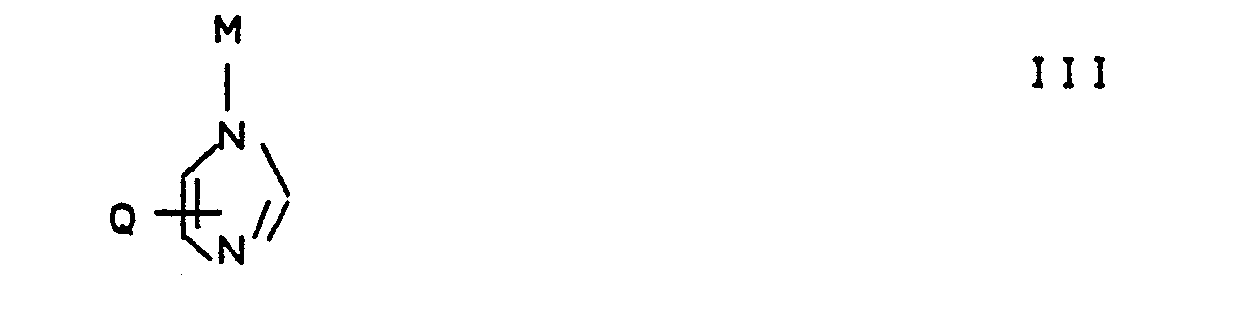
- C) bei Verbindungen der Formel I, die nach Verfahren A) oder B) hergestellt worden sind, nach bekannten Methoden einen Substituenten X und/oder R1 und/oder R2 in einen anderen Substituent X und/oder R1 und/oder R2 umwandelt, und gegebenenfalls die nach den Verfahren A), B) und/oder C) erhaltenen Verbindungen der Formel mit anorganischen oder organischen Säuren in ihre physiologisch verträglichen Säureadditionssalze überführt und gegebenenfalls eine nach A), B) oder C) erhaltene Verbindung in ihre Stereoisomeren und/oder ihre optisch aktiven Enantiomeren auftrennt.
- Zur Bildung von Süureaddifionssalzen kommen alle Säuren, die physiologisch verträgliche Salze bilden, in Frage. Dazu gehören sowohl anorganische Säuren als auch mono-, bi-und trifunktionelle organische Säuren, wie beispielsweise Chlor-, Brom-oder Jodwasserstoff-, Schwefel-, Phosphor-, Salpeter-, Benzolsulfon-, Toluolsulfon-, Sulfamin-, Methylschwefel-, Essig-, Propion-, Öl-, Palmitin-, Stearin, Malon-, Malein-, Bernstein-, Glutar-, Äpfel-, Wein-, Zitronen-, Fumar-, Milch-, Glykol-, Brenztrauben-, Benzoe-, Toluyl-, Glutamin-, Furancarbon-, Salicyl-oder Mandelsäure. Bevorzugt werden Salze mit physiologisch verträglichen anorganischen Säuren, stark bis mittelstark sauren Derivaten solcher Säuren oder mit Bemsteinsäure L(+)-Weinsäure, D(-)-Weinsäure, Äpfelsäure, Fumarsäure, (S)-(+)-oder (R)-(-)-Mandelsäure.
- Bei dem Verfahren A) kommen als starke Basen vor allem Alkalimetallhydride, wie z.B. Natriumhydrid, oder Erdalkali-und Alkalimetallalkyle, wie z.B. n-Butyllithium, tert.-Butyllithium, Methyllithium, Phenyllithium oder Methylmagnesiumchlorid oder -bromid oder metallierte Amine, wie z.B. Lithiumdiisopropylamid, Kalium-oder Natriumamid, in Frage, vorzugsweise werden Lithiumalkyle, wie n-Butyllithium oder Lithiumdiisopropylamid verwendet.
- Die Anwendung von zwei Äquivalenten starker Basen ist bei der Mehrzahl der gemäß der Erfindung in den als Ausgangsstoff zu verwendenden 1-Benzylimidazolen vorkommenden Substituenten, wie auch bei im Benzylrest unsubstituierten solchen Verbindungen der Formel IV angebracht. Eine Ausnahme hiervon machen 1-Benzylimidazole, die im Phenylrest mit ausgesprochenen Akzeptor-Substituenten, wie z.B. CFa, oder mit F, CI und/oder Br in ortho-und/oder para-Postion substituiert sind. Bei diesen und bei 1-(3-Chlorphenyl-methyl)-imidazolen genügt die Anwendung von einem Äquivalent einer starken Base, vorzugsweise von Butyllithium, um ausreichend gute Ausbeuten an Verbindungen der Formel I zu erhalten.
- Die Reaktion kann in den für metallorganische Reaktionen gebräuchlichen Lösungsmittel, wie z.B. Dimethylformamid, Dimethylsulfoxid, Dimethoxyethan, Diethylether oder vorzugsweise Tetrahydrofuran durchgeführt werden. Es können auch Mischungen verschiedener aprotischer Lösungsmittel, darunter auch Mischungen von polaren und unpolaren Lösungsmitteln, angewendet werden. Außerdem können als Lösungsmittel Zusätze wie N, N, N', N'-Tetramethylethylendiamin oder Hexamethylphosphorsäuretriamid Verwendung finden.
- Die erfindungsgemäße Umsetzung mit der starken Base und dem Aldehyd der Formel V kann bei Temperaturen zwischen +40 °C und -100 °C erfolgen, geschieht jedoch vorzugsweise im Bereich zwischen 0 °C und -80 °C. Die Umsetzung kann auch bei einer Temperatur oberhalb von +40 °C ausgeführt werden. Die Verbindungen der Formel werden in der bei metallorganischen Reaktionen üblichen und bekannten Weise isoliert. Die Reinigung der Verbindungen der Formel 1 erfolgt in der Regel durch Umkristallisation aus einem organischen Lösungsmittel, wie z.B. Hexan, Cyclohexan, Ethanol, Essigsäureethylester, Diisopropylether oder Acetonitril oder einem Lösungsmittelgemisch oder durch Säulenchromatographie an Kieselgel.
- Die als Ausgangsstoff verwendeten, unsubstituierten oder erfindungsgemäß substituierten 1-Benzylimidazole der Formel IV werden nach bekannten Methoden durch Alkylierung von Imidazol bzw. in 3-und/oder 4-Stellung substituierten Imidazolen mit Benzylhalogeniden bzw. mit 2-Chlor-oder Brommethylnaphthalin erhalten.
- Die als Ausgangsstoffe benötigten Benzylhalogenide bzw. Chlor-oder Brommethyl-naphthaline sind großteils bekannt oder können nach bekannten Methoden hergestellt werden, beispielsweise durch Umsetzung entsprechender Hydroxymethyl-Verbindungen mit Thionylchlorid oder durch Bromierung entsprechender Methyl-Verbindungen mit NBS (N-Bromsuccinimid).
- Aldehyde der Formel V sind teils bekannt oder können nach bekannten Methoden hergestellt werden. Beispielsweise können solche Aldehyde mit tertiär ständiger Formylgruppe durch Substitution von Aldehyden der Formel VI,

- Geeignete Phasentransferkatalysatoren sind z.B. Trialkylbenzylammonium-oder Tetraalkylammoniumhalogenide, - hydroxide, -hydrogensulfate mit vorzugsweise 1 bis 12 C-Atomen im Alkylrest oder Kronenether, wie z.B. 12-Crown-4, 15-Crown-5, 18-Crown-6 oder Dibenzo-18-crown-6.
- Andererseits können Aldehyde der Formel V auch aufgebaut werden, indem man z.B. Aldehyde der Struktur VII

- Ein anderer Weg zur Herstellung von Aldehyden der Formel V besteht darin, daß man mit literaturbekannten Methoden, z.B. mit Pyridiniumchlorochromat (PCC), entsprechende Alkohole oxidiert. Diese Methode wird u.a. beispielsweise zur Herstellung der Oxacycloalkan-aldehyde aus entsprechenden Hydroxymethyl-Verbindungen angewandt.
- Beim Verfahren B) werden bevorzugt Verbindungen der Formel III verwendet, worin M, Li, Na oder K, insbesondere Na, und Q Wasserstoff oder CH, bedeutet. Die Verbindungen der Formel III sind bekannt oder können nach bekannten Methoden hergestellt werden.
- Oxirane der Formel II erhält man nach literaturbekannten Methoden. Die Herstellung der zugrundeliegenden Olefine erfolgt ebenfalls nach bekannten Methoden. Die Oxidation der Olefine zum Epoxid geschieht mit einer organischen Persäure, wie z.B. Peressigsäure oder m-Chlorperbenzoesäure nach literaturbekannten Methoden.
- Bei dem Verfahren C) wird bei Verbindungen der Formel I, die nach Verfahren A) oder B) hergestellt worden sind, nach bekannten Methoden ein Substituent X und/oder ein Substituent R1 und/oder ein Substituent R2 in einen anderen Substituent X und/oder einen anderen Substituent R1 und/oder einen anderen Substituent R2 ungewandelt.
- Beispielsweise wird nach diesem Verfahren C) ein Benzyloxy-Rest in der Phenylgruppe durch katalytische Hydrogenolyse in eine Hydroxygruppe und Toluol übergeführt, oder ein Rest R1 und/oder ein Rest R2, die jeweils (C2-Cs)-oder (C3-C5)-Aikenyl bedeuten, wird durch katalytische Hydrierung in einen (C2-C5)-bzw. (Ca-Cs)-Alkyl-Rest übergeführt..
- Als Katalysatoren sind hierzu im ersten Fall z.B. verschiedene Arten von feinverteiltem Palladium auf Aktivkohle oder auf Calziumcarbonat oder auf Bariumsulfat und im zweiten Fall, der Hydrierung eines Alkenyl-Restes, verschiedenen Arten von feinverteiltem Palladium, wie vorstehend für den ersten Fall erwähnt, oder von feinverteiltem Platin auf Aktivkohle oder auf Aluminiumoxid oder Platinoxid geeignet.
- Die Reaktionszeiten betragen je nach Verfahrensvariante und je nach Temperaturbereich wenige Minuten bis einige Stunden.
- Die erfindungsgemäßen Verbindungen der Formel I enthalten zwei oder mehrere Asymmetriezentren. Demzufolge erhält man bei der Synthese in der Regel Stereoisomerengemische. Die einzelnen Stereoisomeren können dabei infolge unterschiedlicher Stereoselektivität in unterschiedlichen Mengen anfallen. Bei hoher Stereoselektivität beispielsweise kann im Fall von Diastereomeren überwiegend oder nahezu ausschließlich nur ein Diastereomeres, als Racemat, entstehen. Diastereomere Racemate wie auch Diastereomere, bei denen beispielsweise ein Asymmetriezentrum in einheitlicher (R-oder S-) Konfiguration vorliegt, von Verbindungen der Formel I können in üblicher Weise, z.B. durch selektive, fraktionierte Kristallisation oder Säulenchromatographie getrennt werden.
- Die diastereomeren Racemate können ihrerseits in üblicher Weise in ihre optischen Antipoden (Enanfiomeren) getrennt werden.
- Die Trennung von Racematen und diastereomeren Racematen kann nach im Prinzip bekannten Methoden erfolgen, beispielsweise durch fraktionierte Kristallisation diastereomerer Salze mit optisch aktiven Carbonsäuren oder Sulfonsäuren einheitlicher Konfiguration oder durch Chromatographie an chiralen Trennmedien (Trägerstoffen). Als optisch aktive, chirale Säuren sind beispielsweise geeignet: L( + )-oder D(-)-Weinsäure, D(+)-oder L(-)-Äpfelsäure, R-(-)-oder (S)-(+)-Mandelsäure, L(+)-Milchsäure, (+)-Campher-10-sulfonsäure oder (+)-3-Bromcampher-8-sulfonsäure. Diastereomere Salze derartiger chiraler Säuren mit Verbindungen der Formel I werden aus geeigneten Lösungsmitteln oder Lösungsmittelgemischen fraktioniert umkristallisiert, bis ein konstanter Drehwert erreicht ist.
- Durch Einwirkung einer äquivalenten Menge oder eines Überschusses Base können die optisch reinen diastereomeren Salze in die reinen Enantiomeren der Verbindungen übergeführt und als solche isoliert werden.
- Werden bei der Synthese von Verbindungen I nach Verfahren A) Aldehyde der Formel V in Form optisch reiner Enantiomerer verwendet, dann können bei ausreichender Kristallisationstendenz mitunter die gebildeten Diastereomeren ohne chiralen Hilfsstoff, z.B. einer chiralen Säure, in bekannter Weise durch fraktionierte Kristallisation und/oder mittels chromatographischer Methoden in die optischen Antipoden getrennt werden.
- Die chromatographische Trennung von Diastereomeren oder Racematen an chiralen Trägerstoffen ist mittels konventioneller Säulenchromatographie möglich, eine effektivere Trennung wird in der Regel mit der Mitteldruck-oder Hochleistungsflüssigkeitschromatographie erreicht.
- Die Verbindungen der Formel I und ihre Säureadditionssalze sind wertvolle Arzneimittel. Sie zeichnen sich durch eine starke psychotrope, insbesondere antidepressive Wirkung aus und können daher zur Behandlung von depressiven Zuständen verwendet werden. Sie sind innerhalb eines breiten Dosisbereichs wirksam. Die Höhe der verabreichten Dosis ist abhängig von der Art der gewünschten Behandlung, von der Verabreichungsweise, vom Zustand, vom Typ und von der Größe des behandelten Säugers. Bei oraler Dosierung werden befriedigende Ergebnisse mit Dosen von ab 0,1 mg, vorzugsweise ab 0,4 mg, bis zu 100 mg, vorzugsweise bis zu 20 mg, einer Verbindung der Formel I pro kg Körpergewicht erreicht.
- Die Verbindungen der Formel (I) und ihre Säureadditionssalze stellen wertvolle Psychopharmaka dar. Sie sind in den für Antidepressiva spezifischen Testmodellen biochemischer und pharmakologischer Art sehr gut wirksam.
- Die erfindungsgemäßen Verbindungen antagonisieren mit einer EDK von 0,5 - 60 mg/kg oral appliziert, die Tetrabenazin-Ptosis an der Maus und an der Ratte. Sechs männl. Tieren wird die entsprechende Menge eines Homogenats der jeweiligen Substanz in wäßriger Carboxymethylzellulose eine Stunde vor der Behandlung mit Tetrabenazin (40 mg/kg intraperitoneal) mit Schlundsonde gefüttert. Die Tetrabenazin-Ptosis wird durch diese Vorbehandlung antagonisiert.
- Die Verbindungen 1 und ihre Säureadditionssalze potenzieren die Toxizität von Yohimbin an Mäusen. Antidepressiva des Typs mit 0,5 bis 100 mg/kg per os verursachen die Erhöhung der Todesrate einer sonst nicht tödlichen Dosis von Yohimbinhydrochlorid (20 mg/kg subkutan gegeben).
- Ein wesentlicher Befund ist, daß die Verbindungen I und ihre Salze an Ratten und Mäusen nach Dosierungen in einem therapeutisch relevanten Bereich keine Stereotypien verursachen.
- Die antidepressive Wirkung und die Brauchbarkeit zur Behandlung von depressiven Zuständen wurde weiterhin anhand der Hemmung der Wiederaufnahme von Noradrenalin an Mäusehirn-Synaptosomen-Präparationen demonstriert.
- Die Verbindungen sowie ihre Säureadditionssalze sind besonders wertvoll durch eine von den bisher bekannten Antidepressiva abweichende Struktur. Bekannten Handelsprodukten sind sie in ihrer Wirkung bei geringerer Toxizität gleichwertig oder überlegen.
- Die Verbindungen der Formel sind außerdem antimykotisch wirksam. Sie wirken in vitro sehr gut gegen Hautpilze, wie z.B. Trichophyton mentagrophytes, Microsporum canis, Epidermophyton floccosum; gegen Schimmelpilze, wie z.B. Aspergillus niger oder gegen Hefen, wie z.B. Candida albicans, C. tropicalis, Torulopsis glabrata und Trichosporon cutaneum und außerdem gegen Protozoen wie Trichomonas vaginalis oder T. fetus, und auch gegen gram-positive und gramnegative Bakertien.
- Ebenso besteht ein sehr guter Effekt gegen verschiedene Erreger der Hautmykosen (z.B. Trichophyton mentagrophytes) am Meerschweinchen, insbesondere nach lokaler Anwendung.
- Zur vorliegenden Erfindung gehören pharmazeutische Zubereitungen, die neben nicht toxischen, inerten pharmazeutisch geeigneten Trägerstoffen einen oder mehrere erfindungsgemäße Wirkstoffe enthalten oder die aus einem oder mehreren erfindungsgemäßen Wirkstoffen bestehen sowie Verfahren zur Herstellung dieser Zubereitungen.
- Unter nicht toxischen, inerten pharmazeutischen geeigneten Trägerstoffen sind feste, halbfeste oder flüssige Verdünnungsmittel, Füllstoffe und Formulierungshilfsmittel jeder Art zu verstehen.
- Als geeignete Anwendungsformen der erfindungsgemäßen Verbindungen kommen beispielsweise Tabletten, Dragees, Kapseln, Pillen, wäßrige Lösungen, Suspensionen und Emulsionen, gegebenenfalls sterile injizierbare Lösungen, nichtwäßrige Emulsionen, Suspensionen und Lösungen, Salben, Cremes, Pasten, Lotions, Sprays etc. in Betracht.
- Die therapeutisch wirksamen Verbindungen sollen in den oben aufgeführten pharmazeutischen Zubereitungen zweckmäßig in einer Konzentration von etwa 0,01, vorzugsweise von 0,10 bis 99,0 vorzugsweise bis 50,0, Gewichtsprozenten der Gesamtmischung vorhanden sein.
- Die Anwendungskonzentrationen für Lösungen, Gelees, Cremes oder Salben sowie Aerosole in Form von Spray betragen im allgemeinen zwischen 0,1 - 20, vorzugsweise 0,5 - 5 Gewichstprozenten.
- Für die lokale Anwendung als Antimykotika können z.B. Suspensionen, Lösungen Gelees, Cremes, Salben oder Suppositorien verwendet werden.
- Die oben aufgeführten pharmazeutischen Zubereitungen können außer den erfindungsgemäßen Wirkstoffen auch weitere pharmazeutische Wirkstoffe enthalten.
- Die Herstellung der oben aufgeführten pharmazeutischen Zubereitungen erfolgt in üblicher Weise nach bekannten Methoden, z.B. durch Mischen des oder der Wirkstoffe mit dem oder den Trägerstoffen.
- Zur vorliegenden Erfindung gehört auch die Verwendung der erfindungsgemäßen Wirkstoffe sowie von pharmazeutischen Zubereitungen, die einen oder mehrere erfindungsgemäße Wirkstoffe enthalten, in der Human-und im Fall von antimykotisch wirksamen Verbindungen in der Human-und Veterinärmedizin zur Verhütung, Besserung und/oder Heilung der oben angeführten Erkrankungen.
- Bei antimykotisch wirkenden erfindungsgemäßen Verbindungen hat es sich sowohl in der Human-als auch in der Veterinärmedizin als vorteilhaft erwiesen, den oder die erfindungsgemäßen Wirkstoffe in Gesamtmengen von etwa 0,05 bis 200, vorzugsweise 0,1 bis 100, insbesondere 0,5 bis 30 mg/kg Körpergewicht je 24 Stunden, gegebenenfalls in Form mehrerer Einzelgaben zur Erzielung der gewünschten Ergebnisse zu verabreichen. Die Gesamtmenge wird in 1 bis 8, vorzugsweise in 1 bis 3 Einzeldosen verabreicht.
- Die Wirkstoffe oder die pharmazeutischen Zubereitungen können lokal, parenteral, intraperitoneal und/oder rectal appliziert werden.
- Die als Antidepressiva verwendbaren Verbindungen der vorliegenden Erfindung und ihre Salze können zur Herstellung von pharmazeutischen Präparaten verwendet werden, welche eine wirksame Menge der Aktivsubstanz zusammen mit Trägerstoffen enthalten und die sich zur enteralen und parenteralen Verabreichung eignen. Vorzugsweise verwendet werden Tabletten oder Gelatinekapseln, welche den Wirkstoff zusammen mit Verdünnungsmitteln, z.B. Lactose, Dextrose, Rohrzucker, Mannitol, Sorbitol, Cellulose und/oder Glycin und Gleitmitteln wie Kieselerde, Talk, Stearinsäure oder deren Salze, wie Magnesium-oder Calciumstearat, und/oder Polyethylenglykol enthalten. Tabletten enthalten ebenfalls Bindemittel wie Magnesiumaluminiumsilicat, Stärke, Gelatine, Traganath, Methylcellulose, Natriumcarboxymethylcellulose und/oder Polyvinylpyrrolidon und, falls benötigt, Farbstoffe, Geschmacksstoffe und Süßmittel. Injizierbare Lösungen sind vorzugsweise isotonische wäßrige Lösungen oder Suspensionen, die sterilisiert sein können und Hilfsstoffe wie Konservier-, Stabilisierungs-, Netz-und/oder Emulgiermittel, Löslichkeitsvermittler, Salze zur Regulierung des osmotischen Drucks und/oder Puffersubstanzen enthalten können. Die erfindungsgemäßen pharmazeutischen Präparate, die, wenn erwünscht pharmakologisch wertvolle Stoffe enthalten können, werden z.B. mittels konventioneller Misch-Granulier-und Dragierverfahren, hergestellt und enthalten 0,1 % bis etwa 75 % bevorzugt etwa 1 % bis etwa 50 % des Wirkstoffs.
- Die orale Anwendung erfolgt in pharmazeutisch üblichen Zubereitungen, beispielsweise in Form von Tabletten, Dragees oder Kapseln, die z.B. pro Tagesdosis 5, vorzugsweise 30, bis 600 mg, vorzugsweise bis 300 mg, des Wirkstoffes in Mischung mit einem gebräuchlichen Trägerstoff und/oder Konstituents enthalten, wobei Einzeldosen von 5 bis 200 mg, vorzugsweise ein-bis dreimal täglich, gegeben werden können.
- Es kann jedoch erforderlich sein, von den genannten Dosierungen abzuweichen und zwar in Abhängigkeit von der Art und dem Körpergewicht des zu behandelnden Objekts, der Art und der Schwere der Erkrankung, der Art der Zubereitung und der Applikation des Arzneimittels sowei dem Zeitraum bzw. Intervall, innerhalb welchem die Verabreichung erfolgt. So kann es in einigen Fällen ausreichend sein, mit weniger als der oben genannten Menge Wirkstoff auszukommen, während in anderen Fällen die oben angeführte Wirkstoffmenge überschritten werden muß. Die Festlegung der jeweils erforderlichen optimalen Dosierung und Applikationsart der Wirkstoffe kann durch jeden Fachmann aufgrund seines Fachwissens leicht erfolgen.
- Die erfindungsgemäßen Verbindungen der Formel sind auch fungizid wirksam. Das Wirkungsspektrum der beanspruchten Verbindungen erfaßt eine Vielzahl verschiedener phytopathogener Pilze, wie z.B. Piricularia oryzae, Pellicularia sasakii, verschiedene Rostarten, Cercospora-Arten und echte Mehltaupilze im Obst-, Gemüse-, Getreide-und Zierpflanzenbau.
- Die folgenden Beispiele erläutern die Herstellung der Verbindungen. Die in den Beispielen beschriebenen Umsetzungen wurden unter einer Stickstoffatmosphäre durchgeführt.
- Zu einer Lösung von 3,85 (20 mmol) 1-(3-Chlorbenzyl)-imidazol in 40 ml abs. Tetrahydrofuran (THF) wurden bei -70 °C 13,6 ml (20,1 mmol) einer 1,48 molaren Lösung von n-Butyllithium in Hexan getropft. Man rührte 30 Min. bei -70 °C nach und tropfte dann bei -70 °C in ca. 20 Min. eine Lösung von 3,60 g 85 %igem (20 mmol) 1-Aityi-l-formytcyctohexan in 30 ml abs. Tetrahydrofuran (THF) zu. Anschließend rührte man 15 Min. bei ca. - 70 °C nach, ließ die Reaktionsmischung in ca. 2 Stunden auf Zimmertemperatur aufwärmen, versetzte unter Kühlung bei ca. 5-16 °C mit 200 ml Wasser, rührte die Mischung 45 Min. bei ca. 5-15 °C nach, trennte die Phasen und extrahierte die wässrige Phase mehrmals mit Ether. Die vereinigten organischen Lösungen wurden mit ca. 20 ml Waser ausgewaschen, getrocknet, filtriert und im Vakuum eingedampft. Den Extraktrückstand (6,8 g) löste man in Acetonitril, wonach kristallines 1-(1-Allyl-1-cyclohexyl)-2-(3-chlorphenyl)-2-(1-imidazolyl)-ethanol (2,6 g) ausfiel. Das Produkt (2,6 g) wurde aus 20 ml Acetonitril umkristallisiert. Danach fielen 2,3 g reines Produkt (Fp. 119 °C) an. Aus den Mutterlaugen wurden nach dem Einengen derselben weitere 0,6 g Produkt erhalten, das nach Umkristallisieren aus Acetonitril weitere 0,42 g reines Produkt (Fp. 119 °C) ergab. Die Ausbeute an reinem 1-(1-Allyl-1-cyclohexyl)-2-(3-chlorphenyl)-2-(1-imidazolyl)-ethanol betrug 2,72 g (≙ 39,4 % d. Th.). C20H25ClN2O (344,88)

- Zu einer Lösung von 4,82 g (25 mmoi) 1-(3-Chlorbenzyl)-imidazol in 50 ml abs. THF wurden bei -70 °C 16,2 ml (25,1 mmol) einer 1,55 molaren Lösung von n-Butyllithium in Hexan getropft. Man rührte 30 Min. bei -70 °C nach und tropfte dann bei ca. -70 °C in ca. 15 Min. eine Lösung von 3,75 g 75 %igem (25 mmol) (15 % Toluol enthaltenden) 2,2-Dimethyl-4-penten-aldehyd in 38 ml abs. THF zu. Anschließend rührte man 15. Min bei ca. -70 °C nach, ließ in ca. 2 Stunden auf Zimmertemperatur aufwärmen, versetzte unter Kühlung bei 1-10 °C mit 350 ml Wasser, rührte die Mischung 30 Min. bei 10-20 °C nach, trennte die Phasen und extrahierte die wäßrige Phase mehrmals mit Ether. Die vereinigten organischen Lösungen wurden wie im Beispiel 1 beschrieben weiter aufgearbeitet. Den Extraktrückstand (7,2 g) chromatographierte man unter Elution mit CH2Cl2/Hexan 1:2-und 1:1-Mischung, CH2Cl2 und CH2Cl2/C2H5OH-Mischungen mit steigendem C2HsOH-Gehalt (bis max. 2 Vol.-%) an einer Kieselgel S/CH2Cl2 : Hexan 1:2-Säule (0 2,8 cm, Höhe 43 cm).
- Nach Elution von 0,60 g Vorfraktionen wurden 5,0 g Produkt eluiert, in dem die gesuchte Verbindung stark angereichert war. Aus diesen Anteil wurden durch Kristallisation aus Diisopropylether 3,10 g ( = 40,7 % Ausbeute) reines 1-(3-Chlorphenyl)-3,3-dimethyl-1-(1-imidazolyl)-5-hexen-2-ol vom Fp. 95 °C erhalten. C17H21ClN2O (304,83)

- Zu einer Lösung von 5,17 g (25 mmol) 1-(3-Chlorbenzyl)-4(5)-methyl-imdazol (6:4-Mischung) in 50 ml abs. THF wurden nacheinander, wie im Beispiel 2 beschrieben, bei -70 °C 16,2 ml 1,55 molare n-Butyllithium/Hexan-Lösung und eine Lösung von 3,75 g 75 %igem, 2,2-Dimethyl-4-pentenaldehyd in 38 ml abs. THF getropft. Die weitere Bearbeitung erfolgte ebenso wie im Beispiel 2 beschrieben. Den Extraktrückstand (8,0 g) chromatographierte man durch Elution mit CH2Cl2 und CH2Cl2/C2H5OH-Mischungen mit steigendem C2H5OH-Gehalt (bis max. 2 Vol.-%) an einer Kieselgel S/CH2Cl2-Säule (0 2,8 cm, Höhe 46 cm). Nach Elution von 0,63 g Vorfraktionen wurden 0,75 g unreines Produkt eluiert, aus dem aus Diisopropylether 0,12 g 1-(3-Chlorphenyl)-3,3-dimethl-1-(4(5)-methyl-1-imidazolyl)-5-hexen-2-ol (als 4-und 5-Methylimidazolyl-Mischung) kristallin erhalten wurden. Danach wurden 4,80 g stark angerecihertes Produkt eluiert, aus dem aus Diisopropylether 3,45 g kristallines Produkt erhalten wurden. Insgesamt erhielt man 3,57 g ( ≙ 44,8 % Ausbeute) reines (als 4-und 5-Methyl-Mischung) 1-(3-Chlorphenyl)-3,3-dimethyl-1-(4(5)-methyl-1-imidazolyl)-5-hexen-2-ol vom Fp. 92° C.
C18H23ClN2O (318,86)
- Zu einer Lösung von 3,85 g (20 mmol) 1-(3-Chlorbenzyl)-imidazol in 40 ml abs. THF wurden bei -70 °C 13,8 ml (20 mmol) einer 1,45 molaren Lösung von n-Butyllithium in Hexan getropft. Nach 30 Min. Rühren bei -70 °C tropfte man bei ca. -70 °C in ca. 12 Min. eine Lösung von 4,39 g 74 %igem (20 mmol) 2-Allyl-5-norbornen -2-aldehyd in 30 ml abs. THF zu. Anschließend wurde im Beispiel 2 beschrieben weitergearbeitet. Der aus dem organischen Anteil nach Abdestillierten der Lösungsmittel verbleibende Rückstand (9,0 g) wurde im Diisopropylether-Hexan 2:2 gelöst, woraufhin kristallines Produkt ausfiel. Dieses wurde nach Isolierung mit 20 ml Acetonitril kurz aufgekocht, nach Kühlen der Mischung abgesaugt und mit Acetonitril gewaschen. Man erhielt 2,70 g (≙ 38 % Ausbeute) reines 1-(2-Allyl-5-norbornen-2-yl)-2-(3-chlorphenyl)-2-(1-imidazolyl)-ethanol in Form einer aus 2 Diastereomeren bestehenden Mischung vom Fp. 134-135 °C. C21H23ClN2O (354,87)

- 5,86 g (25 mmol) 1-(4-Diphenylmethyl)-imidazol in 50 ml abs. THF wurden bei -70 °C wie im Beispiel 2 beschrieben mit 16,2 ml 1,55 molarer n-Butyllithium/Hexan-Lösung metalliert. Bei -70 °C tropfte man dann eine Lösung von 4,51 g 90 %igem 2,2-Dimethyl-3-phenyl-propionaldehyd (25 mmol) in 35 ml abs. THF zu, rührte 20 Min. bei -70 °C, ließ in 2,5 Stunden auf Zimmertemperatur anwärmen, versetzte bei ca. 0 °C tropfenweise mit 250 ml Wasser und rührte 1 Stunde unter Eiskühlung nach. Dabei schied sich kristalline Substanz ab, die abgesaugt, mit Wasser und Ether gewaschen und danach in 100 ml CH2Cl2/CH3OH 1:1 gelßst wurde. Nach dem Filtrieren dampfte man diese Lösung im Vakuum ein und kochte den kristallinen Rückstand mit 35 ml Acetonitril 30 Min. auf. Nach Abkühlung auf 5-8 °C saugte man den Feststoff ab und wusch mit Acetonitril nach. Man erhielt 2,70 g (= 27,3 % Ausbeute) reines 1-(4-Diphenyl)-3,3-dimethyl-1-(1-imidazolyl)-4-phenyl-2-butanol vom Fp. 220 °C.
C27H28N2O (396,54) -

- In 40 ml abs. Tetrahydrofuran (THF) wurde bei -30 °C ausgehend von 2,06 g (20,4 mmol) Diisopropylamin und 13,4 ml 1,5 molarer n-Butyllithium/Hexan-Lösung (20 mmol) eine Lösung von Lithiumdiisopropylamid hergestellt. Hierzu tropfte man bei -70 °C bis -78 °C eine Lösung von 4,75 g (20 mmol) 1-(3-Brombenzyl)-imidazol in 25 ml abs. THF, rührte 30 Min. bei ca. -70 °C nach, tropfte anschließend bei ca. -70 °C eine Lösung von 3,22 g 70 %igem (20 mmol) 2,2-Dimethyl-4-penten-aldehyd in 30 ml abs. THF zu, rührte 20 Min. bei ca. -70 °C nach und ließ in ca. 2,5 Stunden auf Zimmertemperatur aufwärmen. Anschließend wurde bei 0 °C -5 °C mit 300 ml Wasser tropfenweise versetzt und 1 Stunde unter Eiskühlung gerührt. Nach der Trennung der Phasen extrahierte man die wäßrige Lösung mehrmals mit Ether. Die vereinigten organischen Lösungen wurden wie im Beispiel 1 beschrieben weiter aufgearbeitet. Den Extraktrückstand (7,3 g) chromatographierte man durch Elution mit CH2Cl2 und CH2Cl2/C2H5OH-Mischungen mit steigendem C2HsOH-Gehalt (bis max. 2 Vol.-%) an einer Kieselgel S/CH2Cl2-Säule (0 2,8 cm, Höhe 48 cm). Nach Elution von 2,0 g Vorfraktionen wurden 5,2 g Produkt, in dem die gesuchte Verbindung hoch angereichert war, eluiert. Aus diesen 5,2 g wurden durch Kristallisation aus Diisopropylether/Hexan 2:1 3,05 g (≙ 43,6 % Ausbeute) reines 1-(3-Bromphenyl)-3,3-dimethyl-1-(1-imidazolyl)-5-hexen-2-ol vom Fp. 126 °C erhalten.
C17H21BrN2O (349,29)
- Analog zu den Beispielen 1 bis 6 wurden folgende Verbindungen der Formel I erhalten:

-

- 7,70 g (40 mmol) 1-(3-Chlorbenzol)-imidazol in 80 ml abs. THF wurden bei -70 °C wie im Beispiel 2 beschrieben mit 27 ml 1,48 molarer n-Butyllithium/Hexan-Lösung metalliert. Bei -70 °C tropfte man dann eine Lösung von 6,10 g (40 mmol) 2-Formyl-6,6-dimethyl-bicyclo[3,1,1]heptan(Myrtanal) in 60 ml abs. THF zu, rührte 20 Min. bei -70 °C und ließ in 2,5 Stunden auf Zimmertemperatur anwärmen. Die weitere Bearbeitung erfolgte analog wie im Beispiel 2 beschrieben. Der nach Eindampfen der vereinigten organischen Lösungen (Extrakte) verbleibende Rückstand (13,60 g) wurde durch Elution mit CH2Cl2 und CH2CL2/C2H5OH-Mischungen mit steigendem C2H5OH-Gehalt (bis max. 3 Vol.-%) an einer Kieselgel S /CH2Cl2-Säule (0 2,1 cm, Höhe 62,5 cm) chromatographiert. Nach Elution von 4.7 g Vorfraktionen und 2,4 g durch Nebenprodukte verunreinigtem Produkt wurden 6,4g Produkt eluiert, in dem die gesuchte Verbindung in Form von Stereoisomeren praktisch rein vorlag. Aus dieser Fraktion erhielt man durch Kristallisation aus Diisopropylether 1,52 g eines laut DC und 1H-NMR-Spektrum reinen Stereoisomeren des 1-(6,6-Dimethyl- bicyclo[3,1,1]-hept-2-yl)-2-(3-chlorphenyl)-2-(1-imidazolyl)-ethanols vom Fp. 149-150 °C.
- Die Ausbeute betrug 4,88 g ( ≙ 35,4 % d. Th.) an Stereoisomerenmischung und 1,52 g (≙ 11 % d. Th.) eines reinen, kristallinen Stereoisomeren.
C20H25ClN2O (344,88)
- Zu einer Lösung von 4,75 g (30 mmol) 1-Benzylimidazol und 3,49 g (30 mmol) N.N.N'.N'-Tetramethylethylendiamin (TMEDA) in 60 ml abs. THF wurden bei -70 °C 40 ml 1,5 molare n-Butyllithium/Hexan-Lösung getropft. Man rührte 30 Min. bei -70 °C - -78°C nach, tropfte dann bei ca. -70 °C in 25 Min. eine Lösung von 3,74 g (90 %igem (30 mmol) 2,2-Dimethyl-4-penten-aldehyd in 38 ml abs. THF zu, rührte 20 Min. bei ca. -70 °C nach und ließ in ca. 2 Stunden auf Zimmertemperatur anwärmen. Danach wurde bei 0 ° - 8 °C mit 350 ml Wasser versetzt, 30 Min. unter Eisbad-Kühlung nachgerührt und anschließend wurden die Phasen getrennt und die wäßrige Lösung mehrmals mit Ether extrahiert. Die vereinigten organischen Lösungen arbeitete man wie im Beispiel 1 beschrieben weiter auf. Der Extraktrückstand (8,4 g) wurde unter Elution mit CH2Cl2 und CH2Cl2/C2H5OH-Mischungen mit steigendem C2H5OH-Gehalt (bis max. 2 Vol.-%) an einer Kieselgel S/CH2CI2-Säule (0 2,8 cm, Höhe 48 cm) chromatographiert. Nach Elution von 4,8 g Vorfraktionen wurden 3,5 g Produkt eluiert, indem die gesuchte Verbindung enthalten war. Dieses Produkt (3,5 g) wurde erneut auf die gleiche Weise wie vorstehend beschrieben an einer Kieselgel S/CH2Cl2-Säule (Ø 2,0 cm, höhe 60 cm) chromatographiert, wobei man die Zusammensetzung der eluierten Fraktionen durch Dünnschichtchromatographie (DC) überprüfte. Nach Elution von 0,35 g Vorfraktionen wurden 4 Fraktionen eluiert (mit CH2Cl2/C2H5OH 99,6 : 0,4 - 99,5 : 0,5), die die gesuchte Verbindung fast rein enthielten. Diese Fraktionen wurden zusammengefaßt und im Hochvakuum bei 65 °C Badtemperatur zur Gewichtskonstanz eingedampft. Man erhielt so 0,62 g (≙ 7,6 % Ausbeute) 3,3-Dimethyl-1-(1-imidazolyl)-1-phenyl-5-hexen-2-ol als zähes, farbloses Öl, das 1H-NMR-Spektrum bestätigte die Struktur dieser Verbindung.
C17H22N2O (270,38)
- Die Verbindung war in weiteren Chromatographiefraktionen neben unterschiedlichen Anteilen von Nebenprodukten enthalten, so daß die gebildete Menge weit über dem vorstehend angegebenen, in fast reiner Form isolierten Anteil liegt.
- Nach der im Beispiel 19 beschriebenen Arbeitsweise wurden 7,52 g (40 mmol) 1-(3-Methoxybenzyl)-imidazol und 4,65 g (40 mmol) TMEDA in 80 ml abs. THF mit 53,5 ml 1,5 molarer n-Butyllithium/Hexan-Lösung metalliert und mit 5,00 g 90 %igem (≙ 40 mmol) 2,2-Dimethyl-4-penten-aldehyd umgesetzt. Die Aufarbeitung erfolgte analog der im Beispiel 19. Der Extraktrückstand (12,2 g) wurde wie im Beispiel 19 beschrieben an einer Kieselgel S/CH2Cl2-Säule (Ø 3,5 cm, Höhe 40 cm), und anschließend die vereinigten Fraktionen, die die gesuchte Verbindung enthielten (Menge 6,3 g), ein zweites Mal an einer Kieselgel S/CH2Cl2 (0 2,4 cm, Höhe 88 cm)-Säule chromatographiert. Eine Fraktionsgruppe (2,5 g) der zweiten Chromatographie kristallisierte aus einer Hexan/Diisopropylether 3:1-Lösung.
- Nach Isolierung der Substanz wurden 0,77 g (≙ 6,3 % Ausbeute) reines 3,3-Dimethyl-1-(1-imidazolyl)-1-(3-methoxy-phenyl)-5-hexen-2-ol vom Fp. 83 °C erhalten.
C18H24N2O2 (300,41)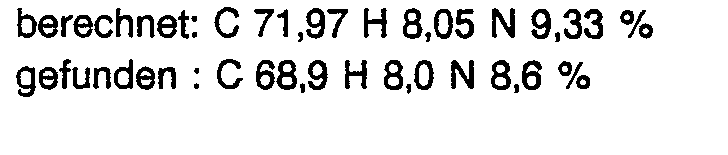
- Eine Lösung von 4,76 g (25 mmol) 1-(3-Fluorbenzyl)-4(5)-methyl-imidazol (3:2 Mischung) und 2,91 g (25 mmol) TMEDA in 50 ml abs. THF wurde wie in Beispiel 19 beschrieben mit 33,4 ml 1,5 molarer n-Butyllithium/Hexan-Lösung lithiiert. Danach tropfte man bei -70 °C eine Lösung von 3,11 g 90 %igem (25 mmol) 2,2-Dimethyl-4-penten-aldehyd in 25 ml abs. THF zu, rührte 20 Min. bei ca. -70 °C nach und ließ in ca. 2,5 Stunden auf Zimmertemperatur anwärmen. Danach wurde wie im Beispiel 19 beschrieben aufgearbeitet. Den Extraktrückstand (7,6 g) chromatographierte man, wie im Beispiel 19 erläutert, an einer Kieselgel S/CH2Cl2-Säule (Ø 2,8 cm, Höhe 48 cm). Nach Elution von 1,35 g Vorfraktionen wurden in Form von 10 Fraktionen 4,10 g Produkt eluiert, in dem die gesuchten Verbindungen angereichert vorlagen. Aus diesem Produkt wurden nach Lösen in Diethylether/Hexan kristalline Substanz erhalten, die nach Isolierung und Trocknen 2,44 g ( = 32,3 % Ausbeute) reines 3,3-Dimethyl-1-(3-fluorphenyl)-1-(4(5)-methyl-1-imidazolyl)-5-hexen-2-ol (6,7:3,3-Mischung von 4-und 5-Methyl-imidazol-Verbindung) vom Fp. 118°C ergab.
C18H23FN2O (302,40)
- Eine Lösung von 8,08 g (40 mmol) 1-(3-Methoxy-benzyl)-4(5)-methyl-imidazol (3:2-Mischung) und 4,65 g (40 mmol) TMEDA in 80 ml abs. THF wurde wie in Beispiel 19 beschrieben mit 53,5 ml 1,5 molarer n-Butyllithium/Hexan-Lösung lithiiert. Danach tropfte man bei -70°C eine Lösung von 6,42 g 70 %igem (40 mmol) 2,2-Dimethyl-4-penten-aldehyd in 50 ml abs. THF zu, rührte 20 Min. bei ca. -70°C nach und ließ in ca. 2,5 Stunden auf Zimmertemperatur anwärmen. Anschließend wurde wie im Beispiel 19 beschrieben aufgearbeitet. Den Extraktrückstand (14 g) chromatographierte man, wie im Beispiel 19 erläutert, an einer Kieselgel S/CH2Cl2-Säule (Ø 2,1 cm, Höhe 67 cm). Nach Elution von 4,4 g Vorfraktionen wurden in Form von 3 Fraktionsgruppen 4,5 g Produkt eluiert, in dem die gesuchten Verbindungen angereichert vorlagen. Aus diesen Fraktionen wurden aus Diethylether/Hexan 0,56 g reines kristallines 3,3-Dimethyl-1-[3-methoxyphenyl)-1-(5(4)-methyl-1-imidazolyl)-5-hexen-2-ol, Fp. 119-121°C (laut IH-NMR Spektrum 5-Methyl:4-Methyl-87:13) erhalten. Der ölige Laugenrückstand (3,9 g) wurde in gleicher Weise nochmals chromatographiert. Aus einer Fraktionsgruppe (Rückstand 1,8 g), die angereichert die gesuchten Verbindungen enthält, wurden aus Diethylether/Hexan weitere 0,60 g kristallines Produkt, Fp. 125-126°C (5-Methyl-zu 4-Methyl-Verbindung ca. 9:1) erhalten. C19H26N2O2(314.43)

- Eine Lösung von 10,34 g (50 mmol) 1-(3-Chlor-benzyl)-4(5)-methyl-imidazol (3:2-Mischung) in 100 ml abs. THF wurde wie in Beispiel 2 beschrieben mit 33,4 ml 1,5 molarer n-Butyllithium/Hexan-Lösung lithiiert. Danach tropfte man bei -70°C eine Lösung von 6,24 g 90 %igem (50 mmol) 2,2-Dimethyl-4-pentenal in 75 ml abs. THF zu, rührte 40 Minuten bei ca. -70°C nach und ließ in ca. 2,5 Stdn. auf Zimmertemperatur anwärmen. Anschließend wurde wie in Beispiel 2 beschrieben aufgearbeitet. Man erhielt 1,5 g kristallines Produkt (Fp. 136-137°C) laut IH-NMR 1-(3-Chlorphenyl)-3,3-dimethyl-1-(5(4)-methyl-1-imidazolyl)-5-hexen-2-ol; 5-Methyl:4-Methyl-Verb. 86:14) neben 11,6 g öligem Etherextrakt-Rückstand. Dieser wurde wie im Beispiel 19 beschrieben chromatographiert (Säule: Ø 2,6 cm, Höhe 95 cm). Nach 1,8 g Vorfraktionen wurden Fraktionsgruppen erhalten, die laut DC und IH-NMR die gesuchten Verbindungen in angereicherter Form enthalten (5,8 g). Aus diesen Fraktionsgruppen wurde jeweils aus Diethytether/Hexan-Lösungen kristallines Produkt erhalten. Aus der zuerst eluierten Fraktionsgruppe (2,33 g) erhielt man 1,35 g Kristallisat (4-Methyl:5-Methyl-Verbindung 75:25), aus der danach eluierten Gruppe 0,94 g Kristallisat (5-Methyl-: 4-Methyl-Verb. ca. 1:1). Aus der letzten Fraktionsgruppe (2,93 g) wurden 0, 46 g Kristallisat, laut 1H-NMR reines 1-(3-Chlorphenyl)-3,3-dimethyl-1-(5-methyl-1-imidazolyl)-5-hexen-2-ol, Fp. 142-143°C, erhalten. C18H23ClN2O(318,86)

- Die 0,94 g Produkt (5-Methyl-: 4-Methyi-Verb. ca. 1:1) wurden aus Ethylacetat/Diethylether/Dilsopropylether umkristallisiert. Dabei erhielt man 0,42 g Kristallisat mit 62 % Anteil 5-Methyl-Verbindung. Der Mutterlaugenrückstand (75 % 4-Methyl-Verb.) (0,5 g) wurde mit dem oben erhaltenen 1,35 g Produkt (75 % 4-Methyl-Verb.) vereinigt, und dieser Anteil wurde wie vorstehend erwähnt umkristallisiert. Dabei wurden 0,31 g, laut 1H-NMR, reins 1-(3-Chlorphenyl)-3,3-dimethyl-1-(4-methyl-1-imidazolyl)-5-hexen-2-ol, Fp. 126-127° C, erhalten.
C18H23ClN2O(318,86)
gefunden: C 67,6 H 7,2 CI 11,0 N 8,9 % - Die 4-Methyl-und die 5-Methyl-1-imidazolyl-Verbindung unterscheiden sich u.a. deutlich in der Lage des 1H-NMR-Signals für das Proton in 2-Stellung des Imidazolrestes (gemessen in CDCl3 mit TMS als internem Standard). Bei der 4-Methyl-1-imidazolyl-Verbindung liegt dieses Signal bei 7,49 δ1 bei der 5-Methyl-1-imidazolyl-Verbindung hingegen bei 8,16 8.
- 25 mmol 1-(4-Diphenylmethyl)-4(5)-methyl-imidazol in 50 ml abs. THF wurden wie in Beispiel 2 beschrieben mit 25 mmol n-Butyllithium, gelöst in Hexan (1,5 molar), lithiiert. Danach wurde wie im Beispiel 23 beschrieben eine Lösung von 3,12 g 90 %igem (25 mmol) 2,2-Dimethyl-4-pentenal in 35 ml abs. THF zugetropft. Die weitere Bearbeitung erfolgte analog Beispiel 23 bzw. Beispiel 19. Als Etherextraktrückstand wurden 9,0 g zähes Öl erhalten, die wie im Beispiel 19 beschrieben chromatographiert wurden (Säule: Ø 2,8 cm, Höhe 38 cm). Nach Elution von 2,2 g Vorfraktionen wurden 9 Fraktionen (6,10 g) eluiert, die die gesuchten Verbindungen (4-und 5-Methyl-imidazolyl)-Verbindung) hoch angereichert enthielten. Dieses Produkt kristallisierte aus Acetonitril teilweise. Nach Isolierung wurden 0,81 g, laut 1H-NMR, reines 3,3-Dimethyl-1-(4-diphenyl)-1-(4-methyl-1-imidazolyl)-5-hexen-2-ol, Fp. 159-160°C, erhalten. C24H28N2O(360,50)

- Eine Lösung von 3,85 g (20 mmol) 1-(3-Chlorbenzyl)-imidazol in 40 ml abs. THF wurde wie in Beispiel 2 beschrieben mit 14, 7 ml 1,5 molarer n-Butyllithium/Hexan-Lösung lithiiert. Danach tropfte man bei -70°C in ca. 30 Min. eine Lösung von 2,10 g (21 mmol) 3-Methyl-oxetan-3-aldehyd (s.u.) in 25 ml abs. THF zu, rührte 30 Min. bei ca. -70°C nach und ließ in ca. 3 Stdn. auf Zimmertemperatur anwärmen. Anschließend wurde auf -10°C abgekühlt, tropfenweise mit 200 ml Wasser versetzt und 30 Min. unter Eisbadkühlung nachgerührt. Danach trennte man die Phasen und extrahierte die wässrige dreimal mit Ether. Die vereinigten organischen Phasen ergaben nach Trocknen, Filtration und Abdampfen der Lösungsmittel 5,10 g öligen Rückstand, der aus Acetonitril teilweise kristallisierte. Die Isolierung der kristallinen Substanz ergab 0,50 g reines 2-(3-Chlorphenyl)-2-(1-imidazolyl)-1-(3-methyl-3-oxetanyl)-ethanol, Fp. 228-229°C, Diastereomer A, (≙ 8,5 % Ausbeute).
C15H17ClN2O2(292,77)
- Der Mutterlaugenrückstand (4,6 g) wurde wie im Beispiel 19 beschrieben an einer Kieselgel S/CH2Cl2-Säule (0 2,8 cm, Höhe 28 cm) chromatographiert (CH2Cl2/C2H5OH-Mischungen mit steigendem C2H5OH-Gehalt, bis max. 5 Vol.-%). Nach Elution von 1,10 g Vorfraktionen wurden 1,20 g Produkt eluiert, aus dem aus einer Lösung in Acetronitril 0,37 g der gesuchten Verbindung, Diastereomer B auskristallisierten, Fp. 145-146°C. Weitere vier folgende Fraktionen enthielten 1,5 g als Eluatrückstand, der aus Acetonitril-Lösung 0,96 g 2-(3-Chlorphenyl)-2-(1-imidazolyl)-1-(3-methyl-3-oxetanyl)-ethanol, Diastereomer B, Fp. 145-146°C, lieferte. Insgesamt wurden 1,33 g Diastereomer B kristallin (Fp. 145-146°C) isoliert (≙ 22,7 % Ausbeute). C15H17ClN2O2(292,77)

- Zu einer Lösung von 37,05 g (172 mmol) Pyridiniumchlorochromat in 300 ml CH2Cl2 gab man 9,84 g (120 mmol) gepulvertes, wasserfreies Natriumacetat. Unter Rühren wurde bei 7-10°C in 30 Min. zu dieser Mischung eine Lösung von 12,27 g (120 mmol) 3-Methyl-3-hydroxymethyloxetan in 180 ml CH2Cl2 zugetropft. Man rührte 3 Stdn. bei 8-12°C nach. Dann wurde die Reaktionsmischung in 900 ml Pentan gegossen. Dabei setzte sich eine zähe, dunkle harzige Masse ab. Nach Abgießen der Pentanlösung wurde diese Masse mehrmals intensiv mit Pentant durchgearbeitet. Die Pentananteile wurden über Filtrierhilfe geklärt; einmal mit gesättigter NaHCO3/H2O-Lösung ausgeschüttelt, über MgSO. getrocknet und nach Filtration bei 50-60 °C Badtemp. über eine 40 cm Vigreux-Kolonne eingeengt. Der Rückstand wurde, zunüchst bei Normaldruck, dann unter reduziertem Druck fraktioniert destilliert. Eine Fraktion (4,10 g 34 % Ausbeute) mit Kp.200 117-122°C stellte laut IH-NMR Spektrum ca. 90 %igen 3-Methyl-oxetan-3-aldehyd dar und wurde in dieser Form für die im Beispiel 25 beschriebene Synthese verwendet.
- Eine Lösung von 1,733 g (5 mmol) 1-(4-Diphenyl)-3,3-dimethyl-1-(1-imidazolyl)-5-hexen-2-ol (Verbindung nach Beispiel 16) in 80 ml Methanol wurde mit 170 mg 5 %igem Platin auf Aktivkohle als Katalysator versetzt und unter einer Wasserstoffatmosphäre bei schwachem Wasserstoffüberdruck bei 24 °C und 984 mbar Atmosphärendruck intensiv durchmischt. Nach 1 Stunde waren 120 ml Wasserstoff aufgenommen worden. Die Suspension wurde über Filtrierhilfe abgesaugt und das Filtrat anschließend im Vakuum eingedampft. Der verbleibende kristalline Rückstand (1,75 g) wurde kurz mit 8 ml Diisopropylether aufgekocht, im Eisbad abgekühlt, abgesaugt und getrocknet. Man erhielt 1,63 g ( = 93,7 % Ausbeute) reines 1-(4-Diphenyl)-3,3-dimethyl-1-(1-imidazolyl)-2-hexanol vom Fp. 177 °C.
C23H28N2O (348,49)
- In der gleichen Weise wie im Beispiel 26 beschrieben wurden durch Hydrierung von 1-(3-Chlorphenyl)-3,3-dimethyl-1-(1-imidazolyl)-5-hexen-2-ol (Verbindung nach Beispiel 2) mit 200 mg sulfidiertem 5 %igen Platin auf Aktivkohle als Katalysator im 5 mmol-Maßstab 1,43 g 1-(3-Chlorphenyl)-3,3-dimethyl-1-(1-imidazolyl)-2-hexanol vom Fp. 97°C erhalten.
C17H23ClN2O (306,84)
- 1-(3-Chlorphenyl)-3,3-dimethyl-1-(4-methyl-1-imidazolyl)-2-hexanol
- In der gleichen Weise wie im Beispiel 26 beschrieben wurden durch Hydrierung von 1,27 g (4 mmol) 1-(3-Chlorphenyl)-3,3-dimethyl-1-(4-methyl-1-imidazolyl)-5-hexen-2-ol (Verbindung nach Beispiel 23) in 70 ml Methanol mit 180 g sulfidiertem 5 %igen Platin auf Aktivkohle als Katalysator 1,27 g 1-(3-Chlorphenyl)-3,3-dimethyl-1-(4-methyl-1-imidazolyl)-2-hexanol, Fp. 121-122°C, erhalten.
C18H25ClN2O(320,87)
- Prüfung auf Beeinflussung der Tetrabenazin-Ptosis Methode:
- Männliche Mäuse (SPF-71, KF:NMRI), Gewicht 18-22 g, wurden randomisiert Behandlungsgruppen ä 6 Tieren zugeteilt. Die Prüfsubstanzen wurden in 1 % Methylhydroxyethyl-Cellulose (MH)/Wasser suspendiert und oral in 10 ml/kg Körpergewicht verabreicht. Eine Kontrollgruppe erhielt das Lösungsmittel (1% MH), die Standardgruppe Nomifensin 10 mg/kg p.o. (in 1 % MH). Die verwendete Tetrabenazin-Lösung wurde vom Methan-Sulfonat (≙ 76,8 % Base) hergestellt und eine Menge entsprechend 40 mg/kg Tetrabenazin-Base intraperitoneal 30 Min. nach den Prüfsubstanzen appliziert. 30 Min. nach Gabe von Tetrabenazin wurde die Ptosis entsprechend der folgenden Skala beurteilt:

- Die Ptosis-Scores wurden kumuliert und das Ergebnis der Gruppen auf den maximal erreichbaren Score (6 x 4 = 100 %) bezogen. Mittels linearer Regression wurde die ED50 (mg/kg) ermittelt als die Dosis, bei der der Grad der Ptosis 50 % des bei der Kontrollgruppe ermittelten Wertes beträgt.
- Folgende Ergebnisse wurden ermittelt:
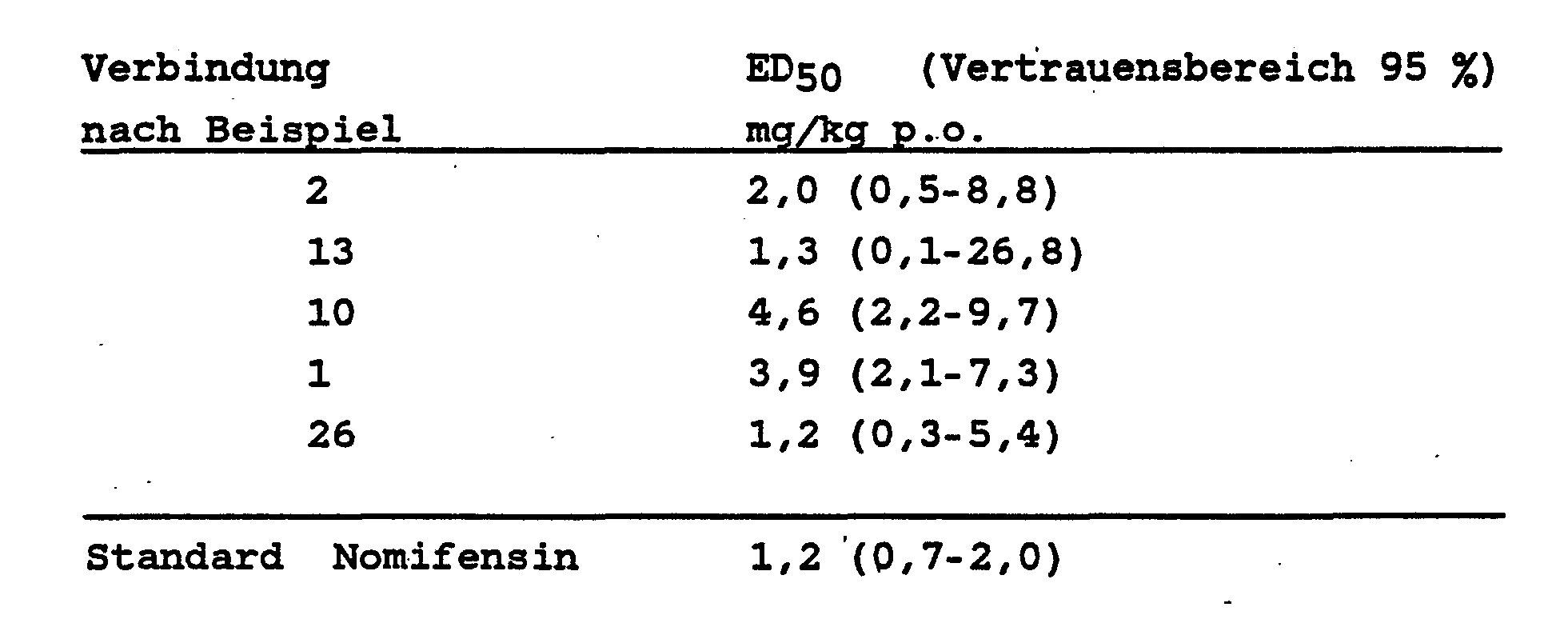
- Die genannten Substanzen zeigten starke Wirkung im Modell der Tetrabenazin-Ptosis an der Maus, das als prädiktiv für antidepressive Wirkung beim Menschen gilt.
Claims (12)


Priority Applications (1)
| Application Number | Priority Date | Filing Date | Title |
|---|---|---|---|
| AT88103225T ATE75466T1 (de) | 1987-03-06 | 1988-03-03 | 1-(1-aryl-2-hydroxy-ethyl)-imidazole und deren salze, verfahren zu ihrer herstellung, diese verbindungen enthaltende arzneimittel und ihre verwendung. |
Applications Claiming Priority (2)
| Application Number | Priority Date | Filing Date | Title |
|---|---|---|---|
| DE19873707151 DE3707151A1 (de) | 1987-03-06 | 1987-03-06 | 1-(1-aryl-2-hydroxy-ethyl)-imidazole und deren salze, verfahren zu ihrer herstellung, diese verbindungen enthaltende arzneimittel und ihre verwendung |
| DE3707151 | 1987-03-06 |
Publications (2)
| Publication Number | Publication Date |
|---|---|
| EP0281121A1 true EP0281121A1 (de) | 1988-09-07 |
| EP0281121B1 EP0281121B1 (de) | 1992-04-29 |
Family
ID=6322380
Family Applications (1)
| Application Number | Title | Priority Date | Filing Date |
|---|---|---|---|
| EP88103225A Expired - Lifetime EP0281121B1 (de) | 1987-03-06 | 1988-03-03 | 1-(1-Aryl-2-hydroxy-ethyl)-imidazole und deren Salze, Verfahren zu ihrer Herstellung, diese Verbindungen enthaltende Arzneimittel und ihre Verwendung |
Country Status (17)
| Country | Link |
|---|---|
| US (1) | US4999352A (de) |
| EP (1) | EP0281121B1 (de) |
| JP (1) | JPS63230673A (de) |
| KR (1) | KR880011115A (de) |
| AT (1) | ATE75466T1 (de) |
| AU (1) | AU621815B2 (de) |
| DE (2) | DE3707151A1 (de) |
| DK (1) | DK118988A (de) |
| FI (1) | FI880987A7 (de) |
| GR (1) | GR3005194T3 (de) |
| HU (1) | HU201745B (de) |
| IL (2) | IL85641A0 (de) |
| NO (1) | NO170151C (de) |
| NZ (1) | NZ223749A (de) |
| PH (3) | PH24990A (de) |
| PT (1) | PT86890B (de) |
| ZA (1) | ZA881557B (de) |
Cited By (3)
| Publication number | Priority date | Publication date | Assignee | Title |
|---|---|---|---|---|
| EP0421199A3 (en) * | 1989-09-22 | 1992-02-05 | Hoechst Aktiengesellschaft | (+)-(2-hydroxy)-2-adamantyl)-1-imidazolyl-3-tolyl-methane and its salts, process for its preparation, medicine containing this compound and its use |
| AT409084B (de) * | 2000-07-13 | 2002-05-27 | Ledochowski Maximilian Dr | Antimykotisch wirkendes arzneimittel |
| EP2072493A1 (de) * | 2007-12-17 | 2009-06-24 | INTERNATIONAL FLAVORS & FRAGRANCES INC. | Organoleptische Verbindungen |
Families Citing this family (1)
| Publication number | Priority date | Publication date | Assignee | Title |
|---|---|---|---|---|
| US5229385A (en) * | 1986-01-30 | 1993-07-20 | Takeda Chemical Industries, Ltd. | Quinone derivatives, their production and use |
Citations (2)
| Publication number | Priority date | Publication date | Assignee | Title |
|---|---|---|---|---|
| EP0025948A1 (de) * | 1979-09-24 | 1981-04-01 | Bayer Ag | Acylierte Imidazolyl-gamma-fluorpinakolyl-Derivate, Verfahren zu ihrer Herstellung und ihre Verwendung als Fungizide |
| EP0218118A1 (de) * | 1985-09-23 | 1987-04-15 | Hoechst Aktiengesellschaft | Arylmethylazole und deren Salze, Verfahren zu ihrer Herstellung, sie enthaltende Mittel und ihre Verwendung |
Family Cites Families (18)
| Publication number | Priority date | Publication date | Assignee | Title |
|---|---|---|---|---|
| US3658813A (en) * | 1970-01-13 | 1972-04-25 | Janssen Pharmaceutica Nv | 1-(beta-aryl-beta-(r-oxy)-ethyl)-imidazoles |
| DE2009020C3 (de) * | 1970-02-26 | 1979-09-13 | Bayer Ag, 5090 Leverkusen | Verfahren zur Herstellung von N-(l,l,l-trisubstituierten)-Methylazolen |
| DE2041771C3 (de) * | 1970-08-22 | 1979-07-26 | Bayer Ag, 5090 Leverkusen | derivate |
| DE2430039C2 (de) * | 1974-06-22 | 1983-11-10 | Bayer Ag, 5090 Leverkusen | Climbazol in kosmetischen Mitteln |
| DE2431407C2 (de) * | 1974-06-29 | 1982-12-02 | Bayer Ag, 5090 Leverkusen | 1,2,4-Triazol-1-yl-alkanone und -alkanole, Verfahren zu ihrer Herstellung sowie ihre Verwendung als Fungizide |
| IE44186B1 (en) * | 1975-12-03 | 1981-09-09 | Ici Ltd | 1,2,4-triazolyl alkanols and their use as pesticides |
| IE45765B1 (en) * | 1976-08-19 | 1982-11-17 | Ici Ltd | Triazoles and imidazoles useful as plant fungicides and growth regulating agents |
| DE2720868A1 (de) * | 1977-05-10 | 1978-11-23 | Bayer Ag | Antimikrobielle mittel |
| DE2758784A1 (de) * | 1977-12-29 | 1979-07-12 | Basf Ag | Triazolyl-glykolaether |
| DE2948206A1 (de) * | 1979-11-30 | 1981-06-25 | Basf Ag, 6700 Ludwigshafen | Fungizide (gamma) -azolyl-verbindungen, ihre herstellung und verwendung |
| DE3279417D1 (en) * | 1981-03-18 | 1989-03-09 | Ici Plc | Triazole compounds, a process for preparing them, their use as plant fungicides and fungicidal compositions containing them |
| DE3124580A1 (de) * | 1981-06-23 | 1983-01-05 | Bayer Ag, 5090 Leverkusen | Fungizide mittel |
| EP0099165A1 (de) * | 1982-03-23 | 1984-01-25 | Imperial Chemical Industries Plc | Triazol- und Imidazol-Derivate, Verfahren zu ihrer Herstellung und Verwendung als Fungizide und Pflanzenwachstumsmittel und Zwischenprodukte für ihre Herstellung |
| DE3222191A1 (de) * | 1982-06-12 | 1983-12-15 | Bayer Ag, 5090 Leverkusen | Hydroxyalkinyl-azolyl-derivate, verfahren zu ihrer herstellung sowie ihre verwendung als fungizide |
| DE3377912D1 (en) * | 1982-06-14 | 1988-10-13 | Ici Plc | Triazole compounds |
| DE3322526A1 (de) * | 1983-06-23 | 1985-01-10 | Basf Ag, 6700 Ludwigshafen | Fungizide azolverbindungen, ihre herstellung und verwendung |
| DE3345813A1 (de) * | 1983-12-17 | 1985-06-27 | Boehringer Ingelheim KG, 6507 Ingelheim | Neue 2-(1-imidazolyl)-ethanol-derivate |
| EP0149976A3 (de) * | 1983-12-30 | 1986-12-10 | Ciba-Geigy Ag | Substituierte Imidazole |
-
1987
- 1987-03-06 DE DE19873707151 patent/DE3707151A1/de not_active Withdrawn
-
1988
- 1988-03-03 DE DE8888103225T patent/DE3870486D1/de not_active Expired - Fee Related
- 1988-03-03 PT PT86890A patent/PT86890B/pt not_active IP Right Cessation
- 1988-03-03 AT AT88103225T patent/ATE75466T1/de not_active IP Right Cessation
- 1988-03-03 FI FI880987A patent/FI880987A7/fi not_active Application Discontinuation
- 1988-03-03 EP EP88103225A patent/EP0281121B1/de not_active Expired - Lifetime
- 1988-03-04 HU HU881058A patent/HU201745B/hu not_active IP Right Cessation
- 1988-03-04 ZA ZA881557A patent/ZA881557B/xx unknown
- 1988-03-04 DK DK118988A patent/DK118988A/da not_active Application Discontinuation
- 1988-03-04 JP JP63049939A patent/JPS63230673A/ja active Pending
- 1988-03-04 PH PH36596A patent/PH24990A/en unknown
- 1988-03-04 NZ NZ223749A patent/NZ223749A/en unknown
- 1988-03-04 AU AU12641/88A patent/AU621815B2/en not_active Ceased
- 1988-03-04 NO NO880973A patent/NO170151C/no unknown
- 1988-03-05 KR KR1019880002282A patent/KR880011115A/ko not_active Withdrawn
- 1988-03-06 IL IL85641A patent/IL85641A0/xx unknown
- 1988-03-06 IL IL85640A patent/IL85640A/xx unknown
- 1988-12-07 PH PH37893A patent/PH25682A/en unknown
- 1988-12-07 PH PH37895A patent/PH25797A/en unknown
-
1989
- 1989-11-28 US US07/441,200 patent/US4999352A/en not_active Expired - Fee Related
-
1992
- 1992-07-16 GR GR920401189T patent/GR3005194T3/el unknown
Patent Citations (2)
| Publication number | Priority date | Publication date | Assignee | Title |
|---|---|---|---|---|
| EP0025948A1 (de) * | 1979-09-24 | 1981-04-01 | Bayer Ag | Acylierte Imidazolyl-gamma-fluorpinakolyl-Derivate, Verfahren zu ihrer Herstellung und ihre Verwendung als Fungizide |
| EP0218118A1 (de) * | 1985-09-23 | 1987-04-15 | Hoechst Aktiengesellschaft | Arylmethylazole und deren Salze, Verfahren zu ihrer Herstellung, sie enthaltende Mittel und ihre Verwendung |
Non-Patent Citations (1)
| Title |
|---|
| CHEMICAL ABSTRACTS, Band 91, Nr. 7, 13. August 1979, Columbus, Ohio, USA, "1-(2-Aryl-2-Hydroxyethyl) Imidazoles." seite 70., spalte 2, Zusammenfassung Nr. 57 005p & JP-A-54 027 563 (ROHM AND HAAS CO.) * |
Cited By (3)
| Publication number | Priority date | Publication date | Assignee | Title |
|---|---|---|---|---|
| EP0421199A3 (en) * | 1989-09-22 | 1992-02-05 | Hoechst Aktiengesellschaft | (+)-(2-hydroxy)-2-adamantyl)-1-imidazolyl-3-tolyl-methane and its salts, process for its preparation, medicine containing this compound and its use |
| AT409084B (de) * | 2000-07-13 | 2002-05-27 | Ledochowski Maximilian Dr | Antimykotisch wirkendes arzneimittel |
| EP2072493A1 (de) * | 2007-12-17 | 2009-06-24 | INTERNATIONAL FLAVORS & FRAGRANCES INC. | Organoleptische Verbindungen |
Also Published As
| Publication number | Publication date |
|---|---|
| IL85640A0 (en) | 1988-08-31 |
| GR3005194T3 (de) | 1993-05-24 |
| IL85641A0 (en) | 1988-08-31 |
| ATE75466T1 (de) | 1992-05-15 |
| DE3707151A1 (de) | 1988-09-15 |
| PH25682A (en) | 1991-09-04 |
| AU621815B2 (en) | 1992-03-26 |
| FI880987A7 (fi) | 1988-09-07 |
| PH24990A (en) | 1990-12-26 |
| US4999352A (en) | 1991-03-12 |
| DK118988D0 (da) | 1988-03-04 |
| HU201745B (en) | 1990-12-28 |
| NO880973D0 (no) | 1988-03-04 |
| PH25797A (en) | 1991-11-05 |
| NO880973L (no) | 1988-09-07 |
| ZA881557B (en) | 1988-08-25 |
| KR880011115A (ko) | 1988-10-26 |
| DE3870486D1 (de) | 1992-06-04 |
| JPS63230673A (ja) | 1988-09-27 |
| FI880987A0 (fi) | 1988-03-03 |
| DK118988A (da) | 1988-09-07 |
| NO170151C (no) | 1992-09-16 |
| NO170151B (no) | 1992-06-09 |
| EP0281121B1 (de) | 1992-04-29 |
| IL85640A (en) | 1992-11-15 |
| AU1264188A (en) | 1988-09-08 |
| PT86890A (pt) | 1988-04-01 |
| PT86890B (pt) | 1992-05-29 |
| NZ223749A (en) | 1990-11-27 |
Similar Documents
| Publication | Publication Date | Title |
|---|---|---|
| DD207713A1 (de) | Substituierte imidazolabkoemmlinge, ihre herstellung und verwendung | |
| EP0218118B1 (de) | Arylmethylazole und deren Salze, Verfahren zu ihrer Herstellung, sie enthaltende Mittel und ihre Verwendung | |
| EP0253327B1 (de) | Neue Diphenylpropylamin-Derivate, ihre Herstellung sowie ihre pharmazeutische Verwendung | |
| EP0237963A2 (de) | 2-Azolylmethyl-2-aryl-1,3-dioxolane und deren Salze, Verfahren zu ihrer Herstellung, sie enthaltende Mittel und ihre Verwendung | |
| EP0237962A2 (de) | 2-Azolylmethyl-2-aryl-1,3-dioxolane und deren Salze, Verfahren zu ihrer Herstellung, sie enthaltende Mittel und ihre Verwendung | |
| DD148219A5 (de) | Verfahren zur herstellung von hydroxyethyl-azolen | |
| EP0120276A1 (de) | Substituierte Di-bzw. Triazolylalkyl-carbinole, Verfahren zu ihrer Herstellung und ihre Verwendung als antimykotische Mittel | |
| EP0005250B1 (de) | Hydroxypropyl-imidazole, Verfahren zu ihrer Herstellung sowie diese enthaltende Arzneimittel | |
| EP0003796B1 (de) | Substituierte Diphenyl-imidazolyl-methane, Verfahren zu ihrer Herstellung sowie sie enthaltende Arzneimittel | |
| DE3902031A1 (de) | Substituierte azolylmethylcycloalkan-derivate, ihre herstellung und verwendung sowie diese enthaltende arzneimittel | |
| EP0088874B1 (de) | Azolyl-phenoxy-tetrahydrofuran-2-yliden-methane, Verfahren zu ihrer Herstellung sowie antimikrobielle Mittel, die diese Stoffe enthalten | |
| EP0212605A2 (de) | Azolyl-cyclopropyl-ethanol-Derivate, Verfahren zu ihrer Herstellung und ihre Verwendung | |
| EP0150036A1 (de) | Azolyl-aryl-alkanol-Derivate, Verfahren zu ihrer Herstellung und ihre Verwendung | |
| EP0118070A1 (de) | Substituierte 1,3-Diazolyl-2-propanole, Verfahren zu ihrer Herstellung und ihre Verwendung als antimykotische Mittel | |
| EP0281121B1 (de) | 1-(1-Aryl-2-hydroxy-ethyl)-imidazole und deren Salze, Verfahren zu ihrer Herstellung, diese Verbindungen enthaltende Arzneimittel und ihre Verwendung | |
| DE3732385A1 (de) | Hydroxyalkylcyclopropyl1-1,2,4-triazolyl- oder -imidazolyl-derivate und ihre verwendung als antimykotische mittel | |
| EP0085842A1 (de) | Antimykotische Mittel | |
| EP0011770B1 (de) | Fluorenyl-azolylmethyl-carbinole, Verfahren zu ihrer Herstellung, Arzneimittel, die diese Verbindungen enthalten und Verfahren zur Herstellung dieser Arzneimittel | |
| EP0533056A2 (de) | Substituierte Aminopropane, Verfahren zu ihrer Herstellung und ihre Verwendung als Antimykutiku | |
| EP0181529B1 (de) | Optisch aktives 2-(4-Chlorphenoxymethyl)-3,3-dimethyl-1-(1,2,4-triazol-1-yl)-2-butanol, ein Verfahren zu dessen Herstellung und dessen Verwendung als Antimykotikum | |
| EP0057863A2 (de) | Antimikrobielle Mittel | |
| EP0037049A1 (de) | Biphenylyl-imidazolylethan-Derivate, Verfahren zu ihrer Herstellung und diese Verbindingungen enthaltende Arzneimittel | |
| EP0149814B1 (de) | Azolylmethylcycloacetale, Verfahren zu ihrer Herstellung und ihre Verwendung als Arzneimittel | |
| DE3736747A1 (de) | Verwendung neuer triazolylalkanole zur behandlung von krankheiten | |
| DE2832677A1 (de) | Hydroxypropyl-imidazole, verfahren zu ihrer herstellung sowie ihre verwendung als arzneimittel |
Legal Events
| Date | Code | Title | Description |
|---|---|---|---|
| PUAI | Public reference made under article 153(3) epc to a published international application that has entered the european phase |
Free format text: ORIGINAL CODE: 0009012 |
|
| AK | Designated contracting states |
Kind code of ref document: A1 Designated state(s): AT BE CH DE ES FR GB GR IT LI LU NL SE |
|
| 17P | Request for examination filed |
Effective date: 19890301 |
|
| 17Q | First examination report despatched |
Effective date: 19910218 |
|
| GRAA | (expected) grant |
Free format text: ORIGINAL CODE: 0009210 |
|
| AK | Designated contracting states |
Kind code of ref document: B1 Designated state(s): AT BE CH DE ES FR GB GR IT LI LU NL SE |
|
| PG25 | Lapsed in a contracting state [announced via postgrant information from national office to epo] |
Ref country code: GR Free format text: LAPSE BECAUSE OF FAILURE TO SUBMIT A TRANSLATION OF THE DESCRIPTION OR TO PAY THE FEE WITHIN THE PRESCRIBED TIME-LIMIT Effective date: 19920429 |
|
| REF | Corresponds to: |
Ref document number: 75466 Country of ref document: AT Date of ref document: 19920515 Kind code of ref document: T |
|
| REF | Corresponds to: |
Ref document number: 3870486 Country of ref document: DE Date of ref document: 19920604 |
|
| ITF | It: translation for a ep patent filed | ||
| ET | Fr: translation filed | ||
| GBT | Gb: translation of ep patent filed (gb section 77(6)(a)/1977) | ||
| PG25 | Lapsed in a contracting state [announced via postgrant information from national office to epo] |
Ref country code: ES Free format text: LAPSE BECAUSE OF THE APPLICANT RENOUNCES Effective date: 19930225 |
|
| REG | Reference to a national code |
Ref country code: GR Ref legal event code: FG4A Free format text: 3005194 |
|
| PG25 | Lapsed in a contracting state [announced via postgrant information from national office to epo] |
Ref country code: GB Effective date: 19930303 Ref country code: AT Effective date: 19930303 |
|
| PG25 | Lapsed in a contracting state [announced via postgrant information from national office to epo] |
Ref country code: SE Effective date: 19930304 |
|
| PLBE | No opposition filed within time limit |
Free format text: ORIGINAL CODE: 0009261 |
|
| STAA | Information on the status of an ep patent application or granted ep patent |
Free format text: STATUS: NO OPPOSITION FILED WITHIN TIME LIMIT |
|
| PG25 | Lapsed in a contracting state [announced via postgrant information from national office to epo] |
Ref country code: LU Free format text: LAPSE BECAUSE OF NON-PAYMENT OF DUE FEES Effective date: 19930331 Ref country code: LI Effective date: 19930331 Ref country code: CH Effective date: 19930331 Ref country code: BE Effective date: 19930331 |
|
| 26N | No opposition filed | ||
| BERE | Be: lapsed |
Owner name: HOECHST A.G. Effective date: 19930331 |
|
| PG25 | Lapsed in a contracting state [announced via postgrant information from national office to epo] |
Ref country code: NL Effective date: 19931001 |
|
| GBPC | Gb: european patent ceased through non-payment of renewal fee |
Effective date: 19930303 |
|
| NLV4 | Nl: lapsed or anulled due to non-payment of the annual fee | ||
| PG25 | Lapsed in a contracting state [announced via postgrant information from national office to epo] |
Ref country code: FR Effective date: 19931130 |
|
| REG | Reference to a national code |
Ref country code: CH Ref legal event code: PL |
|
| PG25 | Lapsed in a contracting state [announced via postgrant information from national office to epo] |
Ref country code: DE Effective date: 19931201 |
|
| REG | Reference to a national code |
Ref country code: FR Ref legal event code: ST |
|
| REG | Reference to a national code |
Ref country code: GR Ref legal event code: MM2A Free format text: 3005194 |
|
| EUG | Se: european patent has lapsed |
Ref document number: 88103225.4 Effective date: 19931008 |
|
| PG25 | Lapsed in a contracting state [announced via postgrant information from national office to epo] |
Ref country code: IT Free format text: LAPSE BECAUSE OF NON-PAYMENT OF DUE FEES;WARNING: LAPSES OF ITALIAN PATENTS WITH EFFECTIVE DATE BEFORE 2007 MAY HAVE OCCURRED AT ANY TIME BEFORE 2007. THE CORRECT EFFECTIVE DATE MAY BE DIFFERENT FROM THE ONE RECORDED. Effective date: 20050303 |