EP0282022A2 - Dispositif de mémoire à semi-conducteur - Google Patents
Dispositif de mémoire à semi-conducteur Download PDFInfo
- Publication number
- EP0282022A2 EP0282022A2 EP88103703A EP88103703A EP0282022A2 EP 0282022 A2 EP0282022 A2 EP 0282022A2 EP 88103703 A EP88103703 A EP 88103703A EP 88103703 A EP88103703 A EP 88103703A EP 0282022 A2 EP0282022 A2 EP 0282022A2
- Authority
- EP
- European Patent Office
- Prior art keywords
- gate
- floating gate
- oxide film
- film
- memory device
- Prior art date
- Legal status (The legal status is an assumption and is not a legal conclusion. Google has not performed a legal analysis and makes no representation as to the accuracy of the status listed.)
- Ceased
Links
- 239000004065 semiconductor Substances 0.000 title claims abstract description 26
- 238000007667 floating Methods 0.000 claims abstract description 82
- VYPSYNLAJGMNEJ-UHFFFAOYSA-N Silicium dioxide Chemical compound O=[Si]=O VYPSYNLAJGMNEJ-UHFFFAOYSA-N 0.000 claims abstract description 50
- 229910052814 silicon oxide Inorganic materials 0.000 claims abstract description 50
- 229910021420 polycrystalline silicon Inorganic materials 0.000 claims description 32
- 229920005591 polysilicon Polymers 0.000 claims description 29
- 239000012535 impurity Substances 0.000 claims description 27
- 239000000758 substrate Substances 0.000 claims description 15
- 150000004767 nitrides Chemical class 0.000 claims description 5
- XUIMIQQOPSSXEZ-UHFFFAOYSA-N Silicon Chemical compound [Si] XUIMIQQOPSSXEZ-UHFFFAOYSA-N 0.000 claims description 2
- 229910052710 silicon Inorganic materials 0.000 claims description 2
- 239000010703 silicon Substances 0.000 claims description 2
- 229910052581 Si3N4 Inorganic materials 0.000 abstract description 15
- HQVNEWCFYHHQES-UHFFFAOYSA-N silicon nitride Chemical compound N12[Si]34N5[Si]62N3[Si]51N64 HQVNEWCFYHHQES-UHFFFAOYSA-N 0.000 abstract description 15
- 239000010410 layer Substances 0.000 description 46
- 230000015556 catabolic process Effects 0.000 description 10
- OAICVXFJPJFONN-UHFFFAOYSA-N Phosphorus Chemical compound [P] OAICVXFJPJFONN-UHFFFAOYSA-N 0.000 description 8
- 238000000034 method Methods 0.000 description 8
- 230000001590 oxidative effect Effects 0.000 description 8
- 229910052698 phosphorus Inorganic materials 0.000 description 8
- 235000014786 phosphorus Nutrition 0.000 description 8
- 239000011574 phosphorus Substances 0.000 description 8
- 230000005684 electric field Effects 0.000 description 7
- 230000008569 process Effects 0.000 description 7
- 229910052785 arsenic Inorganic materials 0.000 description 5
- RQNWIZPPADIBDY-UHFFFAOYSA-N arsenic atom Chemical compound [As] RQNWIZPPADIBDY-UHFFFAOYSA-N 0.000 description 5
- 238000007254 oxidation reaction Methods 0.000 description 5
- XAGFODPZIPBFFR-UHFFFAOYSA-N aluminium Chemical compound [Al] XAGFODPZIPBFFR-UHFFFAOYSA-N 0.000 description 4
- 229910052782 aluminium Inorganic materials 0.000 description 4
- 239000000243 solution Substances 0.000 description 4
- 238000005229 chemical vapour deposition Methods 0.000 description 3
- 230000007423 decrease Effects 0.000 description 3
- 238000004519 manufacturing process Methods 0.000 description 3
- 230000002411 adverse Effects 0.000 description 2
- 230000003247 decreasing effect Effects 0.000 description 2
- 238000009792 diffusion process Methods 0.000 description 2
- 239000002784 hot electron Substances 0.000 description 2
- 238000001020 plasma etching Methods 0.000 description 2
- 229920000136 polysorbate Polymers 0.000 description 2
- 230000009467 reduction Effects 0.000 description 2
- 230000015572 biosynthetic process Effects 0.000 description 1
- 239000000969 carrier Substances 0.000 description 1
- 230000007547 defect Effects 0.000 description 1
- 238000001312 dry etching Methods 0.000 description 1
- 230000006870 function Effects 0.000 description 1
- 230000006872 improvement Effects 0.000 description 1
- 238000002347 injection Methods 0.000 description 1
- 239000007924 injection Substances 0.000 description 1
- 238000009413 insulation Methods 0.000 description 1
- 239000011229 interlayer Substances 0.000 description 1
- 230000007246 mechanism Effects 0.000 description 1
- 230000003647 oxidation Effects 0.000 description 1
- 239000002356 single layer Substances 0.000 description 1
- 239000000126 substance Substances 0.000 description 1
- 238000001771 vacuum deposition Methods 0.000 description 1
Images

Classifications
-
- H—ELECTRICITY
- H10—SEMICONDUCTOR DEVICES; ELECTRIC SOLID-STATE DEVICES NOT OTHERWISE PROVIDED FOR
- H10D—INORGANIC ELECTRIC SEMICONDUCTOR DEVICES
- H10D84/00—Integrated devices formed in or on semiconductor substrates that comprise only semiconducting layers, e.g. on Si wafers or on GaAs-on-Si wafers
- H10D84/01—Manufacture or treatment
- H10D84/0123—Integrating together multiple components covered by H10D12/00 or H10D30/00, e.g. integrating multiple IGBTs
- H10D84/0126—Integrating together multiple components covered by H10D12/00 or H10D30/00, e.g. integrating multiple IGBTs the components including insulated gates, e.g. IGFETs
- H10D84/0135—Manufacturing their gate conductors
-
- H—ELECTRICITY
- H10—SEMICONDUCTOR DEVICES; ELECTRIC SOLID-STATE DEVICES NOT OTHERWISE PROVIDED FOR
- H10D—INORGANIC ELECTRIC SEMICONDUCTOR DEVICES
- H10D30/00—Field-effect transistors [FET]
- H10D30/60—Insulated-gate field-effect transistors [IGFET]
- H10D30/68—Floating-gate IGFETs
- H10D30/681—Floating-gate IGFETs having only two programming levels
-
- H—ELECTRICITY
- H10—SEMICONDUCTOR DEVICES; ELECTRIC SOLID-STATE DEVICES NOT OTHERWISE PROVIDED FOR
- H10D—INORGANIC ELECTRIC SEMICONDUCTOR DEVICES
- H10D30/00—Field-effect transistors [FET]
- H10D30/60—Insulated-gate field-effect transistors [IGFET]
- H10D30/68—Floating-gate IGFETs
- H10D30/681—Floating-gate IGFETs having only two programming levels
- H10D30/684—Floating-gate IGFETs having only two programming levels programmed by hot carrier injection
- H10D30/685—Floating-gate IGFETs having only two programming levels programmed by hot carrier injection from the channel
Definitions
- This invention relates to a semiconductor memory device into which data can be electrically written and in which data can be electrically erased. In particularly, this invention relates to a semiconductor memory device wherein the data stored in all memory cells can be erased simultaneously.
- a flash type electrical erasable programmable read only memory (FE2PROM) with a function to electrically erase all of the stored bits in a simultaneous manner is known as disclosed in USP Nos. 4,437,172 and 4,466,081.
- the FE2PROM as disclosed in these patents allows the stored data to be electrically and simultaneously erased on all of the bit lines. With this advantageous feature, the FE2PROM has progressively superseded the UV type EPROM in which the data stored therein is erased by ultraviolet rays.
- FIG. 1 An example of one of the memory cells constituting the FE2PROM is illustrated in cross sectional form in Fig. 1.
- reference numeral 30 designates a p-type semiconductor substrate.
- Field oxide film 31 is layered on substrate 30, and erase gate 32, acting as a first polysilicon layer, is partially layered on field oxidation film 31.
- Reference numeral 33 indicates a gate oxide film.
- Floating gate 34 is layered on gate oxide film 33, and consists of a second polysilicon layer. The end portion of floating gate 34 is overlaid on the end portion of erase gate 32, with silicon oxide film 35 interlayered between them. Silicon oxide film 35 serves as an insulating film and is formed by oxidizing erase gate 32.
- Control gate 37 which serves as a third polysilicon layer, is layered over floating gate 34, with silicon oxide film 36 interlayered between them. Silicon oxide film 36 serves as an insulating film and is formed by oxidizing floating gate 34. Although not shown, source and drain regions as N type diffusion layers are provided on substrate 30, and located at sides of floating gate 34, respectively. An interlayer insulating film (not shown) is layered on control gate 37, and has contact holes opened to the source and drain regions, and the surfaces of erase gate 32 and control gate 37. Within each contact hole is formed a lead electrode made of aluminum.
- the data write operation of the FE2PROM with the memory cells thus structured is similar to that of the conventional EPROM. Specifically, a high voltage is applied to the drain region (not shown) of the memory cell, and control gate 37. The applied high voltage causes hot electrons in the channel region located under floating gate 34. The generated hot electrons are injected into the floating gate 34 as set at a predetermined potential, because the high voltage has been applied to control gate 37. The injection of electrons into floating gate 34 increases the threshold voltage in the channel region.
- a high voltage is applied to erase gate 32, to place the silicon oxide film 35 between erase gate 32 and floating gate 34 in a high electric field.
- the electrons which have been already injected into floating gate 34 are discharged into erase gate 32.
- the threshold voltage in the channel region decreases, and the data is erased.
- a fixed voltage is applied to the drain region and control gate 37.
- the memory cells into which the data have been written and whose channel regions have increased threshold voltage are in an off state.
- Those memory cells whose data have erased and channel region have decreased threshold voltage are in an on state.
- the on- and off-states are read out in the form of logical "1" and "0" of the data, respectively.
- the erasure characteristic of this cell depends on the quality and thickness of silicon oxide film 35, and the shapes of floating gate 34 and erase gate 32, which are separated by silicon oxide film 35.
- the thickness of silicon oxide film 35 is thin, an insulation of silicon oxide film 35 is reduced by appropriately selecting a way of process for erase gate 32 and a method of forming silicon oxide film 35.
- FE2PROM the cause for the erroneous data write has been known and will be described.
- a high voltage is applied to control gate 37 and the drain.
- the same substrate further contains other memory cells which are not in the write mode, but whose control gates 37 are applied with the same high voltage.
- the potential at floating gate 34 is pulled to a high potential level, so that an electric field is developed between floating gate 34 and erase gate 32.
- an irregularity called asperity
- the leak current flowing from the first polysilicon layer having a surface of small asperity to the second polysilicon layer having a surface of great asperity is larger than the leak current flowing from the second polysilicon layer to the first polysilicon layer. In other words, more electrons move from the second to the first polysilicon layer than the first to the second polysilicon layer.
- the asperity on the upper surface of erase gate 32 is larger than that on the lower surface of floating gate 34. Therefore, electrons may be injected into floating gate 34, through silicon oxide film 35 existing between erase gate 32 and floating gate 34. In this way, the erroneous data write is caused by injecting electrons into the floating gates of those memory cells which are not in the write mode.
- the memory cell as shown in sectional form in Fig. 2 has been proposed.
- the first polysilicon layer constitutes floating gate 34.
- a second polysilicon layer forms an erase gate 32.
- Insulating film 38 existing between between erase gate 32 and control gate 37 is formed by oxidizing the polysilicon of erase gate 32.
- a silicon oxide film formed by oxidizing polysilicon is used for the silicon oxide film 38 interlaid between erase gate 32 and control gate 37.
- an object of this invention is to provide a semiconductor memory device which can suppress the erroneous write operation and erasure improve characteristic, and whose insulating film is hard to be fatigue and broken down when it is subjected to the repeated write/erasure cycles.
- a semiconductor memory device comprising: a semiconductor substrate of a first conductivity type; a floating gate layered on a first insulating film which is also layered on the substrate; an erase gate partially overlapping with the floating gate with a second insulating film interlaid therebetween; and a control gate layered above the floating gate and the erase gate with a third insulating film of a three layered structure consisting of a first oxide film, a nitride film, and a second oxide film, the third insulating film being interlaid therebetween.
- the three-layered film consisting of an oxide film, a nitride film and an oxide film is interlaid between the erase gate and the control gate. As a result, a breakdown performance of the insulating film between these gates is increased, and a guaranteed number of write/erasure cycles is increased.
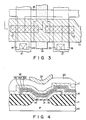
- FIG. 3 A group of memory cells used for a semiconductor memory device according to this invention is shown in Fig. 3.
- FIG. 4 A cross section of the memory cell taken on line I - I ⁇ is shown in Fig. 4.
- reference numeral 10 designates a silicon semiconductor substrate of p-type.
- Field oxide film 11 for separating the adjacent memory cells from one another is formed on substrate 10.
- Gate oxide film 12 is formed on a specific location of substrate 10 which correspond to a channel region in the element region as separated by field oxide film 11.
- Floating gate 13 as a first polysilicon layer is formed on gate oxide film 12. Both ends of floating gate 13 extend over field oxide film 11.
- Erase gate 15 as a second polysilicon layer is laid above one end of floating gate 13 with silicon oxide film 14 interlaid therebetween.
- Silicon oxide film 14 serves as an insulating film and is formed by oxidizing the polysilicon layer of floating gate 13.
- Erase gate 15 overlaps with the end portions of floating gate 13 of two adjacent memory cells as viewed horizontally in Fig. 3.
- Three-layered 16 is layered over floating gate 13 and erase gate 15.
- Control gate 17 consisting of a third polysilicon layer is continuously layered over the three layered film 16.
- Three-layered film 16 consists of first silicon oxide (SiO2) film 16A as a bottom layer, second silicon nitride (Si3N4) film 16B as a medium layer, and a third silicon oxide (SiO2) film 16C as a top layer.
- Source region 18 and drain region 19 as n-type diffusion layers are formed on the element region surfaces located at both sides of floating gate 13, respectively.
- Source region 18 is a single layer and used in common for all of the memory cells.
- Interlaying insulating film 20 is laid on control gate 17.
- Conductive layer 21 made of aluminum, for example, is formed on interlaying insulating film 20.
- field oxide film 11 is formed on substrate 10.
- the first polysilicon layer is deposited thereon.
- Appropriate impurity such as phosphorus or arsenic are diffused into the polysilicon layer.
- the first polysilicon layer is patterned by reactive ion etching process (RIE), to form floating gate 13.
- RIE reactive ion etching process
- the structure is thermally oxidized in a condition that it is placed at 1000°C and for 30 minutes in gas containing O2 and N2 with the proportion of 2 to 8. As the result of this thermal oxidization, silicon oxide film 14, 350 Angstroms thick, is formed on the surface of floating gate 13.
- a second polysilicon layer is deposited over the surface of the structure.
- Phosphorus or arsenic impurity is diffused into the second polysilicon layer.
- the second polysilicon layer is patterned by chemical dry etching (CDE) process, to form erase gate 15.
- CDE chemical dry etching
- the structure is thermally oxidized in a condition that it is placed at 1000°C and for 30 minutes in gas containing O2 and N2 with the proportion of 5 to 5.
- silicon oxide film 16A 400 Angstroms thick, is formed over floating gate 13 and erase gate 15.
- Silicon nitride film 16B of 150 Angstroms in thickness is then formed over silicon oxide film 16A by chemical vapor deposition (CVD) process at 700°C and for 20 minutes.
- CVD chemical vapor deposition
- the structure is placed in a wet atmosphere and thermally oxidized at 1000°C and for 50 minutes, to form silicon oxide film 16C of 50 Angstroms in thickness on the surface of silicon nitride film 16B.
- a third polysilicon layer is deposited and doped with phosphorus or arsenic impurity at 6 ⁇ 1020/cm3 or more, and then is patterned, to form control gate 17.
- interlaying insulating film 20 After interlaying insulating film 20 is layered over the entire surface of the structure, contact holes 22 opened to the surface of drain region 19 of memory cells are formed in this interlaying insulating film 20. Then, aluminum is uniformly deposited on the entire surface of structure by vacuum deposition process. The deposited aluminum is patterned to form interconnection layer 21.
- floating gate 13 partially overlaps with erase gate 15, while the former is laid under the latter. Therefore, a relatively great amount of asperity appears on the upper surface of floating gate 13. With this feature, the leak current in the direction to cause the erroneous write is restricted, and the leak current in the direction to cause data erasure is improved.
- the insulating film interlaid between erase gate 15 and control gate 17 is the three-layered film 16 consisting of silicon oxide film 16A, silicon nitride film 16B and silicon oxide film 16.
- the use of the insulating film with such a structure remarkably increases the breakdown performance between erase gate 15 and control gate 17, when it is compared with that of the prior art.
- Silicon oxide film 16A as a first layer of three-layered film 16 is formed by oxidizing floating gate 13 and erase gate 15.
- Silicon nitride film 16 as a second layer is formed by CVD process.
- Silicon oxide film 16C as a third layer is formed by oxidizing silicon nitride film 16B.
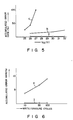
- Fig. 5 there is shown a graph illustrating a variation of accumulated error rate with respect to the voltage V EC applied to between the erase gate and the control gate.
- the abscissa represents the voltage V EC (V), while the ordinate accumulated error rate (%).
- Curves "a” and “b” are the variations of error rate of the memory cells according to this embodiment. More specifically, curve “a” represents a variation of error rate when the thickness of the silicon oxide film 16A as the first layer is 600 Angstroms. Curve “b” represents a variation of error rate when it is 400 Angstroms.
- the thickness of silicon nitride film 16B as the second layer is 150 Angstroms and that of silicon oxide film 16C as the third layer is 50 Angstroms.
- Curve “c” indicates a variation of error rate of the prior memory cell.
- the insulating film between the erase gate and the control gate is a silicon oxide film of 1200 Angstrom thick.
- curve "b” shows that error rate is about 20 % in the vicinity of 30 V of V EC .
- curve “c” it is about 0 % at 32 V.
- error rate is 100 % when voltage V EC reaches 27 V. This indicates that at this voltage, all of the memory cells are perfectly broken down.
- TDDB time depend dioxide breakdown
- Fig. 6 shows a variation of accumulated error rate against a number of write/erasure cycles when the memory cell according to this embodiment is used.
- abscissa represents write/erasure cycles (number of its cycles) and the ordinate accumulated error rate (%).
- Curve I is plotted for the silicon oxide film 16A of 600 Angstroms of three-layered film 16.
- Curve II is plotted for the film 16A of 400 Angstroms of three-layered film 16.
- silicon nitride film 16B and silicon oxide film 16C are 150 and 50 Angstroms, respectively, for both the curves.
- the error rate is about 8 % for the 400 Angstroms silicon oxide film 16A, and the error rate is about 0 % for the 600 Angstroms silicon oxide film. As a matter of course, as the number of cycles is small, the error rate is reduced.
- the accumulated error rate may further be improved by merely increasing the thickness of the silicon oxide film 16A as the first layer of three-layered film 16.
- the thickness of silicon oxide film 16A As seen from Figs. 5 and 6, the accumulated error rate may further be improved by merely increasing the thickness of the silicon oxide film 16A as the first layer of three-layered film 16.
- There is a limit in increasing the thickness of this film however. The reason for this follows.
- silicon oxide film 16A is formed, floating gate 13 is simultaneously oxidized, so that the insulating film between control gate 17 and floating gate 13 becomes excessively thick.
- the excessively thick film hinders the application of potential to substrate 10 when a high voltage is applied to control gate 17 in the data write mode. This deteriorates the write characteristic of the memory device.
- Increase of the drain voltage in the write mode may solve this problem to a certain degree, and is not a perfect solution. Therefore, it appears that the thickness of silicon oxide film 16A of the three-layered film 16 depends on the capability of the memory device.
- the breakdown performance of the insulating film between erase gate 15 and control gate 17 of the memory cell is improved by inserting the three-layered film 16 between them, as already mentioned. The following two reasons for this may be considered.
- a first reason for this is that the three-layered film has a lower density of the weak spots contained in the insulating film than the single insulating film.
- a second reason resides in the current mechanism peculiar to the three-layered film.
- a number of carriers generated when the leak current is caused are electrons in silicon oxide film 16A or 16C of the three-layered film, and these are holes in silicon nitride film 16B.
- the leak current is caused in silicon nitride film 16B either when hole current is easy to flow due to the weak spots or when electron current is easy to flow in silicon nitride film. Since there is a rare case that both currents flow simultaneously, the breakdown performance between the erase gate and the control gate in the memory cell can be improved.
- the breakdown performance between the erase gate and the control gate in the memory cell can be improved, and the guaranteed number of write/erasure cycles may be remarkably improved.
- Provision of the three-layered insulating film between the erase gate and the control gate restricts generation of the leak current between these gates. This implies that the electrons as injected into floating gate 13 are kept therein for a long time. With this, the test yield and the reliability of the memory device as well are improved.
- Erase gate 15 and control gate 17 are formed for a number of memory cells, and are used as interconnection layers, respectively.
- the polysilicon layer of erase gate 15 and control gate 17 are doped with impurity, such as phosphorus or arsenic, at 6 ⁇ 1020/cm3 or more, i.e., a figure near solution limit.
- impurity such as phosphorus or arsenic
- the polysilicon layer of floating gate 13 is also doped with phosphorus or arsenic at a concentration approximate to the above.
- the polysilicon layer as the first layer is doped with the impurity at a concentration of less than 6 ⁇ 1020/cm3, for example, 1 ⁇ 1020/cm3 to 4 ⁇ 1020/cm3.
- the asperity on its surface is remarkably reduced when it is subjected to the subsequent oxidization. In other words, it has a smoothed surface.
- the subsequent oxidization causes a great asperity on the surface of the polysilicon layer. The cause for this is considered that the oxidizing rate is not uniform over the surface of polysilicon layer.
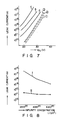
- a graph of Fig. 7 comparatively shows leak current characteristics between the floating gate and the erase gate of the conventional memory cell and the memory cell of this embodiment.
- Curves "a”, “b” and “c” indicate variations of the leak current when a voltage V FE is applied to those gates, with its positive polarity at the erase gate. These curves “a”, “b” and “c” are for the impurity (phosphorus) concentrations of the region 13, 6 ⁇ 1020/cm3, 4 ⁇ 1020/cm3, and 2 ⁇ 1020/cm3, respectively. Further, curve “a” is the leak current variation of the conventional memory cell. Curves “b and “c” show the leak current variation of the memory cells according to this embodiment. Curves 1, 2 and 3 indicate variations of the leak current when a voltage V FE is applied to those gates, with its positive polarity at the floating gate.
- curves "a”, “b” and “c” are for the impurity (phosphorus) concentrations of the floating gate 13, 6 ⁇ 1020/cm3, 4 ⁇ 1020/cm3, and 2 ⁇ 1020/cm3, respectively.
- curve 1 is the leak current variation of the conventional memory cell.
- Curves 2 and 3 show the leak current variation of the memory cells according to this embodiment.
- Fig. 8 shows characteristic curves, which describe variations of the leak current between the floating gate and the erase gate.
- the abscissa of the graph represents a concentration (/cm3) of impurity (phosphorus) in the floating gate 13.
- the ordinate represents a leak current (A).
- characteristic curve I indicates a variation of a leak current flowing from erase gate 15 to floating gate 13, when a voltage of 25 V is applied to between erase gate 15 and floating gate 13.
- erase gate 15 is set at the positive polarity of the applied voltage.
- This curve shows that the leak current increases with reduction of the impurity concentration of the floating gate 13.
- the increased leak current provides an improved erasure characteristic.
- Characteristic curve II indicates a variation of a leak current flowing from floating gate 13 to erase gate 15, when a voltage of 25 V is applied to between floating gate 13 and erase gate 15. In this case, floating gate 13 is set at the positive polarity of the applied voltage. This curve II shows that the leak current increases a little when the impurity concentration in the floating gate 13 is decreased.
- the impurity concentration of this portion may be set to be lower than the solution limit.
Landscapes
- Non-Volatile Memory (AREA)
- Semiconductor Memories (AREA)
Applications Claiming Priority (2)
| Application Number | Priority Date | Filing Date | Title |
|---|---|---|---|
| JP58110/87 | 1987-03-13 | ||
| JP62058110A JPH0640588B2 (ja) | 1987-03-13 | 1987-03-13 | 半導体記憶装置 |
Publications (2)
| Publication Number | Publication Date |
|---|---|
| EP0282022A2 true EP0282022A2 (fr) | 1988-09-14 |
| EP0282022A3 EP0282022A3 (fr) | 1989-05-17 |
Family
ID=13074833
Family Applications (1)
| Application Number | Title | Priority Date | Filing Date |
|---|---|---|---|
| EP88103703A Ceased EP0282022A3 (fr) | 1987-03-13 | 1988-03-09 | Dispositif de mémoire à semi-conducteur |
Country Status (4)
| Country | Link |
|---|---|
| US (1) | US4996572A (fr) |
| EP (1) | EP0282022A3 (fr) |
| JP (1) | JPH0640588B2 (fr) |
| KR (1) | KR910007376B1 (fr) |
Cited By (6)
| Publication number | Priority date | Publication date | Assignee | Title |
|---|---|---|---|---|
| EP0282023A3 (en) * | 1987-03-13 | 1989-05-17 | Kabushiki Kaisha Toshiba | Semiconductor memory device |
| EP0378227A1 (fr) * | 1989-01-13 | 1990-07-18 | Kabushiki Kaisha Toshiba | EEPROM ayant des dessins d'électrode de grille d'effaçage qui croisent des dessins de la région de source et procédé pour sa fabrication |
| EP0443515A3 (en) * | 1990-02-19 | 1992-03-25 | Kabushiki Kaisha Toshiba | Nonvolatile semiconductor device |
| US5229312A (en) * | 1992-04-13 | 1993-07-20 | North American Philips Corp. | Nonvolatile trench memory device and self-aligned method for making such a device |
| US5252846A (en) * | 1987-03-13 | 1993-10-12 | Kabushiki Kaisha Toshiba | Semiconductor memory device with an improved erroneous write characteristic and erasure characteristic |
| US6329688B1 (en) | 1997-09-04 | 2001-12-11 | Mitsubishi Denki Kabushiki Kaisha | Nonvolatile semiconductor memory device and method of manufacturing the same |
Families Citing this family (14)
| Publication number | Priority date | Publication date | Assignee | Title |
|---|---|---|---|---|
| JP2739593B2 (ja) * | 1989-06-02 | 1998-04-15 | セイコーインスツルメンツ株式会社 | 半導体装置の製造法 |
| JPH0491469A (ja) * | 1990-08-01 | 1992-03-24 | Sharp Corp | 不揮発性半導体メモリ |
| JP2679389B2 (ja) * | 1990-10-12 | 1997-11-19 | 日本電気株式会社 | 不揮発性半導体記憶セルのデータ消去方法 |
| US5512505A (en) * | 1990-12-18 | 1996-04-30 | Sandisk Corporation | Method of making dense vertical programmable read only memory cell structure |
| US5343063A (en) * | 1990-12-18 | 1994-08-30 | Sundisk Corporation | Dense vertical programmable read only memory cell structure and processes for making them |
| US5331189A (en) * | 1992-06-19 | 1994-07-19 | International Business Machines Corporation | Asymmetric multilayered dielectric material and a flash EEPROM using the same |
| US5439838A (en) * | 1994-09-14 | 1995-08-08 | United Microelectronics Corporation | Method of thinning for EEPROM tunneling oxide device |
| JP2871530B2 (ja) * | 1995-05-10 | 1999-03-17 | 日本電気株式会社 | 半導体装置の製造方法 |
| US5597751A (en) * | 1995-12-20 | 1997-01-28 | Winbond Electronics Corp. | Single-side oxide sealed salicide process for EPROMs |
| KR100317488B1 (ko) * | 1999-12-28 | 2001-12-24 | 박종섭 | 플래쉬 메모리 소자의 제조 방법 |
| KR100792405B1 (ko) * | 2007-01-03 | 2008-01-09 | 주식회사 하이닉스반도체 | 벌브형 리세스 패턴의 제조 방법 |
| US20090039410A1 (en) * | 2007-08-06 | 2009-02-12 | Xian Liu | Split Gate Non-Volatile Flash Memory Cell Having A Floating Gate, Control Gate, Select Gate And An Erase Gate With An Overhang Over The Floating Gate, Array And Method Of Manufacturing |
| JP5503843B2 (ja) * | 2007-12-27 | 2014-05-28 | ルネサスエレクトロニクス株式会社 | 不揮発性半導体記憶装置及びその製造方法 |
| JP2013058683A (ja) * | 2011-09-09 | 2013-03-28 | Toshiba Corp | 半導体記憶装置の製造方法 |
Family Cites Families (11)
| Publication number | Priority date | Publication date | Assignee | Title |
|---|---|---|---|---|
| JPS57104263A (en) * | 1980-12-20 | 1982-06-29 | Toshiba Corp | Semiconductor memory storage |
| EP0054355B1 (fr) * | 1980-12-08 | 1986-04-16 | Kabushiki Kaisha Toshiba | Dispositif semiconducteur à mémoire |
| EP0053878B1 (fr) * | 1980-12-08 | 1985-08-14 | Kabushiki Kaisha Toshiba | Dispositif semiconducteur à mémoire |
| US4437174A (en) * | 1981-01-19 | 1984-03-13 | Tokyo Shibaura Denki Kabushiki Kaisha | Semiconductor memory device |
| JPS60134478A (ja) * | 1983-11-28 | 1985-07-17 | ローム・コーポレーション | 電気的プログラム式記憶装置を製造する方法 |
| JPS60234372A (ja) * | 1984-05-07 | 1985-11-21 | Toshiba Corp | 半導体装置の製造方法 |
| JPS60250676A (ja) * | 1984-05-25 | 1985-12-11 | Toshiba Corp | 半導体記憶装置 |
| JPH0697695B2 (ja) * | 1984-11-16 | 1994-11-30 | 株式会社日立製作所 | 半導体集積回路装置の製造方法 |
| JPS61136274A (ja) * | 1984-12-07 | 1986-06-24 | Toshiba Corp | 半導体装置 |
| JPS61187278A (ja) * | 1985-02-14 | 1986-08-20 | Nec Corp | 半導体装置 |
| JPH0640587B2 (ja) * | 1987-03-13 | 1994-05-25 | 株式会社東芝 | 半導体記憶装置 |
-
1987
- 1987-03-13 JP JP62058110A patent/JPH0640588B2/ja not_active Expired - Fee Related
-
1988
- 1988-03-09 EP EP88103703A patent/EP0282022A3/fr not_active Ceased
- 1988-03-12 KR KR1019880002644A patent/KR910007376B1/ko not_active Expired
-
1989
- 1989-12-11 US US07/449,333 patent/US4996572A/en not_active Expired - Lifetime
Cited By (8)
| Publication number | Priority date | Publication date | Assignee | Title |
|---|---|---|---|---|
| EP0282023A3 (en) * | 1987-03-13 | 1989-05-17 | Kabushiki Kaisha Toshiba | Semiconductor memory device |
| US5252846A (en) * | 1987-03-13 | 1993-10-12 | Kabushiki Kaisha Toshiba | Semiconductor memory device with an improved erroneous write characteristic and erasure characteristic |
| EP0378227A1 (fr) * | 1989-01-13 | 1990-07-18 | Kabushiki Kaisha Toshiba | EEPROM ayant des dessins d'électrode de grille d'effaçage qui croisent des dessins de la région de source et procédé pour sa fabrication |
| US5364805A (en) * | 1989-01-13 | 1994-11-15 | Kabushiki Kaisha Toshiba | Method of manufacturing an EEPROM having an erasing gate electrode |
| EP0443515A3 (en) * | 1990-02-19 | 1992-03-25 | Kabushiki Kaisha Toshiba | Nonvolatile semiconductor device |
| US5229632A (en) * | 1990-02-19 | 1993-07-20 | Kabushiki Kaisha Toshiba | Electrically erasable memory device having erase-electrode connected to substrate junction |
| US5229312A (en) * | 1992-04-13 | 1993-07-20 | North American Philips Corp. | Nonvolatile trench memory device and self-aligned method for making such a device |
| US6329688B1 (en) | 1997-09-04 | 2001-12-11 | Mitsubishi Denki Kabushiki Kaisha | Nonvolatile semiconductor memory device and method of manufacturing the same |
Also Published As
| Publication number | Publication date |
|---|---|
| KR880011929A (ko) | 1988-10-31 |
| US4996572A (en) | 1991-02-26 |
| EP0282022A3 (fr) | 1989-05-17 |
| JPH0640588B2 (ja) | 1994-05-25 |
| JPS63224367A (ja) | 1988-09-19 |
| KR910007376B1 (ko) | 1991-09-25 |
Similar Documents
| Publication | Publication Date | Title |
|---|---|---|
| EP0282022A2 (fr) | Dispositif de mémoire à semi-conducteur | |
| KR940009642B1 (ko) | 불휘발성 반도체 기억장치 및 그 제조방법 | |
| US6673677B2 (en) | Method for manufacturing a multi-bit memory cell | |
| US5595920A (en) | Method of manufacturing a semiconductor memory device for use with image pickup | |
| US5739569A (en) | Non-volatile memory cell with oxide and nitride tunneling layers | |
| TWI409940B (zh) | 抑制反及閘電荷捕捉記憶體邊緣電場干擾之方法與裝置 | |
| KR20020073449A (ko) | 반도체 장치 및 그 제조 방법 | |
| EP0301460A2 (fr) | Dispositif semi-conducteur non volatil effaçable par ultraviolets | |
| US4735915A (en) | Method of manufacturing a semiconductor random access memory element | |
| CN1136614C (zh) | 利用栅极感应漏极漏电流的快闪存储单元 | |
| US5814857A (en) | EEPROM flash memory cell, memory device, and process for formation thereof | |
| KR100364040B1 (ko) | 반도체 기억 장치 및 그 제조 방법 | |
| US5999453A (en) | Nonvolatile semiconductor memory | |
| KR940005898B1 (ko) | 불휘발성 반도체장치 | |
| EP0282023B1 (fr) | Dispositif de mémoire à semi-conducteur | |
| JPH05267684A (ja) | 不揮発性記憶素子 | |
| US6551867B1 (en) | Non-volatile semiconductor memory device and method for manufacturing the same | |
| US5252846A (en) | Semiconductor memory device with an improved erroneous write characteristic and erasure characteristic | |
| JPH07226449A (ja) | 電気的に情報の書込および消去が可能な半導体記憶装置およびその製造方法ならびにその記憶認識方法 | |
| KR100367804B1 (ko) | 불휘발성반도체기억장치및그제조방법 | |
| US20080293200A1 (en) | Method of fabricating nonvolatile semiconductor memory device | |
| EP0298430A2 (fr) | Dispositif semi-conducteur à grille flottante | |
| CN1229873C (zh) | 利用分开的介电浮栅的新型易收缩非易失性的半导体存储单元及其制造方法 | |
| JPH0697454A (ja) | 不揮発性半導体メモリ装置及びその駆動方法 | |
| US20050032308A1 (en) | Multi-bit vertical memory cell and method of fabricating the same |
Legal Events
| Date | Code | Title | Description |
|---|---|---|---|
| PUAI | Public reference made under article 153(3) epc to a published international application that has entered the european phase |
Free format text: ORIGINAL CODE: 0009012 |
|
| 17P | Request for examination filed |
Effective date: 19880309 |
|
| AK | Designated contracting states |
Kind code of ref document: A2 Designated state(s): DE FR GB |
|
| PUAL | Search report despatched |
Free format text: ORIGINAL CODE: 0009013 |
|
| AK | Designated contracting states |
Kind code of ref document: A3 Designated state(s): DE FR GB |
|
| 17Q | First examination report despatched |
Effective date: 19910605 |
|
| STAA | Information on the status of an ep patent application or granted ep patent |
Free format text: STATUS: THE APPLICATION HAS BEEN REFUSED |
|
| 18R | Application refused |
Effective date: 19920506 |