EP0282050B1 - Carbonyl- und Sulfonyl-Derivate von 2-(Aminoalkylthio)methyl-1,4-dihydropyridinen, Verfahren zu ihrer Herstellung und diese enthaltende pharmazeutische Zusammensetzungen - Google Patents
Carbonyl- und Sulfonyl-Derivate von 2-(Aminoalkylthio)methyl-1,4-dihydropyridinen, Verfahren zu ihrer Herstellung und diese enthaltende pharmazeutische Zusammensetzungen Download PDFInfo
- Publication number
- EP0282050B1 EP0282050B1 EP88103776A EP88103776A EP0282050B1 EP 0282050 B1 EP0282050 B1 EP 0282050B1 EP 88103776 A EP88103776 A EP 88103776A EP 88103776 A EP88103776 A EP 88103776A EP 0282050 B1 EP0282050 B1 EP 0282050B1
- Authority
- EP
- European Patent Office
- Prior art keywords
- methyl
- group
- dihydropyridine
- phenyl
- dicarboethoxy
- Prior art date
- Legal status (The legal status is an assumption and is not a legal conclusion. Google has not performed a legal analysis and makes no representation as to the accuracy of the status listed.)
- Expired - Lifetime
Links
Classifications
-
- C—CHEMISTRY; METALLURGY
- C07—ORGANIC CHEMISTRY
- C07D—HETEROCYCLIC COMPOUNDS
- C07D401/00—Heterocyclic compounds containing two or more hetero rings, having nitrogen atoms as the only ring hetero atoms, at least one ring being a six-membered ring with only one nitrogen atom
- C07D401/02—Heterocyclic compounds containing two or more hetero rings, having nitrogen atoms as the only ring hetero atoms, at least one ring being a six-membered ring with only one nitrogen atom containing two hetero rings
- C07D401/12—Heterocyclic compounds containing two or more hetero rings, having nitrogen atoms as the only ring hetero atoms, at least one ring being a six-membered ring with only one nitrogen atom containing two hetero rings linked by a chain containing hetero atoms as chain links
-
- C—CHEMISTRY; METALLURGY
- C07—ORGANIC CHEMISTRY
- C07D—HETEROCYCLIC COMPOUNDS
- C07D211/00—Heterocyclic compounds containing hydrogenated pyridine rings, not condensed with other rings
- C07D211/04—Heterocyclic compounds containing hydrogenated pyridine rings, not condensed with other rings with only hydrogen or carbon atoms directly attached to the ring nitrogen atom
- C07D211/80—Heterocyclic compounds containing hydrogenated pyridine rings, not condensed with other rings with only hydrogen or carbon atoms directly attached to the ring nitrogen atom having two double bonds between ring members or between ring members and non-ring members
- C07D211/84—Heterocyclic compounds containing hydrogenated pyridine rings, not condensed with other rings with only hydrogen or carbon atoms directly attached to the ring nitrogen atom having two double bonds between ring members or between ring members and non-ring members with hetero atoms or with carbon atoms having three bonds to hetero atoms, with at the most one bond to halogen directly attached to ring carbon atoms
- C07D211/90—Carbon atoms having three bonds to hetero atoms with at the most one bond to halogen
Definitions
- the present invention refers to carbonyl and sulphonyl derivatives of 2-(aminoalkylthio)methyl-1,4-dihydropyridines, a method for their preparation and pharmaceutical compositions containing them.
- optical antipodes i.e. the single enantiomers; racemic mixtures of optical antipodes, diasteroisomers of compounds I and mixtures thereof.
- Pharmaceutically acceptable salts are those with non toxic acids and bases.
- Alkyl groups of compounds of the invention may have both linear or branched chain.
- a C1-C6-alkyl group is preferably methyl, ethyl, isopropyl or ter-butyl.
- EP-A-200 524 and EP-A-206 747 are disclosed 1,4-dihydropyridines with a similar side chain in position 2, in which the terminal amino group is substituted by carbonyl, thiocarbonyl or sulfonyl residues.
- EP-A-89 162 and EP-A-119 050 are described 1,4-dihydripyridines with an oxymethyl side chain in position 2 instead of a thiomethyl group. All prior art compounds possess an antihypertensive activity but with a relative high toxicity.
- the compounds of the invention are prepared by means of a process including the reaction of a 2-(aminoalkylthiomethyl)-1,4-dihydropyridine of formula II wherein R1, R2, R3, R4, R5, n, m1, m2 are as above defined with an acylating agent as an activated form of an ester or an amide of a carbonic or thiocarbonic acid of formula III or an activated form of a sulphonic acid of formula IV wherein P, Q and X are as above defined and Y is selected in the group consisting of chlorine and 1-imidazolyl, in the presence or not of a base to give a compound of formula I.
- reaction of a compound of formula II with the acylating agent of formulae III or IV may be carried out using equimolecular amounts or a slight excess of the acylating species.
- Suitable solvents are halogenated hydrocarbons such as CH2Cl2, 1,2-dichlorethane, chloroform, aliphatic hydrocarbons such as hexane, heptane; cycloaliphatic hydrocarbons such as cyclohexane; aromatic hydrocarbons such as benzene, toluene, pyridine, collidine; linear or cylic ethers such as tetrahydrofurane, diethylether, dimethoxyethane; amides and esters such as dimethylformamide; ethyl acetate; and mixtures thereof.
- halogenated hydrocarbons such as CH2Cl2, 1,2-dichlorethane, chloroform
- aliphatic hydrocarbons such as hexane, heptane
- cycloaliphatic hydrocarbons such as cyclohexane
- aromatic hydrocarbons such as benzene, toluene, pyridine, collidine
- This base can be an inorganic one such as an alkaline or alkaline-earth carbonate or bicarbonate, or an organic base such as a tertiary amine, e.g. triethylamine, pyridine, an alkyl-substituted pyridine, 4-diethylaminopyridine, etc.
- the reaction is preferably carried out at temperatures ranging from -25°C to the reflux temperature of the solvent, but preferably at room temperature.
- Reaction times may vary from few minutes to several days, but usually they do not exceed two hours and a few minutes are often enough to complete the reaction.
- oxidizing agents such as a m-chloroperbenzoic, performic, peracetic, peroxytrifluoroacetic, periodic acid or hydrogen peroxide.
- the excess reagent is destroyed by an excess of reducing agent, such as sodium bisulphite, sodium thiosulphate, potassium iodide, in accordance with well-known methods.
- reducing agent such as sodium bisulphite, sodium thiosulphate, potassium iodide
- the oxidation reaction of compounds of I may be also carried out using as an oxidating agent sodium periodate in alcohol solution (methyl, ethyl, propyl alcohol) at a temperature ranging from 0°C to the solvent's boiling temperature, for a time ranging from few minutes to some hours.
- alcohol solution methyl, ethyl, propyl alcohol
- the preferred temperature is the room temperature and the reaction time is ranging from 1 to 4 hours.
- the optional saponification of the COOR7 ester functions is carried out by reaction with diluted aqueous solutions of alkaline hydrates or carbonates such as lithium hydrate, sodium and potassium bicarbonates; ter-butyl esters are removed by treatment with acids, benzyl esters are removed by transfer-hydrogenation with alkaline hypophosphites in the presence of water and Pd on carbon in alcohol solvents such as ethanol, propanol or in acids such as acetic and propionic acids.
- the compounds of the invention wherein one of R1 and R3 is a free carboxy group may be subjected to salification with pharmaceutically acceptable bases, or to optical separation with optically active bases, such as for instance (+) and (-) ephedrine, (+) and (-)phenylethylamine, dehydroabiethylamine, according to known methods.
- the compounds of formula I wherein basic functional groups are present may be salified with pharmaceutically acceptable acids. If said acids are optically active, for example tartaric, mandelic, malic, camphorsulphohic acids, the salts may be subjected to optical resolution, thus obtaining the single optical antipodes.
- acids are optically active, for example tartaric, mandelic, malic, camphorsulphohic acids
- the salts may be subjected to optical resolution, thus obtaining the single optical antipodes.
- the diimidazolides V are known non toxic synthetic equivalents of phosgene and thiophosgene.
- R6 is includes the reaction of a compound of formula II with a diimidazolide of formula V, thus obtaining an imidazolylureido derivative of formula VII wherein R1, R2, R3, R4, R5, n, X, m1 and m2 have the above described meanings.
- the imidazolyl derivative VII can be isolated or reacted "in situ" with equimolecular amounts of a slight excess of the compounds of formula VI.
- the preferred conditions for the reaction are substantially the same as those above described for substantially similar synthetic transformations, the only difference being a difference sequence of addition of the reagents.
- the compounds II are described in WO-A-87/00836
- the compounds II wherein m1 is 2, 3, 4, m2 is 1, R4 is hydrogen and R5 is hydrogen, C1-C4-alkyl or COCF3 are described in EP-A-0 200 524.
- the compound of the invention may be used in human and veterinary therapy for the treatment of hypertensive diseases of different origin and of coronary diseases.
- the antihypertensive effect of the compounds of the invention is dose-related in a dose range from 0.05 mg/kg to 3.5 mg/kg. Repeated administration shows that low dosages are effective to mantain, in the long time, mean blood pressure at the curated levels.
- the compounds of formula I induce a long lasting antihypertensive effect with a slow onset of the antihypertensive action.
- a slow and progressive decrease of the blood pressure is generally observed, the maximum effect being recorded after a period not shorter than 3 hours and ranging from 3 to 6-8 hours according to the administered dose.
- the decrease of the blood pressure may vary from 10 to 80-100 mmHg, depending from the dose but surprisingly, the antihypertensive effect does not seem to be coupled with reflex tachycardia.
- Pressure and heart rate values were lower than basal ones at the end of each day of treatment.
- the compounds of the invention are particularly useful for treating antihypertensive conditions, because of the slow and progressive onset of action, allowing single daily administrations, without significant modification of heart-rate.
- the compounds of the invention may be administered by various routes to achieve the desired effect.
- the compounds may be administered to patient in pure form or as pharmaceutical compositions, by the oral or parenteral route.
- compositions may be carried out according to known techniques, as described for instance in "Remington's Pharmaceutical Sciences Handbook",hack Publishing Co., U.S.A.
- the compounds may be prepared in solid or liquid preparations in form of capsules, pills, tablets, powders, solutions, suspensions or emulsions.
- the solid unit dose can be a hard or soft gelatine capsule, containing lubricants or inert excipients such as lactose, saccharose or starch.
- the compounds of the invention can also be formulated in form of tablets using the conventional excipients such as lactose, saccharose, starch, gelatine, alginic acid, stearic acid, magnesium stearate, etc.
- the compounds of the invention may be administered as injectable solutions dissolved or suspended in physiologically acceptable diluents, with a sterile vehicle such as water or an oil, with or without addition of other excipients.
- a sterile vehicle such as water or an oil
- the oils used can be of vegetal, animal, mineral or synthetic origin, such as peanut, soya or mineral oil.
- a vehicle for injectable solutions it is possible to use water, aqueous solutions of mineral salts, aqueous solutions of dextrose or other sugars, ethanol, glycols, such as propylene or polyethylene glycols.
- the compounds of the invention may also be administered by the rectal route as suppositories, mixed with conventional vehicles such as for example cocoa butter, wax, polyvinylpyrrolidone or polyoxyethylenglycole and derivatives thereof.
- the preferred administration route is the oral one.
- EtOH, THF, MeOH, Et2O, AcOEt refer respectively to ethanol, tetrahydrofurane, methanol, ethyl ether and ethyl acetate.
- the solvent is evaporated under reduced pressure.
- the glassy solid so obtained is heated to 140°C for 2.5 hours, then cooled to room temperature, diluted with AcOEt (38 ml), washed with a sodium dihydrogen phosphate saturated solution (1 x 10 ml) and then with water (2 x 10 ml), dried on Na2SO4 and the solvent is evaporated under reduced pressure.
- reaction mixture is purified by chromatography on SiO2(60 g eluent CHCl3/MeOH-9.5/0.5).
- reaction mixture is warmed to room temperature and concentrated under reduced pressure, the residue is diluted with water and ice and then extracted with AcOEt (40 ml); the organic phase (AcOEt) is separated, washed with H2O (2 x 10 ml), dried on Na2SO4 and the solvent is evaporated under reduced pressure.
- the mixture is refluxed for 3 hours and then it is concentrated at reduced pressure, poured in H2O and extracted with AcOEt (40 ml); the AcOEt phase is separated and the residue is washed with H2O (2 x 5 ml) and dried on Na2SO4. The solvent is eliminated by distillation at reduced pressure.
- an amine selected in the group of aqueous ammonia, N-methylpiperazine, butylamine and methylamine and a dihydropyridine selected in the group of:
- the crude residue is purified by chromatography on SiO2 (60 g, eluent CNCl3/AcOEt 9/1).
- reaction mixture is warmed to room temperature and diluted with H2O (10 ml); the organic phase (1,2-dichloroethane) is separated and washed with H2O (1 x 5 ml); dried on Na2SO4 and evaporated to dryness under a reduced pressure.
- the crude residue is purified by chromatography on SiO2 (60 g, eluent CHCl/AcOEt 7/3).
- the solution is warmed to room temperature and after 30' it is treated with a NaHCO3 saturated solution (10 ml).
- the organic phase is separated, washed with water (2 x 10 ml), dried on Na2SO4 and evaporated under reduced pressure.
Landscapes
- Chemical & Material Sciences (AREA)
- Organic Chemistry (AREA)
- Pharmaceuticals Containing Other Organic And Inorganic Compounds (AREA)
- Hydrogenated Pyridines (AREA)
- Medicinal Preparation (AREA)
Claims (9)
- Verbindungen der Formel I
 - R₁ für eine C1-C3-Alkoxycarbonylgruppe- R₂ für eine m-Nitrophenylgruppe;- R₃ für eine COOR₇-Gruppe;- R₄ für Wasserstoff oder Methyl;- R₅ für Wasserstoff oder Butyl;- R₆ für eine
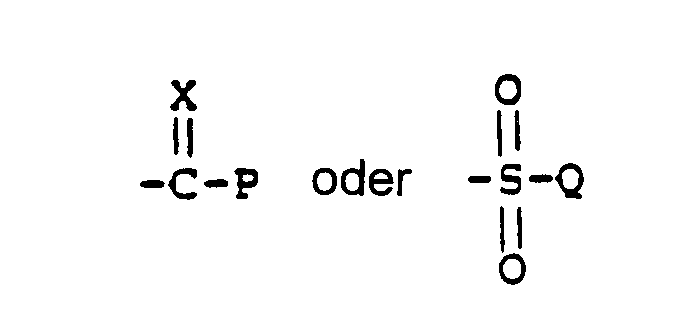
wobei X für Sauerstoff oder Schwefel steht; P für eine C₁-C₅-Alkylthiogruppe, eine Benzylthiogruppe, eine C₁-C₅-Alkoxygruppe, eine Benzyloxygruppe und eine Amino-Gruppe - R₇ für eine C₁-C₆-Alkylgruppe steht,- n 0,1 oder 2; m₁ 1 oder 2 und m₂ 0 oder 1 bedeuten,
ihre optischen Isomere , Diastereoisomere und pharmazeutisch geeignete Salze. - Verbindungen gemäß Anspruch 1, wobei R₆ für eine Aminocarbonylgruppe steht.
- Verbindungen gemäß Anspruch 1, wobei R₆ für eine Aminothiocarbonylgruppe steht.
- Verbindungen gemäß Anspruch 1, wobei R₆ für eine C₁-C₅-Alkoxycarbonyl- oder C₁-C₅-Alkylthiocarbonylgruppe steht.
- Verbindungen gemäß Anspruch 1, wobei R₆ für eine Phenyl- oder Benzylsulfonylgruppe steht.
- Verbindungen gemäß Anspruch 1
2-[2-(N-Ureidyl)ethylthio]methyl-6-Methyl-3,5-Dicarboethoxy-4(3-Nitrophenyl)-1,4-Dihydropyridin,
2-[2-(/4-(2-Hydroxyethyl]piperazin-1-yl/carbonylamino)ethylthio]methyl-6-Methyl-3,5-Dicarboethoxy-4(3-Nitrophenyl)-1,4-Dihydropyridin,
2-[2-(4-Methylpiperazin-1-yl-carbamoyl)ethylthio]methyl-6-Methyl-3,5-Dicarboethoxy-4(3-Nitrophenyl)-1,4-Dihydropyridin,
2-[2-(2-Methylthioureidyl)ethylthio]methyl-6-Methyl-3,5-Dicarboethoxy-4(3-Nitrophenyl)-1,4-Dihydropyridin,
2-[2-(ethoxycarbamoyl)ethylthio]methyl-6-Methyl-3,5-Dicarboethoxy-4(3-Nitrophenyl)-1,4-Dihydropyridin,
2-[2-(3-butylureidyl)ethylthio]methyl-6-Methyl-3,5-Dicarboethoxy-4(3-Nitrophenyl)-1,4-Dihydropyridin, - 2-[2-(p-toluolsulfonylamino)ethylthio]methyl-6-Methyl-3,5-Dicarboethoxy-4(3-Nitrophenyl)-1,4-Dihydropyridin.
- Ein Verfahren zur Herstellung von Verbindungen der Formel I, dadurch gekennzeichnet, daß man eine Verbindung der Formel II


- Pharmazeutische Zubereitungen, die als einen wirksamen Bestandteil eine Verbindung der Ansprüche 1 bis 7 enthalten und denen ein pharmazeutisch geeignetes Vehikel beigemischt ist.
Priority Applications (1)
| Application Number | Priority Date | Filing Date | Title |
|---|---|---|---|
| AT88103776T ATE95515T1 (de) | 1987-03-12 | 1988-03-10 | Carbonyl- und sulfonyl-derivate von 2(aminoalkylthio)methyl-1,4-dihydropyridinen, verfahren zu ihrer herstellung und diese enthaltende pharmazeutische zusammensetzungen. |
Applications Claiming Priority (2)
| Application Number | Priority Date | Filing Date | Title |
|---|---|---|---|
| IT8719658A IT1215381B (it) | 1987-03-12 | 1987-03-12 | Farmaceutiche che le contengono. carbonil- e solfonil- derivati di 2-(aminoalchiltio)metil-1,4-diidropiridine, un metodo per la loro preparazione e composizioni |
| IT1965887 | 1987-03-12 |
Publications (2)
| Publication Number | Publication Date |
|---|---|
| EP0282050A1 EP0282050A1 (de) | 1988-09-14 |
| EP0282050B1 true EP0282050B1 (de) | 1993-10-06 |
Family
ID=11160145
Family Applications (1)
| Application Number | Title | Priority Date | Filing Date |
|---|---|---|---|
| EP88103776A Expired - Lifetime EP0282050B1 (de) | 1987-03-12 | 1988-03-10 | Carbonyl- und Sulfonyl-Derivate von 2-(Aminoalkylthio)methyl-1,4-dihydropyridinen, Verfahren zu ihrer Herstellung und diese enthaltende pharmazeutische Zusammensetzungen |
Country Status (4)
| Country | Link |
|---|---|
| EP (1) | EP0282050B1 (de) |
| AT (1) | ATE95515T1 (de) |
| DE (1) | DE3884643D1 (de) |
| IT (1) | IT1215381B (de) |
Citations (2)
| Publication number | Priority date | Publication date | Assignee | Title |
|---|---|---|---|---|
| EP0089167A2 (de) * | 1982-03-11 | 1983-09-21 | Pfizer Limited | Dihydropyridine als antiischaemische und antihypertonische Mittel, Verfahren zu ihrer Herstellung und diese enthaltende pharmazeutische Zusammensetzungen |
| EP0119050A2 (de) * | 1983-03-10 | 1984-09-19 | Pfizer Limited | Anti-ischaemische und antihypertensive Dihydropyridin-Mittel |
Family Cites Families (3)
| Publication number | Priority date | Publication date | Assignee | Title |
|---|---|---|---|---|
| IL78642A0 (en) * | 1985-05-03 | 1986-08-31 | Pfizer | Dihydropyridines and pharmaceutical compositions containing them |
| CA1267416A (en) * | 1985-06-17 | 1990-04-03 | Ila Sircar | 1,4-dihydropyridine derivatives useful for the treatment of cardiovascular disorders |
| EP0233228A1 (de) * | 1985-08-06 | 1987-08-26 | Boehringer Mannheim Italia S.P.A. | Pharmazeutisch wirkzame 2-thiomethyl substituierte 1,4-dihydropyridine |
-
1987
- 1987-03-12 IT IT8719658A patent/IT1215381B/it active
-
1988
- 1988-03-10 AT AT88103776T patent/ATE95515T1/de not_active IP Right Cessation
- 1988-03-10 DE DE88103776T patent/DE3884643D1/de not_active Expired - Lifetime
- 1988-03-10 EP EP88103776A patent/EP0282050B1/de not_active Expired - Lifetime
Patent Citations (2)
| Publication number | Priority date | Publication date | Assignee | Title |
|---|---|---|---|---|
| EP0089167A2 (de) * | 1982-03-11 | 1983-09-21 | Pfizer Limited | Dihydropyridine als antiischaemische und antihypertonische Mittel, Verfahren zu ihrer Herstellung und diese enthaltende pharmazeutische Zusammensetzungen |
| EP0119050A2 (de) * | 1983-03-10 | 1984-09-19 | Pfizer Limited | Anti-ischaemische und antihypertensive Dihydropyridin-Mittel |
Non-Patent Citations (3)
| Title |
|---|
| Drug Res. 33, 1268 ( 1983 ) * |
| Nature 303, 535 ( 1983 ) * |
| Progr. Pharmacol. 5, 25 ( 1982) * |
Also Published As
| Publication number | Publication date |
|---|---|
| IT1215381B (it) | 1990-02-08 |
| DE3884643D1 (de) | 1993-11-11 |
| EP0282050A1 (de) | 1988-09-14 |
| ATE95515T1 (de) | 1993-10-15 |
| IT8719658A0 (it) | 1987-03-12 |
Similar Documents
| Publication | Publication Date | Title |
|---|---|---|
| US4999362A (en) | 2-thiomethyl-substituted-1,4-dihydropyridines, method for their preparation and pharmaceutical compositions containing them | |
| US4220649A (en) | 1,4-Dihydropyridine-3,5-dicarboxylic acid ester derivatives | |
| SK73898A3 (en) | Metalloproteinase inhibitors, pharmaceutical compositions containing them and their pharmaceutical uses, and methods and intermediates useful for their preparation | |
| US4605653A (en) | 1-(hydroxymethyl)-1,6,7,11b-tetrahydro-2H,4H-[1,3]oxazino- or -thiazino-[4,3-a]isoquinoline derivatives and pharmaceutical compositions containing them | |
| EP0255728B1 (de) | Phenoxyessigsäure-Verbindungen, ihre Herstellung, pharmazeutische Zusammensetzungen und deren Verwendung | |
| EP0255710A2 (de) | Dihydropyridin-Derivate mit kalziumagonistischer und alpha-1-antagonistischer Wirkung | |
| CZ390792A3 (en) | Precursors of medicaments based on esters of phenolic 2-piperidino-1-alkanols, process of their preparation, intermediates and use | |
| AU602970B2 (en) | Dihydropyridinamides process for their preparation, and their use in medicaments | |
| HU217969B (hu) | Tiazolidinon- és oxazolidinonszármazékok, ilyen vegyületeket tartalmazó gyógyászati készítmények, valamint eljárás a vegyületek előállítására | |
| US5635511A (en) | Treatment of heart rhythm disorders by administration of 3-phenylsulfonyl-3,7-diazabicyclo[3.3.1]nonane compounds. | |
| EP0271059B1 (de) | 2-Methylthiomethyl-dihydropyridine, Verfahren zur Herstellung und pharmazeutische Zusammenstellungen, die sie enthalten | |
| EP0282904B1 (de) | 2-Thiomethyl-substituierte Pyridine, Verfahren zu deren Herstellung und diese enthaltende Arzneimittel | |
| EP2138490B1 (de) | Neues Syntheseverfahren für Fluorquinolone | |
| HUT65434A (en) | Process for producing of novell n-alkylated 1,4-dihydropyridine dicarboxylic acid esters and pharmaceutical compositions comprising them | |
| EP0282050A1 (de) | Carbonyl- und Sulfonyl-Derivate von 2-(Aminoalkylthio)methyl-1,4-dihydropyridinen, Verfahren zu ihrer Herstellung und diese enthaltende pharmazeutische Zusammensetzungen | |
| JPH02169572A (ja) | ジヒドロピリジンアミド及びその生理学的に許容し得る塩 | |
| JPH02273661A (ja) | 置換(キノリン―2―イル―メトキシ)フエニル―n,n’―スルホニル尿素類、それらの調製方法および薬物におけるそれらの使用 | |
| US5272161A (en) | Indolesulphonamide-substituted dihydropyridines | |
| EP0296830B1 (de) | Ergolin-Derivate | |
| EP0254527B1 (de) | Tetracyclische Indolderivate | |
| US4824855A (en) | 1,4-dihydropyridine derivatives | |
| EP0292981B1 (de) | 2-Selenomethyl-1,4-dihydropyridine, Verfahren zu deren Herstellung und diese enthaltende pharmazeutische Zusammensetzungen | |
| EP0826686A2 (de) | Tricyclische Verbindungen, ihre Herstellung und Verwendung | |
| US4623647A (en) | [1,3]oxazino[4,3-a]-isoquinoline derivatives and pharmaceutical compositions containing them | |
| JP2003502374A (ja) | Npy拮抗薬としてのジヒドロピラジン誘導体 |
Legal Events
| Date | Code | Title | Description |
|---|---|---|---|
| PUAI | Public reference made under article 153(3) epc to a published international application that has entered the european phase |
Free format text: ORIGINAL CODE: 0009012 |
|
| 17P | Request for examination filed |
Effective date: 19880310 |
|
| AK | Designated contracting states |
Kind code of ref document: A1 Designated state(s): AT BE CH DE ES FR GB GR IT LI LU NL SE |
|
| 17Q | First examination report despatched |
Effective date: 19900116 |
|
| RAP1 | Party data changed (applicant data changed or rights of an application transferred) |
Owner name: BOEHRINGER MANNHEIM ITALIA S.P.A. |
|
| GRAA | (expected) grant |
Free format text: ORIGINAL CODE: 0009210 |
|
| AK | Designated contracting states |
Kind code of ref document: B1 Designated state(s): AT BE CH DE ES FR GB GR IT LI LU NL SE |
|
| PG25 | Lapsed in a contracting state [announced via postgrant information from national office to epo] |
Ref country code: IT Free format text: LAPSE BECAUSE OF FAILURE TO SUBMIT A TRANSLATION OF THE DESCRIPTION OR TO PAY THE FEE WITHIN THE PRESCRIBED TIME-LIMIT;WARNING: LAPSES OF ITALIAN PATENTS WITH EFFECTIVE DATE BEFORE 2007 MAY HAVE OCCURRED AT ANY TIME BEFORE 2007. THE CORRECT EFFECTIVE DATE MAY BE DIFFERENT FROM THE ONE RECORDED. Effective date: 19931006 Ref country code: DE Effective date: 19931006 Ref country code: AT Effective date: 19931006 Ref country code: ES Free format text: THE PATENT HAS BEEN ANNULLED BY A DECISION OF A NATIONAL AUTHORITY Effective date: 19931006 Ref country code: FR Effective date: 19931006 Ref country code: LI Effective date: 19931006 Ref country code: SE Effective date: 19931006 Ref country code: NL Effective date: 19931006 Ref country code: GR Free format text: LAPSE BECAUSE OF FAILURE TO SUBMIT A TRANSLATION OF THE DESCRIPTION OR TO PAY THE FEE WITHIN THE PRESCRIBED TIME-LIMIT Effective date: 19931006 Ref country code: CH Effective date: 19931006 Ref country code: BE Effective date: 19931006 |
|
| REF | Corresponds to: |
Ref document number: 95515 Country of ref document: AT Date of ref document: 19931015 Kind code of ref document: T |
|
| REF | Corresponds to: |
Ref document number: 3884643 Country of ref document: DE Date of ref document: 19931111 |
|
| REG | Reference to a national code |
Ref country code: CH Ref legal event code: PL |
|
| EN | Fr: translation not filed | ||
| PG25 | Lapsed in a contracting state [announced via postgrant information from national office to epo] |
Ref country code: GB Effective date: 19940310 |
|
| NLV1 | Nl: lapsed or annulled due to failure to fulfill the requirements of art. 29p and 29m of the patents act | ||
| PG25 | Lapsed in a contracting state [announced via postgrant information from national office to epo] |
Ref country code: LU Free format text: LAPSE BECAUSE OF NON-PAYMENT OF DUE FEES Effective date: 19940331 |
|
| PLBE | No opposition filed within time limit |
Free format text: ORIGINAL CODE: 0009261 |
|
| STAA | Information on the status of an ep patent application or granted ep patent |
Free format text: STATUS: NO OPPOSITION FILED WITHIN TIME LIMIT |
|
| 26N | No opposition filed | ||
| GBPC | Gb: european patent ceased through non-payment of renewal fee |
Effective date: 19940310 |