EP0282373B1 - Dérivés de la benzimidazol-2-one, leurs sels, procédé et intermédiaires de préparation, application à titre de médicaments et compositions les renfermant - Google Patents
Dérivés de la benzimidazol-2-one, leurs sels, procédé et intermédiaires de préparation, application à titre de médicaments et compositions les renfermant Download PDFInfo
- Publication number
- EP0282373B1 EP0282373B1 EP88400312A EP88400312A EP0282373B1 EP 0282373 B1 EP0282373 B1 EP 0282373B1 EP 88400312 A EP88400312 A EP 88400312A EP 88400312 A EP88400312 A EP 88400312A EP 0282373 B1 EP0282373 B1 EP 0282373B1
- Authority
- EP
- European Patent Office
- Prior art keywords
- formula
- derivative
- derivatives
- order
- carbon atoms
- Prior art date
- Legal status (The legal status is an assumption and is not a legal conclusion. Google has not performed a legal analysis and makes no representation as to the accuracy of the status listed.)
- Expired - Lifetime
Links
- MYONAGGJKCJOBT-UHFFFAOYSA-N benzimidazol-2-one Chemical class C1=CC=CC2=NC(=O)N=C21 MYONAGGJKCJOBT-UHFFFAOYSA-N 0.000 title claims abstract description 29
- 150000003839 salts Chemical class 0.000 title claims abstract description 28
- 239000003814 drug Substances 0.000 title claims description 13
- 238000000034 method Methods 0.000 title claims description 10
- 238000002360 preparation method Methods 0.000 title claims description 9
- 230000008569 process Effects 0.000 title claims description 4
- 239000000203 mixture Substances 0.000 title description 18
- 239000000543 intermediate Substances 0.000 title description 2
- -1 -OH Chemical group 0.000 claims abstract description 67
- 125000004432 carbon atom Chemical group C* 0.000 claims abstract description 35
- 125000004435 hydrogen atom Chemical group [H]* 0.000 claims abstract description 21
- 239000002253 acid Substances 0.000 claims abstract description 11
- 125000000217 alkyl group Chemical group 0.000 claims abstract description 4
- 229910052757 nitrogen Inorganic materials 0.000 claims abstract description 3
- 230000002829 reductive effect Effects 0.000 claims description 28
- XLYOFNOQVPJJNP-UHFFFAOYSA-N water Chemical compound O XLYOFNOQVPJJNP-UHFFFAOYSA-N 0.000 claims description 20
- 239000003795 chemical substances by application Substances 0.000 claims description 14
- 150000001412 amines Chemical class 0.000 claims description 13
- 150000003254 radicals Chemical class 0.000 claims description 12
- NQRYJNQNLNOLGT-UHFFFAOYSA-N Piperidine Chemical compound C1CCNCC1 NQRYJNQNLNOLGT-UHFFFAOYSA-N 0.000 claims description 10
- 150000007513 acids Chemical class 0.000 claims description 10
- 230000009471 action Effects 0.000 claims description 10
- 229910052500 inorganic mineral Inorganic materials 0.000 claims description 10
- 239000011707 mineral Substances 0.000 claims description 10
- 150000007522 mineralic acids Chemical class 0.000 claims description 9
- 150000007524 organic acids Chemical class 0.000 claims description 9
- 235000005985 organic acids Nutrition 0.000 claims description 8
- 150000003335 secondary amines Chemical class 0.000 claims description 7
- YGYAWVDWMABLBF-UHFFFAOYSA-N Phosgene Chemical compound ClC(Cl)=O YGYAWVDWMABLBF-UHFFFAOYSA-N 0.000 claims description 5
- 238000009903 catalytic hydrogenation reaction Methods 0.000 claims description 5
- 125000002887 hydroxy group Chemical group [H]O* 0.000 claims description 5
- 125000000449 nitro group Chemical group [O-][N+](*)=O 0.000 claims description 5
- 239000008194 pharmaceutical composition Substances 0.000 claims description 5
- 125000003386 piperidinyl group Chemical group 0.000 claims description 5
- GDTBXPJZTBHREO-UHFFFAOYSA-N bromine Chemical compound BrBr GDTBXPJZTBHREO-UHFFFAOYSA-N 0.000 claims description 4
- 238000006396 nitration reaction Methods 0.000 claims description 4
- KZBUYRJDOAKODT-UHFFFAOYSA-N Chlorine Chemical compound ClCl KZBUYRJDOAKODT-UHFFFAOYSA-N 0.000 claims description 3
- 239000004480 active ingredient Substances 0.000 claims description 3
- 239000002981 blocking agent Substances 0.000 claims description 3
- 239000000460 chlorine Substances 0.000 claims description 3
- 229910052801 chlorine Inorganic materials 0.000 claims description 3
- 125000005843 halogen group Chemical group 0.000 claims description 3
- XYEOALKITRFCJJ-UHFFFAOYSA-N o-benzylhydroxylamine Chemical compound NOCC1=CC=CC=C1 XYEOALKITRFCJJ-UHFFFAOYSA-N 0.000 claims description 3
- 239000002243 precursor Substances 0.000 claims description 3
- 230000002441 reversible effect Effects 0.000 claims description 3
- WSNDAYQNZRJGMJ-UHFFFAOYSA-N 2,2,2-trifluoroethanone Chemical group FC(F)(F)[C]=O WSNDAYQNZRJGMJ-UHFFFAOYSA-N 0.000 claims description 2
- ZCYVEMRRCGMTRW-UHFFFAOYSA-N 7553-56-2 Chemical group [I] ZCYVEMRRCGMTRW-UHFFFAOYSA-N 0.000 claims description 2
- 229910052794 bromium Inorganic materials 0.000 claims description 2
- 230000007062 hydrolysis Effects 0.000 claims description 2
- 238000006460 hydrolysis reaction Methods 0.000 claims description 2
- TUJKJAMUKRIRHC-UHFFFAOYSA-N hydroxyl Chemical compound [OH] TUJKJAMUKRIRHC-UHFFFAOYSA-N 0.000 claims description 2
- 229910052740 iodine Inorganic materials 0.000 claims description 2
- 125000004433 nitrogen atom Chemical group N* 0.000 claims description 2
- KHUXNRRPPZOJPT-UHFFFAOYSA-N phenoxy radical Chemical compound O=C1C=C[CH]C=C1 KHUXNRRPPZOJPT-UHFFFAOYSA-N 0.000 claims description 2
- 125000002883 imidazolyl group Chemical group 0.000 claims 1
- 230000003291 dopaminomimetic effect Effects 0.000 abstract description 6
- 229910052739 hydrogen Inorganic materials 0.000 abstract description 5
- 239000001257 hydrogen Substances 0.000 abstract description 5
- 125000003342 alkenyl group Chemical group 0.000 abstract description 2
- 230000003276 anti-hypertensive effect Effects 0.000 abstract description 2
- 230000000767 anti-ulcer Effects 0.000 abstract description 2
- 230000000304 vasodilatating effect Effects 0.000 abstract description 2
- IJGRMHOSHXDMSA-UHFFFAOYSA-N Atomic nitrogen Chemical compound N#N IJGRMHOSHXDMSA-UHFFFAOYSA-N 0.000 abstract 2
- 125000003545 alkoxy group Chemical group 0.000 abstract 2
- 125000000304 alkynyl group Chemical group 0.000 abstract 1
- 125000003710 aryl alkyl group Chemical group 0.000 abstract 1
- 125000001316 cycloalkyl alkyl group Chemical group 0.000 abstract 1
- 229910052736 halogen Inorganic materials 0.000 abstract 1
- 150000002367 halogens Chemical class 0.000 abstract 1
- 231100000252 nontoxic Toxicity 0.000 abstract 1
- 230000003000 nontoxic effect Effects 0.000 abstract 1
- 125000000951 phenoxy group Chemical group [H]C1=C([H])C([H])=C(O*)C([H])=C1[H] 0.000 abstract 1
- 125000002071 phenylalkoxy group Chemical group 0.000 abstract 1
- YMWUJEATGCHHMB-UHFFFAOYSA-N Dichloromethane Chemical compound ClCCl YMWUJEATGCHHMB-UHFFFAOYSA-N 0.000 description 67
- 239000000047 product Substances 0.000 description 60
- LFQSCWFLJHTTHZ-UHFFFAOYSA-N Ethanol Chemical compound CCO LFQSCWFLJHTTHZ-UHFFFAOYSA-N 0.000 description 52
- OKKJLVBELUTLKV-UHFFFAOYSA-N Methanol Chemical compound OC OKKJLVBELUTLKV-UHFFFAOYSA-N 0.000 description 42
- VYPSYNLAJGMNEJ-UHFFFAOYSA-N Silicium dioxide Chemical compound O=[Si]=O VYPSYNLAJGMNEJ-UHFFFAOYSA-N 0.000 description 20
- 0 Cc1cccc([C@]2CCC(*)CCC2)c1N* Chemical compound Cc1cccc([C@]2CCC(*)CCC2)c1N* 0.000 description 19
- HEMHJVSKTPXQMS-UHFFFAOYSA-M Sodium hydroxide Chemical compound [OH-].[Na+] HEMHJVSKTPXQMS-UHFFFAOYSA-M 0.000 description 14
- 239000000243 solution Substances 0.000 description 13
- 238000003756 stirring Methods 0.000 description 13
- VEXZGXHMUGYJMC-UHFFFAOYSA-N Hydrochloric acid Chemical compound Cl VEXZGXHMUGYJMC-UHFFFAOYSA-N 0.000 description 12
- 239000000377 silicon dioxide Substances 0.000 description 10
- QTBSBXVTEAMEQO-UHFFFAOYSA-N Acetic acid Chemical compound CC(O)=O QTBSBXVTEAMEQO-UHFFFAOYSA-N 0.000 description 9
- RTZKZFJDLAIYFH-UHFFFAOYSA-N Diethyl ether Chemical compound CCOCC RTZKZFJDLAIYFH-UHFFFAOYSA-N 0.000 description 8
- KWYUFKZDYYNOTN-UHFFFAOYSA-M Potassium hydroxide Chemical compound [OH-].[K+] KWYUFKZDYYNOTN-UHFFFAOYSA-M 0.000 description 8
- 239000003480 eluent Substances 0.000 description 8
- 238000001953 recrystallisation Methods 0.000 description 8
- 241001465754 Metazoa Species 0.000 description 7
- WEVYAHXRMPXWCK-UHFFFAOYSA-N Acetonitrile Chemical compound CC#N WEVYAHXRMPXWCK-UHFFFAOYSA-N 0.000 description 6
- WSFSSNUMVMOOMR-UHFFFAOYSA-N Formaldehyde Chemical compound O=C WSFSSNUMVMOOMR-UHFFFAOYSA-N 0.000 description 6
- KDLHZDBZIXYQEI-UHFFFAOYSA-N Palladium Chemical compound [Pd] KDLHZDBZIXYQEI-UHFFFAOYSA-N 0.000 description 6
- ZMANZCXQSJIPKH-UHFFFAOYSA-N Triethylamine Chemical compound CCN(CC)CC ZMANZCXQSJIPKH-UHFFFAOYSA-N 0.000 description 6
- ILAHWRKJUDSMFH-UHFFFAOYSA-N boron tribromide Chemical compound BrB(Br)Br ILAHWRKJUDSMFH-UHFFFAOYSA-N 0.000 description 6
- 238000004587 chromatography analysis Methods 0.000 description 6
- WGLUMOCWFMKWIL-UHFFFAOYSA-N dichloromethane;methanol Chemical compound OC.ClCCl WGLUMOCWFMKWIL-UHFFFAOYSA-N 0.000 description 6
- RAXXELZNTBOGNW-UHFFFAOYSA-N imidazole Natural products C1=CNC=N1 RAXXELZNTBOGNW-UHFFFAOYSA-N 0.000 description 6
- 235000010755 mineral Nutrition 0.000 description 6
- 239000002904 solvent Substances 0.000 description 6
- 239000007868 Raney catalyst Substances 0.000 description 5
- NPXOKRUENSOPAO-UHFFFAOYSA-N Raney nickel Chemical compound [Al].[Ni] NPXOKRUENSOPAO-UHFFFAOYSA-N 0.000 description 5
- 229910000564 Raney nickel Inorganic materials 0.000 description 5
- 241001342522 Vampyrum spectrum Species 0.000 description 5
- 239000002585 base Substances 0.000 description 5
- 230000000694 effects Effects 0.000 description 5
- 125000004483 piperidin-3-yl group Chemical group N1CC(CCC1)* 0.000 description 5
- 230000009467 reduction Effects 0.000 description 5
- CDBYLPFSWZWCQE-UHFFFAOYSA-L sodium carbonate Substances [Na+].[Na+].[O-]C([O-])=O CDBYLPFSWZWCQE-UHFFFAOYSA-L 0.000 description 5
- QTBSBXVTEAMEQO-UHFFFAOYSA-M Acetate Chemical compound CC([O-])=O QTBSBXVTEAMEQO-UHFFFAOYSA-M 0.000 description 4
- KZMGYPLQYOPHEL-UHFFFAOYSA-N Boron trifluoride etherate Chemical compound FB(F)F.CCOCC KZMGYPLQYOPHEL-UHFFFAOYSA-N 0.000 description 4
- ZAFNJMIOTHYJRJ-UHFFFAOYSA-N Diisopropyl ether Chemical compound CC(C)OC(C)C ZAFNJMIOTHYJRJ-UHFFFAOYSA-N 0.000 description 4
- NBBJYMSMWIIQGU-UHFFFAOYSA-N Propionic aldehyde Chemical compound CCC=O NBBJYMSMWIIQGU-UHFFFAOYSA-N 0.000 description 4
- JUJWROOIHBZHMG-UHFFFAOYSA-N Pyridine Chemical compound C1=CC=NC=C1 JUJWROOIHBZHMG-UHFFFAOYSA-N 0.000 description 4
- QAOWNCQODCNURD-UHFFFAOYSA-N Sulfuric acid Chemical compound OS(O)(=O)=O QAOWNCQODCNURD-UHFFFAOYSA-N 0.000 description 4
- WYURNTSHIVDZCO-UHFFFAOYSA-N Tetrahydrofuran Chemical compound C1CCOC1 WYURNTSHIVDZCO-UHFFFAOYSA-N 0.000 description 4
- 239000012298 atmosphere Substances 0.000 description 4
- 230000036772 blood pressure Effects 0.000 description 4
- 238000006243 chemical reaction Methods 0.000 description 4
- 239000012043 crude product Substances 0.000 description 4
- 229940093915 gynecological organic acid Drugs 0.000 description 4
- LNEPOXFFQSENCJ-UHFFFAOYSA-N haloperidol Chemical compound C1CC(O)(C=2C=CC(Cl)=CC=2)CCN1CCCC(=O)C1=CC=C(F)C=C1 LNEPOXFFQSENCJ-UHFFFAOYSA-N 0.000 description 4
- BWHMMNNQKKPAPP-UHFFFAOYSA-L potassium carbonate Chemical compound [K+].[K+].[O-]C([O-])=O BWHMMNNQKKPAPP-UHFFFAOYSA-L 0.000 description 4
- QAEDZJGFFMLHHQ-UHFFFAOYSA-N trifluoroacetic anhydride Chemical compound FC(F)(F)C(=O)OC(=O)C(F)(F)F QAEDZJGFFMLHHQ-UHFFFAOYSA-N 0.000 description 4
- QKNYBSVHEMOAJP-UHFFFAOYSA-N 2-amino-2-(hydroxymethyl)propane-1,3-diol;hydron;chloride Chemical compound Cl.OCC(N)(CO)CO QKNYBSVHEMOAJP-UHFFFAOYSA-N 0.000 description 3
- WFDIJRYMOXRFFG-UHFFFAOYSA-N Acetic anhydride Chemical compound CC(=O)OC(C)=O WFDIJRYMOXRFFG-UHFFFAOYSA-N 0.000 description 3
- UHOVQNZJYSORNB-UHFFFAOYSA-N Benzene Chemical compound C1=CC=CC=C1 UHOVQNZJYSORNB-UHFFFAOYSA-N 0.000 description 3
- FYGHSUNMUKGBRK-UHFFFAOYSA-N Cc1c(C)c(C)ccc1 Chemical compound Cc1c(C)c(C)ccc1 FYGHSUNMUKGBRK-UHFFFAOYSA-N 0.000 description 3
- IAZDPXIOMUYVGZ-UHFFFAOYSA-N Dimethylsulphoxide Chemical compound CS(C)=O IAZDPXIOMUYVGZ-UHFFFAOYSA-N 0.000 description 3
- XEKOWRVHYACXOJ-UHFFFAOYSA-N Ethyl acetate Chemical compound CCOC(C)=O XEKOWRVHYACXOJ-UHFFFAOYSA-N 0.000 description 3
- UFHFLCQGNIYNRP-UHFFFAOYSA-N Hydrogen Chemical compound [H][H] UFHFLCQGNIYNRP-UHFFFAOYSA-N 0.000 description 3
- ZMXDDKWLCZADIW-UHFFFAOYSA-N N,N-Dimethylformamide Chemical compound CN(C)C=O ZMXDDKWLCZADIW-UHFFFAOYSA-N 0.000 description 3
- 241000700159 Rattus Species 0.000 description 3
- 239000005557 antagonist Substances 0.000 description 3
- 230000015572 biosynthetic process Effects 0.000 description 3
- 239000000872 buffer Substances 0.000 description 3
- 239000000706 filtrate Substances 0.000 description 3
- 238000002329 infrared spectrum Methods 0.000 description 3
- 239000007924 injection Substances 0.000 description 3
- 238000002347 injection Methods 0.000 description 3
- 125000002496 methyl group Chemical group [H]C([H])([H])* 0.000 description 3
- WEXRUCMBJFQVBZ-UHFFFAOYSA-N pentobarbital Chemical compound CCCC(C)C1(CC)C(=O)NC(=O)NC1=O WEXRUCMBJFQVBZ-UHFFFAOYSA-N 0.000 description 3
- 125000000286 phenylethyl group Chemical group [H]C1=C([H])C([H])=C(C([H])=C1[H])C([H])([H])C([H])([H])* 0.000 description 3
- 239000012279 sodium borohydride Substances 0.000 description 3
- 229910000033 sodium borohydride Inorganic materials 0.000 description 3
- 229910000029 sodium carbonate Inorganic materials 0.000 description 3
- 229940124549 vasodilator Drugs 0.000 description 3
- 239000003071 vasodilator agent Substances 0.000 description 3
- 238000005303 weighing Methods 0.000 description 3
- YJTJMJJGQWGYMD-UHFFFAOYSA-N 1-[3-(2-aminophenyl)piperidin-1-yl]-2,2,2-trifluoroethanone Chemical compound NC1=CC=CC=C1C1CN(C(=O)C(F)(F)F)CCC1 YJTJMJJGQWGYMD-UHFFFAOYSA-N 0.000 description 2
- BCJUMGSHTLYECD-UHFFFAOYSA-N 2,2,2-trifluoro-1-piperidin-1-ylethanone Chemical compound FC(F)(F)C(=O)N1CCCCC1 BCJUMGSHTLYECD-UHFFFAOYSA-N 0.000 description 2
- FAYNINLDYNVCEC-UHFFFAOYSA-N 4-hydroxy-7-(1-propylpiperidin-3-yl)-1,3-dihydrobenzimidazol-2-one;hydrobromide Chemical compound Br.C1N(CCC)CCCC1C1=CC=C(O)C2=C1NC(=O)N2 FAYNINLDYNVCEC-UHFFFAOYSA-N 0.000 description 2
- QGZKDVFQNNGYKY-UHFFFAOYSA-N Ammonia Chemical compound N QGZKDVFQNNGYKY-UHFFFAOYSA-N 0.000 description 2
- BVKZGUZCCUSVTD-UHFFFAOYSA-L Carbonate Chemical compound [O-]C([O-])=O BVKZGUZCCUSVTD-UHFFFAOYSA-L 0.000 description 2
- 206010019280 Heart failures Diseases 0.000 description 2
- CPELXLSAUQHCOX-UHFFFAOYSA-N Hydrogen bromide Chemical compound Br CPELXLSAUQHCOX-UHFFFAOYSA-N 0.000 description 2
- XEEYBQQBJWHFJM-UHFFFAOYSA-N Iron Chemical compound [Fe] XEEYBQQBJWHFJM-UHFFFAOYSA-N 0.000 description 2
- UIIMBOGNXHQVGW-UHFFFAOYSA-M Sodium bicarbonate Chemical compound [Na+].OC([O-])=O UIIMBOGNXHQVGW-UHFFFAOYSA-M 0.000 description 2
- 239000003513 alkali Substances 0.000 description 2
- 230000029936 alkylation Effects 0.000 description 2
- 238000005804 alkylation reaction Methods 0.000 description 2
- 230000004872 arterial blood pressure Effects 0.000 description 2
- 125000003118 aryl group Chemical group 0.000 description 2
- ZTQSAGDEMFDKMZ-UHFFFAOYSA-N butyric aldehyde Natural products CCCC=O ZTQSAGDEMFDKMZ-UHFFFAOYSA-N 0.000 description 2
- 150000001875 compounds Chemical class 0.000 description 2
- AVGAIPMGSIOHFZ-UHFFFAOYSA-N dichloromethane;2-propan-2-yloxypropane Chemical compound ClCCl.CC(C)OC(C)C AVGAIPMGSIOHFZ-UHFFFAOYSA-N 0.000 description 2
- HCUYBXPSSCRKRF-UHFFFAOYSA-N diphosgene Chemical compound ClC(=O)OC(Cl)(Cl)Cl HCUYBXPSSCRKRF-UHFFFAOYSA-N 0.000 description 2
- 231100000673 dose–response relationship Toxicity 0.000 description 2
- 229940079593 drug Drugs 0.000 description 2
- 125000001495 ethyl group Chemical group [H]C([H])([H])C([H])([H])* 0.000 description 2
- 150000004820 halides Chemical class 0.000 description 2
- 229960003878 haloperidol Drugs 0.000 description 2
- 239000007788 liquid Substances 0.000 description 2
- HQKMJHAJHXVSDF-UHFFFAOYSA-L magnesium stearate Chemical compound [Mg+2].CCCCCCCCCCCCCCCCCC([O-])=O.CCCCCCCCCCCCCCCCCC([O-])=O HQKMJHAJHXVSDF-UHFFFAOYSA-L 0.000 description 2
- VNWKTOKETHGBQD-UHFFFAOYSA-N methane Chemical compound C VNWKTOKETHGBQD-UHFFFAOYSA-N 0.000 description 2
- DIVDFFZHCJEHGG-UHFFFAOYSA-N oxidopamine Chemical compound NCCC1=CC(O)=C(O)C=C1O DIVDFFZHCJEHGG-UHFFFAOYSA-N 0.000 description 2
- 239000008188 pellet Substances 0.000 description 2
- 229960001412 pentobarbital Drugs 0.000 description 2
- 230000000144 pharmacologic effect Effects 0.000 description 2
- 229910000027 potassium carbonate Inorganic materials 0.000 description 2
- SSOLNOMRVKKSON-UHFFFAOYSA-N proguanil Chemical compound CC(C)\N=C(/N)N=C(N)NC1=CC=C(Cl)C=C1 SSOLNOMRVKKSON-UHFFFAOYSA-N 0.000 description 2
- UMJSCPRVCHMLSP-UHFFFAOYSA-N pyridine Natural products COC1=CC=CN=C1 UMJSCPRVCHMLSP-UHFFFAOYSA-N 0.000 description 2
- 238000007363 ring formation reaction Methods 0.000 description 2
- BEOOHQFXGBMRKU-UHFFFAOYSA-N sodium cyanoborohydride Chemical compound [Na+].[B-]C#N BEOOHQFXGBMRKU-UHFFFAOYSA-N 0.000 description 2
- 230000004936 stimulating effect Effects 0.000 description 2
- 239000000126 substance Substances 0.000 description 2
- 239000000725 suspension Substances 0.000 description 2
- 238000003786 synthesis reaction Methods 0.000 description 2
- YLQBMQCUIZJEEH-UHFFFAOYSA-N tetrahydrofuran Natural products C=1C=COC=1 YLQBMQCUIZJEEH-UHFFFAOYSA-N 0.000 description 2
- 238000002211 ultraviolet spectrum Methods 0.000 description 2
- CUKWUWBLQQDQAC-VEQWQPCFSA-N (3s)-3-amino-4-[[(2s)-1-[[(2s)-1-[[(2s)-1-[[(2s,3s)-1-[[(2s)-1-[(2s)-2-[[(1s)-1-carboxyethyl]carbamoyl]pyrrolidin-1-yl]-3-(1h-imidazol-5-yl)-1-oxopropan-2-yl]amino]-3-methyl-1-oxopentan-2-yl]amino]-3-(4-hydroxyphenyl)-1-oxopropan-2-yl]amino]-3-methyl-1-ox Chemical compound C([C@@H](C(=O)N[C@@H]([C@@H](C)CC)C(=O)N[C@@H](CC=1NC=NC=1)C(=O)N1[C@@H](CCC1)C(=O)N[C@@H](C)C(O)=O)NC(=O)[C@@H](NC(=O)[C@H](CCCN=C(N)N)NC(=O)[C@@H](N)CC(O)=O)C(C)C)C1=CC=C(O)C=C1 CUKWUWBLQQDQAC-VEQWQPCFSA-N 0.000 description 1
- RYHBNJHYFVUHQT-UHFFFAOYSA-N 1,4-Dioxane Chemical compound C1COCCO1 RYHBNJHYFVUHQT-UHFFFAOYSA-N 0.000 description 1
- JWDVATUGLVVBOT-UHFFFAOYSA-N 1-[3-(3-amino-4-methoxyphenyl)piperidin-1-yl]-2,2,2-trifluoroethanone Chemical compound C1=C(N)C(OC)=CC=C1C1CN(C(=O)C(F)(F)F)CCC1 JWDVATUGLVVBOT-UHFFFAOYSA-N 0.000 description 1
- PMRFCLNFNHMZGB-UHFFFAOYSA-N 2,2,2-trifluoro-1-[3-(2-nitrophenyl)piperidin-1-yl]ethanone Chemical compound [O-][N+](=O)C1=CC=CC=C1C1CN(C(=O)C(F)(F)F)CCC1 PMRFCLNFNHMZGB-UHFFFAOYSA-N 0.000 description 1
- ZOAMZFNAPHWBEN-UHFFFAOYSA-N 2-$l^{1}-oxidanylpropane Chemical compound CC(C)[O] ZOAMZFNAPHWBEN-UHFFFAOYSA-N 0.000 description 1
- GOJUJUVQIVIZAV-UHFFFAOYSA-N 2-amino-4,6-dichloropyrimidine-5-carbaldehyde Chemical group NC1=NC(Cl)=C(C=O)C(Cl)=N1 GOJUJUVQIVIZAV-UHFFFAOYSA-N 0.000 description 1
- 125000000094 2-phenylethyl group Chemical group [H]C1=C([H])C([H])=C(C([H])=C1[H])C([H])([H])C([H])([H])* 0.000 description 1
- 125000003903 2-propenyl group Chemical group [H]C([*])([H])C([H])=C([H])[H] 0.000 description 1
- BADLJQVGGNJCRW-UHFFFAOYSA-N 3-(2-nitrophenyl)piperidine-2,6-dione Chemical compound [O-][N+](=O)C1=CC=CC=C1C1C(=O)NC(=O)CC1 BADLJQVGGNJCRW-UHFFFAOYSA-N 0.000 description 1
- NGWUXVGGYPEASA-UHFFFAOYSA-N 4-methoxy-7-(1-propylpiperidin-3-yl)-1,3-dihydrobenzimidazol-2-one Chemical compound C1N(CCC)CCCC1C1=CC=C(OC)C2=C1NC(=O)N2 NGWUXVGGYPEASA-UHFFFAOYSA-N 0.000 description 1
- 125000004172 4-methoxyphenyl group Chemical group [H]C1=C([H])C(OC([H])([H])[H])=C([H])C([H])=C1* 0.000 description 1
- JWMGZQMVMZBMFM-UHFFFAOYSA-N 4-piperidin-3-yl-1h-indole Chemical class C1CCNCC1C1=CC=CC2=C1C=CN2 JWMGZQMVMZBMFM-UHFFFAOYSA-N 0.000 description 1
- 244000215068 Acacia senegal Species 0.000 description 1
- NLHHRLWOUZZQLW-UHFFFAOYSA-N Acrylonitrile Chemical compound C=CC#N NLHHRLWOUZZQLW-UHFFFAOYSA-N 0.000 description 1
- 102000005862 Angiotensin II Human genes 0.000 description 1
- 101800000733 Angiotensin-2 Proteins 0.000 description 1
- 200000000007 Arterial disease Diseases 0.000 description 1
- CIWBSHSKHKDKBQ-JLAZNSOCSA-N Ascorbic acid Natural products OC[C@H](O)[C@H]1OC(=O)C(O)=C1O CIWBSHSKHKDKBQ-JLAZNSOCSA-N 0.000 description 1
- CPELXLSAUQHCOX-UHFFFAOYSA-M Bromide Chemical compound [Br-] CPELXLSAUQHCOX-UHFFFAOYSA-M 0.000 description 1
- WKBOTKDWSSQWDR-UHFFFAOYSA-N Bromine atom Chemical group [Br] WKBOTKDWSSQWDR-UHFFFAOYSA-N 0.000 description 1
- OCXIXMOITFCHFL-QHHAFSJGSA-N C/C=C1/[IH]CCC1 Chemical compound C/C=C1/[IH]CCC1 OCXIXMOITFCHFL-QHHAFSJGSA-N 0.000 description 1
- WCDOAVZNGVXEIL-UHFFFAOYSA-N CCC(C)CNCC Chemical compound CCC(C)CNCC WCDOAVZNGVXEIL-UHFFFAOYSA-N 0.000 description 1
- GYCMNGIMEKDLBF-KTKRTIGZSA-N CCCCC(C)C(CC)/C=C\C(C)(N)I Chemical compound CCCCC(C)C(CC)/C=C\C(C)(N)I GYCMNGIMEKDLBF-KTKRTIGZSA-N 0.000 description 1
- HNUALPPJLMYHDK-UHFFFAOYSA-N C[CH]C Chemical compound C[CH]C HNUALPPJLMYHDK-UHFFFAOYSA-N 0.000 description 1
- VEXZGXHMUGYJMC-UHFFFAOYSA-M Chloride anion Chemical compound [Cl-] VEXZGXHMUGYJMC-UHFFFAOYSA-M 0.000 description 1
- XDTMQSROBMDMFD-UHFFFAOYSA-N Cyclohexane Chemical compound C1CCCCC1 XDTMQSROBMDMFD-UHFFFAOYSA-N 0.000 description 1
- NOTFZGFABLVTIG-UHFFFAOYSA-N Cyclohexylethyl acetate Chemical compound CC(=O)OCCC1CCCCC1 NOTFZGFABLVTIG-UHFFFAOYSA-N 0.000 description 1
- JOYRKODLDBILNP-UHFFFAOYSA-N Ethyl urethane Chemical compound CCOC(N)=O JOYRKODLDBILNP-UHFFFAOYSA-N 0.000 description 1
- 208000010412 Glaucoma Diseases 0.000 description 1
- 229920000084 Gum arabic Polymers 0.000 description 1
- DGAQECJNVWCQMB-PUAWFVPOSA-M Ilexoside XXIX Chemical compound C[C@@H]1CC[C@@]2(CC[C@@]3(C(=CC[C@H]4[C@]3(CC[C@@H]5[C@@]4(CC[C@@H](C5(C)C)OS(=O)(=O)[O-])C)C)[C@@H]2[C@]1(C)O)C)C(=O)O[C@H]6[C@@H]([C@H]([C@@H]([C@H](O6)CO)O)O)O.[Na+] DGAQECJNVWCQMB-PUAWFVPOSA-M 0.000 description 1
- GUBGYTABKSRVRQ-QKKXKWKRSA-N Lactose Natural products OC[C@H]1O[C@@H](O[C@H]2[C@H](O)[C@@H](O)C(O)O[C@@H]2CO)[C@H](O)[C@@H](O)[C@H]1O GUBGYTABKSRVRQ-QKKXKWKRSA-N 0.000 description 1
- 241000699670 Mus sp. Species 0.000 description 1
- GRYLNZFGIOXLOG-UHFFFAOYSA-N Nitric acid Chemical compound O[N+]([O-])=O GRYLNZFGIOXLOG-UHFFFAOYSA-N 0.000 description 1
- 229920002472 Starch Polymers 0.000 description 1
- 229910000831 Steel Inorganic materials 0.000 description 1
- 208000007107 Stomach Ulcer Diseases 0.000 description 1
- 208000006011 Stroke Diseases 0.000 description 1
- 229930006000 Sucrose Natural products 0.000 description 1
- CZMRCDWAGMRECN-UGDNZRGBSA-N Sucrose Chemical compound O[C@H]1[C@H](O)[C@@H](CO)O[C@@]1(CO)O[C@@H]1[C@H](O)[C@@H](O)[C@H](O)[C@@H](CO)O1 CZMRCDWAGMRECN-UGDNZRGBSA-N 0.000 description 1
- FEWJPZIEWOKRBE-UHFFFAOYSA-N Tartaric Acid Chemical class [H+].[H+].[O-]C(=O)C(O)C(O)C([O-])=O FEWJPZIEWOKRBE-UHFFFAOYSA-N 0.000 description 1
- ATJFFYVFTNAWJD-UHFFFAOYSA-N Tin Chemical compound [Sn] ATJFFYVFTNAWJD-UHFFFAOYSA-N 0.000 description 1
- DTQVDTLACAAQTR-UHFFFAOYSA-M Trifluoroacetate Chemical compound [O-]C(=O)C(F)(F)F DTQVDTLACAAQTR-UHFFFAOYSA-M 0.000 description 1
- 239000000205 acacia gum Substances 0.000 description 1
- 235000010489 acacia gum Nutrition 0.000 description 1
- IKHGUXGNUITLKF-XPULMUKRSA-N acetaldehyde Chemical compound [14CH]([14CH3])=O IKHGUXGNUITLKF-XPULMUKRSA-N 0.000 description 1
- 230000007059 acute toxicity Effects 0.000 description 1
- 231100000403 acute toxicity Toxicity 0.000 description 1
- 150000001299 aldehydes Chemical class 0.000 description 1
- 229910001854 alkali hydroxide Inorganic materials 0.000 description 1
- 150000008044 alkali metal hydroxides Chemical class 0.000 description 1
- 238000005904 alkaline hydrolysis reaction Methods 0.000 description 1
- 229910021529 ammonia Inorganic materials 0.000 description 1
- 229950006323 angiotensin ii Drugs 0.000 description 1
- 230000000496 anti-anoxic effect Effects 0.000 description 1
- 230000003474 anti-emetic effect Effects 0.000 description 1
- 239000002249 anxiolytic agent Substances 0.000 description 1
- 239000008135 aqueous vehicle Substances 0.000 description 1
- 229960005070 ascorbic acid Drugs 0.000 description 1
- 235000010323 ascorbic acid Nutrition 0.000 description 1
- 239000011668 ascorbic acid Substances 0.000 description 1
- 125000004429 atom Chemical group 0.000 description 1
- 125000003785 benzimidazolyl group Chemical group N1=C(NC2=C1C=CC=C2)* 0.000 description 1
- WPYMKLBDIGXBTP-UHFFFAOYSA-N benzoic acid group Chemical group C(C1=CC=CC=C1)(=O)O WPYMKLBDIGXBTP-UHFFFAOYSA-N 0.000 description 1
- 125000001797 benzyl group Chemical group [H]C1=C([H])C([H])=C(C([H])=C1[H])C([H])([H])* 0.000 description 1
- 125000000051 benzyloxy group Chemical group [H]C1=C([H])C([H])=C(C([H])=C1[H])C([H])([H])O* 0.000 description 1
- NDKBVBUGCNGSJJ-UHFFFAOYSA-M benzyltrimethylammonium hydroxide Chemical compound [OH-].C[N+](C)(C)CC1=CC=CC=C1 NDKBVBUGCNGSJJ-UHFFFAOYSA-M 0.000 description 1
- 230000000903 blocking effect Effects 0.000 description 1
- 230000037396 body weight Effects 0.000 description 1
- 210000004556 brain Anatomy 0.000 description 1
- 239000002775 capsule Substances 0.000 description 1
- 210000001715 carotid artery Anatomy 0.000 description 1
- 239000003054 catalyst Substances 0.000 description 1
- 238000005119 centrifugation Methods 0.000 description 1
- 239000003638 chemical reducing agent Substances 0.000 description 1
- 229940110456 cocoa butter Drugs 0.000 description 1
- 235000019868 cocoa butter Nutrition 0.000 description 1
- 230000001186 cumulative effect Effects 0.000 description 1
- 125000004186 cyclopropylmethyl group Chemical group [H]C([H])(*)C1([H])C([H])([H])C1([H])[H] 0.000 description 1
- ZOCHARZZJNPSEU-UHFFFAOYSA-N diboron Chemical compound B#B ZOCHARZZJNPSEU-UHFFFAOYSA-N 0.000 description 1
- FHHZOYXKOICLGH-UHFFFAOYSA-N dichloromethane;ethanol Chemical compound CCO.ClCCl FHHZOYXKOICLGH-UHFFFAOYSA-N 0.000 description 1
- WBKFWQBXFREOFH-UHFFFAOYSA-N dichloromethane;ethyl acetate Chemical compound ClCCl.CCOC(C)=O WBKFWQBXFREOFH-UHFFFAOYSA-N 0.000 description 1
- LZPVNFLWFSSMJC-UHFFFAOYSA-N dichloromethane;n,n-diethylethanamine;methanol Chemical compound OC.ClCCl.CCN(CC)CC LZPVNFLWFSSMJC-UHFFFAOYSA-N 0.000 description 1
- 230000001079 digestive effect Effects 0.000 description 1
- 208000037265 diseases, disorders, signs and symptoms Diseases 0.000 description 1
- 208000035475 disorder Diseases 0.000 description 1
- 239000002270 dispersing agent Substances 0.000 description 1
- FGXWKSZFVQUSTL-UHFFFAOYSA-N domperidone Chemical compound C12=CC=CC=C2NC(=O)N1CCCN(CC1)CCC1N1C2=CC=C(Cl)C=C2NC1=O FGXWKSZFVQUSTL-UHFFFAOYSA-N 0.000 description 1
- 229960001253 domperidone Drugs 0.000 description 1
- 229940052760 dopamine agonists Drugs 0.000 description 1
- 239000003136 dopamine receptor stimulating agent Substances 0.000 description 1
- 208000000718 duodenal ulcer Diseases 0.000 description 1
- 239000003995 emulsifying agent Substances 0.000 description 1
- CCIVGXIOQKPBKL-UHFFFAOYSA-N ethanesulfonic acid Chemical class CCS(O)(=O)=O CCIVGXIOQKPBKL-UHFFFAOYSA-N 0.000 description 1
- RIFGWPKJUGCATF-UHFFFAOYSA-N ethyl chloroformate Chemical compound CCOC(Cl)=O RIFGWPKJUGCATF-UHFFFAOYSA-N 0.000 description 1
- 238000002474 experimental method Methods 0.000 description 1
- 238000000605 extraction Methods 0.000 description 1
- 230000002496 gastric effect Effects 0.000 description 1
- 150000002334 glycols Chemical class 0.000 description 1
- 239000008187 granular material Substances 0.000 description 1
- XMBWDFGMSWQBCA-UHFFFAOYSA-N hydrogen iodide Chemical compound I XMBWDFGMSWQBCA-UHFFFAOYSA-N 0.000 description 1
- 230000001077 hypotensive effect Effects 0.000 description 1
- 239000005457 ice water Substances 0.000 description 1
- 238000011065 in-situ storage Methods 0.000 description 1
- 238000011534 incubation Methods 0.000 description 1
- 125000001041 indolyl group Chemical group 0.000 description 1
- 238000001802 infusion Methods 0.000 description 1
- 230000002401 inhibitory effect Effects 0.000 description 1
- 150000007529 inorganic bases Chemical class 0.000 description 1
- 239000007928 intraperitoneal injection Substances 0.000 description 1
- 238000001990 intravenous administration Methods 0.000 description 1
- 229910052742 iron Inorganic materials 0.000 description 1
- 239000012948 isocyanate Substances 0.000 description 1
- 210000004731 jugular vein Anatomy 0.000 description 1
- 150000002576 ketones Chemical class 0.000 description 1
- TYQCGQRIZGCHNB-JLAZNSOCSA-N l-ascorbic acid Chemical compound OC[C@H](O)[C@H]1OC(O)=C(O)C1=O TYQCGQRIZGCHNB-JLAZNSOCSA-N 0.000 description 1
- 239000008101 lactose Substances 0.000 description 1
- 230000003902 lesion Effects 0.000 description 1
- 231100000636 lethal dose Toxicity 0.000 description 1
- 210000003141 lower extremity Anatomy 0.000 description 1
- 235000019359 magnesium stearate Nutrition 0.000 description 1
- 238000005259 measurement Methods 0.000 description 1
- 230000010534 mechanism of action Effects 0.000 description 1
- QSHDDOUJBYECFT-UHFFFAOYSA-N mercury Chemical compound [Hg] QSHDDOUJBYECFT-UHFFFAOYSA-N 0.000 description 1
- 229910052753 mercury Inorganic materials 0.000 description 1
- 229910052751 metal Inorganic materials 0.000 description 1
- 239000002184 metal Substances 0.000 description 1
- WSFSSNUMVMOOMR-NJFSPNSNSA-N methanone Chemical compound O=[14CH2] WSFSSNUMVMOOMR-NJFSPNSNSA-N 0.000 description 1
- 230000000802 nitrating effect Effects 0.000 description 1
- 229910017604 nitric acid Inorganic materials 0.000 description 1
- KLVVHAZWQMPYSN-UHFFFAOYSA-N nitric acid;2,2,2-trifluoroacetic acid Chemical compound O[N+]([O-])=O.OC(=O)C(F)(F)F KLVVHAZWQMPYSN-UHFFFAOYSA-N 0.000 description 1
- 230000009871 nonspecific binding Effects 0.000 description 1
- 238000000655 nuclear magnetic resonance spectrum Methods 0.000 description 1
- HYDZPXNVHXJHBG-UHFFFAOYSA-N o-benzylhydroxylamine;hydron;chloride Chemical compound Cl.NOCC1=CC=CC=C1 HYDZPXNVHXJHBG-UHFFFAOYSA-N 0.000 description 1
- 230000036961 partial effect Effects 0.000 description 1
- 230000002093 peripheral effect Effects 0.000 description 1
- 239000000546 pharmaceutical excipient Substances 0.000 description 1
- PXXKQOPKNFECSZ-UHFFFAOYSA-N platinum rhodium Chemical compound [Rh].[Pt] PXXKQOPKNFECSZ-UHFFFAOYSA-N 0.000 description 1
- 230000001242 postsynaptic effect Effects 0.000 description 1
- 239000004540 pour-on Substances 0.000 description 1
- 239000002244 precipitate Substances 0.000 description 1
- 239000003755 preservative agent Substances 0.000 description 1
- 125000002924 primary amino group Chemical group [H]N([H])* 0.000 description 1
- DITHIFQMPPCBCU-UHFFFAOYSA-N propa-1,2-diene Chemical compound [CH]=C=C DITHIFQMPPCBCU-UHFFFAOYSA-N 0.000 description 1
- AQHHHDLHHXJYJD-UHFFFAOYSA-N propranolol Chemical compound C1=CC=C2C(OCC(O)CNC(C)C)=CC=CC2=C1 AQHHHDLHHXJYJD-UHFFFAOYSA-N 0.000 description 1
- 125000001436 propyl group Chemical group [H]C([*])([H])C([H])([H])C([H])([H])[H] 0.000 description 1
- 230000029058 respiratory gaseous exchange Effects 0.000 description 1
- 230000002207 retinal effect Effects 0.000 description 1
- 230000035945 sensitivity Effects 0.000 description 1
- 229910000030 sodium bicarbonate Inorganic materials 0.000 description 1
- 235000017557 sodium bicarbonate Nutrition 0.000 description 1
- 239000007787 solid Substances 0.000 description 1
- 210000000278 spinal cord Anatomy 0.000 description 1
- DKGZKTPJOSAWFA-UHFFFAOYSA-N spiperone Chemical compound C1=CC(F)=CC=C1C(=O)CCCN1CCC2(C(NCN2C=2C=CC=CC=2)=O)CC1 DKGZKTPJOSAWFA-UHFFFAOYSA-N 0.000 description 1
- 229950001675 spiperone Drugs 0.000 description 1
- 238000013222 sprague-dawley male rat Methods 0.000 description 1
- 238000012453 sprague-dawley rat model Methods 0.000 description 1
- 230000006641 stabilisation Effects 0.000 description 1
- 238000011105 stabilization Methods 0.000 description 1
- 239000008107 starch Substances 0.000 description 1
- 235000019698 starch Nutrition 0.000 description 1
- 239000010959 steel Substances 0.000 description 1
- 239000005720 sucrose Substances 0.000 description 1
- 239000006228 supernatant Substances 0.000 description 1
- 239000000829 suppository Substances 0.000 description 1
- 239000000454 talc Substances 0.000 description 1
- 229910052623 talc Inorganic materials 0.000 description 1
- 235000002906 tartaric acid Nutrition 0.000 description 1
- 238000012360 testing method Methods 0.000 description 1
- 230000002792 vascular Effects 0.000 description 1
- 235000013311 vegetables Nutrition 0.000 description 1
- 239000000080 wetting agent Substances 0.000 description 1
Classifications
-
- C—CHEMISTRY; METALLURGY
- C07—ORGANIC CHEMISTRY
- C07D—HETEROCYCLIC COMPOUNDS
- C07D401/00—Heterocyclic compounds containing two or more hetero rings, having nitrogen atoms as the only ring hetero atoms, at least one ring being a six-membered ring with only one nitrogen atom
- C07D401/02—Heterocyclic compounds containing two or more hetero rings, having nitrogen atoms as the only ring hetero atoms, at least one ring being a six-membered ring with only one nitrogen atom containing two hetero rings
- C07D401/04—Heterocyclic compounds containing two or more hetero rings, having nitrogen atoms as the only ring hetero atoms, at least one ring being a six-membered ring with only one nitrogen atom containing two hetero rings directly linked by a ring-member-to-ring-member bond
-
- A—HUMAN NECESSITIES
- A61—MEDICAL OR VETERINARY SCIENCE; HYGIENE
- A61P—SPECIFIC THERAPEUTIC ACTIVITY OF CHEMICAL COMPOUNDS OR MEDICINAL PREPARATIONS
- A61P1/00—Drugs for disorders of the alimentary tract or the digestive system
- A61P1/04—Drugs for disorders of the alimentary tract or the digestive system for ulcers, gastritis or reflux esophagitis, e.g. antacids, inhibitors of acid secretion, mucosal protectants
-
- A—HUMAN NECESSITIES
- A61—MEDICAL OR VETERINARY SCIENCE; HYGIENE
- A61P—SPECIFIC THERAPEUTIC ACTIVITY OF CHEMICAL COMPOUNDS OR MEDICINAL PREPARATIONS
- A61P1/00—Drugs for disorders of the alimentary tract or the digestive system
- A61P1/08—Drugs for disorders of the alimentary tract or the digestive system for nausea, cinetosis or vertigo; Antiemetics
-
- A—HUMAN NECESSITIES
- A61—MEDICAL OR VETERINARY SCIENCE; HYGIENE
- A61P—SPECIFIC THERAPEUTIC ACTIVITY OF CHEMICAL COMPOUNDS OR MEDICINAL PREPARATIONS
- A61P13/00—Drugs for disorders of the urinary system
- A61P13/02—Drugs for disorders of the urinary system of urine or of the urinary tract, e.g. urine acidifiers
-
- A—HUMAN NECESSITIES
- A61—MEDICAL OR VETERINARY SCIENCE; HYGIENE
- A61P—SPECIFIC THERAPEUTIC ACTIVITY OF CHEMICAL COMPOUNDS OR MEDICINAL PREPARATIONS
- A61P15/00—Drugs for genital or sexual disorders; Contraceptives
-
- A—HUMAN NECESSITIES
- A61—MEDICAL OR VETERINARY SCIENCE; HYGIENE
- A61P—SPECIFIC THERAPEUTIC ACTIVITY OF CHEMICAL COMPOUNDS OR MEDICINAL PREPARATIONS
- A61P43/00—Drugs for specific purposes, not provided for in groups A61P1/00-A61P41/00
-
- A—HUMAN NECESSITIES
- A61—MEDICAL OR VETERINARY SCIENCE; HYGIENE
- A61P—SPECIFIC THERAPEUTIC ACTIVITY OF CHEMICAL COMPOUNDS OR MEDICINAL PREPARATIONS
- A61P9/00—Drugs for disorders of the cardiovascular system
- A61P9/08—Vasodilators for multiple indications
-
- A—HUMAN NECESSITIES
- A61—MEDICAL OR VETERINARY SCIENCE; HYGIENE
- A61P—SPECIFIC THERAPEUTIC ACTIVITY OF CHEMICAL COMPOUNDS OR MEDICINAL PREPARATIONS
- A61P9/00—Drugs for disorders of the cardiovascular system
- A61P9/12—Antihypertensives
-
- C—CHEMISTRY; METALLURGY
- C07—ORGANIC CHEMISTRY
- C07D—HETEROCYCLIC COMPOUNDS
- C07D211/00—Heterocyclic compounds containing hydrogenated pyridine rings, not condensed with other rings
- C07D211/04—Heterocyclic compounds containing hydrogenated pyridine rings, not condensed with other rings with only hydrogen or carbon atoms directly attached to the ring nitrogen atom
- C07D211/06—Heterocyclic compounds containing hydrogenated pyridine rings, not condensed with other rings with only hydrogen or carbon atoms directly attached to the ring nitrogen atom having no double bonds between ring members or between ring members and non-ring members
- C07D211/08—Heterocyclic compounds containing hydrogenated pyridine rings, not condensed with other rings with only hydrogen or carbon atoms directly attached to the ring nitrogen atom having no double bonds between ring members or between ring members and non-ring members with hydrocarbon or substituted hydrocarbon radicals directly attached to ring carbon atoms
- C07D211/18—Heterocyclic compounds containing hydrogenated pyridine rings, not condensed with other rings with only hydrogen or carbon atoms directly attached to the ring nitrogen atom having no double bonds between ring members or between ring members and non-ring members with hydrocarbon or substituted hydrocarbon radicals directly attached to ring carbon atoms with substituted hydrocarbon radicals attached to ring carbon atoms
- C07D211/26—Heterocyclic compounds containing hydrogenated pyridine rings, not condensed with other rings with only hydrogen or carbon atoms directly attached to the ring nitrogen atom having no double bonds between ring members or between ring members and non-ring members with hydrocarbon or substituted hydrocarbon radicals directly attached to ring carbon atoms with substituted hydrocarbon radicals attached to ring carbon atoms with hydrocarbon radicals, substituted by nitrogen atoms
Definitions
- the present invention relates to new derivatives of benzimidazol-2-one as well as their salts, the preparation process and intermediates, the application as medicaments of these new derivatives, the compositions containing them.
- European patents EP 0.200.853 and 0.071.521 describe products having dopaminergic stimulating properties. These products however have an indole structure while the products of the present application have a benzimidazole structure.
- French Patent No. 2,458,549 also describes derivatives of 4- (piperidin-3-yl) 1 H-indole with marked dopaminergic stimulating properties, at the central level.
- the subject of the present invention is new derivatives of benzimidazol-2-one as well as their addition salts with mineral or organic acids, characterized in that they correspond to the general formula (I): in which R represents a hydrogen atom, an alkyl radical containing from 1 to 5 carbon atoms, a cycloalkylalkyl radical containing from 4 to 7 carbon atoms, an aralkyl radical containing from 7 to 12 carbon atoms, optionally substituted by a or several radicals chosen from the group consisting of alkyl radicals containing from 1 to 5 carbon atoms, the alkoxy radicals containing from 1 to 5 carbon atoms and the halogen atoms or R represents an alkenyl radical or an alkynyl radical containing 3 to 5 carbon atoms, it being understood that the multiple bond cannot be between the alpha and beta carbons of the nitrogen atom and R 1 represents a hydrogen atom, a hydroxy radical, an alkoxy radical containing from 1 to 5 carbon atoms,
- alkyl radical containing from 1 to 5 carbon atoms preferably designates a methyl, ethyl, propyl or isopropyl radical
- cycloalkylalkyl radical containing from 4 to 7 carbon atoms preferably designates a cyclopropylmethyl or cyclobutylmethyl radical
- aralkyl radical containing from 7 to 12 carbon atoms preferably designates a benzyl, phenethyl or naphthylmethyl radical
- the aryl can be multisubstituted or preferably monosubstituted
- alkoxy radical containing from 1 to 5 carbon atoms preferably denotes a methoxy, ethoxy, propoxy or isopropoxy radical
- halogen atom preferably designates a chlorine or bromine atom
- alkenyl and alkynyl radicals containing 3 to 5 carbon atoms preferably denote an alkenyl and alkynyl radicals containing 3 to 5 carbon
- the addition salts with mineral or organic acids can be, for example, the salts formed with hydrochloric, hydrobromic, nitric, sulfuric, phosphoric, acetic, formic, propionic, benzoic, maleic, fumaric, succinic, tartaric acids. , citric, oxalic, glyoxylic, aspartic, alkanesulfonic such as methane and ethanesulfonic acids, arylsulfonic such as benzene and para-toluenesulfonic acids and aryl carboxylic acids.
- R represents a hydrogen atom or an alkyl radical containing from 1 to 5 carbon atoms and very particularly the 1,3 -dihydro 4- (1-propyl-3-piperidinyl) 2H-benzimidazol-2-one and 1,3-dihydro 4-hydroxy 7- (1-propyl 3-piperidinyl) 2H-benzimidazol-2-one as well as their addition salts with mineral acids or organic.
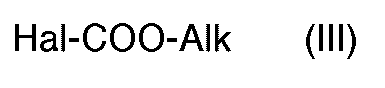
- the invention also relates to a process for the preparation of derivatives, as defined by formula (I) above in which R 1 represents a hydrogen atom as well as their salts, characterized in that one makes react a derivative of formula (II): in which B represents a reversible blocking agent for a secondary amine with an alkyl haloformate of formula (III): in which Hal represents a chlorine, bromine or iodine atom and Alk represents an alkyl radical containing from 1 to 5 carbon atoms, to obtain a derivative of formula (IV): in which B and Alk have the meaning already indicated, which is subjected to nitration, to obtain a derivative of formula (V): in which B and Alk have the meaning already indicated from which either the nitro group is reduced, to obtain a derivative of formula (VI):
- a subject of the invention is also a process for the preparation of derivatives as defined by formula (I) above in which R 1 is different from a hydrogen atom as well as their salts, characterized in that the reacting a derivative of formula (II '): in which B has the meaning already indicated and R ' 1 has the meaning of R 1 already indicated, with the exception of the hydrogen atom and the hydroxyl radical with phosgene or a phosgene precursor, to obtain a derivative of formula (III '): in which B and R ' 1 have the meaning already indicated, which is reacted with O-benzylhydroxylamine, to obtain a derivative of formula (IV'): in which B and R ' 1 have the meaning already indicated, which is cyclized, to obtain a derivative of formula (VII): in which B and R ' 1 have the meaning already indicated, the amino functions of which are either released, in order to obtain a derivative of formula ( A ): in which R ' 1 has the meaning already indicated, that either one isolates
- R has the meaning already indicated, which is isolated and, if desired, salified, or one selectively unblocks for the derivative of formula (VII), the amine of the imidazole cycle, then the amine of piperidine and finally hydroxyl, if desired.
- Agent B which represents a reversible blocking agent of a secondary amine is preferably a trifluoroacetate.
- reaction of the derivative of formula (II) with the haloformate of formula (III) is preferably carried out in the presence of a base such as pyridine or triethylamine, in a chlorinated solvent such as methylene chloride.
- the nitration of the derivative of formula (IV) is preferably carried out using nitronium tetrafluoroborate in a solvent such as acetonitrile. It is also possible to use other nitrating agents such as nitric acid in acetic anhydride or sulfuric acid or even the fuming nitric acid-trifluoroacetic acid mixture.
- the reduction of the nitro group of the derivatives of formulas (V), (V ') and (V ") is preferably carried out by catalytic hydrogenation using a catalyst such as Raney nickel or preferably palladium on carbon or a reduced metal. such as iron or tin.
- the agent for unblocking the amine of the piperidine ring is preferably, in the case of the trifluoroacetyl radical, an inorganic base such as sodium hydroxide or potassium hydroxide or an alkali carbonate such as sodium or potassium carbonate.
- the agent capable of grafting a radical R ′ is preferably a halide of formula (X): in which R "has the meaning of R already indicated, with the exception of hydrogen and methyl.
- the halide of formula (X) may be a chloride or a bromide, but preferably an iodide. It reacts advantageously with the secondary amines of formula (V ') in the presence of an acid-fixing agent, such as, for example, an alkali carbonate such as potassium carbonate in a solvent such as dimethylformamide.
- an acid-fixing agent such as, for example, an alkali carbonate such as potassium carbonate in a solvent such as dimethylformamide.
- the cyclization of the derivatives of formulas (VI), (VI ') and (VI ") is preferably carried out by alkaline hydrolysis, using as base an alkali hydroxide, such as sodium hydroxide or preferably potassium hydroxide.
- reaction of the derivative of formula (III ') with O-benzylhydroxylamine preferably salified in the form of hydrochloride is, under these preferred conditions, carried out at room temperature.
- the unblocking of the amine from the imidazole is preferably carried out by catalytic hydrogenation, using rhodium platinum or in particular Raney nickel.
- the derivatives of formula (II) can be prepared by reduction of a derivative of formula (XII): in which R 'has the meaning already indicated, to obtain a derivative of formula (XIII): in which R 'has the meaning already indicated, from which the secondary amine is protected, in order to obtain a derivative of formula (XIV): in which B and R 'have the meaning already indicated, which is reduced, to obtain the derivative of formula (II) sought.
- the reduction of the derivative of formula (XII) is preferably carried out by the action of diborane prepared in situ, for example using sodium borohydride and boron trifluoride etherate.
- the agent capable of reversibly blocking the amine of formula (XIII) is trifluoroacetic anhydride preferably in the presence of a base in the case where it is desired that B represents a trfluoroacetyl radical.
- the reduction of the derivative of formula (XIV) is preferably carried out as indicated above for the derivatives of formulas (V), (V ′) and (V ′′).
- the derivatives of formula (XII) are known, for example from Synthesis 1061 (1984) or can be prepared for example by cyclization of a derivative of formula (XV) or (XVI): in which Alk and R 'have the meaning already indicated, for example, using sulfuric acid in acetic acid.
- the products of formula (XVI) can, for example, be prepared by reaction of a derivative of formula (XVII): in which R 'has the meaning already indicated, with acrylonitrile in the presence of N-benzyltrimethyl ammonium hydroxide.
- the derivatives of formula (I) have a basic character.
- the addition salts of the derivatives of formula (I) can advantageously be prepared by reacting, in substantially stoichiometric proportions, a mineral or organic acid with said derivative of formula (I).
- the salts can be prepared without isolating the corresponding bases.
- the derivatives which are the subject of the present invention have very advantageous pharmacological properties.
- Mention may be made, for example, of dopaminergic properties, antihypertensive and vasodilating, anti-anoxic, anti-ulcer, anti-emetic properties.
- the present application thus also relates to the application as medicaments, derivatives of benzimidazol-2-one, as defined by formula (I) as well as their addition salts with pharmaceutically acceptable acids.
- the drugs which are the subject of the invention, preferably characterized in that they consist of the new benzimidazol-2-one derivatives corresponding to formula (I) in which R represents an atom of hydrogen as well as their addition salts with pharmaceutically acceptable acids.
- R represents a hydrogen atom or an alkyl radical containing from 1 to 5 carbon atoms as well as their addition salts with pharmaceutically acceptable acids.
- the medicaments according to the invention find their use, for example, in the treatment of cerebrovascular accidents, peripheral circulatory disorders such as retinal or nephritic, in glaucoma or arteriopathies of the lower limbs. They can also be used in the treatment of heart failure of various etiologies, in the treatment of gastric or duodenal ulcers.
- the usual dose which varies depending on the derivative used, the subject and the condition in question, can be, for example, from 5 mg to 200 mg per day.
- the derivative of Example 1 can be administered at a daily dose of 10 mg to 200 mg, for example, for the treatment of heart failure, ie approximately 0.15 mg to 3 mg per kilogram of body weight.
- the invention finally relates to pharmaceutical compositions which contain at least one aforementioned derivative or one of its addition salts with pharmaceutically acceptable acids as active ingredient.
- the derivatives corresponding to formula (I) and their addition salts with pharmaceutically acceptable acids can be incorporated into pharmaceutical compositions intended for the digestive or parenteral route.
- compositions may be, for example, solid or liquid and be in the pharmaceutical forms commonly used in human medicine, such as, for example, tablets, simple or coated, capsules, granules, suppositories, injectable preparations; they are prepared according to the usual methods.
- the active ingredient (s) can be incorporated therein into excipients usually used in these pharmaceutical compositions, such as talc, gum arabic, lactose, starch, magnesium stearate, cocoa butter, aqueous vehicles or not , fatty substances of animal or vegetable origin, paraffinic derivatives, glycols, various wetting agents, dispersants or emulsifiers, preservatives.
- the invention also extends to new products, useful in particular for the preparation of derivatives corresponding to formula (I), namely the derivatives of formulas (VI ") and (VIII): in which R ', R', and Alk have the meaning already indicated above.
- Example 1 1,3-dihydro 4- (3-piperidinyl) 2H-benzimidazol-2-one.
- Stage A / 2- / 1- (trifluoroacetyl) 3-piperidinyl / phenyl / ethyl carbamate.
- Stage B / 2-nitro 6- / 1- (trifluoroacetyl) 3-piperidinyl / phenyl / ethyl carbamate.
- Stage C 2-amino 6- / 1- (trifluoroacetyl) 3-piperidinyl / phenyl / ethyl carbamate.
- Stage D 1,3-dihydro 4- (3-piperidinyl) 2H-benzimidazol-2-one.
- Stage 1 3- (2-nitrophenyl) 1- (trifluoroacetyl) piperidine.
- a partial solution of the above product is cooled to 0 C in 500 cm3 of methylene chloride, add dropwise over 25 minutes, 28.9 cm3 of trifluoroacetic anhydride, leave for one hour 30 minutes with stirring at room temperature, cool to 0 ° C, add 100 cm3 of water, then in small portions, sodium bicarbonate until decanted neutrality, dry, brings to dryness under reduced pressure crystallizes on addition of isopropyl ether and obtains 23.7 g of the expected product.
- F 70 C after recrystallization from isopropyl ether.
- Stage 2 3- (2-amino phenyl) 1- (trifluoroacetyl) piperidine.
- Example 2 1,3-dihydro 4- (1-propyl 3-piperidinyl) 2H-benzimidazol-2-one and its acetate.
- Stage A / 2-amino 6- (1-propyl 3-piperidinyl) phenyl / ethyl carbamate.
- Stage B 1,3-dihydro 4- (1-propyl 3-piperidinyl) 2H-benzimidazol-2-one and its acetate.
- Stage A 3- (3-isocyanate 4-methoxy phenyl) 1-trifluoroacetyl piperidine.
- Stage B 3- (3 - /// (phenyl methoxy) amino / carbonyl / amino / 4-methoxyphenyl) 1-trifluoroacetyl piperidine.
- Stage C 1,3-dihydro 4-methoxy 1- (phenyl methoxy) 7- / 1- (trifluoroacetyl 3-piperidinyl / 2H benzimidazol-2-one.
- Stage D 1,3-dihydro 4-methoxy 7- / 1- (trifluoroacetyl) 3-piperidinyl / 2H-benzimidazol-2-one.
- Stage E 1,3-dihydro 4-hydroxy 7- (3-piperidinyl) 2H-benzimidazol-2-one hydrobromide.
- Stage A 1,3-dihydro 4-methoxy 1- (phenylmethoxy) 7- (3-piperidinyl) 2H-benzimidazol-2-one.
- Stage B 1,3-dihydro 4-methoxy 1- (phenylmethoxy) 7- (1-propyl 3-piperidinyl) 2H-benzimidazol-2-one.
- Stage C 1,3-dihydro 4-methoxy 7- (1-propyl 3-piperidinyl) 2H-benzimidazol-2-one.
- Stage D 1,3-dihydro 4-hydroxy 7- (1-propyl 3-piperidinyl) 2H-benzimidazol-2-one hydrobromide.
- Stage A 1,3-dihydro 4-methoxy 7- (1-methyl-3-piperidinyl) 1- (phenylmethoxy) 2H-benzimidazol-2-one.
- Stage B 1,3-dihydro 4-methoxy 7- (1-methyl 3-piperidinyl) 2H-benzimidazol-2-one.
- stage C from 1.6 g of product obtained as in preceding stage A in the presence of 2 g of Raney nickel. 1.1 g of product are obtained which is dissolved in an ethanol-methylene chloride mixture, concentrated and recrystallized by addition of ether. F> 250 ⁇ C.
- stage D of example 5 The procedure is carried out as in stage D of example 5 starting from 0.7 g of product obtained as in stage B and 20 cm 3 of boron tribromide. 0.630 g of expected product is obtained which is purified by recrystallization from methanol.
- the products studied are administered intraperitoneally.
- the treated animals are placed individually in a rotameter which allows to count the number of rotations performed by each animal in the opposite direction to the injured side.
- Sprague-Dawley rats weighing 320-350 g are anesthetized with pentobarbital (50 mg / kg by intraperitoneal injection).
- pentobarbital 50 mg / kg by intraperitoneal injection.
- the animals After placement of a carotid catheter intended for the measurement of the arterial pressure and of a jugular catheter intended for the injection of the molecules to be studied as well as possible antagonists, the animals are demedulled using a rod of steel. This rod is introduced through the right orbital hole and lowered over the entire length of the spinal cord. The animals are then immediately placed under assisted respiration. A few minutes after stabilization of the blood pressure, the animals receive an intravenous infusion of angiotensin II of 0.50 ug / kg minute so as to increase their average pressure by approximately 100 mm of mercury.
- the substance to be studied is injected intravenously every 2 minutes and in cumulative doses.
- the percentages of decrease in average arterial pressure thus obtained make it possible to plot a dose-response curve reflecting the vasodilator activity of the molecule studied.
- the prior treatment of animals with different antagonists makes it possible to define the mechanism of action of this molecule.
- Domperidone and propanolol are used as antagonists.
- Example 4 has a dose-dependent vasodilator effect from 0.03 mg / kg.
- mice The lethal doses DL o of the various compounds tested after oral administration in mice were evaluated.
- DL is called o the maximum dose causing no mortality in 8 days.
- Nonspecific binding is determined in parallel by incubation of 3H spiroperidol in the presence of an excess of haloperidol.
- a jugular vein is catheterized by injecting the product, and a carotid artery is catheterized for recording blood pressure.
- the product to be tested is dissolved in 10% ethanol and then injected in a volume of 1 cm3 / kg.
- the pressure is noted at the time 5 minutes and 30 minutes after the injection of the product.
- the table below indicates the variations expressed as a percentage of the blood pressure after administration of the product tested compared to the initial control blood pressure.
Landscapes
- Chemical & Material Sciences (AREA)
- Health & Medical Sciences (AREA)
- Organic Chemistry (AREA)
- Life Sciences & Earth Sciences (AREA)
- General Health & Medical Sciences (AREA)
- Veterinary Medicine (AREA)
- Chemical Kinetics & Catalysis (AREA)
- General Chemical & Material Sciences (AREA)
- Medicinal Chemistry (AREA)
- Nuclear Medicine, Radiotherapy & Molecular Imaging (AREA)
- Bioinformatics & Cheminformatics (AREA)
- Pharmacology & Pharmacy (AREA)
- Engineering & Computer Science (AREA)
- Animal Behavior & Ethology (AREA)
- Public Health (AREA)
- Heart & Thoracic Surgery (AREA)
- Cardiology (AREA)
- Endocrinology (AREA)
- Reproductive Health (AREA)
- Hospice & Palliative Care (AREA)
- Otolaryngology (AREA)
- Urology & Nephrology (AREA)
- Pharmaceuticals Containing Other Organic And Inorganic Compounds (AREA)
- Plural Heterocyclic Compounds (AREA)
- Hydrogenated Pyridines (AREA)
Description
- La présente invention concerne de nouveaux dérivés de la benzimidazol-2-one ainsi que leurs sels, le procédé et intermédiaires de préparation, l'application à titre de médicaments de ces nouveaux dérivés, les compositions les renfermant.
- Les brevets européens EP 0.200.853 et 0.071.521 décrivent des produits possédant des propriétés stimulantes dopaminergiques. Ces produits ont cependant une structure indolique alors que les produits de la présente demande ont une structure benzimidazole.
- Le brevet français n° 2 458 549 décrit également des dérivés du 4-(pipéridin-3-yl) 1 H-indole doués de propriétés stimulantes dopaminergiques marquées, au niveau central.
- La présente invention a pour objet de nouveaux dérivés de la benzimidazol-2-one ainsi que leurs sels d'addition avec les acides minéraux ou organiques, caractérisés en ce qu'ils répondent à la formule générale (I) :

- Dans la formule générale (I) et dans ce qui suit, le terme radical alkyle renfermant de 1 à 5 atomes de carbone désigne, de préférence, un radical méthyle, éthyle, propyle ou isopropyle ; le terme radical cycloalkylalkyle renfermant de 4 à 7 atomes de carbone désigne, de préférence, un radical cyclopropylmé- thyle ou cyclobutylméthyle ; le terme radical aralkyle renfermant de 7 à 12 atomes de carbone désigne, de préférence, un radical benzyle, phénéthyle ou naphtylméthyle ; l'aryle peut être plurisubstitué ou de préférence monosubstitué ; le terme radical alkoxy renfermant de 1 à 5 atomes de carbone désigne de préférence un radical méthoxy, éthoxy, propoxy ou isopropoxy ; le terme atome d'halogène désigne, de préférence, un atome de chlore ou de brome ; les termes radical alkényle et alkynyle renfermant de 3 à 5 atomes de carbone désignent de préférence, un radical allyle ou propargyle ; le terme radical phénylalkyloxy renfermant de 7 à 9 atomes de carbone désigne de préférence, un radical benzyloxy ou phénéthyloxy.
- Les sels d'addition avec les acides minéraux ou organiques peuvent être, par exemple, les sels formés avec les acides chlorhydrique, bromhydrique, nitrique, sulfurique, phosphorique, acétique, formique, propio- nique, benzoïque, maléOlque, fumarique, succinique, tartrique, citrique, oxalique, glyoxylique, aspartique, alcanesulfoniques tels que les acides méthane et éthanesulfoniques, arylsulfoniques tels que les acides benzène et para-toluènesulfoniques et aryl carboxyliques.
- Parmi les produits, objet de l'invention, on peut citer notamment les dérivés répondant à la formule (I) ci-dessus, ainsi que leurs sels d'addition avec les acides minéraux ou organiques, caractérisés en ce que dans ladite formule (I), R1 représente un atome d'hydrogène.
- Parmi ceux-ci, on peut citer tout particulièrement les dérivés caractérisés en ce que, dans ladite formule (I), R représente un atome d'hydrogène ou un radical alkyle renfermant de 1 à 5 atomes de carbone et tout particulièrement la 1,3-dihydro 4-(1-propyl-3-pipéridinyl) 2H-benzimidazol-2-one et la 1,3-dihydro 4-hydroxy 7-(1-propyl 3-pipéridinyl) 2H-benzimidazol-2-one ainsi que leurs sels d'addition avec les acides minéraux ou organiques.
- L'invention a également pour objet un procédé de préparation des dérivés, tels que définis par la formule (I) ci-dessus dans laquelle R1 représente un atome d'hydrogène ainsi que de leurs sels, caractérisé en ce que l'on fait réagir un dérivé de formule (II) :

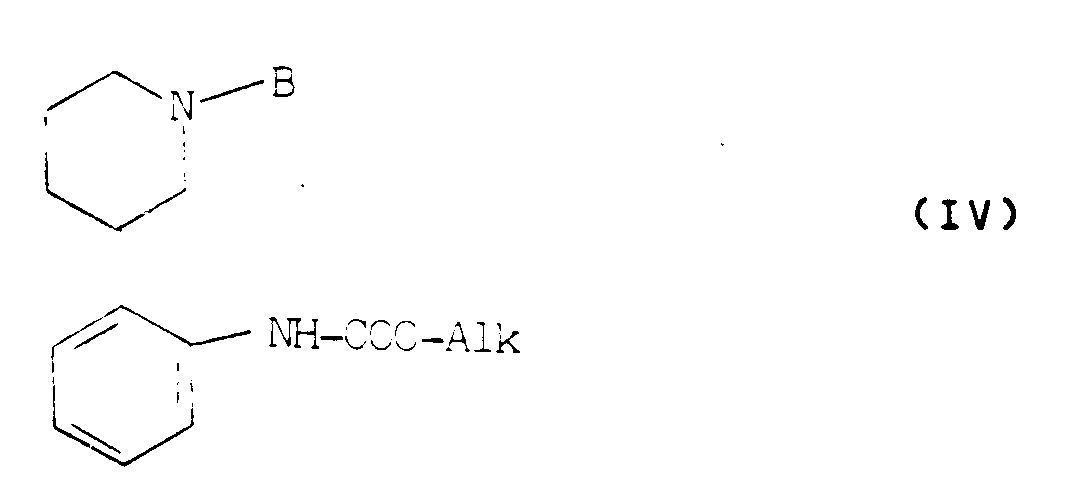


- dans laquelle B et Alk ont la signification déjà indiquée soit l'on soumet ledit dérivé de formule (V) ou ledit dérivé de formule (VI) à l'action d'un agent de déblocage de l'amine, du cycle pipéridine, pour obtenir respectivement un dérivé de formule (V') ou (VI') :


- Il est également possible de cycliser le dérivé de formule (VI) comme les dérivés de formules (VI') et (VI"), puis de débloquer l'amine secondaire du cycle pipéridine, pour obtenir un dérivé de formule (IA) dans laquelle R représente un atome d'hydrogène, que l'on peut éventuellement substituer, pour obtenir d'autres valeurs de R.
- L'invention a aussi pour objet un procédé de préparation des dérivés tels que définis par la formule (I) ci-dessus dans laquelle R1 est différent d'un atome d'hydrogène ainsi que de leurs sels, caractérisé en ce que l'on fait réagir un dérivé de formule (II') :


- L'agent B qui représente un agent de blocage réversible d'une amine secondaire est de préférence un trifluoroacétate.
- La réaction du dérivé de formule (II) avec l'halogénoformiate de formule (III) est réalisée de préférence en présence d'un base telle que la pyridine ou la triéthylamine, dans un solvant chloré tel que le chlorure de méthylène.
- La nitration du dérivé de formule (IV) est réalisée de préférence à l'aide de tétrafluoroborate de nitronium dans un solvent tel que l'acétonitrile. On peut utiliser également d'autres agents de nitration tels que l'acide nitrique dans l'anhydride acétique ou l'acide sulfurique ou encore le mélange acide nitrique fumant - acide trifluoroacétique.
- La réduction du groupement nitro des dérivés de formules (V), (V') et (V") est réalisée de préférence par hydrogénation catalytique en utilisant un catalyseur comme le Nickel de Raney ou de préférence le palladium sur charbon ou encore un métal réduit tel que le fer ou l'étain.
- L'agent de déblocage de l'amine du cycle pipéridine est de préférence, dans le cas du radical trifluoroacétyle, une base minérale telle que la soude ou la potasse ou un carbonate alcalin tel que le carbonate de sodium ou de potassium.
- L'agent capable de greffer un radical R' est de préférence un halogénure de formule (X) :

- L'halogénure de formule (X) peut être un chlorure ou un bromure, mais de préférence un iodure. Il réagit avantageusement avec les amines secondaires de formule (V') en présence d'un agent fixateur d'acide, comme par exemple, un carbonate alcalin tel que le carbonate de potassium dans un solvant tel que le diméthylformamide.
- Pour fixer un radical R' sur les dérivés de formules (V') et (VI'), on peut opérer également par action desdits dérivés de formules (V') et (VI') avec un dérivé (selon le cas, un aldéhyde ou une cétone) de formule (XI) :


- La cyclisation des dérivés de formules (VI), (VI') et (VI") est réalisée de préférence par hydrolyse alcaline, en utilisant comme base un hydroxyde alcalin, tel que le soude ou de préférence la potasse.
- Lorsqu'on utilise un précurseur du phosgène pour préparer un dérivé de formule (I) dans laquelle R1 représente un radical hydroxyle ou alkoxy, on utilise le chloroformiate de trichlorométhyle.
- La réaction du dérivé de formule (III') avec l'O-benzylhydroxylaminede préférence salifié sous forme de chlorhydrate est, dans ces conditions préférentielles, réalisée à température ambiante.
- Le déblocage de l'amine de l'imidazole est de préférence réalisé par hydrogénation catalytique, à l'aide de platine rhodium ou notamment de nickel de Raney.
- Le déblocage de l'amine de la pipéridine et les autres conditions réactionnelles ont été décrits ci-dessus.
- Les dérivés de formule (II) peuvent être préparés par réduction d'un dérivé de formule (XII) :
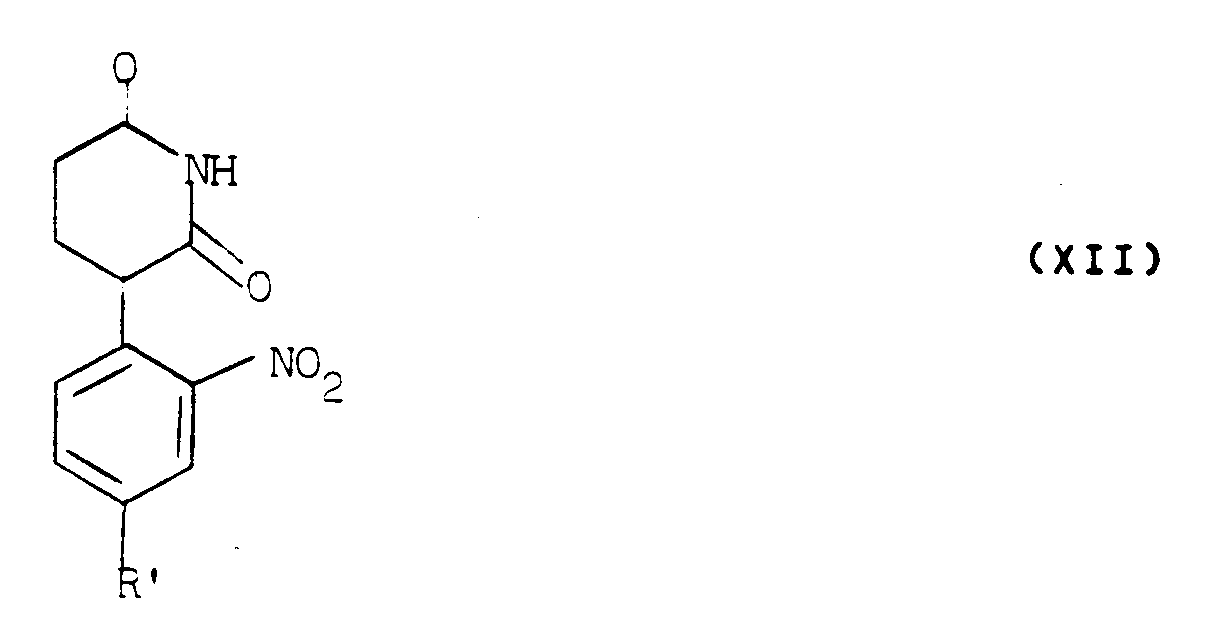
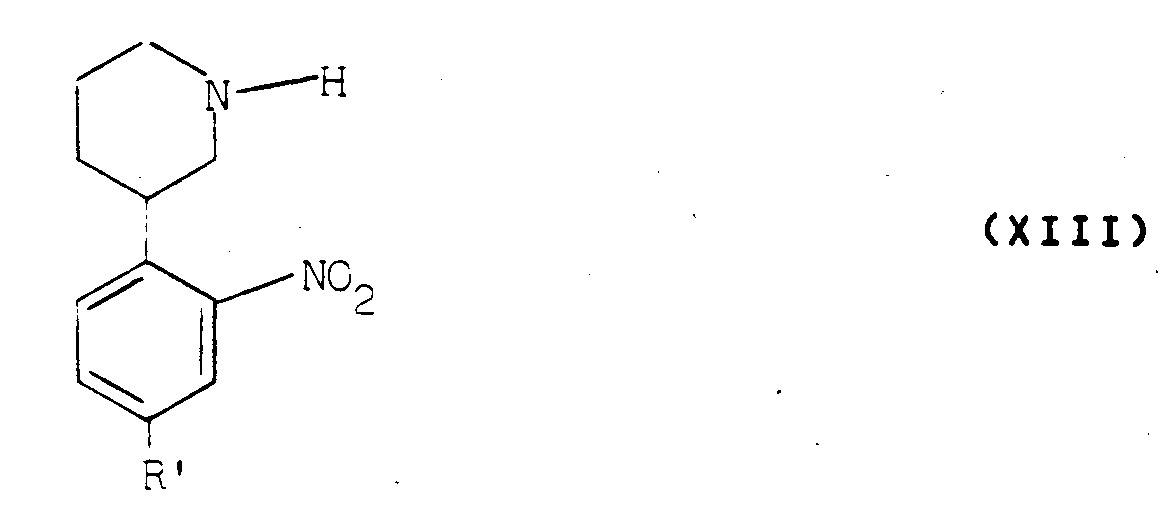

- La réduction du dérivé de formule (XII) est réalisée de préférence par action de diboranne préparé in situ, par exemple à l'aide de borohydrure de sodium et d'éthérate de trifluorure de bore.
- L'agent susceptible de bloquer de façon réversible l'amine de formule (XIII) est l'anhydride trifluoroacétique de préférence en présence d'une base dans le cas où l'on souhaite que B représente un radical trfluoroacétyle.
- La réduction du dérivé de formule (XIV) est réalisée de préférence comme indiqué ci-dessus pour les dérivés de formules (V), (V') et (V").
- Les dérivés de formule (XII) sont connus, par exemple par Synthesis 1061 (1984) ou peuvent être préparés par exemple par cyclisation d'un dérivé de formule (XV) ou (XVI) :

- Les produits de formule (XVI) peuvent, par exemple, être préparés par réaction d'un dérivé de formule (XVII) :

- Les dérivés de formule (I) présentent un caractère basique. On peut avantageusement préparer les sels d'addition des dérivés de formule (I) en faisant réagir, en proportions sensiblement stoechiométriques, un acide minéral ou organique avec ledit dérivé de formule (I). Les sels peuvent être préparés sans isoler les bases correspondantes.
- Les dérivés, objet de la présente invention, possèdent de très intéressantes propriétés pharmacologiques.
- On peut citer par exemple des propriétés dopaminergiques, des propriétés antihypertensives et vasodilatatrices, anti-anoxiques, anti-ulcéreuses, anti-émétiques.
- Ces propriétés sont illustrées plus loin dans la partie expérimentale.
- Ces propriétés justifient l'utilisation des dérivés de la benzimidazol-2-one ainsi que de leurs sels, à titre de médicaments.
- La présente demande a ainsi également pour objet l'application à titre de médicaments, des dérivés de la benzimidazol-2-one, tels que définis par la formule (I) ainsi que de leurs sels d'addition avec les acides pharmaceutiquement acceptables.
- Parmi les médicaments, objet de l'invention, on retient de préférence les médicaments caractérisés en ce qu'ils sont constitués par les nouveaux dérivés de la benzimidazol-2-one répondant à la formule (I) dans laquelle R représente un atome d'hydrogène ainsi que par leurs sels d'addition avec les acides pharmaceutiquement acceptables.
- Parmi ceux-ci, on retient notamment ceux répondant à la formule (I) dans laquelle R représente un atome d'hydrogène ou un radical alkyle renfermant de 1 à 5 atomes de carbone ainsi que leurs sels d'addition avec les acides pharmaceutiquement acceptables.
- Parmi ces derniers, on retient tout particulièrement la 1,3-dihydro 4-(1-propyl-3-pipéridinyl) 2H-benzimidazol-2-one et la 1,3-dihydro 4-hydroxy 7-(1-propyl 3-pipéridinyl) 2H-benzimidazol-2-one ainsi que leurs sels d'addition avec les acides minéraux ou organiques.
- Les médicaments selon l'invention trouvent leur emploi, par exemple, dans le traitement des accidents vasculaires cérébraux, des troubles circulatoires périphériques tels que rétiniens ou néphrétiques, dans le glaucome ou des artériopathies des membres inférieurs. Ils sont également utilisables dans le traitement des insuffisances cardiaques de diverses étiologies, dans le traitement des ulcères gastriques ou duodénaux.
- La dose usuelle, variable selon le dérivé utilisé, le sujet et l'affection en cause peut être, par exemple, de 5 mg à 200 mg par jour. Par voie orale, chez l'homme, le dérivé de l'exemple 1 peut être administré à la dose quotidienne de 10 mg à 200 mg, par exemple, pour le traitement de l'insuffisance cardiaque, soit environ de 0,15 mg à 3 mg par kilogramme de poids corporel.
- L'invention a enfin pour objet les compositions pharmaceutiques qui renferment au moins un dérivé précité ou l'un de ses sels d'addition avec les acides pharmaceutiquement acceptables à titre de principe actif.
- A titre de médicaments, les dérivés répondant à la formule (I) et leurs sels d'addition avec les acides pharmaceutiquement acceptables peuvent être incorporés dans des compositions pharmaceutiques destinées à la voie digestive ou parentérale.
- Ces compositions pharmaceutiques peuvent être, par exemple, solides ou liquides et se présenter sous les formes pharmaceutiques couramment utilisées en médecine humaine, comme par exemple, les comprimés, simples ou dragéifiés, les gélules, les granulés, les suppositoires, les préparations injectables ; elles sont préparées selon les méthodes usuelles. Le ou les principes actifs peuvent y être incorporés à des excipients habituellement employés dans ces compositions pharmaceutiques, tels que le talc, la gomme arabique, le lactose, l'amidon, le stéarate de magnésium, le beurre de cacao, les véhicules aqueux ou non, les corps gras d'origine animale ou végétale, les dérivés paraffiniques, les glycols, les divers agents mouillants, dispersants ou émulsifiants, les conservateurs.
- L'invention s'étend en outre aux produits nouveaux, utiles notamment pour la préparation de dérivés répondant à la formule (I), à savoir les dérivés de formules (VI") et (VIII) :

- Les exemples qui suivent illustrent l'invention.
- On porte sous agitation pendant une heure 2,2 g de 3-(2-amino phényl) 1-(trifluoroacétyl) pipéridine dans 100 cm3 de chlorure de méthylène, 3 cm3 de pyridine et 1 cm3 de chloroformiate d'éthyle, lave avec de l'acide chlorhydrique 2N puis à l'eau, sèche, amène à sec sous pression réduite et obtient 2,8 g d'une huile utilisée telle quelle pour le stade suivant.
- On refroidit à -30 une solution de 18 g de produit du Stade A dans 180 cm3 d'acétonitrile, ajoute sous agitation et atmosphère inerte, par petites fractions, 7,73 g de tétrafluoroborate de nitronium, après une heure d'agitation laisse revenir à température ambiante, verse sur de la glace, extrait au chlorure de méthylène, lave à l'eau, sèche, amène à sec sous pression réduite, purifie par chromatographie sur silice (éluant : cyclohexane - acétate d'éthyle 7-3) et obtient 10,8 g du produit attendu (Rf. = 0,2). F = 124" C après recristallisation dans un mélange éther isopropylique-chlorure de méthylène (1-1).
- On hydrogène pendant 3 heurs, 12 g de produit du stade précédent dans 400 cm3 d'éthanol en présence de 3 g de palladium à 10% sur charbon, filtre, lave à l'éthanol, amène à sec sous pression réduite et obtient 10,8 g du produit attendu. F = 96 ° C après recristallisation dans l'éther isopropylique.
- On porte sous agitation et atmosphère inerte pendant 4 heures à 80 C, 4 g de produit du stade précédent dans 80 cm3 de méthanol, 16 cm3 d'eau et 16 cm3 de lessive de potasse, évapore le méthanol sous pression réduite, ajoute 30 cm3 d'eau, ajuste le pH à 6-8 à l'aide d'acide acétique, amène à sec sous pression réduite, purifie par chromatographie sur silice (éluant : chlorure de méthylène - méthanoltriéthyla- mine 6-3-1) obtient 2,15 g de produit brut que l' on empâte dans l'éther éthylique, essore, sèche et recristallise dans l'éthanol, pour obtenir 1,23 g du produit attendu.
-
- F= 260 ° C.
-

- PREPARATION DU PRODUIT DE DEPART DE L'EXEMPLE 1.
- On ajoute sous agitation et atmosphère inerte, 24 g de borohydrure de sodium à 95% à une solution de 25,9 g de 3-(2-nitrophényl) pipéridine 2,6-dione (décrit dans Synthesis 1061 (1984) dans 600 cm3 de tétrahydrofuranne, refroidit à 0 ° C, ajoute goutte à goutte en 45 minutes 97 cm3 d'éthérate de trifluorure de bore, laisse 16 heures sous agitation à température ambiante, refroidit à 0 ° C, élimine l'excès de diboranne par addition lente de 150 cm3 d'éthanol, ajoute 200 cm3 d'acide chlorhydrique 2N, élimine le tétrahydrofuranne sous pression réduite, reprend au chlorure de méthylène, décante, alcalinise à l'aide d'ammoniaque concentrée, extrait au chlorure de méthylène, lave à l'eau, sèche, amène à sec sous pression réduite et obtient 21 g du produit attendu.
- On refroidit à 0 C une solution partielle du produit ci-dessus dans 500 cm3 de chlorure de méthylène, ajoute goutte à goutte en 25 minutes, 28,9 cm3 d'anhydride trifluoroacétique, laisse une heure 30 minutes sous agitation à température ambiante, refroidit à 0 ° C, ajoute 100 cm3 d'eau, puis par petites fractions, du bicarbonate de sodium jusqu'à neutralité décante, sèche, amène à sec sous pression réduite cristallise par addition d'éther isopropylique et obtient 23,7 g du produit attendu. F= 70 C après recristallisation dans l'éther isopropylique.
- On hydrogène pendant 3 heures, 3,86 g de produit du stade 1 dans 150 cm3 d'éthanol en présence de 0,96 g de palladium à 10% sur charbon, filtre, lave à l'éthanol, amène à sec sous pression réduite, empâte dans l'éther éthylique, essore, sèche et obtient 3,2 g du produit attendu. F = 138 ° C après recristallisation dans l'éther isopropylique.
- On porte une heure sous agitation 4,7 g de produit du stade C de l'exemple 1 dans 80 cm3 de méthanol et 20 cm3 d'eau avec 8 g de carbonate de sodium, extrait au chlorure de méthylène, lave à l'eau, sèche, amène à sec sous pression réduite et obtient 3,2 g du produit attendu.
- On ajoute sous agitation et atmosphère inerte, 0,74 cm3 de propionaldéhyde à une solution de 2,45 g du produit ci-dessus et 635 mg de cyanoborohydure de sodium dans 70 cm3 de méthanol, après 16 heures d'agitation, verse dans l'eau glacée, extrait au chlorure de méthylène, sèche, amène à sec sous pression réduite, purifie par chromatographie sur silice (éluant : chlorure de méthylène - méthanol 98-2) et obtient 1,95 g du produit attendu.
-

- On porte pendant 5 heures sous agitation à 80 C, 1,4 g de produit du stade A dans 30 cm3 de méthanol, 6 cm3 d'eau et 6 cm3 de lessive de potasse, évapore le méthanol, ajoute 6 cm3 d'eau, amène le pH à 6,4 à l'aide d'acide chlorohydrique, amène à sec sous pression réduite, purifie par chromatographie sur silice (éluant : chlorure de méthylène - méthanol 98-2) et obtient 1,02 g du produit attendu sous forme de base.
- On ajoute 2,5 cm3 d'acide acétique à une solution de 0,92 g de base ci-dessus dans 10 cm3 de chlorure de méthylène, amène à sec sous pression réduite, reprend par 15 cm3 d'eau, filtre, lyophilise et obtient 850 mg de l'acétate attendu.
-

- (Ethanol - NaOH 0,1 N)

- On opère comme indiqué à l'exemple 2, mais en opérant l'alkylation à l'aide de formaldéhyde, pour obtenir le produit attendu. F > 250 ° C (chlorhydrate).
-
- On mélange 6,04 g de 3-(3-amino 4-méthoxy phényl) 1-trifluoroacétyl pipéridine dans 120 cm3 de dioxanne et 2,9 cm3 de chloroformiate de trichlorométhyle. On agite 4 heures à 80 ° C puis amène à sec sous pression réduite. On chromatographie le résidu sur silice, élue par un mélange cyclohexanne - acétate d'éthyle (7-3) et obtient 6,4 g de produit brut utilisé tel quel pour le stade suivant.
- On met en suspension 1,68 g de chlorhydrate de 0-benzyl hydroxylamine dans 30 cm3 de chlorure de méthylène. On ajoute 1,52 cm3 de triéthylamine puis goutte à goutte une solution de 3,2 g de produit obtenu au stade A dans 10 cm3 de chlorure de méthylène. On agite 2 heures et amène à sec sous pression réduite.
- On chromatographie le résidu sur silice (éluant : chlorure de méthylène - acétate d'éthyle 96-4) et obtient 3,75 g de produit attendu.
F=134° C après recristallisation dans un mélange 1-1 (chlorure de méthylène - éther isopropylique. - On refroidit à 0 ° C, 3,7 g du produit obtenu ci-dessus dans 90 cm3 de chlorure de méthylène, ajoute goutte à goutte une solution de tétracétate de plomb dans 50 cm3 de chlorure de méthylène anhydre. On laisse une heure sous agitation, filtre le précipité formé et lave le filtrat à l'eau, sèche et amène à sec sous pression réduite. On chromatographie le résidu sur silice, élue par un mélange chlorure de méthylène - méthanol (95-5) et obtient 2,88 g de produit attendu. F = 192 ° C après recristallisation dans un mélange (20-15) éther isopropylique - chlorure de méthylène.
- On laisse sous hydrogène pendant 12 heures 2,1 g de produit obtenu ci-dessus dans 70 cm3 d'éthanol et 2 g de Nickel de Raney. On filtre et amène à sec le filtrat sous pression réduite. On recristallise le résidu dans un mélange (15-5) chlorure de méthylène - éther isopropylique et obtient 0,935 g de produit attendu. F=260 ° C.
-

- On agite une heure 1,1 g de produit obtenu ci-dessus dans 15 cm3 de méthanol, 5 cm3 d'eau et 680 mg de carbonate de sodium. On ajoute quelques cm3 d'eau, extrait au chlorure de méthylène, sèche et amène à sec sous pression réduite. On reprend le résidu par 50 cm3 de chlorure de méthylène, refroidit à -30 ° C et ajoute goutte à goutte 9,6 cm3 de tribromure de bore en solution M dans le chlorure de méthylène.
- On laisse 3 heures sous agitation, refroidit à 0 ° C et ajoute 30 cm3 de méthanol. Après 15 minutes à température ambiante, on amène à sec sous pression réduite. On reprend le résidu par du chlorure de méthylène, essore et obtient 840 mg de produit attendu. F > 250 ° C. Après recristallisation du bromhydrate dans le méthanol, on obtient 600 mg de produit attendu.
-

-


- On ajoute en 5 minutes 33 cm3 de soude 2N à une solution refroidie de 5 g de produit obtenu comme au stade C de l'exemple 4 dans 500 cm3 d'éthanol. On agite 1 heure à température ambiante, neutralise judqu'à pH 6 avec de l'acide chlorhydrique N, extrait avec un mélange chlorure de méthylène-méthanol (9-1), sèche et élimine les solvants sous pression réduite ; on obtient 4,5 g de produit attendu.
- Dans une solution de 4,39 g de produit obtenu au stade A dans 150 cm3 de méthanol, on ajoute 1,076 cm3 de propionaldéhyde et 0,937 g de cyanoborohydrure de sodium et agite 4 heures à temérature ambiante. On ajoute 50 cm3 d'eau et extrait au chlorure de méthylène, sèche et élimine les solvants sous pression réduite. On obtient 2,2 g de produit attendu, après chromatographie sur silice (éluant : chlorure de méthylène-méthanol 9-1).
-
- = C-NH : 3461 cm-1
- ) = O : 1718 cm-1
- aromatique : 1640 - 1525 - 1500 cm-1
- On hydrogène pendant 2 heures et quart 2,2 g du produit obtenu au stade B dans 30 cm3 d'éthanol en présence de 3,5 g de nickel de Raney ; on filtre, amène à sec le filtrat sous pression réduite et obtient 1,5 g de produit brut que l'on chromatographie sur silice (éluant : chlorure de méthylène-méthanol 9-1) et recueille 1,1 g de produit pur.

- On refroidit à1 g de produit obtenu au stade C dans 100 cm3 de chlorure de méthylène, et ajoute goutte à goutte en 5 minutes 24 cm3 d'une solution chlorométhylénique de tribromure de bore (M). On agite 4 heures à température ambiante, refroidit à
 ajoute lentement 50 cm3 de méthanol et élimine les solvants sous pression réduite ; on reprend le résidu dans le méthanol, filtre et obtient 1,05 g de produit attendu. On purifie 0,75 g de ce produit par chromatographie sur silice (éluant : chlorure de méthylène-méthanol-triéthylamine 8-1-1) et obtient 0,36 g de produit pur que l'on recristallise dans le méthanol .
-

- On opère comme au stade B de l'exemple 5 à partir de 4,4 g de produit obtenu comme au stade A de l'exemple 5 et en utilisant 1,9 cm3 de formaldéhyde. On obtient 3,6 g de produit brut que l'on purifie par double extraction (HCI 2N puis chlorure de méthylène). On recueille 1,7 g de produit attendu.
-
- = C-NH : 3461 cm-1
-

- On opère comme à l'exemple 5, stade C,à partir de 1,6 g de produit obtenu comme au stade A précédent en présence de 2 g de nickel de Raney. On obtient 1,1 g de produit que l'on dissout dans un mélange éthanol-chlorure de méthylène, concentre et recristallise par addition d'éther. F > 250αC.
-

- On opère comme au stade D de l'exemple 5 à partir de 0,7 g de produit obtenu comme au stade B et 20 cm3 de tribromure de bore. On obtient 0,630 g de produit attendu que l'on purifie par recristallisation dans le méthanol.
-
- On a préparé des comprimés répondant à la formule :

- On a préparé des comprimés répondant à la formule :

- Des rats mâles de 220 g environ sont lésés dans le faisceau dopaminergique nigrostrié selon la méthode de Ungerstedt (Acta. physiol. Scand. 1971, 82 suppl. 367-69 93) modifiée, par injection unilatérale de 9,2 g de chlorhydrate de 6-hydroxydopamine en solution dans 4 µl de soluté physiologique contenant 0,4 mg/ml d'acide ascorbique.
- Les produits étudiés sont administrés par voie intrapéritonéale. Les animaux traités sont placés individuellement dans un rotamètre qui permet de compter le nombre de rotations effectuées par chaque animal dans le sens opposé au côté lésé.
- Dans les conditions de l'expérience, les résultats suivants ont été obtenus :
- Le produit de l'exemple 4 est inactif à la dose de 5 mg/kg et n'induit un comportement de rotations qu'à partir de la dose de 10 mg/kg, compte-tenu de la très grande sensibilité de ce modèle, l'activité agoniste dopaminergique centrale de ce composé est donc faible.
- Les rats de race Sprague-Dawley d'un poids de 320-350 g sont anesthésiés au pentobarbital (50 mg/kg par injection intrapéritonéale). Après mise en place d'un cathéter carotidien destiné à la mesure de la pression artérielle et d'un cathéter jugulaire destiné à l'injection des molécules à étudier ainsi que des antagonistes éventuels, les animaux sont démédullés à l'aide d'une tige d'acier. Cette tige est introduite par le trou orbitaire droit et descendue sur toute la longueur de la moelle épinière. Les animaux sont ensuite placés immédiatement sous respiration assistée. Quelques minutes après stabilisation de la pression artérielle, les animaux reçoivent une perfusion intraveineuse d'angiotensine Il de 0,50 ug/kg minute de façon à augmenter leur pression moyenne d'environ 100 mm de mercure. Après obtention d'un plateau, la substance à étudier est injectée par voie intraveineuse chaque 2 minutes et en doses cumulées. Les pourcentages de baisse de la pression artérielle moyenne ainsi obtenus permettent de tracer une courbe dose-réponse reflétant l'activité vasodilatatrice de la molécule étudiée. Le traitement préalable des animaux par différents antagonistes permet de cerner le mécanisme d'action de cette molécule.
- Les produits sont testés entre 0,001 et 1 mg/kg. On utilise comme antagonistes la dompéridone et le propanolol.
- On peut conclure que le produit de l'exemple 4 a un effet vasodilatateur dose dépendant dès 0,03 mg/kg.
- On a évalué les doses létales DLo des différents composés testés après administration par voie orale chez la souris.
- On appelle DLo la dose maximale ne provoquant aucune mortalité en 8 jours.
- Les résultats obtenus sont les suivants :

- On homogénéise au vingtième (poids/volume) dans le sucrose 0,32M, les corps striés prélevés des cerveaux de 6 rats mâles pesant 150 g en moyenne. Après centrifugation du mélange homogénéisé à 1 000 g pendant 10 minutes àle surnageant est centrifugé à 30 000 g pendant 15 minutes à
 Le culot est repris dans 25 ml de tampon Tris HCI 50mM pH 7,7 et centrifugé à 30 000 g pendant 15 minutes à +4αC. Le nouveau culot est repris dans 50 ml de tampon Krebs Tris HCI pH 7,3 et la suspension est préincubée pendant 10 minutes à 37αC. On fait ensuite incuber pendant 20 minutes au bain-marie à +37αC en présence de spinopéridol 3H, seul, avec un excès d'halopéridol et avec des concentrations croissantes du produit à tester. Les suspensions incubées sont filtrées sur Whatman GF/C et les filtres sont lavés par trois fois 5 ml de tampon Tris HCI 50 mM. La radioactivité des filtres est mesurée par scintillation liquide.
- La fixation non spécifique est déterminée parallèlement par incubation de spiropéridol 3H en présence d'un excès d'halopéridol.
- On a obtenu les résultats suivants :
- Le résultat est exprimé directement en concentrations inhibitrices 50% (Clso : concentration du produit étudié, exprimée en nM, nécessaire pour déplacer 50% de la radioactivité spécifique fixée sur le récepteur étudié).

- Des rats mâles Sprague-Dawley (CR) sont anesthésiés par voie intrapéritonéale au pentobarbital sodique (60 mg/kg).
- Une veine jugulaire est cathétérisée par l'injection du produit, et une artère carotide est cathétérisée pour l'enregistrement de la pression artérielle.
- Le produit à tester est mis en solution dans 10% d'éthanol puis injecté sous un volume de 1 cm3/kg.
- La pression est notée au temps 5 minutes et 30 minutes après l'injection du produit.
- Le tableau ci-après indique les variations exprimées en pourcentage de la pression artérielle après administration du produit testé par rapport à la pression artérielle témoin initiale.

Claims (12)

ainsi que leurs sels d'addition avec les acides minéraux ou organiques.


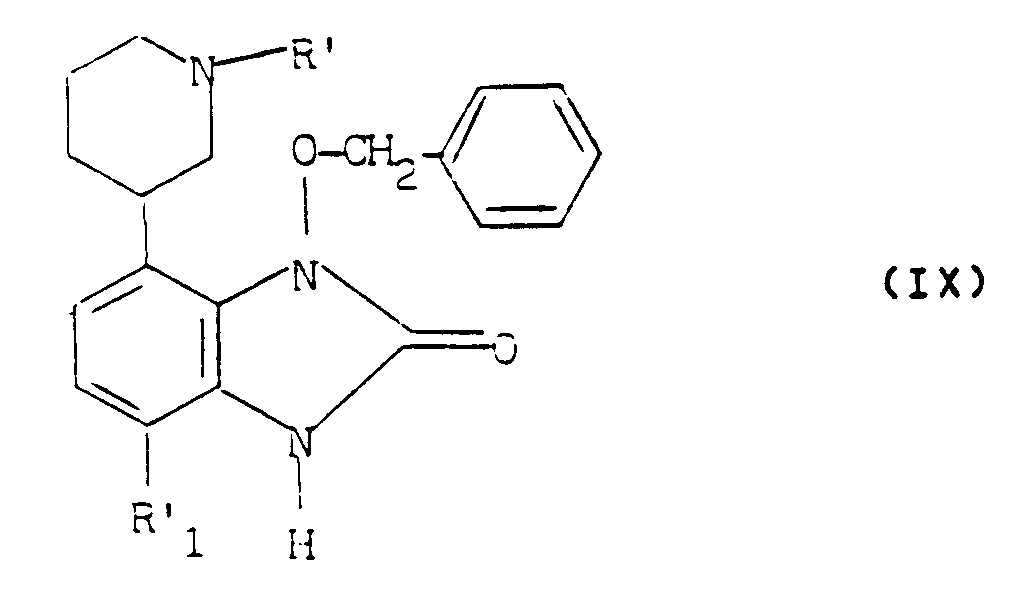


Priority Applications (1)
| Application Number | Priority Date | Filing Date | Title |
|---|---|---|---|
| AT88400312T ATE81125T1 (de) | 1987-02-13 | 1988-02-11 | Benzimidazol-2-one-derivate, deren salze, verfahren und zwischenprodukte zu deren herstellung, deren anwendung als arzneimittel und sie enthaltende zusammensetzungen. |
Applications Claiming Priority (2)
| Application Number | Priority Date | Filing Date | Title |
|---|---|---|---|
| FR8701836 | 1987-02-13 | ||
| FR8701836A FR2610929B1 (fr) | 1987-02-13 | 1987-02-13 | Derives de la benzimidazol-2-one, leurs sels, procede de preparation, application a titre de medicaments, compositions les renfermant et intermediaires |
Publications (2)
| Publication Number | Publication Date |
|---|---|
| EP0282373A1 EP0282373A1 (fr) | 1988-09-14 |
| EP0282373B1 true EP0282373B1 (fr) | 1992-09-30 |
Family
ID=9347894
Family Applications (1)
| Application Number | Title | Priority Date | Filing Date |
|---|---|---|---|
| EP88400312A Expired - Lifetime EP0282373B1 (fr) | 1987-02-13 | 1988-02-11 | Dérivés de la benzimidazol-2-one, leurs sels, procédé et intermédiaires de préparation, application à titre de médicaments et compositions les renfermant |
Country Status (9)
| Country | Link |
|---|---|
| US (1) | US4831043A (fr) |
| EP (1) | EP0282373B1 (fr) |
| JP (1) | JP2651917B2 (fr) |
| AT (1) | ATE81125T1 (fr) |
| CA (1) | CA1308721C (fr) |
| DE (1) | DE3874920T2 (fr) |
| ES (1) | ES2043861T3 (fr) |
| FR (1) | FR2610929B1 (fr) |
| GR (1) | GR3006136T3 (fr) |
Families Citing this family (4)
| Publication number | Priority date | Publication date | Assignee | Title |
|---|---|---|---|---|
| FR2688504B1 (fr) * | 1992-03-13 | 1995-05-05 | Synthelabo | Derives de 2-(piperidin-1-yl)ethanol, leur preparation et leur application en therapeutique. |
| AU7478396A (en) * | 1995-10-31 | 1997-05-22 | Merck & Co., Inc. | Muscarine agonists |
| WO2004000837A1 (fr) * | 2002-06-25 | 2003-12-31 | Sumitomo Pharmaceuticals Co., Ltd. | Nouveau derive de benzoxazolinone |
| CN109020923A (zh) * | 2017-06-12 | 2018-12-18 | 上海百灵医药科技有限公司 | 一种氟班色林中间体的制备方法及其中间体 |
Citations (3)
| Publication number | Priority date | Publication date | Assignee | Title |
|---|---|---|---|---|
| EP0071520A1 (fr) * | 1981-07-24 | 1983-02-09 | Roussel-Uclaf | Nouveaux dérivés du pipéridin-3-yl indole, leurs sels, leur procédé de préparation, leur application à titre de médicaments et les compositions pharmaceutiques les renfermant |
| EP0071521A2 (fr) * | 1981-07-24 | 1983-02-09 | Roussel-Uclaf | Nouveaux dérivés du 2-oxo-pyrid-3-yl ou pipéridin-3-yl indole, leurs sels, procédé de préparation, application à titre de médicaments et compositions les renfermant |
| EP0200583A1 (fr) * | 1985-03-12 | 1986-11-05 | Roussel-Uclaf | Dérivés du 7-hydroxy indole, leurs sels, procédé de préparation, application à titre de médicaments, compositions les renfermant et intermédiaires |
Family Cites Families (3)
| Publication number | Priority date | Publication date | Assignee | Title |
|---|---|---|---|---|
| FR2458549A1 (fr) * | 1979-06-12 | 1981-01-02 | Roussel Uclaf | Nouveaux derives de l'indole, leur procede de preparation et leur application comme medicaments |
| US4458076A (en) * | 1983-05-31 | 1984-07-03 | Hoechst-Roussel Pharmaceuticals | 3-(4-Piperidinyl)-1,2-benzisothiazoles |
| EP0181793B1 (fr) * | 1984-10-16 | 1988-07-27 | Synthelabo | Dérivés de pipéridine, leur préparation et leur application en thérapeutique |
-
1987
- 1987-02-13 FR FR8701836A patent/FR2610929B1/fr not_active Expired
-
1988
- 1988-02-11 AT AT88400312T patent/ATE81125T1/de not_active IP Right Cessation
- 1988-02-11 EP EP88400312A patent/EP0282373B1/fr not_active Expired - Lifetime
- 1988-02-11 DE DE8888400312T patent/DE3874920T2/de not_active Expired - Fee Related
- 1988-02-11 ES ES88400312T patent/ES2043861T3/es not_active Expired - Lifetime
- 1988-02-12 CA CA000558864A patent/CA1308721C/fr not_active Expired - Lifetime
- 1988-02-12 JP JP63029040A patent/JP2651917B2/ja not_active Expired - Fee Related
- 1988-02-12 US US07/155,303 patent/US4831043A/en not_active Expired - Lifetime
-
1992
- 1992-11-04 GR GR920401793T patent/GR3006136T3/el unknown
Patent Citations (3)
| Publication number | Priority date | Publication date | Assignee | Title |
|---|---|---|---|---|
| EP0071520A1 (fr) * | 1981-07-24 | 1983-02-09 | Roussel-Uclaf | Nouveaux dérivés du pipéridin-3-yl indole, leurs sels, leur procédé de préparation, leur application à titre de médicaments et les compositions pharmaceutiques les renfermant |
| EP0071521A2 (fr) * | 1981-07-24 | 1983-02-09 | Roussel-Uclaf | Nouveaux dérivés du 2-oxo-pyrid-3-yl ou pipéridin-3-yl indole, leurs sels, procédé de préparation, application à titre de médicaments et compositions les renfermant |
| EP0200583A1 (fr) * | 1985-03-12 | 1986-11-05 | Roussel-Uclaf | Dérivés du 7-hydroxy indole, leurs sels, procédé de préparation, application à titre de médicaments, compositions les renfermant et intermédiaires |
Also Published As
| Publication number | Publication date |
|---|---|
| JPS63203680A (ja) | 1988-08-23 |
| FR2610929B1 (fr) | 1989-06-23 |
| GR3006136T3 (fr) | 1993-06-21 |
| JP2651917B2 (ja) | 1997-09-10 |
| FR2610929A1 (fr) | 1988-08-19 |
| ATE81125T1 (de) | 1992-10-15 |
| ES2043861T3 (es) | 1994-01-01 |
| EP0282373A1 (fr) | 1988-09-14 |
| CA1308721C (fr) | 1992-10-13 |
| DE3874920D1 (de) | 1992-11-05 |
| DE3874920T2 (de) | 1993-05-13 |
| US4831043A (en) | 1989-05-16 |
Similar Documents
| Publication | Publication Date | Title |
|---|---|---|
| EP0070767B1 (fr) | Nouveaux dérivés de la quinoléine, leurs sels, leur préparation, leur application comme médicaments et les compositions les renfermant | |
| EP0833822A1 (fr) | Derives de 4-phenylaminothiazole, leur procede de preparation et les compositions pharmaceutiques les contenant | |
| CH639637A5 (fr) | Derives de la benzene propanamine et leurs sels, leurs procedes de preparation et les compositions pharmaceutiques les renfermant. | |
| EP0611766A1 (fr) | Dérivés de 2-amido-thiazoles polysubstitués, procédé de préparation, composition pharmaceutique et utilisation de ces dérivés pour la préparation d'un médicament | |
| CH649994A5 (fr) | Derives du 4h-1,2,4-triazole, procedes de preparation et compositions les renfermant. | |
| EP0071521B1 (fr) | Nouveaux dérivés du 2-oxo-pyrid-3-yl ou pipéridin-3-yl indole, leurs sels, procédé de préparation, application à titre de médicaments et compositions les renfermant | |
| EP0091328B1 (fr) | Nouveaux dérivés du trans 4-amino benz (c,d) indol-5-ol ainsi que leurs sels, leur préparation, leur application comme médicaments et compositions les renfermant | |
| EP0004494B1 (fr) | Nouveaux dérivés de 1,3-dihydro 3-(1-(2-(2,3-dihydro 1,4-benzo-dioxin-2-yl)2-hydroxy éthyl)pipéridin-4-yl)2H-indol 2-one, leur procédé de préparation, leur application comme médicaments et les compositions pharmaceutiques les renfermant | |
| EP0282373B1 (fr) | Dérivés de la benzimidazol-2-one, leurs sels, procédé et intermédiaires de préparation, application à titre de médicaments et compositions les renfermant | |
| EP0395528B1 (fr) | Dérivés du 4-phénylméthyl 1H-indole, procédé et intermédiaires de préparation, application à titre de médicaments et compositions les renfermant. | |
| EP0021924B1 (fr) | Dérivés de l'indole, procédé pour leur préparation, leur application comme médicaments et compositions pharmaceutiques les contenant | |
| EP0251937A1 (fr) | Nouveaux dérivés tricycliques agonistes des récepteurs cholinergiques et médicaments en contenant | |
| EP0037784B1 (fr) | Nouveaux dérivés de l'indolobenzoxazine, leurs sels, procédé de préparation, application à titre de médicaments et compositions les renfermant | |
| EP0071520A1 (fr) | Nouveaux dérivés du pipéridin-3-yl indole, leurs sels, leur procédé de préparation, leur application à titre de médicaments et les compositions pharmaceutiques les renfermant | |
| EP0201400B1 (fr) | Dérivés du 4-phénylpropyl indole et leurs sels, leur procédé de préparation, leur application à titre de médicaments et les compositions pharmaceutiques les renfermant | |
| EP0169755B1 (fr) | Nouveaux dérivés de l'acide 4-hydroxy 3-quinoléine carboxylique subsititués en 2 par une fonction aminée, leur préparation, leur application comme médicaments, les compositions les renfermant et les intermédiaires nouveaux obtenus | |
| EP0094305B1 (fr) | Nouveaux dérivés de l'acide 9-oxalysergique, leurs sels, procédé et intermédiaires de préparation, application à titre de médicaments et compositions les renfermant | |
| EP0034546B1 (fr) | Nouveaux dérivés du cycloheptindole et leurs sels d'addition avec les acides, leur préparation, leur application comme médicaments et les compositions les renfermant | |
| EP0176444B1 (fr) | Nouveau procédé de préparation de dérivés du 4 H-1,2-4-triazole, nouveaux triazoles ainsi obtenus, leur applicication comme médicaments et les compositions pharmaceutiques les renfermant | |
| EP0076713B1 (fr) | Nouveaux dérivés de l'aminométhyl 1H-indole 4-méthanol et leurs sels, leur procédé et les intermédiaires de préparation, leur application à titre de médicaments, les compositions les renfermant | |
| EP0275762B1 (fr) | Dérivés de l'indole carboxamide ainsi que leurs sels, procédé et intermédiaires de préparation, application à titre de médicaments de ces dérivés et compositions les renfermant | |
| EP0200583B1 (fr) | Dérivés du 7-hydroxy indole, leurs sels, procédé de préparation, application à titre de médicaments, compositions les renfermant et intermédiaires | |
| EP0197807B1 (fr) | Nouveaux dérivés de la pyrazolobenzoxazine, leurs sels, procédé et intermédiaires de préparation, application à titre de médicaments et compositions les renfermant | |
| FR2487351A1 (fr) | ||
| EP0580465A1 (fr) | Nouvelle utilisation thérapeutique d'hétérocyclyl-pipérazines comme 5-HT3 agonistes et nouveaux dérivés |
Legal Events
| Date | Code | Title | Description |
|---|---|---|---|
| PUAI | Public reference made under article 153(3) epc to a published international application that has entered the european phase |
Free format text: ORIGINAL CODE: 0009012 |
|
| AK | Designated contracting states |
Kind code of ref document: A1 Designated state(s): AT BE CH DE ES FR GB GR IT LI LU NL SE |
|
| 17P | Request for examination filed |
Effective date: 19881124 |
|
| 17Q | First examination report despatched |
Effective date: 19910131 |
|
| GRAA | (expected) grant |
Free format text: ORIGINAL CODE: 0009210 |
|
| AK | Designated contracting states |
Kind code of ref document: B1 Designated state(s): AT BE CH DE ES FR GB GR IT LI LU NL SE |
|
| REF | Corresponds to: |
Ref document number: 81125 Country of ref document: AT Date of ref document: 19921015 Kind code of ref document: T |
|
| REF | Corresponds to: |
Ref document number: 3874920 Country of ref document: DE Date of ref document: 19921105 |
|
| ITF | It: translation for a ep patent filed | ||
| GBT | Gb: translation of ep patent filed (gb section 77(6)(a)/1977) |
Effective date: 19921130 |
|
| ITTA | It: last paid annual fee | ||
| REG | Reference to a national code |
Ref country code: GR Ref legal event code: FG4A Free format text: 3006136 |
|
| PLBE | No opposition filed within time limit |
Free format text: ORIGINAL CODE: 0009261 |
|
| STAA | Information on the status of an ep patent application or granted ep patent |
Free format text: STATUS: NO OPPOSITION FILED WITHIN TIME LIMIT |
|
| 26N | No opposition filed | ||
| REG | Reference to a national code |
Ref country code: ES Ref legal event code: FG2A Ref document number: 2043861 Country of ref document: ES Kind code of ref document: T3 |
|
| EPTA | Lu: last paid annual fee | ||
| EAL | Se: european patent in force in sweden |
Ref document number: 88400312.0 |
|
| REG | Reference to a national code |
Ref country code: FR Ref legal event code: CD Ref country code: FR Ref legal event code: CA |
|
| REG | Reference to a national code |
Ref country code: FR Ref legal event code: TP |
|
| REG | Reference to a national code |
Ref country code: CH Ref legal event code: PFA Free format text: ROUSSEL-UCLAF TRANSFER- ROUSSEL UCLAF * ROUSSEL UCLAF TRANSFER- HOECHST MARION ROUSSEL |
|
| REG | Reference to a national code |
Ref country code: GB Ref legal event code: 732E |
|
| NLS | Nl: assignments of ep-patents |
Owner name: HOECHST MARION ROUSSEL |
|
| REG | Reference to a national code |
Ref country code: FR Ref legal event code: TP |
|
| REG | Reference to a national code |
Ref country code: GB Ref legal event code: IF02 |
|
| REG | Reference to a national code |
Ref country code: CH Ref legal event code: PFA Free format text: HOECHST MARION ROUSSEL TRANSFER- AVENTIS PHARMA S.A. |
|
| PGFP | Annual fee paid to national office [announced via postgrant information from national office to epo] |
Ref country code: BE Payment date: 20030109 Year of fee payment: 16 |
|
| PGFP | Annual fee paid to national office [announced via postgrant information from national office to epo] |
Ref country code: LU Payment date: 20030114 Year of fee payment: 16 |
|
| PGFP | Annual fee paid to national office [announced via postgrant information from national office to epo] |
Ref country code: SE Payment date: 20030117 Year of fee payment: 16 |
|
| NLS | Nl: assignments of ep-patents |
Owner name: AVENTIS PHARMA S.A. |
|
| PGFP | Annual fee paid to national office [announced via postgrant information from national office to epo] |
Ref country code: GB Payment date: 20030206 Year of fee payment: 16 |
|
| PGFP | Annual fee paid to national office [announced via postgrant information from national office to epo] |
Ref country code: GR Payment date: 20030218 Year of fee payment: 16 |
|
| PGFP | Annual fee paid to national office [announced via postgrant information from national office to epo] |
Ref country code: CH Payment date: 20030219 Year of fee payment: 16 |
|
| PGFP | Annual fee paid to national office [announced via postgrant information from national office to epo] |
Ref country code: ES Payment date: 20030220 Year of fee payment: 16 |
|
| PGFP | Annual fee paid to national office [announced via postgrant information from national office to epo] |
Ref country code: FR Payment date: 20030224 Year of fee payment: 16 |
|
| PGFP | Annual fee paid to national office [announced via postgrant information from national office to epo] |
Ref country code: AT Payment date: 20030227 Year of fee payment: 16 |
|
| BECA | Be: change of holder's address |
Owner name: S.A. *AVENTIS PHARMA20 AVENUE RAYMOND ARON, F-9216 Effective date: 20030311 |
|
| BECH | Be: change of holder |
Owner name: S.A. *AVENTIS PHARMA Effective date: 20030311 |
|
| PGFP | Annual fee paid to national office [announced via postgrant information from national office to epo] |
Ref country code: NL Payment date: 20030331 Year of fee payment: 16 |
|
| PGFP | Annual fee paid to national office [announced via postgrant information from national office to epo] |
Ref country code: DE Payment date: 20030429 Year of fee payment: 16 |
|
| PG25 | Lapsed in a contracting state [announced via postgrant information from national office to epo] |
Ref country code: LU Free format text: LAPSE BECAUSE OF NON-PAYMENT OF DUE FEES Effective date: 20040211 Ref country code: GB Free format text: LAPSE BECAUSE OF NON-PAYMENT OF DUE FEES Effective date: 20040211 Ref country code: AT Free format text: LAPSE BECAUSE OF NON-PAYMENT OF DUE FEES Effective date: 20040211 |
|
| PG25 | Lapsed in a contracting state [announced via postgrant information from national office to epo] |
Ref country code: SE Free format text: LAPSE BECAUSE OF NON-PAYMENT OF DUE FEES Effective date: 20040212 Ref country code: ES Free format text: LAPSE BECAUSE OF NON-PAYMENT OF DUE FEES Effective date: 20040212 |
|
| PG25 | Lapsed in a contracting state [announced via postgrant information from national office to epo] |
Ref country code: BE Free format text: LAPSE BECAUSE OF NON-PAYMENT OF DUE FEES Effective date: 20040228 |
|
| PG25 | Lapsed in a contracting state [announced via postgrant information from national office to epo] |
Ref country code: LI Free format text: LAPSE BECAUSE OF NON-PAYMENT OF DUE FEES Effective date: 20040229 Ref country code: CH Free format text: LAPSE BECAUSE OF NON-PAYMENT OF DUE FEES Effective date: 20040229 |
|
| BERE | Be: lapsed |
Owner name: S.A. *AVENTIS PHARMA Effective date: 20040228 |
|
| PG25 | Lapsed in a contracting state [announced via postgrant information from national office to epo] |
Ref country code: NL Free format text: LAPSE BECAUSE OF NON-PAYMENT OF DUE FEES Effective date: 20040901 Ref country code: DE Free format text: LAPSE BECAUSE OF NON-PAYMENT OF DUE FEES Effective date: 20040901 |
|
| PG25 | Lapsed in a contracting state [announced via postgrant information from national office to epo] |
Ref country code: GR Free format text: LAPSE BECAUSE OF NON-PAYMENT OF DUE FEES Effective date: 20040903 |
|
| EUG | Se: european patent has lapsed | ||
| GBPC | Gb: european patent ceased through non-payment of renewal fee |
Effective date: 20040211 |
|
| REG | Reference to a national code |
Ref country code: CH Ref legal event code: PL |
|
| PG25 | Lapsed in a contracting state [announced via postgrant information from national office to epo] |
Ref country code: FR Free format text: LAPSE BECAUSE OF NON-PAYMENT OF DUE FEES Effective date: 20041029 |
|
| NLV4 | Nl: lapsed or anulled due to non-payment of the annual fee |
Effective date: 20040901 |
|
| REG | Reference to a national code |
Ref country code: FR Ref legal event code: ST |
|
| PG25 | Lapsed in a contracting state [announced via postgrant information from national office to epo] |
Ref country code: IT Free format text: LAPSE BECAUSE OF NON-PAYMENT OF DUE FEES Effective date: 20050211 |
|
| REG | Reference to a national code |
Ref country code: ES Ref legal event code: FD2A Effective date: 20040212 |