EP0283932A2 - Hybridserpine und dafür kodierende DNA - Google Patents
Hybridserpine und dafür kodierende DNA Download PDFInfo
- Publication number
- EP0283932A2 EP0283932A2 EP88104248A EP88104248A EP0283932A2 EP 0283932 A2 EP0283932 A2 EP 0283932A2 EP 88104248 A EP88104248 A EP 88104248A EP 88104248 A EP88104248 A EP 88104248A EP 0283932 A2 EP0283932 A2 EP 0283932A2
- Authority
- EP
- European Patent Office
- Prior art keywords
- hls2
- gene
- exons
- hybrid
- dna
- Prior art date
- Legal status (The legal status is an assumption and is not a legal conclusion. Google has not performed a legal analysis and makes no representation as to the accuracy of the status listed.)
- Withdrawn
Links
- 102000008847 Serpin Human genes 0.000 title claims description 17
- 108050000761 Serpin Proteins 0.000 title claims description 17
- 239000003001 serine protease inhibitor Substances 0.000 title claims description 17
- 108090000623 proteins and genes Proteins 0.000 claims abstract description 69
- 108700024394 Exon Proteins 0.000 claims abstract description 31
- 239000002753 trypsin inhibitor Substances 0.000 claims abstract description 12
- QEVHRUUCFGRFIF-MDEJGZGSSA-N reserpine Chemical compound O([C@H]1[C@@H]([C@H]([C@H]2C[C@@H]3C4=C(C5=CC=C(OC)C=C5N4)CCN3C[C@H]2C1)C(=O)OC)OC)C(=O)C1=CC(OC)=C(OC)C(OC)=C1 QEVHRUUCFGRFIF-MDEJGZGSSA-N 0.000 claims abstract description 8
- 229960003147 reserpine Drugs 0.000 claims abstract description 8
- 102000004881 Angiotensinogen Human genes 0.000 claims abstract description 7
- 210000003527 eukaryotic cell Anatomy 0.000 claims abstract description 7
- 108090001067 Angiotensinogen Proteins 0.000 claims abstract description 5
- 239000012634 fragment Substances 0.000 claims description 34
- 108020004414 DNA Proteins 0.000 claims description 23
- 238000000034 method Methods 0.000 claims description 23
- 210000004027 cell Anatomy 0.000 claims description 12
- 108091092195 Intron Proteins 0.000 claims description 8
- 238000004519 manufacturing process Methods 0.000 claims description 7
- 230000008569 process Effects 0.000 claims description 4
- 238000002405 diagnostic procedure Methods 0.000 claims description 3
- 238000002360 preparation method Methods 0.000 claims description 2
- 101001082432 Homo sapiens Heparin cofactor 2 Proteins 0.000 claims 22
- 102000057325 human SERPIND1 Human genes 0.000 claims 22
- 125000003275 alpha amino acid group Chemical group 0.000 claims 5
- 101000823116 Homo sapiens Alpha-1-antitrypsin Proteins 0.000 claims 2
- 101000732617 Homo sapiens Angiotensinogen Proteins 0.000 claims 2
- 102000051631 human SERPINA1 Human genes 0.000 claims 2
- 239000000032 diagnostic agent Substances 0.000 claims 1
- 229940039227 diagnostic agent Drugs 0.000 claims 1
- 239000003814 drug Substances 0.000 claims 1
- 239000002299 complementary DNA Substances 0.000 description 19
- 238000009396 hybridization Methods 0.000 description 12
- 150000001413 amino acids Chemical class 0.000 description 10
- 239000000523 sample Substances 0.000 description 9
- FAPWRFPIFSIZLT-UHFFFAOYSA-M Sodium chloride Chemical compound [Na+].[Cl-] FAPWRFPIFSIZLT-UHFFFAOYSA-M 0.000 description 8
- 239000012528 membrane Substances 0.000 description 8
- 235000018102 proteins Nutrition 0.000 description 7
- 102000004169 proteins and genes Human genes 0.000 description 7
- DBMJMQXJHONAFJ-UHFFFAOYSA-M Sodium laurylsulphate Chemical compound [Na+].CCCCCCCCCCCCOS([O-])(=O)=O DBMJMQXJHONAFJ-UHFFFAOYSA-M 0.000 description 6
- 235000001014 amino acid Nutrition 0.000 description 6
- 239000013612 plasmid Substances 0.000 description 6
- 108091008146 restriction endonucleases Proteins 0.000 description 6
- 108091028043 Nucleic acid sequence Proteins 0.000 description 5
- 238000010276 construction Methods 0.000 description 5
- 230000000694 effects Effects 0.000 description 5
- 235000002639 sodium chloride Nutrition 0.000 description 5
- 239000011780 sodium chloride Substances 0.000 description 5
- 108091034117 Oligonucleotide Proteins 0.000 description 4
- 235000004400 serine Nutrition 0.000 description 4
- 239000000243 solution Substances 0.000 description 4
- 102000002260 Alkaline Phosphatase Human genes 0.000 description 3
- 108020004774 Alkaline Phosphatase Proteins 0.000 description 3
- 239000000020 Nitrocellulose Substances 0.000 description 3
- 240000004808 Saccharomyces cerevisiae Species 0.000 description 3
- 239000011543 agarose gel Substances 0.000 description 3
- 238000002955 isolation Methods 0.000 description 3
- 229920001220 nitrocellulos Polymers 0.000 description 3
- 239000000137 peptide hydrolase inhibitor Substances 0.000 description 3
- 239000000758 substrate Substances 0.000 description 3
- 108091032973 (ribonucleotides)n+m Proteins 0.000 description 2
- QKNYBSVHEMOAJP-UHFFFAOYSA-N 2-amino-2-(hydroxymethyl)propane-1,3-diol;hydron;chloride Chemical compound Cl.OCC(N)(CO)CO QKNYBSVHEMOAJP-UHFFFAOYSA-N 0.000 description 2
- 229920001817 Agar Polymers 0.000 description 2
- MTCFGRXMJLQNBG-UHFFFAOYSA-N Serine Natural products OCC(N)C(O)=O MTCFGRXMJLQNBG-UHFFFAOYSA-N 0.000 description 2
- JZRWCGZRTZMZEH-UHFFFAOYSA-N Thiamine Natural products CC1=C(CCO)SC=[N+]1CC1=CN=C(C)N=C1N JZRWCGZRTZMZEH-UHFFFAOYSA-N 0.000 description 2
- 239000008272 agar Substances 0.000 description 2
- 229940019748 antifibrinolytic proteinase inhibitors Drugs 0.000 description 2
- 230000015572 biosynthetic process Effects 0.000 description 2
- 230000015556 catabolic process Effects 0.000 description 2
- 238000003776 cleavage reaction Methods 0.000 description 2
- 230000009089 cytolysis Effects 0.000 description 2
- 238000006731 degradation reaction Methods 0.000 description 2
- 238000011049 filling Methods 0.000 description 2
- 238000003780 insertion Methods 0.000 description 2
- 230000037431 insertion Effects 0.000 description 2
- 238000012986 modification Methods 0.000 description 2
- 230000004048 modification Effects 0.000 description 2
- 230000007017 scission Effects 0.000 description 2
- 150000003355 serines Chemical class 0.000 description 2
- 238000010561 standard procedure Methods 0.000 description 2
- KYMBYSLLVAOCFI-UHFFFAOYSA-N thiamine Chemical compound CC1=C(CCO)SCN1CC1=CN=C(C)N=C1N KYMBYSLLVAOCFI-UHFFFAOYSA-N 0.000 description 2
- 235000019157 thiamine Nutrition 0.000 description 2
- 229960003495 thiamine Drugs 0.000 description 2
- 239000011721 thiamine Substances 0.000 description 2
- XLYOFNOQVPJJNP-UHFFFAOYSA-N water Substances O XLYOFNOQVPJJNP-UHFFFAOYSA-N 0.000 description 2
- MTCFGRXMJLQNBG-REOHCLBHSA-N (2S)-2-Amino-3-hydroxypropansäure Chemical compound OC[C@H](N)C(O)=O MTCFGRXMJLQNBG-REOHCLBHSA-N 0.000 description 1
- OWEGMIWEEQEYGQ-UHFFFAOYSA-N 100676-05-9 Natural products OC1C(O)C(O)C(CO)OC1OCC1C(O)C(O)C(O)C(OC2C(OC(O)C(O)C2O)CO)O1 OWEGMIWEEQEYGQ-UHFFFAOYSA-N 0.000 description 1
- 102000015427 Angiotensins Human genes 0.000 description 1
- 108010064733 Angiotensins Proteins 0.000 description 1
- 101710081722 Antitrypsin Proteins 0.000 description 1
- 241000894006 Bacteria Species 0.000 description 1
- 108091033380 Coding strand Proteins 0.000 description 1
- 241001452028 Escherichia coli DH1 Species 0.000 description 1
- 108700039691 Genetic Promoter Regions Proteins 0.000 description 1
- 102000004032 Heparin Cofactor II Human genes 0.000 description 1
- 108090000481 Heparin Cofactor II Proteins 0.000 description 1
- 241000238631 Hexapoda Species 0.000 description 1
- 101000757319 Homo sapiens Antithrombin-III Proteins 0.000 description 1
- 101001081555 Homo sapiens Plasma protease C1 inhibitor Proteins 0.000 description 1
- FFEARJCKVFRZRR-BYPYZUCNSA-N L-methionine Chemical compound CSCC[C@H](N)C(O)=O FFEARJCKVFRZRR-BYPYZUCNSA-N 0.000 description 1
- GUBGYTABKSRVRQ-PICCSMPSSA-N Maltose Natural products O[C@@H]1[C@@H](O)[C@H](O)[C@@H](CO)O[C@@H]1O[C@@H]1[C@@H](CO)OC(O)[C@H](O)[C@H]1O GUBGYTABKSRVRQ-PICCSMPSSA-N 0.000 description 1
- 108010021466 Mutant Proteins Proteins 0.000 description 1
- 102000008300 Mutant Proteins Human genes 0.000 description 1
- 101710163270 Nuclease Proteins 0.000 description 1
- 102000016387 Pancreatic elastase Human genes 0.000 description 1
- 108010067372 Pancreatic elastase Proteins 0.000 description 1
- 102000004160 Phosphoric Monoester Hydrolases Human genes 0.000 description 1
- 108090000608 Phosphoric Monoester Hydrolases Proteins 0.000 description 1
- 108010021757 Polynucleotide 5'-Hydroxyl-Kinase Proteins 0.000 description 1
- 102000008422 Polynucleotide 5'-hydroxyl-kinase Human genes 0.000 description 1
- 108010076504 Protein Sorting Signals Proteins 0.000 description 1
- 101000796258 Rattus norvegicus Angiotensinogen Proteins 0.000 description 1
- 238000002105 Southern blotting Methods 0.000 description 1
- 108700005078 Synthetic Genes Proteins 0.000 description 1
- 239000002253 acid Substances 0.000 description 1
- 150000007513 acids Chemical class 0.000 description 1
- 150000001412 amines Chemical class 0.000 description 1
- AVKUERGKIZMTKX-NJBDSQKTSA-N ampicillin Chemical compound C1([C@@H](N)C(=O)N[C@H]2[C@H]3SC([C@@H](N3C2=O)C(O)=O)(C)C)=CC=CC=C1 AVKUERGKIZMTKX-NJBDSQKTSA-N 0.000 description 1
- 229960000723 ampicillin Drugs 0.000 description 1
- 230000002785 anti-thrombosis Effects 0.000 description 1
- 230000001475 anti-trypsic effect Effects 0.000 description 1
- 238000013459 approach Methods 0.000 description 1
- 125000000637 arginyl group Chemical group N[C@@H](CCCNC(N)=N)C(=O)* 0.000 description 1
- 230000001580 bacterial effect Effects 0.000 description 1
- 230000008901 benefit Effects 0.000 description 1
- 230000001588 bifunctional effect Effects 0.000 description 1
- 230000023555 blood coagulation Effects 0.000 description 1
- 238000009835 boiling Methods 0.000 description 1
- 244000309466 calf Species 0.000 description 1
- 229940041514 candida albicans extract Drugs 0.000 description 1
- 239000004202 carbamide Substances 0.000 description 1
- 238000002144 chemical decomposition reaction Methods 0.000 description 1
- 238000010367 cloning Methods 0.000 description 1
- 230000024203 complement activation Effects 0.000 description 1
- 230000007547 defect Effects 0.000 description 1
- 239000003599 detergent Substances 0.000 description 1
- 238000010790 dilution Methods 0.000 description 1
- 239000012895 dilution Substances 0.000 description 1
- 238000001035 drying Methods 0.000 description 1
- 238000002474 experimental method Methods 0.000 description 1
- 239000000499 gel Substances 0.000 description 1
- 230000002068 genetic effect Effects 0.000 description 1
- 238000010353 genetic engineering Methods 0.000 description 1
- 102000018146 globin Human genes 0.000 description 1
- 108060003196 globin Proteins 0.000 description 1
- 102000035122 glycosylated proteins Human genes 0.000 description 1
- 108091005608 glycosylated proteins Proteins 0.000 description 1
- 102000044507 human SERPING1 Human genes 0.000 description 1
- 238000000338 in vitro Methods 0.000 description 1
- 230000028709 inflammatory response Effects 0.000 description 1
- 230000002401 inhibitory effect Effects 0.000 description 1
- 238000007169 ligase reaction Methods 0.000 description 1
- 210000004962 mammalian cell Anatomy 0.000 description 1
- 239000000463 material Substances 0.000 description 1
- 108020004999 messenger RNA Proteins 0.000 description 1
- 229930182817 methionine Natural products 0.000 description 1
- 125000001360 methionine group Chemical group N[C@@H](CCSC)C(=O)* 0.000 description 1
- 108091005573 modified proteins Proteins 0.000 description 1
- 102000035118 modified proteins Human genes 0.000 description 1
- 238000010369 molecular cloning Methods 0.000 description 1
- 238000002703 mutagenesis Methods 0.000 description 1
- 231100000350 mutagenesis Toxicity 0.000 description 1
- 230000035772 mutation Effects 0.000 description 1
- 210000004897 n-terminal region Anatomy 0.000 description 1
- 229930014626 natural product Natural products 0.000 description 1
- 108020004707 nucleic acids Proteins 0.000 description 1
- 102000039446 nucleic acids Human genes 0.000 description 1
- 150000007523 nucleic acids Chemical class 0.000 description 1
- 150000008300 phosphoramidites Chemical class 0.000 description 1
- 210000002826 placenta Anatomy 0.000 description 1
- 230000008488 polyadenylation Effects 0.000 description 1
- 230000001124 posttranscriptional effect Effects 0.000 description 1
- 230000001105 regulatory effect Effects 0.000 description 1
- 238000000926 separation method Methods 0.000 description 1
- 238000012163 sequencing technique Methods 0.000 description 1
- 239000001509 sodium citrate Substances 0.000 description 1
- NLJMYIDDQXHKNR-UHFFFAOYSA-K sodium citrate Chemical compound O.O.[Na+].[Na+].[Na+].[O-]C(=O)CC(O)(CC([O-])=O)C([O-])=O NLJMYIDDQXHKNR-UHFFFAOYSA-K 0.000 description 1
- 238000003786 synthesis reaction Methods 0.000 description 1
- 210000001541 thymus gland Anatomy 0.000 description 1
- 238000013518 transcription Methods 0.000 description 1
- 230000035897 transcription Effects 0.000 description 1
- 238000012546 transfer Methods 0.000 description 1
- 239000012138 yeast extract Substances 0.000 description 1
Images

Classifications
-
- C—CHEMISTRY; METALLURGY
- C12—BIOCHEMISTRY; BEER; SPIRITS; WINE; VINEGAR; MICROBIOLOGY; ENZYMOLOGY; MUTATION OR GENETIC ENGINEERING
- C12N—MICROORGANISMS OR ENZYMES; COMPOSITIONS THEREOF; PROPAGATING, PRESERVING, OR MAINTAINING MICROORGANISMS; MUTATION OR GENETIC ENGINEERING; CULTURE MEDIA
- C12N15/00—Mutation or genetic engineering; DNA or RNA concerning genetic engineering, vectors, e.g. plasmids, or their isolation, preparation or purification; Use of hosts therefor
-
- C—CHEMISTRY; METALLURGY
- C12—BIOCHEMISTRY; BEER; SPIRITS; WINE; VINEGAR; MICROBIOLOGY; ENZYMOLOGY; MUTATION OR GENETIC ENGINEERING
- C12Q—MEASURING OR TESTING PROCESSES INVOLVING ENZYMES, NUCLEIC ACIDS OR MICROORGANISMS; COMPOSITIONS OR TEST PAPERS THEREFOR; PROCESSES OF PREPARING SUCH COMPOSITIONS; CONDITION-RESPONSIVE CONTROL IN MICROBIOLOGICAL OR ENZYMOLOGICAL PROCESSES
- C12Q1/00—Measuring or testing processes involving enzymes, nucleic acids or microorganisms; Compositions therefor; Processes of preparing such compositions
- C12Q1/68—Measuring or testing processes involving enzymes, nucleic acids or microorganisms; Compositions therefor; Processes of preparing such compositions involving nucleic acids
- C12Q1/6876—Nucleic acid products used in the analysis of nucleic acids, e.g. primers or probes
-
- C—CHEMISTRY; METALLURGY
- C07—ORGANIC CHEMISTRY
- C07K—PEPTIDES
- C07K14/00—Peptides having more than 20 amino acids; Gastrins; Somatostatins; Melanotropins; Derivatives thereof
- C07K14/81—Protease inhibitors
- C07K14/8107—Endopeptidase (E.C. 3.4.21-99) inhibitors
- C07K14/811—Serine protease (E.C. 3.4.21) inhibitors
- C07K14/8121—Serpins
-
- C—CHEMISTRY; METALLURGY
- C07—ORGANIC CHEMISTRY
- C07K—PEPTIDES
- C07K14/00—Peptides having more than 20 amino acids; Gastrins; Somatostatins; Melanotropins; Derivatives thereof
- C07K14/81—Protease inhibitors
- C07K14/8107—Endopeptidase (E.C. 3.4.21-99) inhibitors
- C07K14/811—Serine protease (E.C. 3.4.21) inhibitors
- C07K14/8121—Serpins
- C07K14/8125—Alpha-1-antitrypsin
-
- A—HUMAN NECESSITIES
- A61—MEDICAL OR VETERINARY SCIENCE; HYGIENE
- A61K—PREPARATIONS FOR MEDICAL, DENTAL OR TOILETRY PURPOSES
- A61K38/00—Medicinal preparations containing peptides
-
- C—CHEMISTRY; METALLURGY
- C07—ORGANIC CHEMISTRY
- C07K—PEPTIDES
- C07K2319/00—Fusion polypeptide
Definitions
- the genomic clone coding for hLS2 has now been found and its gene structure has been determined. This gene structure is used according to the invention for the production of new hybrid serines.
- the serpins are a group of proteins that act as proteinase inhibitors in blood clotting, complement activation, and in various aspects of the inflammatory response.
- the serpins belong to a protein family whose members have an amino acid homology of approximately 20 to 35% to one another (RF Doolittle, Science 222 (1983) 417-419; H. Ragg, Nucl. Acids. Res. 14 (1986) 1073-1088) .
- the specificity of these proteinase inhibitors is determined on the one hand by an amino acid in the P1 position of the reactive center (M. Laskowski and I. Kato, Annu. Rev. Biochem.
- the human antithrombin III gene contains 6 exons (EV Prochownik et al., J. Biol. Chem. 260 (1985) 9608-9612), but only one of the 5 introns can be assigned one of the intron positions of "" -antitrypsin or Homologate angiotensinogen.
- the gene for the human C1 inhibitor has at least 7 introns, the location of which is not yet known (S.C. Bock et al., Op. Cit.).
- hLS2 corresponds to that of the ⁇ 1 -antitrypsin and the (rat) angiotensinogen in terms of the number and location of the introns. This analogy is used according to the invention for the production of the hybrid serine.
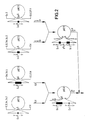
- FIG. 2 shows (not to scale) the construction of a hybrid gene with exons 1 to 4 of hLS2, shown as filled bars and designated “Ex 1” to “Ex 4” as in FIG. 1 and the 3'-terminal exon of the human a 1- Antitrypsingens, shown as a hatched bar and called "Ex « '-AT ".
- A denotes interfaces that were made blunt-ended by removing or filling in the protruding ends.
- Table 1 shows the DNA sequences of the exons and the flanking regions of the hLS2 gene. where intron sequences are represented by lower case letters. The signal peptide and the signal AATAAA necessary for the formation of correct 3 'transcript ends are underlined. The exon-intron limits result from a comparison with the known hLS2 cDNA. The arrow shows the 5 'starting point of the longest hLS2 cDNA clone found to date.
- hybrid serpine in the context of the present invention is intended to mean that it is a protein which consists of amino acid blocks which essentially correspond to exons of hLS2 and analogous serpins with the same gene structure and shows a proteinase inhibitor activity .
- hybrid serpine is intended to exclude natural products that would theoretically be obtainable by combining identical exons from different sources.
- "Essentially” is intended to express that the products obtained by genetic engineering can be modified in a manner known per se. for example, by adding or omitting or replacing amino acids. Such modifications are possible, for example, through the use of appropriate linkers or adapters.
- Synthetic gene fragments can also be used in the production of the recombinant gene according to the invention.
- This procedure has the advantage that additional interfaces for restriction enzymes can be built in, which allow additional modifications of the encoded amino acid sequence.
- the active centers can also be changed and, in general, hybrid serines with changed substrate specificity and / or activity can be generated.
- exons When the exons are recombined, these are expediently used, including all the necessary sequences within the introns, which are necessary for splicing and other post-transcriptional processes.
- overhanging DNA sequences can be made blunt-ended, for example, by degradation or filling-in and thus connecting the exons as desired, optionally with the insertion of synthetic oligonucleotide linkers, which serve as substrates for cheap restriction enzymes.
- exon modules can be assembled according to the invention in a ligase reaction in practically any combination, but in the correct relative orientation to one another and in the correct order.
- hybrid genes obtained in this way can, unless a proprietary serpin promoter is used, be linked to a suitable eukaryotic promoter and, if appropriate, to a polyadenylation signal and, after introduction into the corresponding eukaryotic cells, brought to expression there.
- higher cells such as insect or mammalian cells can be used as host-vector systems.
- eukaryotic expression systems are now known in large numbers.
- the hybrid serpine mRNA formed can also be isolated and used for the synthesis of cDNA, which - after adding suitable transcription signals - can then be used for expression in bacteria or yeasts. If you work in yeasts, yeast-typical glycosylated proteins can be obtained.
- the invention opens up access to the production of bifunctional proteins which contain, for example, the activities of angiotensin 11 and antitrypsin and thus, in addition to regulating the water balance, have an inhibitory influence on the function of the Exercise elastase.
- the invention further relates to diagnostics which contain hLS2 genomic DNA in whole or in part for the identification of gene defects in the hLS2 gene or diagnostic methods in which human DNA or RNA-containing material is hybridized with corresponding gene samples.
- NZ medium (10 g / l NZ amine, 5 g / l common salt, 2 g / l MgCl 2 6 H 2 O, 4 mg / l thiamine) with 0.4% maltose, mixed and incubated for 20 minutes at 37 ° C without shaking.
- 40 ml LB medium (10 g / 1 bactotryptone (Difco), 5 g / l yeast extract (Difco), 10 g / l common salt
- the culture was shaken at 37 ° C. for one hour.
- the fragments mentioned were cut out by treatment of the respective plasmids with the corresponding restriction enzymes, electroeluted after separation on agarose gels and "nick-translated" ( ⁇ 10 8 cpm / ⁇ g; Maniatis et al., Loc. Cit.).
- the hybridization was carried out at 42 ° C. overnight in the hybridization buffer mentioned above.
- the membranes were then washed 2 ⁇ 15 minutes at room temperature in 2 ⁇ SSC with 0.1% SDS and then 2 ⁇ 15 minutes at 42 ° C. in 0.1 SSC with 0.1% SDS, dried and exposed to X-ray films.
- the membranes were incubated for 2 minutes each in boiling water bath to remove the samples and then used again for re-hybridization.
- oligonucleotide was derived from a human hLS2 cDNA sequence, which was isolated from an xgt10 cDNA library, which was prepared by the method of T. Huynh et al., In: DM Glover (ed.), DNA Cloning, a Practical Approach, Vol. I, IRL Press, Oxford UK, Washington, DC 1985. Pages 49-78. Clone p4R cosmid DNA was as described above.
- the oligonucleotide with the above-mentioned DNA sequence was radioactively labeled using ⁇ - 32 P-ATP (NEN) and polynucleotide kinase (Maniatis et al., Loc. Cit.).
- the hybridization temperature was 42 ° C.
- the membranes were washed with 6 x SSC at room temperature (2 x 15 minutes) or at 33 ° C (2 x 30 minutes).
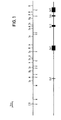
- FIG. 1 shows schematically the structure of the hLS2 gene derived from restriction cleavage and southern blotting and sequencing.
- the isolation of the DNA fragments on agarose gels, the treatment of the fragment ends and the subcloning into the vector pUC13 are carried out according to standard methods (Maniatis et al., Op. Cit.).
- the orientation of the inserts is determined by restriction cleavage and the plasmids with the correct insertion orientation are used to construct the hybrid serping.
- the human a'-antitrypsin gene codes for the amino acids methionine and serine in the reactive center of the protein.
- the methionyl residue is replaced by an arginyl residue. This exchange imparts antithrombotic properties to the mutant protein (M. Owen et al., New England J. Med. 309 (1983) 694-698).
- Such mutations can be introduced by known methods, for example in vitro mutagenesis (W. Kramer et al., Nucleic Acids Res. 12 (1984) 9441-9456). Exons modified in this way can of course also be used for the construction of hybrid serpine genes according to the invention.
- Exons 1 to 4 of the hLS2 gene (example 2) are linked to the 3'-terminal exon of the a'-antitrypsin gene in a known manner (FIG. 2).
Landscapes
- Chemical & Material Sciences (AREA)
- Health & Medical Sciences (AREA)
- Life Sciences & Earth Sciences (AREA)
- Organic Chemistry (AREA)
- Genetics & Genomics (AREA)
- Engineering & Computer Science (AREA)
- Proteomics, Peptides & Aminoacids (AREA)
- Wood Science & Technology (AREA)
- Biophysics (AREA)
- Molecular Biology (AREA)
- Biochemistry (AREA)
- General Health & Medical Sciences (AREA)
- Zoology (AREA)
- General Engineering & Computer Science (AREA)
- Bioinformatics & Cheminformatics (AREA)
- Biotechnology (AREA)
- Analytical Chemistry (AREA)
- Biomedical Technology (AREA)
- Microbiology (AREA)
- Gastroenterology & Hepatology (AREA)
- Physics & Mathematics (AREA)
- Medicinal Chemistry (AREA)
- Plant Pathology (AREA)
- Immunology (AREA)
- Preparation Of Compounds By Using Micro-Organisms (AREA)
- Micro-Organisms Or Cultivation Processes Thereof (AREA)
- Medicines That Contain Protein Lipid Enzymes And Other Medicines (AREA)
- Peptides Or Proteins (AREA)
- Investigating Or Analysing Biological Materials (AREA)
- Measuring Or Testing Involving Enzymes Or Micro-Organisms (AREA)
- Pharmaceuticals Containing Other Organic And Inorganic Compounds (AREA)
Abstract
Description
- Aus der europäischen Patentanmeldung mit der Veröffentlichungs-Nr. (EP-A) 0 190 652 ist ein humanes Serpin bekannt, das inzwischen die Bezeichnung "Leuserpin-2" (hLS2) erhalten hat. In dieser EP-A ist weiterhin die cDNA für hLS2 wiedergegeben und auf die Möglichkeit verwiesen, modifizierte Gene oder Teilgene herzustellen, die zu entsprechend modifizierten Proteinen führen, in denen einzelne Aminosäuren ausgetauscht, weggelassen oder eingefügt werden. Es wird beispielsweise ein "BaukastenPrinzip" erwähnt, bei dem ein Teilgen I, welches für die Aminosäurefolge vor dem aktiven Zentrum kodiert mit einem Teilgen II, welches für die Aminosäurefolge nach dem aktiven Zentrum kodiert. unter Zwischenschaltung eines Genfragmentes, welches für ein aktives Zentrum kodiert, kombiniert wird.
- Es wurde nun der genomische Klon gefunden, der für hLS2 kodiert, und dessen Genstruktur ermittelt. Dieser Genaufbau wird erfindungsgemäß zur Herstellung neuer Hybridserpine genutzt.
- Die Serpine sind eine Gruppe von Proteinen, die Funktionen als Proteinase-Inhibitoren bei der Blutgerinnung, der Komplementaktivierung und bei verschieden Aspekten der Entzündungsreaktionen ausüben. Die Serpine gehören einer Proteinfamilie an, deren Mitglieder eine Aminosäurehomologie von etwa 20 bis 35 % zueinander haben (R.F. Doolittle, Science 222 (1983) 417-419; H. Ragg, Nucl. Acids. Res. 14 (1986) 1073-1088). Die Spezifität dieser Proteinase-Inhibitoren wird einerseits durch eine Aminosäure in der P1-Position des reaktiven Zentrums bestimmt (M. Laskowski und I. Kato, Annu. Rev. Biochem. 49 (1980) 593-629), andererseits aber auch durch weitere Aminosäuresequenzen und Strukturelemente, die offenbar auch einen Einfluß auf die Aktivität der Serpine ausüben. Überdies spielt bei einigen Serpinen, wie z.B. bei Angiotensinogen, der N-terminale Bereich eine eigenständige funktionelle und strukturelle Rolle (S. Synder und R. Innis, Annu. Rev. Biochem. 48 (1979) 755-782).
- Überraschenderweise liegt der untereinander ähnlichen Primär-und Tertiär-Struktur der Serpine (H. Loebermann et al., J. Mol. Biol. 177 (1984) 531-556; S.C. Bock et al. Biochemistry 25 (1986) 4292-4301) keine einheitliche Genstruktur zugrunde, wie das bei vielen anderen Proteinfamilien, beispielsweise bei den Globinen, der Fall ist. Von den bisher beschriebenen Serpingenen weisen nur diejenigen für humanes a'-Antitrypsin und für Ratten-Angiotensinogen äquivalente Exon-Intron-Strukturen auf (T. Tanaka et al., J. Biol. Chem. 259 (1984) 8063-8065): Jeweils 5 Exons werden an korrespondierenden Positionen von vier Introns unterbrochen. Die Struktur der übrigen bisher bekannten Serpingene unterscheidet sich jedoch wesentlich von diesem Muster. Das humane Antithrombin-III-Gen enthält 6 Exons (E.V. Prochownik et al., J. Biol. Chem. 260 (1985) 9608-9612), jedoch läßt sich nur eines der 5 Introns mit einer der Intronpositionen von «'-Antitrypsin bzw. Angiotensinogen homologisieren. Das Gen für den humanen C1-Inhibitor weist mindestens 7 Introns auf, deren Lokalisation jedoch noch nicht bekannt ist (S.C. Bock et al., a.a.O.).
- Es wurde nun gefunden, daß die Gen-Struktur von hLS2 derjenigen des α1-Antitrypsins und des (Ratten- ) Angiotensinogens hinsichtlich der Anzahl und Lokalisation der Introns entspricht. Diese Analogie wird erfindungsgemäß zur Herstellung der Hybridserpine genutzt.
- Die Erfindung ist in ihren verschiedenen Aspekten in den Patentansprüchen definiert. Ausgestaltungen der Erfindung und bevorzugte Ausführungsformen werden im folgenden erläutert.
- Die Erfindung ist weiterhin in den Figuren 1 und 2 sowie in der Tabelle 1 (Anhang) dargestellt (wobei hier und im folgenden unter "Figur 2" auch deren Fortsetzung in Figur 2a verstanden wird):
- Die Figur 1 zeigt die Struktur des hLS2-Gens schematisch. "Ex 1" bis "Ex 5" stellen die Exons dar. Die Restriktionsschnittstellen sind wie folgt abgekürzt:

- Bei Bglll und Ncol wurden nur die zur Konstruktion des Hybridgens gemäß Figur 2 notwendigen Schnittstellen eingezeichnet.
- Die Figur 2 zeigt (nicht maßstabsgerecht) die Konstruktion eines Hybridserpingens mit den Exons 1 bis 4 von hLS2, dargestellt als ausgefüllte Balken und bezeichnet als "Ex 1" bis "Ex 4" wie in Figur 1 und dem 3'-terminalen Exon des humanen a1-Antitrypsingens, dargestellt als schraffierter Balken und bezeichnet als "Ex «'-AT".
- Soweit die üblichen Bezeichnungen der Restriktionsenzyme abgekürzt wurden, gelten die Erläuterungen zu Figur 1; zusätzlich wurden verwendet:
- P = Pstl
- S = Sall
- Sm = Smal
- Xh = Xhol
- K = Auffüllen mit Klenow-Polymerase
- S1 = Abbau mit S1-Nuklease
- Ph = alkalische Phosphatase
- L = Linker
- A bezeichnet Schnittstellen, die durch Abbau oder Auffüllen der überstehenden Enden stumpfendig gemacht wurden.
- Die Tabelle 1 zeigt die DNA-Sequenzen der Exons und der flankierenden Regionen des hLS2-Gens. wobei Intronsequenzen durch Kleinbuchstaben dargestellt sind. Das Signalpeptid und das zur Bildung korrekter 3'-Transkriptenden notwendige Signal AATAAA sind unterstrichen. Die Exon-Intron-Grenzen ergeben sich aus einem Vergleich mit der bekannten hLS2-cDNA. Der Pfeil gibt den 5'-Startpunkt des längsten bisher gefundenen hLS2-cDNA-Klones wieder.
- Der Begriff "Hybridserpine" soll im Zusammenhang mit der vorliegenden Erfindung besagen, daß es sich um ein Protein handelt, das aus Aminosäureblöcken besteht, die im wesentlichen Exons von hLS2 und analogen Serpinen mit dem gleichen Genaufbau entsprechen, und eine Proteinase-Inhibitor-Aktivität zeigt. Weiterhin soll der Ausdruck "Hybridserpine" die Naturprodukte ausschließen, die theoretisch durch Kombination von identischen Exons aus unterschiedlichen Quellen erhältlich wären. "Im wesentlichen" soll ausdrücken, daß die gentechnisch erhaltenen Produkte in an sich bekannter Weise modifiziert sein können. indem beispielsweise Aminosäuren zugefügt oder weggelassen oder ausgetauscht werden können. Solche Modifikationen sind beispielsweise durch den Einsatz entsprechender Linker oder Adaptoren möglich.
- Bei der erfindungsgemäßen Herstellung des rekombinanten Gens können auch synthetische Genfragmente eingesetzt werden. Dieses Vorgehen hat den Vorteil, daß zusätzliche Schnittstellen für Restriktionsenzyme eingebaut werden können, die zusätzliche Modifikationen der kodierten Aminosäuresequenz erlauben. Auf diesem Wege können beispielsweise auch die aktiven Zentren verändert werden und allgemein Hybridserpine mit geänderter Substrat-Spezifität und/oder Aktivität erzeugt werden.
- Bei der Rekombination der Exons werden diese zweckmäßig einschließlich aller notwendigen Sequenzen innerhalb der Introns, die für das Spleißen und andere posttranskriptionale Vorgänge notwendig sind, verwendet. Zum Verknüpfen kann man beispielsweise überhängende DNA-Sequenzen durch Abbau oder Auffüllen stumpfendig machen und so die Exons nach Belieben verbinden, gegebenenfalls unter Einfügung von synthetischen Oligonukleotid-Linkern, die als Substrate für günstige Restriktionsenzyme dienen. Derartige Exon-Module können erfindungsgemäß in einer Ligasereaktion in praktisch beliebiger Kombination, aber in der korrekten relativen Orientierung zueinander und in der richtigen Reihenfolge, zusammengesetzt werden. Die so erhaltenen Hybridgene können, wenn nicht ein Serpin-eigener Promotor verwendet wird, mit einem geeigneten eukaryotischen Promotor und gegebenenfalls mit einem Polyadenylierungssignal verbunden werden und nach Einbringen in die entsprechenden eukaryotischen Zellen dort zur Expression gebracht werden.
- Als Wirts-Vektor-Systeme können in an sich bekannter Weise höhere Zellen wie Insekten-oder Säugetier-Zellen Verwendung finden. Solche eukaryotischen Expressions-Systeme sind inzwischen in großer Zahl bekannt. Gegebenenfalls kann auch die gebildete Hybridserpin-mRNA isoliert werden und zur Synthese von cDNA dienen, die dann - nach Anfügen geeigneter Transkriptionssignale - zur Expression in Bakterien oder Hefen verwendet werden kann. Arbeitet man in Hefen, so kann man hefetypisch glykosylierte Proteine erhalten.
- Neben der Möglichkeit, Hybridserpine mit veränderter Substrat-Spezifität bzw. Aktivität zu erzeugen, eröffnet die Erfindung einen Zugang zur Herstellung bifunktioneller Proteine, die beispielsweise die Aktivitäten von Angiotensin 11 und Antitrypsin enthalten und somit neben einer Regulation des Wasserhaushalts einen hemmenden Einfluß auf die Funktion der Elastase ausüben.
- Die Erfindung bezieht sich weiterhin auf Diagnostika, die genomische DNA von hLS2 ganz oder teilweise enthalten, zur Identifizierung von Gendefekten im hLS2-Gen bzw. Diagnostizierverfahren, bei denen humane DNA oder RNA enthaltendes Material mit entsprechenden Genproben hybridisiert wird.
- Die Erfindung wird durch die folgenden Beispiele näher erläutert. Prozente sind Gewichtsprozente, wenn keine anderen Angaben gemacht sind
- Nach der Methode von W. Lndenmaier et al. (in: 35. Colloquium Mosbach 1984, "The Impact of Gene Transfer Techniques in Eukaryotic Cell Biology", Springer-Verlag Berlin, Heidelberg 1985) wurde eine Cosmidbank erstellt, wobei die partiell mit Mspl gespaltenen genomischen Human-DNA-Fragmente mit dem Vektor pHC79-2cos TK, der mit Clal und alkalischer Phosphatase behandelt wurde, verknüpft sind. Die Cosmidbank enthält etwa 300 000 unabhängige Klone. 1,8 x 10⁶ verpackte Cosmide wurden mit 5 ml TM-Puffer (50 mM Tris-HCI, pH 7,5, 10 mM MgSO4) und 5 ml einer Übernachtkultur von E. coli DH1. die bei 37°C in NZ-Medium (10 g/l NZ-Amin, 5 g/l Kochsalz, 2 g/l MgCl26 H2O, 4 mg/l Thiamin) mit 0,4 % Maltose gewachsen war, gemischt und 20 Minuten bei 37°C ohne Schütteln inkubiert. Nach Zugabe von 40 ml LB-Medium (10 g/1 Bactotrypton (Difco), 5 g/l Hefeextrakt (Difco), 10 g/l Kochsalz) mit 4 mg/l Thiamin wurde die Kultur eine Stunde bei 37°C geschüttelt.
- Jeweils 5 ml einer solchen Bakterienkultur wurden auf autoklavierten Nitrocellulosemembranen auf der Oberfläche einer Agarplatte (23 x 23 cm; LB-Medium mit 1,4 % Agar und 50 µg/ml Ampicillin) verteilt. Die Platten wurden bei 37°C inkubiert, bis die Kolonien einen Durchmesser von etwa 0,5 mm aufwiesen. Die Herstellung von Replikafiltern, die Lyse und die Fixierung der Kolonien für die Hybridisierung erfolgte nach bekannten Methoden (D. Hanahan und M. Meselson, Methods in Enzymology 100 (1983) 333-342. T. Maniatis et al.. Molecular Cloning, Cold Spring Harbor, 1982). Die Filter wurden eine Stunde bei 42°C mit "prewashing solution" ( Maniatis et al., a.a.O. S. 326) gewaschen. Die Vorhybridisierung (4 bis 6 Stunden) und die Hybridisierung (16 Stunden bei 60°C) wurden in der folgenden Lösung durchgeführt:
- 0,9 M NaCl
- 0,18 M Tris-HCI, pH 8,0
- 5 x Denhardts Lösung
- 0,2 % (w/v) SDS (Natriumdodecylsulfat)
- 200 ug/ml gescherte und erhitzte Kalbsthymus-DNA
- 200 u.giml Hefe-RNA
- 0,5 % (viv) nichtionisches Detergenz (Nonidet P-40;Sigma)
- Als Sonden für die Hybridisierung wurden die folgenden Restriktionsfragmente der hLS2-cDNA (EP-A 0 190 652) eingesetzt:
- A) 1,07 kb Hindlll-Fragment aus dem Plasmid pH14, das die 5'-Hälfte der hLS2-cDNA umfaßt.
- B) 0,5 kb Xmrl-Fragment aus dem Plasmid pL10/2. Dieses Fragment ist in der 3'-Hälfte der hLS2- cDNA lokalisiert (Positionen 1121 bis 1619).
- Die genannten Fragmente wurden durch Behandlung der jeweiligen Plasmide mit den entsprechenden Restriktions-Enzymen ausgeschnitten, nach Auftrennung auf Agarosegelen elektroeluiert und "nicktranslatiert" (≧ 108 cpm/µg; Maniatis et al., a.a.O.).
- Die Membranen wurden nach der Hybridisierung jeweils 30 Minuten bei Raumtemperatur, bei 45°C und bei 60°C mit 0,1 x SSC (1 x SSC = 0,15 M NaCI, 15 mM Natriumcitrat, pH 7,0) mit 0,1 % SDS gewaschen.
- Nach dem Trocknen wurden mit diesen Membranen Röntgenfilme exponiert. Hybridisierende Kolonien wurden durch Verdünnen vereinzelt und wie beschrieben auf Nitrocellulosemembranen angezüchtet, lysiert und wieder hybridisiert. Nach nochmaliger Vereinzelung verblieben von insgesamt 750 000 analysierten Kolonien 3 unabhängige hybridisierungspositive Klone. Der Klon p4R hybridisierte nur mit der Sonde A, nicht jedoch mit der Sonde B. Umgekehrt hybridisierten die Klone p6R und p9R nur mit der Sonde B, nicht jedoch mit A.
- Cosmid-DNA der Klone p4R, p6R und p9R wurde nach der alkalischen Lysemethode (Maniatis et al., a.a.O.) isoliert. Die DNA-Präparationen wurden mit verschiedenen Restriktionsendonukleasen geschnitten, auf 0,7 %igen oder 1 %igen Agarosegelen aufgetrennt und auf Nitrocellulose-Membranen transferiert (E. Southern, J. Molec. Biol. 98 (1975) 503-517). Exon-enthaltende DNA-Fragmente der Cosmide wurden durch Hybridisierung mit verschiedenen radioaktiv markierten Restriktionsfragmenten der hLS2-cDNA identifiziert, die im folgenden aufgeführt sind:
- Sonde 1: Hindlll-BamHI-Fragment, das den Bereich zwischen den Positionen 1 und 310 der hLS2- cDNA enthält. (Die Hindlll-Stelle ist in der Polylinker-Region des Vektors pUC13, in den die hLS2-cDNA kloniert ist, lokalisiert).
- Sonde 2: BamHl-Fragment, das die Positionen 311 bis 834 der hLS2-cDNA umfaßt.
- Sonde 3: Pvull-Fragment mit dem Bereich zwischen den Positionen 984 und 1399.
- Sonde 4: Xmnl-Fragment, das den Bereich zwischen den Positionen 1121 und 1619 umfaßt.
- Sonde 5: EcoRI-Fragment. das den Bereich zwischen den Positionen 1560 und 2081 umfaßt (eine der EcoRl-Stellen ist in der Polylinker-Region des Vektors pUC13 lokalisiert).
- Alle hier angeführten Positionen für Restriktionsenzym-Schnittstellen beziehen sich auf den kodierenden Strang in der cDNA.
- Die Hybridisierung erfolgte jeweils bei 42°C über Nacht in dem vorstehend genannten Hybridisierungspuffer. Die Membranen wurden anschließend 2 x 15 Minuten bei Raumtemperatur in 2 x SSC mit 0.1 % SDS und dann 2 x 15 Minuten bei 42°C in 0,1 SSC mit 0,1 % SDS gewaschen, getrocknet und auf Röntgenfilme exponiert. Die Membranen wurden zur Entfernung der Proben jeweils 2 Minuten lang in kochendem Wasserbad inkubiert und dann zur Rehybridisierung wieder verwendet.
- Zur Identifizierung des ersten Exons (Ex 1) wurde das Oligonukleotid mit der DNA-Sequenz 3'-CGCGGTGAAGAGTCTTTGTGTCTC-5'
- (das hier entgegen der üblichen 5'-3'-Richtung wiedergegeben ist) nach dem Phosphoramiditverfahren (M.D. Matteucci et al., J. Am. Chem. Soc. 103 (1981) 3185-3191) synthetisiert und über ein Polyacrylamid-Harnstoff-Gel gereinigt. Die Sequenz des Oligonukleotids wurde aus einer humanen hLS2-cDNA-Sequenz abgeleitet, die aus einer xgt10-cDNA-Bank isoliert wurde, die nach der Methode von T. Huynh et al., in: D.M. Glover (Hrsg.), DNA Cloning, a Practical Approach, Vol. I, IRL Press, Oxford UK, Washington, D.C. 1985. Seiten 49-78, gewonnen worden war. Cosmid-DNA des Klons p4R wurde, wie vorstehend beschrieben. mit Hilfe der Southern-Technik analysiert. Das Oligonukleotid mit der vorstehend genannten DNA-Sequenz wurde mit Hilfe von λ-32P-ATP (NEN) und Polynukleotidkinase radioaktiv markiert (Maniatis et al., a.a.O.). Die Hybridisierungstemperatur betrug 42°C.
- Das Waschen der Membranen erfolgte mit 6 x SSC bei Raumtemperatur (2 x 15 Minuten) bzw. bei 33°C (2 x 30 Minuten).
- Aufgrund der Hybridisierungsexperimente wurden überlappende Restriktionsfragmente der Cosmide nach Standardverfahren in den Vektor pUC13 subkloniert. Die Exons sowie benachbarte Intronbereiche wurden nach der chemischen Abbaumethode von A. Maxam und W. Gilbert, Methods in Enzymology 65 (1980) 499-560, sequenziert. Die Figur 1 zeigt schematisch, den aus Restriktionspaltung und "Southern blotting" sowie Sequenzierung abgeleiteten Aufbau des hLS2-Gens.
- Subklonierung von Exons einschließlich flankierender Intronsequenzen des hLS2-Gens und Konstruktion eines hLS2-a'-Antitrypsin-Hybridgens.
- Im folgenden wird beispielhaft anhand der Tabelle 2 (und der Figur 2) die Konstruktion eines exprimierbaren Hybridserpingens beschrieben. Selbstverständlich können anstelle der beschriebenen Restriktionsfragmente andere geeignete DNA-Fragmente und andere Kombinationen von DNA-Fragmenten verwendet werden. Insbesondere können anstelle der hLS2-spezifischen Promotorregion andere eukaryotische Promotoren, beispielsweise solche eines anderen Serpingens, verwendet werden.

- Alle Exon-enthaltenden Restriktionsfragmente umfassen gleichzeitig die für ein korrektes Spleißen eventuell notwendigen DNA-Sequenzen an den Exon-Intron-Grenzen (B. Ruskin et al., Cell 38 (1984) 317-331; E. Keller et al., Proc. Natl. Acad. Sci. USA 81 (1984) 7417-7420; B Wieringa et al., Cell 37 (1984) 915-925).
- Die Isolation der DNA-Fragmente auf Agarosegelen, die Behandlung der Fragmentenden und die Subklonierung in den Vektor pUC13 erfolgen nach Standardmethoden (Maniatis et al., a.a.O.). Die Orientierung der Inserts wird durch Restriktionsspaltung festgestellt und die Plasmide mit der richtigen Insertionsorientierung werden zur Konstruktion des Hybridserpingens eingesetzt.
- Die Verknüpfung der Exons 1 bis 4 des hLS2-Gens in der korrekten Reihenfolge und korrekten Orientierung der Exons zueinander erfolgt ebenfalls nach bekannten Methoden.
- Aus einem genemischen Klon mit dem humanen α-Antitrypsin-Gen wird ein 1.7 kb langes Xhol Hindlll-Fragment mit dem 3'-terminalen Exon des Gens (G. Long et al.. Biochemistry 23 (1984) 4828-4837; M. Leicht et al.. Nature 297 (1982) 655-659), isoliert. Dieses Exon kodiert u.a. für das reaktive Zentrum des Proteins (G. Long et al., a.a.O.; R. Carrell et al., Nature 298 (1982) 329-334). Nach Reparatur der Enden und Anfügen von EcoRI-Linkern
5'CCGAATTCGG 3'
wird das Fragment in den mit EcoRI und alkalischer Phosphatase behandelten Vektor pUC13 einligiert. - Das menschliche a'-Antitrypsin-Gen kodiert für die Aminosäuren Methionin und Serin im reaktiven Zentrum des Proteins. In einer natürlich vorkommenden a'-Antitrypsin-Variante ist der Methionylrest gegen einen Arginylrest ausgetauscht. Dieser Austausch verleiht dem mutierten Protein antithromtotische Eigenschaften (M. Owen et al., New England J. Med. 309 (1983) 694-698). Derartige Mutationen können durch bekannte Verfahren, beispielsweise in vitro-Mutagenese (W. Kramer et al., Nucleic Acids Res. 12 (1984) 9441-9456) eingeführt werden. Solchermaßen modifizierte Exons können natürlich ebenso zur erfindungsgemäßen Konstruktion von Hybridserpin-Genen verwendet werden.
- Die Exons 1 bis 4 des hLS2-Gens (Beispiel 2) werden mit dem 3'-terminalen Exon des a'-Antitrypsin-Gens in bekannter Weise verknüpft (Figur 2).
Claims (27)
Applications Claiming Priority (2)
| Application Number | Priority Date | Filing Date | Title |
|---|---|---|---|
| DE19873709255 DE3709255A1 (de) | 1987-03-20 | 1987-03-20 | Hybridserpine und dafuer kodierende dna |
| DE3709255 | 1987-03-20 |
Publications (2)
| Publication Number | Publication Date |
|---|---|
| EP0283932A2 true EP0283932A2 (de) | 1988-09-28 |
| EP0283932A3 EP0283932A3 (de) | 1989-10-25 |
Family
ID=6323634
Family Applications (1)
| Application Number | Title | Priority Date | Filing Date |
|---|---|---|---|
| EP88104248A Withdrawn EP0283932A3 (de) | 1987-03-20 | 1988-03-17 | Hybridserpine und dafür kodierende DNA |
Country Status (11)
| Country | Link |
|---|---|
| EP (1) | EP0283932A3 (de) |
| JP (1) | JPS63267294A (de) |
| KR (1) | KR880011340A (de) |
| AU (1) | AU611676B2 (de) |
| DE (1) | DE3709255A1 (de) |
| DK (1) | DK151788A (de) |
| FI (1) | FI881268A7 (de) |
| HU (1) | HUT46740A (de) |
| IL (1) | IL85789A0 (de) |
| PT (1) | PT87009B (de) |
| ZA (1) | ZA881948B (de) |
Cited By (5)
| Publication number | Priority date | Publication date | Assignee | Title |
|---|---|---|---|---|
| EP0730660A4 (de) * | 1993-10-29 | 1998-02-25 | Incyte Pharma Inc | Chimäre proteine protease nexin-1 varianten enthaltend |
| DE19742725A1 (de) * | 1997-09-26 | 1999-04-01 | Abts Harry Frank Dr | Hurpin/PI13: Ein neuer, UV-reprimierbarer, Serin Protease Inhibitor aus der Familie der Ovalbumin-Serpine |
| WO2002050287A3 (en) * | 2000-12-18 | 2003-09-18 | Arriva Pharmaceuticals Inc | Multifunctional protease inhibitors and their use in treatment of disease |
| US7247704B2 (en) | 2000-12-18 | 2007-07-24 | Arriva Pharmaceuticals, Inc. | Multifunctional protease inhibitors and their use in treatment of disease |
| EP1903113A1 (de) * | 2000-12-18 | 2008-03-26 | Arriva Pharmaceuticals, Inc. | Multifunktionelle Protease-Inhibitoren und ihre Anwendung bei der Behandlung von Krankheiten |
Family Cites Families (1)
| Publication number | Priority date | Publication date | Assignee | Title |
|---|---|---|---|---|
| DE3521226A1 (de) * | 1985-02-08 | 1986-08-14 | Hoechst Ag, 6230 Frankfurt | Gene fuer biologisch aktive proteine |
-
1987
- 1987-03-20 DE DE19873709255 patent/DE3709255A1/de not_active Withdrawn
-
1988
- 1988-03-17 FI FI881268A patent/FI881268A7/fi not_active Application Discontinuation
- 1988-03-17 EP EP88104248A patent/EP0283932A3/de not_active Withdrawn
- 1988-03-18 IL IL85789A patent/IL85789A0/xx unknown
- 1988-03-18 DK DK151788A patent/DK151788A/da not_active IP Right Cessation
- 1988-03-18 HU HU881365A patent/HUT46740A/hu unknown
- 1988-03-18 PT PT87009A patent/PT87009B/pt not_active IP Right Cessation
- 1988-03-18 AU AU13288/88A patent/AU611676B2/en not_active Ceased
- 1988-03-18 ZA ZA881948A patent/ZA881948B/xx unknown
- 1988-03-19 KR KR1019880002920A patent/KR880011340A/ko not_active Ceased
- 1988-03-19 JP JP63067041A patent/JPS63267294A/ja active Pending
Cited By (7)
| Publication number | Priority date | Publication date | Assignee | Title |
|---|---|---|---|---|
| EP0730660A4 (de) * | 1993-10-29 | 1998-02-25 | Incyte Pharma Inc | Chimäre proteine protease nexin-1 varianten enthaltend |
| DE19742725A1 (de) * | 1997-09-26 | 1999-04-01 | Abts Harry Frank Dr | Hurpin/PI13: Ein neuer, UV-reprimierbarer, Serin Protease Inhibitor aus der Familie der Ovalbumin-Serpine |
| WO2002050287A3 (en) * | 2000-12-18 | 2003-09-18 | Arriva Pharmaceuticals Inc | Multifunctional protease inhibitors and their use in treatment of disease |
| AU2002241661B2 (en) * | 2000-12-18 | 2007-05-31 | Arriva Pharmaceuticals, Inc | Multifunctional protease inhibitors and their use in treatment of disease |
| US7247704B2 (en) | 2000-12-18 | 2007-07-24 | Arriva Pharmaceuticals, Inc. | Multifunctional protease inhibitors and their use in treatment of disease |
| EP1903113A1 (de) * | 2000-12-18 | 2008-03-26 | Arriva Pharmaceuticals, Inc. | Multifunktionelle Protease-Inhibitoren und ihre Anwendung bei der Behandlung von Krankheiten |
| US7709446B2 (en) | 2000-12-18 | 2010-05-04 | Arrive Pharmaceuticals, Inc. | Multifunctional protease inhibitors and their use in treatment of disease |
Also Published As
| Publication number | Publication date |
|---|---|
| FI881268L (fi) | 1988-09-21 |
| HUT46740A (en) | 1988-11-28 |
| DE3709255A1 (de) | 1988-09-29 |
| AU611676B2 (en) | 1991-06-20 |
| FI881268A0 (fi) | 1988-03-17 |
| KR880011340A (ko) | 1988-10-27 |
| DK151788A (da) | 1988-09-21 |
| JPS63267294A (ja) | 1988-11-04 |
| IL85789A0 (en) | 1988-09-30 |
| PT87009B (pt) | 1992-06-30 |
| DK151788D0 (da) | 1988-03-18 |
| EP0283932A3 (de) | 1989-10-25 |
| FI881268A7 (fi) | 1988-09-21 |
| ZA881948B (en) | 1988-12-28 |
| AU1328888A (en) | 1988-09-22 |
| PT87009A (pt) | 1988-04-01 |
Similar Documents
| Publication | Publication Date | Title |
|---|---|---|
| DE3888561T2 (de) | Hohe Proteinsyntheserate in Hefe. | |
| DE69018920T2 (de) | Verwendung von dns-fragmenten, die ein signalpeptid kodieren zur sekretion von reifen proteinen in rekombinanten hefen, expressions-kassetten, transformierte hefen und verfahren zur herstellung dieser proteine. | |
| DE69534656T2 (de) | Gentechnisch manipulierte menschliche kunitz domänen die menschliche neutrophile elastase hemmen | |
| Antoine et al. | Intron-less globin genes in the insect Chironomus thummi thummi | |
| DE69004966T2 (de) | Antikoagulierendes protein. | |
| DE69635653T2 (de) | Peptide als vektoren zur intrazellulären adressierung von aktiven molekülen | |
| EP0401508B1 (de) | Proteinaseninhibitoren, Verfahren zu ihrer Herstellung sowie diese enthaltende Arzneimittel | |
| DE69929805T2 (de) | Modifiziertes e.coli enterotoxin ii signalpeptid sowie ein mikroorganismus der ein fusionsprotein sowie ein heterologes protein exprimiert | |
| DE3752063T2 (de) | Funktioneller DNS-Block und für Hirudin kodierendes Plasmid, transformierte Hefe aud Verfahren zur Herstellung von Hirudin. | |
| DD296965A5 (de) | Hefeverarbeitungssystem | |
| DE3523634C2 (de) | ||
| DE3537176A1 (de) | Expression eines plasminogenaktivators in hefe | |
| DE60209883T2 (de) | Übersekretierte peptide, deren herstellung, und gleichzeitige verbesserung der sekretierten form eines oder mehrerer anderer polypeptide | |
| EP0324712B1 (de) | Hirudin-Derivat | |
| DE69619808T2 (de) | Chimäre msp und daf proteine mit einem telloberflächenlokalisierendem domän | |
| DE3787112T2 (de) | Menschliche Pankreaselastase I. | |
| DE3419995A1 (de) | Gentechnologisches verfahren zur herstellung von human-interleukin-2 und mittel zur durchfuehrung dieses verfahrens | |
| DE69024400T2 (de) | Dem menschlichen Calpastatin ähnliches Polypeptid | |
| DE3709255A1 (de) | Hybridserpine und dafuer kodierende dna | |
| EP0388593A1 (de) | Verfahren zur Expression von Polygalakturonidase und Pektinesterase in Aspergillus niger und Aspergillus awamori | |
| DE69318495T2 (de) | Verfahren zur Reinigung des Big-Endothelin Proteins | |
| EP0292763A2 (de) | Gentechnologisches Verfahren zur Herstellung von Angiogeninen | |
| DE3485923T2 (de) | Dna-gen, verfahren zu seiner herstellung und dieses gen enthaltendes plasmid. | |
| DE69630630T2 (de) | Staphylococcus aureus V8 Protease Mutanten | |
| DE3521226A1 (de) | Gene fuer biologisch aktive proteine |
Legal Events
| Date | Code | Title | Description |
|---|---|---|---|
| PUAI | Public reference made under article 153(3) epc to a published international application that has entered the european phase |
Free format text: ORIGINAL CODE: 0009012 |
|
| AK | Designated contracting states |
Kind code of ref document: A2 Designated state(s): AT BE CH DE ES FR GB GR IT LI LU NL SE |
|
| PUAL | Search report despatched |
Free format text: ORIGINAL CODE: 0009013 |
|
| AK | Designated contracting states |
Kind code of ref document: A3 Designated state(s): AT BE CH DE ES FR GB GR IT LI LU NL SE |
|
| 17P | Request for examination filed |
Effective date: 19890914 |
|
| 17Q | First examination report despatched |
Effective date: 19920117 |
|
| STAA | Information on the status of an ep patent application or granted ep patent |
Free format text: STATUS: THE APPLICATION HAS BEEN WITHDRAWN |
|
| 18W | Application withdrawn |
Withdrawal date: 19931215 |