EP0287110A2 - Antibiotiques glycopeptidiques pa-45052 - Google Patents
Antibiotiques glycopeptidiques pa-45052 Download PDFInfo
- Publication number
- EP0287110A2 EP0287110A2 EP88106040A EP88106040A EP0287110A2 EP 0287110 A2 EP0287110 A2 EP 0287110A2 EP 88106040 A EP88106040 A EP 88106040A EP 88106040 A EP88106040 A EP 88106040A EP 0287110 A2 EP0287110 A2 EP 0287110A2
- Authority
- EP
- European Patent Office
- Prior art keywords
- hci
- water
- growth
- concentrated
- eluted
- Prior art date
- Legal status (The legal status is an assumption and is not a legal conclusion. Google has not performed a legal analysis and makes no representation as to the accuracy of the status listed.)
- Granted
Links
- 0 C[C@](C(C(C(*)(*)C1)O)OC1OC(C(C)OC(C*)C1O)C1O)*=C Chemical compound C[C@](C(C(C(*)(*)C1)O)OC1OC(C(C)OC(C*)C1O)C1O)*=C 0.000 description 2
Images





Classifications
-
- C—CHEMISTRY; METALLURGY
- C07—ORGANIC CHEMISTRY
- C07H—SUGARS; DERIVATIVES THEREOF; NUCLEOSIDES; NUCLEOTIDES; NUCLEIC ACIDS
- C07H15/00—Compounds containing hydrocarbon or substituted hydrocarbon radicals directly attached to hetero atoms of saccharide radicals
-
- C—CHEMISTRY; METALLURGY
- C07—ORGANIC CHEMISTRY
- C07K—PEPTIDES
- C07K9/00—Peptides having up to 20 amino acids, containing saccharide radicals and having a fully defined sequence; Derivatives thereof
- C07K9/006—Peptides having up to 20 amino acids, containing saccharide radicals and having a fully defined sequence; Derivatives thereof the peptide sequence being part of a ring structure
- C07K9/008—Peptides having up to 20 amino acids, containing saccharide radicals and having a fully defined sequence; Derivatives thereof the peptide sequence being part of a ring structure directly attached to a hetero atom of the saccharide radical, e.g. actaplanin, avoparcin, ristomycin, vancomycin
Definitions
- This invention relates to PA-45052 antibiotics which are represented by the following formula: or H and R 1 denotes CH 3 or H.), their pharmaceutically acceptable salts, their production, organisms producing them and a growth-stimulating agent containing at least one of them.
- methicillin-resistant bacteria As antibiotics have recently become widely used, the emergence of multiple drug-resistant bacteria. especially methicillin-resistant bacteria causes severe problems.
- the methicillin-resistant bacteria show resistance not only to methicillin but also to various antibiotics such as aminoglycosides, tetracyclines, cephems, penicillins, carbapenems and macrolides.
- Vancomycin is a well-known antibiotic ( Japanese Patent Publication No. 33-8450) and novel analogs of vancomycin have been developed (Antimicrobial Agent and Chemotherapy, 28, 660-662 (1985), Journal of Antibiotics. 37, 446-453 (1984), 38. 1-8 (1985), 38, 51-57 (1985). Japanese Laid-open Patent No. 60-139623, 60-199397, 60-231698, 60-237099 etc.).
- the present inventors found that a strain belonging to the genus Nocardia produces vancomycin antibiotics PA-42867-A and PA-42867-B having potent antibacterial activity ( Japanese Patent Application No. 61-14389) and, in addition, created derivatives thereof (Japanese Patent Application No. 61-188865).
- the PA-45052 antibiotics of the present invention are vancomycins having completely new structures not coincident to those of the above compounds.
- glycopeptide antibiotics such as vancomycins stimulate growth in animals (for example, Japanese Unexamined Patent Publication Nos. 57-129693. 59-213394, 59-213395, 60-199397, 60-231698. 60-237099. 61-122300, 61-251699, 62-126970 and 61-502335; U.S. Patent Nos. 4537770 and 4558036; European Patent Publication No. 119575 etc.).
- the compounds of this invention have growth-promoting activity.
- thiopeptin is on the market as a growth-stimulating agent.
- glycopeptide antibiotics especially vancomycin antibiotics are effective against them.
- the technical problem underlying this invention is to provide novel vancomycin antibiotics having antibacterial and growth stimulating activity.
- This invention provides glycopeptide antibiotics PA-45052-A, -B, -C, -D, -E and -F, which are produced by culturing Nocardia orientalis PA-45052 and show potent activity against gram-positive bacteria, especially methicillin-resistant bacteria and stimulate growth in animals.
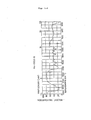
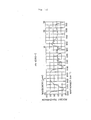
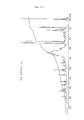
- Fig. 1 shows infrared absorption spectra of PA-45052-A, PA-45052-B, PA-45052-C, PA-45052-D and PA-45052-E.
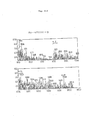
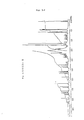
- Fig. 2 represents spectra of mass analysis of PA-45052-A, PA-45052-B, PA-45052-C, PA-45052-D and PA-45052-E (peaks marked by # are those of standard substances for marker correction), and
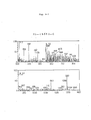
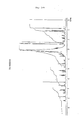
- Fig. 3 shows 1 H-NMR spectra of PA-45052-A, PA-45052-B, PA-45052-C and PA-45052-D.
- the strain PA-45052 belonging to the genus Nocardia produces compounds which are represented by the following formula; or H and R 1 is CH 3 or H.) and which have strong antibacterial activity, and named a compound of which R in the above formula is and R, is H as PA-45052-A, named another compound of which R in the formula is and R, is H as PA-45052-B, named a further different compound of which R is H and R 1 is H as PA-45052-C, named a further different compound of which R is and R 1 is CH 3 as PA-45052-D, named a further different compound of which R is and R 1 is CH 3 as PA-45052-E, and named a further different compound of which R is H and R 1 is CH 3 as PA-45052-F.
- the present invention includes not only these compounds but also their pharmaceutically acceptable salts.
- PA-45052 described in this specification means mainly any one of the above six compounds but in some cases specifies all of these compounds.
- PA-45052-A (HCI)
- PA-45052-B (HCI)
- PA-45052-C (HCI)
- PA-45052-D (HCI)
- PA-45052-E HCl
- PA-45052-A 3412, 1658, 1589(sh), 1506, 1424, 1397, 1336, 1232, 1133, 1065, 1019, 902, 843
- PA-45052-B (HCI) 3392, 1665, 1589(sh), 1505, 1423, 1400, 1332, 1231, 1132, 1064, 1015, 892, 848
- PA-45052-C (HCI) 3392, 1665, 1624(sh), 1603(sh), 1515, 1501(sh), 1430, 1399, 1233, 1133, 1060, 1002, 889, 848
- PA-45052-B (HCI) Anal. Calcd. for C 66 H 75 O 24 N 9 Cl 2 •HCl•5H 2 O (%): C; 50.21, H; 5.68, N; 7.98, Cl; 6.74
- PA-45052-E (HCI) Anal. Calcd. for C 67 H 77 O 24 N 9 Cl 2 •2HCl•8H 2 O (%): C; 47.89, H; 5.70, N; 7.50, Cl; 8.44
- PA-45052-A (free) [temp. 60°C] 8.45 (br-d, - 5), 8.29 (d, - 6.2), 8.07 (d, 7.5), 7.89 (s-like), 7.78 (br), 7.49 (br-d), - 8.5), 7.36 (s-like), 7.36 (br-d, - 8), 7.26 (br-d.
- PA-45052-B (free) [temp. 100°C] 8.40 (br), 8.29 (d, 6.5), 8.04 (d, 8.5), 7.88 (d, 1.8), 7.52 (dd, 8.4, - 2), 7.40 (br-s-like), 7.34 (br-d, 8.4), 7.27 (d, 8.4), 7.23 (br), 7.15 (d, 2.2), 6.80 (dd, 8.4, 2.2), 6.71 (d, 8.4), 6.45 (br), 6.39 (d, 2.2), 6.38 (d, 2.2), 5.96 (br-d.
- PA-45052-C [temp. 100°C] 8.63 (br), 8.37 (d, 5.8), 7.96 (br-d. - 8.5), 7.80 (br), 7.59 (br-d, - 8.5), 7.36 (br), 7.33 (br), 7.30 (br), 7.19 (br), 7.18 (br-s-like), 6.84 (br-d-like, - 8.5), 6.57 (d, - 8.5), 6.43 (d, 2,3), 6.33 (d, 2.3), 5.62 (s-like), 5.57 (br), 5.23 (s-like), 5.21 (br), 5.18 (s-like), 4.87 (br), 4.76 (d, 4.0), 4.57 (d, 5.8), 4.50 (d, 5.8), 4.27 (d, 12.0), 3.63 (q-d, 6.1, 9.5), 3.28 (br-d, - 9.7), 2.51 (not clear), 2.39 (s). 2.25 (not clear), 1.77 (
- PA-45052-D [temp. 100°C] 8.312 (br-d. 4.3), 8.283 (d, 6.4), 7.884 (br-d, 9.0), 7.874 (d, 1.5), 7.508 (br-d, 8.8), 7.466 (br-d, 8.8), 7.338 (d, 8.4), 7.327 (br-s), 7.23 (br-d, 8.2), 7.225 (d, 8.4), 7.153 (d, 2.0), 6.795 (d, d. 2.0, 8.4), 6.711 (d.
- Solubility Soluble in water and dimethylsulfoxide, slightly soluble in methanol and ethanol and insoluble in
- the compounds PA-45052 of this invention are supposed to have the following steric structures.
- compounds PA-45052 have different properties to the known glycopeptide antibiotics, thus they are novel glycopeptide antibiotics.
- the PA-45052 strain is exemplified as one of the PA-45052 producing organisms, which is isolated from a soil sample.
- the strain was identified to be of the same species as Nocardia orientalis from a taxonomic consideration, and it has been deposited with Fermentation Research Institute (1-3, Higashi 1 chome Tsukuba-shi Ibaraki-ken, 305 Japan) since March 26, 1987 as Nocardia orientalis PA-45052 (FERM BP-1320).
- the PA-45052 producing organism in this specification means a strain producing at least one of the compounds PA-45052-A, -B, -C, -D, -E and -F.
- This strain grows well in yeast malt agar, tyrosine agar and Sennett's agar medium and the aerial hyphae adhere to it favorably and the sporulation is satisfactory.
- the branches are simple without verticillate branches.
- the aerial hyphae are relatively long and their tips are straight or wavy.
- the spores have an elliptic cylindrical form of 0.3 to 0.5 ⁇ m in width and 1.2 to 1.8 ⁇ m in length, and the surface structure is smooth. Neither sporangia, flagellous spores nor sclerotia can be observed.
- Diaminopimelic acid is of meso form.
- the strain is judged to be a strain belonging to the genus Nocardia. Searching for a closely related species to this strain from "The Actinomycetes" (Waxman, vol. 2, 1961), “International Journal of Systematic Bacteriology” [Report of International Streptomyces Project, Shirling and Gott Kunststoff, vol. 18 (1968), vol. 19 (1969), vol. 22 (1972)], Bergey's Manual of Determinative Bacteriology (8th edition, 1974) and other materials related to Actinomyces, it was found that Nocardia orientalis - (described as Streptomyces orientalis in the following materials: International Journal of Systematic Bacteriology vol. 18, pp.
- PA-45052 are produced by cultivating a PA-45052-producing strain in a nutrition medium under aerobic conditions and recovering PA-45052 from the cultures after the cultivation. General production of PA-45052 is described hereinbelow.
- the medium in principle, contains a carbon source, a nitrogen source and inorganic salts. Vitamins and precursors may be added as required.
- Carbon sources for example, glucose, starch, dextrin, glycerol, molasses and organic acid are used solely or as a mixture.
- nitrogen sources for example, soybean powder, corn' steep liquor, meat extract, yeast extract, cottonseed powder, peptone, wheat germ, ammonium sulfate and ammonium nitrate are used solely or as a mixture.
- inorganic salts for example, calcium carbonate, sodium chloride, potassium chloride, magnesium sulfate, copper sulfate, manganese chloride, zinc sulfate, cobalt chloride and phosphates, are added to the medium as required.
- the cultivation may be performed by conforming to the method generally used for the production of antibiotics, preferably a liquid culture, and for the purpose of mass production, a submerged aeration culture is suitable.
- a certain buffer such as calcium carbonate may be added to the medium.
- the cultivation should be carried out at about 20 to 40°C preferably at 25 to 32°C.
- the cultivation period depends on the scale of fermentation, and 5 to 7 days are required in mass production. When brisk bubbles are formed during the cultivation, it is better to properly add an antifoam such as vegetable oil, lard and polypropylene glycol before or during the cultivation.
- PA-45052 salts For the purpose of isolation or for the convenience of using them as medicines for humans or animals, it is sometimes preferable to make PA-45052 salts.
- the bases capable of forming salts with PA-45052 are alkaline metals such as potassium and sodium, alkaline earth metals such as aluminium and magnesium.
- inorganic acids such as hydrochloric acid, sulfuric acid, and nitric acid
- organic acids such as acetic acid and fumaric acid are exemplified.
- PA-45052 and their pharmaceutically acceptable salts can be administered orally or parenterally to men or animals as the active components of an antibacterial agent. They can be administered orally as tablets, capsules or powders by using widely employed vehicles, stabilizers, preservatives, humectants and surfactants. and on the other hand, they can be administered parenterally as injections, liniments and suppositories. The dose differs much depending on the purpose of therapy, age of the patient and symptoms, but basically 0.1 to 10 g a day is preferable for an adult by intravenous injection.
- the compounds PA-45052 of the present invention show strong antibacterial activity against Gram-positive bacteria especially methicillin-resistant bacteria and, therefore, are effective as drugs for both men and animals. Besides, as they can be obtained at a high purity, they are suitable to be used as injections as well as oral drugs.
- glycopeptides of this invention themselves may be orally administered, are generally administered as a mixture with usual carriers such as defatted rice bran, defatted bean powder, wheat bran, kaolin, talc, calsium carbonate, lactose, water etc. or a feed or water containing said mixture or the glycopeptides themselves is preferably administered.
- the glycopeptides used therein need not to be pure; for example the partially purified culture of the microorganism of the present invention is applicable.
- salts of the glycopeptides of this invention are also applicable; for example, salts with alkali metal such as potassium and sodium, alkali earth metal such as alminium and magnesium, inorganic acid such as hydrochloric acid, sulfuric acid and nitric acid and organic acid such as acetic acid and fumaric acid.
- alkali metal such as potassium and sodium
- alkali earth metal such as alminium and magnesium
- inorganic acid such as hydrochloric acid, sulfuric acid and nitric acid
- organic acid such as acetic acid and fumaric acid.
- a feed containing one or more glycopeptides of this invention may be any one generally used as a feed for animals; for example, the mixture of the whole or a part of corn, wheat bran, rice, wheat, cotton seed cake, milo, soy bean cake, fish powder, defatted rice bran, oil, alfalfal, calcium carbonate, calcium phosphate, sodium chloride, choline chloride, vitamines such as vitamin A, vitamin D, vitamin E.
- vitamin B 1 , vitamin B 2 , vitamin B ⁇ , vitamin B, 2 calcium pantothenate, nicotinamide and folic acid and inorganic acids such as magnesium sulfate, iron sulfate, copper sulfate, zinc sulfate, cobalt sulfate and potassium iodide.
- another antibiotic, germicide, anticoccidium and anthelminthic may be added.
- the concentration of one or more of the glycopeptides of this invention in a feed may be 0.5 to 100 ppm if using them alone, as a mixture of them, cells containing them or crude extract containing them.
- the growth-stimulating agent of this invention may generally be administered to any animals, for example, poultry such as chicken, turkey, duck and quail and cattle such as cow, horse, pig, sheep, goat, mink and rabbit.
- poultry such as chicken, turkey, duck and quail
- cattle such as cow, horse, pig, sheep, goat, mink and rabbit.
- animals may be fed according to methods generally used.
- the growth-stimulating agent of this invention not only promotes growth of animals but also improves feed efficiency. Naturally, it is effective against infections by bacteria. Moreover, it has excellent characteristics in that it has little virulence to animals and does not accumulate in animals.
- the LDso values of the present compounds after injection into mice are shown below.
- the antimicrobial activity of the PA-45052 of this invention was investigated on against Clostridium perfringens in vitro and the growth-stimulating activity to broiler chicks.
- GAM agar medium (Nissui) was used as assay medium and anaerobic culture (the gas pack method) was performed according to the agar plate dilution method.
- the MIC value was defined as the minimal concentration at which a visual inhibition of the bacteria was clearly observed after incubation at 37°C for 24 hours.
- the growth-stimulating activities of PA-45052-A, PA-45052-B and PA-45052-E to broiler chicks(arbor acre, 8 days old) were investigated by using the known antibiotic thiopeptin as a reference agent.
- Chicks were fed with a feed mush (crude protein (CP) concentration 18%, each agent's concentration 20 ppm, not supplemented with other antibiotics) for 14 days in the battery brooders.
- the method of this experiment was as follows. After chicks were fed in a floor pen with a feed (CP concentration 23%) from 0 to 8 days, they were divided into 5 groups (24 chiks a group, male and female each 12 chicks) in such a way that the average weight of the groups are equal.
- PA-45052-A (20 ppm)
- PA-45052-B (20 ppm)
- PA-45052-E (20 ppm)
- thiopeptin 20 ppm
- CP 18% thiopeptin
- Each group was fed in cages (435 x 600 x 410 mm, each cage has 6-7 chicks.) at 26 ⁇ 2 °C for 14 days (up to 22 days old). Effectiveness was estimated from the increase in weight and the feed efficiency.
- a seed culture slant of Nocardia orientalis PA-45052 (FERM BP-1320) is inoculated and cultured for 48 hours at 28°C with shaking at 180 rpm.
- Each 800 ml of this culture solution is transplanted into a 50-liter jar fermenter charged with 30 liters of culture medium composed of 3.6% dextrin, 2.4% molasses, 0.84% bactopeptone, 0.12% L-tyrosine, 0.05% antifoam P-2000 (produced by Dai Nippon Ink & Chemicals Inc.) and water (pH 7.0, before sterilization), and it is cultured at 32°C for 137 hours under aeration of 30 liters/min, inner pressure of 0.35 kg/cm 2 G with stirring at 550 rpm.
- culture medium composed of 3.6% dextrin, 2.4% molasses, 0.84% bactopeptone, 0.12% L-tyrosine, 0.05% antifoam P-2000 (produced by Dai Nippon Ink & Chemicals Inc.) and water (pH 7.0, before sterilization
- the culture solution obtained in the above process is adjusted to pH 10.5 with 10% sodium hydroxide and 33 liters of supernatant is obtained by centrifugation. After adjusting this supernatant to pH 7.5, it is applied to a 3.3 liter HP-20 column (manufactured by Mitsubishi Chemical Industries, Ltd.). The column is washed with 23 liters of water and then with 10 liters of 15% methanol-0.005N hydrochloric acid and eluted with 50% methanol-0.005N hydrochloric acid. Fractions (9 liters) which show activity in the pulp disk diffusion method using Bacillussubtilis are combined and adjusted to pH 7. The fractions are concentrated in vacuo and freeze-dried to obtain 46.3 g of a crude powder of PA-45052.
- the fraction containing PA-45052-A and -B is adjusted to pH 6.0, concentrated and applied to 100 ml of CHP-20P, which is eluted with water, 30% methanol-water, 50% methanol-water in this order while checking the content by HPLC to obtain a fraction containing PA-45052-A and a fraction containing PA-45052-B.
- the fraction containing PA-45052-A is adjusted to pH 7.0 and concentrated.
- the fraction containing PA-45052-B is adjusted to pH 7.0, concentrated and applied to a Packed Column RQ-2, which is eluted with successive, 8% acetonitrile-0.05 M PBS (pH 3.5) and 10% acetonitrile-0.05 M PBS (pH 3.5) while checking the purity by HPLC.
- the mixture is adjusted to pH 7.0, concentrated and applied to 12 ml of CHP-20P, which is washed with water and eluted with 50% methanol-water.
- the solution is again adjusted to pH 7.0, concentrated, then adjusted to pH 4.0 and applied to 2 ml of CHP-20P, which is eluted with 0.001 N hydrochloric acid to decolor it. Then, fractions of PA-45052-B are collected, adjusted to pH 7.0 and concentrated. The resultant solution is applied to 12 ml of CHP-20P, which is washed with water and eluted with 50% methanol-water. The resultant solution is concentrated, adjusted to pH 4.0 and freeze-dried to obtain 290 mg of PA-45052-B (HCI).
- the fraction containing PA-45052-C is adjusted to pH 8.5 and adsorbed to 100 ml of CHP-20P, which is washed with water and 50% methanol-water and eluted with 50% methanol-0.01 N hydrochloric acid. After combining and concentrating the fractions containing PA-45052-C, the solution is applied to a Packed Column RQ-2, which is eluted with successive, 15% acetonitrile-0.05 M PBS (pH 3.5) and 18% acetonitrile-0.05 M PBS (pH 3.5) while checking the purity by HPLC.
- the solution is adjusted to pH 8.0, concentrated and applied to 12 ml of CHP-20P, which is eluted with 18% acetonitrile-0.05 M PBS (pH 7.0) successively with 21% acetonitrile-0.05 M PBS (pH 7.0) while checking the purity by HPLC.
- the fractions of PA-45052-C HPLC purity 95% or more
- the solution is concentrated and applied to 12 ml of CHP-20P, which is washed with water, desalted and eluted with successive, 50% methanol-water and 50% methanol-0.01 N hydrochloric acid. The eluate is concentrated, adjusted to pH 2.5 and freeze-dried to obtain 365 mg of PA-45052-C (HCI).
- the fraction containing PA-45052-B and -D is adjusted to pH 7.0 and concentrated, then applied to a Packed Column RQ-2 (Fujigel Hanbai Co., Ltd.), which is eluted with successive, 0.05 M PBS (pH 7.0), 13% CH 3 CN-0.05 M PBS (pH 7.0), 15% CH 3 CN-0.05 M PBS (pH 7.0), 18% CH 3 CN-0.05 M PBS (pH 7.0) and 30% CH 3 CN-0.05 M PBS (pH 7.0). From the eluate with 30% CH 3 CN-0.05 M PBS (pH 7.0), a fraction containing PA-45052-D is obtained.
- the fraction containing PA-45052-D is concentrated and adsorbed to MCI GEL CHP 20P (10 ml), which is washed with water and eluted with successive, 25% CH30H-H20 and 50% CH 3 0H-H 2 0. Desalted fractions are combined and concentrated. After being adjusted to pH 4.0 with hydrochloric acid, it is freeze-dried to obtain PA-45052-D (665 mg, hydrochloride salt) as white noncrystalline powder.
- the fraction containing PA-45052-A, -B, -D and -E is adjusted to pH 6.4 and concentrated, then applied to CHP 20P (100 ml), which is eluted again with 0.01 N hydrochloric acid to obtain a fraction containing PA-45052-A and a fraction containing -B, -D and -E.
- the fraction containing -B, -D and -E is adjusted to pH 7.0, concentrated and applied to a Packed Column RQ-2 (Fujigel Hanbai Co., Ltd.), which is eluted with successive, 0.05 M PBS (pH 7.0), 13% CH 3 CN-0.05 M PBS (pH 7.0), 15% CH 3 CN-0.05 M PBS (pH 7.0), 18% CH 2 CN-0 .05 M PBS (pH 7.0) and 30% CH 3 CN-0.05 M PBS (pH 7.0). From the eluate with 30% CH 3 CN-0.05 M PBS (pH 7.0), a fraction containing -D and a fraction containing -E are obtained.
- the fraction containing PA-45052-E is concentrated and adsorbed to MCI GEL CHP 20P (1 0 ml). After being washed with water, it is eluted with 25% CH 3 OH-H 2 O and 50% CH 3 0H-H 2 0 in this order. The fractions containing -E are then combined and concentrated. After being adjusted to pH 4.0 with hydrochloric acid, it is freeze-dried to obtain PA-45052-E (245 mg, hydrochloride salt) as white noncrystalline powder.
- the fraction containing PA-45052-C and -F is adjusted to pH 8.0 and adsorbed to CHP 20P (100 ml). After being washed with water and 50% methanol solution, it is eluted with 50% methanol-0.01 N hydrochloric acid. Fractions containing PA-45052-C and -F are concentrated and applied to a Packed Column RQ-2, which is eluted with 15% CH 3 CN-0.05 M PBS (pH 3.5) and 18% CH3CN-0.05 M PBS (pH 3.5) to obtain a fraction containing PA-45052-C and -F.
- the fraction containing PA-45052-C and -F is adjusted to pH 8.0 and concentrated, and sequentially applied to CHP 20P (10 ml), which is eluted with 18% CH 3 CN-0.05 M PBS (pH 7.0), 21% CH 3 CN-0.05 M PBS (pH 7.0), 30% CH 3 CN-0.05 M PBS (pH 7.0) and 50% CH 3 CN-0.01 N hydrochloric acid in this order to obtain a fraction containing PA-45052-C and a fraction containing PA-45052-F.
- the fraction containing PA-45052-F is concentrated and adsorbed to CHP 20P (10 ml), which is washed with water to be desalted and then eluted with 50% methanol solution and 50% methanol-0.01 N hydrochloric acid. After being concentrated, it is adjusted to pH 2.5 and freeze-dried to obtain 30 mg of PA-45052-F (hydrochloride salt).
- a seed culture slant of Nocardia orientalis PA-45052 (FERM BP-1320) is inoculated and cultured for 48 hours at 28°C with shaking at 180 rpm.
- This culture solution (800 ml) is transplanted to a 30-liter jar fermenter charged with 18 liter of culture medium composed of the same ingredients as the above and cultured under the conditions of 18 liters/min of aeration, 0.35 kg/cm 2 G of inner pressure, 200 rpm of stirring speed, at 32°C for 23 hours.
- 8 liters of this culture is transplanted to 250-liter fermentation tank charged with 165 liter of a culture medium composed of 2.0% potatostarch, 1.0% glucose, 3.0% molasses, 1.1% bactopeptone, 0.05% antifoam P-2000 (manufactured by Dai Nippon Ink and Chemicals) and water (pH 7.0 before sterilization) and is cultured at an aeration rate of 165 liters/min, inner pressure of 5 psi, at stirring speed of 350 rpm at 32°C for 164 hours.
- a culture medium composed of 2.0% potatostarch, 1.0% glucose, 3.0% molasses, 1.1% bactopeptone, 0.05% antifoam P-2000 (manufactured by Dai Nippon Ink and Chemicals) and water (pH 7.0 before sterilization) and is cultured at an aeration rate of 165 liters/min, inner pressure of 5 psi, at stirring speed of 350 rpm at 32°C for
- the culture solution obtained in the above process is adjusted to pH 10.5 with 10% sodium hydroxide and 140 liters of the supernatant is obtained by centrifugation. After adjusting this supernatant to pH 7.5, it is applied-to a 15 liter HP-20 column (produced by Mitsubishi Chemical Industries). Then, after washing with 23 liters of water and then with 30 liters of 15% methanol-0.005 N hydrochloric acid, it is eluted with 50% methanol-0.005 N hydrochloric acid. Then 53 liters of fractions showing the activity of the pulp disk diffusion method using Bacillus subtilis are collected and adjusted to pH 7. Finally, this mixture is concentrated in vacuum and freeze-dried to obtain 150.8 g of crude powder of PA-45052.
- the sample (9-10 mg) was weighed and dissolved in distilled water at a concentration of 2 mg/ml.
Landscapes
- Chemical & Material Sciences (AREA)
- Organic Chemistry (AREA)
- Genetics & Genomics (AREA)
- Biochemistry (AREA)
- General Health & Medical Sciences (AREA)
- Health & Medical Sciences (AREA)
- Molecular Biology (AREA)
- Life Sciences & Earth Sciences (AREA)
- Biophysics (AREA)
- Medicinal Chemistry (AREA)
- Proteomics, Peptides & Aminoacids (AREA)
- Engineering & Computer Science (AREA)
- Biotechnology (AREA)
- Medicines That Contain Protein Lipid Enzymes And Other Medicines (AREA)
- Peptides Or Proteins (AREA)
Priority Applications (1)
| Application Number | Priority Date | Filing Date | Title |
|---|---|---|---|
| AT88106040T ATE102218T1 (de) | 1987-04-16 | 1988-04-15 | Glycopeptid-antibiotika pa-45052. |
Applications Claiming Priority (4)
| Application Number | Priority Date | Filing Date | Title |
|---|---|---|---|
| JP94742/87 | 1987-04-16 | ||
| JP9474287 | 1987-04-16 | ||
| JP28761687 | 1987-11-13 | ||
| JP287616/87 | 1987-11-13 |
Publications (3)
| Publication Number | Publication Date |
|---|---|
| EP0287110A2 true EP0287110A2 (fr) | 1988-10-19 |
| EP0287110A3 EP0287110A3 (fr) | 1991-01-09 |
| EP0287110B1 EP0287110B1 (fr) | 1994-03-02 |
Family
ID=26435992
Family Applications (1)
| Application Number | Title | Priority Date | Filing Date |
|---|---|---|---|
| EP19880106040 Expired - Lifetime EP0287110B1 (fr) | 1987-04-16 | 1988-04-15 | Antibiotiques glycopeptidiques pa-45052 |
Country Status (6)
| Country | Link |
|---|---|
| US (1) | US5071749A (fr) |
| EP (1) | EP0287110B1 (fr) |
| KR (1) | KR960012063B1 (fr) |
| CA (1) | CA1340338C (fr) |
| DE (1) | DE3888004T2 (fr) |
| ES (1) | ES2051786T3 (fr) |
Cited By (6)
| Publication number | Priority date | Publication date | Assignee | Title |
|---|---|---|---|---|
| EP0327259A3 (en) * | 1988-01-26 | 1990-11-07 | Shionogi & Co., Ltd. | Agent for animal growth promotion, its preparation and use |
| EP0435503A1 (fr) * | 1989-12-13 | 1991-07-03 | Eli Lilly And Company | Amélioration concernant des antibiotiques glycopeptidiques |
| US5840684A (en) * | 1994-01-28 | 1998-11-24 | Eli Lilly And Company | Glycopeptide antibiotic derivatives |
| US5843889A (en) * | 1994-01-28 | 1998-12-01 | Eli Lilly And Company | Glycopeptide antibiotic derivatives |
| WO2010149016A1 (fr) * | 2009-06-26 | 2010-12-29 | 上海来益生物药物研究开发中心有限责任公司 | Nouveau composé et son utilisation |
| US8481696B2 (en) | 2007-12-26 | 2013-07-09 | Shionogi & Co., Ltd. | Glycosylated glycopeptide antibiotic derivatives |
Families Citing this family (5)
| Publication number | Priority date | Publication date | Assignee | Title |
|---|---|---|---|---|
| EG18377A (en) * | 1986-09-19 | 1993-04-30 | Lilly Co Eli | Process for preparing glycopeptide antibiotics |
| CA1339808C (fr) * | 1988-10-19 | 1998-04-07 | Manuel Debono | Antibiotiques aux glycopeptides |
| US5451570A (en) * | 1990-07-27 | 1995-09-19 | Hoechst Aktiengesellschaft | Antibiotic, balhimycin, a process for its production and its use as pharmaceutical |
| FR2732693B1 (fr) * | 1995-04-06 | 1997-05-09 | Bio Veto Tests Bvt | Temoin de revelation de contaminants et procede d'application a la realisation d'un antibiogramme directement effectue sur prelevement |
| US5919756A (en) * | 1996-06-28 | 1999-07-06 | Eli Lilly And Company | Amides |
Family Cites Families (8)
| Publication number | Priority date | Publication date | Assignee | Title |
|---|---|---|---|---|
| US4083964A (en) * | 1976-05-24 | 1978-04-11 | Eli Lilly And Company | Antibiotic A-35512 for increasing feed utilization efficiency in an animal |
| US4558009A (en) * | 1982-12-20 | 1985-12-10 | Eli Lilly And Company | Process for producing antibiotic A-51568 by fermentation and microorganism |
| US4548924A (en) * | 1984-04-16 | 1985-10-22 | Eli Lilly And Company | Antibiotics M43B and M43C, pharmaceutical composition and method of use |
| US4552701A (en) * | 1984-04-16 | 1985-11-12 | Eli Lilly And Company | Glycopeptide antibiotics and process of preparation |
| US4843002A (en) * | 1984-09-27 | 1989-06-27 | Eli Lilly And Company | Method of selecting recombinant DNA-containing streptomyces |
| IL78597A0 (en) * | 1985-04-25 | 1986-08-31 | Lilly Co Eli | Novel glycopeptide derivatives |
| US4946941A (en) * | 1986-01-24 | 1990-08-07 | Shionogi & Co., Ltd. | Novel glycopeptide antibiotics |
| EG18377A (en) * | 1986-09-19 | 1993-04-30 | Lilly Co Eli | Process for preparing glycopeptide antibiotics |
-
1988
- 1988-03-25 US US07/174,449 patent/US5071749A/en not_active Expired - Lifetime
- 1988-04-14 CA CA000564185A patent/CA1340338C/fr not_active Expired - Fee Related
- 1988-04-15 DE DE3888004T patent/DE3888004T2/de not_active Expired - Fee Related
- 1988-04-15 EP EP19880106040 patent/EP0287110B1/fr not_active Expired - Lifetime
- 1988-04-15 ES ES88106040T patent/ES2051786T3/es not_active Expired - Lifetime
- 1988-04-16 KR KR1019880004367A patent/KR960012063B1/ko not_active Expired - Fee Related
Cited By (8)
| Publication number | Priority date | Publication date | Assignee | Title |
|---|---|---|---|---|
| EP0327259A3 (en) * | 1988-01-26 | 1990-11-07 | Shionogi & Co., Ltd. | Agent for animal growth promotion, its preparation and use |
| EP0435503A1 (fr) * | 1989-12-13 | 1991-07-03 | Eli Lilly And Company | Amélioration concernant des antibiotiques glycopeptidiques |
| US5591714A (en) * | 1989-12-13 | 1997-01-07 | Eli Lilly And Company | Derivatives of A82846 |
| US5840684A (en) * | 1994-01-28 | 1998-11-24 | Eli Lilly And Company | Glycopeptide antibiotic derivatives |
| US5843889A (en) * | 1994-01-28 | 1998-12-01 | Eli Lilly And Company | Glycopeptide antibiotic derivatives |
| US5977062A (en) * | 1994-01-28 | 1999-11-02 | Eli Lilly And Company | Glycopeptide antibiotic derivatives |
| US8481696B2 (en) | 2007-12-26 | 2013-07-09 | Shionogi & Co., Ltd. | Glycosylated glycopeptide antibiotic derivatives |
| WO2010149016A1 (fr) * | 2009-06-26 | 2010-12-29 | 上海来益生物药物研究开发中心有限责任公司 | Nouveau composé et son utilisation |
Also Published As
| Publication number | Publication date |
|---|---|
| EP0287110A3 (fr) | 1991-01-09 |
| ES2051786T3 (es) | 1994-07-01 |
| KR960012063B1 (ko) | 1996-09-12 |
| CA1340338C (fr) | 1999-01-26 |
| EP0287110B1 (fr) | 1994-03-02 |
| DE3888004T2 (de) | 1994-11-10 |
| KR880012625A (ko) | 1988-11-28 |
| DE3888004D1 (de) | 1994-04-07 |
| US5071749A (en) | 1991-12-10 |
Similar Documents
| Publication | Publication Date | Title |
|---|---|---|
| EP0055069B1 (fr) | Dérivés d'actaplanin | |
| EP0055070B1 (fr) | L'antibiotique A-4696, facteurs B1, B2, B3, C1a, C3 et E1 | |
| DK167689B1 (da) | Hidtil ukendte glycopeptid-antibiotika hoerende til vancomycingruppen, farmaceutisk acceptable salte deraf, en fremgangsmaade til fremstilling af saadanne antibiotika, biologisk oprenset kultur til brug ved fremstillingen samt farmaceutisk praeparat og tilskudsmiddel til dyrefoder indeholdende saadanne antibiotika | |
| US4946941A (en) | Novel glycopeptide antibiotics | |
| EP0287110B1 (fr) | Antibiotiques glycopeptidiques pa-45052 | |
| US4918054A (en) | Antibiotics called `chloropolysporins B and C`, a process for their preparation, and their therapeutic and veterinary use | |
| US4548974A (en) | Antibiotics produced by Kibdelosporangium aridum shearer | |
| EP0334632A2 (fr) | Antibiotique | |
| US4694069A (en) | Kibdelosporangium aridum SK&F-AAD-609 | |
| EP1285928B1 (fr) | Antibiotiques tripropeptines et leur procede de production | |
| US4906618A (en) | Prophylactic and therapeutic agent against swine dysentery | |
| GB2084158A (en) | Peptide and production thereof | |
| US4461723A (en) | Antibiotic A-4696 factor G | |
| EP0055071B1 (fr) | L'antibiotique A-4696, facteur G | |
| US4672036A (en) | Pure cultures of Kibdelsporangium aridum Shearer gen. nov., sp. nov. ATCC 39323 and mutants thereof | |
| EP0211490B1 (fr) | Antibiotiques appartenant au groupe des vancomycines | |
| EP0112184A2 (fr) | L'antibiotique A 51568, facteurs A et B | |
| EP0255299A2 (fr) | Antibiotiques du type glycopeptidique | |
| US4637981A (en) | Antibiotic A-4696 factor G | |
| US4463092A (en) | Process for production antibiotic A53868 | |
| JPH01240196A (ja) | 新規グリコペプチド系抗生物質pa−45052 | |
| US4482488A (en) | Antibiotic A53868 and process for production thereof | |
| US4797280A (en) | Antibiotics produced by Kibdelosporangium aridum Shearer gen. nov., sp. nov. ATCC 39323 |
Legal Events
| Date | Code | Title | Description |
|---|---|---|---|
| PUAI | Public reference made under article 153(3) epc to a published international application that has entered the european phase |
Free format text: ORIGINAL CODE: 0009012 |
|
| AK | Designated contracting states |
Kind code of ref document: A2 Designated state(s): AT BE CH DE ES FR GB GR IT LI LU NL SE |
|
| PUAL | Search report despatched |
Free format text: ORIGINAL CODE: 0009013 |
|
| AK | Designated contracting states |
Kind code of ref document: A3 Designated state(s): AT BE CH DE ES FR GB GR IT LI LU NL SE |
|
| 17P | Request for examination filed |
Effective date: 19901228 |
|
| 17Q | First examination report despatched |
Effective date: 19920414 |
|
| GRAA | (expected) grant |
Free format text: ORIGINAL CODE: 0009210 |
|
| AK | Designated contracting states |
Kind code of ref document: B1 Designated state(s): AT BE CH DE ES FR GB GR IT LI LU NL SE |
|
| REF | Corresponds to: |
Ref document number: 102218 Country of ref document: AT Date of ref document: 19940315 Kind code of ref document: T |
|
| ITF | It: translation for a ep patent filed | ||
| REF | Corresponds to: |
Ref document number: 3888004 Country of ref document: DE Date of ref document: 19940407 |
|
| RAP4 | Party data changed (patent owner data changed or rights of a patent transferred) |
Owner name: SHIONOGI SEIYAKU KABUSHIKI KAISHA TRADING UNDER TH |
|
| ET | Fr: translation filed | ||
| REG | Reference to a national code |
Ref country code: ES Ref legal event code: FG2A Ref document number: 2051786 Country of ref document: ES Kind code of ref document: T3 |
|
| EPTA | Lu: last paid annual fee | ||
| REG | Reference to a national code |
Ref country code: GR Ref legal event code: FG4A Free format text: 3011820 |
|
| PLBE | No opposition filed within time limit |
Free format text: ORIGINAL CODE: 0009261 |
|
| STAA | Information on the status of an ep patent application or granted ep patent |
Free format text: STATUS: NO OPPOSITION FILED WITHIN TIME LIMIT |
|
| EAL | Se: european patent in force in sweden |
Ref document number: 88106040.4 |
|
| 26N | No opposition filed | ||
| REG | Reference to a national code |
Ref country code: GB Ref legal event code: IF02 |
|
| PGFP | Annual fee paid to national office [announced via postgrant information from national office to epo] |
Ref country code: ES Payment date: 20030312 Year of fee payment: 16 |
|
| PGFP | Annual fee paid to national office [announced via postgrant information from national office to epo] |
Ref country code: GR Payment date: 20030314 Year of fee payment: 16 |
|
| PGFP | Annual fee paid to national office [announced via postgrant information from national office to epo] |
Ref country code: LU Payment date: 20030317 Year of fee payment: 16 |
|
| PGFP | Annual fee paid to national office [announced via postgrant information from national office to epo] |
Ref country code: GB Payment date: 20030324 Year of fee payment: 16 |
|
| PGFP | Annual fee paid to national office [announced via postgrant information from national office to epo] |
Ref country code: BE Payment date: 20030401 Year of fee payment: 16 |
|
| PGFP | Annual fee paid to national office [announced via postgrant information from national office to epo] |
Ref country code: NL Payment date: 20030416 Year of fee payment: 16 |
|
| PGFP | Annual fee paid to national office [announced via postgrant information from national office to epo] |
Ref country code: FR Payment date: 20030417 Year of fee payment: 16 |
|
| PGFP | Annual fee paid to national office [announced via postgrant information from national office to epo] |
Ref country code: AT Payment date: 20030424 Year of fee payment: 16 |
|
| PGFP | Annual fee paid to national office [announced via postgrant information from national office to epo] |
Ref country code: SE Payment date: 20030425 Year of fee payment: 16 Ref country code: CH Payment date: 20030425 Year of fee payment: 16 |
|
| PGFP | Annual fee paid to national office [announced via postgrant information from national office to epo] |
Ref country code: DE Payment date: 20030430 Year of fee payment: 16 |
|
| PG25 | Lapsed in a contracting state [announced via postgrant information from national office to epo] |
Ref country code: LU Free format text: LAPSE BECAUSE OF NON-PAYMENT OF DUE FEES Effective date: 20040415 Ref country code: GB Free format text: LAPSE BECAUSE OF NON-PAYMENT OF DUE FEES Effective date: 20040415 Ref country code: AT Free format text: LAPSE BECAUSE OF NON-PAYMENT OF DUE FEES Effective date: 20040415 |
|
| PG25 | Lapsed in a contracting state [announced via postgrant information from national office to epo] |
Ref country code: SE Free format text: LAPSE BECAUSE OF NON-PAYMENT OF DUE FEES Effective date: 20040416 Ref country code: ES Free format text: LAPSE BECAUSE OF NON-PAYMENT OF DUE FEES Effective date: 20040416 |
|
| PG25 | Lapsed in a contracting state [announced via postgrant information from national office to epo] |
Ref country code: LI Free format text: LAPSE BECAUSE OF NON-PAYMENT OF DUE FEES Effective date: 20040430 Ref country code: CH Free format text: LAPSE BECAUSE OF NON-PAYMENT OF DUE FEES Effective date: 20040430 Ref country code: BE Free format text: LAPSE BECAUSE OF NON-PAYMENT OF DUE FEES Effective date: 20040430 |
|
| BERE | Be: lapsed |
Owner name: *SHIONOGI SEIYAKU K.K. TRADING UNDER THE NAME OF S Effective date: 20040430 |
|
| PG25 | Lapsed in a contracting state [announced via postgrant information from national office to epo] |
Ref country code: NL Free format text: LAPSE BECAUSE OF NON-PAYMENT OF DUE FEES Effective date: 20041101 |
|
| PG25 | Lapsed in a contracting state [announced via postgrant information from national office to epo] |
Ref country code: GR Free format text: LAPSE BECAUSE OF NON-PAYMENT OF DUE FEES Effective date: 20041103 Ref country code: DE Free format text: LAPSE BECAUSE OF NON-PAYMENT OF DUE FEES Effective date: 20041103 |
|
| EUG | Se: european patent has lapsed | ||
| GBPC | Gb: european patent ceased through non-payment of renewal fee |
Effective date: 20040415 |
|
| REG | Reference to a national code |
Ref country code: CH Ref legal event code: PL |
|
| PG25 | Lapsed in a contracting state [announced via postgrant information from national office to epo] |
Ref country code: FR Free format text: LAPSE BECAUSE OF NON-PAYMENT OF DUE FEES Effective date: 20041231 |
|
| NLV4 | Nl: lapsed or anulled due to non-payment of the annual fee |
Effective date: 20041101 |
|
| REG | Reference to a national code |
Ref country code: FR Ref legal event code: ST |
|
| PG25 | Lapsed in a contracting state [announced via postgrant information from national office to epo] |
Ref country code: IT Free format text: LAPSE BECAUSE OF NON-PAYMENT OF DUE FEES;WARNING: LAPSES OF ITALIAN PATENTS WITH EFFECTIVE DATE BEFORE 2007 MAY HAVE OCCURRED AT ANY TIME BEFORE 2007. THE CORRECT EFFECTIVE DATE MAY BE DIFFERENT FROM THE ONE RECORDED. Effective date: 20050415 |
|
| REG | Reference to a national code |
Ref country code: ES Ref legal event code: FD2A Effective date: 20040416 |