EP0288432A1 - Schädlingsbekämpfungsmittel - Google Patents
Schädlingsbekämpfungsmittel Download PDFInfo
- Publication number
- EP0288432A1 EP0288432A1 EP88810214A EP88810214A EP0288432A1 EP 0288432 A1 EP0288432 A1 EP 0288432A1 EP 88810214 A EP88810214 A EP 88810214A EP 88810214 A EP88810214 A EP 88810214A EP 0288432 A1 EP0288432 A1 EP 0288432A1
- Authority
- EP
- European Patent Office
- Prior art keywords
- formula
- compound
- compounds
- use according
- insects
- Prior art date
- Legal status (The legal status is an assumption and is not a legal conclusion. Google has not performed a legal analysis and makes no representation as to the accuracy of the status listed.)
- Withdrawn
Links
- 239000003139 biocide Substances 0.000 title 1
- 150000001875 compounds Chemical class 0.000 claims abstract description 62
- 150000003839 salts Chemical class 0.000 claims abstract description 19
- 241000238631 Hexapoda Species 0.000 claims abstract description 17
- 241000607479 Yersinia pestis Species 0.000 claims abstract description 8
- 241001465754 Metazoa Species 0.000 claims abstract description 7
- 239000000654 additive Substances 0.000 claims description 9
- 238000000034 method Methods 0.000 claims description 5
- 239000000969 carrier Substances 0.000 claims description 4
- 239000003795 chemical substances by application Substances 0.000 claims description 4
- 239000000575 pesticide Substances 0.000 claims description 4
- 238000011161 development Methods 0.000 claims description 2
- BGORQFGAWSNEBU-UHFFFAOYSA-N 2,5-dipyridin-2-yl-1,3,4-thiadiazole Chemical class N1=CC=CC=C1C1=NN=C(C=2N=CC=CC=2)S1 BGORQFGAWSNEBU-UHFFFAOYSA-N 0.000 abstract description 2
- 239000004480 active ingredient Substances 0.000 description 34
- LFQSCWFLJHTTHZ-UHFFFAOYSA-N Ethanol Chemical compound CCO LFQSCWFLJHTTHZ-UHFFFAOYSA-N 0.000 description 21
- 238000012360 testing method Methods 0.000 description 21
- 241000196324 Embryophyta Species 0.000 description 16
- -1 rhodanides Chemical class 0.000 description 16
- 238000002360 preparation method Methods 0.000 description 15
- 239000000203 mixture Substances 0.000 description 14
- XLYOFNOQVPJJNP-UHFFFAOYSA-N water Substances O XLYOFNOQVPJJNP-UHFFFAOYSA-N 0.000 description 14
- CSCPPACGZOOCGX-UHFFFAOYSA-N Acetone Chemical compound CC(C)=O CSCPPACGZOOCGX-UHFFFAOYSA-N 0.000 description 12
- LYCAIKOWRPUZTN-UHFFFAOYSA-N Ethylene glycol Chemical compound OCCO LYCAIKOWRPUZTN-UHFFFAOYSA-N 0.000 description 11
- 230000000694 effects Effects 0.000 description 11
- 239000000243 solution Substances 0.000 description 11
- XEKOWRVHYACXOJ-UHFFFAOYSA-N Ethyl acetate Chemical compound CCOC(C)=O XEKOWRVHYACXOJ-UHFFFAOYSA-N 0.000 description 9
- 235000019441 ethanol Nutrition 0.000 description 9
- 241001124076 Aphididae Species 0.000 description 8
- 239000000839 emulsion Substances 0.000 description 8
- 241000952611 Aphis craccivora Species 0.000 description 7
- 241000721621 Myzus persicae Species 0.000 description 7
- 239000004094 surface-active agent Substances 0.000 description 7
- IGFHQQFPSIBGKE-UHFFFAOYSA-N 4-nonylphenol Chemical compound CCCCCCCCCC1=CC=C(O)C=C1 IGFHQQFPSIBGKE-UHFFFAOYSA-N 0.000 description 6
- 239000013543 active substance Substances 0.000 description 6
- 125000004432 carbon atom Chemical group C* 0.000 description 6
- 240000004713 Pisum sativum Species 0.000 description 5
- 239000002202 Polyethylene glycol Substances 0.000 description 5
- 230000000895 acaricidal effect Effects 0.000 description 5
- 239000000642 acaricide Substances 0.000 description 5
- 125000000217 alkyl group Chemical group 0.000 description 5
- 235000014113 dietary fatty acids Nutrition 0.000 description 5
- 239000000194 fatty acid Substances 0.000 description 5
- 229930195729 fatty acid Natural products 0.000 description 5
- 239000002917 insecticide Substances 0.000 description 5
- 229920001223 polyethylene glycol Polymers 0.000 description 5
- 239000011734 sodium Substances 0.000 description 5
- 239000002689 soil Substances 0.000 description 5
- 239000000126 substance Substances 0.000 description 5
- 239000000758 substrate Substances 0.000 description 5
- 230000009885 systemic effect Effects 0.000 description 5
- 239000005995 Aluminium silicate Substances 0.000 description 4
- RTZKZFJDLAIYFH-UHFFFAOYSA-N Diethyl ether Chemical compound CCOCC RTZKZFJDLAIYFH-UHFFFAOYSA-N 0.000 description 4
- WYURNTSHIVDZCO-UHFFFAOYSA-N Tetrahydrofuran Chemical compound C1CCOC1 WYURNTSHIVDZCO-UHFFFAOYSA-N 0.000 description 4
- 240000006677 Vicia faba Species 0.000 description 4
- 235000012211 aluminium silicate Nutrition 0.000 description 4
- 239000012141 concentrate Substances 0.000 description 4
- 235000008504 concentrate Nutrition 0.000 description 4
- JHIVVAPYMSGYDF-UHFFFAOYSA-N cyclohexanone Chemical compound O=C1CCCCC1 JHIVVAPYMSGYDF-UHFFFAOYSA-N 0.000 description 4
- 238000002474 experimental method Methods 0.000 description 4
- 150000004665 fatty acids Chemical class 0.000 description 4
- 238000009472 formulation Methods 0.000 description 4
- 239000008187 granular material Substances 0.000 description 4
- NLYAJNPCOHFWQQ-UHFFFAOYSA-N kaolin Chemical compound O.O.O=[Al]O[Si](=O)O[Si](=O)O[Al]=O NLYAJNPCOHFWQQ-UHFFFAOYSA-N 0.000 description 4
- 238000002844 melting Methods 0.000 description 4
- 230000008018 melting Effects 0.000 description 4
- 239000002736 nonionic surfactant Substances 0.000 description 4
- 230000000361 pesticidal effect Effects 0.000 description 4
- 239000004033 plastic Substances 0.000 description 4
- 229920003023 plastic Polymers 0.000 description 4
- 239000000843 powder Substances 0.000 description 4
- 239000011541 reaction mixture Substances 0.000 description 4
- 239000007787 solid Substances 0.000 description 4
- 239000000725 suspension Substances 0.000 description 4
- ZMXDDKWLCZADIW-UHFFFAOYSA-N N,N-Dimethylformamide Chemical compound CN(C)C=O ZMXDDKWLCZADIW-UHFFFAOYSA-N 0.000 description 3
- KWYUFKZDYYNOTN-UHFFFAOYSA-M Potassium hydroxide Chemical compound [OH-].[K+] KWYUFKZDYYNOTN-UHFFFAOYSA-M 0.000 description 3
- YXFVVABEGXRONW-UHFFFAOYSA-N Toluene Chemical compound CC1=CC=CC=C1 YXFVVABEGXRONW-UHFFFAOYSA-N 0.000 description 3
- ZMANZCXQSJIPKH-UHFFFAOYSA-N Triethylamine Chemical compound CCN(CC)CC ZMANZCXQSJIPKH-UHFFFAOYSA-N 0.000 description 3
- MTHSVFCYNBDYFN-UHFFFAOYSA-N diethylene glycol Chemical group OCCOCCO MTHSVFCYNBDYFN-UHFFFAOYSA-N 0.000 description 3
- 150000002170 ethers Chemical class 0.000 description 3
- 230000000749 insecticidal effect Effects 0.000 description 3
- 238000002156 mixing Methods 0.000 description 3
- 235000015097 nutrients Nutrition 0.000 description 3
- 229920000151 polyglycol Polymers 0.000 description 3
- 239000010695 polyglycol Substances 0.000 description 3
- 238000010992 reflux Methods 0.000 description 3
- 229910052708 sodium Inorganic materials 0.000 description 3
- 150000003467 sulfuric acid derivatives Chemical class 0.000 description 3
- 239000004563 wettable powder Substances 0.000 description 3
- QTBSBXVTEAMEQO-UHFFFAOYSA-N Acetic acid Chemical compound CC(O)=O QTBSBXVTEAMEQO-UHFFFAOYSA-N 0.000 description 2
- 229910021532 Calcite Inorganic materials 0.000 description 2
- 229920002134 Carboxymethyl cellulose Polymers 0.000 description 2
- 229920000742 Cotton Polymers 0.000 description 2
- IAZDPXIOMUYVGZ-UHFFFAOYSA-N Dimethylsulphoxide Chemical compound CS(C)=O IAZDPXIOMUYVGZ-UHFFFAOYSA-N 0.000 description 2
- 241000255925 Diptera Species 0.000 description 2
- IAYPIBMASNFSPL-UHFFFAOYSA-N Ethylene oxide Chemical class C1CO1 IAYPIBMASNFSPL-UHFFFAOYSA-N 0.000 description 2
- VEXZGXHMUGYJMC-UHFFFAOYSA-N Hydrochloric acid Chemical compound Cl VEXZGXHMUGYJMC-UHFFFAOYSA-N 0.000 description 2
- 229920001732 Lignosulfonate Polymers 0.000 description 2
- SECXISVLQFMRJM-UHFFFAOYSA-N N-Methylpyrrolidone Chemical compound CN1CCCC1=O SECXISVLQFMRJM-UHFFFAOYSA-N 0.000 description 2
- CTQNGGLPUBDAKN-UHFFFAOYSA-N O-Xylene Chemical compound CC1=CC=CC=C1C CTQNGGLPUBDAKN-UHFFFAOYSA-N 0.000 description 2
- 229910019142 PO4 Inorganic materials 0.000 description 2
- 229920003171 Poly (ethylene oxide) Polymers 0.000 description 2
- 229920001214 Polysorbate 60 Polymers 0.000 description 2
- PMZURENOXWZQFD-UHFFFAOYSA-L Sodium Sulfate Chemical compound [Na+].[Na+].[O-]S([O-])(=O)=O PMZURENOXWZQFD-UHFFFAOYSA-L 0.000 description 2
- FAPWRFPIFSIZLT-UHFFFAOYSA-M Sodium chloride Chemical class [Na+].[Cl-] FAPWRFPIFSIZLT-UHFFFAOYSA-M 0.000 description 2
- QAOWNCQODCNURD-UHFFFAOYSA-N Sulfuric acid Chemical class OS(O)(=O)=O QAOWNCQODCNURD-UHFFFAOYSA-N 0.000 description 2
- 235000010749 Vicia faba Nutrition 0.000 description 2
- 239000002250 absorbent Substances 0.000 description 2
- 230000002745 absorbent Effects 0.000 description 2
- 239000002253 acid Substances 0.000 description 2
- 230000000996 additive effect Effects 0.000 description 2
- 150000001298 alcohols Chemical class 0.000 description 2
- 239000003513 alkali Substances 0.000 description 2
- 150000008055 alkyl aryl sulfonates Chemical class 0.000 description 2
- 150000003863 ammonium salts Chemical class 0.000 description 2
- 239000003945 anionic surfactant Substances 0.000 description 2
- QVGXLLKOCUKJST-UHFFFAOYSA-N atomic oxygen Chemical compound [O] QVGXLLKOCUKJST-UHFFFAOYSA-N 0.000 description 2
- 239000002585 base Substances 0.000 description 2
- 125000003785 benzimidazolyl group Chemical class N1=C(NC2=C1C=CC=C2)* 0.000 description 2
- 239000011575 calcium Substances 0.000 description 2
- 229910052791 calcium Inorganic materials 0.000 description 2
- 239000001768 carboxy methyl cellulose Substances 0.000 description 2
- 235000010948 carboxy methyl cellulose Nutrition 0.000 description 2
- 239000008112 carboxymethyl-cellulose Substances 0.000 description 2
- 239000004359 castor oil Substances 0.000 description 2
- 235000019438 castor oil Nutrition 0.000 description 2
- 239000003093 cationic surfactant Substances 0.000 description 2
- 239000011248 coating agent Substances 0.000 description 2
- 238000000576 coating method Methods 0.000 description 2
- 239000003240 coconut oil Substances 0.000 description 2
- 239000012043 crude product Substances 0.000 description 2
- 238000010790 dilution Methods 0.000 description 2
- 239000012895 dilution Substances 0.000 description 2
- 238000005516 engineering process Methods 0.000 description 2
- 150000002148 esters Chemical class 0.000 description 2
- 238000011156 evaluation Methods 0.000 description 2
- ZEMPKEQAKRGZGQ-XOQCFJPHSA-N glycerol triricinoleate Natural products CCCCCC[C@@H](O)CC=CCCCCCCCC(=O)OC[C@@H](COC(=O)CCCCCCCC=CC[C@@H](O)CCCCCC)OC(=O)CCCCCCCC=CC[C@H](O)CCCCCC ZEMPKEQAKRGZGQ-XOQCFJPHSA-N 0.000 description 2
- 238000000227 grinding Methods 0.000 description 2
- 239000007788 liquid Substances 0.000 description 2
- 239000000463 material Substances 0.000 description 2
- UVZICMZWFUBOET-UHFFFAOYSA-N n-(2h-pyridin-3-ylideneamino)pyridine-3-carboxamide Chemical compound C=1C=CN=CC=1C(=O)NN=C1CN=CC=C1 UVZICMZWFUBOET-UHFFFAOYSA-N 0.000 description 2
- FEVNKAHICMMWLY-UHFFFAOYSA-N n-(pyridin-3-ylmethylidene)pyridine-3-carbohydrazonoyl chloride Chemical compound C=1C=CN=CC=1C(Cl)=NN=CC1=CC=CN=C1 FEVNKAHICMMWLY-UHFFFAOYSA-N 0.000 description 2
- 229910052760 oxygen Inorganic materials 0.000 description 2
- 239000001301 oxygen Substances 0.000 description 2
- 235000021317 phosphate Nutrition 0.000 description 2
- 150000003013 phosphoric acid derivatives Chemical class 0.000 description 2
- 229920001451 polypropylene glycol Polymers 0.000 description 2
- 229920006395 saturated elastomer Polymers 0.000 description 2
- 239000000344 soap Substances 0.000 description 2
- 229910052938 sodium sulfate Inorganic materials 0.000 description 2
- 235000011152 sodium sulphate Nutrition 0.000 description 2
- 239000002904 solvent Substances 0.000 description 2
- 125000001424 substituent group Chemical group 0.000 description 2
- 150000003890 succinate salts Chemical class 0.000 description 2
- 125000001273 sulfonato group Chemical class [O-]S(*)(=O)=O 0.000 description 2
- 239000004546 suspension concentrate Substances 0.000 description 2
- YLQBMQCUIZJEEH-UHFFFAOYSA-N tetrahydrofuran Natural products C=1C=COC=1 YLQBMQCUIZJEEH-UHFFFAOYSA-N 0.000 description 2
- FYSNRJHAOHDILO-UHFFFAOYSA-N thionyl chloride Chemical compound ClS(Cl)=O FYSNRJHAOHDILO-UHFFFAOYSA-N 0.000 description 2
- 239000008096 xylene Substances 0.000 description 2
- WRIDQFICGBMAFQ-UHFFFAOYSA-N (E)-8-Octadecenoic acid Natural products CCCCCCCCCC=CCCCCCCC(O)=O WRIDQFICGBMAFQ-UHFFFAOYSA-N 0.000 description 1
- RYHBNJHYFVUHQT-UHFFFAOYSA-N 1,4-Dioxane Chemical compound C1COCCO1 RYHBNJHYFVUHQT-UHFFFAOYSA-N 0.000 description 1
- XNWFRZJHXBZDAG-UHFFFAOYSA-N 2-METHOXYETHANOL Chemical group COCCO XNWFRZJHXBZDAG-UHFFFAOYSA-N 0.000 description 1
- JDSQBDGCMUXRBM-UHFFFAOYSA-N 2-[2-(2-butoxypropoxy)propoxy]propan-1-ol Chemical group CCCCOC(C)COC(C)COC(C)CO JDSQBDGCMUXRBM-UHFFFAOYSA-N 0.000 description 1
- WBIQQQGBSDOWNP-UHFFFAOYSA-N 2-dodecylbenzenesulfonic acid Chemical class CCCCCCCCCCCCC1=CC=CC=C1S(O)(=O)=O WBIQQQGBSDOWNP-UHFFFAOYSA-N 0.000 description 1
- LHKPFRPLLLCANE-UHFFFAOYSA-N 2-pyridin-3-yl-1,3,4-thiadiazole Chemical class S1C=NN=C1C1=CC=CN=C1 LHKPFRPLLLCANE-UHFFFAOYSA-N 0.000 description 1
- LQJBNNIYVWPHFW-UHFFFAOYSA-N 20:1omega9c fatty acid Natural products CCCCCCCCCCC=CCCCCCCCC(O)=O LQJBNNIYVWPHFW-UHFFFAOYSA-N 0.000 description 1
- PTSITVUXOLKYNK-UHFFFAOYSA-N 3-pyridin-3-yl-1,2,4-thiadiazole Chemical class S1C=NC(C=2C=NC=CC=2)=N1 PTSITVUXOLKYNK-UHFFFAOYSA-N 0.000 description 1
- QSBYPNXLFMSGKH-UHFFFAOYSA-N 9-Heptadecensaeure Natural products CCCCCCCC=CCCCCCCCC(O)=O QSBYPNXLFMSGKH-UHFFFAOYSA-N 0.000 description 1
- 241000238876 Acari Species 0.000 description 1
- 241000256111 Aedes <genus> Species 0.000 description 1
- 241000256118 Aedes aegypti Species 0.000 description 1
- 241001427556 Anoplura Species 0.000 description 1
- 241001425390 Aphis fabae Species 0.000 description 1
- 241000193388 Bacillus thuringiensis Species 0.000 description 1
- LSNNMFCWUKXFEE-UHFFFAOYSA-M Bisulfite Chemical compound OS([O-])=O LSNNMFCWUKXFEE-UHFFFAOYSA-M 0.000 description 1
- OYPRJOBELJOOCE-UHFFFAOYSA-N Calcium Chemical compound [Ca] OYPRJOBELJOOCE-UHFFFAOYSA-N 0.000 description 1
- 235000002566 Capsicum Nutrition 0.000 description 1
- 239000004215 Carbon black (E152) Substances 0.000 description 1
- XTEGARKTQYYJKE-UHFFFAOYSA-M Chlorate Chemical class [O-]Cl(=O)=O XTEGARKTQYYJKE-UHFFFAOYSA-M 0.000 description 1
- 244000060011 Cocos nucifera Species 0.000 description 1
- 235000013162 Cocos nucifera Nutrition 0.000 description 1
- 241000254173 Coleoptera Species 0.000 description 1
- XDTMQSROBMDMFD-UHFFFAOYSA-N Cyclohexane Chemical compound C1CCCCC1 XDTMQSROBMDMFD-UHFFFAOYSA-N 0.000 description 1
- MQIUGAXCHLFZKX-UHFFFAOYSA-N Di-n-octyl phthalate Natural products CCCCCCCCOC(=O)C1=CC=CC=C1C(=O)OCCCCCCCC MQIUGAXCHLFZKX-UHFFFAOYSA-N 0.000 description 1
- RWSOTUBLDIXVET-UHFFFAOYSA-N Dihydrogen sulfide Chemical compound S RWSOTUBLDIXVET-UHFFFAOYSA-N 0.000 description 1
- VGGSQFUCUMXWEO-UHFFFAOYSA-N Ethene Chemical compound C=C VGGSQFUCUMXWEO-UHFFFAOYSA-N 0.000 description 1
- 239000005977 Ethylene Substances 0.000 description 1
- 239000004606 Fillers/Extenders Substances 0.000 description 1
- WSFSSNUMVMOOMR-UHFFFAOYSA-N Formaldehyde Chemical compound O=C WSFSSNUMVMOOMR-UHFFFAOYSA-N 0.000 description 1
- PNKUSGQVOMIXLU-UHFFFAOYSA-N Formamidine Chemical class NC=N PNKUSGQVOMIXLU-UHFFFAOYSA-N 0.000 description 1
- 241000258937 Hemiptera Species 0.000 description 1
- 241001466007 Heteroptera Species 0.000 description 1
- 241000257303 Hymenoptera Species 0.000 description 1
- DGAQECJNVWCQMB-PUAWFVPOSA-M Ilexoside XXIX Chemical compound C[C@@H]1CC[C@@]2(CC[C@@]3(C(=CC[C@H]4[C@]3(CC[C@@H]5[C@@]4(CC[C@@H](C5(C)C)OS(=O)(=O)[O-])C)C)[C@@H]2[C@]1(C)O)C)C(=O)O[C@H]6[C@@H]([C@H]([C@@H]([C@H](O6)CO)O)O)O.[Na+] DGAQECJNVWCQMB-PUAWFVPOSA-M 0.000 description 1
- 241001495069 Ischnocera Species 0.000 description 1
- 241000256602 Isoptera Species 0.000 description 1
- 241000255777 Lepidoptera Species 0.000 description 1
- 241000736227 Lucilia sericata Species 0.000 description 1
- 101100172132 Mus musculus Eif3a gene Proteins 0.000 description 1
- 241000257159 Musca domestica Species 0.000 description 1
- 101100243449 Musca domestica per gene Proteins 0.000 description 1
- 239000007832 Na2SO4 Substances 0.000 description 1
- 239000005642 Oleic acid Substances 0.000 description 1
- ZQPPMHVWECSIRJ-UHFFFAOYSA-N Oleic acid Natural products CCCCCCCCC=CCCCCCCCC(O)=O ZQPPMHVWECSIRJ-UHFFFAOYSA-N 0.000 description 1
- 241000238814 Orthoptera Species 0.000 description 1
- 240000007594 Oryza sativa Species 0.000 description 1
- 235000007164 Oryza sativa Nutrition 0.000 description 1
- MUBZPKHOEPUJKR-UHFFFAOYSA-N Oxalic acid Chemical compound OC(=O)C(O)=O MUBZPKHOEPUJKR-UHFFFAOYSA-N 0.000 description 1
- NBIIXXVUZAFLBC-UHFFFAOYSA-N Phosphoric acid Chemical class OP(O)(O)=O NBIIXXVUZAFLBC-UHFFFAOYSA-N 0.000 description 1
- 241000758706 Piperaceae Species 0.000 description 1
- DNIAPMSPPWPWGF-UHFFFAOYSA-N Propylene glycol Chemical group CC(O)CO DNIAPMSPPWPWGF-UHFFFAOYSA-N 0.000 description 1
- 241001415024 Psocoptera Species 0.000 description 1
- VKCLPVFDVVKEKU-UHFFFAOYSA-N S=[P] Chemical class S=[P] VKCLPVFDVVKEKU-UHFFFAOYSA-N 0.000 description 1
- 239000004113 Sepiolite Substances 0.000 description 1
- 241000258242 Siphonaptera Species 0.000 description 1
- PRXRUNOAOLTIEF-ADSICKODSA-N Sorbitan trioleate Chemical compound CCCCCCCC\C=C/CCCCCCCC(=O)OC[C@@H](OC(=O)CCCCCCC\C=C/CCCCCCCC)[C@H]1OC[C@H](O)[C@H]1OC(=O)CCCCCCC\C=C/CCCCCCCC PRXRUNOAOLTIEF-ADSICKODSA-N 0.000 description 1
- 239000004147 Sorbitan trioleate Substances 0.000 description 1
- 235000021355 Stearic acid Nutrition 0.000 description 1
- VBIIFPGSPJYLRR-UHFFFAOYSA-M Stearyltrimethylammonium chloride Chemical compound [Cl-].CCCCCCCCCCCCCCCCCC[N+](C)(C)C VBIIFPGSPJYLRR-UHFFFAOYSA-M 0.000 description 1
- 241001414989 Thysanoptera Species 0.000 description 1
- GSEJCLTVZPLZKY-UHFFFAOYSA-N Triethanolamine Chemical class OCCN(CCO)CCO GSEJCLTVZPLZKY-UHFFFAOYSA-N 0.000 description 1
- DTQVDTLACAAQTR-UHFFFAOYSA-N Trifluoroacetic acid Chemical class OC(=O)C(F)(F)F DTQVDTLACAAQTR-UHFFFAOYSA-N 0.000 description 1
- 230000006750 UV protection Effects 0.000 description 1
- 235000002096 Vicia faba var. equina Nutrition 0.000 description 1
- 241001414985 Zygentoma Species 0.000 description 1
- 229960000583 acetic acid Drugs 0.000 description 1
- 150000001242 acetic acid derivatives Chemical class 0.000 description 1
- 239000000853 adhesive Substances 0.000 description 1
- 230000001070 adhesive effect Effects 0.000 description 1
- 125000001931 aliphatic group Chemical group 0.000 description 1
- 150000001338 aliphatic hydrocarbons Chemical class 0.000 description 1
- 239000013011 aqueous formulation Substances 0.000 description 1
- 239000007900 aqueous suspension Substances 0.000 description 1
- 150000004945 aromatic hydrocarbons Chemical class 0.000 description 1
- 229960000892 attapulgite Drugs 0.000 description 1
- 229940097012 bacillus thuringiensis Drugs 0.000 description 1
- 239000000440 bentonite Substances 0.000 description 1
- 229910000278 bentonite Inorganic materials 0.000 description 1
- SVPXDRXYRYOSEX-UHFFFAOYSA-N bentoquatam Chemical compound O.O=[Si]=O.O=[Al]O[Al]=O SVPXDRXYRYOSEX-UHFFFAOYSA-N 0.000 description 1
- SRSXLGNVWSONIS-UHFFFAOYSA-N benzenesulfonic acid Chemical class OS(=O)(=O)C1=CC=CC=C1 SRSXLGNVWSONIS-UHFFFAOYSA-N 0.000 description 1
- 125000001797 benzyl group Chemical group [H]C1=C([H])C([H])=C(C([H])=C1[H])C([H])([H])* 0.000 description 1
- BCOZLGOHQFNXBI-UHFFFAOYSA-M benzyl-bis(2-chloroethyl)-ethylazanium;bromide Chemical compound [Br-].ClCC[N+](CC)(CCCl)CC1=CC=CC=C1 BCOZLGOHQFNXBI-UHFFFAOYSA-M 0.000 description 1
- 239000011230 binding agent Substances 0.000 description 1
- VEMKTZHHVJILDY-UXHICEINSA-N bioresmethrin Chemical compound CC1(C)[C@H](C=C(C)C)[C@H]1C(=O)OCC1=COC(CC=2C=CC=CC=2)=C1 VEMKTZHHVJILDY-UXHICEINSA-N 0.000 description 1
- BJQHLKABXJIVAM-UHFFFAOYSA-N bis(2-ethylhexyl) phthalate Chemical compound CCCCC(CC)COC(=O)C1=CC=CC=C1C(=O)OCC(CC)CCCC BJQHLKABXJIVAM-UHFFFAOYSA-N 0.000 description 1
- 239000011449 brick Substances 0.000 description 1
- 150000003842 bromide salts Chemical class 0.000 description 1
- 150000004657 carbamic acid derivatives Chemical class 0.000 description 1
- 235000013877 carbamide Nutrition 0.000 description 1
- 125000003178 carboxy group Chemical group [H]OC(*)=O 0.000 description 1
- 239000012876 carrier material Substances 0.000 description 1
- 125000002091 cationic group Chemical group 0.000 description 1
- 150000008280 chlorinated hydrocarbons Chemical class 0.000 description 1
- 150000001805 chlorine compounds Chemical class 0.000 description 1
- 150000001860 citric acid derivatives Chemical class 0.000 description 1
- 235000019864 coconut oil Nutrition 0.000 description 1
- 239000013065 commercial product Substances 0.000 description 1
- 239000007859 condensation product Substances 0.000 description 1
- 238000001816 cooling Methods 0.000 description 1
- 239000003599 detergent Substances 0.000 description 1
- 150000008037 diacylhydrazines Chemical class 0.000 description 1
- GUJOJGAPFQRJSV-UHFFFAOYSA-N dialuminum;dioxosilane;oxygen(2-);hydrate Chemical compound O.[O-2].[O-2].[O-2].[Al+3].[Al+3].O=[Si]=O.O=[Si]=O.O=[Si]=O.O=[Si]=O GUJOJGAPFQRJSV-UHFFFAOYSA-N 0.000 description 1
- DOIRQSBPFJWKBE-UHFFFAOYSA-N dibutyl phthalate Chemical group CCCCOC(=O)C1=CC=CC=C1C(=O)OCCCC DOIRQSBPFJWKBE-UHFFFAOYSA-N 0.000 description 1
- 229940071161 dodecylbenzenesulfonate Drugs 0.000 description 1
- 229940060296 dodecylbenzenesulfonic acid Drugs 0.000 description 1
- 239000010459 dolomite Substances 0.000 description 1
- 229910000514 dolomite Inorganic materials 0.000 description 1
- 239000003814 drug Substances 0.000 description 1
- 229940079593 drug Drugs 0.000 description 1
- 238000001035 drying Methods 0.000 description 1
- 239000000428 dust Substances 0.000 description 1
- 238000010410 dusting Methods 0.000 description 1
- 244000078703 ectoparasite Species 0.000 description 1
- 235000013399 edible fruits Nutrition 0.000 description 1
- 239000003995 emulsifying agent Substances 0.000 description 1
- 230000001804 emulsifying effect Effects 0.000 description 1
- 238000005538 encapsulation Methods 0.000 description 1
- ZKQFHRVKCYFVCN-UHFFFAOYSA-N ethoxyethane;hexane Chemical compound CCOCC.CCCCCC ZKQFHRVKCYFVCN-UHFFFAOYSA-N 0.000 description 1
- 150000005452 ethyl sulfates Chemical class 0.000 description 1
- 150000002191 fatty alcohols Chemical class 0.000 description 1
- 239000003337 fertilizer Substances 0.000 description 1
- 239000004459 forage Substances 0.000 description 1
- 239000008098 formaldehyde solution Substances 0.000 description 1
- NVVZQXQBYZPMLJ-UHFFFAOYSA-N formaldehyde;naphthalene-1-sulfonic acid Chemical compound O=C.C1=CC=C2C(S(=O)(=O)O)=CC=CC2=C1 NVVZQXQBYZPMLJ-UHFFFAOYSA-N 0.000 description 1
- 150000004675 formic acid derivatives Chemical class 0.000 description 1
- 239000012362 glacial acetic acid Substances 0.000 description 1
- 150000002334 glycols Chemical class 0.000 description 1
- 150000004820 halides Chemical class 0.000 description 1
- 229930195733 hydrocarbon Natural products 0.000 description 1
- 229910000037 hydrogen sulfide Inorganic materials 0.000 description 1
- WGCNASOHLSPBMP-UHFFFAOYSA-N hydroxyacetaldehyde Natural products OCC=O WGCNASOHLSPBMP-UHFFFAOYSA-N 0.000 description 1
- 150000004694 iodide salts Chemical class 0.000 description 1
- QXJSBBXBKPUZAA-UHFFFAOYSA-N isooleic acid Natural products CCCCCCCC=CCCCCCCCCC(O)=O QXJSBBXBKPUZAA-UHFFFAOYSA-N 0.000 description 1
- 150000002576 ketones Chemical class 0.000 description 1
- 230000001418 larval effect Effects 0.000 description 1
- 229920005610 lignin Polymers 0.000 description 1
- 231100000053 low toxicity Toxicity 0.000 description 1
- 150000002690 malonic acid derivatives Chemical class 0.000 description 1
- 150000005451 methyl sulfates Chemical class 0.000 description 1
- 150000007522 mineralic acids Chemical class 0.000 description 1
- 229910052901 montmorillonite Inorganic materials 0.000 description 1
- 150000002790 naphthalenes Chemical class 0.000 description 1
- 150000002823 nitrates Chemical class 0.000 description 1
- 229910052757 nitrogen Inorganic materials 0.000 description 1
- IJGRMHOSHXDMSA-UHFFFAOYSA-N nitrogen Substances N#N IJGRMHOSHXDMSA-UHFFFAOYSA-N 0.000 description 1
- QJGQUHMNIGDVPM-UHFFFAOYSA-N nitrogen group Chemical group [N] QJGQUHMNIGDVPM-UHFFFAOYSA-N 0.000 description 1
- RBXVOQPAMPBADW-UHFFFAOYSA-N nitrous acid;phenol Chemical class ON=O.OC1=CC=CC=C1 RBXVOQPAMPBADW-UHFFFAOYSA-N 0.000 description 1
- QIQXTHQIDYTFRH-UHFFFAOYSA-N octadecanoic acid Chemical class CCCCCCCCCCCCCCCCCC(O)=O QIQXTHQIDYTFRH-UHFFFAOYSA-N 0.000 description 1
- OQCDKBAXFALNLD-UHFFFAOYSA-N octadecanoic acid Chemical class CCCCCCCC(C)CCCCCCCCC(O)=O OQCDKBAXFALNLD-UHFFFAOYSA-N 0.000 description 1
- 150000002888 oleic acid derivatives Chemical class 0.000 description 1
- 230000003287 optical effect Effects 0.000 description 1
- 150000007524 organic acids Chemical class 0.000 description 1
- 150000002903 organophosphorus compounds Chemical class 0.000 description 1
- 150000003891 oxalate salts Chemical class 0.000 description 1
- 239000007800 oxidant agent Substances 0.000 description 1
- 229910052625 palygorskite Inorganic materials 0.000 description 1
- 230000035515 penetration Effects 0.000 description 1
- VLTRZXGMWDSKGL-UHFFFAOYSA-N perchloric acid Chemical class OCl(=O)(=O)=O VLTRZXGMWDSKGL-UHFFFAOYSA-N 0.000 description 1
- 150000003904 phospholipids Chemical class 0.000 description 1
- 150000003014 phosphoric acid esters Chemical class 0.000 description 1
- 230000000704 physical effect Effects 0.000 description 1
- 239000002798 polar solvent Substances 0.000 description 1
- 229920000642 polymer Polymers 0.000 description 1
- 229910052700 potassium Inorganic materials 0.000 description 1
- 239000002244 precipitate Substances 0.000 description 1
- 239000000047 product Substances 0.000 description 1
- 239000011814 protection agent Substances 0.000 description 1
- 239000008262 pumice Substances 0.000 description 1
- QJZUKDFHGGYHMC-UHFFFAOYSA-N pyridine-3-carbaldehyde Chemical compound O=CC1=CC=CN=C1 QJZUKDFHGGYHMC-UHFFFAOYSA-N 0.000 description 1
- KFUSANSHCADHNJ-UHFFFAOYSA-N pyridine-3-carbohydrazide Chemical compound NNC(=O)C1=CC=CN=C1 KFUSANSHCADHNJ-UHFFFAOYSA-N 0.000 description 1
- 150000003242 quaternary ammonium salts Chemical class 0.000 description 1
- 235000009566 rice Nutrition 0.000 description 1
- 239000004576 sand Substances 0.000 description 1
- 150000004671 saturated fatty acids Chemical class 0.000 description 1
- 235000003441 saturated fatty acids Nutrition 0.000 description 1
- 229910052624 sepiolite Inorganic materials 0.000 description 1
- 235000019355 sepiolite Nutrition 0.000 description 1
- 229920002545 silicone oil Polymers 0.000 description 1
- 235000019337 sorbitan trioleate Nutrition 0.000 description 1
- 229960000391 sorbitan trioleate Drugs 0.000 description 1
- 239000003549 soybean oil Substances 0.000 description 1
- 235000012424 soybean oil Nutrition 0.000 description 1
- 239000007921 spray Substances 0.000 description 1
- 238000005507 spraying Methods 0.000 description 1
- 235000020354 squash Nutrition 0.000 description 1
- 239000003381 stabilizer Substances 0.000 description 1
- 239000007858 starting material Substances 0.000 description 1
- 239000008117 stearic acid Chemical class 0.000 description 1
- 238000003756 stirring Methods 0.000 description 1
- 239000004575 stone Substances 0.000 description 1
- 125000000542 sulfonic acid group Chemical group 0.000 description 1
- 150000003460 sulfonic acids Chemical class 0.000 description 1
- 239000000454 talc Substances 0.000 description 1
- 229910052623 talc Inorganic materials 0.000 description 1
- 239000003784 tall oil Substances 0.000 description 1
- LMBFAGIMSUYTBN-MPZNNTNKSA-N teixobactin Chemical compound C([C@H](C(=O)N[C@@H]([C@@H](C)CC)C(=O)N[C@@H](CO)C(=O)N[C@H](CCC(N)=O)C(=O)N[C@H]([C@@H](C)CC)C(=O)N[C@@H]([C@@H](C)CC)C(=O)N[C@@H](CO)C(=O)N[C@H]1C(N[C@@H](C)C(=O)N[C@@H](C[C@@H]2NC(=N)NC2)C(=O)N[C@H](C(=O)O[C@H]1C)[C@@H](C)CC)=O)NC)C1=CC=CC=C1 LMBFAGIMSUYTBN-MPZNNTNKSA-N 0.000 description 1
- 231100000331 toxic Toxicity 0.000 description 1
- 230000002588 toxic effect Effects 0.000 description 1
- YNJBWRMUSHSURL-UHFFFAOYSA-N trichloroacetic acid Chemical class OC(=O)C(Cl)(Cl)Cl YNJBWRMUSHSURL-UHFFFAOYSA-N 0.000 description 1
- 150000004670 unsaturated fatty acids Chemical class 0.000 description 1
- 235000021122 unsaturated fatty acids Nutrition 0.000 description 1
- 150000003672 ureas Chemical class 0.000 description 1
- 244000045561 useful plants Species 0.000 description 1
- 235000015112 vegetable and seed oil Nutrition 0.000 description 1
- 239000008158 vegetable oil Substances 0.000 description 1
- 235000013311 vegetables Nutrition 0.000 description 1
- 238000005406 washing Methods 0.000 description 1
- 238000009736 wetting Methods 0.000 description 1
Classifications
-
- C—CHEMISTRY; METALLURGY
- C07—ORGANIC CHEMISTRY
- C07D—HETEROCYCLIC COMPOUNDS
- C07D417/00—Heterocyclic compounds containing two or more hetero rings, at least one ring having nitrogen and sulfur atoms as the only ring hetero atoms, not provided for by group C07D415/00
- C07D417/14—Heterocyclic compounds containing two or more hetero rings, at least one ring having nitrogen and sulfur atoms as the only ring hetero atoms, not provided for by group C07D415/00 containing three or more hetero rings
-
- A—HUMAN NECESSITIES
- A01—AGRICULTURE; FORESTRY; ANIMAL HUSBANDRY; HUNTING; TRAPPING; FISHING
- A01N—PRESERVATION OF BODIES OF HUMANS OR ANIMALS OR PLANTS OR PARTS THEREOF; BIOCIDES, e.g. AS DISINFECTANTS, AS PESTICIDES OR AS HERBICIDES; PEST REPELLANTS OR ATTRACTANTS; PLANT GROWTH REGULATORS
- A01N43/00—Biocides, pest repellants or attractants, or plant growth regulators containing heterocyclic compounds
- A01N43/72—Biocides, pest repellants or attractants, or plant growth regulators containing heterocyclic compounds having rings with nitrogen atoms and oxygen or sulfur atoms as ring hetero atoms
- A01N43/82—Biocides, pest repellants or attractants, or plant growth regulators containing heterocyclic compounds having rings with nitrogen atoms and oxygen or sulfur atoms as ring hetero atoms five-membered rings with three ring hetero atoms
Definitions
- the present invention proposes the use of 2,5-bis-pyridyl-1,3,4-thiadiazoles for combating pests and novel salts and novel compounds of this type of structure.
- the invention first relates to the use of a compound of formula I. and the salts of a compound of formula I for controlling pests.
- the salts of the compounds of the formula I are novel substances.
- the subject of the invention thus also comprises the salts, in particular salts which are harmless to plants, the compounds of the formula I and their use as pesticides.
- Such salts with organic and inorganic acids include e.g.
- the invention further proposes the compounds No. 2, 3 and 4 listed below in Example 1 and falling under the present formula I, but which are novel per se, and which have high insecticidal activity.
- Pesticidal 2- (3-pyridyl) -1,3,4-thiadiazoles and 5- (3-pyridyl-1,2,4-thiadiazoles are known from European Patent Application 0.116.515. 1,3,4-Oxidiazoles more similar Structures with a pesticidal effect are the subject of European patent application 0.097.126
- Compounds of the present formula I, or compounds of corresponding structure have already been described in Swiss patents 411,906 and 426,848, according to these patents the compounds are UV protection agents, optical brighteners
- the compounds of the present formula I proposed for use in accordance with the invention with good plant tolerance and low toxicity to warm-blooded animals, also have excellent activity as pesticides. They are particularly suitable for controlling pests affecting plants and animals, especially of insects.
- the compounds of the formula I used and proposed according to the invention can be prepared in a manner known per se [cf. J. Chem. Soc., Perkin Trans., 1 (2), 345-355 (1981); KN Zelenin et al., Khim. Heterotics Soedin., No. 7 , 904-910 (1982)] can be prepared by using a compound of formula II oxidized and the resulting compound of formula I then optionally converted into one of its salts in a conventional manner. This process is preferably characterized in that oxygen is used as the oxidizing agent. It has not previously been used for the preparation of compounds of the present formula I.
- the compounds of the formula I can also be prepared by known processes by dipyridyl-1,3,4-oxdiazoles of the formula III or diacylhydrazines of the formula IV with phosphorus sulfides, for example P2S5, preferably in the presence of a tertiary nitrogen base, [cf. Swiss patents 411.906 and 426.848; J. Am. Chem. Soc. 80 , 5201 (1958); J. Het. Chem. 1919 (1981)].
- the above starting materials of formulas II, III and IV are known or can be obtained by customary procedures.
- the compounds of the formula I are particularly suitable for combating insects of the orders Lepidoptera, Coleoptera, Homoptera, Heteroptera, Diptera, Thysanoptera, Orthoptera, Anoplura, Siphonaptera, Mallophaga, Thysanura, Isoptera, Psocoptera and Hymenoptera and representatives of the order Akarina.
- the good pesticidal activity of the compounds of the formula I proposed according to the invention corresponds to a mortality rate of at least 50-60% of the pests mentioned.
- the compounds of the formula I are furthermore distinguished by a good action against larval insect stages and nymphs, in particular of eating insect pests.
- the compounds of formula I are also suitable for controlling ectoparasites, e.g. Lucilia sericata, as well as ticks on domestic and farm animals, e.g. through animal, stable and pasture treatment.
- the compounds of the formula I are used as pesticides in unchanged form or preferably together with the auxiliaries customary in formulation technology and are therefore used, for example, to emulsion concentrates, directly sprayable or dilutable solutions, diluted emulsions, wettable powders, soluble powders, dusts, granules, also encapsulations in e.g. polymeric materials processed in a known manner.
- the application methods such as spraying, atomizing, dusting, scattering or pouring, as well as the means, are chosen in accordance with the desired goals and the given conditions.
- the wording i.e. the agents, preparations or compositions containing the active ingredient of formula I, or combinations of these active ingredients with other insecticides or acaricides, and optionally a solid or liquid additive, are prepared in a known manner, e.g. by intimately mixing and / or grinding the active ingredients with extenders, e.g. with solvents, solid carriers, and optionally surface-active compounds (surfactants).
- extenders e.g. with solvents, solid carriers, and optionally surface-active compounds (surfactants).
- Aromatic hydrocarbons preferably the fractions C8 to C12, such as xylene mixtures or substituted naphthalenes, phthalic esters, such as dibutyl or dioctyl phthalate, aliphatic hydrocarbons, such as cyclohexane, paraffins, alcohols and glycols, and their ethers and esters, such as Ethanol, ethylene glycol, ethylene glycol monomethyl or ethyl ether, ketones, such as cyclohexanone, strongly polar solvents, such as N-methyl-2-pyrrolidone, dimethyl sulfoxide or dimethylformamide, and optionally epoxidized vegetable oils, such as epoxidized coconut oil or soybean oil, or water.
- Aromatic hydrocarbons preferably the fractions C8 to C12, such as xylene mixtures or substituted naphthalenes, phthalic esters, such as dibutyl or dioctyl phthalate
- solid carriers e.g. natural dust, such as calcite, talc, kaolin, montmorillonite or attapulgite
- natural dust such as calcite, talc, kaolin, montmorillonite or attapulgite
- highly disperse silicas or highly disperse absorbent polymers can also be added.
- Porous types such as e.g. Pumice stone, broken brick, sepiolite or bentonite, as non-sorptive carrier materials e.g. Calcite or sand in question.
- a large number of granulated materials of inorganic or organic nature such as in particular dolomite or comminuted plant residues, can be used.
- suitable surface-active compounds are nonionic, cationic and / or anionic surfactants with good emulsifying, dispersing and wetting properties.
- surfactants are also to be understood as mixtures of surfactants.
- Suitable anionic surfactants can be both so-called water-soluble soaps and water-soluble synthetic surface-active compounds.
- Suitable soaps are the alkali, alkaline earth or optionally substituted ammonium salts of higher fatty acids (C10-C22), e.g. the Na or K salts of oleic or stearic acid, or of natural fatty acid mixtures, e.g. can be obtained from coconut or tall oil.
- surfactants are the fatty acid methyl taurine salts and modified and unmodified phospholipids.
- the fatty sulfonates or sulfates are generally in the form of alkali, alkaline earth or optionally substituted ammonium salts of and generally have an alkyl radical having 8 to 22 carbon atoms, alkyl also including the alkyl part of acyl radicals, e.g. the Na or Ca salt of lignin sulfonic acid, dodecylsulfuric acid ester or a fatty alcohol sulfate mixture made from natural fatty acids.
- This subheading also includes the salts of sulfuric acid esters and sulfonic acids from fatty alcohol / ethylene oxide adducts.
- the sulfonated benzimidazole derivatives preferably contain 2 sulfonic acid groups and a fatty acid residue with about 8-22 carbon atoms.
- Alkylarylsulfonates are e.g. the sodium, calcium or triethanolamine salts of dodecylbenzenesulfonic acid, dibutylnaphthalenesulfonic acid or a naphthalenesulfonic acid-formaldehyde condensation product.
- Corresponding phosphates such as e.g. Salts of the phosphoric acid ester of a p-nonylphenol (4-14) ethylene oxide adduct, in question.
- Suitable nonionic surfactants are primarily polyglycol ether derivatives of aliphatic or cycloaliphatic alcohols, saturated or unsaturated fatty acids and alkylphenols, which can contain 3 to 30 glycol ether groups and 8 to 20 carbon atoms in the (aliphatic) hydrocarbon radical and 6 to 18 carbon atoms in the alkyl radical of the alkylphenols.
- Further suitable nonionic surfactants are the water-soluble 20 to 250 ethylene glycol ether groups and 10 to 100 propylene glycol ether groups containing polyethylene oxide adducts with polypropylene glycol, ethylene diaminopolypropylene glycol and alkyl polypropylene glycol with 1 to 10 carbon atoms in the alkyl chain.
- the compounds mentioned usually contain 1 to 5 ethylene glycol units per propylene glycol unit.
- nonionic surfactants are nonylphenol polyethoxyethanols, castor oil polyglycol ethers, polypropylene-polyethylene oxide adducts, tributylphenoxypolyethoxyethanol, polyethylene glycol and Octylphenoxypolyäthoxyäthanol mentioned.
- Fatty acid esters of polyoxyethylene sorbitan, such as polyoxyethylene sorbitan trioleate, are also suitable.
- the cationic surfactants are primarily quaternary ammonium salts which contain at least one alkyl radical having 8 to 22 carbon atoms as N substituents and have lower, optionally halogenated alkyl, benzyl or lower hydroxyalkyl radicals as further substituents.
- the salts are preferably in the form of halides, methyl sulfates or ethyl sulfates, e.g. the stearyl trimethyl ammonium chloride or the benzyl di (2-chloroethyl) ethyl ammonium bromide.
- the pesticidal preparations according to the invention generally contain 0.1 to 99%, in particular 0.1 to 95%, of an active ingredient of the formula I or combinations thereof with other insecticides or acaricides, 1 to 99.9% of a solid or liquid additive and 0 up to 25%, in particular 0.1 to 20%, of a surfactant. While concentrated agents are preferred as a commercial product, the end user generally uses diluted preparations which have significantly lower active substance concentrations, e.g. 0.1 to 1000 ppm.
- agents according to the invention can also contain further additives such as stabilizers, defoamers, viscosity regulators, binders, adhesives and fertilizers or other active ingredients in order to achieve special effects.
- the active ingredient or combination of active ingredients is mixed with the additives and ground well in a suitable mill.
- Spray powder is obtained which can be diluted with water to form suspensions of any desired concentration.
- Active ingredient or combination of active ingredients 10% Octylphenol polyethylene glycol ether (4-5 mol AeO) 3% Ca-dodecylbenzenesulfonate 3% Castor oil polyglycol ether (36 mol AeO) 4% Cyclohexanone 30% Xylene mixture 50%
- Emulsions of any desired concentration can be prepared from this concentrate by dilution with water.
- Ready-to-use dusts are obtained by mixing the active ingredient with the carrier and grinding it in a suitable mill.
- Active ingredient or combination of active ingredients 10% Na lignin sulfonate 2% Carboxymethyl cellulose 1% Kaolin 87%
- the active ingredient is mixed with the additives, ground and moistened with water. This mixture is extruded, granulated and then dried in an air stream.
- Active ingredient or combination of active ingredients 3% Polyethylene glycol (MG 200) 3% Kaolin 94%
- the finely ground active ingredient or combination of active ingredients is evenly applied in a mixer to the kaolin moistened with polyethylene glycol. In this way, dust-free coating granules are obtained.
- Active ingredient or combination of active ingredients 40% Ethylene glycol 10% Nonylphenol polyethylene glycol ether (15 mol AeO) 6% Na lignin sulfonate 10% Carboxymethyl cellulose 1% 37% aqueous formaldehyde solution 0.2% Silicone oil in the form of a 75% aqueous emulsion 0.8% Water 32%
- the finely ground active ingredient or combination of active ingredients is intimately mixed with the additives. This gives a suspension concentrate from which suspensions of any desired concentration can be prepared by dilution with water.
- acetone solution 50 g freshly prepared CSMA nutrient substrate for maggots are weighed into beakers. A certain amount of a 1% by weight acetone solution of the active substance in question is pipetted onto the nutrient substrate in the beakers, so that an active substance concentration of 400 ppm results. After mixing the substrate, the acetone is allowed to evaporate for at least 20 hours.
- the pupae washed out per batch are counted (toxic influence of the active ingredient on maggot development). Then after 10 days the number of flies hatched from the dolls is determined.
- Example 5 Insecticidal contact activity against Aphis craccivora
- Example 6 Insecticidal systemic activity against Aphis craccivora (soil)
- Aphis craccivora (about 200 aphids per pot) are infested with 4-5 day old pea seedlings (about 2 cm high) in pots (12 cm in diameter) containing 600 cc of soil. There are 4 seedlings in each pot, on which the aphid populations develop. After 24 hours, 50 ml of an aqueous emulsion preparation of the compounds to be tested (obtained from a 25% wettable powder) is poured directly onto the soil in the pots at a concentration of 400 ppm.
- the evaluation of the killing of the test insects is carried out 2 and 3 days after application of the active ingredient. Four plants, each in a separate pot, are used for each test substance. The test is carried out at 25 ° C and approx. 70% relative humidity.
- Pea seedlings (Vicia faba) about 4 to 5 days old, which are grown in water, are populated with approx. 200 individuals of the species Myzus persicae before the start of the experiment. The plants treated in this way are sprayed directly to dripping wet with an aqueous suspension containing 12.5 ppm of the compound to be tested 24 hours later. Two plants are used per test substance. The kill rate achieved is evaluated 24, 48 and 72 hours after application of the active ingredient. The test is carried out at 21-22 ° C and about 60% relative humidity.
- Compound No. 1 according to Example 1 gives 80-100% mortality in this test.
- Rooted peppers in the 4- to 5-leaf stage are transplanted into pots containing 60 cc of soil.
- the plants are then populated with 200 Myzus persicae individuals.
- 20 ml of an aqueous formulation of the compound to be tested obtained from a 25% emulsifiable wettable powder
- The% kill achieved is evaluated 3 and 7 days after application of the active ingredient. Two plants, each in separate pots, are used for each test substance. The test is carried out at approx. 22 ° C and 60% relative humidity.
- Pea seedlings (approx. 2 cm high) which had been infested with approx. 200 aphids 24 hours before the start of the experiment are placed in 20 ml of an aqueous emulsion preparation which contains 100 ppm of the active substance to be tested.
- the aqueous preparation will Made from an emulsion concentrate or a wettable powder formulation of the active ingredient in question and is located in a container (content: 150 ml) that is sealed with a plastic lid with holes. The root of the infested pea plant is pushed through the central hole in the plastic lid into the aqueous active ingredient preparation. This hole is then sealed with cotton to fix the plant in place.
- test is carried out at 21 ° C and 60% relative humidity. After two, three and six days, the number of test animals which are no longer absorbent is assessed in comparison to untreated controls. This determines whether the active ingredient absorbed through the root kills the aphids on the upper parts of the plant.
- Compound No. 1 according to Example 1 shows in the above experiment an 80-100% systemic activity against insects of the species Myzus persicae.
- Vicia faba A suitable small branch of Vicia faba (horse bean) is placed in a plastic cup of approximately 8 cm (diameter approximately 6 cm), which is heavily infected with aphids from the species Aphis craccivora.
- the cup is covered with a plastic lid, which has a punched-out opening of 2 cm in the middle.
- a leaf of a Vicia faba plant is placed on the opening in the lid without separating this leaf from the potted plant.
- the sheet is then fixed with a second perforated lid on the cup over the opening of the first lid. From the bottom, ie through the opening of the first cover, the aphids in the cup now infect the top leaf of the forage plant.
- an aqueous preparation of the active substance to be tested is applied evenly in a concentration of 100 ppm using a brush. It is checked whether the one-sided on the top of the A sufficient amount of the test substance applied to the leaf of the fodder plant diffuses through the leaf on its underside in order to kill sucking aphids there.
- the test is carried out at around 21 ° C and 60% relative humidity. Evaluation for% mortality is carried out 24 and 48 hours after drug application.
- Compound No. 1 according to Example 1 shows 80-100% activity in the above test.
Landscapes
- Chemical & Material Sciences (AREA)
- Organic Chemistry (AREA)
- Life Sciences & Earth Sciences (AREA)
- Agronomy & Crop Science (AREA)
- Pest Control & Pesticides (AREA)
- Plant Pathology (AREA)
- Health & Medical Sciences (AREA)
- Engineering & Computer Science (AREA)
- Dentistry (AREA)
- General Health & Medical Sciences (AREA)
- Wood Science & Technology (AREA)
- Zoology (AREA)
- Environmental Sciences (AREA)
- Plural Heterocyclic Compounds (AREA)
- Agricultural Chemicals And Associated Chemicals (AREA)
Abstract
Verwendung von 2,5-Bis-pyridyl-1,3,4-thiadiazolen den Formel <IMAGE> sowie ihrer Salze zur Bekämpfung von Schädlingen, insbesondere zur Bekämpfung von Pflanzen und Tiere befallenden Insekten. Die Verbindungen der Formel I weisen insbesondere gute Wirksamkeit gegen pflanzenschädigende saugende Insekten auf.
Description
- Die vorliegende Erfindung schlägt die Verwendung von 2,5-Bis-pyridyl-1,3,4-thiadiazolen zur Bekämpfung von Schädlingen sowie neuartige Salze und neuartige Verbindungen dieses Strukturtyps vor.
- Die Erfindung betrifft zunächst die Verwendung einer Verbindung der Formel I

- Erfindungsgemäss bevorzugt verwendet werden Verbindungen der Formel Ia,

- Für die erfindungsgemässen Zwecke von besonderer Bedeutung ist die Verbindung der folgenden Formel

- Bei den Salzen der Verbindungen der Formel I handelt es sich um neuartige Stoffe. Somit umfasst der Erfindungsgegenstand auch die Salze, insbesondere pflanzenphysiologisch unbedenkliche Salze, der Verbindungen der Formel I sowie deren Verwendung als Schädlingsbekämpfungsmittel. Als derartige Salze mit organischen und anorganischen Säuren kommen z.B. die folgenden in Betracht: Chloride, Bromide, Jodide, Sulfate, Hydrogensulfate, Chlorate, Perchlorate, Rhodanide, Nitrate, Phosphate, Hydrogenphosphate, Tetrafluorborate, Formiate, Acetate, Trichloracetate, Trifluoracetate, Phenylsulfonate, Oxalate, Malonate, Succinate, Malate, Tartrate oder Citrate.
- Die Erfindung schlägt weiterhin die nachstehend in Beispiel 1 aufgeführten und unter die vorliegende Formel I fallenden, jedoch per se neuartigen Verbindungen Nr. 2, 3 und 4 vor, die hohe insektizide Wirksamkeit besitzen.
- Pestizid wirksame 2-(3-Pyridyl)-1,3,4-thiadiazole und 5-(3-Pyridyl-1,2,4-thiadiazole sind aus der europäischen Patentanmeldung 0.116.515 bekannt. 1,3,4-Oxidiazole ähnlicher Struktur mit pestizider Wirkung sind Gegenstand der europäischen Patentanmeldung 0.097.126. Verbindungen der vorliegenden Formel I, bzw. Verbindungen entsprechender Struktur, sind bereits in den schweizerischen Patentschriften 411,906 und 426,848 beschrieben worden. Gemäss diesen Patentschriften sind die Verbindungen als UV-Schutzmittel, optische Aufheller oder als Farbstoff-Zwischenprodukte brauchbar. Demgegenüber wurde nun gefunden, dass die zur erfindungsgemässen Verwendung vorgeschlagenen Verbindungen der vorliegenden Formel I bei guter Pflanzenverträglichkeit und geringer Warmblütertoxizität auch ausgezeichnete Wirksamkeit als Schädlingsbekämpfungsmittel aufweisen. Sie eignen sich vor allem zur Bekämpfung von Pflanzen und Tiere befallenden Schädlingen, insbesondere von Insekten.
- Die erfindungsgemäss verwendeten und vorgeschlagenen Verbindungen der Formel I können in an sich bekannter Weise [vgl. J. Chem. Soc., Perkin Trans., 1 (2), 345-355 (1981); K.N. Zelenin et al., Khim. Geterotsikl. Soedin., No. 7, 904-910 (1982)] dadurch hergestellt werden, dass man eine Verbindung der Formel II

- Die Verbindungen der Formel I kann man nach bereits bekannten Verfahren auch dadurch herstellen, dass man Dipyridyl-1,3,4-oxdiazole der Formel III


- Die Verbindungen der Formel I eignen sich insbesondere zur Bekämpfung von Insekten der Ordnungen Lepidoptera, Coleoptera, Homoptera, Heteroptera, Diptera, Thysanoptera, Orthoptera, Anoplura, Siphonaptera, Mallophaga, Thysanura, Isoptera, Psocoptera und Hymenoptera sowie von Vertretern der Ordnung Akarina.
- Die gute pestizide Wirkung der erfindungsgemäss vorgeschlagenen Verbindungen der Formel I entspricht einer Abtötungsrate (Mortalität) von mindestens 50-60 % der erwähnten Schädlinge.
- Mit Hilfe der erfindungsgemäss verwendeten Verbindungen der Formel I können vor allem pflanzenschädigende Insekten, speziell pflanzenschäigende Insekten in Zier- und Nutzpflanzungen, insbesondere in Baumwollkulturen, Gemüsekulturen, Reiskulturen und Obstkulturen bekämpft werden. In diesem Zusammenhang ist hervorzuheben, dass die genannten Verbindungen sich sowohl durch eine stark ausgeprägte systemische als auch Kontakt-Wirkung gegen saugende Insekten, vor allem gegen Insekten der Familie Aphididae (wie z.B. Aphis fabae, Aphis craccivora und Myzus persicae), welche sich mit herkömmlichen Mitteln nur schwierig bekämpfen lassen, auszeichnen.
- Die Verbindungen der Formel I zeichnen sich weiterhin durch eine gute Wirkung gegen larvale Insektenstadien und Nymphen, speziell von fressenden Schadinsekten, aus.
- Die Verbindungen der Formel I eignen sich ferner zur Bekämpfung von Ektoparasiten, z.B. Lucilia sericata, sowie von Zecken an Haus-und Nutztieren, z.B. durch Tier-, Stall- und Weidebehandlung.
- Die Wirkung der erfindungsgemäss verwendeten Verbindungen bzw. der sie enthaltenden Mittel lässt sich durch Zusatz von anderen Insektiziden und/oder Akariziden wesentlich verbreitern und an gegebene Umstände anpassen. Als Zusätze kommen z.B. Vertreter der folgenden Wirkstoffklassen in Betracht: Organische Phosphorverbindungen, Nitrophenole und Derivate, Formamidine, Harnstoffe, Carbamate, Pyrethroide, chlorierte Kohlenwasserstoffe und Bacillus thuringiensis-Präparate.
- Die Verbindungen der Formel I werden als Schädlingsbekämpfungsmittel in unveränderter Form oder vorzugsweise zusammen mit den in der Formulierungstechnik üblichen Hilfsmitteln eingesetzt und werden daher z.B. zu Emulsionskonzentraten, direkt versprühbaren oder verdünnbaren Lösungen, verdünnten Emulsionen, Spritzpulvern, löslichen Pulvern, Stäubemitteln, Granulaten, auch Verkapselungen in z.B. polymeren Stoffen in bekannter Weise verarbeitet. Die Anwendungsverfahren, wie Versprühen, Vernebeln, Verstäuben, Verstreuen oder Giessen, werden ebenso wie die Mittel den angestrebten Zielen und den gegebenen Verhältnissen entsprechend gewählt.
- Die Formulierung, d.h. die den Wirkstoff der Formel I, bzw. Kombinationen dieser Wirkstoffe mit anderen Insektiziden oder Akariziden, und gegebenenfalls einen festen oder flüssigen Zusatzstoff enthaltenden Mittel, Zubereitungen oder Zusammensetzungen, werden in bekannter Weise hergestellt, z.B. durch inniges Vermischen und/oder Vermahlen der Wirkstoffe mit Streckmitteln, wie z.B. mit Lösungsmitteln, festen Trägerstoffen, und gegebenenfalls oberflächenaktiven Verbindungen (Tensiden).
- Als Lösungsmittel können in Frage kommen: Aromatische Kohlenwasserstoffe, bevorzugt die Fraktionen C₈ bis C₁₂, wie z.B. Xylolgemische oder substituierte Naphthaline, Phthalsäureester, wie Dibutyl- oder Dioctylphthalat, aliphatische Kohlenwasserstoffe, wie Cyclohexan, Paraffine, Alkohole und Glykole sowie deren Aether und Ester, wie Aethanol, Aethylenglykol, Aethylenglykolmonomethyl- oder -äthyläther, Ketone, wie Cyclohexanon, stark polare Lösungsmittel, wie N-Methyl-2-pyrrolidon, Dimethylsulfoxid oder Dimethylformamid, sowie gegebenenfalls epoxidierte Pflanzenöle, wie epoxidiertes Kokosnussöl oder Sojaöl, oder Wasser.
- Als feste Trägerstoffe, z.B. für Stäubemittel und dispergierbare Pulver, werden in der Regel natürliche Gesteinsmehle verwendet, wie Calcit, Talkum, Kaolin, Montmorillonit oder Attapulgit. Zur Verbesserung der physikalischen Eigenschaften können auch hochdisperse Kieselsäuren oder hochdisperse saugfähige Polymerisate zugesetzt werden. Als gekörnte, adsorptive Granulatträger kommen poröse Typen, wie z.B. Bimsstein, Ziegelbruch, Sepiolit oder Bentonit, als nicht sorptive Trägermaterialien z.B. Calcit oder Sand in Frage. Darüberhinaus kann eine Vielzahl von granulierten Materialien anorganischer oder organischer Natur, wie insbesondere Dolomit oder zerkleinerte Pflanzenrückstände, verwendet werden.
- Als oberflächenaktive Verbindungen kommen je nach Art des zu formulierenden Wirkstoffes der Formel I oder der Kombinationen dieser Wirkstoffe mit andern Insektiziden oder Akariziden nichtionogene, kation- und/oder anionaktive Tenside mit guten Emulgier-, Dispergier- und Netzeigenschaften in Betracht. Unter Tensiden sind auch Tensidgemische zu verstehen.
- Geeignete anionische Tenside können sowohl sog. wasserlösliche Seifen als auch wasserlösliche synthetische oberflächenaktive Verbindungen sein.
- Als Seifen eignen sich die Alkali-, Erdalkali- oder gegebenenfalls substituierten Ammoniumsalze von höheren Fettsäuren (C₁₀-C₂₂), wie z.B. die Na- oder K-Salze der Oel- oder Stearinsäure, oder von natürlichen Fettsäuregemischen, die z.B. aus Kokosnuss- oder Tallöl gewonnen werden können. Ferner sind als Tenside auch die Fettsäure-methyl-taurin-salze sowie modifizierte und nicht modifizierte Phospholipide zu erwähnen.
- Häufiger werden jedoch sogenannte synthetische Tenside verwendet, insbesondere Fettsulfonate, Fettsulfate, sulfonierte Benzimidazolderivate oder Alkylarylsulfonate.
- Die Fettsulfonate oder -sulfate liegen in der Regel als Alkali-, Erdalkali- oder gegebenenfalls substituierte Ammoniumsalze von und weisen im allgemeinen einen Alkylrest mit 8 bis 22 C-Atomen auf, wobei Alkyl auch den Alkylteil von Acylresten einschliesst, z.B. das Na- oder Ca-Salz der Ligninsulfonsäure, des Dodecylschwefelsäureesters oder eines aus natürlichen Fettsäuren hergestellten Fettalkoholsulfatgemisches. Hierher gehören auch die Salze der Schwefelsäureester und Sulfonsäuren von Fettalkohol-Aethylenoxid-Addukten. Die sulfonierten Benzimidazolderivate enthalten vorzugsweise 2 Sulfonsäuregruppen und einen Fettsäurerest mit etwa 8-22 C-Atomen. Alkylarylsulfonate sind z.B. die Na-, Ca- oder Triäthanolaminsalze der Dodecylbenzolsulfonsäure, der Dibutylnaphthalinsulfonsäure oder eines Naphthalinsulfonsäure-Formaldehydkondensationsproduktes. Ferner kommen auch entsprechende Phosphate, wie z.B. Salze des Phosphorsäureesters eines p-Nonylphenol-(4-14)-Aethylenoxid-Adduktes, in Frage.
- Als nichtionische Tenside kommen in erster Linie Polyglykolätherderivate von aliphatischen oder cycloaliphatischen Alkoholen, gesättigten oder ungesättigten Fettsäuren und Alkylphenolen in Frage, die 3 bis 30 Glykoläthergruppen und 8 bis 20 Kohlenstoffatome im (aliphatischen) Kohlenwasserstoffrest und 6 bis 18 Kohlenstoffatome im Alkylrest der Alkylphenole enthalten können. Weiterhin geeignete nichtionische Tenside sind die wasserlöslichen 20 bis 250 Aethylenglykoläthergruppen und 10 bis 100 Propylenglykoläthergruppen enthaltenden Polyäthylenoxidaddukte an Polypropylenglykol, Aethylendiaminopolypropylenglykol und Alkylpolypropylenglykol mit 1 bis 10 Kohlenstoffatomen in der Alkylkette. Die genannten Verbindungen enthalten üblicherweise pro Propylenglykol-Einheit 1 bis 5 Aethylenglykoleinheiten.
- Als Beispiele nichtionischer Tenside seien Nonylphenolpolyäthoxyäthanole, Ricinusölpolyglykoläther, Polypropylen-Polyäthylenoxidaddukte, Tributylphenoxypolyäthoxyäthanol, Polyäthylenglykol und Octylphenoxypolyäthoxyäthanol erwähnt. Ferner kommen auch Fettsäureester von Polyoxyäthylensorbitan, wie das Polyoxyäthylensorbitantrioleat in Betracht.
- Bei den kationischen Tensiden handelt es sich vor allem um quaternäre Ammoniumsalze, welche als N-Substituenten mindestens einen Alkylrest mit 8 bis 22 C-Atomen enthalten und als weitere Substituenten niedrige, gegebenenfalls halogenierte Alkyl-, Benzyl- oder niedrige Hydroxyalkylreste aufweisen. Die Salze liegen vorzugsweise als Halogenide, Methylsulfate oder Aethylsulfate vor, z.B. das Stearyltrimethylammoniumchlorid oder das Benzyl-di-(2-chloräthyl)-äthylammoniumbromid.
- Die in der Formulierungstechnik gebräuchlichen Tenside sind u.a. in folgenden Publikationen beschrieben: "Mc Cutcheon's Detergents and Emulsifiers Annual" MC Publishing Corp., Ridgewood, New Jersey, 1979;
Dr. Helmut Stache "Tenside Taschenbuch", Carl Hanser Verlag München/Wien 1981. - Die erfindungsgemässen pestiziden Zubereitungen enthalten in der Regel 0,1 bis 99 %, insbesondere 0,1 bis 95 %, eines Wirkstoffes der Formel I oder Kombinationen davon mit andern Insektiziden oder Akariziden, 1 bis 99,9 % eines festen oder flüssigen Zusatzstoffes und 0 bis 25 %, insbesondere 0,1 bis 20 %, eines Tensides. Während als Handelsware eher konzentrierte Mittel bevorzugt werden, verwendet der Endverbraucher in der Regel verdünnte Zubereitungen, die wesentlich geringere Wirkstoffkonzentrationen aufweisen, wie z.B. 0,1 bis 1000 ppm.
- Die erfindungsgemässen Mittel können auch weitere Zusätze wie Stabilisatoren, Entschäumer, Viskositätsregulatoren, Bindemittel, Haftmittel sowie Dünger oder andere Wirkstoffe zur Erzielung spezieller Effekte enthalten.
- Zu einer Lösung von 41,1 g Nicotinsäurehydrazid und 32,1 g Pyridin-3-carbaldehyd in 300 ml Aethanol werden bei Raumtemperatur fünf Tropfen Eisessig zugegeben. Das leicht exotherm reagierende Reaktionsgemisch wird während ca. 2 Stunden bei Raumtemperatur gerührt, das ausgefallene Produkt abfiltriert und mit ca. 100 ml Aethanol nachgewaschen. Nach dem Trocknen erhält man die Titelverbindung der Formel

- Es wird eine Suspension von 60,2 g des nach a) erhaltenen 1-(Nicotinoyl)-2-(3-pyridyliden)-hydrazins in 1100 ml Toluol am Rückfluss erhitzt. Zu dieser Suspension werden 94,9 g Thionylchlorid langsam hinzugetropft. Nach ca. achtstündigem Erhitzen am Rückfluss wird das Reaktionsgemisch mit einem Rotationsverdampfer eingeengt, der Rückstand in 700 ml Tetrahydrofuran gelöst und mit 41 g Triäthylamin behandelt. Nach ca. 30-minütigem Rühren bei Raumtemperatur wird das Reaktionsgemisch am Rotationsverdampfer eingeengt und der Rückstand in Essigester gelöst. Die erhaltene Lösung wird einmal mit Wasser sowie einmal mit gesättigter Kochsalzlösung gewaschen, über Na₂SO₄ getrocknet und eingedampft. Das zurückbleibende Rohprodukt wird mit heissem Tetrahydrofuran verrieben, abfiltriert und getrocknet. Man erhält so die Titelverbindung der Formel

- Eine Lösung von 6,7 g 85%igem Kaliumhydroxyd in 190 ml Aethanol wird mit Schwefelwasserstoff gesättigt. Die so erhaltene Lösung wird mit 24,3 g des nach b) erhaltenen 1-Chlor-1,4-di-(3-pyridyl)-2,3-diazabutadiens portionsweise unter Eiskühlung versetzt. Das Reaktionsgemisch wird während 2 Stunden bei Raumtemperatur nachgerührt, eingeengt und in Essigester aufgenommen. Die Essigester-Lösung wird dann einmal mit Wasser sowie einmal mit gesättigter Kochsalzlösung gewaschen, über Natriumsulfat getrocknet, filtriert und eingedampft. Der Rückstand wird mit einem Hexan-Aether-Gemisch gewaschen und getrocknet. Man erhält auf diese Weise die Titelverbindung der Formel

- Durch eine auf Rückflusstemperatur erhitzte Lösung von 6 g des nach c) erhaltenen Bis-2,5-(3-pyridyl)-4,5-dihydro-1,3,4-thiadiazols in 70 ml Aethanol wird während ca. 20 Stunden ein langsamer Sauerstoff-Strom hindurchgeleitet. Nach dem Abkühlen des Ansatzes vom ausgefallenen Niederschlag abfiltriert, der mit wenig Aethanol nachgewaschen wird. Das erhaltene Rohprodukt wird aus Dioxan:Aethanol:Wasser (1:1:1) umkristallisiert und im Vakuum gerocknet. Man erhält die Titelverbindung der Formel
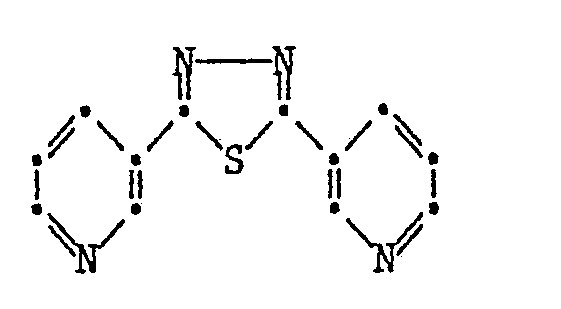
- In üblicher und an sich bekannter Weise (Base + Säure = Salz + Wasser) wird von der erhaltenen Verbindung Nr. 1 auch das Oxalat (HOOC-COOH) vom Smp. 222-225°C sowie das Hydrochlorid (2 HCl) vom Smp. 256-260°C hergestellt.
- Wie vorstehend angegeben werden auch die folgenden Verbindungen der Formel I hergestellt:

-

- Der Wirkstoff oder die Wirkstoffkombination wird mit den Zusatzstoffen vermischt und in einer geeigneten Mühle gut vermahlen.
- Man erhält Spritzpulver, die sich mit Wasser zu Suspensionen jeder gewünschten Konzentration verdünnen lassen.
- Wirkstoff oder Wirkstoffkombination 10 %
Octylphenolpolyäthylenglykoläther (4-5 Mol AeO) 3 %
Ca-Dodecylbenzolsulfonat 3 %
Ricinusölpolyglykoläther (36 Mol AeO) 4 %
Cyclohexanon 30 %
Xylolgemisch 50 % - Aus diesem Konzentrat können durch Verdünnen mit Wasser Emulsionen jeder gewünschten Konzentration hergestellt werden.

- Man erhält anwendungsfertige Stäubemittel, indem der Wirkstoff mit dem Träger vermischt und auf einer geeigneten Mühle vermahlen wird.
- Wirkstoff oder Wirkstoffkombination 10 %
Na-Ligninsulfonat 2 %
Carboxymethylcellulose 1 %
Kaolin 87 % - Der Wirkstoff wird mit den Zusatzstoffen vermischt, vermahlen und mit Wasser angefeuchtet. Dieses Gemisch wird extrudiert, granuliert und anschliessend im Luftstrom getrocknet.
- Wirkstoff oder Wirkstoffkombination 3 %
Polyäthylenglykol (MG 200) 3 %
Kaolin 94 % - Der fein gemahlene Wirkstoff oder die Wirkstoffkombination wird in einem Mischer auf das mit Polyäthylenglykol angefeuchtete Kaolin gleichmässig aufgetragen. Auf diese Weise erhält man staubfreie Umhüllungs-Granulate.
- Wirkstoff oder Wirkstoffkombination 40 %
Aethylenglykol 10 %
Nonylphenolpolyäthylenglykoläther (15 Mol AeO) 6 %
Na-Ligninsulfonat 10 %
Carboxymethylcellulose 1 %
37%ige wässrige Formaldehyd-Lösung 0,2 %
Silikonöl in Form einer 75%igen wässrigen Emulsion 0,8 %
Wasser 32 % - Der fein gemahlene Wirkstoff oder die Wirkstoffkombination wird mit den Zusatzstoffen innig vermischt. Man erhält so ein Suspensions-Konzentrat, aus welchem durch Verdünnen mit Wasser Suspensionen jeder gewünschten Konzentration hergestellt werden können.
- Je 50 g frisch zubereitetes CSMA-Nährsubstrat für Maden werden in Becher eingewogen. Von einer 1 Gew.-%igen acetonischen Lösung des betreffenden Wirkstoffes wird eine bestimmte Menge auf das in den Bechern befindliche Nährsubstrat pipettiert, so dass sich eine Wirkstoffkonzentration von 400 ppm ergibt. Nach dem Durchmischen des Substrates lässt man das Aceton mindestens 20 Stunden lang verdampfen.
- Dann werden pro Wirkstoff je 25 eintägige Maden von Musca domestica in die das so behandelte Nährsubstrat enthaltenden Becher gegeben. Nachdem sich die Maden verpuppt haben, werden die gebildeten Puppen durch Ausschwemmen mit Wasser von dem Substrat abgetrennt und in mit Siebdeckeln verschlossenen Gefässen deponiert.
- Die pro Ansatz ausgeschwemmten Puppen werden gezählt (toxischer Einfluss des Wirkstoffes auf die Madenentwicklung). Dann wird nach 10 Tagen die Anzahl der aus den Puppen geschlüpften Fliegen bestimmt.
- Verbindungen der Formel I zeigen gute Wirkung im obigen Test.
- Auf die Oberfläche von 150 ml Wasser, das sich in einem Behälter befindet, wird so viel einer 0,1%igen acetonischen Lösung des Wirkstoffes pipettiert, dass eine Konzentration von 400 ppm erhalten wird. Nach Verdunsten des Acetons wird der Behälter mit 30 bis 40 2-tägigen Aedes-Larven beschickt. Nach 2 und 7 Tagen wird die Mortalität geprüft.
- Verbindungen der Formel I zeigen gute Wirkung im obigen Test.
- In Töpfen (20 ml Inhalt) angezogene 4-5 Tage alte Erbsenkeimlinge werden vor Versuchsbeginn mit je ca. 200 Individuen von Aphis craccivora besiedelt. Die so behandelten Pflanzen werden 24 Stunden später mit einer wässrigen Zubereitung enthaltend 400 ppm der zu prüfenden Verbindung bis zur Tropfnässe besprüht. Man verwendet pro Test-Verbindung zwei Pflanzen. Bonitur auf Mortalität der Test-Insekten erfolgt nach weiteren 3 und 5 Tagen. Der Versuch wird bei 21-22°C und einer relativen Luftfeuchtigkeit von etwa 60 % durchgeführt.
- Verbindungen der Formel I zeigen gute Wirkung in diesem Test.
- Es werden 4-5 Tage alte Erbsenkeimlinge (etwa 2 cm hoch) in Töpfen (12 cm Durchmesser), welche 600 ccm Erde enthalten, mit Aphis craccivora infestiert (etwa 200 Blattläuse pro Topf). In jedem Topf befinden sich 4 Keimlinge, auf denen sich die Blattlaus-Populationen entwickeln. Nach 24 Stunden giesst man 50 ml einer wässrigen Emulsions-Zubereitung der zu prüfenden Verbindungen (erhalten aus einem 25%igen Spritzpulver) in einer Konzentration von 400 ppm direkt auf die in den Töpfen befindliche Erde.
- Die Auswertung der erzielten Abtötung der Test-Insekten erfolgt 2 und 3 Tage nach Wirkstoffapplikation. Pro Testsubstanz werden vier Pflanzen, jeweils in einem separaten Topf, verwendet. Der Versuch wird bei 25°C und ca. 70 % relativer Luftfeuchtigkeit durchgeführt.
- Die Verbindungen der Formel I zeigen gute Wirkung in obigem Test.
- Etwa 4 bis 5 Tage alte, in Wasser angezogene Erbsenkeimlinge (Vicia faba) werden vor Versuchsbeginn jeweils mit ca. 200 Individuen der Spezies Myzus persicae besiedelt. Die so behandelten Pflanzen werden 24 Stunden später mit einer wässrigen Suspension enthaltend 12,5 ppm der zu prüfenden Verbindung bis zur Tropfnässe direkt besprüht. Man verwendet pro Testsubstanz zwei Pflanzen. Eine Auswertung der erzielten Abtötungsrate erfolgt 24, 48 und 72 Stunden nach Wirkstoff-Applikation. Der Versuch wird bei 21-22°C und etwa 60 % relativer Luftfeuchtigkeit durchgeführt.
- Verbindung Nr. 1 gemäss Beispiel 1 ergibt eine 80-100%ige Mortalität in diesem Test.
- Bewurzelte Paprikapflanzen in 4- bis 5-Blatt-Stadium werden in Töpfe, welche 60 ccm Erde enthalten, verpflanzt. Die Pflanzen werden dann jeweils mit 200 Individuen von Myzus persicae besiedelt. Anschliessend werden 20 ml einer wässrigen Formulierung der zu prüfenden Verbindung (erhalten aus einem 25%igen emulgierbaren Spritzpulver) jeweils in einer Konzentration von 400 ppm direkt auf die in den Töpfen befindliche Erde aufgegossen.
- Die Auswertung der erzielten %-Abtötung erfolgt 3 und 7 Tage nach Wirkstoff-Applikation. Pro Testsubstanz werden zwei Pflanzen, je eine jeweils in separaten Töpfen, verwendet. Der Versuch wird bei ca. 22°C und 60 % relativer Luftfeuchtigkeit durchgeführt.
- Verbindungen der Formel I zeigen gute Wirkung in obigem Test.
- Erbsenkeimlinge (ca. 2 cm hoch), die 24 Stunden vor Beginn des Versuches mit ca. 200 Blattläusen infestiert worden waren, werden in 20 ml einer wässrigen Emulsions-Zubereitung gestellt, die 100 ppm des zu prüfenden Wirkstoffes enthält. Die wässrige Zubereitung wird aus einem Emulsionskonzentrat oder einer benetzbaren Pulverformulierung des betreffenden Wirkstoffes hergestellt und befindet sich in einem Gefäss (Inhalt: 150 ml), dass mit einem Löcher aufweisenden Plastikdeckel abgeschlossen ist. Die Wurzel der infestierten Erbsenpflanze wird durch das zentrale Loch in dem Plastikdeckel in die wässrige Wirkstoff-Zubereitung geschoben. Dieses Loch wird dann mit Watte abgedichtet, um die Pflanze zu fixieren.
- Der Versuch wird bei 21°C und 60 % relativer Luftfeuchtigkeit durchgeführt. Nach zwei, drei und sechs Tagen wird auf die Anzahl der nicht mehr saugfähigen Testtiere, im Vergleich zu unbehandelten Kontrollen, bonitiert. Damit wird festgestellt, ob der über die Wurzel aufgenommene Wirkstoff, die Blattläuse an den oberen Pflanzenteilen abtötet.
- Verbindung Nr. 1 gemäss Beispiel 1 zeigt im obigen Versuch eine 80 - 100%ige systemische Wirkung gegen Insekten der Spezies Myzus persicae.
- In etwa 8 cm hohe Kunststoffbecher (Durchmesser etwa 6 cm) wird ein passender kleiner Zweig von Vicia faba (Pferdebohne) gelegt, der mit Blattläusen der Spezies Aphis craccivora stark infiziert ist. Der Becher wird mit einem Kunststoffdeckel, der in der Mitte eine ausgestanzte Oeffnung von 2 cm Durchmesser aufweist, bedeckt. Auf die in dem Deckel befindliche Oeffnung wird ein Blatt einer Vicia faba-Pflanze gelegt, ohne dieses Blatt von der eingetopften Pflanze abzutrennen. Das Blatt wird dann mit einem zweiten Lochdeckel auf dem Becher über der Oeffnung des ersten Deckels fixiert. Von der Unterseite her, d.h. durch die Oeffnung des ersten Deckels hindurch, infizieren nun die in dem Becher befindlichen Blattläuse das obenliegende Blatt der Futterpflanze. Auf der Oberseite wird auf das Blatt eine wässrige Zubereitung des zu prüfenden Wirkstoffes in einer Konzentration von 100 ppm mittels eines Pinsels gleichmässig aufgetragen. Es wird geprüft, ob die einseitig auf die Oberseite des Blattes der Futterpflanze aufgetragene Testsubstanz in genügender Menge durch das Blatt hindurch auf dessen Unterseite diffundiert, um dort saugende Blattläuse abzutöten.
- Der Versuch wird bei etwa 21°C und 60 % relativer Luftfeuchtigkeit durchgeführt. Die Auswertung auf %-Mortalität erfolgt 24 und 48 Stunden nach Wirkstoffapplikation.
- Verbindung Nr. 1 gemäss Beispiel 1 zeigt 80 - 100%ige Wirkung in obigem Test.
Claims (13)
1. Verwendung einer Verbindung der Formel I

sowie der Salze einer Verbindung der Formel I zur Bekämpfung von Schädlingen.
2. Verwendung gemäss Anspruch 1 einer Verbindung der Formel Ia

3. Verwendung gemäss Anpruch 2 der Verbindung der Formel

4. Verwendung gemäss Anspruch 2 der Verbindung der Formel

5. Verwendung gemäss Anspruch 2 der Verbindung der Formel

6. Verwendung gemäss einem der Ansprüche 1 bis 5 zur Bekämpfung von Insekten und Vertretern der Ordnung Akarina an Tieren und Pflanzen.
7. Verwendung gemäss Anspruch 6 zur Bekämpfung von pflanzenschädigenden Insekten.
8. Verwendung gemäss Anspruch 7 zur Bekämpfung von pflanzenschädigenden saugenden Insekten.
9. Verfahren zur Bekämpfung von Insekten und Vertretern der Ordnung Akarina, dadurch gekennzeichnet, dass man die Schädlinge bzw. deren verschiedene Entwicklungsstadien und/oder ihren Aufenthaltsort mit einer pestizid wirksamen Menge einer Verbindung der Formel I gemäss einem der Ansprüche 1 bis 5, einem Salz einer solchen Verbindung oder einem Mittel enthaltend neben Zusatz- und Trägerstoffen eine pestizid wirksame Menge dieser Verbindung oder eines Salzes derselben in Kontakt bringt oder behandelt.
10. Schädlingsbekämpfungsmittel, welches als aktive Komponente eine Verbindung der Formel I gemäss einem der Ansprüche 1 bis 5 oder ein Salz einer solchen Verbindung zusammen mit geeigneten Trägern und/oder anderen Zuschlagstoffen enthält.
11. Pflanzenphysiologisch unbedenkliches Salz einer Verbindung der Formel I gemäss Anspruch 1.
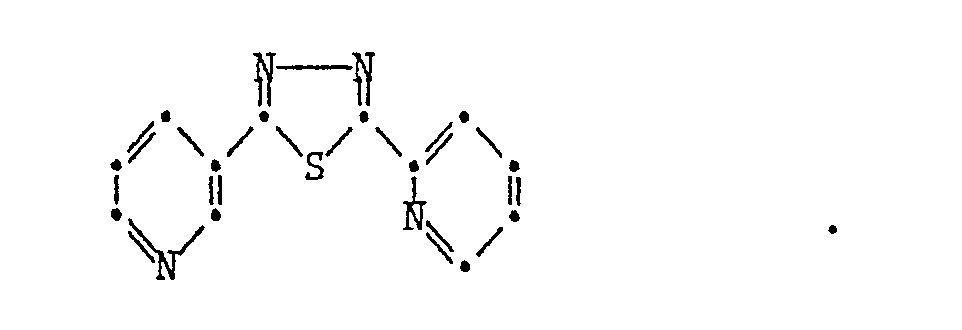
12. Verbindung der Formel
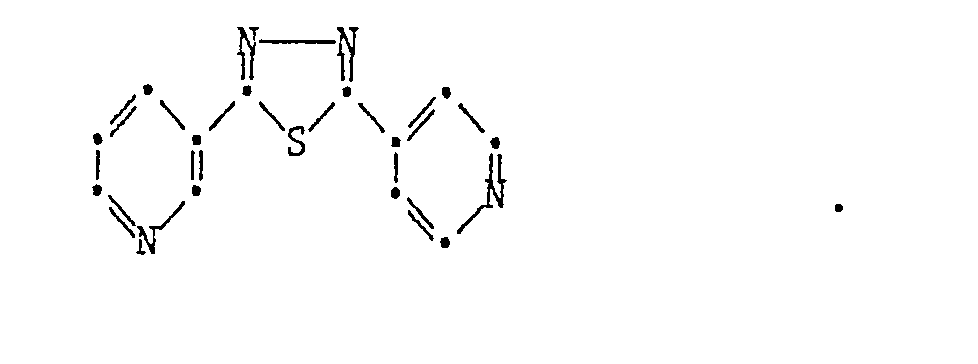
13. Verbindung der Formel
Applications Claiming Priority (4)
| Application Number | Priority Date | Filing Date | Title |
|---|---|---|---|
| CH1360/87 | 1987-04-09 | ||
| CH136087 | 1987-04-09 | ||
| CH54388 | 1988-02-15 | ||
| CH543/88 | 1988-02-15 |
Publications (1)
| Publication Number | Publication Date |
|---|---|
| EP0288432A1 true EP0288432A1 (de) | 1988-10-26 |
Family
ID=25684911
Family Applications (1)
| Application Number | Title | Priority Date | Filing Date |
|---|---|---|---|
| EP88810214A Withdrawn EP0288432A1 (de) | 1987-04-09 | 1988-03-30 | Schädlingsbekämpfungsmittel |
Country Status (5)
| Country | Link |
|---|---|
| US (1) | US4853396A (de) |
| EP (1) | EP0288432A1 (de) |
| JP (1) | JPH02138279A (de) |
| HU (1) | HUT46838A (de) |
| IL (1) | IL85991A0 (de) |
Cited By (3)
| Publication number | Priority date | Publication date | Assignee | Title |
|---|---|---|---|---|
| WO2008049864A1 (en) * | 2006-10-25 | 2008-05-02 | Neurosearch A/S | Oxadiazole and thiadiazole compounds and their use as nicotinic acetylcholine receptor modulators |
| WO2010006713A3 (de) * | 2008-07-17 | 2011-04-14 | Bayer Cropscience Ag | Heterocyclische verbindungen als schädlingsbekämpfungsmittel |
| EP2382865A1 (de) * | 2010-04-28 | 2011-11-02 | Bayer CropScience AG | Synergistische Wirkstoffkombinationen |
Families Citing this family (4)
| Publication number | Priority date | Publication date | Assignee | Title |
|---|---|---|---|---|
| US5446163A (en) * | 1992-10-02 | 1995-08-29 | Reilly Industries, Inc. | Preparation of hydrazones, dihydrothiadiazoles and triazinones |
| US7812163B2 (en) | 2003-07-16 | 2010-10-12 | Hatchtech Pty Ltd. | Methods and compositions for controlling ectoparasites |
| US20090143419A1 (en) * | 2005-01-20 | 2009-06-04 | Hatchtech Pty Ltd | Methods and compositions for controlling ectoparasites |
| ES2967618T3 (es) | 2013-12-17 | 2024-05-03 | Hatchtech Pty Ltd | Composición pediculicida |
Citations (3)
| Publication number | Priority date | Publication date | Assignee | Title |
|---|---|---|---|---|
| CH411906A (de) * | 1960-03-01 | 1966-04-30 | Ciba Geigy | Verfahren zur Herstellung neuer 1,3,4-Thiadiazole |
| DD157664A1 (de) * | 1981-03-31 | 1982-12-01 | Gottfried Schuster | Mittel zur chemotherapie von viruskrankheiten der kulturpflanzen |
| EP0116515A1 (de) * | 1983-01-19 | 1984-08-22 | Ciba-Geigy Ag | Schädlingsbekämpfungsmittel |
Family Cites Families (2)
| Publication number | Priority date | Publication date | Assignee | Title |
|---|---|---|---|---|
| NL261797A (de) * | 1960-03-01 | |||
| US3458305A (en) * | 1966-08-24 | 1969-07-29 | Gulf Research Development Co | Bispyridinium compounds as herbicides |
-
1988
- 1988-03-30 EP EP88810214A patent/EP0288432A1/de not_active Withdrawn
- 1988-04-04 US US07/177,228 patent/US4853396A/en not_active Expired - Lifetime
- 1988-04-06 IL IL85991A patent/IL85991A0/xx unknown
- 1988-04-07 JP JP63086219A patent/JPH02138279A/ja active Pending
- 1988-04-08 HU HU881787A patent/HUT46838A/hu unknown
Patent Citations (3)
| Publication number | Priority date | Publication date | Assignee | Title |
|---|---|---|---|---|
| CH411906A (de) * | 1960-03-01 | 1966-04-30 | Ciba Geigy | Verfahren zur Herstellung neuer 1,3,4-Thiadiazole |
| DD157664A1 (de) * | 1981-03-31 | 1982-12-01 | Gottfried Schuster | Mittel zur chemotherapie von viruskrankheiten der kulturpflanzen |
| EP0116515A1 (de) * | 1983-01-19 | 1984-08-22 | Ciba-Geigy Ag | Schädlingsbekämpfungsmittel |
Non-Patent Citations (4)
| Title |
|---|
| CHEMICAL ABSTRACTS, Band 101, Nr. 13, 24. September 1984, Columbus, Ohio, USA S. KAMIYA et al. "Synthesis of Antitumor Heterocyclic Compounds" seite 643, spalte 1, Zusammenfassung-Nr. 110 770n & Eisei Shikensho Hokoku 1983, (101, 71-5 * |
| CHEMICAL ABSTRACTS, Band 48, Nr. 19, 10. Oktober 1954, Columbus, Ohio, USA F.H. McMILLAN et al. "Antitubercular Substancrs. II. Substitution Products of Isonicotinic Hydrazide" Zusammenfassung-Nr. 11 413h & J. Am. Pharm. Assoc. 42, 457-64 (1953) * |
| CHEMICAL ABSTRACTS, Band 49, Nr. 14, 25. Juli 1985, Columbus, Ohio USA H.B. KONIG et al. "Sulfur-Containing Derivatives of Pyridinecarboxylic Acids and Compounds Derived there-from" Zusammenfassung-Nr. 9 631d & Chem. Ber. 87, 825-34 (1954) * |
| CHEMICAL ABSTRACTS, Band 54, Nr. 11, 10. Juni 1960, Columbus, Ohio, USA A. WOLF et al. "The Action of some Central Sedative Compounds" Zusammenfassung-Nr. 11 289f & Arzneimittel-Forsch. 10, 50-2 (1960) * |
Cited By (11)
| Publication number | Priority date | Publication date | Assignee | Title |
|---|---|---|---|---|
| WO2008049864A1 (en) * | 2006-10-25 | 2008-05-02 | Neurosearch A/S | Oxadiazole and thiadiazole compounds and their use as nicotinic acetylcholine receptor modulators |
| WO2010006713A3 (de) * | 2008-07-17 | 2011-04-14 | Bayer Cropscience Ag | Heterocyclische verbindungen als schädlingsbekämpfungsmittel |
| EP2583556A1 (de) | 2008-07-17 | 2013-04-24 | Bayer CropScience AG | Heterocyclische Verbindungen als Schädlingsbekämpfungsmittel |
| EP2583557A1 (de) | 2008-07-17 | 2013-04-24 | Bayer CropScience AG | Heterocyclische Verbindungen als Schädlingsbekämpfungsmittel |
| EP2586312A1 (de) | 2008-07-17 | 2013-05-01 | Bayer CropScience AG | Heterocyclische Verbindungen als Schädlingsbekämpfungsmittel |
| EP2586311A1 (de) | 2008-07-17 | 2013-05-01 | Bayer CropScience AG | Heterocyclische Verbindungen als Schädlingsbekämpfungsmittel |
| EP2591674A1 (de) | 2008-07-17 | 2013-05-15 | Bayer CropScience AG | Heterocyclische Verbindungen als Schädlingsbekämpfungsmittel |
| US8809547B2 (en) | 2008-07-17 | 2014-08-19 | Bayer Cropscience Ag | Heterocyclic compounds as pesticides |
| US9451775B2 (en) | 2008-07-17 | 2016-09-27 | Bayer Intellectual Property Gmbh | Heterocyclic compounds as pesticides |
| EP2382865A1 (de) * | 2010-04-28 | 2011-11-02 | Bayer CropScience AG | Synergistische Wirkstoffkombinationen |
| WO2011134964A1 (de) * | 2010-04-28 | 2011-11-03 | Bayer Cropscience Ag | Synergistische wirkstoffkombinationen |
Also Published As
| Publication number | Publication date |
|---|---|
| US4853396A (en) | 1989-08-01 |
| HUT46838A (en) | 1988-12-28 |
| JPH02138279A (ja) | 1990-05-28 |
| IL85991A0 (en) | 1988-09-30 |
Similar Documents
| Publication | Publication Date | Title |
|---|---|---|
| EP0306696B1 (de) | Substituierte Guanidine | |
| EP0303570A2 (de) | Substituierte Isothioharnstoffe | |
| EP0302833A2 (de) | 1-Nitro-2,2-diaminoäthylenderivate | |
| CH673557A5 (de) | ||
| EP0110829B1 (de) | Schädlingsbekämpfungsmittel | |
| EP0116515B1 (de) | Schädlingsbekämpfungsmittel | |
| EP0191734B1 (de) | Schädlingsbekämpfungsmittel | |
| EP0207004A2 (de) | Substituierte 4,5-Dihydro-1,3,4-thiadiazole | |
| EP0097126A2 (de) | 2-(3-Pyridyl)-1,3,4-oxadiazole, Verfahren zu ihrer Herstellung und ihre Verwendung in der Schädlingsbekämpfung | |
| EP0058639B1 (de) | 2-(4-(6-Halogen-chinoxalinyl-2-oxy)-phenoxy)-propionsäureester, Verfahren zu ihrer Herstellung sowie ihre Verwendung als Herbizide und Pflanzenwuchsregulatoren | |
| EP0231152A2 (de) | Phenylbenzoylharnstoffe | |
| EP0138756A1 (de) | Neue Oxadiazine | |
| EP0145662B1 (de) | Isothioharnstoffe | |
| EP0135105B1 (de) | Mittel zur Bekämpfung von Insekten und Vertretern der Ordnung Akarina, welche als aktive Komponente 2-(1-Indolinyl-methyl)-imidazoline oder deren Salzen enthalten | |
| EP0395581A1 (de) | N-Sulfenyl- und N-sulfinyl-N,N'-diacylhydrazide | |
| EP0391849B1 (de) | Pyridyl-methylenamino-1,2,4-triazinone | |
| EP0098800A1 (de) | Carbaminsäureester | |
| EP0274988A2 (de) | Neue Dihydrothiadiazole | |
| EP0390740A1 (de) | Schädlingsbekämpfung | |
| DE3320534A1 (de) | Carbaminsaeureester | |
| EP0036839A2 (de) | 4-N,N-Dimethylcarbamoyloxy-5-methyl-pyrimidine, Verfahren zu ihrer Herstellung und ihre Verwendung in der Schädlingsbekämpfung, sowie die als Zwischenprodukte verwendeten 4-Hydroxy-5-methyl-pyrimidine | |
| EP0230863A2 (de) | Oxadiazinone | |
| DE3641184A1 (de) | Schaedlingsbekaempfungsmittel | |
| EP0138757A1 (de) | Oxalsäureanilide | |
| EP0390741A1 (de) | Schädlingsbekämpfung |
Legal Events
| Date | Code | Title | Description |
|---|---|---|---|
| PUAI | Public reference made under article 153(3) epc to a published international application that has entered the european phase |
Free format text: ORIGINAL CODE: 0009012 |
|
| 17P | Request for examination filed |
Effective date: 19880402 |
|
| AK | Designated contracting states |
Kind code of ref document: A1 Designated state(s): AT BE CH DE ES FR GB IT LI NL |
|
| 17Q | First examination report despatched |
Effective date: 19901015 |
|
| STAA | Information on the status of an ep patent application or granted ep patent |
Free format text: STATUS: THE APPLICATION IS DEEMED TO BE WITHDRAWN |
|
| 18D | Application deemed to be withdrawn |
Effective date: 19910226 |