EP0300258B1 - Eléments photographiques comprenant des émulsions sensibles à la lumière au bromoiodure d'argent - Google Patents
Eléments photographiques comprenant des émulsions sensibles à la lumière au bromoiodure d'argent Download PDFInfo
- Publication number
- EP0300258B1 EP0300258B1 EP88110648A EP88110648A EP0300258B1 EP 0300258 B1 EP0300258 B1 EP 0300258B1 EP 88110648 A EP88110648 A EP 88110648A EP 88110648 A EP88110648 A EP 88110648A EP 0300258 B1 EP0300258 B1 EP 0300258B1
- Authority
- EP
- European Patent Office
- Prior art keywords
- silver
- iodide
- grains
- bromo
- light
- Prior art date
- Legal status (The legal status is an assumption and is not a legal conclusion. Google has not performed a legal analysis and makes no representation as to the accuracy of the status listed.)
- Expired - Lifetime
Links
- 239000000839 emulsion Substances 0.000 title claims description 179
- ZUNKMNLKJXRCDM-UHFFFAOYSA-N silver bromoiodide Chemical compound [Ag].IBr ZUNKMNLKJXRCDM-UHFFFAOYSA-N 0.000 title claims description 89
- 229910052709 silver Inorganic materials 0.000 claims description 99
- 239000004332 silver Substances 0.000 claims description 99
- -1 silver halide Chemical class 0.000 claims description 74
- XLYOFNOQVPJJNP-UHFFFAOYSA-N water Substances O XLYOFNOQVPJJNP-UHFFFAOYSA-N 0.000 claims description 42
- 238000000034 method Methods 0.000 claims description 36
- 108010010803 Gelatin Proteins 0.000 claims description 32
- 229920000159 gelatin Polymers 0.000 claims description 32
- 235000019322 gelatine Nutrition 0.000 claims description 32
- 235000011852 gelatine desserts Nutrition 0.000 claims description 32
- BQCADISMDOOEFD-UHFFFAOYSA-N Silver Chemical compound [Ag] BQCADISMDOOEFD-UHFFFAOYSA-N 0.000 claims description 31
- 239000008273 gelatin Substances 0.000 claims description 31
- XMBWDFGMSWQBCA-UHFFFAOYSA-N hydrogen iodide Chemical compound I XMBWDFGMSWQBCA-UHFFFAOYSA-N 0.000 claims description 29
- 238000001556 precipitation Methods 0.000 claims description 27
- CPELXLSAUQHCOX-UHFFFAOYSA-M Bromide Chemical compound [Br-] CPELXLSAUQHCOX-UHFFFAOYSA-M 0.000 claims description 26
- 238000006243 chemical reaction Methods 0.000 claims description 22
- 230000008569 process Effects 0.000 claims description 15
- 230000015572 biosynthetic process Effects 0.000 claims description 14
- GGCZERPQGJTIQP-UHFFFAOYSA-N sodium;9,10-dioxoanthracene-2-sulfonic acid Chemical compound [Na+].C1=CC=C2C(=O)C3=CC(S(=O)(=O)O)=CC=C3C(=O)C2=C1 GGCZERPQGJTIQP-UHFFFAOYSA-N 0.000 claims description 13
- 150000003842 bromide salts Chemical class 0.000 claims description 10
- 150000004694 iodide salts Chemical class 0.000 claims description 9
- ADZWSOLPGZMUMY-UHFFFAOYSA-M silver bromide Chemical compound [Ag]Br ADZWSOLPGZMUMY-UHFFFAOYSA-M 0.000 claims description 9
- CBEQRNSPHCCXSH-UHFFFAOYSA-N iodine monobromide Chemical compound IBr CBEQRNSPHCCXSH-UHFFFAOYSA-N 0.000 claims description 8
- 150000003839 salts Chemical class 0.000 claims description 6
- 150000003841 chloride salts Chemical class 0.000 claims description 5
- 230000003247 decreasing effect Effects 0.000 claims description 5
- 238000004519 manufacturing process Methods 0.000 claims description 5
- 230000009467 reduction Effects 0.000 claims description 5
- VEXZGXHMUGYJMC-UHFFFAOYSA-M Chloride anion Chemical compound [Cl-] VEXZGXHMUGYJMC-UHFFFAOYSA-M 0.000 claims description 3
- 229910052798 chalcogen Inorganic materials 0.000 claims description 3
- 150000001787 chalcogens Chemical class 0.000 claims description 3
- DZVCFNFOPIZQKX-LTHRDKTGSA-M merocyanine Chemical compound [Na+].O=C1N(CCCC)C(=O)N(CCCC)C(=O)C1=C\C=C\C=C/1N(CCCS([O-])(=O)=O)C2=CC=CC=C2O\1 DZVCFNFOPIZQKX-LTHRDKTGSA-M 0.000 claims description 3
- 229910000510 noble metal Inorganic materials 0.000 claims description 3
- 150000003378 silver Chemical class 0.000 claims description 3
- ANRHNWWPFJCPAZ-UHFFFAOYSA-M thionine Chemical compound [Cl-].C1=CC(N)=CC2=[S+]C3=CC(N)=CC=C3N=C21 ANRHNWWPFJCPAZ-UHFFFAOYSA-M 0.000 claims description 3
- 235000013339 cereals Nutrition 0.000 description 98
- 239000000243 solution Substances 0.000 description 47
- 239000010410 layer Substances 0.000 description 46
- 239000000975 dye Substances 0.000 description 40
- 239000013078 crystal Substances 0.000 description 34
- SQGYOTSLMSWVJD-UHFFFAOYSA-N silver(1+) nitrate Chemical compound [Ag+].[O-]N(=O)=O SQGYOTSLMSWVJD-UHFFFAOYSA-N 0.000 description 34
- 238000011160 research Methods 0.000 description 22
- 238000007792 addition Methods 0.000 description 21
- 230000003595 spectral effect Effects 0.000 description 21
- 230000001235 sensitizing effect Effects 0.000 description 19
- IOLCXVTUBQKXJR-UHFFFAOYSA-M potassium bromide Chemical compound [K+].[Br-] IOLCXVTUBQKXJR-UHFFFAOYSA-M 0.000 description 17
- 229910001961 silver nitrate Inorganic materials 0.000 description 17
- 239000002585 base Substances 0.000 description 14
- 230000035945 sensitivity Effects 0.000 description 14
- 206010070834 Sensitisation Diseases 0.000 description 13
- 230000008313 sensitization Effects 0.000 description 12
- 239000000523 sample Substances 0.000 description 11
- NLKNQRATVPKPDG-UHFFFAOYSA-M potassium iodide Chemical compound [K+].[I-] NLKNQRATVPKPDG-UHFFFAOYSA-M 0.000 description 10
- 239000003795 chemical substances by application Substances 0.000 description 9
- 239000011248 coating agent Substances 0.000 description 9
- 238000000576 coating method Methods 0.000 description 9
- 239000003381 stabilizer Substances 0.000 description 9
- JKFYKCYQEWQPTM-UHFFFAOYSA-N 2-azaniumyl-2-(4-fluorophenyl)acetate Chemical compound OC(=O)C(N)C1=CC=C(F)C=C1 JKFYKCYQEWQPTM-UHFFFAOYSA-N 0.000 description 8
- 229910021612 Silver iodide Inorganic materials 0.000 description 8
- PCHJSUWPFVWCPO-UHFFFAOYSA-N gold Chemical compound [Au] PCHJSUWPFVWCPO-UHFFFAOYSA-N 0.000 description 8
- 229910052737 gold Inorganic materials 0.000 description 8
- 239000010931 gold Substances 0.000 description 8
- 239000000463 material Substances 0.000 description 8
- 229940045105 silver iodide Drugs 0.000 description 8
- 238000000149 argon plasma sintering Methods 0.000 description 7
- 239000000126 substance Substances 0.000 description 7
- 238000009792 diffusion process Methods 0.000 description 6
- 238000002360 preparation method Methods 0.000 description 6
- 230000005855 radiation Effects 0.000 description 6
- 238000003756 stirring Methods 0.000 description 6
- 239000004848 polyfunctional curative Substances 0.000 description 5
- 230000005070 ripening Effects 0.000 description 5
- 238000005406 washing Methods 0.000 description 5
- WCUXLLCKKVVCTQ-UHFFFAOYSA-M Potassium chloride Chemical compound [Cl-].[K+] WCUXLLCKKVVCTQ-UHFFFAOYSA-M 0.000 description 4
- BUGBHKTXTAQXES-UHFFFAOYSA-N Selenium Chemical compound [Se] BUGBHKTXTAQXES-UHFFFAOYSA-N 0.000 description 4
- NINIDFKCEFEMDL-UHFFFAOYSA-N Sulfur Chemical compound [S] NINIDFKCEFEMDL-UHFFFAOYSA-N 0.000 description 4
- 150000001875 compounds Chemical class 0.000 description 4
- 230000000694 effects Effects 0.000 description 4
- 229910052711 selenium Inorganic materials 0.000 description 4
- 239000011669 selenium Substances 0.000 description 4
- 229910052717 sulfur Inorganic materials 0.000 description 4
- 239000011593 sulfur Substances 0.000 description 4
- 229920002284 Cellulose triacetate Polymers 0.000 description 3
- ZLMJMSJWJFRBEC-UHFFFAOYSA-N Potassium Chemical compound [K] ZLMJMSJWJFRBEC-UHFFFAOYSA-N 0.000 description 3
- NNLVGZFZQQXQNW-ADJNRHBOSA-N [(2r,3r,4s,5r,6s)-4,5-diacetyloxy-3-[(2s,3r,4s,5r,6r)-3,4,5-triacetyloxy-6-(acetyloxymethyl)oxan-2-yl]oxy-6-[(2r,3r,4s,5r,6s)-4,5,6-triacetyloxy-2-(acetyloxymethyl)oxan-3-yl]oxyoxan-2-yl]methyl acetate Chemical compound O([C@@H]1O[C@@H]([C@H]([C@H](OC(C)=O)[C@H]1OC(C)=O)O[C@H]1[C@@H]([C@@H](OC(C)=O)[C@H](OC(C)=O)[C@@H](COC(C)=O)O1)OC(C)=O)COC(=O)C)[C@@H]1[C@@H](COC(C)=O)O[C@@H](OC(C)=O)[C@H](OC(C)=O)[C@H]1OC(C)=O NNLVGZFZQQXQNW-ADJNRHBOSA-N 0.000 description 3
- 239000002253 acid Substances 0.000 description 3
- SWLVFNYSXGMGBS-UHFFFAOYSA-N ammonium bromide Chemical compound [NH4+].[Br-] SWLVFNYSXGMGBS-UHFFFAOYSA-N 0.000 description 3
- 239000000084 colloidal system Substances 0.000 description 3
- 238000011161 development Methods 0.000 description 3
- 239000006185 dispersion Substances 0.000 description 3
- 238000011156 evaluation Methods 0.000 description 3
- 125000000623 heterocyclic group Chemical group 0.000 description 3
- 230000006911 nucleation Effects 0.000 description 3
- 238000010899 nucleation Methods 0.000 description 3
- 230000003287 optical effect Effects 0.000 description 3
- 229910052700 potassium Inorganic materials 0.000 description 3
- 239000011591 potassium Substances 0.000 description 3
- 238000001228 spectrum Methods 0.000 description 3
- 239000004094 surface-active agent Substances 0.000 description 3
- XZXYQEHISUMZAT-UHFFFAOYSA-N 2-[(2-hydroxy-5-methylphenyl)methyl]-4-methylphenol Chemical compound CC1=CC=C(O)C(CC=2C(=CC=C(C)C=2)O)=C1 XZXYQEHISUMZAT-UHFFFAOYSA-N 0.000 description 2
- RKJUIXBNRJVNHR-UHFFFAOYSA-N 3H-indole Chemical class C1=CC=C2CC=NC2=C1 RKJUIXBNRJVNHR-UHFFFAOYSA-N 0.000 description 2
- QGZKDVFQNNGYKY-UHFFFAOYSA-N Ammonia Chemical compound N QGZKDVFQNNGYKY-UHFFFAOYSA-N 0.000 description 2
- QGZKDVFQNNGYKY-UHFFFAOYSA-O Ammonium Chemical compound [NH4+] QGZKDVFQNNGYKY-UHFFFAOYSA-O 0.000 description 2
- OYPRJOBELJOOCE-UHFFFAOYSA-N Calcium Chemical compound [Ca] OYPRJOBELJOOCE-UHFFFAOYSA-N 0.000 description 2
- DGAQECJNVWCQMB-PUAWFVPOSA-M Ilexoside XXIX Chemical compound C[C@@H]1CC[C@@]2(CC[C@@]3(C(=CC[C@H]4[C@]3(CC[C@@H]5[C@@]4(CC[C@@H](C5(C)C)OS(=O)(=O)[O-])C)C)[C@@H]2[C@]1(C)O)C)C(=O)O[C@H]6[C@@H]([C@H]([C@@H]([C@H](O6)CO)O)O)O.[Na+] DGAQECJNVWCQMB-PUAWFVPOSA-M 0.000 description 2
- WHXSMMKQMYFTQS-UHFFFAOYSA-N Lithium Chemical compound [Li] WHXSMMKQMYFTQS-UHFFFAOYSA-N 0.000 description 2
- FYYHWMGAXLPEAU-UHFFFAOYSA-N Magnesium Chemical compound [Mg] FYYHWMGAXLPEAU-UHFFFAOYSA-N 0.000 description 2
- KDLHZDBZIXYQEI-UHFFFAOYSA-N Palladium Chemical compound [Pd] KDLHZDBZIXYQEI-UHFFFAOYSA-N 0.000 description 2
- JUJWROOIHBZHMG-UHFFFAOYSA-N Pyridine Chemical class C1=CC=NC=C1 JUJWROOIHBZHMG-UHFFFAOYSA-N 0.000 description 2
- SMWDFEZZVXVKRB-UHFFFAOYSA-N Quinoline Chemical class N1=CC=CC2=CC=CC=C21 SMWDFEZZVXVKRB-UHFFFAOYSA-N 0.000 description 2
- 229910021607 Silver chloride Inorganic materials 0.000 description 2
- 238000010521 absorption reaction Methods 0.000 description 2
- YRKCREAYFQTBPV-UHFFFAOYSA-N acetylacetone Chemical compound CC(=O)CC(C)=O YRKCREAYFQTBPV-UHFFFAOYSA-N 0.000 description 2
- 229910052783 alkali metal Inorganic materials 0.000 description 2
- 150000001340 alkali metals Chemical class 0.000 description 2
- 229910052784 alkaline earth metal Inorganic materials 0.000 description 2
- 229940107816 ammonium iodide Drugs 0.000 description 2
- IOJUPLGTWVMSFF-UHFFFAOYSA-N benzothiazole Chemical class C1=CC=C2SC=NC2=C1 IOJUPLGTWVMSFF-UHFFFAOYSA-N 0.000 description 2
- 238000004061 bleaching Methods 0.000 description 2
- 229910052791 calcium Inorganic materials 0.000 description 2
- 239000011575 calcium Substances 0.000 description 2
- 238000012512 characterization method Methods 0.000 description 2
- 230000000295 complement effect Effects 0.000 description 2
- 230000008878 coupling Effects 0.000 description 2
- 238000010168 coupling process Methods 0.000 description 2
- 238000005859 coupling reaction Methods 0.000 description 2
- 230000006378 damage Effects 0.000 description 2
- 238000009826 distribution Methods 0.000 description 2
- 239000011521 glass Substances 0.000 description 2
- 229910052739 hydrogen Inorganic materials 0.000 description 2
- 239000001257 hydrogen Substances 0.000 description 2
- 230000002209 hydrophobic effect Effects 0.000 description 2
- 239000003112 inhibitor Substances 0.000 description 2
- XMBWDFGMSWQBCA-UHFFFAOYSA-M iodide Chemical compound [I-] XMBWDFGMSWQBCA-UHFFFAOYSA-M 0.000 description 2
- AWJUIBRHMBBTKR-UHFFFAOYSA-N isoquinoline Chemical class C1=NC=CC2=CC=CC=C21 AWJUIBRHMBBTKR-UHFFFAOYSA-N 0.000 description 2
- 229910052744 lithium Inorganic materials 0.000 description 2
- 229910052749 magnesium Inorganic materials 0.000 description 2
- 239000011777 magnesium Substances 0.000 description 2
- 239000011159 matrix material Substances 0.000 description 2
- 125000001434 methanylylidene group Chemical group [H]C#[*] 0.000 description 2
- 238000002156 mixing Methods 0.000 description 2
- 239000000203 mixture Substances 0.000 description 2
- 239000003607 modifier Substances 0.000 description 2
- 230000000877 morphologic effect Effects 0.000 description 2
- BASFCYQUMIYNBI-UHFFFAOYSA-N platinum Chemical compound [Pt] BASFCYQUMIYNBI-UHFFFAOYSA-N 0.000 description 2
- 229920000642 polymer Polymers 0.000 description 2
- 239000001103 potassium chloride Substances 0.000 description 2
- 235000011164 potassium chloride Nutrition 0.000 description 2
- 239000011241 protective layer Substances 0.000 description 2
- 235000018102 proteins Nutrition 0.000 description 2
- 108090000623 proteins and genes Proteins 0.000 description 2
- 102000004169 proteins and genes Human genes 0.000 description 2
- 239000012266 salt solution Substances 0.000 description 2
- HKZLPVFGJNLROG-UHFFFAOYSA-M silver monochloride Chemical compound [Cl-].[Ag+] HKZLPVFGJNLROG-UHFFFAOYSA-M 0.000 description 2
- 239000002356 single layer Substances 0.000 description 2
- 229910052708 sodium Inorganic materials 0.000 description 2
- 239000011734 sodium Substances 0.000 description 2
- 239000002904 solvent Substances 0.000 description 2
- 229910052714 tellurium Inorganic materials 0.000 description 2
- PORWMNRCUJJQNO-UHFFFAOYSA-N tellurium atom Chemical compound [Te] PORWMNRCUJJQNO-UHFFFAOYSA-N 0.000 description 2
- 150000003567 thiocyanates Chemical class 0.000 description 2
- 229920002554 vinyl polymer Polymers 0.000 description 2
- TXUICONDJPYNPY-UHFFFAOYSA-N (1,10,13-trimethyl-3-oxo-4,5,6,7,8,9,11,12,14,15,16,17-dodecahydrocyclopenta[a]phenanthren-17-yl) heptanoate Chemical compound C1CC2CC(=O)C=C(C)C2(C)C2C1C1CCC(OC(=O)CCCCCC)C1(C)CC2 TXUICONDJPYNPY-UHFFFAOYSA-N 0.000 description 1
- AIGNCQCMONAWOL-UHFFFAOYSA-N 1,3-benzoselenazole Chemical class C1=CC=C2[se]C=NC2=C1 AIGNCQCMONAWOL-UHFFFAOYSA-N 0.000 description 1
- BCMCBBGGLRIHSE-UHFFFAOYSA-N 1,3-benzoxazole Chemical class C1=CC=C2OC=NC2=C1 BCMCBBGGLRIHSE-UHFFFAOYSA-N 0.000 description 1
- XJDDLMJULQGRLU-UHFFFAOYSA-N 1,3-dioxane-4,6-dione Chemical compound O=C1CC(=O)OCO1 XJDDLMJULQGRLU-UHFFFAOYSA-N 0.000 description 1
- UHKAJLSKXBADFT-UHFFFAOYSA-N 1,3-indandione Chemical compound C1=CC=C2C(=O)CC(=O)C2=C1 UHKAJLSKXBADFT-UHFFFAOYSA-N 0.000 description 1
- ODIRBFFBCSTPTO-UHFFFAOYSA-N 1,3-selenazole Chemical class C1=C[se]C=N1 ODIRBFFBCSTPTO-UHFFFAOYSA-N 0.000 description 1
- ZRHUHDUEXWHZMA-UHFFFAOYSA-N 1,4-dihydropyrazol-5-one Chemical compound O=C1CC=NN1 ZRHUHDUEXWHZMA-UHFFFAOYSA-N 0.000 description 1
- KJCVRFUGPWSIIH-UHFFFAOYSA-N 1-naphthol Chemical compound C1=CC=C2C(O)=CC=CC2=C1 KJCVRFUGPWSIIH-UHFFFAOYSA-N 0.000 description 1
- HYZJCKYKOHLVJF-UHFFFAOYSA-N 1H-benzimidazole Chemical class C1=CC=C2NC=NC2=C1 HYZJCKYKOHLVJF-UHFFFAOYSA-N 0.000 description 1
- PVKCAQKXTLCSBC-UHFFFAOYSA-N 1h-isoquinolin-4-one Chemical compound C1=CC=C2C(=O)C=NCC2=C1 PVKCAQKXTLCSBC-UHFFFAOYSA-N 0.000 description 1
- RVBUGGBMJDPOST-UHFFFAOYSA-N 2-thiobarbituric acid Chemical compound O=C1CC(=O)NC(=S)N1 RVBUGGBMJDPOST-UHFFFAOYSA-N 0.000 description 1
- RYYXDZDBXNUPOG-UHFFFAOYSA-N 4,5,6,7-tetrahydro-1,3-benzothiazole-2,6-diamine;dihydrochloride Chemical compound Cl.Cl.C1C(N)CCC2=C1SC(N)=N2 RYYXDZDBXNUPOG-UHFFFAOYSA-N 0.000 description 1
- QBWUTXXJFOIVME-UHFFFAOYSA-N 4h-1,2-oxazol-5-one Chemical compound O=C1CC=NO1 QBWUTXXJFOIVME-UHFFFAOYSA-N 0.000 description 1
- 244000215068 Acacia senegal Species 0.000 description 1
- OKTJSMMVPCPJKN-UHFFFAOYSA-N Carbon Chemical compound [C] OKTJSMMVPCPJKN-UHFFFAOYSA-N 0.000 description 1
- 244000191502 Chenopodium murale Species 0.000 description 1
- 235000000751 Chenopodium murale Nutrition 0.000 description 1
- RYGMFSIKBFXOCR-UHFFFAOYSA-N Copper Chemical compound [Cu] RYGMFSIKBFXOCR-UHFFFAOYSA-N 0.000 description 1
- 229940090898 Desensitizer Drugs 0.000 description 1
- 229920002307 Dextran Polymers 0.000 description 1
- 102000004190 Enzymes Human genes 0.000 description 1
- 108090000790 Enzymes Proteins 0.000 description 1
- 229910003803 Gold(III) chloride Inorganic materials 0.000 description 1
- 229920000084 Gum arabic Polymers 0.000 description 1
- CERQOIWHTDAKMF-UHFFFAOYSA-M Methacrylate Chemical compound CC(=C)C([O-])=O CERQOIWHTDAKMF-UHFFFAOYSA-M 0.000 description 1
- ZCQWOFVYLHDMMC-UHFFFAOYSA-N Oxazole Chemical class C1=COC=N1 ZCQWOFVYLHDMMC-UHFFFAOYSA-N 0.000 description 1
- ISWSIDIOOBJBQZ-UHFFFAOYSA-N Phenol Chemical compound OC1=CC=CC=C1 ISWSIDIOOBJBQZ-UHFFFAOYSA-N 0.000 description 1
- OAICVXFJPJFONN-UHFFFAOYSA-N Phosphorus Chemical compound [P] OAICVXFJPJFONN-UHFFFAOYSA-N 0.000 description 1
- OFOBLEOULBTSOW-UHFFFAOYSA-N Propanedioic acid Natural products OC(=O)CC(O)=O OFOBLEOULBTSOW-UHFFFAOYSA-N 0.000 description 1
- 229920002125 Sokalan® Polymers 0.000 description 1
- FZWLAAWBMGSTSO-UHFFFAOYSA-N Thiazole Chemical class C1=CSC=N1 FZWLAAWBMGSTSO-UHFFFAOYSA-N 0.000 description 1
- 229910021626 Tin(II) chloride Inorganic materials 0.000 description 1
- HCHKCACWOHOZIP-UHFFFAOYSA-N Zinc Chemical compound [Zn] HCHKCACWOHOZIP-UHFFFAOYSA-N 0.000 description 1
- SJOOOZPMQAWAOP-UHFFFAOYSA-N [Ag].BrCl Chemical compound [Ag].BrCl SJOOOZPMQAWAOP-UHFFFAOYSA-N 0.000 description 1
- HOLVRJRSWZOAJU-UHFFFAOYSA-N [Ag].ICl Chemical compound [Ag].ICl HOLVRJRSWZOAJU-UHFFFAOYSA-N 0.000 description 1
- 239000000205 acacia gum Substances 0.000 description 1
- 235000010489 acacia gum Nutrition 0.000 description 1
- 150000001241 acetals Chemical class 0.000 description 1
- 239000003513 alkali Substances 0.000 description 1
- 125000000217 alkyl group Chemical group 0.000 description 1
- 229910021529 ammonia Inorganic materials 0.000 description 1
- 230000003042 antagnostic effect Effects 0.000 description 1
- 230000002742 anti-folding effect Effects 0.000 description 1
- 239000002216 antistatic agent Substances 0.000 description 1
- HNYOPLTXPVRDBG-UHFFFAOYSA-N barbituric acid Chemical compound O=C1CC(=O)NC(=O)N1 HNYOPLTXPVRDBG-UHFFFAOYSA-N 0.000 description 1
- AMTXUWGBSGZXCJ-UHFFFAOYSA-N benzo[e][1,3]benzoselenazole Chemical class C1=CC=C2C(N=C[se]3)=C3C=CC2=C1 AMTXUWGBSGZXCJ-UHFFFAOYSA-N 0.000 description 1
- KXNQKOAQSGJCQU-UHFFFAOYSA-N benzo[e][1,3]benzothiazole Chemical class C1=CC=C2C(N=CS3)=C3C=CC2=C1 KXNQKOAQSGJCQU-UHFFFAOYSA-N 0.000 description 1
- WMUIZUWOEIQJEH-UHFFFAOYSA-N benzo[e][1,3]benzoxazole Chemical class C1=CC=C2C(N=CO3)=C3C=CC2=C1 WMUIZUWOEIQJEH-UHFFFAOYSA-N 0.000 description 1
- 239000011230 binding agent Substances 0.000 description 1
- 238000009835 boiling Methods 0.000 description 1
- KKAXNAVSOBXHTE-UHFFFAOYSA-N boranamine Chemical class NB KKAXNAVSOBXHTE-UHFFFAOYSA-N 0.000 description 1
- 229940006460 bromide ion Drugs 0.000 description 1
- 229910052793 cadmium Inorganic materials 0.000 description 1
- BDOSMKKIYDKNTQ-UHFFFAOYSA-N cadmium atom Chemical compound [Cd] BDOSMKKIYDKNTQ-UHFFFAOYSA-N 0.000 description 1
- 239000000298 carbocyanine Substances 0.000 description 1
- 239000005018 casein Substances 0.000 description 1
- BECPQYXYKAMYBN-UHFFFAOYSA-N casein, tech. Chemical compound NCCCCC(C(O)=O)N=C(O)C(CC(O)=O)N=C(O)C(CCC(O)=N)N=C(O)C(CC(C)C)N=C(O)C(CCC(O)=O)N=C(O)C(CC(O)=O)N=C(O)C(CCC(O)=O)N=C(O)C(C(C)O)N=C(O)C(CCC(O)=N)N=C(O)C(CCC(O)=N)N=C(O)C(CCC(O)=N)N=C(O)C(CCC(O)=O)N=C(O)C(CCC(O)=O)N=C(O)C(COP(O)(O)=O)N=C(O)C(CCC(O)=N)N=C(O)C(N)CC1=CC=CC=C1 BECPQYXYKAMYBN-UHFFFAOYSA-N 0.000 description 1
- 235000021240 caseins Nutrition 0.000 description 1
- 239000001913 cellulose Substances 0.000 description 1
- 229920002678 cellulose Polymers 0.000 description 1
- 235000010980 cellulose Nutrition 0.000 description 1
- 238000005119 centrifugation Methods 0.000 description 1
- 239000000919 ceramic Substances 0.000 description 1
- 239000003638 chemical reducing agent Substances 0.000 description 1
- 150000001805 chlorine compounds Chemical class 0.000 description 1
- BQLSCAPEANVCOG-UHFFFAOYSA-N chromene-2,4-dione Chemical compound C1=CC=C2OC(=O)CC(=O)C2=C1 BQLSCAPEANVCOG-UHFFFAOYSA-N 0.000 description 1
- 229910052802 copper Inorganic materials 0.000 description 1
- 239000010949 copper Substances 0.000 description 1
- HJSLFCCWAKVHIW-UHFFFAOYSA-N cyclohexane-1,3-dione Chemical compound O=C1CCCC(=O)C1 HJSLFCCWAKVHIW-UHFFFAOYSA-N 0.000 description 1
- 238000010908 decantation Methods 0.000 description 1
- 238000001514 detection method Methods 0.000 description 1
- 238000011026 diafiltration Methods 0.000 description 1
- 125000000664 diazo group Chemical group [N-]=[N+]=[*] 0.000 description 1
- 238000001914 filtration Methods 0.000 description 1
- 239000010946 fine silver Substances 0.000 description 1
- 238000009472 formulation Methods 0.000 description 1
- 239000012634 fragment Substances 0.000 description 1
- 150000004676 glycans Chemical class 0.000 description 1
- RJHLTVSLYWWTEF-UHFFFAOYSA-K gold trichloride Chemical compound Cl[Au](Cl)Cl RJHLTVSLYWWTEF-UHFFFAOYSA-K 0.000 description 1
- 229910002804 graphite Inorganic materials 0.000 description 1
- 239000010439 graphite Substances 0.000 description 1
- WJRBRSLFGCUECM-UHFFFAOYSA-N hydantoin Chemical compound O=C1CNC(=O)N1 WJRBRSLFGCUECM-UHFFFAOYSA-N 0.000 description 1
- 150000002431 hydrogen Chemical class 0.000 description 1
- XLYOFNOQVPJJNP-UHFFFAOYSA-M hydroxide Chemical compound [OH-] XLYOFNOQVPJJNP-UHFFFAOYSA-M 0.000 description 1
- 230000006872 improvement Effects 0.000 description 1
- 239000011229 interlayer Substances 0.000 description 1
- 229910052741 iridium Inorganic materials 0.000 description 1
- GKOZUEZYRPOHIO-UHFFFAOYSA-N iridium atom Chemical compound [Ir] GKOZUEZYRPOHIO-UHFFFAOYSA-N 0.000 description 1
- 230000001788 irregular Effects 0.000 description 1
- 239000007788 liquid Substances 0.000 description 1
- 239000000314 lubricant Substances 0.000 description 1
- VZCYOOQTPOCHFL-UPHRSURJSA-N maleic acid Chemical compound OC(=O)\C=C/C(O)=O VZCYOOQTPOCHFL-UPHRSURJSA-N 0.000 description 1
- 239000011976 maleic acid Substances 0.000 description 1
- CUONGYYJJVDODC-UHFFFAOYSA-N malononitrile Chemical compound N#CCC#N CUONGYYJJVDODC-UHFFFAOYSA-N 0.000 description 1
- 239000006224 matting agent Substances 0.000 description 1
- 238000005259 measurement Methods 0.000 description 1
- 239000012528 membrane Substances 0.000 description 1
- 229910052751 metal Inorganic materials 0.000 description 1
- 239000002184 metal Substances 0.000 description 1
- 238000001000 micrograph Methods 0.000 description 1
- AJDUTMFFZHIJEM-UHFFFAOYSA-N n-(9,10-dioxoanthracen-1-yl)-4-[4-[[4-[4-[(9,10-dioxoanthracen-1-yl)carbamoyl]phenyl]phenyl]diazenyl]phenyl]benzamide Chemical compound O=C1C2=CC=CC=C2C(=O)C2=C1C=CC=C2NC(=O)C(C=C1)=CC=C1C(C=C1)=CC=C1N=NC(C=C1)=CC=C1C(C=C1)=CC=C1C(=O)NC1=CC=CC2=C1C(=O)C1=CC=CC=C1C2=O AJDUTMFFZHIJEM-UHFFFAOYSA-N 0.000 description 1
- 238000007645 offset printing Methods 0.000 description 1
- 239000003960 organic solvent Substances 0.000 description 1
- 229910052762 osmium Inorganic materials 0.000 description 1
- SYQBFIAQOQZEGI-UHFFFAOYSA-N osmium atom Chemical compound [Os] SYQBFIAQOQZEGI-UHFFFAOYSA-N 0.000 description 1
- 229910052763 palladium Inorganic materials 0.000 description 1
- 229920001277 pectin Polymers 0.000 description 1
- 239000001814 pectin Substances 0.000 description 1
- 235000010987 pectin Nutrition 0.000 description 1
- 239000004014 plasticizer Substances 0.000 description 1
- 229910052697 platinum Inorganic materials 0.000 description 1
- 229920002401 polyacrylamide Polymers 0.000 description 1
- 229920000768 polyamine Polymers 0.000 description 1
- 229920001282 polysaccharide Polymers 0.000 description 1
- 239000005017 polysaccharide Substances 0.000 description 1
- 229920002451 polyvinyl alcohol Polymers 0.000 description 1
- 235000019422 polyvinyl alcohol Nutrition 0.000 description 1
- 239000002243 precursor Substances 0.000 description 1
- 150000003142 primary aromatic amines Chemical class 0.000 description 1
- 238000007639 printing Methods 0.000 description 1
- 238000012545 processing Methods 0.000 description 1
- JEXVQSWXXUJEMA-UHFFFAOYSA-N pyrazol-3-one Chemical compound O=C1C=CN=N1 JEXVQSWXXUJEMA-UHFFFAOYSA-N 0.000 description 1
- DNTVKOMHCDKATN-UHFFFAOYSA-N pyrazolidine-3,5-dione Chemical compound O=C1CC(=O)NN1 DNTVKOMHCDKATN-UHFFFAOYSA-N 0.000 description 1
- MCSKRVKAXABJLX-UHFFFAOYSA-N pyrazolo[3,4-d]triazole Chemical compound N1=NN=C2N=NC=C21 MCSKRVKAXABJLX-UHFFFAOYSA-N 0.000 description 1
- UMJSCPRVCHMLSP-UHFFFAOYSA-N pyridine Chemical class COC1=CC=CN=C1 UMJSCPRVCHMLSP-UHFFFAOYSA-N 0.000 description 1
- 239000011347 resin Substances 0.000 description 1
- 229920005989 resin Polymers 0.000 description 1
- KIWUVOGUEXMXSV-UHFFFAOYSA-N rhodanine Chemical compound O=C1CSC(=S)N1 KIWUVOGUEXMXSV-UHFFFAOYSA-N 0.000 description 1
- 229910052703 rhodium Inorganic materials 0.000 description 1
- 239000010948 rhodium Substances 0.000 description 1
- MHOVAHRLVXNVSD-UHFFFAOYSA-N rhodium atom Chemical compound [Rh] MHOVAHRLVXNVSD-UHFFFAOYSA-N 0.000 description 1
- 230000000630 rising effect Effects 0.000 description 1
- 238000004626 scanning electron microscopy Methods 0.000 description 1
- IKTXPEUEHIYXND-UHFFFAOYSA-N silver nitrate hydrate Chemical compound O.[Ag+].[O-][N+]([O-])=O IKTXPEUEHIYXND-UHFFFAOYSA-N 0.000 description 1
- 238000001179 sorption measurement Methods 0.000 description 1
- 239000001119 stannous chloride Substances 0.000 description 1
- 235000011150 stannous chloride Nutrition 0.000 description 1
- 125000005504 styryl group Chemical group 0.000 description 1
- BZWKPZBXAMTXNQ-UHFFFAOYSA-N sulfurocyanidic acid Chemical class OS(=O)(=O)C#N BZWKPZBXAMTXNQ-UHFFFAOYSA-N 0.000 description 1
- DHCDFWKWKRSZHF-UHFFFAOYSA-N sulfurothioic S-acid Chemical compound OS(O)(=O)=S DHCDFWKWKRSZHF-UHFFFAOYSA-N 0.000 description 1
- 229910052716 thallium Inorganic materials 0.000 description 1
- BKVIYDNLLOSFOA-UHFFFAOYSA-N thallium Chemical compound [Tl] BKVIYDNLLOSFOA-UHFFFAOYSA-N 0.000 description 1
- 150000003568 thioethers Chemical class 0.000 description 1
- VZCYOOQTPOCHFL-UHFFFAOYSA-N trans-butenedioic acid Natural products OC(=O)C=CC(O)=O VZCYOOQTPOCHFL-UHFFFAOYSA-N 0.000 description 1
- 238000012546 transfer Methods 0.000 description 1
- 238000012384 transportation and delivery Methods 0.000 description 1
- 235000020985 whole grains Nutrition 0.000 description 1
- 239000001043 yellow dye Substances 0.000 description 1
- 229910052725 zinc Inorganic materials 0.000 description 1
- 239000011701 zinc Substances 0.000 description 1
Images


Classifications
-
- G—PHYSICS
- G03—PHOTOGRAPHY; CINEMATOGRAPHY; ANALOGOUS TECHNIQUES USING WAVES OTHER THAN OPTICAL WAVES; ELECTROGRAPHY; HOLOGRAPHY
- G03C—PHOTOSENSITIVE MATERIALS FOR PHOTOGRAPHIC PURPOSES; PHOTOGRAPHIC PROCESSES, e.g. CINE, X-RAY, COLOUR, STEREO-PHOTOGRAPHIC PROCESSES; AUXILIARY PROCESSES IN PHOTOGRAPHY
- G03C1/00—Photosensitive materials
- G03C1/005—Silver halide emulsions; Preparation thereof; Physical treatment thereof; Incorporation of additives therein
- G03C1/0051—Tabular grain emulsions
Definitions
- the present invention refers to photographic emulsions and elements which comprise light-sensitive silver bromo-iodide emulsions and, more particularly, to emulsions wherein at least 10% of the total projected area of silver bromo-iodide grains is formed by silver bromo-iodide grains bounded by at least one substantially concave-shaped major crystal face, and a process for forming light sensitive silver bromo-iodide emulsions.
- Light-sensitive silver halide photographic emulsions used in photography to obtain black and white and color images, consist of light-sensitive silver halide grains dispersed in a hydrophilic dispersing medium.
- the silver halide grains used in photography typically consist of silver chloride, silver bromide, silver iodide, silver chloro-bromide, silver bromo-iodide, silver chloro-iodide and silver chloro-bromo-iodide.
- silver bromo-iodide emulsions are more widely used in camera speed photographic elements, such as color photographic elements.
- silver bromo-iodide grains can contain up to 40% iodide moles, which is the solubility limit of silver iodide in silver bromide, lower iodide quantities (e.g. quantities lower than about 20% iodide) are in general used.
- Silver halide grains of photographic emulsions have a wide variety of grain shapes. They can have a regular shape, such as cubical or octahedrical, an irregular shape, such as those grains having rounded edges due to ripening effects, or a more or less spherical shape, such as those obtained in the presence of strong ripening agents such as ammonia (see e.g. US patent 3,894,871 and Zelikman and Levi, Making and Coating Photographic Emulsions , Focal Press, 1964, p. 223).
- strong ripening agents such as ammonia
- Tabular silver halide grains which have two major parallel crystal faces, are known in the art of photography. They have been deeply studied for photographic use e.g. by deCugnac and Chateau, Evolution of the Morphology of Silver Bromide Crystals During Physical Ripening , Science et Industries Photographiques, vol. 33, no. 2, 1962, p. 121-125, by Gutoff, Nucleation and Growth Rates During Precipitation of Silver Halide Photographic Emulsions , Photographic Sciences and Engineering, vol. 14, no. 4, 1970, p.
- speed and image quality are antagonistic to each other. For example, if speed is increased by increasing the size (volume) of silver halide grains, a decrease in image quality (higher granularity) is often caused. On the other hand, if image quality is to be improved by decreasing the silver halide grain thickness (lower diffusion), thin transparent grains are obtained which have a poor photon-absorption capability and therefore poor sensitivity.
- Photographic emulsions and photographic elements which comprise a support base and at least one light-sensitive emulsion layer comprising a dispersing medium and silver halide grains, wherein at least 10% of the total projected area is formed by silver bromo-iodide grains bounded by at least one substantially concave-shaped major crystal face, having a diameter of at least 0.6 ⁇ m and the half of the thickness, in the deepest point of said concavity, of less than 80% of the half of their border thickness.
- the photographic elements of the present invention offer significant advantages in the photographic characteristics.
- the silver bromo-iodide emulsions contained in said elements can be easily chemically and spectrally sensitized to obtain the required sensitivity for photographic applications.
- Said silver bromo-iodide emulsions reduce light diffusion with an increase of image sharpness. Still other advantages can be obtained according to the specific photographic applications.
- a multi-step process for preparing an emulsion of light-sensitive silver halide grains dispersed in a hydrophilic dispersing medium which comprises a first double-jet precipitation step for the formation of silver halide growing nuclei, a second double-jet precipitation step of first diameter growth of said nuclei and a third step of grain second growth by means of single-jet solution of silver salts, characterized by the fact that
- the silver halide grains, thus formed result to be silver bromo-iodide grains bounded by at least one substantially concave-shaped major crystal face, said grains having a diameter of at least 0.6 ⁇ m and the half of their thickness, in the deepest point of said concavity, of less than 80% of the half of their border thickness.
- the silver bromo-iodide emulsions of the process of the present invention offer significant advantages in the photographic characteristics. Said silver bromo-iodide emulsions can be easily chemically and spectrally sensitized to obtain the required sensitivity for photographic applications. Said silver bromo-iodide emulsions reduce light diffusion with an increase of image sharpness. Still other advantages can be obtained according to the specific photographic applications.
- the present invention refers to photographic elements which comprise a support base and at least one silver halide grain emulsion layer, wherein at least 10% of the total projected area of said silver halide grains is formed by silver bromo-iodide grains bounded by two opposite major crystal faces, at least one of said surfaces and preferably both crystal faces having a substantially concave shape, and having a diameter of at least 0.6 ⁇ m and the half of the thickness, in the deepest point of said concavity (determined as described hereinbelow), lower than 80% of the half of their border thickness.
- the present invention refers to light-sensitive emulsions which comprise a dispersing medium and silver halide grains, wherein at least 10% of the total projected area of the silver halide grains is formed by silver bromo-iodide grains bounded by two opposite major crystal faces, at least one of said surfaces and preferably both crystal faces having a substantially concave shape, and having a diameter of at least 0.6 ⁇ m and the half of the thickness, in the deepest point of said concavity (determined as described hereinbelow), lower than 80% of the half of their border thickness.
- the present invention refers to a multi-step process for preparing an emulsion of light-sensitive silver halide grains dispersed in a hydrophilic dispersing medium which comprises a first double-jet precipitation step for the formation of silver halide growing nuclei, a second double-jet precipitation step of first diameter growth of said nuclei and a third step of grain second growth by means of single-jet solution of silver salts, characterized by the fact that
- the term "projected area” is used to mean the effective area which the grain offers as an obstacle to a parallel light beam impinging it and the term “total projected area” is used to mean the sum of the projected areas of all grains in the silver halide emulsion.
- total projected area is used instead of the grain size distribution for purposes of correlation with the photographic characteristics; see e.g. James and Higgins, Fundamental of Photographic Theory, J. Wiley & Sons, New York, 1948, p. 15.
- other grain families may be present, such as tabular grains (both thick and thin grains), non-tabular grains, rod-like grains. It is however preferred to increase the number of the above mentioned silver bromo-iodide grains such as to make up at least 30%, more preferably at least 50% and most preferably at least 70% of the total projected area of the silver halide grains.
- the grain diameter is defined as the diameter of a circle having the same area as the projected area of said grain.
- silver bromo-iodide grains have two opposite crystal faces, each of which is substantially larger than any other single face of the grain. Said grains are characterized by being significantly thinner in the middle than at the border. At the border they preferably have a thickness of at least 0.15 ⁇ m, more preferably of at least 0.2 ⁇ m, having preferably a thickness lower than 0.4 ⁇ m and more preferably lower than 0.35 ⁇ m, the thickness in the middle being lower than 80% the thickness at the border, preferably lower than 60%.
- the grain is preferred not to have any hole in the middle since a high grain surface with respect to volume is desired.
- the grains of the photographic elements of the present invention are positioned above a horizontal plane on one of their larger faces, their projections on that horizontal plane show the dimension of such grains in the two conventional dimensions of the horizontal plane, x and y, which are substantially greater than their thickness measured as a projection on the third dimension, z, of the space.
- the vertical plane passing through the center in correspondance with the shortest diameter of the crystal is assumed to be chosen.
- the shape of said section profile of the grain can be described as being approximately equivalent to a flattened half-ellipse cut along the longer axis or, better, as a substantial portion of the half-ellipse which can be obtained by removing the two end portions of said flattened half-ellipse and with reference to its longer axis and to the half of the shorter one, herein respectively indicated with a and c.
- FIG. 6 shows an ellipse (1) where the continuous-line portion (2) represents the half-ellipse cut along the longer axis, the portion of which delimited by (3) and (3') is schematically used to describe the section profile of at least one substantially concave-shaped face of the grain of the present invention.
- Such an approximate half-ellipse is used to describe the concavity shape on at least one of the two larger faces of the grain itself.
- the thickness half (at the ends of the measured diameter) of the grain is indicated with b/2
- the thickness half in the ellipse middle coincides with the deepest point of concavity c of the grain and is indicated with b/2-c (where b/2 value is measured as the distance between the horizontal plane subtending the crystal concavity and the horizontal plane (x,y) passing through the center of such crystal).
- the concavity may take up not the whole area of the larger face, thus giving rise to an outward frame having a more or less uniform thickness and extending normally to less than 20% the total area of the considered face.
- the average section thickness of such frame corresponds to thickness b, already indicated, of the considered grain.
- the diameter a considered to the purposes of the present invention does not include the portion of the crystal diameter which corresponds to the frame itself.
- the silver bromo-iodide grains of the photographic elements of the present invention have an average "aspect ratio" of at least 2:1, preferably of at least 4:1, preferably lower than 10:1, more preferably lower than 8:1, said “aspect ratio” being the ratio between the diameter (calculated as follows) and thickness of the grain at the border.
- the diameter d of the grains is defined as the diameter of a circle having the same area as that projected by the grain as seen in a photograph at the electron microscope of an emulsion sample.
- said “aspect ratio” is measured as mean value and is the ratio between the average diameter d of all concave-shaped grains having a diameter of at least 0.6 ⁇ m and the average diameter b at the border of said grains, obtained from shaded photographs at the electron microscope of emulsion samples containing said grains dispersed in gelatin.
- the preferred mean concavity ratio range can be calculated by comparing it with conditions c>b/10 and c ⁇ b/2 .
- a mean “aspect ratio” of 4:1 gives 1/40 ⁇ c/a ⁇ 1/8 and an “aspect ratio” of 8:1 gives 1/80 ⁇ c/a ⁇ 1/16 .
- the “aspect ratio” values between 4:1 and 8:1 correspond to the more general condition 1/80 ⁇ c/a ⁇ 1/8 .
- “aspect ratio” values between 2:1 and 10:1 correspond to general condition 1/100 ⁇ c/a ⁇ 1/4.
- the silver bromo-iodide emulsions of the photographic elements of the present invention can be prepared according to the following multi-step precipitation method.
- a dispersing medium and water-soluble chloride salts are introduced into a conventional reaction vessel for silver halide precipitation, provided with an efficient stirring device.
- the dispersing medium in general is a peptizer dispersion in water.
- Peptizers can be chosen among those normally used in silver halide emulsions.
- Preferred peptizers include hydrophilic colloids which can be used alone or in combination with other hydrophilic or hydrophobic compounds.
- Suitable hydrophilic colloids comprise gelatin, such as alkali or acid-treated gelatin, gelatin derivatives, such as phthalated or acetylated gelatin, proteins, protein derivatives, polysaccharides such as dextran, gum arabic, casein, pectin and cellulose derivatives.
- hydrophilic colloidal peptizers comprise synthetic polymeric binders, such as acrylamide polymers, polyvinyl lactames, polyvinyl alcohols, polyvinyl acetals, alkyl and sulfoalkyl acrylate and methacrylate polymers, acrylic acid polymers and maleic acid polymers.
- synthetic polymeric binders such as acrylamide polymers, polyvinyl lactames, polyvinyl alcohols, polyvinyl acetals, alkyl and sulfoalkyl acrylate and methacrylate polymers, acrylic acid polymers and maleic acid polymers.
- the dispersing medium is not necessary to be present all in the reaction vessel.
- lower quantities of the total dispersing medium such as at least 10%, preferably from 20 to 80% by weight with respect to the total weight of the dispersing medium present at the end of silver bromo-iodide grain precipitation are generally introduced into the reaction vessel and the remaining portion is added in subsequent precipitation steps.
- Water soluble chloride salts present in the reaction vessel at the beginning of precipitation, include ammonium, alkali metal (sodium, potassium or lithium) and alkali-earth metal (magnesium or calcium) chlorides. Typically, said chloride salts are present in quantities from 0.02 to 0.15 moles per mole of the total silver salt in the formula.
- pBr i.e. negative logarithm of bromide ion concentration
- Silver and bromide ions are double-jet added during a first precipitation step into the reaction vessel following techniques well-known in the art.
- a water solution of a water-soluble silver salt such as silver nitrate
- a water solution of a water-soluble bromide salt such as ammonium, alkali metal (sodium, potassium or lithium) or alkali-earth metal (magnesium or calcium) bromide salt.
- the silver and bromide salt concentration is preferably in the range from 0.1 to 5 moles per liter, even if, as known, wider concentration ranges can be chosen.
- the introduction rate of the silver and bromide salt is preferably constant and the pBr during the simultaneous introduction of silver and bromide salts is preferably kept constant in the above indicated range.
- the first fine silver bromide nuclei are grown up to thick silver bromide nuclei having two larger substantially parallel opposite faces with a mean diameter in the range from 0.2 ⁇ m to about 1.0 ⁇ m and a mean "aspect ratio" lower than 8:1, preferably lower than 5:1.
- the presence of water-soluble chloride salts at the beginning of precipitation is deemed to be essential for the formation of such thick silver bromide nuclei.
- pBr is raised to about 1.2 and silver, bromide and iodide are concurrently added into the reaction vessel.
- Silver salt is added at a constant concentration and continuously increasing addition rate, while bromide and iodide salts are added at an increasing concentration and constant addition rate.
- pBr is lowered substantially to the same values of the growth stage and from 10 to 40% of total silver is used.
- silver salt is added in the reaction vessel preferably at a constant concentration in the range from 0.1 to 3 moles per liter, more preferably from 0.5 to 2 moles per liter and an accelerated addition rate preferably in the range from 2x to 10x, more preferably from 4x to 8x.
- bromide salts are added in the reaction vessel at a constant addition rate and increasing concentration, from the beginning to the end of addition, preferably from 1 to 8 moles per liter, more preferably from 1.5 to 6 moles per liter and iodide salts at a constant addition rate and increasing concentration preferably from 0 to 2 moles per liter, more preferably from 0 to 1 mole per liter.
- bromide and iodide salts can be added at a constant addition rate and increasing concentration according to the present invention.
- this is obtained by adding bromide and iodide salts, at a constant or accelerated addition rate, from a first tank containing bromide and iodide salts into a second tank containing bromide salts and adding at the same time halide salts from the second tank to the reaction vessel at a constant addition rate.
- the above addition can be achieved by feeding with pumps two solutions, viz.
- silver salt is single-jet added using 50 to 88% of the total silver and pBr is increased above 1.2.
- the iodide concentration in the grains of the silver bromo-iodide emulsions of the photographic elements of the present invention can be controlled by adding iodide salts.
- the iodide concentration maximum is preferred to be limited to about 20% moles, more preferably to about 15% and most preferably in the range from 3 to 10% iodide moles.
- the silver bromo-iodide grains of the emulsions of the photographic elements of the present invention show a varying iodide concentration profile. In general, they have a central (or nuclear) region with an iodide concentration lower than the average concentration, a middle region with a iodide concentration higher than the average concentration and an outermost silver bromide shell substantially free of iodide.
- Such compounds comprise modifiers, such as copper, lead, thallium, cadmium, zinc, intermediate chalcogens (sulfur, selenium or tellurium), gold and noble metals, and ripening agents, for instance silver halide solvents such as thiocyanate salts and thioethers.
- the silver bromo-iodide emulsions of the photographic elements of the present invention are preferably washed to remove soluble salts.
- the washing techniques known in the art can be advantageously used, such as decantation, filtration, frozen emulsion washing, coagulated emulsion washing, centrifugation, use of hydrocyclones, diafiltration with semi-impermeable membranes and use of ionic exchange resins.
- the silver bromo-iodide emulsions of the photographic elements of the present invention can be chemically sensitized as known in the art. For instance, they can be chemically sensitized with active gelatins, with sulfur, selenium, tellurium, gold, platinum, palladium, iridium, osmium, rhodium or phosphor sensitizers, or with combinations of such sensitizers, with reducing agents, such as hydrogen, stannous chloride, thiourea dioxide, polyamines and aminoboranes.
- reducing agents such as hydrogen, stannous chloride, thiourea dioxide, polyamines and aminoboranes.
- the silver bromo-iodide emulsions of the photographic elements of the present invention are chemically sensitized with sulfur and gold sensitizers, with selenium and gold sensitizers, or with sulfur, selenium and gold sensitizers, more preferably at a pAg (wherein pAg is the negative logarithm of the concentration of silver ions) from 5 to 10, at a pH (wherein pH is the negative logarithm of the concentration of hydrogen ions) from 5 to 8 and at a temperature from 30 to 80°C.
- Chemical sensitization can be advantageously performed in the presence of ripening agents, such as thiocyanates, preferably in a concentration from about 2x10 ⁇ 3 to 2% moles with respect to silver.
- the silver bromo-iodide emulsions of the photographic elements of the present invention are also spectrally sensitized by using spectral sensitizing dyes which absorb in the blue, red and green region of the spectrum.
- spectral sensitizing dyes can even be used which absorb in a region beyond the visible range, such as for example sensitizing dyes which absorb in the infrared region.
- spectral sensitizing dyes can be advantageously used which belong to the polymethine dye class comprising cyanines, merocyanines, oxonols, hemioxonols, styryls, merostyryls and streptocyanines.
- the spectral sensitizing dyes of the cyanine type comprise two basic heterocyclic nuclei linked by a methine chain.
- the heterocyclic nuclei for example, are those derived from the quaternary salts of quinoline, pyridine, isoquinoline, oxazole, thiazole, selenazole, benzimidazole, benzoxazole, benzothiazole, benzoselenazole, naphthoxazole, naphthothiazole, naphthoselenazole and 3H-indole.
- the spectral sensitizing dyes of the merocyanine type comprise a basic heterocyclic nucleus of the type used in cyanines and an acid nucleus linked by a methine chain.
- Acid nuclei for instance, are those derived from barbituric acid, 2-thiobarbituric acid, rhodanine, hydantoine, thiohydantoine, 2-pyrazolin-5-one, 2-isoxazolin-5-one, indan-1,3-dione, cyclohexan-1,3-dione, 1,3-dioxan-4,6-dione, pyrazolin-3,5-dione, pentan-2,4-dione, alkylsulfonylacetonitrile, malononitrile, isoquinolin-4-one and chroman-2,4-dione.
- Spectral sensitizing dyes are known having a wide variety of sensitization maxima and spectral sensitization curve shapes. The man skilled in the art can choose the types and relative proportions of the sensitizing dyes according to the spectrum region to which sensitization is desired and to the desired spectral sensitization curve.
- spectral sensitizing dyes useful to sensitize silver bromo-iodide emulsions there are those described in Research Disclosure 17643, IV J, December 1978.
- spectral sensitizing dyes Combinations of spectral sensitizing dyes and other additions which give supersensitization effects can be used. Additions which, once combined with the spectral sensitizing dyes, give supersensitization effects are for instance stabilizers and antifoggants, development accelerators and inhibitors, coating aids, brighteners, antistatic agents, as described for instance in Research Disclosure 17643, IV E, December 1978.
- the spectral sensitizing dyes are preferably adsorbed on the grain surface of the silver bromo-iodide emulsions of the present invention in a substantially optimal quantity, i.e. in a quantity sufficient to realize at least 60% of the highest photographic sensitivity which can be obtained with such emulsions. Said quantity will vary according to the specific dye or dye combination, as well as to the grain sizes. As known in the art, an optimal photographic sensitivity is obtained with spectral sensitizing dyes which cover from about 25% to 100% or more of the whole grain surface with a monolayer, as described for instance in US patent 3,979,213 and in Mees, The Theory of the Photographic Process, 1942, MacMillan, pages 1067-1069.
- Spectral sensitization can be performed in any step of emulsion preparation to be useful as known in the art. Typically, spectral sensitization can be performed after chemical sensitization or can precede it or can even be started prior to completing precipitation of the silver halide grains, as described for instance in US patents 3,268,960 and 4,225,666. It is even possible to introduce a part of the sensitizing dye prior to chemical sensitization and the remaining part after chemical sensitization.
- the silver bromo-iodide emulsions of the photographic elements of the present invention can be added with the conventional photographic additions and used in photographic applications where a silver image is required to be formed, such as in conventional black and white photography.
- Silver bromo-iodide emulsions may incorporate hardeners for cross-linkable colloids, in particular for gelatin.
- the hardeners can be used alone or in combination and in a free or blocked form.
- organic or inorganic hardeners can be used, such as those described in Research Disclosure 17643, December 1978, X.
- the silver bromo-iodide emulsions can be protected against fog (which is the instability causing the increase of minimum density) by incorporating in the emulsion stabilizers, antifolding agents, latent image stabilizers and the like, as described in Research Disclosure 17643, December 1978, VI.
- the emulsions, as well as other silver halide emulsion layers, sub-layers, interlayers and protective layers, if present in the photographic element, can be coated and dried by following procedures as those described in paragraph XV of Research Disclosure 17643, cited above.
- the silver bromo-iodide emulsions of the photographic elements of the present invention can be used in a blend with conventional silver halide emulsions to meet particular needs of the photographic elements including them.
- Silver halide emulsions suitable to be blended with the silver bromo-iodide emulsions of the present invention are for instance those described in Research Disclosure 17643, cited above, paragraph I and in US patents 3,140,179 and 3,152,907.
- the light-sensitive photographic elements of the present invention comprise at least one single emulsion layer including the silver bromo-iodide emulsion of the present invention coated onto a photographic support base.
- the photographic elements of the present invention may include more than one silver halide emulsion layer, as well as other layers, such as sub-layers, intermediate layers and protective layers.
- the emulsion blending effect, as described above, can be advantageously obtained by coating the emulsions as separate layers. It is common practice in photography to increase the sensitivity of photographic elements by coating faster and slower emulsions as separate layers, the faster emulsion layer being typically coated closer to the radiation source than the slower emulsion layer.
- Typical support bases comprise polymeric films, papers, metal sheets, glass and ceramic supports, such as those for example described in Research Disclosure 17643, cited above, paragraph XVII, in BE patent 881,513 and in US patent 4,307,165.
- the photographic elements of the present invention can be image-wise exposed to several forms of energy, as described in Research Disclosure 17643, cited above, paragraph XVIII.
- the light-sensitive silver halide emulsions contained in the photographic elements can be processed after having been exposed to obtain a visible image by using formulations and techniques described for instance in Research Disclosure 17643, cited above, paragraph XIX.
- the above described photographic elements and techniques to obtain silver images can be adapted to give color images.
- Said color photographic elements as known in the art, form dye images upon image-wise dye destruction, formation, diffusion or physical removal.
- the photographic elements can produce dye images upon image-wise destruction of dyes or dye precursors, such as silver-dye bleaching processes, illustrated in Research Disclosure 17643, cited above, paragraph VII B.
- the photographic elements can produce dye images upon image-wise dye formation, such as reaction (coupling) of a color developing agent (e.g. a primary aromatic amine) in its oxidized form with a dye forming coupler.
- a color developing agent e.g. a primary aromatic amine
- the dye forming couplers can be incorporated in the photographic elements as illustrated in Research Disclosure 17643, cited above, paragraph VII C.
- dye forming couplers are chosen to form primary substractive dyes (yellow, magenta and cyan) and are non-diffusing, colorless couplers, such as two- or four-equivalent couplers of the open-chain ketomethylene, pyrazolone, pyrazolotriazole, phenol or naphthol type, provided with hydrophobic ballasting groups to be incorporated in high-boiling organic solvents.
- couplers are described in Research Disclosure 17643, cited above, paragraph VII D.
- the photographic elements may incorporate ballasted alkali-soluble couplers or may be adapted to form non-diffusing dyes which employ dye forming couplers in the developing solutions, as described in Research Disclosure 17643, cited above, paragraph VII E.
- Dye forming couplers upon coupling may release photographically useful fragments, such as development inhibitors or accelerators, bleaching accelerators, developing agents, silver halide solvents, silver dyes, hardeners, fogging agents, antifoggants, competing couplers, chemical or spectral sensitizers or desensitizers, as described in Research Disclosure 17643, cited above, paragraph VII F.
- photographically useful fragments such as development inhibitors or accelerators, bleaching accelerators, developing agents, silver halide solvents, silver dyes, hardeners, fogging agents, antifoggants, competing couplers, chemical or spectral sensitizers or desensitizers, as described in Research Disclosure 17643, cited above, paragraph VII F.
- the photographic elements may incorporate dye-forming colored couplers, such as those used to form integral masks for color negative images, as described in Research Disclosure 17643, cited above, paragraph VII G.
- the photographic elements can produce color images upon image-wise dye removal, as described in Research Disclosure 17643, cited above, paragraph VII H.
- the photographic elements can produce color images by using image transfer processes based on the image formation in an image recording layer and image-wise diffusion of at least one material from said layer to form an image in an adjacent image-receiving layer and/or leave a residual material image-wise distributed in said image recording layer, as described in Research Disclosures 15162, November 1976 and 12331, July 1974.
- the photographic elements may contain anti-stain agents and color image stabilizers, as described in Research Disclosure 17643, cited above, paragraphs VII I and J.
- the photographic elements may be processed to form color images which correspond to or are reversed with respect to the silver halide made selectively developable upon image-wise exposure with techniques described in Research Disclosure 17643, cited above, paragraphs XIX C-J.
- the present invention refers to multicolor photographic elements which produce multicolor images from the combination of image-forming primary substractive dyes.
- photographic elements typically comprise a support base and at least three silver halide emulsion layers coated one upon the other to record separately yellow, magenta and cyan dye images upon exposure to blue, green and red light, respectively.
- the silver bromo-iodide grains bounded by two opposite concave-shaped major faces are comprised in at least one of the emulsion layers, destined to record blue, green or red light, of the photographic elements according to the present invention, the other layers comprising conventional silver halide emulsions, as described in Research Disclosure 17643, cited above, paragraph I.
- all emulsion layers comprise the silver bromo-iodide grains of the present invention.
- at least the fastest emulsion layer contains the silver bromo-iodide grains of the present invention.
- the multicolor photographic elements are in general described in terms of three color-forming layer units coated one upon the other, every unit containing at least one emulsion layer capable of recording exposure at one third of the spectrum and producing a primary substractive dye complementary image.
- Color forming layer units recording blue, green and red are in general used to produce yellow, magenta and cyan images, respectively.
- every color forming unit can contain a single emulsion layer, in a single color forming unit there are often incorporated two, three or more different photographic speed emulsion layers.
- one single color forming unit comprises multiple different photographic speed emulsion layers. If the arrangement of the layer order does not allow this, it is common practice to provide one single photographic element of two or more blue and/or green and/or red color forming units.
- a preferred form of the present invention describes an arrangement of the layer order in which the faster emulsion layers of each color forming unit are closer to the exposing radiation source, the support base being normally positioned farther from the radiation source.
- at least the faster emulsion layer of the color forming unit closer to the exposing radiation source comprises the silver bromo-iodide grains as described above.
- each faster emulsion layer of each color forming unit comprises the silver bromo-iodide grains as described above.
- the silver bromo-iodide emulsions of the photographic elements of the present invention are advantageous for their lower light scattering at high angles with respect to non-tabular and low aspect ratio tabular grain emulsions.
- the method for measuring light scattering by silver halide emulsions is based on goniophotometric measurements of the light transmitted by a sample, as described by De Belder, De Kerf, Jesper and Verbrugghe, Journal of Optical Society of America, 1965, page 1261. According to such a method, an emulsion sample is coated onto a transparent support base and dried.
- the emulsion coated on the support base is mounted, dipped into a liquid having a suitable refraction index, onto a glass semicylinder.
- the sample is lighted with parallel monochromatic light. Owing to the emulsion scattering capability, photons are scattered in different directions.
- Light passing through the emulsion and base can be detected by a photodetector, such as a photodiode, at a constant distance from the emulsion on a semispheric detecting surface.
- the current, produced by the photodetector is measured with respect to the angle between the normal to the sample and the photodetector direction. The signal results to be proportional to the light stream impinging onto the sensitive region of the photodetector and therefore to scattered light.
- the relative signal collected in an angle range from 0 to 90° By plotting on a graph the relative signal collected in an angle range from 0 to 90°, the distribution of the angular radiant intensities is obtained.
- each emulsion layer of each color forming unit closer to the radiation source is the silver bromo-iodide emulsion layer of the present invention.
- Emulsion Morphological Characterization The emulsion, examined at a 5,000 enlargement with a SEM (Scanning Electron Microscope), had the following characteristics:
- FIG. 1 to 4 reproduce microphotographs of silver bromo-iodide grains of the present invention, chosen to show the concave shape of the major faces of the crystal.
- the surface of each crystal was examined with a SEM (Scanning Electron Microscopy).
- SEM Sccanning Electron Microscopy
- the electronic probe performs the scanning along a line in rectilinear direction on the surface of a single grain and the CRT beam is vertically modulated in proportion to the video signal, the profile along said line can be visualized on the screen, i.e. the thickness variation in the grain along the scanned line can be monitored.
- an emulsion sample was treated with enzymes to hydrolize the gelatin.
- the grains were washed with water and centrifugated.
- the used SEM was a JEOL 840 manufactured by Jeol Company.
- a secondary electron negative image of a single grain was focalized on the CRT screen of the instrument using a working power of 15 KV.
- the horizontal cursor line was moved to the position of interest by turning the Position-Y knob.
- the CRT intensity was decreased by turning counterclockwise the Bright knob on the Display Mode Unit and the Scan Mode-LSP button was pushed.
- the brightness on the displayed line profile was adjusted to take a photographic copy of the CRT screen using an Ilford PF4 black-and-white photographic film, having a sensitivity of 125 ASA, exposed for 30 seconds.
- Example 1 114 g of the emulsion described in Example 1, comprising 6.5% of silver, were added with 0.83 mg of AuCl3 and 21.9 mg of KCNS per silver mole, ripened at 55°C for 130 minutes and added with antifoggants, stabilizers and coating surfactants.
- the emulsion was then added with 6 g of gelatin dissolved in 113 ml of water and 50 ml of a fine gelatin dispersion of a yellow dye forming coupler comprising 5 g of ⁇ -pivaloyl- ⁇ -(5-chloro-1,2,4-triazol-1-yl)-5- ⁇ -(2,4-di-tert.-amylphenoxy)-butyramido ⁇ -2-chloro-acetanilide as yellow coupler and 2.5 g of gelatin.
- a yellow dye forming coupler comprising 5 g of ⁇ -pivaloyl- ⁇ -(5-chloro-1,2,4-triazol-1-yl)-5- ⁇ -(2,4-di-tert.-amylphenoxy)-butyramido ⁇ -2-chloro-acetanilide as yellow coupler and 2.5 g of gelatin.
- the emulsion was then coated onto the subbed side of a cellulose triacetate support base at a silver coverage of 1.2 g/m2 and dried.
- a sample of the photographic element thus obtained was exposed for 1/50 second to a light source having a color temperature of 5500K through a continuous optical wedge.
- the exposed sample was developed in a standard C41 type processing.
- Table 1 reports the sensitometric results.
- a silver halide emulsion was prepared by following the same procedure of Example 1 with the exception of the following changes:
- the silver bromo-iodide emulsion comprised 6.8% silver iodide moles.
- Example 1 The emulsion was then washed, reconstituted and chemically sensitized as described in Example 1.
- the emulsion was then coated onto the subbed side of a cellulose triacetate base as a silver coverage of 1.2 g/m2 and dried.
- a silver bromo-iodide emulsion comprising octahedric grains having 3.2% of silver iodide and a mean diameter of 0.25 ⁇ m, 7.8% of silver and 6.9% of gelatin
- a silver bromo-chloro-iodide emulsion comprising octahedric grains having 7.1% of silver iodide moles and 5.7% of silver chloride moles and a mean diameter of 0.40 ⁇ m, 8% of silver and 6.7% of gelatin
- both sensitized with gold and thiosulfate were added at 35°C with 4.8 mg of the 5,5′-6,6′-tetrachloro-1,1′-diethyl-3,3′-(3-sulfobutyl)-benzimidazolo-carbocyanine sodium salt green spectral sensitizer, with 32.8 mg of the anhydro-5-chloro-2- ⁇ 2
- a second film was then prepared by coating the layer comprising the emulsions blended as described above with a silver bromo-iodide emulsion (comprising octahedrical-shaped thick tabular grains having 7% of silver iodide moles, a mean diameter of 1.2 ⁇ m, a mean aspect ratio of the grains having a diameter of at least 0.6 ⁇ m equal to 5:1, 7.2% of silver and 5.5% of gelatin) added with the same additions as the emulsion of Example 3 above (Comparison Film).
- a silver bromo-iodide emulsion comprising octahedrical-shaped thick tabular grains having 7% of silver iodide moles, a mean diameter of 1.2 ⁇ m, a mean aspect ratio of the grains having a diameter of at least 0.6 ⁇ m equal to 5:1, 7.2% of silver and 5.5% of gelatin
- a silver halide emulsion was prepared by following the same procedure of Example 6 with the following exceptions:
- FIG. 5 is a graph reporting the relative signals (RS) of the detected light with respect to the detection angles ( ⁇ ).
- Emulsion A of the present invention continuously line
Landscapes
- Chemical & Material Sciences (AREA)
- Chemical Kinetics & Catalysis (AREA)
- Engineering & Computer Science (AREA)
- Materials Engineering (AREA)
- Physics & Mathematics (AREA)
- General Physics & Mathematics (AREA)
- Silver Salt Photography Or Processing Solution Therefor (AREA)
Claims (50)
- Emulsion photosensible comprenant un agent dispersant et des grains d'halogénure d'argent, caractérisée en ce qu'au moins 10 % de la surface projetée totale des grains d'halogénure d'argent sont constitués de grains de bromo-iodure d'argent délimités par au moins une face principale de forme sensiblement concave, lesdits grains ayant un diamètre d'au moins 0,6 µm, la moitié de leur épaisseur au point le plus profond de ladite concavité étant inférieure à 80 % de la moitié de l'épaisseur de leur bordure.
- Emulsion photosensible selon la revendication 1, caractérisée en ce qu'au moins 30 % de la surface projetée totale des grains d'halogénure d'argent sont constitués desdits grains de bromo-iodure d'argent.
- Emulsion photosensible selon la revendication 1, caractérisée en ce que lesdits grains de bromo-iodure d'argent ont une épaisseur de bordure d'au moins 0,15 µm.
- Emulsion photosensible selon la revendication 1, caractérisée en ce que lesdits grains de bromo-iodure d'argent ont une épaisseur de bordure inférieure à 0,4 µm.
- Emulsion photosensible selon la revendication 1, caractérisée en ce que ladite demi-épaisseur au point le plus profond de ladite concavité est inférieure à 60 % de la moitié de leur épaisseur de bordure.
- Emulsion photosensible selon la revendication 1, caractérisée en ce que le rapport d'aspect moyen desdits grains de bromo-iodure est d'au moins 2/1.
- Emulsion photosensible selon la revendication 1, caractérisée en ce que le rapport d'aspect moyen desdits grains de bromo-iodure est inférieur à 10/1.
- Emulsion photosensible selon la revendication 1, caractérisée en ce que le rapport de concavité c/a des grains de bromo-iodure d'argent, dans lequel a est le plus grand axe et c est le plus petit demi-axe de la demi-ellipse aplatie équivalente à la concavité remplit la condition

- Emulsion photosensible selon la revendication 1, caractérisée en ce que le plus petit demi-axe de la demi-ellipse équivalente à la concavité du grain de bromo-iodure d'argent et l'épaisseur b de la bordure desdits grains remplissent la condition
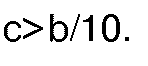
- Emulsion photosensible selon la revendication 1, caractérisée en ce que le plus petit demi-axe de la demi-ellipse aplatie équivalente à la concavité du grain de bromo-iodure d'argent et l'épaisseur b de la bordure desdits grains remplissent la condition

- Emulsion photosensible selon la revendication 1, caractérisée en ce que dans lesdits grains de bromo-iodure d'argent il y a de l'iodure à des concentrations molaires pouvant atteindre 20 %.
- Emulsion photosensible selon la revendication 1, caractérisée en ce que l'agent dispersant est de la gélatine ou un dérivé de gélatine.
- Emulsion photosensible selon la revendication 1, caractérisée en ce que lesdits grains d'halogénure d'argent sont chimiquement sensibilisés.
- Emulsion photosensible selon la revendication 1, caractérisée en ce que lesdits grains de bromo-iodure d'argent sont sensibilisés chimiquement à l'aide d'agents de sensibilisation dérivés de métaux nobles, de chalcogènes intermédiaires, d'agents de sensibilisation réducteurs ou de leurs combinaisons.
- Emulsion photosensible selon la revendication 1, caractérisée en ce que lesdits grains de bromo-iodure d'argent sont sensibilisés spectralement.
- Emulsion photosensible selon la revendication 1, caractérisée en ce que lesdits grains de bromo-iodure d'argent ont, adsorbé à leur surface, au moins un colorant de sensibilisation du type cyanine, mérocyanine, hémicyanine, hémioxonol ou mérostyryle.
- Elément photographique comprenant une base de support et au moins une couche d'émulsion d'halogénure d'argent comprenant l'émulsion selon la revendication 1.
- Elément photographique selon la revendication 17, caractérisé en ce qu'au moins 30 % de la surface projetée totale des grains d'halogénure d'argent sont constitués desdits grains de bromo-iodure d'argent.
- Elément photographique selon la revendication 17, caractérisé en ce que lesdits grains de bromo-iodure d'argent ont une épaisseur de bordure d'au moins 0,15 µm.
- Elément photographique selon la revendication 17, caractérisé en ce que lesdits grains de bromo-iodure d'argent ont une épaisseur de bordure inférieure à 0,4 µm.
- Elément photographique selon la revendication 17, caractérisé en ce que ladite demi-épaisseur au point le plus profond de ladite concavité est inférieure à 60 % de la moitié de l'épaisseur de la bordure.
- Elément photographique selon la revendication 17, caractérisé en ce que le rapport d'aspect moyen desdits grains de bromure est d'au moins 2/1.
- Elément photographique selon la revendication 17, caractérisé en ce que le rapport d'aspect moyen desdits grains de bromo-iodure est inférieur à 10/1.
- Elément photographique selon la revendication 17, caractérisé en ce que le rapport de concavité c/a des grains de bromo-iodure d'argent, dans lequel a est le plus grand axe et c le plus petit demi-axe de la demi-ellipse aplatie équivalente à la concavité, remplit la condition

- Elément photographique selon la revendication 17, caractérisé en ce que le plus petit demi-axe de la demi-ellipse équivalente à la concavité du grain de bromo-iodure d'argent et l'épaisseur b de la bordure desdits grains remplit la condition

- Elément photographique selon la revendication 17, caractérisé en ce que le plus petit demi-axe de la demi-ellipse aplatie équivalente à la concavité du grain de bromo-iodure d'argent et l'épaisseur b de la bordure desdits grains remplit le condition

- Elément photographique selon la revendication 17, caractérisé en ce que dans lesdits grains de bromo-iodure d'argent il y a de l'iodure à des concentrations molaires pouvant atteindre 20 %.
- Elément photographique selon la revendication 17, caractérisé en ce que l'agent dispersant est de la gélatine ou un dérivé de la gélatine.
- Elément photographique selon la revendication 17, caractérisé en ce que lesdits grains d'halogénure d'argent sont sensibilisés chimiquement.
- Elément photographique selon la revendication 17, caractérisé en ce que lesdits grains de bromo-iodure d'argent sont chimiquement sensibilisés à l'aide d'agents de sensibilisation dérivés de métaux nobles, de chalcogènes intermédiaires, d'agents de sensibilisation réducteurs ou de leurs combinaisons.
- Elément photographique selon la revendication 17, caractérisé en ce que les grains de bromo-iodure d'argent sont sensibilisés spectralement.
- Elément photographique selon la revendication 17, caractérisé en ce que lesdits grains de bromo-iodure d'argent ont, adsorbé à leur surface, au moins un colorant de sensibilisation du type cyanine, mérocyanine, hémicyanine, hémioxonol ou mérostyryle.
- Elément photographique multicolore comprenant une base de support et, enduit sur celui-ci, des couches d'émulsion d'halogénure d'argent pour enregistrer séparément les lumières bleue, verte et rouge, chacune comprenant un agent de dispersion et des grains d'halogénure d'argent, caractérisé en ce qu'au moins une couche d'émulsion comprend une émulsion selon la revendication 1.
- Elément photographique multicolore selon la revendication 33, caractérisé en ce qu'au moins 30 % de la surface projetée totale des grains d'halogénure d'argent sont constitués desdits grains de bromo-iodure d'argent.
- Elément photographique selon la revendication 33, caractérisé en ce que lesdits grains de bromo-iodure d'argent présentent une épaisseur de bordure d'au moins 0,15 µm.
- Elément photographique selon la revendication 33, caractérisé en ce que lesdits grains de bromo-iodure d'argent ont une épaisseur de bordure inférieure à 0,4 µm.
- Elément photographique selon la revendication 33, caractérisé en ce que ladite demi-épaisseur au point le plus profond de ladite concavité est inférieure à 60 % de la moitié de leur épaisseur de bordure.
- Elément photographique selon la revendication 33, caractérisé en ce que le rapport d'aspect moyen desdits grains de bromo-iodure est inférieur à 10/1.
- Elément photographique selon la revendication 33, caractérisé en ce qu'il comprend une première couche d'émulsion d'halogénure d'argent, positionnée pour recevoir de la lumière transmise par réflexion et comprenant une émulsion selon la revendication 1, et d'autres couches d'émulsion d'halogénure d'argent positionnées pour recevoir la lumière transmise à travers ladite première couche d'émulsion d'halogénure d'argent.
- Elément photographique selon la revendication 33, caractérisé en ce que la couche d'émulsion d'halogénure d'argent contenant lesdits grains de bromo-iodure d'argent est la couche d'émulsion la plus extérieure de l'élément photographique.
- Procédé en plusieurs étapes pour la préparation d'une émulsion de grains d'halogénure d'argent photosensibles dispersés dans un agent dispersant hydrophile, qui comprend une première étape de précipitation à double jet pour la formation de noyaux de croissance d'halogénure d'argent, une seconde étape de précipitation à double jet pour une première croissance diamétrale desdits noyaux et une troisième étape d'une seconde croissance de grains au moyen d'une solution à simple jet de sels d'argent, caractérisé en ce que :a) ladite première étape de précipitation pour la formation des noyaux de croissance se produit à un pBr dans la gamme de 0,6 et 1,2 et maintenu constant, en présence d'un chlorure soluble pour former des noyaux épais d'halogénure d'argent,b) ladite seconde étape de première croissance a lieu en ajoutant un premier jet d'une solution aqueuse d'un sel d'argent soluble, à concentration constante et débit accéléré, et un second jet d'une solution aqueuse d'un sel soluble de bromure et d'iodure à des concentrations croissantes de bromure et d'iodure et à débit constant, à un pBr décroissant d'environ 1,2 à environ 0,6, etc) ladite troisième étape de seconde croissance est effectuée en faisant augmenter le pBr au-delà de 1,2.
- Procédé selon la revendication 41, caractérisé en ce que le réacteur contient pendant l'étape a) lesdits sels de chlorure solubles dans l'eau, à une teneur située entre 0,02 et 0,15 mole par mole de sel d'argent.
- Procédé selon la revendication 41, caractérisé en ce qu'on ajoute entre 1 et 10 % de tout le sel d'argent pendant l'étape a).
- Procédé selon la revendication 41, caractérisé en ce qu'on ajoute 40 % de tout le sel d'argent au cours de l'étape b).
- Procédé selon la revendication 41, caractérisé en ce qu'on ajoute entre 50 et 88 % de tout le sel d'argent au cours de l'étape c).
- Procédé selon la revendication 41, caractérisé en ce qu'avant l'introduction de sels d'argent et du bromure, le réacteur est pratiquement dépourvu d'iodure.
- Procédé selon la revendication 41, caractérisé en ce qu'au cours de l'introduction de sels d'argent, du bromure et de l'iodure, le réacteur est maintenu à une température entre 30 et 90° C.
- Procédé selon la revendication 41, caractérisé en ce que les noyaux épais de bromure d'argent de l'étape a) ont un diamètre moyen de 0,2 à 1 µm.
- Procédé selon la revendication 41, caractérisé en ce que les noyaux de bromure d'argent de l'étape a) ont un rapport d'aspect moyen inférieur à 8/1.
- Procédé selon la revendication 41, caractérisé en ce qu'au moins 10 % de la surface projetée totale des grains de bromo-iodure d'argent sont constitués de grains de bromo-iodure d'argent délimités par au moins une face principale de forme sensiblement concave, lesdits grains ayant un diamètre d'au moins 0,6 µm et la moitié de leur épaisseur au point le plus profond de ladite concavité étant inférieure à 80 % de la moitié de leur épaisseur de bordure.
Applications Claiming Priority (6)
| Application Number | Priority Date | Filing Date | Title |
|---|---|---|---|
| IT21423/87A IT1222115B (it) | 1987-07-24 | 1987-07-24 | Emulsioni di bromo ioduro d' argento sensibili alla luce |
| IT21447/87A IT1222134B (it) | 1987-07-24 | 1987-07-24 | Elementi fotografici che comprendono emulsioni di bromo ioduro d'argento sensibili alla luce |
| IT21424/87A IT1222116B (it) | 1987-07-24 | 1987-07-24 | Procedimento per preparare emulsioni di bromo ioduro d'argento sensibili alla luce |
| IT2142487 | 1987-07-24 | ||
| IT2142387 | 1987-07-24 | ||
| IT2144787 | 1987-07-24 |
Publications (3)
| Publication Number | Publication Date |
|---|---|
| EP0300258A2 EP0300258A2 (fr) | 1989-01-25 |
| EP0300258A3 EP0300258A3 (en) | 1989-09-13 |
| EP0300258B1 true EP0300258B1 (fr) | 1993-10-20 |
Family
ID=27273174
Family Applications (1)
| Application Number | Title | Priority Date | Filing Date |
|---|---|---|---|
| EP88110648A Expired - Lifetime EP0300258B1 (fr) | 1987-07-24 | 1988-07-04 | Eléments photographiques comprenant des émulsions sensibles à la lumière au bromoiodure d'argent |
Country Status (4)
| Country | Link |
|---|---|
| US (1) | US4952489A (fr) |
| EP (1) | EP0300258B1 (fr) |
| JP (1) | JPH01113746A (fr) |
| DE (1) | DE3885023T2 (fr) |
Families Citing this family (9)
| Publication number | Priority date | Publication date | Assignee | Title |
|---|---|---|---|---|
| US5340710A (en) * | 1987-12-28 | 1994-08-23 | Konica Corporation | Photosensitive silver halide photographic material |
| JPH0354547A (ja) * | 1989-07-24 | 1991-03-08 | Konica Corp | 保存性が良好なハロゲン化銀写真感光材料 |
| JPH0527354A (ja) * | 1991-07-24 | 1993-02-05 | Fuji Photo Film Co Ltd | ハロゲン化銀写真感光材料 |
| JP2691089B2 (ja) * | 1991-07-24 | 1997-12-17 | 富士写真フイルム株式会社 | ハロゲン化銀写真感光材料 |
| JP2778861B2 (ja) * | 1991-08-07 | 1998-07-23 | 富士写真フイルム株式会社 | ハロゲン化銀写真用乳剤及び写真感光材料 |
| US5385818A (en) * | 1994-02-25 | 1995-01-31 | Eastman Kodak Company | Process for the preparation of silver halide emulsions and photographic elements containing hollow silver halide grains |
| DE69518502T2 (de) * | 1995-03-29 | 2001-04-19 | Tulalip Consultoria Comercial Sociedade Unipessoal S.A., Funchal | Verfahren zur Herstellung von Emulsionen mit monodispersen Silberhalogenidtafelkörnern |
| JP3379863B2 (ja) * | 1995-07-14 | 2003-02-24 | 富士写真フイルム株式会社 | ハロゲン化銀写真感光材料及び画像形成方法 |
| CN104536256B (zh) * | 2014-12-25 | 2018-12-14 | 天津美迪亚影像材料有限公司 | 扁平状颗粒卤化银乳剂的制备方法 |
Citations (2)
| Publication number | Priority date | Publication date | Assignee | Title |
|---|---|---|---|---|
| US4425426A (en) * | 1982-09-30 | 1984-01-10 | Eastman Kodak Company | Radiographic elements exhibiting reduced crossover |
| EP0282896A1 (fr) * | 1987-03-10 | 1988-09-21 | Fuji Photo Film Co., Ltd. | Emulsion photographique à l'halogénure d'argent et matériau photographique l'utilisant |
Family Cites Families (12)
| Publication number | Priority date | Publication date | Assignee | Title |
|---|---|---|---|---|
| JPS5171297A (en) * | 1974-12-17 | 1976-06-19 | Fuji Photo Film Co Ltd | Harogenkaginketsushono seizohoho |
| US4399215A (en) * | 1981-11-12 | 1983-08-16 | Eastman Kodak Company | Double-jet precipitation processes and products thereof |
| US4434226A (en) * | 1981-11-12 | 1984-02-28 | Eastman Kodak Company | High aspect ratio silver bromoiodide emulsions and processes for their preparation |
| US4435501A (en) * | 1981-11-12 | 1984-03-06 | Eastman Kodak Company | Controlled site epitaxial sensitization |
| US4414310A (en) * | 1981-11-12 | 1983-11-08 | Eastman Kodak Company | Process for the preparation of high aspect ratio silver bromoiodide emulsions |
| US4433048A (en) * | 1981-11-12 | 1984-02-21 | Eastman Kodak Company | Radiation-sensitive silver bromoiodide emulsions, photographic elements, and processes for their use |
| US4414306A (en) * | 1981-11-12 | 1983-11-08 | Eastman Kodak Company | Silver chlorobromide emulsions and processes for their preparation |
| US4386156A (en) * | 1981-11-12 | 1983-05-31 | Eastman Kodak Company | Silver bromide emulsions of narrow grain size distribution and processes for their preparation |
| BE894970A (fr) * | 1981-11-12 | 1983-05-09 | Eastman Kodak Co | Emulsions a grains d'halogenures d'argent tabulaires portant des sites de sensibilisation orientes |
| JPS58106532A (ja) * | 1981-12-19 | 1983-06-24 | Konishiroku Photo Ind Co Ltd | ハロゲン化銀乳剤およびその製造方法 |
| DE3577059D1 (de) * | 1985-07-24 | 1990-05-17 | Mitsubishi Heavy Ind Ltd | Verfahren und vorrichtung zum formen von antreibriemen. |
| JPH0820690B2 (ja) * | 1986-02-03 | 1996-03-04 | コニカ株式会社 | ハロゲン化銀粒子及び核ハロゲン化銀粒子を含む写真感光材料 |
-
1988
- 1988-07-04 EP EP88110648A patent/EP0300258B1/fr not_active Expired - Lifetime
- 1988-07-04 DE DE88110648T patent/DE3885023T2/de not_active Expired - Fee Related
- 1988-07-08 US US07/216,670 patent/US4952489A/en not_active Expired - Lifetime
- 1988-07-22 JP JP63183418A patent/JPH01113746A/ja active Pending
Patent Citations (3)
| Publication number | Priority date | Publication date | Assignee | Title |
|---|---|---|---|---|
| US4425426A (en) * | 1982-09-30 | 1984-01-10 | Eastman Kodak Company | Radiographic elements exhibiting reduced crossover |
| US4425426B1 (fr) * | 1982-09-30 | 1988-08-09 | ||
| EP0282896A1 (fr) * | 1987-03-10 | 1988-09-21 | Fuji Photo Film Co., Ltd. | Emulsion photographique à l'halogénure d'argent et matériau photographique l'utilisant |
Non-Patent Citations (1)
| Title |
|---|
| US Ser. No. 429420 * |
Also Published As
| Publication number | Publication date |
|---|---|
| EP0300258A2 (fr) | 1989-01-25 |
| DE3885023D1 (de) | 1993-11-25 |
| US4952489A (en) | 1990-08-28 |
| JPH01113746A (ja) | 1989-05-02 |
| EP0300258A3 (en) | 1989-09-13 |
| DE3885023T2 (de) | 1994-05-11 |
Similar Documents
| Publication | Publication Date | Title |
|---|---|---|
| CA1175697A (fr) | Emulsions de bromoiodure d'argent sensibles au rayonnement et a grains tabulaires et comportant une partie centrale a faible teneur en i | |
| DE3241634C3 (de) | Photographische Silberbromidiodidemulsion und Verfahren zu ihrer Herstellung | |
| KR890001542B1 (ko) | 할로겐화은 감광유제를 함유한 사진 요소 | |
| GB2109577A (en) | Radiation-sensitive photographic silver halide emulsion and process for preparing the same | |
| GB2111231A (en) | Tabular grain silver halide emulsion | |
| GB2110405A (en) | Radiation-sensitive emulsion and process for its preparation | |
| GB2110404A (en) | Radiation-sensitive photographic emulsion and process for its preparation | |
| EP0111919B1 (fr) | Eléments photographiques multicolores contenant des grains d'iodure d'argent | |
| US4490458A (en) | Multicolor photographic elements containing silver iodide grains | |
| EP0267483B1 (fr) | Procédé et élément pour l'obtention d'une image photographique | |
| EP0163283B1 (fr) | Elément photographique ayant un voile dû au colorant sensibilisateur réduit | |
| US4952489A (en) | Photographic elements comprising light-sensitive silver bromo-iodide emulsions | |
| JPH0221572B2 (fr) | ||
| JPH0749551A (ja) | 平板状粒子乳剤による電子印刷方法 | |
| JPH0436374B2 (fr) | ||
| EP0486629B1 (fr) | Pellicules photographiques contenant des granules d'halogenure d'argent ayant de petites separations de plans doubles | |
| US5334495A (en) | Silver halide grains having small twin-plane separations | |
| JPH0314328B2 (fr) | ||
| US5563024A (en) | Method of providing viewable images | |
| JP2892832B2 (ja) | 写真スピード感度低下用の吸収層を有する写真記録材料 | |
| USH1594H (en) | Silver halide color photographic light-sensitive material | |
| JPH11265037A (ja) | ハロゲン化銀画像形成要素 | |
| DE3250123C2 (de) | Photographisches Aufzeichnungsmaterial | |
| EP0466919B1 (fr) | Materiau photographique en halogenure d'argent et procede de formation d'images inversibles | |
| JP3561862B2 (ja) | ハロゲン化銀カラー写真感光材料 |
Legal Events
| Date | Code | Title | Description |
|---|---|---|---|
| PUAI | Public reference made under article 153(3) epc to a published international application that has entered the european phase |
Free format text: ORIGINAL CODE: 0009012 |
|
| AK | Designated contracting states |
Kind code of ref document: A2 Designated state(s): BE DE FR GB |
|
| PUAL | Search report despatched |
Free format text: ORIGINAL CODE: 0009013 |
|
| AK | Designated contracting states |
Kind code of ref document: A3 Designated state(s): BE DE FR GB |
|
| 17P | Request for examination filed |
Effective date: 19900227 |
|
| 17Q | First examination report despatched |
Effective date: 19920331 |
|
| GRAA | (expected) grant |
Free format text: ORIGINAL CODE: 0009210 |
|
| AK | Designated contracting states |
Kind code of ref document: B1 Designated state(s): BE DE FR GB |
|
| REF | Corresponds to: |
Ref document number: 3885023 Country of ref document: DE Date of ref document: 19931125 |
|
| ET | Fr: translation filed | ||
| PLBE | No opposition filed within time limit |
Free format text: ORIGINAL CODE: 0009261 |
|
| STAA | Information on the status of an ep patent application or granted ep patent |
Free format text: STATUS: NO OPPOSITION FILED WITHIN TIME LIMIT |
|
| 26N | No opposition filed | ||
| PGFP | Annual fee paid to national office [announced via postgrant information from national office to epo] |
Ref country code: FR Payment date: 19950616 Year of fee payment: 8 |
|
| PGFP | Annual fee paid to national office [announced via postgrant information from national office to epo] |
Ref country code: DE Payment date: 19950623 Year of fee payment: 8 |
|
| PGFP | Annual fee paid to national office [announced via postgrant information from national office to epo] |
Ref country code: BE Payment date: 19950626 Year of fee payment: 8 |
|
| PGFP | Annual fee paid to national office [announced via postgrant information from national office to epo] |
Ref country code: GB Payment date: 19950628 Year of fee payment: 8 |
|
| PG25 | Lapsed in a contracting state [announced via postgrant information from national office to epo] |
Ref country code: GB Effective date: 19960704 |
|
| PG25 | Lapsed in a contracting state [announced via postgrant information from national office to epo] |
Ref country code: BE Effective date: 19960731 |
|
| BERE | Be: lapsed |
Owner name: MINNESOTA MINING AND MFG CY Effective date: 19960731 |
|
| GBPC | Gb: european patent ceased through non-payment of renewal fee |
Effective date: 19960704 |
|
| PG25 | Lapsed in a contracting state [announced via postgrant information from national office to epo] |
Ref country code: FR Effective date: 19970328 |
|
| PG25 | Lapsed in a contracting state [announced via postgrant information from national office to epo] |
Ref country code: DE Effective date: 19970402 |
|
| REG | Reference to a national code |
Ref country code: FR Ref legal event code: ST |