EP0301802B1 - Gesinterte Siliziumcarbid-Verbundkörper und Verfahren zu ihrer Herstellung - Google Patents
Gesinterte Siliziumcarbid-Verbundkörper und Verfahren zu ihrer Herstellung Download PDFInfo
- Publication number
- EP0301802B1 EP0301802B1 EP88306863A EP88306863A EP0301802B1 EP 0301802 B1 EP0301802 B1 EP 0301802B1 EP 88306863 A EP88306863 A EP 88306863A EP 88306863 A EP88306863 A EP 88306863A EP 0301802 B1 EP0301802 B1 EP 0301802B1
- Authority
- EP
- European Patent Office
- Prior art keywords
- sic
- sintered body
- mob2
- boron
- present
- Prior art date
- Legal status (The legal status is an assumption and is not a legal conclusion. Google has not performed a legal analysis and makes no representation as to the accuracy of the status listed.)
- Expired - Lifetime
Links
- 238000004519 manufacturing process Methods 0.000 title description 2
- HBMJWWWQQXIZIP-UHFFFAOYSA-N silicon carbide Chemical compound [Si+]#[C-] HBMJWWWQQXIZIP-UHFFFAOYSA-N 0.000 claims description 75
- 229910015173 MoB2 Inorganic materials 0.000 claims description 34
- 229910008999 W2B5 Inorganic materials 0.000 claims description 33
- 150000001875 compounds Chemical class 0.000 claims description 22
- 238000000034 method Methods 0.000 claims description 20
- ZOXJGFHDIHLPTG-UHFFFAOYSA-N Boron Chemical compound [B] ZOXJGFHDIHLPTG-UHFFFAOYSA-N 0.000 claims description 15
- 229910052796 boron Inorganic materials 0.000 claims description 15
- 238000010304 firing Methods 0.000 claims description 13
- 239000000203 mixture Substances 0.000 claims description 10
- 238000000465 moulding Methods 0.000 claims description 10
- OKTJSMMVPCPJKN-UHFFFAOYSA-N Carbon Chemical compound [C] OKTJSMMVPCPJKN-UHFFFAOYSA-N 0.000 claims description 9
- 229910052799 carbon Inorganic materials 0.000 claims description 9
- 239000000843 powder Substances 0.000 claims description 9
- 239000000463 material Substances 0.000 claims description 7
- 239000002245 particle Substances 0.000 claims description 7
- 229910052580 B4C Inorganic materials 0.000 claims description 5
- 239000007858 starting material Substances 0.000 claims description 5
- 239000012298 atmosphere Substances 0.000 claims description 3
- 239000011812 mixed powder Substances 0.000 claims description 3
- 150000002894 organic compounds Chemical class 0.000 claims description 3
- INAHAJYZKVIDIZ-UHFFFAOYSA-N boron carbide Chemical compound B12B3B4C32B41 INAHAJYZKVIDIZ-UHFFFAOYSA-N 0.000 claims description 2
- 239000002775 capsule Substances 0.000 claims 2
- 229910010271 silicon carbide Inorganic materials 0.000 description 64
- 238000005245 sintering Methods 0.000 description 15
- 238000000280 densification Methods 0.000 description 14
- 239000000654 additive Substances 0.000 description 11
- 238000002474 experimental method Methods 0.000 description 10
- 238000001272 pressureless sintering Methods 0.000 description 10
- KFZMGEQAYNKOFK-UHFFFAOYSA-N Isopropanol Chemical compound CC(C)O KFZMGEQAYNKOFK-UHFFFAOYSA-N 0.000 description 9
- 230000000052 comparative effect Effects 0.000 description 9
- 238000002156 mixing Methods 0.000 description 8
- 238000002441 X-ray diffraction Methods 0.000 description 6
- 230000000996 additive effect Effects 0.000 description 6
- 238000012360 testing method Methods 0.000 description 6
- 230000000694 effects Effects 0.000 description 5
- 238000002844 melting Methods 0.000 description 5
- 230000008018 melting Effects 0.000 description 5
- 230000002159 abnormal effect Effects 0.000 description 4
- 239000000919 ceramic Substances 0.000 description 4
- 235000019589 hardness Nutrition 0.000 description 3
- 238000007731 hot pressing Methods 0.000 description 3
- 239000004615 ingredient Substances 0.000 description 3
- JQMFQLVAJGZSQS-UHFFFAOYSA-N 2-[4-[2-(2,3-dihydro-1H-inden-2-ylamino)pyrimidin-5-yl]piperazin-1-yl]-N-(2-oxo-3H-1,3-benzoxazol-6-yl)acetamide Chemical compound C1C(CC2=CC=CC=C12)NC1=NC=C(C=N1)N1CCN(CC1)CC(=O)NC1=CC2=C(NC(O2)=O)C=C1 JQMFQLVAJGZSQS-UHFFFAOYSA-N 0.000 description 2
- VYPSYNLAJGMNEJ-UHFFFAOYSA-N Silicium dioxide Chemical compound O=[Si]=O VYPSYNLAJGMNEJ-UHFFFAOYSA-N 0.000 description 2
- 238000004458 analytical method Methods 0.000 description 2
- 239000012300 argon atmosphere Substances 0.000 description 2
- 238000010420 art technique Methods 0.000 description 2
- 239000006229 carbon black Substances 0.000 description 2
- 239000012535 impurity Substances 0.000 description 2
- 229910052750 molybdenum Inorganic materials 0.000 description 2
- 239000000126 substance Substances 0.000 description 2
- 229910052721 tungsten Inorganic materials 0.000 description 2
- KXGFMDJXCMQABM-UHFFFAOYSA-N 2-methoxy-6-methylphenol Chemical compound [CH]OC1=CC=CC([CH])=C1O KXGFMDJXCMQABM-UHFFFAOYSA-N 0.000 description 1
- QYEXBYZXHDUPRC-UHFFFAOYSA-N B#[Ti]#B Chemical compound B#[Ti]#B QYEXBYZXHDUPRC-UHFFFAOYSA-N 0.000 description 1
- 229910003862 HfB2 Inorganic materials 0.000 description 1
- 229910019742 NbB2 Inorganic materials 0.000 description 1
- 229910004533 TaB2 Inorganic materials 0.000 description 1
- 229910033181 TiB2 Inorganic materials 0.000 description 1
- 229910007948 ZrB2 Inorganic materials 0.000 description 1
- 229910021431 alpha silicon carbide Inorganic materials 0.000 description 1
- 238000005452 bending Methods 0.000 description 1
- 239000011230 binding agent Substances 0.000 description 1
- VWZIXVXBCBBRGP-UHFFFAOYSA-N boron;zirconium Chemical compound B#[Zr]#B VWZIXVXBCBBRGP-UHFFFAOYSA-N 0.000 description 1
- 238000007657 chevron notch test Methods 0.000 description 1
- 229910052681 coesite Inorganic materials 0.000 description 1
- 238000013329 compounding Methods 0.000 description 1
- 229910052906 cristobalite Inorganic materials 0.000 description 1
- 230000007547 defect Effects 0.000 description 1
- 238000009826 distribution Methods 0.000 description 1
- 238000010438 heat treatment Methods 0.000 description 1
- 230000002706 hydrostatic effect Effects 0.000 description 1
- 239000011261 inert gas Substances 0.000 description 1
- 239000011159 matrix material Substances 0.000 description 1
- 238000003801 milling Methods 0.000 description 1
- 229910003465 moissanite Inorganic materials 0.000 description 1
- 230000003647 oxidation Effects 0.000 description 1
- 238000007254 oxidation reaction Methods 0.000 description 1
- 230000000737 periodic effect Effects 0.000 description 1
- 239000005011 phenolic resin Substances 0.000 description 1
- 229920001568 phenolic resin Polymers 0.000 description 1
- 238000013001 point bending Methods 0.000 description 1
- 239000011148 porous material Substances 0.000 description 1
- 230000001737 promoting effect Effects 0.000 description 1
- 230000000452 restraining effect Effects 0.000 description 1
- 239000000377 silicon dioxide Substances 0.000 description 1
- 235000012239 silicon dioxide Nutrition 0.000 description 1
- 229910052682 stishovite Inorganic materials 0.000 description 1
- 229910052905 tridymite Inorganic materials 0.000 description 1
Images
Classifications
-
- C—CHEMISTRY; METALLURGY
- C04—CEMENTS; CONCRETE; ARTIFICIAL STONE; CERAMICS; REFRACTORIES
- C04B—LIME, MAGNESIA; SLAG; CEMENTS; COMPOSITIONS THEREOF, e.g. MORTARS, CONCRETE OR LIKE BUILDING MATERIALS; ARTIFICIAL STONE; CERAMICS; REFRACTORIES; TREATMENT OF NATURAL STONE
- C04B35/00—Shaped ceramic products characterised by their composition; Ceramics compositions; Processing powders of inorganic compounds preparatory to the manufacturing of ceramic products
- C04B35/515—Shaped ceramic products characterised by their composition; Ceramics compositions; Processing powders of inorganic compounds preparatory to the manufacturing of ceramic products based on non-oxide ceramics
- C04B35/56—Shaped ceramic products characterised by their composition; Ceramics compositions; Processing powders of inorganic compounds preparatory to the manufacturing of ceramic products based on non-oxide ceramics based on carbides or oxycarbides
-
- C—CHEMISTRY; METALLURGY
- C04—CEMENTS; CONCRETE; ARTIFICIAL STONE; CERAMICS; REFRACTORIES
- C04B—LIME, MAGNESIA; SLAG; CEMENTS; COMPOSITIONS THEREOF, e.g. MORTARS, CONCRETE OR LIKE BUILDING MATERIALS; ARTIFICIAL STONE; CERAMICS; REFRACTORIES; TREATMENT OF NATURAL STONE
- C04B35/00—Shaped ceramic products characterised by their composition; Ceramics compositions; Processing powders of inorganic compounds preparatory to the manufacturing of ceramic products
- C04B35/622—Forming processes; Processing powders of inorganic compounds preparatory to the manufacturing of ceramic products
- C04B35/64—Burning or sintering processes
- C04B35/645—Pressure sintering
-
- C—CHEMISTRY; METALLURGY
- C04—CEMENTS; CONCRETE; ARTIFICIAL STONE; CERAMICS; REFRACTORIES
- C04B—LIME, MAGNESIA; SLAG; CEMENTS; COMPOSITIONS THEREOF, e.g. MORTARS, CONCRETE OR LIKE BUILDING MATERIALS; ARTIFICIAL STONE; CERAMICS; REFRACTORIES; TREATMENT OF NATURAL STONE
- C04B35/00—Shaped ceramic products characterised by their composition; Ceramics compositions; Processing powders of inorganic compounds preparatory to the manufacturing of ceramic products
- C04B35/01—Shaped ceramic products characterised by their composition; Ceramics compositions; Processing powders of inorganic compounds preparatory to the manufacturing of ceramic products based on oxide ceramics
- C04B35/46—Shaped ceramic products characterised by their composition; Ceramics compositions; Processing powders of inorganic compounds preparatory to the manufacturing of ceramic products based on oxide ceramics based on titanium oxides or titanates
-
- C—CHEMISTRY; METALLURGY
- C04—CEMENTS; CONCRETE; ARTIFICIAL STONE; CERAMICS; REFRACTORIES
- C04B—LIME, MAGNESIA; SLAG; CEMENTS; COMPOSITIONS THEREOF, e.g. MORTARS, CONCRETE OR LIKE BUILDING MATERIALS; ARTIFICIAL STONE; CERAMICS; REFRACTORIES; TREATMENT OF NATURAL STONE
- C04B35/00—Shaped ceramic products characterised by their composition; Ceramics compositions; Processing powders of inorganic compounds preparatory to the manufacturing of ceramic products
- C04B35/515—Shaped ceramic products characterised by their composition; Ceramics compositions; Processing powders of inorganic compounds preparatory to the manufacturing of ceramic products based on non-oxide ceramics
- C04B35/56—Shaped ceramic products characterised by their composition; Ceramics compositions; Processing powders of inorganic compounds preparatory to the manufacturing of ceramic products based on non-oxide ceramics based on carbides or oxycarbides
- C04B35/565—Shaped ceramic products characterised by their composition; Ceramics compositions; Processing powders of inorganic compounds preparatory to the manufacturing of ceramic products based on non-oxide ceramics based on carbides or oxycarbides based on silicon carbide
-
- C—CHEMISTRY; METALLURGY
- C04—CEMENTS; CONCRETE; ARTIFICIAL STONE; CERAMICS; REFRACTORIES
- C04B—LIME, MAGNESIA; SLAG; CEMENTS; COMPOSITIONS THEREOF, e.g. MORTARS, CONCRETE OR LIKE BUILDING MATERIALS; ARTIFICIAL STONE; CERAMICS; REFRACTORIES; TREATMENT OF NATURAL STONE
- C04B35/00—Shaped ceramic products characterised by their composition; Ceramics compositions; Processing powders of inorganic compounds preparatory to the manufacturing of ceramic products
- C04B35/515—Shaped ceramic products characterised by their composition; Ceramics compositions; Processing powders of inorganic compounds preparatory to the manufacturing of ceramic products based on non-oxide ceramics
- C04B35/56—Shaped ceramic products characterised by their composition; Ceramics compositions; Processing powders of inorganic compounds preparatory to the manufacturing of ceramic products based on non-oxide ceramics based on carbides or oxycarbides
- C04B35/565—Shaped ceramic products characterised by their composition; Ceramics compositions; Processing powders of inorganic compounds preparatory to the manufacturing of ceramic products based on non-oxide ceramics based on carbides or oxycarbides based on silicon carbide
- C04B35/575—Shaped ceramic products characterised by their composition; Ceramics compositions; Processing powders of inorganic compounds preparatory to the manufacturing of ceramic products based on non-oxide ceramics based on carbides or oxycarbides based on silicon carbide obtained by pressure sintering
-
- C—CHEMISTRY; METALLURGY
- C04—CEMENTS; CONCRETE; ARTIFICIAL STONE; CERAMICS; REFRACTORIES
- C04B—LIME, MAGNESIA; SLAG; CEMENTS; COMPOSITIONS THEREOF, e.g. MORTARS, CONCRETE OR LIKE BUILDING MATERIALS; ARTIFICIAL STONE; CERAMICS; REFRACTORIES; TREATMENT OF NATURAL STONE
- C04B35/00—Shaped ceramic products characterised by their composition; Ceramics compositions; Processing powders of inorganic compounds preparatory to the manufacturing of ceramic products
- C04B35/515—Shaped ceramic products characterised by their composition; Ceramics compositions; Processing powders of inorganic compounds preparatory to the manufacturing of ceramic products based on non-oxide ceramics
- C04B35/58—Shaped ceramic products characterised by their composition; Ceramics compositions; Processing powders of inorganic compounds preparatory to the manufacturing of ceramic products based on non-oxide ceramics based on borides, nitrides, i.e. nitrides, oxynitrides, carbonitrides or oxycarbonitrides or silicides
- C04B35/5805—Shaped ceramic products characterised by their composition; Ceramics compositions; Processing powders of inorganic compounds preparatory to the manufacturing of ceramic products based on non-oxide ceramics based on borides, nitrides, i.e. nitrides, oxynitrides, carbonitrides or oxycarbonitrides or silicides based on borides
- C04B35/58064—Shaped ceramic products characterised by their composition; Ceramics compositions; Processing powders of inorganic compounds preparatory to the manufacturing of ceramic products based on non-oxide ceramics based on borides, nitrides, i.e. nitrides, oxynitrides, carbonitrides or oxycarbonitrides or silicides based on borides based on refractory borides
Definitions
- the present invention relates to SiC complex sintered bodies which have excellent high temperature-characteristics peculiar to SiC itself and high toughness and which can be produced by pressureless sintering, and also to a process for producing such SiC complex sintered bodies.
- SiC sintered bodies having a single phase there are silicon carbide sintered bodies containing a B-C based sintering assistant (hereinafter referred to as "B-C based SiC”) and silicon carbide sintered bodies containing an Al based sintering assistant (hereinafter referred to as "Al based SiC”).
- B-C based SiC silicon carbide sintered bodies containing a B-C based sintering assistant
- Al based SiC silicon carbide sintered bodies containing an Al based sintering assistant
- Japanese patent application Laid-open No. 60-186,468 discloses ceramic structural bodies and a process for producing the same, aiming at higher toughness.
- the ceramic structural bodies contain at least one kind of bodies of elements in Group Vb or VIb of Periodic Table in silicon carbide.
- the sintered bodies are obtained by mixing elements in a specified composition, molding the mixture, and firing the molding in a temperature range from 1,900°C to 2,500°C.
- fracture toughness is improved by using W2B or MoB2 and Al as an additive and a sintering assistant, respectively, and promoting densification by hot pressing.
- the reason why the firing is effected by hot pressing is that since W2B is difficult to sinter, densification cannot be attained by pressureless sintering.
- MoB2 when MoB2 is added to Al based SiC, densification cannot be effected by pressureless sintering, either.
- sintered bodies having complicated shapes cannot be obtained by hot pressing, which has low industrial applicability from the standpoint of the mass productivity and manufacturing cost.
- an intergranular phase having a low melting point generally remains in an SiC intergranular phase, so that strength and oxidation resistance at high temperatures lower. Consequently, obtained sintered bodies have fatal defects as materials for use at high temperatures.
- a SiC complex sintered body as set out in claim 1.
- the reason why the average particle diameter of SiC powder as a starting material is limited to not more than 5 ⁇ m is that if it exceeds 5 ⁇ m, densification cannot be effected by pressureless sintering.
- the reason why the mixing ratio of SiC is limited to a range from 20 to 99 wt% is that if the total amount of the other ingredients exceeds 80 wt%, characteristics of SiC as a base cannot fully be exhibited, while if it is less than 1 wt%, effects of improving characteristics due to addition of the additives cannot be obtained.
- the mixing ratio of SiC ranges preferably from 30 to 99 wt%, more preferably from 40 to 99 wt%.
- the total mixing ratio of W2B5 or MoB2 is limited to a range from 80 to 0.5 wt% is that if it exceeds 80 wt%, characteristics at high temperatures are deteriorated, while if it is less than 0.5 wt%, toughness is not improved and the effect of restraining abnormal grain growth cannot be obtained.
- the mixing ratio is preferably from 70 to 5 wt%, more preferably from 60 to 10 wt%.
- the mixing ratio is preferably from 70 to 0.5 wt%, and more preferably from 60 to 0.5 wt%.
- the reason why the total amount of at least one kind of boron, carbon and boron carbide in the sintered body is limited to a range from 0.5 to 5 wt% is that if it falls outside the range, densification is not fully effected so that high strength SiC complex sintered bodies cannot be obtained.
- an amount of B or the B-forming compound is limited to 0.1 to 5 wt% is that if it is less than 0.1 wt%, an effect due to addition thereof cannot be recognized and densification is not caused, while it exceeds 5 wt%, densification is hindered and a great amount of B remains in the intergranular phase to deteriorate high temperature characteristics.
- an amount of C or the C-forming compound is limited to 0.1 to 5 wt% is that if it is less than 0.1 wt%, an SiO2 film on the surface of SiC cannot fully be removed, while if it is exceeds 5 wt%, a great amount of free carbon remains in the sintered body to deteriorate the characteristics.
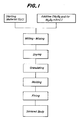
- a starting powder of SiC is adjusted to the average particle diameter of not more than 5 ⁇ m, and W2B5 or a W2B5-forming compound or MoB2 or a MoB2-forming compound, B or a B-forming compound, and C or a C-forming compound are prepared as additives.
- the SiC starting powder and the additives are mixed and milled at specified proportions together with an appropriate binder such as isopropyl alcohol by using a wet type ball mill. After being dried, the milled mixture is granulated, and preliminarily molded.
- the preliminary molding is molded in a desired shape by hydrostatic press.
- the molding is finally fired in a temperature range from 1,900°C to 2,500°C in vacuum or in an inert gas atmosphere to obtain a sintered product.
- the temperature range is preferably from 1,900 to 2,300°C when W2B5 is employed alone.
- the reason why the firing temperature is limited to the range from 1,900 to 2,500°C is that if it is less than 1,900°C, densification cannot fully be effected, while if it is more than 2,500°C silicon carbide is greatly decomposed to roughen the surface of the sintered body, so that sufficiently smooth surface cannot be obtained.
- the SiC starting powder to be used in the producing process according to the present invention consists of 93 wt% of ⁇ -SiC and the remainder being ⁇ -SiC, and has the average particle diameter of 0.42 ⁇ m and a specific surface area of 20.0 m2/g with the following composition.
- W or Mo or another boride or an oxide thereof is added separately from a boron-containing additive, and that W2B5 or MoB2 is formed in a molding or a mixed powder during an initial stage of firing or by another heat treatment before the firing.
- W2B5 or MoB2 it is necessary to add an excess amount of B enough to fully synthesize W2B5 or MoB2.
- W may be used.
- MoB2-forming material Mo may be used.
- B4C may be used.
- C-forming organic compound phenolic resin may be used.
- a starting powder of SiC was prepared to have the average particle diameter of not more than 5 ⁇ m, which was mixed with W2B5 as an additive and B (metallic boron) and C (carbon black) as sintering assistant in a wet type ball mill at a compounding recipe shown in Table 3 by using isopropyl alcohol.
- the mixture was dried and granulated, which was preliminarily molded and then hydrostatically pressed at 300 MPa (3 tons/cm2) to obtain a square plate of 60 ⁇ 60 ⁇ 6 mm.
- the thus obtained plate was heated up to 1,500°C in vacuum, and then fired at 2,100°C in argon atmosphere for one hour.
- sintered bodies in Examples according to the present invention and Comparative Examples were obtained.
- Example 5-2 is an example obtained by HIP treatment of a sintered body in Example 5 at 2,000°C under 200 MPa (2,000 atm.)
- the thus obtained sintered bodies were mirror polished, and their denseness was evaluated by measuring relative densities based on a pore distribution. Further, strengths at room temperature and at high temperatures were measured at room temperature and 1,400°C by a four point bending test according to JIS R-1601 (fine ceramic bending strength testing method). Moreover, toughness was evaluated by determining K IC at room temperature according to Chevron Notch method, and W compounds were identified in the sintered bodies by the X ray diffraction test using a CuK ⁇ line. Results are shown in Table 3.
- Examples 1-10 meeting the composition range according to the present invention had higher density and more excellent strength at high temperatures as compared with Comparative Examples 1-6. Further, as compared with K IC (2-3) in conventional SiC containing no W2B5, Examples 1-10 exhibited higher K IC values and their toughness increase. Example 5-2 having undergone HIP treatment after firing had excellent properties in all respects.
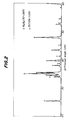
- Example 4 A diffraction pattern of Example 4 in an X-ray diffraction test by using a CuK ⁇ line is shown in Fig. 2.
- a boride other than W2B5, a carbide or an oxide of W, or W alone was added, instead of W2B5 as the indispensable ingredient in the present invention, to a SiC starting powder, which was milled and kneaded, and sintered bodies were obtained in the same process as in Experiment 1.
- Table 5 is shown by comparison characteristics of SiC complex sintered bodies according to the present invention and a prior art technique.
- Table 5 SiC-W2B5 according to the invention Al based sintering assistant + SiC-W2B5 B-C based sintering assistant + SiC Al based sintering assistant + SiC High temperature characteristic good bad good bad Toughness good good bad good Mass productivity and producing cost good (pressureless sintering) bad (hot press) good (pressureless sintering) bad (hot press)
- SiC powder having the average particle diameter of not more than 5 ⁇ m, MoB2 as an additive, and B (metallic boron) and C (carbon black) as a sintering assistant were mixed together with isopropyl alcohol at a mixing recipe shown in Table 6 by a wet type ball mill.
- the mixture was dried and granulated, which was preliminarily molded and then hydrostatically pressed at 300 MPa (3 tons/cm2) to produce a square plate of 60 ⁇ 60 ⁇ 6 mm.
- the plate was heated up to 1,500°C in vacuum, and then fired at 2,200°C under 1 atm in argon atmosphere for 1 hour. In such a way, sintered bodies according to Examples of the present invention and Comparative Examples were obtained.
- Example 104-2 is a product obtained by HIP treatment of a sintered body in Example 104 at 2,000°C under 200 MPa (2,000 atms.)
- Examples 101 to 110 satisfying the composition range according to the present invention had higher denseness and more excellent strength at high temperatures as compared with Comparative Examples 101 to 106, and had higher K IC values as compared with K IC (2-3) in the conventional case of SiC containing no MoB2 as well as higher toughness.
- Comparative Example 101 added with no MoB2 abnormal grain growth of SiC was recognized, but no such abnormal grain growth was recognized in the other Examples.
- Example 104 having undergone the HIP treatment after the firing had more excellent characteristics in all the respects.
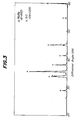
- Fig. 3 shows an X ray diffraction pattern of Example 3 in Table 3 by using CuK ⁇ .
- boride other than MoB2 a carbide or an oxide of Mo, or Mo was added, followed by milling and mixing, and sintered bodies were obtained by the same method as in Experiment 3.
- SiC complex sintered bodies and the producing process thereof in the present invention by incorporating a specified amount of MoB2 into the B-C based SiC, sintering can be effected at high temperatures and toughness which is poor in the B-C based SiC can be improved while strength at high temperatures is maintained. Further, SiC complex sintered bodies having high strength at high temperatures and high toughness can be obtained by pressureless sintering.
Landscapes
- Chemical & Material Sciences (AREA)
- Engineering & Computer Science (AREA)
- Ceramic Engineering (AREA)
- Manufacturing & Machinery (AREA)
- Materials Engineering (AREA)
- Structural Engineering (AREA)
- Organic Chemistry (AREA)
- Inorganic Chemistry (AREA)
- Ceramic Products (AREA)
Claims (11)
- Drucklos gesinterter SiC-Komplex-Sinterkörper, bestehend aus 20 bis 99 Gew.-% SiC, 80 bis 0,5 Gew.-% W₂B₅ oder MoB₂ und 0,5 bis 5 Gew.-% zumindest eines Materials, das aus Bor, Kohlenstoff oder Borkarbid ausgewählt ist.
- Sinterkörper nach Anspruch 1, bestehend aus 20 bis 94,5 Gew.-% SiC, 70 bis 5 Gew.-% W₂B₅ und 0,5 bis 5 Gew.-% zumindest eines Materials, das aus B, C und B₄C ausgewählt ist.
- Sinterkörper nach Anspruch 2, worin SiC in einer Menge von 30 bis 94,5 Gew.-% vorhanden ist.
- Sinterkörper nach Anspruch 3, worin SiC in einer Menge von 40 bis 90 Gew.-% vorhanden ist.
- Sinterkörper nach einem der Ansprüche 2 bis 4, worin W₂B₅ in einer Menge von 60 bis 10 Gew.-% vorhanden ist.
- Sinterkörper nach Anspruch 1, bestehend aus 20 bis 99 Gew.-% SiC, 70 bis 0,5 Gew.-% MoB₂ und 0,5 bis 5 Gew.-% aus zumindest einem Material, das aus B, C und B₄C ausgewählt ist.
- Sinterkörper nach Anspruch 6, worin MoB₂ in einer Menge von 60 bis 0,5 Gew.-% vorhanden ist.
- Verfahren zur Herstellung eines drucklos gesinterten SiC-Komplex-Sinterkörpers, umfassend die Schritte des Herstellens eines gemischten Pulvers, das aus(a) 20 bis 99 Gew.-% SiC, 80 bis 0,5 Gew.-%, berechnet als W₂B₅, an zumindest einem Bestandteil der Gruppe enthaltend W₂B₅, W und eine W₂B₅-bildende Verbindung, wobei der durchschnittliche Teilchendurchmesser des als ein Ausgangsmaterial verwendeten SiC-Pulvers nicht mehr als 5 µm beträgt;(b) 0,1 bis 5 Gew.-%, berechnet als Bor, an zumindest einem Bestandteil der Gruppe enthaltend Bor und eine borhältige Verbindung, oder, im Falle W oder eine W₂B₅-bildende Verbindung vorhanden ist, einer ausreichenden Menge an Bor oder borhältiger Verbindung, sodaß alles W im Sinterkörper in der Form von W₂B₅ vorliegt, und(c) 0,1 bis 5 Gew.-%, berechnet als Kohlenstoff, an Kohlenstoff oder einer Kohlenstoff erzeugenden organischen Verbindung
besteht,
des Formens der Mischung und
des Brennens des Formkörpers in einem Temperaturbereich von 1 900 bis 2 500°C im Vakuum oder in einer Inertatmosphäre, um einen Sinterkörper zu bilden, bei dem das gesamte W in der Form von W₂B₅ vorhanden ist. - Verfahren nach Anspruch 8, welches weiters den Schritt umfaßt, daß der SiC-Komplex-Sinterkörper einem HIP mit Umhüllung oder einem HIP ohne Umhüllung unterworfen wird.
- Verfahren zur Herstellung eines drucklos gesinterten SiC-Komplex-Sinterkörpers, umfassend die Schritte des Herstellens eines gemischten Pulvers, das aus(a) 20 bis 99 Gew.-% SiC, 80 bis 0,5 Gew.-%, berechnet als MoB₂, an zumindest einem Bestandteil der Gruppe enthaltend MoB₂, Mo und eine MoB₂-bildende Verbindung, wobei der durchschnittliche Teilchendurchmesser des als ein Ausgangsmaterial verwendeten SiC-Pulvers nicht größer als 5 µm ist,(b) 0,1 bis 5 Gew.-%, berechnet als Bor, an zumindest einem Bestandteil der Gruppe enthaltend Bor und eine borhältige Verbindung oder, im Falle Mo oder eine MoB₂-bildende Verbindung vorhanden ist, einer ausreichenden Menge an Bor oder borhältiger Verbindung, sodaß das gesamte Mo im Sinterkörper in der Form von MoB₂ vorliegt, und(c) 0,1 bis 5 Gew.-%, berechnet als Kohlenstoff, an Kohlenstoff oder einer Kohlenstoff erzeugenden organischen Verbindung,besteht,
des Formens der Mischung und
des Brennens des Formkörpers in einem Temperaturbereich von 1900 bis 2500°C im Vakuum oder in einer Inertatmosphäre, um einen Sinterkörper zu bilden, bei dem das gesamte Mo in der Form von MoB₂ vorhanden ist. - Herstellungsverfahren nach Anspruch 10, das weiters den Schritt umfaßt, daß der SiC-Komplex-Sinterkörper einem HIP mit Umhüllung oder einem HIP ohne Umhüllung unterworfen wird.
Applications Claiming Priority (4)
| Application Number | Priority Date | Filing Date | Title |
|---|---|---|---|
| JP62186753A JPS6433070A (en) | 1987-07-28 | 1987-07-28 | Sic composite sintered body and production thereof |
| JP186753/87 | 1987-07-28 | ||
| JP244161/87 | 1987-09-30 | ||
| JP62244161A JPS6487561A (en) | 1987-09-30 | 1987-09-30 | Sic-based composite sintered body and production thereof |
Publications (3)
| Publication Number | Publication Date |
|---|---|
| EP0301802A2 EP0301802A2 (de) | 1989-02-01 |
| EP0301802A3 EP0301802A3 (en) | 1990-07-04 |
| EP0301802B1 true EP0301802B1 (de) | 1993-06-16 |
Family
ID=26503947
Family Applications (1)
| Application Number | Title | Priority Date | Filing Date |
|---|---|---|---|
| EP88306863A Expired - Lifetime EP0301802B1 (de) | 1987-07-28 | 1988-07-26 | Gesinterte Siliziumcarbid-Verbundkörper und Verfahren zu ihrer Herstellung |
Country Status (5)
| Country | Link |
|---|---|
| US (1) | US4963516A (de) |
| EP (1) | EP0301802B1 (de) |
| KR (1) | KR900005510B1 (de) |
| CA (1) | CA1314295C (de) |
| DE (1) | DE3881777T2 (de) |
Families Citing this family (10)
| Publication number | Priority date | Publication date | Assignee | Title |
|---|---|---|---|---|
| US5179050A (en) * | 1989-08-18 | 1993-01-12 | Kabushiki Kaisha Toshiba | Sic-based pressureless sintered product |
| US5372978A (en) * | 1993-03-11 | 1994-12-13 | Cercom Inc. | Monolithic, fully dense silicon carbide material, method of manufacturing and end uses |
| JP2003191900A (ja) * | 2001-12-26 | 2003-07-09 | Mitsubishi Heavy Ind Ltd | 宇宙往還機用耐熱材及びホットストラクチャー部材及び宇宙往還機及び宇宙往還機用耐熱材の製造方法 |
| US20040173597A1 (en) * | 2003-03-03 | 2004-09-09 | Manoj Agrawal | Apparatus for contacting gases at high temperature |
| US8097548B2 (en) * | 2006-05-22 | 2012-01-17 | Zhang Shi C | High-density pressurelessly sintered zirconium diboride/silicon carbide composite bodies and a method for producing the same |
| US20070270302A1 (en) * | 2006-05-22 | 2007-11-22 | Zhang Shi C | Pressurelessly sintered zirconium diboride/silicon carbide composite bodies and a method for producing the same |
| CN103771859B (zh) * | 2014-03-03 | 2015-05-27 | 中国科学院金属研究所 | 一种碳化硅/硼化钨复合材料及其制备方法 |
| KR101626335B1 (ko) | 2016-03-09 | 2016-06-01 | 주식회사 신한세라믹 | 자기윤활성 SiC 세라믹디스크 제조방법 |
| CN106478112B (zh) * | 2016-10-17 | 2019-07-23 | 西安理工大学 | 一种高硬度高韧性b4c-w2b5复合陶瓷及其制备方法 |
| CN119528574A (zh) * | 2025-01-23 | 2025-02-28 | 山东理工大学 | SiC-W2B5/C复合材料及其制备方法 |
Citations (2)
| Publication number | Priority date | Publication date | Assignee | Title |
|---|---|---|---|---|
| JPS60186468A (ja) * | 1984-03-06 | 1985-09-21 | 株式会社日立製作所 | セラミツクス構造材及びその製造方法 |
| US4705761A (en) * | 1983-07-27 | 1987-11-10 | Hitachi, Ltd. | Ceramic structure having thermal shock resistance |
Family Cites Families (4)
| Publication number | Priority date | Publication date | Assignee | Title |
|---|---|---|---|---|
| US4209474A (en) * | 1977-08-31 | 1980-06-24 | General Electric Company | Process for preparing semiconducting silicon carbide sintered body |
| JPS57209884A (en) * | 1981-06-17 | 1982-12-23 | Kobe Steel Ltd | Manufacture of high strength silicon carbide sintered body |
| JPS58209084A (ja) * | 1982-05-28 | 1983-12-05 | 株式会社日立製作所 | 直熱形ヒ−タ材 |
| JP2736380B2 (ja) * | 1987-08-11 | 1998-04-02 | 株式会社豊田中央研究所 | 炭化珪素質材料の製造方法及び原料組成物 |
-
1988
- 1988-07-21 US US07/222,554 patent/US4963516A/en not_active Expired - Lifetime
- 1988-07-26 EP EP88306863A patent/EP0301802B1/de not_active Expired - Lifetime
- 1988-07-26 DE DE88306863T patent/DE3881777T2/de not_active Expired - Fee Related
- 1988-07-27 CA CA000573126A patent/CA1314295C/en not_active Expired - Fee Related
- 1988-07-28 KR KR1019880009535A patent/KR900005510B1/ko not_active Expired
Patent Citations (2)
| Publication number | Priority date | Publication date | Assignee | Title |
|---|---|---|---|---|
| US4705761A (en) * | 1983-07-27 | 1987-11-10 | Hitachi, Ltd. | Ceramic structure having thermal shock resistance |
| JPS60186468A (ja) * | 1984-03-06 | 1985-09-21 | 株式会社日立製作所 | セラミツクス構造材及びその製造方法 |
Non-Patent Citations (2)
| Title |
|---|
| "High melting point compounds manual" by SAMSONOFF, pages 171 and 302 * |
| Chemical Abstracts, vol.104, abstract no.114889t * |
Also Published As
| Publication number | Publication date |
|---|---|
| EP0301802A2 (de) | 1989-02-01 |
| US4963516A (en) | 1990-10-16 |
| CA1314295C (en) | 1993-03-09 |
| DE3881777D1 (de) | 1993-07-22 |
| DE3881777T2 (de) | 1993-12-02 |
| EP0301802A3 (en) | 1990-07-04 |
| KR900005510B1 (ko) | 1990-07-30 |
| KR890001908A (ko) | 1989-04-06 |
Similar Documents
| Publication | Publication Date | Title |
|---|---|---|
| US5767028A (en) | Aluminum nitride sintered body and method for manufacturing the same | |
| US4698320A (en) | Aluminum nitride sintered body | |
| EP0589997B1 (de) | Gesintertes silicumnitrid von hoher zähigkeit und festigkeit | |
| EP0301802B1 (de) | Gesinterte Siliziumcarbid-Verbundkörper und Verfahren zu ihrer Herstellung | |
| EP0520211B1 (de) | Siliciumnitridkeramik mit einer dispergierten Pentamolybdäntrisilicidphase | |
| EP0325388B1 (de) | Verfahren zur Herstellung eines Siliciumcarbid-Sinterkörpers hoher Dichte | |
| EP0514622B1 (de) | Siliciumnitrid-Sinterkörper und Verfahren zu seiner Herstellung | |
| EP0298676A2 (de) | Gesinterter Formkörper aus Siliciumcarbid und Verfahren zu seiner Herstellung | |
| EP0347920B1 (de) | Hochfeste hochzähe TiB2-Keramik | |
| EP0438897B1 (de) | Siliciumnitridkörper | |
| EP0310342A2 (de) | Gesinterte SiC-Al2O3-Verbundkörper und Verfahren zu ihrer Herstellung | |
| EP0676380A1 (de) | Kompositpulver aus Siliciumnitrid und Siliciumcarbid | |
| EP0712819A2 (de) | Verfahren zur Herstellung von Kompositsinterkörpern aus Siliciumkarbid und Siliciumnitrid | |
| EP0250593B1 (de) | Hochfeste keramikgegenstände enthaltend alpha-sialon | |
| JPH06305837A (ja) | 窒化ケイ素系焼結体 | |
| EP0399750A1 (de) | Sialonhaltige Sinterkeramik | |
| JPH08225311A (ja) | 窒化珪素/炭化珪素複合粉末及び複合成形体並びにそれらの製造方法及び窒化珪素/炭化珪素複合焼結体の製造方法 | |
| JP2892186B2 (ja) | 窒化珪素−炭化珪素質複合焼結体の製造方法 | |
| EP0383431B1 (de) | Verfahren zur Herstellung von Siliciumcarbid-Sinterkörpern hoher Dichte | |
| EP0317147B1 (de) | Gesinterte Verbundwerkstoffe aus Si3N4-Al2O3 und Verfahren zu ihrer Herstellung | |
| JP2746760B2 (ja) | 窒化珪素−炭化珪素質複合焼結体およびその製造方法 | |
| JPH0461828B2 (de) | ||
| JPH05105517A (ja) | 窒化ケイ素系焼結体 | |
| JPS63230570A (ja) | SiC−TiC常圧焼結体およびその製造方法 | |
| JPH07223866A (ja) | 窒化珪素基複合セラミックス及びその製造方法 |
Legal Events
| Date | Code | Title | Description |
|---|---|---|---|
| PUAI | Public reference made under article 153(3) epc to a published international application that has entered the european phase |
Free format text: ORIGINAL CODE: 0009012 |
|
| AK | Designated contracting states |
Kind code of ref document: A2 Designated state(s): DE FR GB IT SE |
|
| PUAL | Search report despatched |
Free format text: ORIGINAL CODE: 0009013 |
|
| AK | Designated contracting states |
Kind code of ref document: A3 Designated state(s): DE FR GB IT SE |
|
| 17P | Request for examination filed |
Effective date: 19901204 |
|
| 17Q | First examination report despatched |
Effective date: 19910301 |
|
| GRAA | (expected) grant |
Free format text: ORIGINAL CODE: 0009210 |
|
| AK | Designated contracting states |
Kind code of ref document: B1 Designated state(s): DE FR GB IT SE |
|
| PGFP | Annual fee paid to national office [announced via postgrant information from national office to epo] |
Ref country code: SE Payment date: 19930720 Year of fee payment: 6 |
|
| REF | Corresponds to: |
Ref document number: 3881777 Country of ref document: DE Date of ref document: 19930722 |
|
| ET | Fr: translation filed | ||
| ITF | It: translation for a ep patent filed | ||
| PLBE | No opposition filed within time limit |
Free format text: ORIGINAL CODE: 0009261 |
|
| STAA | Information on the status of an ep patent application or granted ep patent |
Free format text: STATUS: NO OPPOSITION FILED WITHIN TIME LIMIT |
|
| 26N | No opposition filed | ||
| PG25 | Lapsed in a contracting state [announced via postgrant information from national office to epo] |
Ref country code: SE Effective date: 19940727 |
|
| EUG | Se: european patent has lapsed |
Ref document number: 88306863.7 Effective date: 19950210 |
|
| EUG | Se: european patent has lapsed |
Ref document number: 88306863.7 |
|
| REG | Reference to a national code |
Ref country code: GB Ref legal event code: IF02 |
|
| PGFP | Annual fee paid to national office [announced via postgrant information from national office to epo] |
Ref country code: GB Payment date: 20020716 Year of fee payment: 15 |
|
| PGFP | Annual fee paid to national office [announced via postgrant information from national office to epo] |
Ref country code: FR Payment date: 20020723 Year of fee payment: 15 |
|
| PGFP | Annual fee paid to national office [announced via postgrant information from national office to epo] |
Ref country code: DE Payment date: 20020727 Year of fee payment: 15 |
|
| PG25 | Lapsed in a contracting state [announced via postgrant information from national office to epo] |
Ref country code: GB Free format text: LAPSE BECAUSE OF NON-PAYMENT OF DUE FEES Effective date: 20030726 |
|
| PG25 | Lapsed in a contracting state [announced via postgrant information from national office to epo] |
Ref country code: DE Free format text: LAPSE BECAUSE OF NON-PAYMENT OF DUE FEES Effective date: 20040203 |
|
| GBPC | Gb: european patent ceased through non-payment of renewal fee |
Effective date: 20030726 |
|
| PG25 | Lapsed in a contracting state [announced via postgrant information from national office to epo] |
Ref country code: FR Free format text: LAPSE BECAUSE OF NON-PAYMENT OF DUE FEES Effective date: 20040331 |
|
| REG | Reference to a national code |
Ref country code: FR Ref legal event code: ST |
|
| PG25 | Lapsed in a contracting state [announced via postgrant information from national office to epo] |
Ref country code: IT Free format text: LAPSE BECAUSE OF NON-PAYMENT OF DUE FEES;WARNING: LAPSES OF ITALIAN PATENTS WITH EFFECTIVE DATE BEFORE 2007 MAY HAVE OCCURRED AT ANY TIME BEFORE 2007. THE CORRECT EFFECTIVE DATE MAY BE DIFFERENT FROM THE ONE RECORDED. Effective date: 20050726 |