EP0302980B1 - 1,4-Dihydropyridines, leur procédé de préparation et leur application comme médicaments - Google Patents
1,4-Dihydropyridines, leur procédé de préparation et leur application comme médicaments Download PDFInfo
- Publication number
- EP0302980B1 EP0302980B1 EP87401799A EP87401799A EP0302980B1 EP 0302980 B1 EP0302980 B1 EP 0302980B1 EP 87401799 A EP87401799 A EP 87401799A EP 87401799 A EP87401799 A EP 87401799A EP 0302980 B1 EP0302980 B1 EP 0302980B1
- Authority
- EP
- European Patent Office
- Prior art keywords
- methyl
- ethyl
- amino
- treating
- methylenedioxyphenyl
- Prior art date
- Legal status (The legal status is an assumption and is not a legal conclusion. Google has not performed a legal analysis and makes no representation as to the accuracy of the status listed.)
- Expired - Lifetime
Links
- YNGDWRXWKFWCJY-UHFFFAOYSA-N 1,4-Dihydropyridine Chemical class C1C=CNC=C1 YNGDWRXWKFWCJY-UHFFFAOYSA-N 0.000 title claims abstract description 16
- 238000000034 method Methods 0.000 title claims description 27
- 238000002360 preparation method Methods 0.000 title claims description 13
- 239000003814 drug Substances 0.000 title 1
- -1 and R3 = H Chemical group 0.000 claims abstract description 61
- 125000002496 methyl group Chemical group [H]C([H])([H])* 0.000 claims abstract description 21
- 125000001495 ethyl group Chemical group [H]C([H])([H])C([H])([H])* 0.000 claims abstract description 17
- 150000003839 salts Chemical class 0.000 claims abstract description 7
- 125000004176 4-fluorobenzyl group Chemical group [H]C1=C([H])C(=C([H])C([H])=C1F)C([H])([H])* 0.000 claims abstract description 3
- 150000001875 compounds Chemical class 0.000 claims description 42
- 150000002148 esters Chemical class 0.000 claims description 24
- WFDIJRYMOXRFFG-UHFFFAOYSA-N acetic anhydride Substances CC(=O)OC(C)=O WFDIJRYMOXRFFG-UHFFFAOYSA-N 0.000 claims description 16
- 125000002924 primary amino group Chemical group [H]N([H])* 0.000 claims description 14
- QZMQKPGVXNSITP-UHFFFAOYSA-N 1,3-benzodioxole-4-carbaldehyde Chemical compound O=CC1=CC=CC2=C1OCO2 QZMQKPGVXNSITP-UHFFFAOYSA-N 0.000 claims description 13
- XYIBRDXRRQCHLP-UHFFFAOYSA-N ethyl acetoacetate Chemical compound CCOC(=O)CC(C)=O XYIBRDXRRQCHLP-UHFFFAOYSA-N 0.000 claims description 10
- NIXOWILDQLNWCW-UHFFFAOYSA-M Acrylate Chemical compound [O-]C(=O)C=C NIXOWILDQLNWCW-UHFFFAOYSA-M 0.000 claims description 6
- XKORCTIIRYKLLG-ARJAWSKDSA-N methyl (z)-3-aminobut-2-enoate Chemical compound COC(=O)\C=C(\C)N XKORCTIIRYKLLG-ARJAWSKDSA-N 0.000 claims description 6
- 125000001449 isopropyl group Chemical group [H]C([H])([H])C([H])(*)C([H])([H])[H] 0.000 claims description 4
- YPMPTULBFPFSEQ-PLNGDYQASA-N ethyl (z)-3-aminobut-2-enoate Chemical compound CCOC(=O)\C=C(\C)N YPMPTULBFPFSEQ-PLNGDYQASA-N 0.000 claims description 3
- YCKAGGHNUHZKCL-UHFFFAOYSA-N propan-2-yl 3-aminobut-2-enoate Chemical compound CC(C)OC(=O)C=C(C)N YCKAGGHNUHZKCL-UHFFFAOYSA-N 0.000 claims description 3
- 125000000484 butyl group Chemical group [H]C([*])([H])C([H])([H])C([H])([H])C([H])([H])[H] 0.000 claims description 2
- QUPDWYMUPZLYJZ-UHFFFAOYSA-N ethyl Chemical group C[CH2] QUPDWYMUPZLYJZ-UHFFFAOYSA-N 0.000 claims description 2
- 125000002485 formyl group Chemical group [H]C(*)=O 0.000 claims description 2
- 125000004435 hydrogen atom Chemical group [H]* 0.000 claims description 2
- 125000000959 isobutyl group Chemical group [H]C([H])([H])C([H])(C([H])([H])[H])C([H])([H])* 0.000 claims description 2
- 238000004519 manufacturing process Methods 0.000 claims description 2
- 125000001436 propyl group Chemical group [H]C([*])([H])C([H])([H])C([H])([H])[H] 0.000 claims description 2
- 229940093858 ethyl acetoacetate Drugs 0.000 claims 3
- DIMJUTMEARTFLW-UHFFFAOYSA-N 2-[benzyl(formyl)amino]ethyl 3-oxobutanoate Chemical compound CC(=O)CC(=O)OCCN(C=O)CC1=CC=CC=C1 DIMJUTMEARTFLW-UHFFFAOYSA-N 0.000 claims 1
- OETQCSGUJXKVTO-UHFFFAOYSA-N 3-O-ethyl 5-O-[2-[methyl(thiophen-2-ylmethyl)amino]ethyl] 4-(1,3-benzodioxol-4-yl)-2,6-dimethyl-1,4-dihydropyridine-3,5-dicarboxylate Chemical compound CCOC(=O)C1=C(C)NC(C)=C(C1C1=C2OCOC2=CC=C1)C(=O)OCCN(C)CC1=CC=CS1 OETQCSGUJXKVTO-UHFFFAOYSA-N 0.000 claims 1
- SHGZQFTXWJCYSA-UHFFFAOYSA-N 3-O-methyl 5-O-[2-[methyl(thiophen-2-ylmethyl)amino]ethyl] 4-(1,3-benzodioxol-4-yl)-2,6-dimethyl-1,4-dihydropyridine-3,5-dicarboxylate Chemical compound CC=1NC(=C(C(C=1C(=O)OC)C1=C2C(=CC=C1)OCO2)C(=O)OCCN(CC=1SC=CC=1)C)C SHGZQFTXWJCYSA-UHFFFAOYSA-N 0.000 claims 1
- NWZHMBKPXIVPIV-UHFFFAOYSA-N 3-o-[2-[methyl(thiophen-2-ylmethyl)amino]ethyl] 5-o-propan-2-yl 4-(1,3-benzodioxol-4-yl)-2,6-dimethyl-1,4-dihydropyridine-3,5-dicarboxylate Chemical compound C=1C=CC=2OCOC=2C=1C1C(C(=O)OC(C)C)=C(C)NC(C)=C1C(=O)OCCN(C)CC1=CC=CS1 NWZHMBKPXIVPIV-UHFFFAOYSA-N 0.000 claims 1
- 150000007522 mineralic acids Chemical class 0.000 claims 1
- 150000007524 organic acids Chemical class 0.000 claims 1
- 239000002253 acid Substances 0.000 abstract description 4
- 125000003118 aryl group Chemical group 0.000 abstract description 3
- 125000000217 alkyl group Chemical group 0.000 abstract 1
- 125000004432 carbon atom Chemical group C* 0.000 abstract 1
- 238000002329 infrared spectrum Methods 0.000 description 35
- 239000000203 mixture Substances 0.000 description 28
- HEDRZPFGACZZDS-UHFFFAOYSA-N Chloroform Chemical compound ClC(Cl)Cl HEDRZPFGACZZDS-UHFFFAOYSA-N 0.000 description 24
- 239000003921 oil Substances 0.000 description 24
- 235000019198 oils Nutrition 0.000 description 24
- VEXZGXHMUGYJMC-UHFFFAOYSA-N Hydrochloric acid Chemical compound Cl VEXZGXHMUGYJMC-UHFFFAOYSA-N 0.000 description 23
- LFQSCWFLJHTTHZ-UHFFFAOYSA-N Ethanol Chemical compound CCO LFQSCWFLJHTTHZ-UHFFFAOYSA-N 0.000 description 21
- 239000002904 solvent Substances 0.000 description 20
- 239000000047 product Substances 0.000 description 19
- 239000000243 solution Substances 0.000 description 19
- CSCPPACGZOOCGX-UHFFFAOYSA-N Acetone Chemical compound CC(C)=O CSCPPACGZOOCGX-UHFFFAOYSA-N 0.000 description 18
- KFZMGEQAYNKOFK-UHFFFAOYSA-N Isopropanol Chemical compound CC(C)O KFZMGEQAYNKOFK-UHFFFAOYSA-N 0.000 description 18
- 241001558496 Talpa caeca Species 0.000 description 17
- ZHNUHDYFZUAESO-UHFFFAOYSA-N Formamide Chemical compound NC=O ZHNUHDYFZUAESO-UHFFFAOYSA-N 0.000 description 16
- UHOVQNZJYSORNB-UHFFFAOYSA-N Benzene Chemical compound C1=CC=CC=C1 UHOVQNZJYSORNB-UHFFFAOYSA-N 0.000 description 15
- 238000006243 chemical reaction Methods 0.000 description 14
- 239000007787 solid Substances 0.000 description 13
- RTZKZFJDLAIYFH-UHFFFAOYSA-N Diethyl ether Chemical compound CCOCC RTZKZFJDLAIYFH-UHFFFAOYSA-N 0.000 description 12
- OKKJLVBELUTLKV-UHFFFAOYSA-N Methanol Chemical compound OC OKKJLVBELUTLKV-UHFFFAOYSA-N 0.000 description 12
- XLYOFNOQVPJJNP-UHFFFAOYSA-N water Substances O XLYOFNOQVPJJNP-UHFFFAOYSA-N 0.000 description 10
- HEMHJVSKTPXQMS-UHFFFAOYSA-M Sodium hydroxide Chemical compound [OH-].[Na+] HEMHJVSKTPXQMS-UHFFFAOYSA-M 0.000 description 9
- 125000000468 ketone group Chemical group 0.000 description 9
- CSNNHWWHGAXBCP-UHFFFAOYSA-L Magnesium sulfate Chemical compound [Mg+2].[O-][S+2]([O-])([O-])[O-] CSNNHWWHGAXBCP-UHFFFAOYSA-L 0.000 description 8
- UIIMBOGNXHQVGW-UHFFFAOYSA-M Sodium bicarbonate Chemical compound [Na+].OC([O-])=O UIIMBOGNXHQVGW-UHFFFAOYSA-M 0.000 description 8
- 125000004185 ester group Chemical group 0.000 description 8
- TZIHFWKZFHZASV-UHFFFAOYSA-N methyl formate Chemical compound COC=O TZIHFWKZFHZASV-UHFFFAOYSA-N 0.000 description 8
- ZAFNJMIOTHYJRJ-UHFFFAOYSA-N Diisopropyl ether Chemical compound CC(C)OC(C)C ZAFNJMIOTHYJRJ-UHFFFAOYSA-N 0.000 description 7
- BAPJBEWLBFYGME-UHFFFAOYSA-N Methyl acrylate Chemical compound COC(=O)C=C BAPJBEWLBFYGME-UHFFFAOYSA-N 0.000 description 7
- OQIQSTLJSLGHID-WNWIJWBNSA-N aflatoxin B1 Chemical compound C=1([C@@H]2C=CO[C@@H]2OC=1C=C(C1=2)OC)C=2OC(=O)C2=C1CCC2=O OQIQSTLJSLGHID-WNWIJWBNSA-N 0.000 description 7
- 239000001257 hydrogen Substances 0.000 description 7
- 229910052739 hydrogen Inorganic materials 0.000 description 7
- 239000012044 organic layer Substances 0.000 description 7
- 238000000746 purification Methods 0.000 description 7
- OPKOKAMJFNKNAS-UHFFFAOYSA-N N-methylethanolamine Chemical compound CNCCO OPKOKAMJFNKNAS-UHFFFAOYSA-N 0.000 description 6
- 241000700159 Rattus Species 0.000 description 6
- 238000001914 filtration Methods 0.000 description 6
- 238000003756 stirring Methods 0.000 description 6
- 0 Cc(c(C1C(*)=C(C)N*=C1*)ccc1)c1OCO Chemical compound Cc(c(C1C(*)=C(C)N*=C1*)ccc1)c1OCO 0.000 description 5
- XBLVHTDFJBKJLG-UHFFFAOYSA-N Ethyl nicotinate Chemical compound CCOC(=O)C1=CC=CN=C1 XBLVHTDFJBKJLG-UHFFFAOYSA-N 0.000 description 5
- 229910052799 carbon Inorganic materials 0.000 description 5
- WASQWSOJHCZDFK-UHFFFAOYSA-N diketene Chemical compound C=C1CC(=O)O1 WASQWSOJHCZDFK-UHFFFAOYSA-N 0.000 description 5
- 239000007788 liquid Substances 0.000 description 5
- PNJWIWWMYCMZRO-UHFFFAOYSA-N pent‐4‐en‐2‐one Natural products CC(=O)CC=C PNJWIWWMYCMZRO-UHFFFAOYSA-N 0.000 description 5
- NRGGMCIBEHEAIL-UHFFFAOYSA-N 2-ethylpyridine Chemical compound CCC1=CC=CC=N1 NRGGMCIBEHEAIL-UHFFFAOYSA-N 0.000 description 4
- QTBSBXVTEAMEQO-UHFFFAOYSA-N Acetic acid Chemical compound CC(O)=O QTBSBXVTEAMEQO-UHFFFAOYSA-N 0.000 description 4
- QGZKDVFQNNGYKY-UHFFFAOYSA-N Ammonia Chemical compound N QGZKDVFQNNGYKY-UHFFFAOYSA-N 0.000 description 4
- 206010020772 Hypertension Diseases 0.000 description 4
- 235000019502 Orange oil Nutrition 0.000 description 4
- NQRYJNQNLNOLGT-UHFFFAOYSA-N Piperidine Chemical compound C1CCNCC1 NQRYJNQNLNOLGT-UHFFFAOYSA-N 0.000 description 4
- JUJWROOIHBZHMG-UHFFFAOYSA-N Pyridine Chemical compound C1=CC=NC=C1 JUJWROOIHBZHMG-UHFFFAOYSA-N 0.000 description 4
- 239000004480 active ingredient Substances 0.000 description 4
- 230000003276 anti-hypertensive effect Effects 0.000 description 4
- HUMNYLRZRPPJDN-UHFFFAOYSA-N benzaldehyde Chemical compound O=CC1=CC=CC=C1 HUMNYLRZRPPJDN-UHFFFAOYSA-N 0.000 description 4
- 230000008602 contraction Effects 0.000 description 4
- 238000001816 cooling Methods 0.000 description 4
- CCGKOQOJPYTBIH-UHFFFAOYSA-N ethenone Chemical compound C=C=O CCGKOQOJPYTBIH-UHFFFAOYSA-N 0.000 description 4
- 238000000338 in vitro Methods 0.000 description 4
- HQKMJHAJHXVSDF-UHFFFAOYSA-L magnesium stearate Chemical compound [Mg+2].CCCCCCCCCCCCCCCCCC([O-])=O.CCCCCCCCCCCCCCCCCC([O-])=O HQKMJHAJHXVSDF-UHFFFAOYSA-L 0.000 description 4
- 125000000250 methylamino group Chemical group [H]N(*)C([H])([H])[H] 0.000 description 4
- VLKZOEOYAKHREP-UHFFFAOYSA-N n-Hexane Chemical compound CCCCCC VLKZOEOYAKHREP-UHFFFAOYSA-N 0.000 description 4
- HYIMSNHJOBLJNT-UHFFFAOYSA-N nifedipine Chemical compound COC(=O)C1=C(C)NC(C)=C(C(=O)OC)C1C1=CC=CC=C1[N+]([O-])=O HYIMSNHJOBLJNT-UHFFFAOYSA-N 0.000 description 4
- 239000010502 orange oil Substances 0.000 description 4
- 229910000030 sodium bicarbonate Inorganic materials 0.000 description 4
- 239000003826 tablet Substances 0.000 description 4
- 238000012360 testing method Methods 0.000 description 4
- UKVYVZLTGQVOPX-IHWYPQMZSA-N (z)-3-aminobut-2-enoic acid Chemical compound C\C(N)=C\C(O)=O UKVYVZLTGQVOPX-IHWYPQMZSA-N 0.000 description 3
- XEKOWRVHYACXOJ-UHFFFAOYSA-N Ethyl acetate Chemical compound CCOC(C)=O XEKOWRVHYACXOJ-UHFFFAOYSA-N 0.000 description 3
- JIGUQPWFLRLWPJ-UHFFFAOYSA-N Ethyl acrylate Chemical compound CCOC(=O)C=C JIGUQPWFLRLWPJ-UHFFFAOYSA-N 0.000 description 3
- 241000699670 Mus sp. Species 0.000 description 3
- DNIAPMSPPWPWGF-UHFFFAOYSA-N Propylene glycol Chemical compound CC(O)CO DNIAPMSPPWPWGF-UHFFFAOYSA-N 0.000 description 3
- 150000007513 acids Chemical class 0.000 description 3
- 238000009835 boiling Methods 0.000 description 3
- 239000013078 crystal Substances 0.000 description 3
- 239000005457 ice water Substances 0.000 description 3
- 238000001727 in vivo Methods 0.000 description 3
- 229910052500 inorganic mineral Inorganic materials 0.000 description 3
- 238000007912 intraperitoneal administration Methods 0.000 description 3
- 239000010410 layer Substances 0.000 description 3
- 235000010755 mineral Nutrition 0.000 description 3
- 239000011707 mineral Substances 0.000 description 3
- MSOAVHHAZCMHDI-UHFFFAOYSA-N oxodipine Chemical compound CCOC(=O)C1=C(C)NC(C)=C(C(=O)OC)C1C1=CC=CC2=C1OCO2 MSOAVHHAZCMHDI-UHFFFAOYSA-N 0.000 description 3
- 229950009982 oxodipine Drugs 0.000 description 3
- 239000000843 powder Substances 0.000 description 3
- 239000011541 reaction mixture Substances 0.000 description 3
- 238000010992 reflux Methods 0.000 description 3
- 235000017557 sodium bicarbonate Nutrition 0.000 description 3
- 239000000725 suspension Substances 0.000 description 3
- XCNAIYLRHXGKQM-UHFFFAOYSA-N 2-[methyl(pyridin-2-ylmethyl)amino]ethanol Chemical compound OCCN(C)CC1=CC=CC=N1 XCNAIYLRHXGKQM-UHFFFAOYSA-N 0.000 description 2
- AONUOBNHKYQJIO-UHFFFAOYSA-N 2-[methyl(pyridin-3-ylmethyl)amino]ethanol Chemical compound OCCN(C)CC1=CC=CN=C1 AONUOBNHKYQJIO-UHFFFAOYSA-N 0.000 description 2
- MOQJZPZRWNLSFK-UHFFFAOYSA-N 2-[methyl(pyridin-4-ylmethyl)amino]ethanol Chemical compound OCCN(C)CC1=CC=NC=C1 MOQJZPZRWNLSFK-UHFFFAOYSA-N 0.000 description 2
- GUBGYTABKSRVRQ-XLOQQCSPSA-N Alpha-Lactose Chemical compound O[C@@H]1[C@@H](O)[C@@H](O)[C@@H](CO)O[C@H]1O[C@@H]1[C@@H](CO)O[C@H](O)[C@H](O)[C@H]1O GUBGYTABKSRVRQ-XLOQQCSPSA-N 0.000 description 2
- 229920002134 Carboxymethyl cellulose Polymers 0.000 description 2
- 108010010803 Gelatin Proteins 0.000 description 2
- WQZGKKKJIJFFOK-GASJEMHNSA-N Glucose Natural products OC[C@H]1OC(O)[C@H](O)[C@@H](O)[C@@H]1O WQZGKKKJIJFFOK-GASJEMHNSA-N 0.000 description 2
- GUBGYTABKSRVRQ-QKKXKWKRSA-N Lactose Natural products OC[C@H]1O[C@@H](O[C@H]2[C@H](O)[C@@H](O)C(O)O[C@@H]2CO)[C@H](O)[C@@H](O)[C@H]1O GUBGYTABKSRVRQ-QKKXKWKRSA-N 0.000 description 2
- ZBBHBTPTTSWHBA-UHFFFAOYSA-N Nicardipine Chemical compound COC(=O)C1=C(C)NC(C)=C(C(=O)OCCN(C)CC=2C=CC=CC=2)C1C1=CC=CC([N+]([O-])=O)=C1 ZBBHBTPTTSWHBA-UHFFFAOYSA-N 0.000 description 2
- KDLHZDBZIXYQEI-UHFFFAOYSA-N Palladium Chemical compound [Pd] KDLHZDBZIXYQEI-UHFFFAOYSA-N 0.000 description 2
- VMHLLURERBWHNL-UHFFFAOYSA-M Sodium acetate Chemical compound [Na+].CC([O-])=O VMHLLURERBWHNL-UHFFFAOYSA-M 0.000 description 2
- CZMRCDWAGMRECN-UGDNZRGBSA-N Sucrose Chemical compound O[C@H]1[C@H](O)[C@@H](CO)O[C@@]1(CO)O[C@@H]1[C@H](O)[C@@H](O)[C@H](O)[C@@H](CO)O1 CZMRCDWAGMRECN-UGDNZRGBSA-N 0.000 description 2
- 229930006000 Sucrose Natural products 0.000 description 2
- 229960000583 acetic acid Drugs 0.000 description 2
- 150000001412 amines Chemical class 0.000 description 2
- 229910021529 ammonia Inorganic materials 0.000 description 2
- 210000000709 aorta Anatomy 0.000 description 2
- 239000002775 capsule Substances 0.000 description 2
- 235000010948 carboxy methyl cellulose Nutrition 0.000 description 2
- 239000001913 cellulose Substances 0.000 description 2
- 229920002678 cellulose Polymers 0.000 description 2
- 235000010980 cellulose Nutrition 0.000 description 2
- 238000004090 dissolution Methods 0.000 description 2
- 238000004821 distillation Methods 0.000 description 2
- 230000000694 effects Effects 0.000 description 2
- 238000001704 evaporation Methods 0.000 description 2
- 230000008020 evaporation Effects 0.000 description 2
- 238000000605 extraction Methods 0.000 description 2
- 239000000706 filtrate Substances 0.000 description 2
- 239000007789 gas Substances 0.000 description 2
- 239000008273 gelatin Substances 0.000 description 2
- 229920000159 gelatin Polymers 0.000 description 2
- 235000019322 gelatine Nutrition 0.000 description 2
- 235000011852 gelatine desserts Nutrition 0.000 description 2
- 239000012362 glacial acetic acid Substances 0.000 description 2
- 239000008103 glucose Substances 0.000 description 2
- 239000008187 granular material Substances 0.000 description 2
- 150000003840 hydrochlorides Chemical class 0.000 description 2
- 230000001631 hypertensive effect Effects 0.000 description 2
- 230000002401 inhibitory effect Effects 0.000 description 2
- 150000002576 ketones Chemical group 0.000 description 2
- 239000008101 lactose Substances 0.000 description 2
- 239000000314 lubricant Substances 0.000 description 2
- 235000019359 magnesium stearate Nutrition 0.000 description 2
- 238000005259 measurement Methods 0.000 description 2
- ZFEJGMDGENZPMS-UHFFFAOYSA-N n-(2-hydroxyethyl)-n-methylformamide Chemical compound O=CN(C)CCO ZFEJGMDGENZPMS-UHFFFAOYSA-N 0.000 description 2
- NNQNIQVJOMXFKF-UHFFFAOYSA-N n-benzyl-n-(2-hydroxyethyl)formamide Chemical compound OCCN(C=O)CC1=CC=CC=C1 NNQNIQVJOMXFKF-UHFFFAOYSA-N 0.000 description 2
- NLJQHZIGLMRRAM-UHFFFAOYSA-N n-methyl-2-pyridin-2-yl-n-(pyridin-4-ylmethyl)ethanamine Chemical compound C=1C=NC=CC=1CN(C)CCC1=CC=CC=N1 NLJQHZIGLMRRAM-UHFFFAOYSA-N 0.000 description 2
- 229960001597 nifedipine Drugs 0.000 description 2
- QNGNSVIICDLXHT-UHFFFAOYSA-N para-ethylbenzaldehyde Natural products CCC1=CC=C(C=O)C=C1 QNGNSVIICDLXHT-UHFFFAOYSA-N 0.000 description 2
- 239000003208 petroleum Substances 0.000 description 2
- 239000006187 pill Substances 0.000 description 2
- 239000001267 polyvinylpyrrolidone Substances 0.000 description 2
- 229920000036 polyvinylpyrrolidone Polymers 0.000 description 2
- 235000013855 polyvinylpyrrolidone Nutrition 0.000 description 2
- BWHMMNNQKKPAPP-UHFFFAOYSA-L potassium carbonate Chemical compound [K+].[K+].[O-]C([O-])=O BWHMMNNQKKPAPP-UHFFFAOYSA-L 0.000 description 2
- UMJSCPRVCHMLSP-UHFFFAOYSA-N pyridine Natural products COC1=CC=CN=C1 UMJSCPRVCHMLSP-UHFFFAOYSA-N 0.000 description 2
- 230000002829 reductive effect Effects 0.000 description 2
- 239000011734 sodium Substances 0.000 description 2
- 239000007901 soft capsule Substances 0.000 description 2
- 239000005720 sucrose Substances 0.000 description 2
- 239000003981 vehicle Substances 0.000 description 2
- IZXWCDITFDNEBY-UHFFFAOYSA-N 1-(chloromethyl)-4-fluorobenzene Chemical compound FC1=CC=C(CCl)C=C1 IZXWCDITFDNEBY-UHFFFAOYSA-N 0.000 description 1
- XNIOWJUQPMKCIJ-UHFFFAOYSA-N 2-(benzylamino)ethanol Chemical compound OCCNCC1=CC=CC=C1 XNIOWJUQPMKCIJ-UHFFFAOYSA-N 0.000 description 1
- JPMRGPPMXHGKRO-UHFFFAOYSA-N 2-(chloromethyl)pyridine hydrochloride Chemical compound Cl.ClCC1=CC=CC=N1 JPMRGPPMXHGKRO-UHFFFAOYSA-N 0.000 description 1
- FUOHKPSBGLXIRL-UHFFFAOYSA-N 2-(chloromethyl)thiophene Chemical compound ClCC1=CC=CS1 FUOHKPSBGLXIRL-UHFFFAOYSA-N 0.000 description 1
- CNQCWYFDIQSALX-UHFFFAOYSA-N 3-(chloromethyl)pyridine Chemical compound ClCC1=CC=CN=C1 CNQCWYFDIQSALX-UHFFFAOYSA-N 0.000 description 1
- WZIYCIBURCPKAR-UHFFFAOYSA-N 4-(chloromethyl)pyridine Chemical compound ClCC1=CC=NC=C1 WZIYCIBURCPKAR-UHFFFAOYSA-N 0.000 description 1
- XVMSFILGAMDHEY-UHFFFAOYSA-N 6-(4-aminophenyl)sulfonylpyridin-3-amine Chemical compound C1=CC(N)=CC=C1S(=O)(=O)C1=CC=C(N)C=N1 XVMSFILGAMDHEY-UHFFFAOYSA-N 0.000 description 1
- HBAQYPYDRFILMT-UHFFFAOYSA-N 8-[3-(1-cyclopropylpyrazol-4-yl)-1H-pyrazolo[4,3-d]pyrimidin-5-yl]-3-methyl-3,8-diazabicyclo[3.2.1]octan-2-one Chemical class C1(CC1)N1N=CC(=C1)C1=NNC2=C1N=C(N=C2)N1C2C(N(CC1CC2)C)=O HBAQYPYDRFILMT-UHFFFAOYSA-N 0.000 description 1
- 229920001817 Agar Polymers 0.000 description 1
- 229920000945 Amylopectin Polymers 0.000 description 1
- 206010002383 Angina Pectoris Diseases 0.000 description 1
- LIMHILQGPFQCMM-UHFFFAOYSA-N CC1C2=[O]=COC2=CC=C1 Chemical compound CC1C2=[O]=COC2=CC=C1 LIMHILQGPFQCMM-UHFFFAOYSA-N 0.000 description 1
- OYPRJOBELJOOCE-UHFFFAOYSA-N Calcium Chemical compound [Ca] OYPRJOBELJOOCE-UHFFFAOYSA-N 0.000 description 1
- 229940127291 Calcium channel antagonist Drugs 0.000 description 1
- OKTJSMMVPCPJKN-UHFFFAOYSA-N Carbon Chemical compound [C] OKTJSMMVPCPJKN-UHFFFAOYSA-N 0.000 description 1
- FBPFZTCFMRRESA-FSIIMWSLSA-N D-Glucitol Natural products OC[C@H](O)[C@H](O)[C@@H](O)[C@H](O)CO FBPFZTCFMRRESA-FSIIMWSLSA-N 0.000 description 1
- FBPFZTCFMRRESA-JGWLITMVSA-N D-glucitol Chemical compound OC[C@H](O)[C@@H](O)[C@H](O)[C@H](O)CO FBPFZTCFMRRESA-JGWLITMVSA-N 0.000 description 1
- 208000007530 Essential hypertension Diseases 0.000 description 1
- 229920000084 Gum arabic Polymers 0.000 description 1
- UFHFLCQGNIYNRP-UHFFFAOYSA-N Hydrogen Chemical compound [H][H] UFHFLCQGNIYNRP-UHFFFAOYSA-N 0.000 description 1
- 231100000111 LD50 Toxicity 0.000 description 1
- 241001465754 Metazoa Species 0.000 description 1
- JTTMONMKEJBPDZ-UHFFFAOYSA-N N-benzyl-N-(2-ethylpyridin-3-yl)formamide Chemical compound C(=O)N(CC1=CC=CC=C1)C=1C(=NC=CC=1)CC JTTMONMKEJBPDZ-UHFFFAOYSA-N 0.000 description 1
- 238000005481 NMR spectroscopy Methods 0.000 description 1
- 240000007817 Olea europaea Species 0.000 description 1
- 235000019483 Peanut oil Nutrition 0.000 description 1
- 239000004698 Polyethylene Substances 0.000 description 1
- 239000002202 Polyethylene glycol Substances 0.000 description 1
- 241000700157 Rattus norvegicus Species 0.000 description 1
- 244000000231 Sesamum indicum Species 0.000 description 1
- PMZURENOXWZQFD-UHFFFAOYSA-L Sodium Sulfate Chemical compound [Na+].[Na+].[O-]S([O-])(=O)=O PMZURENOXWZQFD-UHFFFAOYSA-L 0.000 description 1
- UIIMBOGNXHQVGW-DEQYMQKBSA-M Sodium bicarbonate-14C Chemical compound [Na+].O[14C]([O-])=O UIIMBOGNXHQVGW-DEQYMQKBSA-M 0.000 description 1
- FAPWRFPIFSIZLT-UHFFFAOYSA-M Sodium chloride Chemical compound [Na+].[Cl-] FAPWRFPIFSIZLT-UHFFFAOYSA-M 0.000 description 1
- 229920002472 Starch Polymers 0.000 description 1
- 235000021355 Stearic acid Nutrition 0.000 description 1
- QAOWNCQODCNURD-UHFFFAOYSA-L Sulfate Chemical compound [O-]S([O-])(=O)=O QAOWNCQODCNURD-UHFFFAOYSA-L 0.000 description 1
- FEWJPZIEWOKRBE-UHFFFAOYSA-N Tartaric acid Natural products [H+].[H+].[O-]C(=O)C(O)C(O)C([O-])=O FEWJPZIEWOKRBE-UHFFFAOYSA-N 0.000 description 1
- GWEVSGVZZGPLCZ-UHFFFAOYSA-N Titan oxide Chemical compound O=[Ti]=O GWEVSGVZZGPLCZ-UHFFFAOYSA-N 0.000 description 1
- 240000000359 Triticum dicoccon Species 0.000 description 1
- CIUQDSCDWFSTQR-UHFFFAOYSA-N [C]1=CC=CC=C1 Chemical compound [C]1=CC=CC=C1 CIUQDSCDWFSTQR-UHFFFAOYSA-N 0.000 description 1
- 239000000205 acacia gum Substances 0.000 description 1
- 235000010489 acacia gum Nutrition 0.000 description 1
- 239000013543 active substance Substances 0.000 description 1
- 230000007059 acute toxicity Effects 0.000 description 1
- 231100000403 acute toxicity Toxicity 0.000 description 1
- 239000008272 agar Substances 0.000 description 1
- 150000001298 alcohols Chemical class 0.000 description 1
- 150000001299 aldehydes Chemical class 0.000 description 1
- 125000003277 amino group Chemical group 0.000 description 1
- 238000004458 analytical method Methods 0.000 description 1
- 229940040526 anhydrous sodium acetate Drugs 0.000 description 1
- 230000003257 anti-anginal effect Effects 0.000 description 1
- 239000007864 aqueous solution Substances 0.000 description 1
- 210000001367 artery Anatomy 0.000 description 1
- 230000036772 blood pressure Effects 0.000 description 1
- 239000011575 calcium Substances 0.000 description 1
- 229910052791 calcium Inorganic materials 0.000 description 1
- 239000000480 calcium channel blocker Substances 0.000 description 1
- 230000002213 calciumantagonistic effect Effects 0.000 description 1
- 239000001768 carboxy methyl cellulose Substances 0.000 description 1
- 239000008112 carboxymethyl-cellulose Substances 0.000 description 1
- 230000005800 cardiovascular problem Effects 0.000 description 1
- 239000003054 catalyst Substances 0.000 description 1
- 239000003795 chemical substances by application Substances 0.000 description 1
- OAIVIYSBZFEOIU-UHFFFAOYSA-N chloroform;propan-2-one Chemical compound CC(C)=O.ClC(Cl)Cl OAIVIYSBZFEOIU-UHFFFAOYSA-N 0.000 description 1
- 239000012043 crude product Substances 0.000 description 1
- 238000002425 crystallisation Methods 0.000 description 1
- 230000008025 crystallization Effects 0.000 description 1
- 238000010908 decantation Methods 0.000 description 1
- 238000000354 decomposition reaction Methods 0.000 description 1
- 230000003247 decreasing effect Effects 0.000 description 1
- 230000003111 delayed effect Effects 0.000 description 1
- 238000010790 dilution Methods 0.000 description 1
- 239000012895 dilution Substances 0.000 description 1
- 239000002270 dispersing agent Substances 0.000 description 1
- 239000000975 dye Substances 0.000 description 1
- 238000002474 experimental method Methods 0.000 description 1
- 239000007902 hard capsule Substances 0.000 description 1
- XLYOFNOQVPJJNP-ZSJDYOACSA-N heavy water Substances [2H]O[2H] XLYOFNOQVPJJNP-ZSJDYOACSA-N 0.000 description 1
- 238000002347 injection Methods 0.000 description 1
- 239000007924 injection Substances 0.000 description 1
- 230000002045 lasting effect Effects 0.000 description 1
- 230000000670 limiting effect Effects 0.000 description 1
- 229910052943 magnesium sulfate Inorganic materials 0.000 description 1
- 235000019341 magnesium sulphate Nutrition 0.000 description 1
- 238000002844 melting Methods 0.000 description 1
- 230000008018 melting Effects 0.000 description 1
- QSHDDOUJBYECFT-UHFFFAOYSA-N mercury Chemical compound [Hg] QSHDDOUJBYECFT-UHFFFAOYSA-N 0.000 description 1
- 229910052753 mercury Inorganic materials 0.000 description 1
- 208000010125 myocardial infarction Diseases 0.000 description 1
- 210000004165 myocardium Anatomy 0.000 description 1
- ZPXPSSFYVZFPKL-UHFFFAOYSA-N n-methyl-2-pyridin-2-yl-n-(pyridin-2-ylmethyl)ethanamine Chemical compound C=1C=CC=NC=1CN(C)CCC1=CC=CC=N1 ZPXPSSFYVZFPKL-UHFFFAOYSA-N 0.000 description 1
- AKIGYCQKUPFTAR-UHFFFAOYSA-N n-methyl-2-pyridin-2-yl-n-(pyridin-3-ylmethyl)ethanamine Chemical compound C=1C=CN=CC=1CN(C)CCC1=CC=CC=N1 AKIGYCQKUPFTAR-UHFFFAOYSA-N 0.000 description 1
- 229960001783 nicardipine Drugs 0.000 description 1
- 239000012299 nitrogen atmosphere Substances 0.000 description 1
- QIQXTHQIDYTFRH-UHFFFAOYSA-N octadecanoic acid Chemical compound CCCCCCCCCCCCCCCCCC(O)=O QIQXTHQIDYTFRH-UHFFFAOYSA-N 0.000 description 1
- OQCDKBAXFALNLD-UHFFFAOYSA-N octadecanoic acid Natural products CCCCCCCC(C)CCCCCCCCC(O)=O OQCDKBAXFALNLD-UHFFFAOYSA-N 0.000 description 1
- 239000004006 olive oil Substances 0.000 description 1
- 235000008390 olive oil Nutrition 0.000 description 1
- 210000000056 organ Anatomy 0.000 description 1
- 239000003960 organic solvent Substances 0.000 description 1
- 238000007911 parenteral administration Methods 0.000 description 1
- 239000002245 particle Substances 0.000 description 1
- 239000000312 peanut oil Substances 0.000 description 1
- 235000010987 pectin Nutrition 0.000 description 1
- 239000001814 pectin Substances 0.000 description 1
- 229920001277 pectin Polymers 0.000 description 1
- 239000008194 pharmaceutical composition Substances 0.000 description 1
- 239000000546 pharmaceutical excipient Substances 0.000 description 1
- 239000000825 pharmaceutical preparation Substances 0.000 description 1
- 239000004033 plastic Substances 0.000 description 1
- 229920003023 plastic Polymers 0.000 description 1
- 229920001223 polyethylene glycol Polymers 0.000 description 1
- 229910000027 potassium carbonate Inorganic materials 0.000 description 1
- 239000002244 precipitate Substances 0.000 description 1
- 150000003254 radicals Chemical class 0.000 description 1
- 230000002040 relaxant effect Effects 0.000 description 1
- 239000013557 residual solvent Substances 0.000 description 1
- 235000019204 saccharin Nutrition 0.000 description 1
- CVHZOJJKTDOEJC-UHFFFAOYSA-N saccharin Chemical compound C1=CC=C2C(=O)NS(=O)(=O)C2=C1 CVHZOJJKTDOEJC-UHFFFAOYSA-N 0.000 description 1
- 229940081974 saccharin Drugs 0.000 description 1
- 239000000901 saccharin and its Na,K and Ca salt Substances 0.000 description 1
- 229920006395 saturated elastomer Polymers 0.000 description 1
- 238000000926 separation method Methods 0.000 description 1
- 239000008159 sesame oil Substances 0.000 description 1
- 235000011803 sesame oil Nutrition 0.000 description 1
- 239000001632 sodium acetate Substances 0.000 description 1
- 235000017281 sodium acetate Nutrition 0.000 description 1
- 239000011780 sodium chloride Substances 0.000 description 1
- 239000012453 solvate Substances 0.000 description 1
- 239000000600 sorbitol Substances 0.000 description 1
- 230000006641 stabilisation Effects 0.000 description 1
- 238000011105 stabilization Methods 0.000 description 1
- 238000010561 standard procedure Methods 0.000 description 1
- 239000008107 starch Substances 0.000 description 1
- 235000019698 starch Nutrition 0.000 description 1
- 239000008117 stearic acid Substances 0.000 description 1
- 239000006190 sub-lingual tablet Substances 0.000 description 1
- 239000000126 substance Substances 0.000 description 1
- 238000003786 synthesis reaction Methods 0.000 description 1
- 235000020357 syrup Nutrition 0.000 description 1
- 239000006188 syrup Substances 0.000 description 1
- 230000035488 systolic blood pressure Effects 0.000 description 1
- 239000000454 talc Substances 0.000 description 1
- 229910052623 talc Inorganic materials 0.000 description 1
- 235000002906 tartaric acid Nutrition 0.000 description 1
- 239000011975 tartaric acid Substances 0.000 description 1
- OGIDPMRJRNCKJF-UHFFFAOYSA-N titanium oxide Inorganic materials [Ti]=O OGIDPMRJRNCKJF-UHFFFAOYSA-N 0.000 description 1
- 230000002792 vascular Effects 0.000 description 1
- 230000000304 vasodilatating effect Effects 0.000 description 1
- 239000001993 wax Substances 0.000 description 1
- 238000005303 weighing Methods 0.000 description 1
Classifications
-
- C—CHEMISTRY; METALLURGY
- C07—ORGANIC CHEMISTRY
- C07D—HETEROCYCLIC COMPOUNDS
- C07D405/00—Heterocyclic compounds containing both one or more hetero rings having oxygen atoms as the only ring hetero atoms, and one or more rings having nitrogen as the only ring hetero atom
- C07D405/02—Heterocyclic compounds containing both one or more hetero rings having oxygen atoms as the only ring hetero atoms, and one or more rings having nitrogen as the only ring hetero atom containing two hetero rings
- C07D405/04—Heterocyclic compounds containing both one or more hetero rings having oxygen atoms as the only ring hetero atoms, and one or more rings having nitrogen as the only ring hetero atom containing two hetero rings directly linked by a ring-member-to-ring-member bond
-
- A—HUMAN NECESSITIES
- A61—MEDICAL OR VETERINARY SCIENCE; HYGIENE
- A61P—SPECIFIC THERAPEUTIC ACTIVITY OF CHEMICAL COMPOUNDS OR MEDICINAL PREPARATIONS
- A61P9/00—Drugs for disorders of the cardiovascular system
-
- A—HUMAN NECESSITIES
- A61—MEDICAL OR VETERINARY SCIENCE; HYGIENE
- A61P—SPECIFIC THERAPEUTIC ACTIVITY OF CHEMICAL COMPOUNDS OR MEDICINAL PREPARATIONS
- A61P9/00—Drugs for disorders of the cardiovascular system
- A61P9/08—Vasodilators for multiple indications
-
- A—HUMAN NECESSITIES
- A61—MEDICAL OR VETERINARY SCIENCE; HYGIENE
- A61P—SPECIFIC THERAPEUTIC ACTIVITY OF CHEMICAL COMPOUNDS OR MEDICINAL PREPARATIONS
- A61P9/00—Drugs for disorders of the cardiovascular system
- A61P9/10—Drugs for disorders of the cardiovascular system for treating ischaemic or atherosclerotic diseases, e.g. antianginal drugs, coronary vasodilators, drugs for myocardial infarction, retinopathy, cerebrovascula insufficiency, renal arteriosclerosis
-
- A—HUMAN NECESSITIES
- A61—MEDICAL OR VETERINARY SCIENCE; HYGIENE
- A61P—SPECIFIC THERAPEUTIC ACTIVITY OF CHEMICAL COMPOUNDS OR MEDICINAL PREPARATIONS
- A61P9/00—Drugs for disorders of the cardiovascular system
- A61P9/12—Antihypertensives
-
- C—CHEMISTRY; METALLURGY
- C07—ORGANIC CHEMISTRY
- C07D—HETEROCYCLIC COMPOUNDS
- C07D211/00—Heterocyclic compounds containing hydrogenated pyridine rings, not condensed with other rings
- C07D211/04—Heterocyclic compounds containing hydrogenated pyridine rings, not condensed with other rings with only hydrogen or carbon atoms directly attached to the ring nitrogen atom
- C07D211/80—Heterocyclic compounds containing hydrogenated pyridine rings, not condensed with other rings with only hydrogen or carbon atoms directly attached to the ring nitrogen atom having two double bonds between ring members or between ring members and non-ring members
- C07D211/84—Heterocyclic compounds containing hydrogenated pyridine rings, not condensed with other rings with only hydrogen or carbon atoms directly attached to the ring nitrogen atom having two double bonds between ring members or between ring members and non-ring members with hetero atoms or with carbon atoms having three bonds to hetero atoms, with at the most one bond to halogen directly attached to ring carbon atoms
- C07D211/90—Carbon atoms having three bonds to hetero atoms with at the most one bond to halogen
-
- C—CHEMISTRY; METALLURGY
- C07—ORGANIC CHEMISTRY
- C07D—HETEROCYCLIC COMPOUNDS
- C07D405/00—Heterocyclic compounds containing both one or more hetero rings having oxygen atoms as the only ring hetero atoms, and one or more rings having nitrogen as the only ring hetero atom
- C07D405/14—Heterocyclic compounds containing both one or more hetero rings having oxygen atoms as the only ring hetero atoms, and one or more rings having nitrogen as the only ring hetero atom containing three or more hetero rings
-
- C—CHEMISTRY; METALLURGY
- C07—ORGANIC CHEMISTRY
- C07D—HETEROCYCLIC COMPOUNDS
- C07D409/00—Heterocyclic compounds containing two or more hetero rings, at least one ring having sulfur atoms as the only ring hetero atoms
- C07D409/14—Heterocyclic compounds containing two or more hetero rings, at least one ring having sulfur atoms as the only ring hetero atoms containing three or more hetero rings
Definitions
- the present invention relates to new compounds with calcium antagonistic properties, which are particularly powerful. They are useful in the treatment of angina pectoris, heart attack, hypertension and other cardiovascular problems.
- the compounds according to the invention are chemically related to calcium blockers of the 1,4-dihydropyridine group such as Oxodipine (I), Nifedipine (II) and Nicardipine (Ila) and have relaxing effects on the heart muscles. and vascular.
- asymmetric carbon indicates the possibility of 2 enantiomers.
- the presence of an amino group allows the existence of salts such as hydrochloride, sulfate or others, from organic or mineral acids, pharmaceutically acceptable.
- the present invention also relates to a process for the manufacture of these compounds, which consists in treating 2,3-methylenedioxybenzaldehyde (IV): with an acetoacetic ester of formula (V) or (VIII): where R 1 , R 2 , R 3 have the same meaning as in formula (III), then to treat the resulting ⁇ -acetyl ⁇ - (2,3-methylenedioxyphenyl) acrylic ester, of formula (VI) or (IX): where R 1 , R 2 , R 3 retain the same meanings, with a 3-amino crotonic ester of formula (VII) or (X): where R 1 , R 2 R 3 have the same meaning as in formula (III).
- acetoacetic esters are obtained by treatment of diketene with the appropriate substituted alcohol.
- the present invention includes pharmaceutically acceptable preparations of these compounds, which can be administered orally or rectally, nasally, sublingually or parenterally.
- These preparations consist of a mixture of the active principle, optionally in the form of a pharmaceutically acceptable salt, with a vehicle which can be solid, semi-solid, liquid or in the form of ingestible capsules, thus forming another aspect of the invention. .
- the active ingredient constitutes 0.1% to 99% by weight of the preparation, for example, 0.5 to 10% for injectable preparations, and between 10 and 80% for preparations for oral use.
- the active principle in the case of a pharmaceutical preparation containing a compound according to the invention, in the form of unit dosages for oral application, the active principle can be mixed with a pulverulent solid such as lactose, sucrose, sorbitol, or even starch wheat, amylopectin, agar, or a derivative of cellulose, polyvinylpyrrolidone, or gelatin, and may also include lubricants such as magnesium stearate, polyethylene glycol waxes (CarbowaxO), and then be formed into tablets or cores for pills.
- a pulverulent solid such as lactose, sucrose, sorbitol, or even starch wheat, amylopectin, agar, or a derivative of cellulose, polyvinylpyrrolidone, or gelatin
- lubricants such as magnesium stearate, polyethylene glycol waxes (CarbowaxO), and then be formed into tablets or cores for pills.
- the pits can be coated, for example with a concentrated sugar solution which may contain acacia gum, talc, with or without titanium oxide, or with a film-forming agent dissolved in a volatile organic solvent. Dyes can be added, for example to distinguish the different dosages of active substance.
- the active ingredient can be dissolved in a suitable oil such as olive, sesame, or peanut oil.
- the hard capsules may contain granules of the active principle, made with a solid powder vehicle such as lactose, sucrose, starch, cellulose derivatives, polyvinylpyrrolidone, or gelatin, with or without lubricant such as magnesium stearate, or stearic acid.
- delay forms or delayed release forms, using suitable excipients.
- suitable excipients Different methods can be used to control availability: micro-granules or coated particles, nuclei with successive layers or slightly soluble forms.
- liquid pharmaceutical forms can be prepared for oral administration: elixirs, syrups, or suspensions.
- elixirs elixirs, syrups, or suspensions.
- a solution containing 0.1 to 10% by weight of active ingredient with sugar in an alcohol-water-glycerin or propylene glycol mixture, flavored or not, containing saccharin, carboxymethylcellulose, or pectin as a dispersing agent.
- aqueous solutions containing 0.1 to 0.5% of the active ingredients according to the invention can be prepared, capable of forming salts with acids such as hydrochloric, phosphoric, tartaric acid or other organic or mineral acids.
- Unit dosages of the solution, optionally stabilized or buffered, can advantageously be presented in ampoules or vials.
- the dosage can vary, and depends on several factors, such as the patient's condition. Preferable doses range from 10 to 50 mg, administered 1 to 3 times a day. By parenteral route, the dose administered is generally 1 to 10 mg.
- the hydrochloride obtained is suspended in 5 ml of a 2N sodium hydroxide solution, and the mixture is stirred for 10 minutes. After extraction with 2 times 10 ml of chloroform, the organic layer is decanted, dried over anhydrous sodium sulfate, and the solvent is evaporated in vacuo. The residue is crystallized from di-isopropyl ether.
- the mixture is diluted with 30 ml of benzene and washed with twice 30 ml of 5% hydrochloric acid, then twice 30 ml of 5% sodium bicarbonate and finally with 30 ml of water.
- the organic layer is decanted, dried over anhydrous magnesium sulfate and evaporated in vacuo.
- the resulting oil is washed with 15 ml of ether to remove the unreacted benzaldehyde. After evaporation of the residual solvent, 2.7 g (51%) of brown and viscous oil is obtained. It is used as for the next step.
- the mixture is kept for two days at 37 ° C. in an oven and the solvent is then evaporated in vacuo.
- the residual oil is treated with a mixture of n-hexane / di-isopropyl ether, to obtain a clear oil which crystallizes.
- the solid is collected by filtration and 2.9 g (83%) of white-yellow crystals are obtained.
- This compound is prepared by reaction of 2- (N-formyl N-benzylamino) ethanol and ketene dimer as described in Example Ilb. The product obtained is used as, for the next step. (100% yield)
- This compound is prepared by reaction of acetylacetate of 2- (N-formyl N-benzylamino) ethyl and 2,3-methylenedioxybenzaldehyde, according to the process described in Example IIc.
- This compound is prepared by reaction of 2- (N-formyl N-benzylamino) ethyl a-acetyl ⁇ - (2 ', 3'-methylenedioxyphenyl) acrylate and methyl 3-aminocrotonate, according to the method described in l 'Ild example.
- the product is recrystallized from ethanol, and gives a slightly yellow crystallized solid. (yield 76%)
- the filtrate is diluted with 400 ml of chloroform, and the resulting solution is washed with 2 times 400 ml of 5% sodium bicarbonate, then dried over anhydrous potassium carbonate.
- the solvent is removed under reduced pressure, giving 23.19 g (76%) of a clear oil which is used such that, without purification, for the next step.
- This compound is prepared by reaction of 2- ⁇ N-methyl N- (2-picolyl) amino) ethanol and ketene dimer according to the process described in Example IIb; a black liquid is obtained having 3 spots in TLC. (chloroform / acetone, 5/1, UV lamp at 245 nm)
- the raw product is unstable when it is heated to the boiling point under 8-9 mm of mercury, and therefore it is used without being purified for the next step.
- This compound is prepared from 4-picolyl chloride and 2- (N-methylamino) ethanol, according to the process described in Example IVa; an oil is obtained which is used such that, without purification, for the next step. (yield 79%)
- This compound is prepared by reaction of 2- (N-methyl N- (4-picolyl) amino) ethanol and ketene dimer as described in Example Ilb. The product is used as for the next step, without purification.
- This compound is prepared from the corresponding acetylacetate according to the process described in Example IVc.
- This compound is obtained by reaction of a-acetyl methyl acrylate ( ⁇ - (2 ', 3'-methylenedioxyphenyl), and 2- (N-methyl N- (4-picolyl) amino) ethyl 3-aminocrotonate according to the process described in Example IVd.
- the product cannot be obtained in a crystallized state, since it is hygroscopic. It is obtained in amorphous and hygroscopic solid form by suspension in anhydrous ethyl acetate, then evaporation. solvent under vacuum. (yield 41%)
- This compound is prepared from 3-picolyl chloride and 2- (N-methylamino) ethanol, according to the process described in Example IVa; an oil is obtained which is used directly for the next step, without purification. (yield 77%)
- This compound is prepared by reaction of 2- (N-methyl N- (3-picolyl) amino) ethanol and ketene dimer, as described in Example IIb. The product is used as for the next step, without purification.
- This compound is prepared from the corresponding acetylacetate according to the process described in Example IVc.
- This compound is obtained by reaction of methyl acrylate a-acetyl ⁇ - (2 ', 3'-methylenedioxyphenyl) and 3-aminocrotonate of 2- (N-methyl N- (3-picolyl) amino) ethyl, according to the process described in Example IVd. Due to its hygroscopic nature, the product cannot be obtained in crystalline form. It can be obtained in the form of a hygroscopic amorphous solid, by boiling in di-isopropyl ether and filtration. Then it is dissolved in water, washed with chloroform and basified to pH 10 with 5N sodium hydroxide.
- This compound is prepared by reaction of 2-chloromethylthiophene (org. Syntheses col. Vol. 3 page 197) and 2- (N-methylamino) ethanol, according to the process described in Example VIIa. (78% yield)
- the product is used as for the next step, without purification.
- the product is prepared by reaction of 2- (N-methyl N- (2'-thienyl) methyl amino) ethanol and ketene, according to the process described in Example VIIIb. (100% yield). The product is used for the next step, without any purification.
- the aqueous layer is removed and the residual oil is dissolved in 100 ml of chloroform.
- the chloroform solution is washed with 2 times 50 ml of 10% sodium hydroxide.
- the organic layer is decanted, dried over anhydrous magnesium sulfate, and the solvent is removed under reduced pressure.
- the oily residue is washed with a mixture of 30 ml of n-hexane and 3 ml of ether, to extract the unreacted aldehyde.
- the solvent is removed, and the oil is dried under vacuum to extract the last traces. 11.5 g (52.6%) of an orange oil are obtained.
- the organic layer is collected, dried over anhydrous magnesium sulfate, and the solvent is removed in vacuo.
- the residual oil is taken up in 18 ml of hot acetone and left to crystallize.
- the crystals are separated by filtration and washed with cold acetone. 2.2 g (52%) of the product are obtained in the form of the hydrochloride.
- This compound is prepared from 2- (N-methyl N- (2'-thienylmethyl) aminno) ethyl a-acetyl, ⁇ - (2,3-methylenedioxyphenyl) acrylate and ethyl 3-aminocrotonate, according to the process described in Example IXd. (yield 58.2%). The product is obtained in the form of hydrochloride.
- This compound is prepared from isopropyl 3-aminocrotonate and 2- (N-methyl N- (4'-fluorobenzyl) amino) ethyl a-acetyl ⁇ - (2,3-methylenedioxyphenyl) acrylate, according to the method described in example Vlld.
- the product is obtained in the form of the hydrochloride, with a yield of 36%.
- the compound is prepared by reaction of 2- (N-methyl N- (2'-thienylmethyl) amino) ethyl a-acetyl ⁇ - (2,3-methylenedioxyphenyl) acrylate and isopropyl 3-aminocrotonate, depending on the process described in example Vlld (yield 48.3%).
- the product is obtained in the form of hydrochloride.
- Each tablet contains:
- Each tablet contains:
- Each capsule contains:
- the compounds of the present invention have been tested for their calcium channel blocker properties by standard methods applicable “in vitro”. Some of the most active compounds “in vitro” have also been tested “in vivo”.
- the maximum contractions of the artery are induced by the addition of KCl in the bath, until the final concentration of 80 m- is reached. mole / liter.
- the compounds of the invention, or OXOPIDINE as a control are added, leaving a period of at least 10 minutes to stabilize the relaxation.
- the compounds of the present invention are dissolved in ethanol to give concentrated solutions at approximately 1 mg / ml, from which the dilutions used above are obtained, from 10-13 to 10-17 M, by addition of solution saline.
- the inhibitory concentrations 50 (IC.50) are determined by analysis of the regression line.
- stolic blood pressure was measured at the tail of awake rats using an inflatable cuff and a digital L.E. 5000 pressometer (Letica Instruments, Barcelona, Spain). The measurements were taken before the i.p. administration of the test substance, then 30 minutes, 1, 2, 4, and 5 hours after administration. The animals were kept in preheated plastic cylinders during the measurements. Rats with blood pressure below 160 mm Hg were excluded from the experiment.
- Each compound was administered in 5% suspension (CMC) by i.p. injection.
- mice The acute toxicity of some compounds of the invention was determined in mice, according to the method of LICHFIELD and WILCOXON. Groups of 5 mice weighing 20-25 g were treated with increasing i.p doses of the test compounds. Mortality was recorded within 7 days of treatment, and the D L 50 calculated on this basis.
- the compounds according to the invention show "in vitro" a very high activity against the contractions induced by K CI on the rat aorta
- the compounds of Examples 8 and 11 showed a pronounced antihypertensive activity, on renal hypertensive rats, the dose of 1 mglkg decreasing the original high blood pressure by 23 and 33% respectively.
- the effects of the compound of Example 11 were observed for more than 6 hours while those of the compound of Example 8 were more temporary.
- mice The intraperitoneal D L 50 of these two compounds in mice is:
Landscapes
- Chemical & Material Sciences (AREA)
- Organic Chemistry (AREA)
- Health & Medical Sciences (AREA)
- Engineering & Computer Science (AREA)
- Bioinformatics & Cheminformatics (AREA)
- Life Sciences & Earth Sciences (AREA)
- General Health & Medical Sciences (AREA)
- General Chemical & Material Sciences (AREA)
- Medicinal Chemistry (AREA)
- Nuclear Medicine, Radiotherapy & Molecular Imaging (AREA)
- Heart & Thoracic Surgery (AREA)
- Pharmacology & Pharmacy (AREA)
- Cardiology (AREA)
- Animal Behavior & Ethology (AREA)
- Chemical Kinetics & Catalysis (AREA)
- Public Health (AREA)
- Veterinary Medicine (AREA)
- Urology & Nephrology (AREA)
- Vascular Medicine (AREA)
- Pharmaceuticals Containing Other Organic And Inorganic Compounds (AREA)
- Hydrogenated Pyridines (AREA)
- Plural Heterocyclic Compounds (AREA)
- Pyridine Compounds (AREA)
- Heterocyclic Carbon Compounds Containing A Hetero Ring Having Oxygen Or Sulfur (AREA)
Description
- La présente invention a pour objet de nouveaux composés aux propriétés antagonistes du calcium, particulièrement puissantes. Ils sont utiles dans le traitement de l'angine de poitrine, de l'attaque cardiaque, de l'hypertension et autres problèmes cardiovasculaires.
- Les composés selon l'invention sont chimiquement apparentés aux bloquants calciques du groupe de la 1,4-dihydropyridine tels que l'Oxodipine (I), la Nifédipine (II) et la Nicardipine (Ila) et présentent des effets relaxants sur les muscles cardiaque et vasculaires.
- L'Oxodipine synthétisée par l'un des auteurs de la présente invention et surtout recommandée pour traiter une hypertension essentielle d'intensité légère à modérée, présentait déjà une amélioration par rapport à la Nifédipine, dans le sens d'une meilleure stabilité et d'un effet plus durable.


- Les composés de la présente invention sont de nouvelles 1,4-dihydropyridines, douées d'une très haute activité vasodilatatrice et donc de propriétés antiangineuse et antihypertensive. L'invention concerne les composés, de formule générale (III) :

- - R1 représente un groupe méthyle, éthyle, propyle, isopropyle, butyle ou isobutyle,
- - R2 représente un radical méthyle, formyle ou éthyle,
- - R3 représente un atome d'hydrogène ou un groupe 2-, 3- ou 4-picolyle, ou 4-fluorobenzyle, ainsi que les composés décrits dans les exemples II, III, IX, X et XII.
- Ces composés se caractérisent, comme l'Oxodipine, par la présence d'un radical 4-(2',3'-Méthylènedioxy) phényle.
- La présence d'un carbone asymétrique (C4) indique la possibilité de 2 énantiomères. La présence d'un groupe amino permet l'existence de sels tels que chlorhydrate, sulfate ou autres, à partir d'acides organiques ou minéraux, pharmaceutiquement acceptables.
- La présente invention concerne également un procédé de fabrication de ces composés, consistant à traiter le 2,3-méthylènedioxybenzaldéhyde (IV) :


- Les esters acétoacétiques sont obtenus par traitement du dicétène, avec l'alcool substitué approprié.
- La présente invention comprend les préparations pharmaceutiquement acceptables de ces composés, pouvant être administrées oralement ou par voies rectale, nasale, sublinguale ou parentérale. Ces préparations consistent en un mélange du principe actif, éventuellement sous la forme d'un sel pharmaceutiquement acceptable, avec un véhicule qui peut être solide, semi-solide, liquide ou sous forme de capsules ingérables, formant ainsi un autre aspect de l'invention.
- Généralement, le principe actif constitue 0,1% à 99% en poids, de la préparation, par exemple, 0,5 à 10% pour les préparations injectables, et entre 10 et 80% pour les préparations à usage oral.
- Dans le cas d'une préparation pharmaceutique contenant un composé selon l'invention, sous la forme de dosages unitaires pour application orale, le principe actif peut être mélangé à un solide pulvérulent tel que lactose, saccharose, sorbitol, ou encore de l'amidon de blé, amylopectine, agar, ou un dérivé de cellulose, polyvinylpyrrolidone, ou gélatine, et peut aussi comprendre des lubrifiants tels que du stéarate de magnésium, des cires de polyéthylèneglycol (CarbowaxO), puis être mis sous forme de comprimés ou de noyaux pour pilules.
- Si l'on choisit les pilules, les noyaux peuvent être enrobés, par exemple avec une solution concentrée de sucre qui peut contenir de la gomme d'acacia, du talc, avec ou sans oxyde de titane, ou bien avec un agent filmogène dissous dans un solvant organique volatil. On peut ajouter des colorants, par exemple pour distinguer les différents dosages de substance active.
- Pour préparer des capsules molles, le principe actif peut être dissous dans une huile appropriée telle que l'huile d'olive, de sésame, ou d'arachide. Les capsules dures peuvent contenir des granulés du principe actif, faits avec un véhicule solide pulvérent tel que le lactose, le saccharose, l'amidon, les dérivés cellulosiques, la polyvinylpyrrolidone, ou la gélatine, avec ou sans lubrifiant tel que stéarate de magnésium, ou acide stéarique.
- On peut aussi préparer des formes-retard, ou a diffusion différée, à l'aide d'excipients appropriés. On peut employer différents procédés pour contrôler la disponibilité : micro-granules ou particules enrobées, noyaux à couches successives ou formes légèrement solubles.
- On peut enfin préparer des formes pharmaceutiques liquides pour l'administration orale : élixirs, sirops, ou suspensions. Par exemple, on peut utiliser une solution contenant 0,1 à 10% en poids de principe actif, avec du sucre dans un mélange alcool-eau-glycérine ou propylèneglycol, aromatisé ou non, contenant de la saccharine, de la carboxyméthylcellulose, ou de la pectine comme agent dispersant.
- Pour l'administration parentérale, on peut préparer des solutions aqueuses contenant 0,1 à 0,5% des principes actifs selon l'invention, capables de former des sels avec des acides tels que l'acide chlorhydrique, phosphorique, tartrique, ou d'autres acides organiques ou minéraux. Des dosages unitaires de la solution, éventuellement stabilisée ou tamponnée, peuvent avantageusement être présentés dans des ampoules ou des flacons.
- La posologie peut varier, et dépend de plusieurs facteurs, tels que l'état du patient. Les doses préférables vont de 10 à 50 mg, administrées 1 à 3 fois par jour. Par voie parentérale, la dose administrée est généralement de 1 à 10 mg.
- Quelques exemples de préparation des composés de l'invention vont être donnés afin de l'illustrer, sans toutefois la limiter à ceux-ci.
- Dans un autoclave de 100 ml, on verse 0,5 g (0,97 m.mole) de chlorhydrate de 1,4-dihydro 2,6-diméthyl 4-(2',3'-méthylènedioxyphényl) 3-carboxylate de méthyle 5-carboxylate de 2'-(N-méthyl N-benzylamino)éthyle pyridine (préparé selon le brevet Espagnol N° 531.033), 15 ml d'éthanol séché, et 110 mg de charbon palladié à 10%. Le mélange réactionnel est maintenu sous pression de 10 psi d'hydrogène pendant 20 minutes, avec agitation.
- Puis le mélange est filtré sur papier Whatman pour évacuer le catalyseur, et le solvant est évaporé sous vide. On obtient une huile qu'on triture avec de l'éther di-isopropylique. Après filtration, on recueille 0,42 g d'une poudre cristalline.
- En CCM, le chlorhydrate donne une tache simple (chloroforme-acétone 5-1 en volume).
-
- 3600-2600 cm-1 (plusieurs bandes, chlorhydrate d'amine).
- 1700-1680 cm-1 (C=O, groupe ester).
- Le chlorhydrate obtenu est mis en suspension dans 5 ml d'une solution 2 N de soude, et le mélange est agité pendant 10 minutes. Après extraction par 2 fois 10 ml de chloroforme, la couche organique est décantée, séchée sur sulfate de sodium anhydre, et le solvant est évaporé sous vide. Le résidu est cristallisé dans de l'éther di-isopropylique.
- On obtient 0,36 g (83%) d'un solide blanc cristallisé.

-
- 3310 cm-1 (N-H, du cycle dihydropyridine)
- 3200 cm-1 (N-H, de la chaîne latérale N-méthylaminoéthyle)
- 1715-1700 cm-i (C=O, groupes ester)
- 1660 cm-1 (C=C de la dihydropyridine)
- Dans un ballon à fond rond contenant 5,2 ml (66 m.mole) de 2-(N-méthylamino)éthanol, on ajoute sous agitation 6 ml (98 m.mole) de formiate de méthyle, en 2 fractions, en maintenant la température du mélange au-dessous de 50°C, car la réaction est exothermique.
- Après 40 minutes d'agitation, on retire sous vide l'excès de formiate de méthyle et le méthanol produit au cours de la réaction. On obtient 5,8 g de produit sous la forme d'un liquide incolore qu'on utilise tel que pour l'étape suivante (rendement de 100%).
-
- 3600-3100 cm-1 (OH avec liaisons hydrogène)
- 1650 cm-1 (C=O formamide)
- Dans un ballon à fond rond équipé d'un réfrigérant et d'une ampoule à brome, on chauffe vers 75-85°C 19,27 g (187 m.mole) de 2-(N-formyl N-méthylamino)éthanol et 65 mg (0,8 m.mole) d'acétate de sodium frai- chement fondu. 15,61 g (187 m.moie) de cétène dimère sont ensuite ajoutés goutte à goutte, en maintenant la température dans l'intervalle 75-85°C. Lorsque l'addition est terminée, le mélange est agité pendant encore 1 heure à 75-85°C.
- On obtient 34,41 g (100%) d'une huile brunâtre, qu'on utilise sans distillation pour l'étape suivante.
-
- 1740 et 1710 cm-1 (C=O groupes ester et cétone)
- 1660 cm-1 (C=O formamide)
- Dans un ballon à fond rond, relié à un séparateur Dean-Stark contenant du benzène sec, on dissout 2,5 g (16,6 m.mole) de 2,3-méthylènedioxybenzüldéhyde, et 3,2 g d'acétylacétate de 2-(N-formyl N-méthylamino)éthyle dans 7 ml de benzène sec. Le mélange est chauffé jusqu'à dissolution et on ajoute alors 0,06 ml de pipéridine et 0,2 ml d'acide acétique glacial. La solution résultante est portée à reflux pendant 1 heure jusqu'à ce qu'il ne s'élimine plus d'eau. Après refroidissement, le mélange est dilué avec 30 ml de benzène et lavé avec 2 fois 30 ml d'acide chlohydrique à 5%, puis 2 fois 30 ml de bicarbonate de soude à 5% et finalement par 30 ml d'eau. La couche organique est décantée, séchée sur sulfate de magnésium anhydre et évaporée sous vide. L'huile résultante est lavée par 15 ml d'éther pour enlever le benzaldéhyde qui n'a pas réagi. Après évaporation du solvant résiduel, 2,7 g (51%) d'huile brune et visqueuse est obtenue. On l'utilise telle que pour l'étape suivante.
-
- 1720 cm-1 (C=O ester)
- 1680-1640 cm-' (C=C et C=O des groupes cétone etformamide)
- 2,7 g (8,4 m.mole) d'acrylate de 2-(N-formyl N-méthylamino)éthyle, a-acétyl β-(2',3'-méthylènedioxyphé- nyl) et 0,96 g (8,4 m.mole) de 3-aminocrotonate de méthyle sont dissous dans 10 ml d'isopropanol.
- Le mélange est maintenu deux jours à 37°C dans une étuve et le solvant est ensuite évaporé sous vide. L'huile résiduelle est traitée par un mélange de n-héxane/éther di-isopropylique, pour obtenir une huile claire qui cristallise. On recueille le solide par filtration et on obtient 2,9 g (83%) de cristaux blanc-jaune.

-
- 3260 cm-' (N-H du cycle pyridine)
- 1700-1690 cm-1 (C=O groupes ester)
- 1660-1640 cm-1 (C=O formamide et C=C de la dihydropyridine)
- 10 g (66 m.mole) de 2-(N-benzylamino)éthanol sont mélangés avec 7,5 ml (121 m.mole) de formiate de méthyle. Le mélange est agité pendant 3 heures à 50-60°C et l'excès de formiate de méthyle est éliminé sous vide avec le méthanol produit ; on obtient 11,9 g de liquide incolore qui est utilisé sans distillation pour l'étape suivante. (rendement 100%)
-
- 3600-3200 cm-1 (OH avec liaisons hydrogène)
- 1680-1650 cm-' (C=O formamide)
- Ce composé est préparé par réaction de 2-(N-formyl N-benzylamino)éthanol et de cétène dimère comme décrit dans l'exemple Ilb. Le produit obtenu est utilisé tel que, pour l'étape suivante. (rendement 100%)
-
- 1760 et 1730 cm-i (C=O des goupes ester et cétone)
- 1680-1660 cm-1 (C=O formamide)
- Ce composé est préparé par réaction de l'acétylacétate de 2-(N-formyl N-benzylamino)éthyle et de 2,3-méthylènedioxybenzaldéhyde, selon le procédé décrit dans l'exemple Ilc.
- Le produit brut est traité par un mélange éther éthylique/éther de pétrole pour éliminer le benzaldéhyde de départ résiduel, et on obtient une huile orange. (rendement 55%)
-
- 1740 cm-1 (C=O ester)
- 1710-1670 cm-1 (C=C, C=O des groupes cétone et formamide)
- Ce composé est préparé par réaction de l'acrylate de 2- (N-formyl N-benzylamino)éthyle a-acétyl β-(2',3'-méthylènedioxyphényl) et de 3-aminocrotonate de méthyle, selon le procédé décrit dans l'exemple Ild. Le produit est recristallisé dans l'éthanol, et donne un solide cristallisé légèrement jaune. (rendement 76%)
-

-
- 3300 cm-1 (N-H de la dihydropyridine)
- 1715-1700 cm-1 (C=O des groupes ester)
- 1680-1650 cm-1 (C=O formamide et C=C du cycle dihydropyridine)
- Dans un flacon à fond rond, sous atmosphère d'azote, on verse 57,6 ml (0,72 mole) de 2-(N-méthylamino)éthanol, 30 ml d'eau et 34,02 g (0,405 mole) de bicarbonate de soude. Le mélange est agité vigoureusement et chauffé à 90-95°C. 30 g de chlorure de 2-picolyle (chlorhydrate) sont ajoutés en 3 fois, sous forme de 3 solutions fraîchement préparées de 10 g dans 25 ml d'eau, l'addition étant répartie sur 1 heure. Après addition totale, on agite encore pendant 3 heures à 90-95°C. L'eau est alors éliminée sous vide, l'huile résiduelle est laissée refroidir, puis filtrée pour séparer les sels minéraux précipités. Le filtrat est dilué avec 400 ml de chloroforme, et la solution résultante est lavée par2 fois 400 ml de bicarbonate de soude à 5%, puis séchée sur carbonate de potassium anhydre. Le solvant est éliminé sous pression réduite, donnant 23,19 g (76%) d'une huile claire que l'on utilise telle que, sans purification, pour l'étape suivante.
- Ce composé est préparé par réaction de 2-{N-méthyl N-(2-picolyl)amino)éthanol et de cétène dimère selon le procédé décrit à l'exemple Ilb ; on obtient un liquide noir présentant 3 taches en CCM. (chloroforme/acétone, 5/1, lampe UV à 245 n.m) Le produit brut est instable lorsqu'on le chauffe au point d'ébullition sous 8-9 mm de mercure, et donc on l'utilise sans le purifier pour l'étape suivante.
-
- 1740 cm-1 (ester)
- 1 710 cm-1 (C=O groupe cétonique)
- Dans un ballon à fond rond, équipé d'un thermomètre et d'une arrivée de gaz, on dissout 5 g d'acétylacétate de 2-(N-méthyl N-(2-picolyl)amino)éthyle, dans 7 ml de méthanol. La solution est refroidie par un mélange glace-eau, et un courant d'ammoniac est envoyé à travers, jusqu'à saturation du mélange réactionnel (environ 2 heures), la température étant maintenue au-dessous de 25°C. Le solvant est ensuite évaporé sous vide, donnant une huile noire qu'on purifie par ébullition dans de l'éther isopropylique, puis séparation de la fraction insoluble, pour obtenir 4,1 g d'huile orange.
-
- 3400 et 3300 cm-1 (NH2
- 1660 cm-1 (C=O ester conjugué)
- 1620-1610 cm-1 (C=C)
- 2 g (8 m.mole) d'acrylate de méthyle a-acétyl β-(2,3-méthylènedioxyphényl) et 2,05 g (8,7 m.mole) de 3-aminocrotonate de 2-(N-méthyl N-(2-picolyl)amino)éthyle sont dissous dans 15 ml d'isopropanol. La solution est laissée au repos pendant 2 hours à 37°C et le solvant est éliminé sous vide. L'huile résiduelle est traitée par de l'éther isopropylique, à chaud, et donne une fraction insoluble qui est recueillie par décantation. L'éther restant est éliminé sous vide, et le solide est dissous dans 20 ml d'isopropanol. Après refroidissement par un mélange glace-eau, 1,3 ml d'acide chlorhydrique (6,4 N) dans l'isopropanol est ajouté goutte à goutte. Le solide qui précipite est laissé cristalliser pendant 3 jours et on le sépare par filtration. Après cristallisation dans l'iso- propanol, on obtient 1,7 g (39%) de dichlorhydrate.
- A l'analyse RMN, un peu d'isopropanol apparaît, provoquant la solvatation des cristaux du composé.
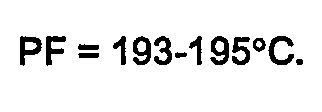
- PF = 161-164°C, avec décomposition.
-
- 3700-2500 cm-1 (plusieurs bandes, amine et pyridine sous forme de chlorhydrates)
- 1710 et 1690 cm-1 (C=O ester)
- Ce composé est préparé à partir du chlorure de 4-picolyle et du 2-(N-méthylamino)éthanol, selon le procédé décrit dans l'exemple IVa ; on obtient une huile qu'on utilise telle que, sans purification, pour l'étape suivante. (rendement 79%)
- 3600-3100 cm-1 (OH avec liaisons hydrogène)
- Ce composé est préparé par réaction de 2-(N-méthyl N-(4-picolyl)amino)éthanol et de cétène dimère comme il est décrit à l'exemple Ilb. Le produit est utilisé tel que pour l'étape suivante, sans purification.
-
- 1760 cm-1 (C=O ester)
- 1735 cm-1 (C=O groupe cétonique)
- Ce composé est préparé à partir de l'acétylacétate correspondant suivant le procédé décrit à l'exemple IVc.
-
- 3400 et 3300 cm-1 (NH2)
- 1660 cm-1 (C=O ester conjugué)
- 1620-1610 cm-1 (C=C)
- Ce composé est obtenu par réaction d'acrylate de méthyle a-acétyl (β-(2',3'-méthylènedioxyphényl), et de 3-aminocrotonate de 2-(N-méthyl N-(4-picolyl)amino)éthyle selon le procédé décrit à l'exemple IVd. Le produit ne peut être obtenu à l'état cristallisé, car il est hygroscopique. On l'obtient sous forme solide amorphe et hygroscopique par suspension dans de l'acétate d'éthyle anhydre, puis évaporation du solvant sous vide. (rendement 41 %)
-
- 3600-2400 cm-1 (plusieurs bandes, chlorhydrates de l'amine et de la pyridine)
- 1700-1680 cm-1 (C=O ester)
- Ce composé est préparé à partir du chlorure de 3-picolyle et du 2-(N-méthylamino)éthanol, selon le procédé décrit à l'exemple IVa ; on obtient une huile qui est utilisée directement pour l'étape suivante, sans purification. (rendement 77%)
- 3600-3100 cm-1 (OH avec liaison hydrogène)
- Ce composé est préparé par réaction de 2-(N-méthyl N-(3-picolyl)amino)éthanol et de cétène dimère, comme décrit dans l'exemple Ilb. Le produit est utilisé tel que pour l'étape suivante, sans purification.
-
- 1760-1750 cm-i (C=O ester)
- 1735-1725 cm-1 (C=O groupe cétone)
- Ce composé est préparé à partir de l'acétylacétate correspondant selon le procédé décrit à l'exemple IVc.
-
- 3450 et 3350 cm-1 (NH2
- 1680-1670 cm-1 (C=O ester conjugué)
- Ce composé est obtenu par réaction d'acrylate de méthyle a-acétyl β-(2',3'-méthylènedioxyphényl) et de 3-aminocrotonate de 2-(N-méthyl N-(3-picolyl)amino)éthyle, selon le procédé décrit à l'exemple IVd. En raison de son caractère hygroscopique, le produit ne peut être obtenu sous forme cristalline. On peut l'obtenir sous la forme d'un solide amorphe hygroscopique, par l'ébullition dans de l'éther di-isopropylique et filtration. Puis on le dissout dans l'eau, on lave au chloroforme et on alcalinise à pH 10 avec de la soude 5 N. Après extraction au chloroforme, la couche organique est séchée sur sulfate de magnésium anhydre, et le solvant est évaporé sous vide. On obtient une huile qui cristallise dans l'éther di-isopropylique. La base est une poudre cristalline blanc-jaune, fondant à 139-141°C. (rendement 43%)
-
- 1710 et 1700 cm-1 (C=O ester)
- 1655 et 1635 cm-1 (C=C)
- Dans un ballon pourvu d'un agitateur magnétique, on verse 62,19 g (0,828 mole) de 2-(N-méthylamino)éthanol, 36 ml d'eau et 21,73 g (0,258 mole) de bicarbonate de soude. Le mélange est agité vigoureusement et chauffé à 90-95°C. 30 g de chlorure de 4-fluorobenzyle sont ajoutés goutte à goutte, puis le mélange est maintenu pendant 2 heures à 90-95°C. Après refroidissement à température ambiante, 50 ml d'eau sont ajoutés et on filtre les sels précipités. Le filtrat est extrait par 2 fois 200 ml de chloroforme, et la couche chloroformique est lavée 2 fois par 50 ml d'eau, puis séchée sur sulfate de magnésium anhydre. Le solvant est évaporé sous vide. On obtient 28,2 g (74,4%) d'une huile claire. Le produit est assez pur pour être utilisé tel que dans l'étape suivante.
-
- 3600-3200 cm-1 (OH)
- 1620 cm-' (C=C aromatique)
- 1540 cm-1 (aromatique)
- Dans un ballon à fond rond équipé d'un agitateur magnétique, d'un réfrigérant à reflux, d'un thermomètre, et d'une ampoule à brome, on chauffe à 75-85°C un mélange de 18,2 g (99 m.moie) de 2-(N-méthyl N-(4'-fluorobenzyl)amino)éthanol et 36 g d'acétate de sodium anhydre. Lorsque la température est atteinte, 7,67 ml (100 m.mole) de cétène dimère sont ajoutés goutte à goutte, tandis qu'on maintient la température entre 75 et 85°C. L'addition achevée, on maintient le mélange sous agitation, à la même température, pendant une heure. Puis l'excès de cétène est éliminé sous vide. On obtient 26,45 g (100%) d'une huile brune, qu'on utilise telle que pour l'étape suivante.
-
- 1750 cm-1 (C=O ester)
- 1720 cm-1 (C=O groupe cétonique)
- Dans un ballon à fond rond équipé d'une arrivée de gaz et d'un thermomètre, on dissout 13,5 g (50 m.mole) d'acétylacétate de 2-(N-méthyl N-(4'-fluorobenzyl)amino)éthyle dans 15 ml de méthanol sec. La solution est refroidie au bain glace-eau et on fait barbotter un courant d'ammoniac sec dans le mélange réactionnel, jusqu'à saturation (généralement atteinte en 2 heures), en maintenant la température au-dessous de 25°C. Le solvant est évaporé sous vide jusqu'à l'obtention d'une huile noire. On ajoute alors 100 ml d'éther de pétrole (PE = 60/80°C) et on porte à ébullition sous vigoureuse agitation, pendant 10 minutes. Le résidu solide est alors éliminé. On évapore le solvant sous vide, et on obtient 12,3 g (rendement 92%) d'huile orange.
-
- 3460 et 3350 cm-1 (NH2)
- 1660 cm-' (ester conjugué)
- 1630 cm-1 (C=C)
- 1,5 g (6 m.mole) d'acrylate de méthyle a-acétyl β-(2,3-méthylènedioxyphényl) et 1,59 g (6 m.mole) de 3-aminocrotonate de 2-(N-méthyl N-(4'-fluorobenzyl)amino)éthyle sont dissous dans 7 ml d'isopropanol. Le mélange est laissé au repos 24 heures à 37°C, en étuve. Le solvant est évaporé sous vide et l'huile résiduelle est dissoute dans 60 ml de chloroforme. Après addition de 20 ml d'acide chlorhydrique 6 N, le mélange est agité pendant 10 minutes. La couche organique est décantée, séchée sur sulfate de magnésium anhydre, et le solvant est évaporé sous vide. Le résidu est dissous dans 10 ml d'acétone chaude et cristallise au refroidissement. Le solide est recueilli par filtration, et lavé avec de l'acétone froide. On obtient 1,3 g (40%) du produit sous forme de chlorhydrate.

-
- 3700-2500 cm-1 (plusieurs bandes, chlorhydrate de l'amine et N-H du cycle dihydropyridine)
- 1715 et 1710 cm-i (C=O ester)
- 1 g (3,8 m.mole) d'acrylate d'éthyle a-acétyl β-(2,3-méthylènedioxyphényl) et 1,01 g (3,8 m.moie) de 3-aminocrotonate de 2-(N-méthyl N-(4'-fluorobenzyl)amino)éthyle sont dissous dans 6,5 ml d'isopropanol. La solution est laissée au repos 24 heures à 37°C, en étuve, puis le solvant est évaporé sous vide. L'huile résiduelle est disoute dans 55 ml de chloroforme, et 17 ml d'acide chorhydrique 6 N sont ajoutés. On agite le mélange pendant 10 minutes. La couche organique est décantée et séchée sursulfate de magnésium anhydre. Après élimination du solvant sous vide, l'huile résiduelle est dissoute dans 8 ml d'acétone chaude et on laisse cristalliser. On obtient 0,95 g (rendement 45,7%) du produit sous forme de chlorhydrate.
-

-
- 3600-2300 cm-1 (plusieurs bandes, chlorhydrate de l'amine et N-H du cycle dihydropyridine)
- 1705-1695 cm-1 (doublet, C=O, groupe ester)
-
- 1,4-dihydro 2,6-diméthyl 4-(2',3'-méthylènedioxyphényl) 3-carboxylate de méthyle 5-carboxylate de
- 2-(N-méthyl N-(2'-thiényl)méthyl amino)éthyle pyridine.
- Ce composé est préparé par réaction de 2-chlorométhylthiophène (org. synthèses col. vol. 3 page 197) et de 2-(N-méthylamino)éthanol, selon le procédé décrit à l'exemple Vlla. (rendement 78%)
- Le produit est utilisé tel que pour l'étape suivante, sans purification.
- 3600-3200 cm-1 (OH, liaison hydrogène)
- Le produit est préparé par réaction de 2-(N-méthyl N-(2'-thiényl)méthyl amino)éthanol et de cétène, selon le procédé décrit à l'exemple Vllb. (rendement 100%). Le produit est utilisé pour l'étape suivante, sans aucune purification.
-
- 1760 cm-1 (C=O ester)
- 1730 cm-1 (C=O groupe cétone)
- Dans un flacon à fond rond, équipé d'un séparateur Dean-Stark contenant du benzène sec, on verse 8,55 g (56,9 m.mole) de 2,3-méthylènedioxybenzaldéhyde et 15 g (58,7 m.mole) d'acétylacétate de 2-(N-méthyl N-(2'-thiénylméthyl)amino)éthyle, dans 35 ml de benzène sec. Le mélange est chauffé jusqu'à complète dissolution, puis on ajoute 0,2 ml de pipéridine et 0,68 ml d'acide acétique glacial. La solution résultante est portée à reflux jusqu'à ce qu'il ne s'élimine plus d'eau (1,5 heure). Le solvant est éliminé sous vide et le résidu est lavé 2 fois par 50 ml d'acide chlorhydrique à 5%. La couche aqueuse est retirée et l'huile résiduelle est dissoute dans 100 ml de chloroforme. La solution chloroformique est lavée avec 2 fois 50 ml de soude à 10%. La couche organique est décantée, séchée sur sulfate de magnésium anhydre, et le solvant est éliminé sous pression réduite. Le résidu huileux est lavé avec un mélange de 30 ml de n-hexane et 3 ml d'éther, pour extraire l'aldéhyde non réagi. Le solvant est retiré, et l'huile est séchée sous vide pour extraire les dernières traces. On obtient 11,5 g (52,6%) d'une huile orange.
-
- 1740 cm-1 (C=O ester)
- 1710 cm-1 (C=O groupe cétone)
- 1680 cm-1 (C=C)
- 3 g (8,07 m.mole) d'acrylate de 2-(N-mèthyl N-(2'-thiényl méthyl)amino)éthyle a-acétyl β-(2,3-méthylène- dioxyphényl) et 0,929 g (8,07 m.mole) de 3-aminocrotonate de méthyle, sont dissous dans 10 ml d'isopropanol. La solution est laissée au repos pendant 24 heures à 37°C, puis le solvant est évaporé sous vide. L'huile résiduelle est dissoute dans 100 ml de chloroforme, puis on ajoute 4 fois 30 ml d'acide chlorhydrique 6 N, sous agitation, en 10 minutes. On recueille la couche organique, on la sèche sur sulfate de magnésium anhydre, et on élimine le solvant sous vide. L'huile résiduelle est reprise par 18 ml d'acétone chaude et laissée cristalliser. Les cristaux sont séparés par filtration et lavés à l'acétone froide. On obtient 2,2 g (52%) du produit sous forme de chlorhydrate.

-
- 3600-2300 cm-i (plusieurs bandes, chlorhydrate de l'amine et N-H du cycle dihydropyridine)
- 1715-1705 cm-i (doublet, C=O des groupes ester)
- Ce composé est préparé à partir d'acrylate de 2-(N-méthyl N-(2'-thiénylméthyl)aminno)éthyle a-acétyl, β-(2,3-méthylènedioxyphényl) et de 3-aminocrotonate d'éthyle, selon le procédé décrit dans l'exemple IXd. (rendement 58,2%). Le produit est obtenu sous forme de chlorhydrate.
-
- 3600-2300 cm-1 (plusieurs bandes, chlorhydrate d'amine et N-H du cycle dihydropyridine)
- 1715-1705 cm-1 (C=O ester)
-
- 1,4-dihydro 2,6-diméthyl 4-(2',3'-méthylènedioxyphényl) 3-carboxylate d'isopropyle 5-carboxylate de
- 2-(N-méthyl N-(4'-fluorobenzyl)amino) éthyle pyridine.
- Le produit est préparé par réaction de 2,3-méthylènedioxybenzaldéhyde et d'acétylacétate de 2-(N-méthyl N-(4'-fluorobenzyl)amino)éthyle selon le procédé décrit dans l'exemple IXc. (rendement 73,8%)
-
- 1740 cm-1 (C=O ester)
- 1720 cm-1 (C=O groupe cétone)
- 1680 cm-1 (C=C)
- Ce composé est préparé à partir du 3-aminocrotonate d'isopropyle et de l'acrylate de 2-(N-méthyl N-(4'-fluorobenzyl)amino)éthyle a-acétyl β-(2,3-méthylènedioxyphényl), selon le procédé décrit dans l'exemple Vlld. Le produit est obtenu sous forme de chlorhydrate, avec un rendement de 36%.

-
- 3600-2400 cm-1 (plusieurs bandes, chlorhydrate de l'amine, et N-H du cycle dihydropyridine)
- 1720 cm-1 et 1710 cm-1 (C=O groupes ester)
- Le composé est préparé par réaction d'acrylate de 2-(N-méthyl N-(2'-thiénylméthyl)amino)éthyle a-acétyl β-(2,3-méthylènedioxyphényl) et de 3-aminocrotonate d'isopropyle, selon le procédé décrit à l'exemple Vlld (rendement 48,3%). Le produit est obtenu sous forme de chlorhydrate.

-
- 3600-2300 cm-1 (plusieurs bandes, chlorhydrate de l'amine et N-H du cycle dihydropyridine)
- 1715 cm-1 et 1705 cm-1 (C=O groupes ester)
- Les exemples suivants illustrent la façon dont les composés de l'invention peuvent être incorporés à des compositions pharmaceutiques.
- Chaque comprimé contient :

- Chaque tablette contient :
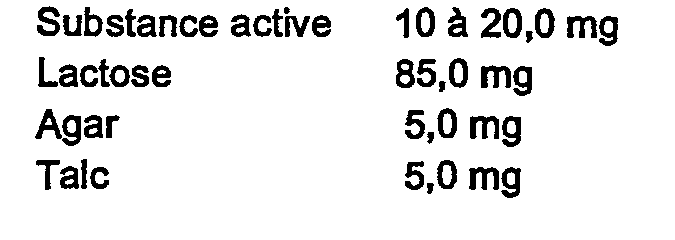
- Chaque capsule contient :


- Les composés de la présente invention ont été testés pour leurs propriétés d'inhibiteurs calciques par des méthodes standard applicables "in vitro". Quelques composés parmi les plus actifs "in vitro" ont également été testés "in vivo".
- Effets inhibiteurs sur les contractions de l'aorte du rat, induites par 80 mM de K CI.
- Les aortes de rats WISTAR (220-250 g) sacrifiés par décapitation sont prélevées et placées dans un bain à organes de 20 ml, à la température de 34°C, et contenant une solution de KREBS composée comme suit (en m.mole par litre) :
- NaC1,137 ; K CI, 2,7 ; Mg CI2-6 H2O, 1,04 ; CaCl2-2H2O, 0,8 ; Na2HPO4-H2O, 0,42 ; NaHCO3, 11,9 ; glucose, 5. Cette solution est oxygénée par un mélange de 95% d'02 et 5% de C02 (Furchgott et Bhadakron, 1956).
- Après une période de stabilisation de 45 minutes sous 2 g de tension, les contractions maximales de l'artère sont induites par l'addition de KCI dans le bain, jusqu'à ce que l'on atteigne la concentration finale de 80 m-.mole/litre. Après que les contractions soient stabilisées, les composés de l'invention, ou l'OXOPIDINE comme témoin de contrôle, sont ajoutés, en laissant une période d'au moins 10 minutes pour stabiliser la relaxation.
- Les composés de la présente invention sont dissous dans l'éthanol pour donner des solutions concentrées à environ 1 mg/ml, à partir desquelles on obtient les dilutions utilisées ci-dessus, de 10-13 à 10-17 M, par addition de solution saline. Les concentrations inhibitrices 50 (CI.50) sont déterminées par analyse de la droite de regression.
- Quelques composés selon l'invention ont été testés pour leur activité antihypertensive sur des rats hypertendus rénaux conscients. La pression sanguine systolique a été mesurée au niveau de la queue de rats éveillés au moyen d'un manchon gonflable et d'un pressomètre digital L.E. 5000 (Letica Instruments, Barcelone, Espagne). Les mesures ont été réalisées avant l'administration i.p de la substance à étudier, puis 30 minutes, 1, 2, 4, et 5 heures après administration. Les animaux ont été maintenus dans des cylindres plastiques préchauffés, pendant les mesures. Les rats présentant une tension inférieure à 160 mm Hg ont été écartés de l'expérience.
- Chaque composé a été administré en suspension à 5% (CMC) par injection i.p.
- La toxicité aiguë de quelques composés de l'invention a été déterminée chez la souris, selon la méthode de LICHFIELD et WILCOXON. Des groupes de 5 souris pesant 20-25 g ont été traités par des doses i.p croissantes des composés à étudier. La mortalité a été enregistrée dans les 7 jours suivant le traitement, et la D L 50 calculée sur cette base.
- Les composés selon l'invention montrent "in vitro" une très haute activité à l'encontre des contractions induites par le K CI sur l'aorte du rat
- Les valeurs suivantes ont été obtenues (CI 50) :


- ln vivo, les composés des exemples 8 et 11 ont montré une activité antihypertensive prononcée, sur les rats hypertendus rénaux, la dose de 1 mglkg diminuant respectivement de 23 et 33% la tension élevée d'origine. Les effets du composé de l'exemple 11 ont été observés pendant plus de 6 heures tandis que ceux du composé de l'exemple 8 étaient plus temporaires.
- La D L 50 intrapéritonéale de ces deux composés chez la souris est de :
-

Claims (17)

- R1 représente un groupe méthyle, éthyle, propyle, isopropyle, butyle ou isobutyle,
- R2 représente un radical méthyle, formyle ou éthyle,
- R3 représente un atome d'hydrogène, ou un groupe 2-, 3-, ou 4-picolyle ou 4-fluorobenzyle, et leurs sels d'addition pharmaceutiquement acceptables, avec un acide minéral ou organique.


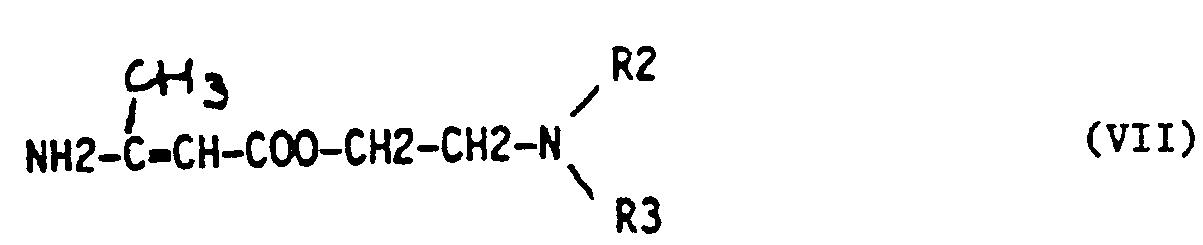


Priority Applications (38)
| Application Number | Priority Date | Filing Date | Title |
|---|---|---|---|
| DE8787401799T DE3768658D1 (de) | 1987-08-03 | 1987-08-03 | 1,4-dihydropyridine, verfahren zu ihrer herstellung und ihre verwendung als arzneimittel. |
| AT87401799T ATE61588T1 (de) | 1987-08-03 | 1987-08-03 | 1,4-dihydropyridine, verfahren zu ihrer herstellung und ihre verwendung als arzneimittel. |
| EP87401799A EP0302980B1 (fr) | 1987-08-03 | 1987-08-03 | 1,4-Dihydropyridines, leur procédé de préparation et leur application comme médicaments |
| LU87297A LU87297A1 (fr) | 1987-08-03 | 1988-07-27 | 1,4-dihydropyridines,leur procede de preparation et leur application comme medicaments |
| CA000573422A CA1306261C (fr) | 1987-08-03 | 1988-07-29 | 1,4-dihydropyridines, leur procede de preparation et leur application comme medicaments |
| YU147088A YU46547B (sh) | 1987-08-03 | 1988-07-29 | 1,4-dihidropiridini i postupak za njihovo dobijanje |
| DE3825962A DE3825962A1 (de) | 1987-08-03 | 1988-07-29 | 1,4-dihydropyridinderivate, verfahren zu ihrer herstellung und sie enthaltende arzneimittel |
| FI883603A FI91406C (fi) | 1987-08-03 | 1988-08-01 | Menetelmä terapeuttisesti käyttökelpoisten 1,4-dihydropyridiinijohdannaisten valmistamiseksi |
| MA21587A MA21344A1 (fr) | 1987-08-03 | 1988-08-01 | 1,4-dihydropyridines, leur procede de preparation et leur application . |
| DD88318537A DD282008A5 (de) | 1987-08-03 | 1988-08-01 | Verfahren zur herstellung von neuen 1,4-dihydropyridinderivaten |
| NO883406A NO170934C (no) | 1987-08-03 | 1988-08-01 | Analogifremgangsmaate for fremstilling av nye, terapeutiskvirksomme 1,4-dihydropyridinderivater |
| JP63192591A JPH0733383B2 (ja) | 1987-08-03 | 1988-08-01 | 1,4−ジヒドロピリジン誘導体、これらの製造法およびこれらの薬剤としての適用 |
| CN88106537A CN1038587C (zh) | 1987-08-03 | 1988-08-02 | 1,4-二氢吡啶衍生物的制备方法 |
| IT8848259A IT1235013B (it) | 1987-08-03 | 1988-08-02 | 1,4-diidropiridine, loro procedimento di preparazione e loro applicazione come medicamenti |
| SK5413-88A SK541388A3 (en) | 1987-08-03 | 1988-08-02 | 1,4-dihydropyridine derivatives, method for producing the same, pharmaceutical composition containing the same |
| TNTNSN88081A TNSN88081A1 (fr) | 1987-08-03 | 1988-08-02 | 1,4-dihydropyridines, leur procede de preparation et leur application comme medicaments |
| GB8818356A GB2208861B (en) | 1987-08-03 | 1988-08-02 | 1,4-dihydropyridines, their preparation and medicinal use |
| CH2922/88A CH675999A5 (en) | 1987-08-03 | 1988-08-02 | 4:Methylene di:oxy phenyl di:hydro pyridine(s) |
| BE8800893A BE1001055A4 (fr) | 1987-08-03 | 1988-08-02 | 1,4-dihydropyridines, leur procede de preparation et leur application comme medicaments. |
| PT88173A PT88173B (pt) | 1987-08-03 | 1988-08-02 | Processo para a preparacao de 1,4-di-hidropiridinas e sua aplicacao como medicamentos |
| ES8802413A ES2007543A6 (es) | 1987-08-03 | 1988-08-02 | Procedimiento de preparacion de 1,4-dihidropiridinas. |
| AU20330/88A AU606441C (en) | 1987-08-03 | 1988-08-02 | 1,4-dihydro-4-(2,3-methylene dioxphenyl)-3,5 pyridine dicarboxylate, process for preparation thereof and their application as medicinal products |
| NZ225661A NZ225661A (en) | 1987-08-03 | 1988-08-02 | 1,4-dihydropyridine derivatives and pharmaceutical compositions |
| IL87321A IL87321A (en) | 1987-08-03 | 1988-08-02 | 1,4-dihydropyridines, their preparationand pharmaceutical compositionscontaining them |
| IS3378A IS1549B (is) | 1987-08-03 | 1988-08-02 | 1,4 - Dihydropyridines, og aðferð við framleiðsluþess svo og notkun þess í lækningaskyni |
| HU884065A HU204523B (en) | 1987-08-03 | 1988-08-02 | Process for producing 1,4-dihydro-pyridinesand pharmaceutical compositions containing them |
| IE236488A IE60358B1 (en) | 1987-08-03 | 1988-08-02 | 1,4-dihydropyridines, process for preparation thereof and their application as medicinal products |
| KR1019880009867A KR960001724B1 (ko) | 1987-08-03 | 1988-08-02 | I,4-디하이드로피리딘, 이의 제조방법 및 이의 심장혈관 질환 치료제 |
| CS885413A CZ282077B6 (cs) | 1987-08-03 | 1988-08-02 | Derivát 1,4-dihydropyridinu, způsob jejich výroby a faramceutické prostředky, které je obsahují |
| GR880100507A GR880100507A (el) | 1987-08-03 | 1988-08-02 | 1,4-διυδροπυριδινες μεθοδος παρασκευης τους και εφαρμογη τους ως φαρμακα |
| US07/227,373 US4952592A (en) | 1987-08-03 | 1988-08-02 | 1,4-dihydro 2,6-dimethyl 4-(2,3-methylenedioxyphenyl) 3-alkoxy carbonyl 5-[2-(substituted amino)ethoxy]carbonyl pyridine |
| DK430288A DK430288A (da) | 1987-08-03 | 1988-08-02 | 1,4-dihydropyridinderivater, fremgangsmaade til fremstilling af saadanne derivater og laegemiddel indeholdende disse |
| ZA885684A ZA885684B (en) | 1987-08-03 | 1988-08-03 | 1,4-dihydropyridines,process for preparation thereof and their application as medicinal products |
| IN556/MAS/88A IN167550B (fr) | 1987-08-03 | 1988-08-03 | |
| PH37337A PH25645A (en) | 1987-08-03 | 1988-08-03 | New 1,4-dihydropyridine, pharmaceutical compostions containg them, method of usethereof |
| CA000615848A CA1306262C (fr) | 1987-08-03 | 1990-08-28 | 1,4-dihydropyridines, leur procede de preparation et leur application comme medicaments |
| GR91400660T GR3001984T3 (en) | 1987-08-03 | 1991-05-22 | 1,4-dihydropyridines, process for their preparation and their use as medicaments |
| SU925011204A RU2036922C1 (ru) | 1987-08-03 | 1992-03-31 | Производные 1,4-дигидропиридина или их гидрохлориды, обладающие антагонистическими свойствами по отношению к ионам кальция |
Applications Claiming Priority (1)
| Application Number | Priority Date | Filing Date | Title |
|---|---|---|---|
| EP87401799A EP0302980B1 (fr) | 1987-08-03 | 1987-08-03 | 1,4-Dihydropyridines, leur procédé de préparation et leur application comme médicaments |
Publications (2)
| Publication Number | Publication Date |
|---|---|
| EP0302980A1 EP0302980A1 (fr) | 1989-02-15 |
| EP0302980B1 true EP0302980B1 (fr) | 1991-03-13 |
Family
ID=8198243
Family Applications (1)
| Application Number | Title | Priority Date | Filing Date |
|---|---|---|---|
| EP87401799A Expired - Lifetime EP0302980B1 (fr) | 1987-08-03 | 1987-08-03 | 1,4-Dihydropyridines, leur procédé de préparation et leur application comme médicaments |
Country Status (34)
| Country | Link |
|---|---|
| US (1) | US4952592A (fr) |
| EP (1) | EP0302980B1 (fr) |
| JP (1) | JPH0733383B2 (fr) |
| KR (1) | KR960001724B1 (fr) |
| CN (1) | CN1038587C (fr) |
| AT (1) | ATE61588T1 (fr) |
| BE (1) | BE1001055A4 (fr) |
| CA (2) | CA1306261C (fr) |
| CH (1) | CH675999A5 (fr) |
| CZ (1) | CZ282077B6 (fr) |
| DD (1) | DD282008A5 (fr) |
| DE (2) | DE3768658D1 (fr) |
| DK (1) | DK430288A (fr) |
| ES (1) | ES2007543A6 (fr) |
| FI (1) | FI91406C (fr) |
| GB (1) | GB2208861B (fr) |
| GR (2) | GR880100507A (fr) |
| HU (1) | HU204523B (fr) |
| IE (1) | IE60358B1 (fr) |
| IL (1) | IL87321A (fr) |
| IN (1) | IN167550B (fr) |
| IS (1) | IS1549B (fr) |
| IT (1) | IT1235013B (fr) |
| LU (1) | LU87297A1 (fr) |
| MA (1) | MA21344A1 (fr) |
| NO (1) | NO170934C (fr) |
| NZ (1) | NZ225661A (fr) |
| PH (1) | PH25645A (fr) |
| PT (1) | PT88173B (fr) |
| RU (1) | RU2036922C1 (fr) |
| SK (1) | SK541388A3 (fr) |
| TN (1) | TNSN88081A1 (fr) |
| YU (1) | YU46547B (fr) |
| ZA (1) | ZA885684B (fr) |
Families Citing this family (21)
| Publication number | Priority date | Publication date | Assignee | Title |
|---|---|---|---|---|
| US5242933A (en) * | 1990-07-10 | 1993-09-07 | Adir Et Compagnie | Piperidine, tetrahydropyridine and pyrrolidine compounds |
| EP0854721B1 (fr) * | 1995-08-02 | 2001-10-24 | Smithkline Beecham Corporation | Antagonistes des recepteurs a l'endotheline |
| RU2168987C2 (ru) * | 1997-04-15 | 2001-06-20 | Санкт-Петербургская Государственная Химико-Фармацевтическая Академия | Гипотензивное средство |
| RU2155036C2 (ru) * | 1998-11-11 | 2000-08-27 | Азад Зияд Оглы Абышев | Средство для лечения ишемической болезни сердца |
| IT1304513B1 (it) * | 1998-12-30 | 2001-03-19 | Endura Spa | Processo per la sintesi di 5-(alfa-idrossialchil)benzo(1,3)diossoli. |
| NZ521853A (en) * | 2000-04-11 | 2003-11-28 | Sankyo Co | Stabilized pharmaceutical compositions containing a calcium blocker |
| RU2187303C2 (ru) * | 2000-10-12 | 2002-08-20 | Азад Зияд Оглы Абышев | Способ получения таблеток диуманкала - forte по 0,01 г |
| EP1545519B1 (fr) | 2002-08-19 | 2011-03-23 | Pfizer Inc. | Therapie de combinaison pour maladies hyperproliferatives |
| EP1796653A2 (fr) * | 2004-07-26 | 2007-06-20 | Actelion Pharmaceuticals Ltd. | Traitement de l'hypertension pulmonaire au moyen d'iloprost inhale avec une formulation de microparticules |
| US7741317B2 (en) | 2005-10-21 | 2010-06-22 | Bristol-Myers Squibb Company | LXR modulators |
| US7893050B2 (en) * | 2005-10-26 | 2011-02-22 | Asahi Kasei Pharma Corporation | Fasudil in combination therapies for the treatment of pulmonary arterial hypertension |
| EP2351569B1 (fr) | 2005-10-26 | 2012-08-22 | Asahi Kasei Pharma Corporation | Fasudil dans des thérapies combinées pour le traitement de l'hypertension artérielle pulmonaire |
| US7888376B2 (en) | 2005-11-23 | 2011-02-15 | Bristol-Myers Squibb Company | Heterocyclic CETP inhibitors |
| TW200806648A (en) * | 2005-11-29 | 2008-02-01 | Sankyo Co | Acid addition salts of dihydropyridine derivatives |
| TW200736245A (en) * | 2005-11-29 | 2007-10-01 | Sankyo Co | Acid addition salts of optically active dihydropyridine derivatives |
| US7919506B2 (en) | 2006-03-10 | 2011-04-05 | Pfizer Inc. | Dibenzyl amine compounds and derivatives |
| JP5498168B2 (ja) | 2006-12-01 | 2014-05-21 | ブリストル−マイヤーズ スクイブ カンパニー | アテローム性動脈硬化および循環器疾患の治療のためのcetp阻害剤としてのn−((3−ベンジル)−2,2−(ビス−フェニル)−プロパン−1−アミン誘導体 |
| US8883844B2 (en) | 2010-09-24 | 2014-11-11 | Nitrogenix Inc. | Nitric oxide releasing amino acid ester for treatment of pulmonary hypertension and other respiratory conditions |
| SG11201507496UA (en) | 2013-04-17 | 2015-11-27 | Pfizer | N-piperidin-3-ylbenzamide derivatives for treating cardiovascular diseases |
| WO2016055901A1 (fr) | 2014-10-08 | 2016-04-14 | Pfizer Inc. | Composés d'amide substitué |
| US11248001B2 (en) | 2019-01-18 | 2022-02-15 | Astrazeneca Ab | PCSK9 inhibitors and methods of use thereof |
Family Cites Families (8)
| Publication number | Priority date | Publication date | Assignee | Title |
|---|---|---|---|---|
| US3441648A (en) * | 1967-02-07 | 1969-04-29 | Smithkline Corp | Compositions and methods for lowering blood pressure with 1,4-dihydropyridines |
| US4031104A (en) * | 1972-04-18 | 1977-06-21 | Bayer Aktiengesellschaft | 1,4-Dihydropyridine carboxylic acid esters |
| JPS5978186A (ja) * | 1982-10-27 | 1984-05-04 | Yoshitomi Pharmaceut Ind Ltd | 1,4−ジヒドロピリジン−3,5−ジカルボン酸エステル誘導体 |
| IE57810B1 (en) * | 1984-03-27 | 1993-04-21 | Delagrange Lab | 1,4-dihydropyridine derivatives,their preparation and their use |
| ES531033A0 (es) * | 1984-03-27 | 1985-09-01 | Inst Investigacion Desarrollo | Un procedimiento para la preparacion de nuevas 1,4-dihidropirinas-4-(polioxialquilfenil)-sustituidas |
| JPH068294B2 (ja) * | 1985-02-26 | 1994-02-02 | 富山化学工業株式会社 | 新規な1,4−ジヒドロピリジン誘導体およびその塩 |
| EP0174131A3 (fr) * | 1984-09-01 | 1989-06-07 | FISONS plc | Dihydropyridines, leurs procédés de préparation et leurs produits intermédiaires ainsi que les compositions pharmaceutiques les contenant |
| JPH01207267A (ja) * | 1987-03-05 | 1989-08-21 | Yamanouchi Pharmaceut Co Ltd | ピリジン誘導体及び該化合物を含有する肝疾患治療剤 |
-
1987
- 1987-08-03 EP EP87401799A patent/EP0302980B1/fr not_active Expired - Lifetime
- 1987-08-03 DE DE8787401799T patent/DE3768658D1/de not_active Expired - Lifetime
- 1987-08-03 AT AT87401799T patent/ATE61588T1/de active
-
1988
- 1988-07-27 LU LU87297A patent/LU87297A1/fr unknown
- 1988-07-29 CA CA000573422A patent/CA1306261C/fr not_active Expired - Lifetime
- 1988-07-29 DE DE3825962A patent/DE3825962A1/de not_active Withdrawn
- 1988-07-29 YU YU147088A patent/YU46547B/sh unknown
- 1988-08-01 MA MA21587A patent/MA21344A1/fr unknown
- 1988-08-01 DD DD88318537A patent/DD282008A5/de not_active IP Right Cessation
- 1988-08-01 JP JP63192591A patent/JPH0733383B2/ja not_active Expired - Lifetime
- 1988-08-01 NO NO883406A patent/NO170934C/no unknown
- 1988-08-01 FI FI883603A patent/FI91406C/fi not_active IP Right Cessation
- 1988-08-02 GB GB8818356A patent/GB2208861B/en not_active Expired - Lifetime
- 1988-08-02 SK SK5413-88A patent/SK541388A3/sk unknown
- 1988-08-02 ES ES8802413A patent/ES2007543A6/es not_active Expired
- 1988-08-02 HU HU884065A patent/HU204523B/hu not_active IP Right Cessation
- 1988-08-02 KR KR1019880009867A patent/KR960001724B1/ko not_active Expired - Fee Related
- 1988-08-02 BE BE8800893A patent/BE1001055A4/fr not_active IP Right Cessation
- 1988-08-02 US US07/227,373 patent/US4952592A/en not_active Expired - Fee Related
- 1988-08-02 TN TNTNSN88081A patent/TNSN88081A1/fr unknown
- 1988-08-02 IL IL87321A patent/IL87321A/xx not_active IP Right Cessation
- 1988-08-02 CZ CS885413A patent/CZ282077B6/cs not_active IP Right Cessation
- 1988-08-02 PT PT88173A patent/PT88173B/pt not_active IP Right Cessation
- 1988-08-02 CH CH2922/88A patent/CH675999A5/fr not_active IP Right Cessation
- 1988-08-02 IE IE236488A patent/IE60358B1/en not_active IP Right Cessation
- 1988-08-02 GR GR880100507A patent/GR880100507A/el unknown
- 1988-08-02 IT IT8848259A patent/IT1235013B/it active
- 1988-08-02 NZ NZ225661A patent/NZ225661A/xx unknown
- 1988-08-02 CN CN88106537A patent/CN1038587C/zh not_active Expired - Fee Related
- 1988-08-02 DK DK430288A patent/DK430288A/da not_active Application Discontinuation
- 1988-08-02 IS IS3378A patent/IS1549B/is unknown
- 1988-08-03 IN IN556/MAS/88A patent/IN167550B/en unknown
- 1988-08-03 ZA ZA885684A patent/ZA885684B/xx unknown
- 1988-08-03 PH PH37337A patent/PH25645A/en unknown
-
1990
- 1990-08-28 CA CA000615848A patent/CA1306262C/fr not_active Expired - Lifetime
-
1991
- 1991-05-22 GR GR91400660T patent/GR3001984T3/el unknown
-
1992
- 1992-03-31 RU SU925011204A patent/RU2036922C1/ru active
Non-Patent Citations (1)
| Title |
|---|
| The Merk Index Manual Data Report (1986) * |
Also Published As
Similar Documents
| Publication | Publication Date | Title |
|---|---|---|
| EP0302980A1 (fr) | 1,4-Dihydropyridines, leur procédé de préparation et leur application comme médicaments | |
| CA1280115C (fr) | Derives de benzo¬b| thiophene et benzo¬b| furannecarboxamides, leurs procedes de preparation et les medicaments les contenant | |
| FR2531707A1 (fr) | Trifluoromethylphenyltetrahydropyridines substituees a activite anorexigene, un procede de preparation et compositions pharmaceutiques | |
| EP0576619B1 (fr) | Compositions therapeutiques a base de derives de 1,2-dithiole-3-thione | |
| EP0114850B1 (fr) | Nouveaux derives substitues du 2,5-diamino 1,4-diazole, leurs procedes de preparation et les compositions pharmaceutiques en renfermant | |
| EP0004494B1 (fr) | Nouveaux dérivés de 1,3-dihydro 3-(1-(2-(2,3-dihydro 1,4-benzo-dioxin-2-yl)2-hydroxy éthyl)pipéridin-4-yl)2H-indol 2-one, leur procédé de préparation, leur application comme médicaments et les compositions pharmaceutiques les renfermant | |
| EP0494816A1 (fr) | Dérivés de 1,4-dihydropyridine, leur procédé de préparation et composition thérapeutique les contenant | |
| EP0240398B1 (fr) | Dérivés dissymétriques de l'acide 1,4-dihydropyridine-3,5-dicarboxylique, procédés de préparation et utilisation en thérapeutique | |
| EP1655030B1 (fr) | Dérivés de benzothiadiazine, leur procédé de préparation et les compositions pharmaceutiques qui les contiennent | |
| EP1486503B1 (fr) | Dérivés de benzothiazine et benzothiadiazine, leur procédé de préparation et les compositions pharmaceutiques qui les contiennent | |
| FR2547822A1 (fr) | Acylpiperazinoquinazolines substituees utiles comme medicaments et procede pour leur preparation | |
| EP0259206A1 (fr) | Dérivés de la dihydro-1,4 pyridine leurs procédés de préparation et les compositions pharmaceutiques qui les contiennent | |
| EP0158211B1 (fr) | Nouveaux dérivés de 1,4 dihydropyridine, leur procédé de préparation, et leur application comme médicaments | |
| FR2615188A1 (fr) | Derives d'hydrazine, procede d'obtention et compositions pharmaceutiques les contenant | |
| EP0433167B1 (fr) | Nouveaux dérivés de la pipéridine, leur procédé de préparation et les compositions pharmaceutiques les renfermant | |
| EP0105881B1 (fr) | Nouvelles cyanoguanidines, leur procede d'obtention et les compositions pharmaceutiques en renfermant | |
| EP0412898A1 (fr) | Nouveaux dérivés d'oxazolo pyridines, leur procédé de préparation et les compositions pharmaceutiques qui les contiennent | |
| EP0958290B1 (fr) | Derives de la 1,4-dihydropyridine et leur utilisation en therapeutique | |
| FR2522663A1 (fr) | Nouveaux alcaloides ergopeptidiques, leur preparation et leur utilisation comme medicaments | |
| EP0384844A2 (fr) | Nouveaux dérivés de la 1-arylsulfonyl pyrrollidin-2-thione ou de la 1-aryl-sulfonyl pipéridin-2-thione, leur procédé de préparation, leur application comme médicaments et les compositions les renfermant | |
| WO2011083264A1 (fr) | Derives thiochromanes, leur procede de preparation et les compositions pharmaceutiques qui les contiennent | |
| BE818988A (fr) | Nouvelles n-carbamoylamidines |
Legal Events
| Date | Code | Title | Description |
|---|---|---|---|
| PUAI | Public reference made under article 153(3) epc to a published international application that has entered the european phase |
Free format text: ORIGINAL CODE: 0009012 |
|
| AK | Designated contracting states |
Kind code of ref document: A1 Designated state(s): AT BE CH DE ES FR GB GR IT LI LU NL SE |
|
| 17P | Request for examination filed |
Effective date: 19890420 |
|
| 17Q | First examination report despatched |
Effective date: 19891218 |
|
| RAP1 | Party data changed (applicant data changed or rights of an application transferred) |
Owner name: LABORATORIOS DELAGRANGE S.A. |
|
| GRAA | (expected) grant |
Free format text: ORIGINAL CODE: 0009210 |
|
| RBV | Designated contracting states (corrected) |
Designated state(s): AT DE ES FR GB GR IT NL SE |
|
| AK | Designated contracting states |
Kind code of ref document: B1 Designated state(s): AT DE ES FR GB GR IT NL SE |
|
| REF | Corresponds to: |
Ref document number: 61588 Country of ref document: AT Date of ref document: 19910315 Kind code of ref document: T |
|
| GBT | Gb: translation of ep patent filed (gb section 77(6)(a)/1977) | ||
| REF | Corresponds to: |
Ref document number: 3768658 Country of ref document: DE Date of ref document: 19910418 |
|
| ITF | It: translation for a ep patent filed | ||
| PG25 | Lapsed in a contracting state [announced via postgrant information from national office to epo] |
Ref country code: ES Free format text: LAPSE BECAUSE OF FAILURE TO SUBMIT A TRANSLATION OF THE DESCRIPTION OR TO PAY THE FEE WITHIN THE PRESCRIBED TIME-LIMIT Effective date: 19910624 |
|
| NLR4 | Nl: receipt of corrected translation in the netherlands language at the initiative of the proprietor of the patent | ||
| PLBE | No opposition filed within time limit |
Free format text: ORIGINAL CODE: 0009261 |
|
| STAA | Information on the status of an ep patent application or granted ep patent |
Free format text: STATUS: NO OPPOSITION FILED WITHIN TIME LIMIT |
|
| 26N | No opposition filed | ||
| REG | Reference to a national code |
Ref country code: GR Ref legal event code: FG4A Free format text: 3001984 |
|
| EAL | Se: european patent in force in sweden |
Ref document number: 87401799.9 |
|
| REG | Reference to a national code |
Ref country code: GB Ref legal event code: 732E |
|
| REG | Reference to a national code |
Ref country code: FR Ref legal event code: TP |
|
| NLS | Nl: assignments of ep-patents |
Owner name: PRODESFARMA, S.A.;INSTITUTO DE INVESTIGACION Y DES |
|
| NLS | Nl: assignments of ep-patents |
Owner name: ALMIRALL-PRODESFARMA S.A. |
|
| REG | Reference to a national code |
Ref country code: FR Ref legal event code: TP |
|
| REG | Reference to a national code |
Ref country code: GB Ref legal event code: 732E |
|
| PGFP | Annual fee paid to national office [announced via postgrant information from national office to epo] |
Ref country code: SE Payment date: 19990726 Year of fee payment: 13 |
|
| PGFP | Annual fee paid to national office [announced via postgrant information from national office to epo] |
Ref country code: GR Payment date: 19990727 Year of fee payment: 13 |
|
| PGFP | Annual fee paid to national office [announced via postgrant information from national office to epo] |
Ref country code: FR Payment date: 19990728 Year of fee payment: 13 |
|
| PGFP | Annual fee paid to national office [announced via postgrant information from national office to epo] |
Ref country code: GB Payment date: 19990802 Year of fee payment: 13 |
|
| PGFP | Annual fee paid to national office [announced via postgrant information from national office to epo] |
Ref country code: NL Payment date: 19990831 Year of fee payment: 13 Ref country code: AT Payment date: 19990831 Year of fee payment: 13 |
|
| PGFP | Annual fee paid to national office [announced via postgrant information from national office to epo] |
Ref country code: DE Payment date: 19991020 Year of fee payment: 13 |
|
| PG25 | Lapsed in a contracting state [announced via postgrant information from national office to epo] |
Ref country code: GB Free format text: LAPSE BECAUSE OF NON-PAYMENT OF DUE FEES Effective date: 20000803 Ref country code: AT Free format text: LAPSE BECAUSE OF NON-PAYMENT OF DUE FEES Effective date: 20000803 |
|
| PG25 | Lapsed in a contracting state [announced via postgrant information from national office to epo] |
Ref country code: SE Free format text: LAPSE BECAUSE OF NON-PAYMENT OF DUE FEES Effective date: 20000804 |
|
| PG25 | Lapsed in a contracting state [announced via postgrant information from national office to epo] |
Ref country code: GR Free format text: LAPSE BECAUSE OF NON-PAYMENT OF DUE FEES Effective date: 20000831 |
|
| PG25 | Lapsed in a contracting state [announced via postgrant information from national office to epo] |
Ref country code: NL Free format text: LAPSE BECAUSE OF NON-PAYMENT OF DUE FEES Effective date: 20010301 |
|
| GBPC | Gb: european patent ceased through non-payment of renewal fee |
Effective date: 20000803 |
|
| EUG | Se: european patent has lapsed |
Ref document number: 87401799.9 |
|
| PG25 | Lapsed in a contracting state [announced via postgrant information from national office to epo] |
Ref country code: FR Free format text: LAPSE BECAUSE OF NON-PAYMENT OF DUE FEES Effective date: 20010430 |
|
| NLV4 | Nl: lapsed or anulled due to non-payment of the annual fee |
Effective date: 20010301 |
|
| PG25 | Lapsed in a contracting state [announced via postgrant information from national office to epo] |
Ref country code: DE Free format text: LAPSE BECAUSE OF NON-PAYMENT OF DUE FEES Effective date: 20010501 |
|
| REG | Reference to a national code |
Ref country code: FR Ref legal event code: ST |
|
| PG25 | Lapsed in a contracting state [announced via postgrant information from national office to epo] |
Ref country code: IT Free format text: LAPSE BECAUSE OF NON-PAYMENT OF DUE FEES Effective date: 20050803 |