EP0302984A1 - Corps en métal dur revêtu - Google Patents
Corps en métal dur revêtu Download PDFInfo
- Publication number
- EP0302984A1 EP0302984A1 EP87890188A EP87890188A EP0302984A1 EP 0302984 A1 EP0302984 A1 EP 0302984A1 EP 87890188 A EP87890188 A EP 87890188A EP 87890188 A EP87890188 A EP 87890188A EP 0302984 A1 EP0302984 A1 EP 0302984A1
- Authority
- EP
- European Patent Office
- Prior art keywords
- coating
- layer
- aluminum
- oxygen
- titanium
- Prior art date
- Legal status (The legal status is an assumption and is not a legal conclusion. Google has not performed a legal analysis and makes no representation as to the accuracy of the status listed.)
- Withdrawn
Links
Images
Classifications
-
- C—CHEMISTRY; METALLURGY
- C23—COATING METALLIC MATERIAL; COATING MATERIAL WITH METALLIC MATERIAL; CHEMICAL SURFACE TREATMENT; DIFFUSION TREATMENT OF METALLIC MATERIAL; COATING BY VACUUM EVAPORATION, BY SPUTTERING, BY ION IMPLANTATION OR BY CHEMICAL VAPOUR DEPOSITION, IN GENERAL; INHIBITING CORROSION OF METALLIC MATERIAL OR INCRUSTATION IN GENERAL
- C23C—COATING METALLIC MATERIAL; COATING MATERIAL WITH METALLIC MATERIAL; SURFACE TREATMENT OF METALLIC MATERIAL BY DIFFUSION INTO THE SURFACE, BY CHEMICAL CONVERSION OR SUBSTITUTION; COATING BY VACUUM EVAPORATION, BY SPUTTERING, BY ION IMPLANTATION OR BY CHEMICAL VAPOUR DEPOSITION, IN GENERAL
- C23C16/00—Chemical coating by decomposition of gaseous compounds, without leaving reaction products of surface material in the coating, i.e. chemical vapour deposition [CVD] processes
- C23C16/22—Chemical coating by decomposition of gaseous compounds, without leaving reaction products of surface material in the coating, i.e. chemical vapour deposition [CVD] processes characterised by the deposition of inorganic material, other than metallic material
- C23C16/30—Deposition of compounds, mixtures or solid solutions, e.g. borides, carbides, nitrides
- C23C16/40—Oxides
- C23C16/405—Oxides of refractory metals or yttrium
-
- C—CHEMISTRY; METALLURGY
- C23—COATING METALLIC MATERIAL; COATING MATERIAL WITH METALLIC MATERIAL; CHEMICAL SURFACE TREATMENT; DIFFUSION TREATMENT OF METALLIC MATERIAL; COATING BY VACUUM EVAPORATION, BY SPUTTERING, BY ION IMPLANTATION OR BY CHEMICAL VAPOUR DEPOSITION, IN GENERAL; INHIBITING CORROSION OF METALLIC MATERIAL OR INCRUSTATION IN GENERAL
- C23C—COATING METALLIC MATERIAL; COATING MATERIAL WITH METALLIC MATERIAL; SURFACE TREATMENT OF METALLIC MATERIAL BY DIFFUSION INTO THE SURFACE, BY CHEMICAL CONVERSION OR SUBSTITUTION; COATING BY VACUUM EVAPORATION, BY SPUTTERING, BY ION IMPLANTATION OR BY CHEMICAL VAPOUR DEPOSITION, IN GENERAL
- C23C16/00—Chemical coating by decomposition of gaseous compounds, without leaving reaction products of surface material in the coating, i.e. chemical vapour deposition [CVD] processes
- C23C16/22—Chemical coating by decomposition of gaseous compounds, without leaving reaction products of surface material in the coating, i.e. chemical vapour deposition [CVD] processes characterised by the deposition of inorganic material, other than metallic material
- C23C16/30—Deposition of compounds, mixtures or solid solutions, e.g. borides, carbides, nitrides
-
- C—CHEMISTRY; METALLURGY
- C23—COATING METALLIC MATERIAL; COATING MATERIAL WITH METALLIC MATERIAL; CHEMICAL SURFACE TREATMENT; DIFFUSION TREATMENT OF METALLIC MATERIAL; COATING BY VACUUM EVAPORATION, BY SPUTTERING, BY ION IMPLANTATION OR BY CHEMICAL VAPOUR DEPOSITION, IN GENERAL; INHIBITING CORROSION OF METALLIC MATERIAL OR INCRUSTATION IN GENERAL
- C23C—COATING METALLIC MATERIAL; COATING MATERIAL WITH METALLIC MATERIAL; SURFACE TREATMENT OF METALLIC MATERIAL BY DIFFUSION INTO THE SURFACE, BY CHEMICAL CONVERSION OR SUBSTITUTION; COATING BY VACUUM EVAPORATION, BY SPUTTERING, BY ION IMPLANTATION OR BY CHEMICAL VAPOUR DEPOSITION, IN GENERAL
- C23C16/00—Chemical coating by decomposition of gaseous compounds, without leaving reaction products of surface material in the coating, i.e. chemical vapour deposition [CVD] processes
- C23C16/22—Chemical coating by decomposition of gaseous compounds, without leaving reaction products of surface material in the coating, i.e. chemical vapour deposition [CVD] processes characterised by the deposition of inorganic material, other than metallic material
- C23C16/30—Deposition of compounds, mixtures or solid solutions, e.g. borides, carbides, nitrides
- C23C16/40—Oxides
- C23C16/403—Oxides of aluminium, magnesium or beryllium
Definitions
- the invention relates to a coated hard metal body, in particular a coated hard metal cutting tool, the base coating being formed from a coating containing oxygen and aluminum on the basis of carbide and / or nitride hard materials, with elements of the IV - VI subgroup of the periodic table, and at least one further coating based on oxide and / or nitride, which has deposits or precipitates made of oxide or nitride of aluminum and / or zircon and / or titanium and a method for producing the same.
- Tungsten carbide bodies and tools as mentioned above are used, among other things, in metal processing and serve in particular as tools for turning, cutting, milling, drilling, sawing and the like.
- the non-cutting shaping especially in the cold state of the workpiece and as dies, nozzles, press rams, dies and.
- hard metal base bodies are known, which also carry a coating in a multi-layer design, whereby there is always the endeavor that the tools both withstand the mechanical requirements and provide high machining performance. All efforts are therefore aimed at increasing the service life of the tools by means of single-layer or multi-layer hard material layers.
- a tool is known in which an outer layer of one or more extremely wear-resistant on a base layer Deposits consisting of aluminum oxide and / or zirconium oxide is applied.
- a base layer consisting of aluminum oxide and / or zirconium oxide
- cracks can occur due to different thermal expansion coefficients to the neighboring layer, whereby the insufficient adhesive strength and brittleness also lead to flaking as the layer thickness increases, which has a disadvantageous effect on the tool life.
- a multi-layer hard material coating with improved adhesive strength has become known from EP-A1 0 083 043.
- EP-A1 0 083 043 these alternating layers achieve a significantly increased wear resistance and an excellent adhesive strength of the hard material coating.
- a hard metal body in particular a hard metal cutting tool with two coatings, has become known from EP-A1 0 149 449, it being possible for a layer, optionally boride-containing, to be embedded in the second oxidic coating.
- These optionally provided inclusions have at least substantial proportions of metal boride and are preferably formed from aluminum and / or zirconium boride.
- the improvements in wear properties are to be achieved by incorporating zirconium in the oxidic coatings applied to the base coating doped with aluminum according to the invention, and likewise by incorporating boride deposits.
- the invention has for its object to provide hard metal bodies, in particular harmonic cutting tools, with a coating consisting of several layers, which has a considerably improved adhesive strength compared to known wear parts and a high breaking resistance and at the same time is extremely wear-resistant.
- a carbide and / or nitride coating comprising one or more layers of first oxygen is applied to a substrate of the hard metal base body, via which at least one further oxidic and / or nitride coating with deposits and / or precipitates is arranged, wherein the inclusions or precipitates consist of oxide and / or nitride and / or carbide of aluminum and / or zirconium and / or titanium, which result from a special temperature control and / or gas flow during the coating.
- the hard metal body coated according to the invention has extremely high wear resistance with excellent adhesive strength of the coating, which results in significantly improved usage properties, e.g. of the cutting tool result.
- Hard material layers are homogeneous throughout and can form mixed crystals. This is always the case when atoms can be substituted in the layer lattice. For example, through the substitutability of carbon, nitrogen and oxygen in TiC or TiN or TiO, the formation of homogeneous layers of titanium carbonitride - Ti (C, N) - or titanium oxycarbonitride - Ti (C, N, O).
- the effort to produce homogeneous hard material layers is also based on the general fact, which has been confirmed by experts, that inhomogeneities or precipitations in layers lead to a deterioration in the mechanical properties, in particular to embrittlement and to increased crack formation in the material.
- Deposits and / or excretions in layers are e.g. generated in that special gas mixtures of different compositions are used intermittently during the coating according to the CVD process. If a different composition of hard material is deposited on a homogeneous layer by changing the gas mixture, this first germinates at energetically preferred surface areas of the base layer with the formation of grains. If the gas mixture is changed again before these grains grow together to form a homogeneous cover layer, these grains remain as deposits or precipitates in the newly formed layer as inhomogeneities. During the germination and growth of the deposits, it can be advantageous to improve the conditions for the deposition by pulsating the gas flow.
- the size of the excretions or the deposits can also be influenced by the duration of the gas supply and by means of the temperature control. Excretions smaller than 1 ⁇ m are particularly advantageous.
- the conditions for the growth of the excretions and / or deposits can also be determined by a special tem temperature control or heat treatment, if appropriate, can also advantageously be set using pressure, which also includes, for example, a temperature change during the coating, in particular a temperature increase to above 1080 ° C.
- Table 1 Coating gas: A1 4 vol% TiCl4 56 vol% H2 40 vol% N2 Coating gas: A2 4 vol% TiCl4 0.1 vol% CO2 40 vol% N2 Rest H2 Coating gas: B1 3.5 vol% TiCl4 9 vol% CH4 Rest H2 Coating gas: B2 4.5 vol% TiCl4 5.5 vol% CH4 15 vol% N2 Rest H2 Coating gas: B3 4.5 vol% TiCl4 2 vol% CH4 18 vol% N2 0.1 vol% CO2 Rest H2 Coating gas: C1 2.5 vol% AlCl3 4.5 vol% CO2 40 vol% H2 Rest N2
- Carbide indexable inserts with the ISO designation SPGN 12 04 08 consisting of 6.5% Co, 3% TiC + TaC, rest WC were heated to 1020 ° C after cleaning in acetone in a CVD coating system under protective gas. After the temperature had been reached, the mixture was mixed with a gas mixture of composition A1 for 10 minutes and then with a gas mixture of composition B1 for 18 minutes and then with a gas mixture B3 with the addition of AlCl3 gas and then immediately again coated for a further 20 minutes with a gas mixture of the composition C1. This layer was coated with a gas mixture of composition A2 after increasing the temperature to 1050 ° C.
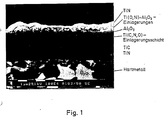
- the coating obtained has nitride and carbide backing layers, followed by a nitrogen-, carbon-, oxygen- and aluminum-containing oxynitride storage layer and an approx. 1 ⁇ m thick layer of Al2O3 with an approx. 3.5 ⁇ m thick top layer consisting of titanium oxynitride , which contains deposits made of aluminum oxide in the middle of the layer and an approx. 0.5 ⁇ m thick cover layer, mainly made of TiN.
- the average particle size of the excretions is less than 0.2 ⁇ m.
- the picture in FIG. 1 shows an electron micrograph of a section through the coated body.
- Indexable inserts of the same composition as in Example 1 were coated at a temperature of 1020 ° C. for a period of 10 minutes using the gas mixture A2 and then, after the temperature had been raised to 1050 ° C. for a period of 40 minutes, were coated with the gas mixture B3 . During this coating, additional nitrogen was introduced at regular intervals and the gas concentration was briefly changed over to composition A1, as a result of which deposits or precipitates consisting of TiN were obtained. This coating was then coated twice with the gas mixtures C1 and A1 over a period of 20 minutes. The coating obtained consists of an underlayer made of titanium oxynitride with an approx. 4.5 ⁇ m thick oxicarbonitride layer, which in turn contains TiN deposits. The subsequent outer layers consist of Al2O3 and TiN.
- Inserts were coated at 1020 ° C using gas mixture A1 for a period of 10 minutes. After this coating, the mixture was coated with a gas mixture of composition B3 over a period of 20 minutes, the temperature being raised continuously to 1060 ° C. towards the end of this coating. Subsequent to this coating, an intermediate adhesive layer was deposited over a period of 5 minutes, with the gas being continuously together the composition of B2 and C1 was changed. Subsequently, the gas mixtures C1 and B2 were coated twice over a period of 20 minutes.
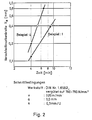
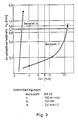
- the coated indexable inserts obtained in this way have a multilayer hard material coating with layer precipitations and layer embeddings. Table 2 MACHINING CONDITIONS material Steel: DIN No.
Landscapes
- Chemical & Material Sciences (AREA)
- Inorganic Chemistry (AREA)
- General Chemical & Material Sciences (AREA)
- Chemical Kinetics & Catalysis (AREA)
- Engineering & Computer Science (AREA)
- Materials Engineering (AREA)
- Mechanical Engineering (AREA)
- Metallurgy (AREA)
- Organic Chemistry (AREA)
- Cutting Tools, Boring Holders, And Turrets (AREA)
- Chemical Vapour Deposition (AREA)
Applications Claiming Priority (1)
| Application Number | Priority Date | Filing Date | Title |
|---|---|---|---|
| AT109787A AT387186B (de) | 1987-05-04 | 1987-05-04 | Beschichteter hartmetallkoerper |
Publications (1)
| Publication Number | Publication Date |
|---|---|
| EP0302984A1 true EP0302984A1 (fr) | 1989-02-15 |
Family
ID=3506523
Family Applications (1)
| Application Number | Title | Priority Date | Filing Date |
|---|---|---|---|
| EP87890188A Withdrawn EP0302984A1 (fr) | 1987-05-04 | 1987-08-12 | Corps en métal dur revêtu |
Country Status (2)
| Country | Link |
|---|---|
| EP (1) | EP0302984A1 (fr) |
| AT (1) | AT387186B (fr) |
Cited By (8)
| Publication number | Priority date | Publication date | Assignee | Title |
|---|---|---|---|---|
| EP0413853B1 (fr) * | 1989-08-21 | 1996-01-31 | Balzers Aktiengesellschaft | Pièce pourvue d'une couche cristalline mixte, procédé et dispositif pour sa production |
| WO2000017416A1 (fr) * | 1998-09-24 | 2000-03-30 | Widia Gmbh | Revetement en materiau composite et procede permettant de le produire |
| US6726987B2 (en) | 2001-02-09 | 2004-04-27 | Plansee Tizit Aktiengesellschaft | Hard metal wearing part with mixed oxide coating |
| DE10320652A1 (de) * | 2003-05-07 | 2004-12-02 | Kennametal Widia Gmbh & Co.Kg | Werkzeug, insbesondere Schneidwerkzeug und Verfahren zur CVD-Abscheidung einer zweiphasigen Schicht auf einem Substratkörper |
| US7264668B2 (en) * | 2001-10-16 | 2007-09-04 | The Chinese University Of Hong Kong | Decorative hard coating and method for manufacture |
| DE102010039035A1 (de) * | 2010-08-06 | 2012-02-09 | Walter Ag | Schneidwerkzeug mit mehrlagiger Beschichtung |
| CN110453184A (zh) * | 2019-08-13 | 2019-11-15 | 重庆理工大学 | 一种在反应堆用锆合金表面制备高硬耐磨复合涂层的方法 |
| US10982313B2 (en) | 2016-05-11 | 2021-04-20 | Kennametal Inc. | Coated body and method for production of the body |
Citations (4)
| Publication number | Priority date | Publication date | Assignee | Title |
|---|---|---|---|---|
| DE2253745A1 (de) * | 1971-11-12 | 1973-05-17 | Sandvik Ab | Hartmetallkoerper |
| DE2736982A1 (de) * | 1977-08-17 | 1979-03-01 | Krupp Gmbh | Verschleisschutzschicht fuer formteile und verfahren zu ihrer herstellung |
| EP0083043A1 (fr) * | 1981-12-24 | 1983-07-06 | Metallwerk Plansee Gesellschaft M.B.H. | Pièce d'usure |
| EP0149449A1 (fr) * | 1983-12-22 | 1985-07-24 | Vereinigte Edelstahlwerke Aktiengesellschaft (Vew) | Corps en métal dur, en particulier outil tranchant en métal dur |
Family Cites Families (3)
| Publication number | Priority date | Publication date | Assignee | Title |
|---|---|---|---|---|
| DE2917348C2 (de) * | 1979-04-28 | 1984-07-12 | Fried. Krupp Gmbh, 4300 Essen | Verschleißfester Verbundkörper |
| EP0083842B1 (fr) * | 1981-12-16 | 1989-07-12 | Carboloy Inc. | Elément en métal dur revêtu et procédé de sa fabrication |
| JPS60238481A (ja) * | 1984-05-14 | 1985-11-27 | Sumitomo Electric Ind Ltd | 多重層被覆超硬合金 |
-
1987
- 1987-05-04 AT AT109787A patent/AT387186B/de not_active IP Right Cessation
- 1987-08-12 EP EP87890188A patent/EP0302984A1/fr not_active Withdrawn
Patent Citations (4)
| Publication number | Priority date | Publication date | Assignee | Title |
|---|---|---|---|---|
| DE2253745A1 (de) * | 1971-11-12 | 1973-05-17 | Sandvik Ab | Hartmetallkoerper |
| DE2736982A1 (de) * | 1977-08-17 | 1979-03-01 | Krupp Gmbh | Verschleisschutzschicht fuer formteile und verfahren zu ihrer herstellung |
| EP0083043A1 (fr) * | 1981-12-24 | 1983-07-06 | Metallwerk Plansee Gesellschaft M.B.H. | Pièce d'usure |
| EP0149449A1 (fr) * | 1983-12-22 | 1985-07-24 | Vereinigte Edelstahlwerke Aktiengesellschaft (Vew) | Corps en métal dur, en particulier outil tranchant en métal dur |
Cited By (11)
| Publication number | Priority date | Publication date | Assignee | Title |
|---|---|---|---|---|
| EP0413853B1 (fr) * | 1989-08-21 | 1996-01-31 | Balzers Aktiengesellschaft | Pièce pourvue d'une couche cristalline mixte, procédé et dispositif pour sa production |
| WO2000017416A1 (fr) * | 1998-09-24 | 2000-03-30 | Widia Gmbh | Revetement en materiau composite et procede permettant de le produire |
| US6660371B1 (en) | 1998-09-24 | 2003-12-09 | Widia Gmbh | Composite material coating and a method for the production thereof |
| US6726987B2 (en) | 2001-02-09 | 2004-04-27 | Plansee Tizit Aktiengesellschaft | Hard metal wearing part with mixed oxide coating |
| US7264668B2 (en) * | 2001-10-16 | 2007-09-04 | The Chinese University Of Hong Kong | Decorative hard coating and method for manufacture |
| DE10320652A1 (de) * | 2003-05-07 | 2004-12-02 | Kennametal Widia Gmbh & Co.Kg | Werkzeug, insbesondere Schneidwerkzeug und Verfahren zur CVD-Abscheidung einer zweiphasigen Schicht auf einem Substratkörper |
| US7431998B2 (en) * | 2003-05-07 | 2008-10-07 | Kennametal Widia Produktions Gmbh & Co. Kg | Tool and method for the chemical vapor deposition of a two-phase layer on a substrate member |
| DE102010039035A1 (de) * | 2010-08-06 | 2012-02-09 | Walter Ag | Schneidwerkzeug mit mehrlagiger Beschichtung |
| US9028954B2 (en) | 2010-08-06 | 2015-05-12 | Walter Ag | Cutting tool with multi-layer coating |
| US10982313B2 (en) | 2016-05-11 | 2021-04-20 | Kennametal Inc. | Coated body and method for production of the body |
| CN110453184A (zh) * | 2019-08-13 | 2019-11-15 | 重庆理工大学 | 一种在反应堆用锆合金表面制备高硬耐磨复合涂层的方法 |
Also Published As
| Publication number | Publication date |
|---|---|
| ATA109787A (de) | 1988-05-15 |
| AT387186B (de) | 1988-12-12 |
Similar Documents
| Publication | Publication Date | Title |
|---|---|---|
| DE69622457T2 (de) | Verfahren zur Herstellung von Sinterkarbid mit Bindephase-angereicherter Oberflächenzone | |
| DE69518039T2 (de) | Beschichtete Klinge aus Hartmetallegierung | |
| DE2825009C2 (de) | Hartmetallkörper und Verfahren zu dessen Herstellung | |
| DE69218210T2 (de) | Mehrfach plattiertes Hartlegierungsschneidwerkzeug | |
| DE69509035T2 (de) | Beschichtete Klinge aus Sinterkarbid auf Wolframkarbidbasis | |
| EP1726687B1 (fr) | Outil revêtu | |
| DE69007885T2 (de) | Mit mehreren Oxiden beschichteter Karbidkörper und Verfahren zu seiner Herstellung. | |
| DE3688999T2 (de) | Sinterhartmetallkörper für Werkzeuge. | |
| DE102009046667B4 (de) | Beschichtete Körper aus Metall, Hartmetal, Cermet oder Keramik sowie Verfahren zur Beschichtung derartiger Körper | |
| DE69718517T2 (de) | Beschichteter schneideinsatz | |
| DE69527236T2 (de) | Mehrschichtfilm aus ultrafeinen Partikeln und harter Verbundwerkstoff für Werkzeuge, die diesen Film enthalten | |
| DE69527124T2 (de) | Harter Verbundwerkstoff für Werkzeuge | |
| EP0980445B1 (fr) | Outil rapporte d'usinage, et son procede de fabrication | |
| DE19980940B4 (de) | Beschichtetes Hartmetall-Schneidwerkzeug | |
| DE19942303A1 (de) | Verbundwerkstoff und Verfahren zu seiner Herstellung | |
| EP0093706B1 (fr) | Outil et son procédé de fabrication | |
| DE60012850T2 (de) | Beschichteter Schneideinsatz für Fräs- und Drehanwendungen | |
| EP0598762A1 (fr) | Outil a tranchant resistant a l'usure en nitrure de bore cubique ou en nitrure de bore cubique polycristallin, procede de fabrication et utilisation. | |
| EP1231295B1 (fr) | Pièce d'usure en métal dur revêtue d'oxydes mixtes | |
| DE102014104672A1 (de) | Beschichtetes Schneidwerkzeug und Verfahren zu seiner Herstellung | |
| DE69802035T2 (de) | Beschichtetes Schneidwerkzeug | |
| DE3332260A1 (de) | Beschichteter hartmetallkoerper | |
| DE3852322T3 (de) | Verbundschichten. | |
| DE102015115859B4 (de) | Mehrschichtig strukturierte Beschichtungen für Schneidwerkzeuge | |
| EP0302984A1 (fr) | Corps en métal dur revêtu |
Legal Events
| Date | Code | Title | Description |
|---|---|---|---|
| PUAI | Public reference made under article 153(3) epc to a published international application that has entered the european phase |
Free format text: ORIGINAL CODE: 0009012 |
|
| 17P | Request for examination filed |
Effective date: 19870826 |
|
| AK | Designated contracting states |
Kind code of ref document: A1 Designated state(s): CH DE FR GB IT LI SE |
|
| RAP3 | Party data changed (applicant data changed or rights of an application transferred) |
Owner name: PACHER, OSKAR, DIPL.-ING. DR. |
|
| 17Q | First examination report despatched |
Effective date: 19901108 |
|
| STAA | Information on the status of an ep patent application or granted ep patent |
Free format text: STATUS: THE APPLICATION IS DEEMED TO BE WITHDRAWN |
|
| 18D | Application deemed to be withdrawn |
Effective date: 19911009 |