EP0305663B1 - Procédé et dispositif de commande d'adsorption à pression alternée - Google Patents
Procédé et dispositif de commande d'adsorption à pression alternée Download PDFInfo
- Publication number
- EP0305663B1 EP0305663B1 EP88109544A EP88109544A EP0305663B1 EP 0305663 B1 EP0305663 B1 EP 0305663B1 EP 88109544 A EP88109544 A EP 88109544A EP 88109544 A EP88109544 A EP 88109544A EP 0305663 B1 EP0305663 B1 EP 0305663B1
- Authority
- EP
- European Patent Office
- Prior art keywords
- product
- vessel
- pressure
- repressurization
- valve
- Prior art date
- Legal status (The legal status is an assumption and is not a legal conclusion. Google has not performed a legal analysis and makes no representation as to the accuracy of the status listed.)
- Expired - Lifetime
Links
- 238000001179 sorption measurement Methods 0.000 title claims abstract description 68
- 238000000034 method Methods 0.000 title claims abstract description 21
- 239000000047 product Substances 0.000 claims description 110
- 239000012535 impurity Substances 0.000 claims description 18
- 238000010926 purge Methods 0.000 claims description 18
- 239000012530 fluid Substances 0.000 claims description 13
- 239000011800 void material Substances 0.000 claims description 10
- 239000003463 adsorbent Substances 0.000 claims description 8
- 239000012467 final product Substances 0.000 claims description 2
- 239000000203 mixture Substances 0.000 claims 1
- 230000001419 dependent effect Effects 0.000 abstract description 5
- 230000008030 elimination Effects 0.000 abstract 1
- 238000003379 elimination reaction Methods 0.000 abstract 1
- 239000007789 gas Substances 0.000 description 36
- UFHFLCQGNIYNRP-UHFFFAOYSA-N Hydrogen Chemical compound [H][H] UFHFLCQGNIYNRP-UHFFFAOYSA-N 0.000 description 12
- 239000001257 hydrogen Substances 0.000 description 6
- 229910052739 hydrogen Inorganic materials 0.000 description 6
- OKTJSMMVPCPJKN-UHFFFAOYSA-N Carbon Chemical compound [C] OKTJSMMVPCPJKN-UHFFFAOYSA-N 0.000 description 4
- 239000000463 material Substances 0.000 description 4
- UGFAIRIUMAVXCW-UHFFFAOYSA-N Carbon monoxide Chemical compound [O+]#[C-] UGFAIRIUMAVXCW-UHFFFAOYSA-N 0.000 description 3
- 229910002091 carbon monoxide Inorganic materials 0.000 description 3
- 230000008929 regeneration Effects 0.000 description 3
- 238000011069 regeneration method Methods 0.000 description 3
- IJGRMHOSHXDMSA-UHFFFAOYSA-N Atomic nitrogen Chemical compound N#N IJGRMHOSHXDMSA-UHFFFAOYSA-N 0.000 description 2
- CURLTUGMZLYLDI-UHFFFAOYSA-N Carbon dioxide Chemical compound O=C=O CURLTUGMZLYLDI-UHFFFAOYSA-N 0.000 description 2
- VGGSQFUCUMXWEO-UHFFFAOYSA-N Ethene Chemical compound C=C VGGSQFUCUMXWEO-UHFFFAOYSA-N 0.000 description 2
- 239000005977 Ethylene Substances 0.000 description 2
- 150000002431 hydrogen Chemical class 0.000 description 2
- VNWKTOKETHGBQD-UHFFFAOYSA-N methane Chemical compound C VNWKTOKETHGBQD-UHFFFAOYSA-N 0.000 description 2
- 238000012163 sequencing technique Methods 0.000 description 2
- VYPSYNLAJGMNEJ-UHFFFAOYSA-N Silicium dioxide Chemical compound O=[Si]=O VYPSYNLAJGMNEJ-UHFFFAOYSA-N 0.000 description 1
- 229910021536 Zeolite Inorganic materials 0.000 description 1
- 230000002411 adverse Effects 0.000 description 1
- PNEYBMLMFCGWSK-UHFFFAOYSA-N aluminium oxide Inorganic materials [O-2].[O-2].[O-2].[Al+3].[Al+3] PNEYBMLMFCGWSK-UHFFFAOYSA-N 0.000 description 1
- 238000010923 batch production Methods 0.000 description 1
- 229910002092 carbon dioxide Inorganic materials 0.000 description 1
- 239000001569 carbon dioxide Substances 0.000 description 1
- 239000003054 catalyst Substances 0.000 description 1
- 230000003197 catalytic effect Effects 0.000 description 1
- 238000004517 catalytic hydrocracking Methods 0.000 description 1
- 230000001351 cycling effect Effects 0.000 description 1
- 230000003247 decreasing effect Effects 0.000 description 1
- HNPSIPDUKPIQMN-UHFFFAOYSA-N dioxosilane;oxo(oxoalumanyloxy)alumane Chemical compound O=[Si]=O.O=[Al]O[Al]=O HNPSIPDUKPIQMN-UHFFFAOYSA-N 0.000 description 1
- 229930195733 hydrocarbon Natural products 0.000 description 1
- 150000002430 hydrocarbons Chemical class 0.000 description 1
- 239000002808 molecular sieve Substances 0.000 description 1
- 229910052757 nitrogen Inorganic materials 0.000 description 1
- 238000012856 packing Methods 0.000 description 1
- 238000000746 purification Methods 0.000 description 1
- 229920006395 saturated elastomer Polymers 0.000 description 1
- 239000000741 silica gel Substances 0.000 description 1
- 229910002027 silica gel Inorganic materials 0.000 description 1
- URGAHOPLAPQHLN-UHFFFAOYSA-N sodium aluminosilicate Chemical compound [Na+].[Al+3].[O-][Si]([O-])=O.[O-][Si]([O-])=O URGAHOPLAPQHLN-UHFFFAOYSA-N 0.000 description 1
- 239000002912 waste gas Substances 0.000 description 1
- 239000002699 waste material Substances 0.000 description 1
- XLYOFNOQVPJJNP-UHFFFAOYSA-N water Substances O XLYOFNOQVPJJNP-UHFFFAOYSA-N 0.000 description 1
- 239000010457 zeolite Substances 0.000 description 1
Images


Classifications
-
- B—PERFORMING OPERATIONS; TRANSPORTING
- B01—PHYSICAL OR CHEMICAL PROCESSES OR APPARATUS IN GENERAL
- B01D—SEPARATION
- B01D53/00—Separation of gases or vapours; Recovering vapours of volatile solvents from gases; Chemical or biological purification of waste gases, e.g. engine exhaust gases, smoke, fumes, flue gases, aerosols
- B01D53/02—Separation of gases or vapours; Recovering vapours of volatile solvents from gases; Chemical or biological purification of waste gases, e.g. engine exhaust gases, smoke, fumes, flue gases, aerosols by adsorption, e.g. preparative gas chromatography
- B01D53/04—Separation of gases or vapours; Recovering vapours of volatile solvents from gases; Chemical or biological purification of waste gases, e.g. engine exhaust gases, smoke, fumes, flue gases, aerosols by adsorption, e.g. preparative gas chromatography with stationary adsorbents
- B01D53/047—Pressure swing adsorption
-
- B—PERFORMING OPERATIONS; TRANSPORTING
- B01—PHYSICAL OR CHEMICAL PROCESSES OR APPARATUS IN GENERAL
- B01D—SEPARATION
- B01D53/00—Separation of gases or vapours; Recovering vapours of volatile solvents from gases; Chemical or biological purification of waste gases, e.g. engine exhaust gases, smoke, fumes, flue gases, aerosols
- B01D53/02—Separation of gases or vapours; Recovering vapours of volatile solvents from gases; Chemical or biological purification of waste gases, e.g. engine exhaust gases, smoke, fumes, flue gases, aerosols by adsorption, e.g. preparative gas chromatography
- B01D53/04—Separation of gases or vapours; Recovering vapours of volatile solvents from gases; Chemical or biological purification of waste gases, e.g. engine exhaust gases, smoke, fumes, flue gases, aerosols by adsorption, e.g. preparative gas chromatography with stationary adsorbents
-
- B—PERFORMING OPERATIONS; TRANSPORTING
- B01—PHYSICAL OR CHEMICAL PROCESSES OR APPARATUS IN GENERAL
- B01D—SEPARATION
- B01D2256/00—Main component in the product gas stream after treatment
- B01D2256/16—Hydrogen
-
- B—PERFORMING OPERATIONS; TRANSPORTING
- B01—PHYSICAL OR CHEMICAL PROCESSES OR APPARATUS IN GENERAL
- B01D—SEPARATION
- B01D2257/00—Components to be removed
- B01D2257/50—Carbon oxides
- B01D2257/502—Carbon monoxide
-
- B—PERFORMING OPERATIONS; TRANSPORTING
- B01—PHYSICAL OR CHEMICAL PROCESSES OR APPARATUS IN GENERAL
- B01D—SEPARATION
- B01D2259/00—Type of treatment
- B01D2259/40—Further details for adsorption processes and devices
- B01D2259/40007—Controlling pressure or temperature swing adsorption
-
- B—PERFORMING OPERATIONS; TRANSPORTING
- B01—PHYSICAL OR CHEMICAL PROCESSES OR APPARATUS IN GENERAL
- B01D—SEPARATION
- B01D2259/00—Type of treatment
- B01D2259/40—Further details for adsorption processes and devices
- B01D2259/40011—Methods relating to the process cycle in pressure or temperature swing adsorption
- B01D2259/40013—Pressurization
- B01D2259/40015—Pressurization with two sub-steps
-
- B—PERFORMING OPERATIONS; TRANSPORTING
- B01—PHYSICAL OR CHEMICAL PROCESSES OR APPARATUS IN GENERAL
- B01D—SEPARATION
- B01D2259/00—Type of treatment
- B01D2259/40—Further details for adsorption processes and devices
- B01D2259/40011—Methods relating to the process cycle in pressure or temperature swing adsorption
- B01D2259/40028—Depressurization
- B01D2259/4003—Depressurization with two sub-steps
-
- B—PERFORMING OPERATIONS; TRANSPORTING
- B01—PHYSICAL OR CHEMICAL PROCESSES OR APPARATUS IN GENERAL
- B01D—SEPARATION
- B01D2259/00—Type of treatment
- B01D2259/40—Further details for adsorption processes and devices
- B01D2259/40011—Methods relating to the process cycle in pressure or temperature swing adsorption
- B01D2259/40043—Purging
- B01D2259/4005—Nature of purge gas
- B01D2259/40052—Recycled product or process gas
-
- B—PERFORMING OPERATIONS; TRANSPORTING
- B01—PHYSICAL OR CHEMICAL PROCESSES OR APPARATUS IN GENERAL
- B01D—SEPARATION
- B01D2259/00—Type of treatment
- B01D2259/40—Further details for adsorption processes and devices
- B01D2259/40011—Methods relating to the process cycle in pressure or temperature swing adsorption
- B01D2259/40058—Number of sequence steps, including sub-steps, per cycle
- B01D2259/40075—More than ten
-
- B—PERFORMING OPERATIONS; TRANSPORTING
- B01—PHYSICAL OR CHEMICAL PROCESSES OR APPARATUS IN GENERAL
- B01D—SEPARATION
- B01D2259/00—Type of treatment
- B01D2259/40—Further details for adsorption processes and devices
- B01D2259/40011—Methods relating to the process cycle in pressure or temperature swing adsorption
- B01D2259/40077—Direction of flow
- B01D2259/40079—Co-current
-
- B—PERFORMING OPERATIONS; TRANSPORTING
- B01—PHYSICAL OR CHEMICAL PROCESSES OR APPARATUS IN GENERAL
- B01D—SEPARATION
- B01D2259/00—Type of treatment
- B01D2259/40—Further details for adsorption processes and devices
- B01D2259/40011—Methods relating to the process cycle in pressure or temperature swing adsorption
- B01D2259/40077—Direction of flow
- B01D2259/40081—Counter-current
-
- B—PERFORMING OPERATIONS; TRANSPORTING
- B01—PHYSICAL OR CHEMICAL PROCESSES OR APPARATUS IN GENERAL
- B01D—SEPARATION
- B01D2259/00—Type of treatment
- B01D2259/40—Further details for adsorption processes and devices
- B01D2259/404—Further details for adsorption processes and devices using four beds
-
- B—PERFORMING OPERATIONS; TRANSPORTING
- B01—PHYSICAL OR CHEMICAL PROCESSES OR APPARATUS IN GENERAL
- B01D—SEPARATION
- B01D2259/00—Type of treatment
- B01D2259/45—Gas separation or purification devices adapted for specific applications
- B01D2259/4516—Gas separation or purification devices adapted for specific applications for fuel vapour recovery systems
-
- B—PERFORMING OPERATIONS; TRANSPORTING
- B01—PHYSICAL OR CHEMICAL PROCESSES OR APPARATUS IN GENERAL
- B01D—SEPARATION
- B01D53/00—Separation of gases or vapours; Recovering vapours of volatile solvents from gases; Chemical or biological purification of waste gases, e.g. engine exhaust gases, smoke, fumes, flue gases, aerosols
- B01D53/02—Separation of gases or vapours; Recovering vapours of volatile solvents from gases; Chemical or biological purification of waste gases, e.g. engine exhaust gases, smoke, fumes, flue gases, aerosols by adsorption, e.g. preparative gas chromatography
- B01D53/04—Separation of gases or vapours; Recovering vapours of volatile solvents from gases; Chemical or biological purification of waste gases, e.g. engine exhaust gases, smoke, fumes, flue gases, aerosols by adsorption, e.g. preparative gas chromatography with stationary adsorbents
- B01D53/0454—Controlling adsorption
Definitions
- the present invention relates to control of a pressure swing adsorption system; and, more particularly to a method and apparatus for controlling product repressurization in a multi-bed system to improve system reliability.
- Pressure swing adsorption provides an efficient and economical means for separating a multicomponent gas stream containing at least two gases having different adsorption characteristics.
- the more-strongly adsorbable gas can be an impurity which is removed from the less-strongly adsorbable gas which is taken off as product; or, the more-strongly adsorbable gas can be the desired product, which is separated from the less-strongly adsorbable gas.
- a multicomponent gas is typically fed to at least one of a plurality of adsorption beds at an elevated pressure effective to adsorb at least one component, while at least one other component passes through.
- feed to the adsorber is terminated and the bed is depressurized by one or more cocurrent depressurization steps wherein pressure is reduced to a defined level which permits the separated, less-strongly adsorbed component or components remaining in the bed to be drawn off without significant concentration of the more-strongly adsorbed components.
- the bed is depressurized by a countercurrent depressurization step wherein the pressure on the bed is further reduced by withdrawing desorbed gas countercurrently to the direction of feed.
- the bed is purged and repressurized.
- the final stage of repressurization is with product gas and is often referred to as product repressurization.
- Every adsorber in a multi-bed system is equipped with a plurality of valves operated by a cycle controller.
- other valves are typically employed to enable pressure equalizations between adsorbers.
- Pressure swing adsorption in multi-bed systems remains essentially a batch process, simply cycling a number of beds through a coordinated series of steps, and a number of valves are idle at any given time.
- valves in a PSA unit which, if they fail, can cause shutdown of the entire unit.
- De Meyer et al describe a PSA unit having at least eight phase staggered operated beds which permits continued operation even where one bed must be removed due to valve failure.
- one valve namely, 101 is employed in product repressurization of all of the nine beds shown in Figure 1. Thus, should this valve fail, the whole unit would have to be shut down.
- the present invention provides such in a new method and apparatus for controlling product repressurization in a pressure swing adsorption system and this is done with the features of claims 1 and 6, respectively.
- the process comprises inter alia: during product repressurization of a vessel, supplying product gas through a controllable valve at the outlet end of the vessel, the controllable valve being the same valve as employed to release product gas from the vessel during the adsorption step.
- the apparatus comprises inter alia: a conduit connecting the outlet end of a pressure swing adsorption vessel to a product header for a multi-bed system; a positionable valve in the conduit; and means for generating a control signal to open the valve to permit flow from the product header during product repressurization and to permit flow of product from the vessel to the product header during adsorption.
- Both the method and apparatus provide significant advantages by eliminating at least one system-dependent valve and thereby improving reliability of operation. Moreover, other advantages flow from implementing the invention in specific multi-bed configurations. For example, it is possible to eliminate a set of valves typically provided for first pressure equalization, and to then perform the first equalization through either: (i) available, idle valves provided for another equalization, or (ii) through available valves for another equalization which normally takes place simultaneously, by performing two equalizations sequentially but within the time period normally employed for only one.
- the pressure swing adsorption process is an essentially adiabatic process for separating a multicomponent fluid containing at least one selectively-adsorbable component.
- Figure 1 shows feed fluid stream 10 comprising an admixture of impurity and product fluids, entering adsorption zone 12 containing a bed 14 of adsorbent material capable of selectively adsorbing the impurity from the feed fluid stream.
- impurity denotes the component or components which are more-strongly adsorbed in the process.
- material described as impurity is not limited to a common definition of the term which denotes something unwanted and to be discarded.
- product denotes the less-strongly adsorbed fluid in the feed fluid stream and does not necessarily mean that this component is the desired component to which the process is directed.
- the bed because of the packing of the adsorbent material, contains non-selective voids.
- the feed fluid stream is introduced and contacted with the bed at an inlet end 16 of the adsorption zone at a first elevated pressure, thereby adsorbing the impurity in the adsorbent material and trapping part of the product fluid in the voids.
- An impurity-depleted product fluid 18 is discharged from the opposite end 20 of the adsorption zone.
- an impurity adsorption front is established at the inlet end of the adsorption zone and progressively moves longitudinally through the adsorption zone toward the discharge end to a predetermined level 22 within the zone. The introduction of the feed fluid is then terminated.
- the product fluid trapped in the voids is then removed through the discharge end 20 of the adsorption zone by cocurrently depressurizing the adsorption zone from the first elevated pressure to a lower but still elevated pressure.
- This cocurrent depressurization causes the impurity adsorption front to advance toward the discharge end of the bed to a new level 26.
- one or more intermediate steps of pressure equalization are comprised in cocurrent depressurization to bring the front to level 24, with the final stage of cocurrent depressurization advancing the front to level 26.
- the cocurrent depressurization stage also provides purge gas to a bed undergoing regeneration. Thus, this step can be termed a provide purge step and is so referred to in Figure 4.
- the adsorption zone is desorbed countercurrently to the direction of feed by further decreasing the pressure in the bed and withdrawing desorbed gas at 16. This step brings the front to level 28.
- the bed is purged with cocurrent depressurization effluent from another bed, or purged with pure product, to bring the front to level 30.
- Repressurization Prior to employing the vessel for another adsorption step, it must be repressurized to avoid damage to the bed. Repressurization is typically conducted in two principal stages. In the first, void space gas from a vessel undergoing cocurrent depressurization is supplied until the pressure in the two vessels is equalized. This is termed pressure equalization and can be accomplished in several steps with void space gas from several vessels supplied at sequencially increasing pressures. In the final equalization, product gas may also be supplied. In the second stage, product repressurization, product gas alone is supplied to the vessel. According to the invention, product gas is supplied to the vessel 14 through the same valve, namely controllable valve 48, employed to withdraw product gas during the adsorption step. Valve 48 is preferably a continuously positionable valve which is controlled by controller 50 to achieve the rate of flow desired at any given time.
- controller 50 can receive a signal from a pressure sensor P and control valve 48 in response thereto. By sensing the pressure in the vessel 14 undergoing product repressurization, and determining the difference between the sensed value and the end pressure of product repressurization, the flow can be effectively controlled.
- the flow of product from the system can be measured and the flow of product gas through valve 48 to vessel 14 controlled in response thereto to maintain the flow of product gas from the system at a substantially constant rate.
- Both the method and apparatus provide significant advantages by eliminating at least one system-dependent valve and thereby improving reliability of operation. Moreover, other advantages flow from implementing the invention in specific multi-bed configurations. For example, it is possible to eliminate a set of valves typically provided for first pressure equalization, and to then perform the first equalization through either: (i) available, idle valves provided for another equalization, or (ii) through available valves for another equalization which normally takes place simultaneously, by performing two equalizations sequentially but within the time period normally employed for only one.
- a further advantage is that product pressure, e.g., the pressure of the final product stream from the system, can be effectively controlled.
- product pressure e.g., the pressure of the final product stream from the system
- the system product pressure is dependent on the pressure of product flowing from any bed undergoing adsorption and the pressure of any product being utilized for product repressurization, it is possible by controlling the rate of flow to the vessel undergoing product repressurization, to control system product pressure.
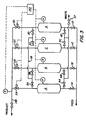
- This Example describes the operation of a four-bed pressure adsorption system as shown in Figure 3 for purification of a hydrogen-rich gas stream from a steam reformer (typically, on a molar basis, 75% hydrogen, 4% methane, 3% carbon monoxide, 0.5% nitrogen, with the balance being carbon dioxide, and being saturated with water) to produce 99+ mole percent hydrogen, with minimal, e.g., less than 10 parts per million, concentration of carbon monoxide.
- the invention is, however, applicable to other multi-bed systems and can be employed also where the more-strongly adsorbed gas is the product gas.
- Each of the four beds will have a lower layer of activated carbon and an upper layer of zeolite and undergoes each of the noted stages through a complete cycle.
- This process can be performed with any suitable adsorbent, such as zeolitic molecular sieves, activated carbon, silica gel, activated alumina, and the like, as set forth in the above-referenced Kiyonaga patent (US-A-3.176.444), having a selectivity for the impurity over the product fluid.
- zeolitic molecular sieves such as zeolitic molecular sieves, activated carbon, silica gel, activated alumina, and the like, as set forth in the above-referenced Kiyonaga patent (US-A-3.176.444), having a selectivity for the impurity over the product fluid.
- Figure 4 is a chart showing the direction of flow within each of the beds shown in Figure 3 during each of the stages of the cycle and the sequencing of all of the beds through one complete cycle of adsorption and regeneration.
- Figure 4 is based on a 15-minute cycle time. Cycle time is defined as the time that is required for all four adsorbers to go through a complete cycle of adsorption and regeneration. Figure 4 describes in detail the twelve time periods that each adsorber goes through during one complete cycle. A single process step may cover several time periods.
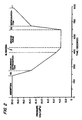
- the graph in Figure 2 shows representative pressures versus time for each step in the cycle for a single adsorber. In the following description, unless the valves are indicated as being open, they are closed.
Landscapes
- Chemical & Material Sciences (AREA)
- Engineering & Computer Science (AREA)
- Analytical Chemistry (AREA)
- General Chemical & Material Sciences (AREA)
- Oil, Petroleum & Natural Gas (AREA)
- Chemical Kinetics & Catalysis (AREA)
- Separation Of Gases By Adsorption (AREA)
- Jellies, Jams, And Syrups (AREA)
- Fats And Perfumes (AREA)
- Hydrogen, Water And Hydrids (AREA)
- Pressure Welding/Diffusion-Bonding (AREA)
- Bending Of Plates, Rods, And Pipes (AREA)
- Auxiliary Devices For And Details Of Packaging Control (AREA)
- Vending Machines For Individual Products (AREA)
- Manipulator (AREA)
- Food Preservation Except Freezing, Refrigeration, And Drying (AREA)
- Earth Drilling (AREA)
- Massaging Devices (AREA)
- Control Of Fluid Pressure (AREA)
Claims (11)
- Procédé de commande de la remise en pression par le produit, permettant le maintien d'un débit sensiblement constant de produit dans un réservoir d'adsorption avec compression alternée d'une installation d'adsorption à plusieurs lits, comprenant :
la transmission de gaz produit au réservoir pour la remise en pression par le produit de celui-ci par l'intermédiaire d'une soupape réglable placée à l'extrémité de sortie du réservoir, la soupape étant celle qui est aussi utilisée pour la libération du gaz de produit du réservoir pendant une étape d'adsorption, et le réglage du débit par ajustement de la soupape de manière qu'un débit sensiblement constant de produit soit maintenu vers le réservoir subissant la remise en pression par le produit, et par maintien du débit à une valeur constante par :(a) détection de la pression dans le réservoir qui subit la remise en pression par le produit, et réglage du débit de gaz produit transmis au réservoir subissant la remise en pression par le produit par l'intermédiaire de la soupape réglable en fonction de la pression, et/ou(b) détection du débit de gaz produit provenant de l'installation, et variation du débit transmis au réservoir subissant la remise en pression par le produit par l'intermédiaire de la soupape réglable en fonction de la valeur détectée. - Procédé selon la revendication 1, utilisant plusieurs réservoirs d'adsorption avec compression alternée, chaque réservoir contenant une matière adsorbante et des cavités, le procédé comprenant la transmission d'un fluide d'alimentation à une extrémité d'alimentation d'un premier réservoir d'adsorption avec compression alternée à une première pression élevée avec extraction de gaz produit par l'intermédiaire d'une soupape dont la position peut être réglée de façon continue, à partir d'une extrémité d'évacuation du premier réservoir, la terminaison de la transmission du courant d'alimentation au premier réservoir, l'extraction du produit se trouvant dans les cavités du premier réservoir et (i) pendant une première période, la transmission du produit des cavités à un second réservoir d'adsorption avec compression alternée, à une pression élevée qui est inférieure à celle du premier réservoir de manière que sa pression soit égalisée avec celle du premier réservoir, et (ii) pendant une période ultérieure, la transmission du produit des cavités à un autre réservoir d'adsorption avec compression alternée, à une pression élevée mais plus basse de manière que ce dernier réservoir soit purgé des impuretés, la purge des impuretés du premier réservoir, la remise en pression partielle du premier réservoir, à la seconde pression élevée, et la remise en pression du premier réservoir par le produit, à la première pression élevée, par transmission du gaz produit par ladite soupape déjà utilisée pour l'extraction du gaz produit.
- Procédé selon la revendication 2, dans lequel trois réservoirs d'adsorption au moins sont utilisés dans une installation afin qu'ils donnent un courant constant de gaz produit provenant d'un collecteur commun de gaz produit qui reçoit le gaz produit de chacun des réservoirs.
- Procédé selon les revendications 2 et 3, comportant en outre au moins une étape ultérieure d'égalisation de pressions qui suit la première période.
- Procédé selon une ou plusieurs des revendications 1 à 4, mettant en oeuvre un procédé d'adsorption avec compression adiabatique alternée, destiné à la séparation d'un mélange de gaz par adsorption d'au moins un constituant gazeux dans chacun de plusieurs lits adsorbants, dans lequel chacun des lits adsorbants est commandé cycliquement dans les étapes suivantes de fonctionnement comprenant une adsorption, au moins deux étapes de réduction de pression, une purge à contre-courant et au moins deux étapes de remise en pression, la dernière au moins étant une remise en pression par le produit, le perfectionnement étant le fait que, pendant la remise en pression du réservoir par le produit, le procédé comprend la transmission du produit gazeux par une soupape réglable placée à l'extrémité de sortie du réservoir, la soupape réglable étant celle qui est déjà utilisée pour l'évacuation du réservoir du gaz produit pendant l'étape d'adsorption.
- Appareil de commande d'une remise en pression, par un produit, d'un réservoir désigné d'adsorption avec compression alternée dans une installation d'adsorption à plusieurs lits, du type dans lequel chaque réservoir enferme un lit comprenant une matière adsorbante et des espaces formés de cavités et comporte une extrémité d'alimentation qui communique avec un collecteur d'alimentation et une extrémité de sortie qui communique avec un collecteur du produit de l'installation, et dans lequel chaque lit fonctionne cycliquement par mise en oeuvre d'étapes d'adsorption, de réduction de pression avec circulation de même sens pendant laquelle le gaz produit des cavités est transmis à un autre lit pour son égalisation de pressions, de transmission d'un gaz de purge au cours de laquelle le gaz produit provenant des cavités est transmis à un autre lit subissant une purge, de réduction de pression à contre-courant, de purge, et de remise sous pression qui comprend une égalisation de pressions avec le produit des cavités reçu d'un lit subissant la réduction de pression avec circulation de même sens et une remise sous pression finale par le produit, l'appareil comprenant :
un conduit reliant l'extrémité de sortie du réservoir désigné au collecteur de produit,
une soupape réglable placée dans le conduit, et
un dispositif commandant la soupape afin qu'elle permette la circulation vers le réservoir désigné pendant la remise sous pression par le produit et qu'elle permette l'écoulement à partir de ce réservoir pendant l'adsorption. - Appareil selon la revendication 6, comprenant en outre un dispositif destiné à maintenir le débit de produit de l'installation à une valeur sensiblement constante.
- Appareil selon une ou plusieurs des revendications 6 et 7, comprenant un dispositif destiné à maintenir le débit de produit transmis à un réservoir subissant une remise sous pression par le produit à une valeur constante, par exemple par l'une au moins des combinaisons suivantes :(a) un dispositif de détection de la pression dans le réservoir subissant la remise en pression par le produit, et un dispositif de commande de la soupape réglable en fonction du dispositif de détection de la pression, et(b) un dispositif de détection du débit de gaz produit provenant de l'installation, et un dispositif de commande de la soupape réglable en fonction du dispositif de détection du débit.
- Appareil selon une ou plusieurs des revendications 6 à 8, dans lequel la soupape réglable est une soupape qui peut être positionnée de façon continue.
- Appareil selon une ou plusieurs des revendications 6 à 9, qui comporte en outre un dispositif destiné à commander la réduction de pression avec circulation de même sens dans chaque récipient de manière qu'une première égalisation de pressions soit réalisée et soit suivie directement par une seconde égalisation de pressions, les deux étapes formant un courant de purge pour un lit subissant la purge.
- Appareil selon une ou plusieurs des revendications 6 à 10, destiné à la commande de la remise en pression par le produit, dans un réservoir d'adsorption avec compression alternée d'une installation d'adsorption à plusieurs lits, le réservoir ayant une extrémité d'entrée et une extrémité de sortie, l'appareil comprenant :
un conduit reliant l'extrémité de sortie du réservoir à un collecteur de produit de l'installation,
une soupape montée dans le conduit et dont la position peut être réglée de façon continue, et
un dispositif générateur d'un signal de commande destiné à ouvrir la soupape afin qu'elle permette l'écoulement à partir du collecteur de produit pendant la remise sous pression par le produit et qu'elle permette l'écoulement du produit à partir du réservoir vers le collecteur de produit pendant l'adsorption, avec éventuellement une au moins des deux combinaisons suivantes :(a) un dispositif de détection de la pression dans le réservoir subissant la remise en pression par le produit, et un dispositif de commande de la soupape dont la position peut être réglée de façon continue en fonction du dispositif de détection de la pression, et(b) un dispositif de détection du courant de gaz produit provenant de l'installation, et un dispositif de commande de la soupape dont la position peut être réglée de façon continue d'après le dispositif de détection de ce courant.
Priority Applications (1)
| Application Number | Priority Date | Filing Date | Title |
|---|---|---|---|
| AT88109544T ATE73684T1 (de) | 1987-09-01 | 1988-06-15 | Verfahren und vorrichtung zur regelung von druckwechseladsorption. |
Applications Claiming Priority (2)
| Application Number | Priority Date | Filing Date | Title |
|---|---|---|---|
| US91889 | 1987-09-01 | ||
| US07/091,889 US4761165A (en) | 1987-09-01 | 1987-09-01 | Pressure swing adsorption control method and apparatus |
Publications (2)
| Publication Number | Publication Date |
|---|---|
| EP0305663A1 EP0305663A1 (fr) | 1989-03-08 |
| EP0305663B1 true EP0305663B1 (fr) | 1992-03-18 |
Family
ID=22230133
Family Applications (1)
| Application Number | Title | Priority Date | Filing Date |
|---|---|---|---|
| EP88109544A Expired - Lifetime EP0305663B1 (fr) | 1987-09-01 | 1988-06-15 | Procédé et dispositif de commande d'adsorption à pression alternée |
Country Status (18)
| Country | Link |
|---|---|
| US (1) | US4761165A (fr) |
| EP (1) | EP0305663B1 (fr) |
| JP (1) | JPH074498B2 (fr) |
| KR (1) | KR930000641B1 (fr) |
| CN (1) | CN1011943B (fr) |
| AT (1) | ATE73684T1 (fr) |
| AU (1) | AU610187B2 (fr) |
| BR (1) | BR8802919A (fr) |
| CA (1) | CA1314493C (fr) |
| DE (1) | DE3869276D1 (fr) |
| ES (1) | ES2030791T3 (fr) |
| GR (1) | GR3004287T3 (fr) |
| IN (1) | IN171513B (fr) |
| MX (1) | MX165284B (fr) |
| MY (1) | MY103103A (fr) |
| NO (1) | NO173639C (fr) |
| NZ (1) | NZ225039A (fr) |
| ZA (1) | ZA884282B (fr) |
Cited By (1)
| Publication number | Priority date | Publication date | Assignee | Title |
|---|---|---|---|---|
| SG109440A1 (en) * | 2001-02-01 | 2005-03-30 | Uop Llc | Very large-scale pressure swing adsorption processes |
Families Citing this family (45)
| Publication number | Priority date | Publication date | Assignee | Title |
|---|---|---|---|---|
| DE3830506A1 (de) * | 1988-09-08 | 1990-03-15 | Bergwerksverband Gmbh | Verfahren zur gewinnung von stickstoff aus sauerstoff und stickstoff enthaltenden gasgemischen mittels druckwechseladsorption an kohlenstoff-molekularsieben |
| US5042994A (en) * | 1990-05-25 | 1991-08-27 | Union Carbide Industrial Gases Technology Corporation | Control of pressure swing adsorption operations |
| US5082474A (en) * | 1990-08-14 | 1992-01-21 | The Boc Group, Inc | Pressurization psa systems for the production of high purity product gas |
| US5074893A (en) * | 1990-09-04 | 1991-12-24 | On Site Gas Systems, Inc. | Fluid adsorption system |
| US5203888A (en) * | 1990-11-23 | 1993-04-20 | Uop | Pressure swing adsorption process with multiple desorption steps |
| US5163978A (en) * | 1991-10-08 | 1992-11-17 | Praxair Technology, Inc. | Dual product pressure swing adsorption process and system |
| US5174796A (en) * | 1991-10-09 | 1992-12-29 | Uop | Process for the purification of natural gas |
| US5330561A (en) * | 1992-11-16 | 1994-07-19 | Air Products And Chemicals, Inc. | Extended vacuum swing adsorption process |
| US5656065A (en) * | 1995-10-04 | 1997-08-12 | Air Products And Chemicals, Inc. | Multibed pressure swing adsorption apparatus and method for the operation thereof |
| US5879649A (en) * | 1995-12-19 | 1999-03-09 | Corning Incorporated | Method for purifying polyalkylsiloxanes and the resulting products |
| FR2756752B1 (fr) * | 1996-12-05 | 2001-09-14 | Air Liquide | Procede et installation de traitement d'un melange gazeux par adsorption a variation de pression |
| FR2769851B1 (fr) * | 1997-10-21 | 1999-12-17 | Air Liquide | Installation de separation d'un melange de gaz |
| FR2772637B1 (fr) * | 1997-12-18 | 2000-02-11 | Air Liquide | Procede de separation gazeuse par adsorption avec production a debit variable, notamment pour la production d'oxygene |
| FR2783723B1 (fr) * | 1998-09-25 | 2000-12-29 | Air Liquide | Procede de traitement d'un melange gazeux par adsorption a modulation de pression, a debit variable de production |
| FR2788993B1 (fr) * | 1999-01-29 | 2001-02-23 | Air Liquide | Procede d'epuration d'un gaz par adsorption |
| AU2002217475B2 (en) * | 2000-12-25 | 2005-02-17 | Sumitomo Seika Chemicals Co., Ltd. | Method for separating hydrogen gas |
| CA2433156A1 (fr) * | 2000-12-26 | 2002-07-04 | Sumitomo Seika Chemicals Co., Ltd. | Procede et dispositif de separation d'un gaz objet |
| CZ299697B6 (cs) * | 2001-02-02 | 2008-10-22 | Uop Llc | Zpusob separace neadsorbovatelného plynu strídavou tlakovou adsorpcí |
| EP1228799B1 (fr) * | 2001-02-02 | 2005-05-04 | Uop Llc | Procédés d'adsorption à pression alternée à très grande échelle |
| CN1642851B (zh) * | 2002-02-05 | 2010-04-14 | 加利福尼亚大学董事会 | 采用自支持加氢气化从含碳材料制备合成运输燃料 |
| US6755895B2 (en) | 2002-04-09 | 2004-06-29 | H2Gen Innovations, Inc. | Method and apparatus for pressure swing adsorption |
| JP2004066125A (ja) * | 2002-08-07 | 2004-03-04 | Sumitomo Seika Chem Co Ltd | 目的ガスの分離方法 |
| US6699307B1 (en) * | 2002-10-11 | 2004-03-02 | H2Gen Innovations, Inc. | High recovery PSA cycles and apparatus with reduced complexity |
| FR2856937B1 (fr) * | 2003-07-02 | 2005-08-19 | Air Liquide | Appareil pour la separation par adsorption a variation de pression d'au moins un constituant d'un melange gazeux |
| EP1835980A4 (fr) * | 2005-01-12 | 2011-02-16 | Lummus Technology Inc | Procedes et appareil de commande amelioree de variations de debit psa |
| FR2883489B1 (fr) * | 2005-03-25 | 2008-01-11 | Air Liquide | Procede de reglage d'une installation de traitement par adsorption d'un gaz soumis a un ecoulement a travers ladite installation |
| JP5575399B2 (ja) * | 2006-03-06 | 2014-08-20 | ランマス・テクノロジー・インコーポレイテッド | Psa圧力測定及び制御システム |
| US7879138B2 (en) * | 2006-07-20 | 2011-02-01 | Air Products And Chemicals, Inc. | Pressure swing adsorption method and system with multiple-vessel beds |
| US7695545B2 (en) * | 2007-03-14 | 2010-04-13 | Air Products And Chemicals, Inc. | Adsorption process to recover hydrogen from feed gas mixtures having low hydrogen concentration |
| US7947118B2 (en) * | 2007-05-15 | 2011-05-24 | Air Products And Chemicals, Inc. | Containerized gas separation system |
| MY171684A (en) * | 2007-11-16 | 2019-10-23 | Univ Kebangsaan Malaysia | Compact pressure swing adsorption system for hydrogen purification |
| CN103002970B (zh) * | 2010-05-05 | 2016-01-20 | 鲁姆斯科技公司 | 吸附剂床的分级泄料 |
| US8496733B2 (en) | 2011-01-11 | 2013-07-30 | Praxair Technology, Inc. | Large scale pressure swing adsorption systems having process cycles operating in normal and turndown modes |
| US8551217B2 (en) | 2011-01-11 | 2013-10-08 | Praxair Technology, Inc. | Six bed pressure swing adsorption process operating in normal and turndown modes |
| US8435328B2 (en) | 2011-01-11 | 2013-05-07 | Praxair Technology, Inc. | Ten bed pressure swing adsorption process operating in normal and turndown modes |
| US8491704B2 (en) | 2011-01-11 | 2013-07-23 | Praxair Technology, Inc. | Six bed pressure swing adsorption process operating in normal and turndown modes |
| US8961627B2 (en) | 2011-07-07 | 2015-02-24 | David J Edlund | Hydrogen generation assemblies and hydrogen purification devices |
| US10717040B2 (en) | 2012-08-30 | 2020-07-21 | Element 1 Corp. | Hydrogen purification devices |
| US20140065020A1 (en) | 2012-08-30 | 2014-03-06 | David J. Edlund | Hydrogen generation assemblies |
| US9187324B2 (en) | 2012-08-30 | 2015-11-17 | Element 1 Corp. | Hydrogen generation assemblies and hydrogen purification devices |
| US11738305B2 (en) | 2012-08-30 | 2023-08-29 | Element 1 Corp | Hydrogen purification devices |
| CN105268282A (zh) * | 2015-09-18 | 2016-01-27 | 北京环宇京辉京城气体科技有限公司 | 一种低温变压吸附制备超纯氢的方法 |
| KR102018322B1 (ko) * | 2017-11-14 | 2019-09-04 | 한국에너지기술연구원 | 흡착 공정을 위한 흡착탑 시스템 및 흡착 공정을 이용한 혼합 가스 분리 방법 |
| CN110694428B (zh) * | 2019-09-30 | 2020-06-23 | 湖南省计量检测研究院 | 一种氢分离设备的工作方法 |
| US12623181B2 (en) | 2023-06-02 | 2026-05-12 | Element 1 Corp | Hydrogen purification devices |
Family Cites Families (10)
| Publication number | Priority date | Publication date | Assignee | Title |
|---|---|---|---|---|
| NL297067A (fr) * | 1962-09-04 | 1900-01-01 | ||
| US3703068A (en) * | 1971-03-26 | 1972-11-21 | Union Carbide Corp | Control system for selective adsorption process |
| AR207266A1 (es) * | 1974-10-30 | 1976-09-22 | Union Carbide Corp | Procedimiento oscilante adiabatico de presion para la separacion de aire |
| JPS5299973A (en) * | 1976-02-18 | 1977-08-22 | Toray Ind Inc | Adsorption and separation apparatus of mixed gas |
| DE2823211A1 (de) * | 1978-05-27 | 1979-12-06 | Bayer Antwerpen Nv | Verfahren zum betrieb einer druck- wechsel-adsorptionsanlage |
| DE2851847A1 (de) * | 1978-11-30 | 1980-06-12 | Linde Ag | Verfahren zum betrieb einer zyklisch arbeitenden druckwechsel-adsorptionsanlage |
| DE3040495C2 (de) * | 1980-10-28 | 1986-10-23 | Linde Ag, 6200 Wiesbaden | Ventilsteuerung |
| DE3205451A1 (de) * | 1982-02-16 | 1983-08-25 | Linde Ag, 6200 Wiesbaden | Verfahren zum betreiben einer zyklisch arbeitenden druckwechsel-adsorpitionsanlage |
| DE3222560A1 (de) * | 1982-06-16 | 1983-12-22 | Bergwerksverband Gmbh, 4300 Essen | Verfahren zur abtrennung und gewinnung von relativ stark an adsorptionsmitteln adsorbierbaren gasen aus ansonsten im wesentlichen nur leichter adsorbierbare gase enthaltenden gasgemischen sowie anlage zum durchfuehren dieses verfahrens |
| US4693730A (en) * | 1986-07-24 | 1987-09-15 | Union Carbide Corporation | Pressure swing adsorption product purity control method and apparatus |
-
1987
- 1987-09-01 US US07/091,889 patent/US4761165A/en not_active Expired - Lifetime
-
1988
- 1988-06-15 CA CA000569556A patent/CA1314493C/fr not_active Expired - Lifetime
- 1988-06-15 AU AU17731/88A patent/AU610187B2/en not_active Expired
- 1988-06-15 KR KR1019880007162A patent/KR930000641B1/ko not_active Expired - Lifetime
- 1988-06-15 CN CN88104542A patent/CN1011943B/zh not_active Expired
- 1988-06-15 JP JP63145606A patent/JPH074498B2/ja not_active Expired - Lifetime
- 1988-06-15 ES ES198888109544T patent/ES2030791T3/es not_active Expired - Lifetime
- 1988-06-15 NO NO882643A patent/NO173639C/no not_active IP Right Cessation
- 1988-06-15 BR BR8802919A patent/BR8802919A/pt not_active IP Right Cessation
- 1988-06-15 IN IN406/MAS/88A patent/IN171513B/en unknown
- 1988-06-15 EP EP88109544A patent/EP0305663B1/fr not_active Expired - Lifetime
- 1988-06-15 AT AT88109544T patent/ATE73684T1/de not_active IP Right Cessation
- 1988-06-15 MY MYPI88000661A patent/MY103103A/en unknown
- 1988-06-15 DE DE8888109544T patent/DE3869276D1/de not_active Expired - Fee Related
- 1988-06-15 MX MX011909A patent/MX165284B/es unknown
- 1988-06-15 NZ NZ225039A patent/NZ225039A/xx unknown
- 1988-06-15 ZA ZA884282A patent/ZA884282B/xx unknown
-
1992
- 1992-04-08 GR GR920400642T patent/GR3004287T3/el unknown
Cited By (1)
| Publication number | Priority date | Publication date | Assignee | Title |
|---|---|---|---|---|
| SG109440A1 (en) * | 2001-02-01 | 2005-03-30 | Uop Llc | Very large-scale pressure swing adsorption processes |
Also Published As
| Publication number | Publication date |
|---|---|
| MX165284B (es) | 1992-11-04 |
| ATE73684T1 (de) | 1992-04-15 |
| ES2030791T3 (es) | 1992-11-16 |
| NO173639C (no) | 1994-01-12 |
| IN171513B (fr) | 1992-10-31 |
| EP0305663A1 (fr) | 1989-03-08 |
| US4761165A (en) | 1988-08-02 |
| KR930000641B1 (ko) | 1993-01-29 |
| GR3004287T3 (fr) | 1993-03-31 |
| NZ225039A (en) | 1989-10-27 |
| NO173639B (no) | 1993-10-04 |
| AU610187B2 (en) | 1991-05-16 |
| CN1011943B (zh) | 1991-03-13 |
| BR8802919A (pt) | 1989-03-21 |
| JPH074498B2 (ja) | 1995-01-25 |
| CN1031660A (zh) | 1989-03-15 |
| ZA884282B (en) | 1989-03-29 |
| NO882643D0 (no) | 1988-06-15 |
| CA1314493C (fr) | 1993-03-16 |
| DE3869276D1 (de) | 1992-04-23 |
| NO882643L (no) | 1989-03-02 |
| KR890004759A (ko) | 1989-05-09 |
| JPS6463019A (en) | 1989-03-09 |
| MY103103A (en) | 1993-04-30 |
| AU1773188A (en) | 1989-03-02 |
Similar Documents
| Publication | Publication Date | Title |
|---|---|---|
| US4761165A (en) | Pressure swing adsorption control method and apparatus | |
| US4693730A (en) | Pressure swing adsorption product purity control method and apparatus | |
| US5882380A (en) | Pressure swing adsorption process with a single adsorbent bed | |
| EP0092153B1 (fr) | Système d'adsorption par pression oscillante | |
| KR0160246B1 (ko) | 동역학적으로 정화가 조절되는 압력 가변식 흡착 방법 | |
| EP0705636B1 (fr) | Procédé d'adsorption par pression alternée amélioré | |
| US5171333A (en) | Methane purification by pressure swing adsorption | |
| US4461630A (en) | Product recovery in pressure swing adsorption process and system | |
| US6210466B1 (en) | Very large-scale pressure swing adsorption processes | |
| US4482361A (en) | Pressure swing adsorption process | |
| US6454838B1 (en) | Six bed pressure swing adsorption process with four steps of pressure equalization | |
| US3977845A (en) | Adsorptive process for selective separation of gases | |
| EP1004342B1 (fr) | Procédé de séparation d'un mélange gazeux par adsorption à pression alternée et système utilisant un adsorbeur unique et recyclage de produit | |
| US5250088A (en) | Gas separation process | |
| NO179129B (no) | Fremgangsmåte ved separasjon av gassblandinger | |
| JPH09103630A (ja) | 圧力スイング吸着装置及び圧力スイング吸着法 | |
| EP0215843B1 (fr) | Procede et systeme d'adsorption par oscillation de pression | |
| EP0147277A2 (fr) | Procédé de séparation d'un courant d'alimentation d'un mélange gazeux par adsorption à pression alternée | |
| EP0529513A2 (fr) | Procédé d'adsorption à pression alternée pour l'hydrogène à productivité élevée |
Legal Events
| Date | Code | Title | Description |
|---|---|---|---|
| PUAI | Public reference made under article 153(3) epc to a published international application that has entered the european phase |
Free format text: ORIGINAL CODE: 0009012 |
|
| AK | Designated contracting states |
Kind code of ref document: A1 Designated state(s): AT BE CH DE ES FR GB GR IT LI LU NL SE |
|
| 17P | Request for examination filed |
Effective date: 19890330 |
|
| 17Q | First examination report despatched |
Effective date: 19910117 |
|
| RAP1 | Party data changed (applicant data changed or rights of an application transferred) |
Owner name: UOP |
|
| GRAA | (expected) grant |
Free format text: ORIGINAL CODE: 0009210 |
|
| AK | Designated contracting states |
Kind code of ref document: B1 Designated state(s): AT BE CH DE ES FR GB GR IT LI LU NL SE |
|
| PG25 | Lapsed in a contracting state [announced via postgrant information from national office to epo] |
Ref country code: CH Effective date: 19920318 Ref country code: LI Effective date: 19920318 |
|
| REF | Corresponds to: |
Ref document number: 73684 Country of ref document: AT Date of ref document: 19920415 Kind code of ref document: T |
|
| REF | Corresponds to: |
Ref document number: 3869276 Country of ref document: DE Date of ref document: 19920423 |
|
| ET | Fr: translation filed | ||
| ITF | It: translation for a ep patent filed | ||
| REG | Reference to a national code |
Ref country code: CH Ref legal event code: PL |
|
| REG | Reference to a national code |
Ref country code: ES Ref legal event code: FG2A Ref document number: 2030791 Country of ref document: ES Kind code of ref document: T3 |
|
| REG | Reference to a national code |
Ref country code: GR Ref legal event code: FG4A Free format text: 3004287 |
|
| PLBE | No opposition filed within time limit |
Free format text: ORIGINAL CODE: 0009261 |
|
| STAA | Information on the status of an ep patent application or granted ep patent |
Free format text: STATUS: NO OPPOSITION FILED WITHIN TIME LIMIT |
|
| 26N | No opposition filed | ||
| EPTA | Lu: last paid annual fee | ||
| EAL | Se: european patent in force in sweden |
Ref document number: 88109544.2 |
|
| PGFP | Annual fee paid to national office [announced via postgrant information from national office to epo] |
Ref country code: LU Payment date: 19950701 Year of fee payment: 8 |
|
| PG25 | Lapsed in a contracting state [announced via postgrant information from national office to epo] |
Ref country code: LU Free format text: LAPSE BECAUSE OF NON-PAYMENT OF DUE FEES Effective date: 19960615 |
|
| REG | Reference to a national code |
Ref country code: GB Ref legal event code: IF02 |
|
| PGFP | Annual fee paid to national office [announced via postgrant information from national office to epo] |
Ref country code: DE Payment date: 20050801 Year of fee payment: 18 |
|
| PG25 | Lapsed in a contracting state [announced via postgrant information from national office to epo] |
Ref country code: DE Free format text: LAPSE BECAUSE OF NON-PAYMENT OF DUE FEES Effective date: 20070103 |
|
| PGFP | Annual fee paid to national office [announced via postgrant information from national office to epo] |
Ref country code: NL Payment date: 20070507 Year of fee payment: 20 Ref country code: AT Payment date: 20070507 Year of fee payment: 20 |
|
| PGFP | Annual fee paid to national office [announced via postgrant information from national office to epo] |
Ref country code: SE Payment date: 20070605 Year of fee payment: 20 |
|
| PGFP | Annual fee paid to national office [announced via postgrant information from national office to epo] |
Ref country code: ES Payment date: 20070615 Year of fee payment: 20 |
|
| PGFP | Annual fee paid to national office [announced via postgrant information from national office to epo] |
Ref country code: BE Payment date: 20070628 Year of fee payment: 20 |
|
| PGFP | Annual fee paid to national office [announced via postgrant information from national office to epo] |
Ref country code: GB Payment date: 20070511 Year of fee payment: 20 |
|
| PGFP | Annual fee paid to national office [announced via postgrant information from national office to epo] |
Ref country code: IT Payment date: 20070619 Year of fee payment: 20 |
|
| PGFP | Annual fee paid to national office [announced via postgrant information from national office to epo] |
Ref country code: FR Payment date: 20070605 Year of fee payment: 20 |
|
| PGFP | Annual fee paid to national office [announced via postgrant information from national office to epo] |
Ref country code: GR Payment date: 20070419 Year of fee payment: 20 |
|
| BE20 | Be: patent expired |
Owner name: *UOP Effective date: 20080615 |
|
| REG | Reference to a national code |
Ref country code: GB Ref legal event code: PE20 Expiry date: 20080614 |
|
| NLV7 | Nl: ceased due to reaching the maximum lifetime of a patent |
Effective date: 20080615 |
|
| EUG | Se: european patent has lapsed | ||
| REG | Reference to a national code |
Ref country code: ES Ref legal event code: FD2A Effective date: 20080616 |
|
| PG25 | Lapsed in a contracting state [announced via postgrant information from national office to epo] |
Ref country code: ES Free format text: LAPSE BECAUSE OF EXPIRATION OF PROTECTION Effective date: 20080616 Ref country code: NL Free format text: LAPSE BECAUSE OF EXPIRATION OF PROTECTION Effective date: 20080615 |
|
| PG25 | Lapsed in a contracting state [announced via postgrant information from national office to epo] |
Ref country code: GB Free format text: LAPSE BECAUSE OF EXPIRATION OF PROTECTION Effective date: 20080614 |