EP0306535A1 - Prozessor für programmierbaren logischen regler und programmierbarer logischer regler - Google Patents
Prozessor für programmierbaren logischen regler und programmierbarer logischer regler Download PDFInfo
- Publication number
- EP0306535A1 EP0306535A1 EP88901928A EP88901928A EP0306535A1 EP 0306535 A1 EP0306535 A1 EP 0306535A1 EP 88901928 A EP88901928 A EP 88901928A EP 88901928 A EP88901928 A EP 88901928A EP 0306535 A1 EP0306535 A1 EP 0306535A1
- Authority
- EP
- European Patent Office
- Prior art keywords
- jump
- processor
- instruction
- plc
- logical
- Prior art date
- Legal status (The legal status is an assumption and is not a legal conclusion. Google has not performed a legal analysis and makes no representation as to the accuracy of the status listed.)
- Granted
Links
Images



Classifications
-
- G—PHYSICS
- G05—CONTROLLING; REGULATING
- G05B—CONTROL OR REGULATING SYSTEMS IN GENERAL; FUNCTIONAL ELEMENTS OF SUCH SYSTEMS; MONITORING OR TESTING ARRANGEMENTS FOR SUCH SYSTEMS OR ELEMENTS
- G05B19/00—Program-control systems
- G05B19/02—Program-control systems electric
- G05B19/04—Program control other than numerical control, i.e. in sequence controllers or logic controllers
- G05B19/05—Programmable logic controllers, e.g. simulating logic interconnections of signals according to ladder diagrams or function charts
-
- G—PHYSICS
- G05—CONTROLLING; REGULATING
- G05B—CONTROL OR REGULATING SYSTEMS IN GENERAL; FUNCTIONAL ELEMENTS OF SUCH SYSTEMS; MONITORING OR TESTING ARRANGEMENTS FOR SUCH SYSTEMS OR ELEMENTS
- G05B2219/00—Program-control systems
- G05B2219/10—Plc systems
- G05B2219/13—Plc programming
- G05B2219/13083—Jumps
Definitions
- the present invention relates to a PLC (programmable logic controller) processor for executing logical operations and a PLC, and more particularly to a PLC processor and PLC, in which unnecessary logical operations are omitted to thereby increase the processing speed.
- PLC programmable logic controller
- a PLC programmable logic controller
- PC programmable controller
- Fig. 6 An example of a ladder diagram is shown in Fig. 6, in which denoted by numeral 60 indicates a ladder diagram sheet.
- Logical relay contacts are denoted by characters A, B, C, D, E, F, G and H.
- Numeral 61 denotes a coil of the logical relay. Such a ladder diagram implements logical processings as indicated below.
- a period of time 9t is required in total. It has therefore been contemplated to shorten the processing period of time t to increase the speed of the processings.
- the period of time t is determined depending upon hardwares of the microprocessor, memories or other components, so that the processing speed cannot be increased more than a predetermined minimum.
- a processing period of time can be shortened by omitting some operations which are unnecessary under a prescribed situation and jumping to an operation to be executed. Yet, there is a possibility that in commonlu used processors, the processing period of time might adversely be prolonged in executing check instructions and thus the processing period of time may not be shortened in all times.
- a PLC (programmable logic controller) processor for carrying out logical operations, comprising: a jump inhibition means for inhibiting a jump; a jump condition checking means for checking whether or not a jump instruction is to be executed based on a relation between a result of a logical operation and instructions to be subsequently executed; and a jump instruction execution means for executing the jump after the logical operation in response to conditions of both the jump inhibition means and the jump condition checking means.
- a PLC having more than two processors and executing processings, comprising: an exclusive PLC processor including a logic operation means for executing a logical operation, a jump inhibition means for inhibiting a jump, a jump condition checking means for checking whether or not a jump instruction is to be executed based on a relation between a result of a logical operation and instructions to be subsequently executed, and a jump instruction execution means for executing the jump after the logical operation in response to conditions of both the jump inhibition means and the jump condition checking means, wherein the exclusive PLC processor executes logical operations; and a second processor for executing remaining processings.
- an exclusive PLC processor including a logic operation means for executing a logical operation, a jump inhibition means for inhibiting a jump, a jump condition checking means for checking whether or not a jump instruction is to be executed based on a relation between a result of a logical operation and instructions to be subsequently executed, and a jump instruction execution means for executing the jump after the logical operation in response to conditions of both the
- the subsequent OR instructions can be omitted.
- the subsequent AND instructions can be omitted.
- the processor of the type as referred to in the first aspect of the invention is exclusively used for executing the logical processings and another processor is employed for executing the remaining processings, whereby the processing period of time can further be reduced.
- Fig. 1 is a block diagram showing a processor according to one embodiment of the invention.
- a processor 1 is comprised of a logical operation means 2, a jump inhibition means 3, a jump condition checking means 4 and a jump instruction execution means 5.
- the logical operation means 2 implements logical operations and executes logical operations of AND, OR, NOT, etc. Other than the logical operation, the logical operation means 2 is capable of executing numerical computations.
- the jump inhibition means 3 checkes whether or not jump is allowed. For example, a write instruction for writing the result of the logical operation (which corresponds to the instruction Y shown in Fig. 6 and to the instruction (9) set forth in the Background Art section) cannot be omitted, therefore, the instruction preceding such unomittable instruction is inhibited from being jumped. This is accomplished by imposing a jump inhibition to the instruction preceding to the write instruction when the PLC program is assembled or compiled.
- the jump condition checking means 4 checks whether or not jump should be implemented. This is accomplished in accordance with the following theory.
- AND-interrelated instructions are omitted, and jump is performed over to OR-interrelated instructions or the write instruction.
- What is referred to by the AND-interrelated instructions is intended to cover not only an AND instruction but also a NOT-AND instruction (which instruction corresponds to the logical relay B shown in Fig. 6).
- the jump instruction execution means 5 executes a jump instruction in accordance with conditions supplied from both the jump inhibition means 3 and the jump condition checking means 4. Of course, only when the above-mentioned two conditions are complied with at the same time, the jump instruction is executed. If the conditions are not complied with, the processing immediately advances to the subsequent instruction. A number to be jumped is stored in an external memory 6.
- the memory 6 stores a number of jump instructions and such a number is stored therein in the form of an integer.
- the theory as set forth with respect to the jump condition checking means is equally applied to this number. Specifically, in the case where the AND-interrelated instructions follow, that number is a number of AND-interrelated instructions disposed ahead of the subsequent OR-interrelated or write instructions. On the other hand, in the case of OR-interrelated instructions, that number is a number of the OR-interrelated instructions disposed ahead of the subsequent AND-interrelated or write instructions.
- the processor 1 is provided with a plurality of functions for inputting and outputting addressing signals and data. Details of such functions will be described later. Only the functional description of the units which are closely related to the gist of the invention is presented here.
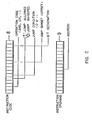
- FIG. 2 there is shown an instruction format of a processor according to this embodiment.
- An instruction is composed of two words.
- Denoted by numeral 8 is a high- order one word providing an instruction code.
- Denoted by numeral 9 is a low-order one word providing an instruction operand.
- the instruction code 8 is provided with functions as shown in the figure. Left four bits are a processing code, which, for example, determines instructions, such as AND, OR, etc.
- next one bit it is discriminated whether or not jump is allowed, in which when "1", jump is allowed according to a condition whereas when "0", jump is inhibited.
- the latter corresponds to such instructions that cannot be omitted as in the case of a read instruction (corresponding to the instruction A in Fig. 6) and a write instruction (corresponding to Y in Fig. 6).
- that bit is rendered “0” to inhibit jumping. "1” or "0” of this bit is determined when a source program is converted to an object program.
- the succeeding one bit is for determining a jump condition, which is rendered “1" when the AND-interrelated instructions follow and is rendered "0" when the OR-interrelated instructions follow. Assuming that this bit value is Q and a result of a logical operation is S, then
- the succeeding seven bits are representative of a number of instructions to be jumped.
- this number is equal to the number of such AND-interrelated instructions
- the OR-interrelated instructions follow this number is equal to the number of such OR-interrelated instructions.
- Such numbers are determined when the source program is converted to the object program upon counting a number of instructions.
- the last four bits are representative of bits corresponding to data to be processed.
- data is composed of 16 bits per one word.
- the logical relay which is subjected to logical operation is represented by one-bit data which is specified by using this four bits.
- An instruction cperand is composed of 16 bits per one word, with which an address to be processed is specified. And, the corresponding bits are specified by the last four bits of the instruction code described above.
- the word organization and the number of bits can arbitarily be designed and altered, and variety of word organizations and bit allocations may be made.
- Fig. 3 there is shown a hardware arrangement of the processor according to the present invention.
- Numerals indicated alongside signal lines with an oblique line segment represent a number of bits selected from a bus line for usage.
- numeral 4 represents that four bits are used among the bus line.
- an operation squence control circuit 21 performs timing controls for the entire processor.
- An operation code latch 22 latches the operation code shown in Fig. 2.
- An interruption generation circuit 23 generates an interruption signal when the operation code latched in an instruction code latch is not a logical operation code, such as AND, OR, i.e. in the case of a specific subroutine. This interruption signal is sent to another all-purpose processor for the purpose of processing other than the logical operations.
- a multiplexer (MUX) 25 selects a bit to be processed in one word from the low-order four bits of the instruction code 8 (Fig. 2) and sends to an operation unit.
- the operation unit 24 implements logical operations with respect to the bit selected by the multiplexer 25 in accordance with the operation code from the operation code latch 22.
- An accumulator 26 temporarily stores the result of operation. For example, when the instructions are:
- An instruction operand latch 27 latches the content of the instruction operand 9 (Fig. 2) and outputs it to the multiplexer 29 for fetching a corresponding address.
- a data substitution circuit 28 synthesizes one-bit which has been subjected to operation processing when the write instruction is executed with another bit which has not been subjected to operation, and outputs the resultant bit. While the logical operation is processed every one bit, the reminder bit is read out without subjecting operations and is written into the corresponding address together with the bit which has been subjected to operation processing.
- An address generation circuit 40 controls addresses for performing jumping based on a relation between the logical operation processings described previously and the subsequent instruction. Details of this address generation will be described later.
- Multiplexers 29 and 30 select buses in response to a timing signal fed from the operation sequence control circuit 21.
- Denoted by numerals 31 and 32 are an address bus drive circuit and a data bus drive circuit, respectively.
- the operation sequence control circuit 21 receives a bus command signal from an externally provided all-purpose processor and in response thereto issues a bus release signal indicating that the bus is available. This is because the externally provided all-purpose processor needs to use the bus when it executes a specific subroutine or the like.
- a read signal and a write signal for reading out of and writing into a memory connected to the processor are issued from the processor.
- the address generation circuit is shown in Fig. 4.
- an exclusive-OR circuit (hereinafter referred to as EOR circuit) 41 has one input terminal to which a logical operation result of the execution instruction is applied.
- the EOR circuit 41 has the other input terminal to which the jump condition signal is applied.
- this jump condition signal is "1" in the case where the AND-interrelated instructions follow whereas the signal is "0" in the case where the OR-interrelated instructions follow.
- the output of the EOR circuit 41 is represented by an equation:
- An AND circuit 42 has a first input terminal to which the output of the EOR circuit 41 is applied, a second input terminal to which a jump permission condition signal is applied.
- the jump permission condition signal is in "0" and inhibits jumping when instructions which cannot be omitted follow, such as read instruction, write instruction.
- the AND circuit 42 has a third input terminal to which applied is a jump timing signal which is outputted from the operation sequence control circuit 21 shown in Fig. 3. When these three conditions are met, the output of the AND circuit 42 is rendered "1".
- a multiplexer 43 selects data "1" when the output of the AND circuit 42 is "0", in the case of which the address is counted up one by one.
- a jump target offset (the number of instructions for jumping) is selected.
- An adder 44 adds one to the address of the last instruction when the jump is not performed.
- the jump target offset is selected by the multiplexer 43 and the number of jumps are added to the address of the last instruction, thereby carrying out the jump.
- To a multiplexer 45 preset data is added.
- a latch 46 latches the address following the instruction which has operated.
- the jumping address is generated by the address generation circuit.
- the unnecessary logical operations can be omitted and the speed of the logical processing can be increased. This is particularly effective in processing logical operations in the ladder format, since there are contained a considerable number of unnecessary logical operations.
- FIG. 5 there is shown a block diagram illustrating a PLC according to one embodiment of the present invention in which the above-described processor is used.
- an all-purpose processor 10 as commonly used is provided, which carries out numerical computations, processings of function instructions, etc. precluding the overall control of the PLC and the logical operations.
- ROM 11 stored is a control program of the entire PLC, according to which the PLC is controlled.
- a RAM 12 stores rewritable data, parameters which are necessary for controlling the entire PLC.
- a programming unit 13 produces a program for controlling a subject to be controlled by the PLC, e.g. machine tool.
- the programming unit 13 is provided with a display unit for displaying a program and data, and an input unit for inputting the program and the data.
- a display unit for displaying a program and data
- an input unit for inputting the program and the data.
- a display unit a CRT, crystal liquid or the like are used.
- the input unit a keyboard, paper tape reader, cassette tape reader or the like are used.
- the programming unit 13 may be constructed to incorporate therein a software for inputting and outputting those data.
- the software has a function for assembling or compiling the inputted source program to an object format. Such software may be loaded into the ROM 11, or it is possible to implement it with the use of the all-purpose processor 10 or with an exclusive processor provided in the programming unit 13.
- An input/output circuit 14 is an interface connected to the subject to be controlled. This input/output circuit can further be connected to an upper-class host computer, computerized numerical controller, etc.
- a bus command circuit 15 is used for controlling the usage of the bus between the all-purpose processor 10 and an exclusive processor to be described later.
- the exclusive processor 20 as described with reference to Figs. 1 and 2 exclusively executes logical processings.
- the all-purpose processor 10 sends a command to the bus command circuit 15 requesting the use of the bus in the all-purpose processor 20.
- the bus command circuit 15 in turn sends this command to the exclusive processor 20.
- the exclusive processor 20 releases the bus and permits the all-purpose processor 10 to use it at the time when the instructions which the exclusive processor is executing has terminated.
- the exclusive processor 20 receives an instruction other than the logical operations during execution of the instructions, it causes the all-purpose processor 10 to interrupt and transfers that instruction to the all-purpose processor 10 to enable it to execute the instruction. In this fasion, the exclusive processor only executes the logical operations at a high speed.
- a memory 16 stores a program (ladder diagram) which the exclusive processor 20 processes, for which a ROM or a battery-backuped RAM is used.
- a program ladder diagram
- the exclusive processor 20 processes, for which a ROM or a battery-backuped RAM is used.
- the program is stored in the battery-backuped RAM and is corrected.
- the complete program is loaded into the ROM for use.
- a RAM 17 stores therein data which are necessary for the exclusive processor 20 to execute the program loaded in the memory 16, and logical data to be subjected to logical processings.
- the exclusive processor 20 executes the program loaded in the memory 16. If it is the logical processing, execution is immediately started. If the program is not directed to the logical operations but a special function instructions, an interruption signal is generated to thereby cause the all-purpose processor 10 to interrupt. In response to the interruption signal, the all-purpose processor 10 issues a command to the bus command circuit 15 requesting the use of the bus. The bus command circuit 15 issues the bus command signal to the exclusive processor 20. In response to the signal from the bus command circuit 15, the exclusive processor 20 releases the bus at a break of the instruction and outputs the bus release signal to the bus command circuit 15. As a result, the all-purpose processor 10 is capable of using the bus of the exclusive processor 20 and executes the special function instruction upon reading it out of the memory 16. When the execution of this instruction is terminated, the control again returns to the exclusive processor 20 and the latter again executes the logical processings.
- the ladder diagram is executed in the following manner.
- the all-purpose processor 10 reads the input signal out of the input/output circuit 14 and the signal thus read out is written into the RAM 17.
- the exclusive processor processes the logical operations of the input data written in the RAM 17 in accordance with the program (ladder diagram) loaded in the memory 16. The resultant data is written into another location of the RAM 17.
- the all-purpose processor 10 reads the operation data out of the RAM 17 and outputs it through the input/output circuit 14.
- the ladder diagram is carried out.
- unnecessary logical operations are excluded and executes only the logical operations, whereby the processing speed can further be increased.
- the first aspect of the invention it is arranged so that unnecessary logical operations are omitted in conformity with the kinds of instructions and the result of the logical operation.
- the checking to this effect is implemented simultaneously with the execution of the instructins. Therefore, the logical processings can be performed at a high speed.
- the processor as described in conjunction with the first aspect of the invention is used as an exclusive processor for executing the logical operations, and another processor is employed for executing the remaining instructions, whereby a PLC operable at a high speed can be obtained.
Landscapes
- Physics & Mathematics (AREA)
- General Physics & Mathematics (AREA)
- Engineering & Computer Science (AREA)
- Automation & Control Theory (AREA)
- Programmable Controllers (AREA)
- Executing Machine-Instructions (AREA)
Applications Claiming Priority (2)
| Application Number | Priority Date | Filing Date | Title |
|---|---|---|---|
| JP62048408A JPS63214804A (ja) | 1987-03-03 | 1987-03-03 | Plc用プロセツサ及びplc |
| JP48408/87 | 1987-03-03 |
Publications (3)
| Publication Number | Publication Date |
|---|---|
| EP0306535A1 true EP0306535A1 (de) | 1989-03-15 |
| EP0306535A4 EP0306535A4 (en) | 1990-12-05 |
| EP0306535B1 EP0306535B1 (de) | 1994-02-09 |
Family
ID=12802478
Family Applications (1)
| Application Number | Title | Priority Date | Filing Date |
|---|---|---|---|
| EP19880901928 Expired - Lifetime EP0306535B1 (de) | 1987-03-03 | 1988-02-19 | Prozessor für programmierbaren logischen regler und programmierbarer logischer regler |
Country Status (4)
| Country | Link |
|---|---|
| EP (1) | EP0306535B1 (de) |
| JP (1) | JPS63214804A (de) |
| DE (1) | DE3887717T2 (de) |
| WO (1) | WO1988006751A1 (de) |
Cited By (1)
| Publication number | Priority date | Publication date | Assignee | Title |
|---|---|---|---|---|
| EP1152309A1 (de) * | 2000-05-04 | 2001-11-07 | Sagem Sa | Verfahren zur Steuerung eines Kraftfahrzeugteils |
Families Citing this family (4)
| Publication number | Priority date | Publication date | Assignee | Title |
|---|---|---|---|---|
| JPH02284206A (ja) * | 1989-04-26 | 1990-11-21 | Fanuc Ltd | プログラマブル・コントローラ |
| JP2002351509A (ja) * | 2001-05-25 | 2002-12-06 | Mitsubishi Electric Corp | プログラミングツール及びプログラミング方法 |
| KR100781340B1 (ko) * | 2006-09-18 | 2007-11-30 | 삼성전자주식회사 | 사용자 정의 확장 연산을 처리하는 연산 시스템 및 방법 |
| JP2008226276A (ja) * | 2008-06-09 | 2008-09-25 | Matsushita Electric Works Ltd | プログラマブルコントローラ |
Family Cites Families (7)
| Publication number | Priority date | Publication date | Assignee | Title |
|---|---|---|---|---|
| US3753243A (en) * | 1972-04-20 | 1973-08-14 | Digital Equipment Corp | Programmable machine controller |
| JPS5344633B2 (de) * | 1974-04-19 | 1978-11-30 | ||
| JPS555129B2 (de) * | 1974-05-28 | 1980-02-04 | ||
| JPS56111905A (en) * | 1980-02-07 | 1981-09-04 | Mitsubishi Electric Corp | Programmable sequence controller |
| JPS57166605A (en) * | 1981-04-06 | 1982-10-14 | Matsushita Electric Ind Co Ltd | Sequence controller |
| JPS62111303A (ja) * | 1985-11-11 | 1987-05-22 | Mitsubishi Electric Corp | プログラマブルコントロ−ラの制御方式 |
| JPS62154104A (ja) * | 1985-12-27 | 1987-07-09 | Nissan Motor Co Ltd | 入出力信号処理装置 |
-
1987
- 1987-03-03 JP JP62048408A patent/JPS63214804A/ja active Pending
-
1988
- 1988-02-19 EP EP19880901928 patent/EP0306535B1/de not_active Expired - Lifetime
- 1988-02-19 DE DE3887717T patent/DE3887717T2/de not_active Expired - Fee Related
- 1988-02-19 WO PCT/JP1988/000181 patent/WO1988006751A1/ja not_active Ceased
Cited By (2)
| Publication number | Priority date | Publication date | Assignee | Title |
|---|---|---|---|---|
| EP1152309A1 (de) * | 2000-05-04 | 2001-11-07 | Sagem Sa | Verfahren zur Steuerung eines Kraftfahrzeugteils |
| FR2808601A1 (fr) * | 2000-05-04 | 2001-11-09 | Sagem | Procede de commande d'un organe de vehicule automobile |
Also Published As
| Publication number | Publication date |
|---|---|
| WO1988006751A1 (fr) | 1988-09-07 |
| JPS63214804A (ja) | 1988-09-07 |
| DE3887717T2 (de) | 1994-05-19 |
| EP0306535A4 (en) | 1990-12-05 |
| DE3887717D1 (de) | 1994-03-24 |
| EP0306535B1 (de) | 1994-02-09 |
Similar Documents
| Publication | Publication Date | Title |
|---|---|---|
| US5295059A (en) | Programmable controller with ladder diagram macro instructions | |
| US4328550A (en) | Programmer unit with composite calculation capability | |
| US4045782A (en) | Microprogrammed processor system having external memory | |
| US5042002A (en) | Programmable controller with a directed sequencer | |
| KR950016066A (ko) | 공유 메모리를 갖는 디지탈 프로세서 및 비터비 디코더를 구비하는 집적회로 | |
| EP0267613B1 (de) | Mikroprozessor mit der Fähigkeit, an einen Koprozessor geschaltet zu werden | |
| US5319783A (en) | Programmable controller with an operator messaging function | |
| DE1474063A1 (de) | Datenverarbeitungsanlage | |
| US4298933A (en) | Data-processing device including means to suppress the execution of unnecessary instructions | |
| US3940744A (en) | Self contained program loading apparatus | |
| US6629165B1 (en) | Programmable controller including intelligent module | |
| EP0306535A1 (de) | Prozessor für programmierbaren logischen regler und programmierbarer logischer regler | |
| EP0338317B1 (de) | In Direktabbildung und in Bankabbildung wirksamer Informationsprozessor und Verfahren zum Schalten der Abbildungsschemas | |
| US5233697A (en) | PLC processor and PLC | |
| US3999169A (en) | Real time control for digital computer utilizing real time clock resident in the central processor | |
| JPS5941209B2 (ja) | バイプログラミング可能型電子的会計システム | |
| EP0059758A1 (de) | Numerische steuereinheit | |
| US4694419A (en) | Programmable controller with direct to plant addressing | |
| EP0445288A1 (de) | Betriebsbehandlungseinheit | |
| JP3024719B2 (ja) | プログラマブルコントローラの演算処理方法 | |
| EP0089194B1 (de) | Verfahren und Gerät zum Anzeigen von Leiterdiagrammen | |
| EP0305530A1 (de) | Hochgeschwindigkeits-recheneinheit mit schwebendem punkt | |
| Hintze | The Instruction Code of the Computer | |
| JPH04338825A (ja) | 演算処理装置 | |
| JPS6238746B2 (de) |
Legal Events
| Date | Code | Title | Description |
|---|---|---|---|
| PUAI | Public reference made under article 153(3) epc to a published international application that has entered the european phase |
Free format text: ORIGINAL CODE: 0009012 |
|
| 17P | Request for examination filed |
Effective date: 19881201 |
|
| AK | Designated contracting states |
Kind code of ref document: A1 Designated state(s): DE FR GB |
|
| A4 | Supplementary search report drawn up and despatched |
Effective date: 19901018 |
|
| AK | Designated contracting states |
Kind code of ref document: A4 Designated state(s): DE FR GB |
|
| 17Q | First examination report despatched |
Effective date: 19921130 |
|
| GRAA | (expected) grant |
Free format text: ORIGINAL CODE: 0009210 |
|
| AK | Designated contracting states |
Kind code of ref document: B1 Designated state(s): DE FR GB |
|
| PG25 | Lapsed in a contracting state [announced via postgrant information from national office to epo] |
Ref country code: FR Free format text: THE PATENT HAS BEEN ANNULLED BY A DECISION OF A NATIONAL AUTHORITY Effective date: 19940209 |
|
| REF | Corresponds to: |
Ref document number: 3887717 Country of ref document: DE Date of ref document: 19940324 |
|
| PG25 | Lapsed in a contracting state [announced via postgrant information from national office to epo] |
Ref country code: GB Effective date: 19940509 |
|
| EN | Fr: translation not filed | ||
| PLBE | No opposition filed within time limit |
Free format text: ORIGINAL CODE: 0009261 |
|
| STAA | Information on the status of an ep patent application or granted ep patent |
Free format text: STATUS: NO OPPOSITION FILED WITHIN TIME LIMIT |
|
| GBPC | Gb: european patent ceased through non-payment of renewal fee |
Effective date: 19940509 |
|
| 26N | No opposition filed | ||
| PGFP | Annual fee paid to national office [announced via postgrant information from national office to epo] |
Ref country code: DE Payment date: 19970228 Year of fee payment: 10 |
|
| PG25 | Lapsed in a contracting state [announced via postgrant information from national office to epo] |
Ref country code: DE Free format text: LAPSE BECAUSE OF NON-PAYMENT OF DUE FEES Effective date: 19981103 |