EP0308514A1 - Methode zur Erzeugung einer Biomikroelektrode - Google Patents
Methode zur Erzeugung einer Biomikroelektrode Download PDFInfo
- Publication number
- EP0308514A1 EP0308514A1 EP88902541A EP88902541A EP0308514A1 EP 0308514 A1 EP0308514 A1 EP 0308514A1 EP 88902541 A EP88902541 A EP 88902541A EP 88902541 A EP88902541 A EP 88902541A EP 0308514 A1 EP0308514 A1 EP 0308514A1
- Authority
- EP
- European Patent Office
- Prior art keywords
- electrode
- biologically active
- active substance
- conductive material
- fine particles
- Prior art date
- Legal status (The legal status is an assumption and is not a legal conclusion. Google has not performed a legal analysis and makes no representation as to the accuracy of the status listed.)
- Granted
Links
- 238000004519 manufacturing process Methods 0.000 title description 10
- 102000004190 Enzymes Human genes 0.000 claims abstract description 66
- 108090000790 Enzymes Proteins 0.000 claims abstract description 66
- 238000000034 method Methods 0.000 claims abstract description 50
- 239000010419 fine particle Substances 0.000 claims abstract description 48
- 239000004020 conductor Substances 0.000 claims abstract description 42
- 229940088623 biologically active substance Drugs 0.000 claims description 76
- 239000000126 substance Substances 0.000 claims description 28
- 230000003100 immobilizing effect Effects 0.000 claims description 11
- 239000002344 surface layer Substances 0.000 claims description 10
- 238000000151 deposition Methods 0.000 claims description 9
- 230000003647 oxidation Effects 0.000 claims description 9
- 238000007254 oxidation reaction Methods 0.000 claims description 9
- 238000004638 bioanalytical method Methods 0.000 claims description 3
- 239000013076 target substance Substances 0.000 claims description 3
- BASFCYQUMIYNBI-UHFFFAOYSA-N platinum Chemical compound [Pt] BASFCYQUMIYNBI-UHFFFAOYSA-N 0.000 abstract description 88
- 229910052697 platinum Inorganic materials 0.000 abstract description 25
- 230000035945 sensitivity Effects 0.000 abstract description 16
- 239000000463 material Substances 0.000 abstract description 8
- 230000008569 process Effects 0.000 abstract description 8
- 229940088598 enzyme Drugs 0.000 description 64
- WQZGKKKJIJFFOK-GASJEMHNSA-N Glucose Natural products OC[C@H]1OC(O)[C@H](O)[C@@H](O)[C@@H]1O WQZGKKKJIJFFOK-GASJEMHNSA-N 0.000 description 48
- 239000008103 glucose Substances 0.000 description 48
- 239000000523 sample Substances 0.000 description 42
- 238000005259 measurement Methods 0.000 description 37
- 230000004044 response Effects 0.000 description 34
- 108010015776 Glucose oxidase Proteins 0.000 description 22
- 239000004366 Glucose oxidase Substances 0.000 description 22
- 229940116332 glucose oxidase Drugs 0.000 description 22
- 235000019420 glucose oxidase Nutrition 0.000 description 22
- 239000000243 solution Substances 0.000 description 17
- 239000013543 active substance Substances 0.000 description 15
- NBIIXXVUZAFLBC-UHFFFAOYSA-N Phosphoric acid Chemical compound OP(O)(O)=O NBIIXXVUZAFLBC-UHFFFAOYSA-N 0.000 description 14
- 238000005868 electrolysis reaction Methods 0.000 description 13
- MHAJPDPJQMAIIY-UHFFFAOYSA-N Hydrogen peroxide Chemical compound OO MHAJPDPJQMAIIY-UHFFFAOYSA-N 0.000 description 12
- 238000002360 preparation method Methods 0.000 description 10
- BQCADISMDOOEFD-UHFFFAOYSA-N Silver Chemical compound [Ag] BQCADISMDOOEFD-UHFFFAOYSA-N 0.000 description 9
- 239000007853 buffer solution Substances 0.000 description 9
- 239000003431 cross linking reagent Substances 0.000 description 9
- 239000010410 layer Substances 0.000 description 9
- 238000004458 analytical method Methods 0.000 description 8
- 238000004401 flow injection analysis Methods 0.000 description 8
- 239000011148 porous material Substances 0.000 description 8
- OKTJSMMVPCPJKN-UHFFFAOYSA-N Carbon Chemical compound [C] OKTJSMMVPCPJKN-UHFFFAOYSA-N 0.000 description 7
- 229910021607 Silver chloride Inorganic materials 0.000 description 7
- 229910000147 aluminium phosphate Inorganic materials 0.000 description 7
- 230000000975 bioactive effect Effects 0.000 description 7
- 229910052709 silver Inorganic materials 0.000 description 7
- 239000004332 silver Substances 0.000 description 7
- HKZLPVFGJNLROG-UHFFFAOYSA-M silver monochloride Chemical compound [Cl-].[Ag+] HKZLPVFGJNLROG-UHFFFAOYSA-M 0.000 description 7
- 238000011282 treatment Methods 0.000 description 7
- 150000001720 carbohydrates Chemical class 0.000 description 6
- 230000006870 function Effects 0.000 description 6
- 229910052751 metal Inorganic materials 0.000 description 6
- 239000002184 metal Substances 0.000 description 6
- 244000005700 microbiome Species 0.000 description 6
- 229920001343 polytetrafluoroethylene Polymers 0.000 description 6
- 239000011347 resin Substances 0.000 description 6
- 229920005989 resin Polymers 0.000 description 6
- QVGXLLKOCUKJST-UHFFFAOYSA-N atomic oxygen Chemical compound [O] QVGXLLKOCUKJST-UHFFFAOYSA-N 0.000 description 5
- 229910052799 carbon Inorganic materials 0.000 description 5
- PCHJSUWPFVWCPO-UHFFFAOYSA-N gold Chemical compound [Au] PCHJSUWPFVWCPO-UHFFFAOYSA-N 0.000 description 5
- 229910052737 gold Inorganic materials 0.000 description 5
- 239000010931 gold Substances 0.000 description 5
- 229940046892 lead acetate Drugs 0.000 description 5
- 239000012528 membrane Substances 0.000 description 5
- 230000001590 oxidative effect Effects 0.000 description 5
- 229910052760 oxygen Inorganic materials 0.000 description 5
- 239000001301 oxygen Substances 0.000 description 5
- 229940058401 polytetrafluoroethylene Drugs 0.000 description 5
- 239000004810 polytetrafluoroethylene Substances 0.000 description 5
- PNEYBMLMFCGWSK-UHFFFAOYSA-N aluminium oxide Inorganic materials [O-2].[O-2].[O-2].[Al+3].[Al+3] PNEYBMLMFCGWSK-UHFFFAOYSA-N 0.000 description 4
- 238000001514 detection method Methods 0.000 description 4
- 239000007788 liquid Substances 0.000 description 4
- 230000010287 polarization Effects 0.000 description 4
- 239000000758 substrate Substances 0.000 description 4
- 238000012360 testing method Methods 0.000 description 4
- 229930091371 Fructose Natural products 0.000 description 3
- 239000005715 Fructose Substances 0.000 description 3
- RFSUNEUAIZKAJO-ARQDHWQXSA-N Fructose Chemical compound OC[C@H]1O[C@](O)(CO)[C@@H](O)[C@@H]1O RFSUNEUAIZKAJO-ARQDHWQXSA-N 0.000 description 3
- 230000015572 biosynthetic process Effects 0.000 description 3
- 239000000872 buffer Substances 0.000 description 3
- 210000004027 cell Anatomy 0.000 description 3
- 230000008859 change Effects 0.000 description 3
- 239000011248 coating agent Substances 0.000 description 3
- 238000000576 coating method Methods 0.000 description 3
- 230000001419 dependent effect Effects 0.000 description 3
- 230000000694 effects Effects 0.000 description 3
- 238000010348 incorporation Methods 0.000 description 3
- 239000002861 polymer material Substances 0.000 description 3
- 239000000843 powder Substances 0.000 description 3
- 102000004169 proteins and genes Human genes 0.000 description 3
- 108090000623 proteins and genes Proteins 0.000 description 3
- 230000009467 reduction Effects 0.000 description 3
- 229910001220 stainless steel Inorganic materials 0.000 description 3
- 239000010935 stainless steel Substances 0.000 description 3
- 239000013077 target material Substances 0.000 description 3
- 230000001052 transient effect Effects 0.000 description 3
- 102000009027 Albumins Human genes 0.000 description 2
- 108010088751 Albumins Proteins 0.000 description 2
- RGHNJXZEOKUKBD-SQOUGZDYSA-N D-gluconic acid Chemical compound OC[C@@H](O)[C@@H](O)[C@H](O)[C@@H](O)C(O)=O RGHNJXZEOKUKBD-SQOUGZDYSA-N 0.000 description 2
- UEZVMMHDMIWARA-UHFFFAOYSA-N Metaphosphoric acid Chemical compound OP(=O)=O UEZVMMHDMIWARA-UHFFFAOYSA-N 0.000 description 2
- KDLHZDBZIXYQEI-UHFFFAOYSA-N Palladium Chemical compound [Pd] KDLHZDBZIXYQEI-UHFFFAOYSA-N 0.000 description 2
- PMZURENOXWZQFD-UHFFFAOYSA-L Sodium Sulfate Chemical compound [Na+].[Na+].[O-]S([O-])(=O)=O PMZURENOXWZQFD-UHFFFAOYSA-L 0.000 description 2
- 239000011149 active material Substances 0.000 description 2
- WQZGKKKJIJFFOK-PHYPRBDBSA-N alpha-D-galactose Chemical compound OC[C@H]1O[C@H](O)[C@H](O)[C@@H](O)[C@H]1O WQZGKKKJIJFFOK-PHYPRBDBSA-N 0.000 description 2
- 239000000427 antigen Substances 0.000 description 2
- 102000036639 antigens Human genes 0.000 description 2
- 108091007433 antigens Proteins 0.000 description 2
- 239000012496 blank sample Substances 0.000 description 2
- 239000003054 catalyst Substances 0.000 description 2
- 239000013043 chemical agent Substances 0.000 description 2
- 230000008021 deposition Effects 0.000 description 2
- 238000011161 development Methods 0.000 description 2
- KTWOOEGAPBSYNW-UHFFFAOYSA-N ferrocene Chemical compound [Fe+2].C=1C=C[CH-]C=1.C=1C=C[CH-]C=1 KTWOOEGAPBSYNW-UHFFFAOYSA-N 0.000 description 2
- 229930182830 galactose Natural products 0.000 description 2
- -1 glassy carbon Chemical compound 0.000 description 2
- 150000004676 glycans Chemical class 0.000 description 2
- 229910002804 graphite Inorganic materials 0.000 description 2
- 239000010439 graphite Substances 0.000 description 2
- 230000036541 health Effects 0.000 description 2
- 238000002347 injection Methods 0.000 description 2
- 239000007924 injection Substances 0.000 description 2
- 230000010354 integration Effects 0.000 description 2
- 229910000510 noble metal Inorganic materials 0.000 description 2
- 210000003463 organelle Anatomy 0.000 description 2
- 239000002245 particle Substances 0.000 description 2
- 229920001282 polysaccharide Polymers 0.000 description 2
- 239000005017 polysaccharide Substances 0.000 description 2
- 229910052703 rhodium Inorganic materials 0.000 description 2
- 239000010948 rhodium Substances 0.000 description 2
- MHOVAHRLVXNVSD-UHFFFAOYSA-N rhodium atom Chemical compound [Rh] MHOVAHRLVXNVSD-UHFFFAOYSA-N 0.000 description 2
- 150000003839 salts Chemical class 0.000 description 2
- 229910052938 sodium sulfate Inorganic materials 0.000 description 2
- 235000011152 sodium sulphate Nutrition 0.000 description 2
- 238000001179 sorption measurement Methods 0.000 description 2
- 241000894007 species Species 0.000 description 2
- RGHNJXZEOKUKBD-UHFFFAOYSA-N D-gluconic acid Natural products OCC(O)C(O)C(O)C(O)C(O)=O RGHNJXZEOKUKBD-UHFFFAOYSA-N 0.000 description 1
- SXRSQZLOMIGNAQ-UHFFFAOYSA-N Glutaraldehyde Chemical compound O=CCCCC=O SXRSQZLOMIGNAQ-UHFFFAOYSA-N 0.000 description 1
- HTTJABKRGRZYRN-UHFFFAOYSA-N Heparin Chemical compound OC1C(NC(=O)C)C(O)OC(COS(O)(=O)=O)C1OC1C(OS(O)(=O)=O)C(O)C(OC2C(C(OS(O)(=O)=O)C(OC3C(C(O)C(O)C(O3)C(O)=O)OS(O)(=O)=O)C(CO)O2)NS(O)(=O)=O)C(C(O)=O)O1 HTTJABKRGRZYRN-UHFFFAOYSA-N 0.000 description 1
- 108010093096 Immobilized Enzymes Proteins 0.000 description 1
- 108010047290 Multifunctional Enzymes Proteins 0.000 description 1
- 102000006833 Multifunctional Enzymes Human genes 0.000 description 1
- CDBYLPFSWZWCQE-UHFFFAOYSA-L Sodium Carbonate Chemical compound [Na+].[Na+].[O-]C([O-])=O CDBYLPFSWZWCQE-UHFFFAOYSA-L 0.000 description 1
- 239000003082 abrasive agent Substances 0.000 description 1
- 238000010521 absorption reaction Methods 0.000 description 1
- 230000009471 action Effects 0.000 description 1
- 230000006978 adaptation Effects 0.000 description 1
- 238000013019 agitation Methods 0.000 description 1
- WQZGKKKJIJFFOK-VFUOTHLCSA-N beta-D-glucose Chemical compound OC[C@H]1O[C@@H](O)[C@H](O)[C@@H](O)[C@@H]1O WQZGKKKJIJFFOK-VFUOTHLCSA-N 0.000 description 1
- 238000011953 bioanalysis Methods 0.000 description 1
- 230000003197 catalytic effect Effects 0.000 description 1
- 239000003795 chemical substances by application Substances 0.000 description 1
- 239000013039 cover film Substances 0.000 description 1
- 238000007598 dipping method Methods 0.000 description 1
- 238000004070 electrodeposition Methods 0.000 description 1
- 238000005516 engineering process Methods 0.000 description 1
- 238000005530 etching Methods 0.000 description 1
- 238000002474 experimental method Methods 0.000 description 1
- 239000011521 glass Substances 0.000 description 1
- 229910021397 glassy carbon Inorganic materials 0.000 description 1
- 239000000174 gluconic acid Substances 0.000 description 1
- 235000012208 gluconic acid Nutrition 0.000 description 1
- 229920000669 heparin Polymers 0.000 description 1
- 229960002897 heparin Drugs 0.000 description 1
- 238000005984 hydrogenation reaction Methods 0.000 description 1
- 150000003949 imides Chemical class 0.000 description 1
- 230000001900 immune effect Effects 0.000 description 1
- 230000006872 improvement Effects 0.000 description 1
- 229910052738 indium Inorganic materials 0.000 description 1
- APFVFJFRJDLVQX-UHFFFAOYSA-N indium atom Chemical compound [In] APFVFJFRJDLVQX-UHFFFAOYSA-N 0.000 description 1
- 229910044991 metal oxide Inorganic materials 0.000 description 1
- 150000004706 metal oxides Chemical class 0.000 description 1
- 229910052763 palladium Inorganic materials 0.000 description 1
- 239000011236 particulate material Substances 0.000 description 1
- 239000012466 permeate Substances 0.000 description 1
- 238000004313 potentiometry Methods 0.000 description 1
- 230000001376 precipitating effect Effects 0.000 description 1
- 229910001925 ruthenium oxide Inorganic materials 0.000 description 1
- WOCIAKWEIIZHES-UHFFFAOYSA-N ruthenium(iv) oxide Chemical compound O=[Ru]=O WOCIAKWEIIZHES-UHFFFAOYSA-N 0.000 description 1
- 239000012488 sample solution Substances 0.000 description 1
- 239000004065 semiconductor Substances 0.000 description 1
- 238000011896 sensitive detection Methods 0.000 description 1
- 239000010409 thin film Substances 0.000 description 1
- 238000004448 titration Methods 0.000 description 1
- 238000004832 voltammetry Methods 0.000 description 1
Images





Classifications
-
- C—CHEMISTRY; METALLURGY
- C12—BIOCHEMISTRY; BEER; SPIRITS; WINE; VINEGAR; MICROBIOLOGY; ENZYMOLOGY; MUTATION OR GENETIC ENGINEERING
- C12Q—MEASURING OR TESTING PROCESSES INVOLVING ENZYMES, NUCLEIC ACIDS OR MICROORGANISMS; COMPOSITIONS OR TEST PAPERS THEREFOR; PROCESSES OF PREPARING SUCH COMPOSITIONS; CONDITION-RESPONSIVE CONTROL IN MICROBIOLOGICAL OR ENZYMOLOGICAL PROCESSES
- C12Q1/00—Measuring or testing processes involving enzymes, nucleic acids or microorganisms; Compositions therefor; Processes of preparing such compositions
- C12Q1/001—Enzyme electrodes
- C12Q1/002—Electrode membranes
- C12Q1/003—Functionalisation
-
- C—CHEMISTRY; METALLURGY
- C12—BIOCHEMISTRY; BEER; SPIRITS; WINE; VINEGAR; MICROBIOLOGY; ENZYMOLOGY; MUTATION OR GENETIC ENGINEERING
- C12N—MICROORGANISMS OR ENZYMES; COMPOSITIONS THEREOF; PROPAGATING, PRESERVING, OR MAINTAINING MICROORGANISMS; MUTATION OR GENETIC ENGINEERING; CULTURE MEDIA
- C12N11/00—Carrier-bound or immobilised enzymes; Carrier-bound or immobilised microbial cells; Preparation thereof
- C12N11/14—Enzymes or microbial cells immobilised on or in an inorganic carrier
Definitions
- the present invention relates to a method of directly immobilizing a biologically active (biofunctional) substance to form a electrode in use for measurement, and to the element prepared thereby, and to a method of biological measurement by the element.
- a biologically active substance such as enzyme can be immobilized directly in and on the surface(s) of micro electrode, whether linking agent(s) is applied or not, and therefore, a micro bioactive element with high performance, especially, bioactive micro-sensor can be produced.
- a micro biosensor that can detect with highly rapid response and high sensitivity and high detecting output.
- biosensor prepared by the incorporation of enzymes, antibody or microorganisms on the surface of platinum or carbon can enable to measure quickly and continuously various chemical substances and biologically active substances.
- the biologically active substances is applied on the surface of the electrode by preparing independently the membrane containing the biologically active substance, and adhering the membrane on the surface of the electrode.
- the other preparation is carried out by forming covalent bond between enzyme and the surface.
- one prepared by the former preparation is not good at reproducibility
- one prepared by the latter preparation is difficult to increase the density of the enzymes on the surface.
- the prior art preparation needs several steps for the formation of the bioelectrode, and in addition, it is difficult to prepare multifunctional sensor in which several species of biologically active substances on one sensor are incorporated.
- the prior art enzyme- immobilized electrode has the structure of enzyme-immobilized membrane adhered on the surface of platinum plate.
- the preparation thereof may include the adhering of previously prepared enzyme-immobilized membrane on the platinum electrode, and the coating of chemically treated clean surface of the electrode with enzyme.
- the miniaturization of the electrode is difficult.
- the significant technique for miniaturization is a semiconductor integration technique.
- enzyme electrode having size in mm order can be considered, but the conventional detecting method by potential measurement will result in satisfaction in sensitivity and response ability. Further, the size of the conventional electrode is difficult to be more miniatured.
- the biologically active substance is immobilized by various methods for example, by adhering a membrane containing the biologically active substance to the electrode, or by coating the chemically treated surface of an electrode with enzyme or the like and forming a covalent bond between the enzyme and the surface.
- the performance of such biosensor can be evaluated by its reproducibility, durability, sensitivity and response ability, the one prepared by the former method has shortcomings in response ability, and the one prepared by the latter method is difficult in increasing the immobilization.
- several complicated steps are necessary to immobilize, and further it is difficult to fabricate a multifunctional biosensor which incorporates several species of biologically active substances in one biosensor.
- the present invention contemplates the provision of a process of immobilizing the biologically active substance such as enzyme or antibody on the surface of the electrically conductive material, which comprises single step of depositing electrochemically fine particles of the conductive material on the micoro surface of the electroconductive material with electrochemical absorption of the biologically active substance.
- This is direct immobilization of the biologically active substance.
- the present invention resides in the provision of biosensor system to overcome the shortcomings of the prior art biosensor, and further, of analytical system and method of measuring even extremely small amount of sample with high responsitivity and high sensitivity by using micro miniatured biologically active substance immobilized electrode.
- the micro device using the micro electrode of the present invention as a functional electrode may provide biosensing system with high performance to measure extremely small quantity of sample.
- the present invention can provide a biosensing analytical system which can detect trace substance(s) (for example, glucose ) in a micro sample(s) in a very small amount by measuring a current generated when a potential is applied in the micro sample(s). Further, the invention may provide an analytical system and method which can detect independently from the amount of the sample(s) to be measured.
- the bioanalytical system of the present invention can use a voltametry techniques, and then, can measure on the sample(s) even in a stationary state.
- the bioanalytical method uses detection of active substance(s) incorporated in the electrode, it can be applied on an important enzyme such as oxidizing enzyme and dehydogenating enzyme. Further, the bioanalytical system can be used as an electrode for enzyme immunological analysis.
- biologically active substance is unified to the fine particles of an electrically conductive material so as to fabricate a surface layer of the fine particles of an electrically conductive material incorporating the biologically active substance, and then the electrode having such surface conductive layer is used as a functional electrode, and assembled with a means for applying a potential and a means for measuring the current as generated, and then the measured current value(s) will determine the concentration of trace substance(s).
- the inventive analytical method when a given potential is applied to a functional electrode which is fabricated by unifying the biologically active substance within the surface layer of the fine particles of an electrically conductive material on the surface of the electrode, electric current is generated and measured, and then, the concentration of trace substance(s) in the very small sample can be determined from the measure value(s) of the generated current.
- This unifying process of incorporating the bioactive substance within the surface layer of the fine particles of an electrically conductive material can be accomplished by a single step of depositing the fine particles of an electrically conductive material on the surface of the electrically conductive material, with simultaneous adsorption of the the bioactive substance.
- the bio element of the electrically conductive material incorporating the biologically active substance can have a very small size, and the performance similar to that of the larger bio electrode. And the structure has the surface layer of the fine particles of an electrically conductive material, and has an immobilized bioactive substance.
- the bio element fabricated in accordance with the present invention can be used as a transducer element and as a bioreactor not only as a bio measurement element.
- Such bio electrode can refer to as a microelectrode.
- the inventors have found that when the bioactive substance immobilized microelement is used, and exerted to application of the given potential, the electric current is generated and can determine the concentration of trace substance(s) in the sample(s) by the certain relation thereto of the measured current value(s).
- the microelectrode having a biofunction fabricated in accordance with the present invention has a layer of fine particles of electrically conductive material consisting essentially of platinum and the like, which incorporates the bioactive substance such as enzyme, as formed on the surface of very small plate electrode (e.g. size of 1 to 100 micrometer ).
- the electrode having a surface layer of platinum black formed by electrochemical deposition of platinum is well known to evidence high catalytical activity for hydrogenation, but the incorporation of the biologically active substance in such platinum black has not been known, (while there has been known immobilization of enzyme and the like in the pores of platinum plate fabricated by etching, and then binding the enzyme thereon by a crosslinking agent.) Further, it has not been known that the size of the platinum black can be controlled as in accordance with the present invention so as to incorporate the biologically active substance therein, to immobilize thereby the biologically active substance.
- the method of direct immobilization of the biologically active substance in accordance with the present invention does not need necessarily a chemical agent (crosslinking agent) as in a carrier binding technique, but enable to directly immobilize the biologically active substance without any chemical treatment.
- a biologically active substance is electrically deposited directly on an electrically conductive material such as platinum, and simultaneously precipitating fine particles of an electrically conductive material (for example metal ) together with the biologically active substance by electrolysis reducing (electrolyting) metal salt.
- an electrically conductive material for example metal
- fine particles of the conductive material are being formed on a small surface of platinum, incorporating a biologically active substance in the pores among the fine particles of the conductive material.
- the size of the pore and the amount of the immobilized biologically active substance can be controlled (adjusted ) by current density, electrolyting period and applied potential. The function of the resulting biologically active substance immobilized electrode can be maintained for longer period.
- the fabricated electrode can have a thin film of polymer material such as protein or polysuccharide covered thereon and crosslinked by crosslinking agent, so as to allot the biological adaptability and long life to the electrode, and to minimize the solubility of the biologically active substance
- biologically active substance may include enzyme and antibody as a representative, and various catalyst, microorganism, proliferated microorganism, organelle, antigen, antibody and hapten.
- an electrically conductive material such as gold, rhodium, ruthenium oxide (RuO a ), carbon, palladium, and indium used. Any material the fine particles layer of which can be formed on the surface of the electrically conductive material can be used for the inventive electrode, unless the other trouble can be.
- a polymer material used for covering additionally the surface of the biosensor of the present invention may include protein such as albumin, polysaccharide such as heparin.
- the usable crosslinking agent is preferably a crosslinking agent adapted to the used polymer material which may include glutaraldehyde adapted to albumin, and further include carbo diimido, raaieate imide crosslinking agent.
- mediater such as ferrocene can be incorporated in the fine particles of the biologically active substance so as to enable measurement of target material even in absence of soluble oxygen or with less soluble oxygen where oxygen has to be dissolved in the solution containing target material for the measurement. Further it enables to reduce significantly the potential necessary to operate the sensor.
- the inventive method of immobilizing the biologically active substance is one of extremely important technology for development of clinical chemical analysis, and portable health check system requiring multiple detecting and multiple functions. Recently, there have been proposed various multiple biosensor using integrated circuit technique, and the inventive method of immobilization of enzyme and the like is important in this phase too. Further, it is evident that the enzyme electrode fabricated by the inventive method has highly quick response.
- the structure of the electrically conductive material layer incorporating the immobilized biologically active substance is as shown in FIG. 1 A, B.
- the fine particles of the the biologically active substance are incorporated homogeneously as shown in the conductive fine particles.
- enzyme and the like are incorporated in a small size electrode by electrolysis depositing the conductive material in very fine particle so as to form a biologically active substance immobilized electrode.
- the biologically active substance is immobilized in high density in a conductive material so as to afford a highly sensitive electrode in use for biosensor.
- the electrode having an immobilized enzyme and the like in a surface layer of platinum black of a platinum electrode has a high sensitivity when it is used a biosensor in use for measurement by amperemetry. Therefore, using a method of immobilizing the biologically active substance in accordance with the present invention, a biosensor can be fabricated using microelectrodes.
- the size of fine particles of the biologically active substance or the size of pore can be adjusted by changing the preparation conditions, or, by controlling the reduction current, reduction period, or the reduction potential, or by controlling the concentration of lead acetate in the electrolysis solution when platinum black or gold black is formed.
- gold, other noble metal, carbon such as glassy carbon, graphite carbon as well as platinum can be used for a substrate, and then, fine particulate material such as platinum black, gold black, fine particles of noble metal, or fine particles of conductive metal oxide in layer form is formed together with the biologically active substance.
- the inventors invented a biosensing system by utilizing platinum black formation and electrochemical adsorption of enzyme thereon so as to fabricate a very small and efficient enzyme electrode (microelectrode), and then using the highly quick response and high sensitivity.
- the microelectrode having a biofunction usable in the invention has the structure comprising a surface layer of fine particles of electrically conductive material such as platinum including the biologically active substance such as enzyme.
- electrically conductive material such as platinum including the biologically active substance such as enzyme.
- platinum black for a carrier for the biologically active substance as in the inventive element has not been known ( whereas there has been known that platinum plate is etched to form porous plate in which enzyme and the like are settled and crosslinked to their surfaces by a crosslinking agent.) Further, there has not been known that the size of platinum black fine particles can be controlled so as to incorporate the biologically active substance therein.
- microelectrode uses a direct immobilization of the biologically active substance which is not the prior art carrier binding method requiring a chemical agent (crosslinking agent) and can exert direct fixation of the biologically active substance without any chemical treatment.
- the method of fabricating the microelectrode used for the present invention may comprise depositing directly the the biologically active substance on the conductive material such as the sectional face of platinum wire, simultaneously reducing metal salt (electrolysis) to form a deposit of fine conductive particles (e.g. metal) incorporating the biologically active substance.
- fine conductive particles e.g. metal
- the size of the pores and the amount of the immobilized biologically active substance can be adjusted by adjusting the current density, the electrolysis period and the given potential.
- the function of the biologically active substance immobilized electrode can be maintained for long period either with or without the further chemical treatment.
- the size of the microelectrode is dependent on the diameter of the used platinum wire, and then, when a very thin wire is used, the bioelectrode can be significantly smaller than that expected in the prior art. Therefore, the bioelectrode with size in micron order can be easily fabricated, and can be conveniently used for medical application e.g. intravital application, and then when it is used for analytical purpose, an apparatus with very little sample cell can be manufactured so as to enable analysis of trace amount sample, and further, quick measurement and high response ability can be easily afforded. In addition, when the electrode with larger size is fabricated, the analytical apparatus can be operated with the higher output for detection.
- the conductive material to be used as a substrate should not necessarily be the same as the conductive material to be deposited as fine particles (porous material).
- the structure in which platinum black is deposited on the surface of graphite can be used.
- electrically conductive material such as gold and rhodium can be used in place of platinum for the formation of porous conductive material, and further, any material that can form a conductive layer of fine particles on the conductive surface can be used unless other trouble can be considered.
- the electrode consisting essentially of platinum black can be in various form such as in disc form, in spherical form or in tubular form. Therefore, it can satisfy any requirements based on measurement by biosensor, other conditions, and then, it can be utilized for bioreactor.
- microelectrode used in the-present invention can be covered with polymeric material such as protein and polysaccharide for coating, and then, crosslinked with the cover film by crosslinking agent so as to give a biological adaptation, to have longer life, and to minimize the resolution of the biologically active substance.
- polymeric material such as protein and polysaccharide for coating
- Bioly active substance may include enzyme and antibody as a representative, and various catalyst, microorganism, proliferated microorganism, organelle, antigen, antibody and hapten.
- mediator such as ferrocene can be incorporated in the fine particles of the biologically active substance so as to measure a target substance in absence of dissolved oxygen or presence of little oxygen, thereby to reduce significantly the operating potential of the sensor.
- porous (particulate) conductive material for preparing the inventive microelectrode can use non-electrolysis whereas the above mentioned fabrication is carried out by electrolysis deposition.
- micro enzyme electrode is electrochemically treated or anodizingly treated so as to improve the selectivity on the measurement. Those treatments can attenuate the non-unique activity of the platinum and the like, thereby to evidence the improved activity merely of the enzyme.
- the inventive analytical method can practice a miniatured bio sensing system with high speed response and high sensitivity. This will be extremely important technique for the development of clinical analysis or portable health checking system requiring miniaturization of biosensor and multiple detecting or multiple function.
- FIG. 5 shows a micro device 16 comprising micro electrode 11 with diameter of about 1 micrometer to 500 micrometer as a functional electrode, a counter electrode 12 of platinum wire, and a reference electrode 13 of silver/silver chloride, those three electrodes fixed in the resin 4 settled in a hole of PTFE (poly tetrafluoro ethylene) resin 5. Since such micro device 16 comprises merely three metal wires as settled therein, the device can be in very small size.
- PTFE poly tetrafluoro ethylene
- micro device When such micro device is used, it enables to measure. on sample in very small amount, for example, solution in merely one micron liter. After titration of very small amount sample, potential is applied, and the generated current thereby is detected to determine the amount of the target material in the sample.
- the active material as generated in the electrode by the biologically active substance such as enzyme molecular can be directly measured in real time.
- Various voltmetry detections can be applied to the above electrode, and then, the sample can be measured on even in a stationary state.
- the inventive bioanalytical system will detect active substances within the electrode, and then oxidizing enzyme and dehydrogenating enzyme can be immobilized.
- the inventive method of immobilizing the biologically active substance can afford the inventive bioelement (electrode), which will provide firstly a good response ability, and highly sensitive detection, and secondly a whole incorporation of the biologically active substance(s) such as enzyme without any harm to the active substance(s) by easy and direct immobilization. Thirdly, it will provide a high density of the active substance(s) immobilized on the surface of the microelectrode to afford very quick response, and fourthly, an easily and readily immobilization of the active substance(s) such as enzyme without any chemical treatment on the very small surface of the electrode, and fifthly, a multifunctional enzyme sensor with a very small surface, in which plurality of enzymes are immobilized or settled.
- the inventive electrode element can measure quickly and sensitively because it has an apparent small surface area, but, a very large surface area several thousands times than the apparent surface area of the electrode which is fabricated from the deposition of fine particles on the surface of the electrode, so as to increase the sensitivity of the element.
- An analytical system or method in accordance with the present invention can provide firstly a high performance biosensing system with highly quick response and high sensitivity which enables to measure on stationary sample, and secondly can enable to reduce the amount of the sample to be measured, because micro enzyme electrode (i.e. microelectrode), counter electrode and reference electrode can be arranged in a very small surface. Thirdly, it can detect directly an active material generated by enzyme moleculars within the electrode so as to measure in real time. Fourthly, various voltmetry technique can be used so as to enable detecting with enough sensitivity even in a stationary state. Fifthly, it uses an active substance(s) in the electrode, and then, important enzyme or biologically active substance(s) such as oxidizing enzyme and dehydrogenating enzyme can be used. Sixthly, it will provide an intravital biosensing system or portable biosensor.
- the inventive microelectrode has a very large surface area of several thousands times than the apparent area of the electrode so as to function as a large electrode, thereby to increase the detection sensitivity.
- the inventive biosensor electrode has fine particles layer, and the active substance(s) can permeate enough deeply in the electrode and be immobilized, and then quick response can be provided.
- the inventive method of immobilization of the active substance(s) provides the active substance directly immobilized or fixed in spaces among the fine particles of the electrically conductive material so as to be easy to be fabricated.
- micro electrode having the fine particles 4 of the electroconductive material 4, the fine particles 5 of the biologically active substance, and the electrically conductive substrate 7.
- FIG. 5 shows micro device 16 comprising a micro enzyme (glucose oxidase) electrode 1 having a micro electrode 11 of about 1 micrometer to 500 micrometer in diameter, as a functional electrode, and a counter electrode 12 of platinum wire, and a reference electrode 13 having silver / silver chloride.
- a micro enzyme glucose oxidase
- a counter electrode 12 platinum wire
- a reference electrode 13 having silver / silver chloride.
- Those three electrodes, i.e. microelectrode 11, a counter electrode 12 and a reference electrode 13 are fixed in the resin 14 put in the hole of PTFE (poly tetrafluoro ethylene ) and settled.
- PTFE poly tetrafluoro ethylene
- the micro electrode can detect on a very small quantity of sample, for example, one microliter of the sample. After the very small amount of sample is put in, the potential is applied, and then the generated current value is detected to determine the amount of the trace substance to be detected, in the sample.
- the inventive device can detect directly the active substance generated in the inventive electrode by the biologically active substance for example enzyme contained in the micro electrode. Further, the inventive electrode can be exerted by voltanemetery detecting method in various form, and then, the sample can be detected even in a stationary condition.
- the inventive electrode can detect the active subtance therein, it can exerted for the bioanalysis of the important biologically active substance such as oxidized enzyme or dehydrogenated enzyme.
- FIG. 12 illustrates in sectional view the analytical apparatus by using flow injection method in accordance with the present invention.
- the liquid 21 containing the trace substance to be detected is charged from an inlet 22, passes through a flow having a micro electrode 23, and passes through a flow having a reference electrode 26 and a counter electrode 27 so as to detect the trace substance contained in the liquid sample 21.
- the micro electrode of the present invention has a unified structure of the biologically active substance and platinum black on the face of the platinum wire, and then, the device can be fabricated in very small size, for example, the size of micrometer order in diameter can be microfabricated, and then the flow cell as shown in the drawings can be fabricated in very small size.
- the bio sensing system of the present invention when the bio sensing system of the present invention is miniatured so as to detect the very small quantity even in a small amount of the sample, when the biologically active substance immobilized electrode, for example, enzyme embodied electrode is utilized. Further, in the continuous measurement, several hundreds of samples can be treated per one minute of time.
- bio analytical system of the present invention can use a potentiometry measurement.
- Glucose is changed into gluconic acid and hydrogen peroxide in the presence of glucose oxidase, and then, its concentration can be determined by measuring the oxidation current due to hydrogen peroxide responding to the glucose concentration by using an electrode incorporating the enzyme with platinum electrode.
- a platinum wire of 100 micrometer in diameter was fixed at a tube of soda glass and was polished at its end surface by alumina powder.
- the immobilization of enzyme was carried out by the following two different processes.
- the resulting electrode was washed overnight in a 0.1 M buffer solution of phosphoric acid, and tested for the measurement of glucose concentration as follows;
- the prepared electrode can easily be fabricated in one step, and used for the measurement in batch system with stable and quick response.
- the structure of the deposit layered surface of the electrode is as shown in FIG. 1 B in sectional view, and constitutes a sensing portion.
- the device of FIG. 2 has a reference electrode I, a counter electrode 2, a functional electrode 3, electrically conductive material fine particles 4, a biologically active substance 5 and a conductive substrate 7.
- Enzyme can be immobilized by any of the above two processes of fabrication of the electrode.
- the adjustment of fixed enzyme amount can be rather effected by the process (A) to form a uniform enzyme incorporated fine particle platinum black layer because enzyme being positively charged was deposited in a negative potential range, and the platinum black can grow at a constant potential.
- the process (B) wherein the deposit is formed by applying a constant current the potential is changed to decrease gradually a current density, when the deposited platinum black layer grows, and therefore, the time for the preparation is longer, and it will be more difficult to form a homogeneous deposit.
- the bio sensor electrode of the present invention was tested to evaluate its response ability by measuring in a buffer solution of phosphoric acid of a measurement apparatus in batch system as shown in FIG. 2.
- the numeral 1 represents a reference electrode (standard electrode ), 2 is a counter electrode and 3 is a functional electrode, the glucose oxidase fixed platinum black electrode prepared in accordance with the present invention.
- Each of those electrodes were connected as shown in the drawings to each electrodes of potentiometeric apparatus. Where plus 0.6 volt was applied to the functional electrode 3 relatively to the reference electrode 1, the solution was agitated, and glucose was added to, and the oxidation current generated between the counter electrode and the functional electrode was measured depending on the generated hydrogen peroxide.
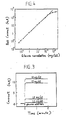
- the output of the sensor of the present invention associated with the addition of glucose to the solution that is, the change of the oxidation current generated by hydrogen peroxide shows a very quick response as shown in FIG. 3. It evidenced to respond within three seconds to the rate of 100 %. The response of the sensor was very quick, and reached rapidly to the constant value. The measured result is shown in FIG. 4 showing the relation of glucose concentration and the output of the sensor. It evidences that the biosensor of the present invention can measure even the concentration of 0.1 mg/dl, and the linearity of the value and the concentration was found within the range to be measured of 0.1 mg/dl to 100 mg/dl.
- biosensor prepared by the immobilization of the biologically active substance in accordance with the present invention has a quick response ability and high sensitivity, which can be easily and readily fabricated.
- a fine platinum wire of 100 micrometer in diameter, a platinum wire of 200 micrometer in diameter for a counter electrode, and a silver wire of 500 micrometer in diameter were fixed by the resin 14, and then, the surface of the fine platinum wire was polished by using alumina powder. Against such polished surface, enzyme was immobilized as follows.
- FIG. 5 shows a functional electrode ( microelectrode ) 11, a counter electrode 12, a reference electrode 13, resin 14, PTFE ( poly tetrafluro ethylene ) 15 and the microdevice 16.
- the response current was generated immediately after the potential was applied, and then, the response current was rapidly reduced. This will support that the hydrogen peroxide generated by glucose oxidizing enzyme would be oxidized directly and immediately when the potential was applied. Further, it was understood that when the potential was repeatedly applied, the peak current will be at a constant value after several time cycle of application.
- the enzyme analytical system in accordance with the present invention can measure the concentration of the trace substance in real time even in the stationary sample in a very small amount.
- the initial stage of the response of the sensor was recorded by a transient memory when the potential of 0.6 volt was applied to the enzyme electrode for the detailed measurement of the pulse shown in the right portion of FIG. 6.
- the result is sown FIG. 9.
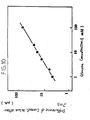
- the difference of the initial response to the glucose containing buffer solution from the initial response to the blank sample phosphoric acid buffer and to the fructose-containing phosphoric acid buffer. Therefore, The difference of the the current value at two microseconds time after the application of the potential from the glucose containing sample to the blank sample is plotted against the concentration of glucose as shown in FIG. 10.
- the linearity of the output to the concentration of glucose was found in the range of 1 mM to 100 mM.
- the analytical system and method in accordance with the present invention can give information on the whole sample under stationary state by detecting on a portion of the sample in the measurement.
- the analytical system and method in accordance with the present invention does not need the agitation of the sample, and therefore, can be used as an intravital biosensing system or as a portable biosensor.
- the bioanalytical system of the present invention can be used in a countercurrent vessel or in a batch form as well as in a stationary vessel, and can detect with high speed response and quick measurement and high sensitivity.
- micro electrode There will be illustrated a method of fabricating enzyme embodied electrode ( micro electrode ) to be used for the inventive analysis.
- the end surface of small platinum wire of 100 micrometer in diameter was polished by alumina powder to be a micro platinum electrode.
- the prepared deposit of platinum black incorporating glucose oxidase was about several micrometer in thickness.
- the resulting microelectrode was used as a functional electrode, and assembled into the microdevice having the structure as shown in FIG. 12.
- the liquid 21 to be measured flows from an inlet 22, and passes the passage 25 having a microelectrode 23.
- a silver/silver chloride electrode was used as a reference electrode 26, and a stainless steel block electrode was used as a counter electrode 27.
- a liquid to be measured was put into a flow injection measurement system as shown in FIG. 12 by a single pump ( ER-8711 type) manufactured by Erma Inc.
- a stainless steel block electrode was used as a counter electrode, and a silver/silver chloride electrode was used as a reference electrode.
- Potential of 0.6 volt was applied to the microelectrode, and hydrogen peroxide being generated was oxidized.
- the flow rate varies in the range of 0.4 ml/minute to 1.8 ml/minute.
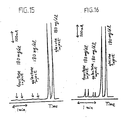
- the detected current shows complete independence of the each peak corresponding to each charge of the samples. It was found that one sample could be detected within about nine seconds.
- the time period necessary for one sample to complete the measurement that is, the response time for measurement of glucose is closely dependent on the size of the microelectrode. It is apparent that when the diameter of the microelectrode is smaller, the time period necessary to measure is shorter. The high speed measurement can be accomplished by reducing the diameter of the microelectrode.
- the relation of the glucose concentration and the peak current is shown in FIG. 14. It was apparent from FIG. 14 that the linearity of the peak current and the concentration of glucose is established in the range of 50 IL Mole to 20 mM.
- a platinum wire of 100 micrometer in diameter was sealed on a block of acryl resin, and the surface of the block was polished by alumina abrasives having particles of 30 micrometer to 0.05 micrometer in size.
- it was dipped in a solution of hexachloroplatinate of 3 % containing 500 ppm of lead acetate and 10 % of glucose, and electrolysis was carried out to form a deposit of platinum fine particles on the smooth end surface of the platinum wire. This electrolysis was for five minutes carried out at - 0.08 volt.
- Six platinum fine particle electrode were fabricated, and then, among them, three of them were treated by oxidation (anodic) treatment, and three of them were not treated.
- the treatment was carried out by dipping the resulting enzyme embodied porous electrode, platinum electrode, and using this electrode as a functional electrode as a counter electrode, and a silver/silver chloride electrode as a reference electrode in the three electrode system, and applying 1.0 volt to said enzyme electrode for ten minutes. Then, the resulting glucose oxidase embodied electrode was washed overnight with a 0.1 M phosphoric buffer solution. The resulting glucose oxidase embodied electrode was assembled as a functional electrode in the flow measurement apparatus as shown in FIG . 11. The sample solutions containing various kinds of saccharide were put in the measurement system in flow injection as shown in FIG. 11 by using a single pump (SPY-2502 U) manufactured by Nippon Seimitu Co.
- SPY-2502 U single pump manufactured by Nippon Seimitu Co.
- the saccharides such as glucose, galactose and fructose can not be oxidized at the potential of 0.6 volt.
- glucose can be oxidized by the action of catalytic glucose oxidase because of the glucose oxidase embodied electrode, and the oxidizing current can be detected corresponding to the amount of the glucose therein.
- the other saccharides can not be oxidized because it is not effected by the glucose oxidase, and the current change may not be caused even if the solution containing the other saccharides were injected in the cell solution.
- the not - treated (not- anodic polarization) glucose oxidase embodied electrode caused the current due to the injection of galactose and fructose. Contrarily, there was not found the current change based on the injection of the other saccharide than glucose when the oxidation treated ( anodic polarization) glucose oxidase embodied electrode was used.
- Process of immobilizing of a biologically active substance, an element prepared thereby, and an analytical method using the said element are can be utilized for a variety of measurement and a measurement apparatus using a biologically active substance, and further, which element can function as a transducer or a reacting element, and are adapted for the measurement and the analytical apparatus with extremely small size, and extremely quick response and high sensitivity.
Landscapes
- Chemical & Material Sciences (AREA)
- Life Sciences & Earth Sciences (AREA)
- Organic Chemistry (AREA)
- Wood Science & Technology (AREA)
- Engineering & Computer Science (AREA)
- Health & Medical Sciences (AREA)
- Zoology (AREA)
- Bioinformatics & Cheminformatics (AREA)
- Genetics & Genomics (AREA)
- Microbiology (AREA)
- Biotechnology (AREA)
- Proteomics, Peptides & Aminoacids (AREA)
- Biochemistry (AREA)
- General Engineering & Computer Science (AREA)
- General Health & Medical Sciences (AREA)
- Biomedical Technology (AREA)
- Physics & Mathematics (AREA)
- Analytical Chemistry (AREA)
- Biophysics (AREA)
- Inorganic Chemistry (AREA)
- Immunology (AREA)
- Molecular Biology (AREA)
- Measuring Or Testing Involving Enzymes Or Micro-Organisms (AREA)
- Apparatus Associated With Microorganisms And Enzymes (AREA)
Applications Claiming Priority (4)
| Application Number | Priority Date | Filing Date | Title |
|---|---|---|---|
| JP56472/87 | 1987-03-13 | ||
| JP62056472A JPH0675054B2 (ja) | 1987-03-13 | 1987-03-13 | 生体機能物質の直接固定化法 |
| JP62304523A JP2615391B2 (ja) | 1987-12-03 | 1987-12-03 | 酵素分析システム及びそれによる分析法 |
| JP304523/87 | 1987-12-03 |
Publications (3)
| Publication Number | Publication Date |
|---|---|
| EP0308514A1 true EP0308514A1 (de) | 1989-03-29 |
| EP0308514A4 EP0308514A4 (de) | 1989-06-27 |
| EP0308514B1 EP0308514B1 (de) | 1994-03-30 |
Family
ID=26397424
Family Applications (1)
| Application Number | Title | Priority Date | Filing Date |
|---|---|---|---|
| EP19880902541 Expired - Lifetime EP0308514B1 (de) | 1987-03-13 | 1988-03-11 | Methode zur Erzeugung einer Biomikroelektrode |
Country Status (3)
| Country | Link |
|---|---|
| EP (1) | EP0308514B1 (de) |
| DE (1) | DE3888767T2 (de) |
| WO (1) | WO1988007192A1 (de) |
Cited By (2)
| Publication number | Priority date | Publication date | Assignee | Title |
|---|---|---|---|---|
| WO2001088518A3 (en) * | 2000-05-16 | 2002-02-28 | Medtronic Minimed Inc | Microelectrogravimetric method for plating a biosensor |
| CN103743801A (zh) * | 2014-01-02 | 2014-04-23 | 上海大学 | 基于液滴微流控的铂黑修饰电极生物传感器的制备方法及其应用 |
Families Citing this family (4)
| Publication number | Priority date | Publication date | Assignee | Title |
|---|---|---|---|---|
| GB8724446D0 (en) * | 1987-10-19 | 1987-11-25 | Cambridge Life Sciences | Immobilised enzyme electrodes |
| FR2630546B1 (fr) * | 1988-04-20 | 1993-07-30 | Centre Nat Rech Scient | Electrode enzymatique et son procede de preparation |
| US5166063A (en) * | 1990-06-29 | 1992-11-24 | Eli Lilly And Company | Immobolization of biomolecules by enhanced electrophoretic precipitation |
| CN101349666B (zh) * | 2007-07-18 | 2011-10-05 | 西北师范大学 | 用铂微电极和参比电极检测痕量汞离子的方法 |
Family Cites Families (2)
| Publication number | Priority date | Publication date | Assignee | Title |
|---|---|---|---|---|
| JPS56163447A (en) * | 1980-05-22 | 1981-12-16 | Matsushita Electric Ind Co Ltd | Enzyme electrode |
| JPH0697219B2 (ja) * | 1985-02-25 | 1994-11-30 | 財団法人化学及血清療法研究所 | 免疫センサー用電極及びその製造方法 |
-
1988
- 1988-03-11 DE DE3888767T patent/DE3888767T2/de not_active Expired - Fee Related
- 1988-03-11 EP EP19880902541 patent/EP0308514B1/de not_active Expired - Lifetime
- 1988-03-11 WO PCT/JP1988/000255 patent/WO1988007192A1/ja not_active Ceased
Non-Patent Citations (2)
| Title |
|---|
| No relevant documents have been disclosed. * |
| See also references of WO8807192A1 * |
Cited By (2)
| Publication number | Priority date | Publication date | Assignee | Title |
|---|---|---|---|---|
| WO2001088518A3 (en) * | 2000-05-16 | 2002-02-28 | Medtronic Minimed Inc | Microelectrogravimetric method for plating a biosensor |
| CN103743801A (zh) * | 2014-01-02 | 2014-04-23 | 上海大学 | 基于液滴微流控的铂黑修饰电极生物传感器的制备方法及其应用 |
Also Published As
| Publication number | Publication date |
|---|---|
| DE3888767D1 (de) | 1994-05-05 |
| WO1988007192A1 (fr) | 1988-09-22 |
| EP0308514B1 (de) | 1994-03-30 |
| EP0308514A4 (de) | 1989-06-27 |
| DE3888767T2 (de) | 1994-08-04 |
Similar Documents
| Publication | Publication Date | Title |
|---|---|---|
| Mădăraş et al. | Microfabricated amperometric creatine and creatinine biosensors | |
| Pantano et al. | Enzyme‐modified microelectrodes for in vivo neurochemical measurements | |
| EP0304494B1 (de) | Immobilisierung von biofunktionellem material, daraus erzeugtes element und massnahme zu dessen verwendung | |
| Suzuki | Advances in the microfabrication of electrochemical sensors and systems | |
| Scouten et al. | Enzyme or protein immobilization techniques for applications in biosensor design | |
| US5286364A (en) | Surface-modified electochemical biosensor | |
| EP0266432B1 (de) | Mikroelektrode für elektrochemische analyse | |
| Ikariyama et al. | Electrochemical fabrication of amperometric microenzyme sensor | |
| EP0251915A2 (de) | Enzymsensor | |
| US5269903A (en) | Microbioelectrode and method of fabricating the same | |
| JPS61128152A (ja) | 生物化学センサ | |
| JP2003510570A (ja) | 連続アナライトモニタリング用小型バイオセンサー | |
| JPS6212847A (ja) | 酵素/電極式中センサー | |
| GB2034242A (en) | Enzyme-containing membrane for use in electrochemical analysis cell | |
| EP0343203A1 (de) | Immobilisierte enzymelektroden sowie eine methode zur reduzierung der alkoholempfindlichkeit | |
| Ikariyama et al. | Micro-enzyme electrode prepared on platinized platinum | |
| Liu et al. | Enzyme biosensors for point-of-care testing | |
| Ikariyama et al. | Surface control of platinized platinum as a transducer matrix for micro-enzyme electrodes | |
| JP3393361B2 (ja) | バイオセンサ | |
| Wang et al. | One-step electropolymeric co-immobilization of glucose oxidase and heparin for amperometric biosensing of glucose | |
| Pariente et al. | Enzyme support systems for biosensor applications based on gold-coated nylon meshes | |
| EP0308514A1 (de) | Methode zur Erzeugung einer Biomikroelektrode | |
| Zhu et al. | An overview of Si-based biosensors | |
| JP2569404B2 (ja) | 生体機能物質の固定化法及びそれを用いた電極 | |
| Reynolds et al. | Platinized carbon ultramicroelectrodes as glucose biosensors |
Legal Events
| Date | Code | Title | Description |
|---|---|---|---|
| PUAI | Public reference made under article 153(3) epc to a published international application that has entered the european phase |
Free format text: ORIGINAL CODE: 0009012 |
|
| 17P | Request for examination filed |
Effective date: 19881111 |
|
| AK | Designated contracting states |
Kind code of ref document: A1 Designated state(s): DE FR GB NL SE |
|
| A4 | Supplementary search report drawn up and despatched |
Effective date: 19890627 |
|
| 17Q | First examination report despatched |
Effective date: 19901129 |
|
| GRAA | (expected) grant |
Free format text: ORIGINAL CODE: 0009210 |
|
| AK | Designated contracting states |
Kind code of ref document: B1 Designated state(s): DE FR GB NL SE |
|
| ET | Fr: translation filed | ||
| REF | Corresponds to: |
Ref document number: 3888767 Country of ref document: DE Date of ref document: 19940505 |
|
| EAL | Se: european patent in force in sweden |
Ref document number: 88902541.7 |
|
| PLBE | No opposition filed within time limit |
Free format text: ORIGINAL CODE: 0009261 |
|
| STAA | Information on the status of an ep patent application or granted ep patent |
Free format text: STATUS: NO OPPOSITION FILED WITHIN TIME LIMIT |
|
| 26N | No opposition filed | ||
| PGFP | Annual fee paid to national office [announced via postgrant information from national office to epo] |
Ref country code: GB Payment date: 20000224 Year of fee payment: 13 |
|
| PGFP | Annual fee paid to national office [announced via postgrant information from national office to epo] |
Ref country code: FR Payment date: 20000320 Year of fee payment: 13 |
|
| PGFP | Annual fee paid to national office [announced via postgrant information from national office to epo] |
Ref country code: SE Payment date: 20000324 Year of fee payment: 13 |
|
| PGFP | Annual fee paid to national office [announced via postgrant information from national office to epo] |
Ref country code: NL Payment date: 20000327 Year of fee payment: 13 |
|
| PGFP | Annual fee paid to national office [announced via postgrant information from national office to epo] |
Ref country code: DE Payment date: 20000428 Year of fee payment: 13 |
|
| PG25 | Lapsed in a contracting state [announced via postgrant information from national office to epo] |
Ref country code: GB Free format text: LAPSE BECAUSE OF NON-PAYMENT OF DUE FEES Effective date: 20010311 |
|
| PG25 | Lapsed in a contracting state [announced via postgrant information from national office to epo] |
Ref country code: SE Free format text: LAPSE BECAUSE OF NON-PAYMENT OF DUE FEES Effective date: 20010312 |
|
| PG25 | Lapsed in a contracting state [announced via postgrant information from national office to epo] |
Ref country code: NL Free format text: LAPSE BECAUSE OF NON-PAYMENT OF DUE FEES Effective date: 20011001 |
|
| GBPC | Gb: european patent ceased through non-payment of renewal fee |
Effective date: 20010311 |
|
| EUG | Se: european patent has lapsed |
Ref document number: 88902541.7 |
|
| PG25 | Lapsed in a contracting state [announced via postgrant information from national office to epo] |
Ref country code: FR Free format text: LAPSE BECAUSE OF NON-PAYMENT OF DUE FEES Effective date: 20011130 |
|
| NLV4 | Nl: lapsed or anulled due to non-payment of the annual fee |
Effective date: 20011001 |
|
| REG | Reference to a national code |
Ref country code: FR Ref legal event code: ST |
|
| PG25 | Lapsed in a contracting state [announced via postgrant information from national office to epo] |
Ref country code: DE Free format text: LAPSE BECAUSE OF NON-PAYMENT OF DUE FEES Effective date: 20020101 |