EP0308708A2 - Procédé pour augmenter la ductilité à la cassure et la résistance de matériaux céramiques - Google Patents
Procédé pour augmenter la ductilité à la cassure et la résistance de matériaux céramiques Download PDFInfo
- Publication number
- EP0308708A2 EP0308708A2 EP88114387A EP88114387A EP0308708A2 EP 0308708 A2 EP0308708 A2 EP 0308708A2 EP 88114387 A EP88114387 A EP 88114387A EP 88114387 A EP88114387 A EP 88114387A EP 0308708 A2 EP0308708 A2 EP 0308708A2
- Authority
- EP
- European Patent Office
- Prior art keywords
- ceramic
- ceramic particles
- particles
- metallic
- metal
- Prior art date
- Legal status (The legal status is an assumption and is not a legal conclusion. Google has not performed a legal analysis and makes no representation as to the accuracy of the status listed.)
- Withdrawn
Links
Images
Classifications
-
- C—CHEMISTRY; METALLURGY
- C04—CEMENTS; CONCRETE; ARTIFICIAL STONE; CERAMICS; REFRACTORIES
- C04B—LIME, MAGNESIA; SLAG; CEMENTS; COMPOSITIONS THEREOF, e.g. MORTARS, CONCRETE OR LIKE BUILDING MATERIALS; ARTIFICIAL STONE; CERAMICS; REFRACTORIES; TREATMENT OF NATURAL STONE
- C04B35/00—Shaped ceramic products characterised by their composition; Ceramics compositions; Processing powders of inorganic compounds preparatory to the manufacturing of ceramic products
- C04B35/71—Ceramic products containing macroscopic reinforcing agents
-
- C—CHEMISTRY; METALLURGY
- C04—CEMENTS; CONCRETE; ARTIFICIAL STONE; CERAMICS; REFRACTORIES
- C04B—LIME, MAGNESIA; SLAG; CEMENTS; COMPOSITIONS THEREOF, e.g. MORTARS, CONCRETE OR LIKE BUILDING MATERIALS; ARTIFICIAL STONE; CERAMICS; REFRACTORIES; TREATMENT OF NATURAL STONE
- C04B35/00—Shaped ceramic products characterised by their composition; Ceramics compositions; Processing powders of inorganic compounds preparatory to the manufacturing of ceramic products
- C04B35/622—Forming processes; Processing powders of inorganic compounds preparatory to the manufacturing of ceramic products
- C04B35/64—Burning or sintering processes
- C04B35/65—Reaction sintering of free metal- or free silicon-containing compositions
Definitions
- This invention relates to a method for improving the fracture toughness and strength of ceramic materials, and more particularly, to such a method for formation of strengthened ceramic articles prepared by powder metallurgical processes.
- Ceramic materials include, among others, silicon nitride, silicon carbide, partially stabilized alumina and partially stabilized zirconia.
- This patent presented a method for producing ceramic articles, having improved fracture toughness properties, by a powder metallurgical technique with injection of fine ceramic particles with gas ions and compacting the same, with the compacted particles heated such that the gas ions form bubbles homogeneously dispersed throughout the ceramic article formed.
- the fracture toughness and the strength of ceramic materials can be significantly improved by the mechanisms of transformation toughening, intergranular dispersion strengthening, or intragranular dispersion strengthening.
- transformation toughening the secondary phase particles, while constrained by the ceramic matrix, expand during phase transformation, resulting in residual stresses around each secondary phase particle, which have to be nullified for the crack to propagate through the transformed zone, i.e., increased fracture toughness.
- An example of transformation toughening is alumina toughened by tetragonal or monoclinic zirconia particles.
- intergranular precipitation hardening strengthening results from blockage of dislocations and growing cracks, especially at high temperatures, for example, in alumina-rich spinel with tetragonal zirconia particles.
- the mechanism of intragranular dispersion strengthening is effective in improving high temperature mechanical properties of softer ceramics by incorporation of hard, high modulus secondary phase particles as in tetragonal zirconia containing a dispersion of alumina particles.
- Cochran et al. "Ion Implanted Precipitate Microstructure and Mechanical Properties of Ceramic Surfaces", The ASM Conference on The Application of Ion Plating and Implantation to Materials , Atlanta, GA, June, 1985, discusses the implantation of alumina surfaces with high doses of a 190 kiloelectron volt beam of zirconium ions and air annealing the resulting ceramic to produce precipitates of tetragonal and monoclinic zirconia in the alumina.
- the microstructure of the precipitate and, thus, the surface mechanical properties of the resulting ceramic could be varied by altering the annealing schedule.
- the surface of a yttria stabilized zirconia wafer was implanted at 190 kiloelectron volts with 4 x 10¹⁷ aluminum ions per square centimeter.
- alumina discs were implanted at 180 kiloelectron volts with 1.5 x 10¹⁷ zirconium ions per square centimeter.
- Ceramic articles having improved fracture toughness properties are prepared by a powder metallurgical process wherein ceramic particles having an average particle size of between about 0.5 and about 60 micrometers in diameter, are injected with a beam of accelerated metallic ions to produce a supply of metallic ion-containing ceramic particles.
- the metallic ion-containing ceramic particles are compacted at ambient temperature into a form by applying pressure thereabout.
- the form is then heated at a temperature of at least about 800°c, in an atmosphere comprising a gas such as oxygen, nitrogen, and mixtures thereof, whereby the gas reactors with such injected metal to produce a metal-gas reaction product which is dispersed throughout the form.
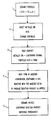
- the drawing is a flow chart schematically illustrating the method of the present invention.
- Ceramic articles having improved fracture toughness are produced by the present method wherein ceramic particles are injected with metallic ions, the injected particles are compacted, and the compact particles are heated in an atmosphere containing a gas such as air, oxygen, nitrogen or mixtures thereof, such that the gas reacts with the metallic ions to form a metallic ion-gas reaction product which is preferably substantially uniformly dispersed throughout the resulting ceramic article.
- a gas such as air, oxygen, nitrogen or mixtures thereof
- the present method forms ceramic articles of improved fracture toughness from ceramic compositions such as oxides, nitrides, borides and carbides of silicon, zirconium, aluminum, magnesium, yttrium, and other complex ceramic compounds such as SiALON.
- ceramic compositions such as oxides, nitrides, borides and carbides of silicon, zirconium, aluminum, magnesium, yttrium, and other complex ceramic compounds such as SiALON.
- ceramic compositions are zirconium oxide, silicon nitride, silicon carbide, partially stabilized zirconia (PSZ), tetragonal zirconia polycrystals (TZP), alumina, SiALON, mullite, spinel, cordierite, and the like.
- the ceramic compositions are provided in a finely divided powdered state with particles having an average particle size of between about 0.5 to about 60 micrometers (um) in diameter.
- the small solid particles are of a size which enables injection thereof with metallic ions at reasonable energies.
- the ceramic particles are injected with metallic ions to produce metallic ion-containing ceramic particles.
- the metallic ions used may vary depending upon the ceramic particle components, although metallic ions, such as zirconium, hafnium, silicon, and/or aluminum, are preferred.
- the injection of the ceramic particles with metallic ions is effected by impingement of the ceramic particles with a high energy beam of accelerated metallic ions, preferably under vacuum, at ambient temperature, and preferably, with tumbling of the particles.
- a high energy beam of accelerated metallic ions preferably under vacuum, at ambient temperature, and preferably, with tumbling of the particles.
- an ion impingement of the ceramic powder will be effected with a few hundred kiloelectron volts (KeV) accelerated beam of metallic ions.
- KeV kiloelectron volts
- a 150 KeV beam of ions is used although the energy of the beam may be varied depending upon the particle size of the ceramic material and the accelerated metallic specie used.
- the particles are continuously tumbled during impingement to uniformly expose all of the powder particulates to the ion beam using known accelerators and vacuum tumbling systems, such as a rotating cup, for example, as described by L. R. Fleischer, J. A. Spitznagel and W. J. Choyke, "Helium Embrittlement of CRT Materials Simulated by Ion Implantation and Hot Iso static Pressing of Metal Powders", CONF-750989, Vol. II, 1976, pp. 372-386.
- the injection of the ceramic particles with metallic ions is effected at ambient temperatures and the impingement carried out for a period of time sufficient to provide the quantity of metal-gas reaction product in the resulting ceramic article.
- the ceramic particles will be injected with from about 5 x 10¹⁴ and about 1 x 10¹⁸ metallic ions per square centimeter.
- the metallic ion-containing particles are then compacted into the ceramic article by first cold compacting the ceramic article to stabilize the same and then hot compacting or sintering the ceramic article.
- the metallic ion-containing particles are compacted at ambient temperature by the application of pressure equally about the supply of metallic ion-containing particles.
- Cold isostatic pressing of the metallic ion-containing particles forms a monolithic shape or form which can be subsequently hot compacted.
- the cold compacting is effected at pressures sufficient to compress the particles to a density of from about 65 percent to about 85 percent of the theoretical density of the ceramic article to provide a form for subsequent hot pressing.
- Hot compacting of the metallic ion-containing ceramic particles is then carried out with or without pressure to achieve substantially maximum density of the particles.
- Hot isostatic pressing at superatmospheric pressure, or sintering at atmospheric pressure is effected at an elevated temperature, a temperature in excess of about 800°C, and preferably above 1000°C.
- the hot compacting of the metallic ion-containing ceramic article is performed in an atmosphere comprising a gas selected from the group consisting essentially of oxygen, nitrogen, and mixtures thereof. Air may be used as the gaseous atmosphere.
- the heating and compacting of the form of metallic ion-containing particles causes the gas to react with the injected metal to form a metal-gas reaction product distributed throughout the ceramic article.
- the article may then be annealed, if desired, to provide a preferred microstructure in the metal-containing ceramic article.
- the metal-gas reaction product be substantially uniformly distributed throughout the ceramic article.
- the present method can be used to form ceramic articles wherein the metal-gas reaction product is not uniformly distributed throughout the ceramic article.
- the desired microstructure, including grain size, particle morphology, volume fraction and size distribution, of the resulting ceramic article can be obtained by adjusting the ion energy, ion current, powder size and heat treatments during or following the consolidation stage.
- Examples of the application of the present method include zirconia toughened alumina ceramics, tetragonal zirconia precipitation hardened alumina-rich spinel ceramics, and ceramics of tetragonal zirconia polycrystals dispersion strengthened with alumina.
- the injection of zirconium metal ions in alumina and heat treatment can be used to produce tetragonal ZrO2 and/or monoclinic ZrO2 in the alumina improving the fracture toughness by transformation toughening and microcrack toughening.
- elevated temperature strengthening of Al2O3 ⁇ MgO by dispersion of tetragonal ZrO2 particles can be effected by precipitation strengthening.
- dispersion strengthening of Y2O3 - TZP can be effected by Al2O3 particle dispersion improving high temperature mechanical properties.
- an increase in transformation temperature from 1150 to 1460°c can be effected by dispersing HfO2 alloyed ZrO2 particles in Al2O3.
- Hf+ and Zr+ ions are injected in Al2O3 particles prior to consolidation.
- the method is schematically illustrated in the drawing which illustrates a supply of ceramic particles (step 1) of a diameter of about 0.5 to about 60 micrometers, into which metallic ions are injected (step 2).
- the supply of metallic ion-containing ceramic particles are cold compacted (step 3) into a form that stabilizes the particles, and the form is then heated with or without pressure (step 4) to produce a ceramic article containing a metal-gas reaction product.
- the finished article (step 5) comprises a ceramic article containing the metal-gas reaction product dispersed throughout the article which induces increased fracture toughness.
- the present method by providing ceramic articles having a metal-gas reaction product distributed throughout the article, improves the fracture toughness of the article.
- FIGURE CERAMIC PARTICLES (0.05 - 60 ⁇ m) 1 1 INJECT METALLIC ION INTO CERAMIC PARTICLES 2 1 COLD COMPACT METALLIC ION - CONTAINING CERAMIC PARTICLES INTO A FORM 3 1 HEAT FORM IN GASEOUS ATMOSPHERE CONTAINING A GAS REACTIVE WITH THE INJECTED METAL TO PRODUCE REACTION PRODUCT IN ARTICLE 4 1 CERAMIC ARTICLE CONTAINING REACTION PRODUCT DISPERSED THROUGHOUT 5 1
Landscapes
- Chemical & Material Sciences (AREA)
- Engineering & Computer Science (AREA)
- Ceramic Engineering (AREA)
- Manufacturing & Machinery (AREA)
- Chemical Kinetics & Catalysis (AREA)
- Materials Engineering (AREA)
- Structural Engineering (AREA)
- Organic Chemistry (AREA)
- Compositions Of Oxide Ceramics (AREA)
- Inorganic Chemistry (AREA)
- Ceramic Products (AREA)
Applications Claiming Priority (2)
| Application Number | Priority Date | Filing Date | Title |
|---|---|---|---|
| US9982487A | 1987-09-23 | 1987-09-23 | |
| US99824 | 1987-09-23 |
Publications (2)
| Publication Number | Publication Date |
|---|---|
| EP0308708A2 true EP0308708A2 (fr) | 1989-03-29 |
| EP0308708A3 EP0308708A3 (fr) | 1990-06-13 |
Family
ID=22276794
Family Applications (1)
| Application Number | Title | Priority Date | Filing Date |
|---|---|---|---|
| EP88114387A Withdrawn EP0308708A3 (fr) | 1987-09-23 | 1988-09-02 | Procédé pour augmenter la ductilité à la cassure et la résistance de matériaux céramiques |
Country Status (3)
| Country | Link |
|---|---|
| EP (1) | EP0308708A3 (fr) |
| JP (1) | JPH01108142A (fr) |
| KR (1) | KR890005011A (fr) |
Cited By (3)
| Publication number | Priority date | Publication date | Assignee | Title |
|---|---|---|---|---|
| EP3470384A1 (fr) * | 2017-10-12 | 2019-04-17 | The Swatch Group Research and Development Ltd | Procédé de traitement de surface de particules d'une poudre céramique et particules de poudre céramique obtenues grâce à ce procédé |
| CN115010487A (zh) * | 2022-07-01 | 2022-09-06 | 江苏锡沂高新材料产业技术研究院有限公司 | 一种晶须增韧氧化锆陶瓷的制备方法 |
| US20230332284A1 (en) * | 2017-07-07 | 2023-10-19 | The Swatch Group Research And Development Ltd | Method for the surface treatment of particles of a metal powder and metal powder particles obtained thereby |
Family Cites Families (2)
| Publication number | Priority date | Publication date | Assignee | Title |
|---|---|---|---|---|
| US4707312A (en) * | 1985-10-09 | 1987-11-17 | Westinghouse Electric Corp. | Method for producing ceramic articles of increased fracture toughness |
| DE3608763C1 (de) * | 1986-03-15 | 1987-06-04 | Nukem Gmbh | Verfahren zur Herstellung von keramischen Formkoerpern |
-
1988
- 1988-09-02 EP EP88114387A patent/EP0308708A3/fr not_active Withdrawn
- 1988-09-20 JP JP63236175A patent/JPH01108142A/ja active Pending
- 1988-09-22 KR KR1019880012261A patent/KR890005011A/ko not_active Withdrawn
Cited By (9)
| Publication number | Priority date | Publication date | Assignee | Title |
|---|---|---|---|---|
| US20230332284A1 (en) * | 2017-07-07 | 2023-10-19 | The Swatch Group Research And Development Ltd | Method for the surface treatment of particles of a metal powder and metal powder particles obtained thereby |
| US12595551B2 (en) * | 2017-07-07 | 2026-04-07 | The Swatch Group Research And Development Ltd | Method for the surface treatment of particles of a metal powder and metal powder particles obtained thereby |
| EP3470384A1 (fr) * | 2017-10-12 | 2019-04-17 | The Swatch Group Research and Development Ltd | Procédé de traitement de surface de particules d'une poudre céramique et particules de poudre céramique obtenues grâce à ce procédé |
| US20190112700A1 (en) * | 2017-10-12 | 2019-04-18 | The Swatch Group Research And Development Ltd | Method for particle surface treatment of a ceramic powder and ceramic powder particles obtained by said method |
| CN109650905A (zh) * | 2017-10-12 | 2019-04-19 | 斯沃奇集团研究和开发有限公司 | 陶瓷粉末的颗粒表面处理方法和通过所述方法得到的陶瓷粉末颗粒 |
| EP3632876A1 (fr) * | 2017-10-12 | 2020-04-08 | The Swatch Group Research and Development Ltd | Particules de poudre céramique revetue |
| TWI801404B (zh) * | 2017-10-12 | 2023-05-11 | 瑞士商史華曲集團研發有限公司 | 陶瓷粉末之粒子表面處理方法及由該方法得到之陶瓷粉末粒子 |
| CN115010487A (zh) * | 2022-07-01 | 2022-09-06 | 江苏锡沂高新材料产业技术研究院有限公司 | 一种晶须增韧氧化锆陶瓷的制备方法 |
| CN115010487B (zh) * | 2022-07-01 | 2023-12-08 | 江苏锡沂高新材料产业技术研究院有限公司 | 一种晶须增韧氧化锆陶瓷的制备方法 |
Also Published As
| Publication number | Publication date |
|---|---|
| JPH01108142A (ja) | 1989-04-25 |
| KR890005011A (ko) | 1989-05-11 |
| EP0308708A3 (fr) | 1990-06-13 |
Similar Documents
| Publication | Publication Date | Title |
|---|---|---|
| Greil et al. | Sintering and HIPping of silicon nitride-silicon carbide composite materials | |
| US4652413A (en) | Method for preparing configured silicon carbide whisker-reinforced alumina ceramic articles | |
| WO2017120990A1 (fr) | Procédé de préparation de pièce céramique transparente de forme complexe, exactement dimensionnée | |
| US5122317A (en) | Method of superplastically deforming zirconia materials | |
| US4425141A (en) | Composite ceramic cutting tool | |
| Kim et al. | Pressureless sintering of SiC-TiC composites with improved fracture toughness | |
| US5223195A (en) | Sintered ceramic article | |
| US5296301A (en) | Sintered ceramic-metal composite product and method of fabricating the same | |
| EP0308708A2 (fr) | Procédé pour augmenter la ductilité à la cassure et la résistance de matériaux céramiques | |
| EP0219319A2 (fr) | Procédé de fabrication de corps céramiques | |
| Lee | Fabrication of Si3N4/SiC composite by reaction‐bonding and gas‐pressure sintering | |
| CA2005686C (fr) | Element de ceramique fritte et mode de fabrication connexe | |
| EP0310342A2 (fr) | Corps composites frittés en SiC-Al2O3 et méthode pour les fabriquer | |
| US5376600A (en) | Pressureless sintering of whiskered-toughened ceramic composites | |
| US4731349A (en) | Process of producing alumina-titanium carbide ceramic body | |
| KR950014721B1 (ko) | 지르코니아의 정방정으로부터 단사정으로의 상변태 촉진제로서의 MoO₂및 이를 사용한 지르코니아-알루미나 복합체의 표면 강화 방법 | |
| EP0201132B1 (fr) | Procédé pour densifier une pièce céramique | |
| JPS6389462A (ja) | 窒化珪素質焼結体の製造方法 | |
| EP0095129B1 (fr) | Corps céramique composite pour outil de coupe et son procédé de fabrication | |
| JPH0770610A (ja) | 射出成形品の焼結方法 | |
| Bengisu et al. | Effect of dynamic compaction on the retention of tetragonal zirconia and mechanical properties of alumina/zirconia composites | |
| Anggraini | Deformation and Fracture Mechanics of Superior Nanocomposites | |
| JPH01215761A (ja) | 窒化珪素質焼結体の製造方法 | |
| JP2705618B2 (ja) | 窒化ケイ素焼結体の製造方法 | |
| KR930004555B1 (ko) | Al_2O_3계 세라믹 복합재료 및 그 제조방법 |
Legal Events
| Date | Code | Title | Description |
|---|---|---|---|
| PUAI | Public reference made under article 153(3) epc to a published international application that has entered the european phase |
Free format text: ORIGINAL CODE: 0009012 |
|
| AK | Designated contracting states |
Kind code of ref document: A2 Designated state(s): DE FR GB IT SE |
|
| PUAL | Search report despatched |
Free format text: ORIGINAL CODE: 0009013 |
|
| AK | Designated contracting states |
Kind code of ref document: A3 Designated state(s): DE FR GB IT SE |
|
| 17P | Request for examination filed |
Effective date: 19901213 |
|
| 17Q | First examination report despatched |
Effective date: 19910627 |
|
| STAA | Information on the status of an ep patent application or granted ep patent |
Free format text: STATUS: THE APPLICATION IS DEEMED TO BE WITHDRAWN |
|
| 18D | Application deemed to be withdrawn |
Effective date: 19911108 |