EP0309913A2 - Fungizide N-substituierte 3-Aryl-pyrrolidin-Derivate - Google Patents
Fungizide N-substituierte 3-Aryl-pyrrolidin-Derivate Download PDFInfo
- Publication number
- EP0309913A2 EP0309913A2 EP88115569A EP88115569A EP0309913A2 EP 0309913 A2 EP0309913 A2 EP 0309913A2 EP 88115569 A EP88115569 A EP 88115569A EP 88115569 A EP88115569 A EP 88115569A EP 0309913 A2 EP0309913 A2 EP 0309913A2
- Authority
- EP
- European Patent Office
- Prior art keywords
- cyclohexyl
- dimethyl
- hydroxy
- methyl
- tert
- Prior art date
- Legal status (The legal status is an assumption and is not a legal conclusion. Google has not performed a legal analysis and makes no representation as to the accuracy of the status listed.)
- Granted
Links
Classifications
-
- C—CHEMISTRY; METALLURGY
- C07—ORGANIC CHEMISTRY
- C07D—HETEROCYCLIC COMPOUNDS
- C07D405/00—Heterocyclic compounds containing both one or more hetero rings having oxygen atoms as the only ring hetero atoms, and one or more rings having nitrogen as the only ring hetero atom
- C07D405/02—Heterocyclic compounds containing both one or more hetero rings having oxygen atoms as the only ring hetero atoms, and one or more rings having nitrogen as the only ring hetero atom containing two hetero rings
- C07D405/08—Heterocyclic compounds containing both one or more hetero rings having oxygen atoms as the only ring hetero atoms, and one or more rings having nitrogen as the only ring hetero atom containing two hetero rings linked by a carbon chain containing alicyclic rings
-
- C—CHEMISTRY; METALLURGY
- C07—ORGANIC CHEMISTRY
- C07D—HETEROCYCLIC COMPOUNDS
- C07D207/00—Heterocyclic compounds containing five-membered rings not condensed with other rings, with one nitrogen atom as the only ring hetero atom
- C07D207/02—Heterocyclic compounds containing five-membered rings not condensed with other rings, with one nitrogen atom as the only ring hetero atom with only hydrogen or carbon atoms directly attached to the ring nitrogen atom
- C07D207/04—Heterocyclic compounds containing five-membered rings not condensed with other rings, with one nitrogen atom as the only ring hetero atom with only hydrogen or carbon atoms directly attached to the ring nitrogen atom having no double bonds between ring members or between ring members and non-ring members
- C07D207/06—Heterocyclic compounds containing five-membered rings not condensed with other rings, with one nitrogen atom as the only ring hetero atom with only hydrogen or carbon atoms directly attached to the ring nitrogen atom having no double bonds between ring members or between ring members and non-ring members with radicals, containing only hydrogen and carbon atoms, attached to ring carbon atoms
-
- C—CHEMISTRY; METALLURGY
- C07—ORGANIC CHEMISTRY
- C07D—HETEROCYCLIC COMPOUNDS
- C07D207/00—Heterocyclic compounds containing five-membered rings not condensed with other rings, with one nitrogen atom as the only ring hetero atom
- C07D207/02—Heterocyclic compounds containing five-membered rings not condensed with other rings, with one nitrogen atom as the only ring hetero atom with only hydrogen or carbon atoms directly attached to the ring nitrogen atom
- C07D207/04—Heterocyclic compounds containing five-membered rings not condensed with other rings, with one nitrogen atom as the only ring hetero atom with only hydrogen or carbon atoms directly attached to the ring nitrogen atom having no double bonds between ring members or between ring members and non-ring members
- C07D207/08—Heterocyclic compounds containing five-membered rings not condensed with other rings, with one nitrogen atom as the only ring hetero atom with only hydrogen or carbon atoms directly attached to the ring nitrogen atom having no double bonds between ring members or between ring members and non-ring members with hydrocarbon radicals, substituted by hetero atoms, attached to ring carbon atoms
Definitions
- the present invention relates to new N-substituted 3-aryl-pyrrolidines, processes for their preparation, their use as fungicides, fungicidal compositions which contain the new active compounds and processes for combating harmful fungi with these active compounds.
- R1 means 2,2-dimethyl-propyl, 3,3-dimethyl-butyl, 4,4-dimethyl-pentyl, 2,4,4-trimethyl-pentyl, 6-methyl-hept-2-yl, 3,5, 5-trimethyl-hexyl, 6,10-dimethyl-undec-2-yl, 3-methyl-cyclohexyl, 3,3-dimethyl-cyclohexyl, 3,3,5-trimethyl-cyclohexyl, 3,3,5,5- Tetramethyl-cyclohexyl, 4-methyl-cyclohexyl, 4-ethyl-cyclohexyl, 4-propylcyclohexyl, 4-isopropylcyclohexyl, 4-tert-butyl-cyclohexyl, trans-4-tert-butyl-cyclohexyl, 4 (2-methyl- but-2-yl) cyclohex
- Salts are to be understood as salts with an anion X- which is compatible with plants and with any inorganic and organic acids, e.g. with hydrogen chloride, hydrogen fluoride, hydrogen bromide, sulfuric acid, phosphoric acid, hydroiodic acid, dodecylbenzenesulfonic acid, formic acid, alkyl carboxylic acids, acetic acid, propionic acid, palmitic acid, perfluoroheptanoic acid, oxalic acid, malonic acid, benzoic acid, malic acid, dodecylsulfuric acid, glycerol-2-phosphoric acid, methyl sulfuric acid, methanesulfonic acid, p-toluenesulfonic acid , Nitric acid, for example the following salts hydrogen sulfate, dihydrogen phosphate.
- any inorganic and organic acids e.g. with hydrogen chloride, hydrogen fluoride, hydrogen bromide, sulfuric acid, phosphoric acid, hydroi
- the new N-substituted 3-aryl-pyrrolidines of the formula I contain chiral centers. They are generally obtained in their preparation as racemates or, if appropriate, as mixtures of diastereomers.
- Pure diastereomeric compounds can be isolated from some of the new compounds, for example by distillation, column chromatography or due to differences in solubility.
- Enantiomerically pure compounds can e.g. B. obtained by resolution with a chiral auxiliary reagent according to known methods, for example via diastereomeric salts.
- a chiral auxiliary reagent for example via diastereomeric salts.
- the new N-substituted 3-Aryl-pyrrolidines are suitable as fungicides, both the diastereomers or the enantiomers and also the stereoisomer mixtures obtained in the synthesis. All of them are encompassed by the invention.
- R1 means for example 2,2-dimethyl-propyl, 3,3-dimethyl-butyl, 4,4-dimethyl-pentyl, 2,4,4-trimethyl-pentyl, 6-methyl-hept-2-yl, 3,5,5- Trimethyl-hexyl, 6,10-dimethyl-undec-2-yl, 3-methyl-cyclohexyl, 3,3-dimethyl-cyclohexyl, 3,3,5-trimethyl-cyclohexyl, 3,3,5,5-tetramethyl- cyclohexyl, 4-methyl-cyclohexyl, 4-ethyl-cyclohexyl, 4-propyl-cyclohexyl, 4-isopropylcyclohexyl, trans-4-isopropyl-cyclohexyl, 4-tert-butyl-cyclohexyl, trans-4-tert-butyl cyclohexyl, 4 (2-methyl-but-2-yl) cyclohe
- R2 means, for example, branched or unbranched C3-C10 alkyl, such as propyl, isopropyl, sec. Butyl, tert. Butyl, 2-methyl-but-2-yl, 2,4,4-trimethyl-pent-2-yl, branched or unbranched C3-C8alkoxy, such as, for example, propyloxy, isopropoxy, butyloxy, tert-butyloxy, C3-C9-trialkylsilyl, such as trimethylsilyl.
- R3 is, for example, C1-C,-alkyl, such as methyl, ethyl, propyl, butyl, pentyl, C3-C6-alkenyl, such as allyl, methallyl, C3-C6-alkynyl, such as propargyl, C7-C10 arylalkyl such as, for example Benzyl, phenylethyl.
- the radicals X are, for example, chlorine, bromine, iodine, the methane, benzene, p-toluenesulphonyl group or the radicals corresponding to the anions X mentioned above.
- the reaction is carried out, for example, at 40-200 ° C., optionally in the presence of an inert solvent.
- Inorganic bases are preferred as bases, for example potassium, sodium and lithium hydroxide, sodium hydride, potassium and sodium carbonate.
- Organic bases such as triethylamine, dicyclohexylamine and diisopropylamine are also suitable.
- the reaction can also be carried out with an excess of pyrrolidine derivative II.
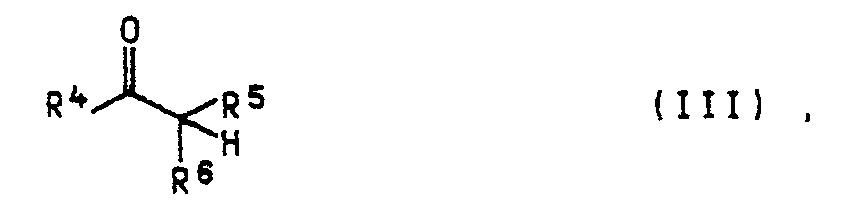
- radicals R4 to R Sind are defined such that the rest, corresponds in its entirety to the radical R1, with a pyrrolidine derivative II with simultaneous or subsequent reduction or hydrogenation.
- a solvent for example methanol, ethanol, propanol, isopropanol, which can contain up to 25% (vol.) of water, with sodium cyanoborohydride or sodium borohydride, optionally in the presence of a metal salt such as zinc (II) chloride, cadmium (II) chloride or magnesium (II) chloride, at 0-100 ° C, preferably 20-80 ° C or in the presence of a solvent such as methanol, ethanol, tetrahydrofuran or toluene and a hydrogenation catalyst such as.
- R2 C3-C10-alkyl
- R2 can be in a phenylpyrrolidine derivative, structure VI by acid catalyzing it with an alkene of structure Va, in which the radicals R a -R d are defined such that the radical Vb in its entirety corresponds to the radical R2, or is reacted with an alkyl halide R2-X.
- Mineral acids such as sulfuric acid, hydrochloric acid, hydrobromic acid or Lewis acids such as AlCl3 or SnCl4, are used and the reaction is carried out under ice cooling, for. B. at -10 to + 20 ° C.
- the compounds I can also be prepared by reacting primary amines of the formula R1-NH2 with a compound VIIIa, VIIIb, VIIIc and subsequent reduction of the carbonyl group (s).
- the reactions can be carried out at temperatures above 100 ° C. If the reaction temperature cannot be reached under normal pressure, the autoclave is operated under the autogenous pressure of the reaction mixture at the required conversion temperature.
- the dicarboxylic acid dihalides can be at -20 to + 100 ° C, preferably at 0 to + 10 ° C in the presence of a base that can also serve as a solvent, such as diisopropylamine, tributylamine, pyridine, picoline, triethylamine, dicyclohexylamine or a base such as react, for example, sodium carbonate, potassium carbonate or sodium hydrogen carbonate in the presence of an inert solvent such as chloroform, dichloromethane or tetrahydrofuran.
- a base can also serve as a solvent, such as diisopropylamine, tributylamine, pyridine, picoline, triethylamine, dicyclohexylamine or a base such as react, for example, sodium carbonate, potassium carbonate or sodium hydrogen carbonate in the presence of an inert solvent such as chloroform, dichloromethane or tetrahydrofuran.
- the reaction can be carried out in an inert solvent such as toluene, xylene, ethanol, isopropanol or cyclohexanol, or in the absence of a solvent.
- a reducing agent can be used at -20 to + 100 ° C, preferably 0 to + 60 ° C. Hydrides such as lithium aluminum hydride and diborane are preferably used as reducing agents.
- the reduction can also be carried out under Wolff-Kishner reaction conditions or electrochemically.
- Suitable solvents for the hydride reaction are ethers such as diethyl ether, diisopropyl ether, methyl tert-butyl ether, tetrahydrofuran and dioxane, hydrocarbons such as xylene, toluene.
- the 3-formyl-propionic acid ester derivatives of general structure IX can be at 0-100 ° C, optionally in the presence of a dehydrating agent such as sodium sulfate, magnesium sulfate or molecular sieve, or else on a water separator with a suitable entrainer with the amines R1-NH2 implement the Schiff bases of the general structure XIII.
- a dehydrating agent such as sodium sulfate, magnesium sulfate or molecular sieve
- Chlorinated hydrocarbons such as dichloromethane, ethers such as tetrahydrofuran and hydrocarbons such as toluene or xylene are suitable as solvents.
- the compounds XIII can be converted into the pyrrolidone derivatives X in a manner known per se using reducing agents such as sodium borohydride or lithium aluminum hydride or else on catalysts such as palladium-aluminum oxide or Raney nickel using hydrogen. As described above, these can be reacted with reducing agents, such as, for example, lithium aluminum hydride in ether or dioxane, to give the compounds I according to the invention.
- reducing agents such as sodium borohydride or lithium aluminum hydride or else on catalysts such as palladium-aluminum oxide or Raney nickel using hydrogen.
- the invention further comprises processes for the preparation of the quaternary salts by reacting the pyrrolidine derivatives of the formula I with the compound R3-X.
- radicals X are chlorine, bromine, iodine, the methane and p-toluenesulfonyl groups, methyl sulfate.
- the reaction is carried out at 10-200 ° C, optionally in the presence of an inert solvent.
- Suitable solvents are hydrocarbons such as decalin, toluene, xylene, chlorinated hydrocarbons such as chlorobenzene, ethers such as tetrahydrofuran, dioxane, dipolar aprotic solvents such as dimethyl sulfoxide, dimethylformamide, sulfolane, acetonitrile, alcohols such as methanol, ethanol, propanol, butanol, amyl alcohol; however, the reaction can also be carried out without a solvent.
- the counterion X ⁇ formed in the preparation can be exchanged for another suitable anion by means of an anion exchanger or by reprecipitation.
- Mineral acids such as sulfuric acid are used as catalysts and the reaction is carried out under ice-cooling at -5 ° C to + 20 ° C.
- the starting materials are known or can be prepared in a manner known per se.
- the new compounds are distinguished by excellent activity against a broad spectrum of phytopathogenic fungi, in particular from the classes of the Ascomycetes and Basidiomycetes. Some of them are systemically effective and can be used as foliar and soil fungicides.
- the fungicidal compounds are particularly interesting for controlling a large number of fungi on various crop plants or their seeds, in particular wheat, rye, barley, oats, rice, corn, lawn, cotton, soybeans, coffee, sugar cane, fruit and ornamental plants in horticulture and viticulture as well as vegetables - such as cucumbers, beans and pumpkin plants -.
- the new compounds are particularly suitable for controlling the following plant diseases: Erysiphe graminis (powdery mildew) in cereals, Erysiphe cichoracearum and Sphaerotheca fuliginea on pumpkin plants, Podosphaera leucotricha on apples, Uncinula necator on vines, Puccinia species on cereals, Rhizoctonia species on cotton and lawn, Ustilago species on cereals and sugar cane, Venturia inaequalis (scab) on apples, Helminthosporium species on cereals, Septoria nodorum on wheat, Botrytis cinerea (gray mold) on strawberries, vines, Cercospora arachidicola on peanuts, Pseudocercosporella herpotrichoides on wheat, barley, Pyricularia oryzae on rice, Phytophthora infestans on potatoes and tomatoes, Fusarium and Verticillium species on different plants. Plasmopara viticola
- the compounds are applied by spraying or dusting the plants with the active compounds or by treating the seeds of the plants with the active compounds. It is used before or after the plants or seeds are infected by the fungi.
- the new substances can be converted into the customary formulations, such as solutions, emulsions, suspensions, dusts, powders, pastes and granules.
- the application forms depend entirely on the purposes; in any case, they should ensure a fine and uniform distribution of the active substance.
- the wording is in prepared in a known manner, for example by stretching the active ingredient with solvents and / or carriers, if appropriate using emulsifiers and dispersants, and if organic diluents are used, other organic solvents can also be used as auxiliary solvents.
- solvents such as aromatics (e.g. xylene), chlorinated aromatics (e.g. chlorobenzenes), paraffins (e.g.
- Carriers such as natural stone powder (eg kaolins, clays, talc, chalk) and synthetic stone powder (eg highly disperse silica, silicates); Emulsifiers, such as nonionic and anionic emulsifiers (for example polyoxyethylene fatty alcohol ethers, alkyl sulfonates and aryl sulfonates) and dispersants, such as lignin, leachate and methyl cellulose.
- Carriers such as natural stone powder (eg kaolins, clays, talc, chalk) and synthetic stone powder (eg highly disperse silica, silicates)
- Emulsifiers such as nonionic and anionic emulsifiers (for example polyoxyethylene fatty alcohol ethers, alkyl sulfonates and aryl sulfonates) and dispersants, such as lignin, leachate and methyl cellulose.
- the fungicidal compositions generally contain between 0.1 and 95, preferably between 0.5 and 90% by weight of active ingredient.
- the application rates are between 0.02 and 3 kg of active ingredient or more per hectare.
- the new compounds can also be used in material protection, e.g. against Paecilomyces variotii.
- Some of the new compounds have very good activity against human pathogenic fungi, such as Trichophyton mentagrophytes and Candida albicans.
- agents or the ready-to-use preparations produced therefrom such as solutions, emulsions, suspensions, powders, dusts, pastes or granules, are used in a known manner, for example by spraying, atomizing, dusting, scattering, pickling or pouring.
- the agents according to the invention can also be present together with other active ingredients, such as Herbicides, insecticides, growth regulators and fungicides, or also mixed with fertilizers and applied. When mixed with fungicides, the fungicidal activity spectrum is enlarged in many cases.
- Fungicides that can be combined with the compounds according to the invention are, for example: Sulfur, Dithiocarbamates and their derivatives, such as Ferridimethyldithiocarbamate, Zinc dimethyldithiocarbamate, Zinc ethylene bisdithiocarbamate, Manganese ethylene bisdithiocarbamate, Manganese-zinc-ethylenediamine-bis-dithiocarbamate, Tetramethylthiuram disulfide, Ammonia complex of zinc (N, N-ethylene-bis-dithiocarbamate), Ammonia complex of zinc (N, N'-propylene-bis-dithiocarbamate), Zinc (N, N'-propylene-bis-dithiocarbamate), N, N'-polypropylene bis (thiocarbamoyl) disulfide; Nitroderivatives, such as Dinitro- (1-methylheptyl) phenylcrotonate, 2-sec-butyl-4,
- Pepper seedlings of the "Neusiedler Ideal Elite" variety after 4-5 leaves had developed well, were sprayed to runoff point with aqueous suspensions which contained 80% active ingredient and 20% emulsifier in the dry matter. After the spray coating had dried on, the plants were sprayed with a conidia suspension of the botrytis cinerea fungus and placed at 22 to 24 ° C. in a chamber with high atmospheric humidity. After 5 days the disease had developed so strongly on the untreated control plants that the leaf necrosis formed covered the majority of the leaves.
- Leaves of pot vines of the "Müller Thurgau” variety were sprayed with an aqueous spray mixture which contained 80% active ingredient and 20% emulsifier in the dry matter.
- the plants were placed in the greenhouse for 8 days after the spray coating had dried on. Only then were the leaves infected with a zoospore suspension of Plasmopara viticola (vine peronospora).
- the vines were then placed for 48 hours in a steam-saturated chamber at 24 ° C and then for 5 days in a greenhouse at temperatures between 20 and 30 ° C. After this time, the plants were again placed in the moist chamber for 16 hours to accelerate the sporangium carrier outbreak. Then the extent of the fungal outbreak was assessed on the undersides of the leaves.
Landscapes
- Chemical & Material Sciences (AREA)
- Organic Chemistry (AREA)
- Agricultural Chemicals And Associated Chemicals (AREA)
- Plural Heterocyclic Compounds (AREA)
- Pyrrole Compounds (AREA)
Abstract

R¹ bedeutet 2,2-Dimethyl-propyl, 3,3-Dimethyl-butyl, 4,4-Dimethyl-pentyl, 2,4,4-Trimethyl-pentyl, 6-Methyl-hept-2-yl, 3,5,5-Trimethyl-hexyl, 6,10-Dimethyl-undec-2-yl, 3-Methyl-cyclohexyl, 3,3-Dimethyl-cyclohexyl, 3,3,5-Trimethyl-cyclohexyl, 3,3,5,5-Tetramethyl-cyclohexyl, 4-Methyl-cyclohexyl, 4-Ethyl-cyclohexyl, 4-Propylcyclohexyl, 4-Isopropylcyclohexyl, 4-tert.-Butyl-cyclohexyl, trans-4-tert.-Butyl-cyclohexyl, 4(2-Methyl-but-2-yl)cyclohexyl, 4(2,4,4-Trimethyl-pent-2-yl)-cyclohexyl, Cyclododecanyl, durch C3-C₉-Trialkylsilyl-substituiertes C₄-C₁₂-Cycloalkyl, 4-Hydroxy-cyclohexyl, 4-Hydroxy-3-methyl-cyclohexyl, 4-Hydroxy-3,5-dimethyl-cyclohexyl, 4-Hydroxy-3,3-dimethyl-cyclohexyl, 4-Hydroxy-3,3,5-trimethyl-cyclohexyl, Cycloalkenyl,
Bicycloalkyl,
tert.-Butyl-benzyl, Chlor-benzyl, tert.-Butoxy-benzyl, 1,4-Dioxa-spiro[4,5]decan-8-yl, 5 bis 7-gliedriges Heterocycloalkyl,
5 bis 7-gliedriges Heterocycloalkylmethyl.
R² bedeutet Alkyl, Alkoxy, Trialkylsilyl,
R³ bedeutet Alkyl, Alkenyl, Alkinyl, Arylalkyl, X- bedeutet ein für Pflanzen verträgliches Anion, n den Wert 0 oder 1 hat und deren für Pflanzen verträgliche Salze und Fungizide, die diese Verbindungen enthalten.
Description
- Die vorliegende Erfindung betrifft neue N-substituierte 3-Aryl-pyrrolidine, Verfahren zu deren Herstellung, deren Verwendung als Fungizide, fungizide Mittel, die die neuen Wirkstoffe enthalten sowie Verfahren zur Bekämpfung von Schadpilzen mit diesen Wirkstoffen.
- Aus DE 27 27 482 ist das folgende Arylalkylpyrrolidinderivat als Verbindung mit fungizider Wirkung bekannt. Seine Wirkung ist jedoch unbefriedigend.

- Es wurde nun gefunden, daß Verbindungen der Formel I

R¹ bedeutet 2,2-Dimethyl-propyl, 3,3-Dimethyl-butyl, 4,4-Dimethyl-pentyl, 2,4,4-Trimethyl-pentyl, 6-Methyl-hept-2-yl, 3,5,5-Trimethyl-hexyl, 6,10-Dimethyl-undec-2-yl, 3-Methyl-cyclohexyl, 3,3-Dimethyl-cyclohexyl, 3,3,5-Trimethyl-cyclohexyl, 3,3,5,5-Tetramethyl-cyclohexyl, 4-Methyl-cyclohexyl, 4-Ethyl-cyclohexyl, 4-Propylcyclohexyl, 4-Isopropylcyclohexyl, 4-tert.-Butyl-cyclohexyl, trans-4-tert.-Butyl-cyclohexyl, 4(2-Methyl-but-2-yl)cyclohexyl, 4(2,4,4-Trimethyl-pent-2-yl)-cyclohexyl, Cyclododecanyl, durch C₃-C₉-Trialkylsilyl-substituiertes C₄-C₁₂-Cycloalkyl, 4-Hydroxy-cyclohexyl, 4-Hydroxy-3-methyl-cyclohexyl, 4-Hydroxy-3,5-dimethyl-cyclohexyl, 4-Hydroxy-3,3-dimethyl-cyclohexyl, 4-Hydroxy-3,3,5-trimethyl-cyclohexyl, gegebenenfalls substituiertes C₅-C₁₂-Cycloalkenyl mit den Substituenten Hydroxy, C₁-C₉-Alkyl, C₁-C₅-Alkoxy, C₃-C₉-Trialkylsilyl,
R¹ bedeutet ferner C₉-C₁₁-Bicycloalkyl, welches gegebenenfalls substituiert ist durch Hydroxy, C₁-C₆-Alkyl, C₁-C₅-Alkoxy, C₃-C₉-Trialkylsilyl, Acetoxy, Benzoyloxy, Benzyloxy,
R¹ bedeutet ferner 4-tert.-Butyl-benzyl, 4-Chlor-benzyl, 4-tert.-Butoxy-benzyl, 1,4-Dioxa-spiro[4,5]decan-8-yl,
5 bis 7-gliedriges Heterocycloalkyl mit 1 oder 2 Heteroatomen aus der Gruppe Sauerstoff und/oder Schwefel,
5 bis 7-gliedriges Heterocycloalkylmethyl mit 1 oder 2 Heteroatomen aus der Grupe Sauerstoff und/oder Schwefel, C₁-C₈-Alkyl-substituiertes 5 bis 7-gliedriges Heterocycloalkyl oder Heterocycloalkylmethyl mit 1 oder 2 Heteroatmen aus der Gruppe Sauerstoff und/oder Schwefel,
R² bedeutet C₃-C₁₀-Alkyl, C₃-C₈-Alkoxy, C₃-C₉-Trialkylsilyl,
R³ bedeutet C₁-C₅-Alkyl, C₃-C₆-Alkenyl, C₃-C₆-Alkinyl, C₇-C₁₀-Arylalkyl, X- bedeutet ein für Pflanzen verträgliches Anion, n den Wert 0 oder 1 hat und deren für Pflanzen verträgliche Salze bei guter Pflanzenverträglichkeit eine hervorragende fungizide Wirkung haben.
- Unter Salzen sind Salze mit einem für Pflanzen verträglichen Anion X- mit beliebigen anorganischen und organischen Säuren zu verstehen, z.B. mit Chlorwasserstoff, Fluorwasserstoffsäure, Bromwasserstoff, Schwefelsäure, Phosphorsäure, Jodwasserstoffsäure, Dodecylbenzolsulfonsäure, Ameisensäure, Alkylcarbonsäuren, Essigsäure, Propionsäure, Palmitinsäure, Perfluorheptansäure, Oxalsäure, Malonsäure, Benzoesäure, Äpfelsäure, Dodecylschwefelsäure, Glycerin-2-phosphorsäure, Methylschwefelsäure, Methansulfonsäure, p-Toluolsulfonsäure, Salpetersäure, beispielsweise die folgenden Salze Hydrogensulfat, Dihydrogenphosphat.
- Die neuen N-substituierten 3-Aryl-pyrrolidine der Formel I, enthalten chirale Zentren. Sie werden bei ihrer Herstellung im allgemeinen als Racemate oder gegebenenfalls als Diastereomerengemische erhalten.
- Reine diastereomere Verbindungen lassen sich bei einigen der neuen Verbindungen beispielsweise durch Destillation, Säulenchromatographie oder aufgrund von Löslichkeitsunterschieden isolieren. Enantiomerenreine Verbindungen lassen sich z. B. durch Racematspaltung mit einem chiralen Hilfsreagenz nach bekannten Methoden beispielsweise über diastereomere Salze erhalten. Für die Anwendung der neuen N-substituierten 3-Aryl-pyrrolidine als Fungizide sind sowohl die Diastereomeren bzw. die Enantiomeren als auch deren bei der Synthese anfallenden Stereoisomerengemische geeignet. Sie alle werden von der Erfindung umfaßt.
- R¹ bedeutet beispielsweise
2,2-Dimethyl-propyl, 3,3-Dimethyl-butyl, 4,4-Dimethyl-pentyl, 2,4,4-Trimethyl-pentyl, 6-Methyl-hept-2-yl, 3,5,5-Trimethyl-hexyl, 6,10-Dimethyl-undec-2-yl, 3-Methyl-cyclohexyl, 3,3-Dimethyl-cyclohexyl, 3,3,5-Trimethyl-cyclohexyl, 3,3,5,5-Tetramethyl-cyclohexyl, 4-Methyl-cyclohexyl, 4-Ethyl-cyclohexyl, 4-Propyl-cyclohexyl, 4-Isopropylcyclohexyl, trans-4-Isopropyl-cyclohexyl, 4-tert.-Butyl-cyclohexyl, trans-4-tert.-Butyl-cyclohexyl, 4(2-Methyl-but-2-yl)cyclohexyl, 4(2,4,4- trimethyl-pent-2-yl)cyclohexyl, Cyclododecanyl,mit C₃-C₉-Trialkylsilyl substituiertes C₄-C₁₂-Cycloalkyl, wie beispielsweise 4-Trimethylsilylcyclohexyl, 4-Hydroxy-cyclohexyl, 4-Hydroxy-3-methyl-cyclohexyl, 4-Hydroxy-3,5-dimethyl-cyclohexyl, 4-Hydroxy-3,3-dimethyl-cyclohexyl, 4-Hydroxy-3,3,5-trimethyl-cyclohexyl,
C₅-C₁₂-Cycloalkenyl, welches gegebenenfalls durch einen oder mehrere der folgenden Reste substituiert sein kann: Hydroxy, C₁-C₉-Alkyl, C₁-C₅-Alkoxy, C-C₉-Trialkylsilyl, wie beispielsweise 4-tert.-Butyl-cyclohexenyl, 4-tert.-Butoxy-cyclohexenyl, 4-Trimethylsilyl-cyclohexenyl;
C₉-C₁₁-Bicycloalkyl, welches gegebenenfalls durch einen oder mehrere der folgenden Reste substituiert sein kann: Hydroxy, C₁-C₆-Alkyl, C₁-C₅-Clkoxy, C₃-C₉-Trialkylsilyl, Acetoxy, Benzyloxy, Benzoyloxy, wie beispielsweise [4.3.0]-Bicyclononyl, Decalyl, 9-Methyl-2-decalyl, 5,9-Dimethyl-2-decalyl, 5,5,9-Trimethyl-2-decalyl, 6-Hydroxy-2-decalyl, 6-Benzoyloxy-2-decalyl, 7-Hydroxy-2-decalyl, 6-Hydroxy-9-methyl-2-decalyl, 6-Hydroxy-5,9-dimethyl-2-decalyl, 6-Hydroxy-5,5,9-trimethyl-2-decalyl, 6-Benzoyloxy-5,9-dimethyl-2-decalyl,
5 bis 7-gliedriges Heterocycloalkyl mit 1 oder 2 Heteroatomen aus der Gruppe Sauerstoff oder Schwefel, wie beispielsweise Tetrahydropyranyl, Tetrahydrothiopyranyl, Dioxanyl,
5 bis 7-gliedriges Heterocycloalkylmethyl mit 1 oder 2 Heteroatomen aus der Gruppe Sauerstoff oder Schwefel, z.B. Tetrahydropyranylmethyl, Dioxanylmethyl,
C₁-C₈-Alkyl-substituiertes 5 bis 7-gliedriges Heterocycloalkyl oder Heterocycloalkylmethyl mit 1 der 2 Heteroatomen aus der Gruppe Sauerstoff oder Schwefel, wie beispielsweise Tetrahydropyranylmethyl, Dioxanylmethyl, 3,5-Dimethyl-dioxan-2-yl-methyl, Diethyl-dioxan-2-yl-methyl, 2-Isopropyl-1,3-dioxan-5-yl, 2-tert.-Butyl-1,3-dioxan-5-yl, R¹ bedeutet ferner 4-tert.-Butylbenzyl, 4-Chlor-benzyl, 4-tert.-Butoxybenzyl, 1,4-Dioxa-spiro[4.5]decan-8-yl. - R² bedeutet beispielsweise verzweigtes oder unverzweigtes C₃-C₁₀-Alkyl, wie beispielsweise Propyl, Isopropyl, sek. Butyl, tert. Butyl, 2-Methyl-but-2-yl, 2,4,4-Trimethyl-pent-2-yl, verzweigtes oder unverzweigtes C₃-C₈-Alkoxy, wie beispielsweise Propyloxy, iso-Propoxy, Butyloxy, tert.-Butyloxy, C₃-C₉-Trialkylsilyl, wie beispielsweise Trimethylsilyl.
- R³ bedeutet beispielsweise C₁-C₅-Alkyl, wie beispielsweise Methyl, Ethyl, Propyl, Butyl, Pentyl, C₃-C₆-Alkenyl, wie beispielsweise Allyl, Methallyl, C₃-C₆-Alkinyl, wie beispielsweise Propargyl, C₇-C₁₀-Arylalkyl wie beispielsweise Benzyl, Phenylethyl.
- Die Verbindungen der Formel I können beispielsweise hergestellt werden durch
- N-Alkylierung von Pyrrolidinen der Formel II
- für den Fall, daß R²=Alkyl ist, durch Friedel-Crafts-Alkylierung von N-alkylierten Phenyl-pyrrolidinen der Formel VI
- den fünfgliedrigen Heterocyclus aufbauende Reaktionen und anschließende Reduktion. - Die Verfahren werden im folgenden erklärt:
-

- Als Reste X seien beispielsweise genannt, Chlor, Brom, Jod, die Methan-, Benzol-, p-Toluol-sulfonylgruppe oder die den oben genannten Anionen X-entsprechenden Reste.
- Die Reaktion wird beispielsweise bei 40-200°C, gegebenenfalls in Gegenwart eines inerten Lösungsmittels durchgeführt. Als Basen werden anorganische Basen bevorzugt, beispielsweise Kalium-, Natrium- und Lithiumhydroxid, Natriumhydrid, Kalium- und Natriumcarbonat. Geeignet sind auch organische Basen wie Triethylamin, Dicyclohexylamin und Diisopropylamin. Die Reaktion läßt sich auch mit einem Überschuß des Pyrrolidinderivates II durchführen.
-

- wobei die Reste R⁴ bis R⁶ so definiert sind, daß der Rest,

b₁) Bei der direkten Methode zur Herstellung der Verbindung I wird ein Gemisch aus II und III in Gegenwart eines Lösungsmittels, beispielsweise Methanol, Ethanol, Propanol, Isopropanol, die bis zu 25 % (Vol.) Wasser enthalten können, mit Natriumcyanborhydrid oder Natriumborhydrid, gegebenenfalls in Gegenwart eines Metallsalzes wie Zink(II)chlorid, Cadmium(II)chlorid oder Magnesium(II)chlorid, bei 0-100°C, vorzugsweise 20-80°C oder aber in Gegenwart eines Lösungsmittels wie beispielsweise Methanol, Ethanol, Tetrahydrofuran oder Toluol und eines Hydrierkatalysators wie z. B. Raney-Nickel, Platin-IV-oxid, Ru₂O₃ oder Palladium auf Kohle im Autoklaven bei 100-150°C mit Wasserstoff bis Druckkonstanz
umgesetzt.
b₂) Bei der Zweistufen-Reaktion wird aus den Verbindungen II und III ein Enamin in an sich bekannter Weise unter wasserentziehenden Bedingungen hergestellt und anschließend mit einem Edelmetallkatalysator wie Raney-Nickel, Raney-Cobalt, PtO₂ oder Ru₂O₃, vorzugsweise Palladium auf Kohle und Wasserstoff reduziert.
c) Für den Fall, daß R²=C₃-C₁₀-Alkyl ist, läßt sich R² in ein Phenylpyrrolidin-Derivat, Struktur VI


- Die Verbindungen I lassen sich auch durch Umsetzungen von primären Aminen der Formel R¹-NH₂ mit einer Verbindung VIIIa, VIIIb, VIIIc und anschließender Reduktion der Carbonylgruppe(n) herstellen.
- Bei der Umsetzung von Dicarbonsäuren, Bernsteinsäureanhydriden und 5-Ringlactonen wird das Reaktionswasser entweder am Wasserabscheider mit einem geeigneten Schleppmittel oder in Gegenwart eines wasserbindenden Mittels aus dem Gleichgewicht entfernt. Als Lösungsmittel

- Es kann hierbei aber auch ohne Lösungsmittel gearbeitet werden. Die Reaktionen lassen sich bei Temperaturen ab 100°C durchführen. Falls die Reaktionstemperatur unter Normaldruck nicht erreichbar ist, wird im Autoklaven unter dem Eigendruck der Reaktionsmischung bei der benötigten Umsatztemperatur gearbeitet.
- Die Dicarbonsäurendihalogenide lassen sich bei -20 bis +100°C, vorzugsweise bei 0 bis +10°C in Gegenwart einer Base, die zusätzlich als Lösungsmittel dienen kann, wie beispielsweise Diisopropylamin, Tributylamin, Pyridin, Picolin, Triethylamin, Dicyclohexylamin oder einer Base wie beispielsweise Natriumcarbonat, Kaliumcarbonat oder Natriumhydrogencarbonat in Gegenwart eines inerten Lösungsmittels wie Chloroform, Dichlormethan oder Tetrahydrofuran umsetzen.
- Die Umsetzung der Aminderivate R¹-NH₂ mit einem 5-Ring-Lacton-Derivat (VIIIc, B=NH) findet bei hohen Temperaturen, die zwischen 150 und 280°C liegen, statt, wobei die benötigte Reaktionstemperatur gegebenenfalls in einem Autoklaven erzielt werden kann. Die Reaktion kann in einem inerten Lösungsmittel wie beispielsweise Toluol, Xylol, Ethanol, Isopropanol oder Cyclohexanol erfolgen oder auch in Abwesenheit eines Lösungsmittels.
- Zur Reduktion der Carbonylverbindung zur Alkylverbindung kann man mit einem Reduktionsmittel bei -20 bis +100°C, vorzugsweise 0 bis +60°C umsetzen. Als Reduktionsmittel finden bevorzugt Hydride wie Lithiumaluminiumhydrid und Diboran Verwendung.
- Die Reduktion kann auch unter Wolff-Kishner-Reaktionsbedingungen oder elektrochemisch erfolgen.
- Geeignete Lösungsmittel für die Hydridreaktion sind Ether wie Diethylether, Diisopropylether, Methyl-tert.-Butylether, Tetrahydrofuran und Dioxan, Kohlenwasserstoffe, wie Xylol, Toluol.
- Die 3-Formyl-propionsäureester-Derivate der allgemeinen Struktur IX lassen sich bei 0-100°C, gegebenenfalls in Gegenwart eines wasserentziehenden Mittels wie Natriumsulfat, Magnesiumsulfat oder Molekularsieb, oder aber auch am Wasserabscheider mit einem geeigneten Schleppmittel mit den Aminen R¹-NH₂ zu den Schiffschen Basen der allgemeinen Struktur XIII umsetzen.
- Als Lösungsmittel eignen sich chlorierte Kohlenwasserstoffe, wie Dichlormethan, Ether, wie Tetrahydrofuran und Kohlenwasserstoffe, wie Toluol oder Xylol.
- Die Verbindungen XIII lassen sich in an sich bekannter Weise mit Reduktionsmitteln wie Natriumborhydrid oder Lithiumaluminiumhydrid oder aber auch an Katalysatoren wie Palladium-Aluminiumoxyd oder Raney-Nickel mit Wasserstoff in die Pyrrolidon-Derivate X überführen. Diese lassen sich, wie oben beschrieben, mit Reduktionsmitteln, wie beispielsweise Lithiumaluminiumhydrid in Ether oder Dioxan, zu den erfindungsgemäßen Verbindungen I umsetzen.
- Die Erfindung umfaßt ferner Verfahren zur Herstellung der quartären Salze durch Umsetzung der Pyrrolidinderivate der Formel I mit der Verbindung R³-X.
- Als Reste X seien beispielsweise genannt Chlor, Brom, Jod, die Methan- und p-Toluolsulfonylgruppe, Methylsulfat. Die Reaktion wird bei 10-200°C, gegebenenfalls in Gegenwart eines inerten Lösungsmittels durchgeführt. Als Lösungsmittel eignen sich Kohlenwasserstoffe wie Dekalin, Toluol, Xylol, chlorierte Kohlenwasserstoffe wie Chlorbenzol, Ether, wie Tetrahydrofuran, Dioxan, dipolar aprotische Lösungsmittel wie Dimethylsulfoxid, Dimethylformamid, Sulfolan, Acetonitril, Alkohole wie Methanol, Ethanol, Propanol, Butanol, Amylalkohol; die Reaktion läßt sich jedoch auch ohne Lösungsmittel durchführen. Das bei der Herstellung gebildete Gegenion X⁻ kann mittels eines Anionenaustauschers oder durch Umfällungsreaktion gegen ein anderes geeignetes Anion ausgetauscht werden.
- Z.B. läßt sich 3-Phenylpyrrolidin mit Isobutylen in einem chlorierten Kohlenwasserstoff wie Dichlormethan, Tetrachlorkohlenstoff, Tetrachlorethan, Chlorbenzol oder anderen geeigneten Lösungsmitteln wie Schwefelkohlenstoff oder Nitrobenzol Säurekatalysiert zu I (R²=tert.-Butyl) umsetzen.
- Man verwendet Mineralsäuren wie beispielsweise Schwefelsäure als Katalysatoren und führt die Reaktion unter Eiskühlung bei -5°C bis +20°C durch.
- Die Ausgangsstoffe sind bekannt oder in an sich bekannter Weise darstellbar.
- Die folgenden Beispiele erläutern die Herstellung der neuen Verbindungen:
- Zu 29,4 g (0,2 mol) 3-Phenyl-pyrrolidin in 400 ml Tetrachlorkohlenstoff wurden bei 0-5°C 98 g (1 mol) konz. Schwefelsäure zugetropft. Nach 15 Min. wurden 15,2 g (0,27 mol) Isobutylen eingegast, 1 Std. bei 0-5°C gerührt und bei 20°C mit 400 ml Wasser hydrolysiert. Die organische Phase wurde abgetrennt und die wäßrige Phase mit 2 x 100 ml Dichlormethan extrahiert.
- Die Aufarbeitung der organischen Phasen ergab 42 g eines Rohprodukts, das i.Vak. fraktioniert wurde: Sdp.: 84-87°C/0,5 mbar; 13,4 g (33 %) eines farblosen Öls.
- 15,4 g (100 mmol) 4-tert.-Butyl-cyclohexanon, 9,8 g (48 mmol) 3(4-tert.-Butyl-phenyl)pyrrolidin, 6,8 g (50 mmol) Zink(II)chlorid und 6,3 g (100 mmol) Natriumcyanborhydrid wurden in 200 ml absolutem Methanol 48 Std. bei 22°C gerührt. Das Methanol wurde i.Vak. abdestilliert und der Rückstand in Dichlormethan und 5 %-iger Natronlauge gelöst.
- Die Aufarbeitung des organischen Extrakts und Fraktionierung i.Vak. (175-80°C/0,4 mbar) lieferte ein Isomerengemisch, welches an Kieselgel mit Hexan/Methyl-tert.-butyl-ether chromatographiert wurde:
N(cis-4-tert.-Butyl-cyclohexyl)-3(4-tert.-butyl-phenyl)pyrrolidin Schmp. 58°C (Verb. 16b): 2,3 g (14 %).
N(trans-4-tert.-Butyl-cyclohexyl)-3(4-tert.-butyl-phenyl)-pyrrolidin, Schmp. 50-55°C (Verb. Nr. 16a): 2,5 g (15 %). - Die folgenden Verbindungen können in entsprechender Weise hergestellt werden.


- Die neuen Verbindungen zeichnen sich, allgemein ausgedrückt, durch eine hervorragende Wirksamkeit gegen ein breites Spektrum von pflanzenpathogenen Pilzen, insbesondere aus der Klasse der Ascomyceten und Basidiomyceten, aus. Sie sind zum Teil systemisch wirksam und können als Blatt- und Bodenfungizide eingesetzt werden.
- Besonders interessant sind die fungiziden Verbindungen für die Bekämpfung einer Vielzahl von Pilzen an verschiedenen Kulturpflanzen oder ihren Samen, insbesondere Weizen, Roggen, Gerste, Hafer, Reis, Mais, Rasen, Baumwolle, Soja, Kaffee, Zuckerrohr, Obst und Zierpflanzen im Gartenbau, Weinbau sowie Gemüse - wie Gurken, Bohnen und Kürbisgewächse -.
- Die neuen Verbindungen sind insbesondere geeignet zur Bekämpfung folgender Pflanzenkrankheiten:
Erysiphe graminis (echter Mehltau) in Getreide,
Erysiphe cichoracearum und Sphaerotheca fuliginea an Kürbisgewächsen,
Podosphaera leucotricha an Äpfeln,
Uncinula necator an Reben,
Puccinia-Arten an Getreide,
Rhizoctonia-Arten an Baumwolle und Rasen,
Ustilago-Arten an Getreide und Zuckerrohr,
Venturia inaequalis (Schorf) an Äpfeln,
Helminthosporium-Arten an Getreide,
Septoria nodorum an Weizen,
Botrytis cinerea (Grauschimmel) an Erdbeeren, Reben,
Cercospora arachidicola an Erdnüssen,
Pseudocercosporella herpotrichoides an Weizen, Gerste,
Pyricularia oryzae an Reis,
Phytophthora infestans an Kartoffeln und Tomaten,
Fusarium- und Verticillium-Arten an verschiedenen Pflanzen.
Plasmopara viticola an Reben,
Alternaria-Arten an Obst und Gemüse. - Die Verbindungen werden angewendet, indem man die Pflanzen mit den Wirkstoffen besprüht oder bestäubt oder die Samen der Pflanzen mit den Wirkstoffen behandelt. Die Anwendung erfolgt vor oder nach der Infektion der Pflanzen oder Samen durch die Pilze.
- Die neuen Substanzen können in die üblichen Formulierungen übergeführt werden, wie Lösungen, Emulsionen, Suspensionen, Stäube, Pulver, Pasten und Granulate. Die Anwendungsformen richten sich ganz nach den Verwendungszwecken; sie sollen in jedem Fall eine feine und gleichmäßige Verteilung der wirksamen Substanz gewährleisten. Die Formulierungen werden in bekannter Weise hergestellt, z.B. durch Verstrecken des Wirkstoffs mit Lösungsmitteln und/oder Trägerstoffen, gegebenenfalls unter Verwendung von Emulgiermitteln und Dispergiermitteln, wobei im Falle der Benutzung von Wasser als Verdünnungsmittel auch andere organische Lösungsmittel als Hilfslösungsmittel verwendet werden können. Als Hilfsstoffe kommen dafür im wesentlichen in Frage: Lösungsmittel wie Aromaten (z.B. Xylol), chlorierte Aromaten (z.B. Chlorbenzole), Paraffine (z.B. Erdölfraktionen), Alkohole (z.B. Methanol, Butanol), Ketone (z.B. Cyclohexanon), Amine (z.B. Ethanolamin, Dimethylformamid) und Wasser; Trägerstoffe wie natürliche Gesteinsmehle (z.B. Kaoline, Tonerden, Talkum, Kreide) und synthetische Gesteinsmehle (z.B. hochdisperse Kieselsäure, Silikate); Emulgiermittel, wie nichtionogene und anionische Emulgatoren (z.B. Polyoxyethylen-Fettalkohol-Ether, Alkylsulfonate und Arylsulfonate) und Dispergiermittel, wie Lignin, Sulfitablaugen und Methylcellulose.
- Die fungiziden Mittel enthalten im allgemeinen zwischen 0,1 und 95, vorzugsweise zwischen 0,5 und 90 Gew.% Wirkstoff.
- Die Aufwandmengen liegen je nach Art des gewünschten Effektes zwischen 0,02 und 3 kg Wirkstoff oder mehr je ha. Die neuen Verbindungen können auch im Materialschutz eingesetzt werden, z.B. gegen Paecilomyces variotii.
- Einige der neuen Verbindungen haben sehr gute Wirksamkeit gegen humanpathogene Pilze, wie Trichophyton mentagrophytes und Candida albicans.
- Die Mittel bzw. die daraus hergestellten gebrauchsfertigen Zubereitungen, wie Lösungen, Emulsionen, Suspensionen, Pulver, Stäube, Pasten oder Granulate werden in bekannter Weise angewendet, beispielsweiise durch Versprühen, Vernebeln, Verstäuben, Verstreuen, Beizen oder Gießen.
- Beispiele für solche Zubereitungen sind:
- I. Man vermischt 90 Gew.-Teile der Verbindung Nr. 16a mit 10 Gew.-Teilen N-Methyl-α-pyrrolidon und erhält eine Lösung, die zur Anwendung in Form kleinster Tropfen geeignet ist.
- II. 20 Gew.-Teile der Verbindung Nr. 20 werden in einer Mischung gelöst, die aus 80 Gew.-Teilen Xylol, 10 Gew.-Teilen des Anlagerungsproduktes von 8 bis 10 Mol Ethylenoxid an 1 Mol Ölsäure-N-monoethanolamid, 5 Gew.-Teilen Calciumsalz der Dodecylbenzolsulfonsäure und 5 Gew.-Teilen des Anlagerungsproduktes und 40 Mol Ethylenoxid an 1 Mol Ricinusöl besteht. Durch Ausgießen und feines Verteilen der Lösung in Wasser erhält man eine wäßrige Dispersion.
- III. 20 Gew.-Teile der Verbindung Nr. 16a werden in einer Mischung gelöst, die aus 40 Gew.-Teilen Cyclohexanon, 30 Gew.-Teilen Isobutanol, 20 Gew.-Teilen des Anlagerungsproduktes von 40 Mol Ethylenoxid an 1 Mol Ricinusöl besteht. Durch Eingießen und feines Verteilen der Lösung in Wasser erhält man eine wäßrige Dispersion.
- IV. 20 Gew.-Teile der Verbindung Nr. 20 werden in einer Mischung gelöst, die aus 25 Gew.-Teilen Cyclohexanol, 65 Gew.-Teilen einer Mineralölfraktion vom Siedepunkt 210 bis 280°C und 10 Gew.-Teilen des Anlagerungsproduktes von 40 Mol Ethylenoxid an 1 Mol Ricinusöl besteht. Durch Eingießen und feines Verteilen der Lösung in Wasser erhält man eine wäßrige Dispersion.
- V. 80 Gew.-Teile der Verbindung Nr. 16a werden mit 3 Gew.-Teilen des Natriumsalzes der Diisobutylnaphthalin-α-sulfonsäure, 10 Gew.-Teilen des Natriumsalzes einer Ligninsulfonsäure aus einer Sulfitablauge und 7 Gew.-Teilen pulverförmigem Kieselsäuregel gut vermischt und in einer Hammermühle vermahlen. Durch feines Verteilen der Mischung in Wasser erhält man eine Spritzbrühe.
- VI. 3 Gew.-Teile der Verbindung Nr. 20 werden mit 97 Gew.-Teilen feinteiligem Kaolin innig vermischt. Man erhält auf diese Weise ein Stäubemittel, das 3 Gew.% des Wirkstoffs enthält.
- VII. 30 Gew.-Teile der Verbindung Nr. 16a werden mit einer Mischung aus 92 Gew.-Teilen pulverförmigem Kieselsäuregel und 8 Gew.-Teilen Paraffinöl, das auf die Oberfläche dieses Kieselsäuregels gesprüht wurde, innig vermischt. Man erhält auf diese Weise eine Aufbereitung des Wirkstoffs mit guter Haftfähigkeit.
- VIII. 40 Gew.-Teile der Verbindung Nr. 20 werden mit 10 Gew.-Teilen Natriumsalz eines Phenolsulfonsäure-harnstoff-formaldehyd-Kondensates, 2 Gew.-Teilen Kieselgel und 48 Gew.-Teilen Wasser innig vermischt. Man erhält eine stabile wäßrige Dispersion. Durch Verdünnen mit Wasser erhält man eine wäßrige Dispersion.
- IX. 20 Gew.-Teile der Verbindung Nr. 16a werden mit 2 Gew.-Teilen Calciumsalz der Dodecylbenzolsulfonsäure, 8 Gew.-Teilen Fettalkoholpolyglykolether, 2 Gew.-Teilen Natriumsalz eines Phenolsulfonsäure-harnstoff-formaldehyd-Kondensats und 68 Gew.-Teilen eines paraffinischen Mineralöls innig vermischt. Man erhält eine stabile ölige Dispersion.
- Die erfindungsgemäßen Mittel können in diesen Anwendungsformen auch zusammen mit anderen Wirkstoffen vorliegen, wie z.B. Herbiziden, Insektiziden, Wachstumsregulatoren und Fungiziden, oder auch mit Düngemitteln vermischt und ausgebracht werden. Beim Vermischen mit Fungiziden erhält man dabei in vielen Fällen eine Vergrößerung des fungiziden Wirkungsspektrums.
- Die folgende Liste von Fungiziden, mit denen die erfindungsgemäßen Verbindungen kombiniert werden können, soll die Kombinationsmöglichkeiten erläutern, nicht aber einschränken.
- Fungizide, die mit den erfindungsgemäßen Verbindungen kombiniert werden können, sind beispielsweise:
Schwefel,
Dithiocarbamate und deren Derivate, wie
Ferridimethyldithiocarbamat,
Zinkdimethyldithiocarbamat,
Zinkethylenbisdithiocarbamat,
Manganethylenbisdithiocarbamat,
Mangan-Zink-ethylendiamin-bis-dithiocarbamat,
Tetramethylthiuramdisulfide,
Ammoniak-Komplex von Zink-(N,N-ethylen-bis-dithiocarbamat),
Ammoniak-Komplex von Zink-(N,N′-propylen-bis-dithiocarbamat),
Zink-(N,N′-propylen-bis-dithiocarbamat),
N,N′-Polypropylen-bis-(thiocarbamoyl)-disulfid;
Nitroderivate, wie
Dinitro-(1-methylheptyl)-phenylcrotonat,
2-sec-Butyl-4,6-dinitrophenyl-3,3-dimethylacrylat,
2-sec-Butyl-4,6-dinitrophenyl-isopropylcarbonat;
5-Nitro-isophthalsäure-di-isopropylester
heterocyclische Substanzen, wie
2-Heptadecyl-2-imidazolin-acetat,
2,4-Dichlor-6-(o-chloranilino)-s-triazin,
O,O-Diethyl-phthalimidophosphonothioat,
5-Amino-1-[bis-(dimethylamino)-phosphinyl]-3-phenyl-1,2,4-triazol,
2,3-Dicyano-1,4-dithioanthrachinon,
2-Thio-1,3-dithio-(4,5-b)-chinoxalin,
1-(Butylcarbamoyl)-2-benzimidazol-carbaminsäuremethylester,
2-Methoxycarbonylamino-benzimidazol,
2-(Furyl-(2))-benzimidazol,
2-(Thiazolyl-(4))-benzimidazol,
N-(1,1,2,2-Tetrachlorethylthio)-tetrahydrophthalimid,
N-Trichlormethylthio-tetrahydrophthalimid,
N-Trichlormethylthio-phthalimid,
N-Dichlorfluormethylthio-N′,N′-dimethyl-N-phenyl-schwefelsäurediamid,
5-Ethoxy-3-trichlormethyl-1,2,3-thiadiazol,
2-Rhodanmethylthiobenzthiazol,
1,4-Dichlor-2,5-dimethoxybenzol,
4-(2-Chlorphenylhydroazano)-3-methyl-5-isoxazolon,
Pyridin-2-thio-1-oxid,
8-Hydroxychinolin bzw. dessen Kupfersalz,
2,3-Dihydro-5-carboxanilido-6-methyl-1,4-oxathiin,
2,3-Dihydro-5-carboxanilido-6-methyl-1,4-oxathiin-4,4-dioxid,
2-Methyl-5,6-dihydro-4H-pyran-3-carbonsäure-anilin,
2-Methyl-furan-3-carbonsäureanilid,
2,5-Dimethyl-furan-3-carbonsäureanilid,
2,4,5-Trimethyl-furan-3-carbonsäureanilid,
2,5-Dimethyl-furan-3-carbonsäurecyclohexylamid,
N-Cyclohexyl-N-methoxy-2,5-dimethyl-furan-3-carbonsäureamid,
2-Methyl-benzoesäure-anilid,
2-Iod-benzoesäure-anilid,
N-Formyl-N-morpholin-2,2,2-trichlorethylacetal,
Piperazin-1,4-diylbis-(1-(2,2,2-trichlor-ethyl)-formamid,
1-(3,4-Dichloranilino)-1-formylamino-2,2,2-trichlorethan ,
2,6-Dimethyl-N-tridecyl-morpholin bzw. dessen Salze,
2,6-Dimethyl-N-cyclodedecyl-morpholin bzw. dessen Salze,
N-[3-(p-tert.-Butylphenyl)-2-methylpropyl]-cis-2,6-dimethylmorpholin,
N-[3-(p-tert.-Butylphenyl)-2-methylpropyl]-piperidin,
1-[2-(2,4-Dichlorphenyl)-4-ethyl-1,3-dioxolan-2-yl-ethyl]-1H-1,2,4-triazol
1-[2-(2,4-Dichlorphenyl)-4-n-propyl-1,3-dioxolan-2-yl-ethyl]-1H-1,2,4-triazol,
N-(n-Propyl)-N-(2,4,6-trichlorphenoxyethyl)-N′-imidazol-yl-harnstoff,
1-(4-Chlorphenoxy)-3,3-dimethyl-1-(1H-1,2,4-triazol-1-yl)-2-butanon,
1-(4-Chlorphenoxy)-3,3-dimethyl-1-(1H-1,2,4-triazol-1-yl)-2-butanol,
α-(2-Chlorphenyl)-α-(4-chlorphenyl)-5-pyrimidin-methanol,
5-Butyl-2-dimethylamino-4-hydroxy-6-methyl-pyrimidin,
Bis-(p-chlorphenyl)-3-pyridinmethanol,
1,2-Bis-(3-ethoxycarbonyl-2-thioureido)-benzol,
1,2-Bis-(3-methoxycarbonyl-2-thioureido)-benzol,
sowie verschiedene Fungizide, wie
Dodecylguanidinacetat,
3-[3-(3,5-Dimethyl-2-oxycyclohexyl)-2-hydroxyethyl]-glutarimid,
Hexachlorbenzol,
DL-Methyl-N-(2,6-dimethyl-phenyl)-N-furoyl(2)-alaninat,
DL-N-(2,6-Dimethyl-phenyl)-N-(2′-methoxyacetyl)-alanin-methylester,
N-(2,6-Dimethylphenyl)-N-chloracetyl-D,L-2-aminobutyrolacton,
DL-N-(2,6-Dimethylphenyl)-N-(phenylacetyl)-alaninmethylester,
5-Methyl-5-vinyl-3-(3,5-dichlorphenyl)-2,4-dioxo-1,3-oxazolidin,
3-[3,5-Dichlorphenyl(-5-methyl-5-methoxymethyl]-1,3-oxazolidin-2,4-dion,
3-(3,5-Dichlorphenyl)-1-isopropylcarbamoylhydantoin,
N-(3,5-Dichlorphenyl)-1,2-dimethylcyclopropan-1,2-dicarbonsäureimid, 2-Cyano-[N-(ethylaminocarbonyl)-2-methoximino]-acetamid,
1-[2-(2,4-Dichlorphenyl)-pentyl]-1H-1,2,4-triazol,
2,4-Difluor-α-(1H-1,2,4-triazolyl-1-methyl)-benzhydrylalkohol,
N-(3-Chlor-2,6-dinitro-4-trifluormethyl-phenyl)-5-trifluormethyl-3--chlor-2-aminopyridin,
1-((bis-(4-Fluorphenyl)-methylsilyl)-methyl)-1H-1,2,4-triazol. - Als Vergleichswirkstoff wurde N(2-Methyl-3-(p-tert.-butyl-phenyl)-propyl-1)-pyrrolidin (A) - bekannt aus DE 2 727 482 - benutzt.
- Paprikasämlinge der Sorte "Neusiedler Ideal Elite" wurden, nachdem sich 4-5 Blätter gut entwickelt hatten, mit wäßrigen Suspensionen, die 80 % Wirkstoff und 20 % Emulgiermittel in der Trockensubstanz enthielten, tropfnaß gespritzt. Nach dem Antrocknen des Spritzbelages wurden die Pflanzen mit einer Konidienaufschwemmung des Pilzes Botrytis cinerea besprüht und bei 22 bis 24°C in eine Kammer mit hoher Luftfeuchtigkeit gestellt. Nach 5 Tagen hatte sich die Krankheit auf den unbehandelten Kontrollpflanzen so stark entwickelt, daß die entstandenen Blattnekrosen den überwiegenden Teil der Blätter bedeckten.
- Das Ergebnis zeigt, daß die Wirkstoffe 16a und 20 bei der Anwendung als 0,05 %ige Spritzbrühe eine bessere fungizide Wirkung zeigen (97 %) als der bekannte Vergleichswirkstoff A (50 %).
- Blätter von Topfreben der Sorte "Müller Thurgau" wurden mit wäßriger Spritzbrühe, die 80 % Wirkstoff und 20 % Emulgiermittel in der Trockensubstanz enthielt, besprüht. Um die Wirkungsdauer der Wirkstoffe beurteilen zu können, wurden die Pflanzen nach dem Antrocknen des Spritzbelages 8 Tage im Gewächshaus aufgestellt. Erst dann wurden die Blätter mit einer Zoosporenaufschwemmung von Plasmopara viticola (Rebenperonospora) infiziert. Danach wurden die Reben zunächst für 48 Stunden in einer wasserdampfgesättigten Kammer bei 24°C und anschließend für 5 Tage in einem Gewächshaus mit Temperaturen zwischen 20 und 30°C aufgestellt. Nach dieser Zeit wurden die Pflanzen zur Beschleunigung des Sporangienträgerausbruches abermals für 16 Stunden in der feuchten Kammer aufgestellt. Dann erfolgte die Beurteilung des Außmaßes des Pilzausbruches auf den Blattunterseiten.
- Das Ergebnis zeigt, daß die Wirkstoffe 16a und 20 bei der Anwendung als 0,05 %ige Spritzbrühe eine bessere fungizide Wirkung zeigen (97 %) als der bekannte Vergleichswirkstoff A (60 %).
Claims (10)

R¹ bedeutet 2,2-Dimethyl-propyl, 3,3-Dimethyl-butyl, 4,4-Dimethyl-pentyl, 2,4,4-Trimethyl-pentyl, 6-Methyl-hept-2-yl, 3,5,5-Trimethyl-hexyl, 6,10-Dimethyl-undec-2-yl, 3-Methyl-cyclohexyl, 3,3-Dimethyl-cyclohexyl, 3,3,5-Trimethyl-cyclohexyl, 3,3,5,5-Tetramethyl-cyclohexyl, 4-Methyl-cyclohexyl, 4-Ethyl-cyclohexyl, 4-Propylcyclohexyl, 4-Isopropylcyclohexyl, 4-tert.-Butyl-cyclohexyl, trans-4-tert.-Butyl-cyclohexyl, 4(2-Methyl-but-2-yl)-cyclohexyl, 4(2,4,4-Trimethyl-pent-2-yl)-cyclohexyl, Cyclododecanyl, durch C₃-C₉-Trialkylsilyl-substituiertes C₄-C₁₂-Cycloalkyl, 4-Hydroxy-cyclohexyl, 4-Hydroxy-3-methyl-cyclohexyl, 4-Hydroxy-3,5-dimethyl-cyclohexyl, 4-Hydroxy-3,3-dimethyl-cyclohexyl, 4-Hydroxy-3,3,5-trimethyl-cyclohexyl, gegebenenfalls substituiertes C₅-C₁₂-Cycloalkenyl mit den Substituenten Hydroxy, C₁-C₉-Alkyl, C₁-C₅-Alkoxy, C₃-C₉-Trialkylsilyl,
R¹ bedeutet ferner C₉-C₁₁-Bicycloalkyl, welches gegebenenfalls substituiert ist durch Hydroxy, C₁-C₆-Alkyl, C₁-C₅-Alkoxy, C₃-C₉-Trialkylsilyl, Acetoxy, Benzoyloxy, Benzyloxy,
R¹ bedeutet ferner 4-tert.-Butyl-benzyl, 4-Chlor-benzyl, 4-tert.-Butoxy-benzyl, 1,4-Dioxa-spiro[4,5]decan-8-yl,
5 bis 7-gliedriges Heterocycloalkyl mit 1 oder 2 Heteroatomen aus der Gruppe Sauerstoff und/oder Schwefel,
5 bis 7-gliedriges Heterocycloalkylmethyl mit 1 oder 2 Heteroatomen aus der Gruppe Sauerstoff und/oder Schwefel, C₁-C₈-Alkyl-substituiertes 5 bis 7-gliedriges Heterocycloalkyl oder Heterocycloalkylmethyl mit 1 oder 2 Heteroatmen aus der Gruppe Sauerstoff und/oder Schwefel,
R² bedeutet C₃-C₁₀-Alkyl, C₃-C₈-Alkoxy, C₃-C₉-Trialkylsilyl,
R³ bedeutet C₁-C₅-Alkyl, C₃-C₆-Alkenyl, C₃-C₆-Alkinyl, C₇-C₁₀-Arylalkyl, X- bedeutet ein für Pflanzen verträgliches Anion, n den Wert 0 oder 1 hat und deren für Pflanzen verträgliche Salze.



R³-X, in der der Substituent X die oben angegebene Bedeutung hat, umsetzt und anschließend gegebenenfalls das vorliegende Anion X⁻ gegen ein anderes Anion X⁻ austauscht.


R¹ bedeutet 2,2-Dimethyl-propyl, 3,3-Dimethyl-butyl, 4,4-Dimethyl-pentyl, 2,4,4-Trimethyl-pentyl, 6-Methyl-hept-2-yl, 3,5,5-Trimethyl-hexyl, 6,10-Dimethyl-undec-2-yl, 3-Methyl-cyclohexyl, 3,3-Dimethyl-cyclohexyl, 3,3,5-Trimethyl-cyclohexyl, 3,3,5,5-Tetramethyl-cyclohexyl, 4-Methyl-cyclohexyl, 4-Ethyl-cyclohexyl, 4-Propylcyclohexyl, 4-Isopropylcyclohexyl, 4-tert.-Butyl-cyclohexyl, trans-4-tert.-Butyl-cyclohexyl, 4(2-Methyl-but-2-yl)cyclohexyl, 4(2,4,4-Trimethyl-pent-2-yl)-cyclohexyl, Cyclododecanyl, durch C3-C₉-Trialkylsilyl- substituiertes C₄-C₁₂-Cycloalkyl, 4-Hydroxy-cyclohexyl, 4-Hydroxy-3-methyl-cyclohexyl, 4-Hydroxy-3,5-dimethyl-cyclohexyl, 4-Hydroxy-3,3-dimethyl-cyclohexyl, 4-Hydroxy-3,3,5-trimethyl-cyclohexyl, gegebenenfalls substituiertes C₅-C₁₂-Cycloalkenyl mit den Substituenten Hydroxy, C₁-C₉-Alkyl, C₁-C₅-Alkoxy, C₃-C₉-Trialkylsilyl,
R¹ bedeutet ferner C₉-C₁₁-Bicycloalkyl, welches gegebenenfalls substituiert ist durch Hydroxy, C₁-C₆-Alkyl, C₁-C₅-Alkoxy, C₃-C₉-Trialkylsilyl, Acetoxy, Benzoyloxy, Benzyloxy,
R¹ bedeutet ferner 4-tert.-Butyl-benzyl, 4-Chlor-benzyl, 4-tert.-Butoxy-benzyl, 1,4-Dioxa-spiro[4,5]decan-8-yl,
5 bis 7-gliedriges Heterocycloalkyl mit 1 oder 2 Heteroatomen aus der Gruppe Sauerstoff und/oder Schwefel,
5 bis 7-gliedriges Heterocycloalkylmethyl mit 1 oder 2 Heteroatomen aus der Grupe Sauerstoff und/oder Schwefel, C₁-C₈-Alkyl-substituiertes 5 bis 7-gliedriges Heterocycloalkyl oder Heterocycloalkylmethyl mit 1 oder 2 Heteroatmen aus der Gruppe Sauerstoff und/oder Schwefel,
R² bedeutet C₃-C₁₀-Alkyl, C₃-C₈-Alkoxy, C₃-C₉-Trialkylsilyl,
R³ bedeutet C₁-C₅-Alkyl, C₃-C₆-Alkenyl, C₃-C₆-Alkinyl, C₇-C₁₀-Arylalkyl, X- bedeutet ein für Planzen verträgliches Anion, n den Wert 0 oder 1 hat oder deren für Pflanzen verträgliche Salze und einen inerten Trägerstoff.

R¹ bedeutet 2,2-Dimethyl-propyl, 3,3-Dimethyl-butyl, 4,4-Dimethyl-pentyl, 2,4,4-Trimethyl-pentyl, 6-Methyl-hept-2-yl, 3,5,5-Trimethyl-hexyl, 6,10-Dimethyl-undec-2-yl, 3-Methyl-cyclohexyl, 3,3-Dimethyl-cyclohexyl, 3,3,5-Trimethyl-cyclohexyl, 3,3,5,5-Tetramethyl-cyclohexyl, 4-Methyl-cyclohexyl, 4-Ethyl-cyclohexyl, 4-Propylcyclohexyl, 4-Isopropylcyclohexyl, 4-tert.-Butyl-cyclohexyl, trans-4-tert.-Butyl-cyclohexyl, 4(2-Methyl-but-2-yl)cyclohexyl, 4(2,4,4-Trimethyl-pent-2-yl)-cyclohexyl, Cyclododecanyl, durch C3-C₉-Trialkylsilyl-substituiertes C₄-C₁₂-Cycloalkyl, 4-Hydroxy-cyclohexyl, 4-Hydroxy-3-methyl-cyclohexyl, 4-Hydroxy-3,5-dimethyl-cyclohexyl, 4-Hydroxy-3,3-dimethyl-cyclohexyl, 4-Hydroxy-3,3,5-trimethyl-cyclohexyl, gegebenenfalls substituiertes C₅-C₁₂-Cycloalkenyl mit den Substituenten Hydroxy, C₁-C₉-Alkyl, C₁-C₅-Alkoxy, C₃-C₉-Trialkylsilyl,
R¹ bedeutet ferner C₉-C₁₁-Bicycloalkyl, welches gegebenenfalls substituiert ist durch Hydroxy, C₁-C₆-Alkyl, C₁-C₅-Alkoxy, C₃-C₉-Trialkylsilyl, Acetoxy, Benzoyloxy, Benzyloxy,
R¹ bedeutet ferner 4-tert.-Butyl-benzyl, 4-Chlor-benzyl, 4-tert.-Butoxy-benzyl, 1,4-Dioxa-spiro[4,5]decan-8-yl,
5 bis 7-gliedriges Heterocycloalkyl mit 1 oder 2 Heteroatomen aus der Gruppe Sauerstoff und/oder Schwefel,
5 bis 7-gliedriges Heterocycloalkylmethyl mit 1 oder 2 Heteroatomen aus der Grupe Sauerstoff und/oder Schwefel, C₁-C₈-Alkyl-substituiertes 5 bis 7-gliedriges Heterocycloalkyl oder Heterocycloalkylmethyl mit 1 oder 2 Heteroatmen aus der Gruppe Sauerstoff und/oder Schwefel,
R² bedeutet C₃-C₁₀-Alkyl, C₃-C₈-Alkoxy, C₃-C₉-Trialkylsilyl,
R³ bedeutet C₁-C₅-Alkyl, C₃-C₆-Alkenyl, C₃-C₆-Alkinyl, C₇-C₁₀-Arylalkyl, X⁻ bedeutet ein für Pflanzen vertägliches Anion, n den Wert 0 oder 1 hat oder deren für Pflanzen verträglichen Salzen behandelt.
Applications Claiming Priority (2)
| Application Number | Priority Date | Filing Date | Title |
|---|---|---|---|
| DE19873732930 DE3732930A1 (de) | 1987-09-30 | 1987-09-30 | Fungizide n-substituierte 3-aryl-pyrrolidin-derivate |
| DE3732930 | 1987-09-30 |
Publications (3)
| Publication Number | Publication Date |
|---|---|
| EP0309913A2 true EP0309913A2 (de) | 1989-04-05 |
| EP0309913A3 EP0309913A3 (en) | 1990-07-11 |
| EP0309913B1 EP0309913B1 (de) | 1994-06-15 |
Family
ID=6337211
Family Applications (1)
| Application Number | Title | Priority Date | Filing Date |
|---|---|---|---|
| EP88115569A Expired - Lifetime EP0309913B1 (de) | 1987-09-30 | 1988-09-22 | Fungizide N-substituierte 3-Aryl-pyrrolidin-Derivate |
Country Status (6)
| Country | Link |
|---|---|
| US (1) | US5068245A (de) |
| EP (1) | EP0309913B1 (de) |
| JP (1) | JPH01106860A (de) |
| AT (1) | ATE107279T1 (de) |
| DE (2) | DE3732930A1 (de) |
| ES (1) | ES2056087T3 (de) |
Cited By (5)
| Publication number | Priority date | Publication date | Assignee | Title |
|---|---|---|---|---|
| EP0369335A3 (de) * | 1988-11-15 | 1991-04-17 | BASF Aktiengesellschaft | Neue 2-Aminodekalin-Derivate und deren Verwendung |
| WO1992018475A3 (en) * | 1991-04-17 | 1993-02-04 | Upjohn Co | Substituted phenylazacycloalkanes as cns agents |
| WO1992022527A3 (en) * | 1991-06-17 | 1993-02-18 | Smithkline Beecham Plc | 3-substituted pyrrolidine derivatives as calcium channel antagonists |
| EP0355544B1 (de) * | 1988-08-19 | 1994-01-26 | Bayer Ag | Substituierte Decalinamine, Verfahren zu deren Herstellung, sowie deren Verwendung in Schädlingsbekämpfungsmitteln |
| US5665754A (en) * | 1993-09-20 | 1997-09-09 | Glaxo Wellcome Inc. | Substituted pyrrolidines |
Family Cites Families (6)
| Publication number | Priority date | Publication date | Assignee | Title |
|---|---|---|---|---|
| DE2727482A1 (de) * | 1977-06-18 | 1979-01-11 | Basf Ag | Derivate cyclischer amine |
| DE2830127A1 (de) * | 1978-07-08 | 1980-01-17 | Basf Ag | N-arylpropyl-substituierte cyclische amine |
| EP0074005B1 (de) * | 1981-08-29 | 1985-05-02 | BASF Aktiengesellschaft | Phenylpropylammoniumsalz enthaltende Fungizide und Verfahren zur Bekämpfung von Pilzen |
| DE3441927A1 (de) * | 1984-11-16 | 1986-05-28 | Basf Ag, 6700 Ludwigshafen | Am stickstoff substituierte 4-(p-tert.butyl-phenyl)-3-methyl-piperidine, dessen quartaere salze sowie deren anwendung als fungizide |
| DE3614907A1 (de) * | 1986-05-02 | 1987-11-05 | Basf Ag | N-substituierte pyrrolidon- und piperidinderivate und deren salze |
| DE3614906A1 (de) * | 1986-05-02 | 1987-11-05 | Basf Ag | Phenyl- und cyclohexyl-isobutylpyrrolidinderivate |
-
1987
- 1987-09-30 DE DE19873732930 patent/DE3732930A1/de not_active Withdrawn
-
1988
- 1988-09-22 ES ES88115569T patent/ES2056087T3/es not_active Expired - Lifetime
- 1988-09-22 DE DE3850206T patent/DE3850206D1/de not_active Expired - Lifetime
- 1988-09-22 EP EP88115569A patent/EP0309913B1/de not_active Expired - Lifetime
- 1988-09-22 AT AT88115569T patent/ATE107279T1/de active
- 1988-09-28 JP JP63241187A patent/JPH01106860A/ja active Pending
- 1988-09-30 US US07/251,243 patent/US5068245A/en not_active Expired - Fee Related
Cited By (8)
| Publication number | Priority date | Publication date | Assignee | Title |
|---|---|---|---|---|
| EP0355544B1 (de) * | 1988-08-19 | 1994-01-26 | Bayer Ag | Substituierte Decalinamine, Verfahren zu deren Herstellung, sowie deren Verwendung in Schädlingsbekämpfungsmitteln |
| EP0369335A3 (de) * | 1988-11-15 | 1991-04-17 | BASF Aktiengesellschaft | Neue 2-Aminodekalin-Derivate und deren Verwendung |
| US5051409A (en) * | 1988-11-15 | 1991-09-24 | Basf Aktiengesellschaft | 2-Aminodecalin derivatives and their use |
| WO1992018475A3 (en) * | 1991-04-17 | 1993-02-04 | Upjohn Co | Substituted phenylazacycloalkanes as cns agents |
| US5462947A (en) * | 1991-04-17 | 1995-10-31 | The Upjohn Company | Centrally acting substituted phenylazacycloalkanes |
| US5594024A (en) * | 1991-04-17 | 1997-01-14 | The Upjohn Company | Centrally actig substituted phenylazacycloalkanes |
| WO1992022527A3 (en) * | 1991-06-17 | 1993-02-18 | Smithkline Beecham Plc | 3-substituted pyrrolidine derivatives as calcium channel antagonists |
| US5665754A (en) * | 1993-09-20 | 1997-09-09 | Glaxo Wellcome Inc. | Substituted pyrrolidines |
Also Published As
| Publication number | Publication date |
|---|---|
| DE3732930A1 (de) | 1989-04-20 |
| DE3850206D1 (de) | 1994-07-21 |
| EP0309913A3 (en) | 1990-07-11 |
| ES2056087T3 (es) | 1994-10-01 |
| EP0309913B1 (de) | 1994-06-15 |
| JPH01106860A (ja) | 1989-04-24 |
| ATE107279T1 (de) | 1994-07-15 |
| US5068245A (en) | 1991-11-26 |
Similar Documents
| Publication | Publication Date | Title |
|---|---|---|
| DE3541181A1 (de) | Propylamine, verfahren zu ihrer herstellung und ihre verwendung als fungizide | |
| EP0327912B1 (de) | N,N'-disubstituierte Piperazine | |
| EP0379085B1 (de) | Phenylalkylamine und diese enthaltende Fungizide | |
| EP0309913B1 (de) | Fungizide N-substituierte 3-Aryl-pyrrolidin-Derivate | |
| EP0258853B1 (de) | 4-substituierte Cyclohexylaminderivate, diese enthaltende Fungizide sowie Verfahren zur Bekämpfung von Pilzen | |
| EP0269041A2 (de) | Fungizide Cyclohexylamine | |
| EP0243940B1 (de) | Phenyl-und Cyclohexyl-Isobutylpyrrolidinderivate | |
| EP0330132A1 (de) | Azolylmethylcyloalkyloxirane, ihre Herstellung und Verwendung als Pflanzenschutzmittel | |
| EP0207411B1 (de) | O-substituierte 3-Oxypyridiniumsalze, Verfahren zu ihrer Herstellung und ihre Verwendung als Fungizide für den Pflanzenschutz | |
| EP0309914A2 (de) | Fungizide N-substituierte 3-Alkyl-4-aryl-pyrrolidin-Derivate | |
| EP0288850B1 (de) | Aminoverbindungen und diese enthaltende Fungizide | |
| DE4001618A1 (de) | Ungesaettigte cyclohexylessigsaeurederivate und diese enthaltende pflanzenschutzmittel | |
| EP0301370A1 (de) | Hydroxyethyl-azol-Derivate und ihre Verwendung als Fungizide | |
| EP0244641B1 (de) | 1,4-Cyclohexandiamine, Verfahren zu ihrer Herstellung und ihre Verwendung als Fungizide | |
| EP0271750A1 (de) | Fungizide Cyclohexylamine | |
| DE4009411A1 (de) | N-(3-phenyl-2-methylpropyl und -methylprop-2-enyl)-azaheterocyclen | |
| EP0241888B1 (de) | 1,4-Cyclohexandiamine, Verfahren zu ihrer Herstellung und ihre Verwendung als Fungizide | |
| DE4006937A1 (de) | 4-(4-tert.-butylphenyl)cyclohexylamine und diese enthaltende fungizide | |
| DE3838631A1 (de) | Neue 2-aminodekalin-derivate und deren verwendung | |
| DE3734750A1 (de) | 3-substituierte pyridine und diese enthaltende fungizide | |
| DE4020397A1 (de) | Benzylketone und diese enthaltende fungizide | |
| DE3923896A1 (de) | 1-aza-butadiene und diese verbindungen enthaltende fungizide | |
| EP0191444A2 (de) | Diastereomere Triazolylglykolether - Fungizide und Wachstumsregulatoren | |
| DE3906771A1 (de) | 1-hydroxi-1,2,4-triazolverbindungen und diese enthaltende fungizide | |
| EP0346733A1 (de) | Aminomethylphenole und diese enthaltende Fungizide |
Legal Events
| Date | Code | Title | Description |
|---|---|---|---|
| PUAI | Public reference made under article 153(3) epc to a published international application that has entered the european phase |
Free format text: ORIGINAL CODE: 0009012 |
|
| AK | Designated contracting states |
Kind code of ref document: A2 Designated state(s): AT BE CH DE ES FR GB GR IT LI NL SE |
|
| PUAL | Search report despatched |
Free format text: ORIGINAL CODE: 0009013 |
|
| AK | Designated contracting states |
Kind code of ref document: A3 Designated state(s): AT BE CH DE ES FR GB GR IT LI NL SE |
|
| 17P | Request for examination filed |
Effective date: 19900531 |
|
| 17Q | First examination report despatched |
Effective date: 19930311 |
|
| GRAA | (expected) grant |
Free format text: ORIGINAL CODE: 0009210 |
|
| AK | Designated contracting states |
Kind code of ref document: B1 Designated state(s): AT BE CH DE ES FR GB GR IT LI NL SE |
|
| REF | Corresponds to: |
Ref document number: 107279 Country of ref document: AT Date of ref document: 19940715 Kind code of ref document: T |
|
| ITF | It: translation for a ep patent filed | ||
| REF | Corresponds to: |
Ref document number: 3850206 Country of ref document: DE Date of ref document: 19940721 |
|
| GBT | Gb: translation of ep patent filed (gb section 77(6)(a)/1977) |
Effective date: 19940713 |
|
| PGFP | Annual fee paid to national office [announced via postgrant information from national office to epo] |
Ref country code: CH Payment date: 19940815 Year of fee payment: 7 Ref country code: SE Payment date: 19940815 Year of fee payment: 7 |
|
| PGFP | Annual fee paid to national office [announced via postgrant information from national office to epo] |
Ref country code: GR Payment date: 19940818 Year of fee payment: 7 |
|
| PGFP | Annual fee paid to national office [announced via postgrant information from national office to epo] |
Ref country code: AT Payment date: 19940823 Year of fee payment: 7 |
|
| REG | Reference to a national code |
Ref country code: GR Ref legal event code: FG4A Free format text: 3012230 |
|
| PGFP | Annual fee paid to national office [announced via postgrant information from national office to epo] |
Ref country code: ES Payment date: 19940905 Year of fee payment: 7 |
|
| PGFP | Annual fee paid to national office [announced via postgrant information from national office to epo] |
Ref country code: BE Payment date: 19940909 Year of fee payment: 7 |
|
| PGFP | Annual fee paid to national office [announced via postgrant information from national office to epo] |
Ref country code: GB Payment date: 19940915 Year of fee payment: 7 |
|
| PGFP | Annual fee paid to national office [announced via postgrant information from national office to epo] |
Ref country code: DE Payment date: 19940919 Year of fee payment: 7 |
|
| PGFP | Annual fee paid to national office [announced via postgrant information from national office to epo] |
Ref country code: NL Payment date: 19940930 Year of fee payment: 7 |
|
| REG | Reference to a national code |
Ref country code: ES Ref legal event code: FG2A Ref document number: 2056087 Country of ref document: ES Kind code of ref document: T3 |
|
| ET | Fr: translation filed | ||
| EAL | Se: european patent in force in sweden |
Ref document number: 88115569.1 |
|
| PLBE | No opposition filed within time limit |
Free format text: ORIGINAL CODE: 0009261 |
|
| STAA | Information on the status of an ep patent application or granted ep patent |
Free format text: STATUS: NO OPPOSITION FILED WITHIN TIME LIMIT |
|
| 26N | No opposition filed | ||
| PG25 | Lapsed in a contracting state [announced via postgrant information from national office to epo] |
Ref country code: DE Effective date: 19950919 |
|
| PG25 | Lapsed in a contracting state [announced via postgrant information from national office to epo] |
Ref country code: AT Effective date: 19950922 Ref country code: GB Effective date: 19950922 |
|
| PG25 | Lapsed in a contracting state [announced via postgrant information from national office to epo] |
Ref country code: SE Effective date: 19950923 Ref country code: ES Free format text: LAPSE BECAUSE OF THE APPLICANT RENOUNCES Effective date: 19950923 |
|
| PG25 | Lapsed in a contracting state [announced via postgrant information from national office to epo] |
Ref country code: BE Effective date: 19950930 Ref country code: CH Effective date: 19950930 Ref country code: LI Effective date: 19950930 |
|
| BERE | Be: lapsed |
Owner name: BASF A.G. Effective date: 19950930 |
|
| PG25 | Lapsed in a contracting state [announced via postgrant information from national office to epo] |
Ref country code: GR Free format text: THE PATENT HAS BEEN ANNULLED BY A DECISION OF A NATIONAL AUTHORITY Effective date: 19960331 |
|
| PG25 | Lapsed in a contracting state [announced via postgrant information from national office to epo] |
Ref country code: NL Effective date: 19960401 |
|
| REG | Reference to a national code |
Ref country code: CH Ref legal event code: PL |
|
| GBPC | Gb: european patent ceased through non-payment of renewal fee |
Effective date: 19950922 |
|
| PG25 | Lapsed in a contracting state [announced via postgrant information from national office to epo] |
Ref country code: FR Effective date: 19960531 |
|
| REG | Reference to a national code |
Ref country code: GR Ref legal event code: MM2A Free format text: 3012230 |
|
| NLV4 | Nl: lapsed or anulled due to non-payment of the annual fee |
Effective date: 19960401 |
|
| EUG | Se: european patent has lapsed |
Ref document number: 88115569.1 |
|
| REG | Reference to a national code |
Ref country code: FR Ref legal event code: ST |
|
| REG | Reference to a national code |
Ref country code: ES Ref legal event code: FD2A Effective date: 19991007 |
|
| PG25 | Lapsed in a contracting state [announced via postgrant information from national office to epo] |
Ref country code: IT Free format text: LAPSE BECAUSE OF NON-PAYMENT OF DUE FEES;WARNING: LAPSES OF ITALIAN PATENTS WITH EFFECTIVE DATE BEFORE 2007 MAY HAVE OCCURRED AT ANY TIME BEFORE 2007. THE CORRECT EFFECTIVE DATE MAY BE DIFFERENT FROM THE ONE RECORDED. Effective date: 20050922 |
|
| PG25 | Lapsed in a contracting state [announced via postgrant information from national office to epo] |
Ref country code: FR Effective date: 19940930 |