EP0312169A1 - Verfahren zum verschweissen von Weich-Polyvinylchlorid-Folien und mittels dieses Verfahrens hergestellte Gegenstände, insbesondere Taschen zur medizinischen Anwendung - Google Patents
Verfahren zum verschweissen von Weich-Polyvinylchlorid-Folien und mittels dieses Verfahrens hergestellte Gegenstände, insbesondere Taschen zur medizinischen Anwendung Download PDFInfo
- Publication number
- EP0312169A1 EP0312169A1 EP88202262A EP88202262A EP0312169A1 EP 0312169 A1 EP0312169 A1 EP 0312169A1 EP 88202262 A EP88202262 A EP 88202262A EP 88202262 A EP88202262 A EP 88202262A EP 0312169 A1 EP0312169 A1 EP 0312169A1
- Authority
- EP
- European Patent Office
- Prior art keywords
- welding
- weld
- sheets
- pvc
- polyvinyl chloride
- Prior art date
- Legal status (The legal status is an assumption and is not a legal conclusion. Google has not performed a legal analysis and makes no representation as to the accuracy of the status listed.)
- Withdrawn
Links
Images


Classifications
-
- C—CHEMISTRY; METALLURGY
- C08—ORGANIC MACROMOLECULAR COMPOUNDS; THEIR PREPARATION OR CHEMICAL WORKING-UP; COMPOSITIONS BASED THEREON
- C08J—WORKING-UP; GENERAL PROCESSES OF COMPOUNDING; AFTER-TREATMENT NOT COVERED BY SUBCLASSES C08B, C08C, C08F, C08G or C08H
- C08J7/00—Chemical treatment or coating of shaped articles made of macromolecular substances
- C08J7/12—Chemical modification
- C08J7/123—Treatment by wave energy or particle radiation
-
- B—PERFORMING OPERATIONS; TRANSPORTING
- B29—WORKING OF PLASTICS; WORKING OF SUBSTANCES IN A PLASTIC STATE IN GENERAL
- B29C—SHAPING OR JOINING OF PLASTICS; SHAPING OF MATERIAL IN A PLASTIC STATE, NOT OTHERWISE PROVIDED FOR; AFTER-TREATMENT OF THE SHAPED PRODUCTS, e.g. REPAIRING
- B29C59/00—Surface shaping of articles, e.g. embossing; Apparatus therefor
- B29C59/14—Surface shaping of articles, e.g. embossing; Apparatus therefor by plasma treatment
-
- B—PERFORMING OPERATIONS; TRANSPORTING
- B29—WORKING OF PLASTICS; WORKING OF SUBSTANCES IN A PLASTIC STATE IN GENERAL
- B29C—SHAPING OR JOINING OF PLASTICS; SHAPING OF MATERIAL IN A PLASTIC STATE, NOT OTHERWISE PROVIDED FOR; AFTER-TREATMENT OF THE SHAPED PRODUCTS, e.g. REPAIRING
- B29C65/00—Joining or sealing of preformed parts, e.g. welding of plastics materials; Apparatus therefor
- B29C65/02—Joining or sealing of preformed parts, e.g. welding of plastics materials; Apparatus therefor by heating, with or without pressure
-
- B—PERFORMING OPERATIONS; TRANSPORTING
- B29—WORKING OF PLASTICS; WORKING OF SUBSTANCES IN A PLASTIC STATE IN GENERAL
- B29C—SHAPING OR JOINING OF PLASTICS; SHAPING OF MATERIAL IN A PLASTIC STATE, NOT OTHERWISE PROVIDED FOR; AFTER-TREATMENT OF THE SHAPED PRODUCTS, e.g. REPAIRING
- B29C65/00—Joining or sealing of preformed parts, e.g. welding of plastics materials; Apparatus therefor
- B29C65/02—Joining or sealing of preformed parts, e.g. welding of plastics materials; Apparatus therefor by heating, with or without pressure
- B29C65/04—Dielectric heating, e.g. high-frequency welding, i.e. radio frequency welding of plastic materials having dielectric properties, e.g. PVC
-
- B—PERFORMING OPERATIONS; TRANSPORTING
- B29—WORKING OF PLASTICS; WORKING OF SUBSTANCES IN A PLASTIC STATE IN GENERAL
- B29C—SHAPING OR JOINING OF PLASTICS; SHAPING OF MATERIAL IN A PLASTIC STATE, NOT OTHERWISE PROVIDED FOR; AFTER-TREATMENT OF THE SHAPED PRODUCTS, e.g. REPAIRING
- B29C66/00—General aspects of processes or apparatus for joining preformed parts
- B29C66/40—General aspects of joining substantially flat articles, e.g. plates, sheets or web-like materials; Making flat seams in tubular or hollow articles; Joining single elements to substantially flat surfaces
- B29C66/41—Joining substantially flat articles ; Making flat seams in tubular or hollow articles
- B29C66/43—Joining a relatively small portion of the surface of said articles
-
- B—PERFORMING OPERATIONS; TRANSPORTING
- B29—WORKING OF PLASTICS; WORKING OF SUBSTANCES IN A PLASTIC STATE IN GENERAL
- B29C—SHAPING OR JOINING OF PLASTICS; SHAPING OF MATERIAL IN A PLASTIC STATE, NOT OTHERWISE PROVIDED FOR; AFTER-TREATMENT OF THE SHAPED PRODUCTS, e.g. REPAIRING
- B29C66/00—General aspects of processes or apparatus for joining preformed parts
- B29C66/70—General aspects of processes or apparatus for joining preformed parts characterised by the composition, physical properties or the structure of the material of the parts to be joined; Joining with non-plastics material
- B29C66/71—General aspects of processes or apparatus for joining preformed parts characterised by the composition, physical properties or the structure of the material of the parts to be joined; Joining with non-plastics material characterised by the composition of the plastics material of the parts to be joined
-
- B—PERFORMING OPERATIONS; TRANSPORTING
- B29—WORKING OF PLASTICS; WORKING OF SUBSTANCES IN A PLASTIC STATE IN GENERAL
- B29C—SHAPING OR JOINING OF PLASTICS; SHAPING OF MATERIAL IN A PLASTIC STATE, NOT OTHERWISE PROVIDED FOR; AFTER-TREATMENT OF THE SHAPED PRODUCTS, e.g. REPAIRING
- B29C66/00—General aspects of processes or apparatus for joining preformed parts
- B29C66/70—General aspects of processes or apparatus for joining preformed parts characterised by the composition, physical properties or the structure of the material of the parts to be joined; Joining with non-plastics material
- B29C66/72—General aspects of processes or apparatus for joining preformed parts characterised by the composition, physical properties or the structure of the material of the parts to be joined; Joining with non-plastics material characterised by the structure of the material of the parts to be joined
- B29C66/723—General aspects of processes or apparatus for joining preformed parts characterised by the composition, physical properties or the structure of the material of the parts to be joined; Joining with non-plastics material characterised by the structure of the material of the parts to be joined being multi-layered
-
- B—PERFORMING OPERATIONS; TRANSPORTING
- B29—WORKING OF PLASTICS; WORKING OF SUBSTANCES IN A PLASTIC STATE IN GENERAL
- B29C—SHAPING OR JOINING OF PLASTICS; SHAPING OF MATERIAL IN A PLASTIC STATE, NOT OTHERWISE PROVIDED FOR; AFTER-TREATMENT OF THE SHAPED PRODUCTS, e.g. REPAIRING
- B29C66/00—General aspects of processes or apparatus for joining preformed parts
- B29C66/70—General aspects of processes or apparatus for joining preformed parts characterised by the composition, physical properties or the structure of the material of the parts to be joined; Joining with non-plastics material
- B29C66/73—General aspects of processes or apparatus for joining preformed parts characterised by the composition, physical properties or the structure of the material of the parts to be joined; Joining with non-plastics material characterised by the intensive physical properties of the material of the parts to be joined, by the optical properties of the material of the parts to be joined, by the extensive physical properties of the parts to be joined, by the state of the material of the parts to be joined or by the material of the parts to be joined being a thermoplastic or a thermoset
- B29C66/737—General aspects of processes or apparatus for joining preformed parts characterised by the composition, physical properties or the structure of the material of the parts to be joined; Joining with non-plastics material characterised by the intensive physical properties of the material of the parts to be joined, by the optical properties of the material of the parts to be joined, by the extensive physical properties of the parts to be joined, by the state of the material of the parts to be joined or by the material of the parts to be joined being a thermoplastic or a thermoset characterised by the state of the material of the parts to be joined
- B29C66/7373—Joining soiled or oxidised materials
-
- B—PERFORMING OPERATIONS; TRANSPORTING
- B29—WORKING OF PLASTICS; WORKING OF SUBSTANCES IN A PLASTIC STATE IN GENERAL
- B29C—SHAPING OR JOINING OF PLASTICS; SHAPING OF MATERIAL IN A PLASTIC STATE, NOT OTHERWISE PROVIDED FOR; AFTER-TREATMENT OF THE SHAPED PRODUCTS, e.g. REPAIRING
- B29C66/00—General aspects of processes or apparatus for joining preformed parts
- B29C66/70—General aspects of processes or apparatus for joining preformed parts characterised by the composition, physical properties or the structure of the material of the parts to be joined; Joining with non-plastics material
- B29C66/73—General aspects of processes or apparatus for joining preformed parts characterised by the composition, physical properties or the structure of the material of the parts to be joined; Joining with non-plastics material characterised by the intensive physical properties of the material of the parts to be joined, by the optical properties of the material of the parts to be joined, by the extensive physical properties of the parts to be joined, by the state of the material of the parts to be joined or by the material of the parts to be joined being a thermoplastic or a thermoset
- B29C66/737—General aspects of processes or apparatus for joining preformed parts characterised by the composition, physical properties or the structure of the material of the parts to be joined; Joining with non-plastics material characterised by the intensive physical properties of the material of the parts to be joined, by the optical properties of the material of the parts to be joined, by the extensive physical properties of the parts to be joined, by the state of the material of the parts to be joined or by the material of the parts to be joined being a thermoplastic or a thermoset characterised by the state of the material of the parts to be joined
- B29C66/7375—General aspects of processes or apparatus for joining preformed parts characterised by the composition, physical properties or the structure of the material of the parts to be joined; Joining with non-plastics material characterised by the intensive physical properties of the material of the parts to be joined, by the optical properties of the material of the parts to be joined, by the extensive physical properties of the parts to be joined, by the state of the material of the parts to be joined or by the material of the parts to be joined being a thermoplastic or a thermoset characterised by the state of the material of the parts to be joined uncured, partially cured or fully cured
- B29C66/73753—General aspects of processes or apparatus for joining preformed parts characterised by the composition, physical properties or the structure of the material of the parts to be joined; Joining with non-plastics material characterised by the intensive physical properties of the material of the parts to be joined, by the optical properties of the material of the parts to be joined, by the extensive physical properties of the parts to be joined, by the state of the material of the parts to be joined or by the material of the parts to be joined being a thermoplastic or a thermoset characterised by the state of the material of the parts to be joined uncured, partially cured or fully cured the to-be-joined area of at least one of the parts to be joined being partially cured, i.e. partially cross-linked, partially vulcanized
- B29C66/73754—General aspects of processes or apparatus for joining preformed parts characterised by the composition, physical properties or the structure of the material of the parts to be joined; Joining with non-plastics material characterised by the intensive physical properties of the material of the parts to be joined, by the optical properties of the material of the parts to be joined, by the extensive physical properties of the parts to be joined, by the state of the material of the parts to be joined or by the material of the parts to be joined being a thermoplastic or a thermoset characterised by the state of the material of the parts to be joined uncured, partially cured or fully cured the to-be-joined area of at least one of the parts to be joined being partially cured, i.e. partially cross-linked, partially vulcanized the to-be-joined areas of both parts to be joined being partially cured
-
- B—PERFORMING OPERATIONS; TRANSPORTING
- B29—WORKING OF PLASTICS; WORKING OF SUBSTANCES IN A PLASTIC STATE IN GENERAL
- B29C—SHAPING OR JOINING OF PLASTICS; SHAPING OF MATERIAL IN A PLASTIC STATE, NOT OTHERWISE PROVIDED FOR; AFTER-TREATMENT OF THE SHAPED PRODUCTS, e.g. REPAIRING
- B29C66/00—General aspects of processes or apparatus for joining preformed parts
- B29C66/70—General aspects of processes or apparatus for joining preformed parts characterised by the composition, physical properties or the structure of the material of the parts to be joined; Joining with non-plastics material
- B29C66/73—General aspects of processes or apparatus for joining preformed parts characterised by the composition, physical properties or the structure of the material of the parts to be joined; Joining with non-plastics material characterised by the intensive physical properties of the material of the parts to be joined, by the optical properties of the material of the parts to be joined, by the extensive physical properties of the parts to be joined, by the state of the material of the parts to be joined or by the material of the parts to be joined being a thermoplastic or a thermoset
- B29C66/739—General aspects of processes or apparatus for joining preformed parts characterised by the composition, physical properties or the structure of the material of the parts to be joined; Joining with non-plastics material characterised by the intensive physical properties of the material of the parts to be joined, by the optical properties of the material of the parts to be joined, by the extensive physical properties of the parts to be joined, by the state of the material of the parts to be joined or by the material of the parts to be joined being a thermoplastic or a thermoset characterised by the material of the parts to be joined being a thermoplastic or a thermoset
- B29C66/7392—General aspects of processes or apparatus for joining preformed parts characterised by the composition, physical properties or the structure of the material of the parts to be joined; Joining with non-plastics material characterised by the intensive physical properties of the material of the parts to be joined, by the optical properties of the material of the parts to be joined, by the extensive physical properties of the parts to be joined, by the state of the material of the parts to be joined or by the material of the parts to be joined being a thermoplastic or a thermoset characterised by the material of the parts to be joined being a thermoplastic or a thermoset characterised by the material of at least one of the parts being a thermoplastic
- B29C66/73921—General aspects of processes or apparatus for joining preformed parts characterised by the composition, physical properties or the structure of the material of the parts to be joined; Joining with non-plastics material characterised by the intensive physical properties of the material of the parts to be joined, by the optical properties of the material of the parts to be joined, by the extensive physical properties of the parts to be joined, by the state of the material of the parts to be joined or by the material of the parts to be joined being a thermoplastic or a thermoset characterised by the material of the parts to be joined being a thermoplastic or a thermoset characterised by the material of at least one of the parts being a thermoplastic characterised by the materials of both parts being thermoplastics
-
- C—CHEMISTRY; METALLURGY
- C08—ORGANIC MACROMOLECULAR COMPOUNDS; THEIR PREPARATION OR CHEMICAL WORKING-UP; COMPOSITIONS BASED THEREON
- C08J—WORKING-UP; GENERAL PROCESSES OF COMPOUNDING; AFTER-TREATMENT NOT COVERED BY SUBCLASSES C08B, C08C, C08F, C08G or C08H
- C08J5/00—Manufacture of articles or shaped materials containing macromolecular substances
- C08J5/12—Bonding of a preformed macromolecular material to the same or other solid material such as metal, glass, leather, e.g. using adhesives
- C08J5/121—Bonding of a preformed macromolecular material to the same or other solid material such as metal, glass, leather, e.g. using adhesives by heating
-
- B—PERFORMING OPERATIONS; TRANSPORTING
- B29—WORKING OF PLASTICS; WORKING OF SUBSTANCES IN A PLASTIC STATE IN GENERAL
- B29C—SHAPING OR JOINING OF PLASTICS; SHAPING OF MATERIAL IN A PLASTIC STATE, NOT OTHERWISE PROVIDED FOR; AFTER-TREATMENT OF THE SHAPED PRODUCTS, e.g. REPAIRING
- B29C65/00—Joining or sealing of preformed parts, e.g. welding of plastics materials; Apparatus therefor
- B29C65/02—Joining or sealing of preformed parts, e.g. welding of plastics materials; Apparatus therefor by heating, with or without pressure
- B29C65/08—Joining or sealing of preformed parts, e.g. welding of plastics materials; Apparatus therefor by heating, with or without pressure using ultrasonic vibrations
-
- B—PERFORMING OPERATIONS; TRANSPORTING
- B29—WORKING OF PLASTICS; WORKING OF SUBSTANCES IN A PLASTIC STATE IN GENERAL
- B29C—SHAPING OR JOINING OF PLASTICS; SHAPING OF MATERIAL IN A PLASTIC STATE, NOT OTHERWISE PROVIDED FOR; AFTER-TREATMENT OF THE SHAPED PRODUCTS, e.g. REPAIRING
- B29C66/00—General aspects of processes or apparatus for joining preformed parts
- B29C66/01—General aspects dealing with the joint area or with the area to be joined
- B29C66/05—Particular design of joint configurations
- B29C66/10—Particular design of joint configurations particular design of the joint cross-sections
- B29C66/11—Joint cross-sections comprising a single joint-segment, i.e. one of the parts to be joined comprising a single joint-segment in the joint cross-section
- B29C66/112—Single lapped joints
- B29C66/1122—Single lap to lap joints, i.e. overlap joints
-
- B—PERFORMING OPERATIONS; TRANSPORTING
- B29—WORKING OF PLASTICS; WORKING OF SUBSTANCES IN A PLASTIC STATE IN GENERAL
- B29C—SHAPING OR JOINING OF PLASTICS; SHAPING OF MATERIAL IN A PLASTIC STATE, NOT OTHERWISE PROVIDED FOR; AFTER-TREATMENT OF THE SHAPED PRODUCTS, e.g. REPAIRING
- B29C66/00—General aspects of processes or apparatus for joining preformed parts
- B29C66/70—General aspects of processes or apparatus for joining preformed parts characterised by the composition, physical properties or the structure of the material of the parts to be joined; Joining with non-plastics material
- B29C66/72—General aspects of processes or apparatus for joining preformed parts characterised by the composition, physical properties or the structure of the material of the parts to be joined; Joining with non-plastics material characterised by the structure of the material of the parts to be joined
- B29C66/723—General aspects of processes or apparatus for joining preformed parts characterised by the composition, physical properties or the structure of the material of the parts to be joined; Joining with non-plastics material characterised by the structure of the material of the parts to be joined being multi-layered
- B29C66/7234—General aspects of processes or apparatus for joining preformed parts characterised by the composition, physical properties or the structure of the material of the parts to be joined; Joining with non-plastics material characterised by the structure of the material of the parts to be joined being multi-layered comprising a barrier layer
-
- B—PERFORMING OPERATIONS; TRANSPORTING
- B29—WORKING OF PLASTICS; WORKING OF SUBSTANCES IN A PLASTIC STATE IN GENERAL
- B29C—SHAPING OR JOINING OF PLASTICS; SHAPING OF MATERIAL IN A PLASTIC STATE, NOT OTHERWISE PROVIDED FOR; AFTER-TREATMENT OF THE SHAPED PRODUCTS, e.g. REPAIRING
- B29C66/00—General aspects of processes or apparatus for joining preformed parts
- B29C66/90—Measuring or controlling the joining process
- B29C66/91—Measuring or controlling the joining process by measuring or controlling the temperature, the heat or the thermal flux
- B29C66/914—Measuring or controlling the joining process by measuring or controlling the temperature, the heat or the thermal flux by controlling or regulating the temperature, the heat or the thermal flux
- B29C66/9141—Measuring or controlling the joining process by measuring or controlling the temperature, the heat or the thermal flux by controlling or regulating the temperature, the heat or the thermal flux by controlling or regulating the temperature
- B29C66/91421—Measuring or controlling the joining process by measuring or controlling the temperature, the heat or the thermal flux by controlling or regulating the temperature, the heat or the thermal flux by controlling or regulating the temperature of the joining tools
-
- B—PERFORMING OPERATIONS; TRANSPORTING
- B29—WORKING OF PLASTICS; WORKING OF SUBSTANCES IN A PLASTIC STATE IN GENERAL
- B29C—SHAPING OR JOINING OF PLASTICS; SHAPING OF MATERIAL IN A PLASTIC STATE, NOT OTHERWISE PROVIDED FOR; AFTER-TREATMENT OF THE SHAPED PRODUCTS, e.g. REPAIRING
- B29C66/00—General aspects of processes or apparatus for joining preformed parts
- B29C66/90—Measuring or controlling the joining process
- B29C66/91—Measuring or controlling the joining process by measuring or controlling the temperature, the heat or the thermal flux
- B29C66/914—Measuring or controlling the joining process by measuring or controlling the temperature, the heat or the thermal flux by controlling or regulating the temperature, the heat or the thermal flux
- B29C66/9141—Measuring or controlling the joining process by measuring or controlling the temperature, the heat or the thermal flux by controlling or regulating the temperature, the heat or the thermal flux by controlling or regulating the temperature
- B29C66/91431—Measuring or controlling the joining process by measuring or controlling the temperature, the heat or the thermal flux by controlling or regulating the temperature, the heat or the thermal flux by controlling or regulating the temperature the temperature being kept constant over time
-
- B—PERFORMING OPERATIONS; TRANSPORTING
- B29—WORKING OF PLASTICS; WORKING OF SUBSTANCES IN A PLASTIC STATE IN GENERAL
- B29C—SHAPING OR JOINING OF PLASTICS; SHAPING OF MATERIAL IN A PLASTIC STATE, NOT OTHERWISE PROVIDED FOR; AFTER-TREATMENT OF THE SHAPED PRODUCTS, e.g. REPAIRING
- B29C66/00—General aspects of processes or apparatus for joining preformed parts
- B29C66/90—Measuring or controlling the joining process
- B29C66/91—Measuring or controlling the joining process by measuring or controlling the temperature, the heat or the thermal flux
- B29C66/914—Measuring or controlling the joining process by measuring or controlling the temperature, the heat or the thermal flux by controlling or regulating the temperature, the heat or the thermal flux
- B29C66/9161—Measuring or controlling the joining process by measuring or controlling the temperature, the heat or the thermal flux by controlling or regulating the temperature, the heat or the thermal flux by controlling or regulating the heat or the thermal flux, i.e. the heat flux
-
- B—PERFORMING OPERATIONS; TRANSPORTING
- B29—WORKING OF PLASTICS; WORKING OF SUBSTANCES IN A PLASTIC STATE IN GENERAL
- B29C—SHAPING OR JOINING OF PLASTICS; SHAPING OF MATERIAL IN A PLASTIC STATE, NOT OTHERWISE PROVIDED FOR; AFTER-TREATMENT OF THE SHAPED PRODUCTS, e.g. REPAIRING
- B29C66/00—General aspects of processes or apparatus for joining preformed parts
- B29C66/90—Measuring or controlling the joining process
- B29C66/91—Measuring or controlling the joining process by measuring or controlling the temperature, the heat or the thermal flux
- B29C66/914—Measuring or controlling the joining process by measuring or controlling the temperature, the heat or the thermal flux by controlling or regulating the temperature, the heat or the thermal flux
- B29C66/9161—Measuring or controlling the joining process by measuring or controlling the temperature, the heat or the thermal flux by controlling or regulating the temperature, the heat or the thermal flux by controlling or regulating the heat or the thermal flux, i.e. the heat flux
- B29C66/91641—Measuring or controlling the joining process by measuring or controlling the temperature, the heat or the thermal flux by controlling or regulating the temperature, the heat or the thermal flux by controlling or regulating the heat or the thermal flux, i.e. the heat flux the heat or the thermal flux being non-constant over time
-
- B—PERFORMING OPERATIONS; TRANSPORTING
- B29—WORKING OF PLASTICS; WORKING OF SUBSTANCES IN A PLASTIC STATE IN GENERAL
- B29C—SHAPING OR JOINING OF PLASTICS; SHAPING OF MATERIAL IN A PLASTIC STATE, NOT OTHERWISE PROVIDED FOR; AFTER-TREATMENT OF THE SHAPED PRODUCTS, e.g. REPAIRING
- B29C66/00—General aspects of processes or apparatus for joining preformed parts
- B29C66/90—Measuring or controlling the joining process
- B29C66/91—Measuring or controlling the joining process by measuring or controlling the temperature, the heat or the thermal flux
- B29C66/919—Measuring or controlling the joining process by measuring or controlling the temperature, the heat or the thermal flux characterised by specific temperature, heat or thermal flux values or ranges
-
- B—PERFORMING OPERATIONS; TRANSPORTING
- B29—WORKING OF PLASTICS; WORKING OF SUBSTANCES IN A PLASTIC STATE IN GENERAL
- B29K—INDEXING SCHEME ASSOCIATED WITH SUBCLASSES B29B, B29C OR B29D, RELATING TO MOULDING MATERIALS OR TO MATERIALS FOR MOULDS, REINFORCEMENTS, FILLERS OR PREFORMED PARTS, e.g. INSERTS
- B29K2027/00—Use of polyvinylhalogenides or derivatives thereof as moulding material
- B29K2027/06—PVC, i.e. polyvinylchloride
-
- B—PERFORMING OPERATIONS; TRANSPORTING
- B29—WORKING OF PLASTICS; WORKING OF SUBSTANCES IN A PLASTIC STATE IN GENERAL
- B29K—INDEXING SCHEME ASSOCIATED WITH SUBCLASSES B29B, B29C OR B29D, RELATING TO MOULDING MATERIALS OR TO MATERIALS FOR MOULDS, REINFORCEMENTS, FILLERS OR PREFORMED PARTS, e.g. INSERTS
- B29K2105/00—Condition, form or state of moulded material or of the material to be shaped
- B29K2105/0005—Condition, form or state of moulded material or of the material to be shaped containing compounding ingredients
-
- B—PERFORMING OPERATIONS; TRANSPORTING
- B29—WORKING OF PLASTICS; WORKING OF SUBSTANCES IN A PLASTIC STATE IN GENERAL
- B29K—INDEXING SCHEME ASSOCIATED WITH SUBCLASSES B29B, B29C OR B29D, RELATING TO MOULDING MATERIALS OR TO MATERIALS FOR MOULDS, REINFORCEMENTS, FILLERS OR PREFORMED PARTS, e.g. INSERTS
- B29K2105/00—Condition, form or state of moulded material or of the material to be shaped
- B29K2105/24—Condition, form or state of moulded material or of the material to be shaped crosslinked or vulcanised
-
- B—PERFORMING OPERATIONS; TRANSPORTING
- B29—WORKING OF PLASTICS; WORKING OF SUBSTANCES IN A PLASTIC STATE IN GENERAL
- B29L—INDEXING SCHEME ASSOCIATED WITH SUBCLASS B29C, RELATING TO PARTICULAR ARTICLES
- B29L2009/00—Layered products
-
- B—PERFORMING OPERATIONS; TRANSPORTING
- B29—WORKING OF PLASTICS; WORKING OF SUBSTANCES IN A PLASTIC STATE IN GENERAL
- B29L—INDEXING SCHEME ASSOCIATED WITH SUBCLASS B29C, RELATING TO PARTICULAR ARTICLES
- B29L2031/00—Other particular articles
- B29L2031/712—Containers; Packaging elements or accessories, Packages
- B29L2031/7148—Blood bags, medical bags
-
- C—CHEMISTRY; METALLURGY
- C08—ORGANIC MACROMOLECULAR COMPOUNDS; THEIR PREPARATION OR CHEMICAL WORKING-UP; COMPOSITIONS BASED THEREON
- C08J—WORKING-UP; GENERAL PROCESSES OF COMPOUNDING; AFTER-TREATMENT NOT COVERED BY SUBCLASSES C08B, C08C, C08F, C08G or C08H
- C08J2327/00—Characterised by the use of homopolymers or copolymers of compounds having one or more unsaturated aliphatic radicals, each having only one carbon-to-carbon double bond, and at least one being terminated by a halogen; Derivatives of such polymers
- C08J2327/02—Characterised by the use of homopolymers or copolymers of compounds having one or more unsaturated aliphatic radicals, each having only one carbon-to-carbon double bond, and at least one being terminated by a halogen; Derivatives of such polymers not modified by chemical after-treatment
- C08J2327/04—Characterised by the use of homopolymers or copolymers of compounds having one or more unsaturated aliphatic radicals, each having only one carbon-to-carbon double bond, and at least one being terminated by a halogen; Derivatives of such polymers not modified by chemical after-treatment containing chlorine atoms
- C08J2327/06—Homopolymers or copolymers of vinyl chloride
Definitions
- the present invention relates to a method for welding sheets of flexible polyvinyl chloride, at least one face of which is involved in the welding, has been subjected to a crosslinking treatment by cold plasma. It also relates to articles, more particularly bags or pockets for medical use, obtained by this process.
- the fine crosslinked layer which forms, on the surface of chlorinated vinyl polymers, the cold plasma treatment of a gas, acts as a barrier preventing the migration of the low molecular weight compounds contained in these polymers, such as various additives, and especially the plasticizer.
- the barrier constituted by this fine crosslinked layer is particularly welcome when the chlorinated vinyl polymer is transformed into articles for the packaging and packaging of substances, such as food or medical liquids which must be avoided from contact with certain ingredients, in particular plasticizers, present in the polymer.
- Polyvinyl chloride (PVC) flexible when treated on the surface by cold plasma of a gas, is therefore a material of choice for the manufacture of such articles.
- This welding often has to meet severe requirements, especially when the article is intended for medical uses. Thus, it must be able to withstand treatments at high temperature, such as sterilization treatments for the article, most often carried out at more than 120 ° C. for several tens of minutes. She must also have mechanical characteristics capable of ensuring its resistance to tearing and delamination.
- the present invention aims to provide a method which allows the correct welding of flexible PVC sheets when the face of these sheets involved in the welding has undergone a crosslinking treatment by cold plasma; applied to the manufacture of bags intended to contain liquids for medical purposes, the process makes it possible, against all odds, to obtain welds resistant to sterilization treatments in an autoclave.
- the other shaped object can be not only another flexible PVC sheet whose face involved in the welding has also been subjected to a cold plasma treatment, but also any arbitrary shaped object based on flexible PVC treated with cold plasma, such as, for example, another sheet, tube, etc.
- the PVC used in the composition of the sheets and of the other shaped articles which can be welded together according to the invention can be chosen from homopolymers of vinyl chloride or copolymers containing a preponderant proportion (greater than 50% by weight) of this monomer.
- copolymers are obtained by copolymerization of vinyl chloride with one or more copolymerizable monomers such as vinyl esters, for example vinyl acetate; vinyl ethers, for example ethyl vinyl ether; acrylic and methacrylic acids and their esters, for example methyl acrylate; fumaric acid and its esters, for example ethyl fumarate; maleic acid, its anhydride and its esters, for example ethyl maleate; vinyl aromatic compounds, for example styrene; vinylidene halides, for example vinylidene chloride; acrylonitrile; methacrylonitrile; olefins, for example ethylene.
- vinyl esters for example vinyl acetate
- vinyl ethers for example ethyl vinyl ether
- acrylic and methacrylic acids and their esters for example methyl acrylate
- fumaric acid and its esters for example ethyl fumarate
- the weldable sheets can be based on different PVCs or, preferably, based on the same PVC. Although the presence of other thermoplastic polymers than PVC in the weldable sheets according to the invention is in no way excluded, said sheets are preferably essentially made of flexible PVC which may contain the ingredients described below.
- the PVC constituting the weldable sheets contains in all cases a conventional plasticizer, so as to give them the desired flexibility.
- This plasticizer is generally chosen from esters of phthalic acid, such as dibutyl-, dioctyl-, di-2-ethylhexyl-, diisodecyl- and butylbenzylphthalate for example; among the esters of aliphatic diacids, such as dioctyl fumarate, dioctyladipate and dibutyl sebacate for example; among the polyol esters, such as the pentaerythritol esters and the dibenzoates of diethylene and of dipropylene glycols for example; among fatty acid esters, such as methyl acetylricinoleate for example; among the esters of phosphoric acid, such as tricresyl-, triphenyl- and trinonylphosphate for example; among epoxidized oils, such as
- the plasticizer is preferably chosen from esters of phthalic acid, in particular dioctyl- and di-2-ethylhexylphthalate. If the aim is also to be compatible with the content of the article obtained by the welding process according to the invention (bags for medical use such as blood bags), it is preferred to use, in addition to the plasticizers mentioned below. above, those based on polyesters, in particular trioctyl trimellitate.
- the PVC of the weldable sheets according to the invention contains one or more of the plasticizers listed above in proportions generally between 10 and 90 parts, preferably between 30 and 75 parts, per 100 parts by weight of PVC. It can of course also contain other conventional additives, such as thermal stabilizers, lubricants and antistatic agents, fillers, flame retardants, light stabilizers, pigments, dyes, fungicidal agents, antioxidants, etc.
- the sheets can be shaped by any conventional method of setting PVC work such as extrusion molding, calendering, compression molding, thermoforming, etc.
- the method according to the invention applies not only to the welding together of sheets of flexible PVC via their faces previously treated with cold plasma, but also to the welding of such a sheet with any shaped object, also based on flexible PVC, treated or not with cold plasma. Everything that is described in relation to the PVC used in the composition of the sheets is therefore applicable, mutatis mutandis, to the PVC used in the composition of said shaped object.
- the face of the flexible PVC sheet or sheets involved in the welding is subjected to a cold plasma treatment.
- This treatment consists in exposing said face to a low temperature plasma atmosphere of inorganic gas.
- Such treatment can be carried out, batchwise or continuously, in a plasma chamber internally equipped with electrodes generating therein a plasma at low temperature under reduced pressure by luminescent discharge, produced under discharge potential between the electrodes, in the inorganic gas.
- the inorganic gas in the presence of which the low-temperature plasma is generated is generally chosen from helium, neon, argon, nitrogen, oxygen, air, nitrous oxide, dioxide of nitrogen, carbon mono- and dioxide, sulfur dioxide, hydrogen sulfide, hydrogen, chlorine, fluorine and hydrogen chloride. These gases can be used alone or in mixtures. Among the gases listed above, argon, carbon monoxide and oxygen are well suited.
- the pressure in the plasma chamber is generally between 0.001 and 10 Torr, preferably between 0.01 and 5 Torr, in order to ensure the stability of the luminescent discharge, obtained by application of an electrical power generally between 10 W and 500 kW, at a frequency generally between 50 Hz and 2.5 GHz, between the electrodes.
- the frequency range for electric shock is not not limited to the high frequency area indicated above but can extend to direct current, low frequency or microwave.
- the plasma generating apparatus is not limited to those comprising a chamber internally equipped with electrodes, but may be of the type with external electrodes or with a wound electrode.
- the electrodes can be produced with a high frequency generator by capacitive or inductive coupling.
- the shape of the electrodes is not particularly critical; the power electrode and the grounded electrode may have the same shape or different shapes, such as plates, rods, rings, cylinders, etc. It is frequently desirable that the interior walls of the plasma chamber be metallic to perform the function of the electrode, most often grounded.
- the cold plasma treatment is carried out so that the heat given off by the electric discharge does not damage the surface of the sheets which are subjected to it.
- the treatment conditions are also chosen so as to generate a crosslinked surface layer with a thickness of between 0.05 and 2 microns ( ⁇ m), preferably between 0.1 and 1 ⁇ m, the thickness of the sheets themselves being generally between 0.1 and 1 mm, preferably between 0.15 and 0.50 mm.
- the treated layer may contain an additive capable of improving the properties conferred by the cold plasma treatment.
- This additive is generally chosen from agents accelerating the surface crosslinking caused by cold plasma treatment and more particularly from agents conventional crosslinking.
- the crosslinking agents generally used are crosslinkable organosilanes, compounds containing allylic groups and esters of acrylic and methacrylic acids.
- the welding of the sheets according to the invention can be carried out according to any known technique as long as it can ensure the supply of the combination of energy and pressure such that it substantially disintegrates the layer (s) (s) crosslinked (s) in the weld.
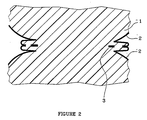
- substantially disintegration of the crosslinked layer in the weld is meant to define the disappearance of the crosslinked layer, in the weld, over more than 50% of its total width and, preferably, over more than 80% of its total width .
- the crosslinked layer only appears at the lateral ends of the weld.
- the portion of crosslinked layer which possibly remains in the weld is generally in the form of discontinuous sections.
- the presence and / or absence, partial or total, of the crosslinked layer (s) in the weld is assessed by examination of the latter by transmission electron microscopy, on cryoultramicrotomic sections in which the (the) crosslinked layer (s), if any, is (are) revealed by dyeing with osmium tetroxide (OsO.).
- OsO. osmium tetroxide
- the welds are of such quality that their tensile strength measured according to the above-mentioned standard is greater than 70 N / 25 mm.
- the best welds are characterized by a tensile strength, measured according to this standard, greater than 100 N / 25 mm.
- the quality of the welds is not affected when the articles obtained from the welded sheets are subjected to subsequent treatments (for example sterilization in an autoclave when these articles are bags for medical use).
- the energy developed during welding can be supplied in any form by any known welding device.
- the welding can be carried out by a method well known to the specialist in plastic welding, namely welding using the energy of ultrasound (ultrasonic welding).
- the high frequency welding devices which can be used for this purpose have nominal powers generally between approximately 500 and approximately 6000 Watts (W), which corresponds to approximately 20 to 200 W / cm 2 of electrode surface. They are equipped with cold or thermostatic electrodes having the desired profile, from materials such as brass, bronze, aluminum, copper and steel for example.
- the energy and pressure to be developed can be easily determined by a person skilled in the art, knowing the objective to be achieved and taking into account the characteristics specific to the welding device used, provided by the manufacturer.
- - the total power applied to the electrodes this power results from the product of the total power supplied by the device's electricity source and its efficiency (given by the device manufacturer); - the anode current with which the total power applied to the electrodes is related; - the total initial thickness of the sheets to be welded; - the total area to be welded; - the welding time.
- the values that various parameters involved in the use of high frequency welding devices having the nominal powers mentioned above can be mentioned below (commercial models of these devices are for example the COLPITT HF 3000 welder W and the KIEFEL KH 500 welder): - anode current: from about 0.5 to about 1.2 amps (A); - welding time: from about 1 to about 6 seconds (s); - temperature of the electrodes: adjusted so that the temperature at the heart of the weld preferably does not exceed approximately 160 ° C, in particular approximately 140 ° C; - pressure applied between the electrodes: from approximately 1.105 to approximately 2.106 N / m2, preferably from approximately 3.105 to approximately 8.105 N / m2.
- this energy can be defined as a first approximation in the form of a specific volume energy, by the ratio between the power (in Watts) applied to the electrodes and the product of the total initial thickness of the sheets (in cm) by the total surface of welding (in cm2); expressed in Joules (J) per cm3 and per second, this specific volume energy is generally greater than 500; preferably it is greater than 700 J / cm3 x s.
- the welding process according to the invention applies to the manufacture of PVC bags for conditioning blood, as well as other liquids for medical uses, such as intravenous solutions, liquid drugs, solutions for enteral nutrition, (amino acids, lipids ...), barium enema solutions, collection bags for colostomy or dialysis cleaning, etc.
- bags for conditioning the blood it is advantageously possible to improve the hemocompatibility thereof, for example by adding an anticoagulant agent, such as sodium citrate, or alternatively by coating with polysiloxane solutions (see by example European patent application EP-A-143994).
- the welded PVC bags according to the invention are particularly suitable for packaging medicinal solutions which undergo a substantial loss of the active principle by absorption, or even by simple adsorption, in PVC whose surface has not been treated by cold plasma.
- cytostatic drugs such as bleomycin sulfate, carmustine, vincristine sulfate
- - sedatives and tranquilizers such as promethazine, thioridazine, trifluoroperazine, clomethiazole, chlorpromazine, promazine, diazepam, oxazepam, medazepam, nitrazepam
- - cardiological medicines such as nitroglycerin, isosorbide dinitrate, digitoxin, hydralazine
- - blood thinners such as warfarin
- - anesthetics such as methohexital sodium and thiopental sodium
- - medicines for enteral nutrition such as vitamin B6, vitamin A, amino acids; - insulins; etc.
- the welds obtained by the process according to the invention are characterized by remarkable resistance to all types of sterilization (by autoclave, by ethylene oxide, by gamma irradiation, etc.) and in particular by autoclave, for which they were, according to prior art, deemed not to be suitable (see above).
- This description relates to the production of a blood bag via two sheets of PVC treated with plasma and welded via their treated faces, and equipped with an insert (tube) of PVC not treated with plasma for filling and emptying the bag. , secured to the pocket, also by welding.
- One face of the sheets is then subjected to a cold plasma treatment generated in the plasma chamber of a plasma generator device at low temperature by application of an electric current of a power of 8 kW at a frequency of 110 kHz, the atmosphere of the plasma chamber being maintained at a pressure of 4.10 ⁇ 2 Torr with admission and continuous discharge of a gas mixture comprising a mixture of CO, oxygen and argon.
- the plasma treated leaves were examined by transmission electron microscopy on microtome sections.
- the cuts are subjected for a period of 16 hours, at room temperature, to tetroxide vapors of osmium in a 1% aqueous solution.
- the plasma treated layer appears continuously and with a regular thickness of 0.1 micron on the surface of the plasma treated sheet.
- the high-frequency welding of the sheets treated with cold plasma is carried out on a KIEFEL KH 500 HF machine.
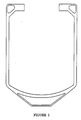
- the two sheets are placed between brass electrodes having a configuration corresponding to the perimeter of the blood bag to be welded, shown in FIG. 1, so that the welding takes place via the two treated sides of the respective sheets.
- the welding conditions used are as follows: - welding time: 5s, - frequency used: 27.12 MHz, - anode current: 1.2 A, - pressure between the electrodes during welding: 4.5.105 N / m2.
- the thickness of the final weld is 0.35 mm.
- the total power applied to the electrodes was equal to 4400 W, the total initial thickness of the sheets to be welded 0.7 mm and the total surface of the weld 56 cm2.
- the amount of specific volume energy developed during the production of the weld is therefore equal to 1122 J / cm3 x s.
- the quality of the weld is assessed by a peel test carried out in accordance with standard ASTM D 1876. Specimens 25 mm wide are cut in the transverse direction of the weld. The peel test gave a peel force of 115 N / 25 mm.
- the production of the blood bag is completed by the welding of the two sheets treated with cold plasma and already welded in a configuration corresponding to the perimeter of the blood bag with a tube (insert) of flexible PVC not treated with 5 mm lower diameter and 7 mm outer diameter. Welding is carried out in two stages. In the first step, the welding is carried out between the insert and the two sheets treated with cold plasma at the level of the insert, by means of two electrodes of cylindrical geometry energized and a rod placed at the inside the insert and connected to ground, under the specific conditions mentioned above for welding the sheets (total power applied: 700 W).
- the thickness of the final weld is equal to 0.9 mm, the total initial thickness 1.35 mm and the total surface of the weld 4 cm2.
- the amount of specific volume energy developed during the production of the weld is therefore equal to 1296 J / cm3 x s.
- the two parts of sheets located on either side of the insert are welded under operating conditions similar to those used for the welding of the two plasma treated sheets described above.
- the quality of the weld of the insert is assessed by a mechanical test carried out according to the draft international standard ISO / DIS 3826.3. According to this test, the insert must be able to undergo a tensile force of 20 N, applied to its connection point and maintained for 15 seconds.
- the blood bag thus produced into which 10 ml of water was introduced, is subjected to an autoclave sterilization cycle at 120 ° C for 30 minutes, with maintenance of a back pressure throughout the duration of the cycle. At the end of this sterilization cycle, it is subjected to a peel test according to standard ASTM D 1876 as described above. The test gave a peel force of 112 N / 25 mm, which shows that the quality of the weld was not affected by sterilization.
- a blood bag produced as indicated above and another pocket made from the same PVC sheets not treated with plasma and welded in a conventional manner are filled with diazepam dissolved at a rate of 92 ⁇ g / ml in a solution containing 9 g of NaCl per liter.
- Figure 4 commented above shows the respective changes in the residual concentration of diazepam during storage in each of the bags.
- the welding operations of the two sheets described above were repeated, except that the anode current was adjusted so as to reach the maximum value of 0.65 A at the end of welding.
- the total power applied to the electrodes was 1700 W and the amount of specific volume energy developed during welding was 434 J / cm3 x s.
Landscapes
- Engineering & Computer Science (AREA)
- Mechanical Engineering (AREA)
- Chemical & Material Sciences (AREA)
- Organic Chemistry (AREA)
- Health & Medical Sciences (AREA)
- Chemical Kinetics & Catalysis (AREA)
- Medicinal Chemistry (AREA)
- Polymers & Plastics (AREA)
- General Chemical & Material Sciences (AREA)
- Manufacturing & Machinery (AREA)
- Materials Engineering (AREA)
- Physics & Mathematics (AREA)
- Plasma & Fusion (AREA)
- Medical Preparation Storing Or Oral Administration Devices (AREA)
- Lining Or Joining Of Plastics Or The Like (AREA)
- Treatments Of Macromolecular Shaped Articles (AREA)
Applications Claiming Priority (2)
| Application Number | Priority Date | Filing Date | Title |
|---|---|---|---|
| BE8701182A BE1000977A5 (fr) | 1987-10-15 | 1987-10-15 | Procede pour le soudage de feuilles a base de polychlorure de vinyle souple et articles, notamment poches a usage medical, obtenus par ce procede. |
| BE8701182 | 1987-10-15 |
Publications (1)
| Publication Number | Publication Date |
|---|---|
| EP0312169A1 true EP0312169A1 (de) | 1989-04-19 |
Family
ID=3882926
Family Applications (1)
| Application Number | Title | Priority Date | Filing Date |
|---|---|---|---|
| EP88202262A Withdrawn EP0312169A1 (de) | 1987-10-15 | 1988-10-11 | Verfahren zum verschweissen von Weich-Polyvinylchlorid-Folien und mittels dieses Verfahrens hergestellte Gegenstände, insbesondere Taschen zur medizinischen Anwendung |
Country Status (4)
| Country | Link |
|---|---|
| EP (1) | EP0312169A1 (de) |
| JP (1) | JPH01141028A (de) |
| BE (1) | BE1000977A5 (de) |
| BR (1) | BR8805345A (de) |
Citations (4)
| Publication number | Priority date | Publication date | Assignee | Title |
|---|---|---|---|---|
| GB1059554A (en) * | 1963-09-12 | 1967-02-22 | Baxter Laboratories Inc | Improvements in or relating to plastics containers for the storage of liquids |
| EP0035065A2 (de) * | 1980-02-26 | 1981-09-09 | Toray Industries, Inc. | Eine vernetzte Polyvinylchloridfolie, Verfahren zu ihrer Herstellung und ihre Verwendung |
| FR2544612A1 (fr) * | 1983-04-25 | 1984-10-26 | Terumo Corp | Poche medicale et procede pour sa fabrication |
| US4497857A (en) * | 1983-10-31 | 1985-02-05 | Composite Container Corporation | Flexible heat-sealable sheet and bag made therefrom |
Family Cites Families (1)
| Publication number | Priority date | Publication date | Assignee | Title |
|---|---|---|---|---|
| JPS58224745A (ja) * | 1982-06-23 | 1983-12-27 | 三菱化成ポリテック株式会社 | 事務用品収納用袋状容器 |
-
1987
- 1987-10-15 BE BE8701182A patent/BE1000977A5/fr not_active IP Right Cessation
-
1988
- 1988-10-11 EP EP88202262A patent/EP0312169A1/de not_active Withdrawn
- 1988-10-14 JP JP63259258A patent/JPH01141028A/ja active Pending
- 1988-10-14 BR BR8805345A patent/BR8805345A/pt unknown
Patent Citations (4)
| Publication number | Priority date | Publication date | Assignee | Title |
|---|---|---|---|---|
| GB1059554A (en) * | 1963-09-12 | 1967-02-22 | Baxter Laboratories Inc | Improvements in or relating to plastics containers for the storage of liquids |
| EP0035065A2 (de) * | 1980-02-26 | 1981-09-09 | Toray Industries, Inc. | Eine vernetzte Polyvinylchloridfolie, Verfahren zu ihrer Herstellung und ihre Verwendung |
| FR2544612A1 (fr) * | 1983-04-25 | 1984-10-26 | Terumo Corp | Poche medicale et procede pour sa fabrication |
| US4497857A (en) * | 1983-10-31 | 1985-02-05 | Composite Container Corporation | Flexible heat-sealable sheet and bag made therefrom |
Non-Patent Citations (1)
| Title |
|---|
| DERWENT JAPANESE PATENTS GAZETTE, section Ch, semaine 8406, 21 mars 1984, page 8, Derwent Publications LTD, Londres, GB; JP-A-58 224 745 (MITSUBISHI MONSANTO K.K.) 27-12-1983 * |
Also Published As
| Publication number | Publication date |
|---|---|
| BR8805345A (pt) | 1989-06-13 |
| JPH01141028A (ja) | 1989-06-02 |
| BE1000977A5 (fr) | 1989-05-30 |
Similar Documents
| Publication | Publication Date | Title |
|---|---|---|
| US3188265A (en) | Packaging films | |
| EP0742097B1 (de) | Mehrschichtiger Schlauch oder Film | |
| FR2516017A1 (fr) | Pellicule stratifiee retractable a chaud | |
| FR2461731A1 (fr) | Procede pour modifier les proprietes de surface de produits faconnes en matieres polymeres au moyen d'un plasma a basse temperature | |
| FR2530539A1 (fr) | Pellicules pasteurisables et retractables a la cuisson et procede pour leur fabrication | |
| FR2917381A1 (fr) | Conditionnement plastique multicouche pour la conservation d'une composition pharmaceutique | |
| JP2012001732A (ja) | 低温ヒートシール性をもつ非パーフルオロ系フッ素樹脂成形体 | |
| JPH02180264A (ja) | 防湿医療用フィルム | |
| BE898469A (fr) | Compositions polyoléfiniques stérilisables à la chaleur et articles fabriqués à partir de ces compositions. | |
| EP0678547B1 (de) | Verfahren zur Oberflächenbehandlung von Kunststoff enthaltenden Gegenständen | |
| FR2537981A1 (fr) | Compositions polyolefiniques sterilisables a la chaleur et articles fabriques a partir de ces compositions | |
| KR102093102B1 (ko) | 염화비닐리덴계 수지 필름, 그것을 이용한 충전 포장체, 및 이의 제조 방법 | |
| BE1000977A5 (fr) | Procede pour le soudage de feuilles a base de polychlorure de vinyle souple et articles, notamment poches a usage medical, obtenus par ce procede. | |
| BE1010914A3 (fr) | Tube comprenant au moins 3 couches. | |
| FR2460783A1 (fr) | Produit faconne en resine de chlorure de vinyle revetu d'alcool polyvinylique | |
| JP2001071435A (ja) | スキンパック包装用フィルム | |
| EP3348491B1 (de) | Mehrlagiger film für tiefziehen und verfahren zur herstellung davon | |
| EP0571260A2 (de) | Mehrschichtiger polymerer Komplex, bestimmt insbesondere für eine wärmeschrumpfbare Umhüllung und Verfahren zu seiner Herstellung | |
| EP0309345B1 (de) | Oberflächenmodifizierte Kunststofferzeugnisse mit verbesserter Blutverträglichkeit und geringerer Thrombogenizität und Verfahren zu deren Herstellung | |
| JP3219298B2 (ja) | 分離膜及び分離方法 | |
| EP0113638A1 (de) | Polyvinylalkoholfolie und Anwendung zur Herstellung von für Gas undurchlässigen Mehrschichtfolien | |
| FR2467865A1 (fr) | Procede de traitement par un plasma basse temperature de la surface d'un article en pvc pour rendre celle-ci hydrophile | |
| EP0930154B1 (de) | Flachgelegte Schlauchfolienbahn und Verfahren zur Herstellung eines solchen Filmes | |
| BE1010171A6 (fr) | Film a base d'eva pour l'utilisation comme cuir synthetique. | |
| FR2887487A1 (fr) | Procede de soudure de matieres plastiques |
Legal Events
| Date | Code | Title | Description |
|---|---|---|---|
| PUAI | Public reference made under article 153(3) epc to a published international application that has entered the european phase |
Free format text: ORIGINAL CODE: 0009012 |
|
| AK | Designated contracting states |
Kind code of ref document: A1 Designated state(s): AT BE CH DE ES FR GB GR IT LI LU NL SE |
|
| 17P | Request for examination filed |
Effective date: 19891007 |
|
| STAA | Information on the status of an ep patent application or granted ep patent |
Free format text: STATUS: THE APPLICATION IS DEEMED TO BE WITHDRAWN |
|
| 18D | Application deemed to be withdrawn |
Effective date: 19910503 |