EP0312346A2 - Protéase acide d'E. coli spécifique pour une séquence - Google Patents
Protéase acide d'E. coli spécifique pour une séquence Download PDFInfo
- Publication number
- EP0312346A2 EP0312346A2 EP88309582A EP88309582A EP0312346A2 EP 0312346 A2 EP0312346 A2 EP 0312346A2 EP 88309582 A EP88309582 A EP 88309582A EP 88309582 A EP88309582 A EP 88309582A EP 0312346 A2 EP0312346 A2 EP 0312346A2
- Authority
- EP
- European Patent Office
- Prior art keywords
- coli
- arginine
- lysine
- sequences
- protease
- Prior art date
- Legal status (The legal status is an assumption and is not a legal conclusion. Google has not performed a legal analysis and makes no representation as to the accuracy of the status listed.)
- Granted
Links
Images


Classifications
-
- C—CHEMISTRY; METALLURGY
- C12—BIOCHEMISTRY; BEER; SPIRITS; WINE; VINEGAR; MICROBIOLOGY; ENZYMOLOGY; MUTATION OR GENETIC ENGINEERING
- C12N—MICROORGANISMS OR ENZYMES; COMPOSITIONS THEREOF; PROPAGATING, PRESERVING, OR MAINTAINING MICROORGANISMS; MUTATION OR GENETIC ENGINEERING; CULTURE MEDIA
- C12N9/00—Enzymes; Proenzymes; Compositions thereof; Processes for preparing, activating, inhibiting, separating or purifying enzymes
- C12N9/0004—Oxidoreductases (1.)
- C12N9/0065—Oxidoreductases (1.) acting on hydrogen peroxide as acceptor (1.11)
-
- C—CHEMISTRY; METALLURGY
- C12—BIOCHEMISTRY; BEER; SPIRITS; WINE; VINEGAR; MICROBIOLOGY; ENZYMOLOGY; MUTATION OR GENETIC ENGINEERING
- C12N—MICROORGANISMS OR ENZYMES; COMPOSITIONS THEREOF; PROPAGATING, PRESERVING, OR MAINTAINING MICROORGANISMS; MUTATION OR GENETIC ENGINEERING; CULTURE MEDIA
- C12N15/00—Mutation or genetic engineering; DNA or RNA concerning genetic engineering, vectors, e.g. plasmids, or their isolation, preparation or purification; Use of hosts therefor
- C12N15/09—Recombinant DNA-technology
- C12N15/11—DNA or RNA fragments; Modified forms thereof; Non-coding nucleic acids having a biological activity
-
- C—CHEMISTRY; METALLURGY
- C12—BIOCHEMISTRY; BEER; SPIRITS; WINE; VINEGAR; MICROBIOLOGY; ENZYMOLOGY; MUTATION OR GENETIC ENGINEERING
- C12N—MICROORGANISMS OR ENZYMES; COMPOSITIONS THEREOF; PROPAGATING, PRESERVING, OR MAINTAINING MICROORGANISMS; MUTATION OR GENETIC ENGINEERING; CULTURE MEDIA
- C12N15/00—Mutation or genetic engineering; DNA or RNA concerning genetic engineering, vectors, e.g. plasmids, or their isolation, preparation or purification; Use of hosts therefor
- C12N15/09—Recombinant DNA-technology
- C12N15/63—Introduction of foreign genetic material using vectors; Vectors; Use of hosts therefor; Regulation of expression
- C12N15/70—Vectors or expression systems specially adapted for E. coli
-
- C—CHEMISTRY; METALLURGY
- C12—BIOCHEMISTRY; BEER; SPIRITS; WINE; VINEGAR; MICROBIOLOGY; ENZYMOLOGY; MUTATION OR GENETIC ENGINEERING
- C12N—MICROORGANISMS OR ENZYMES; COMPOSITIONS THEREOF; PROPAGATING, PRESERVING, OR MAINTAINING MICROORGANISMS; MUTATION OR GENETIC ENGINEERING; CULTURE MEDIA
- C12N9/00—Enzymes; Proenzymes; Compositions thereof; Processes for preparing, activating, inhibiting, separating or purifying enzymes
- C12N9/14—Hydrolases (3)
- C12N9/48—Hydrolases (3) acting on peptide bonds (3.4)
- C12N9/50—Proteinases, e.g. Endopeptidases (3.4.21-3.4.25)
- C12N9/52—Proteinases, e.g. Endopeptidases (3.4.21-3.4.25) derived from bacteria or Archaea
-
- C—CHEMISTRY; METALLURGY
- C12—BIOCHEMISTRY; BEER; SPIRITS; WINE; VINEGAR; MICROBIOLOGY; ENZYMOLOGY; MUTATION OR GENETIC ENGINEERING
- C12N—MICROORGANISMS OR ENZYMES; COMPOSITIONS THEREOF; PROPAGATING, PRESERVING, OR MAINTAINING MICROORGANISMS; MUTATION OR GENETIC ENGINEERING; CULTURE MEDIA
- C12N9/00—Enzymes; Proenzymes; Compositions thereof; Processes for preparing, activating, inhibiting, separating or purifying enzymes
- C12N9/99—Enzyme inactivation by chemical treatment
-
- C—CHEMISTRY; METALLURGY
- C12—BIOCHEMISTRY; BEER; SPIRITS; WINE; VINEGAR; MICROBIOLOGY; ENZYMOLOGY; MUTATION OR GENETIC ENGINEERING
- C12P—FERMENTATION OR ENZYME-USING PROCESSES TO SYNTHESISE A DESIRED CHEMICAL COMPOUND OR COMPOSITION OR TO SEPARATE OPTICAL ISOMERS FROM A RACEMIC MIXTURE
- C12P21/00—Preparation of peptides or proteins
- C12P21/06—Preparation of peptides or proteins produced by the hydrolysis of a peptide bond, e.g. hydrolysate products
-
- C—CHEMISTRY; METALLURGY
- C07—ORGANIC CHEMISTRY
- C07K—PEPTIDES
- C07K2319/00—Fusion polypeptide
Definitions
- This invention relates to a novel E.coli protease, its use in cleaving proteins at specific amino acid sequences and a novel protein expression vector which 1) replicates as a plasmid in E.coli and 2) induces production of the protease.
- Proteases are known for use in promoting general cleavage of proteins. Proteases are used in the food processing and cleaning industries. They can be used as catalysts in the drug and chemical industries, in generating polypeptides from cloned precursors, in destruction of waste products and in dissolution of blood clots. They are formulated with detergents or other surfactants in accord with methods known for use in industrial processes, especially laundry processes. In the laundry industry the proteases are combined with detergents, builders, bleach and/or fluorescent whitening agents. The proteases are used in the detergents to remove protein stains from fabrics and other surfaces.
- Proteases are also used in other protein purification processes such as that disclosed in European Patent Application 0 150 126 discussed more fully hereinafter.
- E.coli is known to express several different proteins having some proteolytic activity.
- E.coli proteases have not been well characterized and are not sequence specific. They degrade the entire protein into its constituent amino acids.
- An example of such proteases is disclosed in U.S. Patent 4,390,629.
- most of the E.coli proteases characterized to date are alkaline proteases.
- the objective of the present invention is to provide proteases which are more sequence specific than prior art E.coli proteases, as well as methods that inhibit or prevent protein degradation by proteases.
- the present invention provides an acid protease of E.coli which catalyzes cleavage in proteins specifically between a) adjacent lysine sequences, b) adjacent arginine sequences, c) lysine-arginine sequences and d) arginine-lysine sequences.
- the production of this E.coli protease is induced in transformed E.coli according to the following method
- the new protease is produced by E.coli as a result of metabolic stress placed on the E.coli system resulting from over-expression of the protein cytochrome c peroxidase.
- the present invention also provides a method for stabilization of specific amino acid sequences in foreign proteins in E.coli lysates against proteolytic degradation by a) identifying the sequence subject to proteolytic degradation and b) changing the sequence by site-directed mutagenesis to another sequence which is resistant to proteolytic degradation.
- the present invention also provides a method for inhibiting protease activity comprising determining the sequence specificity of the protease and adding a poly-L-amino acid polymer or synthesized peptide which matches the determined sequence.
- This poly-L-amino acid or peptide acts as an inhibitor of the protease.
- E.coli strain TB1 (ara, ⁇ lac, proAB, rpsL, hsdR, ⁇ 80 lacZ ⁇ M15) was obtained from Dr. S. Sliger of the University of Illinois and was used for protein production.
- Bacteriophage IR1 a variant of phage f1, was obtained from T. Cardillo of the University of Rochester.
- pEMBLYi32 was the gift of Prof. G. Cesareni of the European Molecular Biology Lab. YEp13CCP was obtained from Dr. J. Kaput of the University of Illinois. All strains were grown at 37°C in LB medium supplemented with ampicillin (100 ⁇ g/ml).
- the protein expression vector of this invention is an E.coli plasmid, which 1) was used to induce the production of the protease of this invention in E.coli and 2) cause E.coli to over-express the protein cytochrome c peroxidase (CCP), has the following operably linked genetic components.
- the acronyms or names in parenthesis following each component are the symbols used for each component in figure 1.
- the protein expression vector, pKH101 was made using a combination of site-directed mutagenesis and standard recombinant DNA methods.
- pKH101, and variations thereof, was constructed from two extant plasmids: YEp13CCP from yeast containing the CCP gene and pEMBLYi32 containing the other enumerated genetic components.
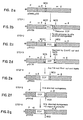
- Figures 1 and 2 are a schematic illustration of the various steps carried out in the method to make pKH101. In general, the method involved:
- Protein expression vector pKH101 was sent to American Type Culture Collection on October 13, 1987. It received a deposit date of October 14, 1987, and a file designation of 67541.
- YEp13CCP was subjected to digestion with the restriction enzyme EcoR1 to remove the CCP gene.
- This gene in yeast codes for a pre-apoprotein of 362 amino acids, including a 68 amino acid precursor.
- the entire gene was removed from YEp13CCP by a) growing the plasmid in E.coli, b) lysing of E.coli, c) isolating the plasmids and d) digestion of the plasmid with EcoR1.
- EcoR1 cleaved the plasmid at a specific nucleotide sequence (GAATTC) indicated by "E” in YEp13CCP of figure 1 to give large and small DNA fragments.
- the small fragment contained the CCP gene.
- the lac gene of pEMBLYi32 comprised an operator (O), a promoter (P), the alpha fragment from lac Z ( ⁇ -Z). Within the ⁇ -Z fragment is a multiple cloning site (MCS).
- pEMBLYi32 was restriction digested with EcoR1. This cut the plasmid, making an opening within the multiple cloning site (MCS).
- MCS is a site which can be cut by a variety of different restriction enzymes, including EcoR1. Two pieces of DNA that have been cut with the same restriction enzyme can be combined using the enzyme, DNA ligase.
- pKH59 was essentially pEMBLYi32 with the CCP gene from YEp13CCP in the pEMBLYi32 multiple cloning site. In this step the precursor DNA sequence on the CCP gene in pKH59 was deleted by site-directed mutagenesis to make pKH63 (figures 1 and 2c). pKH59 was first made single stranded. E.coli (JM103) was transformed with pKH59. JM103 was subsequently infected with a helper phage IR1 making pKH59 a single stranded phagemid particle. After E.coli growth was continued overnight, the cells were removed by centrifugation.
- the extracellular phagemid particles containing ssDNA were precipitated and purified, and stored according to Messing, "New MP Vectors for Cloning", pp. 20-78, Method in Enzymology , vol. 101, Academic Press, New York.
- a synthetic piece of ssDNA was annealed to the single stranded pKH59 in the regions adjacent to the precursor CCP sequences designated for deletion.
- the primer was a) 50 bases long, b) complimentary to the DNA sequences adjacent to the deletion site and c) non-complimentary to the precursor DNA sequences of the CCP gene to be deleted. This resulted in a non-annealed loop comprising the precursor sequences (figure 2b, precursor CCP) to be deleted.
- Primer extension reactions using DNA polymerase large fragment were done by the method of Zoller using a single primer.
- Site-directed mutagenesis was used to delete the 201 bp between the initiation codon ATG and the amino terminus ATG of the mature protein and 2) insert an Xhol enzyme restriction site 8 nucleotides upstream of the start of protein translation.
- Plasmids from eight colonies were isolated by alkaline extraction according to the techniques of Maniatus et al, Molecular Cloning, A Laboratory Manual , Cold Spring Harbor Labs, Cold Springs, New York. Each colony yielded two plasmids: One containing the original yeast CCP gene (pKH59, figure 2b) and a second plasmid containing the properly deleted precursor CCP gene (pKH63, figure 2c). Proper deletion of the precursor peptide gene segment was indicated by EcoR1-Xho1 fragments of 2.1 kb and 600 bp. pKH59 does not contain an Xho1 site as shown by restriction analysis.
- pKH63 contains Xho1 site ,thereby allowing it to be distinguished from pKH59.
- the properly deleted plasmids (pKH63, figure 2c) were purified by transformation of E.coli JM103 and identified by the presence of the Xho1 site. DNA sequencing confirmed that the proper deletion was made.
- pKH63 (figure 1 and 2c) had all the components of pKH59 except the precursor peptide of the original yeast CCP gene. However when pKH59 was made, the CCP gene was inserted in the multiple cloning site in the wrong orientation. This was determined by DNA sequencing. This improper orientation is shown as "PCC" in figures 2b and 2c.
- pKH74 is exactly the same as pKH63 except the CCP gene has the right orientation for proper expression from the promoter by E.coli.
- the CCP gene has the right orientation for proper expression from the promoter by E.coli.
- pKH96 (figures 1, 2e and 3).
- the fused DNA sequence of the promoter and the CCP gene on pKH96 are shown in figures 2e and 3. Note that pKH96 included an Xho1 site.
- pKH96 the ATG of the CCP gene and the ATG of the promoter were separated by 63 bases. These remaining unwanted bases were deleted by site-directed mutagenesis on pKH96, using A 50 base oligonucleotide that exactly deleted from the sixth nucleotide of ⁇ -Z to the sixth nucleotide of CCP resulting pKH98 (figures 2f and 4). Following mutagenesis, plasmids from 8 colonies were analyzed for the presence of the Xho1 site, which should have been deleted in proper fusion of the promoter and CCP gene. One of these was taken as intermediate plasmid pKH98.
- FIG 4 shows the relevant DNA sequences of pKH98.
- the DNA sequence of the CCP gene is underlined in figures 3, 4 and 5.
- pKH98 contained the start of translation codon ATG, in sequence with the first amino acid codon of the mature CCP gene, ACT.
- ACT is the codon for threonine.
- pKH96 (figure 3) the CCP gene sequence started with ATGACC...
- pKH98 (figure 4), ACT is substituted for ACC. Both are codons for threonine.
- pKH98 (figure 4) had the construction wherein promoter ATGACT replaced the ATGACC of the CCP gene. This plasmid, when transformed into E.coli strain JM1O3 provided CCP of proper size and sequence.
- the promoter region in pKH98 was changed using site-directed mutagenesis.
- the promoter from TATGTT to TATAAT
- E.coli consensus sequences at -10 bases
- CCP CCP
- Consensus sequences are those sequences generally recognized as forming strong promoter regions in E.coli. See figures 2g and 5. The change resulted in pKH101.
- Plasmid pKH101 was transformed into E.coli TB1 strain (obtained from Prof. Steve Sliger, University of Illinois). Expression of CCP of the correct size and sequence was confirmed by protein sequence analysis, ELISA, enzymatic activity and Western blots of SDS gels.
- the TB1 strain containing pKH101 was grown and maintained on Luria Bertani (LB), ampicillin (amp) and 2% glucose plates. One loop of culture was then used to inoculate a starter culture of LB and amp. After 5 to 6 hours, this culture was used to inoculate a 5 liter fermenter (3X LB and amp and proline) or shake flask. The fermentation was run overnight at 37°C at a constant pH of 7.
- the resulting E.coli cells were harvested and pelleted by centrifugation. The supernatant was discarded. CCP and the protease activity was obtained from the pellets according to the following purification procedures.
- each pellet was resuspended in 10-15 ml of lysis buffer having the following composition: 50 mM Sodium Acetate pH 5 0.1 mM sodium ethylenediaminetetracetate (Na2 EDTA) 0.5 mM dithiothreitol (DTT) 0.2 mM phenylmethylsulfonyl fluoride (PMSF) The pellets were resuspended and pooled.
- the pooled cell pellets were lysed with an equal volume of glass beads (0.15 ⁇ m) in a bead beater.
- the resulting lysate was treated with protamine sulfate (1 -2 mg/ml) in order to precipitate nucleic acids. This did not remove any CCP from solution as determined by ELISA.
- Cellular debris and nucleic acids were then pelleted by centrifugation.
- the resulting soluble protein fraction (supernatant) contained apo-CCP, which was constituted to the mature protein with heme.
- This soluble protein fraction was then left on ice for 30 minutes and then centrifuged at 30,000 x g for 20 minutes. The resulting cleared supernatant was then applied to a Q-Sepharose column (Pharmacia) equilibrated with 50 mM sodium acetate and 0.2 mM PMSF, pH 5.0. The loaded column was then washed with 50 mM sodium acetate pH 5. CCP was eluted from the column with a sodium acetate gradient at pH 5 as an impure mixture.
- CCP was pooled and concentrated. Purity was confirmed by SDS electrophoresis, UV-Vis spectroscopy, isoelectric focusing and enzymology.
- Procedure B was analogous to procedure A except as noted below.
- lysis (lysozyme) buffer having the following composition: 50 mM Tris-acetate pH 8.0 10 mM Na2 EDTA 0.5 mM DTT 0.2 mM PMSF lysozyme (hen egg white) 5 mg/ml
- Protein lysate was prepared as in procedure A. The lysate was loaded onto a Q-Sepharose column as in procedure A, except that the column was pre-equilibrated with 50 mM Tris-acetate, pH 8.
- E.coli Native radioactive carbon-14 labeled CCP was treated with E.coli (strain TB1) crude lysate. E.coli strain TB1 does not have the CCP gene unless it has been transformed with pKH101. The combined lysate (pH 5) and CCP were subjected to electrophoresis and fluorography. Only the 34 Kd CCP was observed (no proteolytic activity).
- E.coli strain TB1 transformed with pKH101 was grown and crude lysate prepared (pH 5). The crude lysate was added to native radioactive labeled CCP. Both the 34 Kd forms and 26 Kd forms were observed after electrophoresis (proteolytic activity).
- the protease is associated with E.coli cell membranes. It is efficiently extracted from the membranes with the detergents sodium dodecyl sulfate (SDS) and lithium dodecyl sulfate (LDS). It is also partially extracted from the membranes with the detergents Triton X-100, Tween 80, and n-octyl glucoside.
- SDS sodium dodecyl sulfate
- LDS lithium dodecyl sulfate
- the protease was purified by:
- the fraction from step d) is a pure protease of approximately 50,000 MW and contains all of the sequence-specific protease activity described below.
- E.coli containing the CCP expression plasmid pKH101, was grown in LB/ampicillin media supplemented with proline at 37°C in a shake flask for 16 hours.
- Cells were harvested by centrifugation at 5000 x g. They were resuspended in lysis buffer (50 mM lithium acetate, 0.5 mM DTT, 1 mM EDTA, 0.2 mM PMSF, pH 5). The resuspended cells were lysed by sonication at 0°C.
- the cellular debris fraction containing the membrane-associated protease was pelleted from the lysate at 30,000 x g at 4°C.
- This pellet was resuspended in lysis buffer containing 0.5% (w/v) lauryl sulfate detergent (sodium salt, SDS; or lithium salt, LDS). This suspension was stirred for 60 minutes.
- a detergent-solubilized crude protease fraction was then prepared by pelleting the membranes by ultracentrifugation for 60 minutes at 150,000 x g.
- the nonionic detergent Triton X-100 was added to 0.5%.
- This fraction was dialyzed against 0.5% Triton X-100 in 50 mM hepes (pH 7) for 12 hours. The dialyzed solution was centrifuged at 30,000 x g.
- the centrifuged solution was applied to an anion exchange column (Q-sepharose, Pharmacia) at pH 7.
- the column was eluted with a linear salt gradient (50 mM hepes, 0.5% Triton X-100, 50-500 mM LiCl, pH 7).
- the partially pure protease eluted from this column at approximately 400 mM LiCl.
- the fractions containing the protease were pooled and dialyzed against 50 mM sodium acetate plus 0.05% Triton X-100, pH 5 (several changes over 48 hours).
- the protease was concentrated ten-fold with an Amicon ultrafiltration cell.
- the protease was purified to homogeneity by gel filtration chromatography on Superose 12 FPLC in the presence of 50 mM sodium acetate and 1.0% SDS.
- the resulting protein of approximately 50,000 MW (as measured by SDS gel electrophoresis) was dialyzed and stored at -20°C.
- the sequence specific protease activity was monitored throughout this procedure using CCP as a substrate with the following assay.
- protease was assayed by combining in 1.5 mL microtubes 6 ⁇ L protease fraction, 3 ⁇ L CCP (5 mg/ml), 3 ⁇ L 500 mM sodium acetate at pH 5, followed by 30 minutes incubation at 37°C. This mixture was electrophoresed on 12.5% acrylamide-SDS gels, and proteolytic activity was evidenced by the appearance of the specific 26 kd degradation product from native CCP.
- the 26 Kd fragment was separated from the 34 Kd fragment using hydrophobic interaction chromatography (FPLC - phenyl superose column).
- the protease is active (pH4-6 at 4-37°C) in up to 0.5% of SDS, LDS and Triton X-100 (a trademark of Rohm and Haas of Philadelphia for octylphenylpoly[ethylene glycol ether] n .
- protease activity was not inhibited by EDTA, PMSF or DTT, but was inhibited by poly-L-lysine and poly-L-arginine.
- E.coli expressing CCP was lysed at pH 5 in the presence of increasing concentrations of poly-L-lysine or poly-L-arginine. Any protease activity was evidenced by the appearance of the 26 Kd fragment on Western blot. 1 mM poly-L-lysine or poly-L-arginine completely inhibited the protease activity. No 26 Kd fragment appeared; DTT, PMSF and EDTA had no inhibitory effect on the lysine-lysine lysine-arginine, arginine-lysine or arginine-arginine cleaving activity of the protease.
- the foregoing data also illustrates a method for stabilization of specific amino acid sequences in foreign proteins in E.coli lysates against proteolytic degradation by a) identifying the amino acid sequence subject to proteolytic degradation and b) changing the sequence by site-directed mutagenesis to another sequence which is resistant to proteolytic degradation.
- This method is established by the experiments referred to herein to identify the sequence specificity of the protease of this invention.
- a method for inhibiting protease activity comprising determining the sequence specificity of the protease and adding a poly-L-amino acid polymer or synthesized peptide which matches the determined sequence.
- This poly-L-amino acid or peptide acts as a protease inhibitor.
- the protease of this invention is useful in an affinity purification process for proteins which is disclosed in European Patent Application 0 150 126 published July 31, 1985.
- a ligand is employed to isolate and purify substantially all protein molecules expressed by transformed host cells.
- the process can be used on a small research level or a large commercial scale to purify substantially all protein molecules produced by recombinant DNA techniques.
- a hybrid molecule composed of protein and an identification or marker peptide is produced by recombinant DNA techniques.
- the identification peptide ideally includes two primary components: a highly antigenic N-terminal portion and a linking portion to connect the identification peptide to the protein.
- the linking portion of the identification peptide is cleavable at a specific amino acid residue adjacent to the protein molecule by use of a sequence specific proteolytic agent.
- the hybrid identification peptide/protein molecules expressed by the transformed host cells can be isolated by affinity chromatography techniques. This is accomplished by constructing an affinity column with immobilized ligands specific to the antigenic portion of the identification peptide thereby binding the expressed hybrid identification peptide/protein molecule.
- the bound identification peptide/protein molecules can be liberated from the column and then the identification peptide cleaved from the protein molecule with an appropriate proteolytic agent such as the protease of this invention.
- the cleaving releases the desired protein molecule.
- the linking portion of the identification peptide is composed of amino acids that are recognized by the sequence specific proteolytic agent which cleaves the linking portion at a location adjacent the protein molecule. Ideally, the amino acid sequence of the linking portion is unique, thus minimizing the possibility that the proteolytic agent will cleave the protein molecule.
- the protease of the present invention would be useful in this disclosed process in circumstances where the amino acid sequence between the linking portion of the identification peptide and the protein is a sequence recognized by the protease.
- the protein molecule may be composed of any proteinaceous substance that can be expressed in transformed host cells.
- Proteins contemplated by EPO 0 150 126 include enzymes, whether oxidoreductases, transferases, hydrolases, lyses, isomerases or ligases; storage proteins, such as ferritin or ovalbumin or transport proteins, such as hemoglobin, serum albumin or ceruloplasmin; proteins that function in contractile and motile systems, for instance, actin and myosin; proteins that service a protective or defense function, such as the blood proteins thrombin and fibrinogen; binding proteins, such as antibodies or immunoglobulins that bind to and thus neutralize antigens; toxic proteins, such as ricin from castor bean or grossypin from cotton linseed; and proteins that serve as structural elements such as collagen, elastin, alpha-keratin, glyco-proteins, virus-proteins and muco-proteins.
- Genes coding for the various types of protein molecules identified above may be obtained from a variety of prokaryotic or eukaryotic sources, such as bacterial, plant or animal cells.
- the genes can be isolated from the chromosome material of these cells by employing standard, well-known techniques.
- a variety of naturally occurring and synthesized plasmids having genes coding for different protein molecules are now commercially available from a variety of sources.
- the desired DNA also can be produced from mRNA by using the enzyme reverse transcriptase. This enzyme permits the synthesis of DNA from an RNA template.
- Proteases are also known for use in efforts in the pharmaceutical industry to manufacture hormones by using protease to cleave precursor peptides away from the active hormone.
Landscapes
- Life Sciences & Earth Sciences (AREA)
- Health & Medical Sciences (AREA)
- Chemical & Material Sciences (AREA)
- Genetics & Genomics (AREA)
- Engineering & Computer Science (AREA)
- Organic Chemistry (AREA)
- Zoology (AREA)
- Wood Science & Technology (AREA)
- Bioinformatics & Cheminformatics (AREA)
- General Engineering & Computer Science (AREA)
- Biotechnology (AREA)
- Biomedical Technology (AREA)
- Molecular Biology (AREA)
- General Health & Medical Sciences (AREA)
- Biochemistry (AREA)
- Microbiology (AREA)
- Medicinal Chemistry (AREA)
- Physics & Mathematics (AREA)
- Biophysics (AREA)
- Plant Pathology (AREA)
- General Chemical & Material Sciences (AREA)
- Chemical Kinetics & Catalysis (AREA)
- Enzymes And Modification Thereof (AREA)
- Micro-Organisms Or Cultivation Processes Thereof (AREA)
Applications Claiming Priority (4)
| Application Number | Priority Date | Filing Date | Title |
|---|---|---|---|
| US10979687A | 1987-10-16 | 1987-10-16 | |
| US109796 | 1987-10-16 | ||
| US21160788A | 1988-06-27 | 1988-06-27 | |
| US211607 | 1988-06-27 |
Publications (3)
| Publication Number | Publication Date |
|---|---|
| EP0312346A2 true EP0312346A2 (fr) | 1989-04-19 |
| EP0312346A3 EP0312346A3 (en) | 1990-08-29 |
| EP0312346B1 EP0312346B1 (fr) | 1994-08-17 |
Family
ID=26807378
Family Applications (1)
| Application Number | Title | Priority Date | Filing Date |
|---|---|---|---|
| EP88309582A Expired - Lifetime EP0312346B1 (fr) | 1987-10-16 | 1988-10-13 | Protéase acide d'E. coli spécifique pour une séquence |
Country Status (3)
| Country | Link |
|---|---|
| EP (1) | EP0312346B1 (fr) |
| JP (1) | JPH02437A (fr) |
| DE (1) | DE3851117T2 (fr) |
Cited By (2)
| Publication number | Priority date | Publication date | Assignee | Title |
|---|---|---|---|---|
| EP0591524A4 (fr) * | 1990-10-09 | 1994-08-03 | M & D Research Co., Ltd. | |
| CN116284250A (zh) * | 2023-03-02 | 2023-06-23 | 东北农业大学 | 耐蛋白酶水解的高稳定抗菌肽hw及其制备方法和应用 |
Families Citing this family (2)
| Publication number | Priority date | Publication date | Assignee | Title |
|---|---|---|---|---|
| JPH03217336A (ja) * | 1990-01-19 | 1991-09-25 | Mazda Motor Corp | 車両の差動制限装置 |
| JP2002250406A (ja) | 2001-02-23 | 2002-09-06 | Tsubakimoto Chain Co | ランダム配置型サイレントチェーン |
Family Cites Families (3)
| Publication number | Priority date | Publication date | Assignee | Title |
|---|---|---|---|---|
| US4532207A (en) * | 1982-03-19 | 1985-07-30 | G. D. Searle & Co. | Process for the preparation of polypeptides utilizing a charged amino acid polymer and exopeptidase |
| GR861037B (en) * | 1985-04-22 | 1986-07-16 | Genentech Inc | Novel human tissue plasminogen activator mutants |
| US5391485A (en) * | 1985-08-06 | 1995-02-21 | Immunex Corporation | DNAs encoding analog GM-CSF molecules displaying resistance to proteases which cleave at adjacent dibasic residues |
-
1988
- 1988-10-13 DE DE3851117T patent/DE3851117T2/de not_active Expired - Fee Related
- 1988-10-13 EP EP88309582A patent/EP0312346B1/fr not_active Expired - Lifetime
- 1988-10-14 JP JP63257399A patent/JPH02437A/ja active Pending
Cited By (4)
| Publication number | Priority date | Publication date | Assignee | Title |
|---|---|---|---|---|
| EP0591524A4 (fr) * | 1990-10-09 | 1994-08-03 | M & D Research Co., Ltd. | |
| US5506120A (en) * | 1990-10-09 | 1996-04-09 | M & D Research Co., Ltd. | Method of producing peptides or proteins as fusion proteins |
| CN116284250A (zh) * | 2023-03-02 | 2023-06-23 | 东北农业大学 | 耐蛋白酶水解的高稳定抗菌肽hw及其制备方法和应用 |
| CN116284250B (zh) * | 2023-03-02 | 2023-10-27 | 东北农业大学 | 耐蛋白酶水解的高稳定抗菌肽hw及其制备方法和应用 |
Also Published As
| Publication number | Publication date |
|---|---|
| JPH02437A (ja) | 1990-01-05 |
| DE3851117D1 (de) | 1994-09-22 |
| EP0312346B1 (fr) | 1994-08-17 |
| DE3851117T2 (de) | 1995-03-30 |
| EP0312346A3 (en) | 1990-08-29 |
Similar Documents
| Publication | Publication Date | Title |
|---|---|---|
| Riggs | Expression and purification of recombinant proteins by fusion to maltose-binding protein | |
| KR860001305B1 (ko) | 특이적 절단 링커를 사용하는 융합 단백질의 제조방법 | |
| Thumm et al. | Studies on prolysostaphin processing and characterization of the lysostaphin immunity factor (Lif) of Staphylococcus simulans biovar staphylolyticus | |
| Anderson | The proteinase polypeptide of adenovirus serotype 2 virions | |
| US5017492A (en) | Reverse transcriptase and method for its production | |
| EP0531404B1 (fr) | Protease specifique de l'ubiquitine | |
| EP0331961A2 (fr) | Procédé pour la production de protéines en utilisant de protéines fusionnées du type CKS | |
| JPH1014586A (ja) | オリゴペプチド反復単位を有する大ポリペプチド | |
| EP1220933B1 (fr) | Purification de proteines recombinees fixees sur des epitopes multiples | |
| Gray et al. | Pseudomonas aeruginosa secretes and correctly processes human growth hormone | |
| AU697156B2 (en) | Cloning and expression of the chondroitinase I and II genes from (p. vulgaris) | |
| KR20020026366A (ko) | 단백질의 생산 | |
| EP0312346B1 (fr) | Protéase acide d'E. coli spécifique pour une séquence | |
| DK175020B1 (da) | Fremgangsåde til udtrykkelse og ekstracellulær udskillelse af proteiner i G(-)bakterie, rekombinant DNA-konstruktion og plasmidvektor kodende herfor, samt G(-)bakterie indeholdende disse | |
| EP1981978B1 (fr) | Polypeptide d'affinité pour la purification de protéines recombinantes | |
| US5212083A (en) | Sequence for stabilizing proteins in bacteria | |
| Warsame et al. | Characterization of a gene encoding a Pichia pastoris protein disulfide isomerase | |
| KR100714116B1 (ko) | 췌장의 프로카복시펩티다제 b를 사용한 인슐린의 제조 | |
| JPH06311884A (ja) | プラスミド及びそれで形質転換されたエ シェリチア・コリ | |
| JP2611206B2 (ja) | 遺伝子およびその利用方法 | |
| Zhang et al. | Expression and functional characterization of Escherichia coli NusA and lambda Q as glutathione S-transferase fusion proteins | |
| JPH05219963A (ja) | 温度誘導分泌発現ベクターおよびその原核細胞での使用 | |
| CA1200775A (fr) | Liens d'expression | |
| Riggs | Detection and Isolation of Recombinant Protein Based on Binding Affinity Reporter: Maltose Binding Protein | |
| US20050095672A1 (en) | Recombinant IGF expression systems |
Legal Events
| Date | Code | Title | Description |
|---|---|---|---|
| PUAI | Public reference made under article 153(3) epc to a published international application that has entered the european phase |
Free format text: ORIGINAL CODE: 0009012 |
|
| AK | Designated contracting states |
Kind code of ref document: A2 Designated state(s): DE FR GB |
|
| PUAL | Search report despatched |
Free format text: ORIGINAL CODE: 0009013 |
|
| AK | Designated contracting states |
Kind code of ref document: A3 Designated state(s): DE FR GB |
|
| 17P | Request for examination filed |
Effective date: 19910211 |
|
| RAP1 | Party data changed (applicant data changed or rights of an application transferred) |
Owner name: GENENCOR INTERNATIONAL, INC. |
|
| 17Q | First examination report despatched |
Effective date: 19921112 |
|
| RBV | Designated contracting states (corrected) |
Designated state(s): DE GB |
|
| GRAA | (expected) grant |
Free format text: ORIGINAL CODE: 0009210 |
|
| AK | Designated contracting states |
Kind code of ref document: B1 Designated state(s): DE GB |
|
| REF | Corresponds to: |
Ref document number: 3851117 Country of ref document: DE Date of ref document: 19940922 |
|
| PLBE | No opposition filed within time limit |
Free format text: ORIGINAL CODE: 0009261 |
|
| STAA | Information on the status of an ep patent application or granted ep patent |
Free format text: STATUS: NO OPPOSITION FILED WITHIN TIME LIMIT |
|
| 26N | No opposition filed | ||
| PGFP | Annual fee paid to national office [announced via postgrant information from national office to epo] |
Ref country code: GB Payment date: 19961004 Year of fee payment: 9 |
|
| PGFP | Annual fee paid to national office [announced via postgrant information from national office to epo] |
Ref country code: DE Payment date: 19961018 Year of fee payment: 9 |
|
| PG25 | Lapsed in a contracting state [announced via postgrant information from national office to epo] |
Ref country code: GB Free format text: LAPSE BECAUSE OF NON-PAYMENT OF DUE FEES Effective date: 19971013 |
|
| GBPC | Gb: european patent ceased through non-payment of renewal fee |
Effective date: 19971013 |
|
| PG25 | Lapsed in a contracting state [announced via postgrant information from national office to epo] |
Ref country code: DE Free format text: LAPSE BECAUSE OF NON-PAYMENT OF DUE FEES Effective date: 19980701 |