EP0314290A2 - Poröse anorganische Materialien - Google Patents
Poröse anorganische Materialien Download PDFInfo
- Publication number
- EP0314290A2 EP0314290A2 EP88308675A EP88308675A EP0314290A2 EP 0314290 A2 EP0314290 A2 EP 0314290A2 EP 88308675 A EP88308675 A EP 88308675A EP 88308675 A EP88308675 A EP 88308675A EP 0314290 A2 EP0314290 A2 EP 0314290A2
- Authority
- EP
- European Patent Office
- Prior art keywords
- diameter
- aperture
- cavity
- range
- microns
- Prior art date
- Legal status (The legal status is an assumption and is not a legal conclusion. Google has not performed a legal analysis and makes no representation as to the accuracy of the status listed.)
- Granted
Links
Images





Classifications
-
- C—CHEMISTRY; METALLURGY
- C12—BIOCHEMISTRY; BEER; SPIRITS; WINE; VINEGAR; MICROBIOLOGY; ENZYMOLOGY; MUTATION OR GENETIC ENGINEERING
- C12N—MICROORGANISMS OR ENZYMES; COMPOSITIONS THEREOF; PROPAGATING, PRESERVING, OR MAINTAINING MICROORGANISMS; MUTATION OR GENETIC ENGINEERING; CULTURE MEDIA
- C12N11/00—Carrier-bound or immobilised enzymes; Carrier-bound or immobilised microbial cells; Preparation thereof
- C12N11/14—Enzymes or microbial cells immobilised on or in an inorganic carrier
-
- C—CHEMISTRY; METALLURGY
- C04—CEMENTS; CONCRETE; ARTIFICIAL STONE; CERAMICS; REFRACTORIES
- C04B—LIME, MAGNESIA; SLAG; CEMENTS; COMPOSITIONS THEREOF, e.g. MORTARS, CONCRETE OR LIKE BUILDING MATERIALS; ARTIFICIAL STONE; CERAMICS; REFRACTORIES; TREATMENT OF NATURAL STONE
- C04B38/00—Porous mortars, concrete, artificial stone or ceramic ware; Preparation thereof
- C04B38/0051—Porous mortars, concrete, artificial stone or ceramic ware; Preparation thereof characterised by the pore size, pore shape or kind of porosity
-
- C—CHEMISTRY; METALLURGY
- C04—CEMENTS; CONCRETE; ARTIFICIAL STONE; CERAMICS; REFRACTORIES
- C04B—LIME, MAGNESIA; SLAG; CEMENTS; COMPOSITIONS THEREOF, e.g. MORTARS, CONCRETE OR LIKE BUILDING MATERIALS; ARTIFICIAL STONE; CERAMICS; REFRACTORIES; TREATMENT OF NATURAL STONE
- C04B38/00—Porous mortars, concrete, artificial stone or ceramic ware; Preparation thereof
- C04B38/009—Porous or hollow ceramic granular materials, e.g. microballoons
Definitions
- This invention relates to a porous cellular material for supporting and immobilising biological catalysts, especially but not exclusively whole living cells.
- Adsorption of the catalyst to the outer surface of a matrix is rarely satisfactory because the intermolecular forces holding the catalyst to the support are generally insufficient to prevent sloughing or flushing away of the catalyst by a flowing liquid stream.
- Entrapment of the catalyst within a matrix most frequently makes use of a matrix of calcium alginate.
- a suspension of the catalyst to be immobilised is mixed with a solution of sodium alginate, and calcium ions are added to the mixture to form a calcium alginate gel in which the catalyst particles are entrapped.
- the gel is prepared in the form of discrete beads. This method suffers from the disadvantages that it is difficult to carry out on a commercial scale and that it is necessary for the catalyst particles to be separated from the medium in which they were grown and to be concentrated before they can be incorporated in the beads of gel.
- the permeability of the gel to liquids is relatively low so that, for example, biological cells trapped near the centre of calcium alginate beads would be reached only with difficulty by nutrient solution diffusing in from the bead surface.
- Further disadvantages of the use of calcium alginate are that the beads have poor mechanical strength and are therefore unsuitable for use on a large commercial scale and that, in the presence of certain chelating agents, in particular water-soluble phosphate salts which are often used for preparing buffer solutions for biochemical reactions, calcium ions are extracted from the calcium alginate gel causing the beads to collapse.
- an immobilisation matrix for relatively large biological catalyst particles such as whole living cells should have a structure which is sufficiently rigid to provide a relatively distortion-free cavity for each catalyst particle, even under the forces which occur in the packed columns used for large scale treatment processes, while being sufficiently porous to permit easy access of the catalyst particles into the cavities and to allow free circulation of nutrient liquids.
- Mullite is an aluminosilicate material which exists in the form of needle-shaped crystals: it has a variable chemical composition but is generally represented by the formula 3Al2O3.2SiO2. Although mullite occurs naturally, it is usually obtained by heating bauxite with clay or sillimanite. It is presently used as a refractory.
- the desired mullite articles are obtained by calcining kaolin clay and subsequently leaching free silica from the calcined mass to leave porous mullite. It is stated that calcination at or above 1350°C causes excessive sintering which reduces porosity of the calcined body and extends the required leaching time.
- the object of the invention is to provide a porous cellular material which is non-toxic to living cells, has good mechanical rigidity under conditions of high load and when exposed to biochemical treatment fluids, and yet is reversibly permeable to the treatment fluids while retaining cells in its inner cellular structure.
- a porous cellular material comprising a plurality of cavities, each defined by a substantially spherical wall formed of a rigid intermeshing matrix of ceramic needles, said wall being pierced by at least one aperture to provide access to the cavity, the or each aperture having a diameter such that the ratio of the diameter of the aperture to the diameter of the cavity into which the aperture opens is in the range of from 0.1:1 to 1:1.
- Each cavity is advantageously defined by the wall of a discrete hollow particle, or microsphere, the wall consisting of intermeshing ceramic needles.
- Such particles may be formed by a process comprising the following steps:-
- Suitable aluminosilicate starting materials include kyanite, sillimanite and andalusite all of which can be represented by the chemical formula Al2O3.SiO2; dumortierite which can be represented by the chemical formula 8Al2O3.B2O3.6SiO2.H2O; clay minerals of the kandite group which can be represented by the chemical formula Al2O3.2SiO2.2H20 and pyrophillite which can be represented by the chemical formula Al2O3.4SiO2.H2O.
- Other possible aluminosilicate starting materials include topaz, pinite, illite and clay minerals of the smectite class.
- aluminosilicate starting material a mixture of an alumina-rich material and a silica-rich material or a mixture of substantially pure alumina and silica, provided that the molar ratio SiO2 : Al2O3 is at least 0.75:1 and preferably at least 1:1 in each case.
- clay minerals of the kandite class namely kaolinite, dickite, nacrite and halloysite, to be most suitable and, in particular, kaolin clay which consists predominantly of kaolinite.
- Still further examples of aluminosilicate starting material include magnesium aluminium silicates such as talc. In this case, after the material has been subjected to steps (a) to (e) above, the product will consist of microspheres with a porous shell of cordieri of chemical formula 2MgO.2Al2O3.5SiO2.
- the hollow microspheres are preferably obtained by spray drying an aqueous suspension of the aluminosilicate material, the suspension containing from 20% to 60% by weight of solid aluminosilicate material and from 0% to 40% by weight, based on the weight of dry aluminosilicate material, of a viscosifying agent.
- Conventionally spray drying is performed by spraying, into a suitable vessel in which hot gases are circulated, an aqueous suspension containing from 60% to about 80% by weight of solids.
- this tends to form particles which are dense and substantially free of an internal cavity.
- each droplet formed by atomisation of the feed suspension tends to dry first on the outside leaving a hard impermeable skin enclosing a substantially spherical volume of water. On further exposure to the hot gases in the spray dryer chamber the water turns to steam which blows a hole through the outer skin.
- a viscosifying agent is generally necessary to ensure that droplets of the desired size are formed by the atomising means in the spray dryer.
- the viscosifying agent may be a water dispersible synthetic polymer such as poly(vinyl acetate) or poly (vinyl alcohol), or a water dispersible natural polymer which may be, for example, carbohydrate-based, such as dextran, starch, agar, guar gum, hydroxyethyl cellulose of sodium carboxymethyl cellulose or protein-based, for example casein or gelatin.
- the particulate product of step (a) has a narrow range of particle sizes.
- an especially advantageous product comprises particles substantially all of which are between 10 microns and 100 microns in size.
- each cavity is advantageously defined by the wall of a discrete particle, or microsphere
- a porous material in which a plurality of individual cavities are formed in a relatively large unit having a rigid foam-like structure is also within the scope of the present invention.
- a material may be prepared by forming a foam from a suspension containing from 20% to 60% by weight of solid aluminosilicate material, and drying the wet foam to form a substantially rigid cellular body.
- microspheres may be fused together to form pellets or bodies of various shapes and sizes, each body comprising a plurality of individual microspheres.
- Such bodies may be formed by subjecting microspheres, formed by the spray-drying method and under the conditions described above, to light pressing in a mould of appropriate dimensions, for example a tablet press, and calcining the resultant pressed body under the conditions specified above.
- the aluminosilicate material prepared as described above by spray drying or by foaming is then heat-treated by the process known as soak calcination in, for example, a tunnel kiln, in which the material is exposed to a temperature in the range of from 1300°C to 1800°C for at least 1 hour.
- the material is heat-treated at a temperature greater than 1350°C but not greater than 1600°C for a time in the range of from 5 hours to 24 hours.
- the mixture of ceramic crystals and silica is comminuted and subjected to one or more particle size separations by sieving, air classification and/or centrifugal or gravitational sedimentation.
- the aluminosilicate starting material should preferably contain from 1.5% to 2.5% by weight of M2O where M is sodium and/or potassium. If the starting material contains less than this amount of M2O, the M2O content may be increased by adding an appropriate quantity of an M2O-containing mineral, such as feldspar.
- step (c) the alkali metal hydroxide is most conveniently sodium hydroxide and the molarity of the alkali solution is preferably at least 3M.
- the reaction between the hollow microspheres of step (a) and the alkali metal hydroxide solution is performed at a temperature between 80°C and the boiling point of the alkali metal hydroxide solution.
- step (c) is to dissolve substantially completely from the mixture of ceramic material and silica, the silica component which is generally present in a glassy form. After the silica has been removed by dissolution each particle consists predominantly of ceramic needles joined together in the form of a three-dimensional lattice which has a high proportion of interconnecting voidage, the passages of which are relatively wide in relation to the width of the ceramic needles.
- the calcined cellular body is washed and dried as described in steps (d) and (e) above.
- step (d) the alkali-treated particulate product of step (c) is preferably washed first with an alkaline solution weaker than that used in step (c) and then repeatedly with water until the washing medium is substantially free of silicate and alkali metal ions.
- the alkaline solution used in this washing procedure preferably has a molarity of 1M or less.
- the dry particulate product obtained on carrying out step (e) is found to have good mechanical properties when packed into a column.
- the particles are resistant to crushing and abrasion and can withstand a high differential pressure between one end of the column and the other when a liquid is pumped through the column.
- the ceramic needles forming the walls of the porous cellular material of the present invention preferably consist of mullite. Since the melting point of mullite is about 1810°C the particular product can be subjected to high temperatures for long periods without fusing or sintering, and it has been found that the material has good resistance to thermal shock, being able to withstand repeated quenching from 1200°C to room temperature with no deleterious effect on its structure.
- the cellular porous material formed from mullite is also able to withstand prolonged exposure to strong acids of pH 1 and strong alkalis of pH14. Of the known comparable materials silica is soluble in strongly alkaline solutions and alumina and clays are attacked by strong acids.
- each cavity of the porous cellular material has an overall diameter in the range of from 5 microns to 5mm and, most advantageously, an overall diameter in the range of from 20 microns to 120 microns.
- the wall thickness is preferably in the range of from 2 microns to 20 microns, more preferably from 5 microns to 10 microns.
- each microsphere has an overall diameter of from 5 microns to 5mm, more preferably 20 microns to 120 microns. It is important that all, or substantially all, of the particles are not smaller than 5 micrometres, in order to ensure that a column packed with the material has a good flow velocity, and are not larger than 5 millimetres, and preferably not larger than 1 mm, in order to ensure that a column packed with the material has a good surface area per unit weight.
- each microsphere is pierced by one, two or three apertures, most preferably by a single aperture, and the ratio of the diameter of the aperture to the overall diameter of the microsphere is preferably in the range from 0.1:1 to 0.75:1.
- the volume of the internal cavity of each microsphere is preferably from 50% to 90% of the volume of the microsphere if the microsphere is to capture and retain a useful number of biological cells.
- the hollow, substantially spherical microspheres have at least a degree of anisotropy in order that the units may capture, by means of hydrodynamic forces, biological cells from a liquid suspension which is caused to flow past them.
- Hydrodynamic studies have suggested that when a fluid is flowing over a smooth surface in which is formed a cavity the shape of the entrance to which is regular and symmetrical, one of more eddies are set up within the cavity but substantially no mixing takes place between the eddies and the main fluid flow over the surface. These findings appear to apply over a very wide range of Reynolds numbers for the flow over the surface. If, however, the entrance to the cavity is anisotropic, mixing will occur at all Reynolds numbers between the eddies and the flow over the surface.
- the particles formed by the sequence of spray drying a suspension of particulate material followed by calcination as described above have a desirable degree of anisotropy. Nevertheless, it is believed that, even if the particles of the invention are isotropic they would still be able to capture biological cells.
- the material comprising substantially spherical units in accordance with the invention is packed into a column and a liquid suspension of biological cells is passed through the column, the cells are captured and caused to pass through the apertures into the internal cavities primarily as a result of hydrodynamic forces.
- the capture and retention of the cells by the substantially spherical units is aided by the fact that the shell of each unit has pores of such size that it is permeable to the suspending liquid but impermeable to the cells.
- the shell comprises an intermeshing matrix of mullite needles having a width generally in the range of from 0.1 microns to about 0.5 microns.
- the pores defined between the needles preferably are in the range of from 0.1 to 1.0 microns i.e. of a width to permit penetration of nutrients and material essential to the immobilised cell for growth.
- the crystals of mullite are preferably substantially uniform in size, preferably having a length in the range of from 1 micrometre to 5 micrometres, and the interconnecting pores preferably have a width no greater than 2 micrometres and a width preferably no smaller than 0.1 micrometre, more preferably no smaller than 0.5 micrometre.
- the specific surface area of the particulate porous material of the present invention is less than 10m2 per gram, and usually is less than 7m2 per gram.
- the hollow spheres, before calcination are usually produced with openings communicating with the internal cavities.
- the spray dried particles may be produced with a wall which is thinned at certain regions which regions, after calcination, are held together by silica. On leaching, their thinned regions will break to yield openings into the internal cavity. This phenomenon may also occur in the preparation of a porous particulate material by the foaming method.
- the internal cavities of the porous cellular material should have sizes in the range of from 5 microns to 5mm in order to accommodate the penetration and immobilisation of a variety of prokaryotic and eukaryotic cells whose diameters are in the range from 0.5 to 3 microns, and up to 40 microns, respectively.
- the prokaryotic cells may be able to penetrate the particles through the array of ceramic, e.g. mullite, crystals.
- ceramic e.g. mullite, crystals.
- openings are provided in the particle wall in the case of the hollow spherical particles and, in the case of a rigid foam, that openings between internal cavities in the foam and the outside of the particle are provided.
- Such openings into the internal cavities should be at least 5 micrometres in diameter, but may be up to fifty micrometres in diameter.
- a serious problem in biotechnology is the retention of eukaryotes and prokaryotes such as bacteria, moulds and yeasts in reactors.
- the loss of cellular material has to be minimised as far as possible in order to increase the efficiency of the biotechnological process and thus reduce reactor volume and residence time.
- Immobilised cells can be described as cells which are physically confined or localised in a certain defined region of space with retention of their catalytic activities and which can be used repeatedly and continuously (see Chibata, I. (1978) "Immobilised enzymes: Research and Development", John Wiley and Sons, New York; P.7. which is incorporated herein by reference). The study of immobilised cells to produce chemicals has expanded rapidly in the last decade (see (i) Abbott, B.J. (1977) Immobilised cells. “Annual Reports on Fermentation Processes 1", Perlman, D. (ed.), Academic Press, London, pp. 205-233; (ii) Abbott, B.J.
- porous cellular materials in accordance with this invention are particularly suited to application as biosupports.
- a biological support comprising a porous cellular material comprising a plurality of cavities each defined by a substantially spherical wall formed of a rigid intermeshing matrix of ceramic needles said wall being pierced by at least one aperture to provide access to the cavity, and the or each aperture having a diameter such that the ratio of the diameter of the aperture to the diameter of the cavity into which the aperture opens is in the range of from 0.1:1 to 1:1, at least some of each the cavities having immobilised within the structure thereof a biological component selected from the group consisting of biological macromolecules and biological cells.
- the biological component is an enzyme or a prokaryotic cell, it may be immobilised within the interconnecting pores of the matrix of ceramic, e.g. mullite, crystals. However, if the biological component is an eukaryotic cell, it will be immobilised within an internal cavity of the substantially cellular particles.
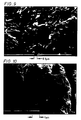
- Scanning electron micrographs show that the particles had a surface consisting of an exposed three dimensional matrix of mullite crystals in which substantially all of the mullite needles have a length in the range from 1 micron to 5 microns and define between them interconnecting pore 5 having a width in the range from about 5 nanometres to about 2 microns.
- Example 2 A sample of the same kaolin clay as was used in Example 1 was vigorously mixed with sufficient water to form a suspension containing 62% by weight of dry kaolin and 0.6% by weight, based on the weight of dry kaolin, of tetrasodium pyrophosphate. The resultant suspension was then fed at a rate of approximately 1 litre per minute to a laboratory spray dryer operating at an inlet temperature of 380°C and an outlet temperature of 175°C. The dried product which was in the form of substantially spherical hollow bodies of substantially uniform diameter of about 50 microns (see Figures 6 and 7) was fired in a tunnel kiln under conditions such that it was exposed to a temperature of 1500°C for 8 hours.
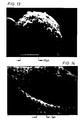
- Portion A was reserved for further testing as described in Example 8 below, while 1g of Portion B was treated with sodium hydroxide under identical conditions to those described in Example 5 and the treated material was centrifuged, washed, dried and milled in the same way to produce a porous particle containing a large internal cavity as is shown in Figures 8 and 9.
- the hollow spheres produced may be used as a biological support on which a biological component may be immobilized.
- Figures 10 and 11 each show a substantially spherical mullite particle of this invention having a large internal cavity in which a number of yeast cells have been immobilized.
- a medium containing yeast cells may be passed through a mass of the hollow particles of this invention. On passing through the mass of particles a number of the yeast cells become entrapped and become attached to the inside wall of the hollow particle. In the relatively calm environment of the internal cavity, the yeast cells are not readily disturbed.
- the particulate mullite product of Example 1 was mixed with water to form a suspension containing 10% by weight of dry solids and portions of this suspension were mixed with varying quantities of an aqueous solution, at a temperature of 60°C, containing 10% by weight of the quaternary ammonium compound, dimethyl di-(hydrogenated tallow) ammonium chloride (2M2HT).
- the mixture was stirred at a temperature of 60°C for half an hour after which the suspension was filtered and the cake washed with water and dried.
- each of the dried products which consisted of particulate mullite coated with varying amounts of 2M2HT, was mixed with 50ml of deionised water for 5 minutes in an ultrasonic bath to ensure homogeneity of the suspension.
- the suspension was then further diluted with deionised water to a solids content of 0.5% by weight and a sample of the very dilute suspension was tested under the microscope in a thin rectangular electrophoretic cell with a potential difference of 80 V between the two electrodes.
- the mobility ⁇ E of particles in the suspension was determined by measuring the time in seconds taken for a particle to traverse one square of the grid of the microscope. Twenty measurements of the time were made for each sample of suspension, the polarity of the electrodes being reversed after each measurement, and the mean value of the time was used to calculate the value of the velocity V E of the particles.
- the mobility of the particles was calculated from the formula: where X is the potential gradient in V.cm ⁇ 1.
- the degree of adsorption of protein to the surface of various particulate materials in accordance with the invention was investigated by adding 1g of particulate material to 15ml of an aqueous solution containing 100ppm of myoglobin and subjecting the mixture to mild agitation in the form of a gentle tumbling action for 18 hours to allow equilibrium to be reached. The mixture was then allowed to stand for 5 hours and centrifuged for 5 minutes at 3000 rpm to separate the particulate material from the solution of unadsorbed protein.
- This mixture was sprayed by means of a an atomiser at a rate of 380°C and an outlet temperature of 175°C.
- the dried product which was in the form of hollow spheres of substantially uniform overall diameter of about 50 microns was calcined in a tunnel kiln under conditions such that it was exposed to a temperature of 1500°C for 8 hours.
- the calcined product was then boiled with 3M sodium hydroxide solution for 1 hour to dissolve the silica phase leaving a rigid intermeshing matrix of mullite needles.
- the liquor was removed by filtration and the particulate product was washed with hot water, the washings also being removed by filtration until the washings were found to be substantially free of sodium and silicate ions.
- the washed material was then dried in an oven at 60°C and the dry cake lightly milled to break up any agglomerates.
- the product was found to consist of hollow particles of overall diameter about 50 microns each having at least one aperture of diameter in the range form 10 to 15 microns.
- the pores between the mullite needles constituting the shell of the particles were approximately 0.5 microns in width and the volume of the internal cavity was approximately 65% of the overall volume.
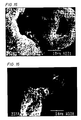
- a particle of this product is shown in Figure 12 (also see Figure 14) and has an overall diameter of approximately 50 microns and an aperture diameter of about 1 to 15 microns.
- Three cells of saccharomyces cerevisias (brewer's yeast) can be seen in the internal cavity. This product is referred to as"Product A".
- a second particulate product in accordance with the invention was prepared using the same starting kaolin and an identical method except that the spray drying conditions were altered to provide a product which was in the form of hollow spheres of substantially uniform overall diameter of about 75-80 microns.
- the mixture was sprayed into the chamber of the spray dryer by means of an atomiser of different design at a rate of 27-36 litres per minute.
- the inlet temperature was 400°C and the outlet temperature 115°C.
- the final product consisted of hollow particles of overall diameter 75-80 microns each having at least one aperture of diameter in the range form 20-30 microns.
- the pores between the mullite needles constituting the shell of the particles were approximately 0.5 microns in width and the volume of the internal cavity was approximately 70% of the overall volume.
- a particle of this product is shown in Figure 13 and has an overall diameter of about 75 to 80 microns and an aperture diameter of about 20 to 30 microns.
- the "warts" on the surface of the particle are fine particles which have adhered to the outer surface of the hollow particle during processing.
- This product is referred to as "Product B”.
- a high performance liquid chromatography column identical to that described in Example 2 was packed with Product A under the same conditions as in Example 10 and the resistance of the particulate product to chemical attack by phosphate ions was tested by passing a buffer solution identical to that used in Example 10 through the column at a steady flow rate of 9 ml. min ⁇ 1 for 25 hours.
- the back pressure caused by the packing was measured at hourly intervals and was found to remain constant at about 185 psi (1.28 MPa) again indicating that there was no breakdown of the particulate material to form fine particles which would block the pores of the sintered stainless steel disc.
- a standard 20 ml syringe of internal diameter 20 mm was packed with 3.5 g of Product A and different volumes of suspension of brewer's yeast cells in a buffer solution were forced through the packed bed in aliquots of 10 ml by means of the syringe plunger at an approximate linear speed of 10 mm.s ⁇ 1.
- the suspension consisted of 30 g/litre of yeast in 0.2M potassium phosphate solution at pH 7.0. After each volume of the suspension had been forced through the bed, the column was washed with 100 ml of 0.2M potassium phosphate solution and the bed was ejected from the syringe and samples taken from the top and bottom of the bed were assayed for protein content by the Folin method as described by O.H.
- the bulk density of Product A is 0.55g.ml ⁇ 1 and the loading capacity per unit volume was therefore about 19.3 grams of wet cells per litre of wet particulate product.
- the experiment was also repeated using as the packing material a commercial diatomaceous earth biological catalyst support material.
- the greatest loading of yeast cells for this material was about 52 mg of yeast per g. of catalyst support but as the bulk density of this material was only 0.35g.ml ⁇ 1 the loading capacity per unit volume was about 18.2g of wet cells per litre of wet catalyst support.
- the reason that the yeast cells are concentrated at the top of the commercial catalyst support is that the yeast cells tend to be collected by a filtration effect rather than by hydrodynamic effects.
- a standard 20 ml syringe of internal diameter 20 mm was packed with 7 g of Product A and 200 ml of the same suspension of brewers' yeast cells as was used in Example 12 was passed through the packed bed in aliquots of 10 ml by means of the plunger of the syringe. The bed was then flushed with 200 ml of 0.2M potassium phosphate buffer solution to remove any yeast cells which had not been captured and retained by the particulate product. The immobilised yeast cells were then cultured by passing through the bed every hour 10 ml of suspension containing 0.1% by weight of yeast extract and 1% by weight of glucose in 0.2M potassium phosphate solution.
Landscapes
- Chemical & Material Sciences (AREA)
- Engineering & Computer Science (AREA)
- Ceramic Engineering (AREA)
- Organic Chemistry (AREA)
- Genetics & Genomics (AREA)
- Materials Engineering (AREA)
- Structural Engineering (AREA)
- Health & Medical Sciences (AREA)
- Life Sciences & Earth Sciences (AREA)
- Bioinformatics & Cheminformatics (AREA)
- Zoology (AREA)
- Wood Science & Technology (AREA)
- Inorganic Chemistry (AREA)
- Microbiology (AREA)
- Biotechnology (AREA)
- Biomedical Technology (AREA)
- Biochemistry (AREA)
- General Engineering & Computer Science (AREA)
- General Health & Medical Sciences (AREA)
- Silicates, Zeolites, And Molecular Sieves (AREA)
- Solid-Sorbent Or Filter-Aiding Compositions (AREA)
- Glass Compositions (AREA)
- Materials For Medical Uses (AREA)
- Porous Artificial Stone Or Porous Ceramic Products (AREA)
- Polymers With Sulfur, Phosphorus Or Metals In The Main Chain (AREA)
- Macromolecular Compounds Obtained By Forming Nitrogen-Containing Linkages In General (AREA)
- Prostheses (AREA)
Priority Applications (1)
| Application Number | Priority Date | Filing Date | Title |
|---|---|---|---|
| AT88308675T ATE88451T1 (de) | 1987-09-24 | 1988-09-20 | Poroese anorganische materialien. |
Applications Claiming Priority (2)
| Application Number | Priority Date | Filing Date | Title |
|---|---|---|---|
| GB8722451 | 1987-09-24 | ||
| GB878722451A GB8722451D0 (en) | 1987-09-24 | 1987-09-24 | Biological support |
Publications (3)
| Publication Number | Publication Date |
|---|---|
| EP0314290A2 true EP0314290A2 (de) | 1989-05-03 |
| EP0314290A3 EP0314290A3 (en) | 1989-12-13 |
| EP0314290B1 EP0314290B1 (de) | 1993-04-21 |
Family
ID=10624292
Family Applications (1)
| Application Number | Title | Priority Date | Filing Date |
|---|---|---|---|
| EP88308675A Expired - Lifetime EP0314290B1 (de) | 1987-09-24 | 1988-09-20 | Poröse anorganische Materialien |
Country Status (9)
| Country | Link |
|---|---|
| US (1) | US4937210A (de) |
| EP (1) | EP0314290B1 (de) |
| JP (1) | JPH01157474A (de) |
| AT (1) | ATE88451T1 (de) |
| AU (1) | AU615212B2 (de) |
| BR (1) | BR8804933A (de) |
| CA (1) | CA1314907C (de) |
| DE (1) | DE3880433T2 (de) |
| GB (2) | GB8722451D0 (de) |
Cited By (2)
| Publication number | Priority date | Publication date | Assignee | Title |
|---|---|---|---|---|
| EP0318236A3 (en) * | 1987-11-27 | 1990-04-25 | Ecc International Limited | Porous inorganic materials |
| WO2001039887A3 (en) * | 1999-12-02 | 2002-04-18 | Associated Cement Companies Lt | Process for making macro porous ceramic spheres and products made therefrom |
Families Citing this family (28)
| Publication number | Priority date | Publication date | Assignee | Title |
|---|---|---|---|---|
| GB8803413D0 (en) * | 1988-02-15 | 1988-03-16 | Ecc Int Ltd | Biological support |
| GB2250508B (en) * | 1990-12-06 | 1995-01-04 | Ecc Int Ltd | Cellular inorganic material |
| US5326734A (en) * | 1990-12-17 | 1994-07-05 | Exxon Research & Engineering Co. | Pillared interlayered kandite clay compositions |
| GB9220561D0 (en) * | 1992-09-29 | 1992-11-11 | Ecc Int Ltd | Immobilisation of material |
| GB9222638D0 (en) * | 1992-10-28 | 1992-12-09 | Ecc Int Ltd | Porous ceramic granules |
| KR100200612B1 (ko) * | 1996-07-31 | 1999-06-15 | 윤종용 | 다공성 복합 산화물의 제조 방법 |
| US5997626A (en) * | 1998-05-01 | 1999-12-07 | Engelhard Corporation | Low abrasion calcined kaolin pigments and enhanced filtration method |
| ATE368017T1 (de) | 2000-03-14 | 2007-08-15 | James Hardie Int Finance Bv | Faserzementbaumaterialien mit zusatzstoffen niedriger dichte |
| WO2001073125A2 (en) * | 2000-03-24 | 2001-10-04 | Lyles Mark B | High throughput screening array containing porous material |
| JP4227347B2 (ja) * | 2002-03-29 | 2009-02-18 | 日本碍子株式会社 | 多孔質材料及びその製造方法 |
| US7455798B2 (en) * | 2002-08-23 | 2008-11-25 | James Hardie International Finance B.V. | Methods for producing low density products |
| AU2003236422A1 (en) | 2002-08-23 | 2004-03-11 | James Hardie International Finance B.V. | Synthetic hollow microspheres |
| MXPA05003691A (es) | 2002-10-07 | 2005-11-17 | James Hardie Int Finance Bv | Material mixto de fibrocemento de densidad media durable. |
| EP1578528A1 (de) * | 2002-12-17 | 2005-09-28 | Japan Science and Technology Agency | Herstellung von porösem metall- oder metalloxidmaterial unter verwendung von dextran oder ähnlichem kohlenhydratpolymer |
| US20090156385A1 (en) | 2003-10-29 | 2009-06-18 | Giang Biscan | Manufacture and use of engineered carbide and nitride composites |
| US7998571B2 (en) | 2004-07-09 | 2011-08-16 | James Hardie Technology Limited | Composite cement article incorporating a powder coating and methods of making same |
| US20060091070A1 (en) * | 2004-10-28 | 2006-05-04 | Aufderheide Ronald C | Filters made from chemical binders and microspheres |
| WO2006091929A2 (en) | 2005-02-24 | 2006-08-31 | James Hardie International Finance B.V. | Alkali resistant glass compositions |
| US8609244B2 (en) | 2005-12-08 | 2013-12-17 | James Hardie Technology Limited | Engineered low-density heterogeneous microparticles and methods and formulations for producing the microparticles |
| US8993462B2 (en) | 2006-04-12 | 2015-03-31 | James Hardie Technology Limited | Surface sealed reinforced building element |
| EP2167209A4 (de) * | 2007-07-18 | 2013-03-06 | Univ Nanyang Tech | Hohle poröse mikrokügelchen |
| US8209927B2 (en) | 2007-12-20 | 2012-07-03 | James Hardie Technology Limited | Structural fiber cement building materials |
| US8586179B1 (en) * | 2010-04-09 | 2013-11-19 | The Boeing Company | Mechanical attachment for micro-truss actively cooled structural insulation layer |
| KR101921358B1 (ko) * | 2011-05-12 | 2018-11-22 | 다우 글로벌 테크놀로지스 엘엘씨 | 멀라이트 물체 및 멀라이트 물체의 제조 방법 |
| JP2017066022A (ja) * | 2015-09-29 | 2017-04-06 | Toto株式会社 | 坏土粒およびセラミック板 |
| CN111453712A (zh) * | 2019-01-21 | 2020-07-28 | 金华晨阳科技有限公司 | 一种具有多级孔道结构的中空碳球及其制备方法 |
| CN115141022A (zh) * | 2022-07-28 | 2022-10-04 | 江苏正力新能电池技术有限公司 | 一种多孔陶瓷底托板的制备方法、多孔陶瓷底托板及电池 |
| US12325651B2 (en) * | 2023-01-23 | 2025-06-10 | United Arab Emirates University | Biodesalination using microbial attached growth cultivation |
Family Cites Families (13)
| Publication number | Priority date | Publication date | Assignee | Title |
|---|---|---|---|---|
| NL43339C (de) * | 1934-12-18 | |||
| US2556622A (en) * | 1947-08-18 | 1951-06-12 | William H Koch | Railway tie and rail fastener |
| US2939764A (en) * | 1958-03-07 | 1960-06-07 | Vaw Ver Aluminium Werke Ag | Method for reducing the silica content of alumina-containing materials of the clay type |
| US3607025A (en) * | 1968-04-25 | 1971-09-21 | Du Pont | Silica-deficient mullite fiber and a process for its production |
| GB1457890A (en) * | 1973-11-28 | 1976-12-08 | Monsanto Ltd | Chromatography |
| DE2647701A1 (de) * | 1975-10-22 | 1977-04-28 | Atomic Energy Authority Uk | Sole und gele und verfahren zu ihrer herstellung |
| IN162186B (de) * | 1983-06-20 | 1988-04-16 | Engelhard Corp | |
| CA1253129A (en) * | 1984-02-09 | 1989-04-25 | Thomas R. Jones | Porous inorganic materials |
| DE3410650A1 (de) * | 1984-03-23 | 1985-10-03 | Kernforschungsanlage Jülich GmbH, 5170 Jülich | Mit mikroorganismen bewachsene poroese anorganische traeger, verfahren zur immobilisierung von mikroorganismen und dafuer geeignete traegerkoerper |
| US4601997A (en) * | 1984-12-14 | 1986-07-22 | Engelhard Corporation | Porous mullite |
| GB8511048D0 (en) * | 1985-05-01 | 1985-06-12 | Unilever Plc | Inorganic structures |
| DE3880273T2 (de) * | 1987-11-27 | 1993-07-29 | Ecc Int Ltd | Poroese anorganische materialien. |
| DE4320644C1 (de) * | 1993-06-22 | 1994-10-13 | Geyer Werkzeugbau | Verfahren zur Entformung von Spritzgießhohlkörpern mit Hinterschneidungen in der Innenkontur und zugehöriger Formkern |
-
1987
- 1987-09-24 GB GB878722451A patent/GB8722451D0/en active Pending
-
1988
- 1988-09-20 EP EP88308675A patent/EP0314290B1/de not_active Expired - Lifetime
- 1988-09-20 DE DE88308675T patent/DE3880433T2/de not_active Expired - Fee Related
- 1988-09-20 GB GB8822079A patent/GB2210361B/en not_active Expired - Lifetime
- 1988-09-20 AT AT88308675T patent/ATE88451T1/de not_active IP Right Cessation
- 1988-09-21 AU AU22435/88A patent/AU615212B2/en not_active Ceased
- 1988-09-22 JP JP63238669A patent/JPH01157474A/ja active Pending
- 1988-09-23 US US07/248,422 patent/US4937210A/en not_active Expired - Fee Related
- 1988-09-23 CA CA000578339A patent/CA1314907C/en not_active Expired - Fee Related
- 1988-09-23 BR BR8804933A patent/BR8804933A/pt not_active Application Discontinuation
Cited By (2)
| Publication number | Priority date | Publication date | Assignee | Title |
|---|---|---|---|---|
| EP0318236A3 (en) * | 1987-11-27 | 1990-04-25 | Ecc International Limited | Porous inorganic materials |
| WO2001039887A3 (en) * | 1999-12-02 | 2002-04-18 | Associated Cement Companies Lt | Process for making macro porous ceramic spheres and products made therefrom |
Also Published As
| Publication number | Publication date |
|---|---|
| EP0314290B1 (de) | 1993-04-21 |
| ATE88451T1 (de) | 1993-05-15 |
| JPH01157474A (ja) | 1989-06-20 |
| AU615212B2 (en) | 1991-09-26 |
| GB8722451D0 (en) | 1987-10-28 |
| EP0314290A3 (en) | 1989-12-13 |
| GB2210361B (en) | 1991-12-18 |
| BR8804933A (pt) | 1989-05-02 |
| GB8822079D0 (en) | 1988-10-19 |
| CA1314907C (en) | 1993-03-23 |
| US4937210A (en) | 1990-06-26 |
| DE3880433T2 (de) | 1993-10-14 |
| GB2210361A (en) | 1989-06-07 |
| AU2243588A (en) | 1989-04-06 |
| DE3880433D1 (de) | 1993-05-27 |
Similar Documents
| Publication | Publication Date | Title |
|---|---|---|
| US4937210A (en) | Production of porous inorganic materials | |
| US4826790A (en) | Production of porous mullite bodies | |
| EP0318236B1 (de) | Poröse anorganische Materialien | |
| US4937209A (en) | Porous inorganic materials | |
| US8906404B2 (en) | Three dimensional porous polymeric structure having a pore-size range of 1/10 to 10 times the average pore size | |
| JP3473852B2 (ja) | スーパー細孔性ポリサッカライドゲル | |
| Burns et al. | Dried calcium alginate/magnetite spheres: a new support for chromatographic separations and enzyme immobilization | |
| JPS6443530A (en) | Porous cellulose particle and its production | |
| US4581338A (en) | Preparation of catalyst supports and materials produced thereby | |
| US4980334A (en) | Macroporous alumina/diatomaceous earth bio-supports | |
| KR900007661B1 (ko) | 신규한 다공성 압출형 생체담체물 | |
| US5614401A (en) | Enzyme immobilizing carrier containing kaolin | |
| JP3256621B2 (ja) | 酵素固定化用担体の製造方法 | |
| US5756415A (en) | Method of making a enzyme immobilizing carrier | |
| EP0473699A1 (de) | Aus partikeln bestehendes material. | |
| RU2079468C1 (ru) | Способ получения керамических сфероидов | |
| GB2250508A (en) | Cellular inorganic material | |
| JP3844374B2 (ja) | バイオリアクター用担体およびその製造方法 | |
| CN114632503A (zh) | 小颗粒囊泡孔氧化铝材料及其制备方法 | |
| DD249921A1 (de) | Verfahren zur herstellung immonilisierter enzyme an silikatischen traegermaterialien |
Legal Events
| Date | Code | Title | Description |
|---|---|---|---|
| PUAI | Public reference made under article 153(3) epc to a published international application that has entered the european phase |
Free format text: ORIGINAL CODE: 0009012 |
|
| 17P | Request for examination filed |
Effective date: 19881007 |
|
| AK | Designated contracting states |
Kind code of ref document: A2 Designated state(s): AT BE CH DE ES FR GR IT LI LU NL SE |
|
| PUAL | Search report despatched |
Free format text: ORIGINAL CODE: 0009013 |
|
| AK | Designated contracting states |
Kind code of ref document: A3 Designated state(s): AT BE CH DE ES FR GR IT LI LU NL SE |
|
| 17Q | First examination report despatched |
Effective date: 19910729 |
|
| RAP1 | Party data changed (applicant data changed or rights of an application transferred) |
Owner name: ECC INTERNATIONAL LIMITED |
|
| GRAA | (expected) grant |
Free format text: ORIGINAL CODE: 0009210 |
|
| AK | Designated contracting states |
Kind code of ref document: B1 Designated state(s): AT BE CH DE ES FR GR IT LI LU NL SE |
|
| PG25 | Lapsed in a contracting state [announced via postgrant information from national office to epo] |
Ref country code: GR Free format text: LAPSE BECAUSE OF FAILURE TO SUBMIT A TRANSLATION OF THE DESCRIPTION OR TO PAY THE FEE WITHIN THE PRESCRIBED TIME-LIMIT Effective date: 19930421 Ref country code: ES Free format text: THE PATENT HAS BEEN ANNULLED BY A DECISION OF A NATIONAL AUTHORITY Effective date: 19930421 |
|
| REF | Corresponds to: |
Ref document number: 88451 Country of ref document: AT Date of ref document: 19930515 Kind code of ref document: T |
|
| ITF | It: translation for a ep patent filed | ||
| REF | Corresponds to: |
Ref document number: 3880433 Country of ref document: DE Date of ref document: 19930527 |
|
| ET | Fr: translation filed | ||
| EPTA | Lu: last paid annual fee | ||
| PLBE | No opposition filed within time limit |
Free format text: ORIGINAL CODE: 0009261 |
|
| STAA | Information on the status of an ep patent application or granted ep patent |
Free format text: STATUS: NO OPPOSITION FILED WITHIN TIME LIMIT |
|
| 26N | No opposition filed | ||
| EAL | Se: european patent in force in sweden |
Ref document number: 88308675.3 |
|
| PGFP | Annual fee paid to national office [announced via postgrant information from national office to epo] |
Ref country code: FR Payment date: 19960808 Year of fee payment: 9 |
|
| PGFP | Annual fee paid to national office [announced via postgrant information from national office to epo] |
Ref country code: BE Payment date: 19960813 Year of fee payment: 9 |
|
| PGFP | Annual fee paid to national office [announced via postgrant information from national office to epo] |
Ref country code: SE Payment date: 19960814 Year of fee payment: 9 Ref country code: AT Payment date: 19960814 Year of fee payment: 9 |
|
| PGFP | Annual fee paid to national office [announced via postgrant information from national office to epo] |
Ref country code: DE Payment date: 19960826 Year of fee payment: 9 |
|
| PGFP | Annual fee paid to national office [announced via postgrant information from national office to epo] |
Ref country code: CH Payment date: 19960827 Year of fee payment: 9 |
|
| PGFP | Annual fee paid to national office [announced via postgrant information from national office to epo] |
Ref country code: NL Payment date: 19960830 Year of fee payment: 9 |
|
| PGFP | Annual fee paid to national office [announced via postgrant information from national office to epo] |
Ref country code: LU Payment date: 19960901 Year of fee payment: 9 |
|
| PG25 | Lapsed in a contracting state [announced via postgrant information from national office to epo] |
Ref country code: LU Free format text: LAPSE BECAUSE OF NON-PAYMENT OF DUE FEES Effective date: 19970920 Ref country code: AT Free format text: LAPSE BECAUSE OF NON-PAYMENT OF DUE FEES Effective date: 19970920 |
|
| PG25 | Lapsed in a contracting state [announced via postgrant information from national office to epo] |
Ref country code: SE Free format text: LAPSE BECAUSE OF NON-PAYMENT OF DUE FEES Effective date: 19970921 |
|
| PG25 | Lapsed in a contracting state [announced via postgrant information from national office to epo] |
Ref country code: LI Free format text: LAPSE BECAUSE OF NON-PAYMENT OF DUE FEES Effective date: 19970930 Ref country code: FR Free format text: THE PATENT HAS BEEN ANNULLED BY A DECISION OF A NATIONAL AUTHORITY Effective date: 19970930 Ref country code: CH Free format text: LAPSE BECAUSE OF NON-PAYMENT OF DUE FEES Effective date: 19970930 Ref country code: BE Free format text: LAPSE BECAUSE OF NON-PAYMENT OF DUE FEES Effective date: 19970930 |
|
| BERE | Be: lapsed |
Owner name: ECC INTERNATIONAL LTD Effective date: 19970930 |
|
| PG25 | Lapsed in a contracting state [announced via postgrant information from national office to epo] |
Ref country code: NL Free format text: LAPSE BECAUSE OF NON-PAYMENT OF DUE FEES Effective date: 19980401 |
|
| REG | Reference to a national code |
Ref country code: CH Ref legal event code: PL |
|
| NLV4 | Nl: lapsed or anulled due to non-payment of the annual fee |
Effective date: 19980401 |
|
| PG25 | Lapsed in a contracting state [announced via postgrant information from national office to epo] |
Ref country code: DE Free format text: LAPSE BECAUSE OF NON-PAYMENT OF DUE FEES Effective date: 19980603 |
|
| EUG | Se: european patent has lapsed |
Ref document number: 88308675.3 |
|
| REG | Reference to a national code |
Ref country code: FR Ref legal event code: ST |
|
| PG25 | Lapsed in a contracting state [announced via postgrant information from national office to epo] |
Ref country code: IT Free format text: LAPSE BECAUSE OF NON-PAYMENT OF DUE FEES;WARNING: LAPSES OF ITALIAN PATENTS WITH EFFECTIVE DATE BEFORE 2007 MAY HAVE OCCURRED AT ANY TIME BEFORE 2007. THE CORRECT EFFECTIVE DATE MAY BE DIFFERENT FROM THE ONE RECORDED. Effective date: 20050920 |