EP0314311A2 - Articles conducteurs d'électricité obtenus à partir de polymères difficilement moulables - Google Patents
Articles conducteurs d'électricité obtenus à partir de polymères difficilement moulables Download PDFInfo
- Publication number
- EP0314311A2 EP0314311A2 EP88309121A EP88309121A EP0314311A2 EP 0314311 A2 EP0314311 A2 EP 0314311A2 EP 88309121 A EP88309121 A EP 88309121A EP 88309121 A EP88309121 A EP 88309121A EP 0314311 A2 EP0314311 A2 EP 0314311A2
- Authority
- EP
- European Patent Office
- Prior art keywords
- carrier
- polymer
- intractable
- polymerization
- gel
- Prior art date
- Legal status (The legal status is an assumption and is not a legal conclusion. Google has not performed a legal analysis and makes no representation as to the accuracy of the status listed.)
- Granted
Links
- 229920000642 polymer Polymers 0.000 title claims abstract description 95
- 238000000034 method Methods 0.000 title claims description 38
- HSFWRNGVRCDJHI-UHFFFAOYSA-N alpha-acetylene Natural products C#C HSFWRNGVRCDJHI-UHFFFAOYSA-N 0.000 claims abstract description 26
- 239000000178 monomer Substances 0.000 claims abstract description 23
- 229920001197 polyacetylene Polymers 0.000 claims abstract description 22
- 239000002904 solvent Substances 0.000 claims abstract description 18
- 238000006116 polymerization reaction Methods 0.000 claims description 32
- 239000002131 composite material Substances 0.000 claims description 31
- 239000000463 material Substances 0.000 claims description 26
- 230000008569 process Effects 0.000 claims description 16
- 238000001879 gelation Methods 0.000 claims description 12
- 239000000203 mixture Substances 0.000 claims description 8
- 229920001577 copolymer Polymers 0.000 claims description 5
- 229920000767 polyaniline Polymers 0.000 claims description 4
- 230000002829 reductive effect Effects 0.000 claims description 4
- 230000001590 oxidative effect Effects 0.000 claims description 3
- 238000009877 rendering Methods 0.000 claims description 3
- 229920000547 conjugated polymer Polymers 0.000 claims 3
- 230000003197 catalytic effect Effects 0.000 claims 2
- 239000003505 polymerization initiator Substances 0.000 claims 2
- 239000000835 fiber Substances 0.000 abstract description 58
- 229920001940 conductive polymer Polymers 0.000 abstract description 21
- 239000002322 conducting polymer Substances 0.000 abstract description 19
- 230000000379 polymerizing effect Effects 0.000 abstract 1
- 239000000499 gel Substances 0.000 description 58
- 239000000243 solution Substances 0.000 description 39
- XKRFYHLGVUSROY-UHFFFAOYSA-N Argon Chemical compound [Ar] XKRFYHLGVUSROY-UHFFFAOYSA-N 0.000 description 24
- -1 polyparaphenylene Polymers 0.000 description 23
- 239000003054 catalyst Substances 0.000 description 16
- 230000015572 biosynthetic process Effects 0.000 description 15
- 239000004698 Polyethylene Substances 0.000 description 14
- 229920000573 polyethylene Polymers 0.000 description 13
- 239000000523 sample Substances 0.000 description 13
- 229910052786 argon Inorganic materials 0.000 description 12
- NNBZCPXTIHJBJL-UHFFFAOYSA-N decalin Chemical compound C1CCCC2CCCCC21 NNBZCPXTIHJBJL-UHFFFAOYSA-N 0.000 description 12
- 239000007788 liquid Substances 0.000 description 12
- 239000000376 reactant Substances 0.000 description 12
- PAYRUJLWNCNPSJ-UHFFFAOYSA-N Aniline Chemical compound NC1=CC=CC=C1 PAYRUJLWNCNPSJ-UHFFFAOYSA-N 0.000 description 8
- 230000001427 coherent effect Effects 0.000 description 8
- 238000005259 measurement Methods 0.000 description 8
- 229920003366 poly(p-phenylene terephthalamide) Polymers 0.000 description 8
- 229920002521 macromolecule Polymers 0.000 description 7
- OKKJLVBELUTLKV-UHFFFAOYSA-N Methanol Chemical compound OC OKKJLVBELUTLKV-UHFFFAOYSA-N 0.000 description 6
- YXFVVABEGXRONW-UHFFFAOYSA-N Toluene Chemical compound CC1=CC=CC=C1 YXFVVABEGXRONW-UHFFFAOYSA-N 0.000 description 6
- 238000002360 preparation method Methods 0.000 description 6
- PXXNTAGJWPJAGM-UHFFFAOYSA-N vertaline Natural products C1C2C=3C=C(OC)C(OC)=CC=3OC(C=C3)=CC=C3CCC(=O)OC1CC1N2CCCC1 PXXNTAGJWPJAGM-UHFFFAOYSA-N 0.000 description 5
- IJGRMHOSHXDMSA-UHFFFAOYSA-N Atomic nitrogen Chemical compound N#N IJGRMHOSHXDMSA-UHFFFAOYSA-N 0.000 description 4
- 239000004760 aramid Substances 0.000 description 4
- 229920003235 aromatic polyamide Polymers 0.000 description 4
- 125000002534 ethynyl group Chemical group [H]C#C* 0.000 description 4
- 239000011521 glass Substances 0.000 description 4
- JRZJOMJEPLMPRA-UHFFFAOYSA-N olefin Natural products CCCCCCCC=C JRZJOMJEPLMPRA-UHFFFAOYSA-N 0.000 description 4
- 238000005406 washing Methods 0.000 description 4
- ZWEHNKRNPOVVGH-UHFFFAOYSA-N 2-Butanone Chemical compound CCC(C)=O ZWEHNKRNPOVVGH-UHFFFAOYSA-N 0.000 description 3
- UHOVQNZJYSORNB-UHFFFAOYSA-N Benzene Chemical compound C1=CC=CC=C1 UHOVQNZJYSORNB-UHFFFAOYSA-N 0.000 description 3
- QAOWNCQODCNURD-UHFFFAOYSA-N Sulfuric acid Chemical compound OS(O)(=O)=O QAOWNCQODCNURD-UHFFFAOYSA-N 0.000 description 3
- 229910001870 ammonium persulfate Inorganic materials 0.000 description 3
- 239000000969 carrier Substances 0.000 description 3
- 238000006243 chemical reaction Methods 0.000 description 3
- 230000000694 effects Effects 0.000 description 3
- 238000000605 extraction Methods 0.000 description 3
- 239000007789 gas Substances 0.000 description 3
- 239000002480 mineral oil Substances 0.000 description 3
- 235000010446 mineral oil Nutrition 0.000 description 3
- 230000003287 optical effect Effects 0.000 description 3
- 229920002451 polyvinyl alcohol Polymers 0.000 description 3
- 238000012545 processing Methods 0.000 description 3
- 238000010561 standard procedure Methods 0.000 description 3
- 238000003756 stirring Methods 0.000 description 3
- 229910021578 Iron(III) chloride Inorganic materials 0.000 description 2
- 239000004743 Polypropylene Substances 0.000 description 2
- 239000004372 Polyvinyl alcohol Substances 0.000 description 2
- KAESVJOAVNADME-UHFFFAOYSA-N Pyrrole Chemical compound C=1C=CNC=1 KAESVJOAVNADME-UHFFFAOYSA-N 0.000 description 2
- YTPLMLYBLZKORZ-UHFFFAOYSA-N Thiophene Chemical group C=1C=CSC=1 YTPLMLYBLZKORZ-UHFFFAOYSA-N 0.000 description 2
- 238000007792 addition Methods 0.000 description 2
- ROOXNKNUYICQNP-UHFFFAOYSA-N ammonium persulfate Chemical compound [NH4+].[NH4+].[O-]S(=O)(=O)OOS([O-])(=O)=O ROOXNKNUYICQNP-UHFFFAOYSA-N 0.000 description 2
- 235000019395 ammonium persulphate Nutrition 0.000 description 2
- 125000003118 aryl group Chemical group 0.000 description 2
- 238000005345 coagulation Methods 0.000 description 2
- 230000015271 coagulation Effects 0.000 description 2
- 239000006185 dispersion Substances 0.000 description 2
- 229940032296 ferric chloride Drugs 0.000 description 2
- 230000004927 fusion Effects 0.000 description 2
- 238000011065 in-situ storage Methods 0.000 description 2
- RBTARNINKXHZNM-UHFFFAOYSA-K iron trichloride Chemical compound Cl[Fe](Cl)Cl RBTARNINKXHZNM-UHFFFAOYSA-K 0.000 description 2
- 238000002844 melting Methods 0.000 description 2
- 230000008018 melting Effects 0.000 description 2
- 229910052757 nitrogen Inorganic materials 0.000 description 2
- 239000003960 organic solvent Substances 0.000 description 2
- BASFCYQUMIYNBI-UHFFFAOYSA-N platinum Chemical compound [Pt] BASFCYQUMIYNBI-UHFFFAOYSA-N 0.000 description 2
- 229920000728 polyester Polymers 0.000 description 2
- 229920000098 polyolefin Polymers 0.000 description 2
- 229920001155 polypropylene Polymers 0.000 description 2
- 239000002243 precursor Substances 0.000 description 2
- 239000000047 product Substances 0.000 description 2
- QHGVXILFMXYDRS-UHFFFAOYSA-N pyraclofos Chemical compound C1=C(OP(=O)(OCC)SCCC)C=NN1C1=CC=C(Cl)C=C1 QHGVXILFMXYDRS-UHFFFAOYSA-N 0.000 description 2
- 230000027756 respiratory electron transport chain Effects 0.000 description 2
- 238000009987 spinning Methods 0.000 description 2
- 238000003786 synthesis reaction Methods 0.000 description 2
- VZGDMQKNWNREIO-UHFFFAOYSA-N tetrachloromethane Chemical compound ClC(Cl)(Cl)Cl VZGDMQKNWNREIO-UHFFFAOYSA-N 0.000 description 2
- VOITXYVAKOUIBA-UHFFFAOYSA-N triethylaluminium Chemical compound CC[Al](CC)CC VOITXYVAKOUIBA-UHFFFAOYSA-N 0.000 description 2
- XLYOFNOQVPJJNP-UHFFFAOYSA-N water Substances O XLYOFNOQVPJJNP-UHFFFAOYSA-N 0.000 description 2
- CSSJQJWTYJODDJ-UHFFFAOYSA-N 3,10-dioxatricyclo[10.2.2.04,9]hexadeca-1(15),4,6,8,12(16),13-hexaene-2,11-dione Chemical compound O1C(=O)C(C=C2)=CC=C2C(=O)OC2=C1C=CC=C2 CSSJQJWTYJODDJ-UHFFFAOYSA-N 0.000 description 1
- XRASRVJYOMVDNP-UHFFFAOYSA-N 4-(7-azabicyclo[4.1.0]hepta-1,3,5-triene-7-carbonyl)benzamide Chemical compound C1=CC(C(=O)N)=CC=C1C(=O)N1C2=CC=CC=C21 XRASRVJYOMVDNP-UHFFFAOYSA-N 0.000 description 1
- ZCYVEMRRCGMTRW-UHFFFAOYSA-N 7553-56-2 Chemical compound [I] ZCYVEMRRCGMTRW-UHFFFAOYSA-N 0.000 description 1
- OKTJSMMVPCPJKN-UHFFFAOYSA-N Carbon Chemical compound [C] OKTJSMMVPCPJKN-UHFFFAOYSA-N 0.000 description 1
- 239000004705 High-molecular-weight polyethylene Substances 0.000 description 1
- 229920000271 Kevlar® Polymers 0.000 description 1
- 239000005662 Paraffin oil Substances 0.000 description 1
- 229920003171 Poly (ethylene oxide) Polymers 0.000 description 1
- 229920000265 Polyparaphenylene Polymers 0.000 description 1
- 229920000292 Polyquinoline Polymers 0.000 description 1
- 239000004793 Polystyrene Substances 0.000 description 1
- 229920000297 Rayon Polymers 0.000 description 1
- 239000004699 Ultra-high molecular weight polyethylene Substances 0.000 description 1
- 239000002253 acid Substances 0.000 description 1
- 150000007513 acids Chemical class 0.000 description 1
- 238000012644 addition polymerization Methods 0.000 description 1
- 238000005865 alkene metathesis reaction Methods 0.000 description 1
- 150000001336 alkenes Chemical class 0.000 description 1
- 125000000217 alkyl group Chemical group 0.000 description 1
- 229920006231 aramid fiber Polymers 0.000 description 1
- 238000005452 bending Methods 0.000 description 1
- 230000009286 beneficial effect Effects 0.000 description 1
- 229950005499 carbon tetrachloride Drugs 0.000 description 1
- 230000015556 catabolic process Effects 0.000 description 1
- 238000012512 characterization method Methods 0.000 description 1
- 238000010382 chemical cross-linking Methods 0.000 description 1
- 150000001875 compounds Chemical class 0.000 description 1
- 239000004020 conductor Substances 0.000 description 1
- 230000007423 decrease Effects 0.000 description 1
- 238000007872 degassing Methods 0.000 description 1
- 238000006731 degradation reaction Methods 0.000 description 1
- 238000011161 development Methods 0.000 description 1
- 238000009792 diffusion process Methods 0.000 description 1
- 238000007865 diluting Methods 0.000 description 1
- 238000004090 dissolution Methods 0.000 description 1
- 239000002019 doping agent Substances 0.000 description 1
- 229920006240 drawn fiber Polymers 0.000 description 1
- 229920001746 electroactive polymer Polymers 0.000 description 1
- 238000001493 electron microscopy Methods 0.000 description 1
- 230000007613 environmental effect Effects 0.000 description 1
- 238000001704 evaporation Methods 0.000 description 1
- 230000008020 evaporation Effects 0.000 description 1
- 238000001125 extrusion Methods 0.000 description 1
- 239000012467 final product Substances 0.000 description 1
- 239000010439 graphite Substances 0.000 description 1
- 229910002804 graphite Inorganic materials 0.000 description 1
- 238000010438 heat treatment Methods 0.000 description 1
- 239000002815 homogeneous catalyst Substances 0.000 description 1
- 239000012456 homogeneous solution Substances 0.000 description 1
- 229920001519 homopolymer Polymers 0.000 description 1
- 239000003999 initiator Substances 0.000 description 1
- 239000011630 iodine Substances 0.000 description 1
- 229910052740 iodine Inorganic materials 0.000 description 1
- 238000006317 isomerization reaction Methods 0.000 description 1
- 238000004519 manufacturing process Methods 0.000 description 1
- 229910052751 metal Inorganic materials 0.000 description 1
- 239000002184 metal Substances 0.000 description 1
- 150000002739 metals Chemical class 0.000 description 1
- 238000012986 modification Methods 0.000 description 1
- 230000004048 modification Effects 0.000 description 1
- 230000003647 oxidation Effects 0.000 description 1
- 238000007254 oxidation reaction Methods 0.000 description 1
- 238000005691 oxidative coupling reaction Methods 0.000 description 1
- 230000000704 physical effect Effects 0.000 description 1
- 239000004014 plasticizer Substances 0.000 description 1
- 229910052697 platinum Inorganic materials 0.000 description 1
- 238000012643 polycondensation polymerization Methods 0.000 description 1
- 229920000137 polyphosphoric acid Polymers 0.000 description 1
- 229920000128 polypyrrole Polymers 0.000 description 1
- 229920002223 polystyrene Polymers 0.000 description 1
- 229920001343 polytetrafluoroethylene Polymers 0.000 description 1
- 229920000123 polythiophene Polymers 0.000 description 1
- 238000007868 post-polymerization treatment Methods 0.000 description 1
- 230000002035 prolonged effect Effects 0.000 description 1
- 239000002964 rayon Substances 0.000 description 1
- 239000012429 reaction media Substances 0.000 description 1
- 230000009467 reduction Effects 0.000 description 1
- 238000006722 reduction reaction Methods 0.000 description 1
- 239000012047 saturated solution Substances 0.000 description 1
- 238000004626 scanning electron microscopy Methods 0.000 description 1
- 239000004065 semiconductor Substances 0.000 description 1
- 238000007493 shaping process Methods 0.000 description 1
- 235000011149 sulphuric acid Nutrition 0.000 description 1
- 239000000725 suspension Substances 0.000 description 1
- 230000008961 swelling Effects 0.000 description 1
- 230000002194 synthesizing effect Effects 0.000 description 1
- 238000012360 testing method Methods 0.000 description 1
- 238000012546 transfer Methods 0.000 description 1
- 230000009466 transformation Effects 0.000 description 1
- 229920000785 ultra high molecular weight polyethylene Polymers 0.000 description 1
- 238000005303 weighing Methods 0.000 description 1
Images

Classifications
-
- H—ELECTRICITY
- H01—ELECTRIC ELEMENTS
- H01B—CABLES; CONDUCTORS; INSULATORS; SELECTION OF MATERIALS FOR THEIR CONDUCTIVE, INSULATING OR DIELECTRIC PROPERTIES
- H01B1/00—Conductors or conductive bodies characterised by the conductive materials; Selection of materials as conductors
- H01B1/06—Conductors or conductive bodies characterised by the conductive materials; Selection of materials as conductors mainly consisting of other non-metallic substances
- H01B1/12—Conductors or conductive bodies characterised by the conductive materials; Selection of materials as conductors mainly consisting of other non-metallic substances organic substances
- H01B1/124—Intrinsically conductive polymers
- H01B1/128—Intrinsically conductive polymers comprising six-membered aromatic rings in the main chain, e.g. polyanilines, polyphenylenes
-
- C—CHEMISTRY; METALLURGY
- C08—ORGANIC MACROMOLECULAR COMPOUNDS; THEIR PREPARATION OR CHEMICAL WORKING-UP; COMPOSITIONS BASED THEREON
- C08G—MACROMOLECULAR COMPOUNDS OBTAINED OTHERWISE THAN BY REACTIONS ONLY INVOLVING UNSATURATED CARBON-TO-CARBON BONDS
- C08G73/00—Macromolecular compounds obtained by reactions forming a linkage containing nitrogen with or without oxygen or carbon in the main chain of the macromolecule, not provided for in groups C08G12/00 - C08G71/00
- C08G73/02—Polyamines
- C08G73/026—Wholly aromatic polyamines
- C08G73/0266—Polyanilines or derivatives thereof
-
- H—ELECTRICITY
- H01—ELECTRIC ELEMENTS
- H01B—CABLES; CONDUCTORS; INSULATORS; SELECTION OF MATERIALS FOR THEIR CONDUCTIVE, INSULATING OR DIELECTRIC PROPERTIES
- H01B1/00—Conductors or conductive bodies characterised by the conductive materials; Selection of materials as conductors
- H01B1/06—Conductors or conductive bodies characterised by the conductive materials; Selection of materials as conductors mainly consisting of other non-metallic substances
- H01B1/12—Conductors or conductive bodies characterised by the conductive materials; Selection of materials as conductors mainly consisting of other non-metallic substances organic substances
- H01B1/124—Intrinsically conductive polymers
- H01B1/125—Intrinsically conductive polymers comprising aliphatic main chains, e.g. polyactylenes
-
- Y—GENERAL TAGGING OF NEW TECHNOLOGICAL DEVELOPMENTS; GENERAL TAGGING OF CROSS-SECTIONAL TECHNOLOGIES SPANNING OVER SEVERAL SECTIONS OF THE IPC; TECHNICAL SUBJECTS COVERED BY FORMER USPC CROSS-REFERENCE ART COLLECTIONS [XRACs] AND DIGESTS
- Y10—TECHNICAL SUBJECTS COVERED BY FORMER USPC
- Y10T—TECHNICAL SUBJECTS COVERED BY FORMER US CLASSIFICATION
- Y10T428/00—Stock material or miscellaneous articles
- Y10T428/24—Structurally defined web or sheet [e.g., overall dimension, etc.]
-
- Y—GENERAL TAGGING OF NEW TECHNOLOGICAL DEVELOPMENTS; GENERAL TAGGING OF CROSS-SECTIONAL TECHNOLOGIES SPANNING OVER SEVERAL SECTIONS OF THE IPC; TECHNICAL SUBJECTS COVERED BY FORMER USPC CROSS-REFERENCE ART COLLECTIONS [XRACs] AND DIGESTS
- Y10—TECHNICAL SUBJECTS COVERED BY FORMER USPC
- Y10T—TECHNICAL SUBJECTS COVERED BY FORMER US CLASSIFICATION
- Y10T428/00—Stock material or miscellaneous articles
- Y10T428/24—Structurally defined web or sheet [e.g., overall dimension, etc.]
- Y10T428/24942—Structurally defined web or sheet [e.g., overall dimension, etc.] including components having same physical characteristic in differing degree
-
- Y—GENERAL TAGGING OF NEW TECHNOLOGICAL DEVELOPMENTS; GENERAL TAGGING OF CROSS-SECTIONAL TECHNOLOGIES SPANNING OVER SEVERAL SECTIONS OF THE IPC; TECHNICAL SUBJECTS COVERED BY FORMER USPC CROSS-REFERENCE ART COLLECTIONS [XRACs] AND DIGESTS
- Y10—TECHNICAL SUBJECTS COVERED BY FORMER USPC
- Y10T—TECHNICAL SUBJECTS COVERED BY FORMER US CLASSIFICATION
- Y10T428/00—Stock material or miscellaneous articles
- Y10T428/29—Coated or structually defined flake, particle, cell, strand, strand portion, rod, filament, macroscopic fiber or mass thereof
- Y10T428/2913—Rod, strand, filament or fiber
-
- Y—GENERAL TAGGING OF NEW TECHNOLOGICAL DEVELOPMENTS; GENERAL TAGGING OF CROSS-SECTIONAL TECHNOLOGIES SPANNING OVER SEVERAL SECTIONS OF THE IPC; TECHNICAL SUBJECTS COVERED BY FORMER USPC CROSS-REFERENCE ART COLLECTIONS [XRACs] AND DIGESTS
- Y10—TECHNICAL SUBJECTS COVERED BY FORMER USPC
- Y10T—TECHNICAL SUBJECTS COVERED BY FORMER US CLASSIFICATION
- Y10T428/00—Stock material or miscellaneous articles
- Y10T428/29—Coated or structually defined flake, particle, cell, strand, strand portion, rod, filament, macroscopic fiber or mass thereof
- Y10T428/2913—Rod, strand, filament or fiber
- Y10T428/2929—Bicomponent, conjugate, composite or collateral fibers or filaments [i.e., coextruded sheath-core or side-by-side type]
-
- Y—GENERAL TAGGING OF NEW TECHNOLOGICAL DEVELOPMENTS; GENERAL TAGGING OF CROSS-SECTIONAL TECHNOLOGIES SPANNING OVER SEVERAL SECTIONS OF THE IPC; TECHNICAL SUBJECTS COVERED BY FORMER USPC CROSS-REFERENCE ART COLLECTIONS [XRACs] AND DIGESTS
- Y10—TECHNICAL SUBJECTS COVERED BY FORMER USPC
- Y10T—TECHNICAL SUBJECTS COVERED BY FORMER US CLASSIFICATION
- Y10T428/00—Stock material or miscellaneous articles
- Y10T428/31504—Composite [nonstructural laminate]
- Y10T428/31855—Of addition polymer from unsaturated monomers
-
- Y—GENERAL TAGGING OF NEW TECHNOLOGICAL DEVELOPMENTS; GENERAL TAGGING OF CROSS-SECTIONAL TECHNOLOGIES SPANNING OVER SEVERAL SECTIONS OF THE IPC; TECHNICAL SUBJECTS COVERED BY FORMER USPC CROSS-REFERENCE ART COLLECTIONS [XRACs] AND DIGESTS
- Y10—TECHNICAL SUBJECTS COVERED BY FORMER USPC
- Y10T—TECHNICAL SUBJECTS COVERED BY FORMER US CLASSIFICATION
- Y10T428/00—Stock material or miscellaneous articles
- Y10T428/31504—Composite [nonstructural laminate]
- Y10T428/31855—Of addition polymer from unsaturated monomers
- Y10T428/31909—Next to second addition polymer from unsaturated monomers
- Y10T428/31913—Monoolefin polymer
Definitions
- This invention relates generally to conducting polymers, and more particularly relates to shaped articles such as fibers, tapes, rods and films which may be formed from conducting, normally "intractable", polymers.
- intractable conducting polymers with attractive electronic properties are polyacetylene ((CH) x ), and polyparaphenylene, (C6H4) x . These two systems have the highest density of pi electrons, and both can be doped either p-type (oxidation) or n-type (reduction).
- polyaniline or poly(paraphenyleneimineamine) (PPIA), and polypyrrole, which are air stable.
- poly(3-alkylthiophene) derivatives (P3ATs) of polythiophene are generally soluble and have been processed into films and fibers.
- P3ATs poly(3-alkylthiophene) derivatives
- these soluble conducting polymers Although important, these soluble conducting polymers also have a number of inherent disadvantages. Films, fibers, and the like formed from these polymers have a lower density of pi electrons. They also have reduced interchain electron transfer integrals, and the monomers have a higher molecular weight due to the addition of the flexible side group. Since the density of pi electrons is a critical parameter in determining the electronic properties of a material, ranging from the material's electrical conductivity to its nonlinear optics, the pi electron density should be maximized. Also, because macroscopic electrical properties are limited by the ability of electrons to move from chain to chain, interchain transfer should actually be optimized.
- shaped articles such as fibers, tapes and the like fabricated from intractable conducting polymers are generally unknown, and yet would be highly desirable in a wide range of technological applications. If, in addition, such shaped articles could be made with the polymer chains highly oriented along the draw direction, the resulting conducting polymers would be expected to be highly anisotropic with the desired electrical, optical, and nonlinear optical properties principally along the orientation direction.
- the Durham polyacetylene can be prepared as amorphous material, or it can be stretch-oriented simultaneously with conversion and isomerization into highly anisotropic free-standing fibers or films.
- a gel phase of the processable precursor polymer has been used to produce fibers which were subsequently converted to polyacetylene.
- the resulting materials had limited utility (e.g., maximum conductivity after doping of only 30 S/cm).
- the resulting Durham polyacetylene can be made so that it is a highly oriented material, it has specific disadvantages which limit its potential utility.
- the fibrillar morphology is not present in Durham polyacetylene; this material has a high density with no microstructure visible by electron microscopy. Consequently, the doping kinetics of Durham polyacetylene are extremely slow, limiting the areas of potential application.
- the electrical conductivity of the resulting material after doping is limited; maximum values in the literature are below 1500 S/cm.
- shaped conducting articles such as fibers, tapes, rods and films are fabricated from intractable polymers.
- a preshaped reaction medium is prepared, e.g., in the form of a fiber, tape, film, or the like. This is achieved by producing a mechanically coherent and stable gel comprised of a relatively minor amount of a "carrier" polymer dispersed within a suitable solvent.
- Various compounds necessary for the production of the final intractable polymer e.g., monomers and catalysts, may be introduced into the gel either (1) after the carrier gel is formed (for example, by diffusion) or (2) prior to gelation, typically by dispersion or dissolution in the carrier solution. Subsequently, the gel is transformed into the final product by the proper chemical reactions.
- the present invention involves two steps: (1) formation of a carrier gel; and (2) the polymerization of the intractable polymer. These steps may be carried out consecutively or simultaneously to give conductive, mechanically coherent articles, as will be described in detail in the following sections.
- the articles are also mechanically quite strong, generally displaying a tensile strength of at least 0.2 g/denier.
- an “intractable” or a “normally intractable” polymer is meant a polymer which cannot be dissolved, shaped or melted by conventional means.
- the articles disclosed herein are formed from polymers which are generally regarded as intractable.
- a "shaped article” as used herein is intended to mean a mechanically coherent object having a defined form, e.g., a fiber, rod, film or tape.
- the inventiveness of the present process lies in the ability to form shaped articles from conducting polymers that are "intractable”.
- a “conjugated” polymer as used herein means a polymer having a pi electron network which allows for electron transfer substantially throughout its molecular structure.
- a polymer "composite” as used herein means an structural admixture of two or more polymeric materials which may or may not be covalently bound to one another.
- An "oriented" material as used herein is intended to mean a polymeric structure in which individual polymer chains are substantially linear and parallel.
- “flexible chain” polymers are structures which allow for more variation in bending angle along the chains (characteristic ratio C ⁇ typically less than about 10), while “rigid rod” polymers tend to be straighter and more highly oriented (characteristic ratio C ⁇ typically greater than about 100). See P.J. Flory, Statistical Mechanics of Chain Molecules , N.Y.: Wiley & Sons - Interscience, 1969, p. 11.
- the criteria for the selection of the carrier polymer are as follows.
- the material should allow for the formation of mechanically coherent gels at low concentrations, and remain stable in solvents that are capable of dispersing, absorbing or dissolving the reactants for forming the final intractable polymer.
- Low concentrations of carrier polymer are preferred in order to minimize any negative effect on the properties of the final material; however, the concentration of carrier should be high enough, clearly, to allow for gel formation.
- Preferred carrier polymers are the high molecular weight M.W.>100,000) flexible chain polymers, such as polyethylene, isostatic polypropylene, poly(ethylene oxide), polystyrene, and the like.
- these macromolecular materials enable the formation of gels from a wide variety of liquids, including water, acids, and numerous polar and nonpolar organic solvents.
- Gels manufactured using these carrier polymers have sufficient mechanical strength at polymer concentrations as low as 1%, even as low as 0.1%, by volume.
- Mechanically coherent gels can also be prepared from lower molecular weight flexible chain polymers, but generally, higher concentrations of these carrier polymers are then required. Higher concentrations, as noted above, may have an undesirable effect on the properties of the final products.
- Selection of the carrier polymer is made primarily on the basis of compatibility with the final intractable polymer and its reactants, as well as with the solvent or solvents used.
- formation of polar intractable polymers generally require gels of polymers that are capable of dissolving or absorbing generally polar reactants.
- examples of such gels are those comprised of poly(vinyl alcohol), poly(ethlene oxide), poly-para(phenylene terephthalate), poly-para-benzamide, etc., and suitable liquids.
- nonpolar gels are selected, such as those containing polyethylene, polypropylene, poly(tetrafluoro ethylene), poly(butadiene), and the like.
- the initial concentration of the carrier polymer generally is selected above about 0.1% by volume, and more preferably above about 1% by volume.
- the concentration of the carrier polymer in the gel is below 50% by volume, and still more preferably below 25% by volume.
- a carrier solution is provided by dissolving a selected carrier polymer in a compatible solvent to a predetermined concentration (using the aforementioned guidelines).
- the solvent is one in which, clearly, the carrier polymer is substantially soluble and which, furthermore, will not in any way interfere with the gelation or polymerization process.
- the carrier solution is formed into the selected shape, e.g., a fiber, tape, rod, film or the like, by extrusion or by any other suitable method. After shaping of the carrier solution, (1) gelation is caused to occur; and (2) monomer(s) selected to form the final intractable polymer are introduced. Either step (1) or step (2) may be performed first.
- Gels can be formed from the carrier solution in various ways, e.g., through chemical cross-linking of macromolecules in solution, swelling of cross-linked macromolecules, thermoreversible gelation, and coagulation of polymer solutions.
- the two latter types of gel formation are preferred, although under certain experimental conditions, chemically crosslinked gels may be preferred as carrier gels.
- Thermoreversible gelation refers to the physical transformation from polymer solution to polymer gel upon lowering the temperature of a homogeneous polymer solution (although in exceptional cases a temperature elevation may be required).
- This mode of polymer gelation requires the preparation of a homogeneous solution of the selected carrier polymer in an appropriate solvent according to standard techniques known to those skilled in the art.
- the polymer solution is extruded or cast into fiber, rod or film form, and the temperature is lowered to below the gelation temperature of the polymer in order to form coherent gels.
- Polymerization generally requires (apart from suitable monomers) one or more catalysts or "initiators" to initiate reaction.
- the monomers are selected so as to give a conducting, pi electron conjugated macromolecule upon polymerization.
- Suitable reactants -- i.e., monomer and catalyst -- are introduced most conveniently prior to the formation of the carrier gels by dissolving them, together with the carrier polymer, in a common solvent. Subsequently, the solution is extruded and gelled, and polymerization is then carried out.
- Some monomers and catalysts are, however, not stable at the temperature at which the carrier polymer is dissolved or in the solvent which is used to produce the carrier gel.
- the reactants are introduced into the carrier gel after the latter is formed.
- the preformed carrier gel is soaked in liquid reactants or in solutions or dispersions of the reactants, or is exposed to gaseous reactants. This method requires miscibility of the reactants with the liquid present in the carrier polymer gel.
- the polymer synthesis reactions suitable for the embodiment of the invention include Ziegler-Natta olefin (particularly acetylene) polymerization, olefin metathesis (particularly acetylene) polymerization, free radical olefin addition polymerization, anionic olefin polymerization, cationic olefin polymerization and oxidative-coupling polymerization (particularly aniline, pyrrole and benzene).
- a polar carrier gel e.g., aramid, polyvinyl alcohol, etc.
- FeCl3 ferric chloride
- NH42S2O8 ammonium persulfate
- Certain condensation polymerizations such as polyquinoline formation are also suitable for this invention.
- a polar carrier gel e.g., aramid, polyvinyl alcohol, etc.
- the present process may be used to prepare conducting articles from either homopolymers or copolymers.
- only one type of monomer is introduced into the carrier gel.
- two or more types of monomers are used to form a copolymer.
- the carrier polymer may be allowed to remain in the article, forming a composite with the intractable polymeric material that is formed from one or more types of monomers.
- a particularly preferred composite is a copolymer of polyacetylene and polyethylene, wherein the polyacetylene is the "intractable" polymeric material and the polyethylene serves as the carrier polymer.
- the carrier polymer may be removed from the final article after polymerization.
- a shaped material typically includes, in addition to the intractable polymer, carrier polymer, unreacted monomer, catalyst, and the liquid of the carrier gel, all of which may be removed by washing, extraction and/or evaporation.
- the carrier polymer may be left in the composite to enhance mechanical strength, providing its presence does not significantly limit the properties of interest of the final article, e.g., its electrical conductivity. In such a case, the carrier polymer can be removed by extraction with an appropriate solvent.
- the shaped article thus fabricated from the intractable polymer is rendered conductive upon either p-type (oxidative) or n-type (reductive) doping, using standard dopants and techniques.
- the carrier polymer/intractable polymer composite to mechanical deformation, typically by stretching at least about 100% in length, prior to, during, or after polymerization.
- Deformation of polymeric materials is carried out in order to orient the macromolecules in the direction of draw, which results in improved mechanical properties.
- electrically conductive polymers not only do the mechanical properties improve, but, more importantly, the electrical conductivity also displays a drastic enhancement by tensile drawing.
- Deformation of the carrier polymer/intractable polymer composite can be performed either in its as-produced state or after extraction of all or some of the reactants.
- Deformation of the as-polymerized composite material is advantageous when residual unreacted monomer and/or liquid in the gel act as plasticizers. This will improve deformability and lead to higher molecular orientation and, therefore, enhanced physical properties.
- polymerization of the intractable material is carried out during deformation of the preformed carrier gel. This procedure is especially useful for systems comprising intractable polymers that are not readily post-drawn.
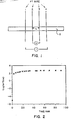
- Figure 1 shows a typical colinear four-probe configuration.
- the four contacts (labeled 1, 2, 3 and 4) are made on the surface of sample 5 in a linear array.
- a current (I) is passed through probes l and 4 and the voltage drop (V) across probes 2 and 3 is measured.
- the voltage measurement is usually carried out by means of a high impedance voltmeter and is considered to be essentially a zero-current measurement.
- the voltage measurement is usually carried out by means of a high-impedance voltmeter and is considered to be essentially a zerocurrent measurement.
- the contact resistance between probes 2 and 3 and the sample is minute since the current flow through the voltmeter is minute.
- Ohmic contacts were carried out using "Electrodag” contacts (3M Co., Mineapolis, MN) in which platinum electrodes were attached to the fiber or tapes by means of Electrodag 502--a suspension of finely divided graphite in methyl ethyl ketone.
- the resistance (R) of the fibers was first measured by the four-probe technique.
- the length (L) was measured with a ruler, and the cross-sectional area (A) was measured using a scanning electron microscope.
- the composite materials of the invention were tested using a differential scanning calorimeter (Mettler DSC TA3000). Samples of about 4 mg were used. The heating rate was 10°C/min. Melting temperatures and enthalpies of fusion were measured according to standard techniques. Where appropriate and possible, the enthalpy of fusion of the samples was employed to determine the quantity of the carrier polymer in the composite.
- the mechanical properties of the various materials described in the examples were tested at room temperature using an Instron Tensile Tester model 1122.
- the initial length of the test specimens was 10 mm, and the cross-head speed was 10 mm/min.
- the modulus of the fibers was taken to be the initial, or Young's, modulus.
- Cross-sectional areas of the fibers were measured by scanning electron microscopy on fractured samples.
- the denier linear density) of the samples was measured by weighing 100 mm of the fibers.
- a glass tube with an inner diameter of 20 mm and a length of 400 mm was connected to the flask, an a liquid fiber was drawn from the polyethylene solution into the tube.
- the liquid fiber rapidly cooled to ambient temperature and formed a gel filament. This operation was carried out under a flow of argon. Subsequently, the glass tube was closed and transferred and attached to the three-neck flask that contained the catalyst. The flask was tilted, which caused the gel fiber to be contacted with the catalyst solution. The gel was soaked at room temperature in this solution for a period of 1 hour. The excess catalyst solution was returned to the three-neck flask.
- the glass tube containing the polyethylene/catalyst gel fiber was removed from the three-neck flask and connected to a vacuum line, where it is degassed for 5 minutes. Subsequently the gel fiber was exposed to 600 Torr of acetylene (monomer) gas for 90 minutes to yield the polyethylene/polyacetylene composite fiber after the polymerization was completed, the remaining monomer gas was trapped in a container that was cooled with liquid nitrogen. The composite fiber was then degassed under vacuum for 10 minutes.
- the glass tube containing the fiber was then transferred into an argon-filled glove bag.
- the composite fiber was washed to remove the catalyst with purified toluene until the washing solution remained colorless.
- the composite fiber was of 420 denier.
- the polyacetylene content of the composite fiber was estimated to be 83% by weight, using the calorimetric method described above.
- the mechanical properties of the composite fiber were determined to be: Young's modulus, 6.8 g/den tensile strength, 0.2 g/den elongation at break, 75%.
- the polyacetylene/polyethylene composite fiber of Example 1 was doped at room temperature in a saturated solution of 2.65 g of iodine in 100 ml carbon tetrachloride for various periods of time.
- the doped fiber was dried and its electrical conductivity measured using a 4-probe device.
- the conductivity of the composite fiber reached a constant value of 450 S/cm after doping for about 45 min, as is illustrated in Figure 2.
- the as-spun polyethylene gel fiber was transferred to the catalyst solution and soaked for 1 hour at room temperature.
- the polyethylene/catalyst gel fiber was inserted in a container, degassed and then exposed to 51 cm Hg pressure of acetylene gas.
- the resulting polyacetylene/polyethylene composite fiber was washed with toluene until the washing solution became colorless. Subsequently, it was washed with methanol/5% HCl solution for 50 minutes and then for 30 minutes with methanol. Finally, the composite fiber was dried under a flow of argon and then under vacuum.
- the final fiber was doped according to the technique described in Example 2 and its electrical conductivity measured. It was found that the conductivity reached a maximum value of 1200 S/cm after about 1 hour of doping, as illustrated in Figure The composite fiber was of 390 denier.
- the polyacetylene content of the composite fiber was estimated to be 82% by weight, using the calorimetric method described above.
- the mechanical properties of the composite fiber were determined to be: Young's modulus, 3.5 g/den tensile strength, 0.7 g/den elongation at break, 170%
- Example 3 was repeated, except that, before the washing procedure, the as-polymerized composite fiber was drawn at room temperature, in argon, to 2.2 times its original length using a laboratory stretching frame. Subsequently, the drawn fiber was washed according to the procedure in Example 3. The final fiber was doped according to the technique described in Example 2, and its electrical conductivity measured. It was found that the conductivity reached a maximum value of 6000 S/cm after 1 hour of doping, as illustrated in Figure 4.
- the drawn composite fiber was of 180 denier. Its mechanical properties were determined to be: Young's modulus, 6 g/den tensile strength, 2.1 g/den elongation at break, 50%.
- Poly-para (Phenyleneterephthalamide) (PPTA, Kevlar® from DuPont of Wilmington, DE) was prepared as follows. 71.6 g of (97%) sulfuric acid was mixed with 1.07 g (PPTA) under stirring for 2 days at room temperature in a 250 ml flask. A viscous solution was obtained. This solution was transferred into a 0.75 oz syringe. The PPTA solution was spun using a syringe, to form a gel fiber, into a 1.2 N solution of aniline in 1 N HCl. The gel fiber was left for 2 hours to absorb the aniline monomer.
- PPTA Poly-para (Phenyleneterephthalamide)
- This PPTA/aniline gel fiber was transferred into an aqueous 0.025 N (NH4)2S2O8 solution and the monomer was allowed to polymerize for 2 hours.
- the resulting PPTA/polyaniline composite fiber was washed with 1 N H2SO4 solution, and then dried under vacuum for 24 hours.
- the electrical conductivity of said PPTA/polyaniline fiber was 0.3 S/cm.
Landscapes
- Chemical & Material Sciences (AREA)
- Physics & Mathematics (AREA)
- Spectroscopy & Molecular Physics (AREA)
- Health & Medical Sciences (AREA)
- Chemical Kinetics & Catalysis (AREA)
- Medicinal Chemistry (AREA)
- Polymers & Plastics (AREA)
- Organic Chemistry (AREA)
- Manufacture Of Macromolecular Shaped Articles (AREA)
- Treatments Of Macromolecular Shaped Articles (AREA)
- Polyoxymethylene Polymers And Polymers With Carbon-To-Carbon Bonds (AREA)
- Addition Polymer Or Copolymer, Post-Treatments, Or Chemical Modifications (AREA)
Applications Claiming Priority (2)
| Application Number | Priority Date | Filing Date | Title |
|---|---|---|---|
| US07/105,140 US5028354A (en) | 1987-10-05 | 1987-10-05 | Conductive articles of intractable polymers method for making |
| US105140 | 1987-10-05 |
Publications (3)
| Publication Number | Publication Date |
|---|---|
| EP0314311A2 true EP0314311A2 (fr) | 1989-05-03 |
| EP0314311A3 EP0314311A3 (en) | 1990-05-16 |
| EP0314311B1 EP0314311B1 (fr) | 1994-06-08 |
Family
ID=22304259
Family Applications (1)
| Application Number | Title | Priority Date | Filing Date |
|---|---|---|---|
| EP88309121A Expired - Lifetime EP0314311B1 (fr) | 1987-10-05 | 1988-09-30 | Articles conducteurs d'électricité obtenus à partir de polymères difficilement moulables |
Country Status (7)
| Country | Link |
|---|---|
| US (2) | US5028354A (fr) |
| EP (1) | EP0314311B1 (fr) |
| JP (1) | JPH01221805A (fr) |
| AT (1) | ATE107074T1 (fr) |
| CA (1) | CA1293842C (fr) |
| DE (1) | DE3850041T2 (fr) |
| ES (1) | ES2064359T3 (fr) |
Cited By (7)
| Publication number | Priority date | Publication date | Assignee | Title |
|---|---|---|---|---|
| EP0512068A4 (en) * | 1990-01-24 | 1993-06-09 | The Regents Of The University Of California | Conductive polymer blends and methods for making the same |
| US5278240A (en) * | 1989-12-13 | 1994-01-11 | Exxon Chemical Patents Inc. | Oil soluble amino-substituted polymers containing graft polymer segments derived from aromatic nitrogen-containing monomers |
| US5278241A (en) * | 1990-07-30 | 1994-01-11 | Exxon Chemical Patents Inc. | Amino-substituted polymers containing graft polymer segments derived from aromatic nitrogen-containing monomers |
| EP0585195A3 (fr) * | 1992-08-26 | 1994-08-31 | Three Bond Co Ltd | |
| US5498371A (en) * | 1991-12-30 | 1996-03-12 | Dsm N.V. | Process for the production of an assembly conducting article |
| US5578247A (en) * | 1994-01-10 | 1996-11-26 | Three Bond Co., Ltd. | Electrically-conductive and ionically-conductive polymeric networks and their preparation |
| US5633326A (en) * | 1989-12-13 | 1997-05-27 | Exxon Chemical Patents Inc. | Polyolefin-substituted amines grafted with poly(aromatic-N-monomers) for oleaginous compositions |
Families Citing this family (18)
| Publication number | Priority date | Publication date | Assignee | Title |
|---|---|---|---|---|
| US5028354A (en) * | 1987-10-05 | 1991-07-02 | Regents Of The University Of California | Conductive articles of intractable polymers method for making |
| US5498761A (en) * | 1988-10-11 | 1996-03-12 | Wessling; Bernhard | Process for producing thin layers of conductive polymers |
| US5198153A (en) * | 1989-05-26 | 1993-03-30 | International Business Machines Corporation | Electrically conductive polymeric |
| US6746770B1 (en) * | 1989-05-26 | 2004-06-08 | Internatonal Business Machines Corporation | Electrically conductive and abrasion/scratch resistant polymeric materials, method of fabrication thereof and uses thereof |
| EP0436821B1 (fr) * | 1990-01-09 | 1995-05-31 | RXS Schrumpftechnik-Garnituren GmbH | Procédé pour la fabrication d'une couche de commande de champ pour garnitures à moyenne tension |
| US5689428A (en) | 1990-09-28 | 1997-11-18 | Texas Instruments Incorporated | Integrated circuits, transistors, data processing systems, printed wiring boards, digital computers, smart power devices, and processes of manufacture |
| DE69229253T2 (de) * | 1991-10-08 | 1999-11-04 | Americhem, Inc. | Verfahren zur Herstellung eines eigenleitfähigen Polymeren und dieses enthaltende Gegenstände aus thermoplastischer Polymermischung |
| JPH06125519A (ja) * | 1992-04-28 | 1994-05-06 | Internatl Business Mach Corp <Ibm> | 耐摩耗性・耐スクラッチ性の導電性重合体組成物 |
| US5567550A (en) * | 1993-03-25 | 1996-10-22 | Texas Instruments Incorporated | Method of making a mask for making integrated circuits |
| US5508348A (en) * | 1994-08-12 | 1996-04-16 | The Research Foundation Of Suny | Inverted emulsion pathways to conductive polymers |
| US5492666A (en) * | 1994-10-20 | 1996-02-20 | The United States Of America As Represented By The Secretary Of The Air Force | Controlled coagulation of rigid-chain polymer thin films |
| NL9500589A (nl) * | 1995-03-28 | 1996-11-01 | Tieman Bv F J | Braillecel met een actuator die een mechanisch werkzame, intrinsiek geleidende polymeer bevat. |
| US6721860B2 (en) * | 1998-01-29 | 2004-04-13 | Micron Technology, Inc. | Method for bus capacitance reduction |
| EP1228124B1 (fr) * | 2000-05-27 | 2004-11-03 | Q-Sys Co., Ltd | Microgel electriquement conducteur et procede permettant de preparer ce microgel |
| US6602974B1 (en) * | 2001-12-04 | 2003-08-05 | Carnegie Mellon University | Polythiophenes, block copolymers made therefrom, and methods of forming the same |
| US7233829B2 (en) * | 2004-03-03 | 2007-06-19 | Glycon Technologies, L.L.C. | Electric field shark repellent wet suit |
| US20100089443A1 (en) * | 2008-09-24 | 2010-04-15 | Massachusetts Institute Of Technology | Photon processing with nanopatterned materials |
| GB201505530D0 (en) * | 2015-03-31 | 2015-05-13 | Cambridge Display Tech Ltd | Improved charge storage device and system |
Family Cites Families (22)
| Publication number | Priority date | Publication date | Assignee | Title |
|---|---|---|---|---|
| GB227403A (en) * | 1924-11-22 | 1925-01-15 | Motor Wheel Corp | Improvements in metal spoke wheel |
| US3300456A (en) * | 1962-11-21 | 1967-01-24 | Gen Electric | Polymeric acetylenes and process for producing the same |
| US3578626A (en) * | 1969-02-24 | 1971-05-11 | Monsanto Co | Process for the polymerization of acetylene compounds |
| US3637611A (en) * | 1969-03-26 | 1972-01-25 | Sumitomo Chemical Co | Novel alternating copolymer of multisubstituted conjugated vinyl compound and unsaturated compound and process for producing same |
| CA991345A (en) * | 1971-02-24 | 1976-06-15 | Dwain M. White | Polyacetylene terpolymers and plasticized polyacetylene blends |
| US4011378A (en) * | 1972-06-29 | 1977-03-08 | General Electric Company | Aromatized polyacetylenes |
| US3928516A (en) * | 1972-11-30 | 1975-12-23 | Gen Electric | Continuous method for making spinnable polyacetylene solutions convertible to high strength carbon fiber |
| NL177759B (nl) * | 1979-06-27 | 1985-06-17 | Stamicarbon | Werkwijze ter vervaardiging van een polyetheendraad, en de aldus verkregen polyetheendraad. |
| DE2912572A1 (de) * | 1979-03-29 | 1980-10-09 | Basf Ag | Verfahren zur herstellung von copolymerisaten des acetylens |
| US4487709A (en) * | 1979-03-29 | 1984-12-11 | Showa Denko K.K. | Process for producing electrically conductive high polymer of acetylene |
| DE2933523A1 (de) * | 1979-08-18 | 1981-03-26 | Basf Ag, 67063 Ludwigshafen | Verfahren zur herstellung von copolymerisaten des acetylens |
| US4362680A (en) * | 1980-03-21 | 1982-12-07 | Showa Denko K.K. | Process for production of molded articles of acetylene polymer |
| DE3113329A1 (de) * | 1981-04-02 | 1982-12-30 | Bayer Ag, 5090 Leverkusen | Kletten- oder faserfoermige, dotierte polyacetylenteilchen enthaltende flaechengebilde und fasern, und verfahren zu ihrer herstellung |
| US4627803A (en) * | 1983-08-31 | 1986-12-09 | Junichi Umetsu | Apparatus for producing polyacetylene film |
| JPS6045353U (ja) * | 1983-08-31 | 1985-03-30 | 株式会社 ほくさん | ポリアセチレン膜製造装置 |
| JPS6049131U (ja) * | 1983-09-12 | 1985-04-06 | 株式会社 ほくさん | ポリアセチレン膜製造装置 |
| FR2555590B1 (fr) * | 1983-11-29 | 1986-06-20 | Elf Aquitaine | Procede de fabrication de polyacetylene |
| US4634636A (en) * | 1983-12-13 | 1987-01-06 | Asahi Kasei Kogyo Kabushiki Kaisha | Polyacetylene composite |
| US4603185A (en) * | 1983-12-27 | 1986-07-29 | The Standard Oil Company | Catalytic process for the polymerization of acetylene |
| EP0156060B1 (fr) * | 1984-03-15 | 1988-11-17 | Hoxan Corporation | Appareil pour la production d'un film de polyacétylène |
| JPS61159413A (ja) * | 1984-11-30 | 1986-07-19 | Polyplastics Co | 導電性樹脂複合体の製造方法 |
| US5028354A (en) * | 1987-10-05 | 1991-07-02 | Regents Of The University Of California | Conductive articles of intractable polymers method for making |
-
1987
- 1987-10-05 US US07/105,140 patent/US5028354A/en not_active Expired - Fee Related
-
1988
- 1988-09-29 CA CA000578855A patent/CA1293842C/fr not_active Expired - Lifetime
- 1988-09-30 DE DE3850041T patent/DE3850041T2/de not_active Expired - Fee Related
- 1988-09-30 AT AT88309121T patent/ATE107074T1/de active
- 1988-09-30 ES ES88309121T patent/ES2064359T3/es not_active Expired - Lifetime
- 1988-09-30 EP EP88309121A patent/EP0314311B1/fr not_active Expired - Lifetime
- 1988-10-05 JP JP63251745A patent/JPH01221805A/ja active Pending
-
1993
- 1993-08-17 US US08/108,189 patent/US5418047A/en not_active Expired - Lifetime
Cited By (11)
| Publication number | Priority date | Publication date | Assignee | Title |
|---|---|---|---|---|
| US5278240A (en) * | 1989-12-13 | 1994-01-11 | Exxon Chemical Patents Inc. | Oil soluble amino-substituted polymers containing graft polymer segments derived from aromatic nitrogen-containing monomers |
| US5376728A (en) * | 1989-12-13 | 1994-12-27 | Exxon Chemical Patents Inc. | Amino-substituted polymers containing graft polymer segments derived from aromatic nitrogen-containing monomers |
| US5382632A (en) * | 1989-12-13 | 1995-01-17 | Exxon Chemical Patents Inc. | Oil soluble amino-substituted polymers containing graft polymer segments derived from aromatic nitrogen-containing monomers |
| US5633326A (en) * | 1989-12-13 | 1997-05-27 | Exxon Chemical Patents Inc. | Polyolefin-substituted amines grafted with poly(aromatic-N-monomers) for oleaginous compositions |
| US5871554A (en) * | 1989-12-13 | 1999-02-16 | Exxon Chemical Patents Inc. | Polyolefin-substituted amines grafted with poly(aromatic-n-monomers) for olegaginous compositions |
| EP0512068A4 (en) * | 1990-01-24 | 1993-06-09 | The Regents Of The University Of California | Conductive polymer blends and methods for making the same |
| US5278241A (en) * | 1990-07-30 | 1994-01-11 | Exxon Chemical Patents Inc. | Amino-substituted polymers containing graft polymer segments derived from aromatic nitrogen-containing monomers |
| US5498371A (en) * | 1991-12-30 | 1996-03-12 | Dsm N.V. | Process for the production of an assembly conducting article |
| EP0585195A3 (fr) * | 1992-08-26 | 1994-08-31 | Three Bond Co Ltd | |
| US5462696A (en) * | 1992-08-26 | 1995-10-31 | Three Bond Company, Ltd. | Electrically-conductive and ionically-conductive polymeric networks and their preparation |
| US5578247A (en) * | 1994-01-10 | 1996-11-26 | Three Bond Co., Ltd. | Electrically-conductive and ionically-conductive polymeric networks and their preparation |
Also Published As
| Publication number | Publication date |
|---|---|
| US5028354A (en) | 1991-07-02 |
| ES2064359T3 (es) | 1995-02-01 |
| US5418047A (en) | 1995-05-23 |
| JPH01221805A (ja) | 1989-09-05 |
| EP0314311B1 (fr) | 1994-06-08 |
| DE3850041T2 (de) | 1994-09-29 |
| CA1293842C (fr) | 1992-01-07 |
| DE3850041D1 (de) | 1994-07-14 |
| EP0314311A3 (en) | 1990-05-16 |
| ATE107074T1 (de) | 1994-06-15 |
Similar Documents
| Publication | Publication Date | Title |
|---|---|---|
| US5028354A (en) | Conductive articles of intractable polymers method for making | |
| Tzou et al. | A method to prepare soluble polyaniline salt solutions—in situ doping of PANI base with organic dopants in polar solvents | |
| Tao | Handbook of smart textiles | |
| Österholm et al. | Emulsion polymerization of aniline | |
| Aldissi | Soluble conducting poly (acetylene) block copolymers | |
| Olad et al. | Surfactant-assisted synthesis of polyaniline nanofibres without shaking and stirring: effect of conditions on morphology and conductivity | |
| Rubner et al. | Controlled molecular assemblies of electrically conductive polymers | |
| US5171632A (en) | Conductive polymer blends and methods for making the same | |
| Cho et al. | Electrically conducting high-strength aramid composite fibres prepared by vapour-phase polymerization of pyrrole | |
| US5204038A (en) | Process for forming polymers | |
| Yang et al. | Preparation and mechanical properties of electrically conductive polypyrrole-poly (ethylene-co-vinyl acetate) composites | |
| Li et al. | Mixed (electronic and ionic) conductive solid polymer matrix, 1. Synthesis and properties of poly (2, 5, 8, 11, 14, 17, 20, 23‐octaoxapentacosyl methacrylate)‐block‐poly (4‐vinylpyridine) | |
| US5186861A (en) | Intrinsically conductive moulding compound | |
| Kunugi et al. | Electrical and mechanical properties of the zone‐drawn polypyrrole films | |
| Munardi et al. | Polymerization of acetylene with Ti (OC4H9) 4/butyllithium as catalyst system and silicone oil as reaction medium | |
| Smith | Non-linear optics | |
| Smith et al. | Toward Highly Oriented Conjugated Polymers for Non-Linear Optics | |
| CA1245398A (fr) | Polymeres et copolymeres, et production de poly(acetylene) | |
| Munardi et al. | Morphology of polyacetylene produced in the presence of the soluble catalyst Ti (OnBu) 4-n-BuLi | |
| Chacko et al. | Characterization of the viscoelastic behavior of polyaniline solutions for fiber spinning | |
| US4927578A (en) | Method for producing uncrosslinked polyacetylene film | |
| AU607537B2 (en) | Conductive plastic composites | |
| JP2835816B2 (ja) | ポリアニリン複合成形体の製造方法 | |
| JPH05506819A (ja) | 導電性ポリマーブレンドおよびその製造方法 | |
| NL9000321A (nl) | Intrinsiek geleidende vormmassa. |
Legal Events
| Date | Code | Title | Description |
|---|---|---|---|
| PUAI | Public reference made under article 153(3) epc to a published international application that has entered the european phase |
Free format text: ORIGINAL CODE: 0009012 |
|
| AK | Designated contracting states |
Kind code of ref document: A2 Designated state(s): AT BE CH DE ES FR GB GR IT LI LU NL SE |
|
| PUAL | Search report despatched |
Free format text: ORIGINAL CODE: 0009013 |
|
| RHK1 | Main classification (correction) |
Ipc: H01B 1/12 |
|
| AK | Designated contracting states |
Kind code of ref document: A3 Designated state(s): AT BE CH DE ES FR GB GR IT LI LU NL SE |
|
| 17P | Request for examination filed |
Effective date: 19900905 |
|
| 17Q | First examination report despatched |
Effective date: 19920828 |
|
| GRAA | (expected) grant |
Free format text: ORIGINAL CODE: 0009210 |
|
| AK | Designated contracting states |
Kind code of ref document: B1 Designated state(s): AT BE CH DE ES FR GB GR IT LI LU NL SE |
|
| REF | Corresponds to: |
Ref document number: 107074 Country of ref document: AT Date of ref document: 19940615 Kind code of ref document: T |
|
| RAP2 | Party data changed (patent owner data changed or rights of a patent transferred) |
Owner name: THE REGENTS OF THE UNIVERSITY OF CALIFORNIA |
|
| REF | Corresponds to: |
Ref document number: 3850041 Country of ref document: DE Date of ref document: 19940714 |
|
| ITF | It: translation for a ep patent filed | ||
| PGFP | Annual fee paid to national office [announced via postgrant information from national office to epo] |
Ref country code: LU Payment date: 19940901 Year of fee payment: 7 |
|
| PGFP | Annual fee paid to national office [announced via postgrant information from national office to epo] |
Ref country code: FR Payment date: 19940916 Year of fee payment: 7 Ref country code: DE Payment date: 19940916 Year of fee payment: 7 Ref country code: CH Payment date: 19940916 Year of fee payment: 7 |
|
| PGFP | Annual fee paid to national office [announced via postgrant information from national office to epo] |
Ref country code: SE Payment date: 19940920 Year of fee payment: 7 Ref country code: AT Payment date: 19940920 Year of fee payment: 7 |
|
| PGFP | Annual fee paid to national office [announced via postgrant information from national office to epo] |
Ref country code: GB Payment date: 19940927 Year of fee payment: 7 |
|
| PGFP | Annual fee paid to national office [announced via postgrant information from national office to epo] |
Ref country code: GR Payment date: 19940928 Year of fee payment: 7 |
|
| PGFP | Annual fee paid to national office [announced via postgrant information from national office to epo] |
Ref country code: BE Payment date: 19940929 Year of fee payment: 7 |
|
| ET | Fr: translation filed | ||
| PGFP | Annual fee paid to national office [announced via postgrant information from national office to epo] |
Ref country code: NL Payment date: 19940930 Year of fee payment: 7 |
|
| PGFP | Annual fee paid to national office [announced via postgrant information from national office to epo] |
Ref country code: ES Payment date: 19941013 Year of fee payment: 7 |
|
| REG | Reference to a national code |
Ref country code: GR Ref legal event code: FG4A Free format text: 3012813 |
|
| EAL | Se: european patent in force in sweden |
Ref document number: 88309121.7 |
|
| REG | Reference to a national code |
Ref country code: ES Ref legal event code: FG2A Ref document number: 2064359 Country of ref document: ES Kind code of ref document: T3 |
|
| PLBE | No opposition filed within time limit |
Free format text: ORIGINAL CODE: 0009261 |
|
| STAA | Information on the status of an ep patent application or granted ep patent |
Free format text: STATUS: NO OPPOSITION FILED WITHIN TIME LIMIT |
|
| 26N | No opposition filed | ||
| PG25 | Lapsed in a contracting state [announced via postgrant information from national office to epo] |
Ref country code: LU Free format text: LAPSE BECAUSE OF NON-PAYMENT OF DUE FEES Effective date: 19950930 Ref country code: LI Effective date: 19950930 Ref country code: GB Effective date: 19950930 Ref country code: CH Effective date: 19950930 Ref country code: BE Effective date: 19950930 Ref country code: AT Effective date: 19950930 |
|
| PG25 | Lapsed in a contracting state [announced via postgrant information from national office to epo] |
Ref country code: SE Effective date: 19951001 |
|
| PG25 | Lapsed in a contracting state [announced via postgrant information from national office to epo] |
Ref country code: ES Free format text: LAPSE BECAUSE OF THE APPLICANT RENOUNCES Effective date: 19951002 |
|
| BERE | Be: lapsed |
Owner name: THE REGENTS OF THE UNIVERSITY OF CALIFORNIA Effective date: 19950930 |
|
| PG25 | Lapsed in a contracting state [announced via postgrant information from national office to epo] |
Ref country code: GR Free format text: THE PATENT HAS BEEN ANNULLED BY A DECISION OF A NATIONAL AUTHORITY Effective date: 19960331 |
|
| PG25 | Lapsed in a contracting state [announced via postgrant information from national office to epo] |
Ref country code: NL Effective date: 19960401 |
|
| REG | Reference to a national code |
Ref country code: CH Ref legal event code: PL |
|
| GBPC | Gb: european patent ceased through non-payment of renewal fee |
Effective date: 19950930 |
|
| PG25 | Lapsed in a contracting state [announced via postgrant information from national office to epo] |
Ref country code: FR Effective date: 19960531 |
|
| REG | Reference to a national code |
Ref country code: GR Ref legal event code: MM2A Free format text: 3012813 |
|
| PG25 | Lapsed in a contracting state [announced via postgrant information from national office to epo] |
Ref country code: DE Effective date: 19960601 |
|
| NLV4 | Nl: lapsed or anulled due to non-payment of the annual fee |
Effective date: 19960401 |
|
| EUG | Se: european patent has lapsed |
Ref document number: 88309121.7 |
|
| REG | Reference to a national code |
Ref country code: FR Ref legal event code: ST |
|
| REG | Reference to a national code |
Ref country code: ES Ref legal event code: FD2A Effective date: 19991007 |
|
| PG25 | Lapsed in a contracting state [announced via postgrant information from national office to epo] |
Ref country code: IT Free format text: LAPSE BECAUSE OF NON-PAYMENT OF DUE FEES;WARNING: LAPSES OF ITALIAN PATENTS WITH EFFECTIVE DATE BEFORE 2007 MAY HAVE OCCURRED AT ANY TIME BEFORE 2007. THE CORRECT EFFECTIVE DATE MAY BE DIFFERENT FROM THE ONE RECORDED. Effective date: 20050930 |