EP0316743A2 - Méthode pour retirer les terminaisons enclitiques des verbes dans les langues romanes - Google Patents
Méthode pour retirer les terminaisons enclitiques des verbes dans les langues romanes Download PDFInfo
- Publication number
- EP0316743A2 EP0316743A2 EP88118645A EP88118645A EP0316743A2 EP 0316743 A2 EP0316743 A2 EP 0316743A2 EP 88118645 A EP88118645 A EP 88118645A EP 88118645 A EP88118645 A EP 88118645A EP 0316743 A2 EP0316743 A2 EP 0316743A2
- Authority
- EP
- European Patent Office
- Prior art keywords
- enclitic
- verb
- word
- pronouns
- ending
- Prior art date
- Legal status (The legal status is an assumption and is not a legal conclusion. Google has not performed a legal analysis and makes no representation as to the accuracy of the status listed.)
- Granted
Links
Images


Classifications
-
- G—PHYSICS
- G06—COMPUTING OR CALCULATING; COUNTING
- G06F—ELECTRIC DIGITAL DATA PROCESSING
- G06F40/00—Handling natural language data
- G06F40/20—Natural language analysis
- G06F40/268—Morphological analysis
-
- G—PHYSICS
- G06—COMPUTING OR CALCULATING; COUNTING
- G06F—ELECTRIC DIGITAL DATA PROCESSING
- G06F40/00—Handling natural language data
- G06F40/20—Natural language analysis
- G06F40/237—Lexical tools
- G06F40/242—Dictionaries
-
- G—PHYSICS
- G06—COMPUTING OR CALCULATING; COUNTING
- G06F—ELECTRIC DIGITAL DATA PROCESSING
- G06F40/00—Handling natural language data
- G06F40/20—Natural language analysis
- G06F40/237—Lexical tools
- G06F40/247—Thesauruses; Synonyms
-
- G—PHYSICS
- G06—COMPUTING OR CALCULATING; COUNTING
- G06F—ELECTRIC DIGITAL DATA PROCESSING
- G06F40/00—Handling natural language data
- G06F40/20—Natural language analysis
- G06F40/253—Grammatical analysis; Style critique
Definitions
- the invention disclosed relates to an improved method for removing enclitic endings from verbs in romance languages.
- Text processing word processing systems have been developed for both stand-alone applications and distributed processing applications.
- text processing and word processing will be used interchangeably herein to refer to data processing systems primarily used for the creation, editing, communication, and/or printing of alphanumeric character strings composing written text.
- a particular distributed processing system for word processing is disclosed in the copending U. S. patent application serial number 781,862 filed September 30, 1985 entitled “Multilingual Processing for Screen Image Build and Command Decode in a Word Processor, with Full Command, Message and Help Support," by K. W. Borgendale, et al.
- the figures and specification of the Borgendale, et al. patent application are incorporated herein by reference, as an example of a host system within which the subject invention herein can be applied.
- Spanish grammar requires a strict order of priority for enclitic pronouns: "se” always goes first, followed by second person, then first person, and finally third person pronouns. Of course, each of these is optional, but it is rare when more than two pronouns are attached to a verb.
- pronouns may be added to a word, but they have to follow specific agglutination rules.
- the verb form must end in either a weak or a complementary form. If more than one pronoun occurs, the strong form of a pronoun followed by a complementary form is used, except for the combinations "mici,” “tici,” and “vici” which have been included under the weak forms for uniformity of processing since "ci” is a demonstrative and not a personal pronoun in these cases.
- the object of the invention is accomplished by the features of claim 1 and 2. Further advantages of the invention are characterized in the subclaims.
- the invention includes a process for the removal of enclitic endings to identify the verb which was used to generate the enclitic form. The process combines the morphological transformations that reverse the enclitic formation rules, accentuation reversal rules and dictionary look-up which can identify valid verb forms and ambiguities.
- This embodiment of the invention consists of an iterative process applied to the Spanish language for removal of enclitic endings to identify the verb which was used to generate the enclitic form.
- the iterative process combines: 1) morphological transformations that reverse the enclitic formation and accentuation rules and 2) look-up in a dictionary that can identify valid verb forms. The process is best described by reference to Fig. 1.
- Step 20 specifies the process of getting an input word for the enclitic removal process.
- the word is converted to lower case if necessary to assure a common font for the dictionary look-up.
- the ending of the word is checked against the list of 11 enclitic pronouns in Step 22. If the word does not have an enclitic ending or if the enclitics occur in the wrong sequence, or if more than three enclitics are found, then the process terminates since the word does not have valid enclitic endings.
- Step 24 the list of ambiguous words is checked.
- the word “salte” can be “sal” plus “te” (English: “(thou) get out”) or if we interpret the word without an enclitic it means "(you) jump.”
- the output word form is located associated with the input word in the list.
- Step 26 is the dictionary look-up process. This involves locating the word form in the dictionary to determine if it is a verb. If it is a verb, its corresponding paradigm (Table 1) is accessed to determine which form of the verb it is.
- the paradigm matching procedure involves matching the ending of the word form against endings specified in the paradigm table. The endings that match are associated in the table with their corresponding grammatical forms. This matching procedure makes it possible to determine if the verb form is one which can take enclitic endings or not. If it is, the lemma form of the verb (generally the infinitive) can be obtained by replacing the ending that matched with the ending for the infinitive. A successful match terminates the procedure.
- the enclitic ending is removed in Step 27.
- the enclitic is saved because it is referenced in Steps 28 and 30.
- Step 28 is the process applied when the enclitic pronoun "os" is removed.
- the enclitic "os is simply removed, but if the letter preceding "os" is one of the vowels "a,” “e,” “i,” or “i” (with an accent mark), the enclitic "os” is removed and replaced with a “d.” For example, “reios” becomes “reid” and “burlaos” becomes “burlad,” but “obedeceros” simply becomes “obedecer.”
- Step 30 is the process applied when the enclitics "nos" or “se” are removed. When these enclitics are found, they are removed and if they are preceded by the characters "mo” (which indicates a plural verb form), an "s” replaces the removed enclitic. For example, “preparemonos” becomes “preparemos,” but “rianse” becomes “rian.” This step is independent of accent removal; some of the word forms created at this step will not match against the dictionary because they have incorrect accents.
- Step 32 removes the accents, if any, to try to match again against the dictionary with the corrected spelling.
- Step 34 restores accents that may have been removed in trying to match an accented word that has multiple enclitics such as "zadmelo" (English: “(you) fry it for me!). In the first try, only the first enclitic is removed yielding "okme,” but since this does not match, the accent is removed in Step 32. Step 34 restores the accent before sending the word back to Step 22 where the additional enclitic ending will be detected and later removed.
- This embodiment of the invention consists of a process applied to the Italian language for removal of enclitic endings to identify the verb which was used to generate the enclitic form.
- the process combines: 1) morphological transformations that reverse the enclitic formation and accentuation rules and 2) look-up in a dictionary that can identify valid verb forms.
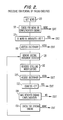
- the process is best described by reference to Fig. 2.
- Step 120 specifies the process of getting an input word for the enclitic removal process.
- the word is converted to lower case if necessary to assure a common font for the dictionary look-up.
- Step 122 the ending of the input word is checked against the list of weak and complementary pronouns. If the word does not have an enclitic ending, then the process terminates since the word does not have valid enclitic endings.
- Step 124 the word is checked against the list of ambiguous words. This insures that if a word with an enclitic pronoun can also be a valid verb form, the enclitic form can be recognized as such.
- the list of ambiguous words consists of the ambiguous word, the corresponding verb form without the enclitic, and optionally, the lemma form of the verb. A match against this list terminates the procedure.
- the word "segnalo" can be the first person singular present of the verb "segnalare” (English: “to signal”) or it can be the third person singular imperative of "segnare” (English: “to mark”) plus the enclitic "lo.”
- Step 126 is the dictionary look-up process. This involves locating the word form in the dictionary to determine if it is a verb. If it is a verb, its corresponding paradigm (Table 3) is accessed to determine which form of the verb it is.
- the paradigm matching procedure involves matching the ending of the word form against the endings specified in the paradigm table. The endings that match are associated in the table with their corresponding grammatical forms. This matching procedure makes it possible to determine if the verb form is one which can take enclitic endings or not. If it is, the lemma form of the verb (the infinitive) can be obtained by replacing the ending that matched with the ending for the infinitive. A successful match terminates the procedure.
- the enclitic ending is removed in Step 128 and saved for examination in Step 134.
- a counter initially set to zero, is incremented at this point to keep track of how many enclitic endings have been removed; the counter is referenced in Step 132.
- Step 130 reverses the spelling modifications that are applied during enclitic formation. That is, if the letter preceding the enclitic pronoun which was removed is "r,” then an "e” or “re” is added since the verb form must be the infinitive. Otherwise, if the letter preceding the removed enclitic is the same as the first letter of the enclitic, then this doubled letter is also removed since this is likely an imperative verb form with stressed final syllable. The exceptions for "gli” and "glie” are taken into consideration.
- Step 132 checks to see how many enclitic endings have been removed from the word by referencing the counter incremented in Step 128. If two endings have been removed and the dictionary access has thus far failed to confirm the remainder of the word as a verb, the process ends without identifying an enclitic.
- Step 134 checks to see if the ending that was removed was a complementary ending because if it is, the possibility of multiple enclitic pronouns must be examined. However, if the enclitic ending was not complementary then we exit without having found an enclitic ending since the preceding dictionary access failed to find a verb form, and therefore the perceived enclitic ending was a false enclitic.
- Step 136 the ending of the word without the complementary enclitic is checked against the list of strong pronouns. If none is found, the process terminates and the previously found complementary enclitic is considered a false enclitic since the previous dictionary access did not find a verb. However, if a strong pronoun is found, processing continues in Step 128 where the ending is removed and subsequently the spelling is normalized and the dictionary accessed again.
- This procedure implements an iterative process for the removal of enclitic endings that results in the identification of the lemma of the word and the word form from which the enclitic was generated.
- Portuguese enclitic pronouns unlike Spanish or Italian enclitics, may be embedded within verb forms. The following paragraphs describe the rules for forming these enclitics. This information is then used in the design of an algorithm to remove the enclitics from a verb form to generate the original form of the verb to which the enclitic pronouns were added.
- Any verb form may have from one to three enclitics. Each enclitic is appended to or embedded in the verb form separated by a hyphen. If one enclitic is used, it can be either RP, PP, IO, IP, PPIPC or IOIPC. If two enclitics are used, they can be PP+IP, RP+PP, RP+IO, RP+PPIPC or RP+IOIPC. The combination RP+IP is never used. If three enclitics are used only RP+PP+IP is valid, where PP is "nos" or "vos" subject to the transformation rules.
- Each enclitic pronoun is separated from the verb form or from the previous pronoun by a hyphen. Contractions, except -lh' by itself, are considered to be two pronouns and are used in the combinations stated above.
- the IP forms starting with “l” or “n” are used only when the transformation rules given below apply.
- Future and conditional verb forms are decomposed into stem and ending before the enclitics are embedded, then the ending is added following the enclitics and separated from them by a hyphen.
- the verb stem or the enclitics themselves may undergo transformations according to the rules given below.
- the future endings are: -ei, -as, -a, -emos, -eis, -ao.
- the conditional endings are: -ia, -ias, -ia, -iamos, -ieis, -iam. Examples: dar-lhe-emos dar-lho-emos
- IP forms -lo, -los, -la, and -las exist only as transformations of the forms -o, -os, -a, and -as under the following two conditions:
- IP forms -no, -nos, -na, and -nas are transformations of the forms -o, -os, -a and -as when they occur after a verbal form ending with the letter "m” or after the nasal vowel combinations " ⁇ o" and " ⁇ e.”
- the fact that the ending -nos is also a personal pronoun is a potential ambiguity.
- Step 220 specifies the process of getting an input word for the enclitic removal process.
- Step 222 the word is checked to make sure it has hyphens. If the word does not have hyphens it cannot have a Portuguese enclitic ending and the process terminates.
- Step 224 the last hyphenated string of the word is checked to see if it is a conditional or future verb ending. If it is, the ending is saved for future use.
- Step 226 the first string of the word (up to the first hyphen) is isolated. This corresponds to the verb root or the head of the word. This verb root will be examined to determine subsequent processing.
- Step 228 examines the last character of the verb root to see if it is accented. If it is, processing continues in Step 230. Unaccented verb roots are processed starting in Step 236.
- Step 230 applies the "z” process. This consists of identifying by look-up in a list the accented verb roots that should be restored to "z” rather than to "r.”
- the list consists of entries such as “contrafá” which comes from “contrafaz” and other verb forms which are derived from the verbs "fazer,” “dizer” and “trazer.”
- the "z” process applies only when there are no conditional or future endings.
- Step 232 checks to see if the enclitic following the verb root is "-la,” “-las,” “-lo” or “-los.” If it does, then the accented letter is replaced by the unaccented letter and the "r" is restored for the verb root.
- Step 234 adds the future or conditional ending, if any, to the verb root to create the reconstituted verb and the process terminates.
- Step 236 applies the "z" process to verb roots without accents.
- the process is identical to Step 230, except that the list of words examined consists of unaccented entries such as as "contrafi” which comes from “contrafiz.”
- Step 238 applies the "mo” process. This process examines verb roots that end in "mo” to determine whether an "s" has been elided. If the enclitic following the verb root is "-la,” “-las,” “-lo,” “-los” or “-nos,” or “-no” followed by another enclitic, then an "s" is added to the verb root and the process terminates.
- Step 240 checks to see if the enclitic following the verb root is "-la,” “-las,” “-lo” or “-los.” If it does and there is no future or conditional ending, an "s" is restored for the verb root and the process terminates.
- Step 242 adds an "r" plus the future or conditional ending, if any, to the verb root to reconstitute the verb and the process terminates.
- French enclitics are appended to the end of a verb separated by hyphens.
- the presence of the enclitic does not affect the spelling or the accentuation of the preceding verb.
- French enclitics are the easiest to recognize and remove in order to restore the verb to its original state.
- some French words append adverbial particles which must be differentiated from the enclitics.
- pronouns are used in French: ce, ces, cet, cette, elle, elles, en, eux, il, ils, je, la, le, les, leur,izi, me, moi, nous, on, te, toi, tu, vous, and y.
- pronouns are separated from the verb by the "euphonic" particle "t" as in “a-t-il.”
- the "t” is used only for euphonic purposes and does not represent a pronoun.
- the pronouns "me” and “te” are contracted when followed by certain other pronouns.
- French words can take the adverbial particles "ci” and “la” separated by hyphens (e.g., "fille-ci”). These should not be confused with enclitic pronouns.
Landscapes
- Engineering & Computer Science (AREA)
- Theoretical Computer Science (AREA)
- Health & Medical Sciences (AREA)
- Artificial Intelligence (AREA)
- Audiology, Speech & Language Pathology (AREA)
- Computational Linguistics (AREA)
- General Health & Medical Sciences (AREA)
- Physics & Mathematics (AREA)
- General Engineering & Computer Science (AREA)
- General Physics & Mathematics (AREA)
- Machine Translation (AREA)
Applications Claiming Priority (2)
| Application Number | Priority Date | Filing Date | Title |
|---|---|---|---|
| US122305 | 1987-11-18 | ||
| US07/122,305 US4852003A (en) | 1987-11-18 | 1987-11-18 | Method for removing enclitic endings from verbs in romance languages |
Publications (3)
| Publication Number | Publication Date |
|---|---|
| EP0316743A2 true EP0316743A2 (fr) | 1989-05-24 |
| EP0316743A3 EP0316743A3 (fr) | 1991-02-06 |
| EP0316743B1 EP0316743B1 (fr) | 1995-02-15 |
Family
ID=22401926
Family Applications (1)
| Application Number | Title | Priority Date | Filing Date |
|---|---|---|---|
| EP88118645A Expired - Lifetime EP0316743B1 (fr) | 1987-11-18 | 1988-11-09 | Méthode pour retirer les terminaisons enclitiques des verbes dans les langues romanes |
Country Status (4)
| Country | Link |
|---|---|
| US (1) | US4852003A (fr) |
| EP (1) | EP0316743B1 (fr) |
| JP (1) | JPH01142866A (fr) |
| DE (1) | DE3853045T2 (fr) |
Cited By (2)
| Publication number | Priority date | Publication date | Assignee | Title |
|---|---|---|---|---|
| WO1997004405A1 (fr) * | 1995-07-19 | 1997-02-06 | Inso Corporation | Procede et appareil de recherche et extraction automatiques |
| US5680628A (en) * | 1995-07-19 | 1997-10-21 | Inso Corporation | Method and apparatus for automated search and retrieval process |
Families Citing this family (10)
| Publication number | Priority date | Publication date | Assignee | Title |
|---|---|---|---|---|
| US5251129A (en) * | 1990-08-21 | 1993-10-05 | General Electric Company | Method for automated morphological analysis of word structure |
| US5410475A (en) * | 1993-04-19 | 1995-04-25 | Mead Data Central, Inc. | Short case name generating method and apparatus |
| US5692176A (en) * | 1993-11-22 | 1997-11-25 | Reed Elsevier Inc. | Associative text search and retrieval system |
| US5737617A (en) * | 1995-06-06 | 1998-04-07 | International Business Machines Corporation | Method and system for English text analysis |
| US6233545B1 (en) * | 1997-05-01 | 2001-05-15 | William E. Datig | Universal machine translator of arbitrary languages utilizing epistemic moments |
| US6341372B1 (en) * | 1997-05-01 | 2002-01-22 | William E. Datig | Universal machine translator of arbitrary languages |
| JP3353651B2 (ja) * | 1997-06-23 | 2002-12-03 | 松下電器産業株式会社 | エージェントインタフェース装置 |
| AU2001249777A1 (en) * | 2000-03-31 | 2001-10-15 | Amikai, Inc. | Method and apparatus for providing multilingual translation over a network |
| US7593849B2 (en) * | 2003-01-28 | 2009-09-22 | Avaya, Inc. | Normalization of speech accent |
| US9158762B2 (en) | 2012-02-16 | 2015-10-13 | Flying Lizard Languages, Llc | Deconstruction and construction of words of a polysynthetic language for translation purposes |
Family Cites Families (9)
| Publication number | Priority date | Publication date | Assignee | Title |
|---|---|---|---|---|
| JPS5853787B2 (ja) * | 1979-08-30 | 1983-12-01 | シャープ株式会社 | 電子辞典 |
| JPS59868B2 (ja) * | 1979-10-24 | 1984-01-09 | シャープ株式会社 | 単語の基本形認識装置およびこれを用いた翻訳装置 |
| JPS5830619B2 (ja) * | 1982-07-05 | 1983-06-30 | カシオ計算機株式会社 | 電子式翻訳機 |
| US4724523A (en) * | 1985-07-01 | 1988-02-09 | Houghton Mifflin Company | Method and apparatus for the electronic storage and retrieval of expressions and linguistic information |
| JPS6165361A (ja) * | 1984-09-05 | 1986-04-03 | Sharp Corp | 電子式仏単語辞書 |
| JPS61214051A (ja) * | 1985-03-20 | 1986-09-22 | Brother Ind Ltd | 電子辞書 |
| US4758955A (en) * | 1985-07-19 | 1988-07-19 | Carson Chen | Hand-held spelling checker and method for reducing redundant information in the storage of textural material |
| US4760528A (en) * | 1985-09-18 | 1988-07-26 | Levin Leonid D | Method for entering text using abbreviated word forms |
| JPS62251876A (ja) * | 1986-04-18 | 1987-11-02 | インタ−ナショナル ビジネス マシ−ンズ コ−ポレ−ション | 言語処理システム |
-
1987
- 1987-11-18 US US07/122,305 patent/US4852003A/en not_active Expired - Fee Related
-
1988
- 1988-10-17 JP JP63259630A patent/JPH01142866A/ja active Granted
- 1988-11-09 DE DE3853045T patent/DE3853045T2/de not_active Expired - Fee Related
- 1988-11-09 EP EP88118645A patent/EP0316743B1/fr not_active Expired - Lifetime
Cited By (4)
| Publication number | Priority date | Publication date | Assignee | Title |
|---|---|---|---|---|
| WO1997004405A1 (fr) * | 1995-07-19 | 1997-02-06 | Inso Corporation | Procede et appareil de recherche et extraction automatiques |
| US5680628A (en) * | 1995-07-19 | 1997-10-21 | Inso Corporation | Method and apparatus for automated search and retrieval process |
| US5794177A (en) * | 1995-07-19 | 1998-08-11 | Inso Corporation | Method and apparatus for morphological analysis and generation of natural language text |
| US5890103A (en) * | 1995-07-19 | 1999-03-30 | Lernout & Hauspie Speech Products N.V. | Method and apparatus for improved tokenization of natural language text |
Also Published As
| Publication number | Publication date |
|---|---|
| DE3853045T2 (de) | 1995-08-10 |
| JPH0519186B2 (fr) | 1993-03-16 |
| EP0316743B1 (fr) | 1995-02-15 |
| US4852003A (en) | 1989-07-25 |
| EP0316743A3 (fr) | 1991-02-06 |
| DE3853045D1 (de) | 1995-03-23 |
| JPH01142866A (ja) | 1989-06-05 |
Similar Documents
| Publication | Publication Date | Title |
|---|---|---|
| JP3971373B2 (ja) | ルールベース方式と翻訳パターン方式とを混合したハイブリッド自動翻訳装置 | |
| JP3385141B2 (ja) | 機械翻訳システム | |
| JP4986919B2 (ja) | タグ付きデータを有する完全形式レキシコンおよびタグ付きデータを構成し使用する方法 | |
| KR100734741B1 (ko) | 단어 인식 방법 및 시스템 및 컴퓨터 프로그램 메모리저장 디바이스 | |
| EP1482414B1 (fr) | Procédé de traduction pour mots avec emphase | |
| EP0282721A2 (fr) | Analyse morphologique de textes pour des langues naturelles basée sur paradigmes | |
| US20070011132A1 (en) | Named entity translation | |
| JP2007323671A (ja) | 中国語テキストにおける単語分割 | |
| EP0316743A2 (fr) | Méthode pour retirer les terminaisons enclitiques des verbes dans les langues romanes | |
| Tufiş et al. | DIAC+: A professional diacritics recovering system | |
| US6829580B1 (en) | Linguistic converter | |
| KR100487716B1 (ko) | 단어레벨의 통계적 방법을 이용한 번역문 생성 방법 및 그장치 | |
| JP2005063030A (ja) | 概念表現方法、概念表現生成方法及び概念表現生成装置並びに該方法を実現するプログラム及び該プログラムが記録された記録媒体 | |
| JPS59140582A (ja) | 自然言語翻訳援助方式 | |
| JP2006127405A (ja) | バイリンガルパラレルテキストをアライメントする方法及びそのためのコンピュータで実行可能なプログラム | |
| JP2000250913A (ja) | 実例型自然言語翻訳方法、対訳用例集作成方法および装置とそのプログラムを記録した記録媒体 | |
| Arabov | A Systematic Benchmark of Machine Transliteration Models for the Tajik-Farsi Language Pair: A Comparative Study from Rule-Based to Transformer Architectures | |
| Schafer III | Translation discovery using diverse similarity measures | |
| Prasad et al. | Developing spell check and transliteration tools for Indian regional language–Kannada | |
| Tufiş et al. | Diacritics restoration in romanian texts | |
| Galli et al. | Experimental studies in computer-assisted correction of unorthographic text | |
| WO2026074589A1 (fr) | Procédé et système de génération de représentation en code de script unifié (usc) pour traitement de texte multilingue | |
| JP3061772B2 (ja) | 機械翻訳方法及び記録媒体 | |
| Kiyko et al. | The Variability of Transcoding and Transformations of the Eponym Proprial Component in the Interlingual Transition | |
| Gasser et al. | Character Alignment in Morphologically Complex Translation Sets for Related Languages |
Legal Events
| Date | Code | Title | Description |
|---|---|---|---|
| PUAI | Public reference made under article 153(3) epc to a published international application that has entered the european phase |
Free format text: ORIGINAL CODE: 0009012 |
|
| AK | Designated contracting states |
Kind code of ref document: A2 Designated state(s): DE FR GB |
|
| 17P | Request for examination filed |
Effective date: 19890906 |
|
| PUAL | Search report despatched |
Free format text: ORIGINAL CODE: 0009013 |
|
| AK | Designated contracting states |
Kind code of ref document: A3 Designated state(s): DE FR GB |
|
| 17Q | First examination report despatched |
Effective date: 19930430 |
|
| GRAA | (expected) grant |
Free format text: ORIGINAL CODE: 0009210 |
|
| AK | Designated contracting states |
Kind code of ref document: B1 Designated state(s): DE FR GB |
|
| REF | Corresponds to: |
Ref document number: 3853045 Country of ref document: DE Date of ref document: 19950323 |
|
| ET | Fr: translation filed | ||
| PGFP | Annual fee paid to national office [announced via postgrant information from national office to epo] |
Ref country code: GB Payment date: 19951024 Year of fee payment: 8 |
|
| PGFP | Annual fee paid to national office [announced via postgrant information from national office to epo] |
Ref country code: FR Payment date: 19951107 Year of fee payment: 8 |
|
| PGFP | Annual fee paid to national office [announced via postgrant information from national office to epo] |
Ref country code: DE Payment date: 19951123 Year of fee payment: 8 |
|
| PLBE | No opposition filed within time limit |
Free format text: ORIGINAL CODE: 0009261 |
|
| STAA | Information on the status of an ep patent application or granted ep patent |
Free format text: STATUS: NO OPPOSITION FILED WITHIN TIME LIMIT |
|
| 26N | No opposition filed | ||
| PG25 | Lapsed in a contracting state [announced via postgrant information from national office to epo] |
Ref country code: GB Effective date: 19961109 |
|
| GBPC | Gb: european patent ceased through non-payment of renewal fee |
Effective date: 19961109 |
|
| PG25 | Lapsed in a contracting state [announced via postgrant information from national office to epo] |
Ref country code: FR Effective date: 19970731 |
|
| PG25 | Lapsed in a contracting state [announced via postgrant information from national office to epo] |
Ref country code: DE Effective date: 19970801 |
|
| REG | Reference to a national code |
Ref country code: FR Ref legal event code: ST |