EP0317512A2 - Procédé productif de régénération de coton à partir de cellules cultivées - Google Patents
Procédé productif de régénération de coton à partir de cellules cultivées Download PDFInfo
- Publication number
- EP0317512A2 EP0317512A2 EP88810768A EP88810768A EP0317512A2 EP 0317512 A2 EP0317512 A2 EP 0317512A2 EP 88810768 A EP88810768 A EP 88810768A EP 88810768 A EP88810768 A EP 88810768A EP 0317512 A2 EP0317512 A2 EP 0317512A2
- Authority
- EP
- European Patent Office
- Prior art keywords
- proembryonic
- cell masses
- medium
- callus
- cotton
- Prior art date
- Legal status (The legal status is an assumption and is not a legal conclusion. Google has not performed a legal analysis and makes no representation as to the accuracy of the status listed.)
- Granted
Links
- 238000000034 method Methods 0.000 title claims abstract description 42
- 229920000742 Cotton Polymers 0.000 title claims abstract description 23
- 230000008929 regeneration Effects 0.000 title description 5
- 238000011069 regeneration method Methods 0.000 title description 5
- 206010020649 Hyperkeratosis Diseases 0.000 claims abstract description 67
- 210000002257 embryonic structure Anatomy 0.000 claims abstract description 67
- 229930192334 Auxin Natural products 0.000 claims abstract description 55
- 239000002363 auxin Substances 0.000 claims abstract description 55
- SEOVTRFCIGRIMH-UHFFFAOYSA-N indole-3-acetic acid Chemical compound C1=CC=C2C(CC(=O)O)=CNC2=C1 SEOVTRFCIGRIMH-UHFFFAOYSA-N 0.000 claims abstract description 50
- 241000196324 Embryophyta Species 0.000 claims abstract description 34
- 230000006698 induction Effects 0.000 claims abstract description 26
- 241000219146 Gossypium Species 0.000 claims abstract description 23
- 239000007788 liquid Substances 0.000 claims abstract description 16
- 240000002024 Gossypium herbaceum Species 0.000 claims abstract description 15
- 235000004341 Gossypium herbaceum Nutrition 0.000 claims abstract description 15
- 235000015097 nutrients Nutrition 0.000 claims abstract description 15
- 230000015572 biosynthetic process Effects 0.000 claims abstract description 13
- 239000000725 suspension Substances 0.000 claims abstract description 10
- 239000006194 liquid suspension Substances 0.000 claims abstract description 5
- 230000008569 process Effects 0.000 claims abstract description 5
- 239000002609 medium Substances 0.000 claims description 96
- 229910052799 carbon Inorganic materials 0.000 claims description 23
- OKTJSMMVPCPJKN-UHFFFAOYSA-N Carbon Chemical compound [C] OKTJSMMVPCPJKN-UHFFFAOYSA-N 0.000 claims description 21
- IJGRMHOSHXDMSA-UHFFFAOYSA-N Atomic nitrogen Chemical compound N#N IJGRMHOSHXDMSA-UHFFFAOYSA-N 0.000 claims description 16
- 150000003839 salts Chemical class 0.000 claims description 14
- 235000013343 vitamin Nutrition 0.000 claims description 13
- 239000011782 vitamin Substances 0.000 claims description 13
- 229940088594 vitamin Drugs 0.000 claims description 13
- 229930003231 vitamin Natural products 0.000 claims description 13
- 230000018109 developmental process Effects 0.000 claims description 11
- 239000005631 2,4-Dichlorophenoxyacetic acid Substances 0.000 claims description 9
- HXKWSTRRCHTUEC-UHFFFAOYSA-N 2,4-Dichlorophenoxyaceticacid Chemical compound OC(=O)C(Cl)OC1=CC=C(Cl)C=C1 HXKWSTRRCHTUEC-UHFFFAOYSA-N 0.000 claims description 9
- 230000035784 germination Effects 0.000 claims description 8
- ZDXPYRJPNDTMRX-UHFFFAOYSA-N glutamine Natural products OC(=O)C(N)CCC(N)=O ZDXPYRJPNDTMRX-UHFFFAOYSA-N 0.000 claims description 8
- 229910052757 nitrogen Inorganic materials 0.000 claims description 8
- 244000299507 Gossypium hirsutum Species 0.000 claims description 7
- 239000005595 Picloram Substances 0.000 claims description 7
- 150000001875 compounds Chemical class 0.000 claims description 7
- NQQVFXUMIDALNH-UHFFFAOYSA-N picloram Chemical compound NC1=C(Cl)C(Cl)=NC(C(O)=O)=C1Cl NQQVFXUMIDALNH-UHFFFAOYSA-N 0.000 claims description 7
- 210000001161 mammalian embryo Anatomy 0.000 claims description 5
- 150000002894 organic compounds Chemical class 0.000 claims description 5
- 230000001939 inductive effect Effects 0.000 claims description 4
- 235000009432 Gossypium hirsutum Nutrition 0.000 claims description 3
- 239000012869 germination medium Substances 0.000 claims 2
- 238000004519 manufacturing process Methods 0.000 abstract description 2
- 210000004027 cell Anatomy 0.000 description 38
- 229930006000 Sucrose Natural products 0.000 description 15
- 230000000392 somatic effect Effects 0.000 description 15
- 239000005720 sucrose Substances 0.000 description 15
- CZMRCDWAGMRECN-UGDNZRGBSA-N Sucrose Chemical compound O[C@H]1[C@H](O)[C@@H](CO)O[C@@]1(CO)O[C@@H]1[C@H](O)[C@@H](O)[C@H](O)[C@@H](CO)O1 CZMRCDWAGMRECN-UGDNZRGBSA-N 0.000 description 12
- 230000030118 somatic embryogenesis Effects 0.000 description 12
- UQHKFADEQIVWID-UHFFFAOYSA-N cytokinin Natural products C1=NC=2C(NCC=C(CO)C)=NC=NC=2N1C1CC(O)C(CO)O1 UQHKFADEQIVWID-UHFFFAOYSA-N 0.000 description 8
- 239000004062 cytokinin Substances 0.000 description 8
- 239000012737 fresh medium Substances 0.000 description 8
- 239000007787 solid Substances 0.000 description 7
- 230000000408 embryogenic effect Effects 0.000 description 6
- 239000001963 growth medium Substances 0.000 description 6
- 238000004114 suspension culture Methods 0.000 description 6
- PRPINYUDVPFIRX-UHFFFAOYSA-N 1-naphthaleneacetic acid Chemical compound C1=CC=C2C(CC(=O)O)=CC=CC2=C1 PRPINYUDVPFIRX-UHFFFAOYSA-N 0.000 description 5
- 229920001817 Agar Polymers 0.000 description 5
- FAIXYKHYOGVFKA-UHFFFAOYSA-N Kinetin Natural products N=1C=NC=2N=CNC=2C=1N(C)C1=CC=CO1 FAIXYKHYOGVFKA-UHFFFAOYSA-N 0.000 description 5
- 239000008272 agar Substances 0.000 description 5
- 150000001413 amino acids Chemical class 0.000 description 5
- 210000004748 cultured cell Anatomy 0.000 description 5
- QANMHLXAZMSUEX-UHFFFAOYSA-N kinetin Chemical compound N=1C=NC=2N=CNC=2C=1NCC1=CC=CO1 QANMHLXAZMSUEX-UHFFFAOYSA-N 0.000 description 5
- 229960001669 kinetin Drugs 0.000 description 5
- 230000001172 regenerating effect Effects 0.000 description 5
- 235000000346 sugar Nutrition 0.000 description 5
- WQZGKKKJIJFFOK-GASJEMHNSA-N Glucose Natural products OC[C@H]1OC(O)[C@H](O)[C@@H](O)[C@@H]1O WQZGKKKJIJFFOK-GASJEMHNSA-N 0.000 description 4
- BECPQYXYKAMYBN-UHFFFAOYSA-N casein, tech. Chemical compound NCCCCC(C(O)=O)N=C(O)C(CC(O)=O)N=C(O)C(CCC(O)=N)N=C(O)C(CC(C)C)N=C(O)C(CCC(O)=O)N=C(O)C(CC(O)=O)N=C(O)C(CCC(O)=O)N=C(O)C(C(C)O)N=C(O)C(CCC(O)=N)N=C(O)C(CCC(O)=N)N=C(O)C(CCC(O)=N)N=C(O)C(CCC(O)=O)N=C(O)C(CCC(O)=O)N=C(O)C(COP(O)(O)=O)N=C(O)C(CCC(O)=N)N=C(O)C(N)CC1=CC=CC=C1 BECPQYXYKAMYBN-UHFFFAOYSA-N 0.000 description 4
- 239000008103 glucose Substances 0.000 description 4
- 238000000338 in vitro Methods 0.000 description 4
- FGIUAXJPYTZDNR-UHFFFAOYSA-N potassium nitrate Chemical compound [K+].[O-][N+]([O-])=O FGIUAXJPYTZDNR-UHFFFAOYSA-N 0.000 description 4
- LFQSCWFLJHTTHZ-UHFFFAOYSA-N Ethanol Chemical compound CCO LFQSCWFLJHTTHZ-UHFFFAOYSA-N 0.000 description 3
- 239000005018 casein Substances 0.000 description 3
- 235000021240 caseins Nutrition 0.000 description 3
- 239000004927 clay Substances 0.000 description 3
- 238000010367 cloning Methods 0.000 description 3
- 230000013020 embryo development Effects 0.000 description 3
- 125000001477 organic nitrogen group Chemical group 0.000 description 3
- 229930000184 phytotoxin Natural products 0.000 description 3
- 239000003123 plant toxin Substances 0.000 description 3
- 230000010152 pollination Effects 0.000 description 3
- 239000002689 soil Substances 0.000 description 3
- 125000000185 sucrose group Chemical group 0.000 description 3
- 238000002255 vaccination Methods 0.000 description 3
- 230000003442 weekly effect Effects 0.000 description 3
- SMYMJHWAQXWPDB-UHFFFAOYSA-N (2,4,5-trichlorophenoxy)acetic acid Chemical compound OC(=O)COC1=CC(Cl)=C(Cl)C=C1Cl SMYMJHWAQXWPDB-UHFFFAOYSA-N 0.000 description 2
- SODPIMGUZLOIPE-UHFFFAOYSA-N (4-chlorophenoxy)acetic acid Chemical compound OC(=O)COC1=CC=C(Cl)C=C1 SODPIMGUZLOIPE-UHFFFAOYSA-N 0.000 description 2
- 239000003559 2,4,5-trichlorophenoxyacetic acid Substances 0.000 description 2
- 229920000936 Agarose Polymers 0.000 description 2
- 229920002148 Gellan gum Polymers 0.000 description 2
- 240000001814 Gossypium arboreum Species 0.000 description 2
- 229910002651 NO3 Inorganic materials 0.000 description 2
- NHNBFGGVMKEFGY-UHFFFAOYSA-N Nitrate Chemical compound [O-][N+]([O-])=O NHNBFGGVMKEFGY-UHFFFAOYSA-N 0.000 description 2
- 230000008859 change Effects 0.000 description 2
- 239000003795 chemical substances by application Substances 0.000 description 2
- 210000002308 embryonic cell Anatomy 0.000 description 2
- 230000002349 favourable effect Effects 0.000 description 2
- 230000002068 genetic effect Effects 0.000 description 2
- 239000011521 glass Substances 0.000 description 2
- 239000003617 indole-3-acetic acid Substances 0.000 description 2
- JTEDVYBZBROSJT-UHFFFAOYSA-N indole-3-butyric acid Chemical compound C1=CC=C2C(CCCC(=O)O)=CNC2=C1 JTEDVYBZBROSJT-UHFFFAOYSA-N 0.000 description 2
- 238000011081 inoculation Methods 0.000 description 2
- 239000000203 mixture Substances 0.000 description 2
- 239000006870 ms-medium Substances 0.000 description 2
- 230000005305 organ development Effects 0.000 description 2
- 238000004161 plant tissue culture Methods 0.000 description 2
- 235000010333 potassium nitrate Nutrition 0.000 description 2
- HVTXQEBIPXLXDW-UHFFFAOYSA-N 2-(1h-indol-3-yl)butanedioic acid Chemical compound C1=CC=C2C(C(C(O)=O)CC(=O)O)=CNC2=C1 HVTXQEBIPXLXDW-UHFFFAOYSA-N 0.000 description 1
- OVSKIKFHRZPJSS-DOMIDYPGSA-N 2-(2,4-dichlorophenoxy)acetic acid Chemical compound OC(=O)[14CH2]OC1=CC=C(Cl)C=C1Cl OVSKIKFHRZPJSS-DOMIDYPGSA-N 0.000 description 1
- LGGQQYXFFSOIJY-UHFFFAOYSA-N 2-(3-methylbut-2-enyl)-7h-purin-6-amine Chemical compound CC(C)=CCC1=NC(N)=C2NC=NC2=N1 LGGQQYXFFSOIJY-UHFFFAOYSA-N 0.000 description 1
- XGILAAMKEQUXLS-UHFFFAOYSA-N 3-(indol-3-yl)lactic acid Chemical compound C1=CC=C2C(CC(O)C(O)=O)=CNC2=C1 XGILAAMKEQUXLS-UHFFFAOYSA-N 0.000 description 1
- 239000005972 6-Benzyladenine Substances 0.000 description 1
- QGZKDVFQNNGYKY-UHFFFAOYSA-O Ammonium Chemical compound [NH4+] QGZKDVFQNNGYKY-UHFFFAOYSA-O 0.000 description 1
- FGUUSXIOTUKUDN-IBGZPJMESA-N C1(=CC=CC=C1)N1C2=C(NC([C@H](C1)NC=1OC(=NN=1)C1=CC=CC=C1)=O)C=CC=C2 Chemical compound C1(=CC=CC=C1)N1C2=C(NC([C@H](C1)NC=1OC(=NN=1)C1=CC=CC=C1)=O)C=CC=C2 FGUUSXIOTUKUDN-IBGZPJMESA-N 0.000 description 1
- 235000009438 Gossypium Nutrition 0.000 description 1
- 240000000047 Gossypium barbadense Species 0.000 description 1
- 241001479464 Gossypium klotzschianum Species 0.000 description 1
- ZDXPYRJPNDTMRX-VKHMYHEASA-N L-glutamine Chemical compound OC(=O)[C@@H](N)CCC(N)=O ZDXPYRJPNDTMRX-VKHMYHEASA-N 0.000 description 1
- NWBJYWHLCVSVIJ-UHFFFAOYSA-N N-benzyladenine Chemical compound N=1C=NC=2NC=NC=2C=1NCC1=CC=CC=C1 NWBJYWHLCVSVIJ-UHFFFAOYSA-N 0.000 description 1
- QAOWNCQODCNURD-UHFFFAOYSA-N Sulfuric acid Chemical compound OS(O)(=O)=O QAOWNCQODCNURD-UHFFFAOYSA-N 0.000 description 1
- 239000000654 additive Substances 0.000 description 1
- 230000002776 aggregation Effects 0.000 description 1
- 238000004220 aggregation Methods 0.000 description 1
- -1 ammonium ions Chemical class 0.000 description 1
- WQZGKKKJIJFFOK-VFUOTHLCSA-N beta-D-glucose Chemical compound OC[C@H]1O[C@@H](O)[C@H](O)[C@@H](O)[C@@H]1O WQZGKKKJIJFFOK-VFUOTHLCSA-N 0.000 description 1
- 238000009395 breeding Methods 0.000 description 1
- 230000001488 breeding effect Effects 0.000 description 1
- 238000012832 cell culture technique Methods 0.000 description 1
- 235000020197 coconut milk Nutrition 0.000 description 1
- 238000005520 cutting process Methods 0.000 description 1
- 201000010099 disease Diseases 0.000 description 1
- 208000037265 diseases, disorders, signs and symptoms Diseases 0.000 description 1
- 239000012153 distilled water Substances 0.000 description 1
- 230000024346 drought recovery Effects 0.000 description 1
- 239000004744 fabric Substances 0.000 description 1
- 230000002363 herbicidal effect Effects 0.000 description 1
- 239000004009 herbicide Substances 0.000 description 1
- 230000000977 initiatory effect Effects 0.000 description 1
- 230000000442 meristematic effect Effects 0.000 description 1
- 230000004048 modification Effects 0.000 description 1
- 238000012986 modification Methods 0.000 description 1
- 230000001954 sterilising effect Effects 0.000 description 1
- 238000004659 sterilization and disinfection Methods 0.000 description 1
- 239000000758 substrate Substances 0.000 description 1
- 150000008163 sugars Chemical class 0.000 description 1
- 235000011149 sulphuric acid Nutrition 0.000 description 1
- 230000008093 supporting effect Effects 0.000 description 1
- UZKQTCBAMSWPJD-UQCOIBPSSA-N trans-Zeatin Natural products OCC(/C)=C\CNC1=NC=NC2=C1N=CN2 UZKQTCBAMSWPJD-UQCOIBPSSA-N 0.000 description 1
- UZKQTCBAMSWPJD-FARCUNLSSA-N trans-zeatin Chemical compound OCC(/C)=C/CNC1=NC=NC2=C1N=CN2 UZKQTCBAMSWPJD-FARCUNLSSA-N 0.000 description 1
- 230000007704 transition Effects 0.000 description 1
- XLYOFNOQVPJJNP-UHFFFAOYSA-N water Chemical compound O XLYOFNOQVPJJNP-UHFFFAOYSA-N 0.000 description 1
- 229940023877 zeatin Drugs 0.000 description 1
Images





Classifications
-
- C—CHEMISTRY; METALLURGY
- C12—BIOCHEMISTRY; BEER; SPIRITS; WINE; VINEGAR; MICROBIOLOGY; ENZYMOLOGY; MUTATION OR GENETIC ENGINEERING
- C12N—MICROORGANISMS OR ENZYMES; COMPOSITIONS THEREOF; PROPAGATING, PRESERVING, OR MAINTAINING MICROORGANISMS; MUTATION OR GENETIC ENGINEERING; CULTURE MEDIA
- C12N5/00—Undifferentiated human, animal or plant cells, e.g. cell lines; Tissues; Cultivation or maintenance thereof; Culture media therefor
- C12N5/04—Plant cells or tissues
-
- A—HUMAN NECESSITIES
- A01—AGRICULTURE; FORESTRY; ANIMAL HUSBANDRY; HUNTING; TRAPPING; FISHING
- A01H—NEW PLANTS OR NON-TRANSGENIC PROCESSES FOR OBTAINING THEM; PLANT REPRODUCTION BY TISSUE CULTURE TECHNIQUES
- A01H4/00—Plant reproduction by tissue culture techniques ; Tissue culture techniques therefor
- A01H4/005—Methods for micropropagation; Vegetative plant propagation using cell or tissue culture techniques
Definitions
- the present invention is directed to methods for regenerating cotton plants from cultured cells by somatic embryogenesis.
- the method is more powerful than the methods described in the prior art.
- Somatic embryogenesis should be distinguished from another plant regeneration technique known as organogenesis.
- transplanted tissues from sources such as roots, leaves or stems are cultivated.
- New, differentiated tissues either form directly from the transplanted tissue or from undifferentiated callus tissue that develops from the transplanted tissue.
- organogenesis the new, differentiated tissues consist of roots and / or sprouts.
- somatic embryogenesis on the other hand, the new differentiated tissues are bipolar structures, the connected root and shoot meristematic centers, i.e. Embryos.
- Different stages can be distinguished during embryonic development. These stages include those known to those skilled in the art as globular, heart, torpedo, and mature stages.
- Somatic embryos can be produced in large quantities and are therefore suitable for mass multiplication and cloning.
- somatic embryogenesis the cells of adult plants made by somatic embryogenesis are genetically different from the cells used to make the embryogenic Making callus.
- a plant cell modified in this way is said to have undergone a genetic change known as a somaclonal variation.
- the new genotype provides a desirable trait.
- the generation of modified genotypes using plant cell culture techniques represents a further use of somatic embryogenesis.
- Somatic embryogenesis could also be used to regenerate plants from cultured cells selected for a particular property. For example, cultured cells could be exposed to a phytotoxin against which resistance is desired. Somatic embryogenesis could then be used to regenerate plants from the cells that best tolerate the phytotoxin. Such in vitro selection using cultured cells and tissues in this way has been described by Chaleff and Ray in Science 223 , 1148-1151 (1984).
- the present invention relates to methods which are more efficient than those of the prior art for producing somatic embryos from cultivated cotton cells and for regenerating plants from such embryos.
- the present invention further relates to methods of somatic embryogenesis, using a cell suspension culture system.
- the proembryonic cell masses are able to develop into mature embryos, small plantlets and ultimately mature plants.
- globular embryos can be produced in a standard 250 ml Delong vessel, from which about 1000 mature embryos and from them in turn about 50 plants are produced.
- the performance of the methods of the prior art is significantly lower.
- the cotton plants which are produced according to the present invention can be cultivated forms or wild forms. Breeding forms are preferred.
- Some examples of cotton cultivars include G. hirsutum, G. arboreum and G. barbadense. G. hirsutum is preferred.
- Some varieties of G. hirsutum that can be regenerated according to the method of the present invention include Coker 310, Coker 312, Acala SJ2, Acala SJ4, Acala SJ5, Funk 519-2 and Funk 522-1. The preferred variety is Coker 310.
- Step a Embryogenic cotton callus
- the first step in the method according to the invention consists in inducing the formation of cotton callus from transplanted cotton fabric.
- suitable grafted cotton tissue are somatic embryos, mature and immature zygotic embryos, cotyledons or hypocotyls of a seedling and young tissue of a mature plant. Somatic embryos and seedling cotyledons or hypocotyls are preferred.
- zygotic embryos can be obtained by cutting them from ovules.
- the ovules are preferably cut out about 7 to 30 days after pollination, preferably about 10 to 21 days after pollination and in particular about 12 to 16 days after pollination.
- Cotyledons and hypocotyls can be found in young seedlings.
- the seedlings are usually about 3 to 21 days old, preferably about 4 to 9 days, especially about 7 days old.
- Hypocotyls are cut lengthways and divided into appropriate sections, for example in sections from 1 to 20 mm, preferably of about 2 mm in length.
- the cotyledon tissue is cut into pieces with an area of about 1 to 400 mm2, preferably of about 5 to 100 mm2, in particular of about 10 mm2
- Somatic embryos derived from this procedure are a particularly preferred source for obtaining embryogenic callus according to the present method.
- somatic embryos can be obtained using the procedure described above for hypocotyl and cotyledon tissue as the source of the transplanted tissue. Any somatic embryo taken before the primary leaf unfolds is suitable.
- the size of the somatic embryo is not critical. However, somatic embryos less than 5 mm long are preferred.
- Young tissue from adult cotton plants is normally obtained by removing the apical 10 cm, preferably about 5 cm, from the shoot tip. Stems and petioles are cut lengthways and divided into sections of the same size as the hypocotyls (see above). Leaf tissue is cut into pieces of the same size as the cotyledon tissue (see above).
- the cotton plant tissue is placed on a medium suitable for callus induction, at approximately 20 ° to 40 ° C., preferably 23 ° to 35 ° C., in particular approximately 31 ° C.
- a medium suitable for callus induction at approximately 20 ° to 40 ° C., preferably 23 ° to 35 ° C., in particular approximately 31 ° C.
- Any medium that can induce a callus from a tissue can be used in the method according to the invention.
- the medium can be liquid or solid, although a solid medium is preferred because it is more convenient to handle.
- a medium customary according to the present invention which induces callus formation generally contains inorganic salts and vitamins, a carbon source, an auxin and a cytokinin. This medium is adjusted to a pH between 3.5 and 7.5, preferably between 4.5 and 6.5, in particular about 5.7.
- inorganic salts and vitamins that promote callus induction are suitable in themselves.
- suitable inorganic salts and vitamins are provided by Murashige and Skoog in Physiol. Plant 15 , 473-497 (1962) (MS) and Gamborg et al. in Exp. Cell Res. 50 , 151-158 (1968) (B-5).
- MS Murashige and Skoog in Physiol. Plant 15 , 473-497 (1962)
- Another example of this is the modification of the MS or Gamborgs B-5 medium, which Cheng et al., Plant Sci. Lett. 19 , 91-99 (1980).
- the preferred inorganic salts are MS inorganic salts.
- the preferred vitamins are Gamborg's B-5 vitamins.
- Any carbon source on which callus can grow can be used as a suitable carbon source.
- Preferred carbon sources are sugar and derivatives of sugar.
- Preferred sugars are glucose and sucrose. It is particularly desirable to initiate callus in a callus induction medium containing glucose to reduce tissue browning, and then transfer the callus into a callus induction medium containing sucrose.
- the concentration of the carbon source is 5 to 60 g / liter, preferably about 30 g / liter.
- the auxin present in the callus induction medium can be any auxin that can induce a callus.
- suitable auxins include ⁇ -naphthalene acetic acid, picloram, 2,4,5-trichlorophenoxyacetic acid, 2,4-dichlorophenoxyacetic acid, indole-3-butyric acid, indole-3-lactic acid, indole-3-succinic acid, indole-3-acetic acid and p- Chlorophenoxyacetic acid, indole-3-acetic acid and p-chlorophenoxyacetic acid.
- a preferred auxin is ⁇ -naphthalene acetic acid.
- auxin concentration that can induce callus formation can be used in the method according to the invention.
- Particularly suitable concentrations are 0.1 to 10 mg / liter, especially when ⁇ -naphthalene acetic acid is used as the auxin.
- the cytokinin present in the callus induction medium can be any cytokinin that can induce a callus.
- Some suitable cytokinins include kinetin, 6-benzyladenine, 2-isopentenyladenine and zeatin.
- a preferred cytokinin is kinetin.
- cytokinin concentration that can induce callus formation can be used in the method of the invention. Suitable concentrations are 0.1 to 10 mg / liter. A preferred concentration is 1 mg / liter, especially when the cytokinin is kinetin.
- the medium contains, for example, about 0.8% agar, such as Agar Noble (Difco), or about 0.8% agarose as a solidifying agent. (All percentages in this description refer to weight.)
- tissue is cultured on the callus induction medium for some time until the callus forms.
- tissue can be cultivated on a callus induction medium containing glucose as a carbon source.
- a five-week induction period is typical. Vaccinations in fresh medium and further cultivation are carried out because they are necessary to prevent browning. Weekly vaccinations are preferred.
- the callus that forms can be disorganized, or it can contain proembryonic cell masses, embryogenic callus or even embryos.
- hypocotyledons or cotyledons are used as the source of the transplanted tissue, unorganized callus appears to preferentially form.
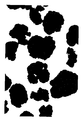
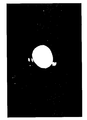
- somatic embryos are used as the source for the transplanted tissue, at least part of the callus appears to consist of an embryogenic callus, which is characterized by a slightly yellow color and knot formation. Photographs of calli made from somatic embryos and cotyledons by step (a) are shown in Figures 1 and 2, respectively.
- the resulting callus can then advantageously be transferred for a period of up to 5 months to a callus culture medium which is similar to the callus induction medium but contains sucrose as a carbon source.
- the callus is cultivated preferably for a period of one month on callus induction medium containing sucrose, or for a period of two months, but should then inoculate on fresh medium after one month.
- the callus can be induced in the dark, but is preferably induced in the light.
- the callus of step (a) is suspended in a liquid medium that promotes the development of proembryonic or increasing embryonic cell masses. It is important that the cell density is low. Therefore, no more than 40 mg callus / ml culture medium, preferably no more than 15 mg callus / ml culture medium and in particular no more than 5 mg callus / ml culture medium.
- the medium useful in step (b) can be any medium that can induce proembryonic cell masses.
- the medium generally contains inorganic salts as well as vitamins, a carbon source and an auxin.
- the medium can also contain organic nitrogen sources, cytokinins, amino acids and other additives such as casein hydrolyzate or coconut milk.
- the inorganic salts and vitamins can be the same as in step (a) above. MS inorganic salts and B-5 vitamins are preferred.
- the carbon source can be the same as that described in step a. Sucrose is preferred.
- the concentration of the carbon source is 0.1 to 100 g / liter. About 20 g / liter is preferred, especially if the carbon source is sucrose.
- the auxin can be selected from the auxins used in step (a).
- the preferred auxins are 2,4-dichlorophenoxyacetic acid and picloram. Picloram is particularly preferred.
- the concentration of the auxin in step (b) is relatively low. The exact concentration depends on the specific auxin used. The relatively low auxin concentration is generally similar to that commonly used in suspension culture media and is significantly lower than the corresponding auxin concentration used in step (c).
- picloram is the auxin used in step (b)
- the concentration is 0.01 to 5 mg / liter, preferably 0.1 to 1 mg / liter and especially about 0.5 mg / liter.
- 2,4-dichlorophenoxyacetic acid is the auxin used in step (b)
- the concentration is 0.01 to 0.5 mg / liter, preferably 0.05 to 0.25 mg / liter and especially about 0.1 mg / liter .
- the induction of proembryonic cell masses is preferably carried out in a ventilated medium at a temperature between 20 ° and 35 ° C. Temperatures between 22 ° and 33 ° C and in particular between 25 ° and 31 ° C are preferred.
- the medium can be aerated in any manner known in the art, for example by shaking.
- the callus is preferably kept in the medium without inoculation until lumpy clumps of proembryonic cell masses form and begin to divide rapidly. Rapid division usually begins after 3 to 8 weeks, typically after 5 to 7 weeks.
- the medium itself can be replaced with fresh medium during the induction period, although it is preferable not to replace the medium during this period.
- the lumpy clumps of the proembryonic cell masses can be placed directly into the medium described in step (c) or inoculated into fresh medium to prevent browning.
- Vaccination in the period of 3 to 7 days, preferably every 5 to 7 days, is favorable. Without inoculation, the cell masses survive for about a fortnight.
- Step c finely dispersed proembryonic cell masses
- the clumpy clumps of proembryonic cell masses from step (b) are transferred to a liquid medium which helps to ensure that the clumpy clumps of the proembryonic cell masses are finely dispersed.
- the medium may be similar to that described in step (b), but should have a relatively high auxin concentration. Any auxin used in step (a) can be used as the auxin.
- Preferred auxins are 2,4,5-trichlorophenoxyacetic acid and 2,4-dichlorophenoxyacetic acid. 2,4-Dichlorophenoxyacetic acid is particularly preferred.
- the auxin concentration depends on the individual auxin.
- the auxin concentration in the medium of step (c) is generally higher or at least at the upper end of the concentration range which is usually used in suspension culture media; and is definitely significantly higher than the corresponding auxin concentration in step (b).
- the concentration can be about 0.5 to 100 mg / liter, preferably 1 to 10 mg / liter and in particular about 2.5 to 7, 5 mg / liter.
- step (c) can be the same as in step (b).
- step (c) The conditions of step (c) are maintained until the lumpy aggregations of the proembryonic cell masses become smaller, more finely dispersed proembryonic cell masses.
- the appearance of the smaller, more finely dispersed proembryonic cell masses is for the Expert easily recognizable. These cell masses are characterized by their yellow color, smooth surface, medium density and small size. A photograph of the cell masses is shown in FIG. 4. The transition to the smaller, more finely dispersed cell masses usually takes place within 6 weeks, more typically within 2 weeks.
- the culture of the small, finely dispersed proembryonic cell masses can be maintained indefinitely and can be inoculated to maintain active growth. It is favorable to vaccinate every 3 to 28 days, preferably every 5 to 10 days.
- Step d mature embryos
- the smaller, more finely dispersed, proembryonic cell masses are added to a medium that induces the development of mature embryos.
- the medium is preferably liquid.
- Embryos go through a number of stages of development before they are mature and able to germinate. These stages include globular, heart, torpedo, and mature stages. The names of the stadiums are based on the approximate appearance of the embryos.
- the medium which can be used in step (d) can be any medium which is able to induce the development of mature embryos.
- a useful medium generally contains inorganic salts as well as vitamins, a carbon source and an organic compound that contains reduced nitrogen.
- the salts and vitamins and their concentrations can be the same as in step (a).
- the carbon source can also be chosen as in step (a).
- the concentration of the carbon source is about 1 to 10 g / liter, preferably about 2 to 6 g / liter.
- a preferred carbon source is sucrose.
- the organic compound containing reduced nitrogen can be any compound which, when added to the medium from step d, induces the development of mature embryos.
- the preferred compounds are amino acids.
- a preferred amino acid is glutamine.
- the concentration of the organic source of free nitrogen depends on the compound used.
- An effective concentration of glutamine as an organic source of reduced nitrogen is 2 to 260 mM, preferably 5 to 100 mM, in particular 10 to 50 mM.
- the medium from step (d) may contain an auxin.
- auxins are desirable during the early stages of embryonic development, but not during the later stages. Therefore, if they are present at all, they should preferably only be used up to the heart-shaped stage of development.
- the embryos are then transferred to a medium that contains no auxin.
- the auxin concentration can range from 0.01 to 0.1 mg / liter.
- the auxin can be one of the auxins useful in step (a).
- the preferred auxins are picloram and 2,4-dichlorophenoxyacetic acid.
- the embryos can develop in the medium of step (d) at temperatures of 20 ° to 35 ° C in the dark or in the light.
- the embryos are kept in the medium of step (d) until the embryos have grown into torpedo-shaped or mature stages.
- the globular, heart- and torpedo-shaped as well as mature embryos are clear and easy to recognize for the specialist dealing with plant tissue cultures. Photographs of these embryos are shown in Figures 5-8.
- the embryos typically mature in about 2 to 5 weeks, usually in about 3 to 4 weeks. It is usually unnecessary to cultivate the embryos again or to transfer the embryos to fresh medium. Only in the heart-shaped stage could it be advantageous to switch from an auxin-containing medium to a medium that contains no auxin.
- the mature embryos are placed on a solid medium that induces germination.
- the medium contains inorganic salts as well as vitamins and a carbon source.
- the medium is solidified with a common solidifying agent such as Gelrite (Kelko, San Diego, California), agarose or agar.
- the inorganic salts can be those from step (a), the nitrate being present in high concentrations, while ammonium is absent or can be present in very low concentrations.
- the nitrate concentration is normally 20 to 60 mM, preferably 30 to 60 mM, in particular 35 to 45 mM.
- the concentration of ammonium ions should not exceed 5 mM.
- a sugar is preferably used as the carbon source.
- a preferred sugar is sucrose.
- the concentration of the carbon source depends on the type of carbon source used. If, for example, sucrose is used as the carbon source, its concentration is 0.1 to 6% (percent by weight), preferably 0.5 to 4%, in particular 1 to 3%.
- organic compound containing reduced nitrogen is optionally present in the medium of step (e).
- Preferred organic compounds are amino acids or mixtures thereof which are capable of supporting germination.
- the preferred amino acids or mixtures thereof include glutamine and casein hydrolyzate.
- the concentration of the organic source of reduced nitrogen generally depends on the type of compound specifically used. If the compound is, for example, glutamine, its concentration can be 2 to 50 mM, but is preferably 5 to 30 mM, in particular 10 to 20 mM. If the compound is casein hydrolyzate or modified casein hydrolyzate, the concentration is 100 to 3000 mg / liter, preferably 1000 to 2800 mg / liter, in particular 1500 to 2500 mg / liter.
- Germination is carried out on a medium containing an organic nitrogen source until shoot formation. To promote the growth in length of the roots, the embryos are then transferred to another medium which does not contain an organic nitrogen source.
- the density of the embryos in this medium is limited so that it is less than the density that ensures that the development is self-locking. Suitable densities are, for example, 1 to 100 embryos in a 9 cm petri dish which contains about 10 to 75 ml, preferably 25 to 50 ml, in particular about 35 ml of medium.
- the medium (s) from step (e) are kept at 20 ° to 30 ° C.
- the temperature is preferably about 25 ° C (room temperature).
- the embryos are kept on the medium or the media from step (e) until germination; typically 1 to 20 days, usually 2 to 4 days.
- a germinated embryo can easily be recognized by the person skilled in the art.
- Step f plants
- the plantlets After germination, the plantlets are placed in soil and cultivated until they are ripe. The planted plants are initially covered with glass to maintain high moisture. After about a week under glass, no special treatment of the plants or plants is necessary.
- Mature embryos can be used for mass multiplication and cloning. This requires the germination of the embryos and the planting out of the plantlets in soil, in other growth substrates or in other growth environments. Mature embryos can also be enclosed in an artificial seed coat and sown as "somatic seeds”. Mass increase and cloning is useful when hybrid parents or a hybrid need to be mass-produced.
- Cells, proembryos, embryos, plantlets and plants can be analyzed at any time during the stages described above to determine if there is any new property as a result of genetic changes.
- the property can be a useful in vitro or in planta property. Some examples of useful properties are phytotoxin tolerance, drought tolerance, cold tolerance, disease tolerance, etc.
- the plant cells resulting from steps (a), (b) and (c) can also be used in tissue culture processes in which plants with desirable properties, such as herbicide tolerance, are to be produced. Some examples of such methods are described, for example, in Chaleff and Ray in Science 223, 1148-1151 (1984).
- the various media also contain the following components: medium Additional components 1 20 g / liter sucrose, 0.6% agar noble (Difco) 2nd 30 g / liter glucose, 2 mg / l ⁇ -naphthalene acetic acid, 1 mg / liter kinetin, 0.8% agar noble 3rd 30 g / liter sucrose, 2 mg / l ⁇ -naphthalene acetic acid, 1 mg / liter kinetin, 0.8% agar noble 4th 20 g / liter sucrose, 0.5 mg / l picloram 5 20 g / liter sucrose, 5 mg / l 2,4-dichlorophenoxyacetic acid 6 20 g / liter sucrose, 15 mM glutamine
- Seeds of cotton ( Gossypium hirsutum var. Coker 310) are defibered by placing the seeds in concentrated H2SO4 for 2 minutes. The seeds are then washed four times with sterile, distilled water, dipped in 95% ethanol, flamed and planted on medium 1 at 31 ° C.
- the seedling hypocotyls are cut out, cut lengthways, cut into 2 mm sections and placed on medium 2 at 31 ° C.
- the hypocotyl sections (2 mm) are transferred weekly to fresh medium 2 and these cultures are also kept at 31 ° C.
- callus tissue that proliferates at the hypocotyl sections is removed from the originally transplanted tissue and placed on medium 3 at 31 ° C.
- the callus is transferred to fresh medium 3 after one month and maintained for a further one to two months.
- the embryos developing in medium 4 multiply even faster when medium 4 is replaced by medium 5.
- the embryogenic suspension is divided and cultured in fresh medium 5 more times every 3 to 7 days.
- Three to four weeks after transfer to medium 6, the mature embryos are placed on a solid medium at 25 ° C.
- the solid medium consists of a modified MS medium containing MS salts, the 40 mM KNO3 instead of KNO3 and NH4NO3, and B-5 vitamins, 2% sucrose, 15 mM glutamine and is solidified with 0.2% Gelrite (pH 5.7).
- the embryos are placed in petri dishes at 25 ° C.
- Sprout development occurs sporadically on this medium, and root length growth is achieved by transferring the embryos to the above modified MS medium reinforced without glutamine. Germinating embryos are then planted in expanded clay in clay pots and covered with a mug (25 ° C). After the little plants have developed in the expanded clay, the cup is removed. After a week at 28 ° C, the plantlets are placed in the greenhouse in soil so that they can develop into fully grown plants.
Landscapes
- Life Sciences & Earth Sciences (AREA)
- Engineering & Computer Science (AREA)
- Biotechnology (AREA)
- Health & Medical Sciences (AREA)
- Cell Biology (AREA)
- Genetics & Genomics (AREA)
- Chemical & Material Sciences (AREA)
- Botany (AREA)
- Biomedical Technology (AREA)
- Bioinformatics & Cheminformatics (AREA)
- Developmental Biology & Embryology (AREA)
- Organic Chemistry (AREA)
- Wood Science & Technology (AREA)
- Zoology (AREA)
- Environmental Sciences (AREA)
- Biochemistry (AREA)
- General Engineering & Computer Science (AREA)
- General Health & Medical Sciences (AREA)
- Microbiology (AREA)
- Micro-Organisms Or Cultivation Processes Thereof (AREA)
- Breeding Of Plants And Reproduction By Means Of Culturing (AREA)
- Apparatus Associated With Microorganisms And Enzymes (AREA)
- Preparation Of Compounds By Using Micro-Organisms (AREA)
Priority Applications (1)
| Application Number | Priority Date | Filing Date | Title |
|---|---|---|---|
| AT88810768T ATE78972T1 (de) | 1987-11-18 | 1988-11-09 | Eine leistungsfaehige methode, baumwolle aus kultivierten zellen zu regenerieren. |
Applications Claiming Priority (2)
| Application Number | Priority Date | Filing Date | Title |
|---|---|---|---|
| US12216287A | 1987-11-18 | 1987-11-18 | |
| US122162 | 1987-11-18 |
Publications (3)
| Publication Number | Publication Date |
|---|---|
| EP0317512A2 true EP0317512A2 (fr) | 1989-05-24 |
| EP0317512A3 EP0317512A3 (en) | 1989-11-15 |
| EP0317512B1 EP0317512B1 (fr) | 1992-08-05 |
Family
ID=22401081
Family Applications (1)
| Application Number | Title | Priority Date | Filing Date |
|---|---|---|---|
| EP88810768A Expired - Lifetime EP0317512B1 (fr) | 1987-11-18 | 1988-11-09 | Procédé productif de régénération de coton à partir de cellules cultivées |
Country Status (13)
| Country | Link |
|---|---|
| EP (1) | EP0317512B1 (fr) |
| JP (1) | JPH01165316A (fr) |
| KR (1) | KR890008314A (fr) |
| AT (1) | ATE78972T1 (fr) |
| AU (1) | AU617135B2 (fr) |
| BR (1) | BR8806020A (fr) |
| CA (1) | CA1309367C (fr) |
| DE (1) | DE3873489D1 (fr) |
| ES (1) | ES2043884T3 (fr) |
| GR (1) | GR3006133T3 (fr) |
| HU (1) | HU203933B (fr) |
| IL (1) | IL88391A0 (fr) |
| ZA (1) | ZA888599B (fr) |
Cited By (2)
| Publication number | Priority date | Publication date | Assignee | Title |
|---|---|---|---|---|
| EP0608716A3 (fr) * | 1993-01-15 | 1994-12-07 | S & G Seeds Bv | Améliorations de ou en relation avec des composés organiques. |
| WO2000036911A3 (fr) * | 1998-12-18 | 2000-09-14 | Monsanto Co | Procede de regeneration du coton |
Families Citing this family (6)
| Publication number | Priority date | Publication date | Assignee | Title |
|---|---|---|---|---|
| US6753463B1 (en) | 1987-11-18 | 2004-06-22 | Mycogen Corporation | Transformed cotton plants |
| IL88266A (en) * | 1987-11-18 | 1998-03-10 | Phytogen | A method for regenerating a cotton plant from somatic cotton cells |
| US5244802A (en) | 1987-11-18 | 1993-09-14 | Phytogen | Regeneration of cotton |
| US5834292A (en) * | 1987-11-18 | 1998-11-10 | J. G. Boswell Company | Method for producing somaclonal variant cotton plants |
| AU660432B2 (en) * | 1990-11-02 | 1995-06-29 | Fb Investments Pty Ltd | Formulations of plant culture media and applications therefor |
| CN104041226A (zh) * | 2014-06-03 | 2014-09-17 | 李馨 | 一种棉花播种的方法 |
Family Cites Families (5)
| Publication number | Priority date | Publication date | Assignee | Title |
|---|---|---|---|---|
| US4672035A (en) * | 1984-03-16 | 1987-06-09 | Research Corporation | Controlled regeneration of cotton plants from tissue culture |
| US4684612A (en) * | 1984-07-27 | 1987-08-04 | Sungene Technologies Corporation | Process for regenerating soybeans |
| AU6521986A (en) * | 1985-10-22 | 1987-05-19 | Plant Genetics, Inc. | Methods and media for enhanced somatic embryogenesis |
| IL84064A0 (en) * | 1986-10-01 | 1988-03-31 | Plant Cell Res Inst | Method and medium for controlled regeneration of cucumis sp.plants in vitro from explant tissue |
| JPH0822196A (ja) * | 1994-07-07 | 1996-01-23 | Toray Ind Inc | 現像装置および現像方法 |
-
1988
- 1988-11-09 ES ES88810768T patent/ES2043884T3/es not_active Expired - Lifetime
- 1988-11-09 AT AT88810768T patent/ATE78972T1/de not_active IP Right Cessation
- 1988-11-09 EP EP88810768A patent/EP0317512B1/fr not_active Expired - Lifetime
- 1988-11-09 DE DE8888810768T patent/DE3873489D1/de not_active Expired - Lifetime
- 1988-11-16 CA CA000583202A patent/CA1309367C/fr not_active Expired - Lifetime
- 1988-11-16 IL IL88391A patent/IL88391A0/xx unknown
- 1988-11-17 ZA ZA888599A patent/ZA888599B/xx unknown
- 1988-11-17 AU AU25680/88A patent/AU617135B2/en not_active Ceased
- 1988-11-17 HU HU885946A patent/HU203933B/hu not_active IP Right Cessation
- 1988-11-17 BR BR888806020A patent/BR8806020A/pt not_active Application Discontinuation
- 1988-11-18 KR KR1019880015221A patent/KR890008314A/ko not_active Ceased
- 1988-11-18 JP JP63292240A patent/JPH01165316A/ja active Pending
-
1992
- 1992-11-04 GR GR920401587T patent/GR3006133T3/el unknown
Cited By (4)
| Publication number | Priority date | Publication date | Assignee | Title |
|---|---|---|---|---|
| EP0608716A3 (fr) * | 1993-01-15 | 1994-12-07 | S & G Seeds Bv | Améliorations de ou en relation avec des composés organiques. |
| TR28634A (tr) * | 1993-01-15 | 1996-12-04 | S & G Seeds Bv | Gövdesel embriyolar ve bunlari elde etmeye mahsus yöntem. |
| WO2000036911A3 (fr) * | 1998-12-18 | 2000-09-14 | Monsanto Co | Procede de regeneration du coton |
| AU774441B2 (en) * | 1998-12-18 | 2004-06-24 | Monsanto Technology Llc | Method for the regeneration of cotton |
Also Published As
| Publication number | Publication date |
|---|---|
| BR8806020A (pt) | 1989-08-08 |
| ATE78972T1 (de) | 1992-08-15 |
| HUT52811A (en) | 1990-08-28 |
| CA1309367C (fr) | 1992-10-27 |
| AU617135B2 (en) | 1991-11-21 |
| IL88391A0 (en) | 1989-06-30 |
| GR3006133T3 (fr) | 1993-06-21 |
| ZA888599B (en) | 1990-07-25 |
| JPH01165316A (ja) | 1989-06-29 |
| AU2568088A (en) | 1989-05-18 |
| KR890008314A (ko) | 1989-07-10 |
| DE3873489D1 (de) | 1992-09-10 |
| EP0317512B1 (fr) | 1992-08-05 |
| HU203933B (en) | 1991-11-28 |
| EP0317512A3 (en) | 1989-11-15 |
| ES2043884T3 (es) | 1994-01-01 |
Similar Documents
| Publication | Publication Date | Title |
|---|---|---|
| Skirvin et al. | In vitro propagation of ‘forerer yours’ rose1 | |
| Akasaka et al. | Improved plant regeneration from cultured leaf segments in peanut (Arachis hypogaea L.) by limited exposure to thidiazuron | |
| Chengalrayan et al. | Somatic embryogenesis from mature embryo-derived leaflets of peanut (Arachis hypogaea L.) | |
| Chengalrayan et al. | High-frequency conversion of abnormal peanut somatic embryos | |
| Faisal et al. | An efficient plant regeneration system for Mucuna pruriens L.(DC.) using cotyledonary node explants | |
| US5350688A (en) | Method for regeneration of rice plants | |
| Guerra et al. | Somatic embryogenesis and plant regeneration in different organs of Euterpe edulis Mart.(Palmae): control and structural features | |
| Vengadesan et al. | In vitro organogenesis and plant formation in Acacia sinuata | |
| Barik et al. | Rapid plant regeneration through in vitro axillary shoot proliferation of butterfly pea (Clitoria ternatea L.)—a twinning legume | |
| Onay et al. | Somatic embryogenesis in cultured immature kernels of Pistachio, Pistacia vera L. | |
| DE69614548T2 (de) | Verfahren zur entwicklung von endoptytischen-infizierten pflanzen | |
| Rout et al. | Micropropagation of Madhuca longifolia (Koenig) MacBride var. latifolia Roxb. | |
| EP0317512B1 (fr) | Procédé productif de régénération de coton à partir de cellules cultivées | |
| Gill et al. | Interspecific hybridization in the genus Gossypium through embryo culture | |
| DE69818490T2 (de) | Herstellung von zuckerrohr | |
| DE3789632T2 (de) | Verfahren zum Erzeugen von Gerstenpflanzen. | |
| Kochappan Cheruvathur et al. | Callus induction and shoot regeneration from epicotyl explants of ethnomedicinally important Caesalpinia bonduc (L.) Roxb | |
| Ali et al. | In vitro multiplication of intra-and interspecific Solanum hybrids through somatic embryogenesis and adventitious organogenesis | |
| Sahin-Demirbag et al. | In vitro plant regeneration from Hungarian vetch (Vicia pannonica Crantz) using cotyledonary node explants | |
| Johnson et al. | In vitro propagation of Blandfordia grandiflora (Liliaceae) | |
| JPH0463527A (ja) | クローン増殖による種苗の生産方法 | |
| DE69406424T2 (de) | Verfahren zur regeneration von kokospflanzen aus explantaten | |
| Kramarenko | Micropropagation of apricot and field performance of in vitro propagated plants. | |
| Verma et al. | Plantlet development through somatic embryogenesis and organogenesis in plant cell cultures of Colocasia esculenta (L.) Schott | |
| HU183433B (en) | Process for producing multiplying material of digitalis lanata ehrh in tissue culture |
Legal Events
| Date | Code | Title | Description |
|---|---|---|---|
| PUAI | Public reference made under article 153(3) epc to a published international application that has entered the european phase |
Free format text: ORIGINAL CODE: 0009012 |
|
| 17P | Request for examination filed |
Effective date: 19881111 |
|
| AK | Designated contracting states |
Kind code of ref document: A2 Designated state(s): AT BE CH DE ES FR GB GR IT LI LU NL SE |
|
| PUAL | Search report despatched |
Free format text: ORIGINAL CODE: 0009013 |
|
| AK | Designated contracting states |
Kind code of ref document: A3 Designated state(s): AT BE CH DE ES FR GB GR IT LI LU NL SE |
|
| RHK1 | Main classification (correction) |
Ipc: A01G 7/00 |
|
| 17Q | First examination report despatched |
Effective date: 19910125 |
|
| GRAA | (expected) grant |
Free format text: ORIGINAL CODE: 0009210 |
|
| AK | Designated contracting states |
Kind code of ref document: B1 Designated state(s): AT BE CH DE ES FR GB GR IT LI LU NL SE |
|
| REF | Corresponds to: |
Ref document number: 78972 Country of ref document: AT Date of ref document: 19920815 Kind code of ref document: T |
|
| REF | Corresponds to: |
Ref document number: 3873489 Country of ref document: DE Date of ref document: 19920910 |
|
| ITF | It: translation for a ep patent filed | ||
| ET | Fr: translation filed | ||
| GBT | Gb: translation of ep patent filed (gb section 77(6)(a)/1977) | ||
| REG | Reference to a national code |
Ref country code: GR Ref legal event code: FG4A Free format text: 3006133 |
|
| PLBE | No opposition filed within time limit |
Free format text: ORIGINAL CODE: 0009261 |
|
| STAA | Information on the status of an ep patent application or granted ep patent |
Free format text: STATUS: NO OPPOSITION FILED WITHIN TIME LIMIT |
|
| 26N | No opposition filed | ||
| EPTA | Lu: last paid annual fee | ||
| REG | Reference to a national code |
Ref country code: ES Ref legal event code: FG2A Ref document number: 2043884 Country of ref document: ES Kind code of ref document: T3 |
|
| EAL | Se: european patent in force in sweden |
Ref document number: 88810768.7 |
|
| PGFP | Annual fee paid to national office [announced via postgrant information from national office to epo] |
Ref country code: FR Payment date: 19951005 Year of fee payment: 8 |
|
| PGFP | Annual fee paid to national office [announced via postgrant information from national office to epo] |
Ref country code: NL Payment date: 19951009 Year of fee payment: 8 |
|
| PGFP | Annual fee paid to national office [announced via postgrant information from national office to epo] |
Ref country code: DE Payment date: 19951011 Year of fee payment: 8 |
|
| PGFP | Annual fee paid to national office [announced via postgrant information from national office to epo] |
Ref country code: AT Payment date: 19951019 Year of fee payment: 8 |
|
| PGFP | Annual fee paid to national office [announced via postgrant information from national office to epo] |
Ref country code: GB Payment date: 19951024 Year of fee payment: 8 |
|
| PGFP | Annual fee paid to national office [announced via postgrant information from national office to epo] |
Ref country code: ES Payment date: 19951107 Year of fee payment: 8 |
|
| PGFP | Annual fee paid to national office [announced via postgrant information from national office to epo] |
Ref country code: SE Payment date: 19951130 Year of fee payment: 8 Ref country code: GR Payment date: 19951130 Year of fee payment: 8 |
|
| PGFP | Annual fee paid to national office [announced via postgrant information from national office to epo] |
Ref country code: LU Payment date: 19951201 Year of fee payment: 8 |
|
| PGFP | Annual fee paid to national office [announced via postgrant information from national office to epo] |
Ref country code: BE Payment date: 19951213 Year of fee payment: 8 |
|
| PGFP | Annual fee paid to national office [announced via postgrant information from national office to epo] |
Ref country code: CH Payment date: 19960212 Year of fee payment: 8 |
|
| PG25 | Lapsed in a contracting state [announced via postgrant information from national office to epo] |
Ref country code: LU Free format text: LAPSE BECAUSE OF NON-PAYMENT OF DUE FEES Effective date: 19961109 Ref country code: GB Effective date: 19961109 Ref country code: AT Effective date: 19961109 |
|
| PG25 | Lapsed in a contracting state [announced via postgrant information from national office to epo] |
Ref country code: SE Effective date: 19961110 Ref country code: ES Free format text: LAPSE BECAUSE OF NON-PAYMENT OF DUE FEES Effective date: 19961110 |
|
| PG25 | Lapsed in a contracting state [announced via postgrant information from national office to epo] |
Ref country code: LI Effective date: 19961130 Ref country code: CH Effective date: 19961130 Ref country code: BE Effective date: 19961130 |
|
| BERE | Be: lapsed |
Owner name: CIBA-GEIGY A.G. Effective date: 19961130 |
|
| PG25 | Lapsed in a contracting state [announced via postgrant information from national office to epo] |
Ref country code: GR Free format text: THE PATENT HAS BEEN ANNULLED BY A DECISION OF A NATIONAL AUTHORITY Effective date: 19970531 |
|
| PG25 | Lapsed in a contracting state [announced via postgrant information from national office to epo] |
Ref country code: NL Effective date: 19970601 |
|
| REG | Reference to a national code |
Ref country code: GR Ref legal event code: MM2A Free format text: 3006133 |
|
| GBPC | Gb: european patent ceased through non-payment of renewal fee |
Effective date: 19961109 |
|
| REG | Reference to a national code |
Ref country code: CH Ref legal event code: PL |
|
| PG25 | Lapsed in a contracting state [announced via postgrant information from national office to epo] |
Ref country code: FR Effective date: 19970731 |
|
| NLV4 | Nl: lapsed or anulled due to non-payment of the annual fee |
Effective date: 19970601 |
|
| PG25 | Lapsed in a contracting state [announced via postgrant information from national office to epo] |
Ref country code: DE Effective date: 19970801 |
|
| EUG | Se: european patent has lapsed |
Ref document number: 88810768.7 |
|
| REG | Reference to a national code |
Ref country code: FR Ref legal event code: ST |
|
| REG | Reference to a national code |
Ref country code: ES Ref legal event code: FD2A Effective date: 19971213 |
|
| PG25 | Lapsed in a contracting state [announced via postgrant information from national office to epo] |
Ref country code: IT Free format text: LAPSE BECAUSE OF NON-PAYMENT OF DUE FEES;WARNING: LAPSES OF ITALIAN PATENTS WITH EFFECTIVE DATE BEFORE 2007 MAY HAVE OCCURRED AT ANY TIME BEFORE 2007. THE CORRECT EFFECTIVE DATE MAY BE DIFFERENT FROM THE ONE RECORDED. Effective date: 20051109 |