EP0319942A2 - Neue Salze und Amine von wenigstens teilweise perfluorierten Amino- und/oder Amidocarbonsäuren sowie deren Verwendung - Google Patents
Neue Salze und Amine von wenigstens teilweise perfluorierten Amino- und/oder Amidocarbonsäuren sowie deren Verwendung Download PDFInfo
- Publication number
- EP0319942A2 EP0319942A2 EP88120419A EP88120419A EP0319942A2 EP 0319942 A2 EP0319942 A2 EP 0319942A2 EP 88120419 A EP88120419 A EP 88120419A EP 88120419 A EP88120419 A EP 88120419A EP 0319942 A2 EP0319942 A2 EP 0319942A2
- Authority
- EP
- European Patent Office
- Prior art keywords
- percent
- weight
- aqueous solution
- concentration
- different salts
- Prior art date
- Legal status (The legal status is an assumption and is not a legal conclusion. Google has not performed a legal analysis and makes no representation as to the accuracy of the status listed.)
- Withdrawn
Links
Classifications
-
- C—CHEMISTRY; METALLURGY
- C07—ORGANIC CHEMISTRY
- C07C—ACYCLIC OR CARBOCYCLIC COMPOUNDS
- C07C233/00—Carboxylic acid amides
- C07C233/01—Carboxylic acid amides having carbon atoms of carboxamide groups bound to hydrogen atoms or to acyclic carbon atoms
- C07C233/45—Carboxylic acid amides having carbon atoms of carboxamide groups bound to hydrogen atoms or to acyclic carbon atoms having the nitrogen atom of at least one of the carboxamide groups bound to a carbon atom of a hydrocarbon radical substituted by carboxyl groups
- C07C233/46—Carboxylic acid amides having carbon atoms of carboxamide groups bound to hydrogen atoms or to acyclic carbon atoms having the nitrogen atom of at least one of the carboxamide groups bound to a carbon atom of a hydrocarbon radical substituted by carboxyl groups with the substituted hydrocarbon radical bound to the nitrogen atom of the carboxamide group by an acyclic carbon atom
- C07C233/47—Carboxylic acid amides having carbon atoms of carboxamide groups bound to hydrogen atoms or to acyclic carbon atoms having the nitrogen atom of at least one of the carboxamide groups bound to a carbon atom of a hydrocarbon radical substituted by carboxyl groups with the substituted hydrocarbon radical bound to the nitrogen atom of the carboxamide group by an acyclic carbon atom having the carbon atom of the carboxamide group bound to a hydrogen atom or to a carbon atom of an acyclic saturated carbon skeleton
-
- C—CHEMISTRY; METALLURGY
- C07—ORGANIC CHEMISTRY
- C07C—ACYCLIC OR CARBOCYCLIC COMPOUNDS
- C07C229/00—Compounds containing amino and carboxyl groups bound to the same carbon skeleton
- C07C229/02—Compounds containing amino and carboxyl groups bound to the same carbon skeleton having amino and carboxyl groups bound to acyclic carbon atoms of the same carbon skeleton
- C07C229/04—Compounds containing amino and carboxyl groups bound to the same carbon skeleton having amino and carboxyl groups bound to acyclic carbon atoms of the same carbon skeleton the carbon skeleton being acyclic and saturated
- C07C229/06—Compounds containing amino and carboxyl groups bound to the same carbon skeleton having amino and carboxyl groups bound to acyclic carbon atoms of the same carbon skeleton the carbon skeleton being acyclic and saturated having only one amino and one carboxyl group bound to the carbon skeleton
- C07C229/10—Compounds containing amino and carboxyl groups bound to the same carbon skeleton having amino and carboxyl groups bound to acyclic carbon atoms of the same carbon skeleton the carbon skeleton being acyclic and saturated having only one amino and one carboxyl group bound to the carbon skeleton the nitrogen atom of the amino group being further bound to acyclic carbon atoms or to carbon atoms of rings other than six-membered aromatic rings
- C07C229/16—Compounds containing amino and carboxyl groups bound to the same carbon skeleton having amino and carboxyl groups bound to acyclic carbon atoms of the same carbon skeleton the carbon skeleton being acyclic and saturated having only one amino and one carboxyl group bound to the carbon skeleton the nitrogen atom of the amino group being further bound to acyclic carbon atoms or to carbon atoms of rings other than six-membered aromatic rings to carbon atoms of hydrocarbon radicals substituted by amino or carboxyl groups, e.g. ethylenediamine-tetra-acetic acid, iminodiacetic acids
-
- C—CHEMISTRY; METALLURGY
- C09—DYES; PAINTS; POLISHES; NATURAL RESINS; ADHESIVES; COMPOSITIONS NOT OTHERWISE PROVIDED FOR; APPLICATIONS OF MATERIALS NOT OTHERWISE PROVIDED FOR
- C09D—COATING COMPOSITIONS, e.g. PAINTS, VARNISHES OR LACQUERS; FILLING PASTES; CHEMICAL PAINT OR INK REMOVERS; INKS; CORRECTING FLUIDS; WOODSTAINS; PASTES OR SOLIDS FOR COLOURING OR PRINTING; USE OF MATERIALS THEREFOR
- C09D7/00—Features of coating compositions, not provided for in group C09D5/00; Processes for incorporating ingredients in coating compositions
- C09D7/40—Additives
- C09D7/47—Levelling agents
-
- C—CHEMISTRY; METALLURGY
- C09—DYES; PAINTS; POLISHES; NATURAL RESINS; ADHESIVES; COMPOSITIONS NOT OTHERWISE PROVIDED FOR; APPLICATIONS OF MATERIALS NOT OTHERWISE PROVIDED FOR
- C09K—MATERIALS FOR MISCELLANEOUS APPLICATIONS, NOT PROVIDED FOR ELSEWHERE
- C09K23/00—Use of substances as emulsifying, wetting, dispersing, or foam-producing agents
-
- C—CHEMISTRY; METALLURGY
- C09—DYES; PAINTS; POLISHES; NATURAL RESINS; ADHESIVES; COMPOSITIONS NOT OTHERWISE PROVIDED FOR; APPLICATIONS OF MATERIALS NOT OTHERWISE PROVIDED FOR
- C09K—MATERIALS FOR MISCELLANEOUS APPLICATIONS, NOT PROVIDED FOR ELSEWHERE
- C09K23/00—Use of substances as emulsifying, wetting, dispersing, or foam-producing agents
- C09K23/16—Amines or polyamines
-
- C—CHEMISTRY; METALLURGY
- C09—DYES; PAINTS; POLISHES; NATURAL RESINS; ADHESIVES; COMPOSITIONS NOT OTHERWISE PROVIDED FOR; APPLICATIONS OF MATERIALS NOT OTHERWISE PROVIDED FOR
- C09K—MATERIALS FOR MISCELLANEOUS APPLICATIONS, NOT PROVIDED FOR ELSEWHERE
- C09K8/00—Compositions for drilling of boreholes or wells; Compositions for treating boreholes or wells, e.g. for completion or for remedial operations
- C09K8/02—Well-drilling compositions
- C09K8/03—Specific additives for general use in well-drilling compositions
- C09K8/035—Organic additives
-
- C—CHEMISTRY; METALLURGY
- C09—DYES; PAINTS; POLISHES; NATURAL RESINS; ADHESIVES; COMPOSITIONS NOT OTHERWISE PROVIDED FOR; APPLICATIONS OF MATERIALS NOT OTHERWISE PROVIDED FOR
- C09K—MATERIALS FOR MISCELLANEOUS APPLICATIONS, NOT PROVIDED FOR ELSEWHERE
- C09K8/00—Compositions for drilling of boreholes or wells; Compositions for treating boreholes or wells, e.g. for completion or for remedial operations
- C09K8/58—Compositions for enhanced recovery methods for obtaining hydrocarbons, i.e. for improving the mobility of the oil, e.g. displacing fluids
- C09K8/584—Compositions for enhanced recovery methods for obtaining hydrocarbons, i.e. for improving the mobility of the oil, e.g. displacing fluids characterised by the use of specific surfactants
-
- C—CHEMISTRY; METALLURGY
- C10—PETROLEUM, GAS OR COKE INDUSTRIES; TECHNICAL GASES CONTAINING CARBON MONOXIDE; FUELS; LUBRICANTS; PEAT
- C10M—LUBRICATING COMPOSITIONS; USE OF CHEMICAL SUBSTANCES EITHER ALONE OR AS LUBRICATING INGREDIENTS IN A LUBRICATING COMPOSITION
- C10M133/00—Lubricating compositions characterised by the additive being an organic non-macromolecular compound containing nitrogen
- C10M133/02—Lubricating compositions characterised by the additive being an organic non-macromolecular compound containing nitrogen having a carbon chain of less than 30 atoms
- C10M133/04—Amines, e.g. polyalkylene polyamines; Quaternary amines
- C10M133/06—Amines, e.g. polyalkylene polyamines; Quaternary amines having amino groups bound to acyclic or cycloaliphatic carbon atoms
-
- C—CHEMISTRY; METALLURGY
- C10—PETROLEUM, GAS OR COKE INDUSTRIES; TECHNICAL GASES CONTAINING CARBON MONOXIDE; FUELS; LUBRICANTS; PEAT
- C10M—LUBRICATING COMPOSITIONS; USE OF CHEMICAL SUBSTANCES EITHER ALONE OR AS LUBRICATING INGREDIENTS IN A LUBRICATING COMPOSITION
- C10M173/00—Lubricating compositions containing more than 10% water
- C10M173/02—Lubricating compositions containing more than 10% water not containing mineral or fatty oils
-
- C—CHEMISTRY; METALLURGY
- C10—PETROLEUM, GAS OR COKE INDUSTRIES; TECHNICAL GASES CONTAINING CARBON MONOXIDE; FUELS; LUBRICANTS; PEAT
- C10M—LUBRICATING COMPOSITIONS; USE OF CHEMICAL SUBSTANCES EITHER ALONE OR AS LUBRICATING INGREDIENTS IN A LUBRICATING COMPOSITION
- C10M2201/00—Inorganic compounds or elements as ingredients in lubricant compositions
- C10M2201/02—Water
-
- C—CHEMISTRY; METALLURGY
- C10—PETROLEUM, GAS OR COKE INDUSTRIES; TECHNICAL GASES CONTAINING CARBON MONOXIDE; FUELS; LUBRICANTS; PEAT
- C10M—LUBRICATING COMPOSITIONS; USE OF CHEMICAL SUBSTANCES EITHER ALONE OR AS LUBRICATING INGREDIENTS IN A LUBRICATING COMPOSITION
- C10M2215/00—Organic non-macromolecular compounds containing nitrogen as ingredients in lubricant Compositions
- C10M2215/02—Amines, e.g. polyalkylene polyamines; Quaternary amines
- C10M2215/04—Amines, e.g. polyalkylene polyamines; Quaternary amines having amino groups bound to acyclic or cycloaliphatic carbon atoms
-
- C—CHEMISTRY; METALLURGY
- C10—PETROLEUM, GAS OR COKE INDUSTRIES; TECHNICAL GASES CONTAINING CARBON MONOXIDE; FUELS; LUBRICANTS; PEAT
- C10M—LUBRICATING COMPOSITIONS; USE OF CHEMICAL SUBSTANCES EITHER ALONE OR AS LUBRICATING INGREDIENTS IN A LUBRICATING COMPOSITION
- C10M2215/00—Organic non-macromolecular compounds containing nitrogen as ingredients in lubricant Compositions
- C10M2215/02—Amines, e.g. polyalkylene polyamines; Quaternary amines
- C10M2215/04—Amines, e.g. polyalkylene polyamines; Quaternary amines having amino groups bound to acyclic or cycloaliphatic carbon atoms
- C10M2215/042—Amines, e.g. polyalkylene polyamines; Quaternary amines having amino groups bound to acyclic or cycloaliphatic carbon atoms containing hydroxy groups; Alkoxylated derivatives thereof
-
- C—CHEMISTRY; METALLURGY
- C10—PETROLEUM, GAS OR COKE INDUSTRIES; TECHNICAL GASES CONTAINING CARBON MONOXIDE; FUELS; LUBRICANTS; PEAT
- C10M—LUBRICATING COMPOSITIONS; USE OF CHEMICAL SUBSTANCES EITHER ALONE OR AS LUBRICATING INGREDIENTS IN A LUBRICATING COMPOSITION
- C10M2215/00—Organic non-macromolecular compounds containing nitrogen as ingredients in lubricant Compositions
- C10M2215/24—Organic non-macromolecular compounds containing nitrogen as ingredients in lubricant Compositions having hydrocarbon substituents containing thirty or more carbon atoms, e.g. nitrogen derivatives of substituted succinic acid
- C10M2215/26—Amines
-
- C—CHEMISTRY; METALLURGY
- C10—PETROLEUM, GAS OR COKE INDUSTRIES; TECHNICAL GASES CONTAINING CARBON MONOXIDE; FUELS; LUBRICANTS; PEAT
- C10M—LUBRICATING COMPOSITIONS; USE OF CHEMICAL SUBSTANCES EITHER ALONE OR AS LUBRICATING INGREDIENTS IN A LUBRICATING COMPOSITION
- C10M2217/00—Organic macromolecular compounds containing nitrogen as ingredients in lubricant compositions
- C10M2217/04—Macromolecular compounds from nitrogen-containing monomers obtained otherwise than by reactions only involving carbon-to-carbon unsaturated bonds
- C10M2217/046—Polyamines, i.e. macromoleculars obtained by condensation of more than eleven amine monomers
-
- C—CHEMISTRY; METALLURGY
- C10—PETROLEUM, GAS OR COKE INDUSTRIES; TECHNICAL GASES CONTAINING CARBON MONOXIDE; FUELS; LUBRICANTS; PEAT
- C10M—LUBRICATING COMPOSITIONS; USE OF CHEMICAL SUBSTANCES EITHER ALONE OR AS LUBRICATING INGREDIENTS IN A LUBRICATING COMPOSITION
- C10M2217/00—Organic macromolecular compounds containing nitrogen as ingredients in lubricant compositions
- C10M2217/06—Macromolecular compounds obtained by functionalisation op polymers with a nitrogen containing compound
-
- C—CHEMISTRY; METALLURGY
- C10—PETROLEUM, GAS OR COKE INDUSTRIES; TECHNICAL GASES CONTAINING CARBON MONOXIDE; FUELS; LUBRICANTS; PEAT
- C10N—INDEXING SCHEME ASSOCIATED WITH SUBCLASS C10M RELATING TO LUBRICATING COMPOSITIONS
- C10N2040/00—Specified use or application for which the lubricating composition is intended
- C10N2040/08—Hydraulic fluids, e.g. brake-fluids
-
- C—CHEMISTRY; METALLURGY
- C10—PETROLEUM, GAS OR COKE INDUSTRIES; TECHNICAL GASES CONTAINING CARBON MONOXIDE; FUELS; LUBRICANTS; PEAT
- C10N—INDEXING SCHEME ASSOCIATED WITH SUBCLASS C10M RELATING TO LUBRICATING COMPOSITIONS
- C10N2040/00—Specified use or application for which the lubricating composition is intended
- C10N2040/20—Metal working
-
- C—CHEMISTRY; METALLURGY
- C10—PETROLEUM, GAS OR COKE INDUSTRIES; TECHNICAL GASES CONTAINING CARBON MONOXIDE; FUELS; LUBRICANTS; PEAT
- C10N—INDEXING SCHEME ASSOCIATED WITH SUBCLASS C10M RELATING TO LUBRICATING COMPOSITIONS
- C10N2040/00—Specified use or application for which the lubricating composition is intended
- C10N2040/20—Metal working
- C10N2040/22—Metal working with essential removal of material, e.g. cutting, grinding or drilling
-
- C—CHEMISTRY; METALLURGY
- C10—PETROLEUM, GAS OR COKE INDUSTRIES; TECHNICAL GASES CONTAINING CARBON MONOXIDE; FUELS; LUBRICANTS; PEAT
- C10N—INDEXING SCHEME ASSOCIATED WITH SUBCLASS C10M RELATING TO LUBRICATING COMPOSITIONS
- C10N2040/00—Specified use or application for which the lubricating composition is intended
- C10N2040/25—Internal-combustion engines
-
- C—CHEMISTRY; METALLURGY
- C10—PETROLEUM, GAS OR COKE INDUSTRIES; TECHNICAL GASES CONTAINING CARBON MONOXIDE; FUELS; LUBRICANTS; PEAT
- C10N—INDEXING SCHEME ASSOCIATED WITH SUBCLASS C10M RELATING TO LUBRICATING COMPOSITIONS
- C10N2040/00—Specified use or application for which the lubricating composition is intended
- C10N2040/25—Internal-combustion engines
- C10N2040/251—Alcohol-fuelled engines
-
- C—CHEMISTRY; METALLURGY
- C10—PETROLEUM, GAS OR COKE INDUSTRIES; TECHNICAL GASES CONTAINING CARBON MONOXIDE; FUELS; LUBRICANTS; PEAT
- C10N—INDEXING SCHEME ASSOCIATED WITH SUBCLASS C10M RELATING TO LUBRICATING COMPOSITIONS
- C10N2040/00—Specified use or application for which the lubricating composition is intended
- C10N2040/25—Internal-combustion engines
- C10N2040/252—Diesel engines
-
- C—CHEMISTRY; METALLURGY
- C10—PETROLEUM, GAS OR COKE INDUSTRIES; TECHNICAL GASES CONTAINING CARBON MONOXIDE; FUELS; LUBRICANTS; PEAT
- C10N—INDEXING SCHEME ASSOCIATED WITH SUBCLASS C10M RELATING TO LUBRICATING COMPOSITIONS
- C10N2040/00—Specified use or application for which the lubricating composition is intended
- C10N2040/25—Internal-combustion engines
- C10N2040/252—Diesel engines
- C10N2040/253—Small diesel engines
-
- C—CHEMISTRY; METALLURGY
- C10—PETROLEUM, GAS OR COKE INDUSTRIES; TECHNICAL GASES CONTAINING CARBON MONOXIDE; FUELS; LUBRICANTS; PEAT
- C10N—INDEXING SCHEME ASSOCIATED WITH SUBCLASS C10M RELATING TO LUBRICATING COMPOSITIONS
- C10N2040/00—Specified use or application for which the lubricating composition is intended
- C10N2040/25—Internal-combustion engines
- C10N2040/255—Gasoline engines
-
- C—CHEMISTRY; METALLURGY
- C10—PETROLEUM, GAS OR COKE INDUSTRIES; TECHNICAL GASES CONTAINING CARBON MONOXIDE; FUELS; LUBRICANTS; PEAT
- C10N—INDEXING SCHEME ASSOCIATED WITH SUBCLASS C10M RELATING TO LUBRICATING COMPOSITIONS
- C10N2040/00—Specified use or application for which the lubricating composition is intended
- C10N2040/25—Internal-combustion engines
- C10N2040/255—Gasoline engines
- C10N2040/28—Rotary engines
-
- C—CHEMISTRY; METALLURGY
- C10—PETROLEUM, GAS OR COKE INDUSTRIES; TECHNICAL GASES CONTAINING CARBON MONOXIDE; FUELS; LUBRICANTS; PEAT
- C10N—INDEXING SCHEME ASSOCIATED WITH SUBCLASS C10M RELATING TO LUBRICATING COMPOSITIONS
- C10N2050/00—Form in which the lubricant is applied to the material being lubricated
- C10N2050/01—Emulsions, colloids, or micelles
Definitions
- alkali and amine salts of perfluoroalkanoylamidocarboxylic acids, perfluoroalkylsulfonamidocarboxylic acids, perfluoroalkylacetylamidocarboxylic acids and perfluoroalkylethylene aminocarboxylic acids of the general formula despite the reduced fluorine content in the molecule at the same concentration in g / l, they have the same good lubricating effect as the alkali and amine salts of the underlying perfluoroalkyl compounds.
- the interfacial activity is increased still further, such compounds show a far lower foaming effect, so that they appear to be suitable as water-soluble EP additives.
- R1 is a perfluoroalkanoyl group with 6-16 carbon atoms or a perfluoroalkylsulfonyl group with 6-16 carbon atoms or a perfluoroalkylacetyl group with 6-16 carbon atoms or a perfluoroalkylethylene group with 6-16 carbon atoms;
- R2 the rest R1 or the radical - - (CH2) n-COOH or a hydrogen atom;
- R3 the radical - - (CH2) n-COOH or - [(CH2) mN] z- - (CH2) n-COOH;
- R4 is an alkyl group having 1 to 3 carbon atoms or a hydrogen atom;
- m is an integer from 2 to 6;
- n is an integer from 0 to 2; and
- z is an integer from 1 to 6.
- N-perfluorooctylacetyl-ethylenediamine-N, N'-diacetic acid 2.
- N, N'-diperfluorooctylacetyl-ethylenediamine-N, N'-diacetic acid 3.
- N-perfluorooctylacetyl-ethylenediamine-N, N ', N'-triacetic acid 4.
- N-perfluorohexylacetyl-ethylenediamine-N, N'-diacetic acid 5.
- N-perfluorohexylacetyl-ethylenediamine-N, N ', N'-triacetic acid 7.
- N-perfluorooctanoyl-ethylenediamine-N, N'-diacetic acid 8.
- N, N'-diperfluorooctanoyl-ethylenediamine-N, N'-diacetic acid 9.
- N-perfluorooctanoyl-ethylenediamine-N, N ', N'-triacetic acid 10.
- N-perfluorohexanoyl-ethylenediamine-N, N'-diacetic acid 11.
- N-perfluorodecanoyl-ethylenediamine-N, N ', N'-triacetic acid 16.
- N, N'-diperfluorooctanoyl-ethylenediamine-N, N'-dipropionic acid 27.
- the acids according to the invention can be reacted with the corresponding bases, such as, for example, alkalis or amines, preferably alkanolamines, such as mono-, di- or trialkanolamines, in an equivalent ratio or in excess and in Mixture with known corrosion inhibitors can be used in aqueous solution.
- bases such as, for example, alkalis or amines, preferably alkanolamines, such as mono-, di- or trialkanolamines, in an equivalent ratio or in excess and in Mixture with known corrosion inhibitors can be used in aqueous solution.
- the comparative foam tests were carried out according to the perforated disc impact method according to DIN 53902, part 1.
- a 1 liter measuring cylinder is filled with 200 ml of the solution to be tested, which was prepared with distilled water.
- This solution of 20 degrees C mechanically strikes a perforated disc 55 mm in diameter attached to a handle with 40 holes 4.5 mm in diameter 30 times in 30 seconds.
- the lifting height of the perforated plate is 350 mm.
- the foam volume of the sample solution is measured 30 seconds after beating.
- the comparative lubrication tests were carried out on the "friction wear scale according to Reichert".
- a firmly clamped, standardized test roller is pressed onto a rotating, standardized slip ring that dips into the lower third of the liquid to be tested, the pressure absorption capacity of which is to be assessed.
- the speed of the slip ring is such that it always enough liquid can enter the contact (frictional wear) point between the test roller and slip ring.
- the sharply defined wear ellipse is measured after 100 grinding meters on the test roll (in mm). All tests were carried out with a load weight of 1500 g, which corresponds to a contact pressure of 30 kg.
- a pre and post run in distilled water and 3 test runs with the test solution were carried out.
Landscapes
- Chemical & Material Sciences (AREA)
- Organic Chemistry (AREA)
- Materials Engineering (AREA)
- Engineering & Computer Science (AREA)
- Oil, Petroleum & Natural Gas (AREA)
- Life Sciences & Earth Sciences (AREA)
- General Chemical & Material Sciences (AREA)
- Chemical Kinetics & Catalysis (AREA)
- General Life Sciences & Earth Sciences (AREA)
- Wood Science & Technology (AREA)
- Lubricants (AREA)
- Organic Low-Molecular-Weight Compounds And Preparation Thereof (AREA)
- Drilling And Exploitation, And Mining Machines And Methods (AREA)
- Emulsifying, Dispersing, Foam-Producing Or Wetting Agents (AREA)
Abstract
Die Salze und Amine haben eine Struktur folgender Formel:

wobei
R1 einen perfluorierten Alkanoyl-, Alkylsulfonyl-, Alkylacetyl- oder Alkyläthylenrest mit jeweils 6 bis 16 Kohlenstoffatomen;
R2 ein Wasserstoffatom, oder den Rest R1, oder das Radikal - -(CH2)n-COOH;
R3 das Radikal -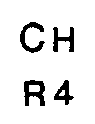 -(CH2)n-COOH
oder
-[(CH2)m-N]z- -(CH2)n-COOH;
R4 einen Wasserstoff; oder einen Alkylrest mit 1 bis 3 Kohlenstoffatomen;
m eine ganze Zahl von 2 bis 6;
n eine ganze Zahl von 0 bis 2; und
z eine ganze Zahl von 1 bis 6 bedeuten.
und werden für die Herstellung von Kühlschneidmitteln, Bohrhilfsmitteln, Hydraulik-und Schmierflüssigkeiten, sowie als Netz- oder Dispergierhilfsmittel oder Emulgatoren verwendet.
R1 einen perfluorierten Alkanoyl-, Alkylsulfonyl-, Alkylacetyl- oder Alkyläthylenrest mit jeweils 6 bis 16 Kohlenstoffatomen;
R2 ein Wasserstoffatom, oder den Rest R1, oder das Radikal -
R3 das Radikal -
oder
-[(CH2)m-N]z-
R4 einen Wasserstoff; oder einen Alkylrest mit 1 bis 3 Kohlenstoffatomen;
m eine ganze Zahl von 2 bis 6;
n eine ganze Zahl von 0 bis 2; und
z eine ganze Zahl von 1 bis 6 bedeuten.
und werden für die Herstellung von Kühlschneidmitteln, Bohrhilfsmitteln, Hydraulik-und Schmierflüssigkeiten, sowie als Netz- oder Dispergierhilfsmittel oder Emulgatoren verwendet.
Description
- Es ist bekannt, dass langkettige Perfluoralkylcarbonsäuren, Perfluoralkylsulfonsäuren und Perfluoralkanoylamidocarbonsäuren, wie sie z.B. in der DE-AS 1 242 626 genannt werden, in Form ihrer Salze bereits in 0,05%-iger, wässriger Lösung so gute Schmierwirkung zeigen, wie sie sonst nur von hochlegierten Kühl- und Schmierölen erreicht werden. Die derartigen Salze sind aber so starke Schäumer, dass sie als EP-Zusätze ungeeignet sind.
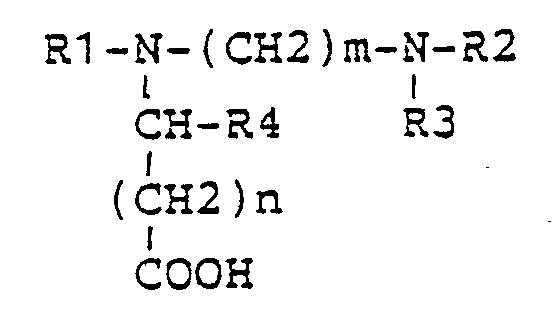
- Ueberraschend wurde nun gefunden, dass Alkali- und Aminsalze von Perfluoralkanoylamidocarbonsäuren, Perfluoralkylsulfonamidocarbonsäuren, Perfluoralkylacetylamidocarbonsäuren und Perfluoralkyläthylenaminocarbonsäuren der allgemeinen Formel
- In der Formel bedeuten:
R1 einen Perfluoralkanoylrest mit 6-16 Kohlenstoffatomen oder einen Perfluoralkylsulfonylrest mit 6-16 Kohlenstoffatomen oder einen Perfluoralkylacetylrest mit 6-16 Kohlenstoffatomen oder einen Perfluoralkyläthylenrest mit 6-16 Kohlenstoffatomen;
R2 den Rest R1 oder das Radikal --(CH2)n-COOH
oder ein Wasserstoffatom;
R3 das Radikal --(CH2)n-COOH
oder -[(CH2)m-N]z--(CH2)n-COOH;
R4 einen Alkylrest mit 1 bis 3 Kohlenstoffatomen oder ein Wasserstoffatom;
m eine ganze Zahl von 2 bis 6;
n eine ganze Zahl von 0 bis 2; und
z eine ganze Zahl von 1 bis 6. - Es ist für die spanabhebende Metallfertigung von besonderer Bedeutung, ölfreie, schwer brennbare Hydraulik- und Schmierflüssigkeiten zur Verfügung zu haben, deren Leckage die wasserlöslichen und wassermischbaren Kühl-Schmiermittel in ihrer Funktion nicht beeinträchtigt. Ebenso wichtig ist es, die diversen Kühl-, Schneid- und Schmieröle durch wasserlösliche Substanzen, wie zum Beispiel ein erfindungsgemässes Salz oder Amin, oder durch eine Mischung von mehreren der erfindungsgemässen Salze oder Amine mit geeigneten Korrosionsinhibitoren, wie sie z.B. im Schweizer Patent Nr. 614735 genannt sind, und geeigneten Verdickungsmitteln zu ersetzen.
- Durch Mischung eines oder mehrerer der erfindungsgemässen Salze oder Amine mit geeigneten Polyglykolen ist es möglich, Schmierflüssigkeiten für Motoren und Getriebe von hervorragender Schmierwirkung und extremer Temperaturbeständigkeit herzustellen.
- Erfindungsgemäss seien folgende chemische Substanzen beispielhaft angeführt:
1. N-perfluoroctylacetyl-äthylendiamin-N,N′-diessigsäure
2. N,N′-diperfluoroctylacetyl-äthylendiamin-N,N′-diessigsäure
3. N-perfluoroctylacetyl-äthylendiamin-N,N′,N′-triessigsäure
4. N-perfluorhexylacetyl-äthylendiamin-N,N′-diessigsäure
5. N,N′-diperfluorhexylacetyl-äthylendiamin-N,N′-diessigsäure
6. N-perfluorhexylacetyl-äthylendiamin-N,N′,N′-triessigsäure
7. N-perfluoroctanoyl-äthylendiamin-N,N′-diessigsäure
8. N,N′-diperfluoroctanoyl-äthylendiamin-N,N′-diessigsäure
9. N-perfluoroctanoyl-äthylendiamin-N,N′,N′-triessigsäure
10. N-perfluorhexanoyl-äthylendiamin-N,N′-diessigsäure
11. N,N′-diperfluorhexanoyl-äthylendiamin-N,N′-diessigsäure
12. N-perfluorhexanoyl-äthylendiamin-N,N′,N -triessigsäure
13. N-perfluordecanoyl-äthylendiamin-N,N′-diessigsäure
14. N,N′-diperfluordecanoyl-äthylendiamin-N,N′-diessigsäure
15. N-perfluordecanoyl-äthylendiamin-N,N′,N′-triessigsäure
16. N,N′-diperfluordodecanoyl-äthylendiamin-N,N′-diessigsäure
17. N-perfluordodecanoyl-äthylendiamin-N,N′,N′-triessigsäure
18. N,N′-diperfluor-9-isodecanoyl-äthylendiamin-N,N′-diessigsäure
19. N-perfluoroctylsulfonyl-äthylendiamin-N,N′-diessigsäure
20. N,N′-diperfluoroctylsulfonyl-äthylendiamin-N,N′-diessigsäure
21. N-perfluoroctylsulfonyl-äthylendiamin-N,N′,N′-triessigsäure
22. N,N′-diperfluoroctyläthylen-äthylendiamin-N,N′-diessigsäure
23. N-perfluoroctylacetyl-äthylendiamin-N,N′,N′-tripropionsäure
24. N,N′-diperfluoroctylacetyl-äthylendiamin-N,N′-dipropionsäure
25. N-perfluoroctylacetyl-äthylendiamin-N,N′-dipropionsäure
26. N,N′-diperfluoroctanoyl-äthylendiamin-N,N′-dipropionsäure
27. N-perfluoroctanoyl-äthylendiamin-N,N′,N′-tripropionsäure
28. N,N′-diperfluorisodecanoyl-äthylendiamin-N,N′-dibuttersäure
29. N-perfluorisodecanoyl-äthylendiamin-N,N′,N′-tributtersäure
30. N,N˝-diperfluoroctanoyl-diäthylentriamin-N,N′,N˝-triessigsäure
31. N-perfluoroctanoyl-diäthylentriamin-N,N′,N˝-triessigsäure
32. N,N′-diperfluoroctylacetyl-propylendiamin-N,N′-diessigsäure
33. N-perfluoroctylacetyl-propylendiamin-N,N′,N′-triessigsäure - Die erfindungsgemässen Säuren können mit den entsprechenden Basen, wie beispielsweise Alkalien oder Aminen, vorzugsweise Alkanolaminen wie Mono-, Di- oder Trialkanolaminen im äquivalenten Verhältnis oder auch im Ueberschuss umgesetzt und in Mischung mit bekannten Korrosionsinhibitoren in wässriger Lösung angewendet werden.
- Ueberraschend wurde gefunden, dass Mischungen der angeführten chemischen Verbindungen bei gleich gutem Schmiereffekt noch geringere Schaumwirkung zeigen als die reinen Komponenten.
- Die vergleichenden Schaumprüfungen wurden nach dem Lochscheiben-Schlagverfahren nach DIN 53902, Teil 1 durchgeführt. In einem 1-Liter Messzylinder werden 200 ml der zu prüfenden Lösung, die mit destilliertem Wasser hergestellt wurde, eingefüllt. Durch diese Lösung von 20 Grad C wird eine an einem Stiel befestigte Lochscheibe von 55 mm Durchmesser mit 40 Bohrungen von 4,5 mm Durchmesser in 30 sec. 30 mal mechanisch geschlagen. Die Hubhöhe der Lochplatte beträgt 350 mm. Das Schaumvolumen der Probenlösung wird 30 sec. nach dem Schlagen gemessen.


- Die vergleichenden Schmierprüfungen wurden auf der "Reibverschleisswaage nach Reichert" durchgeführt. Dabei wird über ein Doppelhebelsystem eine fest eingespannte, genormte Prüfrolle an einen umlaufenden, genormten Schleifring angepresst, der in seinem unteren Drittel in die zu prüfende Flüssigkeit taucht, deren Druckaufnahmevermögen beurteilt werden soll. Die Drehzahl des Schleifringes ist so bemessen, dass stets genügend Flüssigkeit in die Berührungs- (Reibverschleiss-) stelle zwischen Prüfrolle und Schleifring eintreten kann. Die scharf abgegrenzte Abriebellipse wird nach 100 Schleifmetern auf der Prüfrolle gemessen (in mm). Bei allen Versuchen wurde mit einem Belastungsgewicht von 1500 g, das entspricht einem Anpressdruck von 30 kg, gefahren. Es wurden jeweils ein Vor- und Nachlauf in destilliertem Wasser und 3 Probeläufe mit der Prüflösung durchgeführt.


- Die erfindungsgemässen Salze und können nun, wie be reits angedeutet, nicht nur für die Metallbearbeitung, sondern besonders vorteilhaft auch in anderen Anwendungsbereichen eingesetzt werden, in denen es auf gute Schmierwirkung, geringe Schaumbildung und gute Netzeigenschaften ankommt. Als besonders interessant haben sie sich in denjenigen Gebieten und denjenigen Konzentrationen gezeigt, wie sie in den Ansprüchen 2 bis 8 beschrieben sind.
- Dazu gehört unter anderem auch die Gesteinsbohrung, bei der mit Hilfe der erfindungsgemässen Salze oder Amine der Schneidwiderstand reduziert wird, wodurch die Temperatur in Schneidennähe abnimmt und der Vorschub des Bohrmeissels gesteigert werden kann.
Claims (8)
1. Salz oder Amin einer wenigstens teilweise perfluorierten Amido- und/oder Aminocarbonsäure, die eine Struktur nach folgender Formel besitzt:

wobei
R1 einen perfluorierten Alkanoyl-, Alkylsulfonyl-, Alkylacetyl- oder Alkyläthylenrest mit jeweils 6 bis 16 Kohlenstoffatomen;
R2 ein Wasserstoffatom, oder den Rest R1, oder das Radikal - -(CH2)n-COOH;
R3 das Radikal - -(CH2)n-COOH
oder
-[(CH2)m-N]z- -(CH2)n-COOH;
R4 einen Wasserstoff; oder einen Alkylrest mit 1 bis 3 Kohlenstoffatomen;
m eine ganze Zahl von 2 bis 6;
n eine ganze Zahl von 0 bis 2; und
z eine ganze Zahl von 1 bis 6 bedeuten.
R1 einen perfluorierten Alkanoyl-, Alkylsulfonyl-, Alkylacetyl- oder Alkyläthylenrest mit jeweils 6 bis 16 Kohlenstoffatomen;
R2 ein Wasserstoffatom, oder den Rest R1, oder das Radikal -
R3 das Radikal -
oder
-[(CH2)m-N]z-
R4 einen Wasserstoff; oder einen Alkylrest mit 1 bis 3 Kohlenstoffatomen;
m eine ganze Zahl von 2 bis 6;
n eine ganze Zahl von 0 bis 2; und
z eine ganze Zahl von 1 bis 6 bedeuten.
2. Verwendung eines oder mehrerer verschiedener Salze oder Amine nach Anspruch 1 in wässriger Lösung in einer Konzentration von 0.001 bis 5 Gewichtsprozent, vorzugsweise von 0.01 bis 1 Gewichtsprozent, insbesondere von 0.05 bis 0.1 Gewichtsprozent als Kühlschneidmittel für die Metallbearbeitung.
3. Verwendung eines oder mehrerer verschiedener Salze oder Amine nach Anspruch 1 in wässriger Lösung in einer Konzentration von 0.001 bis 5 Gewichtsprozent, vorzugsweise von 0.01 bis 1 Gewichtsprozent, insbesondere von 0.05 bis 0.1 Gewichtsprozent als Bohrhilfsmittel für Gesteinsbohrungen, insbesondere in der Erdöl- und Erdgas-Exploration.
4. Verwendung eines oder mehrerer verschiedener Salze oder Amine nach Anspruch 1 in wässriger Lösung in einer Konzentration von 0.001 bis 5 Gewichtsprozent, vorzugsweise von 0.01 bis 1 Gewichtsprozent, insbesondere von 0.05 bis 0.1 Gewichtsprozent als Hilfsmittel für die Sekundär- und/oder Tertiärförderung von Erdöl.
5. Verwendung eines oder mehrerer verschiedener Salze oder Amine nach Anspruch 1 in wässriger Lösung in einer Konzentration von 0.001 bis 5 Gewichtsprozent, vorzugsweise von 0.01 bis 1 Gewichtsprozent, insbesondere von 0.05 bis 0.1 Gewichtsprozent als Hydraulikflüssigkeit.
6. Verwendung eines oder mehrerer verschiedener Salze oder Amine nach Anspruch 1 in wässriger Lösung in einer Konzentration von 0.001 bis 5 Gewichtsprozent, vorzugsweise von 0.01 bis 1 Gewichtsprozent, insbesondere von 0.05 bis 0.1 Gewichtsprozent als Schmierflüssigkeit zur Schmierung von Maschinen, Maschinenteilen, Motoren und/oder Getrieben.
7. Verwendung eines oder mehrerer verschiedener Salze oder Amine nach Anspruch 1 in wässriger Lösung in einer Konzentration von 0.001 bis 5 Gewichtsprozent, vorzugsweise von 0.01 bis 1 Gewichtsprozent, insbesondere von 0.05 bis 0.1 Gewichtsprozent als Netz- oder Dispergierhilfsmittel oder Emulgator.
8. Verwendung eines oder mehrerer verschiedener Salze oder Amine nach Anspruch 1 in wässriger Lösung in einer Konzentration von 0.001 bis 5 Gewichtsprozent, vorzugsweise von 0.01 bis 1 Gewichtsprozent, insbesondere von 0.05 bis 0.1 Gewichtsprozent als Verlaufhilfsmittel für Lacke und Anstriche.
Applications Claiming Priority (2)
| Application Number | Priority Date | Filing Date | Title |
|---|---|---|---|
| CH4754/87 | 1987-12-07 | ||
| CH475487 | 1987-12-07 |
Publications (2)
| Publication Number | Publication Date |
|---|---|
| EP0319942A2 true EP0319942A2 (de) | 1989-06-14 |
| EP0319942A3 EP0319942A3 (de) | 1990-05-09 |
Family
ID=4281928
Family Applications (1)
| Application Number | Title | Priority Date | Filing Date |
|---|---|---|---|
| EP88120419A Withdrawn EP0319942A3 (de) | 1987-12-07 | 1988-12-07 | Neue Salze und Amine von wenigstens teilweise perfluorierten Amino- und/oder Amidocarbonsäuren sowie deren Verwendung |
Country Status (2)
| Country | Link |
|---|---|
| EP (1) | EP0319942A3 (de) |
| JP (1) | JPH02247A (de) |
Cited By (7)
| Publication number | Priority date | Publication date | Assignee | Title |
|---|---|---|---|---|
| EP0629608A3 (de) * | 1993-06-14 | 1995-06-28 | Hampshire Chemical Corp | N-Acyl-N,N',N'-Ethylendiamintriessigsäurederivate und Verfahren zu ihrer Herstellung. |
| EP0697245A1 (de) * | 1994-08-19 | 1996-02-21 | Rhone-Poulenc Inc. | Anionische Tenside mit mehreren hydrophoben und hydrophilen Gruppen |
| EP0697244A1 (de) * | 1994-08-19 | 1996-02-21 | Rhone-Poulenc Inc. | Amphotere Tenside mit mehreren hydrophoben und hydrophilen Gruppen |
| WO1997025394A1 (de) * | 1996-01-04 | 1997-07-17 | Heinz Bereuter | Verwendung von alkali- und/oder triethanolaminsalzen der alkanoylamidocarbonsäuren in der metallbearbeitung |
| US6096694A (en) * | 1997-10-09 | 2000-08-01 | Fuji Electric Co., Ltd. | Liquid lubricant, magnetic recording medium using the same, and method for manufacturing magnetic recording medium |
| WO2009100468A2 (de) | 2008-02-11 | 2009-08-20 | Heinz Bereuter | Tenside, verwendung von tensiden in der erdölförderung, zur entfernung von ölrückständen sowie zur auftrennung von ölsanden und ölschiefer |
| CN103214389A (zh) * | 2013-05-06 | 2013-07-24 | 江南大学 | N,n’-双脂肪酰基乙二胺二丙酸钠复配体系在三次采油中的应用 |
Families Citing this family (2)
| Publication number | Priority date | Publication date | Assignee | Title |
|---|---|---|---|---|
| CN100478687C (zh) | 2000-10-06 | 2009-04-15 | 日立金属株式会社 | 磁体用原料合金的评价方法 |
| CN110818567A (zh) * | 2019-11-20 | 2020-02-21 | 赛科思能源技术(重庆)有限责任公司 | 一种提高天然气采收率方法及其产品生产工艺 |
Family Cites Families (2)
| Publication number | Priority date | Publication date | Assignee | Title |
|---|---|---|---|---|
| FR1396008A (fr) * | 1964-04-22 | 1965-04-16 | Pennsalt Chemicals Corp | Amides substitués d'acides carboxyliques halogénés à chaîne longue |
| US4536298A (en) * | 1983-03-30 | 1985-08-20 | Dainippon Ink And Chemicals, Inc. | Aqueous foam fire extinguisher |
-
1988
- 1988-12-06 JP JP63307066A patent/JPH02247A/ja active Pending
- 1988-12-07 EP EP88120419A patent/EP0319942A3/de not_active Withdrawn
Cited By (10)
| Publication number | Priority date | Publication date | Assignee | Title |
|---|---|---|---|---|
| EP0629608A3 (de) * | 1993-06-14 | 1995-06-28 | Hampshire Chemical Corp | N-Acyl-N,N',N'-Ethylendiamintriessigsäurederivate und Verfahren zu ihrer Herstellung. |
| EP0861827A3 (de) * | 1993-06-14 | 1998-11-04 | Hampshire Chemical Corporation | N-Acyl-N,N',N''-ethylendiamintriessigsäurederivate und Verfahren zur ihrer Herstellung |
| EP0697245A1 (de) * | 1994-08-19 | 1996-02-21 | Rhone-Poulenc Inc. | Anionische Tenside mit mehreren hydrophoben und hydrophilen Gruppen |
| EP0697244A1 (de) * | 1994-08-19 | 1996-02-21 | Rhone-Poulenc Inc. | Amphotere Tenside mit mehreren hydrophoben und hydrophilen Gruppen |
| WO1997025394A1 (de) * | 1996-01-04 | 1997-07-17 | Heinz Bereuter | Verwendung von alkali- und/oder triethanolaminsalzen der alkanoylamidocarbonsäuren in der metallbearbeitung |
| US6096694A (en) * | 1997-10-09 | 2000-08-01 | Fuji Electric Co., Ltd. | Liquid lubricant, magnetic recording medium using the same, and method for manufacturing magnetic recording medium |
| WO2009100468A2 (de) | 2008-02-11 | 2009-08-20 | Heinz Bereuter | Tenside, verwendung von tensiden in der erdölförderung, zur entfernung von ölrückständen sowie zur auftrennung von ölsanden und ölschiefer |
| WO2009100468A3 (de) * | 2008-02-11 | 2009-10-22 | Heinz Bereuter | Tenside, verwendung von tensiden in der erdölförderung, zur entfernung von ölrückständen sowie zur auftrennung von ölsanden und ölschiefer |
| CN103214389A (zh) * | 2013-05-06 | 2013-07-24 | 江南大学 | N,n’-双脂肪酰基乙二胺二丙酸钠复配体系在三次采油中的应用 |
| CN103214389B (zh) * | 2013-05-06 | 2015-03-11 | 江南大学 | N,n’-双脂肪酰基乙二胺二丙酸钠复配体系在三次采油中的应用 |
Also Published As
| Publication number | Publication date |
|---|---|
| EP0319942A3 (de) | 1990-05-09 |
| JPH02247A (ja) | 1990-01-05 |
Similar Documents
| Publication | Publication Date | Title |
|---|---|---|
| EP0255605B1 (de) | Pulverförmige Schmiermittel-Additive für Bohrspülungen auf Wasserbasis | |
| EP0383163B1 (de) | Verfahren zur Stimulierung von Öl- und Gas-Sonden bei der Gewinnung von Öl und Gas aus unterirdishen Formationen und Stimulierungsmittel hierfür | |
| DE3008500C2 (de) | ||
| DE2145296A1 (de) | Additiv für eine Metallverarbeitungs-Komposition, sowie dessen Verwendung | |
| DE69522906T2 (de) | Ester enthaltende schmierölzusammensetzung, Verwendung dieser Zusammensetzung und diese enthaltende Bohrlochflüssigkeiten | |
| EP0382070B1 (de) | Oleophile basische Aminverbindungen als Additiv in Invert-Bohrspülschlämmen | |
| DE912251C (de) | Schmiermittel mit einem Gehalt an halogen- und phosphorhaltigen Verbindungen | |
| CH645654A5 (de) | Polyoxyalkylendiamid. | |
| DE2827286A1 (de) | Bohrfluessigkeit, darin verwendbares schmiermittel sowie verwendung der bohrfluessigkeit bei einem bohrverfahren | |
| DE977489C (de) | OElfreie, waesserige Fluessigkeit fuer die spanabhebende Metallbearbeitung | |
| DE977492C (de) | OElfreie, waesserige Schmier-, Schneid- und Kuehlfluessigkeit fuer die spanabhebende Metallbearbeitung | |
| DE2418115C3 (de) | Dispergiermittel zum Dispergieren von kolloidalem, festem Asphalt in ölfreiem Wasser und seine Verwendung | |
| DE3328629T1 (de) | Verwendung von Aminen mit polyfluorierter Kette als Schmiermitteladditive | |
| JPH02247A (ja) | 少なくとも一部がパーフルオロアミノカルボン酸及び/又はパーフルオロアミドカルボン酸の新規塩類又はアミン類、及びその利用 | |
| DE1648860A1 (de) | Verfahren und Mittel zur Bestimmung der Bakterienkonzentration in einem Medium | |
| DE68902532T2 (de) | Schmierfettzusammensetzung. | |
| DE10043040A1 (de) | Verwendung von N-Alkyl-beta-alanin-Derivaten zur Herstellung von reinigenden Korrosionsschutzmitteln | |
| EP0034726A2 (de) | Verfahren zur Herstellung von Umsetzungsprodukten aus Fettsäuren und Alkanolaminen sowie die Verwendung der Umsetzungsprodukte als technische Emulgatoren | |
| DE3688654T2 (de) | Extreme Hochdruckadditive zur Verwendung in Metallschmierung. | |
| DE2130711C3 (de) | Metallbearbeitungsschmiermittel | |
| EP0513070A1 (de) | Verfahren zur spaltung von öl-/wasser-emulsionen | |
| DE711387C (de) | Press- und Schmierfluessigkeit fuer hydraulische Drucksysteme | |
| EP0012106A1 (de) | Ammoniumsalze der Methylphosphonsäure, ihre Herstellung, ihre Verwendung als Zusätze für Hydraulikflüssigkeiten und Hydraulikflüssigkeiten, die sie enthalten | |
| DE928194C (de) | Schmierstoffzusatzmittel | |
| DE817871C (de) | Korrosionsschutzmittel |
Legal Events
| Date | Code | Title | Description |
|---|---|---|---|
| PUAI | Public reference made under article 153(3) epc to a published international application that has entered the european phase |
Free format text: ORIGINAL CODE: 0009012 |
|
| AK | Designated contracting states |
Kind code of ref document: A2 Designated state(s): AT BE DE ES FR GB IT NL SE |
|
| PUAL | Search report despatched |
Free format text: ORIGINAL CODE: 0009013 |
|
| AK | Designated contracting states |
Kind code of ref document: A3 Designated state(s): AT BE DE ES FR GB IT NL SE |
|
| STAA | Information on the status of an ep patent application or granted ep patent |
Free format text: STATUS: THE APPLICATION IS DEEMED TO BE WITHDRAWN |
|
| 18D | Application deemed to be withdrawn |
Effective date: 19901110 |