EP0321092A2 - Méthode de préparation d'huile végétale avec arôme de viande et produits - Google Patents
Méthode de préparation d'huile végétale avec arôme de viande et produits Download PDFInfo
- Publication number
- EP0321092A2 EP0321092A2 EP88310751A EP88310751A EP0321092A2 EP 0321092 A2 EP0321092 A2 EP 0321092A2 EP 88310751 A EP88310751 A EP 88310751A EP 88310751 A EP88310751 A EP 88310751A EP 0321092 A2 EP0321092 A2 EP 0321092A2
- Authority
- EP
- European Patent Office
- Prior art keywords
- vegetable oil
- natural
- meaty
- flavor
- inert gas
- Prior art date
- Legal status (The legal status is an assumption and is not a legal conclusion. Google has not performed a legal analysis and makes no representation as to the accuracy of the status listed.)
- Granted
Links
- 235000015112 vegetable and seed oil Nutrition 0.000 title claims abstract description 69
- 239000008158 vegetable oil Substances 0.000 title claims abstract description 68
- 235000013372 meat Nutrition 0.000 title claims abstract description 48
- 238000002360 preparation method Methods 0.000 title description 5
- 239000000796 flavoring agent Substances 0.000 claims abstract description 90
- 235000019634 flavors Nutrition 0.000 claims abstract description 88
- 238000004904 shortening Methods 0.000 claims abstract description 54
- 239000000203 mixture Substances 0.000 claims abstract description 53
- 238000000034 method Methods 0.000 claims abstract description 35
- 239000011261 inert gas Substances 0.000 claims abstract description 28
- IJGRMHOSHXDMSA-UHFFFAOYSA-N Atomic nitrogen Chemical compound N#N IJGRMHOSHXDMSA-UHFFFAOYSA-N 0.000 claims description 47
- 150000002194 fatty esters Chemical class 0.000 claims description 32
- 229910052757 nitrogen Inorganic materials 0.000 claims description 21
- 239000003549 soybean oil Substances 0.000 claims description 12
- 235000012424 soybean oil Nutrition 0.000 claims description 12
- 238000010438 heat treatment Methods 0.000 claims description 5
- ZCYVEMRRCGMTRW-UHFFFAOYSA-N 7553-56-2 Chemical compound [I] ZCYVEMRRCGMTRW-UHFFFAOYSA-N 0.000 claims description 4
- 229910052740 iodine Inorganic materials 0.000 claims description 4
- 239000011630 iodine Substances 0.000 claims description 4
- 238000010924 continuous production Methods 0.000 claims description 3
- 238000010923 batch production Methods 0.000 claims description 2
- 239000003760 tallow Substances 0.000 description 58
- 239000003925 fat Substances 0.000 description 50
- 235000019197 fats Nutrition 0.000 description 43
- 239000003921 oil Substances 0.000 description 32
- 235000019198 oils Nutrition 0.000 description 31
- 239000007789 gas Substances 0.000 description 30
- 239000000306 component Substances 0.000 description 19
- 235000013305 food Nutrition 0.000 description 19
- 238000012546 transfer Methods 0.000 description 16
- 235000015278 beef Nutrition 0.000 description 9
- HVYWMOMLDIMFJA-DPAQBDIFSA-N cholesterol Chemical compound C1C=C2C[C@@H](O)CC[C@]2(C)[C@@H]2[C@@H]1[C@@H]1CC[C@H]([C@H](C)CCCC(C)C)[C@@]1(C)CC2 HVYWMOMLDIMFJA-DPAQBDIFSA-N 0.000 description 8
- 239000000463 material Substances 0.000 description 7
- 238000012545 processing Methods 0.000 description 7
- 238000013019 agitation Methods 0.000 description 6
- 229910001873 dinitrogen Inorganic materials 0.000 description 6
- 239000008173 hydrogenated soybean oil Substances 0.000 description 6
- 235000010469 Glycine max Nutrition 0.000 description 5
- 239000008157 edible vegetable oil Substances 0.000 description 5
- 239000007788 liquid Substances 0.000 description 5
- 238000012856 packing Methods 0.000 description 5
- XLYOFNOQVPJJNP-UHFFFAOYSA-N water Chemical compound O XLYOFNOQVPJJNP-UHFFFAOYSA-N 0.000 description 5
- XKRFYHLGVUSROY-UHFFFAOYSA-N Argon Chemical compound [Ar] XKRFYHLGVUSROY-UHFFFAOYSA-N 0.000 description 4
- CURLTUGMZLYLDI-UHFFFAOYSA-N Carbon dioxide Chemical compound O=C=O CURLTUGMZLYLDI-UHFFFAOYSA-N 0.000 description 4
- QVGXLLKOCUKJST-UHFFFAOYSA-N atomic oxygen Chemical compound [O] QVGXLLKOCUKJST-UHFFFAOYSA-N 0.000 description 4
- 235000012000 cholesterol Nutrition 0.000 description 4
- 235000014113 dietary fatty acids Nutrition 0.000 description 4
- 229930195729 fatty acid Natural products 0.000 description 4
- 239000000194 fatty acid Substances 0.000 description 4
- 239000001301 oxygen Substances 0.000 description 4
- 229910052760 oxygen Inorganic materials 0.000 description 4
- 235000013573 potato product Nutrition 0.000 description 4
- 238000010926 purge Methods 0.000 description 4
- 238000003860 storage Methods 0.000 description 4
- 244000061456 Solanum tuberosum Species 0.000 description 3
- 235000002595 Solanum tuberosum Nutrition 0.000 description 3
- 238000010411 cooking Methods 0.000 description 3
- 239000006185 dispersion Substances 0.000 description 3
- 125000005456 glyceride group Chemical group 0.000 description 3
- -1 polyol fatty acid esters Chemical class 0.000 description 3
- 235000012015 potatoes Nutrition 0.000 description 3
- 150000004671 saturated fatty acids Chemical class 0.000 description 3
- 229910001220 stainless steel Inorganic materials 0.000 description 3
- 239000010935 stainless steel Substances 0.000 description 3
- 238000012360 testing method Methods 0.000 description 3
- 235000013311 vegetables Nutrition 0.000 description 3
- 235000004977 Brassica sinapistrum Nutrition 0.000 description 2
- 241000196324 Embryophyta Species 0.000 description 2
- 235000019483 Peanut oil Nutrition 0.000 description 2
- 235000019485 Safflower oil Nutrition 0.000 description 2
- 239000000654 additive Substances 0.000 description 2
- 230000000996 additive effect Effects 0.000 description 2
- 229910052786 argon Inorganic materials 0.000 description 2
- 239000002585 base Substances 0.000 description 2
- 239000001569 carbon dioxide Substances 0.000 description 2
- 229910002092 carbon dioxide Inorganic materials 0.000 description 2
- 230000005465 channeling Effects 0.000 description 2
- 239000011248 coating agent Substances 0.000 description 2
- 238000000576 coating method Methods 0.000 description 2
- 150000001875 compounds Chemical class 0.000 description 2
- 235000012343 cottonseed oil Nutrition 0.000 description 2
- 239000002385 cottonseed oil Substances 0.000 description 2
- 238000004332 deodorization Methods 0.000 description 2
- 238000009826 distribution Methods 0.000 description 2
- 150000004665 fatty acids Chemical class 0.000 description 2
- 239000012530 fluid Substances 0.000 description 2
- 235000013355 food flavoring agent Nutrition 0.000 description 2
- 235000012020 french fries Nutrition 0.000 description 2
- 239000011521 glass Substances 0.000 description 2
- 239000001307 helium Substances 0.000 description 2
- 229910052734 helium Inorganic materials 0.000 description 2
- SWQJXJOGLNCZEY-UHFFFAOYSA-N helium atom Chemical compound [He] SWQJXJOGLNCZEY-UHFFFAOYSA-N 0.000 description 2
- 238000004519 manufacturing process Methods 0.000 description 2
- 239000000312 peanut oil Substances 0.000 description 2
- 238000005086 pumping Methods 0.000 description 2
- 235000005713 safflower oil Nutrition 0.000 description 2
- 239000003813 safflower oil Substances 0.000 description 2
- 235000003441 saturated fatty acids Nutrition 0.000 description 2
- 235000020238 sunflower seed Nutrition 0.000 description 2
- 238000005809 transesterification reaction Methods 0.000 description 2
- 150000003626 triacylglycerols Chemical class 0.000 description 2
- 241000251468 Actinopterygii Species 0.000 description 1
- 235000014698 Brassica juncea var multisecta Nutrition 0.000 description 1
- 240000002791 Brassica napus Species 0.000 description 1
- 235000006008 Brassica napus var napus Nutrition 0.000 description 1
- 235000006618 Brassica rapa subsp oleifera Nutrition 0.000 description 1
- 244000188595 Brassica sinapistrum Species 0.000 description 1
- DPUOLQHDNGRHBS-UHFFFAOYSA-N Brassidinsaeure Natural products CCCCCCCCC=CCCCCCCCCCCCC(O)=O DPUOLQHDNGRHBS-UHFFFAOYSA-N 0.000 description 1
- 206010013911 Dysgeusia Diseases 0.000 description 1
- URXZXNYJPAJJOQ-UHFFFAOYSA-N Erucic acid Natural products CCCCCCC=CCCCCCCCCCCCC(O)=O URXZXNYJPAJJOQ-UHFFFAOYSA-N 0.000 description 1
- 241000287828 Gallus gallus Species 0.000 description 1
- 241001465754 Metazoa Species 0.000 description 1
- 206010033546 Pallor Diseases 0.000 description 1
- 241001494479 Pecora Species 0.000 description 1
- 235000003434 Sesamum indicum Nutrition 0.000 description 1
- 244000000231 Sesamum indicum Species 0.000 description 1
- 238000010793 Steam injection (oil industry) Methods 0.000 description 1
- 125000002252 acyl group Chemical group 0.000 description 1
- 230000006978 adaptation Effects 0.000 description 1
- 239000003513 alkali Substances 0.000 description 1
- 235000020661 alpha-linolenic acid Nutrition 0.000 description 1
- DTOSIQBPPRVQHS-PDBXOOCHSA-N alpha-linolenic acid Chemical compound CC\C=C/C\C=C/C\C=C/CCCCCCCC(O)=O DTOSIQBPPRVQHS-PDBXOOCHSA-N 0.000 description 1
- XAGFODPZIPBFFR-UHFFFAOYSA-N aluminium Chemical compound [Al] XAGFODPZIPBFFR-UHFFFAOYSA-N 0.000 description 1
- 229910052782 aluminium Inorganic materials 0.000 description 1
- 239000002518 antifoaming agent Substances 0.000 description 1
- 239000003963 antioxidant agent Substances 0.000 description 1
- 238000013459 approach Methods 0.000 description 1
- 239000005415 artificial ingredient Substances 0.000 description 1
- 239000012298 atmosphere Substances 0.000 description 1
- 239000000828 canola oil Substances 0.000 description 1
- 235000019519 canola oil Nutrition 0.000 description 1
- 125000004432 carbon atom Chemical group C* 0.000 description 1
- 239000003054 catalyst Substances 0.000 description 1
- 235000013330 chicken meat Nutrition 0.000 description 1
- 239000003086 colorant Substances 0.000 description 1
- 235000005687 corn oil Nutrition 0.000 description 1
- 239000002285 corn oil Substances 0.000 description 1
- 230000003247 decreasing effect Effects 0.000 description 1
- 238000011161 development Methods 0.000 description 1
- 238000004821 distillation Methods 0.000 description 1
- 239000012153 distilled water Substances 0.000 description 1
- 235000012489 doughnuts Nutrition 0.000 description 1
- 238000009889 dry rendering Methods 0.000 description 1
- 230000000694 effects Effects 0.000 description 1
- 230000002255 enzymatic effect Effects 0.000 description 1
- DPUOLQHDNGRHBS-KTKRTIGZSA-N erucic acid Chemical compound CCCCCCCC\C=C/CCCCCCCCCCCC(O)=O DPUOLQHDNGRHBS-KTKRTIGZSA-N 0.000 description 1
- 238000011156 evaluation Methods 0.000 description 1
- 235000019688 fish Nutrition 0.000 description 1
- 239000011888 foil Substances 0.000 description 1
- 235000012041 food component Nutrition 0.000 description 1
- 239000005428 food component Substances 0.000 description 1
- 238000005194 fractionation Methods 0.000 description 1
- 235000021588 free fatty acids Nutrition 0.000 description 1
- 230000005484 gravity Effects 0.000 description 1
- 238000005984 hydrogenation reaction Methods 0.000 description 1
- 238000010348 incorporation Methods 0.000 description 1
- 230000003993 interaction Effects 0.000 description 1
- 230000002045 lasting effect Effects 0.000 description 1
- 229960004488 linolenic acid Drugs 0.000 description 1
- KQQKGWQCNNTQJW-UHFFFAOYSA-N linolenic acid Natural products CC=CCCC=CCC=CCCCCCCCC(O)=O KQQKGWQCNNTQJW-UHFFFAOYSA-N 0.000 description 1
- 238000012986 modification Methods 0.000 description 1
- 230000004048 modification Effects 0.000 description 1
- 239000012299 nitrogen atmosphere Substances 0.000 description 1
- QJGQUHMNIGDVPM-UHFFFAOYSA-N nitrogen group Chemical group [N] QJGQUHMNIGDVPM-UHFFFAOYSA-N 0.000 description 1
- 235000014571 nuts Nutrition 0.000 description 1
- 238000010525 oxidative degradation reaction Methods 0.000 description 1
- 239000004033 plastic Substances 0.000 description 1
- 239000002985 plastic film Substances 0.000 description 1
- 229920006255 plastic film Polymers 0.000 description 1
- 239000004014 plasticizer Substances 0.000 description 1
- 229920000223 polyglycerol Polymers 0.000 description 1
- 229920005862 polyol Polymers 0.000 description 1
- 229910052573 porcelain Inorganic materials 0.000 description 1
- 235000015277 pork Nutrition 0.000 description 1
- 235000013606 potato chips Nutrition 0.000 description 1
- 238000011084 recovery Methods 0.000 description 1
- 230000000717 retained effect Effects 0.000 description 1
- 229920006395 saturated elastomer Polymers 0.000 description 1
- 239000007787 solid Substances 0.000 description 1
- 239000007921 spray Substances 0.000 description 1
- 238000005507 spraying Methods 0.000 description 1
- 238000003756 stirring Methods 0.000 description 1
- 235000019871 vegetable fat Nutrition 0.000 description 1
- 239000011782 vitamin Substances 0.000 description 1
- 229940088594 vitamin Drugs 0.000 description 1
- 229930003231 vitamin Natural products 0.000 description 1
- 235000013343 vitamin Nutrition 0.000 description 1
- 239000003039 volatile agent Substances 0.000 description 1
- 238000009888 wet rendering Methods 0.000 description 1
Images

Classifications
-
- A—HUMAN NECESSITIES
- A23—FOODS OR FOODSTUFFS; TREATMENT THEREOF, NOT COVERED BY OTHER CLASSES
- A23D—EDIBLE OILS OR FATS, e.g. MARGARINES, SHORTENINGS OR COOKING OILS
- A23D9/00—Other edible oils or fats, e.g. shortenings or cooking oils
Definitions
- the present invention relates to edible oil compositions which are not primarily of animal origin, having natural meaty flavoring components, and more particularly relates to methods for manufacturing meat flavored fatty ester vegetable oil products which are particularly useful for deep-fat frying, as well as to naturally meat flavored vegetable oil products produced by such methods.
- Edible fats and oil products such as beef tallow and vegetable oils, which may be partially hydrogenated, are conventionally used for deep-fat frying of foods in home, institutional, industrial and commercial food preparation, for coating or spraying of precooked food products such as precooked bakery goods, crackers, potato products and other food products in which the organoleptic properties of a suitable shortening are desired.
- Deep-fat frying involves the partial or complete submersion of a food product in a bath of edible fat or oil at elevated temperatures to produce rapid cooking.
- beef tallow shortening and shortening blends containing beef tallow provide particularly desirable meaty flavor, aroma and other organoleptic properties to food products cooked with such tallow containing products.
- some of the fat is retained in the fried food product. Because large quantities of food products are passed through the heated fat, the fat must be continuously or periodically replenished to restore to the cooking bath, the fat carried out with the cooked food product.
- Large quantities of tallow containing fats and oils are consumed in the commercial deep-frying of products such as donuts, french fried potatoes, potato chips, chicken, nuts and fish. Tallow containing products are also used as a spray or coating on prebaked products such as crackers and potato products.
- beef tallow contains cholesterol, which is incorporated into the fried food product together with the glyceride components of the tallow.
- Beef tallow also contains a relatively high proportion of saturated fatty acids, which are also incorporated into food products fried therein.
- vegetable oil shortenings may be used in the preparation of shortening compositions which have relatively low saturated fatty acid content, and moreover, do not contain cholesterol.
- vegetable oil shortenings typically do not provide the desirable natural meaty flavor of beef tallow.
- methods are provided for preparing naturally meaty flavored edible shortenings which are able to impart meaty flavors to foodstuffs fried therein, or sprayed or coated therewith.
- volatile natural meaty flavor components are transferred by means of an inert gas from a flavorant meat fat maintained at an elevated temperature to a flavor recipient edible shortening maintained at a temperature less than that of the flavorant meat fat as will be described in more detail hereinafter.
- a meat fat is provided as a source of volatile natural meaty flavor components.
- the meat fat may preferably be selected from the group consisting of pork tallow (lard), beef tallow, sheep tallow and mixtures thereof.
- Meat fats may typically be provided in accordance with conventional practice by wet rendering under steam pressure to provide steam tallow. Such tallow need not be refined, but may be dried and clarified, which may include some degree of blanching.
- Meat fats may also conventionally be produced by dry-rendering processes, which may provide a cooked flavor somewhat different than that of prime steam tallow.
- the meat fat may be processed to enhance its flavoring properties such as by heating under aqueous conditions as will be further described hereinafter.
- the meat fat which is provided as a source of volatile meaty flavor components heated to an elevated temperature which is preferably at least about 150° F. and preferably in the range of from about 175° F. to about 220° F.
- elevated temperature which is preferably at least about 150° F. and preferably in the range of from about 175° F. to about 220° F.
- Higher temperatures up to about 450° F. may be used to increase volatilization rate and shorten meaty flavor transfer time. However, such higher temperatures may alter the delicate flavor components or component distribution which may be undesirable in some uses or products.
- the lower preferred temperature range of 175 - 220° F. generally provides the highest quality product in terms of delicacy and quality of flavor.
- An inert gas is conducted through the meat fat volatile flavor source while maintaining the meat fat at an elevated temperature of at least about 150° F.
- the inert gas may preferably be selected from the group consisting of nitrogen, helium, argon, carbon dioxide and mixtures thereof. It is desirable that the inert gas, such as carbon dioxide, nitrogen, argon, helium or mixtures thereof be substantially oxygen free, and that the oil be deoxygenated prior to being heated to elevated temperature for inert gas stripping. Under selected operating conditions, water vapor (steam) alone or in admixture with other inert gases may also be used as an inert volatile meaty flavor transfer gas.
- the inert gas should best be intimately dispersed in the meat fat to maximize (consistent with energy of dispersion considerations), the surface area to volume ratio of the gas-meat fat contact area.
- the meat fat may also be sprayed or misted through a body of the gas in order to achieve a high contact surface area ratio for the conduction of inert gas through the meat fat.
- the contact time of the gas with the meat fat should best be sufficient to approach equilibrium distribution of desired flavor volatile components between the inert gas and the meat fat.
- the effective contact time may be increased by small gas bubble size, agitation of the liquid meat fat, the use of an inert solid surface to mediate gas/liquid contact and/or countercurrent contacting techniques.
- the inert gas may desirably be conducted through the meat fat under atmospheric pressure conditions (e.g., in the range of 14-20 psia), but may also be conducted therethrough under reduced pressure conditions (e.g., 10-14 psia), as will be more fully discussed hereinafter.
- reduced pressure conditions e.g. 10-14 psia
- Higher pressures may be used (e.g., up to 55 psia or more) but are not particularly advantageous.
- a vegetable oil fatty ester shortening composition is also provided to receive the meaty flavor components.
- the methods have particular applicability to vegetable oil fatty ester shortening compositions selected from vegetable oils including oleic-linoleic acid oils, linolenic acid oils and erucic acid oils, such as cottonseed oil, peanut oil, sesame seed oil, corn oil, soybean oil, safflower oil, sunflower seed oil, rapeseed (canola), and other edible oilseed oils, and mixtures thereof.
- the methods may also be applied to other oils such as polyol fatty acid esters including polyglycerol fatty acid esters and sugar fatty acid esters, and the term vegetable oil fatty ester shortening composition as used herein includes such fatty ester materials.
- the vegetable oil fatty ester shortening composition is provided at a temperature less than the temperature of the meat fat flavorant source, which will preferably be less than about 120° F., and desirably at a temperature in the range of from about 50° F. to about 90° F. at which the vegetable oil fatty ester shortening composition is a liquid.
- the edible vegetable oil fatty ester shortening which is utilized to receive the meaty flavorant components is preferably refined and deodorized.
- edible vegetable oils such as soybean oil which have a characteristically offensive beany flavor, are refined by alkali treatment, bleached and subjected to a deodorization treatment such as by means of steam injection into a hot oil mass under substantial vacuum.
- deodorization treatment produces a relatively bland vegetable oil which is a suitable recipient for the natural meaty flavor components volatilized into the inert gas stream as previously described.
- Such natural flavor components are volatile extractives derived from meat fat which provide significant functional flavoring to the vegetable oil fatty ester shortening at a small concentration.
- the amount of natural meaty flavor compounds removed from the meat fat flavorant compositions and transferred to the vegetable oil fatty ester composition is typically very small, but the flavor volatile compounds have a significant impact on the organoleptic properties of the vegetable oil fatty ester shortening compositions to which they are transferred.
- the edible vegetable oil preferably comprises at least 95% by weight of triglycerides having acyl groups (fatty acid moeities) predominantly in the range of from 16 to 22 carbon atoms.
- Such vegetable fats may additionally contain minor amounts (e.g., up to 5% by weight) of mono- and diglycerides, free fatty acids, fat-soluble vitamins and other components.
- the vegetable oil fatty ester may contain glyceride hardstock materials and glyceride base fat materials wherein the fatty acid moiety is unsaturated or has multiple degrees of unsaturation.
- the degree of unsaturation of the base fat should preferably be controlled such as by fractionation, transesterification, hydrogenation or combinations thereof, for example, such that the Iodine Value (or "I.V.") is at least about 50 and preferably in the range of from about 50 to about 120, typically and most preferably from about 90 to about 110.
- I.V. Iodine Value
- Preferred vegetable oil fatty esters are sufficiently plastic at room temperatures for pumping or ladling, while being resistant to rapid rancidification by oxidative degradation of the unsaturated double bonds.
- the vegetable oil fatty ester shortening composition may be a blend of hard and soft fats or may be transesterified by inorganic, organic or enzymatic transesterification catalysts to provide a desired composition and consistency.
- the rheological properties can also be adjusted by the addition of a plasticizer, similarly in accordance with conventional practice.
- the vegetable oil fatty ester compositions will be fluid at ambient temperatures (e.g., 60-80° F.).
- Preferred polyunsaturated triglycerides which are fluid at ambient temperature include soybean oil, cottonseed oil, peanut oil, safflower oil, canola oil and sunflower seed oil.
- the vegetable oil fatty ester shortening compositions may further include a variety of optional additive materials such as those commonly employed in deep-frying edible fats and oils such as colorants, antioxidants, artificial flavoring agents, and antifoaming agents in accordance with conventional practice. Such additive materials may be present in the vegetable oil fatty ester shortening composition prior to contact with the meat flavorant gas, or they may be added during or after processing in accordance with the present method.
- the weight/weight ratio of meat fat utilized in the method to vegetable oil fatty ester shortening composition to be treated should desirably be in the range of from about 4:1 to about 1:4.
- the inert gas which has been conducted through the meat fat at elevated temperature is subsequently conducted through the vegetable oil fatty ester shortening composition at a temperature of less than the temperature of the meat fat, and preferably in the range of from about 50 to about 120° F. at which the vegetable oil component is a liquid.
- the inert gas and volatilized meat flavorant components contained therein are best intimately dispersed with the vegetable oil composition as previously described in respect to the conduction of the gas through the meat fat. At least a portion of the natural meat flavorants are deposited in the vegetable oil composition in this manner.
- the inert gas which has been conducted through the vegetable oil may be vented to the atmosphere, or may be recirculated to the meat fat.
- the inert gas flavor transfer treatment will be carried out until a desired flavor level is reached which may take at least 2 hours in batch methods.
- Vegetable oil fatty ester compositions prepared in accordance with such methods may provide shortening compositions which have a natural meaty flavor, and which impart such natural meaty flavor to food products in which such shortening compositions are incorporated.
- Such naturally meaty flavor vegetable oil fatty ester compositions have particular utility in deep-fat frying of food products having a natural meaty flavor after frying in such compositions at elevated temperature.
- Such naturally meaty flavored vegetable oil fatty ester shortening compositions also have particular utility in the preparation of prebaked food products, such as crackers, bakery goods and potato products in which the products are sprayed or coated with such natural meaty flavor vegetable oil shortening compositions after baking of the products, and which are not further cooked or baked.
- Such sprayed or coated prebaked product may be provided which have a delicate natural meaty flavor without incorporation of cholesterol or significant fully saturated fatty ester food components into the food product.
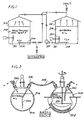
- batch processing apparatus such as that illustrated in FIGURE 1 may be used to prepare meaty flavored vegetable oil fatty ester shortening compositions.
- Raw tallow or lard may be loaded into tank 102 and heated to approximately 180 - 450° F.
- Deodorized vegetable oil 114 to be treated such as partially hydrogenated soybean oil having an Iodine Value of about 95 is loaded into tank 112 and the temperature adjusted to 100 - 120° F.
- the tank 112 may similarly be provided with a gas inlet pipe 116 having a gas sparging head 118 and impeller 120.
- Nitrogen will be bubbled through the lard in tank 102 and passed through the vegetable oil in tank 112.
- the gas stream will carry some of the lard flavor components from the relatively hot lard in tank 102 into the relatively cool vegetable oil in tank 112.
- the external source of nitrogen may be shut off, and the nitrogen atmosphere within the system may be circulated by means of a gas pump (or compressor) 122.
- FIGURE 3 is a continuous flow countercurrent system which may be utilized to continuously manufacture natural meaty flavor shortening products in accordance with particular aspects of the present invention.
- a reservoir of beef tallow 302 is provided, which may be a storage tank maintained under nitrogen at a temperature permitting pumping the tallow.
- the tallow which is desirably continuously excluded from contact with oxygen, is passed into a gas contacting tower 304.
- the oil may be preheated by passage through a heat exchanger 306 which is similarly provided with heat input from the heating unit (not shown) to an inert gas contacting temperature in the range of from about 150° F. to about 450° F.
- the gas contacting tower 304 into which the tallow is introduced may be a column having a length to diameter ratio (internal volume) of at least about 3, and preferably at least about 20.
- the illustrated column 302 has a length to diameter ratio of about 40, and is provided with a column packing having a surface area of at least about 30 square feet per cubic foot of treatment zone volume, and preferably at least about 500 square feet per cubic foot.
- a particularly preferred packing in the form of a coiled metallic screen has a surface area to volume ratio of about 585 square feet per cubic foot.
- the column 302 is provided with a thermal jacket into which may be introduced hot oil from the heating unit to maintain the tallow therein at a predetermined natural meaty flavorant transfer temperature of about 180° F.
- the nitrogen is introduced into the tallow at the discharge end 305 of the tower 304 at a pressure in the range of from about 1 to about 10 pounds per square inch above the gauge pressure (representing the liquid head at the point of introduction), to provide a corresponding nitrogen flow rate in the range of from about 14 to about 330 standard cubic feet per hour.
- the column packing which may be in the form of stainless steel mesh wire, rings or other suitable inert materials such as porcelain provides a substantially increased surface area for interaction of the nitrogen flavorant transfer gas with the heated tallow 302 in the flavorant transfer column 304.
- the illustrated column 304 is a continuous process treatment column having an internal volume of about 0.5 cubic feet, a diameter of 3 inches and a height of 10 feet.
- the tallow 302 may be pumped into the column at the top thereof at a rate in the range of from about 2 to about 24 or more pounds per hour and is concomitantly withdrawn at the bottom of the column into recovery tank 30 at a substantially equivalent rate.
- wall wipers adapted to direct flow from the walls adjacent the column into the interior of the column may be provided periodically along the column.
- wall wipers are unnecessary for use with the preferred coil screen packing which evenly disperses the oil and gas and substantially prevents channeling within the column.
- a substantially uniform flow front is provided in the column 304 for countercurrent sparging of the tallow 302 introduced therethrough.
- the vegetable oil 312 to be flavored is similarly introduced from a source reservoir 310 into a countercurrent, gas contacting column tower 314 which is substantially identical to tower 304.
- the vegetable oil which is refined, bleached and deodorized soybean oil in the illustrated embodiment, is introduced into and conducted through the column at a rate of from about 2 to about 24 pounds per hour, in a weight ratio to the meat fat selected to be in the range of 4:1 to 1:4.
- the oil 312 is maintained at a temperature of from about 80° F. to about 120° F. in the column 314.
- Nitrogen which has been conducted through the tallow in column 304, which is laden with natural meaty flavorants, is introduced into the discharge end 313 of the column 314 to transfer the flavor components to the soybean oil in a countercurrent manner.
- the nitrogen may be introduced into the column 304 at slightly superatmospheric pressure, and is introduced at a rate which is effective to achieve natural flavorant transfer to the vegetable oil in less than about two hours and preferably less than about 30 minutes of treatment time through the column.
- nitrogen may be introduced at a flow rate which provides an oil to gas weight to weight ratio in the range of from about 1.2 to about 4.5.
- the nitrogen gas emerges from the top of the column 304, which is provided with suitable screens and baffles to minimize entrainment of tallow in the nitrogen, is conducted from the gas contacting tower 304.
- the nitrogen bearing the natural meat flavorant components is passed from the tallow gas transfer tower to the countercurrent vegetable oil gas contact tower 314.
- the tallow 302 is subjected to an average residence time within the column 304 of at least about 5 minutes, and such as in the range of from about 10 to about 30 minutes.
- the residence time to achieve economical and effective transfer of the natural meat flavorants will generally decrease with decreasing oil to gas treatment weight ratio under the indicated treatment conditions.
- the inert gas may be conducted through the tallow at subatmospheric pressure, and conducted through the vegetable oil at higher pressure than that at which it is conducted through the meat fat, such as superatmospheric pressure under control of compressor-pumps 330, 332. In this manner, more effective volatilization from the meat fat (at lower temperatures) and more effective transfer to the vegetable oil may be accomplished.
- the tallow is subsequently conducted to the tallow receiving tank 320.
- the vegetable oil having the natural meaty flavorants introduced therein is cooled to ambient temperature and conducted to a storage tank 322 in which is is maintained in an oxygen free environment such as provided by a nitrogen blanket.
- the gas contact towers 304, 314 may be 10 foot tall, 3 inch diameter jacketed columns which are filled with wound screen distillation packing material such as sold by Glitsch Inc. under the designation Goodloe.
- the oil may be allowed to pass through the columns by pumps or gravity, while the countercurrent nitrogen flows are passed through the columns from the bottom and exit through the respective tops, at oil flow rates of, for example, 4.0 liters per hour and nitrogen gas flow rates of 14 cubic feet per hour.
- the meat fat and flavored vegetable oils emerging from the bottom of the respective columns are collected and cooled in separate receiving tanks.
- an enriched tallow flavor can be imparted to a vegetable oil, the finished product possessing relatively stable storage characteristics.
- a tallow flavored vegetable oil can be produced that will exhibit similar but temporary flavor characteristics in frying application in comparison to a tallow frying fat.
- the meaty (e.g., beefy) flavor and odor imparted to the vegetable oil fatty ester shortening composition may persist for multiple frying sessions, but progressively diminishes in intensity with each frying session.
- the oil may subsequently revert to a vegetable or even undesirable beany flavor typical of vegetable oil without the natural meaty flavoring.
- the development of a vegetable or beany aftertaste of the treated oil may be allayed if the oil is first heat treated at an elevated temperature (e.g., 180° F.) for a suitable period of time (e.g., seven days) prior to "flavorization". Such treatment will provide a pleasant buttery flavor after the tallow characteristics have dissipated through frying use.
- Another portion of the partially hydrogenated soybean oil was treated as described hereinabove employing similar temperature and gas flow conditions. However, 3.5% of distilled water, as calculated based on the total raw tallow weight, was added to vessel 202 to determined if a more enriched flavor would be produced through the action of water vapor.
- the charge in vessel 202 was heated to 220° F. with high speed agitation whereupon the added water boiled away being condensed and captured in vessel 208 in which the charge was maintained at 75° F. This process was continued for 40 minutes.
- the treated soybean oil was then laboratory dried at 220° F. with N2 purge and lowered to 100° F. while continuing the gas purge. The oil was then tested for flavor and odor and found to possess a rich beefy taste and smell.
- Frying evaluation of this treated sample (using french fried potatoes ) in comparison to a beef tallow shortening indicated once again a strong and rich beefy taste in fries but after the sixth fry this tallowy taste was no longer present in the cooked french fries. However, rather than resulting in the normal soy vegetable oil flavor, a pleasant buttery taste in the french fries was present.
- the treated sample may also be sprayed on prebaked products such as potato products and baked dough products to provide a shortening coated or misted product having a natural meaty shortening flavor.
- Lard flavored gas from the lard-containing vessel directed into the vessel containing the soy blend for 2 hours with each vessel maintaining agitation for dispersion of gas.
- the temperature of the raw lard was 200° F.
- the temperature of the soy blend was 180° F.
- the soy blend had a lardy/intense flavor.
- the product may be sprayed or misted onto prebaked products having a low shortening content or substantially all vegetable oil shortening content, without further cooking to provide a food product having a natural meaty shortening flavor.
Landscapes
- Chemical & Material Sciences (AREA)
- Oil, Petroleum & Natural Gas (AREA)
- Life Sciences & Earth Sciences (AREA)
- Engineering & Computer Science (AREA)
- Food Science & Technology (AREA)
- Polymers & Plastics (AREA)
- Edible Oils And Fats (AREA)
- Meat, Egg Or Seafood Products (AREA)
Applications Claiming Priority (2)
| Application Number | Priority Date | Filing Date | Title |
|---|---|---|---|
| US07/120,473 US4865868A (en) | 1987-11-13 | 1987-11-13 | Meat flavored vegetable oil preparation method and product |
| US120473 | 2002-04-10 |
Publications (3)
| Publication Number | Publication Date |
|---|---|
| EP0321092A2 true EP0321092A2 (fr) | 1989-06-21 |
| EP0321092A3 EP0321092A3 (en) | 1990-08-22 |
| EP0321092B1 EP0321092B1 (fr) | 1993-11-10 |
Family
ID=22390528
Family Applications (1)
| Application Number | Title | Priority Date | Filing Date |
|---|---|---|---|
| EP88310751A Expired - Lifetime EP0321092B1 (fr) | 1987-11-13 | 1988-11-14 | Méthode de préparation d'huile végétale avec arôme de viande et produits |
Country Status (4)
| Country | Link |
|---|---|
| US (1) | US4865868A (fr) |
| EP (1) | EP0321092B1 (fr) |
| CA (1) | CA1326785C (fr) |
| DE (1) | DE3885585T2 (fr) |
Cited By (2)
| Publication number | Priority date | Publication date | Assignee | Title |
|---|---|---|---|---|
| EP1902626A4 (fr) * | 2005-07-06 | 2010-06-09 | Takasago Perfumery Co Ltd | Agent de saveur à l arôme d huile cuisinée et son procédé de fabrication |
| WO2014184598A1 (fr) * | 2013-05-13 | 2014-11-20 | MEDINA, Camilo | Composition lipidique |
Families Citing this family (10)
| Publication number | Priority date | Publication date | Assignee | Title |
|---|---|---|---|---|
| US5073398A (en) * | 1990-09-10 | 1991-12-17 | Kraft General Foods | Natural flavored vegetable oil |
| USH1591H (en) * | 1992-10-09 | 1996-09-03 | Fulcher; John | Preparation of flavor-enhanced reduced calorie fried foods |
| US5587196A (en) * | 1995-02-15 | 1996-12-24 | Kraft Foods, Inc. | Methods and compositions to add flavor to food products containing lipid |
| US5496579A (en) * | 1995-03-24 | 1996-03-05 | Kraft Foods, Inc. | Process and apparatus for producing a flavoring composition |
| WO1997003566A1 (fr) * | 1995-07-20 | 1997-02-06 | Unilever N.V. | Aromatisation d'huiles comestibles |
| US6495184B1 (en) | 2001-10-12 | 2002-12-17 | Kraft Foods Holdings, Inc. | Grilled meat flavoring composition and method of preparation |
| US7988819B1 (en) * | 2002-10-02 | 2011-08-02 | Flavor & Food Ingredients, Inc. | System and method for preparing at least one flavorant having an aroma and taste of a predetermined form of grilling |
| EP2934174B1 (fr) | 2012-12-19 | 2017-04-12 | Hill's Pet Nutrition, Inc. | Exhausteur de sapidite comprenant de graisse animale |
| US9669326B2 (en) | 2013-01-25 | 2017-06-06 | Geoff Todosiev | Vapor trap |
| US10561162B2 (en) | 2013-11-22 | 2020-02-18 | Colgate-Palmolive Company | Method of preparing palatability enhancer |
Family Cites Families (18)
| Publication number | Priority date | Publication date | Assignee | Title |
|---|---|---|---|---|
| GB190917271A (en) * | 1909-07-24 | 1909-12-23 | John Harry Filbert | Improvements in Cotton-seed Oil and in Food Compounds in which Cotton-seed Oil is an Ingredient. |
| GB157401A (en) * | 1918-06-13 | 1922-06-12 | Du Pont | Improved method for de-odorising blown or polymerised vegetable or animal oils |
| FR522020A (fr) * | 1919-09-09 | 1921-07-24 | Kapilham Hardevrah Vakil | Procédé perfectionné de raffinage des huiles et graisses pour les désodoriser et réduire leur acidité |
| US1508769A (en) * | 1920-04-15 | 1924-09-16 | Vegets Le Oil Securities Compa | Process of and apparatus for treating oils |
| US2559129A (en) * | 1946-02-21 | 1951-07-03 | Girdler Corp | Method and apparatus for removing gaseous and readily vaporizable materials from liquids |
| GB701631A (en) * | 1949-10-17 | 1953-12-30 | Kraft Foods Co | Improvements in or relating to a process of deodorizing a glyceride oil and the products resulting therefrom |
| US2714573A (en) * | 1950-10-14 | 1955-08-02 | James J Gustat | Process for recovering volatile flavors |
| US2738276A (en) * | 1952-01-31 | 1956-03-13 | Blench Ronald Oliver | Aromatisation of powders |
| US3152914A (en) * | 1963-08-22 | 1964-10-13 | Felix E Taylor | Method of producing smoke oil and product |
| US3394013A (en) * | 1964-11-02 | 1968-07-23 | Procter & Gamble | Flavored fatty material and process for preparing the same |
| US3535118A (en) * | 1964-12-31 | 1970-10-20 | Kroger Co | Method of making aromatized oil |
| US3480446A (en) * | 1965-02-26 | 1969-11-25 | Red Arrow Products Corp | Preparation and use of a smoke-flavored edible oil |
| FR1454721A (fr) * | 1965-11-10 | 1966-02-11 | Pintsch Bamag Ag | Procédé et appareillage pour la séparation des impuretés condensables du mélange de vapeurs chaudes et de gaz inertes qui se produit lors de la désodorisation des produits organiques |
| US3348954A (en) * | 1966-02-16 | 1967-10-24 | Gen Foods Corp | Process for preparing meat flavor and aroma compositions |
| US3433649A (en) * | 1966-03-03 | 1969-03-18 | Procter & Gamble | Cocoa-flavored liquid oil compositions |
| US3783163A (en) * | 1972-04-28 | 1974-01-01 | Procter & Gamble | Aromatizing edible oils |
| US4169901A (en) * | 1978-03-01 | 1979-10-02 | The Procter & Gamble Company | Meaty-flavored deep-fat frying compositions |
| US4571342A (en) * | 1981-08-10 | 1986-02-18 | General Foods Corporation | Charcoal broiled flavor composition |
-
1987
- 1987-11-13 US US07/120,473 patent/US4865868A/en not_active Expired - Lifetime
-
1988
- 1988-11-14 DE DE3885585T patent/DE3885585T2/de not_active Expired - Fee Related
- 1988-11-14 EP EP88310751A patent/EP0321092B1/fr not_active Expired - Lifetime
- 1988-11-14 CA CA000582959A patent/CA1326785C/fr not_active Expired - Fee Related
Cited By (2)
| Publication number | Priority date | Publication date | Assignee | Title |
|---|---|---|---|---|
| EP1902626A4 (fr) * | 2005-07-06 | 2010-06-09 | Takasago Perfumery Co Ltd | Agent de saveur à l arôme d huile cuisinée et son procédé de fabrication |
| WO2014184598A1 (fr) * | 2013-05-13 | 2014-11-20 | MEDINA, Camilo | Composition lipidique |
Also Published As
| Publication number | Publication date |
|---|---|
| US4865868A (en) | 1989-09-12 |
| CA1326785C (fr) | 1994-02-08 |
| EP0321092B1 (fr) | 1993-11-10 |
| DE3885585T2 (de) | 1994-06-16 |
| EP0321092A3 (en) | 1990-08-22 |
| DE3885585D1 (de) | 1993-12-16 |
Similar Documents
| Publication | Publication Date | Title |
|---|---|---|
| US5073398A (en) | Natural flavored vegetable oil | |
| US4789554A (en) | High temperature vacuum steam distillation process to purify and increase the frylife of edible oils | |
| US5470598A (en) | Beta-prime stable low-saturate, low trans, all purpose shortening | |
| EP0050418B1 (fr) | Procédé pour la fabrication d'un produit gras comestible | |
| JP4905999B2 (ja) | 食感改良油脂組成物 | |
| EP0321092B1 (fr) | Méthode de préparation d'huile végétale avec arôme de viande et produits | |
| KR940004887B1 (ko) | 향미조성물의 제조방법 | |
| US4169901A (en) | Meaty-flavored deep-fat frying compositions | |
| EP2548942B1 (fr) | Procédé de fabrication d'huiles et graisses raffinées | |
| WO1995001106A1 (fr) | Composition aromatisant | |
| RU2598076C2 (ru) | Окисленное и частично гидрогенизированное масло или жир | |
| WO2017164728A1 (fr) | Procédé de fabrication d'une composition d'huile et/ou de matière grasse comestible thermostable | |
| EP0295509B1 (fr) | Production d'un arôme | |
| WO1995025433A1 (fr) | Graisse alimentaire polyvalente beta-prime stable faible en satures et faible en trans | |
| US20160135475A1 (en) | Oil and/or fat composition for cooking, method for producing the same, and method for reducing oil and/or fat content remaining in cooked material after cooking | |
| WO1991012304A1 (fr) | Procede de friture et de desodorisation simultanee d'un milieu de friture | |
| JP7387246B1 (ja) | 揚げ物調製用油脂組成物及びその製造方法 | |
| US20080206435A1 (en) | Edible Oil Composition Suitable For Frying Food | |
| JP2022022986A (ja) | 食用油脂が有する風味の持続性を向上する方法 | |
| JPH034750A (ja) | 脂肪組成物のフライにおける用途 | |
| JP4046439B2 (ja) | 油脂組成物 | |
| EP4110083A1 (fr) | Produits comestibles | |
| JP2020124124A (ja) | 食用油脂の製造方法 | |
| Potter | Fats, Oils, and Their Products | |
| JPH09154495A (ja) | 揚げ菓子類 |
Legal Events
| Date | Code | Title | Description |
|---|---|---|---|
| PUAI | Public reference made under article 153(3) epc to a published international application that has entered the european phase |
Free format text: ORIGINAL CODE: 0009012 |
|
| AK | Designated contracting states |
Kind code of ref document: A2 Designated state(s): DE GB |
|
| PUAL | Search report despatched |
Free format text: ORIGINAL CODE: 0009013 |
|
| AK | Designated contracting states |
Kind code of ref document: A3 Designated state(s): DE GB |
|
| 17P | Request for examination filed |
Effective date: 19901214 |
|
| 17Q | First examination report despatched |
Effective date: 19920213 |
|
| GRAA | (expected) grant |
Free format text: ORIGINAL CODE: 0009210 |
|
| AK | Designated contracting states |
Kind code of ref document: B1 Designated state(s): DE GB |
|
| REF | Corresponds to: |
Ref document number: 3885585 Country of ref document: DE Date of ref document: 19931216 |
|
| PLBE | No opposition filed within time limit |
Free format text: ORIGINAL CODE: 0009261 |
|
| STAA | Information on the status of an ep patent application or granted ep patent |
Free format text: STATUS: NO OPPOSITION FILED WITHIN TIME LIMIT |
|
| 26N | No opposition filed | ||
| PGFP | Annual fee paid to national office [announced via postgrant information from national office to epo] |
Ref country code: GB Payment date: 19971105 Year of fee payment: 10 |
|
| PGFP | Annual fee paid to national office [announced via postgrant information from national office to epo] |
Ref country code: DE Payment date: 19971121 Year of fee payment: 10 |
|
| PG25 | Lapsed in a contracting state [announced via postgrant information from national office to epo] |
Ref country code: GB Free format text: LAPSE BECAUSE OF NON-PAYMENT OF DUE FEES Effective date: 19981114 |
|
| GBPC | Gb: european patent ceased through non-payment of renewal fee |
Effective date: 19981114 |
|
| PG25 | Lapsed in a contracting state [announced via postgrant information from national office to epo] |
Ref country code: DE Free format text: LAPSE BECAUSE OF NON-PAYMENT OF DUE FEES Effective date: 19990901 |