EP0322920B1 - Dispositif de lecture de caractères optiques - Google Patents
Dispositif de lecture de caractères optiques Download PDFInfo
- Publication number
- EP0322920B1 EP0322920B1 EP88121865A EP88121865A EP0322920B1 EP 0322920 B1 EP0322920 B1 EP 0322920B1 EP 88121865 A EP88121865 A EP 88121865A EP 88121865 A EP88121865 A EP 88121865A EP 0322920 B1 EP0322920 B1 EP 0322920B1
- Authority
- EP
- European Patent Office
- Prior art keywords
- recognition
- character
- combination
- results
- signal
- Prior art date
- Legal status (The legal status is an assumption and is not a legal conclusion. Google has not performed a legal analysis and makes no representation as to the accuracy of the status listed.)
- Expired - Lifetime
Links
Images


Classifications
-
- G—PHYSICS
- G06—COMPUTING OR CALCULATING; COUNTING
- G06V—IMAGE OR VIDEO RECOGNITION OR UNDERSTANDING
- G06V10/00—Arrangements for image or video recognition or understanding
- G06V10/98—Detection or correction of errors, e.g. by rescanning the pattern or by human intervention; Evaluation of the quality of the acquired patterns
-
- G—PHYSICS
- G06—COMPUTING OR CALCULATING; COUNTING
- G06V—IMAGE OR VIDEO RECOGNITION OR UNDERSTANDING
- G06V30/00—Character recognition; Recognising digital ink; Document-oriented image-based pattern recognition
- G06V30/10—Character recognition
- G06V30/24—Character recognition characterised by the processing or recognition method
- G06V30/248—Character recognition characterised by the processing or recognition method involving plural approaches, e.g. verification by template match; Resolving confusion among similar patterns, e.g. "O" versus "Q"
Definitions
- the present invention relates to an optical character reader, and particularly relates to an optical character reader for reading characters written on a sheet of paper while the sheet and an image sensor are moved relative to each other, for example, a hand-held optical character reader for reading characters written on a price label by putting a scanner against the price label by hand.
- an optical character reading apparatus has been used to scan an image sensor repeatedly to carry out character recognition with respect to one and the same character so as to improve recognition performance. See, for example, Japanese Patent Application (unexamined) Publication No. 55-9223.
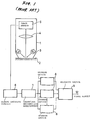
- Fig. 1 shows a prior art optical character reading apparatus. Reading is carried out by placing a scanner 1 above a paper sheet 2 to be read. Characters written on paper 2 are irradiated by light sources 3 and imaged onto image sensor 5 through optical system 4. Image sensor 5 is scanned so that the character image is converted into an electric signal which in turn is converted into a black-and-white picture by a binary encoding circuit 6. A character recognition arrangement 7 recognizes the character and the result of recognition is stored in a storage device 8. According to this prior art device, image sensor 5 may have a size of one character or a size of one line. Character recognition is repeatedly performed by scanning with image sensor 5, and the results of recognition are successively stored in storage device 8. The result of recognition stored in the storage device 8 is then subjected to a decision by a "majority" device 9 to determine a final result 12.
- the results of recognition in the optical character reading apparatus may be classified into three cases: a first case in which character recognition has been performed correctly (correct reading); a second case in which character recognition has been performed erroneously (erroneous reading); and a third case in which character recognition has been impossible (reject).
- the tendency of erroneous reading is different depending on the kind of characters, and the majority processing in the optical character reading apparatus in the prior art has failed to consider this varying tendency of erroneous reading.
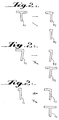
- FIG. 2(a) shows the tendency of erroneous reading in the case of a character of "T".
- the character "T" designated by a1 may be shortened at its lateral bar by binary encoding circuit 6 so that the character "T” designated by a1 is often transformed into such a form as shown by a2 or a3.
- the forms designated by a2 and a3 may be erroneously read as "7" and "1", respectively, by character recognition arrangement 7.
- Fig. 2(b) shows the tendency of erroneous reading in the case of a character of "7". If the lateral bar portion of the character “7” designated by b1 is shortened, the character “7” may be erroneously read as “1". However, the lateral bar is never elongated in accordance with the characteristic of the binary encoding circuit 6, and the character “7” never becomes such a picture as designated by b3. Accordingly, the character "7” is never erroneously read as "T”.
- Fig. 2(c) shows the tendency of erroneous reading in the case of a character "1".
- the lateral bar portion of the character "1" is never elongated, so that the character "1" is never erroneously read as "7" designated by c2 or "T” designated by c3.
- the tendency of the erroneous reading depends on the kind of characters.
- Serial number A shows a combination of results of recognition result 7,7, and T when recognition was performed on three figures.
- the character has been determined to be "7" as the final result.
- the character "7” can never be erroneously read as “T” as shown in Fig. 2(b).
- the proper interpretation in serial number A should be that "T” has been correctly read.
- the proper interpretation in consideration of the fact that "1” can never be erroneously read as “T” is that "T” was properly read and "1” was misread. Therefore, in the majority processing in the prior art optical character reading apparatus, the tendency of such erroneous reading depending on the kind of characters has not been taken into consideration, so that the final result has frequently been incorrect.
- the object of the present invention is to solve the recognition problems described above.
- a further object of the present invention is to provide a method and apparatus for determining a final result from a plurality of combinations of recognition results, whereby the combinations are predetermined by an analysis taking into consideration the tendency of an erroneous reading.
- the present invention solves these given objects by a method comprising the steps set out in claim 10 and by an apparatus for carrying out the method comprising the features set out in claim 1.
- Table 2(a) and 2(b) A method of decision by majority in which the tendency of erroneous reading is taken into consideration is shown in Table 2(a) and 2(b).
- Table 2(a) shows the tendency of erroneous reading such that the character "T” is apt to be erroneously read as “7” or "1” and the character "7” is apt to be erroneously read as "1".
- Table 2(b) Serial No. Combination of recognition result Final result A T T T T B T T 7 T C T T 1 T D T T T ? T E 7 7 7 7 F 7 7 1 7 G 7 7 ? 7 H 1 1 1 1 1 I 1 1 ? 1
- Table 2(b) shows a method of decision by majority in which the tendency of erroneous reading is taken into consideration.
- the combinations shown in the Table 1 are omitted from the set of all possible combinations from which final results are determined through the conventional decision by majority because of the unlikely tendency of a first character being misread as a second character. For example, a combination "T", "T", and "7" is found in the serial number B in the Table 2(b) and therefore the final result would be determined in the conventional case to be "T".
- the present invention further provides for the occurrence of unknown characters which are not recognized by the character recognition means, for example, the occurrence of a hardware failure, or the reading of poor quality paper.
- Table 2(b) includes combinations having the symbol "?", which denotes an unknown character which was not recognized by the character recognition means. In Table 2(b), for example, the tendency of erroneous reading has been taken into consideration by the conclusion that the occurrence of a single unrecognizable character may result in a majority result.
- the present invention provides useful and reliable means for determining a final result from a plurality of combinations of recognition results by taking into consideration the tendency of erroneous reading.
- Figure 1 a block diagram of an optical character reading apparatus as disclosed by the prior art.
- Figure 2 describes the erroneous reading of characters by the prior art apparatus described in Figure 1.
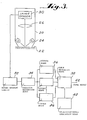
- FIG. 3 is a block diagram of the present invention.
- Figure 4 is a block diagram of a first embodiment of the present invention.
- Figure 5 is a block diagram of a second embodiment of the present invention.
- Fig. 3 describes the operation of the present invention in scanning characters.
- Scanner 20 scans surface 22, for example a paper or transparency, which has characters written thereon.
- Light sources 24 illuminate surface 22 and the characters written thereon, and optical system 26 directs the light from surface 22 to image sensor 30.
- Image sensor 30 produces an analog signal representing the character image scanned from surface 22.
- the analog output signal of image sensor 30 is converted by binary encoding circuit 32 into a digital signal, representing white and black intensity within the character image.
- the digital signal is then input into character recognition means 34, for example a look-up table in a ROM circuit or a decoder, which determines if there is a recognized character corresponding to the digital signal: if character recognition means 34 recognizes the digital signal as a character, a result of recognition representing the character is output and stored in storage means 36; if the digital signal does not correspond to a recognized character within character recognition means 34, a result of recognition representing an unknown character, for example "?", is stored in storage means 36.
- character recognition means 34 for example a look-up table in a ROM circuit or a decoder, which determines if there is a recognized character corresponding to the digital signal: if character recognition means 34 recognizes the digital signal as a character, a result of recognition representing the character is output and stored in storage means 36; if the digital signal does not correspond to a recognized character within character recognition means 34, a result of recognition representing an unknown character, for example "?", is stored in storage means 36.
- character recognition means 34 for example a
- the results of recognition stored in storage means 36 are sent to table retrieving means 38 in the form of combinations of the results of recognition with respect to one character.
- Table retrieving means 38 determines whether or not the received combinations are located in recognition-result combination table 40.
- Combination table 40 stores permissible combinations of recognition results which are interpreted to be proper representations of the final result, e.g., the scanned character.
- Combination table (40) may be a memory look up table such as a ROM memory, or some other decoder circuit. If the received combinations are located in combination table 40, the corresponding final result representing the determined character from surface 22 is read from combination table 40 to table retrieving means 38, and Final Result 42 is output from table retrieving means 38.
- Fig. 4 shows a first embodiment of the present invention.
- the drawing shows a part of the optical character reader including table retrieving means 50, which corresponds to table retrieving means 38 of Fig. 3, and recognition-result combination table 52 which form the features of the present invention.
- Fig. 4 shows the portion in which a final result R E is obtained from results of recognition R1, R2, and R3 obtained through recognition performed three times with respect to one character.
- a variation of this embodiment would be to perform more than three scans to provide more than three results of recognition.
- a combination retrieving portion 54 executes retrieval from combination table 52 to determine whether the combinations of the results of recognition R1, R2, and R3 received exist in combination table 52 (described later). If the received combination is located in combination table 52, combination retrieving portion 54 produces a combination detection signal; if the received combination is not found in combination table 52, combination retrieving portion 54 produces a combination non-detection signal.
- Recognition-result combination table 52 shows combinations in the case where three characters "T", "7", and "1" are defined to be objects for recognition. Any unrecognizable characters are denoted in this case by the symbol "?". When there are any other kinds of characters which are objects to be recognized, the contents of the combination table 42 may be suitably increased, taking into consideration the tendency of erroneous reading.
- combination table 52 in the case where the combination of three results of recognition are T, T, and T, it is regarded that all of the three results show correct reading, so that the final result is determined to be T.
- Combination table 52 which has taken into consideration the tendency of the erroneous reading of the character T, contains the pattern T, T, and 7.
- Consideration of the tendency of the erroneous reading may be carried out, for example, as follows: the probability that only one of the three results of recognition processing is caused by erroneously reading T as 7 is compared with the probability that two of the three results are caused by erroneously reading 7 as T; since the former result is more probable than the latter, the final result is determined to be T in this case.
- the final result R E is determined in a manner as follows: upon reception of a combination detecting signal from combination retrieving portion 54, a final-result take-out portion 56 receives the final result corresponding to the combination of the results of recognition from recognition-result combination table 52 and outputs the taken-out final result as a final result R E .
- the combination retrieving portion 54 makes a retrieval from the recognition-result combination table 52 to detect the very combination in the second row.
- the final-result take-out portion 56 reads the final result T in the second row and outputs the final result T.
- combination retrieving portion 54 Upon reception of a combination such as, for example, T, 7, and 1 which is not located in the recognition-result combination table 52, combination retrieving portion 54 outputs a combination non-detecting signal to a reject output portion 58, and the reject output portion 58 produces "REJECT" as a final output R E .
- Fig. 5 shows a second embodiment of the present invention.
- the quantity of information in the recognition-result combination table is compressed more than in the embodiment described in Fig. 4 to reduce the required memory capacity.
- a frequency classification means 60 is arranged to classify the contents of the three results of recognition applied thereto so that the frequency classification means 60 produces an all-coincidence signal when the three results of recognition are the same, a mixed-coincidence signal when two of the three results of recognition are the same and a no-coincidence signal when all three results of recognition are different.
- the coincident result is defined as a first candidate
- the results of majority (two) and the results of minority (one) are defined as a first candidate and as a second candidate, respectively.
- a combination retrieving portion 62 Upon reception of the mixed-coincidence signal from the frequency classification means 60, a combination retrieving portion 62 receives the first and second candidates and retrieves the combination of those first and second candidates from a recognition-result combination table 64. The combination retrieving portion 62 produces a combination detection signal when the combination of the first and second candidates is located in combination table 64, while combination retrieving portion 62 produces a combination non-detection signal when the combination is not located in the combination table 64. Upon reception of the all-coincidence signal from the frequency classification means 60 or the combination detection signal from the combination retrieving portion 62, a first-candidate output portion 66 produces the first candidate as a final result R E .
- a reject output portion 68 Upon reception of the no-coincidence signal from frequency classification means 60 or the combination non-detection signal from the retrieving portion 62, a reject output portion 68 generates "REJECT" and produces the "REJECT" as the final result R E .
- the result by majority is employed as the final result in the case where the three results of recognition coincide with each other and in the case where two of the three results of recognition coincide with each other and the combination the majority and minority is located in the combination table 53, while REJECT" is made to be the final result R E in any other cases.
- one final result can be determined from a plurality of results of recognition taking into consideration the tendency of erroneous reading depending on kind of characters, so that the rate of erroneous reading in the optical character reading apparatus can be reduced, resulting in improvement in performance of the apparatus.
Landscapes
- Engineering & Computer Science (AREA)
- Physics & Mathematics (AREA)
- General Physics & Mathematics (AREA)
- Multimedia (AREA)
- Theoretical Computer Science (AREA)
- Quality & Reliability (AREA)
- Computer Vision & Pattern Recognition (AREA)
- Character Discrimination (AREA)
- Character Input (AREA)
Claims (10)
- Appareil de lecture d'un caractère sur une surface (22), comprenant :
une source de lumière (24) dirigée vers ladite surface,
un capteur (30) d'image déplacé par rapport à la surface (22) et sensible à la lumière dirigée à partir de cette surface, le capteur d'image transmettant un premier signal qui dépend de la lumière dirigée à partir de la surface pendant un balayage,
un dispositif (34) de reconnaissance sensible au premier signal et destiné à déterminer un résultat correspondant de reconnaissance pendant un balayage à partir d'un ensemble prédéterminé de caractères qui peuvent être reconnus, et
un dispositif de détermination du caractère à la surface, commandé par au moins trois résultats de reconnaissance au cours d'au moins trois balayages correspondants, le dispositif de détermination de caractère déterminant le caractère sur la base d'une majorité dans la combinaison des trois résultats au moins de reconnaissance, caractérisé en ce que la combinaison des résultats de reconnaissance forme le caractère et un second caractère qui peut être lu de manière erronée comme caractère, et dans lequel la combinaison ne comprend pas de caractère impropre lorsque le caractère ne peut pas être lu de manière erronée comme caractère impropre. - Appareil selon la revendication 1, qui comprend en outre un dispositif de mémorisation (36) connecté au dispositif de reconnaissance (34) et au dispositif de détermination de caractère afin qu'il mémorise les différents résultats de la reconnaissance.
- Appareil selon la revendication 2, dans lequel le dispositif de détermination de caractère comprend :
une table (52) de combinaison de résultats de reconnaissance ayant plusieurs combinaisons prédéterminées de résultats de reconnaissance et un nombre correspondant de résultats finals prédéterminés, chaque combinaison prédéterminée de résultats de reconnaissance et les résultats finals correspondants étant prédéterminés compte tenu de la tendance à la lecture erronée du caractère par l'appareil,
un dispositif (54) de récupération de combinaison, commandé par les résultats de reconnaissance et destiné à déterminer une apparition de plusieurs résultats de reconnaissance dans la table (52) de combinaison de résultats de reconnaissance, le dispositif de récupération de combinaison créant un signal de détection de combinaison à la suite de cette apparition, le dispositif de récupération de combinaison créant un signal de non détection de combinaison lorsqu'il ne détecte pas cette apparition dans la table de combinaison des résultats de reconnaissance,
un dispositif (58) destiné à créer un signal de rejet en présence du signal de défaut de détection de combinaison, et
un dispositif (56) de lecture d'un résultat final détecté dans la table (52) de combinaison de résultats de reconnaissance à la suite du signal de détection de combinaison et de transmission du caractère en fonction du résultat final détecté, ce résultat final détecté correspondant aux différents résultats de reconnaissance. - Appareil selon la revendication 3, dans lequel la table (52) de combinaison de résultats de reconnaissance est prédéterminée par une analyse grâce à laquelle chacun des résultats finals peut être lu de manière erronée sous forme d'un résultat incorrect dans la combinaison correspondante de résultats de reconnaissance lorsque les résultats de la reconnaissance de la combinaison ne sont pas identiques.
- Appareil selon la revendication 4, dans lequel le dispositif de reconnaissance comprend :
un circuit (32) de codage binaire destiné à transformer le premier signal en un signal numérique, le signal numérique ayant un premier et un second état représentant une intensité blanche et noire respective de la lumière dirigée à partir de ladite surface pendant le balayage, et
un dispositif (34) de reconnaissance de caractère sensible au signal numérique et destiné à déterminer chacun des résultats de la reconnaissance à chaque balayage parmi un ensemble prédéterminé de caractères qui peuvent être reconnus. - Appareil selon la revendication 2, dans lequel le dispositif de détermination de caractère comprend :
un dispositif (60) de classement de fréquence, sensible aux résultats de la reconnaissance et destiné à créer au moins :
un signal de coïncidence totale lorsque tous les résultats de reconnaissance sont équivalents,
un signal d'absence de coïncidence lorsqu'aucun des résultats de reconnaissance ne sont équivalents, et
un signal mixte de coïncidence, un premier signal candidat et un second signal candidat lorsque deux au moins des résultats de reconnaissance sont équivalents, le premier signal candidat représentant une majorité des résultats équivalents parmi les résultats de reconnaissance, le second signal candidat représentant une minorité des résultats équivalents parmi les résultats de reconnaissance,
une table (64) de combinaison de résultats de reconnaissance ayant un nombre correspondant de premiers et seconds candidats prédéterminés, chacun des premiers et seconds candidats étant prédéterminé d'après la tendance de l'appareil à donner une lecture erronée du caractère, et
un dispositif (62) de récupération de combinaison commandé par le signal mixte de coïncidence et le premier et le second signal candidat et destiné à déterminer une apparition d'une corrélation du premier et du second signal candidat à un premier et un second candidat détectés à partir de la table de combinaison de résultats de reconnaissance respectivement, le dispositif de récupération de combinaison créant un signal de détection de combinaison à la suite de cette apparition, le dispositif de récupération de combinaison créant un signal de défaut de détection en cas d'absence de détection de cette apparition. - Appareil selon la revendication 6, dans lequel le dispositif de détermination de caractère comporte en outre :
un premier dispositif (66) de sortie de candidat commandé par le signal de coïncidence totale, le premier signal candidat et le signal de détection de combinaison, afin qu'il transmette un résultat final correspondant au caractère, et
un dispositif (68) de sortie de rejet, commandé par le signal d'absence de coïncidence et le signal de défaut de détection de combinaison, et destiné à transmettre un signal de rejet. - Appareil selon la revendication 7, dans lequel la table (64) de combinaison de résultats de reconnaissance est prédéterminée par une analyse grâce à laquelle le premier candidat peut être lu de manière erronée comme second candidat correspondant.
- Appareil selon la revendication 8, dans lequel le dispositif de reconnaissance comprend :
un circuit (32) de codage binaire destiné à transformer le premier signal en un signal numérique, le signal numérique ayant un premier et un second état représentant une intensité respective blanche et noire de la lumière dirigée par ladite surface au cours du balayage, et
un dispositif (34) de reconnaissance de caractère commandé par le signal numérique et destiné à déterminer chacun des résultats de reconnaissance à chaque balayage correspondant dans un ensemble prédéterminé de caractères qui peuvent être reconnus. - Procédé de lecture d'un caractère sur une surface et de détermination du caractère à partir de plusieurs balayages correspondants, à l'aide d'un appareil comprenant un capteur d'image qui transmet un premier signal en fonction de la lumière dirigée par le caractère, et un dispositif de reconnaissance commandé par le premier signal et destiné à déterminer un résultat correspondant de reconnaissance pendant un balayage, le procédé étant caractérisé en ce qu'il comprend les étapes suivantes :
la détermination préalable d'une table de consultation de majorité, l'étape de détermination préalable comprenant les étapes suivantes :
la détermination d'une première possibilité de lecture erronée dudit caractère comme second caractère, et
le développement d'une combinaison de résultats de reconnaissance correspondant au caractère, la combinaison contenant le caractère et le second caractère, la combinaison ne comprenant pas un caractère impropre lorsque ledit caractère ne peut pas être lu de manière erronée comme caractère impropre,
l'exécution de plusieurs balayages destinés à donner un nombre correspondant de résultats de reconnaissance,
la comparaison des différents résultats de reconnaissance à la combinaison des résultats de reconnaissance dans la table de majorité, les résultats de reconnaissance correspondant aux différents balayages, et
la transmission d'un résultat final correspondant tiré de la table de majorité lorsque les résultats de reconnaissance sont corrélés à la combinaison des résultats de la reconnaissance.
Applications Claiming Priority (2)
| Application Number | Priority Date | Filing Date | Title |
|---|---|---|---|
| JP63000531A JP2553608B2 (ja) | 1988-01-04 | 1988-01-04 | 光学文字読取装置 |
| JP531/88 | 1988-01-04 |
Publications (3)
| Publication Number | Publication Date |
|---|---|
| EP0322920A2 EP0322920A2 (fr) | 1989-07-05 |
| EP0322920A3 EP0322920A3 (fr) | 1991-11-06 |
| EP0322920B1 true EP0322920B1 (fr) | 1994-04-13 |
Family
ID=11476353
Family Applications (1)
| Application Number | Title | Priority Date | Filing Date |
|---|---|---|---|
| EP88121865A Expired - Lifetime EP0322920B1 (fr) | 1988-01-04 | 1988-12-29 | Dispositif de lecture de caractères optiques |
Country Status (5)
| Country | Link |
|---|---|
| US (1) | US4958379A (fr) |
| EP (1) | EP0322920B1 (fr) |
| JP (1) | JP2553608B2 (fr) |
| CA (1) | CA1310755C (fr) |
| DE (1) | DE3889092T2 (fr) |
Families Citing this family (46)
| Publication number | Priority date | Publication date | Assignee | Title |
|---|---|---|---|---|
| JPH0331981A (ja) * | 1989-06-29 | 1991-02-12 | Canon Inc | 文字認識装置 |
| US5151579A (en) * | 1990-05-24 | 1992-09-29 | Gregtag Systems, Inc. | Method of checking correlation between parts of a photofinishing order through the use of error weights |
| JP2991779B2 (ja) * | 1990-06-11 | 1999-12-20 | 株式会社リコー | 文字認識方法及び装置 |
| US5257323A (en) * | 1991-05-29 | 1993-10-26 | Canon Kabushiki Kaisha | Selection agent for a symbol determination system with multiple character recognition processors |
| US5703962A (en) * | 1991-08-29 | 1997-12-30 | Canon Kabushiki Kaisha | Image processing method and apparatus |
| US8352400B2 (en) | 1991-12-23 | 2013-01-08 | Hoffberg Steven M | Adaptive pattern recognition based controller apparatus and method and human-factored interface therefore |
| US5459739A (en) * | 1992-03-18 | 1995-10-17 | Oclc Online Computer Library Center, Incorporated | Merging three optical character recognition outputs for improved precision using a minimum edit distance function |
| JP3131287B2 (ja) * | 1992-05-27 | 2001-01-31 | 株式会社日立製作所 | パターン認識装置 |
| TW222337B (fr) * | 1992-09-02 | 1994-04-11 | Motorola Inc | |
| US6259814B1 (en) * | 1997-10-17 | 2001-07-10 | Canon Kabushiki Kaisha | Image recognition through localized interpretation |
| JP3095069B2 (ja) * | 1998-03-26 | 2000-10-03 | 日本電気株式会社 | 文字認識装置、学習方法および文字認識プログラムを記録した記録媒体 |
| US7904187B2 (en) | 1999-02-01 | 2011-03-08 | Hoffberg Steven M | Internet appliance system and method |
| US7120302B1 (en) | 2000-07-31 | 2006-10-10 | Raf Technology, Inc. | Method for improving the accuracy of character recognition processes |
| US7182692B2 (en) * | 2003-04-25 | 2007-02-27 | Igt | Gaming machine with scanning capability |
| US8651934B2 (en) * | 2003-04-25 | 2014-02-18 | Igt | Gaming machine with scanning capability |
| US8442331B2 (en) | 2004-02-15 | 2013-05-14 | Google Inc. | Capturing text from rendered documents using supplemental information |
| US7707039B2 (en) | 2004-02-15 | 2010-04-27 | Exbiblio B.V. | Automatic modification of web pages |
| US7812860B2 (en) | 2004-04-01 | 2010-10-12 | Exbiblio B.V. | Handheld device for capturing text from both a document printed on paper and a document displayed on a dynamic display device |
| US10635723B2 (en) | 2004-02-15 | 2020-04-28 | Google Llc | Search engines and systems with handheld document data capture devices |
| US20060041484A1 (en) | 2004-04-01 | 2006-02-23 | King Martin T | Methods and systems for initiating application processes by data capture from rendered documents |
| US8799303B2 (en) | 2004-02-15 | 2014-08-05 | Google Inc. | Establishing an interactive environment for rendered documents |
| US9143638B2 (en) | 2004-04-01 | 2015-09-22 | Google Inc. | Data capture from rendered documents using handheld device |
| US7990556B2 (en) | 2004-12-03 | 2011-08-02 | Google Inc. | Association of a portable scanner with input/output and storage devices |
| US20080313172A1 (en) | 2004-12-03 | 2008-12-18 | King Martin T | Determining actions involving captured information and electronic content associated with rendered documents |
| US20070300142A1 (en) | 2005-04-01 | 2007-12-27 | King Martin T | Contextual dynamic advertising based upon captured rendered text |
| US7894670B2 (en) | 2004-04-01 | 2011-02-22 | Exbiblio B.V. | Triggering actions in response to optically or acoustically capturing keywords from a rendered document |
| US8621349B2 (en) | 2004-04-01 | 2013-12-31 | Google Inc. | Publishing techniques for adding value to a rendered document |
| US9116890B2 (en) | 2004-04-01 | 2015-08-25 | Google Inc. | Triggering actions in response to optically or acoustically capturing keywords from a rendered document |
| USRE50599E1 (en) | 2004-04-01 | 2025-09-23 | Kyocera Corporation | Search engines and systems with handheld document data capture devices |
| US8146156B2 (en) | 2004-04-01 | 2012-03-27 | Google Inc. | Archive of text captures from rendered documents |
| US9008447B2 (en) | 2004-04-01 | 2015-04-14 | Google Inc. | Method and system for character recognition |
| US8793162B2 (en) | 2004-04-01 | 2014-07-29 | Google Inc. | Adding information or functionality to a rendered document via association with an electronic counterpart |
| WO2008028674A2 (fr) | 2006-09-08 | 2008-03-13 | Exbiblio B.V. | Scanners optiques, tels que des scanners optiques portables |
| US8713418B2 (en) | 2004-04-12 | 2014-04-29 | Google Inc. | Adding value to a rendered document |
| US8620083B2 (en) | 2004-12-03 | 2013-12-31 | Google Inc. | Method and system for character recognition |
| US9460346B2 (en) | 2004-04-19 | 2016-10-04 | Google Inc. | Handheld device for capturing text from both a document printed on paper and a document displayed on a dynamic display device |
| US8489624B2 (en) | 2004-05-17 | 2013-07-16 | Google, Inc. | Processing techniques for text capture from a rendered document |
| US8346620B2 (en) | 2004-07-19 | 2013-01-01 | Google Inc. | Automatic modification of web pages |
| US20110029504A1 (en) * | 2004-12-03 | 2011-02-03 | King Martin T | Searching and accessing documents on private networks for use with captures from rendered documents |
| US20110096174A1 (en) * | 2006-02-28 | 2011-04-28 | King Martin T | Accessing resources based on capturing information from a rendered document |
| CN105930311B (zh) | 2009-02-18 | 2018-10-09 | 谷歌有限责任公司 | 执行与再现文档关联的动作的方法、移动设备和可读介质 |
| DE202010018551U1 (de) | 2009-03-12 | 2017-08-24 | Google, Inc. | Automatische Bereitstellung von Inhalten, die mit erfassten Informationen, wie etwa in Echtzeit erfassten Informationen, verknüpft sind |
| US8447066B2 (en) | 2009-03-12 | 2013-05-21 | Google Inc. | Performing actions based on capturing information from rendered documents, such as documents under copyright |
| US9081799B2 (en) | 2009-12-04 | 2015-07-14 | Google Inc. | Using gestalt information to identify locations in printed information |
| US9323784B2 (en) | 2009-12-09 | 2016-04-26 | Google Inc. | Image search using text-based elements within the contents of images |
| JP5672953B2 (ja) * | 2010-10-26 | 2015-02-18 | 株式会社リコー | 画像処理装置、画像処理方法及び画像処理プログラム |
Family Cites Families (9)
| Publication number | Priority date | Publication date | Assignee | Title |
|---|---|---|---|---|
| JPS5911153B2 (ja) * | 1978-06-30 | 1984-03-13 | 住友電気工業株式会社 | 光学的文字読取方式 |
| JPS6043556B2 (ja) * | 1980-12-16 | 1985-09-28 | 株式会社東芝 | 文字読取装置 |
| DE3280099D1 (de) * | 1981-09-11 | 1990-03-08 | Burroughs Corp | Geometrische zeichenerkennung mit darstellung des skelettes und der strichbreite. |
| JPS58203578A (ja) * | 1982-04-27 | 1983-11-28 | Fujitsu Ltd | 文字認識装置 |
| JPS5998283A (ja) * | 1982-11-27 | 1984-06-06 | Hitachi Ltd | パターン切出しおよび認識方法、ならびにそのシステム |
| JPS59158482A (ja) * | 1983-02-28 | 1984-09-07 | Toshiba Corp | 文字認識装置 |
| US4589142A (en) * | 1983-12-28 | 1986-05-13 | International Business Machines Corp. (Ibm) | Method and apparatus for character recognition based upon the frequency of occurrence of said characters |
| US4760604A (en) * | 1985-02-15 | 1988-07-26 | Nestor, Inc. | Parallel, multi-unit, adaptive, nonlinear pattern class separator and identifier |
| EP0258577B1 (fr) * | 1986-07-11 | 1993-02-03 | Sumitomo Electric Industries Limited | Lecteur optique de caractères |
-
1988
- 1988-01-04 JP JP63000531A patent/JP2553608B2/ja not_active Expired - Lifetime
- 1988-12-29 EP EP88121865A patent/EP0322920B1/fr not_active Expired - Lifetime
- 1988-12-29 CA CA000587237A patent/CA1310755C/fr not_active Expired - Lifetime
- 1988-12-29 DE DE3889092T patent/DE3889092T2/de not_active Expired - Fee Related
-
1989
- 1989-01-03 US US07/292,930 patent/US4958379A/en not_active Expired - Fee Related
Also Published As
| Publication number | Publication date |
|---|---|
| JPH0221383A (ja) | 1990-01-24 |
| US4958379A (en) | 1990-09-18 |
| EP0322920A3 (fr) | 1991-11-06 |
| EP0322920A2 (fr) | 1989-07-05 |
| CA1310755C (fr) | 1992-11-24 |
| DE3889092T2 (de) | 1994-07-28 |
| JP2553608B2 (ja) | 1996-11-13 |
| DE3889092D1 (de) | 1994-05-19 |
Similar Documents
| Publication | Publication Date | Title |
|---|---|---|
| EP0322920B1 (fr) | Dispositif de lecture de caractères optiques | |
| US4992650A (en) | Method and apparatus for barcode recognition in a digital image | |
| US5377280A (en) | Method and apparatus for automatic language determination of European script documents | |
| US4034343A (en) | Optical character recognition system | |
| US5077811A (en) | Character and picture image data processing system | |
| US5280544A (en) | Optical character reading apparatus and method | |
| US5692065A (en) | Apparatus and method for determining image quality | |
| US5444793A (en) | Method for detecting machine printed monetary amounts in binary images | |
| EP0125877B1 (fr) | Appareil d'entrée d'information | |
| EP0163377A1 (fr) | Système de reconnaissance de formes | |
| JPH06318269A (ja) | 複数の文字認識プロセッサを備えた記号判定システムのための選択装置 | |
| US5033101A (en) | Method for character-and/or-object recognition | |
| US4032887A (en) | Pattern-recognition systems having selectively alterable reject/substitution characteristics | |
| EP0144006B1 (fr) | Procédé et dispositif pour la reconnaissance de caractères | |
| US7072486B1 (en) | Method and apparatus for estimation of image magnification levels | |
| US20250265432A1 (en) | Reading an optical code | |
| US4769851A (en) | Apparatus for recognizing characters | |
| JPS62120585A (ja) | イメ−ジスキヤナによるバ−コ−ド認識装置 | |
| CA1049657A (fr) | Systemes de detection de forme possedant des caracteristiques de rejet/substitution selectivement modifiables | |
| EP0268983B1 (fr) | Circuit de codage binaire | |
| CA1199407A (fr) | Systeme de mesure des transitions pour la reconnaissance de l'ecriture cursive | |
| JP2691195B2 (ja) | 光学文字読取装置 | |
| JP2913103B2 (ja) | パターン認識装置 | |
| JPH11161739A (ja) | 文字認識装置 | |
| JPH08212296A (ja) | 光学式文字読取装置 |
Legal Events
| Date | Code | Title | Description |
|---|---|---|---|
| PUAI | Public reference made under article 153(3) epc to a published international application that has entered the european phase |
Free format text: ORIGINAL CODE: 0009012 |
|
| AK | Designated contracting states |
Kind code of ref document: A2 Designated state(s): DE IT |
|
| 17P | Request for examination filed |
Effective date: 19901220 |
|
| PUAL | Search report despatched |
Free format text: ORIGINAL CODE: 0009013 |
|
| AK | Designated contracting states |
Kind code of ref document: A3 Designated state(s): DE IT |
|
| 17Q | First examination report despatched |
Effective date: 19930114 |
|
| GRAA | (expected) grant |
Free format text: ORIGINAL CODE: 0009210 |
|
| AK | Designated contracting states |
Kind code of ref document: B1 Designated state(s): DE IT |
|
| REF | Corresponds to: |
Ref document number: 3889092 Country of ref document: DE Date of ref document: 19940519 |
|
| ITF | It: translation for a ep patent filed | ||
| PLBE | No opposition filed within time limit |
Free format text: ORIGINAL CODE: 0009261 |
|
| STAA | Information on the status of an ep patent application or granted ep patent |
Free format text: STATUS: NO OPPOSITION FILED WITHIN TIME LIMIT |
|
| 26N | No opposition filed | ||
| PGFP | Annual fee paid to national office [announced via postgrant information from national office to epo] |
Ref country code: DE Payment date: 19990107 Year of fee payment: 11 |
|
| PG25 | Lapsed in a contracting state [announced via postgrant information from national office to epo] |
Ref country code: DE Free format text: LAPSE BECAUSE OF NON-PAYMENT OF DUE FEES Effective date: 20001003 |
|
| PG25 | Lapsed in a contracting state [announced via postgrant information from national office to epo] |
Ref country code: IT Free format text: LAPSE BECAUSE OF NON-PAYMENT OF DUE FEES;WARNING: LAPSES OF ITALIAN PATENTS WITH EFFECTIVE DATE BEFORE 2007 MAY HAVE OCCURRED AT ANY TIME BEFORE 2007. THE CORRECT EFFECTIVE DATE MAY BE DIFFERENT FROM THE ONE RECORDED. Effective date: 20051229 |