EP0324192A1 - Méthode pour régler le brillant - Google Patents
Méthode pour régler le brillant Download PDFInfo
- Publication number
- EP0324192A1 EP0324192A1 EP88200031A EP88200031A EP0324192A1 EP 0324192 A1 EP0324192 A1 EP 0324192A1 EP 88200031 A EP88200031 A EP 88200031A EP 88200031 A EP88200031 A EP 88200031A EP 0324192 A1 EP0324192 A1 EP 0324192A1
- Authority
- EP
- European Patent Office
- Prior art keywords
- gelatin
- layer
- image
- support
- continuous layer
- Prior art date
- Legal status (The legal status is an assumption and is not a legal conclusion. Google has not performed a legal analysis and makes no representation as to the accuracy of the status listed.)
- Granted
Links
- 238000000034 method Methods 0.000 title claims abstract description 33
- 108010010803 Gelatin Proteins 0.000 claims abstract description 66
- 229920000159 gelatin Polymers 0.000 claims abstract description 66
- 239000008273 gelatin Substances 0.000 claims abstract description 66
- 235000019322 gelatine Nutrition 0.000 claims abstract description 66
- 235000011852 gelatine desserts Nutrition 0.000 claims abstract description 66
- WSFSSNUMVMOOMR-UHFFFAOYSA-N Formaldehyde Chemical compound O=C WSFSSNUMVMOOMR-UHFFFAOYSA-N 0.000 claims abstract description 24
- 239000000084 colloidal system Substances 0.000 claims abstract description 23
- 238000012546 transfer Methods 0.000 claims abstract description 9
- 230000000007 visual effect Effects 0.000 claims abstract description 6
- 238000009736 wetting Methods 0.000 claims abstract description 5
- VYPSYNLAJGMNEJ-UHFFFAOYSA-N Silicium dioxide Chemical compound O=[Si]=O VYPSYNLAJGMNEJ-UHFFFAOYSA-N 0.000 claims description 25
- 239000000463 material Substances 0.000 claims description 21
- PEDCQBHIVMGVHV-UHFFFAOYSA-N glycerol group Chemical group OCC(O)CO PEDCQBHIVMGVHV-UHFFFAOYSA-N 0.000 claims description 15
- 239000000049 pigment Substances 0.000 claims description 12
- 229920002153 Hydroxypropyl cellulose Polymers 0.000 claims description 11
- 235000010977 hydroxypropyl cellulose Nutrition 0.000 claims description 11
- 238000012545 processing Methods 0.000 claims description 8
- 229920002284 Cellulose triacetate Polymers 0.000 claims description 7
- NNLVGZFZQQXQNW-ADJNRHBOSA-N [(2r,3r,4s,5r,6s)-4,5-diacetyloxy-3-[(2s,3r,4s,5r,6r)-3,4,5-triacetyloxy-6-(acetyloxymethyl)oxan-2-yl]oxy-6-[(2r,3r,4s,5r,6s)-4,5,6-triacetyloxy-2-(acetyloxymethyl)oxan-3-yl]oxyoxan-2-yl]methyl acetate Chemical group O([C@@H]1O[C@@H]([C@H]([C@H](OC(C)=O)[C@H]1OC(C)=O)O[C@H]1[C@@H]([C@@H](OC(C)=O)[C@H](OC(C)=O)[C@@H](COC(C)=O)O1)OC(C)=O)COC(=O)C)[C@@H]1[C@@H](COC(C)=O)O[C@@H](OC(C)=O)[C@H](OC(C)=O)[C@H]1OC(C)=O NNLVGZFZQQXQNW-ADJNRHBOSA-N 0.000 claims description 7
- 239000008119 colloidal silica Substances 0.000 claims description 7
- 239000000126 substance Substances 0.000 claims description 7
- XLYOFNOQVPJJNP-UHFFFAOYSA-N water Substances O XLYOFNOQVPJJNP-UHFFFAOYSA-N 0.000 claims description 7
- 239000004372 Polyvinyl alcohol Substances 0.000 claims description 6
- 239000003906 humectant Substances 0.000 claims description 6
- 229920002451 polyvinyl alcohol Polymers 0.000 claims description 6
- 239000001863 hydroxypropyl cellulose Substances 0.000 claims description 5
- 229920002307 Dextran Polymers 0.000 claims description 4
- 235000019646 color tone Nutrition 0.000 claims description 4
- 238000009792 diffusion process Methods 0.000 claims description 4
- 229920000191 poly(N-vinyl pyrrolidone) Polymers 0.000 claims description 4
- 239000000975 dye Substances 0.000 claims description 3
- 238000003825 pressing Methods 0.000 claims description 3
- 238000010348 incorporation Methods 0.000 claims 1
- -1 silver halide Chemical class 0.000 description 12
- 238000000576 coating method Methods 0.000 description 10
- 238000004519 manufacturing process Methods 0.000 description 9
- 230000003287 optical effect Effects 0.000 description 9
- 229910052709 silver Inorganic materials 0.000 description 9
- 239000004332 silver Substances 0.000 description 9
- 239000000839 emulsion Substances 0.000 description 8
- 238000007639 printing Methods 0.000 description 7
- GWEVSGVZZGPLCZ-UHFFFAOYSA-N Titan oxide Chemical compound O=[Ti]=O GWEVSGVZZGPLCZ-UHFFFAOYSA-N 0.000 description 6
- 239000003795 chemical substances by application Substances 0.000 description 6
- 239000011248 coating agent Substances 0.000 description 6
- 239000008199 coating composition Substances 0.000 description 6
- 239000006224 matting agent Substances 0.000 description 6
- 239000000377 silicon dioxide Substances 0.000 description 6
- WHNWPMSKXPGLAX-UHFFFAOYSA-N N-Vinyl-2-pyrrolidone Chemical compound C=CN1CCCC1=O WHNWPMSKXPGLAX-UHFFFAOYSA-N 0.000 description 5
- 229910052681 coesite Inorganic materials 0.000 description 5
- 229910052906 cristobalite Inorganic materials 0.000 description 5
- 239000006185 dispersion Substances 0.000 description 5
- 235000012239 silicon dioxide Nutrition 0.000 description 5
- 229910052682 stishovite Inorganic materials 0.000 description 5
- 229910052905 tridymite Inorganic materials 0.000 description 5
- 239000000976 ink Substances 0.000 description 4
- 239000000203 mixture Substances 0.000 description 4
- 239000002245 particle Substances 0.000 description 4
- 238000002360 preparation method Methods 0.000 description 4
- KWYUFKZDYYNOTN-UHFFFAOYSA-M Potassium hydroxide Chemical compound [OH-].[K+] KWYUFKZDYYNOTN-UHFFFAOYSA-M 0.000 description 3
- 238000005299 abrasion Methods 0.000 description 3
- 239000002131 composite material Substances 0.000 description 3
- 239000004615 ingredient Substances 0.000 description 3
- 238000000926 separation method Methods 0.000 description 3
- 239000000758 substrate Substances 0.000 description 3
- 238000009816 wet lamination Methods 0.000 description 3
- QIGBRXMKCJKVMJ-UHFFFAOYSA-N Hydroquinone Chemical compound OC1=CC=C(O)C=C1 QIGBRXMKCJKVMJ-UHFFFAOYSA-N 0.000 description 2
- 239000004698 Polyethylene Substances 0.000 description 2
- BQCADISMDOOEFD-UHFFFAOYSA-N Silver Chemical compound [Ag] BQCADISMDOOEFD-UHFFFAOYSA-N 0.000 description 2
- KEAYESYHFKHZAL-UHFFFAOYSA-N Sodium Chemical class [Na] KEAYESYHFKHZAL-UHFFFAOYSA-N 0.000 description 2
- 239000008186 active pharmaceutical agent Substances 0.000 description 2
- XKRFYHLGVUSROY-UHFFFAOYSA-N argon Substances [Ar] XKRFYHLGVUSROY-UHFFFAOYSA-N 0.000 description 2
- 229910052786 argon Inorganic materials 0.000 description 2
- 238000011161 development Methods 0.000 description 2
- 239000012153 distilled water Substances 0.000 description 2
- 238000001035 drying Methods 0.000 description 2
- 229960001484 edetic acid Drugs 0.000 description 2
- 230000000694 effects Effects 0.000 description 2
- 239000004816 latex Substances 0.000 description 2
- 229920000126 latex Polymers 0.000 description 2
- 239000007788 liquid Substances 0.000 description 2
- 229920000573 polyethylene Polymers 0.000 description 2
- IOLCXVTUBQKXJR-UHFFFAOYSA-M potassium bromide Chemical compound [K+].[Br-] IOLCXVTUBQKXJR-UHFFFAOYSA-M 0.000 description 2
- BWHMMNNQKKPAPP-UHFFFAOYSA-L potassium carbonate Chemical compound [K+].[K+].[O-]C([O-])=O BWHMMNNQKKPAPP-UHFFFAOYSA-L 0.000 description 2
- 230000033458 reproduction Effects 0.000 description 2
- GEHJYWRUCIMESM-UHFFFAOYSA-L sodium sulfite Chemical compound [Na+].[Na+].[O-]S([O-])=O GEHJYWRUCIMESM-UHFFFAOYSA-L 0.000 description 2
- 239000007787 solid Substances 0.000 description 2
- 229910021489 α-quartz Inorganic materials 0.000 description 2
- DSVIHYOAKPVFEH-UHFFFAOYSA-N 4-(hydroxymethyl)-4-methyl-1-phenylpyrazolidin-3-one Chemical compound N1C(=O)C(C)(CO)CN1C1=CC=CC=C1 DSVIHYOAKPVFEH-UHFFFAOYSA-N 0.000 description 1
- KNIUHBNRWZGIQQ-UHFFFAOYSA-N 7-diethoxyphosphinothioyloxy-4-methylchromen-2-one Chemical compound CC1=CC(=O)OC2=CC(OP(=S)(OCC)OCC)=CC=C21 KNIUHBNRWZGIQQ-UHFFFAOYSA-N 0.000 description 1
- VYZAMTAEIAYCRO-UHFFFAOYSA-N Chromium Chemical compound [Cr] VYZAMTAEIAYCRO-UHFFFAOYSA-N 0.000 description 1
- KCXVZYZYPLLWCC-UHFFFAOYSA-N EDTA Chemical compound OC(=O)CN(CC(O)=O)CCN(CC(O)=O)CC(O)=O KCXVZYZYPLLWCC-UHFFFAOYSA-N 0.000 description 1
- VTLYFUHAOXGGBS-UHFFFAOYSA-N Fe3+ Chemical class [Fe+3] VTLYFUHAOXGGBS-UHFFFAOYSA-N 0.000 description 1
- 239000004133 Sodium thiosulphate Substances 0.000 description 1
- 229920001807 Urea-formaldehyde Polymers 0.000 description 1
- 239000012190 activator Substances 0.000 description 1
- GZCGUPFRVQAUEE-SLPGGIOYSA-N aldehydo-D-glucose Chemical compound OC[C@@H](O)[C@@H](O)[C@H](O)[C@@H](O)C=O GZCGUPFRVQAUEE-SLPGGIOYSA-N 0.000 description 1
- 229940037003 alum Drugs 0.000 description 1
- 125000000129 anionic group Chemical group 0.000 description 1
- 239000007864 aqueous solution Substances 0.000 description 1
- 239000011230 binding agent Substances 0.000 description 1
- 230000005540 biological transmission Effects 0.000 description 1
- 230000015572 biosynthetic process Effects 0.000 description 1
- 239000006229 carbon black Substances 0.000 description 1
- 229920002678 cellulose Polymers 0.000 description 1
- 239000001913 cellulose Substances 0.000 description 1
- 239000003086 colorant Substances 0.000 description 1
- 229920001577 copolymer Chemical compound 0.000 description 1
- 230000003247 decreasing effect Effects 0.000 description 1
- 238000013461 design Methods 0.000 description 1
- 238000010586 diagram Methods 0.000 description 1
- ORXJMBXYSGGCHG-UHFFFAOYSA-N dimethyl 2-methoxypropanedioate Chemical compound COC(=O)C(OC)C(=O)OC ORXJMBXYSGGCHG-UHFFFAOYSA-N 0.000 description 1
- 229920001477 hydrophilic polymer Polymers 0.000 description 1
- 229910010272 inorganic material Inorganic materials 0.000 description 1
- 239000011147 inorganic material Substances 0.000 description 1
- 238000010030 laminating Methods 0.000 description 1
- 238000005259 measurement Methods 0.000 description 1
- SYXUBXTYGFJFEH-UHFFFAOYSA-N oat triterpenoid saponin Chemical compound CNC1=CC=CC=C1C(=O)OC1C(C=O)(C)CC2C3(C(O3)CC3C4(CCC5C(C)(CO)C(OC6C(C(O)C(OC7C(C(O)C(O)C(CO)O7)O)CO6)OC6C(C(O)C(O)C(CO)O6)O)CCC53C)C)C4(C)CC(O)C2(C)C1 SYXUBXTYGFJFEH-UHFFFAOYSA-N 0.000 description 1
- 238000007645 offset printing Methods 0.000 description 1
- 229920000120 polyethyl acrylate Polymers 0.000 description 1
- 229920000642 polymer Polymers 0.000 description 1
- 229910000027 potassium carbonate Inorganic materials 0.000 description 1
- 238000003908 quality control method Methods 0.000 description 1
- 238000009877 rendering Methods 0.000 description 1
- 238000002791 soaking Methods 0.000 description 1
- 235000010265 sodium sulphite Nutrition 0.000 description 1
- AKHNMLFCWUSKQB-UHFFFAOYSA-L sodium thiosulfate Chemical compound [Na+].[Na+].[O-]S([O-])(=O)=S AKHNMLFCWUSKQB-UHFFFAOYSA-L 0.000 description 1
- 235000019345 sodium thiosulphate Nutrition 0.000 description 1
- WLGDHWVZRIYNGB-UHFFFAOYSA-M sodium;12-methyltridecane-1-sulfonate Chemical compound [Na+].CC(C)CCCCCCCCCCCS([O-])(=O)=O WLGDHWVZRIYNGB-UHFFFAOYSA-M 0.000 description 1
- 239000000243 solution Substances 0.000 description 1
- 239000007921 spray Substances 0.000 description 1
- 238000006467 substitution reaction Methods 0.000 description 1
- 230000008961 swelling Effects 0.000 description 1
- 239000000080 wetting agent Substances 0.000 description 1
- 239000001052 yellow pigment Substances 0.000 description 1
Images


Classifications
-
- G—PHYSICS
- G03—PHOTOGRAPHY; CINEMATOGRAPHY; ANALOGOUS TECHNIQUES USING WAVES OTHER THAN OPTICAL WAVES; ELECTROGRAPHY; HOLOGRAPHY
- G03C—PHOTOSENSITIVE MATERIALS FOR PHOTOGRAPHIC PURPOSES; PHOTOGRAPHIC PROCESSES, e.g. CINE, X-RAY, COLOUR, STEREO-PHOTOGRAPHIC PROCESSES; AUXILIARY PROCESSES IN PHOTOGRAPHY
- G03C11/00—Auxiliary processes in photography
- G03C11/12—Stripping or transferring intact photographic layers
-
- G—PHYSICS
- G03—PHOTOGRAPHY; CINEMATOGRAPHY; ANALOGOUS TECHNIQUES USING WAVES OTHER THAN OPTICAL WAVES; ELECTROGRAPHY; HOLOGRAPHY
- G03C—PHOTOSENSITIVE MATERIALS FOR PHOTOGRAPHIC PURPOSES; PHOTOGRAPHIC PROCESSES, e.g. CINE, X-RAY, COLOUR, STEREO-PHOTOGRAPHIC PROCESSES; AUXILIARY PROCESSES IN PHOTOGRAPHY
- G03C1/00—Photosensitive materials
- G03C1/76—Photosensitive materials characterised by the base or auxiliary layers
- G03C1/805—Photosensitive materials characterised by the base or auxiliary layers characterised by stripping layers or stripping means
-
- G—PHYSICS
- G03—PHOTOGRAPHY; CINEMATOGRAPHY; ANALOGOUS TECHNIQUES USING WAVES OTHER THAN OPTICAL WAVES; ELECTROGRAPHY; HOLOGRAPHY
- G03F—PHOTOMECHANICAL PRODUCTION OF TEXTURED OR PATTERNED SURFACES, e.g. FOR PRINTING, FOR PROCESSING OF SEMICONDUCTOR DEVICES; MATERIALS THEREFOR; ORIGINALS THEREFOR; APPARATUS SPECIALLY ADAPTED THEREFOR
- G03F3/00—Colour separation; Correction of tonal value
- G03F3/10—Checking the colour or tonal value of separation negatives or positives
-
- Y—GENERAL TAGGING OF NEW TECHNOLOGICAL DEVELOPMENTS; GENERAL TAGGING OF CROSS-SECTIONAL TECHNOLOGIES SPANNING OVER SEVERAL SECTIONS OF THE IPC; TECHNICAL SUBJECTS COVERED BY FORMER USPC CROSS-REFERENCE ART COLLECTIONS [XRACs] AND DIGESTS
- Y10—TECHNICAL SUBJECTS COVERED BY FORMER USPC
- Y10S—TECHNICAL SUBJECTS COVERED BY FORMER USPC CROSS-REFERENCE ART COLLECTIONS [XRACs] AND DIGESTS
- Y10S430/00—Radiation imagery chemistry: process, composition, or product thereof
- Y10S430/151—Matting or other surface reflectivity altering material
-
- Y—GENERAL TAGGING OF NEW TECHNOLOGICAL DEVELOPMENTS; GENERAL TAGGING OF CROSS-SECTIONAL TECHNOLOGIES SPANNING OVER SEVERAL SECTIONS OF THE IPC; TECHNICAL SUBJECTS COVERED BY FORMER USPC CROSS-REFERENCE ART COLLECTIONS [XRACs] AND DIGESTS
- Y10—TECHNICAL SUBJECTS COVERED BY FORMER USPC
- Y10T—TECHNICAL SUBJECTS COVERED BY FORMER US CLASSIFICATION
- Y10T428/00—Stock material or miscellaneous articles
- Y10T428/25—Web or sheet containing structurally defined element or component and including a second component containing structurally defined particles
- Y10T428/259—Silicic material
-
- Y—GENERAL TAGGING OF NEW TECHNOLOGICAL DEVELOPMENTS; GENERAL TAGGING OF CROSS-SECTIONAL TECHNOLOGIES SPANNING OVER SEVERAL SECTIONS OF THE IPC; TECHNICAL SUBJECTS COVERED BY FORMER USPC CROSS-REFERENCE ART COLLECTIONS [XRACs] AND DIGESTS
- Y10—TECHNICAL SUBJECTS COVERED BY FORMER USPC
- Y10T—TECHNICAL SUBJECTS COVERED BY FORMER US CLASSIFICATION
- Y10T428/00—Stock material or miscellaneous articles
- Y10T428/27—Web or sheet containing structurally defined element or component, the element or component having a specified weight per unit area [e.g., gms/sq cm, lbs/sq ft, etc.]
- Y10T428/273—Web or sheet containing structurally defined element or component, the element or component having a specified weight per unit area [e.g., gms/sq cm, lbs/sq ft, etc.] of coating
-
- Y—GENERAL TAGGING OF NEW TECHNOLOGICAL DEVELOPMENTS; GENERAL TAGGING OF CROSS-SECTIONAL TECHNOLOGIES SPANNING OVER SEVERAL SECTIONS OF THE IPC; TECHNICAL SUBJECTS COVERED BY FORMER USPC CROSS-REFERENCE ART COLLECTIONS [XRACs] AND DIGESTS
- Y10—TECHNICAL SUBJECTS COVERED BY FORMER USPC
- Y10T—TECHNICAL SUBJECTS COVERED BY FORMER US CLASSIFICATION
- Y10T428/00—Stock material or miscellaneous articles
- Y10T428/27—Web or sheet containing structurally defined element or component, the element or component having a specified weight per unit area [e.g., gms/sq cm, lbs/sq ft, etc.]
- Y10T428/273—Web or sheet containing structurally defined element or component, the element or component having a specified weight per unit area [e.g., gms/sq cm, lbs/sq ft, etc.] of coating
- Y10T428/277—Cellulosic substrate
-
- Y—GENERAL TAGGING OF NEW TECHNOLOGICAL DEVELOPMENTS; GENERAL TAGGING OF CROSS-SECTIONAL TECHNOLOGIES SPANNING OVER SEVERAL SECTIONS OF THE IPC; TECHNICAL SUBJECTS COVERED BY FORMER USPC CROSS-REFERENCE ART COLLECTIONS [XRACs] AND DIGESTS
- Y10—TECHNICAL SUBJECTS COVERED BY FORMER USPC
- Y10T—TECHNICAL SUBJECTS COVERED BY FORMER US CLASSIFICATION
- Y10T428/00—Stock material or miscellaneous articles
- Y10T428/31504—Composite [nonstructural laminate]
- Y10T428/31725—Of polyamide
- Y10T428/31768—Natural source-type polyamide [e.g., casein, gelatin, etc.]
-
- Y—GENERAL TAGGING OF NEW TECHNOLOGICAL DEVELOPMENTS; GENERAL TAGGING OF CROSS-SECTIONAL TECHNOLOGIES SPANNING OVER SEVERAL SECTIONS OF THE IPC; TECHNICAL SUBJECTS COVERED BY FORMER USPC CROSS-REFERENCE ART COLLECTIONS [XRACs] AND DIGESTS
- Y10—TECHNICAL SUBJECTS COVERED BY FORMER USPC
- Y10T—TECHNICAL SUBJECTS COVERED BY FORMER US CLASSIFICATION
- Y10T428/00—Stock material or miscellaneous articles
- Y10T428/31504—Composite [nonstructural laminate]
- Y10T428/31725—Of polyamide
- Y10T428/31768—Natural source-type polyamide [e.g., casein, gelatin, etc.]
- Y10T428/31772—Next to cellulosic
-
- Y—GENERAL TAGGING OF NEW TECHNOLOGICAL DEVELOPMENTS; GENERAL TAGGING OF CROSS-SECTIONAL TECHNOLOGIES SPANNING OVER SEVERAL SECTIONS OF THE IPC; TECHNICAL SUBJECTS COVERED BY FORMER USPC CROSS-REFERENCE ART COLLECTIONS [XRACs] AND DIGESTS
- Y10—TECHNICAL SUBJECTS COVERED BY FORMER USPC
- Y10T—TECHNICAL SUBJECTS COVERED BY FORMER US CLASSIFICATION
- Y10T428/00—Stock material or miscellaneous articles
- Y10T428/31504—Composite [nonstructural laminate]
- Y10T428/31942—Of aldehyde or ketone condensation product
- Y10T428/31949—Next to cellulosic
Definitions
- the present invention relates to a process and materials for controlling the visible appearance of images present in hydrophilic colloid layer(s) or relief pattern(s).
- the visual aspect of images obtained in hydrophilic colloid media such as in a developed and fixed gelatin silver halide emulsion layer is largely affected by background colour and light-reflectance of the support carrying the image layer.
- Photographs to be inspected in reflection usually have a paper support.
- the surface structure of the paper and its colour tone largely determine the visual appearance of the image, e.g. its gloss.
- a glossy appearance adds to the contrast and gives a better rendering of fine detail.
- Glossy photographic paper as supplied by the manufacturer dries with a shiny surface, which can further be improved by glazing.
- a wet print can be glazed by squeegeeing it onto a clean polished surface that optionally is heated. Hot-glazing requires the use of gelatin layers that are hardened otherwise they would melt and stick to the glazing plate.
- Normally photographic silver halide emulsion materials have an outermost layer acting as gloss improving anti-abrasion layer.
- Known anti-abrasion layers are generally layers of gelatin a few microns thick optionally containing a hardening agent for gelatin such as chrom alum or some colloidal inorganic material such as silica as described e.g. by P. Glafkichts in the book Photographic Chemistry, Vol. I, Fountain Press - London (1985) p. 474 and in French Patent specification No. 1,551,591.
- colour relief images representing linework or halftone multicolour colloid patterns is of interest in the field of design, e.g. in the production of colour decorative patterns, colour wiring and circuit diagrams, cartography, colour proofing and the preparation of transparencies for transmission projection or production of images on reflective base for overhead projection.
- Photographically produced colour proofs are a substitute for multicolour halftone reproductions as will be produced by successive printing in register with the separate standard inks : magenta, yellow, cyan and black on a conventional printing press.
- the multicolour pattern is formed by superposed relief paterns obtained by wash-off processing.
- the optical dot area (ODA) is a measure of the total dot area that takes into account both physical and optical dot gain.
- the optical dot area (ODA) is the total amount of light absorbed by the halftone dot pattern printed on a substrate. It is expressed as the percentage of the substrate that would have to be covered with halftone dots to achieve a certain density, provided there was no dot spread and the substrate reflected 100 percent of the light on the surface (ref. the article "Dot Gain: Causes and Cures” - "The Quality Control Scanner” published monthly by Graphic Arts Publishing Co., 3100 Bronson Hill Road, Livonia NY 14487. (1982) Volume 2, Number 9, p. 5).
- Dot gain is made up of two components, physical and optical dot gain.
- Physical dot gain is an enlargement of mechanical dot size which occurs during the printing process wherein individual ink dots are spread on the printing paper.
- Optical dot gain results when light penetrates the printing paper in the clear areas, becomes internally scattered therein and partially absorbed in the ink dots making the dots visually appear larger.
- Optical dot gain can be influenced by changing the paper stock (see the article "Gaining on Dot Gain” by Johan Strashun in Graphic Arts Montly, January 1985, p. 69).
- electrophotographic colour proofs of halftone dot patterns are made which closely simulate the dot gain of prints made with lithographic plates and inks.
- the resulting colour proof comprises a toner dot pattern on a reflective support and the toner pattern is covered by stripping and laminating with a thin transparent layer and a thicker transparent layer to give the screen dots in the toner pattern an apparent increase in optical dot area (ODA) which simulates that of the press print.
- ODA optical dot area
- the process according to the present invention for controlling the visual appearance of an image present on a permanent support in a hydrophilic colloid layer, layer system or relief pattern is characterized by the step of transferring a continuous non-photosensitive layer from a temporary support onto said permanent support before said image is formed thereon and/or on top of said image after said image has been formed on the permanent support, said transfer proceeding by pre-wetting the permanent support which either or not carries already said image, contacting it in pre-wetted state with said continuous layer and stripping off the temporay support to leave said continuous layer on said permanent support, wherein said continuous layer is non-photosensitive and contains hardened gelatin, the gelatin being applied at a coverage of at most 20 g/m2 and the hardening of the gelatin corresponding with a hardening stemming from the addition of at least 0.001 g of formaldehyde per gram of gelatin.
- the hardening of the gelatin proceeds preferably by means of a hardening agent added to the coating composition of said continuous layer before applying it to its temporary support.
- the hardening may proceed with any hardening agent suited for hardening gelatin known to those skilled in the art but proceeds preferably with formaldehyde.
- a survey of hardening agents for gelatin is given e.g. by T.H. James in the book "The Theory of the Photographic Process" 4th. ed. Macmillan Publishing Company Co., Inc. New York (1977) p. 78-84.
- said continuous layer contains also gloss controlling, i.e. gloss improving or gloss reducing, substances different from gelatin.
- Gelatin alone in said continuous layer has a strong gloss improving effect but requires for particularly high gloss fairly high gelatin coverage, i.e. fairly thick gelatin layers.
- Thinner gloss improving layers can be obtained by applying the gelatin in combination with colloidal silica and/or by replacing part of the gelatin by poly-N-vinylpyrrolidone.
- Colloidal silica suited for use according to the present invention has preferably an average particle size between 10 and 100 nm.
- Such silica particles are available in the form of aqueous dispersions marketed under the names LUDOX (registered trade mark of I.E. du Pont de Nemours, Wilmington, Del. U.S.A.), SYTON (registered trade mark of Monsanto Chemical Corporation, Boston, Mass. U.S.A.) and KIESELSOLE (registered trade mark of Wegriken Bayer AG, Leverkusen West-Germany).
- a suitable amount of colloidal silica corresponds with a coverage of 0.1 to 2 g/m2.
- a reduced gloss can be obtained by replacing the gelatin in the continuous strippable layer to some extent by hydrophilic polymers that are miscible therewith to some degree and give some hazy aspect to the combination.
- hydrophilic polymers are watersoluble cellulose derivatives, e.g. hydroxypropyl cellulose, dextran and polyvinyl alcohol.
- the gloss controlling substances different from gelatin can be used according to the desired effect in a weight ratio range of 1 to 20 to 2 to 1 with respect to the gelatin.
- the colour tone of the image on the permanent support can be controlled by incorporating diffusion-resistant dyes or pigments in the continuous layer, hereby simulating according to one embodiment the somewhat yellowish-brown tone of antique photographs or parchment base documents.
- a material according to the present invention suited for carrying out the above defined process contains as temporary support a cellulose triacetate support whereon a continuous wet-strippable layer is present, characterized in that said continuous layer is a non-photosensitive layer containing hardened gelatin, the gelatin being applied at a coverage of at most 20 g/m2 and the hardening of the gelatin corresponding with a hardening stemming from the addition of at least 0.001 g of formaldehyde per gram of gelatin.
- the temporary support is optionally provided with a subbing layer for said continuous layer such in order to improve the adherence thereto in dry state but facilitating its stripping off in wet state.
- a preferred subbing layer contains some humectant to improve the swelling of said continuous layer in water at the interface with the temporary support to facilitate the wet stripping of said continuous layer together with said subbing layer by reducing the adherence thereof to said support in wet state.
- a suitable humectant is glycerol.
- glycerol is applied preferably together with unhardened gelatin.
- Example 1 A particularly useful subbing layer for use on a cellulose triacetate support serving as temporary support in the process according to the present invention is described in Example 1.
- the transfer of the continuous layer from its temporary support proceeds preferably onto a permanent support having a hydrophilic adhesion improving layer for a hydrophilic colloid layer, layer system or relief pattern applied thereon and is carried out by pre-wetting with water said layer and the optionally already present hydrophilic colloid layer(s) or pattern(s) representing an image and pressing thereto said continuous layer in dry state, e.g. in the nip of a roller-pair exerting some pressure to the contacting materials, whereupon the temporary support is peeled off manually.
- the present process has given very satisfactory results for controlling gloss of an image that is obtained as superposed hydrophilic coloured colloid relief patterns by wash-off processing of coloured imagewise hardened hydrophilic colloid layers.
- control of the gloss can proceed together with the control of optical dot area (ODA) in halftone multicolour colloid images.
- ODA optical dot area
- the paper base support may be composed of poly- -olefin coated paper to reduce the take up of moisture and to speed up the drying.
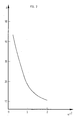
- a graph illustrates the increasing reflectance (R) measured according to DIN standard No. 67 530 (November 1972) (measuring angle 60°) as a function of the coverage (g/m2) of colloidal silica in combination with 5 gram of gelatin per m2.
- a graph illustrates the decreasing reflectance (R) measured according to DIN standard No. 67 530 (November 1972) as a function of the coverage (g/m2) of hydroxypropyl cellulose (having a substitution degree DS of hydroxypropyl groups of 3) in combination with 1 gram of gelatin per m2.
- a graph illustrates the increase in dot gain ( ⁇ DG) as a function of the coverage (g/m2) of gelatin per m2.
- the dot gain was measured at 50 percent dot value at 150 lines per 2.54 cm (inch). Details about the determination of dot gain are given at the end of Example 1.
- the magenta pigment coating was prepared starting with a paste sold under the name HELIOECHTCARMIN BB TEIG (Colour Index Nr. 12,485) and the yellow pigment caoting was prepared starting with a paste sold under the name HELIOECHTGELB GRN 7476 Feinlessness (Colour Index Nr. 21,100). Said pigment-pastes were used in an amount of 14.5 g and 17.6 g respectively per liter of coating composition.
- a carbon black paste was incorporated in admixture with the above mentioned FLEXONYL BLUE-paste in an amount of 15.75 g and 1.26 g respectively per liter of coating composition.
- a double-side polyethylene coated paper with paper weight of 180 g/m2 and a polyethylene layer weight of 30 g per m2 was air-knife coated at a wet coverage of 55 g per m2 with the following coating composition : distilled water 300 ml gelatin 19.8 g 20 % aqueous latex of copoly(methylmethacrylate-butadiene) (50/50) 151 g aqueous dispersion containing 2.86 % of polmethylmethacrylate and 9.5 % of gelatin 25.5 g 21.4 % aqueous dispersion of TiO2 (average grain size 300nm) containing 5.7 % of gelatin 131 g matting agent A 5.8 g matting agent B 2.8 g wetting agents of the anionic sulphonated type 2.8 g as hardening agent a 20 % aqueous solution of formaldehyde 2.2 ml distilled water up to 1000 ml
- Matting agent A is an aqueous dispersion containing 10.7 % of amorphous silica, 6.4 % of gelatin and 4.3 % of polyethylacrylate latex particles.
- Matting agent B is an aqueous dispersion containing 41.8 % of Alpha-quartz and 4.2 % of gelatin.
- the weight % of TiO2 with respect to the total layer composition was 29.5 in the dried layer.
- the coverage of TiO2 was 1.54 g/m2.
- the photographic layers on their temporary support were scanningwise halftone exposed on a commercial argon ion laser scanner operating with electronic dot generation.
- the cyan pigment containing multilayer structure was transferred onto the permanent support as described hereinbefore by soaking the permanent support in water for 30 s and then pressing it into contact with layer (ii). By stripping apart the temporary support the composite layer structure of layers (i) and (ii) was left on the permanent support and the transferred composite layer was dried.
- the transferred composite coating was hardening developed by dipping it for 30 s in an aqueous liquid, called activator bath, having following composition : potassium hydroxide 25 g potassium carbonate 150 g potassium bromide 0.5 g sodium sulphite 2.0 g 4(hydroxymethyl)4-methyl-1-phenyl-3-pyrazolidinone 5.0 g mono sodium salt of ethylenediaminetetra-acetic acid 1.0 g
- the developed material was led through a bleach-fix bath containing sodium thiosulphate and the mono sodium,iron(III) salt of ethylenediamine tetra-acetic acid.
- a cellulose triacetate support having a thickness of 0.1 mm was coated with an aqueous subbing composition to obtain a subbing layer containing following ingredients at the defined coverage in g/m2 : gelatin 0.2 g/m2 Alpha-quartz as matting agent 0.02 g/m2 glycerol 0.02 g/m2 saponine 0.012 g/m2 iso-tetradecyl sulphonic acid sodium salt 0.013 g/m2
- the gloss improving layer was applied by wet lamination and stripping onto the above defined permanent support before forming the cyan relief pattern thereon.
- the gloss improving layer was applied by wet lamination and stripping onto the above defined superposed relief patterns (cyan, magenta, yellow and black).
- the reflectance in the white portions of the image was measured according to DIN standard No. 67 530 (November 1972) (measuring angle 60°)
- the reflectance measurement values obtained for embodiments A and B were respectively 59.9 and 53.8.
- the permanent support free from gloss improving layer had a reflectance value of only 36.7.
- the increase in dot gain was determined in the materials of embodiment A and B and proved to correspond in both cases to the value 9, which is actually a percental increase value.
- the dot gain was measured with respect to the dots in the halftone original at 50 % dot value.
- the halftone dot area percentage was calculated with the Murray-Davies equation (ref. Murray A., “Monochrome Reproduction in Photoengraving", J. Franklin Institute, vol. 221, p. 721-744, reading as follows : wherein : D t represents the density of the halftone tint, D s represents the density of the solid, and a represents the halftone dot area percentage.
- the dot gain is obtained by subtracting the dot area percentage of the original halftone separation image from the above calculated one obtained on the colour proof material provided with gloss improving layer according to embodiment A or B.
- Example 1 along the lines of embodiment B was repeated but with gloss and dot gain controlling coatings having a gelatin coverage and coverage of an other ingredient as defined in the following table wherein also the values of reflectance and of increase in dot gain ( ⁇ DG) are given.
- ⁇ DG dot gain
- DEX dextran (C6H10O5) x (average molecular weight : 70,000).
- PVA polyvinyl alcohol (average molecular weight : 50,000).
- HPC hydroxypropyl cellulose having a DS of 3.
- SiO2 colloidal silica having an average particle size of 10 nm.
Landscapes
- Physics & Mathematics (AREA)
- General Physics & Mathematics (AREA)
- Chemical & Material Sciences (AREA)
- Engineering & Computer Science (AREA)
- Materials Engineering (AREA)
- Ink Jet Recording Methods And Recording Media Thereof (AREA)
- Silver Salt Photography Or Processing Solution Therefor (AREA)
- Laminated Bodies (AREA)
- Printing Methods (AREA)
Priority Applications (5)
| Application Number | Priority Date | Filing Date | Title |
|---|---|---|---|
| EP88200031A EP0324192B1 (fr) | 1988-01-12 | 1988-01-12 | Méthode pour régler le brillant |
| DE8888200031T DE3878882T2 (de) | 1988-01-12 | 1988-01-12 | Verfahren zum steuern des glanzes. |
| US07/284,363 US4925767A (en) | 1988-01-12 | 1988-12-14 | Gloss controlling process |
| JP63335732A JPH022554A (ja) | 1988-01-12 | 1988-12-27 | 光沢調整方法 |
| US07/477,722 US5045392A (en) | 1988-01-12 | 1990-02-09 | Sheet material carrying a strippable gloss-controlling layer |
Applications Claiming Priority (1)
| Application Number | Priority Date | Filing Date | Title |
|---|---|---|---|
| EP88200031A EP0324192B1 (fr) | 1988-01-12 | 1988-01-12 | Méthode pour régler le brillant |
Publications (2)
| Publication Number | Publication Date |
|---|---|
| EP0324192A1 true EP0324192A1 (fr) | 1989-07-19 |
| EP0324192B1 EP0324192B1 (fr) | 1993-03-03 |
Family
ID=8199736
Family Applications (1)
| Application Number | Title | Priority Date | Filing Date |
|---|---|---|---|
| EP88200031A Expired - Lifetime EP0324192B1 (fr) | 1988-01-12 | 1988-01-12 | Méthode pour régler le brillant |
Country Status (4)
| Country | Link |
|---|---|
| US (2) | US4925767A (fr) |
| EP (1) | EP0324192B1 (fr) |
| JP (1) | JPH022554A (fr) |
| DE (1) | DE3878882T2 (fr) |
Cited By (11)
| Publication number | Priority date | Publication date | Assignee | Title |
|---|---|---|---|---|
| EP0410500A1 (fr) * | 1989-07-25 | 1991-01-30 | Agfa-Gevaert N.V. | Planche d'impression offset en aluminium pour lithograhie, produite suivant le procédé d'inversion-transfert par diffusion (DTR) |
| EP0462330A1 (fr) * | 1990-06-21 | 1991-12-27 | Agfa-Gevaert N.V. | Procédé et matériau pour la protection d'images |
| EP0487790A1 (fr) * | 1990-11-30 | 1992-06-03 | Agfa-Gevaert N.V. | Méthode pour réguler la blancheur et film pelliculable |
| EP0529697A1 (fr) * | 1991-07-12 | 1993-03-03 | Agfa-Gevaert N.V. | Matériau sous forme de film pelliculable |
| US5258247A (en) * | 1988-10-21 | 1993-11-02 | Hoechst Celanese Corporation | Photoimaged article having a colored image protected by a transparent, flexible nonself supporting layer containing a thermoplastic, antiblocking resin |
| EP0600534A1 (fr) * | 1992-12-01 | 1994-06-08 | Agfa-Gevaert N.V. | Procédé et matériaux pour contrôler l'aspect visuel des images |
| EP0629921A1 (fr) * | 1993-06-18 | 1994-12-21 | Xeikon Nv | Procédé d'impression électrostatique incluant l'utilisation de toner incoloré |
| EP0701172A1 (fr) * | 1994-09-08 | 1996-03-13 | Agfa-Gevaert N.V. | Procédé de fabrication d'élémente formateurs d'images utilisables dans le procédé de diffusion transfert de sels d'argent |
| US5612777A (en) * | 1996-01-11 | 1997-03-18 | Xerox Corporation | Method and apparatus for applying a clear toner resin containing lightfastness material to toner images |
| US5981121A (en) * | 1996-10-21 | 1999-11-09 | Fuji Xerox Co., Ltd. | Transparent toner used in color image forming method |
| US6535712B2 (en) | 2001-07-06 | 2003-03-18 | Hewlett-Packard Company | Gloss control method and apparatus with disposable toner cartridges containing clear toners |
Families Citing this family (8)
| Publication number | Priority date | Publication date | Assignee | Title |
|---|---|---|---|---|
| US5300398A (en) * | 1991-08-23 | 1994-04-05 | Eastman Kodak Company | Intermediate receiver cushion layer |
| DE69328229D1 (de) * | 1992-12-01 | 2000-05-04 | Agfa Gevaert Nv | Verfahren und Materialien zur Kontrolle des visuellen Aspektes von Bildern |
| EP0653684A1 (fr) * | 1993-11-16 | 1995-05-17 | Agfa-Gevaert N.V. | Elément d'enregistrement d'images, contenant une composition photopolymérisable et méthode pour la production de plaques lithographiques avec cet élément |
| EP0653685A1 (fr) * | 1993-11-16 | 1995-05-17 | Agfa-Gevaert N.V. | Méthode pour la fabrication des plaques d'impression lithographiques utilisant un élément d'enregistrement d'images contenant une composition photopolymérisable |
| EP0738932B1 (fr) * | 1995-04-21 | 2000-04-05 | AGFA-GEVAERT naamloze vennootschap | Elément formateur d'images contenant un agent générateur d'acide par exposition à la lumière et méthode pour la fabrication de plaques lithographiques |
| US5708904A (en) * | 1996-06-14 | 1998-01-13 | Eastman Kodak Company | Photographic emulsion surface reforming method |
| US6113288A (en) * | 1996-06-14 | 2000-09-05 | Eastman Kodak Company | Water deposition apparatus and method |
| US9427060B2 (en) | 2010-06-25 | 2016-08-30 | Kampalook Ltd. | Device, kit and method for coloring hair |
Citations (3)
| Publication number | Priority date | Publication date | Assignee | Title |
|---|---|---|---|---|
| GB177255A (en) * | 1920-12-22 | 1922-03-22 | Frank William Kent | Improvements in or relating to photographic transfer processes |
| US2083640A (en) * | 1934-12-06 | 1937-06-15 | Eastman Kodak Co | Photographic stripping film |
| US4376159A (en) * | 1977-05-09 | 1983-03-08 | Keuffel & Esser Company | Method of preparing matte finish color-proofing surprints |
Family Cites Families (8)
| Publication number | Priority date | Publication date | Assignee | Title |
|---|---|---|---|---|
| US1989017A (en) * | 1929-07-27 | 1935-01-22 | Neumann Henry | Material and process for applying gelatin coating to surfaces |
| BE529125A (fr) * | 1954-05-26 | 1900-01-01 | ||
| US2968582A (en) * | 1958-09-22 | 1961-01-17 | Eastman Kodak Co | Film products having pectin layers |
| GB1010339A (en) * | 1962-11-21 | 1965-11-17 | Monsanto Chemicals | Process for treating fibrous materials |
| GB1196843A (en) * | 1968-04-26 | 1970-07-01 | Ilford Ltd | Hardened Photographic Gelatin Silver Halide Material. |
| GB1264313A (fr) * | 1968-05-15 | 1972-02-23 | ||
| EP0185410B1 (fr) * | 1984-12-04 | 1989-07-05 | Agfa-Gevaert N.V. | Procédé pour la formation d'un modèle multicolore au trait ou à demi-ton à base de colloides |
| DE3669932D1 (de) * | 1985-02-04 | 1990-05-03 | Agfa Gevaert Nv | Verfahren zur herstellung von vielfarbigen strich-kolloidmustern oder gerasterten kolloidmustern. |
-
1988
- 1988-01-12 DE DE8888200031T patent/DE3878882T2/de not_active Expired - Fee Related
- 1988-01-12 EP EP88200031A patent/EP0324192B1/fr not_active Expired - Lifetime
- 1988-12-14 US US07/284,363 patent/US4925767A/en not_active Expired - Fee Related
- 1988-12-27 JP JP63335732A patent/JPH022554A/ja active Pending
-
1990
- 1990-02-09 US US07/477,722 patent/US5045392A/en not_active Expired - Fee Related
Patent Citations (3)
| Publication number | Priority date | Publication date | Assignee | Title |
|---|---|---|---|---|
| GB177255A (en) * | 1920-12-22 | 1922-03-22 | Frank William Kent | Improvements in or relating to photographic transfer processes |
| US2083640A (en) * | 1934-12-06 | 1937-06-15 | Eastman Kodak Co | Photographic stripping film |
| US4376159A (en) * | 1977-05-09 | 1983-03-08 | Keuffel & Esser Company | Method of preparing matte finish color-proofing surprints |
Non-Patent Citations (1)
| Title |
|---|
| CHEMICAL ABSTRACTS, vol. 82, no. 24, 16th June 1975, page 478, abstract no. 162998b, Columbus, Ohio, US; & CS-A-155 837 (K. STANISLAV et al.) 15-11-1974 * |
Cited By (12)
| Publication number | Priority date | Publication date | Assignee | Title |
|---|---|---|---|---|
| US5258247A (en) * | 1988-10-21 | 1993-11-02 | Hoechst Celanese Corporation | Photoimaged article having a colored image protected by a transparent, flexible nonself supporting layer containing a thermoplastic, antiblocking resin |
| EP0410500A1 (fr) * | 1989-07-25 | 1991-01-30 | Agfa-Gevaert N.V. | Planche d'impression offset en aluminium pour lithograhie, produite suivant le procédé d'inversion-transfert par diffusion (DTR) |
| EP0462330A1 (fr) * | 1990-06-21 | 1991-12-27 | Agfa-Gevaert N.V. | Procédé et matériau pour la protection d'images |
| EP0487790A1 (fr) * | 1990-11-30 | 1992-06-03 | Agfa-Gevaert N.V. | Méthode pour réguler la blancheur et film pelliculable |
| EP0529697A1 (fr) * | 1991-07-12 | 1993-03-03 | Agfa-Gevaert N.V. | Matériau sous forme de film pelliculable |
| EP0600534A1 (fr) * | 1992-12-01 | 1994-06-08 | Agfa-Gevaert N.V. | Procédé et matériaux pour contrôler l'aspect visuel des images |
| EP0629921A1 (fr) * | 1993-06-18 | 1994-12-21 | Xeikon Nv | Procédé d'impression électrostatique incluant l'utilisation de toner incoloré |
| US5506671A (en) * | 1993-06-18 | 1996-04-09 | Xeikon Nv | Electrostatographic printing including the use of colourless toner |
| EP0701172A1 (fr) * | 1994-09-08 | 1996-03-13 | Agfa-Gevaert N.V. | Procédé de fabrication d'élémente formateurs d'images utilisables dans le procédé de diffusion transfert de sels d'argent |
| US5612777A (en) * | 1996-01-11 | 1997-03-18 | Xerox Corporation | Method and apparatus for applying a clear toner resin containing lightfastness material to toner images |
| US5981121A (en) * | 1996-10-21 | 1999-11-09 | Fuji Xerox Co., Ltd. | Transparent toner used in color image forming method |
| US6535712B2 (en) | 2001-07-06 | 2003-03-18 | Hewlett-Packard Company | Gloss control method and apparatus with disposable toner cartridges containing clear toners |
Also Published As
| Publication number | Publication date |
|---|---|
| DE3878882D1 (de) | 1993-04-08 |
| US4925767A (en) | 1990-05-15 |
| DE3878882T2 (de) | 1993-09-23 |
| EP0324192B1 (fr) | 1993-03-03 |
| US5045392A (en) | 1991-09-03 |
| JPH022554A (ja) | 1990-01-08 |
Similar Documents
| Publication | Publication Date | Title |
|---|---|---|
| EP0324192B1 (fr) | Méthode pour régler le brillant | |
| EP0483799B1 (fr) | Procédé par double laminage pour l'epreuve en couleurs thermique | |
| US4262071A (en) | Optical enhancement of color proofing images | |
| US5075196A (en) | Halftone image production | |
| EP0339860B1 (fr) | Système pour tirage d'épreuves à faible gain de point | |
| US4037533A (en) | Color lithography using a random pattern screen | |
| US5851720A (en) | Transfer material for use in thermal transfer and method of forming thermal transfer images | |
| US3681074A (en) | Production of coloured colloid patterns | |
| US6004718A (en) | Method for forming images of a sepia tone | |
| JPH0610751B2 (ja) | 写真多色像の色バランスを改良する方法 | |
| EP0185410B1 (fr) | Procédé pour la formation d'un modèle multicolore au trait ou à demi-ton à base de colloides | |
| JPH04265793A (ja) | 中間色素受容素子およびカラー画像の形成方法 | |
| US5273855A (en) | Method of forming multi-color image | |
| US4783390A (en) | Multicolor diazo image-forming material | |
| EP0194704B1 (fr) | Procédé pour la formation de modèles multicolores au trait ou tramés | |
| GB2128352A (en) | Color image forming method and color image forming photo-sensitive material to be used therefor | |
| US5385805A (en) | Process and materials for controlling the visual aspect of images | |
| EP0600534B1 (fr) | Procédé et matériaux pour contrôler l'aspect visuel des images | |
| EP0462330A1 (fr) | Procédé et matériau pour la protection d'images | |
| EP0487790A1 (fr) | Méthode pour réguler la blancheur et film pelliculable | |
| EP0048160B1 (fr) | Matériau enregistreur photosensible et procédé de mordançage en demi-ton | |
| US6471811B1 (en) | Ink color proofing | |
| EP0803774B1 (fr) | Procédé pour la fabrication d'images en couleur à faible gain de point et images en couleur obtenues par ce procédé | |
| WO1994010610A1 (fr) | Procede pour former des epreuves numeriques en couleur directement sur le materiau standard d'impression |
Legal Events
| Date | Code | Title | Description |
|---|---|---|---|
| PUAI | Public reference made under article 153(3) epc to a published international application that has entered the european phase |
Free format text: ORIGINAL CODE: 0009012 |
|
| AK | Designated contracting states |
Kind code of ref document: A1 Designated state(s): AT BE CH DE ES FR GB GR IT LI LU NL SE |
|
| RBV | Designated contracting states (corrected) |
Designated state(s): BE DE FR GB |
|
| 17P | Request for examination filed |
Effective date: 19891205 |
|
| 17Q | First examination report despatched |
Effective date: 19910627 |
|
| GRAA | (expected) grant |
Free format text: ORIGINAL CODE: 0009210 |
|
| AK | Designated contracting states |
Kind code of ref document: B1 Designated state(s): BE DE FR GB |
|
| REF | Corresponds to: |
Ref document number: 3878882 Country of ref document: DE Date of ref document: 19930408 |
|
| ET | Fr: translation filed | ||
| PLBE | No opposition filed within time limit |
Free format text: ORIGINAL CODE: 0009261 |
|
| STAA | Information on the status of an ep patent application or granted ep patent |
Free format text: STATUS: NO OPPOSITION FILED WITHIN TIME LIMIT |
|
| 26N | No opposition filed | ||
| PGFP | Annual fee paid to national office [announced via postgrant information from national office to epo] |
Ref country code: FR Payment date: 19951214 Year of fee payment: 9 Ref country code: BE Payment date: 19951214 Year of fee payment: 9 |
|
| PGFP | Annual fee paid to national office [announced via postgrant information from national office to epo] |
Ref country code: DE Payment date: 19951216 Year of fee payment: 9 |
|
| PGFP | Annual fee paid to national office [announced via postgrant information from national office to epo] |
Ref country code: GB Payment date: 19961205 Year of fee payment: 10 |
|
| PG25 | Lapsed in a contracting state [announced via postgrant information from national office to epo] |
Ref country code: BE Effective date: 19970131 |
|
| BERE | Be: lapsed |
Owner name: AGFA-GEVAERT N.V. Effective date: 19970131 |
|
| PG25 | Lapsed in a contracting state [announced via postgrant information from national office to epo] |
Ref country code: FR Effective date: 19970930 |
|
| PG25 | Lapsed in a contracting state [announced via postgrant information from national office to epo] |
Ref country code: DE Effective date: 19971001 |
|
| REG | Reference to a national code |
Ref country code: FR Ref legal event code: ST |
|
| PG25 | Lapsed in a contracting state [announced via postgrant information from national office to epo] |
Ref country code: GB Free format text: LAPSE BECAUSE OF NON-PAYMENT OF DUE FEES Effective date: 19980112 |
|
| GBPC | Gb: european patent ceased through non-payment of renewal fee |
Effective date: 19980112 |