EP0324558B1 - Fluide lubrifiant polaire et sa préparation - Google Patents
Fluide lubrifiant polaire et sa préparation Download PDFInfo
- Publication number
- EP0324558B1 EP0324558B1 EP89300131A EP89300131A EP0324558B1 EP 0324558 B1 EP0324558 B1 EP 0324558B1 EP 89300131 A EP89300131 A EP 89300131A EP 89300131 A EP89300131 A EP 89300131A EP 0324558 B1 EP0324558 B1 EP 0324558B1
- Authority
- EP
- European Patent Office
- Prior art keywords
- ester
- lubricating fluid
- carbon atoms
- alcohol
- oligomer
- Prior art date
- Legal status (The legal status is an assumption and is not a legal conclusion. Google has not performed a legal analysis and makes no representation as to the accuracy of the status listed.)
- Expired - Lifetime
Links
- 239000012530 fluid Substances 0.000 title claims description 71
- 230000001050 lubricating effect Effects 0.000 title claims description 57
- 230000015572 biosynthetic process Effects 0.000 title claims description 5
- 238000003786 synthesis reaction Methods 0.000 title claims description 4
- 150000002148 esters Chemical class 0.000 claims description 37
- 125000004432 carbon atom Chemical group C* 0.000 claims description 23
- 239000000314 lubricant Substances 0.000 claims description 23
- LFQSCWFLJHTTHZ-UHFFFAOYSA-N Ethanol Chemical compound CCO LFQSCWFLJHTTHZ-UHFFFAOYSA-N 0.000 claims description 21
- -1 aliphatic primary alcohol Chemical class 0.000 claims description 17
- 239000000203 mixture Substances 0.000 claims description 15
- 239000000654 additive Substances 0.000 claims description 14
- 230000000996 additive effect Effects 0.000 claims description 14
- 125000000524 functional group Chemical group 0.000 claims description 14
- 238000000034 method Methods 0.000 claims description 13
- 230000008569 process Effects 0.000 claims description 13
- 150000001336 alkenes Chemical class 0.000 claims description 11
- 239000002904 solvent Substances 0.000 claims description 10
- JRZJOMJEPLMPRA-UHFFFAOYSA-N olefin Natural products CCCCCCCC=C JRZJOMJEPLMPRA-UHFFFAOYSA-N 0.000 claims description 8
- 239000003054 catalyst Substances 0.000 claims description 7
- 239000003795 chemical substances by application Substances 0.000 claims description 7
- 238000007037 hydroformylation reaction Methods 0.000 claims description 7
- 150000001875 compounds Chemical class 0.000 claims description 6
- 229930195735 unsaturated hydrocarbon Natural products 0.000 claims description 6
- 239000010948 rhodium Substances 0.000 claims description 5
- 229920006395 saturated elastomer Polymers 0.000 claims description 4
- 229910017052 cobalt Inorganic materials 0.000 claims description 3
- 239000010941 cobalt Substances 0.000 claims description 3
- GUTLYIVDDKVIGB-UHFFFAOYSA-N cobalt atom Chemical compound [Co] GUTLYIVDDKVIGB-UHFFFAOYSA-N 0.000 claims description 3
- ZCYVEMRRCGMTRW-UHFFFAOYSA-N 7553-56-2 Chemical group [I] ZCYVEMRRCGMTRW-UHFFFAOYSA-N 0.000 claims description 2
- KJTLSVCANCCWHF-UHFFFAOYSA-N Ruthenium Chemical compound [Ru] KJTLSVCANCCWHF-UHFFFAOYSA-N 0.000 claims description 2
- 229910052799 carbon Inorganic materials 0.000 claims description 2
- 125000002915 carbonyl group Chemical group [*:2]C([*:1])=O 0.000 claims description 2
- 229910052801 chlorine Inorganic materials 0.000 claims description 2
- 239000000460 chlorine Substances 0.000 claims description 2
- 125000001309 chloro group Chemical group Cl* 0.000 claims description 2
- 150000004696 coordination complex Chemical class 0.000 claims description 2
- 125000002887 hydroxy group Chemical group [H]O* 0.000 claims description 2
- 229910052740 iodine Chemical group 0.000 claims description 2
- 238000004519 manufacturing process Methods 0.000 claims description 2
- 229910052703 rhodium Inorganic materials 0.000 claims description 2
- MHOVAHRLVXNVSD-UHFFFAOYSA-N rhodium atom Chemical compound [Rh] MHOVAHRLVXNVSD-UHFFFAOYSA-N 0.000 claims description 2
- 229910052707 ruthenium Inorganic materials 0.000 claims description 2
- GDTBXPJZTBHREO-UHFFFAOYSA-N bromine Chemical group BrBr GDTBXPJZTBHREO-UHFFFAOYSA-N 0.000 claims 2
- 229910052794 bromium Inorganic materials 0.000 claims 1
- 239000013638 trimer Substances 0.000 description 16
- 238000006243 chemical reaction Methods 0.000 description 14
- AFFLGGQVNFXPEV-UHFFFAOYSA-N 1-decene Chemical class CCCCCCCCC=C AFFLGGQVNFXPEV-UHFFFAOYSA-N 0.000 description 12
- 239000000047 product Substances 0.000 description 7
- WFDIJRYMOXRFFG-UHFFFAOYSA-N Acetic anhydride Chemical compound CC(=O)OC(C)=O WFDIJRYMOXRFFG-UHFFFAOYSA-N 0.000 description 6
- 239000000463 material Substances 0.000 description 6
- 229910052751 metal Inorganic materials 0.000 description 5
- 239000002184 metal Substances 0.000 description 5
- 150000001298 alcohols Chemical class 0.000 description 4
- 230000003647 oxidation Effects 0.000 description 4
- 238000007254 oxidation reaction Methods 0.000 description 4
- 150000003138 primary alcohols Chemical class 0.000 description 4
- XEKOWRVHYACXOJ-UHFFFAOYSA-N Ethyl acetate Chemical compound CCOC(C)=O XEKOWRVHYACXOJ-UHFFFAOYSA-N 0.000 description 3
- WNLRTRBMVRJNCN-UHFFFAOYSA-N adipic acid Chemical class OC(=O)CCCCC(O)=O WNLRTRBMVRJNCN-UHFFFAOYSA-N 0.000 description 3
- 229920001971 elastomer Polymers 0.000 description 3
- 150000004675 formic acid derivatives Chemical class 0.000 description 3
- 239000007789 gas Substances 0.000 description 3
- MJOOWVYBALWUTI-UHFFFAOYSA-N hexanedioic acid;tridecan-1-ol Chemical compound OC(=O)CCCCC(O)=O.CCCCCCCCCCCCCO.CCCCCCCCCCCCCO MJOOWVYBALWUTI-UHFFFAOYSA-N 0.000 description 3
- 238000005984 hydrogenation reaction Methods 0.000 description 3
- 229920000642 polymer Polymers 0.000 description 3
- IJGRMHOSHXDMSA-UHFFFAOYSA-N Atomic nitrogen Chemical compound N#N IJGRMHOSHXDMSA-UHFFFAOYSA-N 0.000 description 2
- FERIUCNNQQJTOY-UHFFFAOYSA-N Butyric acid Chemical compound CCCC(O)=O FERIUCNNQQJTOY-UHFFFAOYSA-N 0.000 description 2
- OKTJSMMVPCPJKN-UHFFFAOYSA-N Carbon Chemical compound [C] OKTJSMMVPCPJKN-UHFFFAOYSA-N 0.000 description 2
- VQTUBCCKSQIDNK-UHFFFAOYSA-N Isobutene Chemical group CC(C)=C VQTUBCCKSQIDNK-UHFFFAOYSA-N 0.000 description 2
- 229920000459 Nitrile rubber Polymers 0.000 description 2
- JUJWROOIHBZHMG-UHFFFAOYSA-N Pyridine Chemical compound C1=CC=NC=C1 JUJWROOIHBZHMG-UHFFFAOYSA-N 0.000 description 2
- PPBRXRYQALVLMV-UHFFFAOYSA-N Styrene Chemical compound C=CC1=CC=CC=C1 PPBRXRYQALVLMV-UHFFFAOYSA-N 0.000 description 2
- 150000001299 aldehydes Chemical class 0.000 description 2
- 125000001931 aliphatic group Chemical group 0.000 description 2
- 150000001733 carboxylic acid esters Chemical group 0.000 description 2
- 230000008859 change Effects 0.000 description 2
- 125000004185 ester group Chemical group 0.000 description 2
- OBNCKNCVKJNDBV-UHFFFAOYSA-N ethyl butyrate Chemical compound CCCC(=O)OCC OBNCKNCVKJNDBV-UHFFFAOYSA-N 0.000 description 2
- FKRCODPIKNYEAC-UHFFFAOYSA-N ethyl propionate Chemical compound CCOC(=O)CC FKRCODPIKNYEAC-UHFFFAOYSA-N 0.000 description 2
- 229930195733 hydrocarbon Natural products 0.000 description 2
- 150000002430 hydrocarbons Chemical class 0.000 description 2
- 125000004356 hydroxy functional group Chemical group O* 0.000 description 2
- 230000001771 impaired effect Effects 0.000 description 2
- 230000001965 increasing effect Effects 0.000 description 2
- 150000005673 monoalkenes Chemical class 0.000 description 2
- 239000002244 precipitate Substances 0.000 description 2
- 238000003860 storage Methods 0.000 description 2
- 239000010689 synthetic lubricating oil Substances 0.000 description 2
- RIOQSEWOXXDEQQ-UHFFFAOYSA-N triphenylphosphine Chemical compound C1=CC=CC=C1P(C=1C=CC=CC=1)C1=CC=CC=C1 RIOQSEWOXXDEQQ-UHFFFAOYSA-N 0.000 description 2
- NQPDZGIKBAWPEJ-UHFFFAOYSA-N valeric acid Chemical compound CCCCC(O)=O NQPDZGIKBAWPEJ-UHFFFAOYSA-N 0.000 description 2
- 239000004711 α-olefin Substances 0.000 description 2
- WWZKQHOCKIZLMA-UHFFFAOYSA-N Caprylic acid Natural products CCCCCCCC(O)=O WWZKQHOCKIZLMA-UHFFFAOYSA-N 0.000 description 1
- 239000004215 Carbon black (E152) Substances 0.000 description 1
- UGFAIRIUMAVXCW-UHFFFAOYSA-N Carbon monoxide Chemical compound [O+]#[C-] UGFAIRIUMAVXCW-UHFFFAOYSA-N 0.000 description 1
- 229910021012 Co2(CO)8 Inorganic materials 0.000 description 1
- 229910021580 Cobalt(II) chloride Inorganic materials 0.000 description 1
- UFHFLCQGNIYNRP-UHFFFAOYSA-N Hydrogen Chemical compound [H][H] UFHFLCQGNIYNRP-UHFFFAOYSA-N 0.000 description 1
- XBDQKXXYIPTUBI-UHFFFAOYSA-M Propionate Chemical compound CCC([O-])=O XBDQKXXYIPTUBI-UHFFFAOYSA-M 0.000 description 1
- 229910019603 Rh2O3 Inorganic materials 0.000 description 1
- 229910021604 Rhodium(III) chloride Inorganic materials 0.000 description 1
- KXKVLQRXCPHEJC-UHFFFAOYSA-N acetic acid trimethyl ester Natural products COC(C)=O KXKVLQRXCPHEJC-UHFFFAOYSA-N 0.000 description 1
- FXXACINHVKSMDR-UHFFFAOYSA-N acetyl bromide Chemical compound CC(Br)=O FXXACINHVKSMDR-UHFFFAOYSA-N 0.000 description 1
- WETWJCDKMRHUPV-UHFFFAOYSA-N acetyl chloride Chemical compound CC(Cl)=O WETWJCDKMRHUPV-UHFFFAOYSA-N 0.000 description 1
- 239000012346 acetyl chloride Substances 0.000 description 1
- 150000008065 acid anhydrides Chemical class 0.000 description 1
- 150000001252 acrylic acid derivatives Chemical class 0.000 description 1
- 230000009471 action Effects 0.000 description 1
- 150000001266 acyl halides Chemical class 0.000 description 1
- 230000008901 benefit Effects 0.000 description 1
- GONOPSZTUGRENK-UHFFFAOYSA-N benzyl(trichloro)silane Chemical compound Cl[Si](Cl)(Cl)CC1=CC=CC=C1 GONOPSZTUGRENK-UHFFFAOYSA-N 0.000 description 1
- YHASWHZGWUONAO-UHFFFAOYSA-N butanoyl butanoate Chemical compound CCCC(=O)OC(=O)CCC YHASWHZGWUONAO-UHFFFAOYSA-N 0.000 description 1
- DVECBJCOGJRVPX-UHFFFAOYSA-N butyryl chloride Chemical compound CCCC(Cl)=O DVECBJCOGJRVPX-UHFFFAOYSA-N 0.000 description 1
- 229910002091 carbon monoxide Inorganic materials 0.000 description 1
- LVGLLYVYRZMJIN-UHFFFAOYSA-N carbon monoxide;rhodium Chemical compound [Rh].[Rh].[Rh].[Rh].[O+]#[C-].[O+]#[C-].[O+]#[C-].[O+]#[C-].[O+]#[C-].[O+]#[C-].[O+]#[C-].[O+]#[C-].[O+]#[C-].[O+]#[C-].[O+]#[C-].[O+]#[C-] LVGLLYVYRZMJIN-UHFFFAOYSA-N 0.000 description 1
- NQZFAUXPNWSLBI-UHFFFAOYSA-N carbon monoxide;ruthenium Chemical compound [Ru].[Ru].[Ru].[O+]#[C-].[O+]#[C-].[O+]#[C-].[O+]#[C-].[O+]#[C-].[O+]#[C-].[O+]#[C-].[O+]#[C-].[O+]#[C-].[O+]#[C-].[O+]#[C-].[O+]#[C-] NQZFAUXPNWSLBI-UHFFFAOYSA-N 0.000 description 1
- 150000001728 carbonyl compounds Chemical class 0.000 description 1
- 150000001732 carboxylic acid derivatives Chemical class 0.000 description 1
- 239000007795 chemical reaction product Substances 0.000 description 1
- 230000000052 comparative effect Effects 0.000 description 1
- 239000000470 constituent Substances 0.000 description 1
- 239000013256 coordination polymer Substances 0.000 description 1
- 229920001577 copolymer Polymers 0.000 description 1
- 230000007797 corrosion Effects 0.000 description 1
- 238000005260 corrosion Methods 0.000 description 1
- 238000005336 cracking Methods 0.000 description 1
- 230000007423 decrease Effects 0.000 description 1
- 230000003247 decreasing effect Effects 0.000 description 1
- 230000002950 deficient Effects 0.000 description 1
- 150000001993 dienes Chemical class 0.000 description 1
- 238000005516 engineering process Methods 0.000 description 1
- 239000003623 enhancer Substances 0.000 description 1
- 230000002708 enhancing effect Effects 0.000 description 1
- 239000001257 hydrogen Substances 0.000 description 1
- 229910052739 hydrogen Inorganic materials 0.000 description 1
- 238000010348 incorporation Methods 0.000 description 1
- 238000005461 lubrication Methods 0.000 description 1
- 150000002734 metacrylic acid derivatives Chemical class 0.000 description 1
- 238000002156 mixing Methods 0.000 description 1
- FUZZWVXGSFPDMH-UHFFFAOYSA-N n-hexanoic acid Natural products CCCCCC(O)=O FUZZWVXGSFPDMH-UHFFFAOYSA-N 0.000 description 1
- 229910052757 nitrogen Inorganic materials 0.000 description 1
- 230000001590 oxidative effect Effects 0.000 description 1
- 238000001556 precipitation Methods 0.000 description 1
- 238000002360 preparation method Methods 0.000 description 1
- RZWZRACFZGVKFM-UHFFFAOYSA-N propanoyl chloride Chemical compound CCC(Cl)=O RZWZRACFZGVKFM-UHFFFAOYSA-N 0.000 description 1
- WYVAMUWZEOHJOQ-UHFFFAOYSA-N propionic anhydride Chemical compound CCC(=O)OC(=O)CC WYVAMUWZEOHJOQ-UHFFFAOYSA-N 0.000 description 1
- UMJSCPRVCHMLSP-UHFFFAOYSA-N pyridine Natural products COC1=CC=CN=C1 UMJSCPRVCHMLSP-UHFFFAOYSA-N 0.000 description 1
- 239000000376 reactant Substances 0.000 description 1
- 230000009257 reactivity Effects 0.000 description 1
- SONJTKJMTWTJCT-UHFFFAOYSA-K rhodium(iii) chloride Chemical compound [Cl-].[Cl-].[Cl-].[Rh+3] SONJTKJMTWTJCT-UHFFFAOYSA-K 0.000 description 1
- 239000004589 rubber sealant Substances 0.000 description 1
- 229930195734 saturated hydrocarbon Natural products 0.000 description 1
- 238000007789 sealing Methods 0.000 description 1
- 150000003333 secondary alcohols Chemical class 0.000 description 1
- 239000013049 sediment Substances 0.000 description 1
- 230000007928 solubilization Effects 0.000 description 1
- 238000005063 solubilization Methods 0.000 description 1
- 229910001220 stainless steel Inorganic materials 0.000 description 1
- 239000010935 stainless steel Substances 0.000 description 1
- 239000000126 substance Substances 0.000 description 1
- TUQOTMZNTHZOKS-UHFFFAOYSA-N tributylphosphine Chemical compound CCCCP(CCCC)CCCC TUQOTMZNTHZOKS-UHFFFAOYSA-N 0.000 description 1
- 239000002966 varnish Substances 0.000 description 1
- 238000000196 viscometry Methods 0.000 description 1
Images

Classifications
-
- C—CHEMISTRY; METALLURGY
- C10—PETROLEUM, GAS OR COKE INDUSTRIES; TECHNICAL GASES CONTAINING CARBON MONOXIDE; FUELS; LUBRICANTS; PEAT
- C10M—LUBRICATING COMPOSITIONS; USE OF CHEMICAL SUBSTANCES EITHER ALONE OR AS LUBRICATING INGREDIENTS IN A LUBRICATING COMPOSITION
- C10M107/00—Lubricating compositions characterised by the base-material being a macromolecular compound
- C10M107/20—Lubricating compositions characterised by the base-material being a macromolecular compound containing oxygen
- C10M107/22—Macromolecular compounds obtained by reactions only involving carbon-to-carbon unsaturated bonds
-
- C—CHEMISTRY; METALLURGY
- C10—PETROLEUM, GAS OR COKE INDUSTRIES; TECHNICAL GASES CONTAINING CARBON MONOXIDE; FUELS; LUBRICANTS; PEAT
- C10M—LUBRICATING COMPOSITIONS; USE OF CHEMICAL SUBSTANCES EITHER ALONE OR AS LUBRICATING INGREDIENTS IN A LUBRICATING COMPOSITION
- C10M105/00—Lubricating compositions characterised by the base-material being a non-macromolecular organic compound
- C10M105/08—Lubricating compositions characterised by the base-material being a non-macromolecular organic compound containing oxygen
- C10M105/10—Lubricating compositions characterised by the base-material being a non-macromolecular organic compound containing oxygen having hydroxy groups bound to acyclic or cycloaliphatic carbon atoms
- C10M105/12—Lubricating compositions characterised by the base-material being a non-macromolecular organic compound containing oxygen having hydroxy groups bound to acyclic or cycloaliphatic carbon atoms monohydroxy
-
- C—CHEMISTRY; METALLURGY
- C10—PETROLEUM, GAS OR COKE INDUSTRIES; TECHNICAL GASES CONTAINING CARBON MONOXIDE; FUELS; LUBRICANTS; PEAT
- C10M—LUBRICATING COMPOSITIONS; USE OF CHEMICAL SUBSTANCES EITHER ALONE OR AS LUBRICATING INGREDIENTS IN A LUBRICATING COMPOSITION
- C10M105/00—Lubricating compositions characterised by the base-material being a non-macromolecular organic compound
- C10M105/08—Lubricating compositions characterised by the base-material being a non-macromolecular organic compound containing oxygen
- C10M105/32—Esters
- C10M105/34—Esters of monocarboxylic acids
-
- C—CHEMISTRY; METALLURGY
- C10—PETROLEUM, GAS OR COKE INDUSTRIES; TECHNICAL GASES CONTAINING CARBON MONOXIDE; FUELS; LUBRICANTS; PEAT
- C10M—LUBRICATING COMPOSITIONS; USE OF CHEMICAL SUBSTANCES EITHER ALONE OR AS LUBRICATING INGREDIENTS IN A LUBRICATING COMPOSITION
- C10M2207/00—Organic non-macromolecular hydrocarbon compounds containing hydrogen, carbon and oxygen as ingredients in lubricant compositions
- C10M2207/02—Hydroxy compounds
- C10M2207/021—Hydroxy compounds having hydroxy groups bound to acyclic or cycloaliphatic carbon atoms
-
- C—CHEMISTRY; METALLURGY
- C10—PETROLEUM, GAS OR COKE INDUSTRIES; TECHNICAL GASES CONTAINING CARBON MONOXIDE; FUELS; LUBRICANTS; PEAT
- C10M—LUBRICATING COMPOSITIONS; USE OF CHEMICAL SUBSTANCES EITHER ALONE OR AS LUBRICATING INGREDIENTS IN A LUBRICATING COMPOSITION
- C10M2207/00—Organic non-macromolecular hydrocarbon compounds containing hydrogen, carbon and oxygen as ingredients in lubricant compositions
- C10M2207/28—Esters
- C10M2207/281—Esters of (cyclo)aliphatic monocarboxylic acids
-
- C—CHEMISTRY; METALLURGY
- C10—PETROLEUM, GAS OR COKE INDUSTRIES; TECHNICAL GASES CONTAINING CARBON MONOXIDE; FUELS; LUBRICANTS; PEAT
- C10M—LUBRICATING COMPOSITIONS; USE OF CHEMICAL SUBSTANCES EITHER ALONE OR AS LUBRICATING INGREDIENTS IN A LUBRICATING COMPOSITION
- C10M2207/00—Organic non-macromolecular hydrocarbon compounds containing hydrogen, carbon and oxygen as ingredients in lubricant compositions
- C10M2207/28—Esters
- C10M2207/282—Esters of (cyclo)aliphatic oolycarboxylic acids
-
- C—CHEMISTRY; METALLURGY
- C10—PETROLEUM, GAS OR COKE INDUSTRIES; TECHNICAL GASES CONTAINING CARBON MONOXIDE; FUELS; LUBRICANTS; PEAT
- C10M—LUBRICATING COMPOSITIONS; USE OF CHEMICAL SUBSTANCES EITHER ALONE OR AS LUBRICATING INGREDIENTS IN A LUBRICATING COMPOSITION
- C10M2207/00—Organic non-macromolecular hydrocarbon compounds containing hydrogen, carbon and oxygen as ingredients in lubricant compositions
- C10M2207/28—Esters
- C10M2207/283—Esters of polyhydroxy compounds
-
- C—CHEMISTRY; METALLURGY
- C10—PETROLEUM, GAS OR COKE INDUSTRIES; TECHNICAL GASES CONTAINING CARBON MONOXIDE; FUELS; LUBRICANTS; PEAT
- C10M—LUBRICATING COMPOSITIONS; USE OF CHEMICAL SUBSTANCES EITHER ALONE OR AS LUBRICATING INGREDIENTS IN A LUBRICATING COMPOSITION
- C10M2207/00—Organic non-macromolecular hydrocarbon compounds containing hydrogen, carbon and oxygen as ingredients in lubricant compositions
- C10M2207/28—Esters
- C10M2207/286—Esters of polymerised unsaturated acids
-
- C—CHEMISTRY; METALLURGY
- C10—PETROLEUM, GAS OR COKE INDUSTRIES; TECHNICAL GASES CONTAINING CARBON MONOXIDE; FUELS; LUBRICANTS; PEAT
- C10M—LUBRICATING COMPOSITIONS; USE OF CHEMICAL SUBSTANCES EITHER ALONE OR AS LUBRICATING INGREDIENTS IN A LUBRICATING COMPOSITION
- C10M2209/00—Organic macromolecular compounds containing oxygen as ingredients in lubricant compositions
-
- C—CHEMISTRY; METALLURGY
- C10—PETROLEUM, GAS OR COKE INDUSTRIES; TECHNICAL GASES CONTAINING CARBON MONOXIDE; FUELS; LUBRICANTS; PEAT
- C10M—LUBRICATING COMPOSITIONS; USE OF CHEMICAL SUBSTANCES EITHER ALONE OR AS LUBRICATING INGREDIENTS IN A LUBRICATING COMPOSITION
- C10M2209/00—Organic macromolecular compounds containing oxygen as ingredients in lubricant compositions
- C10M2209/02—Macromolecular compounds obtained by reactions only involving carbon-to-carbon unsaturated bonds
-
- C—CHEMISTRY; METALLURGY
- C10—PETROLEUM, GAS OR COKE INDUSTRIES; TECHNICAL GASES CONTAINING CARBON MONOXIDE; FUELS; LUBRICANTS; PEAT
- C10M—LUBRICATING COMPOSITIONS; USE OF CHEMICAL SUBSTANCES EITHER ALONE OR AS LUBRICATING INGREDIENTS IN A LUBRICATING COMPOSITION
- C10M2209/00—Organic macromolecular compounds containing oxygen as ingredients in lubricant compositions
- C10M2209/10—Macromolecular compoundss obtained otherwise than by reactions only involving carbon-to-carbon unsaturated bonds
Definitions
- This invention relates to synthetic polar lubricating fluids; and to processes for their preparation.
- lubricating fluids can be prepared by formulating saturated hydrocarbons with an additive package.
- the compositions of additive packages are well known and comprise constituents such as those disclosed in "Lubrication and Lubricants.” Kirk-Othmer-Encyclopedia of Chemical Technology , 3rd Ed., Vol. 14, pages 490-496.
- Additive packages help to reduce friction between moving parts; to reduce metal reactivity and corrosion; and to prevent formation of gum and varnish in service.
- substantial quantities of polar compounds must be added to the lubricating fluid.
- adipate esters such as bis-tridecanol adipate have been added in amounts of about 20% by weight.
- seal swell is a measure of the ability of a lubricating fluid to swell a seal, thus enhancing its sealing function.
- the viscometric properties concerned are the viscosity and viscosity index of the material.
- Oxidation stability of a lubricanting fluid represents its resistance to oxidation and the tendency to form gum and sediment.
- the polar compounds used as solubilizing agents usually add seal swell capacity, but may not have viscometric properties or oxidation stability comparable to that of the basestock. By adding such a solubilizing agent, these properties will necessarily be impaired. Furthermore, most of the conventional polar materials used, such as the adipates, are expensive, and it would be desirable to produce a lubricant in a more economical fashion.
- This invention seeks to overcome the aforementioned disadvantages. More particularly, the present invention seeks to provide a high molecular weight aliphatic lubricating fluid of sufficient polarity to dissolve additive packages adequately without the addition of solubilising agents; for example adipate esters.
- GB-A-702912 discloses a lubricating composition which comprises a synthetic lubricating oil, preferably having a viscosity at 210°F. within the range of from 30 to about 60 Saybolt Universal Seconds and a flash point above 250°F.
- a viscosity index improver selected from the class consisting of polymers of acrylate esters, polymers of methacrylate esters, polymers of isobutylene and copolymers of styrene and isobutylene, said synthetic lubricating oil being obtained by subjecting monoolefins to the action of carbon monoxide and hydrogen in the Oxo process and preferably being an Oxo bottoms.
- a polar lubricating fluid comprising a saturate, aliphatic primary alcohol, or an ester thereof, derived by hydroformylating an olefinically unsaturated oligomer of an alpha-olefinically unsaturated hydrocarbon of at least 8 carbon atoms and having at least 20 carbon atoms, wherein a polar lubricating fluid comprising a saturated, aliphatic primary alcohol, or an ester thereof, derived from an olefinically unsaturated oligomer of an alpha-olefinically unsaturated hydrocarbon of at least 8 carbon atoms, the oligomer having at least 20 carbon atoms.
- the alcohol, or ester thereof has an oxygenate content of at least 0.2 mmole functional group per gram of lubricant.
- the ester is a carboxylic acid ester.
- the fluid also comprises an additive package.
- the alcohol, or ester thereof comprises from 24, such as 26, to 100 carbon atoms; preferably, from 30 to 60 carbon atoms.
- the esters suitably comprise 26 to 100 carbon atoms. They exhibit seal swell capacity for rubber conventionally used in seals. Furthermore, the esters have greater solvent power than conventional lubricating fluid in the absence of adipate ester. They also possess viscometric properties which are nearly identical to those of conventional lubricating fluid in the absence of adipate ester and have solvent power identical to that shown by lubricating fluid blended with adipate ester.
- the lubricating fluid of this invention desirably is one wherein the olefin oligomer comprises from 24 to 60 carbon atoms, preferably an oligomer of at least one C8 to C12 olefin, especially wherein the olefin comprises an alpha olefin.
- Optimal lubricating fluid is provided, in accordance with this invention, wherein the olefinically unsaturated oligomer comprises from 24 to 60 carbon atoms and is derived from one or more alpha olefins having from 8 to 12 carbon atoms.
- the lubricating fluid of this invention preferably has an oxygenate content of at least 0.2 mmole functional group per gram of lubricant, and preferably at a content in the range of 0.2 to 3.2 mmole per gram.
- the lubricating fluid of the present invention is found to have viscometric properties advantageous to conventional lubricating fluid basestock, as will be seen from Table 1.
- Table 1 SAMPLE VISCOSITY (cSt) VI at 38°C at 98°C hydrocarbon1 bases tock 29.6 5.43 132 primary alcohol of the invention 123.6 9.67 44 ester3 of the invention 46.9 7.40 132 1 hydrogenated decene-1 trimer (PAO) without added adipate ester. alcohol formed by hydroformylation of decene trimer, 3 acetate ester of .
- ester lubricating fluid of this invention has a viscosity index comparable with the PAO but with the additional benefit of higher viscosity (which can alleviate the need for incorporation of viscosity enhancers in the additive package).
- the alcohol lubricating fluid of this invention has substantially higher viscosities, but lower viscosity index, than the PAO. Such materials show potential as energy-conserving lubricating fluids because of their lower viscosity index.
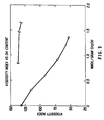
- Fig. 1 is a graph comparing viscosities at 38°C of lubricating fluid having hydroxy and ester functional groups versus the amount of molecules having these groups.
- the line (o ⁇ o) is for blends of alcohol lubricating fluid with various portions of conventional lubricant fluid resulting from hydrogenation of decene trimer.
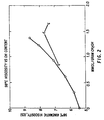
- Fig. 2 is a graph comparing viscosities at 98°C of lubricating fluid having hydroxy and ester functional groups versus the amount of molecules having these groups.
- the line (o ⁇ o) is for blends of alcohol lubricating fluid with various portions of conventional lubricating fluid resulting from hydrogenation of decene trimer.
- Fig. 3 is a graph comparing viscosity indexes of ester and alcohol lubricating fluid versus the amount of molecules having these respective functional groups.
- the line (o ⁇ o) is for blends of alcohol lubricating fluid with various portions of conventional lubricants resulting from hydrogenation of decene trimer.
- the viscosity of the alcohol lubricating fluid may be varied by increasing or decreasing the number (mmol/g) of molecules with primary alcohol functional groups.
- the viscosity increases as the millimolar amount of the OH functional groups per fram of lubricant is increased.
- the VI of the lubricant decreases due to intermolecular bonding previously discussed.
- lubricants of varying VI's can be produced according to the lubricant's intended use. This lends itself to highly designable lubricating materials.
- the ester lubricants have level viscometric properties. As also shown by Figures 1 and 2, the amount of ester functional groups present in the lubricant does not appear to affect significantly the viscosity of the lubricant. Consequently, no matter how many ester groups are present, an essentially uniform VI can be expected. This is important because this allows control of the polarity and solvent power of the lubricant (oxygenate content) within wide limits without affecting the viscosity index.
- the above lubricating fluids have desirable viscometric properties, but the fluids possess seal swell capacity and solvent power.
- the ester lubricating fluids demonstrate seal swell capacity with Buna-N Rubber, a typically used rubber sealant (Table 2). TABLE 2 Seal Swell Capacity of acetate ester of decene trimer.
- Sample 1 a Sample 2 a Base Stock Blend b Seal Swell Buna-N Rubber after 70 h at 165°C/300°F Volume Change, -1.6 -2.4 -0.5 Hardness Change +4 +2 +3 Cracking None None None a) Sample 1 contained 1.6 mmol -CH2OOCCH3 groups per gram lubricating fluid; Sample 2 contained 0.8 mmol -CH2OOCCH3 groups per gram lubricating fluid; b) Basestock blend contains 25 wt.% bis -tridecanol adipate, 75 wt.% hydrogenated decene trimer.
- Sample 2 contained 0.8 mmol -CH2OOCCH3 groups per gram lubricant. b) All materials were tested as blends with 20 wt.% of commercial additive package. c) Base Stock Blend contains 25 wt.% bis-tridecanol adipate, 75 wt.% hydrogenated decene trimer.
- X H,Ac
- the lubricating fluid of this invention has a viscosity of 100°C greater than 3 cs and a viscosity index greater than 120, preferably a viscosity at 100°C greater than 5 cs and a viscosity index greater than 130.
- This invention in a further aspect, also provides a process for preparing a polar lubricating fluid as aforesaid, which process comprises hydroformylating, at a temperature from 150° to 300°C, at least one olefin having at least 20 carbon atoms in the presence of a hydroformylation catalyst and synthesis gas to produce a saturated, aliphatic primary alcohol; and, if required, subsequently acylating the alcohol produced to form an ester.
- the lubricating fluid of this invention comprises the products of the following hydroformylation of olefins; typically: and, if desired: wherein R1 and R2, which may be the same or different are each hydrocarbyl radicals and Ac is an aliphatic or aromatic acyl moiety.
- the process of the present invention while preferably effected on olefins, may be carried out on olefinically unsaturated hydrocarbons with more than one double bond (for example, diolefins) to produce a lubricating fluid with properties comparable to a fluid produced from a monoolefin.
- olefinically unsaturated hydrocarbons with more than one double bond for example, diolefins
- the hydroformylation is preferably performed at a temperature from 150° to 200°C where the yield of alcohol in the hydroformylation product reaches 100%.
- the catalyst may comprise rhodium, cobalt or ruthenium. Especially preferred is a catalyst which comprises a coordination complex, carbonyl compound or a hydrocarbonyl compound.
- the ratio of H2 to CO can be hetween 0.5:1 and 5:1 with a preferred ratio range between 1:1 and 3:1. A particularly preferred ratio is 2:1.
- acylating agent comprises a compound of the formula: in which:
- acyl halides are acetyl chloride, acetyl bromide, propionyl chloride and butanoyl chloride.
- carboxylic acid acylating agents are butanoic acid, pentanoic acid and hexanoic acid.
- acid anhydrides are acetic anhydride, propanic anhydride, and butanoic anhydride.
- carboxylic ester agents are methyl acetate, ethyl acetate, ethyl propanoate and ethyl butanoate. Difunctional acylating agents are also useful.
- This invention also relates to the use of a saturated aliphatic primary alcohol, or ester thereof, having at least 20 carbon atoms in a lubricant composition to dissolve an additive package, expecially wherein the alcohol and/or ester is the sole solubilizing agent for the additive package.
- the autoclave was charged with 549g (1.14 moles) of decene trimer in the presence of 0.677g (6.35 x 10 ⁇ 4 moles) of Rh6(CO)16 [purchased from Alfa Corp.].
- the reaction was effected at 150°C and 1000 psig (69,9 Bar) with H2/CO reactant gas [from a Matheson Certified Standard mixture of perpurified H2 and CP grade CO] being reacted with the olefin feed at a ratio of 1:1. (These gases were first scrubbed through activated carbon to remove volatile metal carbonyls.)
- reaction vessel After 170 hours, the reaction vessel was emptied and its contents centrifuged, filtered, and tested for functional group content and conversion of double bonds.
- the viscosity index of the resulting composition was 45.8.
- the decene trimer of Example 1 was hydroformylated at only 100°C for 120 hours in the presence of Rh6(CO)16 whereby the amount by weight of Rh metal equalled 0.05% of the amount by weight of the olefins. Functional group testing of the resulting fluid showed that the product was entirely aldehydes. 36% of the olefinic unsaturation underwent conversion.
- the trimer of Example 1 was hydroformylated under the same conditions except the reaction was carried out for 140 hours and the amount by weight of Rh metal equalled 0.09% of the amount by weight of olefins. Functional group testing of the resulting fluid showed that the product comprised 90% alcohols and 10% formate esters. 81% of the olefinic unsaturation underwent conversion; the oxygenate content of the resulting fluid was 1.57 mmol per gram of lubricating fluid; and the viscosity index was 40.
- Example 1 The trimer of Example 1 was hydroformylated under the same conditions as Example 2 except that the reaction was carried out for 150 hours. Functional group testing of the resulting fluid showed that the product comprised 73% alcohols, 13% formate esters, and 14% aldehydes. 71% of the olefinic unsaturation underwent conversion; the oxygenate content of the resulting fluid was 1.42 mmol per gram; and the viscosity index of the fluid was 73.
- the trimer of Example 1 was hydroformylated under the same conditions as Example 2 except that the reaction was carried out for 170 hours and the amount by weight of Rh metal equalled 0.07% of the amount by weight of olefins. Functional group testing for the resulting fluid showed that the product comprised 97% alcohols and 3% formate esters. 81% of the olefinic unsaturation underwent conversion; the oxygenate content of the resulting fluid was 1.59 mmol per gram; and the viscosity index was 46.
- Example 1 The trimer of Example 1 was hydroformylated under the same conditions as Example 4 except that the reaction was carried out for only 130 hours.
- the resulting fluid contained the same percentage of the same compounds as in Example 4, but the viscosity index of the fluid in this Example was 49, and 84% of the olefinic unsaturation underwent conversion.
- the oxygenate content of the resulting fluid was 1.67 mmol per gram of lubricating fluid.
Landscapes
- Chemical & Material Sciences (AREA)
- Health & Medical Sciences (AREA)
- Emergency Medicine (AREA)
- Chemical Kinetics & Catalysis (AREA)
- General Chemical & Material Sciences (AREA)
- Oil, Petroleum & Natural Gas (AREA)
- Organic Chemistry (AREA)
- Lubricants (AREA)
- Organic Low-Molecular-Weight Compounds And Preparation Thereof (AREA)
Claims (18)
- Un fluide lubrifiant polaire comprenant un alcool primaire aliphatique saturé, ou un de ses esters, dérivé par hydroformylation d'un oligomère à insaturation oléfinique d'un hydrocarbure à insaturation alpha-oléfinique d'au moins 8 atomes de carbone, l'oligomère ayant au moins 20 atomes de carbone, dans lequel l'alcool, ou son ester, a une teneur en fonctions oxygénées d'au moins 0,2 mmole de groupes fonctionnels par gramme de lubrifiant.
- Un fluide lubrifiant selon la revendication 1, dans lequel l'alcool ou son ester, comprend de 26 à 100 atomes de carbone.
- Un fluide lubrifiant selon la revendication 2, dans lequel l'alcool ou son ester comprend de 30 à 60 atomes de carbone.
- Un fluide lubrifiant selon l'une quelconque des revendications 1 à 3, dans lequel l'oligomère d'oléfine comprend de 24 à 60 atomes de carbone.
- Un fluide lubrifiant selon l'une quelconque des revendications 1 à 4, dans lequel l'oligomère d'oléfine comprend un oligomère d'au moins une oléfine en C₈ à C₁₂.
- Un fluide lubrifiant selon l'une quelconque des revendications 1 à 5, dans lequel la teneur en fonctions oxygénées est de 0,2 à 3,2 mmoles par gramme de lubrifiant.
- Un fluide lubrifiant selon l'une quelconque des revendications 1 à 6, qui présente une viscosité à 100°C supérieure à 3 cs et un indice de viscosité supérieur à 120.
- Un fluide lubrifiant selon la revendication 7, qui présente une viscosité à 100°C supérieure à 5 cs et un indice de viscosité supérieur à 130.
- Un procédé de préparation d'un fluide lubrifiant selon l'une quelconque des revendications 1 à 8, ledit procédé comprenant l'hydroformylation, à une température de 150 à 300°C, d'au moins un oligomère à insaturation oléfinique d'un hydrocarbure à insaturation alpha-oléfinique comportant au moins 8 atomes de carbone, l'oligomère ayant au moins 20 atomes de carbone, en présence d'un catalyseur d'hydroformylation et d'un gaz de synthèse pour obtenir un alcool primaire aliphatique saturé et, le cas échéant, l'acylation ultérieure de l'alcool obtenu pour former un ester, dans lequel l'alcool, ou son ester, présente une teneur en fonctions oxygénées d'au moins 0,2 mmole de groupes fonctionnels par gramme de lubrifiant.
- Un procédé selon la revendication 9, dans lequel le catalyseur d'hydroformylation comprend du rhodium, du cobalt ou du ruthénium.
- Un procédé selon la revendication 9 ou 10, dans lequel le catalyseur comprend un complexe de coordination, un carbonyle ou un hydrocarbonyle.
- Un procédé selon l'une quelconque des revendications 9 à 11, dans lequel le catalyseur comprend Rh₆(CO)₁₆.
- Un procédé selon l'une quelconque des revendications 9 à 12, dans lequel le rapport H₂/CO dans le gaz de synthèse est de 0,5/1 à 5/1.
- Un procédé selon la revendication 13, dans lequel le rapport H₂/CO est de 1/1 à 3/1.
- Un procédé selon l'une quelconque des revendications 9 à 14, dans lequel l'agent d'acylation comprend un composé de formule:
 R représente un groupe hydrocarbyle en C₁ à C₂₀; etX représente un atome de chlore, de brome ou d'iode, ou un groupe hydroxyle, OR', ou O CO R" dans lesquels R' et R", qui peuvent être identiques ou différents de R, représentent chacun un groupe hydrocarbyle en C₁ à C₂₀.
 - Un procédé selon la revendication 15, dans lequel R, R' ou R" comprend au moins 10 atomes de carbone.
- Utilisation d'un alcool primaire aliphatique saturé ou un de ses esters, dérivant d'au moins un oligomère à insaturation oléfinique d'un hydrocarbure à insaturation alpha-oléfinique d'au moins 8 atomes de carbone, l'oligomère ayant au moins 20 atomes de carbone, dans une composition lubrifiante pour dissoudre un groupe d'additifs, dans lequel l'alcool, ou son ester, a une teneur en dérivé oxygéné correspondant à au moins 0,2 mmole de groupes fonctionnels par gramme de lubrifiant.
- L'utilisation selon la revendication 17, dans lequel l'alcool et/ou l'ester est le seul agent solubilisant du groupe d'additifs.
Applications Claiming Priority (2)
| Application Number | Priority Date | Filing Date | Title |
|---|---|---|---|
| US07/143,439 US4900462A (en) | 1988-01-13 | 1988-01-13 | Polar lubricating fluid and a method for its synthesis |
| US143439 | 1988-01-13 |
Publications (2)
| Publication Number | Publication Date |
|---|---|
| EP0324558A1 EP0324558A1 (fr) | 1989-07-19 |
| EP0324558B1 true EP0324558B1 (fr) | 1996-05-22 |
Family
ID=22504083
Family Applications (1)
| Application Number | Title | Priority Date | Filing Date |
|---|---|---|---|
| EP89300131A Expired - Lifetime EP0324558B1 (fr) | 1988-01-13 | 1989-01-06 | Fluide lubrifiant polaire et sa préparation |
Country Status (8)
| Country | Link |
|---|---|
| US (1) | US4900462A (fr) |
| EP (1) | EP0324558B1 (fr) |
| JP (1) | JPH01279997A (fr) |
| AU (1) | AU623366B2 (fr) |
| CA (1) | CA1336186C (fr) |
| DE (1) | DE68926513T2 (fr) |
| ES (1) | ES2087075T3 (fr) |
| ZA (1) | ZA89311B (fr) |
Families Citing this family (5)
| Publication number | Priority date | Publication date | Assignee | Title |
|---|---|---|---|---|
| US5322633A (en) * | 1992-11-16 | 1994-06-21 | Albemarle Corporation | Preparation of branched chain carboxylic esters |
| DE4323829A1 (de) * | 1993-07-15 | 1995-01-19 | Henkel Kgaa | Hydrauliköle enthaltend biologisch abbaubare Guerbetalkohole |
| US7482312B2 (en) * | 2005-04-01 | 2009-01-27 | Shell Oil Company | Engine oils for racing applications and method of making same |
| US20070232506A1 (en) * | 2006-03-28 | 2007-10-04 | Gao Jason Z | Blends of lubricant basestocks with polyol esters |
| US8149534B2 (en) * | 2008-11-13 | 2012-04-03 | Seagate Technology Llc | Protective coatings for data storage devices |
Family Cites Families (21)
| Publication number | Priority date | Publication date | Assignee | Title |
|---|---|---|---|---|
| US2610948A (en) * | 1950-03-23 | 1952-09-16 | Standard Oil Dev Co | Lubricating compositions |
| FR1116790A (fr) * | 1953-12-30 | 1956-05-11 | Standard Oil Dev Co | Procédé de préparation d'alcools à poids moléculaire élevé |
| US3471532A (en) * | 1967-10-09 | 1969-10-07 | Union Oil Co | Oxidation of olefins |
| GB1217468A (en) * | 1969-04-18 | 1970-12-31 | Shell Int Research | Ester mixtures |
| US3899433A (en) * | 1972-06-29 | 1975-08-12 | Ethyl Corp | Method of metalworking utilizing a particular lubricant composition |
| US3919176A (en) * | 1973-10-01 | 1975-11-11 | Eastman Kodak Co | Water-dispersible polyolefin compositions useful as hot melt adhesives |
| US3914203A (en) * | 1974-06-10 | 1975-10-21 | Standard Oil Co | Oil-soluble reaction products of (a) a high molecular weight olefin polymer, acrylonitrile, chlorine, an amine and maleic anhydride with (b) an aliphatic amine; and lubricant compositions containing the same |
| US4041098A (en) * | 1975-07-01 | 1977-08-09 | Uniroyal, Inc. | Method for the oligomerization of alpha-olefins |
| US4161452A (en) * | 1977-01-28 | 1979-07-17 | Rohm And Haas Company | Polyolefinic copolymer additives for lubricants and fuels |
| US4158664A (en) * | 1977-06-17 | 1979-06-19 | Gulf Research & Development Company | Process for improving color of certain alkenyl succinic anhydrides |
| US4167486A (en) * | 1977-08-25 | 1979-09-11 | Mobil Oil Corporation | Lubricant composition containing a lubricity agent |
| US4313893A (en) * | 1978-12-26 | 1982-02-02 | Standard Oil Company | Carbonylation of olefinically unsaturated compounds |
| GB2061958B (en) * | 1979-10-24 | 1983-07-20 | Shell Int Research | Process for the preparation of polyalkenyl-substituted succinic anhydride |
| US4374287A (en) * | 1980-06-27 | 1983-02-15 | Uop Inc. | Synthesis of alcohols |
| US4566983A (en) * | 1982-08-09 | 1986-01-28 | The Lubrizol Corporation | Combination of carboxylic acylating agents substituted with olefin polymers of high and low molecular weight mono-olefins, derivatives thereof, and fuels and lubricants containing same |
| US4508874A (en) * | 1982-08-20 | 1985-04-02 | The Firestone Tire & Rubber Company | Impact resistant polymeric compositions containing polyamides, maleic anhydride adducts of hydrogenated polymers and graft copolymers thereof |
| US4451680A (en) * | 1982-10-21 | 1984-05-29 | Texaco Inc. | Alcohols prepared from olefins and synthesis gas |
| US4451679A (en) * | 1982-10-21 | 1984-05-29 | Texaco Inc. | Alcohols and aldehydes prepared from olefins and synthesis gas |
| GB8406126D0 (en) * | 1984-03-08 | 1984-04-11 | Bp Chem Int Ltd | Esters |
| FI71927C (fi) * | 1984-11-26 | 1987-03-09 | Neste Oy | Katalysator foer framstaellning av alkoholer ur olefiner och syntesgas. |
| US4628985A (en) * | 1984-12-06 | 1986-12-16 | Aluminum Company Of America | Lithium alloy casting |
-
1988
- 1988-01-13 US US07/143,439 patent/US4900462A/en not_active Expired - Fee Related
-
1989
- 1989-01-06 ES ES89300131T patent/ES2087075T3/es not_active Expired - Lifetime
- 1989-01-06 EP EP89300131A patent/EP0324558B1/fr not_active Expired - Lifetime
- 1989-01-06 DE DE68926513T patent/DE68926513T2/de not_active Expired - Fee Related
- 1989-01-11 AU AU28404/89A patent/AU623366B2/en not_active Ceased
- 1989-01-12 CA CA000588071A patent/CA1336186C/fr not_active Expired - Fee Related
- 1989-01-13 ZA ZA89311A patent/ZA89311B/xx unknown
- 1989-01-13 JP JP1007517A patent/JPH01279997A/ja active Pending
Also Published As
| Publication number | Publication date |
|---|---|
| CA1336186C (fr) | 1995-07-04 |
| JPH01279997A (ja) | 1989-11-10 |
| DE68926513T2 (de) | 1996-09-26 |
| US4900462A (en) | 1990-02-13 |
| EP0324558A1 (fr) | 1989-07-19 |
| DE68926513D1 (de) | 1996-06-27 |
| AU623366B2 (en) | 1992-05-14 |
| ZA89311B (en) | 1990-09-26 |
| AU2840489A (en) | 1989-07-13 |
| ES2087075T3 (es) | 1996-07-16 |
Similar Documents
| Publication | Publication Date | Title |
|---|---|---|
| US6316649B1 (en) | Biodegradable oleic estolide ester having saturated fatty acid end group useful as lubricant base stock | |
| US3090753A (en) | Ester oil compositions containing acid anhydride | |
| US3842010A (en) | Oil and fuel compositions containing epoxidized terpolymer derivatives | |
| US4156061A (en) | Epoxidized terpolymer or derivatives thereof, and oil and fuel compositions containing same | |
| JPS5865246A (ja) | α,β−不飽和ジカルボン酸エステルとα−オレフインとのコポリマ−、その製造方法及び該コポリマ−から成る潤滑油、鉱油添加剤、潤滑剤添加物、滑剤及びトランス油 | |
| AU710829B2 (en) | Process for the carbonylation of ethylenically unsaturated compounds | |
| TW200907043A (en) | Capped polyester polyol lubricant composition | |
| EP0066935B1 (fr) | Esters lubrifiants | |
| US3539515A (en) | Lubricating oil compositions containing peroxide-treated phenothiazine as an antioxidant | |
| EP0324558B1 (fr) | Fluide lubrifiant polaire et sa préparation | |
| JPH01311122A (ja) | ポリエルテル粘度指数向上剤 | |
| CN1219193A (zh) | 由支链羰基合成酸制备的可生物降解的合成酯基料 | |
| US4514314A (en) | Oil soluble ester pour point depressant additive for lubricants | |
| US2559510A (en) | Synthetic lubricants | |
| US2411178A (en) | Oil composition | |
| EP0523122B1 (fr) | Esters et liquides les contenant | |
| US2852540A (en) | Oil soluble alkali and alkaline earth metal salts of p-acylamino phenols | |
| AU643048B2 (en) | Hydrocarbon oil compositions | |
| CA1070665A (fr) | Lubrifiants a base de polyester complexe neutre, a forte viscosite | |
| US3223636A (en) | Lead corrosion inhibitor | |
| JP2001501231A (ja) | ポリオールエステル燃料添加剤 | |
| US3817971A (en) | Sulfurized mono-esters of tall oil fatty acids and primary oxo alcohols | |
| GB1471313A (en) | Lubricating compositions | |
| EP0713867A1 (fr) | Compositions d'huile lubrifiante | |
| US20020063237A1 (en) | Esters and ester compositions |
Legal Events
| Date | Code | Title | Description |
|---|---|---|---|
| PUAI | Public reference made under article 153(3) epc to a published international application that has entered the european phase |
Free format text: ORIGINAL CODE: 0009012 |
|
| AK | Designated contracting states |
Kind code of ref document: A1 Designated state(s): BE DE ES FR GB IT NL |
|
| 17P | Request for examination filed |
Effective date: 19891222 |
|
| 17Q | First examination report despatched |
Effective date: 19900725 |
|
| GRAH | Despatch of communication of intention to grant a patent |
Free format text: ORIGINAL CODE: EPIDOS IGRA |
|
| GRAA | (expected) grant |
Free format text: ORIGINAL CODE: 0009210 |
|
| AK | Designated contracting states |
Kind code of ref document: B1 Designated state(s): BE DE ES FR GB IT NL |
|
| ET | Fr: translation filed | ||
| REG | Reference to a national code |
Ref country code: ES Ref legal event code: BA2A Ref document number: 2087075 Country of ref document: ES Kind code of ref document: T3 |
|
| REF | Corresponds to: |
Ref document number: 68926513 Country of ref document: DE Date of ref document: 19960627 |
|
| REG | Reference to a national code |
Ref country code: ES Ref legal event code: FG2A Ref document number: 2087075 Country of ref document: ES Kind code of ref document: T3 |
|
| ITF | It: translation for a ep patent filed | ||
| PGFP | Annual fee paid to national office [announced via postgrant information from national office to epo] |
Ref country code: DE Payment date: 19961211 Year of fee payment: 9 |
|
| PGFP | Annual fee paid to national office [announced via postgrant information from national office to epo] |
Ref country code: NL Payment date: 19961217 Year of fee payment: 9 |
|
| PGFP | Annual fee paid to national office [announced via postgrant information from national office to epo] |
Ref country code: FR Payment date: 19961230 Year of fee payment: 9 |
|
| PGFP | Annual fee paid to national office [announced via postgrant information from national office to epo] |
Ref country code: GB Payment date: 19970120 Year of fee payment: 9 |
|
| PGFP | Annual fee paid to national office [announced via postgrant information from national office to epo] |
Ref country code: ES Payment date: 19970121 Year of fee payment: 9 |
|
| PGFP | Annual fee paid to national office [announced via postgrant information from national office to epo] |
Ref country code: BE Payment date: 19970203 Year of fee payment: 9 |
|
| PLBE | No opposition filed within time limit |
Free format text: ORIGINAL CODE: 0009261 |
|
| STAA | Information on the status of an ep patent application or granted ep patent |
Free format text: STATUS: NO OPPOSITION FILED WITHIN TIME LIMIT |
|
| 26N | No opposition filed | ||
| PG25 | Lapsed in a contracting state [announced via postgrant information from national office to epo] |
Ref country code: GB Free format text: LAPSE BECAUSE OF NON-PAYMENT OF DUE FEES Effective date: 19980106 |
|
| PG25 | Lapsed in a contracting state [announced via postgrant information from national office to epo] |
Ref country code: ES Free format text: LAPSE BECAUSE OF NON-PAYMENT OF DUE FEES Effective date: 19980107 |
|
| PG25 | Lapsed in a contracting state [announced via postgrant information from national office to epo] |
Ref country code: FR Free format text: THE PATENT HAS BEEN ANNULLED BY A DECISION OF A NATIONAL AUTHORITY Effective date: 19980131 Ref country code: BE Free format text: LAPSE BECAUSE OF NON-PAYMENT OF DUE FEES Effective date: 19980131 |
|
| BERE | Be: lapsed |
Owner name: MOBIL OIL CORP. Effective date: 19980131 |
|
| PG25 | Lapsed in a contracting state [announced via postgrant information from national office to epo] |
Ref country code: NL Free format text: LAPSE BECAUSE OF NON-PAYMENT OF DUE FEES Effective date: 19980801 |
|
| GBPC | Gb: european patent ceased through non-payment of renewal fee |
Effective date: 19980106 |
|
| NLV4 | Nl: lapsed or anulled due to non-payment of the annual fee |
Effective date: 19980801 |
|
| PG25 | Lapsed in a contracting state [announced via postgrant information from national office to epo] |
Ref country code: DE Free format text: LAPSE BECAUSE OF NON-PAYMENT OF DUE FEES Effective date: 19981001 |
|
| REG | Reference to a national code |
Ref country code: FR Ref legal event code: ST |
|
| REG | Reference to a national code |
Ref country code: ES Ref legal event code: FD2A Effective date: 20000503 |
|
| PG25 | Lapsed in a contracting state [announced via postgrant information from national office to epo] |
Ref country code: IT Free format text: LAPSE BECAUSE OF NON-PAYMENT OF DUE FEES;WARNING: LAPSES OF ITALIAN PATENTS WITH EFFECTIVE DATE BEFORE 2007 MAY HAVE OCCURRED AT ANY TIME BEFORE 2007. THE CORRECT EFFECTIVE DATE MAY BE DIFFERENT FROM THE ONE RECORDED. Effective date: 20050106 |